
Articles | Volume 19, issue 4
https://doi.org/10.5194/gmd-19-1769-2026
© Author(s) 2026. This work is distributed under
the Creative Commons Attribution 4.0 License.
the Creative Commons Attribution 4.0 License.
https://doi.org/10.5194/gmd-19-1769-2026
© Author(s) 2026. This work is distributed under
the Creative Commons Attribution 4.0 License.
the Creative Commons Attribution 4.0 License.
Development and technical paper
| 
03 Mar 2026
Development and technical paper |
| 03 Mar 2026
| 03 Mar 2026
Implementation of a sigma coordinate system in PALM-Sigma v1.0 (based on PALM v21.10) for LES study of the marine atmospheric boundary layer
Geophysical Institute, University of Bergen and Bergen Offshore Wind Centre, Allégaten 55, 5007 Bergen, Norway
Mostafa Bakhoday-Paskyabi
Geophysical Institute, University of Bergen and Bergen Offshore Wind Centre, Allégaten 55, 5007 Bergen, Norway
Related authors
Xu Ning and Mostafa Bakhoday-Paskyabi
Wind Energ. Sci., 10, 1101–1122, https://doi.org/10.5194/wes-10-1101-2025, https://doi.org/10.5194/wes-10-1101-2025, 2025
Short summary
Short summary
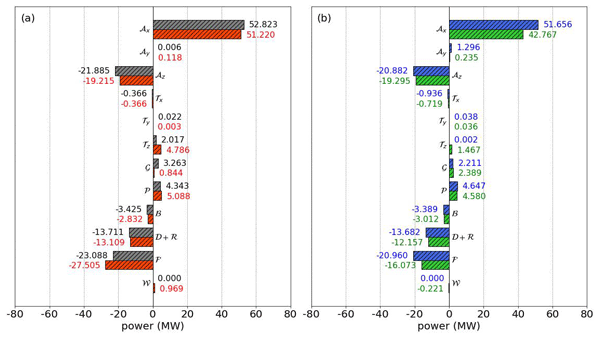
Waves interact with the overlying wind field by modifying the stresses at the atmosphere–ocean interface. We develop and employ a parameterization method of wave-induced stresses in the numerical simulation of an offshore wind farm in a stable atmospheric boundary layer. This work demonstrates how swells change the kinetic energy transport and induce wind veer and wake deflection, leading to significant variations in the power output of wind turbines at different positions of the wind farm.
Hai Bui, Mostafa Bakhoday-Paskyabi, and Joachim Reuder
Wind Energ. Sci., 11, 2307–2321, https://doi.org/10.5194/wes-11-2307-2026, https://doi.org/10.5194/wes-11-2307-2026, 2026
Short summary
Short summary
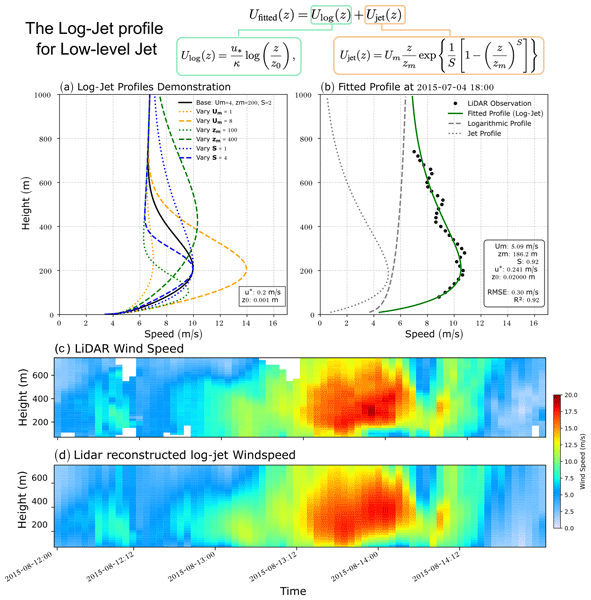
Strong low-altitude winds, known as low-level jets (LLJs), significantly impact offshore wind turbines. We analyzed LLJs at the FINO1 site using lidar observations and reanalysis data. Our results show that models tend to underestimate LLJ intensity. To address this, we introduced a new method to characterize wind profiles and applied a correction to 50 years of reanalysis data, yielding a more accurate long-term representation of these wind features.
Hai Bui, Mostafa Bakhoday-Paskyabi, and Joachim Reuder
Wind Energ. Sci. Discuss., https://doi.org/10.5194/wes-2026-66, https://doi.org/10.5194/wes-2026-66, 2026
Revised manuscript under review for WES
Short summary
Short summary
Computer simulations for wind energy are often slow because they take a long time to reach a stable state, wasting time and resources. We developed a "smart control" technique to speed this up. By dynamically adjusting the forces driving the model, we reduced the setup time from twenty-four hours to just two hours. This method allows researchers to reach desired wind conditions quickly and accurately, making wind energy research and weather modeling much more efficient and cost-effective.
Louis Pauchet, Valentin Chabaud, and Mostafa Bakhoday Paskyabi
Wind Energ. Sci. Discuss., https://doi.org/10.5194/wes-2026-58, https://doi.org/10.5194/wes-2026-58, 2026
Revised manuscript under review for WES
Short summary
Short summary
This research aimed to create realistic long-term wind data for offshore wind farms by combining large-scale weather patterns with small-scale turbulence. Using high-resolution weather data and validated against real offshore measurements, the method accurately reproduces wind speed and turbulence levels over hours. The model performs best in stable conditions and offers a practical way to improve wind farm design, predict turbine fatigue, and enhance energy production forecasts.
Hai Bui and Mostafa Bakhoday-Paskyabi
EGUsphere, https://doi.org/10.48550/arXiv.2306.16043, https://doi.org/10.48550/arXiv.2306.16043, 2025
Preprint archived
Short summary
Short summary
We developed a new way to improve the correction of data by using a probability-based method called kernel density estimation. Our approach adapts the size and shape of the core probability functions, leading to more accurate corrections while also allowing us to measure the uncertainty of the results. Tests on both simple and realistic datasets show that our method outperforms existing ones, offering a practical tool for more reliable data analysis.
Xu Ning and Mostafa Bakhoday-Paskyabi
Wind Energ. Sci., 10, 1101–1122, https://doi.org/10.5194/wes-10-1101-2025, https://doi.org/10.5194/wes-10-1101-2025, 2025
Short summary
Short summary
Waves interact with the overlying wind field by modifying the stresses at the atmosphere–ocean interface. We develop and employ a parameterization method of wave-induced stresses in the numerical simulation of an offshore wind farm in a stable atmospheric boundary layer. This work demonstrates how swells change the kinetic energy transport and induce wind veer and wake deflection, leading to significant variations in the power output of wind turbines at different positions of the wind farm.
Mostafa Bakhoday Paskyabi
Wind Energ. Sci., 9, 1631–1645, https://doi.org/10.5194/wes-9-1631-2024, https://doi.org/10.5194/wes-9-1631-2024, 2024
Short summary
Short summary
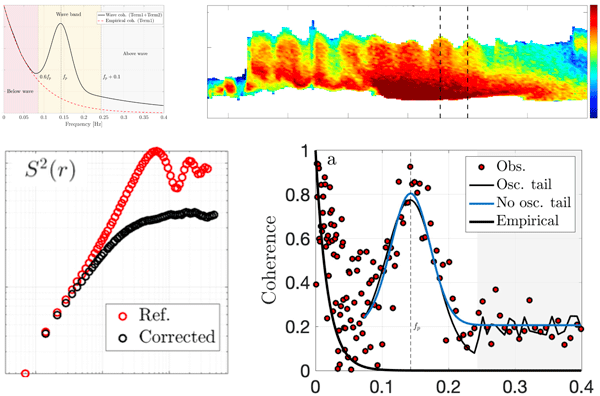
The exchange of momentum and energy between the atmosphere and ocean depends on air–sea processes, especially wave-related ones. Precision in representing these interactions is vital for offshore wind turbine and farm design and operation. The development of a reliable wave–turbulence decomposition method to remove wave-induced interference from single-height wind measurements is essential for these applications and enhances our grasp of wind coherence within the wave boundary layer.
Hai Bui, Mostafa Bakhoday-Paskyabi, and Mohammadreza Mohammadpour-Penchah
Geosci. Model Dev., 17, 4447–4465, https://doi.org/10.5194/gmd-17-4447-2024, https://doi.org/10.5194/gmd-17-4447-2024, 2024
Short summary
Short summary
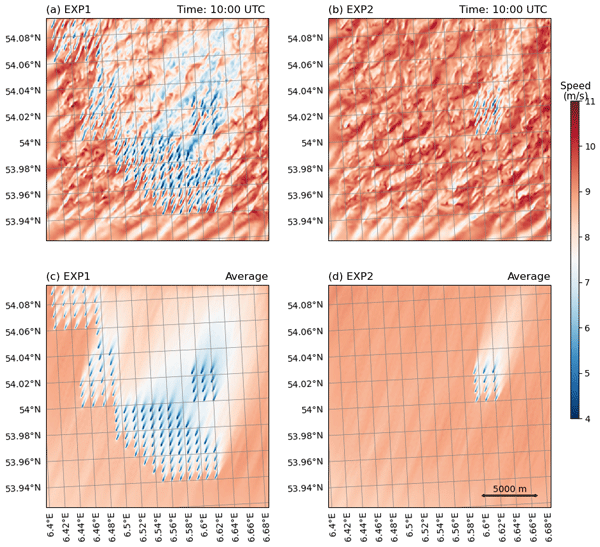
We developed a new wind turbine wake model, the Simple Actuator Disc for Large Eddy Simulation (SADLES), integrated with the widely used Weather Research and Forecasting (WRF) model. WRF-SADLES accurately simulates wind turbine wakes at resolutions of a few dozen meters, aligning well with idealized simulations and observational measurements. This makes WRF-SADLES a promising tool for wind energy research, offering a balance between accuracy, computational efficiency, and ease of implementation.
Maria Krutova and Mostafa Bakhoday-Paskyabi
Wind Energ. Sci. Discuss., https://doi.org/10.5194/wes-2023-79, https://doi.org/10.5194/wes-2023-79, 2023
Revised manuscript not accepted
Short summary
Short summary
Wind turbine wake studies often rely on engineering models, which consist of simple analytical expressions. We review an atmospheric event resulting in a strong wind flow change within tens of minutes and apply several wake models to see how they respond to new conditions. We find that two models are consistent with their predictions, and one of them, the super-Gaussian model, predicts the wake shape particularly well; more attention should be paid to its development and implementation.
Maria Krutova, Mostafa Bakhoday-Paskyabi, Joachim Reuder, and Finn Gunnar Nielsen
Geosci. Model Dev., 16, 3553–3564, https://doi.org/10.5194/gmd-16-3553-2023, https://doi.org/10.5194/gmd-16-3553-2023, 2023
Short summary
Short summary
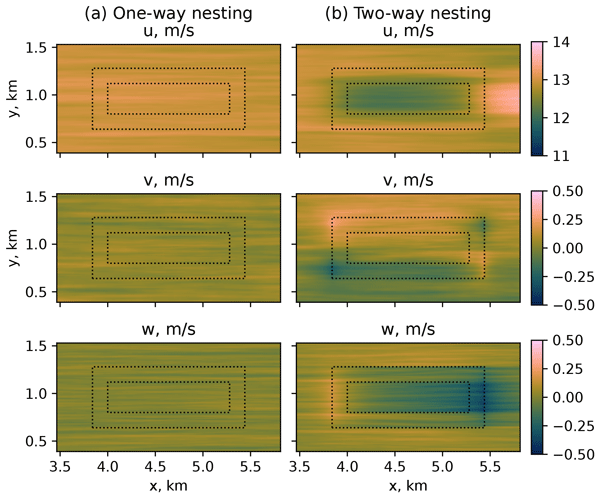
Local refinement of the grid is a powerful method allowing us to reduce the computational time while preserving the accuracy in the area of interest. Depending on the implementation, the local refinement may introduce unwanted numerical effects into the results. We study the wind speed common to the wind turbine operational speeds and confirm strong alteration of the result when the heat fluxes are present, except for the specific refinement scheme used.
Maria Krutova, Mostafa Bakhoday-Paskyabi, Joachim Reuder, and Finn Gunnar Nielsen
Wind Energ. Sci., 7, 849–873, https://doi.org/10.5194/wes-7-849-2022, https://doi.org/10.5194/wes-7-849-2022, 2022
Short summary
Short summary
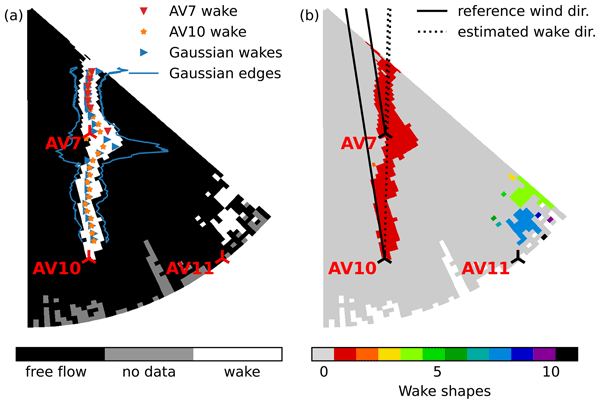
We described a new automated method to separate the wind turbine wake from the undisturbed flow. The method relies on the wind speed distribution in the measured wind field to select one specific threshold value and split the measurements into wake and background points. The purpose of the method is to reduce the amount of data required – the proposed algorithm does not need precise information on the wind speed or direction and can run on the image instead of the measured data.
Cited articles
Baldauf, M.: Stability analysis for linear discretisations of the advection equation with Runge–Kutta time integration, J. Comput. Phys., 227, 6638–6659, 2008. a
Chen, S., Qiao, F., Jiang, W., Guo, J., and Dai, D.: Impact of surface waves on wind stress under low to moderate wind conditions, J. Phys. Oceanogr., 49, 2017–2028, 2019. a
Cohen, J. and Belcher, S.: Turbulent shear flow over fast-moving waves, J. Fluid Mech., 386, 345–371, 1999. a
Deardorff, J. W.: Stratocumulus-capped mixed layers derived from a three-dimensional model, Bound.-Lay. Meteorol., 18, 495–527, 1980. a
Deskos, G., Lee, J. C., Draxl, C., and Sprague, M. A.: Review of Wind–Wave Coupling Models for Large-Eddy Simulation of the Marine Atmospheric Boundary Layer, J. Atmos. Sci., 78, 3025–3045, 2021. a
Donelan, M. A., Babanin, A. V., Young, I. R., and Banner, M. L.: Wave-follower field measurements of the wind-input spectral function. Part II: Parameterization of the wind input, J. Phys. Oceanogr., 36, 1672–1689, 2006. a
Drennan, W. M., Taylor, P. K., and Yelland, M. J.: Parameterizing the sea surface roughness, J. Phys. Oceanogr., 35, 835–848, 2005. a
Germano, M., Piomelli, U., Moin, P., and Cabot, W. H.: A dynamic subgrid-scale eddy viscosity model, Phys. Fluids A: Fluid, 3, 1760–1765, 1991. a
Grachev, A. and Fairall, C.: Upward momentum transfer in the marine boundary layer, J. Phys. Oceanogr., 31, 1698–1711, 2001. a
Grare, L., Lenain, L., and Melville, W. K.: Vertical profiles of the wave-induced airflow above ocean surface waves, J. Phys. Oceanogr., 48, 2901–2922, 2018. a
Hanley, K. E. and Belcher, S. E.: Wave-driven wind jets in the marine atmospheric boundary layer, J. Atmos. Sci., 65, 2646–2660, 2008. a
Hao, X. and Shen, L.: Wind–wave coupling study using LES of wind and phase-resolved simulation of nonlinear waves, J. Fluid Mech., 874, 391–425, 2019. a
Högström, U., Sahlée, E., Smedman, A.-S., Rutgersson, A., Nilsson, E., Kahma, K. K., and Drennan, W. M.: Surface stress over the ocean in swell-dominated conditions during moderate winds, J. Atmos. Sci., 72, 4777–4795, 2015. a
Jiang, Q., Sullivan, P., Wang, S., Doyle, J., and Vincent, L.: Impact of swell on air–sea momentum flux and marine boundary layer under low-wind conditions, J. Atmos. Sci., 73, 2683–2697, 2016. a
Jiménez, P. A. and Dudhia, J.: On the need to modify the sea surface roughness formulation over shallow waters, J. Appl. Meteorol. Clim., 57, 1101–1110, 2018. a
Kihara, N., Hanazaki, H., Mizuya, T., and Ueda, H.: Relationship between airflow at the critical height and momentum transfer to the traveling waves, Phys. Fluids, 19, 015102, https://doi.org/10.1063/1.2409736, 2007. a
Kim, J. and Moin, P.: Application of a fractional-step method to incompressible Navier-Stokes equations, J. Comput. Phys., 59, 308–323, 1985. a
Kröniger, K., De Roo, F., Brugger, P., Huq, S., Banerjee, T., Zinsser, J., Rotenberg, E., Yakir, D., Rohatyn, S., and Mauder, M.: Effect of secondary circulations on the surface–atmosphere exchange of energy at an isolated semi-arid forest, Bound.-Lay. Meteorol., 169, 209–232, 2018. a
Makin, V., Kudryavtsev, V., and Mastenbroek, C.: Drag of the sea surface, Bound.-Lay. Meteorol., 73, 159–182, 1995. a
Maronga, B., Banzhaf, S., Burmeister, C., Esch, T., Forkel, R., Fröhlich, D., Fuka, V., Gehrke, K. F., Geletič, J., Giersch, S., Gronemeier, T., Groß, G., Heldens, W., Hellsten, A., Hoffmann, F., Inagaki, A., Kadasch, E., Kanani-Sühring, F., Ketelsen, K., Khan, B. A., Knigge, C., Knoop, H., Krč, P., Kurppa, M., Maamari, H., Matzarakis, A., Mauder, M., Pallasch, M., Pavlik, D., Pfafferott, J., Resler, J., Rissmann, S., Russo, E., Salim, M., Schrempf, M., Schwenkel, J., Seckmeyer, G., Schubert, S., Sühring, M., von Tils, R., Vollmer, L., Ward, S., Witha, B., Wurps, H., Zeidler, J., and Raasch, S.: Overview of the PALM model system 6.0, Geosci. Model Dev., 13, 1335–1372, https://doi.org/10.5194/gmd-13-1335-2020, 2020. a, b
Moeng, C.-H. and Wyngaard, J. C.: Spectral analysis of large-eddy simulations of the convective boundary layer, J. Atmos. Sci., 45, 3573–3587, 1988. a
Ning, X.: Sigma coordinate system extension for PALM (PALM-Sigma) source files, Zenodo [code], https://doi.org/10.5281/zenodo.17246634, 2025a. a
Ning, X.: Sigma coordinate system extension for PALM (PALM-Sigma) configuration and output data, Zenodo [code], https://doi.org/10.5281/zenodo.17101459, 2025b. a
Ning, X. and Bakhoday-Paskyabi, M.: Swell impacts on an offshore wind farm in stable boundary layer: wake flow and energy budget analysis, Wind Energ. Sci., 10, 1101–1122, https://doi.org/10.5194/wes-10-1101-2025, 2025. a
Ning, X. and Paskyabi, M. B.: Parameterization of wave-induced stress in large-eddy simulations of the marine atmospheric boundary layer, J. Geophys. Res.-Oceans, 129, e2023JC020722, https://doi.org/10.1029/2023JC020722, 2024. a
Peña, A. and Gryning, S.-E.: Charnock’s roughness length model and non-dimensional wind profiles over the sea, Bound.-Lay. Meteorol., 128, 191–203, 2008. a
Pletcher, R. H., Tannehill, J. C., and Anderson, D.: Computational fluid mechanics and heat transfer, CRC Press, ISBN 13:9780815357124, 2012. a
Saiki, E. M., Moeng, C.-H., and Sullivan, P. P.: Large-eddy simulation of the stably stratified planetary boundary layer, Bound.-Lay. Meteorol., 95, 1–30, 2000. a
Shen, L., Zhang, X., Yue, D. K., and Triantafyllou, M. S.: Turbulent flow over a flexible wall undergoing a streamwise travelling wave motion, J. Fluid Mech., 484, 197–221, 2003. a
Smedman, A., Högström, U., Bergström, H., Rutgersson, A., Kahma, K., and Pettersson, H.: A case study of air-sea interaction during swell conditions, J. Geophys. Res.-Oceans, 104, 25833–25851, 1999. a
Smedman, A., Högström, U., Sahlée, E., Drennan, W., Kahma, K., Pettersson, H., and Zhang, F.: Observational study of marine atmospheric boundary layer characteristics during swell, J. Atmos. Sci., 66, 2747–2763, 2009. a
Sullivan, P. P. and McWilliams, J. C.: Turbulent flow over water waves in the presence of stratification, Phys. Fluids, 14, 1182–1195, 2002. a
Sullivan, P. P. and McWilliams, J. C.: Dynamics of winds and currents coupled to surface waves, Annu. Rev. Fluid Mech., 42, 19–42, 2010. a
Sullivan, P. P., McWilliams, J. C., and Moeng, C.-H.: Simulation of turbulent flow over idealized water waves, J. Fluid Mech., 404, 47–85, 2000. a
Wicker, L. J. and Skamarock, W. C.: Time-splitting methods for elastic models using forward time schemes, Mon. Weather Rev., 130, 2088–2097, 2002. a
Williamson, J. H.: Low-storage runge-kutta schemes, J. Comput. Phys., 35, 48–56, 1980. a
Yang, D. and Shen, L.: Characteristics of coherent vortical structures in turbulent flows over progressive surface waves, Phys. Fluids, 21, 125106, https://doi.org/10.1063/1.3275851, 2009. a
Yang, D. and Shen, L.: Direct-simulation-based study of turbulent flow over various waving boundaries, J. Fluid Mech., 650, 131–180, 2010. a
Yang, D., Meneveau, C., and Shen, L.: Large-eddy simulation of offshore wind farm, Phys. Fluids, 26, 025101, https://doi.org/10.1063/1.4863096, 2014. a
Yang, H., Ge, M., Abkar, M., and Yang, X. I.: Large-eddy simulation study of wind turbine array above swell sea, Energy, 256, 124674, https://doi.org/10.1016/j.energy.2022.124674, 2022a. a
Yang, H., Ge, M., Gu, B., Du, B., and Liu, Y.: The effect of swell on marine atmospheric boundary layer and the operation of an offshore wind turbine, Energy, 244, 123200, https://doi.org/10.1016/j.energy.2022.123200, 2022b. a
Short summary
Ocean waves shape winds close to the surface and extend their impact throughout the atmospheric boundary layer. In this study, we built a new modeling tool that allows simulations to follow the moving wave surface itself. By testing different wave and wind conditions, we show how waves change air motion, turbulence, and energy exchange above the ocean. This approach improves our ability to represent air–sea interactions, with implications for weather studies and offshore wind energy.
Ocean waves shape winds close to the surface and extend their impact throughout the atmospheric...


