
Articles | Volume 19, issue 4
https://doi.org/10.5194/gmd-19-1619-2026
© Author(s) 2026. This work is distributed under
the Creative Commons Attribution 4.0 License.
the Creative Commons Attribution 4.0 License.
https://doi.org/10.5194/gmd-19-1619-2026
© Author(s) 2026. This work is distributed under
the Creative Commons Attribution 4.0 License.
the Creative Commons Attribution 4.0 License.
Model evaluation paper
| 
26 Feb 2026
Model evaluation paper |
| 26 Feb 2026
| 26 Feb 2026
Assessment of gap-filling techniques applied to satellite phytoplankton composition products for the Atlantic Ocean

Alfred Wegener Institute (AWI), Helmholtz Centre for Polar and Marine Research, Bremerhaven, Germany
School of Business, Social & Decision Sciences, Constructor University, Bremen, Germany
Hongyan Xi
Alfred Wegener Institute (AWI), Helmholtz Centre for Polar and Marine Research, Bremerhaven, Germany
Alexander Barth
GeoHydrodynamics and Environment Research (GHER), University of Liège, Liège, Belgium
Aida Alvera-Azcárate
GeoHydrodynamics and Environment Research (GHER), University of Liège, Liège, Belgium
Adalbert Wilhelm
School of Business, Social & Decision Sciences, Constructor University, Bremen, Germany
Astrid Bracher
Alfred Wegener Institute (AWI), Helmholtz Centre for Polar and Marine Research, Bremerhaven, Germany
Institute of Environmental Physics, University of Bremen, Bremen, Germany
Related authors
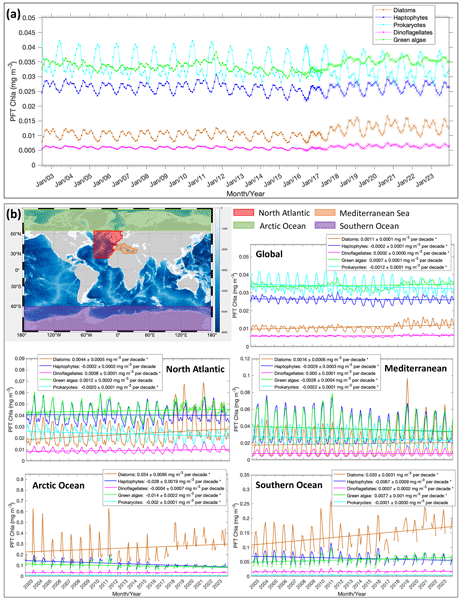
Hongyan Xi, Marine Bretagnon, Ehsan Mehdipour, Julien Demaria, Antoine Mangin, and Astrid Bracher
State Planet, 6-osr9, 7, https://doi.org/10.5194/sp-6-osr9-7-2025, https://doi.org/10.5194/sp-6-osr9-7-2025, 2025
Short summary
Short summary
To better understand the marine phytoplankton variability on different scales in both space and time, this study proposes a machine-learning-based scheme to provide continuous and consistent long-term observations of various phytoplankton groups from space on a global scale, which enables time series analysis for further trend and anomaly investigations. This study provides an essential ocean variable to help assess the ocean health in the biogeochemical aspect.
Zhuomin Li, Aida Alvera-Azcárate, Alexander Barth, Nathaniel Bensoussan, Lei Guan, and Na Xu
EGUsphere, https://doi.org/10.5194/egusphere-2026-5436, https://doi.org/10.5194/egusphere-2026-5436, 2026
This preprint is open for discussion and under review for Ocean Science (OS).
Short summary
Short summary
In the Gulf of Lion, summer–autumn northwest winds drive coastal upwelling cooling often masked in satellite/reanalysis SST by clouds and strict quality control. We reconstruct HY-1D COCTS SST and validate against three coastal stations. It captures most events but underestimates cooling. We add wind-informed cloud detection using wind speed/direction to recover cold upwelling pixels mislabeled as cloud. Results match in situ SST better, improving SST availability for upwelling studies.
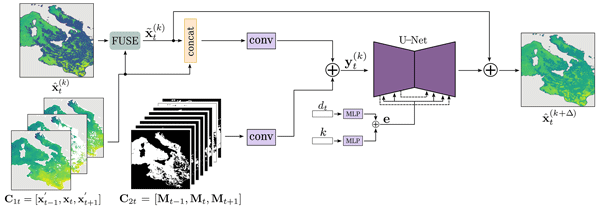
Grega Rovšček, Matjaž Ličer, Alexander Barth, and Matej Kristan
Geosci. Model Dev., 19, 8915–8938, https://doi.org/10.5194/gmd-19-8915-2026, https://doi.org/10.5194/gmd-19-8915-2026, 2026
Short summary
Short summary
Satellite measurements of sea surface temperature are often blocked by clouds, leaving large gaps in the data used to study the ocean and climate. We developed a new computer model that fills in these missing areas while also estimating how uncertain the reconstruction is. Tests on several ocean regions show more accurate results and more realistic patterns, helping scientists better analyze and model ocean conditions.
Salem Ibrahim Salem, Andre Valente, Shubha Sathyendranath, Andrei Chuprin, Théo Renard, Jaime Pitarch, Ruth Airs, Moreno Ana, Maria-Manuel Angelico, David Antoine, Robert Arnone, Florinda Artuso, Paulo O. Oliveira, William Balch, Kathryn Barker, Ray Barlow, Simon Bélanger, Marco Bellacicco, Jean-François Berthon, Şükrü Beşiktepe, Francesco Bignami, Yngve Borsheim, Astrid Bracher, Federica Braga, Vittorio Brando, Robert J. W. Brewin, Vanda Brotas, Elisabetta Canuti, Francisco P. Chavez, Andrés Cianca, Hervé Claustre, Lesley Clementson, Simone Colella, Raul Costa, Cristina Nunes, Richard Crout, Emmanuel Devred, Annalisa Di Cicco, Federico Falcini, Ivan Farace, Afonso Ferreira, Scott Freeman, Robert Frouin, Carlos García-Soto, Isabella Giardina, Stuart W. Gibb, Arthur Gleason, Ralf Goericke, Richard Gould, Michael Grant, Nathalie Guillocheau, Hiroto Higa, Stanford B. Hooker, Chuamin Hu, Joji Ishizaka, Thomas Jackson, Mati Kahru, Milton Kampel, Bokyung Kim, Holger Klein, Piotr Kowalczuk, Susanne Kratzer, Raphael Kudela, Antonia Lai, Rosario Lavezza, Jesus Ledesma, Huiwon Lee, Steven Lohrenz, Hubert Loisel, Vivian Lutz, Antonio Mannino, Francesca Margiotta, Victor Martinez-Vicente, Salvatore Marullo, Luca Massi, Patricia Matrai, Atsushi Matsuoka, David McKee, Chiara Melillo, Carlos B. Mendes, Brian G. Mitchell, Tiffany Moisan, Enrique Montes, Frank Muller-Karger, Aimee Neeley, Michael Novak, Leonie O'Dowd, Michael Ondrusek, Emanuele Organelli, Heeyoon Park, Trevor Platt, Francesca Polonelli, Alex Poulton, Mariella Ragni, Michel Repecaud, Maurizio Ribera d’Alcalà, Tamara Rodriguez-Ramos, Rüdiger Röttgers, Manuel Ruiz-Villarreal, Michela Sammartino, Rosalia Santoleri, Gian Marco Scarpa, Thomas Schroeder, Valeria Segura, Timothy Smyth, Denise Smythe-Wright, Heidi M. Sosik, Joanna Stoń-Egiert, Malcolm Taberner, Jing Tan, Rob Thomas, Crystal Thomas, Gavin Tilstone, Andreia Tracana, Michael Twardowski, Vincenzo Vellucci, Gianluca Volpe, Kenneth Voss, Jeremy Werdell, Marcel Wernand, Bozena Wojtasiewicz, Simon Wright, Sunmi Yang, Giuseppe Zibordi, Maria Laura Zoffoli, and Steve Groom
Earth Syst. Sci. Data Discuss., https://doi.org/10.5194/essd-2026-539, https://doi.org/10.5194/essd-2026-539, 2026
Preprint under review for ESSD
Short summary
Short summary
This paper presents the fourth version of the ESA Ocean Colour Climate Change Initiative global in situ bio-optical database. The updated compilation combines observations from many international data sources collected between 1996 and 2025 and includes major expansions in coverage and variables. The dataset provides a consistent reference for validating satellite ocean-colour products and supports algorithm development and long-term climate studies.

Asta C. Heidemann, Alexander Hayward, Philipp Assmy, Atreya Basu, Astrid Bracher, Giulia Castellani, Giacomo Ditullio, Katarzyna Dragańska-Deja, Amane Fujiwara, Glaucia Moreira Fragoso, Jacob Høyer, Jiwoon Hwang, Morten Iversen, Anabel von Jackowski, Thomas Juul-Pedersen, Piotr Kowalczuk, Youngju Lee, Maria A. van Leeuwe, Atsushi Matsuoka, Alenya Merz, Christopher John Mundy, Else Ostermann, Ilka Peeken, Matt Pinkerton, Joanna Stoń-Egiert, Jacqueline Stefels, Antonia U. Thielecke, Gaëlle Veyssiere, Hongyan Xi, Eun Jin Yang, and Rafael Gonçalves-Araujo
Earth Syst. Sci. Data, 18, 5505–5529, https://doi.org/10.5194/essd-18-5505-2026, https://doi.org/10.5194/essd-18-5505-2026, 2026
Short summary
Short summary
Algal pigments are widely used to quantify algal biomass and composition. These organisms form the basis of marine food webs and are vital for the wider ecosystem. Here, we present a pan-Arctic dataset of algal pigments, containing 10 798 measurements collected between 2000 and 2024. This publicly available dataset represents an international collaborative effort and provides an important resource for assessing environmental change and advancing future Arctic ecological and modelling studies.
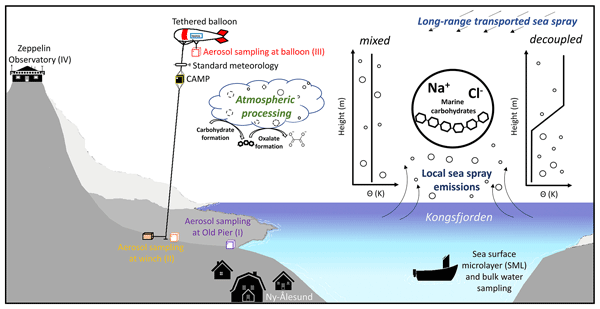
Sebastian Zeppenfeld, Jonas Schaefer, Christian Pilz, Kerstin Ebell, Moritz Zeising, Frank Stratmann, Holger Siebert, Birgit Wehner, Matthias Wietz, Astrid Bracher, and Manuela van Pinxteren
Atmos. Chem. Phys., 26, 7235–7260, https://doi.org/10.5194/acp-26-7235-2026, https://doi.org/10.5194/acp-26-7235-2026, 2026
Short summary
Short summary
Sea spray aerosol transports inorganic salts and carbohydrates from the ocean into the atmosphere. In this field study conducted in Svalbard, we found that carbohydrates reach elevated altitudes that are relevant for cloud formation and properties.
Abel Dechenne, Aida Alvera-Azcarate, Jean-Marie Beckers, and Alexander Barth
EGUsphere, https://doi.org/10.5194/egusphere-2026-1627, https://doi.org/10.5194/egusphere-2026-1627, 2026
Short summary
Short summary
The current work is dedicated to interpolate surface currents of the Mediterranean Sea. These surface currents maps are created based on drifters, satellites and radars observations. With a nine years analysis, the reconstructed surface currents highlight the winter to summer variation as a coastal, deep and stable circulation to a gyral and non-stable circulation. The central Ionian Sea was analysed, we highlighted the appearance of two gyres associated to the autumn-winter period.
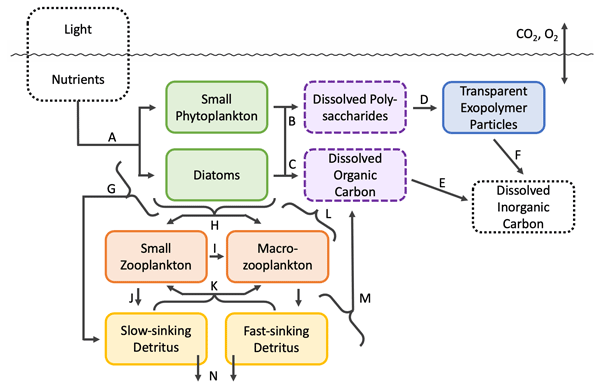
Moritz Zeising, Laurent Oziel, Silke Thoms, Özgür Gürses, Judith Hauck, Bernd Heinold, Svetlana N. Losa, Manuela van Pinxteren, Christoph Völker, Sebastian Zeppenfeld, and Astrid Bracher
Geosci. Model Dev., 19, 2077–2109, https://doi.org/10.5194/gmd-19-2077-2026, https://doi.org/10.5194/gmd-19-2077-2026, 2026
Short summary
Short summary
We assess the implementation of additional organic carbon pathways into a global setup of a numerical model, which simulates the ocean circulation, sea ice, and biogeochemical processes. With a focus on the Arctic Ocean, this model tracks the temporal and spatial dynamics of phytoplankton, exudation of organic carbon, and its aggregation to so-called transparent exopolymer particles. We evaluate the simulation using measurements from ship-based and remote-sensing campaigns in the Arctic Ocean.
Cécile Pujol, Alexander Barth, Iván Pérez-Santos, Pamela Linford, and Aida Alvera-Azcárate
Earth Syst. Sci. Data Discuss., https://doi.org/10.5194/essd-2026-42, https://doi.org/10.5194/essd-2026-42, 2026
Revised manuscript accepted for ESSD
Short summary
Short summary
In this study, we present the first high-resolution, four-dimensional temperature climatology for Northern Chilean Patagonia, a region characterised by a complex network of fjords and channels. The climatology win based on approximately three million in situ observations collected over the past 75 years and interpolated into continuous temperature fields with a horizontal resolution of about 900 m and 32 vertical levels, providing monthly and daily fields from the surface to 400 m depth.
Anisbel Leon-Marcos, Manuela van Pinxteren, Sebastian Zeppenfeld, Moritz Zeising, Astrid Bracher, Laurent Oziel, Ina Tegen, and Bernd Heinold
Atmos. Chem. Phys., 26, 1109–1144, https://doi.org/10.5194/acp-26-1109-2026, https://doi.org/10.5194/acp-26-1109-2026, 2026
Short summary
Short summary
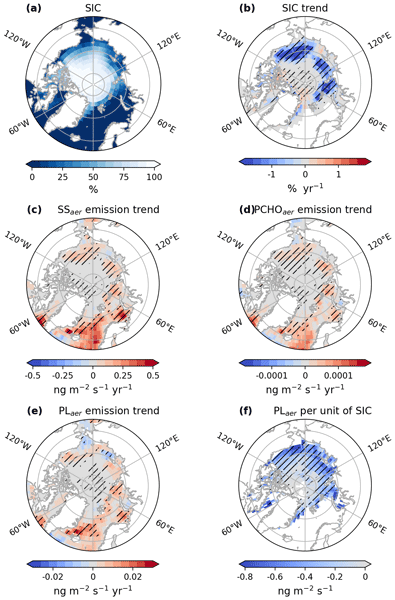
This study combines modelled ocean surface concentrations of major marine organic groups with the aerosol-climate model ECHAM-HAM to quantify species-resolved primary marine organic aerosol emissions from 1990 to 2019. Strong seasonality appears, driven by productivity and summer sea-ice loss. Emissions and burdens rise over time, with regional differences across the Arctic and aerosol species.
Bayoumy Mohamed, Alexander Barth, Dimitry Van der Zande, and Aida Alvera-Azcárate
Ocean Sci., 21, 2505–2525, https://doi.org/10.5194/os-21-2505-2025, https://doi.org/10.5194/os-21-2505-2025, 2025
Short summary
Short summary
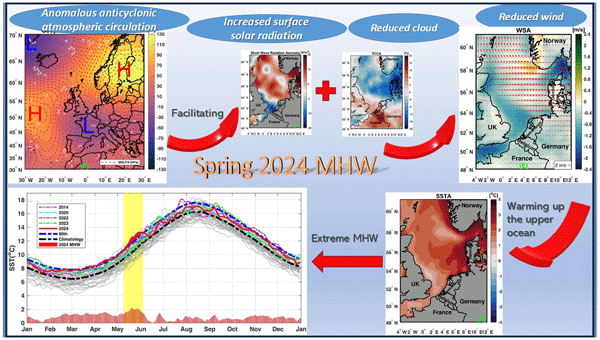
We quantified the role of climate change and internal variability in marine heatwaves (MHWs) in the North Sea over more than 4 decades (1982–2024). A key finding is the 2013 climate shift, which was associated with increased warming and MHWs. Long-term warming accounted for 80 % of the observed trend in MHW frequency. The most intense MHW event in May 2024 was attributed to an anomalous anticyclonic atmospheric circulation. We also explored the impact of MHWs on chlorophyll concentration.
Hongyan Xi, Marine Bretagnon, Ehsan Mehdipour, Julien Demaria, Antoine Mangin, and Astrid Bracher
State Planet, 6-osr9, 7, https://doi.org/10.5194/sp-6-osr9-7-2025, https://doi.org/10.5194/sp-6-osr9-7-2025, 2025
Short summary
Short summary
To better understand the marine phytoplankton variability on different scales in both space and time, this study proposes a machine-learning-based scheme to provide continuous and consistent long-term observations of various phytoplankton groups from space on a global scale, which enables time series analysis for further trend and anomaly investigations. This study provides an essential ocean variable to help assess the ocean health in the biogeochemical aspect.
Matjaž Zupančič Muc, Vitjan Zavrtanik, Alexander Barth, Aida Alvera-Azcarate, Matjaž Ličer, and Matej Kristan
Geosci. Model Dev., 18, 5549–5573, https://doi.org/10.5194/gmd-18-5549-2025, https://doi.org/10.5194/gmd-18-5549-2025, 2025
Short summary
Short summary
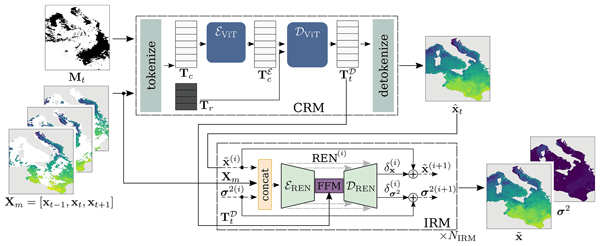
Accurate sea surface temperature data (SST) are crucial for weather forecasting and climate modeling, but satellite observations are often incomplete. We developed a new method called CRITER, which uses machine learning to fill in the gaps in SST data. Our two-stage approach reconstructs large-scale patterns and refines details. Tested on Mediterranean, Adriatic, and Atlantic sea data, CRITER outperforms current methods, reducing errors by up to 44 %.
Anisbel Leon-Marcos, Moritz Zeising, Manuela van Pinxteren, Sebastian Zeppenfeld, Astrid Bracher, Elena Barbaro, Anja Engel, Matteo Feltracco, Ina Tegen, and Bernd Heinold
Geosci. Model Dev., 18, 4183–4213, https://doi.org/10.5194/gmd-18-4183-2025, https://doi.org/10.5194/gmd-18-4183-2025, 2025
Short summary
Short summary
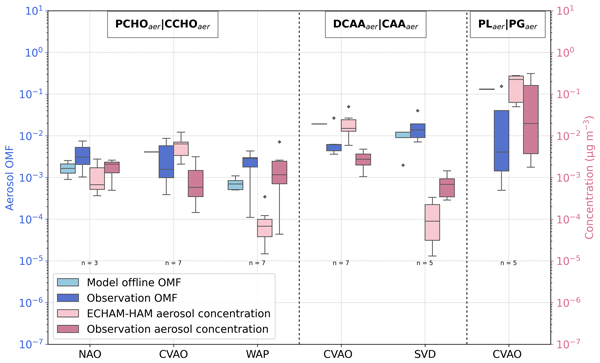
This study represents the primary marine organic aerosol (PMOA) emissions, focusing on their sea–atmosphere transfer. Using the FESOM2.1–REcoM3 model, concentrations of key organic biomolecules were estimated and integrated into the ECHAM6.3–HAM2.3 aerosol–climate model. Results highlight the influence of marine biological activity and surface winds on PMOA emissions, with reasonably good agreement with observations improving aerosol representation in the southern oceans.
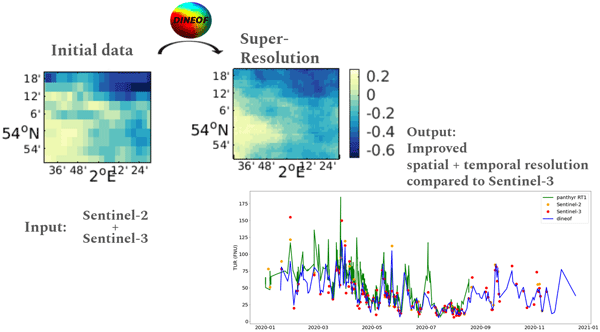
Aida Alvera-Azcárate, Dimitry Van der Zande, Alexander Barth, Antoine Dille, Joppe Massant, and Jean-Marie Beckers
Ocean Sci., 21, 787–805, https://doi.org/10.5194/os-21-787-2025, https://doi.org/10.5194/os-21-787-2025, 2025
Short summary
Short summary
This work presents an approach for increasing the spatial resolution of satellite data and interpolating gaps due to cloud cover, using a method called DINEOF (data-interpolating empirical orthogonal functions). The method is tested on turbidity and chlorophyll-a concentration data in the Belgian coastal zone and the North Sea. The results show that we are able to improve the spatial resolution of these data in order to perform analyses of spatial and temporal variability in coastal regions.
Cécile Pujol, Alexander Barth, Iván Pérez-Santos, Pamela Muñoz-Linford, and Aida Alvera-Azcárate
EGUsphere, https://doi.org/10.5194/egusphere-2025-1421, https://doi.org/10.5194/egusphere-2025-1421, 2025
Preprint archived
Short summary
Short summary
Marine heatwaves and cold spells are periods of extreme sea temperatures. This study focuses on Chilean Northern Patagonia, a fjord region vulnerable due to its aquaculture. It aims to understand these events' distribution and identify the most affected basins. Results show higher intensity in enclosed areas like Reloncaví Sound and Puyuhuapi Fjord. Marine heatwaves are becoming more frequent over time, while cold spells are decreasing.
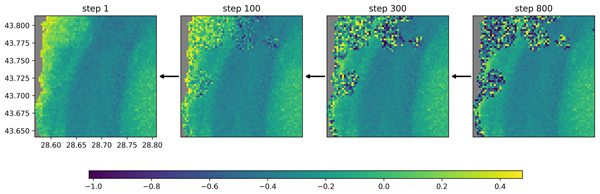
Alexander Barth, Julien Brajard, Aida Alvera-Azcárate, Bayoumy Mohamed, Charles Troupin, and Jean-Marie Beckers
Ocean Sci., 20, 1567–1584, https://doi.org/10.5194/os-20-1567-2024, https://doi.org/10.5194/os-20-1567-2024, 2024
Short summary
Short summary
Most satellite observations have gaps, for example, due to clouds. This paper presents a method to reconstruct missing data in satellite observations of the chlorophyll a concentration in the Black Sea. Rather than giving a single possible reconstructed field, the discussed method provides an ensemble of possible reconstructions using a generative neural network. The resulting ensemble is validated using techniques from numerical weather prediction and ocean modelling.
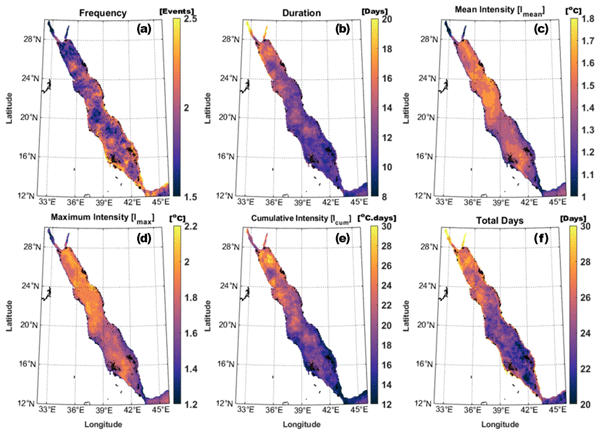
Manal Hamdeno, Aida Alvera-Azcárate, George Krokos, and Ibrahim Hoteit
Ocean Sci., 20, 1087–1107, https://doi.org/10.5194/os-20-1087-2024, https://doi.org/10.5194/os-20-1087-2024, 2024
Short summary
Short summary
Our study focuses on the characteristics of MHWs in the Red Sea during the last 4 decades. Using satellite-derived sea surface temperatures (SSTs), we found a clear warming trend in the Red Sea since 1994, which has intensified significantly since 2016. This SST rise was associated with an increase in the frequency and days of MHWs. In addition, a correlation was found between the frequency of MHWs and some climate modes, which was more pronounced in some years of the study period.
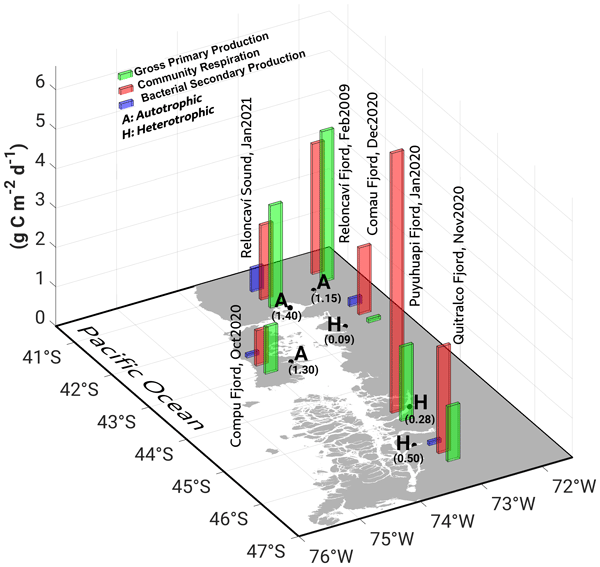
Pamela Linford, Iván Pérez-Santos, Paulina Montero, Patricio A. Díaz, Claudia Aracena, Elías Pinilla, Facundo Barrera, Manuel Castillo, Aida Alvera-Azcárate, Mónica Alvarado, Gabriel Soto, Cécile Pujol, Camila Schwerter, Sara Arenas-Uribe, Pilar Navarro, Guido Mancilla-Gutiérrez, Robinson Altamirano, Javiera San Martín, and Camila Soto-Riquelme
Biogeosciences, 21, 1433–1459, https://doi.org/10.5194/bg-21-1433-2024, https://doi.org/10.5194/bg-21-1433-2024, 2024
Short summary
Short summary
The Patagonian fjords comprise a world region where low-oxygen water and hypoxia conditions are observed. An in situ dataset was used to quantify the mechanism involved in the presence of these conditions in northern Patagonian fjords. Water mass analysis confirmed the contribution of Equatorial Subsurface Water in the advection of the low-oxygen water, and hypoxic conditions occurred when the community respiration rate exceeded the gross primary production.
Sebastian Zeppenfeld, Manuela van Pinxteren, Markus Hartmann, Moritz Zeising, Astrid Bracher, and Hartmut Herrmann
Atmos. Chem. Phys., 23, 15561–15587, https://doi.org/10.5194/acp-23-15561-2023, https://doi.org/10.5194/acp-23-15561-2023, 2023
Short summary
Short summary
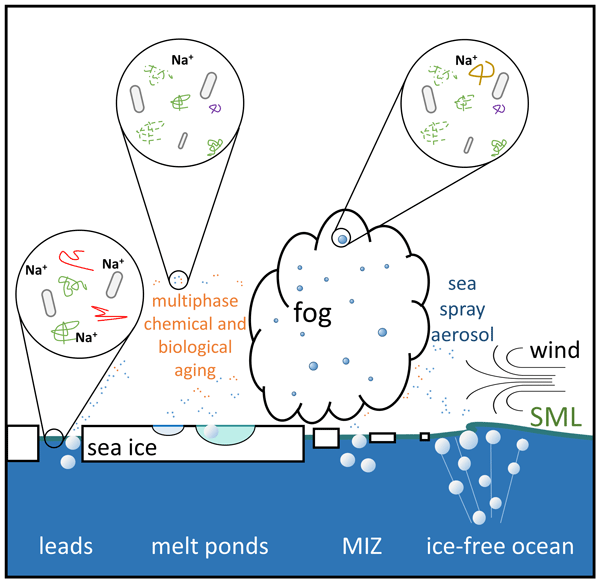
Marine carbohydrates are produced in the surface of the ocean, enter the atmophere as part of sea spray aerosol particles, and potentially contribute to the formation of fog and clouds. Here, we present the results of a sea–air transfer study of marine carbohydrates conducted in the high Arctic. Besides a chemo-selective transfer, we observed a quick atmospheric aging of carbohydrates, possibly as a result of both biotic and abiotic processes.
Aleksandra Cherkasheva, Rustam Manurov, Piotr Kowalczuk, Alexandra N. Loginova, Monika Zabłocka, and Astrid Bracher
EGUsphere, https://doi.org/10.5194/egusphere-2023-2495, https://doi.org/10.5194/egusphere-2023-2495, 2023
Preprint archived
Short summary
Short summary
We aimed to improve the quality of regional Greenland Sea primary production estimates. Seventy two versions of primary production model setups were tested against field data. Best performing models had local biomass and light absorption profiles. Thus by using local parametrizations for these parameters we can improve Arctic primary production model performance. Annual Greenland Sea basin estimates are larger than previously reported.
Hongyan Xi, Marine Bretagnon, Svetlana N. Losa, Vanda Brotas, Mara Gomes, Ilka Peeken, Leonardo M. A. Alvarado, Antoine Mangin, and Astrid Bracher
State Planet, 1-osr7, 5, https://doi.org/10.5194/sp-1-osr7-5-2023, https://doi.org/10.5194/sp-1-osr7-5-2023, 2023
Short summary
Short summary
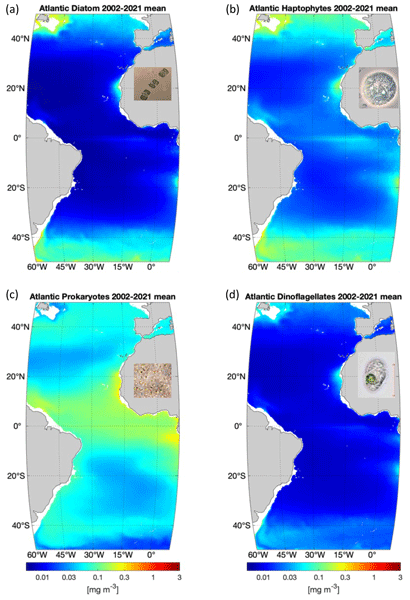
Continuous monitoring of phytoplankton groups using satellite data is crucial for understanding global ocean phytoplankton variability on different scales in both space and time. This study focuses on four important phytoplankton groups in the Atlantic Ocean to investigate their trend, anomaly and phenological characteristics both over the whole region and at subscales. This study paves the way to promote potentially important ocean monitoring indicators to help sustain the ocean health.
Francesca Doglioni, Robert Ricker, Benjamin Rabe, Alexander Barth, Charles Troupin, and Torsten Kanzow
Earth Syst. Sci. Data, 15, 225–263, https://doi.org/10.5194/essd-15-225-2023, https://doi.org/10.5194/essd-15-225-2023, 2023
Short summary
Short summary
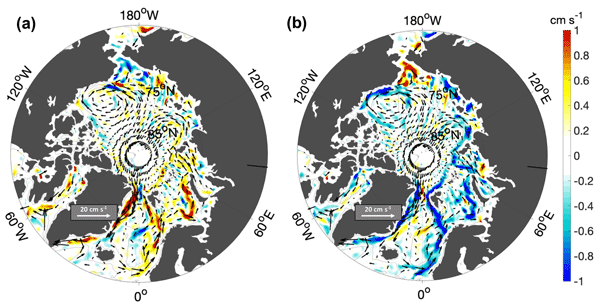
This paper presents a new satellite-derived gridded dataset, including 10 years of sea surface height and geostrophic velocity at monthly resolution, over the Arctic ice-covered and ice-free regions, up to 88° N. We assess the dataset by comparison to independent satellite and mooring data. Results correlate well with independent satellite data at monthly timescales, and the geostrophic velocity fields can resolve seasonal to interannual variability of boundary currents wider than about 50 km.
André Valente, Shubha Sathyendranath, Vanda Brotas, Steve Groom, Michael Grant, Thomas Jackson, Andrei Chuprin, Malcolm Taberner, Ruth Airs, David Antoine, Robert Arnone, William M. Balch, Kathryn Barker, Ray Barlow, Simon Bélanger, Jean-François Berthon, Şükrü Beşiktepe, Yngve Borsheim, Astrid Bracher, Vittorio Brando, Robert J. W. Brewin, Elisabetta Canuti, Francisco P. Chavez, Andrés Cianca, Hervé Claustre, Lesley Clementson, Richard Crout, Afonso Ferreira, Scott Freeman, Robert Frouin, Carlos García-Soto, Stuart W. Gibb, Ralf Goericke, Richard Gould, Nathalie Guillocheau, Stanford B. Hooker, Chuamin Hu, Mati Kahru, Milton Kampel, Holger Klein, Susanne Kratzer, Raphael Kudela, Jesus Ledesma, Steven Lohrenz, Hubert Loisel, Antonio Mannino, Victor Martinez-Vicente, Patricia Matrai, David McKee, Brian G. Mitchell, Tiffany Moisan, Enrique Montes, Frank Muller-Karger, Aimee Neeley, Michael Novak, Leonie O'Dowd, Michael Ondrusek, Trevor Platt, Alex J. Poulton, Michel Repecaud, Rüdiger Röttgers, Thomas Schroeder, Timothy Smyth, Denise Smythe-Wright, Heidi M. Sosik, Crystal Thomas, Rob Thomas, Gavin Tilstone, Andreia Tracana, Michael Twardowski, Vincenzo Vellucci, Kenneth Voss, Jeremy Werdell, Marcel Wernand, Bozena Wojtasiewicz, Simon Wright, and Giuseppe Zibordi
Earth Syst. Sci. Data, 14, 5737–5770, https://doi.org/10.5194/essd-14-5737-2022, https://doi.org/10.5194/essd-14-5737-2022, 2022
Short summary
Short summary
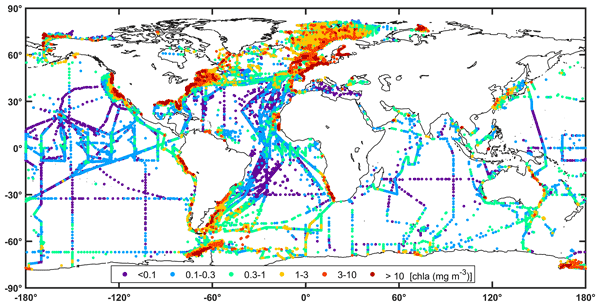
A compiled set of in situ data is vital to evaluate the quality of ocean-colour satellite data records. Here we describe the global compilation of bio-optical in situ data (spanning from 1997 to 2021) used for the validation of the ocean-colour products from the ESA Ocean Colour Climate Change Initiative (OC-CCI). The compilation merges and harmonizes several in situ data sources into a simple format that could be used directly for the evaluation of satellite-derived ocean-colour data.
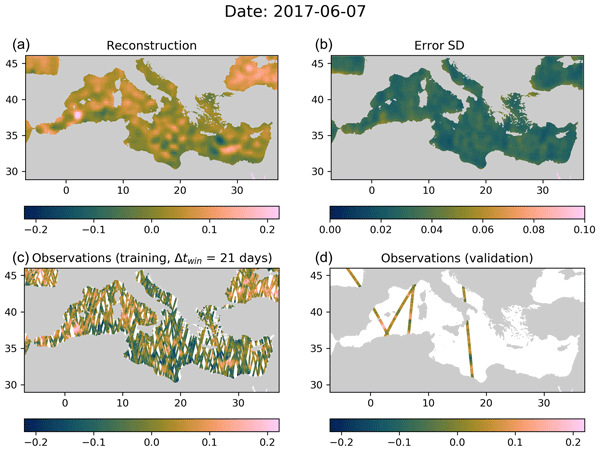
Alexander Barth, Aida Alvera-Azcárate, Charles Troupin, and Jean-Marie Beckers
Geosci. Model Dev., 15, 2183–2196, https://doi.org/10.5194/gmd-15-2183-2022, https://doi.org/10.5194/gmd-15-2183-2022, 2022
Short summary
Short summary
Earth-observing satellites provide routine measurement of several ocean parameters. However, these datasets have a significant amount of missing data due to the presence of clouds or other limitations of the employed sensors. This paper describes a method to infer the value of the missing satellite data based on a convolutional autoencoder (a specific type of neural network architecture). The technique also provides a reliable error estimate of the interpolated value.
M. A. Soppa, D. A. Dinh, B. Silva, F. Steinmetz, L. Alvarado, and A. Bracher
Int. Arch. Photogramm. Remote Sens. Spatial Inf. Sci., XLVI-1-W1-2021, 69–72, https://doi.org/10.5194/isprs-archives-XLVI-1-W1-2021-69-2022, https://doi.org/10.5194/isprs-archives-XLVI-1-W1-2021-69-2022, 2022
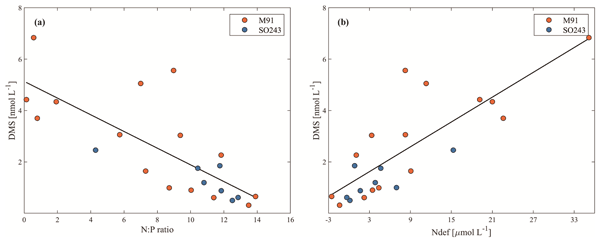
Yanan Zhao, Dennis Booge, Christa A. Marandino, Cathleen Schlundt, Astrid Bracher, Elliot L. Atlas, Jonathan Williams, and Hermann W. Bange
Biogeosciences, 19, 701–714, https://doi.org/10.5194/bg-19-701-2022, https://doi.org/10.5194/bg-19-701-2022, 2022
Short summary
Short summary
We present here, for the first time, simultaneously measured dimethylsulfide (DMS) seawater concentrations and DMS atmospheric mole fractions from the Peruvian upwelling region during two cruises in December 2012 and October 2015. Our results indicate low oceanic DMS concentrations and atmospheric DMS molar fractions in surface waters and the atmosphere, respectively. In addition, the Peruvian upwelling region was identified as an insignificant source of DMS emissions during both periods.
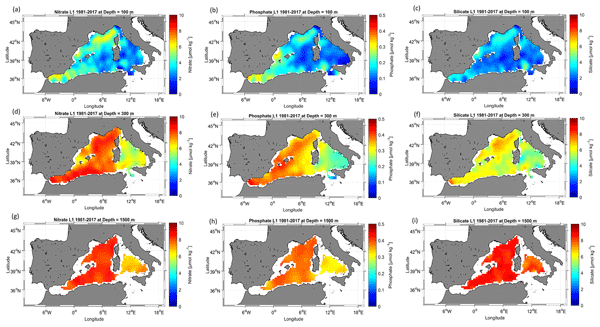
Malek Belgacem, Katrin Schroeder, Alexander Barth, Charles Troupin, Bruno Pavoni, Patrick Raimbault, Nicole Garcia, Mireno Borghini, and Jacopo Chiggiato
Earth Syst. Sci. Data, 13, 5915–5949, https://doi.org/10.5194/essd-13-5915-2021, https://doi.org/10.5194/essd-13-5915-2021, 2021
Short summary
Short summary
The Mediterranean Sea exhibits an anti-estuarine circulation, responsible for its low productivity. Understanding this peculiar character is still a challenge since there is no exact quantification of nutrient sinks and sources. Because nutrient in situ observations are generally infrequent and scattered in space and time, climatological mapping is often applied to sparse data in order to understand the biogeochemical state of the ocean. The dataset presented here partly addresses these issues.
Estrella Olmedo, Verónica González-Gambau, Antonio Turiel, Cristina González-Haro, Aina García-Espriu, Marilaure Gregoire, Aida Álvera-Azcárate, Luminita Buga, and Marie-Hélène Rio
Earth Syst. Sci. Data Discuss., https://doi.org/10.5194/essd-2021-364, https://doi.org/10.5194/essd-2021-364, 2021
Revised manuscript not accepted
Short summary
Short summary
We present the first dedicated satellite salinity product in the Black Sea. We use the measurements provided by the European Soil Moisture and Ocean Salinity mission. We introduce enhanced algorithms for dealing with the contamination produced by the Radio Frequency Interferences that strongly affect this basin. We also provide a complete quality assessment of the new product and give an estimated accuracy of it.
Cited articles
Abdel Latif, B., Lecerf, R., Mercier, G., and Hubert-Moy, L.: Preprocessing of Low-Resolution Time Series Contaminated by Clouds and Shadows, IEEE Trans. Geosci. Remote Sensing, 46, 2083–2096, https://doi.org/10.1109/TGRS.2008.916473, 2008.
Alfred-Wegener-Institut Helmholtz-Zentrum für Polar- und Meeresforschung: Polar Research and Supply Vessel POLARSTERN Operated by the Alfred-Wegener-Institute, Journal of Large-Scale Research Facilities, 3, A119–A119, https://doi.org/10.17815/jlsrf-3-163, 2017.
Alvera-Azcárate, A., Barth, A., Rixen, M., and Beckers, J. M.: Reconstruction of incomplete oceanographic data sets using empirical orthogonal functions: application to the Adriatic Sea surface temperature, Ocean Modelling, 9, 325–346, https://doi.org/10.1016/j.ocemod.2004.08.001, 2005.
Alvera-Azcárate, A., Barth, A., Beckers, J.-M., and Weisberg, R. H.: Multivariate reconstruction of missing data in sea surface temperature, chlorophyll, and wind satellite fields, Journal of Geophysical Research Oceans, 112, https://doi.org/10.1029/2006JC003660, 2007.
Alvera-Azcárate, A., Barth, A., Sirjacobs, D., and Beckers, J.-M.: Enhancing temporal correlations in EOF expansions for the reconstruction of missing data using DINEOF, Ocean Sci., 5, 475–485, https://doi.org/10.5194/os-5-475-2009, 2009.
Alvera-Azcárate, A., Van der Zande, D., Barth, A., Troupin, C., Martin, S., and Beckers, J.-M.: Analysis of 23 Years of Daily Cloud-Free Chlorophyll and Suspended Particulate Matter in the Greater North Sea, Frontiers in Marine Science, 8, https://doi.org/10.3389/fmars.2021.707632, 2021.
Alvera-Azcárate, A., Van der Zande, D., Barth, A., Dille, A., Massant, J., and Beckers, J.-M.: Generation of super-resolution gap-free ocean colour satellite products using data-interpolating empirical orthogonal functions (DINEOF), Ocean Sci., 21, 787–805, https://doi.org/10.5194/os-21-787-2025, 2025.
Aumont, O., Ethé, C., Tagliabue, A., Bopp, L., and Gehlen, M.: PISCES-v2: an ocean biogeochemical model for carbon and ecosystem studies, Geosci. Model Dev., 8, 2465–2513, https://doi.org/10.5194/gmd-8-2465-2015, 2015.
Bailey, S. W. and Werdell, P. J.: A multi-sensor approach for the on-orbit validation of ocean color satellite data products, Remote Sensing of Environment, 102, 12–23, https://doi.org/10.1016/j.rse.2006.01.015, 2006.
Barth, A.: gher-uliege/DINCAE.jl: v2.0.2, Zenodo [code], https://doi.org/10.5281/zenodo.5575066, 2025.
Barth, A., Alvera-Azcárate, A., Licer, M., and Beckers, J.-M.: DINCAE 1.0: a convolutional neural network with error estimates to reconstruct sea surface temperature satellite observations, Geosci. Model Dev., 13, 1609–1622, https://doi.org/10.5194/gmd-13-1609-2020, 2020.
Barth, A., Alvera-Azcárate, A., Troupin, C., Beckers, J.-M., and Van der Zande, D.: Reconstruction of Missing Data in Satellite Images of the Southern North Sea Using a Convolutional Neural Network (Dincae), in: 2021 IEEE International Geoscience and Remote Sensing Symposium IGARSS, 2021 IEEE International Geoscience and Remote Sensing Symposium IGARSS, 7493–7496, https://doi.org/10.1109/IGARSS47720.2021.9554045, 2021.
Barth, A., Alvera-Azcárate, A., Troupin, C., and Beckers, J.-M.: DINCAE 2.0: multivariate convolutional neural network with error estimates to reconstruct sea surface temperature satellite and altimetry observations, Geosci. Model Dev., 15, 2183–2196, https://doi.org/10.5194/gmd-15-2183-2022, 2022.
Beckers, J. M. and Rixen, M.: EOF Calculations and Data Filling from Incomplete Oceanographic Datasets, Journal of Atmospheric and Oceanic Technology, 20, 1839–1856, https://doi.org/10.1175/1520-0426(2003)020<1839:ECADFF>2.0.CO;2, 2003.
Beckers, J.-M., Barth, A., and Alvera-Azcárate, A.: DINEOF reconstruction of clouded images including error maps – application to the Sea-Surface Temperature around Corsican Island, Ocean Sci., 2, 183–199, https://doi.org/10.5194/os-2-183-2006, 2006.
Belkin, I. M. and O'Reilly, J. E.: An algorithm for oceanic front detection in chlorophyll and SST satellite imagery, Journal of Marine Systems, 78, 319–326, https://doi.org/10.1016/j.jmarsys.2008.11.018, 2009.
Blondeau-Patissier, D., Gower, J. F. R., Dekker, A. G., Phinn, S. R., and Brando, V. E.: A review of ocean color remote sensing methods and statistical techniques for the detection, mapping and analysis of phytoplankton blooms in coastal and open oceans, Progress in Oceanography, 123, 123–144, https://doi.org/10.1016/j.pocean.2013.12.008, 2014.
Bopp, L., Resplandy, L., Orr, J. C., Doney, S. C., Dunne, J. P., Gehlen, M., Halloran, P., Heinze, C., Ilyina, T., Séférian, R., Tjiputra, J., and Vichi, M.: Multiple stressors of ocean ecosystems in the 21st century: projections with CMIP5 models, Biogeosciences, 10, 6225–6245, https://doi.org/10.5194/bg-10-6225-2013, 2013.
Bracher, A., Bouman, H. A., Brewin, R. J. W., Bricaud, A., Brotas, V., Ciotti, A. M., Clementson, L., Devred, E., Di Cicco, A., Dutkiewicz, S., Hardman-Mountford, N. J., Hickman, A. E., Hieronymi, M., Hirata, T., Losa, S. N., Mouw, C. B., Organelli, E., Raitsos, D. E., Uitz, J., Vogt, M., and Wolanin, A.: Obtaining phytoplankton diversity from ocean color: A scientific roadmap for future development, Frontiers in Marine Science, 4, https://doi.org/10.3389/fmars.2017.00055, 2017.
Bracher, A., Xi, H., Dinter, T., Mangin, A., Strass, V., von Appen, W. J., and Wiegmann, S.: High Resolution Water Column Phytoplankton Composition Across the Atlantic Ocean From Ship-Towed Vertical Undulating Radiometry, Frontiers in Marine Science, 7, https://doi.org/10.3389/fmars.2020.00235, 2020a.
Bracher, A., Wiegmann, S., Xi, H., and Dinter, T.: Phytoplankton pigment concentration and phytoplankton groups measured on water samples obtained during POLARSTERN cruise PS113 in the Atlantic Ocean, PANGAEA [data set], https://doi.org/10.1594/PANGAEA.911061, 2020b.
Campbell, J. W.: The lognormal distribution as a model for bio-optical variability in the sea, Journal of Geophysical Research: Oceans, 100, 13237–13254, https://doi.org/10.1029/95JC00458, 1995.
Chapman, C. and Charantonis, A. A.: Reconstruction of Subsurface Velocities From Satellite Observations Using Iterative Self-Organizing Maps, IEEE Geosci. Remote Sensing Lett., 14, 617–620, https://doi.org/10.1109/LGRS.2017.2665603, 2017.
Claustre, H., Hooker, S. B., Van Heukelem, L., Berthon, J.-F., Barlow, R., Ras, J., Sessions, H., Targa, C., Thomas, C. S., van der Linde, D., and Marty, J.-C.: An intercomparison of HPLC phytoplankton pigment methods using in situ samples: application to remote sensing and database activities, Marine Chemistry, 85, 41–61, https://doi.org/10.1016/j.marchem.2003.09.002, 2004.
Donlon, C. J., Martin, M., Stark, J., Roberts-Jones, J., Fiedler, E., and Wimmer, W.: The Operational Sea Surface Temperature and Sea Ice Analysis (OSTIA) system, Remote Sensing of Environment, 116, 140–158, https://doi.org/10.1016/j.rse.2010.10.017, 2012.
Dutkiewicz, S., Hickman, A. E., Jahn, O., Gregg, W. W., Mouw, C. B., and Follows, M. J.: Capturing optically important constituents and properties in a marine biogeochemical and ecosystem model, Biogeosciences, 12, 4447–4481, https://doi.org/10.5194/bg-12-4447-2015, 2015.
E.U. Copernicus Marine Service Information: Global Ocean OSTIA Sea Surface Temperature and Sea Ice Reprocessed, Copernicus Marine Service [data set], https://doi.org/10.48670/moi-00168, 2022.
E.U. Copernicus Marine Service Information: Global Ocean Colour (Copernicus-GlobColour), Bio-Geo-Chemical, L3 (daily) from Satellite Observations (1997–ongoing), Copernicus Marine Service [data set], https://doi.org/10.48670/moi-00280, 2023.
EUMETSAT: Recommendations for Sentinel-3 OLCI Ocean Colour product validations in comparison with in situ measurements Matchup Protocols, EUM/SEN3/DOC/19/1092968, https://user.eumetsat.int/s3/eup-strapi-media/Recommendations_for_Sentinel_3_OLCI_Ocean_Colour_product_validations_in_comparison_with_in_situ_measurements_Matchup_Protocols_V8_B_e6c62ce677.pdf (last access: 6 September 2024), 2022.
Evensen, G.: Data Assimilation: The Ensemble Kalman Filter, Springer Berlin Heidelberg, Berlin, Heidelberg, https://doi.org/10.1007/978-3-642-03711-5, 2009.
Falkowski, P. G., Laws, E. A., Barber, R. T., and Murray, J. W.: Phytoplankton and Their Role in Primary, New, and Export Production, in: Ocean Biogeochemistry. Global Change — The IGBP Series (closed), edited by: Fasham, M. J. R., Springer, Berlin Heidelberg, 99–121, https://doi.org/10.1007/978-3-642-55844-3_5, 2003.
Fennel, K., Gehlen, M., Brasseur, P., Brown, C. W., Ciavatta, S., Cossarini, G., Crise, A., Edwards, C. A., Ford, D., Friedrichs, M. A. M., Gregoire, M., Jones, E., Kim, H. C., Lamouroux, J., Murtugudde, R., and Perruche, C.: Advancing marine biogeochemical and ecosystem reanalyses and forecasts as tools for monitoring and managing ecosystem health, Frontiers in Marine Science, 6, 89, https://doi.org/10.3389/fmars.2019.00089, 2019.
Field, C. B., Behrenfeld, M. J., Randerson, J. T., and Falkowski, P.: Primary production of the biosphere: Integrating terrestrial and oceanic components, Science, 281, 237–240, 1998.
Flanders Marine Institute: Maritime Boundaries Geodatabase: Maritime Boundaries and Exclusive Economic Zones (200NM), version 12, https://doi.org/10.14284/632, 2023.
Flanders Marine Institute: Maritime Boundaries Geodatabase: Extended Continental Shelves, version 2, https://doi.org/10.14284/697, 2024.
Good, S., Fiedler, E., Mao, C., Martin, M. J., Maycock, A., Reid, R., Roberts-Jones, J., Searle, T., Waters, J., While, J., and Worsfold, M.: The Current Configuration of the OSTIA System for Operational Production of Foundation Sea Surface Temperature and Ice Concentration Analyses, Remote Sensing, 12, 720, https://doi.org/10.3390/rs12040720, 2020.
Gürses, Ö., Oziel, L., Karakuş, O., Sidorenko, D., Völker, C., Ye, Y., Zeising, M., Butzin, M., and Hauck, J.: Ocean biogeochemistry in the coupled ocean–sea ice–biogeochemistry model FESOM2.1–REcoM3, Geosci. Model Dev., 16, 4883–4936, https://doi.org/10.5194/gmd-16-4883-2023, 2023.
Han, Z., He, Y., Liu, G., and Perrie, W.: Application of DINCAE to Reconstruct the Gaps in Chlorophyll-a Satellite Observations in the South China Sea and West Philippine Sea, Remote Sensing, 12, 480, https://doi.org/10.3390/rs12030480, 2020.
Hilborn, A. and Costa, M.: Applications of DINEOF to Satellite-Derived Chlorophyll-a from a Productive Coastal Region, Remote Sensing, 10, 1449, https://doi.org/10.3390/rs10091449, 2018.
Hirata, T., Hardman-Mountford, N. J., Brewin, R. J. W., Aiken, J., Barlow, R., Suzuki, K., Isada, T., Howell, E., Hashioka, T., Noguchi-Aita, M., and Yamanaka, Y.: Synoptic relationships between surface Chlorophyll-a and diagnostic pigments specific to phytoplankton functional types, Biogeosciences, 8, 311–327, https://doi.org/10.5194/bg-8-311-2011, 2011.
Hong, Z., Long, D., Li, X., Wang, Y., Zhang, J., Hamouda, M. A., and Mohamed, M. M.: A global daily gap-filled chlorophyll-a dataset in open oceans during 2001–2021 from multisource information using convolutional neural networks, Earth Syst. Sci. Data, 15, 5281–5300, https://doi.org/10.5194/essd-15-5281-2023, 2023.
Hosoda, K. and Sakaida, F.: Global Daily High-Resolution Satellite-Based Foundation Sea Surface Temperature Dataset: Development and Validation against Two Definitions of Foundation SST, Remote Sensing, 8, 962, https://doi.org/10.3390/rs8110962, 2016.
Huot, Y., Babin, M., Bruyant, F., Grob, C., Twardowski, M. S., and Claustre, H.: Relationship between photosynthetic parameters and different proxies of phytoplankton biomass in the subtropical ocean, Biogeosciences, 4, 853–868, https://doi.org/10.5194/bg-4-853-2007, 2007.
IOCCG: Phytoplankton Functional Types from Space, International Ocean Colour Coordinating Group (IOCCG) Dartmouth, NS, Canada, https://doi.org/10.25607/OBP-106, 2014.
IOCCG: Uncertainties in ocean colour remote sensing, International Ocean Colour Coordinating Group, Dartmouth, Nova Scotia, https://doi.org/10.25607/OBP-696, 2019.
Ji, C., Zhang, Y., Cheng, Q., and Tsou, J. Y.: Investigating ocean surface responses to typhoons using reconstructed satellite data, International Journal of Applied Earth Observation and Geoinformation, 103, 102474, https://doi.org/10.1016/j.jag.2021.102474, 2021.
Jouini, M., Lévy, M., Crépon, M., and Thiria, S.: Reconstruction of satellite chlorophyll images under heavy cloud coverage using a neural classification method, Remote Sensing of Environment, 131, 232–246, https://doi.org/10.1016/j.rse.2012.11.025, 2013.
Jung, S., Yoo, C., and Im, J.: High-Resolution Seamless Daily Sea Surface Temperature Based on Satellite Data Fusion and Machine Learning over Kuroshio Extension, Remote Sensing, 14, 575, https://doi.org/10.3390/rs14030575, 2022.
Kandasamy, S., Baret, F., Verger, A., Neveux, P., and Weiss, M.: A comparison of methods for smoothing and gap filling time series of remote sensing observations – application to MODIS LAI products, Biogeosciences, 10, 4055–4071, https://doi.org/10.5194/bg-10-4055-2013, 2013.
Kostopoulou, E.: Applicability of ordinary Kriging modeling techniques for filling satellite data gaps in support of coastal management, Model. Earth Syst. Environ., 7, 1145–1158, https://doi.org/10.1007/s40808-020-00940-5, 2021.
Krasnopolsky, V., Nadiga, S., Mehra, A., Bayler, E., and Behringer, D.: Neural Networks Technique for Filling Gaps in Satellite Measurements: Application to Ocean Color Observations, Computational Intelligence and Neuroscience, 2016, e6156513, https://doi.org/10.1155/2016/6156513, 2015.
Legendre, P.: Model II regression user's guide, R edition, R Vignette, 14 pp., https://cran.r-project.org/web/packages/lmodel2/vignettes/mod2user.pdf (last access: 6 June 2024), 1998.
Legendre, P. and Legendre, L.: Numerical ecology, Elsevier, ISBN 978-0-444-53868-0, 2012.
Lepot, M., Aubin, J.-B., and Clemens, F. H. L. R.: Interpolation in Time Series: An Introductive Overview of Existing Methods, Their Performance Criteria and Uncertainty Assessment, Water, 9, 796, https://doi.org/10.3390/w9100796, 2017.
Li, J. and Heap, A. D.: A review of spatial interpolation methods for environmental scientists, Geoscience Australia, Record 2008/23, 137 pp., ISBN 978-1-921498-30-5, https://www.ga.gov.au/bigobj/GA12526.pdf (last access: 11 August 2024), 2008.
Li, J. and Heap, A. D.: Spatial interpolation methods applied in the environmental sciences: A review, Environmental Modelling & Software, 53, 173–189, https://doi.org/10.1016/j.envsoft.2013.12.008, 2014.
Litchman, E., Klausmeier, C. A., Miller, J. R., Schofield, O. M., and Falkowski, P. G.: Multi-nutrient, multi-group model of present and future oceanic phytoplankton communities, Biogeosciences, 3, 585–606, https://doi.org/10.5194/bg-3-585-2006, 2006.
Liu, X. and Wang, M.: Gap Filling of Missing Data for VIIRS Global Ocean Color Products Using the DINEOF Method, IEEE Transactions on Geoscience and Remote Sensing, 56, 4464–4476, https://doi.org/10.1109/TGRS.2018.2820423, 2018.
Liu, X. and Wang, M.: Global daily gap-free ocean color products from multi-satellite measurements, International Journal of Applied Earth Observation and Geoinformation, 108, 102714, https://doi.org/10.1016/j.jag.2022.102714, 2022.
Longhurst, A. R.: Ecological geography of the sea, Elsevier, ISBN 978-0-12-455521-1, 2010.
Losa, S. N., Soppa, M. A., Dinter, T., Wolanin, A., Brewin, R. J. W., Bricaud, A., Oelker, J., Peeken, I., Gentili, B., Rozanov, V., and Bracher, A.: Synergistic exploitation of hyper- and multi-spectral precursor sentinel measurements to determine phytoplankton functional types (SynSenPFT), Frontiers in Marine Science, 4, 203, https://doi.org/10.3389/fmars.2017.00203, 2017.
Lu, T., Li, S., and Fu, W.: Fusion Based Seamless Mosaic for Remote Sensing Images, Sens. Imaging, 15, 101, https://doi.org/10.1007/s11220-014-0101-0, 2014.
Mehdipour, E.: EhsanMehdipour/PFT_gapfilling: Gap-Filling Phytoplankton Functional Types in the Atlantic Ocean Using DINCAE and DINEOF Methods, Zenodo [code], https://doi.org/10.5281/zenodo.14905369, 2025a.
Mehdipour, E.: Gap-filled phytoplankton functional types (PFT) dataset for the Atlantic Ocean along corridor of the RV Polarstern PS113 expedition using DINEOF and DINCAE gap-filling methods, Zenodo [data set], https://doi.org/10.5281/zenodo.14905558, 2025b.
Mehdipour, E.: Gap-Filled Phytoplankton Functional Types (PFT) Dataset Using the DINEOF Method for Selected Regions Along an Atlantic Ocean Transect (2016-04-25 to 2019-04-25), Zenodo [data set], https://doi.org/10.5281/zenodo.15095368, 2025c.
Mehdipour, E.: Gap-Filled Phytoplankton Functional Types (PFT) Dataset Using the DINCAE Method for Selected Regions Along an Atlantic Ocean Transect (2016-04-25 to 2019-04-25), Zenodo [data set], https://doi.org/10.5281/zenodo.15102826, 2025d.
Nerger, L. and Hiller, W.: Software for ensemble-based data assimilation systems – Implementation strategies and scalability, Computers & Geosciences, 55, 110–118, https://doi.org/10.1016/J.CAGEO.2012.03.026, 2013.
Park, J., Kim, J.-H., Kim, H., Kim, B.-K., Bae, D., Jo, Y.-H., Jo, N., and Lee, S. H.: Reconstruction of Ocean Color Data Using Machine Learning Techniques in Polar Regions: Focusing on Off Cape Hallett, Ross Sea, Remote Sensing, 11, 1366, https://doi.org/10.3390/rs11111366, 2019.
Pradhan, H. K., Völker, C., Losa, S. N., Bracher, A., and Nerger, L.: Assimilation of Global Total Chlorophyll OC-CCI Data and Its Impact on Individual Phytoplankton Fields, Journal of Geophysical Research: Oceans, 124, 470–490, https://doi.org/10.1029/2018JC014329, 2019.
Pradhan, H. K., Völker, C., Losa, S. N., Bracher, A., and Nerger, L.: Global Assimilation of Ocean-Color Data of Phytoplankton Functional Types: Impact of Different Data Sets, Journal of Geophysical Research: Oceans, 125, e2019JC015586, https://doi.org/10.1029/2019JC015586, 2020.
Reynolds, R. W. and Smith, T. M.: Improved Global Sea Surface Temperature Analyses Using Optimum Interpolation, Journal of Climate, 7, 929–948, https://doi.org/10.1175/1520-0442(1994)007<0929:IGSSTA>2.0.CO;2, 1994.
Ronneberger, O., Fischer, P., and Brox, T.: U-Net: Convolutional Networks for Biomedical Image Segmentation, in: Medical Image Computing and Computer-Assisted Intervention – MICCAI 2015, Cham, 234–241, https://doi.org/10.1007/978-3-319-24574-4_28, 2015.
Sathyendranath, S., Brewin, R. J. W., Brockmann, C., Brotas, V., Calton, B., Chuprin, A., Cipollini, P., Couto, A. B., Dingle, J., Doerffer, R., Donlon, C., Dowell, M., Farman, A., Grant, M., Groom, S., Horseman, A., Jackson, T., Krasemann, H., Lavender, S., Martinez-Vicente, V., Mazeran, C., Mélin, F., Moore, T. S., Müller, D., Regner, P., Roy, S., Steele, C. J., Steinmetz, F., Swinton, J., Taberner, M., Thompson, A., Valente, A., Zühlke, M., Brando, V. E., Feng, H., Feldman, G., Franz, B. A., Frouin, R., Gould, R. W., Hooker, S. B., Kahru, M., Kratzer, S., Mitchell, B. G., Muller-Karger, F. E., Sosik, H. M., Voss, K. J., Werdell, J., and Platt, T.: An Ocean-Colour Time Series for Use in Climate Studies: The Experience of the Ocean-Colour Climate Change Initiative (OC-CCI), Sensors, 19, 4285, https://doi.org/10.3390/s19194285, 2019.
Schourup-Kristensen, V., Sidorenko, D., Wolf-Gladrow, D. A., and Völker, C.: A skill assessment of the biogeochemical model REcoM2 coupled to the Finite Element Sea Ice–Ocean Model (FESOM 1.3), Geosci. Model Dev., 7, 2769–2802, https://doi.org/10.5194/gmd-7-2769-2014, 2014.
Sirjacobs, D., Alvera-Azcárate, A., Barth, A., Lacroix, G., Park, Y., Nechad, B., Ruddick, K., and Beckers, J.-M.: Cloud filling of ocean colour and sea surface temperature remote sensing products over the Southern North Sea by the Data Interpolating Empirical Orthogonal Functions methodology, Journal of Sea Research, 65, 114–130, https://doi.org/10.1016/j.seares.2010.08.002, 2011.
Sobel, I. and Feldman, G.: A 3 × 3 isotropic gradient operator for image processing, A Talk at the Stanford Artificial Intelligence Project, https://www.researchgate.net/publication/285159837_A_33_isotropic_gradient_operator_for_image_processing (last access: 11 June 2024), 1968.
Stock, A., Subramaniam, A., Van Dijken, G. L., Wedding, L. M., Arrigo, K. R., Mills, M. M., Cameron, M. A., and Micheli, F.: Comparison of Cloud-Filling Algorithms for Marine Satellite Data, Remote Sensing, 12, 3313, https://doi.org/10.3390/rs12203313, 2020.
Strass, V. H.: The Expedition PS113 of the Research Vessel POLARSTERN to the Atlantic Ocean in 2018, Bremerhaven, Germany, 66 pp., https://doi.org/10.2312/BzPM_0724_2018, 2018.
Uyttendaele, M., Eden, A., and Skeliski, R.: Eliminating ghosting and exposure artifacts in image mosaics, in: Proceedings of the 2001 IEEE Computer Society Conference on Computer Vision and Pattern Recognition. CVPR 2001, https://doi.org/10.1109/CVPR.2001.991005, 2001.
Vidussi, F., Claustre, H., Manca, B. B., Luchetta, A., and Marty, J.-C.: Phytoplankton pigment distribution in relation to upper thermocline circulation in the eastern Mediterranean Sea during winter, Journal of Geophysical Research: Oceans, 106, 19939–19956, https://doi.org/10.1029/1999JC000308, 2001.
Vincent, O. R. and Folorunso, O.: A descriptive algorithm for sobel image edge detection, in: Proceedings of Informing Science & IT education Conference (InSITE), 97–107, https://doi.org/10.28945/3351, 2009.
Volpe, G., Buongiorno Nardelli, B., Colella, S., Pisano, A., and Santoleri, R.: Operational Interpolated Ocean Colour Product in the Mediterranean Sea, New Frontiers in Operational Oceanography, 227–244, https://doi.org/10.17125/gov2018.ch09, 2018.
von Appen, W.-J., Strass, V. H., Bracher, A., Xi, H., Hörstmann, C., Iversen, M. H., and Waite, A. M.: High-resolution physical–biogeochemical structure of a filament and an eddy of upwelled water off northwest Africa, Ocean Sci., 16, 253–270, https://doi.org/10.5194/os-16-253-2020, 2020.
Wang, Y., Gao, Z., and Liu, D.: Multivariate DINEOF Reconstruction for Creating Long-Term Cloud-Free Chlorophyll-a Data Records From SeaWiFS and MODIS: A Case Study in Bohai and Yellow Seas, China, IEEE Journal of Selected Topics in Applied Earth Observations and Remote Sensing, 12, 1383–1395, https://doi.org/10.1109/JSTARS.2019.2908182, 2019.
Wang, Y., Tang, R., Yu, Y., and Ji, F.: Variability in the Sea Surface Temperature Gradient and Its Impacts on Chlorophyll-a Concentration in the Kuroshio Extension, Remote Sensing, 13, 888, https://doi.org/10.3390/rs13050888, 2021.
Xi, H., Losa, S. N., Mangin, A., Soppa, M. A., Garnesson, P., Demaria, J., Liu, Y., d'Andon, O. H. F., and Bracher, A.: Global retrieval of phytoplankton functional types based on empirical orthogonal functions using CMEMS GlobColour merged products and further extension to OLCI data, Remote Sensing of Environment, 240, https://doi.org/10.1016/j.rse.2020.111704, 2020.
Xi, H., Losa, S. N., Mangin, A., Garnesson, P., Bretagnon, M., Demaria, J., Soppa, M. A., Hembise Fanton d'Andon, O., and Bracher, A.: Global Chlorophyll a Concentrations of Phytoplankton Functional Types With Detailed Uncertainty Assessment Using Multisensor Ocean Color and Sea Surface Temperature Satellite Products, Journal of Geophysical Research: Oceans, 126, https://doi.org/10.1029/2020JC017127, 2021.
Xi, H., Peeken, I., Gomes, M., Brotas, V., Tilstone, G. H., Brewin, R. J. W., Dall'Olmo, G., Tracana, A., Alvarado, L. M. A., Murawski, S., Wiegmann, S., and Bracher, A.: Phytoplankton pigment concentrations and phytoplankton groups measured on water samples collected from various expeditions in the Atlantic Ocean from 71° S to 84° N, PANGAEA [data set] https://doi.org/10.1594/PANGAEA.954738, 2023a.
Xi, H., Bretagnon, M., Losa, S. N., Brotas, V., Gomes, M., Peeken, I., Alvarado, L. M. A., Mangin, A., and Bracher, A.: Satellite monitoring of surface phytoplankton functional types in the Atlantic Ocean over 20 years (2002–2021), in: 7th edition of the Copernicus Ocean State Report (OSR7), edited by: von Schuckmann, K., Moreira, L., Le Traon, P.-Y., Grégoire, M., Marcos, M., Staneva, J., Brasseur, P., Garric, G., Lionello, P., Karstensen, J., and Neukermans, G., Copernicus Publications, State Planet, 1-osr7, 5, https://doi.org/10.5194/sp-1-osr7-5-2023, 2023b.
Xi, H., Bretagnon, M., Mehdipour, E., Demaria, J., Mangin, A., and Bracher, A.: Consistent long-term observations of surface phytoplankton functional types from space, in: 9th edition of the Copernicus Ocean State Report (OSR9), edited by: Karina von Schuckmann (Mercator Ocean International, France), Lorena Moreira (Nologin, Spain), Álvaro de Pascual Collar (Nologin, Spain), Marilaure Grégoire (University of Liège, Belgium), Pierre Brasseur (CNRS, France), Gilles Garric (Mercator Ocean International, France), Johannes Karstensen (GEOMAR Helmholtz Centre for Ocean Research Kiel, Germany), Piero Lionello (University of Salento, Italy), Marta Marcos (University of the Balearic Islands, Spain), Pierre-Marie Poulain (Istituto Nazionale di Oceanografia e di Geofisica Sperimentale (OGS), Italy), and Joanna Staneva (Helmholtz-Zentrum Hereon, Germany), Copernicus Publications, State Planet, 6-osr9, 7, https://doi.org/10.5194/sp-6-osr9-7-2025, 2025.
Short summary
Phytoplankton are vital for marine ecosystems and nutrient cycling, detectable by optical satellites. Data gaps caused by clouds and other non-optimal conditions limit comprehensive analyses like trend monitoring. This study evaluated DINCAE and DINEOF gap-filling methods for reconstructing chlorophyll a datasets, including total chlorophyll a and five major phytoplankton groups. Both methods showed robust reconstruction capabilities, aiding pattern detection and long-term ocean colour analysis.
Phytoplankton are vital for marine ecosystems and nutrient cycling, detectable by optical...


