
the Creative Commons Attribution 4.0 License.
the Creative Commons Attribution 4.0 License.
 | 25 Nov 2026
A differentiable framework for general circulation model precipitation bias correction
Kamlesh Sawadekar
Seth McGinnis
Peijun Li
Kathryn Lawson

Related authors
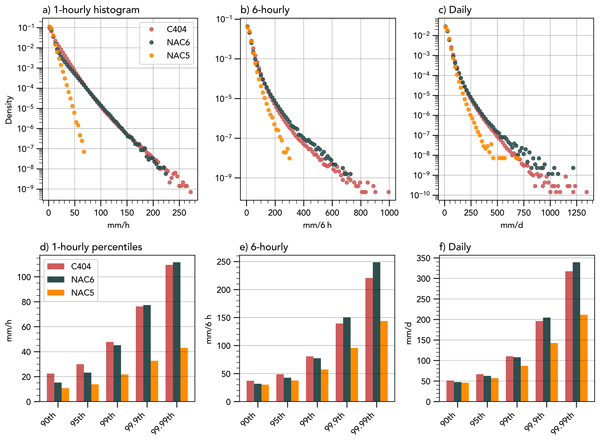
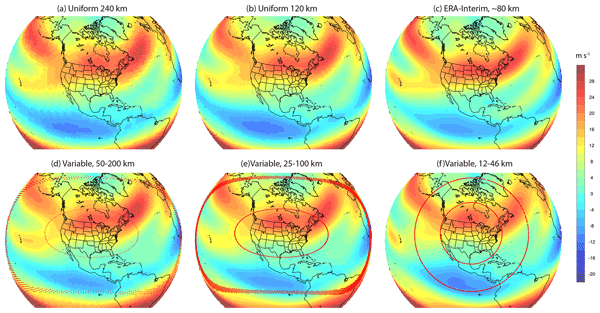
This study presents a new 12 km CORDEX (Coordinated Regional Downscaling Experiment )-CMIP6 (Coupled Model Intercomparison Project) WRF (Weather Research and Forecasting) simulation for North America, compared against an earlier 25 km CMIP5 version and a 4 km convection-permitting simulation. The updated run reduces temperature and precipitation biases, improves precipitation timing, and better captures tropical cyclone intensity. Extreme precipitation at 12 km closely matches convection-permitting results, offering a practical resolution for regional climate assessment.


Cited articles
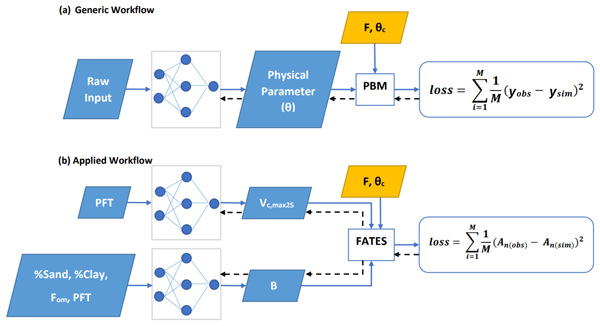
Global climate models are essential for planning, but their rainfall predictions contain systematic errors that limit local use. We built a correction tool that uses machine learning to choose the settings of a simple, interpretable formula rather than producing corrected rainfall directly. Tested across the United States, it corrected typical and heavy rainfall well, kept realistic spatial patterns, partly preserved future trends, and showed promise in regions it had never seen.
Global climate models are essential for planning, but their rainfall predictions contain...


