
Articles | Volume 19, issue 22
https://doi.org/10.5194/gmd-19-11061-2026
© Author(s) 2026. This work is distributed under
the Creative Commons Attribution 4.0 License.
the Creative Commons Attribution 4.0 License.
https://doi.org/10.5194/gmd-19-11061-2026
© Author(s) 2026. This work is distributed under
the Creative Commons Attribution 4.0 License.
the Creative Commons Attribution 4.0 License.
Model description paper
| 
20 Nov 2026
Model description paper |
| 20 Nov 2026
| 20 Nov 2026
Species-resolved inventory of forest biogenic volatile organic emissions across China with MEGAN v3.2
Institute of Surface-Earth System Science, School of Earth System Science, Tianjin University, Tianjin 300072, China
Hao Xu
International Institute for Applied Systems Analysis, Schlossplatz 1, Laxenburg 2361, Austria
Yixin Huang
Institute of Surface-Earth System Science, School of Earth System Science, Tianjin University, Tianjin 300072, China
State Key Laboratory of Atmospheric Environment and Extreme Meteorology, Institute of Atmospheric Physics, Chinese Academy of Sciences, Beijing 100029, China
Yunting Xiao
Institute of Surface-Earth System Science, School of Earth System Science, Tianjin University, Tianjin 300072, China
Qinghao Guo
Institute of Surface-Earth System Science, School of Earth System Science, Tianjin University, Tianjin 300072, China
Xi Zhao
Institute of Surface-Earth System Science, School of Earth System Science, Tianjin University, Tianjin 300072, China
Junjun Deng
Institute of Surface-Earth System Science, School of Earth System Science, Tianjin University, Tianjin 300072, China
State Key Laboratory of Atmospheric Environment and Extreme Meteorology, Institute of Atmospheric Physics, Chinese Academy of Sciences, Beijing 100029, China
Pingqing Fu
Institute of Surface-Earth System Science, School of Earth System Science, Tianjin University, Tianjin 300072, China

Institute of Surface-Earth System Science, School of Earth System Science, Tianjin University, Tianjin 300072, China
Related authors
Qinghao Guo, Haofei Zhang, Bo Long, Lehui Cui, Yiyang Sun, Hao Liu, Yaxin Liu, Yunting Xiao, Pingqing Fu, and Jialei Zhu
Atmos. Chem. Phys., 25, 9249–9262, https://doi.org/10.5194/acp-25-9249-2025, https://doi.org/10.5194/acp-25-9249-2025, 2025
Short summary
Short summary
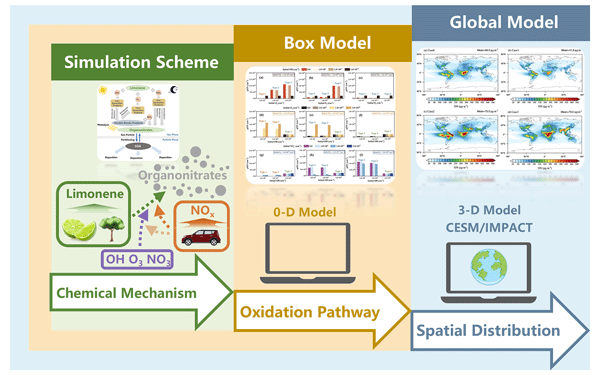
Limonene, a natural compound from plants, reacts with pollutants to form airborne particles that influence air quality and climate. Using advanced models with explicit chemical mechanisms, we show how different reaction pathways shape organonitrate formation, with some increasing and others decreasing particle levels. This approach enhances predictions of pollution and climate impacts while deepening our understanding of how natural and human-made emissions interact in the atmosphere.
Jiaxing Sun, Xu Zhou, Yele Sun, Yue Tao, Fei Wang, Shuwen Zhao, Shaofeng Hua, Lijun Guo, Yu Liu, and Futing Wang
EGUsphere, https://doi.org/10.5194/egusphere-2026-6490, https://doi.org/10.5194/egusphere-2026-6490, 2026
This preprint is open for discussion and under review for Atmospheric Chemistry and Physics (ACP).
Short summary
Short summary
Fog reduces visibility and disrupts travel. In a coastal field experiment, we released moisture-attracting particles by unmanned aerial vehicle and measured fog droplets at the ground. Medium-sized droplets decreased most consistently beyond natural variability. Visibility also improved, alongside changes in how droplets grew, changed size, and disappeared. These findings improve our understanding of how particle release affects fog and may advance fog modification methods.
Di Liu, Jianqiang Zeng, Hua Fang, Zhenfeng Wu, Shaoxuan Xiao, Junjun Deng, Pingqing Fu, Yanli Zhang, Ping'an Peng, and Xinming Wang
EGUsphere, https://doi.org/10.5194/egusphere-2026-6329, https://doi.org/10.5194/egusphere-2026-6329, 2026
This preprint is open for discussion and under review for Atmospheric Chemistry and Physics (ACP).
Short summary
Short summary
Forests release natural gases that can form air pollution. We measured these gases in different forests across China, from the warm south to the cool north. We found that the type of forest determines which pollution-forming chemistry happens, day or night. This discovery helps scientists make more accurate air quality forecasts by showing how nature and pollution are linked.
Yucheng Chen, Baozhu Ge, Nuohang Liu, Lingkai Dong, Xiaole Pan, Xueling Cheng, Liquan Yao, Jinyuan Xin, Yele Sun, Feili Li, Lanzhong Liu, and Zifa Wang
EGUsphere, https://doi.org/10.5194/egusphere-2026-6335, https://doi.org/10.5194/egusphere-2026-6335, 2026
This preprint is open for discussion and under review for Atmospheric Chemistry and Physics (ACP).
Short summary
Short summary
Sequential rainwater sampling at a mountain site in southeastern China showed that high relative in-cloud scavenging can coexist with low absolute sulfate loading. The late-event sulfate baseline was one to two orders of magnitude below historical Chinese mountain cloud-water observations and reached the lower range of recent global mountain records, suggesting that the effects of sulfur-emission controls may extend from surface air to elevated cloud–precipitation systems.
Fobang Liu, Yun Zhang, Siyao Yue, Helmi-Marja K. Keskinen, Tuukka Petäjä, Markku Kulmala, Pingqing Fu, Thorsten Hoffmann, Kai Wang, and Haijie Tong
Atmos. Chem. Phys., 26, 14655–14669, https://doi.org/10.5194/acp-26-14655-2026, https://doi.org/10.5194/acp-26-14655-2026, 2026
Short summary
Short summary
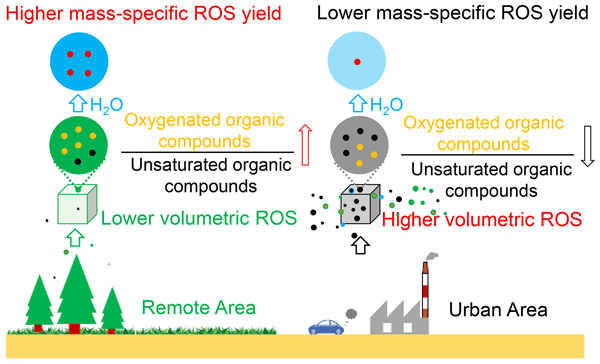
Reactive oxygen species (ROS) produced by airborne particles are linked to adverse health effects, but the organic compounds responsible remain unclear. We developed a new molecular framework to classify complex organic compounds using advanced mass spectrometry. The framework shows that particles rich in oxidized organic compounds produce more ROS per unit mass, while polluted urban air produces more total ROS mainly because of higher particle concentrations.
Yi Zhang, Wei Zhou, Weiqi Xu, Yan Li, Yu Zhang, Zijun Zhang, Bojiang Su, Ning Zhang, Eleonora Aruffo, Junfeng Wang, Piero Di Carlo, Lanzhong Liu, Xiaole Pan, Zifa Wang, Douglas R. Worsnop, and Yele Sun
Atmos. Chem. Phys., 26, 14637–14653, https://doi.org/10.5194/acp-26-14637-2026, https://doi.org/10.5194/acp-26-14637-2026, 2026
Short summary
Short summary
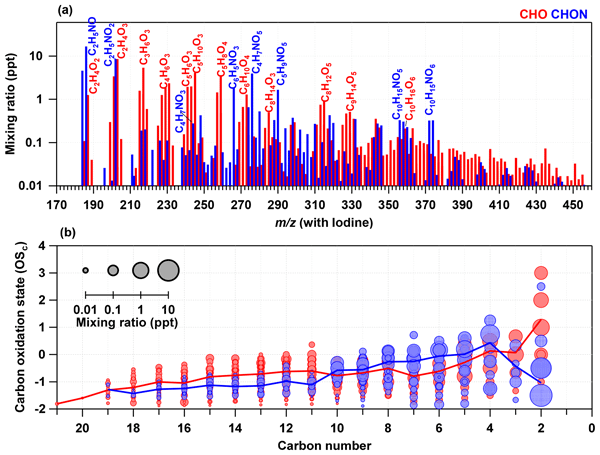
We investigated how plants, pollution and weather shape air quality at a forested mountain in southeastern China, with frequent clouds. We measured compounds formed as plant and human emissions react in the atmosphere. Warm conditions favored plant emissions, while cooler periods increased the influence of pollution transported from other regions. Clouds both removed some compounds and changed others through chemical reactions, showing how weather and clouds shape air quality in mountains.
Hua Zhang, Shuxiao Wang, Xi Zhao, Zhijun Wu, Yan Yin, Siyu Chen, Dantong Liu, Jingchuan Chen, Hui Jiang, Jiewen Shen, Da Gao, Dejia Yin, Yicong He, Zeqi Li, Shengyue Li, Zhaoxin Dong, Manish Shrivastava, Jonathan H. Jiang, Muyan Peng, and Bin Zhao
Atmos. Chem. Phys., 26, 12329–12354, https://doi.org/10.5194/acp-26-12329-2026, https://doi.org/10.5194/acp-26-12329-2026, 2026
Short summary
Short summary
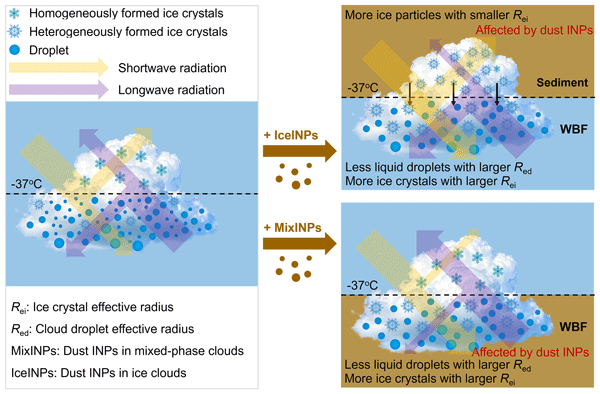
Mineral dust can initiate ice formation in clouds, affecting cloud properties and regional climate. Using an improved model, we examined their contrasting impacts in mixed-phase and ice clouds over East Asia. In mixed-phase clouds, dust promotes liquid-to-ice conversion and reduces cloud reflectivity, causing moderate warming, whereas in ice clouds, it greatly enhances ice formation and leads to stronger warming. This study advances understanding of aerosol–cloud–climate interactions.
Zhaojun Tang, Zhe Jiang, Panpan Yang, Jiaqi Chen, Pingqing Fu, and Yanan Shen
EGUsphere, https://doi.org/10.5194/egusphere-2026-4938, https://doi.org/10.5194/egusphere-2026-4938, 2026
Short summary
Short summary
This study identifies a systematic divergence between satellite and surface CO observations across China, North America, and Europe (2015–2024). We show that this discrepancy originates from different sensitivities to local emissions vs. large-scale transport. These findings reveal that relying on a single observation platform can misrepresent the true state of atmospheric CO, highlighting the need for multi-platform approaches to robustly constrain CO emission changes.
Lianfang Wei, Xueshun Chen, Wenyi Yang, Zhe Wang, Jie Li, Di Liu, Huiyun Du, Xiaole Pan, Yafang Cheng, Pingqing Fu, and Zifa Wang
Atmos. Chem. Phys., 26, 11667–11682, https://doi.org/10.5194/acp-26-11667-2026, https://doi.org/10.5194/acp-26-11667-2026, 2026
Short summary
Short summary
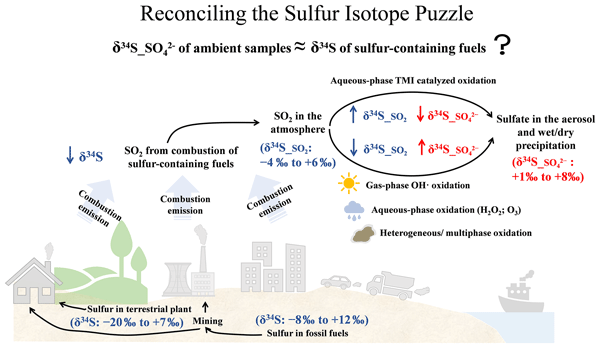
Current models cannot track sulfur isotope changes during atmospheric transformations. We developed a new model that simulates these processes. It reproduces the isotope fractionation patterns, capturing both spatial and seasonal variations. This validation shows sulfate isotope signatures often resemble those of fuels despite chemical processing. Our results suggest combustion alters sulfur isotope ratios, counterbalancing chemical effects.
Jingye Ren, Songjian Zou, Honghao Xu, Guiquan Liu, Zhe Wang, Anran Zhang, Chuanfeng Zhao, Min Hu, Dongjie Shang, Lizi Tang, Ru-Jin Huang, Yele Sun, and Fang Zhang
Geosci. Model Dev., 19, 6403–6416, https://doi.org/10.5194/gmd-19-6403-2026, https://doi.org/10.5194/gmd-19-6403-2026, 2026
Short summary
Short summary
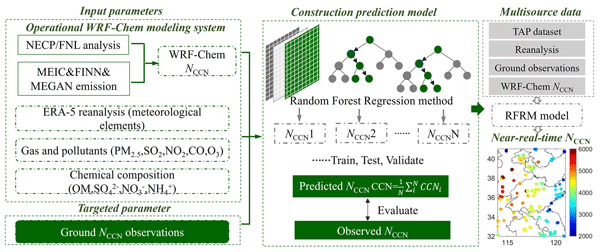
In this study, a new framework of cloud condensation nuclei (CCN) prediction in polluted region has been developed and it achieves well prediction of hourly-to-yearly scale across North China Plain. The study reveals the machine learning model can largely reduce the uncertainty in simulating cloud radiative forcing, illustrating the high sensitivity of climate forcing to changes in CCN. This improvement of our new model would be helpful to aerosols climate effect assessment in models.
Yi Zhang, Weiqi Xu, Yan Li, Guohua Zhang, Dantong Liu, Ye Kuang, Yu Zhang, Wei Zhou, Xiaocong Peng, Bojiang Su, Weihong Huang, Zijun Zhang, Liu Yang, Yangzhou Wu, Siyuan Li, Shitong Zhao, Lanzhong Liu, Xiaole Pan, Zifa Wang, Xinhui Bi, Mikael Ehn, Douglas R. Worsnop, and Yele Sun
Atmos. Chem. Phys., 26, 5617–5634, https://doi.org/10.5194/acp-26-5617-2026, https://doi.org/10.5194/acp-26-5617-2026, 2026
Short summary
Short summary
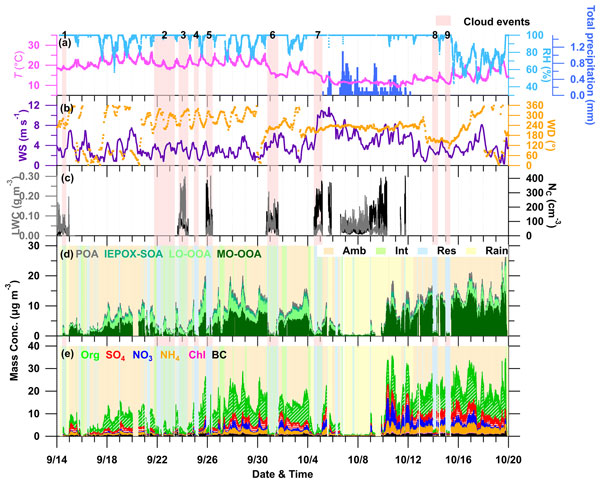
This study explores how clouds influence the chemical composition of air particles through field research at a high-altitude station in southeastern China across different seasons. We found that different cloud types cause varying degrees of chemical changes in these particles. These findings enhance our understanding of the impact of clouds on air quality and contribute to improving climate models.
Hongyi Li, Ting Yang, Yele Sun, and Zifa Wang
Atmos. Meas. Tech., 19, 2225–2244, https://doi.org/10.5194/amt-19-2225-2026, https://doi.org/10.5194/amt-19-2225-2026, 2026
Short summary
Short summary
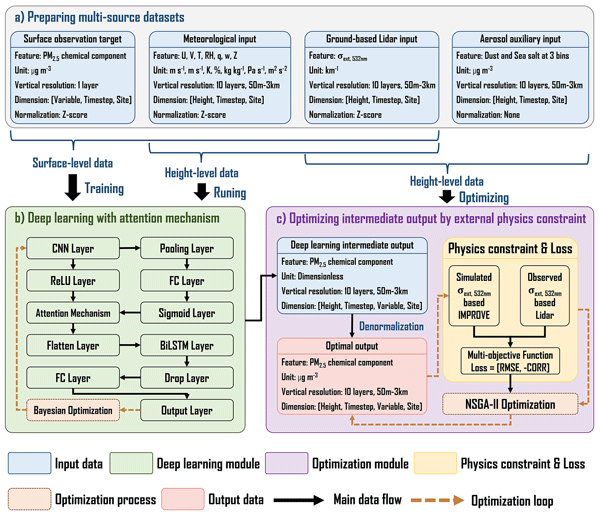
We develop a physics-constrained deep-learning framework to retrieve vertical profiles of particulate matter <2.5 µm chemical components from lidar measurements. Comparisons with surface, tower, and aircraft measurements validate the performance of the framework. A six-year vertical profile dataset generated for Beijing reveals that organic matter and nitrate are dominant chemical components. This work offers a new perspective on the lidar inversion of chemical component profiles.
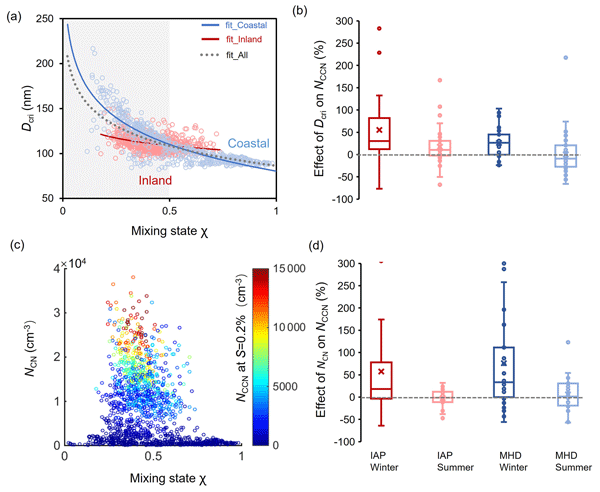
Jingye Ren, Wei Xu, Ru-Jin Huang, Fang Zhang, Ying Wang, Lu Chen, Jurgita Ovadnevaite, Darius Ceburnis, Colin O'Dowd, and Yele Sun
Atmos. Chem. Phys., 26, 2985–3000, https://doi.org/10.5194/acp-26-2985-2026, https://doi.org/10.5194/acp-26-2985-2026, 2026
Short summary
Short summary
Impact of mixing state on cloud condensation nuclei (CCN) was incorporated in limited modeling with simplified assumption. This study derived a mixing state index from hygroscopicity and systematically investigated the covariation between the mixing state and CCN activity in inland and coastal air. We propose a practical approach for estimating critical diameter from mixing state index, applicable when the aerosol particles are not highly aged.
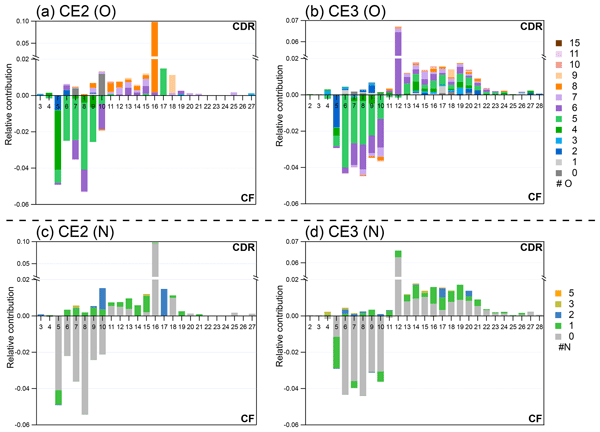
Yali Jin, Hao Luo, Siqi Tang, Shuhui Xue, Chengyu Nie, Xiaocong Peng, Yan Zheng, Weiqi Xu, Guohua Zhang, Xiaole Pan, Yele Sun, Qi Chen, Lanzhong Liu, and Defeng Zhao
Atmos. Chem. Phys., 26, 2813–2830, https://doi.org/10.5194/acp-26-2813-2026, https://doi.org/10.5194/acp-26-2813-2026, 2026
Short summary
Short summary
Cloud substantially changes the compositions organic aerosol. How cloud processing of organics occur on molecular level remains unclear. We found that compared with cloud free particles, organics in cloud contains more large molecules likely due to accretion reactions and has more nitrogen-containing compounds. We identify some new compounds formed in cloud. Such modifications of the organics in cloud can further change its physicochemical properties, and impact on climate and human health.

Wei Zhou, Liu Yang, Siqi Zeng, Yunping Kan, Lirong Yang, Weihong Zhang, Weijie Wang, Zijun Zhang, Yan Li, Weiqi Xu, Yucheng Gu, Yaozong Wang, Zhengyan Zuo, Jie Li, Zifa Wang, and Yele Sun
Atmos. Chem. Phys., 26, 2425–2441, https://doi.org/10.5194/acp-26-2425-2026, https://doi.org/10.5194/acp-26-2425-2026, 2026
Short summary
Short summary
Northwest China, situated in an arid and semi-arid climate region; air quality issues in this area have received less attention compared to other Chinese metropolitan clusters. This research identify a significant shift towards the coupling PM2.5 and O3 relationships over the past decade in northwest China, highlighting the great importance of urban terpenes and aromatic oxidation in secondary organic aerosol formation.
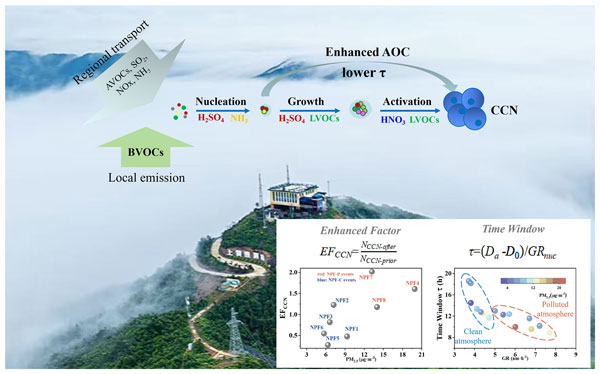
Weibin Zhu, Sai Shang, Jieqi Wang, Yunfei Wu, Zhaoze Deng, Liang Ran, Ye Kuang, Guiqian Tang, Xiangpeng Huang, Xiaole Pan, Lanzhong Liu, Weiqi Xu, Yele Sun, Bo Hu, Zifa Wang, and Zirui Liu
Atmos. Chem. Phys., 26, 1947–1965, https://doi.org/10.5194/acp-26-1947-2026, https://doi.org/10.5194/acp-26-1947-2026, 2026
Short summary
Short summary
NPF (new particle formation) is a key global CCN (cloud condensation nuclei) source, but its contribution at the polluted boundary-layer top remains unclear. Based on mountaintop observations in the Yangtze River Delta, we show that under polluted conditions, NPF at the boundary-layer top is enhanced and accelerates its conversion to CCN. Ammonia plays a key role, and a newly defined "Time Window" metric highlights the importance of oxidation-driven growth and regional transport in this process.
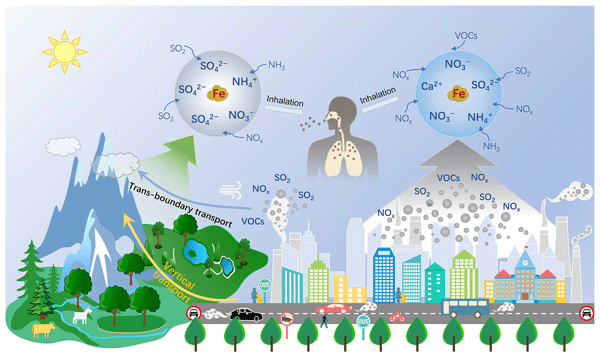
Guochen Wang, Xuedong Cui, Bingye Xu, Can Wu, Minkang Zhi, Keliang Li, Liang Xu, Qi Yuan, Yuntao Wang, Yele Sun, Zongbo Shi, Akinori Ito, Shixian Zhai, and Weijun Li
Atmos. Chem. Phys., 26, 1483–1496, https://doi.org/10.5194/acp-26-1483-2026, https://doi.org/10.5194/acp-26-1483-2026, 2026
Short summary
Short summary
Iron acidification process is primarily driven by sulphuric acid in the upper mixing layer different from nitric acid at the ground-level. Enhanced atmospheric aging process contributes to high iron solubility in the upper mixing layer. Numerical models should consider vertical variations in iron dissolution to improve simulation accuracy.
Yujue Wang, Yizhe Yi, Wei Xu, Yiwen Zhang, Shubin Li, Hong-Hai Zhang, Mingliang Gu, Shibo Yan, Jialei Zhu, Chao Zhang, Jinhui Shi, Yang Gao, Xiaohong Yao, and Huiwang Gao
Biogeosciences, 23, 77–93, https://doi.org/10.5194/bg-23-77-2026, https://doi.org/10.5194/bg-23-77-2026, 2026
Short summary
Short summary
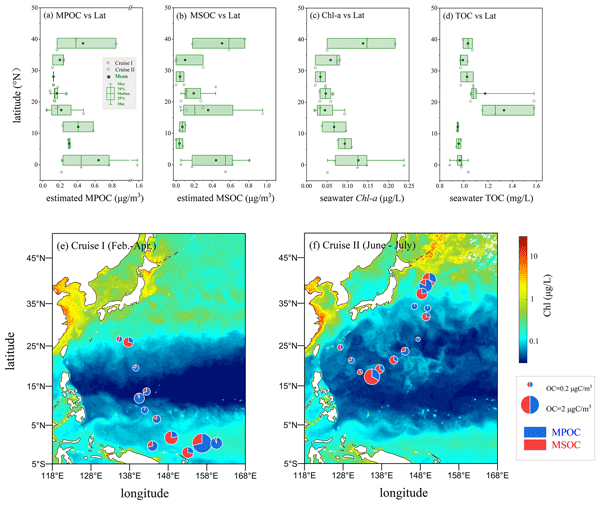
Marine organic aerosols remain poorly quantified, which limits our understanding on the climate regulation of marine aerosols. Based on shipboard cruises over the Pacific Ocean, we proposed an observation-based parameterization approach to estimate the primary and secondary marine organic aerosols using sea surface chlorophyll a and sea salts in marine aerosols. The results highlight that the spatial distribution of marine organic aerosols was driven by the marine biological activities.
Jialu Xu, Yingjie Zhang, Yuying Wang, Xing Yan, Bin Zhu, Chunsong Lu, Yuanjian Yang, Yele Sun, Junhui Zhang, Xiaofan Zuo, Zhanghanshu Han, and Rui Zhang
Atmos. Chem. Phys., 25, 18599–18616, https://doi.org/10.5194/acp-25-18599-2025, https://doi.org/10.5194/acp-25-18599-2025, 2025
Short summary
Short summary
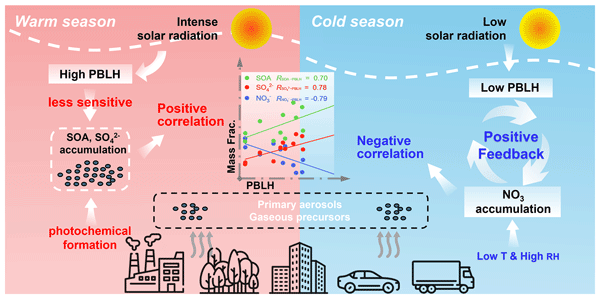
We conducted a year-long study in Nanjing to explore how the height of the atmospheric boundary layer affects fine particle pollution. We found that low boundary layers in winter trap pollutants like nitrate and primary particles, while higher layers in summer help form secondary pollutants like sulfate and organic aerosols. These findings show that boundary layer dynamics are key to understanding and managing seasonal air pollution.
Yutong Tian, Ting Yang, Hongyi Li, Ping Tian, Yifan Song, Jiancun He, Yining Tan, Yele Sun, and Zifa Wang
Atmos. Chem. Phys., 25, 17581–17594, https://doi.org/10.5194/acp-25-17581-2025, https://doi.org/10.5194/acp-25-17581-2025, 2025
Short summary
Short summary
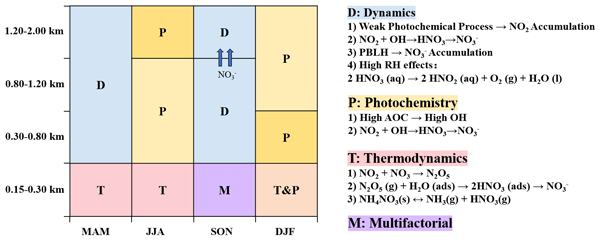
This study examines how nitrate pollution varies with height and season to combat urban haze. Nitrate levels peak near the ground in spring/winter due to humidity and temperature, while wind and sunlight drive high-altitude pollution in late autumn. Winter shows unique daytime peaks linked to sunlight and nighttime chemistry. Findings help cities design targeted strategies, like timing emissions cuts, to improve air quality by addressing pollution at specific heights and times.
Junhui Zhang, Yuying Wang, Jialu Xu, Xiaofan Zuo, Chunsong Lu, Bin Zhu, Yuanjian Yang, Xing Yan, and Yele Sun
Atmos. Chem. Phys., 25, 17413–17428, https://doi.org/10.5194/acp-25-17413-2025, https://doi.org/10.5194/acp-25-17413-2025, 2025
Short summary
Short summary
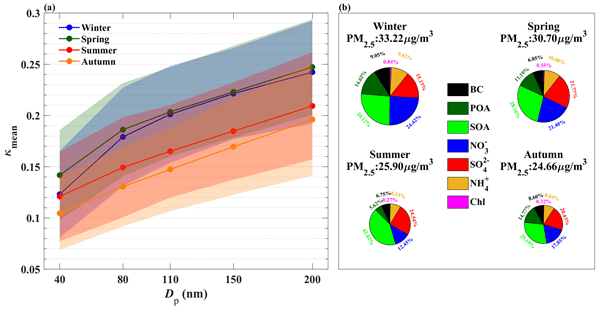
We conducted a year-long study in Nanjing to understand how tiny airborne particles take up water, which affects air quality and climate. We found that particle water uptake varies by season and size, with lower values in summer due to more organic materials. Local pollution mainly influences smaller particles, while larger ones are shaped by air mass transport. These findings help improve climate models and support better air pollution control in fast-growing cities.
Wenqing Jiang, Lijuan Li, Lu Yu, Hwajin Kim, Yele Sun, and Qi Zhang
Atmos. Chem. Phys., 25, 16817–16832, https://doi.org/10.5194/acp-25-16817-2025, https://doi.org/10.5194/acp-25-16817-2025, 2025
Short summary
Short summary
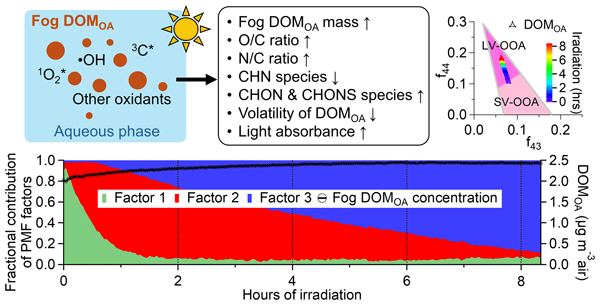
We studied how sunlight changes natural organic matter in fog droplets and the tiny airborne particles formed after the water evaporation. Advanced analyses showed that sunlight makes this material more oxidized, nitrogen-enriched, chemically transformed, and different in light absorption and volatility. These sunlight-driven changes influence the particles’ behavior in the air, affecting air quality, climate, and how long they remain suspended in the atmosphere.
Yaxin Liu, Yunting Xiao, Lehui Cui, Qinghao Guo, Yiyang Sun, Pingqing Fu, Cong-Qiang Liu, and Jialei Zhu
Biogeosciences, 22, 6445–6464, https://doi.org/10.5194/bg-22-6445-2025, https://doi.org/10.5194/bg-22-6445-2025, 2025
Short summary
Short summary
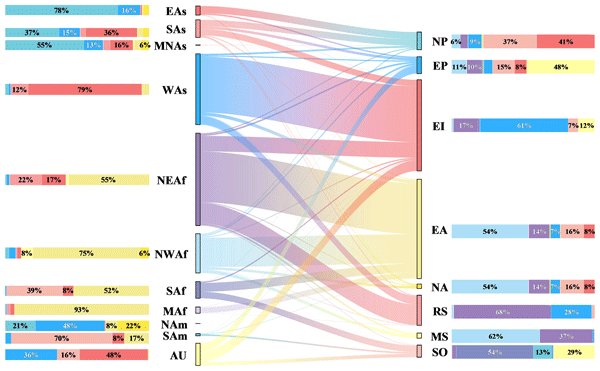
Dust carries iron deposits into the ocean, providing essential nutrients for the growth of marine phytoplankton, influencing their carbon uptake capacity. A model constrained by global datasets on dust iron content, ocean iron solubility, and dissolved iron concentrations was used to assess the contributions of 11 major dust sources to carbon uptake in 8 marine areas, enhancing understanding of the impact of global dust emissions on marine deposition and carbon cycle with decreased uncertainty.
Wenxin Zhang, Wei Hu, Mutong Niu, Quanfei Zhu, Na An, Qiang Zhang, Rui Jin, Xiaoli Fu, Jian Hao, Jianbo Yang, Jingle Liu, Jing Shi, Suqin Han, Junjun Deng, Libin Wu, Yuqi Feng, Kimitaka Kawamura, and Pingqing Fu
Atmos. Chem. Phys., 25, 14513–14533, https://doi.org/10.5194/acp-25-14513-2025, https://doi.org/10.5194/acp-25-14513-2025, 2025
Short summary
Short summary
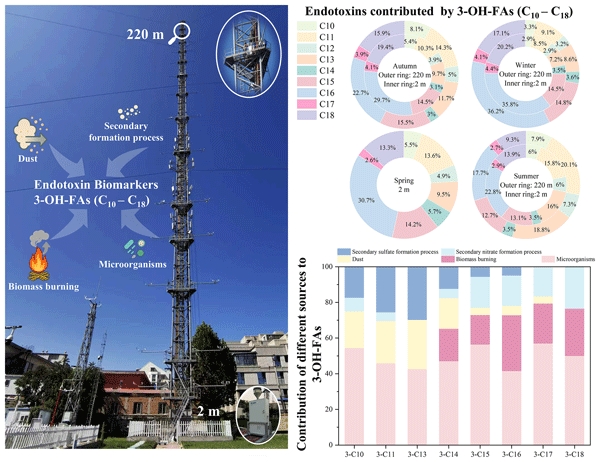
We quantified 3-hydroxy fatty acids (3-OH-FAs) in PM10 from urban Tianjin to assess airborne endotoxins, which showed clear seasonal and vertical variations. Mid-chain 3-OH-FAs were linked to microorganisms and regional secondary processes, while long-chain species were more associated with biomass burning and local secondary formation. These findings highlight distinct source pathways of 3-OH-FAs and provide insights into airborne endotoxins in urban environments.
Sini Talvinen, Paul Kim, Emanuele Tovazzi, Eemeli Holopainen, Roxana Cremer, Thomas Kühn, Harri Kokkola, Zak Kipling, David Neubauer, João C. Teixeira, Alistair Sellar, Duncan Watson-Parris, Yang Yang, Jialei Zhu, Srinath Krishnan, Annele Virtanen, and Daniel G. Partridge
Atmos. Chem. Phys., 25, 14449–14478, https://doi.org/10.5194/acp-25-14449-2025, https://doi.org/10.5194/acp-25-14449-2025, 2025
Short summary
Short summary
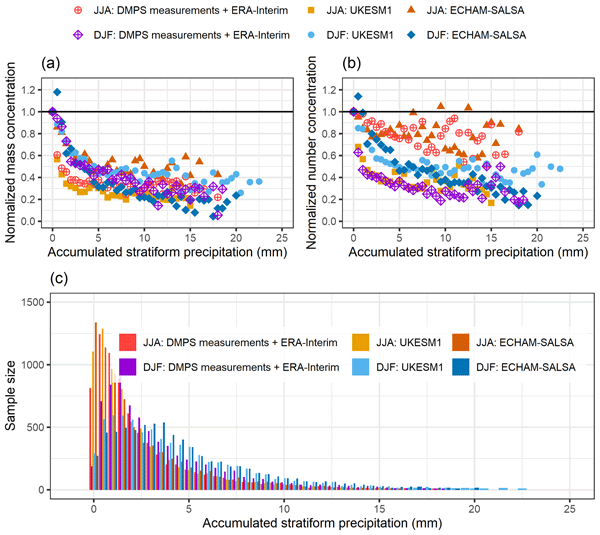
Climate models struggle to predict how clouds and aerosols interact, affecting Earth’s energy balance. This study compares models to observations to see how they describe effects of clouds and rain on aerosols. While both models show similar overall trends, seasonal differences emerged. These, however, align with differences in key variables participating in cloud formation. The study provides insights on how to improve the representation of aerosol-cloud interactions in climate models.
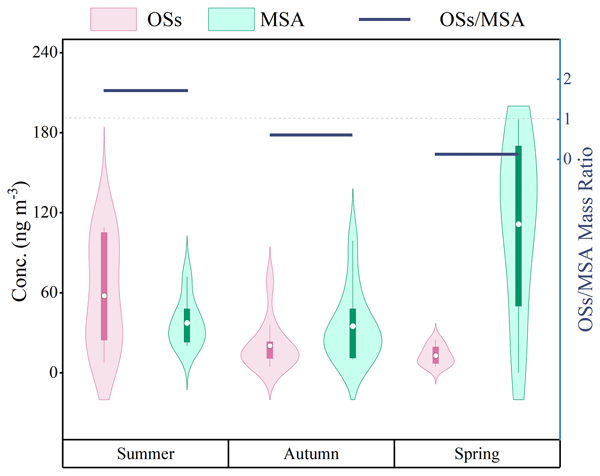
Shubin Li, Yujue Wang, Yiwen Zhang, Yizhe Yi, Yuchen Wang, Yuqi Guo, Chao Yu, Yue Jiang, Jinhui Shi, Chao Zhang, Jialei Zhu, Wei Hu, Jianzhen Yu, Xiaohong Yao, Huiwang Gao, and Min Hu
Atmos. Chem. Phys., 25, 12585–12598, https://doi.org/10.5194/acp-25-12585-2025, https://doi.org/10.5194/acp-25-12585-2025, 2025
Short summary
Short summary
Organosulfates (OSs) are an unrecognized and potentially important component in marine organic aerosols. In this study, we quantified and characterized the OSs over East Asian marginal seas. The chemical nature and spatiotemporal distribution of OSs were modified by the joint influence of marine emissions and transported terrestrial pollutants. The results highlight the vital roles of OSs in shaping organic aerosol formation and sulfur cycle during summer in the marine boundary layer.
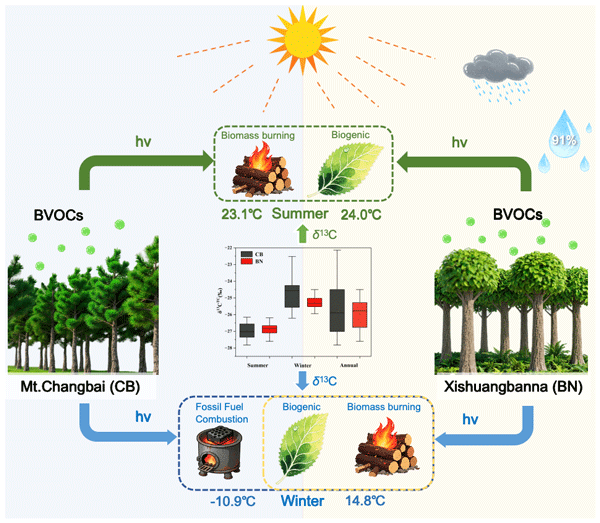
Mingyu Li, Zhanjie Xu, Zhichao Dong, Junjun Deng, Pingqing Fu, and Chandra Mouli Pavuluri
Biogeosciences, 22, 5329–5347, https://doi.org/10.5194/bg-22-5329-2025, https://doi.org/10.5194/bg-22-5329-2025, 2025
Short summary
Short summary
This study investigated the seasonal and diurnal variability of fine aerosol composition in two forest ecosystems in North and South China. Carbonaceous/nitrogenous compound concentrations were higher in winter than summer at both sites. The forest fine aerosols in high latitude exhibited significantly greater influence from fossil fuel combustion compared to that in low latitude.
Qinghao Guo, Haofei Zhang, Bo Long, Lehui Cui, Yiyang Sun, Hao Liu, Yaxin Liu, Yunting Xiao, Pingqing Fu, and Jialei Zhu
Atmos. Chem. Phys., 25, 9249–9262, https://doi.org/10.5194/acp-25-9249-2025, https://doi.org/10.5194/acp-25-9249-2025, 2025
Short summary
Short summary
Limonene, a natural compound from plants, reacts with pollutants to form airborne particles that influence air quality and climate. Using advanced models with explicit chemical mechanisms, we show how different reaction pathways shape organonitrate formation, with some increasing and others decreasing particle levels. This approach enhances predictions of pollution and climate impacts while deepening our understanding of how natural and human-made emissions interact in the atmosphere.
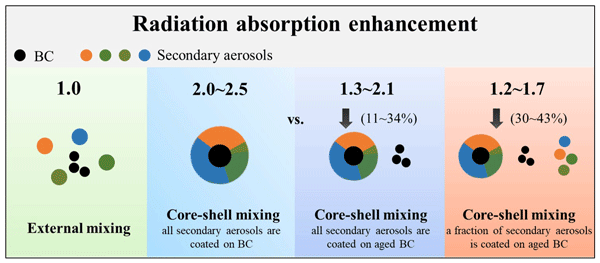
Huiyun Du, Jie Li, Xueshun Chen, Gabriele Curci, Fangqun Yu, Yele Sun, Xu Dao, Song Guo, Zhe Wang, Wenyi Yang, Lianfang Wei, and Zifa Wang
Atmos. Chem. Phys., 25, 5665–5681, https://doi.org/10.5194/acp-25-5665-2025, https://doi.org/10.5194/acp-25-5665-2025, 2025
Short summary
Short summary
Inadequate consideration of mixing states and coatings on black carbon (BC) hinders aerosol radiation forcing quantification. Core–shell mixing aligns well with observations, but partial internal mixing is a more realistic representation. We used a microphysics module to determine the fraction of embedded BC and coating aerosols, constraining the mixing state. This reduced absorption enhancement by 30 %–43 % in northern China, offering insights into BC's radiative effects.
Jingye Ren, Songjian Zou, Honghao Xu, Guiquan Liu, Zhe Wang, Anran Zhang, Chuanfeng Zhao, Min Hu, Dongjie Shang, Lizi Tang, Ru-Jin Huang, Yele Sun, and Fang Zhang
EGUsphere, https://doi.org/10.5194/egusphere-2025-1483, https://doi.org/10.5194/egusphere-2025-1483, 2025
Preprint archived
Short summary
Short summary
In this study, a new framework of cloud condensation nuclei (CCN) prediction in polluted region has been developed and it achieves well prediction of hourly-to-yearly scale across North China Plain. The study reveals a significant long-term decreasing trend of CCN concentration at typical supersaturations due to a rapid reduction in aerosol concentrations from 2014 to 2018. This improvement of our new model would be helpful to aerosols climate effect assessment in models.
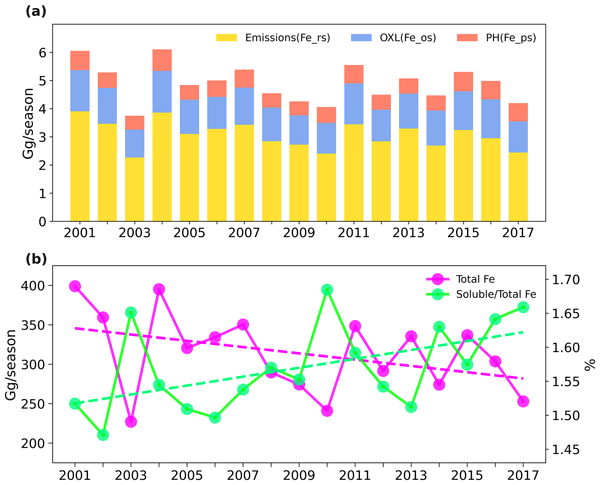
Hanzheng Zhu, Yaman Liu, Man Yue, Shihui Feng, Pingqing Fu, Kan Huang, Xinyi Dong, and Minghuai Wang
Atmos. Chem. Phys., 25, 5175–5197, https://doi.org/10.5194/acp-25-5175-2025, https://doi.org/10.5194/acp-25-5175-2025, 2025
Short summary
Short summary
Dust-soluble iron deposition from East Asia plays an important role in the marine ecology of the Northwest Pacific. Using the developed model, our findings highlight a dual trend: a decrease in the overall deposition of soluble iron from dust but an increase in the solubility of the iron itself due to the enhanced atmospheric processing. The study underscores the critical roles of both dust emission and atmospheric processing in soluble iron deposition and marine ecology.
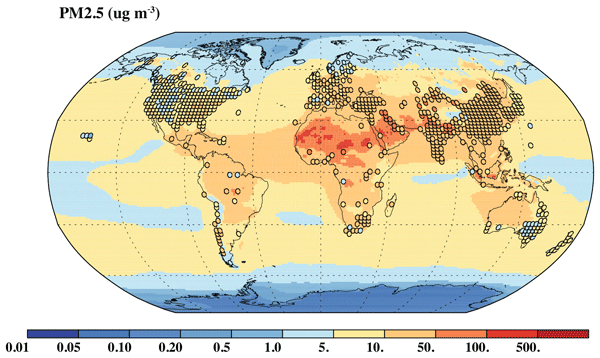
Natalie M. Mahowald, Longlei Li, Julius Vira, Marje Prank, Douglas S. Hamilton, Hitoshi Matsui, Ron L. Miller, P. Louis Lu, Ezgi Akyuz, Daphne Meidan, Peter Hess, Heikki Lihavainen, Christine Wiedinmyer, Jenny Hand, Maria Grazia Alaimo, Célia Alves, Andres Alastuey, Paulo Artaxo, Africa Barreto, Francisco Barraza, Silvia Becagli, Giulia Calzolai, Shankararaman Chellam, Ying Chen, Patrick Chuang, David D. Cohen, Cristina Colombi, Evangelia Diapouli, Gaetano Dongarra, Konstantinos Eleftheriadis, Johann Engelbrecht, Corinne Galy-Lacaux, Cassandra Gaston, Dario Gomez, Yenny González Ramos, Roy M. Harrison, Chris Heyes, Barak Herut, Philip Hopke, Christoph Hüglin, Maria Kanakidou, Zsofia Kertesz, Zbigniew Klimont, Katriina Kyllönen, Fabrice Lambert, Xiaohong Liu, Remi Losno, Franco Lucarelli, Willy Maenhaut, Beatrice Marticorena, Randall V. Martin, Nikolaos Mihalopoulos, Yasser Morera-Gómez, Adina Paytan, Joseph Prospero, Sergio Rodríguez, Patricia Smichowski, Daniela Varrica, Brenna Walsh, Crystal L. Weagle, and Xi Zhao
Atmos. Chem. Phys., 25, 4665–4702, https://doi.org/10.5194/acp-25-4665-2025, https://doi.org/10.5194/acp-25-4665-2025, 2025
Short summary
Short summary
Aerosol particles are an important part of the Earth system, but their concentrations are spatially and temporally heterogeneous, as well as being variable in size and composition. Here, we present a new compilation of PM2.5 and PM10 aerosol observations, focusing on the spatial variability across different observational stations, including composition, and demonstrate a method for comparing the data sets to model output.
Zhichao Dong, Subba Rao Devineni, Xiaoli Fu, Zhanjie Xu, Mingyu Li, Pingqing Fu, Cong-Qiang Liu, and Chandra Mouli Pavuluri
EGUsphere, https://doi.org/10.5194/egusphere-2025-899, https://doi.org/10.5194/egusphere-2025-899, 2025
Preprint archived
Short summary
Short summary
We developed new method to detect and measure organosulfates in PM2.5. By synthesizing organosulfates and combining them with commercial standards, we improved detection accuracy. Testing air samples from Tianjin, China, we found wintertime levels of organosulfates were much higher than in other regions. Our results show how human actions directly impact air quality and provide a tool to track pollution sources. This work helps scientists understand and address harmful aerosols in environments.
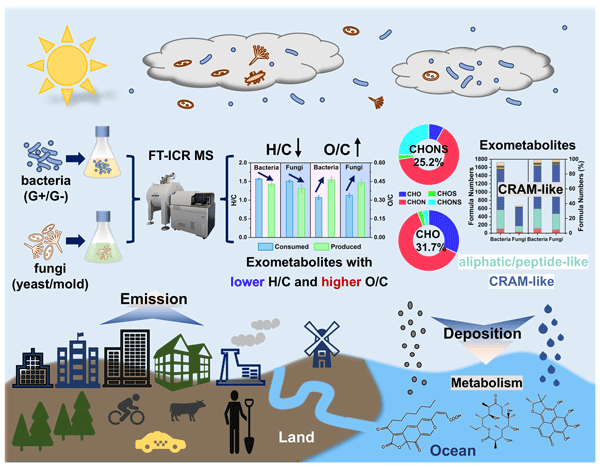
Rui Jin, Wei Hu, Peimin Duan, Ming Sheng, Dandan Liu, Ziye Huang, Mutong Niu, Libin Wu, Junjun Deng, and Pingqing Fu
Atmos. Chem. Phys., 25, 1805–1829, https://doi.org/10.5194/acp-25-1805-2025, https://doi.org/10.5194/acp-25-1805-2025, 2025
Short summary
Short summary
The metabolic capacity of atmospheric microorganisms after settling into habitats is poorly understood. We studied the molecular composition of exometabolites for cultured typical airborne microbes and traced their metabolic processes. Bacteria and fungi produce highly oxidized exometabolites and have significant variations in metabolism among different strains. These insights are pivotal for assessing the biogeochemical impacts of atmospheric microorganisms following their deposition.
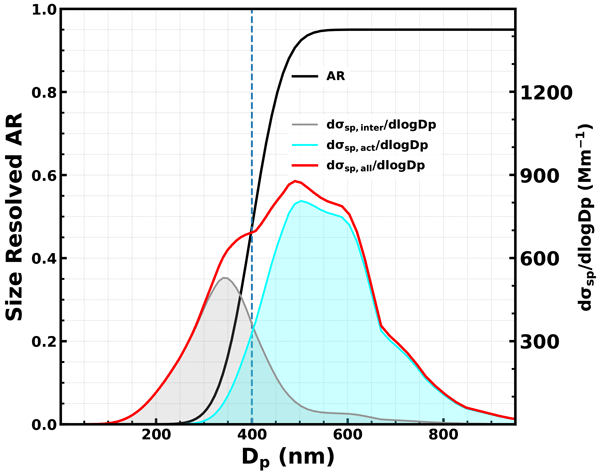
Ye Kuang, Jiangchuan Tao, Hanbing Xu, Li Liu, Pengfei Liu, Wanyun Xu, Weiqi Xu, Yele Sun, and Chunsheng Zhao
Atmos. Chem. Phys., 25, 1163–1174, https://doi.org/10.5194/acp-25-1163-2025, https://doi.org/10.5194/acp-25-1163-2025, 2025
Short summary
Short summary
This study presents a novel optical framework to measure supersaturation, a fundamental parameter in cloud physics, by observing the scattering properties of particles that have or have not grown into cloud droplets. The technique offers high-resolution measurements, capturing essential fluctuations in supersaturation necessary for understanding cloud physics.
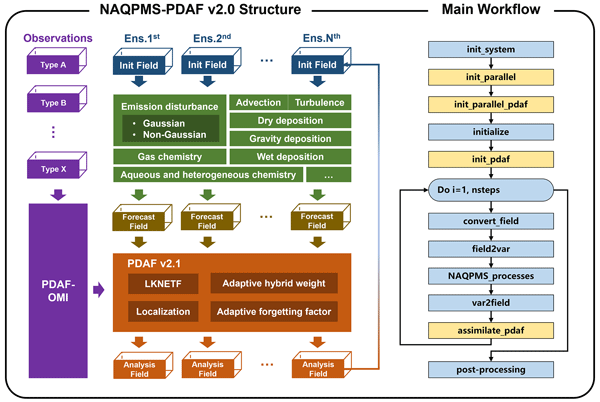
Hongyi Li, Ting Yang, Lars Nerger, Dawei Zhang, Di Zhang, Guigang Tang, Haibo Wang, Yele Sun, Pingqing Fu, Hang Su, and Zifa Wang
Geosci. Model Dev., 17, 8495–8519, https://doi.org/10.5194/gmd-17-8495-2024, https://doi.org/10.5194/gmd-17-8495-2024, 2024
Short summary
Short summary
To accurately characterize the spatiotemporal distribution of particulate matter <2.5 µm chemical components, we developed the Nested Air Quality Prediction Model System with the Parallel Data Assimilation Framework (NAQPMS-PDAF) v2.0 for chemical components with non-Gaussian and nonlinear properties. NAQPMS-PDAF v2.0 has better computing efficiency, excels when used with a small ensemble size, and can significantly improve the simulation performance of chemical components.
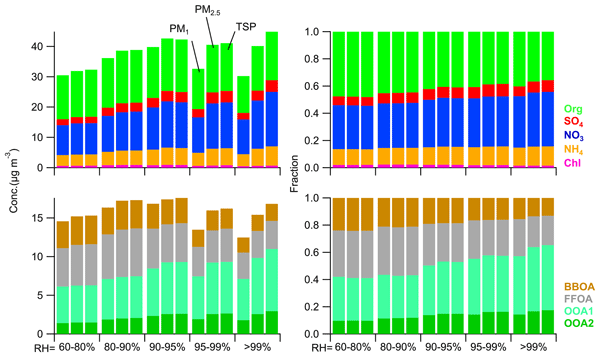
Weiqi Xu, Ye Kuang, Wanyun Xu, Zhiqiang Zhang, Biao Luo, Xiaoyi Zhang, Jiangchuang Tao, Hongqin Qiao, Li Liu, and Yele Sun
Atmos. Chem. Phys., 24, 9387–9399, https://doi.org/10.5194/acp-24-9387-2024, https://doi.org/10.5194/acp-24-9387-2024, 2024
Short summary
Short summary
We deployed an advanced aerosol–fog sampling system at a rural site in the North China Plain to investigate impacts of aerosol hygroscopic growth and activation on the physicochemical properties of submicron aerosols. Observed results highlighted remarkably different aqueous processing of primary and secondary submicron aerosol components under distinct ambient relative humidity (RH) conditions and that RH levels significantly impact aerosol sampling through the aerosol swelling effect.
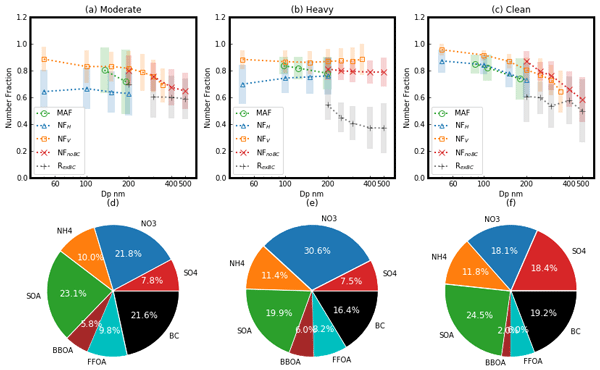
Jiangchuan Tao, Biao Luo, Weiqi Xu, Gang Zhao, Hanbin Xu, Biao Xue, Miaomiao Zhai, Wanyun Xu, Huarong Zhao, Sanxue Ren, Guangsheng Zhou, Li Liu, Ye Kuang, and Yele Sun
Atmos. Chem. Phys., 24, 9131–9154, https://doi.org/10.5194/acp-24-9131-2024, https://doi.org/10.5194/acp-24-9131-2024, 2024
Short summary
Short summary
Using simultaneous measurements of DMA–CCNC, H(/V)TDMA, and DMA–SP2, impacts of primary emissions and secondary aerosol formations on changes in aerosol physicochemical properties were comprehensively investigated. It was found that intercomparisons among aerosol mixing-state parameters derived from different techniques can help us gain more insight into aerosol physical properties which, in turn, will aid the investigation of emission characteristics and secondary aerosol formation pathways.
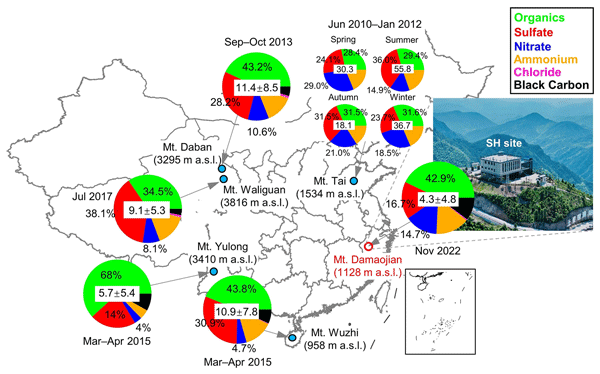
Zijun Zhang, Weiqi Xu, Yi Zhang, Wei Zhou, Xiangyu Xu, Aodong Du, Yinzhou Zhang, Hongqin Qiao, Ye Kuang, Xiaole Pan, Zifa Wang, Xueling Cheng, Lanzhong Liu, Qingyan Fu, Douglas R. Worsnop, Jie Li, and Yele Sun
Atmos. Chem. Phys., 24, 8473–8488, https://doi.org/10.5194/acp-24-8473-2024, https://doi.org/10.5194/acp-24-8473-2024, 2024
Short summary
Short summary
We investigated aerosol composition and sources and the interaction between secondary organic aerosol (SOA) and clouds at a regional mountain site in southeastern China. Clouds efficiently scavenge more oxidized SOA; however, cloud evaporation leads to the production of less oxidized SOA. The unexpectedly high presence of nitrate in aerosol particles indicates that nitrate formed in polluted areas has undergone interactions with clouds, significantly influencing the regional background site.
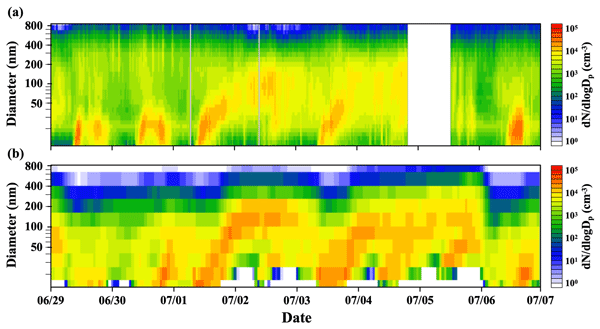
Ming Chu, Xing Wei, Shangfei Hai, Yang Gao, Huiwang Gao, Yujiao Zhu, Biwu Chu, Nan Ma, Juan Hong, Yele Sun, and Xiaohong Yao
Atmos. Chem. Phys., 24, 6769–6786, https://doi.org/10.5194/acp-24-6769-2024, https://doi.org/10.5194/acp-24-6769-2024, 2024
Short summary
Short summary
We used a 20-bin WRF-Chem model to simulate NPF events in the NCP during a three-week observational period in the summer of 2019. The model was able to reproduce the observations during June 29–July 6, which was characterized by a high frequency of NPF occurrence.
Zhichao Dong, Chandra Mouli Pavuluri, Peisen Li, Zhanjie Xu, Junjun Deng, Xueyan Zhao, Xiaomai Zhao, Pingqing Fu, and Cong-Qiang Liu
Atmos. Chem. Phys., 24, 5887–5905, https://doi.org/10.5194/acp-24-5887-2024, https://doi.org/10.5194/acp-24-5887-2024, 2024
Short summary
Short summary
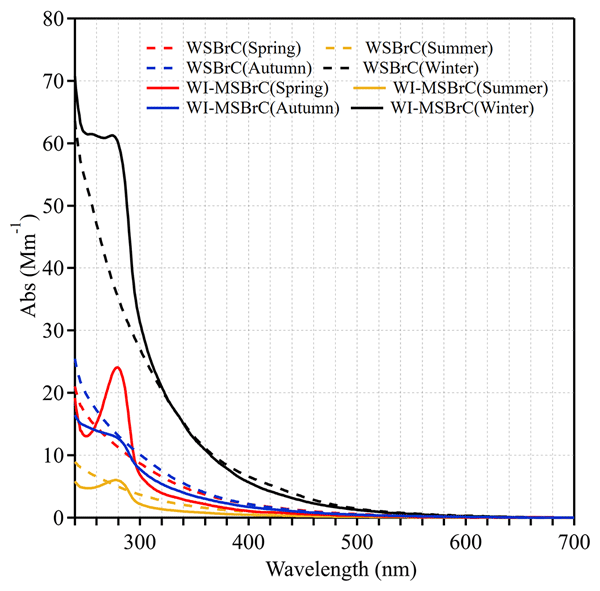
Comprehensive study of optical properties of brown carbon (BrC) in fine aerosols from Tianjin, China, implied that biological emissions are major sources of BrC in summer, whereas fossil fuel combustion and biomass burning emissions are in cold periods. The direct radiation absorption caused by BrC in short wavelengths contributed about 40 % to that caused by BrC in 300–700 nm. Water-insoluble but methanol-soluble BrC contains more protein-like chromophores (PLOM) than that of water-soluble BrC.
Zhiqiang Zhang, Ying Li, Haiyan Ran, Junling An, Yu Qu, Wei Zhou, Weiqi Xu, Weiwei Hu, Hongbin Xie, Zifa Wang, Yele Sun, and Manabu Shiraiwa
Atmos. Chem. Phys., 24, 4809–4826, https://doi.org/10.5194/acp-24-4809-2024, https://doi.org/10.5194/acp-24-4809-2024, 2024
Short summary
Short summary
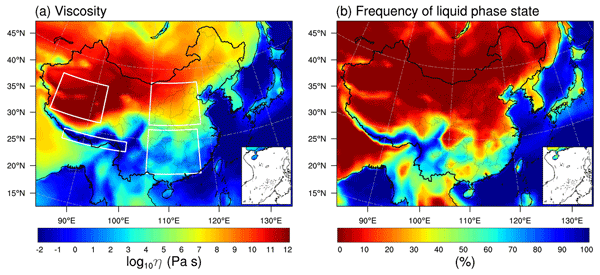
Secondary organic aerosols (SOAs) can exist in liquid, semi-solid, or amorphous solid states, which are rarely accounted for in current chemical transport models. We predict the phase state of SOA particles over China and find that in northwestern China SOA particles are mostly highly viscous or glassy solid. Our results indicate that the particle phase state should be considered in SOA formation in chemical transport models for more accurate prediction of SOA mass concentrations.
Jiawei Li, Zhiwei Han, Pingqing Fu, Xiaohong Yao, and Mingjie Liang
Atmos. Chem. Phys., 24, 3129–3161, https://doi.org/10.5194/acp-24-3129-2024, https://doi.org/10.5194/acp-24-3129-2024, 2024
Short summary
Short summary
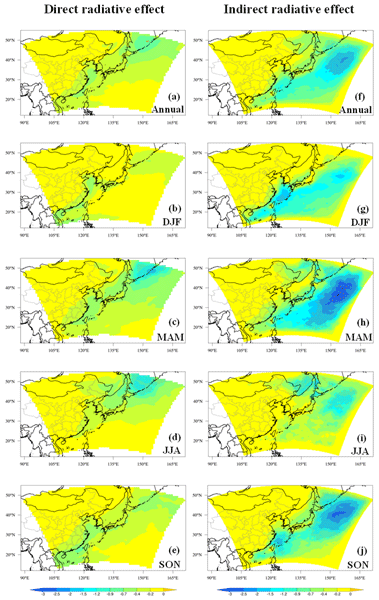
Organic aerosols of marine origin are important for aerosol climatic effects but are poorly understood. For the first time, an online coupled regional chemistry–climate model is applied to explore the characteristics of emission, distribution, and direct and indirect radiative effects of marine organic aerosols over the western Pacific, which reveals an important role of marine organic aerosols in perturbing cloud and radiation and promotes understanding of global aerosol climatic impact.
Huisheng Bian, Mian Chin, Peter R. Colarco, Eric C. Apel, Donald R. Blake, Karl Froyd, Rebecca S. Hornbrook, Jose Jimenez, Pedro Campuzano Jost, Michael Lawler, Mingxu Liu, Marianne Tronstad Lund, Hitoshi Matsui, Benjamin A. Nault, Joyce E. Penner, Andrew W. Rollins, Gregory Schill, Ragnhild B. Skeie, Hailong Wang, Lu Xu, Kai Zhang, and Jialei Zhu
Atmos. Chem. Phys., 24, 1717–1741, https://doi.org/10.5194/acp-24-1717-2024, https://doi.org/10.5194/acp-24-1717-2024, 2024
Short summary
Short summary
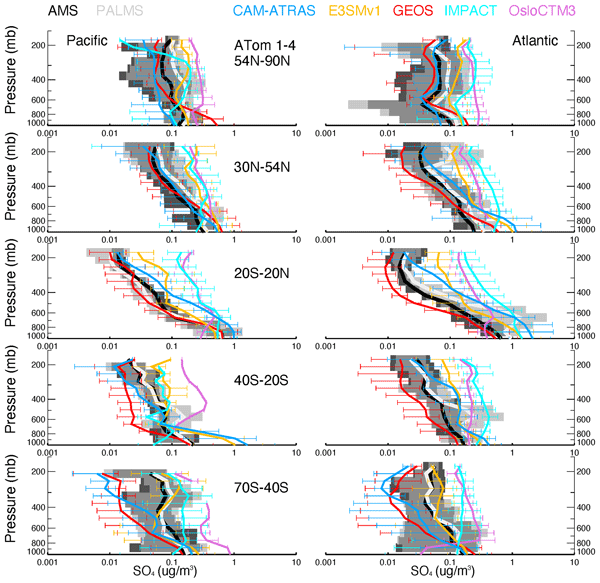
This work studies sulfur in the remote troposphere at global and seasonal scales using aircraft measurements and multi-model simulations. The goal is to understand the sulfur cycle over remote oceans, spread of model simulations, and observation–model discrepancies. Such an understanding and comparison with real observations are crucial to narrow down the uncertainties in model sulfur simulations and improve understanding of the sulfur cycle in atmospheric air quality, climate, and ecosystems.
Natalie M. Mahowald, Longlei Li, Julius Vira, Marje Prank, Douglas S. Hamilton, Hitoshi Matsui, Ron L. Miller, Louis Lu, Ezgi Akyuz, Daphne Meidan, Peter Hess, Heikki Lihavainen, Christine Wiedinmyer, Jenny Hand, Maria Grazia Alaimo, Célia Alves, Andres Alastuey, Paulo Artaxo, Africa Barreto, Francisco Barraza, Silvia Becagli, Giulia Calzolai, Shankarararman Chellam, Ying Chen, Patrick Chuang, David D. Cohen, Cristina Colombi, Evangelia Diapouli, Gaetano Dongarra, Konstantinos Eleftheriadis, Corinne Galy-Lacaux, Cassandra Gaston, Dario Gomez, Yenny González Ramos, Hannele Hakola, Roy M. Harrison, Chris Heyes, Barak Herut, Philip Hopke, Christoph Hüglin, Maria Kanakidou, Zsofia Kertesz, Zbiginiw Klimont, Katriina Kyllönen, Fabrice Lambert, Xiaohong Liu, Remi Losno, Franco Lucarelli, Willy Maenhaut, Beatrice Marticorena, Randall V. Martin, Nikolaos Mihalopoulos, Yasser Morera-Gomez, Adina Paytan, Joseph Prospero, Sergio Rodríguez, Patricia Smichowski, Daniela Varrica, Brenna Walsh, Crystal Weagle, and Xi Zhao
Earth Syst. Sci. Data Discuss., https://doi.org/10.5194/essd-2024-1, https://doi.org/10.5194/essd-2024-1, 2024
Preprint withdrawn
Short summary
Short summary
Aerosol particles can interact with incoming solar radiation and outgoing long wave radiation, change cloud properties, affect photochemistry, impact surface air quality, and when deposited impact surface albedo of snow and ice, and modulate carbon dioxide uptake by the land and ocean. Here we present a new compilation of aerosol observations including composition, a methodology for comparing the datasets to model output, and show the implications of these results using one model.
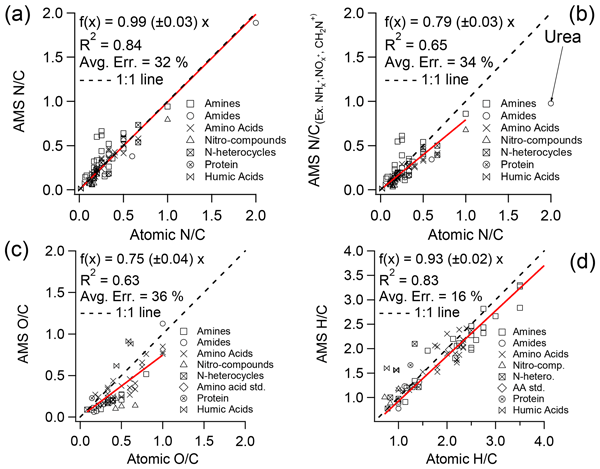
Xinlei Ge, Yele Sun, Justin Trousdell, Mindong Chen, and Qi Zhang
Atmos. Meas. Tech., 17, 423–439, https://doi.org/10.5194/amt-17-423-2024, https://doi.org/10.5194/amt-17-423-2024, 2024
Short summary
Short summary
This study aims to enhance the application of the Aerodyne high-resolution aerosol mass spectrometer (HR-AMS) in characterizing organic nitrogen (ON) species within aerosol particles and droplets. A thorough analysis was conducted on 75 ON standards that represent a diverse spectrum of ambient ON types. The results underscore the capacity of the HR-AMS in examining the concentration and chemistry of atmospheric ON compounds, thereby offering insights into their sources and environmental impacts.
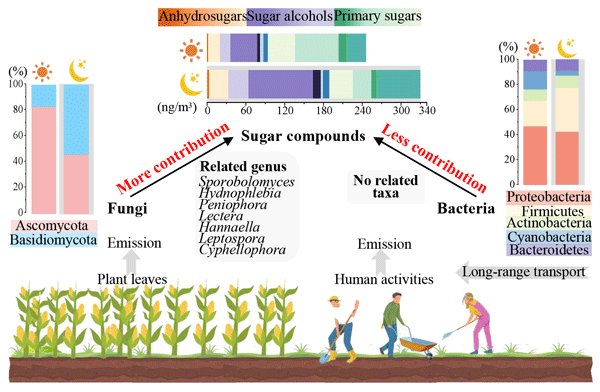
Mutong Niu, Shu Huang, Wei Hu, Yajie Wang, Wanyun Xu, Wan Wei, Qiang Zhang, Zihan Wang, Donghuan Zhang, Rui Jin, Libin Wu, Junjun Deng, Fangxia Shen, and Pingqing Fu
Biogeosciences, 20, 4915–4930, https://doi.org/10.5194/bg-20-4915-2023, https://doi.org/10.5194/bg-20-4915-2023, 2023
Short summary
Short summary
Sugar compounds in air can trace the source of bioaerosols that affect public health and climate. In rural north China, we observed increased fungal activity at night and less variable bacterial community diversity. Certain night-increasing sugar compounds were more closely related to fungi than bacteria. The fungal community greatly influenced sugar compounds, while bacteria played a limited role. Caution is advised when using sugar compounds to trace airborne microbes, particularly bacteria.
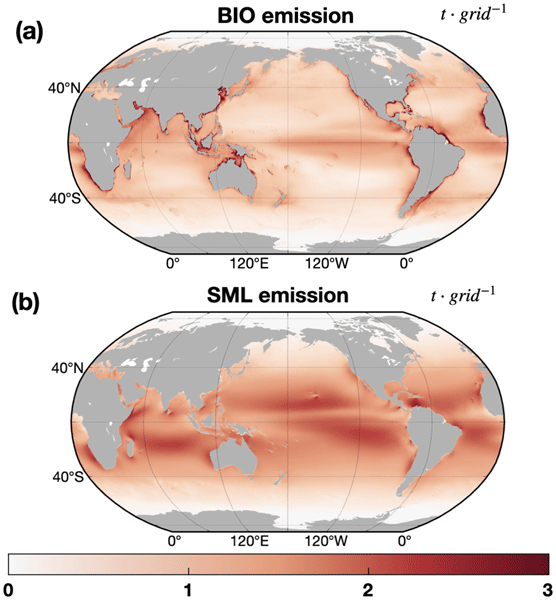
Lehui Cui, Yunting Xiao, Wei Hu, Lei Song, Yujue Wang, Chao Zhang, Pingqing Fu, and Jialei Zhu
Earth Syst. Sci. Data, 15, 5403–5425, https://doi.org/10.5194/essd-15-5403-2023, https://doi.org/10.5194/essd-15-5403-2023, 2023
Short summary
Short summary
Isoprene is a crucial non-methane biogenic volatile organic compound with the largest global emissions, which has high chemical reactivity and serves as the primary source of natural secondary organic aerosols. This study built a module to present a 20-year global hourly dataset of marine phytoplankton-generated biological and photochemistry-generated isoprene emissions in the sea microlayers based on the latest advancements in biological, physical, and chemical processes.
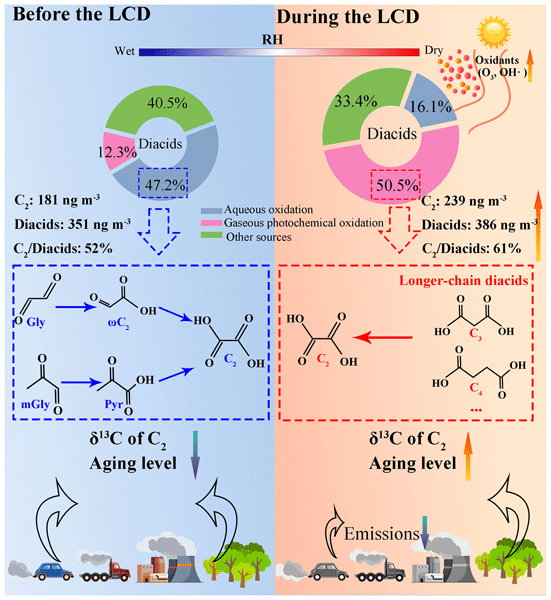
Jingjing Meng, Yachen Wang, Yuanyuan Li, Tonglin Huang, Zhifei Wang, Yiqiu Wang, Min Chen, Zhanfang Hou, Houhua Zhou, Keding Lu, Kimitaka Kawamura, and Pingqing Fu
Atmos. Chem. Phys., 23, 14481–14503, https://doi.org/10.5194/acp-23-14481-2023, https://doi.org/10.5194/acp-23-14481-2023, 2023
Short summary
Short summary
This study investigated the effect of COVID-19 lockdown (LCD) measures on the formation and evolutionary process of diacids and related compounds from field observations. Results demonstrate that more aged organic aerosols are observed during the LCD due to the enhanced photochemical oxidation. Our study also found that the reactivity of 13C was higher than that of 12C in the gaseous photochemical oxidation, leading to higher δ13C values of C2 during the LCD than before the LCD.
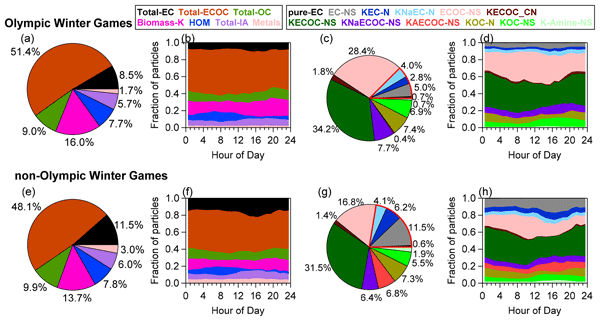
Aodong Du, Jiaxing Sun, Hang Liu, Weiqi Xu, Wei Zhou, Yuting Zhang, Lei Li, Xubing Du, Yan Li, Xiaole Pan, Zifa Wang, and Yele Sun
Atmos. Chem. Phys., 23, 13597–13611, https://doi.org/10.5194/acp-23-13597-2023, https://doi.org/10.5194/acp-23-13597-2023, 2023
Short summary
Short summary
We characterized the impacts of emission controls on particle mixing state and density during the Beijing Olympic Winter Games using a SPAMS in tandem with a DMA and an AAC. OC and sulfate-containing particles increased, while those from primary emissions decreased. The effective particle densities increased and varied largely for different particles, highlighting the impacts of aging and formation processes on the changes of particle density and mixing state.
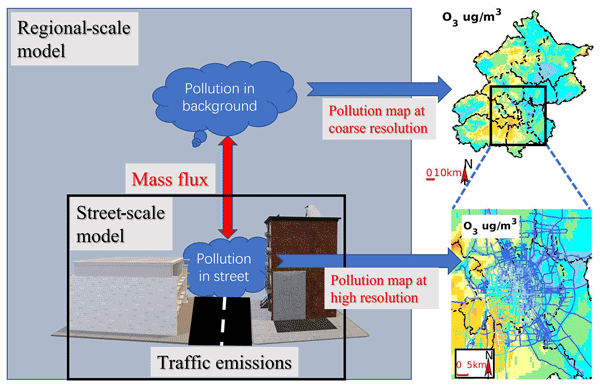
Tao Wang, Hang Liu, Jie Li, Shuai Wang, Youngseob Kim, Yele Sun, Wenyi Yang, Huiyun Du, Zhe Wang, and Zifa Wang
Geosci. Model Dev., 16, 5585–5599, https://doi.org/10.5194/gmd-16-5585-2023, https://doi.org/10.5194/gmd-16-5585-2023, 2023
Short summary
Short summary
This paper developed a two-way coupled module in a new version of a regional urban–street network model, IAQMS-street v2.0, in which the mass flux from streets to background is considered. Test cases are defined to evaluate the performance of IAQMS-street v2.0 in Beijing by comparing it with that simulated by IAQMS-street v1.0 and a regional model. The contribution of local emissions and the influence of on-road vehicle control measures on air quality are evaluated by using IAQMS-street v2.0.
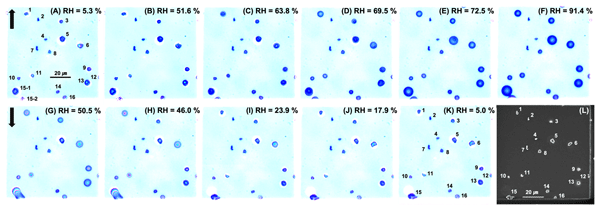
Li Wu, Hyo-Jin Eom, Hanjin Yoo, Dhrubajyoti Gupta, Hye-Rin Cho, Pingqing Fu, and Chul-Un Ro
Atmos. Chem. Phys., 23, 12571–12588, https://doi.org/10.5194/acp-23-12571-2023, https://doi.org/10.5194/acp-23-12571-2023, 2023
Short summary
Short summary
Hygroscopicity of ambient marine aerosols is of critical relevance to investigate their atmospheric impacts, which, however, remain uncertain due to their complex compositions and mixing states. Therefore, a study on the hygroscopic behavior of ambient marine aerosols for understanding the phase states when interacting with water vapor at different RH levels and their subsequent impacts on the heterogeneous chemical reactions, atmospheric environment, and human health is of vital importance.
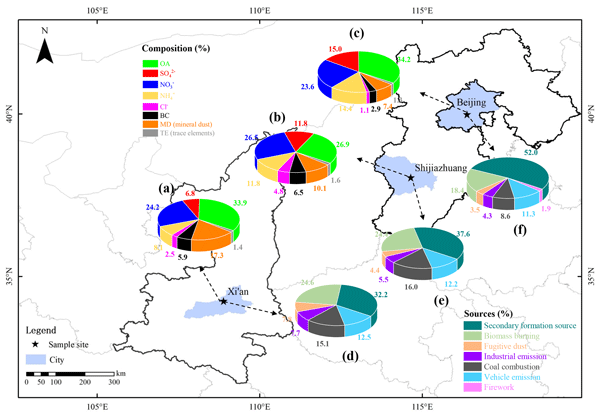
Yong Zhang, Jie Tian, Qiyuan Wang, Lu Qi, Manousos Ioannis Manousakas, Yuemei Han, Weikang Ran, Yele Sun, Huikun Liu, Renjian Zhang, Yunfei Wu, Tianqu Cui, Kaspar Rudolf Daellenbach, Jay Gates Slowik, André S. H. Prévôt, and Junji Cao
Atmos. Chem. Phys., 23, 9455–9471, https://doi.org/10.5194/acp-23-9455-2023, https://doi.org/10.5194/acp-23-9455-2023, 2023
Short summary
Short summary
PM2.5 pollution still frequently occurs in northern China during winter, and it is necessary to figure out the causes of air pollution based on intensive real-time measurement. The findings elaborate the chemical characteristics and source contributions of PM2.5 in three pilot cities, reveal potential formation mechanisms of secondary aerosols, and highlight the importance of controlling biomass burning and inhibiting generation of secondary aerosol for air quality improvement.
Qi Yuan, Yuanyuan Wang, Yixin Chen, Siyao Yue, Jian Zhang, Yinxiao Zhang, Liang Xu, Wei Hu, Dantong Liu, Pingqing Fu, Huiwang Gao, and Weijun Li
Atmos. Chem. Phys., 23, 9385–9399, https://doi.org/10.5194/acp-23-9385-2023, https://doi.org/10.5194/acp-23-9385-2023, 2023
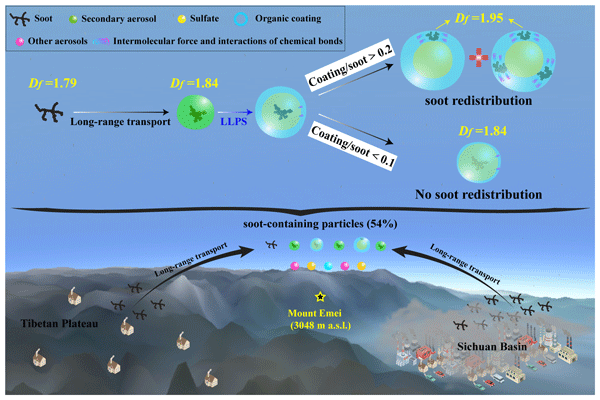
Short summary
Short summary
This study for the first time found large amounts of liquid–liquid phase separation particles with soot redistributing in organic coatings instead of sulfate cores in the eastern Tibetan Plateau atmosphere. The particle size and the ratio of the organic matter coating thickness to soot size are two of the major possible factors that likely affect the soot redistribution process. The soot redistribution process promoted the morphological compaction of soot particles.
Dandan Liu, Yun Zhang, Shujun Zhong, Shuang Chen, Qiaorong Xie, Donghuan Zhang, Qiang Zhang, Wei Hu, Junjun Deng, Libin Wu, Chao Ma, Haijie Tong, and Pingqing Fu
Atmos. Chem. Phys., 23, 8383–8402, https://doi.org/10.5194/acp-23-8383-2023, https://doi.org/10.5194/acp-23-8383-2023, 2023
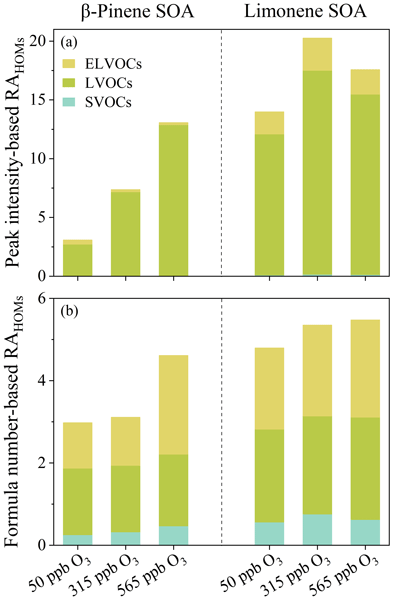
Short summary
Short summary
Based on ultra-high-resolution mass spectrometry analysis, we found that β-pinene oxidation-derived highly oxygenated organic molecules (HOMs) exhibit higher yield at high ozone concentration, while limonene oxidation-derived HOMs exhibit higher yield at moderate ozone concentration. The distinct molecular response of HOMs and low-volatile species in different biogenic secondary organic aerosols to ozone concentrations provides a new clue for more accurate air quality prediction and management.
Hang Liu, Xiaole Pan, Shandong Lei, Yuting Zhang, Aodong Du, Weijie Yao, Guiqian Tang, Tao Wang, Jinyuan Xin, Jie Li, Yele Sun, Junji Cao, and Zifa Wang
Atmos. Chem. Phys., 23, 7225–7239, https://doi.org/10.5194/acp-23-7225-2023, https://doi.org/10.5194/acp-23-7225-2023, 2023
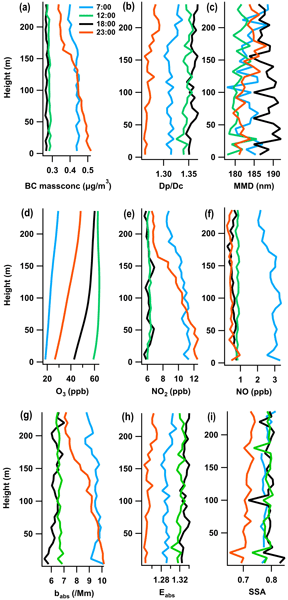
Short summary
Short summary
We provide the average vertical profiles of black carbon (BC) concentration, size distribution and coating thickness at different times of the day in an urban area based on 112 vertical profiles. In addition, it is found that BC in the residual layer generally has a thicker coating, higher absorption enhancement and hygroscopicity than on the surface. Such aged BC could enter into the boundary layer and influence the BC properties in the early morning.
Lei Kong, Xiao Tang, Jiang Zhu, Zifa Wang, Yele Sun, Pingqing Fu, Meng Gao, Huangjian Wu, Miaomiao Lu, Qian Wu, Shuyuan Huang, Wenxuan Sui, Jie Li, Xiaole Pan, Lin Wu, Hajime Akimoto, and Gregory R. Carmichael
Atmos. Chem. Phys., 23, 6217–6240, https://doi.org/10.5194/acp-23-6217-2023, https://doi.org/10.5194/acp-23-6217-2023, 2023
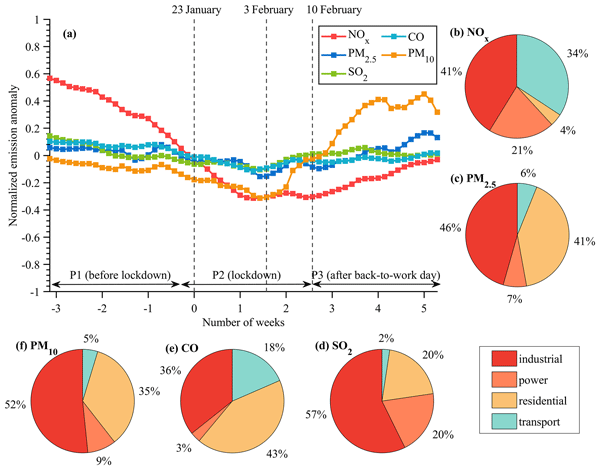
Short summary
Short summary
A multi-air-pollutant inversion system has been developed in this study to estimate emission changes in China during COVID-19 lockdown. The results demonstrate that the lockdown is largely a nationwide road traffic control measure with NOx emissions decreasing by ~40 %. Emissions of other species only decreased by ~10 % due to smaller effects of lockdown on other sectors. Assessment results further indicate that the lockdown only had limited effects on the control of PM2.5 and O3 in China.
Joanna E. Dyson, Lisa K. Whalley, Eloise J. Slater, Robert Woodward-Massey, Chunxiang Ye, James D. Lee, Freya Squires, James R. Hopkins, Rachel E. Dunmore, Marvin Shaw, Jacqueline F. Hamilton, Alastair C. Lewis, Stephen D. Worrall, Asan Bacak, Archit Mehra, Thomas J. Bannan, Hugh Coe, Carl J. Percival, Bin Ouyang, C. Nicholas Hewitt, Roderic L. Jones, Leigh R. Crilley, Louisa J. Kramer, W. Joe F. Acton, William J. Bloss, Supattarachai Saksakulkrai, Jingsha Xu, Zongbo Shi, Roy M. Harrison, Simone Kotthaus, Sue Grimmond, Yele Sun, Weiqi Xu, Siyao Yue, Lianfang Wei, Pingqing Fu, Xinming Wang, Stephen R. Arnold, and Dwayne E. Heard
Atmos. Chem. Phys., 23, 5679–5697, https://doi.org/10.5194/acp-23-5679-2023, https://doi.org/10.5194/acp-23-5679-2023, 2023
Short summary
Short summary
The hydroxyl (OH) and closely coupled hydroperoxyl (HO2) radicals are vital for their role in the removal of atmospheric pollutants. In less polluted regions, atmospheric models over-predict HO2 concentrations. In this modelling study, the impact of heterogeneous uptake of HO2 onto aerosol surfaces on radical concentrations and the ozone production regime in Beijing in the summertime is investigated, and the implications for emissions policies across China are considered.
Shixian Zhai, Daniel J. Jacob, Drew C. Pendergrass, Nadia K. Colombi, Viral Shah, Laura Hyesung Yang, Qiang Zhang, Shuxiao Wang, Hwajin Kim, Yele Sun, Jin-Soo Choi, Jin-Soo Park, Gan Luo, Fangqun Yu, Jung-Hun Woo, Younha Kim, Jack E. Dibb, Taehyoung Lee, Jin-Seok Han, Bruce E. Anderson, Ke Li, and Hong Liao
Atmos. Chem. Phys., 23, 4271–4281, https://doi.org/10.5194/acp-23-4271-2023, https://doi.org/10.5194/acp-23-4271-2023, 2023
Short summary
Short summary
Anthropogenic fugitive dust in East Asia not only causes severe coarse particulate matter air pollution problems, but also affects fine particulate nitrate. Due to emission control efforts, coarse PM decreased steadily. We find that the decrease of coarse PM is a major driver for a lack of decrease of fine particulate nitrate, as it allows more nitric acid to form fine particulate nitrate. The continuing decrease of coarse PM requires more stringent ammonia and nitrogen oxides emission controls.
Zhichao Dong, Chandra Mouli Pavuluri, Zhanjie Xu, Yu Wang, Peisen Li, Pingqing Fu, and Cong-Qiang Liu
Atmos. Chem. Phys., 23, 2119–2143, https://doi.org/10.5194/acp-23-2119-2023, https://doi.org/10.5194/acp-23-2119-2023, 2023
Short summary
Short summary
This study has provided comprehensive baseline data of carbonaceous and inorganic aerosols as well as their isotope ratios in the Tianjin region, North China, found that Tianjin aerosols were derived from coal combustion, biomass burning and photochemical reactions of VOCs, and also implied that the Tianjin aerosols were more aged during long-range atmospheric transport in summer via carbonaceous and isotope data analysis.

Shujun Zhong, Shuang Chen, Junjun Deng, Yanbing Fan, Qiang Zhang, Qiaorong Xie, Yulin Qi, Wei Hu, Libin Wu, Xiaodong Li, Chandra Mouli Pavuluri, Jialei Zhu, Xin Wang, Di Liu, Xiaole Pan, Yele Sun, Zifa Wang, Yisheng Xu, Haijie Tong, Hang Su, Yafang Cheng, Kimitaka Kawamura, and Pingqing Fu
Atmos. Chem. Phys., 23, 2061–2077, https://doi.org/10.5194/acp-23-2061-2023, https://doi.org/10.5194/acp-23-2061-2023, 2023
Short summary
Short summary
This study investigated the role of the secondary organic aerosol (SOA) loading on the molecular composition of wintertime urban aerosols by ultrahigh-resolution mass spectrometry. Results demonstrate that the SOA loading is an important factor associated with the oxidation degree, nitrate group content, and chemodiversity of nitrooxy–organosulfates. Our study also found that the hydrolysis of nitrooxy–organosulfates is a possible pathway for the formation of organosulfates.
Yuying Wang, Rong Hu, Qiuyan Wang, Zhanqing Li, Maureen Cribb, Yele Sun, Xiaorui Song, Yi Shang, Yixuan Wu, Xin Huang, and Yuxiang Wang
Atmos. Chem. Phys., 22, 14133–14146, https://doi.org/10.5194/acp-22-14133-2022, https://doi.org/10.5194/acp-22-14133-2022, 2022
Short summary
Short summary
The mixing state of size-resolved soot particles and their influencing factors were investigated. The results suggest anthropogenic emissions and aging processes have diverse impacts on the mixing state of soot particles in different modes. Considering that the mixing state of soot particles is crucial to model aerosol absorption, this finding is important to study particle growth and the warming effect of black carbon aerosols.
Xiaoying Niu, Wei Pu, Pingqing Fu, Yang Chen, Yuxuan Xing, Dongyou Wu, Ziqi Chen, Tenglong Shi, Yue Zhou, Hui Wen, and Xin Wang
Atmos. Chem. Phys., 22, 14075–14094, https://doi.org/10.5194/acp-22-14075-2022, https://doi.org/10.5194/acp-22-14075-2022, 2022
Short summary
Short summary
In this study, we do the first investigation of WSOC in seasonal snow of northeastern China. The results revealed the regional-specific compositions and sources of WSOC due to different natural environments and anthropogenic activities. The abundant concentrations of WSOC and its absorption properties contributed to a crucial impact on the snow albedo and radiative effect. We established that our study could raise awareness of carbon cycling processes, hydrological processes, and climate change.
Futing Wang, Ting Yang, Zifa Wang, Haibo Wang, Xi Chen, Yele Sun, Jianjun Li, Guigang Tang, and Wenxuan Chai
Atmos. Meas. Tech., 15, 6127–6144, https://doi.org/10.5194/amt-15-6127-2022, https://doi.org/10.5194/amt-15-6127-2022, 2022
Short summary
Short summary
We develop a new algorithm to get the vertical mass concentration profiles of fine aerosol components based on the synergy of ground-based remote sensing for the first time. The comparisons with in situ observations and chemistry transport models validate the performance of the algorithm. Uncertainties caused by input parameters are also assessed in this paper. We expected that the algorithm can provide a new idea for lidar inversion and promote the development of aerosol component profiles.
Chao Yan, Yicheng Shen, Dominik Stolzenburg, Lubna Dada, Ximeng Qi, Simo Hakala, Anu-Maija Sundström, Yishuo Guo, Antti Lipponen, Tom V. Kokkonen, Jenni Kontkanen, Runlong Cai, Jing Cai, Tommy Chan, Liangduo Chen, Biwu Chu, Chenjuan Deng, Wei Du, Xiaolong Fan, Xu-Cheng He, Juha Kangasluoma, Joni Kujansuu, Mona Kurppa, Chang Li, Yiran Li, Zhuohui Lin, Yiliang Liu, Yuliang Liu, Yiqun Lu, Wei Nie, Jouni Pulliainen, Xiaohui Qiao, Yonghong Wang, Yifan Wen, Ye Wu, Gan Yang, Lei Yao, Rujing Yin, Gen Zhang, Shaojun Zhang, Feixue Zheng, Ying Zhou, Antti Arola, Johanna Tamminen, Pauli Paasonen, Yele Sun, Lin Wang, Neil M. Donahue, Yongchun Liu, Federico Bianchi, Kaspar R. Daellenbach, Douglas R. Worsnop, Veli-Matti Kerminen, Tuukka Petäjä, Aijun Ding, Jingkun Jiang, and Markku Kulmala
Atmos. Chem. Phys., 22, 12207–12220, https://doi.org/10.5194/acp-22-12207-2022, https://doi.org/10.5194/acp-22-12207-2022, 2022
Short summary
Short summary
Atmospheric new particle formation (NPF) is a dominant source of atmospheric ultrafine particles. In urban environments, traffic emissions are a major source of primary pollutants, but their contribution to NPF remains under debate. During the COVID-19 lockdown, traffic emissions were significantly reduced, providing a unique chance to examine their relevance to NPF. Based on our comprehensive measurements, we demonstrate that traffic emissions alone are not able to explain the NPF in Beijing.
Mengying Li, Shaocai Yu, Xue Chen, Zhen Li, Yibo Zhang, Zhe Song, Weiping Liu, Pengfei Li, Xiaoye Zhang, Meigen Zhang, Yele Sun, Zirui Liu, Caiping Sun, Jingkun Jiang, Shuxiao Wang, Benjamin N. Murphy, Kiran Alapaty, Rohit Mathur, Daniel Rosenfeld, and John H. Seinfeld
Atmos. Chem. Phys., 22, 11845–11866, https://doi.org/10.5194/acp-22-11845-2022, https://doi.org/10.5194/acp-22-11845-2022, 2022
Short summary
Short summary
This study constructed an emission inventory of condensable particulate matter (CPM) in China with a focus on organic aerosols (OAs), based on collected CPM emission information. The results show that OA emissions are enhanced twofold for the years 2014 and 2017 after the inclusion of CPM in the new inventory. Sensitivity cases demonstrated the significant contributions of CPM emissions from stationary combustion and mobile sources to primary, secondary, and total OA concentrations.
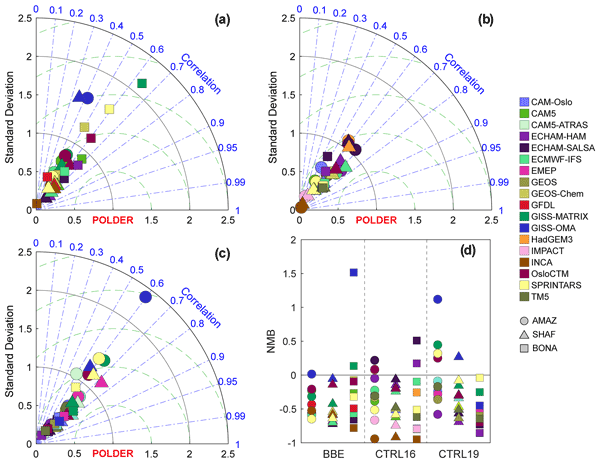
Qirui Zhong, Nick Schutgens, Guido van der Werf, Twan van Noije, Kostas Tsigaridis, Susanne E. Bauer, Tero Mielonen, Alf Kirkevåg, Øyvind Seland, Harri Kokkola, Ramiro Checa-Garcia, David Neubauer, Zak Kipling, Hitoshi Matsui, Paul Ginoux, Toshihiko Takemura, Philippe Le Sager, Samuel Rémy, Huisheng Bian, Mian Chin, Kai Zhang, Jialei Zhu, Svetlana G. Tsyro, Gabriele Curci, Anna Protonotariou, Ben Johnson, Joyce E. Penner, Nicolas Bellouin, Ragnhild B. Skeie, and Gunnar Myhre
Atmos. Chem. Phys., 22, 11009–11032, https://doi.org/10.5194/acp-22-11009-2022, https://doi.org/10.5194/acp-22-11009-2022, 2022
Short summary
Short summary
Aerosol optical depth (AOD) errors for biomass burning aerosol (BBA) are evaluated in 18 global models against satellite datasets. Notwithstanding biases in satellite products, they allow model evaluations. We observe large and diverse model biases due to errors in BBA. Further interpretations of AOD diversities suggest large biases exist in key processes for BBA which require better constraining. These results can contribute to further model improvement and development.
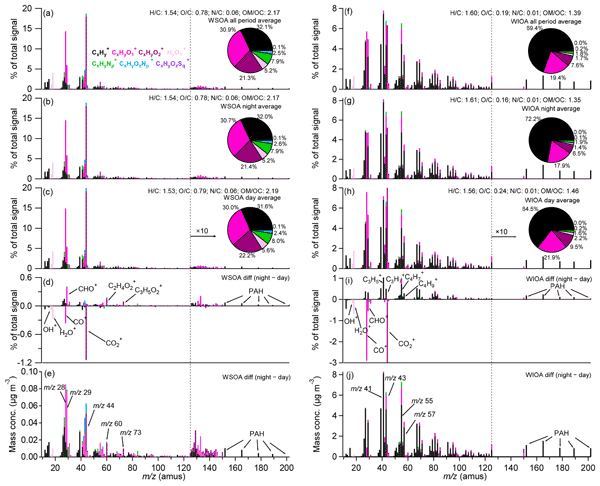
Zhiqiang Zhang, Yele Sun, Chun Chen, Bo You, Aodong Du, Weiqi Xu, Yan Li, Zhijie Li, Lu Lei, Wei Zhou, Jiaxing Sun, Yanmei Qiu, Lianfang Wei, Pingqing Fu, and Zifa Wang
Atmos. Chem. Phys., 22, 10409–10423, https://doi.org/10.5194/acp-22-10409-2022, https://doi.org/10.5194/acp-22-10409-2022, 2022
Short summary
Short summary
We present a comprehensive characterization of water-soluble organic aerosol and the first mass spectral characterization of water-insoluble organic aerosol in the cold season in Beijing by integrating online and offline aerosol mass spectrometer measurements. WSOA comprised dominantly secondary OA and showed large changes during the transition season from autumn to winter. WIOA was characterized by prominent hydrocarbon ions series, low oxidation states, and significant day–night differences.
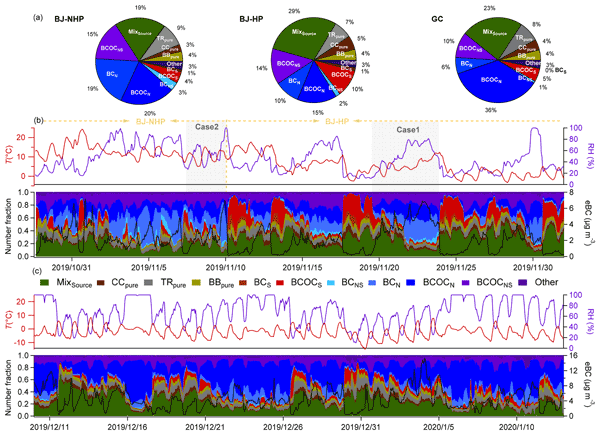
Jiaxing Sun, Yele Sun, Conghui Xie, Weiqi Xu, Chun Chen, Zhe Wang, Lei Li, Xubing Du, Fugui Huang, Yan Li, Zhijie Li, Xiaole Pan, Nan Ma, Wanyun Xu, Pingqing Fu, and Zifa Wang
Atmos. Chem. Phys., 22, 7619–7630, https://doi.org/10.5194/acp-22-7619-2022, https://doi.org/10.5194/acp-22-7619-2022, 2022
Short summary
Short summary
We analyzed the chemical composition and mixing state of BC-containing particles at urban and rural sites in winter in the North China Plain and evaluated their impact on light absorption enhancement. BC was dominantly mixed with organic carbon, nitrate, and sulfate, and the mixing state evolved significantly as a function of relative humidity (RH) at both sites. The absorption enhancement depended strongly on coated secondary inorganic aerosol and was up to ~1.3–1.4 during aging processes.
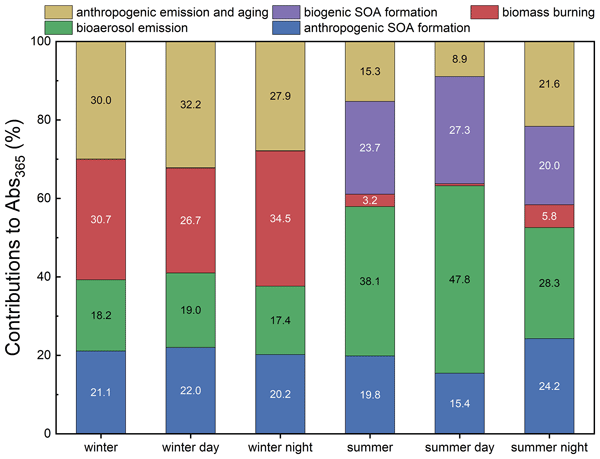
Junjun Deng, Hao Ma, Xinfeng Wang, Shujun Zhong, Zhimin Zhang, Jialei Zhu, Yanbing Fan, Wei Hu, Libin Wu, Xiaodong Li, Lujie Ren, Chandra Mouli Pavuluri, Xiaole Pan, Yele Sun, Zifa Wang, Kimitaka Kawamura, and Pingqing Fu
Atmos. Chem. Phys., 22, 6449–6470, https://doi.org/10.5194/acp-22-6449-2022, https://doi.org/10.5194/acp-22-6449-2022, 2022
Short summary
Short summary
Light-absorbing brown carbon (BrC) plays an important role in climate change and atmospheric chemistry. Here we investigated the seasonal and diurnal variations in water-soluble BrC in PM2.5 in the megacity Tianjin in coastal China. Results of the source apportionments from the combination with organic molecular compositions and optical properties of water-soluble BrC reveal a large contribution from primary bioaerosol particles to BrC in the urban atmosphere.
Jingnan Shi, Juan Hong, Nan Ma, Qingwei Luo, Yao He, Hanbing Xu, Haobo Tan, Qiaoqiao Wang, Jiangchuan Tao, Yaqing Zhou, Shuang Han, Long Peng, Linhong Xie, Guangsheng Zhou, Wanyun Xu, Yele Sun, Yafang Cheng, and Hang Su
Atmos. Chem. Phys., 22, 4599–4613, https://doi.org/10.5194/acp-22-4599-2022, https://doi.org/10.5194/acp-22-4599-2022, 2022
Short summary
Short summary
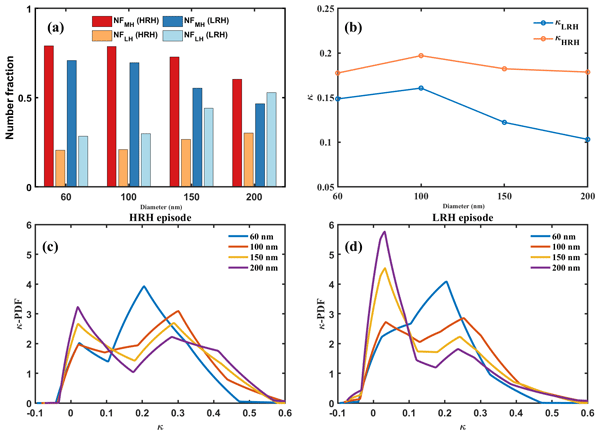
In this study, we investigated the hygroscopicity of submicron aerosols at a rural site in the North China Plain during the winter of 2018, using a HTDMA and a CV-ToF-ACSM. We observed differences in aerosol hygroscopicity during two distinct episodes with different primary emissions and secondary aerosol formation processes. These results provide an improved understanding of the complex influence of sources and aerosol evolution processes on their hygroscopicity.
Yanhong Zhu, Weijun Li, Yue Wang, Jian Zhang, Lei Liu, Liang Xu, Jingsha Xu, Jinhui Shi, Longyi Shao, Pingqing Fu, Daizhou Zhang, and Zongbo Shi
Atmos. Chem. Phys., 22, 2191–2202, https://doi.org/10.5194/acp-22-2191-2022, https://doi.org/10.5194/acp-22-2191-2022, 2022
Short summary
Short summary
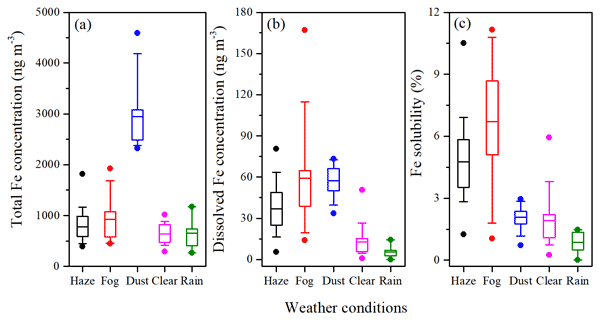
The solubilities of iron in fine particles in a megacity in Eastern China were studied under haze, fog, dust, clear, and rain weather conditions. For the first time, a receptor model was used to quantify the sources of dissolved and total iron aerosol. Microscopic analysis further confirmed the aging of iron aerosol during haze and fog conditions that facilitated dissolution of insoluble iron.
Yaqing Zhou, Nan Ma, Qiaoqiao Wang, Zhibin Wang, Chunrong Chen, Jiangchuan Tao, Juan Hong, Long Peng, Yao He, Linhong Xie, Shaowen Zhu, Yuxuan Zhang, Guo Li, Wanyun Xu, Peng Cheng, Uwe Kuhn, Guangsheng Zhou, Pingqing Fu, Qiang Zhang, Hang Su, and Yafang Cheng
Atmos. Chem. Phys., 22, 2029–2047, https://doi.org/10.5194/acp-22-2029-2022, https://doi.org/10.5194/acp-22-2029-2022, 2022
Short summary
Short summary
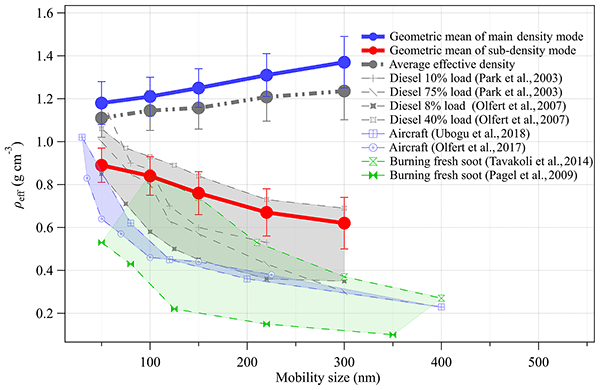
This study characterizes size-resolved particle effective densities and their evolution associated with emissions and aging processes in a rural area of the North China Plain. Particle effective density exhibits a high-frequency bimodal distribution, and two density modes exhibit opposite trends with increasing particle size. SIA and BC mass fractions are key factors of particle effective density, and a value of 0.6 g cm−3 is appropriate to represent BC effective density in bulk particles.
Jing Cai, Cheng Wu, Jiandong Wang, Wei Du, Feixue Zheng, Simo Hakala, Xiaolong Fan, Biwu Chu, Lei Yao, Zemin Feng, Yongchun Liu, Yele Sun, Jun Zheng, Chao Yan, Federico Bianchi, Markku Kulmala, Claudia Mohr, and Kaspar R. Daellenbach
Atmos. Chem. Phys., 22, 1251–1269, https://doi.org/10.5194/acp-22-1251-2022, https://doi.org/10.5194/acp-22-1251-2022, 2022
Short summary
Short summary
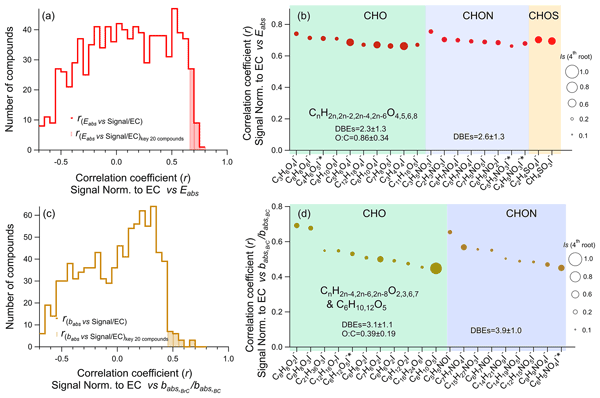
This study investigates the connection between organic aerosol (OA) molecular composition and particle absorptive properties in autumn in Beijing. We find that the molecular properties of OA compounds in different episodes influence particle light absorption properties differently: the light absorption enhancement of black carbon and light absorption coefficient of brown carbon were mostly related to more oxygenated OA (low C number and four O atoms) and aromatics/nitro-aromatics, respectively.
Jiaxing Sun, Zhe Wang, Wei Zhou, Conghui Xie, Cheng Wu, Chun Chen, Tingting Han, Qingqing Wang, Zhijie Li, Jie Li, Pingqing Fu, Zifa Wang, and Yele Sun
Atmos. Chem. Phys., 22, 561–575, https://doi.org/10.5194/acp-22-561-2022, https://doi.org/10.5194/acp-22-561-2022, 2022
Short summary
Short summary
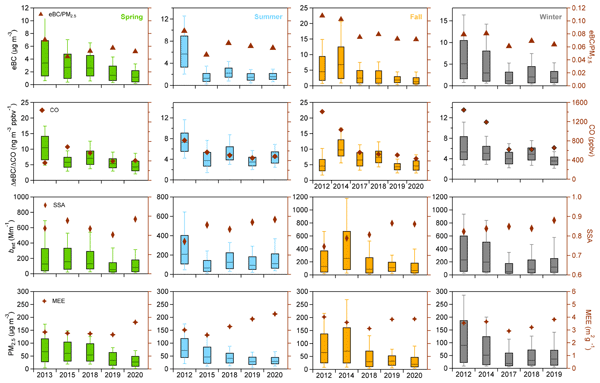
We analyzed 9-year measurements of BC and aerosol optical properties from 2012 to 2020 in Beijing, China. Our results showed large reductions in BC and light extinction coefficient due to the Clean Air Action Plan. As a response, both SSA and mass extinction efficiency (MEE) showed considerable increases, demonstrating a future challenge in visibility improvement. The primary and secondary BrC was also separated and quantified, and the changes in radiative forcing of BC and BrC were estimated.
Yuting Zhang, Hang Liu, Shandong Lei, Wanyun Xu, Yu Tian, Weijie Yao, Xiaoyong Liu, Qi Liao, Jie Li, Chun Chen, Yele Sun, Pingqing Fu, Jinyuan Xin, Junji Cao, Xiaole Pan, and Zifa Wang
Atmos. Chem. Phys., 21, 17631–17648, https://doi.org/10.5194/acp-21-17631-2021, https://doi.org/10.5194/acp-21-17631-2021, 2021
Short summary
Short summary
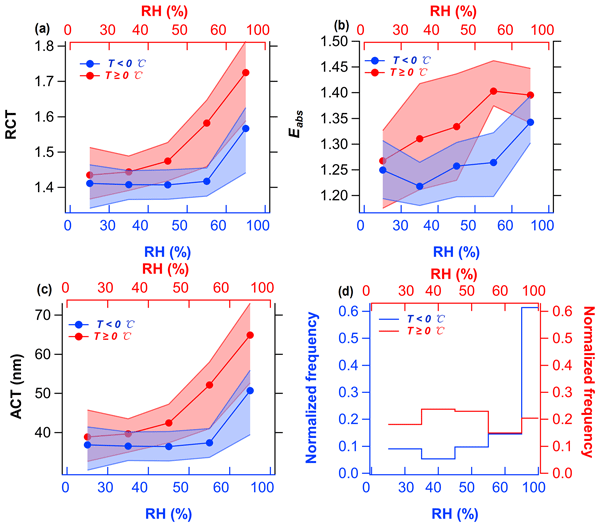
In this study, the authors used a single-particle soot photometer (SP2) to characterize the particle size, mixing state, and optical properties of black carbon aerosols in rural areas of the North China Plain in winter. Relatively warm and high-RH environments (RH > 50 %, −4° < T < 4 °) were more favorable to rBC aging than dry and cold environments (RH < 60 %, T < −8°). The paper emphasizes the importance of meteorological parameters in the mixing state of black carbon.
Cited articles
Bai, J., Guenther, A., Turnipseed, A., and Duhl, T.: Seasonal and interannual variations in whole-ecosystem isoprene and monoterpene emissions from a temperate mixed forest in Northern China, Atmos. Pollut. Res., 6, 696–707, https://doi.org/10.5094/APR.2015.078, 2015.
Bai, J., Guenther, A., Turnipseed, A., Duhl, T., Yu, S., and Wang, B.: Seasonal variations in whole-ecosystem BVOC emissions from a subtropical bamboo plantation in China, Atmos. Environ., 124, 12–21, https://doi.org/10.1016/j.atmosenv.2015.11.008, 2016.
Bai, J., Guenther, A., Turnipseed, A., Duhl, T., and Greenberg, J.: Seasonal and interannual variations in whole-ecosystem BVOC emissions from a subtropical plantation in China, Atmos. Environ., 161, 176–190, https://doi.org/10.1016/j.atmosenv.2017.05.002, 2017.
Bai, J., Wu, Z., Yang, C., and Guenther, A.: Seasonal variations in whole-ecosystem BVOC emissions and ozone fluxes from a tropical rubber tree plantation in China, Atmos. Environ., 351, 121182, https://doi.org/10.1016/j.atmosenv.2025.121182, 2025.
Bai, J., Wu, Z., Yang, C., and Guenther, A. B.: Development and application of a generalized empirical model of BVOC emission (GEMBE) using observations from four Chinese forests, Atmos. Pollut. Res., 17, 102814, https://doi.org/10.1016/j.apr.2025.102814, 2026.
Bergman, M. E., Huang, X.-Q., Baudino, S., Caissard, J.-C., and Dudareva, N.: Plant volatile organic compounds: Emission and perception in a changing world, Curr. Opin. Plant Biol., 85, 102706, https://doi.org/10.1016/j.pbi.2025.102706, 2025.
Botanic Gardens Conservation International (BGCI): State of the World's Trees. Botanic Gardens Conservation International, Richmond, UK, https://www.bgci.org/resources/bgci-tools-and-resources/state-of-the-worlds-trees/ (last access: 24 June 2026), 2021.
Cao, H., Fu, T.-M., Zhang, L., Henze, D. K., Miller, C. C., Lerot, C., Abad, G. G., De Smedt, I., Zhang, Q., van Roozendael, M., Hendrick, F., Chance, K., Li, J., Zheng, J., and Zhao, Y.: Adjoint inversion of Chinese non-methane volatile organic compound emissions using space-based observations of formaldehyde and glyoxal, Atmos. Chem. Phys., 18, 15017–15046, https://doi.org/10.5194/acp-18-15017-2018, 2018.
Cao, J., Situ, S., Hao, Y., Xie, S., and Li, L.: Enhanced summertime ozone and SOA from biogenic volatile organic compound (BVOC) emissions due to vegetation biomass variability during 1981–2018 in China, Atmos. Chem. Phys., 22, 2351–2364, https://doi.org/10.5194/acp-22-2351-2022, 2022.
Cao, J., Han, H., Qiao, L., and Li, L.: Biogenic Volatile Organic Compound Emission and Its Response to Land Cover Changes in China During 2001–2020 Using an Improved High-Precision Vegetation Data Set, J. Geophys. Res.-Atmos., 129, e2023JD040421, https://doi.org/10.1029/2023JD040421, 2024.
Cappa, C. D. and Wilson, K. R.: Multi-generation gas-phase oxidation, equilibrium partitioning, and the formation and evolution of secondary organic aerosol, Atmos. Chem. Phys., 12, 9505–9528, https://doi.org/10.5194/acp-12-9505-2012, 2012.
Chen, W. H., Guenther, A. B., Wang, X. M., Chen, Y. H., Gu, D. S., Chang, M., Zhou, S. Z., Wu, L. L., and Zhang, Y. Q.: Regional to Global Biogenic Isoprene Emission Responses to Changes in Vegetation From 2000 to 2015, J. Geophys. Res.-Atmos., 123, 3757–3771, https://doi.org/10.1002/2017JD027934, 2018.
Cheng, J., Tong, D., Liu, Y., Geng, G, N., Davis, J, S., He, K, B., and Zhang, Q.: A synergistic approach to air pollution control and carbon neutrality in China can avoid millions of premature deaths annually by 2060, One Earth, 6, 978–989, https://doi.org/10.1016/j.oneear.2023.07.007, 2023.
Cheng, K., Yang, H., Chen, Y., Yang, Z., Ren, Y., Zhang, Y., Lin, D., Liu, W., Huang, G., Xu, J., Chen, M., Qi, Z., Xu, G., Tao, S., Guan, H., Ma, Q., Wan, H., Hu, T., Su, Y., Wang, Z., Ma, K., and Guo, Q.: How many trees are there in China?, Sci. Bull., 70, 1076–1079, https://doi.org/10.1016/j.scib.2025.02.001, 2025.
Chytrý, M., Řezníčková, M., Novotný, P., Holubová, D., Preislerová, Z., Attorre, F., Biurrun, I., Blažek, P., Bonari, G., Borovyk, D., Čeplová, N., Danihelka, J., Davydov, D., Dřevojan, P., Fahs, N., Guarino, R., Güler, B., Hennekens, S. M., Hrivnák, R., Kalníková, V., Kalusová, V., Kebert, T., Knollová, I., Knotková, K., Koljanin, D., Kuzemko, A., Loidi, J., Lososová, Z., Marcenò, C., Midolo, G., Milanović, D., Mucina, L., Novák, P., Raab-Straube, E. v., Reczyńska, K., Schaminée, J. H. J., Štěpánková, P., Świerkosz, K., Těšitel, J., Těšitelová, T., Tichý, L., Vynokurov, D., Willner, W., and Axmanová, I.: FloraVeg.EU – An online database of European vegetation, habitats and flora, Appl. Veg. Sci., 27, e12798, https://doi.org/10.1111/avsc.12798, 2024.
Copernicus Land Monitoring Service (CLMS): Fraction of Vegetation Cover 1999–2020 (raster 1 km), global, 10-daily – version 2, European Commission, Joint Research Centre [data set], https://doi.org/10.2909/7d726671-9647-4116-8dc3-cf7470a1a782, 2017.
Dey, B., Sjøgren, T. D., Khare, P., Gkatzelis, G. I., Wu, Y., Vasireddy, S., Schultz, M., Knohl, A., Rinnan, R., Hohaus, T., and Pfannerstill, E. Y.: Multi-stress interaction effects on BVOC emission fingerprints from Oak and Beech: A cross-investigation using Machine Learning and Positive Matrix Factorization, Biogeosciences, 23, 1423–1457, https://doi.org/10.5194/bg-23-1423-2026, 2026.
Ding, X., He, Q. F., Shen, R. Q., Yu, Q. Q., and Wang, X. M.: Spatial distributions of secondary organic aerosols from isoprene, monoterpenes, β-caryophyllene, and aromatics over China during summer, J. Geophys. Res.-Atmos., 119, 11877–11891, https://doi.org/10.1002/2014JD021748, 2014.
Du, W., Sun, Y. L., Xu, Y. S., Jiang, Q., Wang, Q. Q., Yang, W., Wang, F., Bai, Z. P., Zhao, X. D., and Yang, Y. C.: Chemical characterization of submicron aerosol and particle growth events at a national background site (3295 m a.s.l.) on the Tibetan Plateau, Atmos. Chem. Phys., 15, 10811–10824, https://doi.org/10.5194/acp-15-10811-2015, 2015.
Emmons, L. K., Walters, S., Hess, P. G., Lamarque, J.-F., Pfister, G. G., Fillmore, D., Granier, C., Guenther, A., Kinnison, D., Laepple, T., Orlando, J., Tie, X., Tyndall, G., Wiedinmyer, C., Baughcum, S. L., and Kloster, S.: Description and evaluation of the Model for Ozone and Related chemical Tracers, version 4 (MOZART-4), Geosci. Model Dev., 3, 43–67, https://doi.org/10.5194/gmd-3-43-2010, 2010.
FAO/IIASA/ISRIC/ISS-CAS/JRC: Harmonized World Soil Database (version 1.2), FAO, Rome, Italy and IIASA, Laxenburg, Austria [data set], https://www.fao.org/soils-portal/data-hub/soil-maps-and-databases/harmonized-world-soil-database-v12/en/ (last access: 24 June 2026), 2012.
Fischbach, R. J., Zimmer, I., Steinbrecher, R., Pfichner, A., and Schnitzler, J.-P.: Monoterpene synthase activities in leaves of Picea abies (L.) Karst. and Quercus ilex L., Phytochemistry, 54, 257–265, https://doi.org/10.1016/S0031-9422(00)00119-9, 2000.
Friedl, M. and Sulla-Menashe, D.: MODIS/Terra+Aqua Land Cover Type Yearly L3 Global 500 m SIN Grid V061, NASA Land Processes Distributed Active Archive Center [data set], https://doi.org/10.5067/MODIS/MCD12Q1.061, 2022.
Fu, Y. and Liao, H.: Simulation of the interannual variations of biogenic emissions of volatile organic compounds in China: Impacts on tropospheric ozone and secondary organic aerosol, Atmos. Environ., 59, 170–185, https://doi.org/10.1016/j.atmosenv.2012.05.053, 2012.
Gao, C., Zhang, X., Yang, H., Huang, L., Zhao, H., Zhang, S., and Xiu, A.: Quantifying the impacts of environmental stress factors on biogenic volatile organic compound emissions in China, Agr. Forest Meteorol., 366, 110480, https://doi.org/10.1016/j.agrformet.2025.110480, 2025.
Goldstein, A. H. and Galbally, I. E.: Known and Unexplored Organic Constituents in the Earth's Atmosphere, Environ. Sci. Technol., 41, 1514–1521, https://doi.org/10.1021/es072476p, 2007.
Grell, G. A. and Freitas, S. R.: A scale and aerosol aware stochastic convective parameterization for weather and air quality modeling, Atmos. Chem. Phys., 14, 5233–5250, https://doi.org/10.5194/acp-14-5233-2014, 2014.
Guenther, A.: MEGANv3.21.tar.gz emission calculator code, Zenodo [code], https://doi.org/10.5281/zenodo.10526206, 2024a.
Guenther, A.: MEGAN 3.2 input files, Zenodo [data set], https://doi.org/10.5281/zenodo.10939297, 2024b.
Guenther, A., Karl, T., Harley, P., Wiedinmyer, C., Palmer, P. I., and Geron, C.: Estimates of global terrestrial isoprene emissions using MEGAN (Model of Emissions of Gases and Aerosols from Nature), Atmos. Chem. Phys., 6, 3181–3210, https://doi.org/10.5194/acp-6-3181-2006, 2006.
Guenther, A. B., Jiang, X., Heald, C. L., Sakulyanontvittaya, T., Duhl, T., Emmons, L. K., and Wang, X.: The Model of Emissions of Gases and Aerosols from Nature version 2.1 (MEGAN2.1): an extended and updated framework for modeling biogenic emissions, Geosci. Model Dev., 5, 1471–1492, https://doi.org/10.5194/gmd-5-1471-2012, 2012.
Guenther, A., Jiang, X., Shah, T., Huang, L., Kemball-Cook, S., and Yarwood, G.: Model of Emissions of Gases and Aerosol from Nature Version 3 (MEGAN3) for Estimating Biogenic Emissions, Air Pollution Modeling and its Application XXVI, Cham, 187–192, https://doi.org/10.1007/978-3-030-22055-6_29, 2020.
Hu, W. W., Hu, M., Yuan, B., Jimenez, J. L., Tang, Q., Peng, J. F., Hu, W., Shao, M., Wang, M., Zeng, L. M., Wu, Y. S., Gong, Z. H., Huang, X. F., and He, L. Y.: Insights on organic aerosol aging and the influence of coal combustion at a regional receptor site of central eastern China, Atmos. Chem. Phys., 13, 10095–10112, https://doi.org/10.5194/acp-13-10095-2013, 2013.
Hu, W., Hu, M., Hu, W.-W., Niu, H., Zheng, J., Wu, Y., Chen, W., Chen, C., Li, L., Shao, M., Xie, S., and Zhang, Y.: Characterization of submicron aerosols influenced by biomass burning at a site in the Sichuan Basin, southwestern China, Atmos. Chem. Phys., 16, 13213–13230, https://doi.org/10.5194/acp-16-13213-2016, 2016.
Hu, J., Wang, P., Ying, Q., Zhang, H., Chen, J., Ge, X., Li, X., Jiang, J., Wang, S., Zhang, J., Zhao, Y., and Zhang, Y.: Modeling biogenic and anthropogenic secondary organic aerosol in China, Atmos. Chem. Phys., 17, 77–92, https://doi.org/10.5194/acp-17-77-2017, 2017.
Huang, X.-F., He, L.-Y., Hu, M., Canagaratna, M. R., Kroll, J. H., Ng, N. L., Zhang, Y.-H., Lin, Y., Xue, L., Sun, T.-L., Liu, X.-G., Shao, M., Jayne, J. T., and Worsnop, D. R.: Characterization of submicron aerosols at a rural site in Pearl River Delta of China using an Aerodyne High-Resolution Aerosol Mass Spectrometer, Atmos. Chem. Phys., 11, 1865–1877, https://doi.org/10.5194/acp-11-1865-2011, 2011.
Huang, X.-F., Xue, L., Tian, X.-D., Shao, W.-W., Sun, T.-L., Gong, Z.-H., Ju, W.-W., Jiang, B., Hu, M., and He, L.-Y.: Highly time-resolved carbonaceous aerosol characterization in Yangtze River Delta of China: Composition, mixing state and secondary formation, Atmos. Environ., 64, 200–207, https://doi.org/10.1016/j.atmosenv.2012.09.059, 2013.
Iacono, M. J., Delamere, J. S., Mlawer, E. J., Shephard, M. W., Clough, S. A., and Collins, W. D.: Radiative forcing by long-lived greenhouse gases: Calculations with the AER radiative transfer models, J. Geophys. Res.-Atmos., 113, https://doi.org/10.1029/2008JD009944, 2008.
Jing, X., Lun, X., Fan, C., and Ma, W.: Emission patterns of biogenic volatile organic compounds from dominant forest species in Beijing, China, J. Environ. Sci., 95, 73-81, https://doi.org/10.1016/j.jes.2020.03.049, 2020.
Kenseth, C. M., Hafeman, N. J., Rezgui, S. P., Chen, J., Huang, Y., Dalleska, N. F., Kjaergaard, H. G., Stoltz, B. M., Seinfeld, J. H., and Wennberg, P. O.: Particle-phase accretion forms dimer esters in pinene secondary organic aerosol, Science, 382, 787–792, https://doi.org/10.1126/science.adi0857, 2023.
Komenda, M. and Koppmann, R.: Monoterpene emissions from Scots pine (Pinus sylvestris): Field studies of emission rate variabilities, J. Geophys. Res.-Atmos., 107, 4161, https://doi.org/10.1029/2001JD000691, 2002.
Li, L. Y., Chen, Y., and Xie, S. D.: Spatio-temporal variation of biogenic volatile organic compounds emissions in China, Environ. Pollut., 182, 157–168, https://doi.org/10.1016/j.envpol.2013.06.042, 2013.
Li, L. Y. and Xie, S. D.: Historical variations of biogenic volatile organic compound emission inventories in China, 1981–2003, Atmos. Environ., 95, 185–196, https://doi.org/10.1016/j.atmosenv.2014.06.033, 2014.
Li, J., Zhang, M., Tang, G., Sun, Y., Wu, F., and Xu, Y.: Assessment of dicarbonyl contributions to secondary organic aerosols over China using RAMS-CMAQ, Atmos. Chem. Phys., 19, 6481–6495, https://doi.org/10.5194/acp-19-6481-2019, 2019.
Li, J., Liu, Z., Cao, L., Gao, W., Yan, Y., Mao, J., Zhang, X., He, L., Xin, J., and Tang, G.: Highly time-resolved chemical characterization and implications of regional transport for submicron aerosols in the North China Plain, Sci. Total. Environ., 705, 135803, https://doi.org/10.1016/j.scitotenv.2019.135803, 2020a.
Li, L., Yang, W., Xie, S., and Wu, Y.: Estimations and uncertainty of biogenic volatile organic compound emission inventory in China for 2008–2018, Sci. Total. Environ., 733, 139301, https://doi.org/10.1016/j.scitotenv.2020.139301, 2020b.
Li, L., Zhang, B., Cao, J., Xie, S., and Wu, Y.: Isoprenoid emissions from natural vegetation increased rapidly in eastern China, Environ. Res., 200, 111462, https://doi.org/10.1016/j.envres.2021.111462, 2021.
Li, L., Cao, J., and Hao, Y.: Spatial and species-specific responses of biogenic volatile organic compound (BVOC) emissions to elevated ozone from 2014–2020 in China, Sci. Total. Environ., 868, 161636, https://doi.org/10.1016/j.scitotenv.2023.161636, 2023.
Li, Q., Lerner, G., Bar, E., Lewinsohn, E., and Tas, E.: Impact of meteorological conditions on the biogenic volatile organic compound (BVOC) emission rate from eastern Mediterranean vegetation under drought, Biogeosciences, 21, 4133–4147, https://doi.org/10.5194/bg-21-4133-2024, 2024.
Li, P., Yu, Y., and Zhao, S.: Comparative assessment of MEGAN v2.1 and v3.2 biogenic VOC emissions over the Qinghai-Tibet Plateau: implications for summertime surface ozone simulations, EGUsphere [preprint], https://doi.org/10.5194/egusphere-2025-5579, 2025.
Liu, S., Xing, J., Zhang, H., Ding, D., Zhang, F., Zhao, B., Sahu, S. K., and Wang, S.: Climate-driven trends of biogenic volatile organic compound emissions and their impacts on summertime ozone and secondary organic aerosol in China in the 2050s, Atmos. Environ., 218, 117020, https://doi.org/10.1016/j.atmosenv.2019.117020, 2019.
Liu, S., Chen, Y., and Zang, R.: 1:1000000 forest distribution map of China for 2013–2017, Geodata [data set], https://doi.org/10.12041/geodata.43370179401687.ver1.db, 2020.
Liu, H., Xu, H., Huang, Y., Zhou, W., Xiao, Y., Guo, Q., Zhao, X., Deng, J., Sun, Y., Fu, P., and Zhu, J.: Species-resolved inventory of forest biogenic volatile organic emissions across China with MEGAN v3.2, Zenodo [data set], https://doi.org/10.5281/zenodo.21212755, 2026.
Ma, J., Zhu, S., Wang, S., Wang, P., Chen, J., and Zhang, H.: Impacts of land cover changes on biogenic emission and its contribution to ozone and secondary organic aerosol in China, Atmos. Chem. Phys., 23, 4311–4325, https://doi.org/10.5194/acp-23-4311-2023, 2023.
Mallapaty, S.: How China could be carbon neutral by mid-century, Nature, 586, 482–483, https://doi.org/10.1038/d41586-020-02927-9, 2020.
Morrison, H., Thompson, G., and Tatarskii, V.: Impact of Cloud Microphysics on the Development of Trailing Stratiform Precipitation in a Simulated Squall Line: Comparison of One- and Two-Moment Schemes, Mon. Weather Rev., 137, 991–1007, https://doi.org/10.1175/2008MWR2556.1, 2009.
Myneni, R., Knyazikhin, Y., and Park, T.: MODIS/Terra+Aqua Leaf Area Index/FPAR 8-Day L4 Global 500m SIN Grid V061, NASA EOSDIS Land Processes Distributed Active Archive Center [data set], https://doi.org/10.5067/MODIS/MCD15A2H.061, 2021.
Nakanishi, M. and Niino, H.: An Improved Mellor-Yamada Level-3 Model: Its Numerical Stability and Application to a Regional Prediction of Advection Fog, Bound.-Lay. Meteorol., 119, 397–407, https://doi.org/10.1007/s10546-005-9030-8, 2006.
National Centers for Environmental Prediction/National Weather Service/NOAA/U.S. Department of Commerce: NCEP FNL Operational Model Global Tropospheric Analyses, continuing from July 1999, NSF National Center for Atmospheric Research [data set], https://doi.org/10.5065/D6M043C6, 2000.
Niinemets, Ü. and Reichstein, M.: Controls on the emission of plant volatiles through stomata: Differential sensitivity of emission rates to stomatal closure explained, J. Geophys. Res.-Atmos., 108, https://doi.org/10.1029/2002JD002620, 2003.
Nowak, D. J.: Understanding i-Tree: 2023 summary of programs andmethods, U.S. Department of Agriculture, Forest Service, Northern Research Station, USA, https://doi.org/10.2737/NRS-GTR-200-2023, 2024.
Oleson, K. W., Lawrence, D. M., Bonan, G. B., Fisher, R. A., Lawrence, P. J., and Muszala, S. P.: Technical description of version 4.5 of the Community Land Model (CLM), NCAR, https://doi.org/10.5065/D6RR1W7M, 2013.
Opacka, B., Müller, J.-F., Stavrakou, T., Bauwens, M., Sindelarova, K., Markova, J., and Guenther, A. B.: Global and regional impacts of land cover changes on isoprene emissions derived from spaceborne data and the MEGAN model, Atmos. Chem. Phys., 21, 8413–8436, https://doi.org/10.5194/acp-21-8413-2021, 2021.
Opacka, B., Müller, J.-F., Stavrakou, T., Miralles, D. G., Koppa, A., Pagán, B. R., Potosnak, M. J., Seco, R., De Smedt, I., and Guenther, A. B.: Impact of drought on isoprene fluxes assessed using field data, satellite-based GLEAM soil moisture and HCHO observations from OMI, Remote Sens., 14, 2021, https://doi.org/10.3390/rs14092021, 2022.
Pöschl, U., Martin, S. T., Sinha, B., Chen, Q., Gunthe, S. S., Huffman, J. A., Borrmann, S., Farmer, D. K., Garland, R. M., Helas, G., Jimenez, J. L., King, S. M., Manzi, A., Mikhailov, E., Pauliquevis, T., Petters, M. D., Prenni, A. J., Roldin, P., Rose, D., Schneider, J., Su, H., Zorn, S. R., Artaxo, P., and Andreae, M. O.: Rainforest Aerosols as Biogenic Nuclei of Clouds and Precipitation in the Amazon, Science, 329, 1513–1516, https://doi.org/10.1126/science.1191056, 2010.
Qin, Y. M., Tan, H. B., Li, Y. J., Schurman, M. I., Li, F., Canonaco, F., Prévôt, A. S. H., and Chan, C. K.: Impacts of traffic emissions on atmospheric particulate nitrate and organics at a downwind site on the periphery of Guangzhou, China, Atmos. Chem. Phys., 17, 10245–10258, https://doi.org/10.5194/acp-17-10245-2017, 2017.
Rissanen, K., Aalto, J., Bäck, J., Hellén, H., Tykkä, T., and Paquette, A.: Variability in BVOC emissions and air quality impacts among urban trees in Montreal and Helsinki, Atmos. Chem. Phys., 25, 15415–15435, https://doi.org/10.5194/acp-25-15415-2025, 2025.
Sahu, A., Mostofa, M. G., Weraduwage, S. M., and Sharkey, T. D.: Hydroxymethylbutenyl diphosphate accumulation reveals MEP pathway regulation for high CO2-induced suppression of isoprene emission, P. Natl. Acad. Sci. USA, 120, e2309536120, https://doi.org/10.1073/pnas.2309536120, 2023.
Sanaei, A., Herrmann, H., Alshaabi, L., Beck, J., Ferlian, O., Fomba, K. W., Haferkorn, S., van Pinxteren, M., Quaas, J., Quosh, J., Rabe, R., Wirth, C., Eisenhauer, N., and Weigelt, A.: Changes in biodiversity impact atmospheric chemistry and climate through plant volatiles and particles, Commun. Earth Environ., 4, 445, https://doi.org/10.1038/s43247-023-01113-9, 2023.
Silva, S. J., Heald, C. L., and Guenther, A. B.: Development of a reduced-complexity plant canopy physics surrogate model for use in chemical transport models: a case study with GEOS-Chem v12.3.0, Geosci. Model Dev., 13, 2569–2585, https://doi.org/10.5194/gmd-13-2569-2020, 2020.
Skamarock, W. C., Klemp, J. B., Dudhia, J., Gill, D. O., Liu, Z., Berner, J., Wang, W., Powers, J. G., Duda, M. G., Barker, D. M., and Huang, X.-Y.: A Description of the Advanced Research WRF Version 4, NCAR Technical Note NCAR/TN-556 +STR, National Center for Atmospheric Research, 145 pp., https://doi.org/10.5065/1dfh-6p97, 2019.
Stavrakou, T., Müller, J.-F., Bauwens, M., De Smedt, I., Van Roozendael, M., Guenther, A., Wild, M., and Xia, X.: Isoprene emissions over Asia 1979–2012: impact of climate and land-use changes, Atmos. Chem. Phys., 14, 4587–4605, https://doi.org/10.5194/acp-14-4587-2014, 2014.
Stenke, A.: Natural control on ozone pollution, Nat. Clim. Change, 10, 101–102, https://doi.org/10.1038/s41558-019-0686-3, 2020.
Surratt, J. D., Chan, A. W. H., Eddingsaas, N. C., Chan, M. N., Loza, C. L., Kwan, A. J., Hersey, S. P., Flagan, R. C., Wennberg, P. O., and Seinfeld, J. H.: Reactive intermediates revealed in secondary organic aerosol formation from isoprene, P. Natl. Acad. Sci. USA, 107, 6640–6645, https://doi.org/10.1073/pnas.0911114107, 2010.
Tian, X., Zeng, J., Zhang, Y., Pang, W., Lu, Y., Ran, H., Guo, H., Mu, Z., Song, W., and Wang, X.: Measurement report: Age-dependent BVOC emissions in Eucalyptus urophylla: a comparison of leaf cuvette and branch chamber measurements, Atmos. Chem. Phys., 26, 6213–6221, https://doi.org/10.5194/acp-26-6213-2026, 2026.
Vella, R., Forrest, M., Pozzer, A., Tsimpidi, A. P., Hickler, T., Lelieveld, J., and Tost, H.: Influence of land cover change on atmospheric organic gases, aerosols, and radiative effects, Atmos. Chem. Phys., 25, 243–262, https://doi.org/10.5194/acp-25-243-2025, 2025.
Wang, H., Wu, Q., Guenther, A. B., Yang, X., Wang, L., Xiao, T., Li, J., Feng, J., Xu, Q., and Cheng, H.: A long-term estimation of biogenic volatile organic compound (BVOC) emission in China from 2001–2016: the roles of land cover change and climate variability, Atmos. Chem. Phys., 21, 4825–4848, https://doi.org/10.5194/acp-21-4825-2021, 2021.
Wang, H., Lu, X., Seco, R., Stavrakou, T., Karl, T., Jiang, X., Gu, L., and Guenther, A. B.: Modeling Isoprene Emission Response to Drought and Heatwaves Within MEGAN Using Evapotranspiration Data and by Coupling With the Community Land Model, J. Adv. Model. Earth Sy., 14, e2022MS003174, https://doi.org/10.1029/2022MS003174, 2022.
Wang, H., Liu, X., Wu, C., and Lin, G.: Regional to global distributions, trends, and drivers of biogenic volatile organic compound emission from 2001 to 2020, Atmos. Chem. Phys., 24, 3309–3328, https://doi.org/10.5194/acp-24-3309-2024, 2024a.
Wang, H., Welch, A. M., Nagalingam, S., Leong, C., Czimczik, C. I., Tang, J., Seco, R., Rinnan, R., Vettikkat, L., Schobesberger, S., Holst, T., Brijesh, S., Sheesley, R. J., Barsanti, K. C., and Guenther, A. B.: High temperature sensitivity of Arctic isoprene emissions explained by sedges, Nat. Commun., 15, 6144, https://doi.org/10.1038/s41467-024-49960-0, 2024b.
Wang, N., Liu, S., Xu, J., Wang, Y., Li, C., Xie, Y., Lu, H., and Yang, F.: Climate-driven biogenic emissions alleviate the impact of human-made emission reductions on O3 control in the Pearl River Delta region, southern China, Atmos. Chem. Phys., 25, 8859–8870, https://doi.org/10.5194/acp-25-8859-2025, 2025.
Wang, Q., Zhao, J., Du, W., Ana, G., Wang, Z., Sun, L., Wang, Y., Zhang, F., Li, Z., and Ye, X.: Characterization of submicron aerosols at a suburban site in central China, Atmos. Environ., 131, 115–123, https://doi.org/10.1016/j.atmosenv.2016.01.054, 2016a.
Wang, X., Situ, S., Chen, W., Zheng, J., Guenther, A., Fan, Q., and Chang, M.: Numerical model to quantify biogenic volatile organic compound emissions: The Pearl River Delta region as a case study, J. Environ. Sci. (China), 46, 72–82, https://doi.org/10.1016/j.jes.2015.08.032, 2016b.
Wu, G., Yu, Z., Zhou, F., Han, W., Zhou, G., and Liu, S.: Spatio-temporal changes of biomass carbon stocks in China's mixed forests, J. For. Res., 37, 128, https://doi.org/10.1007/s11676-026-02067-2, 2026.
Wu, J., Zhang, Q., Wang, L., Li, L., Lun, X., Chen, W., Gao, Y., Huang, L., Wang, Q., and Liu, B.: Seasonal biogenic volatile organic compound emission factors in temperate tree species: Implications for emission estimation and ozone formation, Environ. Pollut., 361, 124895, https://doi.org/10.1016/j.envpol.2024.124895, 2024.
Wu, K., Yang, X., Chen, D., Gu, S., Lu, Y., Jiang, Q., Wang, K., Ou, Y., Qian, Y., Shao, P., and Lu, S.: Estimation of biogenic VOC emissions and their corresponding impact on ozone and secondary organic aerosol formation in China, Atmos. Res., 231, 104656, https://doi.org/10.1016/j.atmosres.2019.104656, 2020.
Xi, S., Wang, Y., Yuan, X., Feng, Z., Zhao, F., Zhang, Y., and Wang, X.: The Speciated isoprene emission model with the MEGAN algorithm for China (SieMAC), Geosci. Model Dev., 18, 8627–8649, https://doi.org/10.5194/gmd-18-8627-2025, 2025.
Xu, H.: Forestation at the right time with the right species can generate persistent carbon benefits in China, Zenodo [data set], https://doi.org/10.5281/zenodo.8297679, 2023.
Xu, H., Yue, C., Zhang, Y., Liu, D., and Piao, S.: Forestation at the right time with the right species can generate persistent carbon benefits in China, P. Natl Acad. Sci. USA, 120, e2304988120, https://doi.org/10.1073/pnas.2304988120, 2023.
Xu, J., Zhang, Q., Shi, J., Ge, X., Xie, C., Wang, J., Kang, S., Zhang, R., and Wang, Y.: Chemical characteristics of submicron particles at the central Tibetan Plateau: insights from aerosol mass spectrometry, Atmos. Chem. Phys., 18, 427–443, https://doi.org/10.5194/acp-18-427-2018, 2018.
Xu, J., Silver, B., Tang, R., Wang, N., Huang, X., Ding, A., and Arnold, S. R.: A model assessment of the relationship between urban greening and ozone air quality in China: a study of three metropolitan regions, npj Clim. Atmos. Sci., 8, 184, https://doi.org/10.1038/s41612-025-01054-4, 2025.
Yang, W., Cao, J., Wu, Y., Kong, F., and Li, L.: Review on plant terpenoid emissions worldwide and in China, Sci. Total Environ., 787, 147454, https://doi.org/10.1016/j.scitotenv.2021.147454, 2021.
Yi, S., Zhou, J., Lai, L., Du, H., Sun, Q., Yang, L., Liu, X., Liu, B., and Zheng, Y.: Simulating highly disturbed vegetation distribution: the case of China's Jing-Jin-Ji region, PeerJ, 8, e9839, https://doi.org/10.7717/peerj.9839, 2020.
Yu, H., Buchholz, A., Pullinen, I., Saarela, S., Li, Z., Virtanen, A., and Blande, JD: Biogenic secondary organic aerosol participates in plant interactions and herbivory defense, Science, 385, 1225-1230, https://doi.org/10.1126/science.ado6779, 2024.
Zaveri, R. A., Easter, R. C., Fast, J. D., and Peters, L. K.: Model for Simulating Aerosol Interactions and Chemistry (MOSAIC), J. Geophys. Res.-Atmos., 113, https://doi.org/10.1029/2007JD008782, 2008.
Zeng, W., Tomppo, E., Healey, S. P., and Gadow, K. V.: The national forest inventory in China: history – results – international context, For. Ecosyst., 2, 23, https://link.springer.com/article/10.1186/s40663-015-0047-2 (last access: 24 June 2026), 2015.
Zhang, C., Bäck, J., Peñuelas, J., Liu, D., Filella, I., Porcar-Castell, A., and Atherton, J.: Connecting optical remote sensing of plant photosynthesis with biogenic volatile organic compound emissions, New Phytol., 248, 494-506, https://doi.org/10.1111/nph.70504, 2025.
Zhang, X., Xu, J., Kang, S., Liu, Y., and Zhang, Q.: Chemical characterization of long-range transport biomass burning emissions to the Himalayas: insights from high-resolution aerosol mass spectrometry, Atmos. Chem. Phys., 18, 4617–4638, https://doi.org/10.5194/acp-18-4617-2018, 2018a.
Zhang, X., Xu, J., Kang, S., Zhang, Q., and Sun, J.: Chemical characterization and sources of submicron aerosols in the northeastern Qinghai–Tibet Plateau: insights from high-resolution mass spectrometry, Atmos. Chem. Phys., 19, 7897–7911, https://doi.org/10.5194/acp-19-7897-2019, 2019.
Zhang, Y., Du, W., Wang, Y., Wang, Q., Wang, H., Zheng, H., Zhang, F., Shi, H., Bian, Y., Han, Y., Fu, P., Canonaco, F., Prévôt, A. S. H., Zhu, T., Wang, P., Li, Z., and Sun, Y.: Aerosol chemistry and particle growth events at an urban downwind site in North China Plain, Atmos. Chem. Phys., 18, 14637–14651, https://doi.org/10.5194/acp-18-14637-2018, 2018b.
Zhang, Z., Xu, W., Zhang, Y., Zhou, W., Xu, X., Du, A., Zhang, Y., Qiao, H., Kuang, Y., Pan, X., Wang, Z., Cheng, X., Liu, L., Fu, Q., Worsnop, D. R., Li, J., and Sun, Y.: Measurement report: Impact of cloud processes on secondary organic aerosols at a forested mountain site in southeastern China, Atmos. Chem. Phys., 24, 8473–8488, https://doi.org/10.5194/acp-24-8473-2024, 2024.
Zheng, J., Hu, M., Du, Z., Shang, D., Gong, Z., Qin, Y., Fang, J., Gu, F., Li, M., Peng, J., Li, J., Zhang, Y., Huang, X., He, L., Wu, Y., and Guo, S.: Influence of biomass burning from South Asia at a high-altitude mountain receptor site in China, Atmos. Chem. Phys., 17, 6853–6864, https://doi.org/10.5194/acp-17-6853-2017, 2017.
Zhu, J., Penner, J. E., Hong, C., Liu, H., Zhao, X., Deng, J., Liu, C.-Q., Zhang, Q., and Fu, P.: Cropland expansion reduces biogenic secondary organic aerosol and associated radiative cooling, Nat. Geosci., 18, 624–630, https://doi.org/10.1038/s41561-025-01718-z, 2025a.
Zhu, J., Penner, J. E., Liu, H., Guo, Q., Liu, Y., Deng, J., Zhao, X., Liu, C.-Q., and Fu, P.: Reforestation-induced aerosol cooling effects divergently modulated by various types of biogeophysical feedback, Natl. Sci. Rev., 12, nwaf323, https://doi.org/10.1093/nsr/nwaf323, 2025b.
Zhu, Q., He, L.-Y., Huang, X.-F., Cao, L.-M., Gong, Z.-H., Wang, C., Zhuang, X., and Hu, M.: Atmospheric aerosol compositions and sources at two national background sites in northern and southern China, Atmos. Chem. Phys., 16, 10283–10297, https://doi.org/10.5194/acp-16-10283-2016, 2016.
Short summary
To better track natural emissions from forests, we built a detailed model covering 234 tree species across China – far more precise than past methods that lumped all trees into broad categories. The study found that planting different tree species in the same location can produce very different emission patterns, affecting haze and ozone formation in distinct ways. These findings suggest that thoughtful species selection can help balance carbon goals with cleaner air.
To better track natural emissions from forests, we built a detailed model covering 234 tree...


Altmetrics
Final-revised paper
Preprint