Articles | Volume 19, issue 22
https://doi.org/10.5194/gmd-19-11041-2026
© Author(s) 2026. This work is distributed under
the Creative Commons Attribution 4.0 License.
https://doi.org/10.5194/gmd-19-11041-2026
© Author(s) 2026. This work is distributed under
the Creative Commons Attribution 4.0 License.
An antiplane shear model for evaluating shear-margin stability (Ortholine v1.0)

Department of Geophysics, Stanford University, 397 Panama Mall, Stanford, CA 94305, USA
Institute for Computational and Mathematical Engineering, Stanford University, 397 Panama Mall, Stanford, CA 94305, USA
Cooper W. Elsworth
Department of Geophysics, Stanford University, 397 Panama Mall, Stanford, CA 94305, USA
Neelanjan Akuli
Department of Mechanical Engineering, Stanford University, 440 Escondido Mall, Bldg 530, Stanford, CA 94305, USA
Related authors
Andrew O. Hoffman, Paul T. Summers, Jenny Suckale, Knut Christianson, Ginny Catania, and Howard Conway
The Cryosphere, 20, 3977–4003, https://doi.org/10.5194/tc-20-3977-2026, https://doi.org/10.5194/tc-20-3977-2026, 2026
Short summary
Short summary
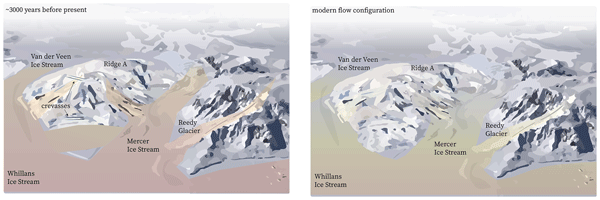
In Antarctica, fast-flowing ice streams drive most ice loss. Radar data from Conway Ice Ridge reveal that the van der Veen and Mercer Ice Streams were wider ~3000 years ago and narrowed progressively. Numerical modeling demonstrates that small thickness changes can rapidly alter shear-margin locations. These findings offer crucial insights into Late Holocene Ice Sheet readvance.
Ian Madden, Simone Marras, and Jenny Suckale
Geosci. Model Dev., 16, 3479–3500, https://doi.org/10.5194/gmd-16-3479-2023, https://doi.org/10.5194/gmd-16-3479-2023, 2023
Short summary
Short summary
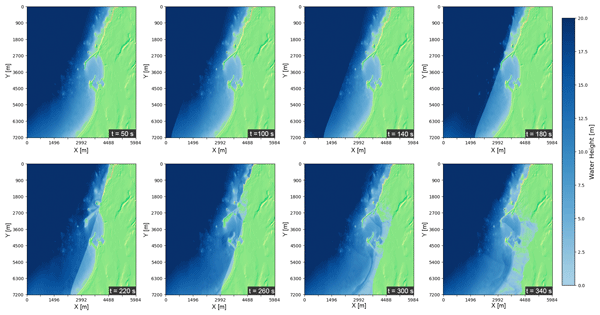
To aid risk managers who may wish to rapidly assess tsunami risk but may lack high-performance computing infrastructure, we provide an accessible software package able to rapidly model tsunami inundation over real topography by leveraging Google's Tensor Processing Unit, a high-performance hardware. Minimally trained users can take advantage of the rapid modeling abilities provided by this package via a web browser thanks to the ease of use of Google Cloud Platform.
Cited articles
Alley, K. E., Scambos, T. A., Siegfried, M. R., and Fricker, H. A.: Impacts of warm water on Antarctic ice shelf stability through basal channel formation, Nat. Geosci., 9, 290–293, https://doi.org/10.1038/ngeo2675, 2016. a
Alley, K. E., Scambos, T. A., Anderson, R. S., Rajaram, H., Pope, A., and Haran, T. M.: Continent-wide estimates of Antarctic strain rates from Landsat 8-derived velocity grids, J. Glaciol., 64, 321–332, https://doi.org/10.1017/jog.2018.23, 2018. a, b
Alley, R. B., Anandakrishnan, S., Bentley, C. R., and Lord, N.: A water-piracy hypothesis for the stagnation of Ice Stream C, Antarctica, Ann. Glaciol., 20, 187–194, https://doi.org/10.3189/172756494794587032, 1994. a
Bamber, J. L., Vaughan, D. G., and Joughin, I.: Widespread complex flow in the interior of the Antarctic ice sheet, Science, 287, 1248–1250, https://doi.org/10.1126/science.287.5456.1248, 2000. a
Bindschadler, R. and Vornberger, P. L.: Changes in the West Antarctic Ice Sheet Since 1963 from Declassified Satellite Photography, Science, 279, 689–692, https://doi.org/10.1126/science.279.5351.689, 1998. a, b
Bingham, R. G. and Siegert, M. J.: Radar-derived bed roughness characterization of Institute and Möller ice streams, West Antarctica, and comparison with Siple Coast ice streams, Geophys. Res. Lett., 34, L21504, https://doi.org/10.1029/2007GL031483, 2007. a, b
Brenner, S. C. and Scott, L. R.: The Mathematical Theory of Finite Element Methods, 3rd edn., Texts in Applied Mathematics, vol. 15, Springer, https://doi.org/10.1007/978-0-387-75934-0, 2008. a
Bueler, E. and Brown, J.: Shallow shelf approximation as a “sliding law” in a thermomechanically coupled ice sheet model, J. Geophys. Res.-Earth, 114, F03008, https://doi.org/10.1029/2008JF001179, 2009. a
Catania, G. A., Scambos, T. A., Conway, H., and Raymond, C. F.: Sequential stagnation of Kamb Ice Stream, West Antarctica, Geophys. Res. Lett., 33, L14502, https://doi.org/10.1029/2006GL026430, 2006. a, b, c
Clarke, T. S., Liu, C., Lord, N. E., and Bentley, C. R.: Evidence for a recently abandoned shear margin adjacent to ice stream B2, Antarctica, from ice-penetrating radar measurements, J. Geophys. Res.: Solid Earth, 105, 13409–13422, https://doi.org/10.1029/2000JB900037, 2000. a, b
Echelmeyer, K. and Harrison, W.: Ongoing margin migration of ice stream B, Antarctica, J. Glaciol., 45, 361–369, https://doi.org/10.3189/002214399793377059, 1999. a, b
Elsworth, C. W.: coopere/InstituteIceStream2D: ortholine_v1.1, Zenodo [code], https://doi.org/10.5281/zenodo.20858511, 2026. a
Flowers, G. E.: Modelling water flow under glaciers and ice sheets, P. Roy. Soc. A-Math. Phy., 471, 20140907, https://doi.org/10.1098/rspa.2014.0907, 2015. a
Fowler, A.: A sliding law for glaciers of constant viscosity in the presence of subglacial cavitation, Proc. R. Soc. Lond. Ser A Math. Phys. Sci., 407, 147–170, https://doi.org/10.1098/rspa.1986.0090, 1986. a
Fowler, A.: Sliding with cavity formation, J. Glaciol., 33, 255–267, https://doi.org/10.3189/S0022143000008820, 1987. a
Friedman, A.: Variational principles and free-boundary problems, Dover Publications, Mineola, NY, ISBN 978-0-486-47853-1, 2010. a
Gagliardini, O., Cohen, D., Råback, P., and Zwinger, T.: Finite-element modeling of subglacial cavities and related friction law, J. Geophys. Res.-Earth, 112, F02027, https://doi.org/10.1029/2006JF000576, 2007. a
Geuzaine, C. and Remacle, J.-F.: Gmsh: A three-dimensional finite element mesh generator with built-in pre- and post-processing facilities, Int. J. Numer. Methods Eng., 79, 1309–1331, https://doi.org/10.1002/nme.2579, 2009. a
Glen, J. W.: The creep of polycrystalline ice, Proc. R. Soc. Lond. Ser. A Math Phys. Sci., 228, 519–538, https://doi.org/10.1098/rspa.1955.0066, 1955. a
Grant, M., Boyd, S., and Ye, Y.: Disciplined Convex Programming, in: Global Optimization: From Theory to Implementation, edited by Liberti, L. and Maculan, N., 155–210, Springer, Boston, MA, https://doi.org/10.1007/0-387-30065-1_7, 2006. a, b
Greene, C. A., Gwyther, D. E., and Blankenship, D. D.: Antarctic Mapping Tools for MATLAB, Comp. Geosci., 104, 151–157, https://doi.org/10.1016/j.cageo.2016.08.003, 2017. a
Gudmundsson, G. H.: Transmission of basal variability to a glacier surface, J. Geophys. Res.: Solid Earth, 108, 2253, https://doi.org/10.1029/2002JB002107, 2003. a, b
Harrison, W., Echelmeyer, K., and Larsen, C.: Measurement of temperature in a margin of Ice Stream B, Antarctica: implications for margin migration and lateral drag, J. Glaciol., 44, 615–624, https://doi.org/10.3189/S0022143000002112, 1998. a, b
Haseloff, M., Hewitt, I., and Katz, R.: Englacial pore water localizes shear in temperate ice stream margins, J. Geophys. Res.-Earth, 124, 2521–2541, https://doi.org/10.1029/2019JF005399, 2019. a
Hellmer, H. H., Kauker, F., Timmermann, R., Determann, J., and Rae, J.: Twenty-first-century warming of a large Antarctic ice-shelf cavity by a redirected coastal current, Nature, 485, 225–228, https://doi.org/10.1038/nature11064, 2012. a
Hewitt, I. J.: Modelling distributed and channelized subglacial drainage: the spacing of channels, J. Glaciol., 57, 302–314, https://doi.org/10.3189/002214311796405951, 2011. a
Holland, P. R., Bevan, S. L., and Luckman, A. J.: Strong ocean melting feedback during the recent retreat of Thwaites Glacier, Geophys. Res. Lett., 50, e2023GL103088, https://doi.org/10.1029/2023GL103088, 2023. a
Hooke, R. L., Raymond, C. F., Hotchkiss, R. L., and Gustafson, R. J.: Calculations of velocity and temperature in a polar glacier using the finite-element method, J. Glaciol., 24, 131–146, https://doi.org/10.3189/S0022143000014696, 1979. a
Iken, A.: The effect of the subglacial water pressure on the sliding velocity of a glacier in an idealized numerical model, J. Glaciol., 27, 407–421, https://doi.org/10.3189/S0022143000011448, 1981. a
Jamieson, S. S. R., Vieli, A., Livingstone, S. J., Ó Cofaigh, C., Stokes, C., Hillenbrand, C.-D., and Dowdeswell, J. A.: Ice-stream stability on a reverse bed slope, Nat. Geosci., 5, 799–802, https://doi.org/10.1038/ngeo1600, 2012. a
Jordan, T. A., Ferraccioli, F., Ross, N., Corr, H. F., Leat, P. T., Bingham, R. G., Rippin, D. M., le Brocq, A., and Siegert, M. J.: Inland extent of the Weddell Sea Rift imaged by new aerogeophysical data, Tectonophysics, 585, 137–160, https://doi.org/10.1016/j.tecto.2012.09.010, 2013. a
Kamb, B.: Basal zone of the West Antarctic ice streams and its role in lubrication of their rapid motion, in: The West Antarctic ice sheet: behavior and environment, 77, 157–199, https://doi.org/10.1029/AR077p0157, 2001. a, b
Kirchner, N., Hutter, K., Jakobsson, M., and Gyllencreutz, R.: Capabilities and limitations of numerical ice sheet models: A discussion for Earth-scientists and modelers, Quat. Sci. Rev., 30, 3691–3704, https://doi.org/10.1016/j.quascirev.2011.09.012, 2011. a
Koellner, S., Parizek, B., Alley, R., Muto, A., Holschuh, N., and Nowicki, S.: The impact of spatially-variable basal properties on outlet glacier flow, Earth Planet. Sci. Lett., 515, 200–208, https://doi.org/10.1016/j.epsl.2019.03.026, 2019. a, b, c
Larour, E., Seroussi, H., Morlighem, M., and Rignot, E.: Continental scale, high order, high spatial resolution, ice sheet modeling using the Ice Sheet System Model (ISSM), J. Geophys. Res.-Earth, 117, F01022, https://doi.org/10.1029/2011JF002140, 2012. a
Le Brocq, A. M., Ross, N., Griggs, J. A., Bingham, R. G., Corr, H. F. J., Ferraccioli, F., Jenkins, A., Jordan, T. A., Payne, A. J., Rippin, D. M., and Siegert, M. J.: Evidence from ice shelves for channelized meltwater flow beneath the Antarctic Ice Sheet, Nat. Geosci., 6, 945–948, https://doi.org/10.1038/ngeo1977, 2013. a, b, c
Lliboutry, L.: General theory of subglacial cavitation and sliding of temperate glaciers, J. Glaciol., 7, 21–58, https://doi.org/10.3189/S0022143000020396, 1968. a, b, c
MacGregor, J. A., Catania, G. A., Conway, H., Schroeder, D. M., Joughin, I., Young, D. A., Kempf, S. D., and Blankenship, D. D.: Weak bed control of the eastern shear margin of Thwaites Glacier, West Antarctica, J. Glaciol., 59, 900–912, https://doi.org/10.3189/2013JoG13J050, 2013. a, b, c, d
Meyer, C. R. and Minchew, B. M.: Temperate ice in the shear margins of the Antarctic Ice Sheet: Controlling processes and preliminary locations, Earth Planet. Sci. Lett., 498, 17–26, https://doi.org/10.1016/j.epsl.2018.06.028, 2018. a
Morland, L. and Johnson, I.: Steady motion of ice sheets, J. Glaciol., 25, 229–246, https://doi.org/10.3189/S0022143000010467, 1980. a
Muto, A., Anandakrishnan, S., Alley, R. B., Horgan, H. J., Parizek, B. R., Koellner, S., Christianson, K., and Holschuh, N.: Relating bed character and subglacial morphology using seismic data from Thwaites Glacier, West Antarctica, Earth Planet. Sci. Lett., 507, 199–206, https://doi.org/10.1016/j.epsl.2018.12.008, 2019. a, b, c
Nye, J. F.: The mechanics of glacier flow, J. Glaciol., 2, 82–93, https://doi.org/10.3189/S0022143000033967, 1952. a
Nye, J. F.: The distribution of stress and velocity in glaciers and ice-sheets, Proc. R. Soc. Lond. Ser. A Math Phys. Sci., 239, 113–133, https://doi.org/10.1098/rspa.1957.0026, 1957. a
Pattyn, F.: Transient glacier response with a higher-order numerical ice-flow model, J. Glaciol., 48, 467–477, https://doi.org/10.3189/172756502781831278, 2002. a
Platt, J. D., Perol, T., Suckale, J., and Rice, J. R.: Determining conditions that allow a shear margin to coincide with a Röthlisberger channel, J. Geophys. Res.-Earth, 121, 1273–1294, https://doi.org/10.1002/2015JF003707, 2016. a, b
Rathbun, A. P., Marone, C., Alley, R. B., and Anandakrishnan, S.: Laboratory study of the frictional rheology of sheared till, J. Geophys. Res.-Earth, 113, F02020, https://doi.org/10.1029/2007JF000815, 2008. a
Reeh, N. and Paterson, W.: Application of a flow model to the ice-divide region of Devon Island ice cap, Canada, J. Glaciol., 34, 55–63, https://doi.org/10.3189/S0022143000009060, 1988. a
Rignot, E., Mouginot, J., and Scheuchl, B.: Ice flow of the Antarctic ice sheet, Science, 333, 1427–1430, https://doi.org/10.1126/science.1208336, 2011. a, b
Ross, N., Siegert, M. J., Woodward, J., Smith, A. M., Corr, H. F., Bentley, M. J., Hindmarsh, R. C., King, E. C., and Rivera, A.: Holocene stability of the Amundsen-Weddell ice divide, West Antarctica, Geology, 39, 935–938, https://doi.org/10.1130/G31920.1, 2011. a
Ross, N., Bingham, R., Corr, H. F. J., Ferraccioli, F., Jordan, T., Le Brocq, A., Rippin, D., Young, D., Blankenship, D., and Siegert, M. J.: Steep reverse bed slope at the grounding line of the Weddell Sea sector in West Antarctica, Nat. Geosci., 5, 393–396, https://doi.org/10.1038/ngeo1468, 2012. a
Ross, N., Jordan, T. A., Bingham, R. G., Corr, H. F. J., Ferraccioli, F., Le Brocq, A., Rippin, D. M., Wright, A. P., and Siegert, M. J.: The Ellsworth Subglacial Highlands: Inception and retreat of the West Antarctic Ice Sheet, Geol. Soc. Am. Bull., 126, 3–15, https://doi.org/10.1130/B30794.1, 2014. a
Röthlisberger, H.: Water pressure in intra- and subglacial channels, J. Glaciol., 11, 177–203, https://doi.org/10.3189/S0022143000022188, 1972. a
Sanderson, R. J., Winter, K., Callard, S. L., Napoleoni, F., Ross, N., Jordan, T. A., and Bingham, R. G.: Englacial architecture of Lambert Glacier, East Antarctica, The Cryosphere, 17, 4853–4871, https://doi.org/10.5194/tc-17-4853-2023, 2023. a, b, c
Scambos, T., Bohlander, J., Raup, B., and Haran, T.: Glaciological characteristics of Institute Ice Stream using remote sensing, Antarct. Sci., 16, 205–213, https://doi.org/10.1017/S0954102004001919, 2004. a
Schoof, C.: The effect of cavitation on glacier sliding, Proc. R. Soc. Lond. Ser. A Math Phys. Sci., 461, 609–627, https://doi.org/10.1098/rspa.2004.1350, 2005. a, b, c
Schoof, C.: A variational approach to ice stream flow, J. Fluid Mech., 556, 227–251, https://doi.org/10.1017/S0022112006009591, 2006a. a
Schoof, C.: Ice sheet grounding line dynamics: Steady states, stability, and hysteresis, J. Geophys. Res., 112, F03S28, https://doi.org/10.1029/2006JF000664, 2007. a, b
Schoof, C.: Thermally driven migration of ice-stream shear margins, J. Fluid Mech., 712, 552–578, https://doi.org/10.1017/jfm.2012.438, 2012. a, b, c
Schroeder, D. M., Blankenship, D. D., Young, D. A., and Quartini, E.: Evidence for elevated and spatially variable geothermal flux beneath the West Antarctic Ice Sheet, P. Natl. Acad. Sci. USA, 111, 9070–9072, https://doi.org/10.1073/pnas.1405184111, 2014. a, b, c
Siegert, M. J., Ross, N., Li, J., Schroeder, D. M., Rippin, D., Ashmore, D., Bingham, R., and Gogineni, P.: Subglacial controls on the flow of Institute Ice Stream, West Antarctica, Ann. Glaciol., 57, 19–24, https://doi.org/10.1017/aog.2016.17, 2016. a, b, c, d, e, f, g, h, i, j, k, l, m, n, o, p, q, r, s
Smith, B., Fricker, H. A., Gardner, A. S., Medley, B., Nilsson, J., Paolo, F. S., Holschuh, N., Adusumilli, S., Brunt, K., Csatho, B., Harbeck, K., Markus, T., Neumann, T., Siegfried, M. R., and Zwally, H. J.: Pervasive ice sheet mass loss reflects competing ocean and atmosphere processes, Science, 368, 1239–1242, https://doi.org/10.1126/science.aaz5845, 2020. a
Smith, B. E., Fricker, H. A., Joughin, I. R., and Tulaczyk, S.: An inventory of active subglacial lakes in Antarctica detected by ICESat (2003–2008), J. Glaciol., 55, 573–595, https://doi.org/10.3189/002214309789470879, 2009. a, b, c
Summers, P. T., Elsworth, C. W., Dow, C. F., and Suckale, J.: Migration of the shear margins at Thwaites Glacier: Dependence on basal conditions and testability against field data, J. Geophys. Res.-Earth, 128, e2022JF006958, https://doi.org/10.1029/2022JF006958, 2023. a, b, c, d
Thomas, R. H.: The dynamics of marine ice sheets, J. Glaciol., 24, 167–177, https://doi.org/10.3189/S0022143000014726, 1979. a
Tulaczyk, S., Kamb, W. B., and Engelhardt, H. F.: Basal mechanics of Ice Stream B, west Antarctica: 2. Undrained plastic bed model, J. Geophys. Res., 105, 483–494, https://doi.org/10.1029/1999JB900328, 2000a.
Tulaczyk, S., Kamb, W. B., and Engelhardt, H. F.: Basal mechanics of Ice Stream B, west Antarctica: 1. Till mechanics, J. Geophys. Res., 105, 463–481, https://doi.org/10.1029/1999JB900329, 2000b. a, b
Weertman, J.: On the sliding of glaciers, J. Glaciol., 3, 33–38, https://doi.org/10.3189/S0022143000024709, 1957. a, b
Weertman, J.: Stability of the junction of an ice sheet and an ice shelf, J. Glaciol., 13, 3–11, https://doi.org/10.3189/S0022143000023327, 1974. a
Zoet, L. K. and Iverson, N. R.: Rate-weakening drag during glacier sliding, J. Geophys. Res.-Earth, 121, 1206–1217, https://doi.org/10.1002/2016JF003909, 2016. a
Short summary
The widths of glaciers and ice streams can change over time, which strongly affects how much ice is lost to the ocean. Many existing models of sea-level rise neglect these width changes, but they are commonly observed and important. This paper presents a new, simple model that helps identify which physical factors govern width changes at different field sites. The model is explained step by step and tested using an Antarctic ice stream as an example.
The widths of glaciers and ice streams can change over time, which strongly affects how much ice...
Altmetrics
Final-revised paper
Preprint