
Articles | Volume 19, issue 21
https://doi.org/10.5194/gmd-19-10763-2026
© Author(s) 2026. This work is distributed under
the Creative Commons Attribution 4.0 License.
the Creative Commons Attribution 4.0 License.
https://doi.org/10.5194/gmd-19-10763-2026
© Author(s) 2026. This work is distributed under
the Creative Commons Attribution 4.0 License.
the Creative Commons Attribution 4.0 License.
Model description paper
| 
12 Nov 2026
Model description paper |
| 12 Nov 2026
| 12 Nov 2026
aiLand v1: physics-based land surface emulator with observational fine-tuning

European Centre for Medium-Range Weather Forecasts, Reading, United Kingdom
Ewan Pinnington
European Centre for Medium-Range Weather Forecasts, Reading, United Kingdom
Mario Santa Cruz
European Centre for Medium-Range Weather Forecasts, Reading, United Kingdom
Florian Pinault
European Centre for Medium-Range Weather Forecasts, Bonn, Germany
Baudouin Raoult
European Centre for Medium-Range Weather Forecasts, Reading, United Kingdom
Natalie Zelenka
European Centre for Medium-Range Weather Forecasts, Reading, United Kingdom
Gabriele Arduini
European Centre for Medium-Range Weather Forecasts, Reading, United Kingdom
Gianpaolo Balsamo
European Centre for Medium-Range Weather Forecasts, Reading, United Kingdom
Souhail Boussetta
European Centre for Medium-Range Weather Forecasts, Reading, United Kingdom
Matthew Chantry
European Centre for Medium-Range Weather Forecasts, Reading, United Kingdom
Patricia de Rosnay
European Centre for Medium-Range Weather Forecasts, Reading, United Kingdom
Peter Dueben
European Centre for Medium-Range Weather Forecasts, Bonn, Germany
Christoph Rüdiger
European Centre for Medium-Range Weather Forecasts, Bonn, Germany
Related authors
Philippe Conesa, Cécile Agosta, Sylvie Charbit, Christophe Dumas, Simon Beylat, and Nina Raoult
The Cryosphere, 20, 4973–5003, https://doi.org/10.5194/tc-20-4973-2026, https://doi.org/10.5194/tc-20-4973-2026, 2026
Short summary
Short summary
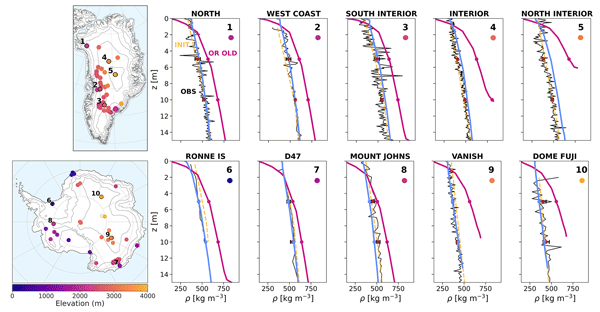
As Greenland and Antarctic ice sheets are almost entirely covered by snow, a proper modelling of the internal snowpack processes is essential to predict their evolution. This study evaluates the snow densification over ice sheets in the ORCHIDEE (Organising Carbon and Hydrology In Dynamic Ecosystems) land surface model. The development of a new formulation for the surface snow density and the calibration of densification parameters improve the model agreement with polar snow observations.
Natalie Douglas, Simon Beylat, Tristan Quaife, Philippe Peylin, Nina Raoult, and Ross Bannister
EGUsphere, https://doi.org/10.5194/egusphere-2026-132, https://doi.org/10.5194/egusphere-2026-132, 2026
Short summary
Short summary
This study investigates a statistical method, called 4DEnVar, to calibrate uncertain land surface model parameters against observations. This method is easy to use but can lead to unphysical parameter values. The study explores the causes of this while proposing a simple way to overcome the problem. We show that the 4DEnVar method exhibits considerable versatility by applying the method to two different land surface models, under different settings, to calibrate photosynthetic parameters.
Simon Beylat, Nina Raoult, Cédric Bacour, Natalie Douglas, Tristan Quaife, Vladislav Bastrikov, Peter J. Rayner, and Philippe Peylin
Geosci. Model Dev., 18, 7501–7527, https://doi.org/10.5194/gmd-18-7501-2025, https://doi.org/10.5194/gmd-18-7501-2025, 2025
Short summary
Short summary
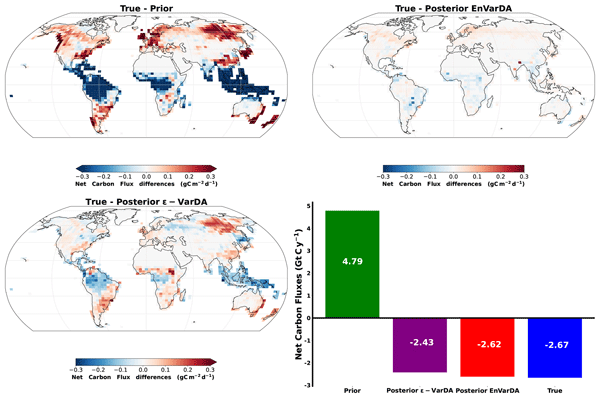
Land surface models are important tools for understanding and predicting the land components of the carbon cycle. Atmospheric CO2 concentration data are a valuable source of information that can be used to improve the accuracy of these models. In this study, we present a statistical ensemble-variational data assimilation method named EnVarDA to calibrate parameters of a land surface model using these data. We show that this method is easy to implement and more efficient and accurate than traditional methods.
Luis-Enrique Olivera-Guerra, Catherine Ottlé, Nina Raoult, and Philippe Peylin
Hydrol. Earth Syst. Sci., 29, 261–290, https://doi.org/10.5194/hess-29-261-2025, https://doi.org/10.5194/hess-29-261-2025, 2025
Short summary
Short summary
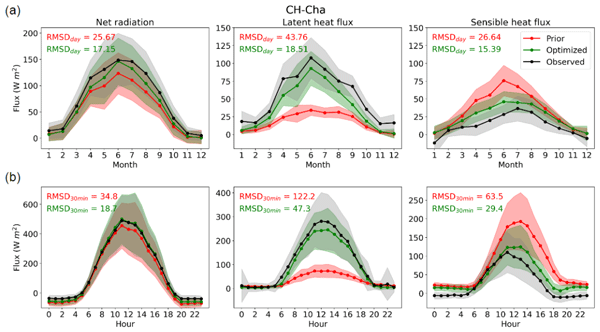
We assimilate the recent ESA-CCI land surface temperature (LST) product to optimize parameters of a land surface model (ORCHIDEE). We test different assimilation strategies to evaluate the best strategy over various in situ stations across Europe. We also provide advice on how to assimilate this LST product to better simulate LST and surface energy fluxes. Finally, we demonstrate the effectiveness of this optimization, which is essential to better simulate future projections.
Sylvie Charbit, Christophe Dumas, Fabienne Maignan, Catherine Ottlé, Nina Raoult, Xavier Fettweis, and Philippe Conesa
The Cryosphere, 18, 5067–5099, https://doi.org/10.5194/tc-18-5067-2024, https://doi.org/10.5194/tc-18-5067-2024, 2024
Short summary
Short summary
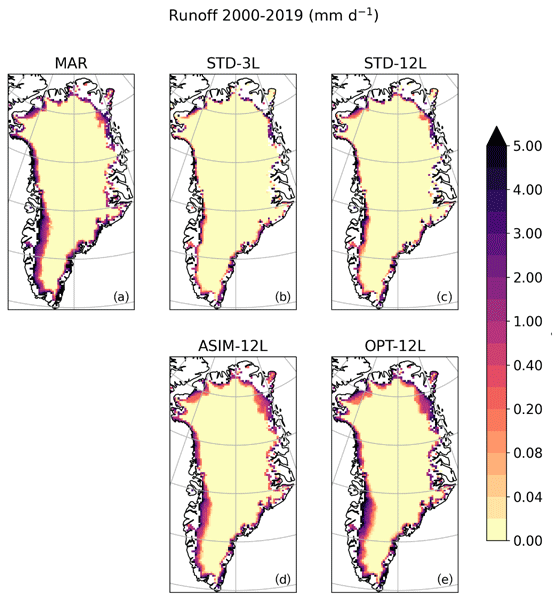
The evolution of the Greenland ice sheet is highly dependent on surface melting and therefore on the processes operating at the snow–atmosphere interface and within the snow cover. Here we present new developments to apply a snow model to the Greenland ice sheet. The performance of this model is analysed in terms of its ability to simulate ablation processes. Our analysis shows that the model performs well when compared with the MAR regional polar atmospheric model.
Nina Raoult, Simon Beylat, James M. Salter, Frédéric Hourdin, Vladislav Bastrikov, Catherine Ottlé, and Philippe Peylin
Geosci. Model Dev., 17, 5779–5801, https://doi.org/10.5194/gmd-17-5779-2024, https://doi.org/10.5194/gmd-17-5779-2024, 2024
Short summary
Short summary
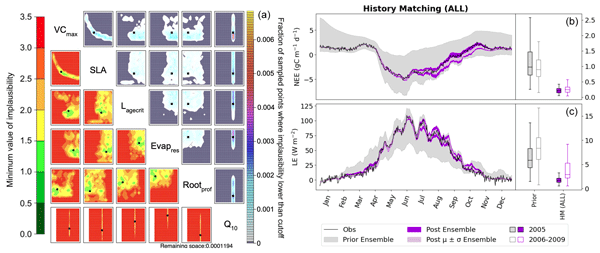
We use computer models to predict how the land surface will respond to climate change. However, these complex models do not always simulate what we observe in real life, limiting their effectiveness. To improve their accuracy, we use sophisticated statistical and computational techniques. We test a technique called history matching against more common approaches. This method adapts well to these models, helping us better understand how they work and therefore how to make them more realistic.
Nina Raoult, Louis-Axel Edouard-Rambaut, Nicolas Vuichard, Vladislav Bastrikov, Anne Sofie Lansø, Bertrand Guenet, and Philippe Peylin
Biogeosciences, 21, 1017–1036, https://doi.org/10.5194/bg-21-1017-2024, https://doi.org/10.5194/bg-21-1017-2024, 2024
Short summary
Short summary
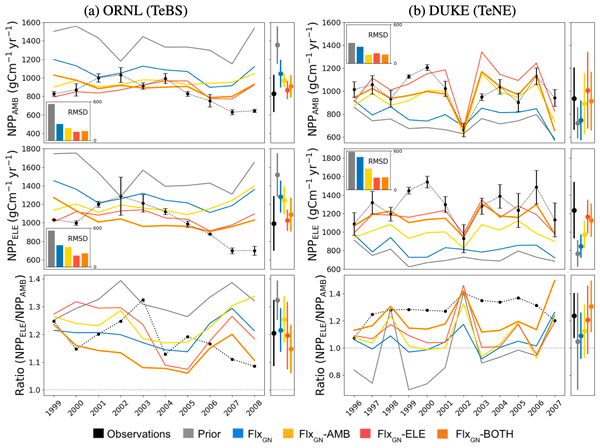
Observations are used to reduce uncertainty in land surface models (LSMs) by optimising poorly constraining parameters. However, optimising against current conditions does not necessarily ensure that the parameters treated as invariant will be robust in a changing climate. Manipulation experiments offer us a unique chance to optimise our models under different (here atmospheric CO2) conditions. By using these data in optimisations, we gain confidence in the future projections of LSMs.
Nina Raoult, Tim Jupp, Ben Booth, and Peter Cox
Earth Syst. Dynam., 14, 723–731, https://doi.org/10.5194/esd-14-723-2023, https://doi.org/10.5194/esd-14-723-2023, 2023
Short summary
Short summary
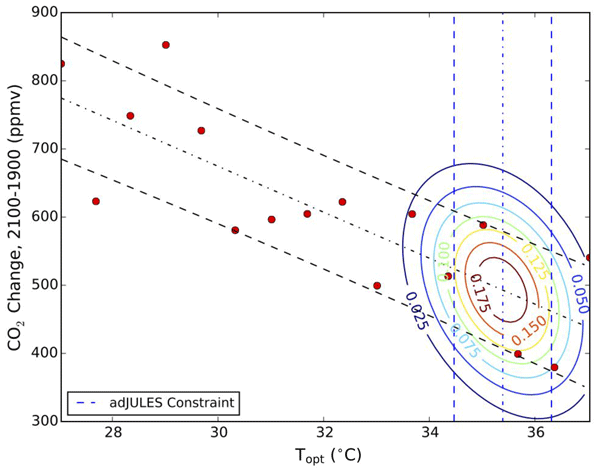
Climate models are used to predict the impact of climate change. However, poorly constrained parameters used in the physics of the models mean that we simulate a large spread of possible future outcomes. We can use real-world observations to reduce the uncertainty of parameter values, but we do not have observations to reduce the spread of possible future outcomes directly. We present a method for translating the reduction in parameter uncertainty into a reduction in possible model projections.
Nina Raoult, Sylvie Charbit, Christophe Dumas, Fabienne Maignan, Catherine Ottlé, and Vladislav Bastrikov
The Cryosphere, 17, 2705–2724, https://doi.org/10.5194/tc-17-2705-2023, https://doi.org/10.5194/tc-17-2705-2023, 2023
Short summary
Short summary
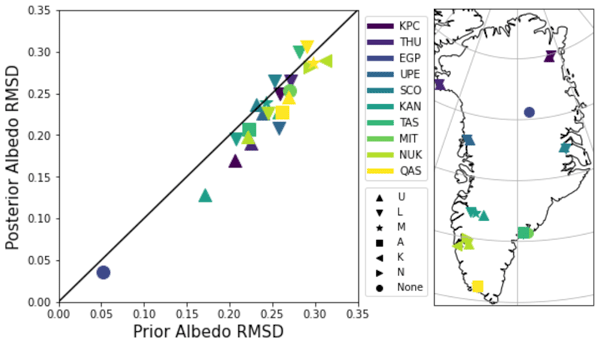
Greenland ice sheet melting due to global warming could significantly impact global sea-level rise. The ice sheet's albedo, i.e. how reflective the surface is, affects the melting speed. The ORCHIDEE computer model is used to simulate albedo and snowmelt to make predictions. However, the albedo in ORCHIDEE is lower than that observed using satellites. To correct this, we change model parameters (e.g. the rate of snow decay) to reduce the difference between simulated and observed values.
Zun Yin, Kirsten L. Findell, Paul Dirmeyer, Elena Shevliakova, Sergey Malyshev, Khaled Ghannam, Nina Raoult, and Zhihong Tan
Hydrol. Earth Syst. Sci., 27, 861–872, https://doi.org/10.5194/hess-27-861-2023, https://doi.org/10.5194/hess-27-861-2023, 2023
Short summary
Short summary
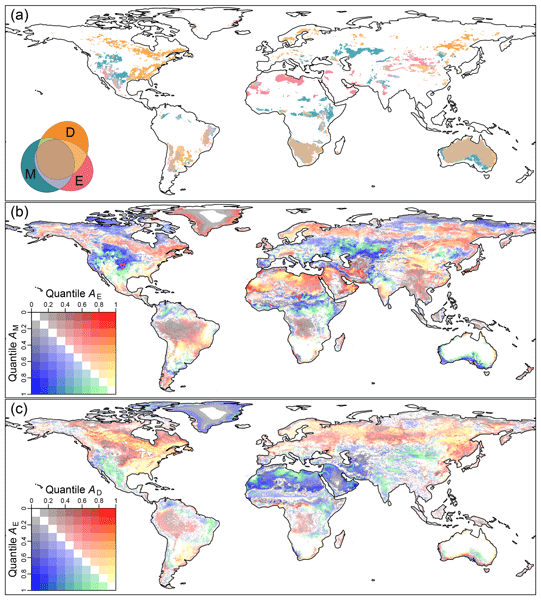
Land–atmosphere (L–A) interactions typically focus on daytime processes connecting the land state with the overlying atmospheric boundary layer. However, much prior L–A work used monthly or daily means due to the lack of daytime-only data products. Here we show that monthly smoothing can significantly obscure the L–A coupling signal, and including nighttime information can mute or mask the daytime processes of interest. We propose diagnosing L–A coupling within models or archiving subdaily data.
Camille Abadie, Fabienne Maignan, Marine Remaud, Jérôme Ogée, J. Elliott Campbell, Mary E. Whelan, Florian Kitz, Felix M. Spielmann, Georg Wohlfahrt, Richard Wehr, Wu Sun, Nina Raoult, Ulli Seibt, Didier Hauglustaine, Sinikka T. Lennartz, Sauveur Belviso, David Montagne, and Philippe Peylin
Biogeosciences, 19, 2427–2463, https://doi.org/10.5194/bg-19-2427-2022, https://doi.org/10.5194/bg-19-2427-2022, 2022
Short summary
Short summary
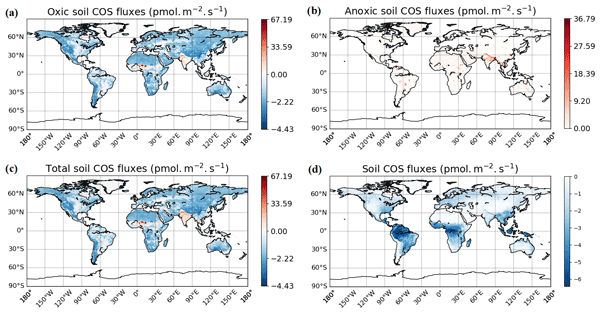
A better constraint of the components of the carbonyl sulfide (COS) global budget is needed to exploit its potential as a proxy of gross primary productivity. In this study, we compare two representations of oxic soil COS fluxes, and we develop an approach to represent anoxic soil COS fluxes in a land surface model. We show the importance of atmospheric COS concentration variations on oxic soil COS fluxes and provide new estimates for oxic and anoxic soil contributions to the COS global budget.
Pierre Vanderbecken, Jasmin Vural, Oscar Rojas-Muñoz, Sébastien Garrigues, Bertrand Bonan, Cédric Bacour, Uwe Rascher, Bastian Siegmann, Patricia de Rosnay, and Jean-Christophe Calvet
Biogeosciences, 23, 6687–6703, https://doi.org/10.5194/bg-23-6687-2026, https://doi.org/10.5194/bg-23-6687-2026, 2026
Short summary
Short summary
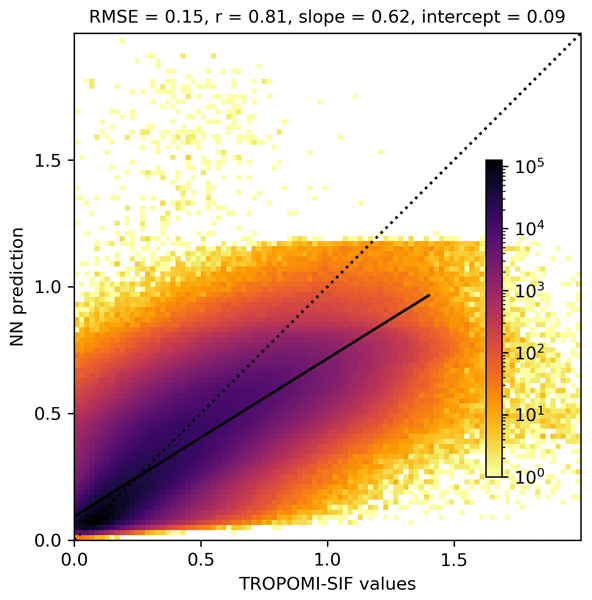
New satellite observations are used to improve our understanding of regional-scale vegetation. Innovative artificial intelligence methods are employed to combine the available information. The effectiveness of this approach is evaluated using independent observations. The results show that agricultural practices such as irrigation can be modelled more accurately.
Cinzia Mazzetti, Hannah Cloke, Dai Yamazaki, Gianpaolo Balsamo, Souhail Boussetta, Jasper Denissen, Michel Wortmann, Gabriele Arduini, Gurpreet Dass, Joe McNorton, Anna Agusti-Panareda, Maliko Tanguy, Ervin Zsoter, Margarita Choulga, Emanuel Dutra, Florian Pappenberger, Christoph Rüdiger, and Christel Prudhomme
EGUsphere, https://doi.org/10.5194/egusphere-2026-4305, https://doi.org/10.5194/egusphere-2026-4305, 2026
Short summary
Short summary
Rivers are an essential component of the water cycle, yet many Earth system and weather prediction models do not explicitly represent river flow. We integrated a global river model into ECMWF's forecasting system, enabling the simulation of river discharge, water levels, and flooding within a single operational framework. This development lays the foundation for future land–river–atmosphere interactions, paving the way for more complete Earth system models and improved predictions.
Philippe Conesa, Cécile Agosta, Sylvie Charbit, Christophe Dumas, Simon Beylat, and Nina Raoult
The Cryosphere, 20, 4973–5003, https://doi.org/10.5194/tc-20-4973-2026, https://doi.org/10.5194/tc-20-4973-2026, 2026
Short summary
Short summary
As Greenland and Antarctic ice sheets are almost entirely covered by snow, a proper modelling of the internal snowpack processes is essential to predict their evolution. This study evaluates the snow densification over ice sheets in the ORCHIDEE (Organising Carbon and Hydrology In Dynamic Ecosystems) land surface model. The development of a new formulation for the surface snow density and the calibration of densification parameters improve the model agreement with polar snow observations.
Ekaterina Vorobeva, Yvan Orsolini, Patricia de Rosnay, Jonathan Day, Retish Senan, Damien Decremer, and Frederic Vitart
The Cryosphere, 20, 4605–4618, https://doi.org/10.5194/tc-20-4605-2026, https://doi.org/10.5194/tc-20-4605-2026, 2026
Short summary
Short summary
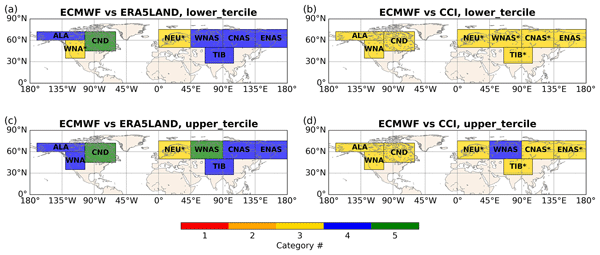
How reliable are probabilistic seasonal snow forecasts in winter? Although they are routinely issued by operational prediction centres, their reliability has never been evaluated. We close this gap by analyzing 30 years of seasonal snow re-forecasts and evaluating them against two snow datasets. Our results provide comprehensive assessment of seasonal snow forecast reliability and offer new insights into their performance in different parts of the Northern Hemisphere.
Juniper Tyree, Robert Underwood, Clément Bouvier, Daniel Köhler, Tim Reichelt, Peter Dueben, Sara Faghih-Naini, Heikki Järvinen, and Milan Klöwer
EGUsphere, https://doi.org/10.5194/egusphere-2026-4266, https://doi.org/10.5194/egusphere-2026-4266, 2026
Short summary
Short summary
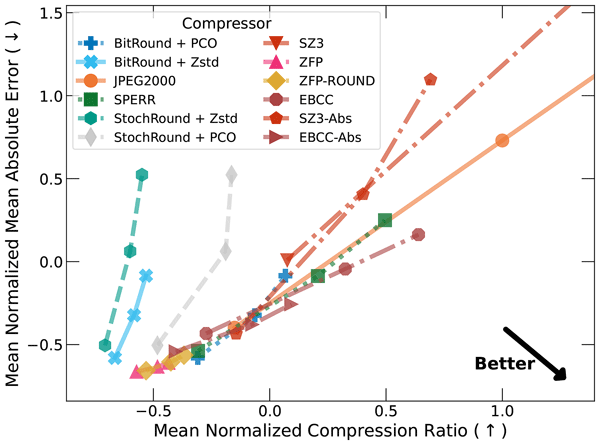
Many scientists use computers to simulate our world. This is producing too much data. Data can be made smaller using lossy compression. But many scientists fear losing important details and avoid it. We created Compression Safeguards to protect scientists and make lossy compression safe. First, scientists say what’s important in their data. Then the Safeguards correct the compressed data so that nothing important is lost. We test many examples: Safeguards protect but make the data less smaller.
Tim Reichelt, Juniper Tyree, Milan Klöwer, Peter Dueben, Bryan N. Lawrence, Allison H. Baker, Sara Faghih-Naini, Torsten Hoefler, and Philip Stier
Geosci. Model Dev., 19, 5933–5960, https://doi.org/10.5194/gmd-19-5933-2026, https://doi.org/10.5194/gmd-19-5933-2026, 2026
Short summary
Short summary
The growing size of datasets used in climate science makes it difficult to store, analyze, and distribute dataset. Lossy compression algorithms can significantly reduce the disk space required to store datasets, but it can be difficult to understand and compare the behavior of different compression algorithms. ClimateBenchPress provides a benchmark to standardize comparisons between lossy compression algorithms and guide development of novel algorithms specifically targeted towards climate data.
Karan Ruparell, Dai Yamazaki, Kieran Hunt, Hannah Cloke, Christel Prudhomme, Florian Pappenberger, and Matthew Chantry
EGUsphere, https://doi.org/10.5194/egusphere-2026-2909, https://doi.org/10.5194/egusphere-2026-2909, 2026
Short summary
Short summary
Reservoirs change how rivers behave, making them harder to predict. We tested whether machine learning models can learn these effects by training on river sites with and without upstream reservoirs across Great Britain. Models without reservoir training overestimated regulated flows, while reservoir-only models performed poorly on natural rivers. Training on both performed well everywhere. All models failed at heavily managed reservoirs where human decisions dominate river flow.
Gabriel Moldovan, Ewan Pinnington, Ana Prieto Nemesio, Simon Lang, Zied Ben Bouallègue, Jesper Dramsch, Mihai Alexe, Mario Santa Cruz, Sara Hahner, Harrison Cook, Helen Theissen, Mariana Clare, Cathal O'Brien, Jan Polster, Linus Magnusson, Gert Mertes, Florian Pinault, Baudouin Raoult, Patricia de Rosnay, Richard Forbes, and Matthew Chantry
Geosci. Model Dev., 19, 4703–4724, https://doi.org/10.5194/gmd-19-4703-2026, https://doi.org/10.5194/gmd-19-4703-2026, 2026
Short summary
Short summary
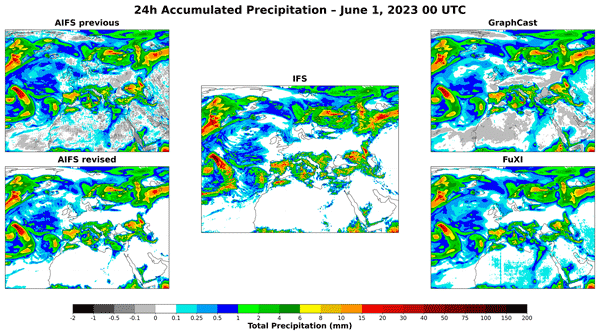
We present the latest release of the Artificial Intelligence Forecasting System, AIFS 1.1.0, which shows improved headline forecasting skill through an expanded dataset and enhanced training schedule. The model also incorporates hard physical constraints that facilitate training and improve rainfall prediction. Finally, we extend the set of forecasted variables to include soil conditions and energy-related fields, strengthening the operational value of AIFS.
Hamidreza Mosaffa, Florian Pappenberger, Christel Prudhomme, Matthew Chantry, Christoph Rüdiger, and Hannah Cloke
Hydrol. Earth Syst. Sci., 30, 2079–2092, https://doi.org/10.5194/hess-30-2079-2026, https://doi.org/10.5194/hess-30-2079-2026, 2026
Short summary
Short summary
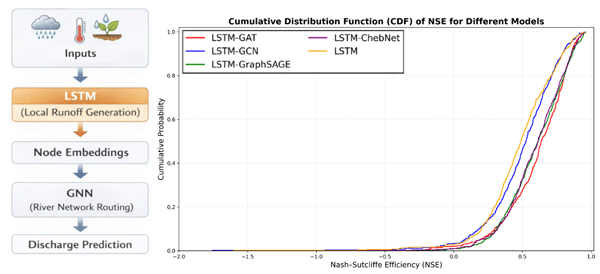
This study improves river flow prediction by combining two types of artificial intelligence models. One model estimates how rainfall becomes runoff in each part of a river basin, while another represents how water moves through the river network. By linking these processes, the approach better captures how water travels across large basins. The results show more accurate streamflow predictions, which can support water management and flood forecasting.
Natalie Douglas, Simon Beylat, Tristan Quaife, Philippe Peylin, Nina Raoult, and Ross Bannister
EGUsphere, https://doi.org/10.5194/egusphere-2026-132, https://doi.org/10.5194/egusphere-2026-132, 2026
Short summary
Short summary
This study investigates a statistical method, called 4DEnVar, to calibrate uncertain land surface model parameters against observations. This method is easy to use but can lead to unphysical parameter values. The study explores the causes of this while proposing a simple way to overcome the problem. We show that the 4DEnVar method exhibits considerable versatility by applying the method to two different land surface models, under different settings, to calibrate photosynthetic parameters.
Gabriele Arduini, Christoph Rüdiger, and Gianpaolo Balsamo
The Cryosphere, 20, 1119–1137, https://doi.org/10.5194/tc-20-1119-2026, https://doi.org/10.5194/tc-20-1119-2026, 2026
Short summary
Short summary
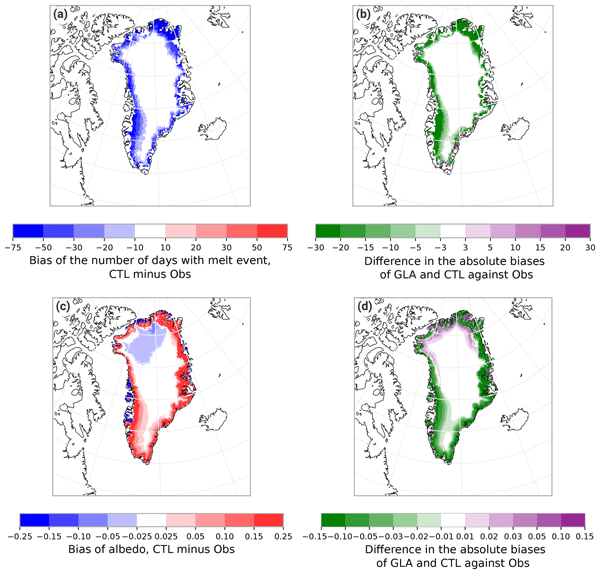
Glaciers and ice sheets are critical components of the climate system. A set of improvements to snow and ice processes, targeting glacier and ice sheet regions, are introduced in a land surface model used to produce Weather Forecasts and climate reanalyses. The results demonstrate that more realistic snow and ice processes can lead to positive impacts on the simulation of various Earth System components, e.g. the surface temperature and the streamflow of rivers contributed by glacier melting.
Zied Ben-Bouallègue, Ana Prieto-Nemesio, Angela Iza Wong, Florian Pinault, Marlies van der Schee, and Umberto Modigliani
Earth Syst. Sci. Data, 18, 713–720, https://doi.org/10.5194/essd-18-713-2026, https://doi.org/10.5194/essd-18-713-2026, 2026
Short summary
Short summary
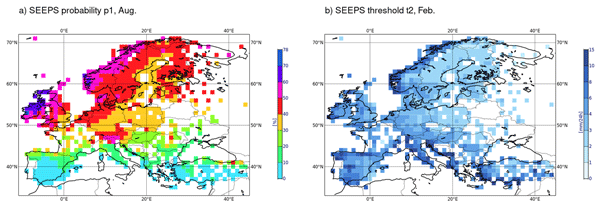
SEEPS4ALL (Stable and Equitable Error in Probability Space) is a precipitation dataset consisting of observations at meteorological stations over 3 years (2022–2024 for now), and a set of corresponding climate statistics estimated over 30 years (1991–2020). A climatology is derived separately for each station and each month of the year. Along with the dataset, SEEPS4ALL also resembles a set of verification tools. In a nutshell, SEEPS4ALL helps promote the benchmark of daily precipitation forecasts against in-situ observations over Europe.

Jon Cranko Page, Martin G. De Kauwe, Andy J. Pitman, Isaac R. Towers, Gabriele Arduini, Martin J. Best, Craig R. Ferguson, Jürgen Knauer, Hyungjun Kim, David M. Lawrence, Tomoko Nitta, Keith W. Oleson, Catherine Ottlé, Anna Ukkola, Nicholas Vuichard, Xiaoni Wang-Faivre, and Gab Abramowitz
Biogeosciences, 23, 263–282, https://doi.org/10.5194/bg-23-263-2026, https://doi.org/10.5194/bg-23-263-2026, 2026
Short summary
Short summary
This paper used a large dataset of observations, machine learning predictions, and computer model simulations to test how well land surface models represent the water, energy, and carbon cycles. We found that the models work well under "normal" weather but do not meet performance expectations during coinciding extreme conditions. Since these extremes are relatively rare, targeted model improvements could deliver major performance gains.
Hans Segura, Xabier Pedruzo-Bagazgoitia, Philipp Weiss, Sebastian K. Müller, Thomas Rackow, Junhong Lee, Edgar Dolores-Tesillos, Imme Benedict, Matthias Aengenheyster, Razvan Aguridan, Gabriele Arduini, Alexander J. Baker, Jiawei Bao, Swantje Bastin, Eulàlia Baulenas, Tobias Becker, Sebastian Beyer, Hendryk Bockelmann, Nils Brüggemann, Lukas Brunner, Suvarchal K. Cheedela, Sushant Das, Jasper Denissen, Ian Dragaud, Piotr Dziekan, Madeleine Ekblom, Jan Frederik Engels, Monika Esch, Richard Forbes, Claudia Frauen, Lilli Freischem, Diego García-Maroto, Philipp Geier, Paul Gierz, Álvaro González-Cervera, Katherine Grayson, Matthew Griffith, Oliver Gutjahr, Helmuth Haak, Ioan Hadade, Kerstin Haslehner, Shabeh ul Hasson, Jan Hegewald, Lukas Kluft, Aleksei Koldunov, Nikolay Koldunov, Tobias Kölling, Shunya Koseki, Sergey Kosukhin, Josh Kousal, Peter Kuma, Arjun U. Kumar, Rumeng Li, Nicolas Maury, Maximilian Meindl, Sebastian Milinski, Kristian Mogensen, Bimochan Niraula, Jakub Nowak, Divya Sri Praturi, Ulrike Proske, Dian Putrasahan, René Redler, David Santuy, Domokos Sármány, Reiner Schnur, Patrick Scholz, Dmitry Sidorenko, Dorian Spät, Birgit Sützl, Daisuke Takasuka, Adrian Tompkins, Alejandro Uribe, Mirco Valentini, Menno Veerman, Aiko Voigt, Sarah Warnau, Fabian Wachsmann, Marta Wacławczyk, Nils Wedi, Karl-Hermann Wieners, Jonathan Wille, Marius Winkler, Yuting Wu, Florian Ziemen, Janos Zimmermann, Frida A.-M. Bender, Dragana Bojovic, Sandrine Bony, Simona Bordoni, Patrice Brehmer, Marcus Dengler, Emanuel Dutra, Saliou Faye, Erich Fischer, Chiel van Heerwaarden, Cathy Hohenegger, Heikki Järvinen, Markus Jochum, Thomas Jung, Johann H. Jungclaus, Noel S. Keenlyside, Daniel Klocke, Heike Konow, Martina Klose, Szymon Malinowski, Olivia Martius, Thorsten Mauritsen, Juan Pedro Mellado, Theresa Mieslinger, Elsa Mohino, Hanna Pawłowska, Karsten Peters-von Gehlen, Abdoulaye Sarré, Pajam Sobhani, Philip Stier, Lauri Tuppi, Pier Luigi Vidale, Irina Sandu, and Bjorn Stevens
Geosci. Model Dev., 18, 7735–7761, https://doi.org/10.5194/gmd-18-7735-2025, https://doi.org/10.5194/gmd-18-7735-2025, 2025
Short summary
Short summary
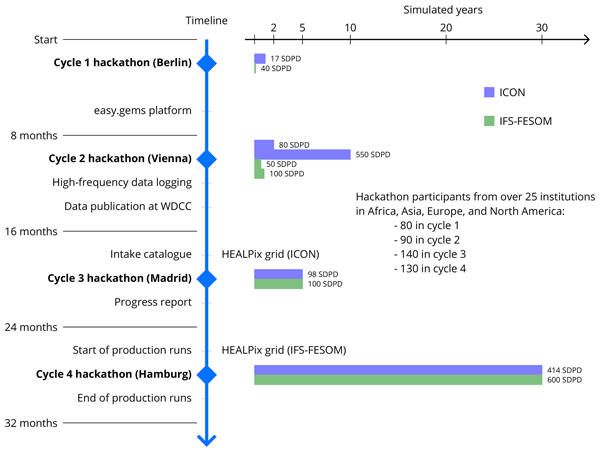
The Next Generation of Earth Modeling Systems project (nextGEMS) developed two Earth system models that use horizontal grid spacing of 10 km and finer, giving more fidelity to the representation of local phenomena, globally. In its fourth cycle, nextGEMS simulated the Earth System climate over the 2020–2049 period under the SSP3-7.0 scenario. Here, we provide an overview of nextGEMS, insights into the model development, and the realism of multi-decadal, kilometer-scale simulations.
Simon Beylat, Nina Raoult, Cédric Bacour, Natalie Douglas, Tristan Quaife, Vladislav Bastrikov, Peter J. Rayner, and Philippe Peylin
Geosci. Model Dev., 18, 7501–7527, https://doi.org/10.5194/gmd-18-7501-2025, https://doi.org/10.5194/gmd-18-7501-2025, 2025
Short summary
Short summary
Land surface models are important tools for understanding and predicting the land components of the carbon cycle. Atmospheric CO2 concentration data are a valuable source of information that can be used to improve the accuracy of these models. In this study, we present a statistical ensemble-variational data assimilation method named EnVarDA to calibrate parameters of a land surface model using these data. We show that this method is easy to implement and more efficient and accurate than traditional methods.
Marieke Wesselkamp, Matthew Chantry, Ewan Pinnington, Margarita Choulga, Souhail Boussetta, Maria Kalweit, Joschka Bödecker, Carsten F. Dormann, Florian Pappenberger, and Gianpaolo Balsamo
Geosci. Model Dev., 18, 921–937, https://doi.org/10.5194/gmd-18-921-2025, https://doi.org/10.5194/gmd-18-921-2025, 2025
Short summary
Short summary
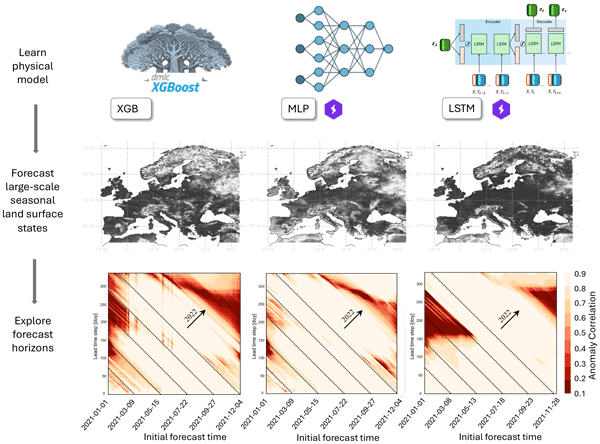
We compared spatiotemporal forecasts of three machine learning models that learned water and energy
states on the land surface from a physical model scheme. The forecasting models were developed with reanalysis data and simulations on a European scale and transferred to the globe. We found that all approaches deliver highly accurate approximations of the physical dynamic at long time horizons, implying their usefulness to advance land surface forecasting with synthetic data.
states on the land surface from a physical model scheme. The forecasting models were developed with reanalysis data and simulations on a European scale and transferred to the globe. We found that all approaches deliver highly accurate approximations of the physical dynamic at long time horizons, implying their usefulness to advance land surface forecasting with synthetic data.
Luis-Enrique Olivera-Guerra, Catherine Ottlé, Nina Raoult, and Philippe Peylin
Hydrol. Earth Syst. Sci., 29, 261–290, https://doi.org/10.5194/hess-29-261-2025, https://doi.org/10.5194/hess-29-261-2025, 2025
Short summary
Short summary
We assimilate the recent ESA-CCI land surface temperature (LST) product to optimize parameters of a land surface model (ORCHIDEE). We test different assimilation strategies to evaluate the best strategy over various in situ stations across Europe. We also provide advice on how to assimilate this LST product to better simulate LST and surface energy fluxes. Finally, we demonstrate the effectiveness of this optimization, which is essential to better simulate future projections.
Thomas Rackow, Xabier Pedruzo-Bagazgoitia, Tobias Becker, Sebastian Milinski, Irina Sandu, Razvan Aguridan, Peter Bechtold, Sebastian Beyer, Jean Bidlot, Souhail Boussetta, Willem Deconinck, Michail Diamantakis, Peter Dueben, Emanuel Dutra, Richard Forbes, Rohit Ghosh, Helge F. Goessling, Ioan Hadade, Jan Hegewald, Thomas Jung, Sarah Keeley, Lukas Kluft, Nikolay Koldunov, Aleksei Koldunov, Tobias Kölling, Josh Kousal, Christian Kühnlein, Pedro Maciel, Kristian Mogensen, Tiago Quintino, Inna Polichtchouk, Balthasar Reuter, Domokos Sármány, Patrick Scholz, Dmitry Sidorenko, Jan Streffing, Birgit Sützl, Daisuke Takasuka, Steffen Tietsche, Mirco Valentini, Benoît Vannière, Nils Wedi, Lorenzo Zampieri, and Florian Ziemen
Geosci. Model Dev., 18, 33–69, https://doi.org/10.5194/gmd-18-33-2025, https://doi.org/10.5194/gmd-18-33-2025, 2025
Short summary
Short summary
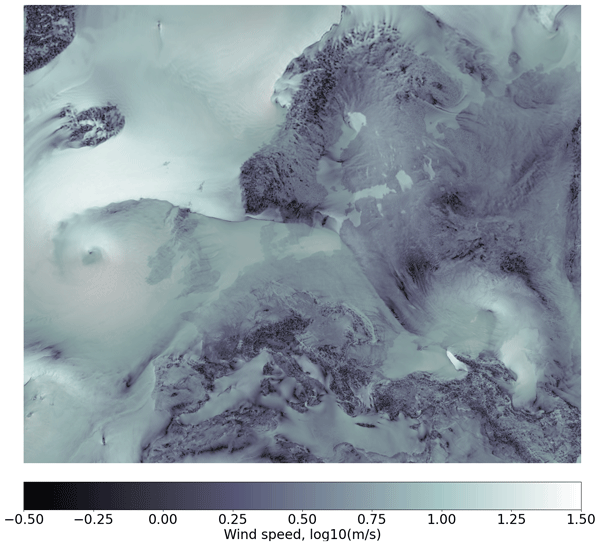
Detailed global climate model simulations have been created based on a numerical weather prediction model, offering more accurate spatial detail down to the scale of individual cities ("kilometre-scale") and a better understanding of climate phenomena such as atmospheric storms, whirls in the ocean, and cracks in sea ice. The new model aims to provide globally consistent information on local climate change with greater precision, benefiting environmental planning and local impact modelling.
Gab Abramowitz, Anna Ukkola, Sanaa Hobeichi, Jon Cranko Page, Mathew Lipson, Martin G. De Kauwe, Samuel Green, Claire Brenner, Jonathan Frame, Grey Nearing, Martyn Clark, Martin Best, Peter Anthoni, Gabriele Arduini, Souhail Boussetta, Silvia Caldararu, Kyeungwoo Cho, Matthias Cuntz, David Fairbairn, Craig R. Ferguson, Hyungjun Kim, Yeonjoo Kim, Jürgen Knauer, David Lawrence, Xiangzhong Luo, Sergey Malyshev, Tomoko Nitta, Jerome Ogee, Keith Oleson, Catherine Ottlé, Phillipe Peylin, Patricia de Rosnay, Heather Rumbold, Bob Su, Nicolas Vuichard, Anthony P. Walker, Xiaoni Wang-Faivre, Yunfei Wang, and Yijian Zeng
Biogeosciences, 21, 5517–5538, https://doi.org/10.5194/bg-21-5517-2024, https://doi.org/10.5194/bg-21-5517-2024, 2024
Short summary
Short summary
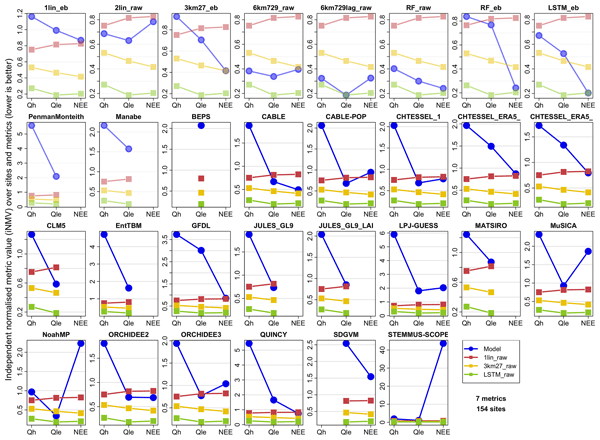
This paper evaluates land models – computer-based models that simulate ecosystem dynamics; land carbon, water, and energy cycles; and the role of land in the climate system. It uses machine learning and AI approaches to show that, despite the complexity of land models, they do not perform nearly as well as they could given the amount of information they are provided with about the prediction problem.
Sven Armin Westermann, Anke Hildebrandt, Souhail Bousetta, and Stephan Thober
Biogeosciences, 21, 5277–5303, https://doi.org/10.5194/bg-21-5277-2024, https://doi.org/10.5194/bg-21-5277-2024, 2024
Short summary
Short summary
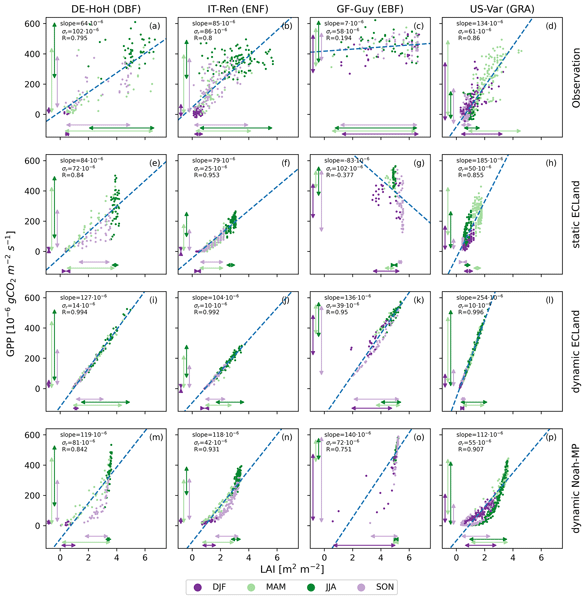
Plants at the land surface mediate between soil and the atmosphere regarding water and carbon transport. Since plant growth is a dynamic process, models need to consider these dynamics. Two models that predict water and carbon fluxes by considering plant temporal evolution were tested against observational data. Currently, dynamizing plants in these models did not enhance their representativeness, which is caused by a mismatch between implemented physical relations and observable connections.
Sylvie Charbit, Christophe Dumas, Fabienne Maignan, Catherine Ottlé, Nina Raoult, Xavier Fettweis, and Philippe Conesa
The Cryosphere, 18, 5067–5099, https://doi.org/10.5194/tc-18-5067-2024, https://doi.org/10.5194/tc-18-5067-2024, 2024
Short summary
Short summary
The evolution of the Greenland ice sheet is highly dependent on surface melting and therefore on the processes operating at the snow–atmosphere interface and within the snow cover. Here we present new developments to apply a snow model to the Greenland ice sheet. The performance of this model is analysed in terms of its ability to simulate ablation processes. Our analysis shows that the model performs well when compared with the MAR regional polar atmospheric model.
Cecile B. Menard, Sirpa Rasmus, Ioanna Merkouriadi, Gianpaolo Balsamo, Annett Bartsch, Chris Derksen, Florent Domine, Marie Dumont, Dorothee Ehrich, Richard Essery, Bruce C. Forbes, Gerhard Krinner, David Lawrence, Glen Liston, Heidrun Matthes, Nick Rutter, Melody Sandells, Martin Schneebeli, and Sari Stark
The Cryosphere, 18, 4671–4686, https://doi.org/10.5194/tc-18-4671-2024, https://doi.org/10.5194/tc-18-4671-2024, 2024
Short summary
Short summary
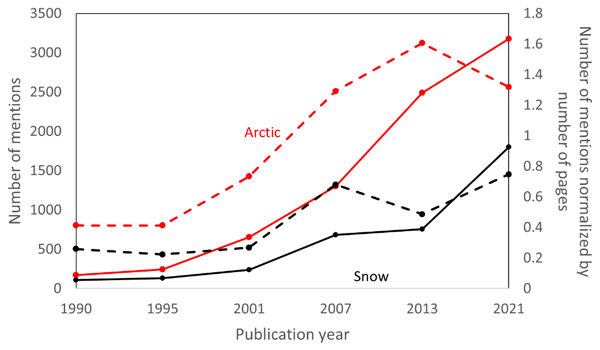
Computer models, like those used in climate change studies, are written by modellers who have to decide how best to construct the models in order to satisfy the purpose they serve. Using snow modelling as an example, we examine the process behind the decisions to understand what motivates or limits modellers in their decision-making. We find that the context in which research is undertaken is often more crucial than scientific limitations. We argue for more transparency in our research practice.
Nina Raoult, Simon Beylat, James M. Salter, Frédéric Hourdin, Vladislav Bastrikov, Catherine Ottlé, and Philippe Peylin
Geosci. Model Dev., 17, 5779–5801, https://doi.org/10.5194/gmd-17-5779-2024, https://doi.org/10.5194/gmd-17-5779-2024, 2024
Short summary
Short summary
We use computer models to predict how the land surface will respond to climate change. However, these complex models do not always simulate what we observe in real life, limiting their effectiveness. To improve their accuracy, we use sophisticated statistical and computational techniques. We test a technique called history matching against more common approaches. This method adapts well to these models, helping us better understand how they work and therefore how to make them more realistic.
Jasper M. C. Denissen, Adriaan J. Teuling, Sujan Koirala, Markus Reichstein, Gianpaolo Balsamo, Martha M. Vogel, Xin Yu, and René Orth
Earth Syst. Dynam., 15, 717–734, https://doi.org/10.5194/esd-15-717-2024, https://doi.org/10.5194/esd-15-717-2024, 2024
Short summary
Short summary
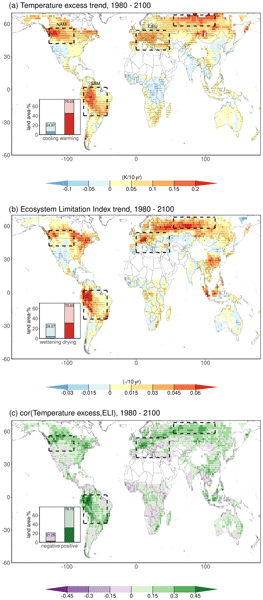
Heat extremes have severe implications for human health and ecosystems. Heat extremes are mostly introduced by large-scale atmospheric circulation but can be modulated by vegetation. Vegetation with access to water uses solar energy to evaporate water into the atmosphere. Under dry conditions, water may not be available, suppressing evaporation and heating the atmosphere. Using climate projections, we show that regionally less water is available for vegetation, intensifying future heat extremes.
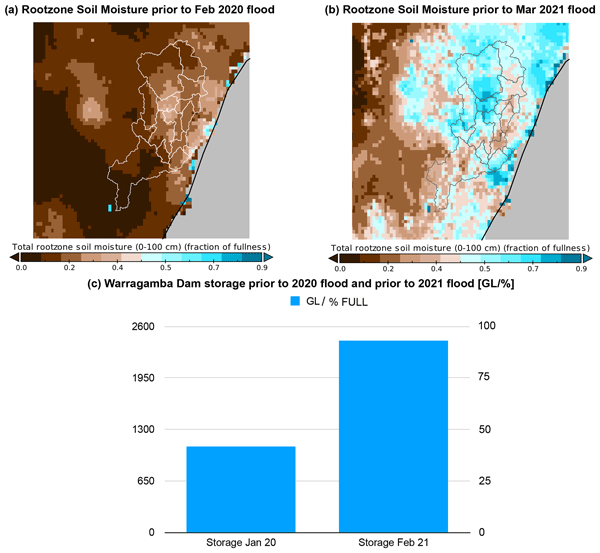
Wendy Sharples, Katayoon Bahramian, Kesav Unnithan, Christoph Rüdiger, Jiawei Hou, Christopher Pickett-Heaps, and Elisabetta Carrara
Proc. IAHS, 386, 237–249, https://doi.org/10.5194/piahs-386-237-2024, https://doi.org/10.5194/piahs-386-237-2024, 2024
Short summary
Short summary
Two flood events occurred in the Hawkesbury-Nepean valley in 2020 and 2021, however, the impact of each of those events was different in terms of lives lost (2 fatalities compared to none) and economic losses (more than 2 billion compared to less than 1 billion AUD). Reasons for the variation in impacts are explored by determining the inundation extents, and examining antecedent and climatic conditions. We found that antecedent conditions exerted a major control on the size of the impact.
Nina Raoult, Louis-Axel Edouard-Rambaut, Nicolas Vuichard, Vladislav Bastrikov, Anne Sofie Lansø, Bertrand Guenet, and Philippe Peylin
Biogeosciences, 21, 1017–1036, https://doi.org/10.5194/bg-21-1017-2024, https://doi.org/10.5194/bg-21-1017-2024, 2024
Short summary
Short summary
Observations are used to reduce uncertainty in land surface models (LSMs) by optimising poorly constraining parameters. However, optimising against current conditions does not necessarily ensure that the parameters treated as invariant will be robust in a changing climate. Manipulation experiments offer us a unique chance to optimise our models under different (here atmospheric CO2) conditions. By using these data in optimisations, we gain confidence in the future projections of LSMs.
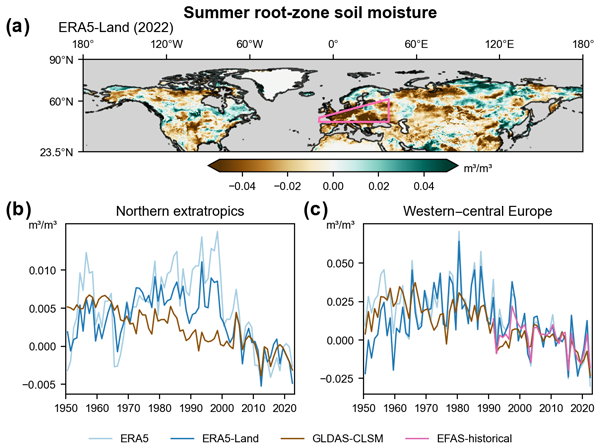
Dominik L. Schumacher, Mariam Zachariah, Friederike Otto, Clair Barnes, Sjoukje Philip, Sarah Kew, Maja Vahlberg, Roop Singh, Dorothy Heinrich, Julie Arrighi, Maarten van Aalst, Mathias Hauser, Martin Hirschi, Verena Bessenbacher, Lukas Gudmundsson, Hiroko K. Beaudoing, Matthew Rodell, Sihan Li, Wenchang Yang, Gabriel A. Vecchi, Luke J. Harrington, Flavio Lehner, Gianpaolo Balsamo, and Sonia I. Seneviratne
Earth Syst. Dynam., 15, 131–154, https://doi.org/10.5194/esd-15-131-2024, https://doi.org/10.5194/esd-15-131-2024, 2024
Short summary
Short summary
The 2022 summer was accompanied by widespread soil moisture deficits, including an unprecedented drought in Europe. Combining several observation-based estimates and models, we find that such an event has become at least 5 and 20 times more likely due to human-induced climate change in western Europe and the northern extratropics, respectively. Strong regional warming fuels soil desiccation; hence, projections indicate even more potent future droughts as we progress towards a 2 °C warmer world.
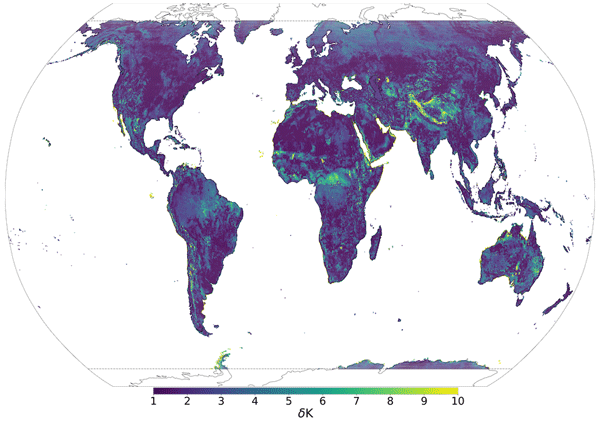
Tom Kimpson, Margarita Choulga, Matthew Chantry, Gianpaolo Balsamo, Souhail Boussetta, Peter Dueben, and Tim Palmer
Hydrol. Earth Syst. Sci., 27, 4661–4685, https://doi.org/10.5194/hess-27-4661-2023, https://doi.org/10.5194/hess-27-4661-2023, 2023
Short summary
Short summary
Lakes play an important role when we try to explain and predict the weather. More accurate and up-to-date description of lakes all around the world for numerical models is a continuous task. However, it is difficult to assess the impact of updated lake description within a weather prediction system. In this work, we develop a method to quickly and automatically define how, where, and when updated lake description affects weather prediction.
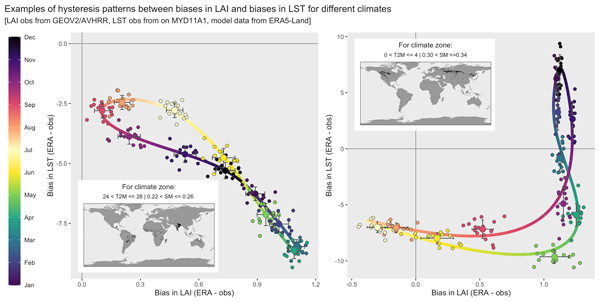
Gregory Duveiller, Mark Pickering, Joaquin Muñoz-Sabater, Luca Caporaso, Souhail Boussetta, Gianpaolo Balsamo, and Alessandro Cescatti
Geosci. Model Dev., 16, 7357–7373, https://doi.org/10.5194/gmd-16-7357-2023, https://doi.org/10.5194/gmd-16-7357-2023, 2023
Short summary
Short summary
Some of our best tools to describe the state of the land system, including the intensity of heat waves, have a problem. The model currently assumes that the number of leaves in ecosystems always follows the same cycle. By using satellite observations of when leaves are present, we show that capturing the yearly changes in this cycle is important to avoid errors in estimating surface temperature. We show that this has strong implications for our capacity to describe heat waves across Europe.
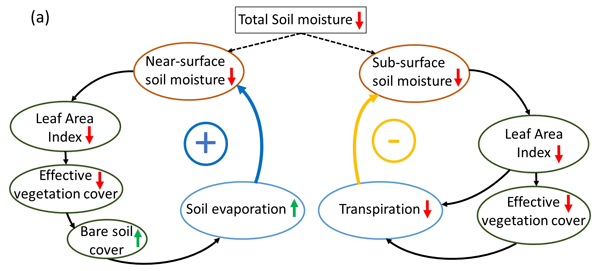
Fransje van Oorschot, Ruud J. van der Ent, Markus Hrachowitz, Emanuele Di Carlo, Franco Catalano, Souhail Boussetta, Gianpaolo Balsamo, and Andrea Alessandri
Earth Syst. Dynam., 14, 1239–1259, https://doi.org/10.5194/esd-14-1239-2023, https://doi.org/10.5194/esd-14-1239-2023, 2023
Short summary
Short summary
Vegetation largely controls land hydrology by transporting water from the subsurface to the atmosphere through roots and is highly variable in space and time. However, current land surface models have limitations in capturing this variability at a global scale, limiting accurate modeling of land hydrology. We found that satellite-based vegetation variability considerably improved modeled land hydrology and therefore has potential to improve climate predictions of, for example, droughts.
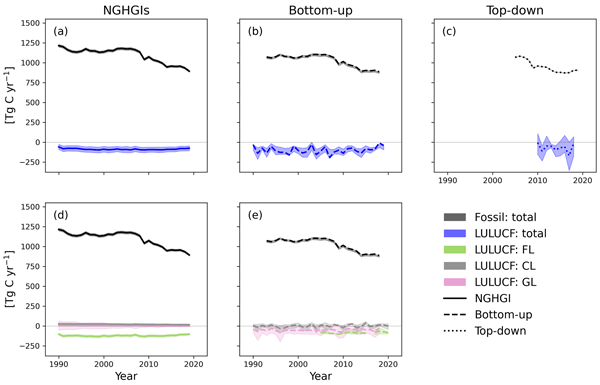
Matthew J. McGrath, Ana Maria Roxana Petrescu, Philippe Peylin, Robbie M. Andrew, Bradley Matthews, Frank Dentener, Juraj Balkovič, Vladislav Bastrikov, Meike Becker, Gregoire Broquet, Philippe Ciais, Audrey Fortems-Cheiney, Raphael Ganzenmüller, Giacomo Grassi, Ian Harris, Matthew Jones, Jürgen Knauer, Matthias Kuhnert, Guillaume Monteil, Saqr Munassar, Paul I. Palmer, Glen P. Peters, Chunjing Qiu, Mart-Jan Schelhaas, Oksana Tarasova, Matteo Vizzarri, Karina Winkler, Gianpaolo Balsamo, Antoine Berchet, Peter Briggs, Patrick Brockmann, Frédéric Chevallier, Giulia Conchedda, Monica Crippa, Stijn N. C. Dellaert, Hugo A. C. Denier van der Gon, Sara Filipek, Pierre Friedlingstein, Richard Fuchs, Michael Gauss, Christoph Gerbig, Diego Guizzardi, Dirk Günther, Richard A. Houghton, Greet Janssens-Maenhout, Ronny Lauerwald, Bas Lerink, Ingrid T. Luijkx, Géraud Moulas, Marilena Muntean, Gert-Jan Nabuurs, Aurélie Paquirissamy, Lucia Perugini, Wouter Peters, Roberto Pilli, Julia Pongratz, Pierre Regnier, Marko Scholze, Yusuf Serengil, Pete Smith, Efisio Solazzo, Rona L. Thompson, Francesco N. Tubiello, Timo Vesala, and Sophia Walther
Earth Syst. Sci. Data, 15, 4295–4370, https://doi.org/10.5194/essd-15-4295-2023, https://doi.org/10.5194/essd-15-4295-2023, 2023
Short summary
Short summary
Accurate estimation of fluxes of carbon dioxide from the land surface is essential for understanding future impacts of greenhouse gas emissions on the climate system. A wide variety of methods currently exist to estimate these sources and sinks. We are continuing work to develop annual comparisons of these diverse methods in order to clarify what they all actually calculate and to resolve apparent disagreement, in addition to highlighting opportunities for increased understanding.
Nina Raoult, Tim Jupp, Ben Booth, and Peter Cox
Earth Syst. Dynam., 14, 723–731, https://doi.org/10.5194/esd-14-723-2023, https://doi.org/10.5194/esd-14-723-2023, 2023
Short summary
Short summary
Climate models are used to predict the impact of climate change. However, poorly constrained parameters used in the physics of the models mean that we simulate a large spread of possible future outcomes. We can use real-world observations to reduce the uncertainty of parameter values, but we do not have observations to reduce the spread of possible future outcomes directly. We present a method for translating the reduction in parameter uncertainty into a reduction in possible model projections.
Nina Raoult, Sylvie Charbit, Christophe Dumas, Fabienne Maignan, Catherine Ottlé, and Vladislav Bastrikov
The Cryosphere, 17, 2705–2724, https://doi.org/10.5194/tc-17-2705-2023, https://doi.org/10.5194/tc-17-2705-2023, 2023
Short summary
Short summary
Greenland ice sheet melting due to global warming could significantly impact global sea-level rise. The ice sheet's albedo, i.e. how reflective the surface is, affects the melting speed. The ORCHIDEE computer model is used to simulate albedo and snowmelt to make predictions. However, the albedo in ORCHIDEE is lower than that observed using satellites. To correct this, we change model parameters (e.g. the rate of snow decay) to reduce the difference between simulated and observed values.
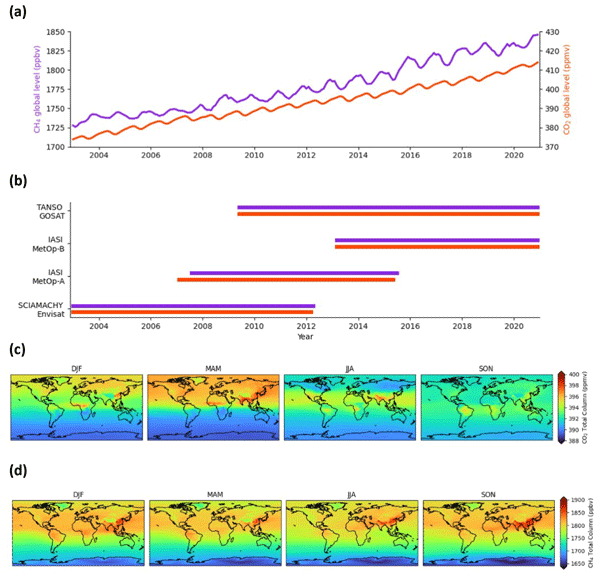
Anna Agustí-Panareda, Jérôme Barré, Sébastien Massart, Antje Inness, Ilse Aben, Melanie Ades, Bianca C. Baier, Gianpaolo Balsamo, Tobias Borsdorff, Nicolas Bousserez, Souhail Boussetta, Michael Buchwitz, Luca Cantarello, Cyril Crevoisier, Richard Engelen, Henk Eskes, Johannes Flemming, Sébastien Garrigues, Otto Hasekamp, Vincent Huijnen, Luke Jones, Zak Kipling, Bavo Langerock, Joe McNorton, Nicolas Meilhac, Stefan Noël, Mark Parrington, Vincent-Henri Peuch, Michel Ramonet, Miha Razinger, Maximilian Reuter, Roberto Ribas, Martin Suttie, Colm Sweeney, Jérôme Tarniewicz, and Lianghai Wu
Atmos. Chem. Phys., 23, 3829–3859, https://doi.org/10.5194/acp-23-3829-2023, https://doi.org/10.5194/acp-23-3829-2023, 2023
Short summary
Short summary
We present a global dataset of atmospheric CO2 and CH4, the two most important human-made greenhouse gases, which covers almost 2 decades (2003–2020). It is produced by combining satellite data of CO2 and CH4 with a weather and air composition prediction model, and it has been carefully evaluated against independent observations to ensure validity and point out deficiencies to the user. This dataset can be used for scientific studies in the field of climate change and the global carbon cycle.
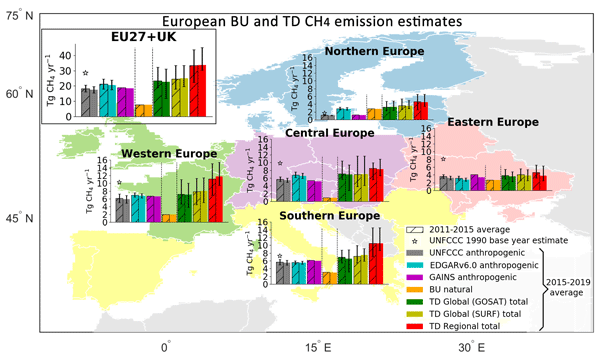
Ana Maria Roxana Petrescu, Chunjing Qiu, Matthew J. McGrath, Philippe Peylin, Glen P. Peters, Philippe Ciais, Rona L. Thompson, Aki Tsuruta, Dominik Brunner, Matthias Kuhnert, Bradley Matthews, Paul I. Palmer, Oksana Tarasova, Pierre Regnier, Ronny Lauerwald, David Bastviken, Lena Höglund-Isaksson, Wilfried Winiwarter, Giuseppe Etiope, Tuula Aalto, Gianpaolo Balsamo, Vladislav Bastrikov, Antoine Berchet, Patrick Brockmann, Giancarlo Ciotoli, Giulia Conchedda, Monica Crippa, Frank Dentener, Christine D. Groot Zwaaftink, Diego Guizzardi, Dirk Günther, Jean-Matthieu Haussaire, Sander Houweling, Greet Janssens-Maenhout, Massaer Kouyate, Adrian Leip, Antti Leppänen, Emanuele Lugato, Manon Maisonnier, Alistair J. Manning, Tiina Markkanen, Joe McNorton, Marilena Muntean, Gabriel D. Oreggioni, Prabir K. Patra, Lucia Perugini, Isabelle Pison, Maarit T. Raivonen, Marielle Saunois, Arjo J. Segers, Pete Smith, Efisio Solazzo, Hanqin Tian, Francesco N. Tubiello, Timo Vesala, Guido R. van der Werf, Chris Wilson, and Sönke Zaehle
Earth Syst. Sci. Data, 15, 1197–1268, https://doi.org/10.5194/essd-15-1197-2023, https://doi.org/10.5194/essd-15-1197-2023, 2023
Short summary
Short summary
This study updates the state-of-the-art scientific overview of CH4 and N2O emissions in the EU27 and UK in Petrescu et al. (2021a). Yearly updates are needed to improve the different respective approaches and to inform on the development of formal verification systems. It integrates the most recent emission inventories, process-based model and regional/global inversions, comparing them with UNFCCC national GHG inventories, in support to policy to facilitate real-time verification procedures.
Zun Yin, Kirsten L. Findell, Paul Dirmeyer, Elena Shevliakova, Sergey Malyshev, Khaled Ghannam, Nina Raoult, and Zhihong Tan
Hydrol. Earth Syst. Sci., 27, 861–872, https://doi.org/10.5194/hess-27-861-2023, https://doi.org/10.5194/hess-27-861-2023, 2023
Short summary
Short summary
Land–atmosphere (L–A) interactions typically focus on daytime processes connecting the land state with the overlying atmospheric boundary layer. However, much prior L–A work used monthly or daily means due to the lack of daytime-only data products. Here we show that monthly smoothing can significantly obscure the L–A coupling signal, and including nighttime information can mute or mask the daytime processes of interest. We propose diagnosing L–A coupling within models or archiving subdaily data.
Wei Li, Jie Chen, Lu Li, Yvan J. Orsolini, Yiheng Xiang, Retish Senan, and Patricia de Rosnay
The Cryosphere, 16, 4985–5000, https://doi.org/10.5194/tc-16-4985-2022, https://doi.org/10.5194/tc-16-4985-2022, 2022
Short summary
Short summary
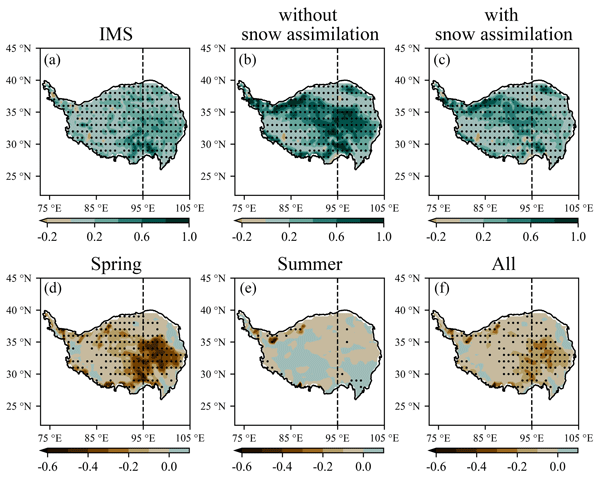
Snow assimilation over the Tibetan Plateau (TP) may influence seasonal forecasts over this region. To investigate the impacts of snow assimilation on the seasonal forecasts of snow, temperature and precipitation, twin ensemble reforecasts are initialized with and without snow assimilation above 1500 m altitude over the TP for spring and summer in 2018. The results show that snow assimilation can improve seasonal forecasts over the TP through the interaction between land and atmosphere.
Melissa Ruiz-Vásquez, Sungmin O, Alexander Brenning, Randal D. Koster, Gianpaolo Balsamo, Ulrich Weber, Gabriele Arduini, Ana Bastos, Markus Reichstein, and René Orth
Earth Syst. Dynam., 13, 1451–1471, https://doi.org/10.5194/esd-13-1451-2022, https://doi.org/10.5194/esd-13-1451-2022, 2022
Short summary
Short summary
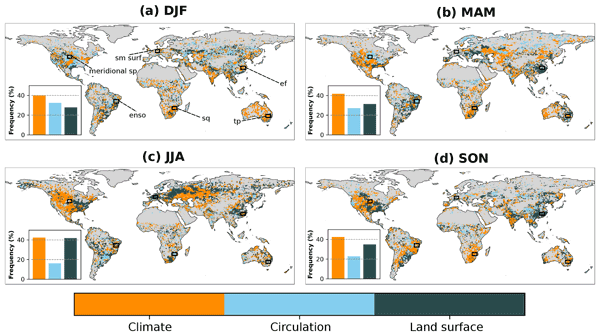
Subseasonal forecasts facilitate early warning of extreme events; however their predictability sources are not fully explored. We find that global temperature forecast errors in many regions are related to climate variables such as solar radiation and precipitation, as well as land surface variables such as soil moisture and evaporative fraction. A better representation of these variables in the forecasting and data assimilation systems can support the accuracy of temperature forecasts.
Bin Cao, Gabriele Arduini, and Ervin Zsoter
The Cryosphere, 16, 2701–2708, https://doi.org/10.5194/tc-16-2701-2022, https://doi.org/10.5194/tc-16-2701-2022, 2022
Short summary
Short summary
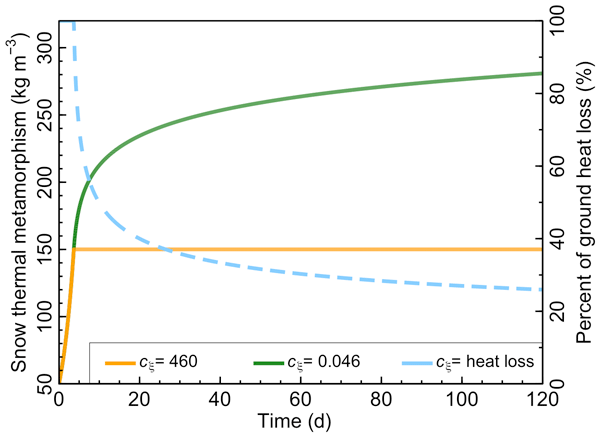
We implemented a new multi-layer snow scheme in the land surface scheme of ERA5-Land with revised snow densification parameterizations. The revised HTESSEL improved the representation of soil temperature in permafrost regions compared to ERA5-Land; in particular, warm bias in winter was significantly reduced, and the resulting modeled near-surface permafrost extent was improved.
Jonathan J. Day, Sarah Keeley, Gabriele Arduini, Linus Magnusson, Kristian Mogensen, Mark Rodwell, Irina Sandu, and Steffen Tietsche
Weather Clim. Dynam., 3, 713–731, https://doi.org/10.5194/wcd-3-713-2022, https://doi.org/10.5194/wcd-3-713-2022, 2022
Short summary
Short summary
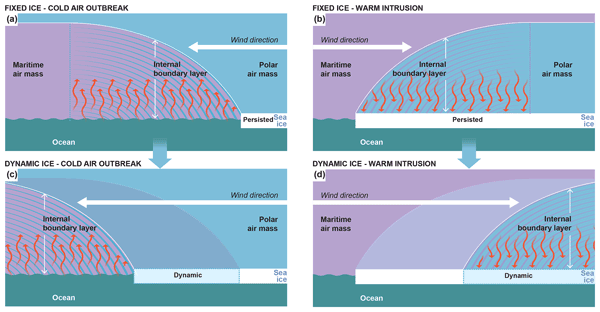
A recent drive to develop seamless forecasting systems has culminated in the development of weather forecasting systems that include a coupled representation of the atmosphere, ocean and sea ice. Before this, sea ice and sea surface temperature anomalies were typically fixed throughout a given forecast. We show that the dynamic coupling is most beneficial during periods of rapid ice advance, where persistence is a poor forecast of the sea ice and leads to large errors in the uncoupled system.
Camille Abadie, Fabienne Maignan, Marine Remaud, Jérôme Ogée, J. Elliott Campbell, Mary E. Whelan, Florian Kitz, Felix M. Spielmann, Georg Wohlfahrt, Richard Wehr, Wu Sun, Nina Raoult, Ulli Seibt, Didier Hauglustaine, Sinikka T. Lennartz, Sauveur Belviso, David Montagne, and Philippe Peylin
Biogeosciences, 19, 2427–2463, https://doi.org/10.5194/bg-19-2427-2022, https://doi.org/10.5194/bg-19-2427-2022, 2022
Short summary
Short summary
A better constraint of the components of the carbonyl sulfide (COS) global budget is needed to exploit its potential as a proxy of gross primary productivity. In this study, we compare two representations of oxic soil COS fluxes, and we develop an approach to represent anoxic soil COS fluxes in a land surface model. We show the importance of atmospheric COS concentration variations on oxic soil COS fluxes and provide new estimates for oxic and anoxic soil contributions to the COS global budget.

Joe McNorton, Nicolas Bousserez, Anna Agustí-Panareda, Gianpaolo Balsamo, Luca Cantarello, Richard Engelen, Vincent Huijnen, Antje Inness, Zak Kipling, Mark Parrington, and Roberto Ribas
Atmos. Chem. Phys., 22, 5961–5981, https://doi.org/10.5194/acp-22-5961-2022, https://doi.org/10.5194/acp-22-5961-2022, 2022
Short summary
Short summary
Concentrations of atmospheric methane continue to grow, in recent years at an increasing rate, for unknown reasons. Using newly available satellite observations and a state-of-the-art weather prediction model we perform global estimates of emissions from hotspots at high resolution. Results show that the system can accurately report on biases in national inventories and is used to conclude that the early COVID-19 slowdown period (March–June 2020) had little impact on global methane emissions.
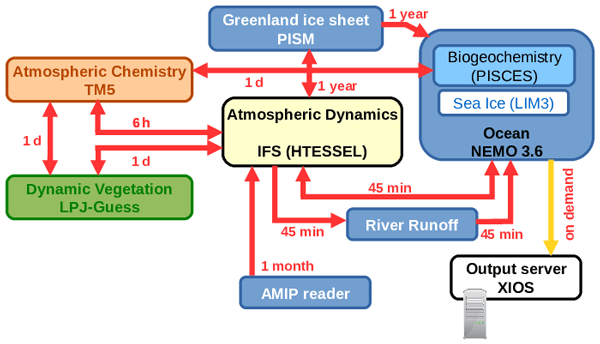
Ralf Döscher, Mario Acosta, Andrea Alessandri, Peter Anthoni, Thomas Arsouze, Tommi Bergman, Raffaele Bernardello, Souhail Boussetta, Louis-Philippe Caron, Glenn Carver, Miguel Castrillo, Franco Catalano, Ivana Cvijanovic, Paolo Davini, Evelien Dekker, Francisco J. Doblas-Reyes, David Docquier, Pablo Echevarria, Uwe Fladrich, Ramon Fuentes-Franco, Matthias Gröger, Jost v. Hardenberg, Jenny Hieronymus, M. Pasha Karami, Jukka-Pekka Keskinen, Torben Koenigk, Risto Makkonen, François Massonnet, Martin Ménégoz, Paul A. Miller, Eduardo Moreno-Chamarro, Lars Nieradzik, Twan van Noije, Paul Nolan, Declan O'Donnell, Pirkka Ollinaho, Gijs van den Oord, Pablo Ortega, Oriol Tintó Prims, Arthur Ramos, Thomas Reerink, Clement Rousset, Yohan Ruprich-Robert, Philippe Le Sager, Torben Schmith, Roland Schrödner, Federico Serva, Valentina Sicardi, Marianne Sloth Madsen, Benjamin Smith, Tian Tian, Etienne Tourigny, Petteri Uotila, Martin Vancoppenolle, Shiyu Wang, David Wårlind, Ulrika Willén, Klaus Wyser, Shuting Yang, Xavier Yepes-Arbós, and Qiong Zhang
Geosci. Model Dev., 15, 2973–3020, https://doi.org/10.5194/gmd-15-2973-2022, https://doi.org/10.5194/gmd-15-2973-2022, 2022
Short summary
Short summary
The Earth system model EC-Earth3 is documented here. Key performance metrics show physical behavior and biases well within the frame known from recent models. With improved physical and dynamic features, new ESM components, community tools, and largely improved physical performance compared to the CMIP5 version, EC-Earth3 represents a clear step forward for the only European community ESM. We demonstrate here that EC-Earth3 is suited for a range of tasks in CMIP6 and beyond.
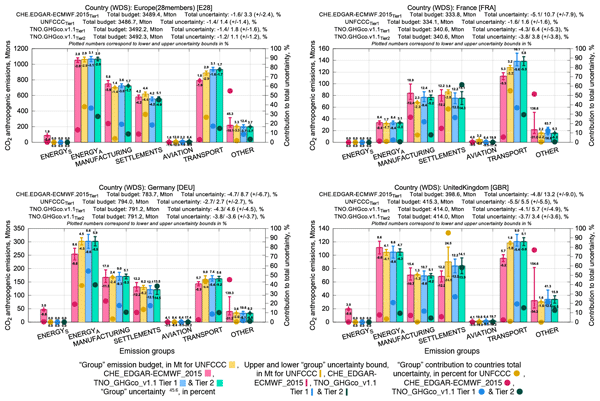
Margarita Choulga, Greet Janssens-Maenhout, Ingrid Super, Efisio Solazzo, Anna Agusti-Panareda, Gianpaolo Balsamo, Nicolas Bousserez, Monica Crippa, Hugo Denier van der Gon, Richard Engelen, Diego Guizzardi, Jeroen Kuenen, Joe McNorton, Gabriel Oreggioni, and Antoon Visschedijk
Earth Syst. Sci. Data, 13, 5311–5335, https://doi.org/10.5194/essd-13-5311-2021, https://doi.org/10.5194/essd-13-5311-2021, 2021
Short summary
Short summary
People worry that growing man-made carbon dioxide (CO2) concentrations lead to climate change. Global models, use of observations, and datasets can help us better understand behaviour of CO2. Here a tool to compute uncertainty in man-made CO2 sources per country per year and month is presented. An example of all sources separated into seven groups (intensive and average energy, industry, humans, ground and air transport, others) is presented. Results will be used to predict CO2 concentrations.
Cited articles
Abramowitz, G., Ukkola, A., Hobeichi, S., Cranko Page, J., Lipson, M., De Kauwe, M. G., Green, S., Brenner, C., Frame, J., Nearing, G., Clark, M., Best, M., Anthoni, P., Arduini, G., Boussetta, S., Caldararu, S., Cho, K., Cuntz, M., Fairbairn, D., Ferguson, C. R., Kim, H., Kim, Y., Knauer, J., Lawrence, D., Luo, X., Malyshev, S., Nitta, T., Ogee, J., Oleson, K., Ottlé, C., Peylin, P., de Rosnay, P., Rumbold, H., Su, B., Vuichard, N., Walker, A. P., Wang-Faivre, X., Wang, Y., and Zeng, Y.: On the predictability of turbulent fluxes from land: PLUMBER2 MIP experimental description and preliminary results, Biogeosciences, 21, 5517–5538, https://doi.org/10.5194/bg-21-5517-2024, 2024. a, b, c, d, e, f
Ba, J. L., Kiros, J. R., and Hinton, G. E.: Layer Normalization, arXiv [preprint], arXiv:1607.06450, https://doi.org/10.48550/arXiv.1607.06450, 2016. a
Baldocchi, D., Falge, E., Gu, L., Olson, R., Hollinger, D., Running, S., Anthoni, P., Bernhofer, C., Davis, K., Evans, R., Fuentes, J., Goldstein, A., Katul, G., Law, B., Lee, X., Malhi, Y., Meyers, T., Munger, W., Oechel, W., Paw U, K. T., Pilegaard, K., Schmid, H. P., Valentini, R., Verma, S., Vesala, T., Wilson, K., and Wofsy, S.: FLUXNET: A new tool to study the temporal and spatial variability of ecosystem-scale carbon dioxide, water vapor, and energy flux densities, B. Am. Meteorol. Soc., 82, 2415–2434, 2001. a
Balsamo, G., Beljaars, A., Scipal, K., Viterbo, P., van den Hurk, B., Hirschi, M., and Betts, A. K.: A revised hydrology for the ECMWF model: Verification from field site to terrestrial water storage and impact in the Integrated Forecast System, J. Hydrometeorol., 10, 623–643, 2009. a
Bao, S., Alonso, L., Wang, S., Gensheimer, J., De, R., and Carvalhais, N.: Toward robust parameterizations in ecosystem-level photosynthesis models, J. Adv. Model. Earth Syst., 15, e2022MS003464, https://doi.org/10.1029/2022MS003464, 2023. a
Bao, S., Carvalhais, N., Xu, J., Chen, J. M., Lei, Y., Tana, G., Lin, C., and Shi, J.: Global distribution pattern in characteristics of gross primary productivity response to soil water availability, Agr. Forest Meteorol., 372, 110701, https://doi.org/10.1016/j.agrformet.2025.110701, 2025. a
Blyth, E. M., Arora, V. K., Clark, D. B., Dadson, S. J., De Kauwe, M. G., Lawrence, D. M., Melton, J. R., Pongratz, J., Turton, R. H., Yoshimura, K., and Yuan, H.: Advances in land surface modelling, Curr. Clim. Change Rep., 7, 45–71, 2021. a
Boussetta, S., Balsamo, G., Beljaars, A., Agustí-Panareda, A., Calvet, J.-C., Jacobs, C., van den Hurk, B., Viterbo, P., Lafont, S., Dutra, E., Jarlan, L., Balzarolo, M., Papale, D., and van der Werf, G.: Natural land carbon dioxide exchanges in the ECMWF integrated forecasting system: Implementation and offline validation, J. Geophys. Res.-Atmos., 118, 5923–5946, 2013. a
Boussetta, S., Balsamo, G., Arduini, G., Dutra, E., McNorton, J., Choulga, M., Agustí-Panareda, A., Beljaars, A., Wedi, N., Muñoz-Sabater, J., de Rosnay, P., Sandu, I., Hadade, I., Carver, G., Mazzetti, C., Prudhomme, C., Yamazaki, D., and Zsoter, E.: ECLand: The ECMWF land surface modelling system, Atmosphere, 12, 723, https://doi.org/10.3390/atmos12060723, 2021. a, b, c, d
Bush, M., Flack, D. L. A., Lewis, H. W., Bohnenstengel, S. I., Short, C. J., Franklin, C., Lock, A. P., Best, M., Field, P., McCabe, A., Van Weverberg, K., Berthou, S., Boutle, I., Brooke, J. K., Cole, S., Cooper, S., Dow, G., Edwards, J., Finnenkoetter, A., Furtado, K., Halladay, K., Hanley, K., Hendry, M. A., Hill, A., Jayakumar, A., Jones, R. W., Lean, H., Lee, J. C. K., Malcolm, A., Mittermaier, M., Mohandas, S., Moore, S., Morcrette, C., North, R., Porson, A., Rennie, S., Roberts, N., Roux, B., Sanchez, C., Su, C.-H., Tucker, S., Vosper, S., Walters, D., Warner, J., Webster, S., Weeks, M., Wilkinson, J., Whitall, M., Williams, K. D., and Zhang, H.: The third Met Office Unified Model–JULES Regional Atmosphere and Land Configuration, RAL3, Geosci. Model Dev., 18, 3819–3855, https://doi.org/10.5194/gmd-18-3819-2025, 2025. a
Caliński, T. and Harabasz, J.: A dendrite method for cluster analysis, Commun. Stat., 3, 1–27, https://doi.org/10.1080/03610927408827101, 1974. a
Chaney, N. W., Van Huijgevoort, M. H. J., Shevliakova, E., Malyshev, S., Milly, P. C. D., Gauthier, P. P. G., and Sulman, B. N.: Harnessing big data to rethink land heterogeneity in Earth system models, Hydrol. Earth Syst. Sci., 22, 3311–3330, https://doi.org/10.5194/hess-22-3311-2018, 2018. a
Chen, T., He, T., Benesty, M., Khotilovich, V., Tang, Y., Cho, H., Chen, K., Mitchell, R., Cano, I., Zhou, T., Li, M., Xie, J., Lin, M., Geng, Y., Li, Y., Yuan, J., and Cortes, D.: Xgboost: extreme gradient boosting, R package version 0.4-2, The R Foundation, 1–4, https://doi.org/10.32614/cran.package.xgboost, 2015. a
Cheruy, F., Ducharne, A., Hourdin, F., Musat, I., Vignon, É., Gastineau, G., Bastrikov, V., Vuichard, N., Diallo, B., Dufresne, J.-L., Ghattas, J., Grandpeix, J.-Y., Idelkadi, A., Mellul, L., Maignan, F., Ménégoz, M., Ottlé, C., Peylin, P., Servonnat, J., Wang, F., and Zhao, Y.: Improved near-surface continental climate in IPSL-CM6A-LR by combined evolutions of atmospheric and land surface physics, J. Adv. Model. Earth Syst., 12, e2019MS002005, https://doi.org/10.1029/2019MS002005, 2020. a
Choulga, M., Kourzeneva, E., Balsamo, G., Boussetta, S., and Wedi, N.: Upgraded global mapping information for earth system modelling: an application to surface water depth at the ECMWF, Hydrol. Earth Syst. Sci., 23, 4051–4076, https://doi.org/10.5194/hess-23-4051-2019, 2019. a
Clark, M. P., Nijssen, B., Lundquist, J. D., Kavetski, D., Rupp, D. E., Woods, R. A., Freer, J. E., Gutmann, E. D., Wood, A. W., Brekke, L. D., Arnold, J. R., Gochis, D. J., and Rasmussen, R. M.: A unified approach for process-based hydrologic modeling: 1. Modeling concept, Water Resour. Res., 51, 2498–2514, 2015. a
Cranko Page, J., De Kauwe, M. G., Pitman, A. J., Towers, I. R., Arduini, G., Best, M. J., Ferguson, C. R., Knauer, J., Kim, H., Lawrence, D. M., Nitta, T., Oleson, K. W., Ottlé, C., Ukkola, A., Vuichard, N., Wang-Faivre, X., and Abramowitz, G.: Land surface model underperformance tied to specific meteorological conditions, Biogeosciences, 23, 263–282, https://doi.org/10.5194/bg-23-263-2026, 2026. a, b
Dagon, K., Sanderson, B. M., Fisher, R. A., and Lawrence, D. M.: A machine learning approach to emulation and biophysical parameter estimation with the Community Land Model, version 5, Adv. Stat. Clim. Meteorol. Oceanogr., 6, 223–244, 2020. a
Davies, D. L. and Bouldin, D. W.: A cluster separation measure, IEEE T. Pattern Anal. Mach. Intel., PAMI-1, 224–227, https://doi.org/10.1109/TPAMI.1979.4766909, 1979. a
de Rosnay, P., Browne, P., de Boisséson, E., Fairbairn, D., Hirahara, Y., Ochi, K., Schepers, D., Weston, P., Zuo, H., Alonso-Balmaseda, M., Balsamo, G., Bonavita, M., Bormann, N., Brown, A., Chrust, M., Dahoui, M., De Chiara, G., English, S., Geer, A., Healy, S., Hersbach, H., Laloyaux, P., Magnusson, L., Massart, S., McNally, A., Pappenberger, F., and Rabier, F.: Coupled data assimilation at ECMWF: current status, challenges and future developments, Q. J. Roy. Meteorol. Soc., 148, 2672–2702, 2022. a, b
ElGhawi, R., Reimers, C., Schnur, R., Reichstein, M., Körner, M., Carvalhais, N., and Winkler, A. J.: Hybrid-modeling of land-atmosphere fluxes using integrated machine learning in the ICON-ESM modeling framework, J. Adv. Model. Earth Syst., 17, e2025MS005102, https://doi.org/10.1029/2025MS005102, 2025. a
Fairbairn, D., de Rosnay, P., and Browne, P. A.: The new stand-alone surface analysis at ECMWF: Implications for land–atmosphere DA coupling, J. Hydrometeorol., 20, 2023–2042, 2019. a
Fang, J., Bowman, K., Zhao, W., Lian, X., and Gentine, P.: Differentiable land model reveals global environmental controls on latent ecological functions, Nat. Commun., 17, 6670, https://doi.org/10.1038/s41467-026-73395-4, 2026. a
Fer, I., Kelly, R., Moorcroft, P. R., Richardson, A. D., Cowdery, E. M., and Dietze, M. C.: Linking big models to big data: efficient ecosystem model calibration through Bayesian model emulation, Biogeosciences, 15, 5801–5830, https://doi.org/10.5194/bg-15-5801-2018, 2018. a
Fisher, R. A. and Koven, C. D.: Perspectives on the future of land surface models and the challenges of representing complex terrestrial systems, J. Adv. Model. Earth Syst., 12, e2018MS001453, https://doi.org/10.1029/2018MS001453, 2020. a
Goodfellow, I., Bengio, Y., and Courville, A.: Deep learning, in: Vol. 1, MIT Press, Cambridge, 1–800, ISBN 978-0262035613, 2016. a
Hahner, S., Zampieri, L., Bidlot, J.-R., Browne, P., Chantry, M., Clare, M. C. A., Cook, H., Dueben, P., Furner, R., Keeley, S., Kousal, J., Lang, S., Lessig, C., Mertes, G., Mogensen, K., Moldovan, G., Pelletier, C., Pinault, F., Nemesio, A. P., Raoult, B., Sandu, I., Cruz, M. S., Schloer, J., Tietsche, S., and Zuo, H.: Representing the Surface Ocean in ECMWF's data-driven forecasting system AIFS, arXiv [preprint], https://doi.org/10.48550/arXiv.2604.25559, 2026. a
Hersbach, H., Bell, B., Berrisford, P., Hirahara, S., Horányi, A., Muñoz-Sabater, J., Nicolas, J., Peubey, C., Radu, R., Schepers, D., Simmons, A., Soci, C., Abdalla, S., Abellan, X., Balsamo, G., Bechtold, P., Biavati, G., Bidlot, J., Bonavita, M., De Chiara, G., Dahlgren, P., Dee, D., Diamantakis, M., Dragani, R., Flemming, J., Forbes, R., Fuentes, M., Geer, A., Haimberger, L., Healy, S., Hogan, R.J., Hólm, E., Janisková, M., Keeley, S., Laloyaux, P., Lopez, P., Lupu, C., Radnoti, G., de Rosnay, P., Rozum, I., Vamborg, F., Villaume, S., Thépaut, J.-N.: The ERA5 global reanalysis, Q. J. Roy. Meteorol. Soc., 146, 1999–2049, 2020. a, b, c, d, e
Hochreiter, S. and Schmidhuber, J.: Long short-term memory, Neural Comput., 9, 1735–1780, 1997. a
Hufkens, K. and Stocker, B.: FluxDataKit v3.4.2: A comprehensive data set of ecosystem fluxes for land surface modelling, Zenodo [data set], https://doi.org/10.5281/zenodo.14808331, 2025. a, b, c
Jiang, P., Kidger, P., Bandai, T., Baldocchi, D., Liu, H., Xiao, Y., Zhang, Q., Wang, C. T., Steefel, C., and Chen, X.: JAX-CanVeg: A differentiable land surface model, Water Resour. Res., 61, e2024WR038116, https://doi.org/10.1029/2024WR038116, 2025. a
Jung, M., Schwalm, C., Migliavacca, M., Walther, S., Camps-Valls, G., Koirala, S., Anthoni, P., Besnard, S., Bodesheim, P., Carvalhais, N., Chevallier, F., Gans, F., Goll, D. S., Haverd, V., Köhler, P., Ichii, K., Jain, A. K., Liu, J., Lombardozzi, D., Nabel, J. E. M. S., Nelson, J. A., O'Sullivan, M., Pallandt, M., Papale, D., Peters, W., Pongratz, J., Rödenbeck, C., Sitch, S., Tramontana, G., Walker, A., Weber, U., and Reichstein, M.: Scaling carbon fluxes from eddy covariance sites to globe: synthesis and evaluation of the FLUXCOM approach, Biogeosciences, 17, 1343–1365, https://doi.org/10.5194/bg-17-1343-2020, 2020. a
Kimpson, T., Choulga, M., Chantry, M., Balsamo, G., Boussetta, S., Dueben, P., and Palmer, T.: Deep learning for quality control of surface physiographic fields using satellite Earth observations, Hydrol. Earth Syst. Sci., 27, 4661–4685, https://doi.org/10.5194/hess-27-4661-2023, 2023. a, b
Kolassa, J., Reichle, R. H., Liu, Q., Alemohammad, S. H., Gentine, P., Aida, K., Asanuma, J., Bircher, S., Caldwell, T., Colliander, A., Cosh, M., Holifield Collins, C., Jackson, T. J., Martínez-Fernández, J., McNairn, H., Pacheco, A., Thibeault, M., and Walker, J. P.: Estimating surface soil moisture from SMAP observations using a Neural Network technique, Remote Sens. Environ., 204, 43–59, 2018. a
Lang, S., Alexe, M., Chantry, M., Dramsch, J., Pinault, F., Raoult, B., Clare, M. C. A., Lessig, C., Maier-Gerber, M., Magnusson, L., Ben Bouallègue, Z., Prieto Nemesio, A., Dueben, P. D., Brown, A., Pappenberger, F., and Rabier, F.: AIFS–ECMWF's data-driven forecasting system, arXiv [preprint], arXiv:2406.01465, https://doi.org/10.48550/arXiv.2406.01465, 2024. a, b
Lawrence, D. M., Fisher, R. A., Koven, C. D., Oleson, K. W., Swenson, S. C., Bonan, G., Collier, N., Ghimire, B., van Kampenhout, L., Kennedy, D., Kluzek, E., Lawrence, P. J., Li, F., Li, H., Lombardozzi, D., Riley, W. J., Sacks, W. J., Shi, M., Vertenstein, M., Wieder, W. R., Xu, C., Ali, A. A., Badger, A. M., Bisht, G., van den Broeke, M., Brunke, M. A., Burns, S. P., Buzan, J., Clark, M., Craig, A., Dahlin, K., Drewniak, B., Fisher, J. B., Flanner, M., Fox, A. M., Gentine, P., Hoffman, F., Keppel-Aleks, G., Knox, R., Kumar, S., Lenaerts, J., Leung, L. R., Lipscomb, W. H., Lu, Y., Pandey, A., Pelletier, J. D., Perket, J., Randerson, J. T., Ricciuto, D. M., Sanderson, B. M., Slater, A., Subin, Z. M., Tang, J., Thomas, R. Q., Val Martin, M., and Zeng, X.: The Community Land Model version 5: Description of new features, benchmarking, and impact of forcing uncertainty, J. Adv. Model. Earth Syst., 11, 4245–4287, 2019. a
Lloyd, S. P.: Least squares quantization in PCM, IEEE T. Inform. Theory, 28, 129–137, https://doi.org/10.1109/TIT.1982.1056489, 1982. a
Mauder, M., Foken, T., and Cuxart, J.: Surface-energy-balance closure over land: A review, Bound.-Lay. Meteorol., 177, 395–426, https://doi.org/10.1007/s10546-020-00529-6, 2020. a
Moldovan, G., Pinnington, E., Prieto Nemesio, A., Lang, S., Ben Bouallègue, Z., Dramsch, J., Alexe, M., Santa Cruz, M., Hahner, S., Cook, H., Theissen, H., Clare, M., O'Brien, C., Polster, J., Magnusson, L., Mertes, G., Pinault, F., Raoult, B., de Rosnay, P., Forbes, R., and Chantry, M.: AIFS Single 1.1.0: an update to ECMWF's machine-learned weather forecast model AIFS, Geosci. Model Dev., 19, 4703–4724, https://doi.org/10.5194/gmd-19-4703-2026, 2026. a, b
Muñoz-Sabater, J., Dutra, E., Agustí-Panareda, A., Albergel, C., Arduini, G., Balsamo, G., Boussetta, S., Choulga, M., Harrigan, S., Hersbach, H., Martens, B., Miralles, D. G., Piles, M., Rodríguez-Fernández, N. J., Zsoter, E., Buontempo, C., and Thépaut, J.-N.: ERA5-Land: a state-of-the-art global reanalysis dataset for land applications, Earth Syst. Sci. Data, 13, 4349–4383, https://doi.org/10.5194/essd-13-4349-2021, 2021. a
Nawab, A., Arduini, G., Piotrowski, Z., Lange, M., Huijnen, V., Bidlot, J.-R., Boussetta, S., Kluge, F., Flemming, J., Gillies, P., Bulin, J., Kipling, Z., Agustí-Panareda, A., Staneker, M., Wortmann, M., Lopez, P., Stockdale, T., McNorton, J., Dawson, A., Hill, A., Reuter, B., Hadade, I., Marsden, O., Browne, P., Keeley, S., Wilhelmsson, T., Lang, S., and Forbes, R.: ecmwf-ifs/ecland: ecLand 2.0.0, Zenodo [code], https://doi.org/10.5281/zenodo.21995581, 2025. a
O., S. and Orth, R.: Global soil moisture data derived through machine learning trained with in-situ measurements, Sci. Data, 8, 1–14, 2021. a
Pastorello, G., Trotta, C., Canfora, E., Chu, H., Christianson, D., Cheah, Y.-W., Poindexter, C., Chen, J., Elbashandy, A., Humphrey, M., Isaac, P., Polidori, D., Reichstein, M., Ribeca, A., van Ingen, C., Vuichard, N., Zhang, L., Amiro, B., Ammann, C., Arain, M. A., Ardö, J., Arkebauer, T., Arndt, S.K., Arriga, N., Aubinet, M., Aurela, M., Baldocchi, D., Barr, A., Beamesderfer, E., Belelli Marchesini, L., Bergeron, O., Beringer, J., Bernhofer, C., Berveiller, D., Billesbach, D., Black, T. A., Blanken, P. D., Bohrer, G., Boike, J., Bolstad, P. V., Bonal, D., Bonnefond, J.-M., Bowling, D. R., Bracho, R., Brodeur, J., Brümmer, C., Buchmann, N., Burban, B., Burns, S. P., Buysse, P., Cale, P., Cavagna, M., Cellier, P., Chen, S., Chini, I., Christensen, T. R., Cleverly, J., Collalti, A., Consalvo, C., Cook, B. D., Cook, D., Coursolle, C., Cremonese, E., Curtis, P. S., D'Andrea, E., da Rocha, H., Dai, X., Davis, K. J., De Cinti, B., de Grandcourt, A., De Ligne, A., De Oliveira, R. C., Delpierre, N., Desai, A. R., Di Bella, C. M., di Tommasi, P., Dolman, H., Domingo, F., Dong, G., Dore, S., Duce, P., Dufrêne, E., Dunn, A., Dušek, J., Eamus, D., Eichelmann, U., ElKhidir, H. A. M., Eugster, W., Ewenz, C. M., Ewers, B., Famulari, D., Fares, S., Feigenwinter, I., Feitz, A., Fensholt, R., Filippa, G., Fischer, M., Frank, J., Galvagno, M., Gharun, M., Gianelle, D., Gielen, B., Gioli, B., Gitelson, A., Goded, I., Goeckede, M., Goldstein, A. H., Gough, C. M., Goulden, M. L., Graf, A., Griebel, A., Gruening, C., Grünwald, T., Hammerle, A., Han, S., Han, X., Hansen, B. U., Hanson, C., Hatakka, J., He, Y., Hehn, M., Heinesch, B., Hinko-Najera, N., Hörtnagl, L., Hutley, L., Ibrom, A., Ikawa, H., Jackowicz-Korczynski, M., Janouš, D., Jans, W., Jassal, R., Jiang, S., Kato, T., Khomik, M., Klatt, J., Knohl, A., Knox, S., Kobayashi, H., Koerber, G., Kolle, O., Kosugi, Y., Kotani, A., Kowalski, A., Kruijt, B., Kurbatova, J., Kutsch, W. L., Kwon, H., Launiainen, S., Laurila, T., Law, B., Leuning, R., Li, Y., Liddell, M., Limousin, J.-M., Lion, M., Liska, A. J., Lohila, A., López-Ballesteros, A., López-Blanco, E., Loubet, B., Loustau, D., Lucas-Moffat, A., Lüers, J., Ma, S., Macfarlane, C., Magliulo, V., Maier, R., Mammarella, I., Manca, G., Marcolla, B., Margolis, H. A., Marras, S., Massman, W., Mastepanov, M., Matamala, R., Matthes, J. H., Mazzenga, F., McCaughey, H., McHugh, I., McMillan, A. M. S., Merbold, L., Meyer, W., Meyers, T., Miller, S. D., Minerbi, S., Moderow, U., Monson, R. K., Montagnani, L., Moore, C. E., Moors, E., Moreaux, V., Moureaux, C., Munger, J. W., Nakai, T., Neirynck, J., Nesic, Z., Nicolini, G., Noormets, A., Northwood, M., Nosetto, M., Nouvellon, Y., Novick, K., Oechel, W., Olesen, J. E., Ourcival, J.-M., Papuga, S. A., Parmentier, F.-J., Paul-Limoges, E., Pavelka, M., Peichl, M., Pendall, E., Phillips, R. P., Pilegaard, K., Pirk, N., Posse, G., Powell, T., Prasse, H., Prober, S. M., Rambal, S., Rannik, Ü., Raz-Yaseef, N., Rebmann, C., Reed, D., Resco de Dios, V., Restrepo-Coupe, N., Reverter, B. R., Roland, M., Sabbatini, S., Sachs, T., Saleska, S. R., Sánchez-Cañete, E. P., Sanchez-Mejia, Z. M., Schmid, H. P., Schmidt, M., Schneider, K., Schrader, F., Schroder, I., Scott, R. L., Sedlák, P., Serrano-Ortíz, P., Shao, C., Shi, P., Shironya, I., Siebicke, L., Šigut, L., Silberstein, R., Sirca, C., Spano, D., Steinbrecher, R., Stevens, R.M., Sturtevant, C., Suyker, A., Tagesson, T., Takanashi, S., Tang, Y., Tapper, N., Thom, J., Tomassucci, M., Tuovinen, J.-P., Urbanski, S., Valentini, R., van der Molen, M., van Gorsel, E., van Huissteden, K., Varlagin, A., Verfaillie, J., Vesala, T., Vincke, C., Vitale, D., Vygodskaya, N., Walker, J. P., Walter-Shea, E., Wang, H., Weber, R., Westermann, S., Wille, C., Wofsy, S., Wohlfahrt, G., Wolf, S., Woodgate, W., Li, Y., Zampedri, R., Zhang, J., Zhou, G., Zona, D., Agarwal, D., Biraud, S., Torn, M., and Papale, D.: The FLUXNET2015 dataset and the ONEFlux processing pipeline for eddy covariance data, Sci. Data, 7, 225, https://doi.org/10.1038/s41597-020-0534-3, 2020. a, b, c, d
Pinnington, E., Amezcua, J., Cooper, E., Dadson, S., Ellis, R., Peng, J., Robinson, E., Morrison, R., Osborne, S., and Quaife, T.: Improving soil moisture prediction of a high-resolution land surface model by parameterising pedotransfer functions through assimilation of SMAP satellite data, Hydrol. Earth Syst. Sci., 25, 1617–1641, https://doi.org/10.5194/hess-25-1617-2021, 2021. a
Raoult, N. and Pinnington, E.: aiLand-code-base, Zenodo [code], https://doi.org/10.5281/zenodo.20764680, 2026. a
Raoult, N., Beylat, S., Salter, J. M., Hourdin, F., Bastrikov, V., Ottlé, C., and Peylin, P.: Exploring the potential of history matching for land surface model calibration, Geosci. Model Dev., 17, 5779–5801, https://doi.org/10.5194/gmd-17-5779-2024, 2024. a
Raoult, N., Douglas, N., MacBean, N., Kolassa, J., Quaife, T., Roberts, A. G., Fisher, R., Fer, I., Bacour, C., Dagon, K., Hawkins, L., Carvalhais, N., Cooper, E., Dietze, M. C., Gentine, P., Kaminski, T., Kennedy, D., Liddy, H. M., Moore, D. J. P., Peylin, P., Pinnington, E., Sanderson, B., Scholze, M., Seiler, C., Smallman, T. L., Vergopolan, N., Viskari, T., Williams, M., and Zobitz, J.: Parameter estimation in land surface models: Challenges and opportunities with data assimilation and machine learning, J. Adv. Model. Earth Syst., 17, e2024MS004733, https://doi.org/10.1029/2024MS004733, 2025a. a, b, c
Raoult, N., Pinnington, E., Arduini, G., Rudiger, C., de Rosnay, P., and Chantry, M.: Let it snow! How machine learning will forecast snow in the AIFS, ECMWF AIFS Blog, https://doi.org/10.21957/af2eb5ae04, 2025b. a
Raoult, N., Pinnington, E., Santa Cruz, M., Pinault, F., Raoult, B., Zelenka, N., Arduini, G., Balsamo, G., Boussetta, S., de Rosnay, P., Chantry, M., and Rüdiger, C.: aiLand v1: Physics-Based Land Surface Emulator with Observational Fine Tuning, ECMWF [data set], https://doi.org/10.21957/0f6t-7f73, 2026a. a
Raoult, N., Pinnington, E., Santa Cruz, M., Pinault, F., Raoult, B., Zelenka, N., Arduini, G., Balsamo, G., Boussetta, S., de Rosnay, P., Chantry, M., and Rüdiger, C.: aiLand v1: Physics-Based Land Surface Emulator with Observational Fine Tuning, ECMWF [data set], https://doi.org/10.21957/fs25-c406, 2026b. a
Reichstein, M., Camps-Valls, G., Stevens, B., Jung, M., Denzler, J., Carvalhais, N., and Prabhat, F.: Deep learning and process understanding for data-driven Earth system science, Nature, 566, 195–204, 2019. a
Rousseeuw, P. J.: Silhouettes: a graphical aid to the interpretation and validation of cluster analysis, J. Comput. Appl. Math., 20, 53–65, https://doi.org/10.1016/0377-0427(87)90125-7, 1987. a
Singh, A. and Gaurav, K.: Deep learning and data fusion to estimate surface soil moisture from multi-sensor satellite images, Sci. Rep., 13, 2251, https://doi.org/10.1038/s41598-023-28939-9, 2023. a
Stoy, P. C., Mauder, M., Foken, T., Marcolla, B., Boegh, E., Ibrom, A., Arain, M. A., Arneth, A., Aurela, M., Bernhofer, C., Cescatti, A., Dellwik, E., Duce, P., Gianelle, D., van Gorsel, E., Kiely, G., Knohl, A., Margolis, H., McCaughey, H., Merbold, L., Montagnani, L., Papale, D., Reichstein, M., Saunders, M., Serrano-Ortiz, P., Sottocornola, M., Spano, D., Vaccari, F., and Varlagin, A.: A data-driven analysis of energy balance closure across FLUXNET research sites: The role of landscape scale heterogeneity, Agr. Forest Meteorol., 171–172, 137–152, https://doi.org/10.1016/j.agrformet.2012.11.004, 2013. a
Taccari, M. L., Tazi, K., Morrison, O. M., Grafberger, A., Colonese, J., Carton de Wiart, C., Prudhomme, C., Mazzetti, C., Chantry, M., and Pappenberger, F.: AIFL: A global daily streamflow forecasting model using a deterministic LSTM pre-trained on ERA5-Land and fine-tuned on IFS, J. Hydrol., 678, 136064, https://doi.org/10.1016/j.jhydrol.2026.136064, 2026. a
Tramontana, G., Jung, M., Schwalm, C. R., Ichii, K., Camps-Valls, G., Ráduly, B., Reichstein, M., Arain, M. A., Cescatti, A., Kiely, G., Merbold, L., Serrano-Ortiz, P., Sickert, S., Wolf, S., and Papale, D.: Predicting carbon dioxide and energy fluxes across global FLUXNET sites with regression algorithms, Biogeosciences, 13, 4291–4313, https://doi.org/10.5194/bg-13-4291-2016, 2016. a
van den Hurk, B.J.J., Viterbo, P., Beljaars, A., and Betts, A.: Offline validation of the ERA40 surface scheme, ECMWF Technical Memorandum 295, ECMWF, Reading, UK, https://doi.org/10.21957/9aoaspz8, 2000. a
Verhoef, A., Zeng, Y., Agam, N., Best, M., Bonetti, S., Boussetta, S., Chaney, N., Cuntz, M., Edwards, J., Gupta, S., Heitman, J., Huang, M., Jarvis, N., Jiang, S., Kandala, R., Kiałka, F., Lian, T., Mu, M., Nemes, A., Paulus, S. J., Raoult, N., Reddy, K. N., Romano, N., Sabot, M., Vanderborght, J., van der Ploeg, M., van Oevelen, P., Wang, Y., Wang, Y., Weber, T. K. D., Marthews, T., and Weihermüller, L.: Rethinking soils in land surface models, B. Am. Meteorol. Soc., 107, E665–E674, 2026. a
Warm Winter 2020 Team and ICOS Ecosystem Thematic Centre: Team and ICOS Ecosystem Thematic Centre: Warm Winter 2020 ecosystem eddy covariance flux product for 73 stations in FLUXNET-Archive format – release 2022-1 (Version 1.0), ICOS Carbon Portal [data set], https://doi.org/10.18160/2G60-ZHAK, 2022. a, b
Wesselkamp, M., Moser, N., Kalweit, M., Boedecker, J., and Dormann, C. F.: Process-Informed Neural Networks: A Hybrid Modelling Approach to Improve Predictive Performance and Inference of Neural Networks in Ecology and Beyond, Ecol. Lett., 27, e70012, https://doi.org/10.1111/ele.70012, 2024. a
Wesselkamp, M., Chantry, M., Pinnington, E., Choulga, M., Boussetta, S., Kalweit, M., Bödecker, J., Dormann, C. F., Pappenberger, F., and Balsamo, G.: Advances in land surface forecasting: a comparison of LSTM, gradient boosting, and feed-forward neural networks as prognostic state emulators in a case study with ecLand, Geosci. Model Dev., 18, 921–937, https://doi.org/10.5194/gmd-18-921-2025, 2025. a, b, c, d, e
Wilson, K., Goldstein, A., Falge, E., Aubinet, M., Baldocchi, D., Berbigier, P., Bernhofer, C., Ceulemans, R., Dolman, H., Field, C., Grelle, A., Ibrom, A., Law, B. E., Kowalski, A., Meyers, T., Moncrieff, J., Monson, R., Oechel, W., Tenhunen, J., Valentini, R., and Verma, S.: Energy balance closure at FLUXNET sites, Agr. Forest Meteorol., 113, 223–243, https://doi.org/10.1016/S0168-1923(02)00109-0, 2002. a
Zhang, Z., Fischer, E. M., Zscheischler, J., and Engelke, S.: Physics-based models outperform AI weather forecasts of record-breaking extremes, Sci. Adv., 12, https://doi.org/10.1126/sciadv.aec1433, 2026. a
Short summary
The land surface shapes our weather and climate by controlling how heat and water move between the ground and the air, so the models representing it matter enormously. But they are costly to run and carry built-in errors. We built a faster artificial-intelligence version of one, then used real measurements from sites worldwide to correct some of these errors. The result stays reliable over years and better captures these heat and water exchanges; a quicker, more accurate tool for forecasting.
The land surface shapes our weather and climate by controlling how heat and water move between...


Altmetrics
Final-revised paper
Preprint