
Articles | Volume 19, issue 21
https://doi.org/10.5194/gmd-19-10395-2026
© Author(s) 2026. This work is distributed under
the Creative Commons Attribution 4.0 License.
the Creative Commons Attribution 4.0 License.
https://doi.org/10.5194/gmd-19-10395-2026
© Author(s) 2026. This work is distributed under
the Creative Commons Attribution 4.0 License.
the Creative Commons Attribution 4.0 License.
Model description paper
| 
04 Nov 2026
Model description paper |
| 04 Nov 2026
| 04 Nov 2026
GECKO-A v1.0: exploring VOC oxidation trajectories through comparison with the master chemical mechanism
Bernard Aumont
CORRESPONDING AUTHOR

Univ. Paris Est Creteil and Université Paris Cité, CNRS, LISA, 94010 Créteil, France
Richard Valorso
CORRESPONDING AUTHOR
Univ. Paris Est Creteil and Université Paris Cité, CNRS, LISA, 94010 Créteil, France
Andrew Rickard
Wolfson Atmospheric Chemistry Laboratories, Department of Chemistry, University of York, York, UK
National Centre for Atmospheric Science, Department of Chemistry, University of York, York, UK
Mike Jenkin
Atmospheric Chemistry Services, Okehampton, Devon, EX20 4QB, UK
Julia Lee-Taylor
Atmospheric Chemistry Observations and Modeling laboratory, NSF National Center for Atmospheric Research, Boulder, CO 80307, USA
John Orlando
Atmospheric Chemistry Observations and Modeling laboratory, NSF National Center for Atmospheric Research, Boulder, CO 80307, USA
Sasha Madronich
Atmospheric Chemistry Observations and Modeling laboratory, NSF National Center for Atmospheric Research, Boulder, CO 80307, USA
Luc Vereecken
Institute of Climate and Energy Systems ICE-3: Troposphere, Forschungszentrum Jülich GmbH, 52425 Jülich, Germany
Marie Camredon
Univ. Paris Est Creteil and Université Paris Cité, CNRS, LISA, 94010 Créteil, France
Related authors
Julia Lee-Taylor, William P. L. Carter, Bernard Aumont, John J. Orlando, Zhizhao Wang, Marie Camredon, Richard Valorso, and Kelley C. Barsanti
EGUsphere, https://doi.org/10.5194/egusphere-2026-4908, https://doi.org/10.5194/egusphere-2026-4908, 2026
Short summary
Short summary
Air quality models require representation of gas-phase compounds and their products. While these model mechanisms are typically small, one compound can form millions of products. Small mechanisms can be derived by hand, but generation of complete mechanisms must be automated. The two most common automated generators for atmospheric chemical mechanisms are compared here for the first time. The comparison highlights underlying differences and implications for predictions of atmospheric chemistry.
Zhizhao Wang, William P. L. Carter, Julia Lee-Taylor, John Orlando, Qing Ye, Richard Valorso, Marie Camredon, Bernard Aumont, and Kelley Barsanti
EGUsphere, https://doi.org/10.5194/egusphere-2026-1921, https://doi.org/10.5194/egusphere-2026-1921, 2026
Short summary
Short summary
Comprehensive chemical mechanisms that describe how pollutants react in the atmosphere can include millions of reactions and are too complex for practical models. This study presents a framework that can reduce them to tens or hundreds of reactions while preserving key behavior and accuracy. This enables the use of detailed chemistry in large simulations, improving studies of air quality and how atmospheric processes are represented in models.
Barbara Ervens, Andrew Rickard, Bernard Aumont, William P. L. Carter, Max McGillen, Abdelwahid Mellouki, John Orlando, Bénédicte Picquet-Varrault, Paul Seakins, William R. Stockwell, Luc Vereecken, and Timothy J. Wallington
Atmos. Chem. Phys., 24, 13317–13339, https://doi.org/10.5194/acp-24-13317-2024, https://doi.org/10.5194/acp-24-13317-2024, 2024
Short summary
Short summary
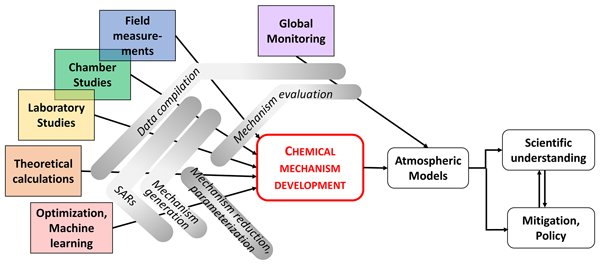
Chemical mechanisms describe the chemical processes in atmospheric models that are used to describe the changes in the atmospheric composition. Therefore, accurate chemical mechanisms are necessary to predict the evolution of air pollution and climate change. The article describes all steps that are needed to build chemical mechanisms and discusses the advances and needs of experimental and theoretical research activities needed to build reliable chemical mechanisms.

Lauri Franzon, Marie Camredon, Richard Valorso, Bernard Aumont, and Theo Kurtén
Atmos. Chem. Phys., 24, 11679–11699, https://doi.org/10.5194/acp-24-11679-2024, https://doi.org/10.5194/acp-24-11679-2024, 2024
Short summary
Short summary
In this article we investigate the formation of large, sticky molecules from various organic compounds entering the atmosphere as primary emissions and the degree to which these processes may contribute to organic aerosol particle mass. More specifically, we qualitatively investigate a recently discovered chemical reaction channel for one of the most important short-lived radical compounds, peroxy radicals, and discover which of these reactions are most atmospherically important.
Tommaso Galeazzo, Bernard Aumont, Marie Camredon, Richard Valorso, Yong B. Lim, Paul J. Ziemann, and Manabu Shiraiwa
Atmos. Chem. Phys., 24, 5549–5565, https://doi.org/10.5194/acp-24-5549-2024, https://doi.org/10.5194/acp-24-5549-2024, 2024
Short summary
Short summary
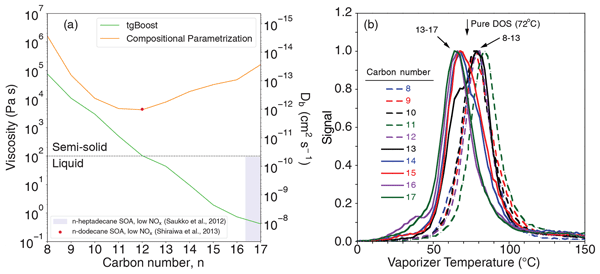
Secondary organic aerosol (SOA) derived from n-alkanes is a major component of anthropogenic particulate matter. We provide an analysis of n-alkane SOA by chemistry modeling, machine learning, and laboratory experiments, showing that n-alkane SOA adopts low-viscous semi-solid or liquid states. Our results indicate few kinetic limitations of mass accommodation in SOA formation, supporting the application of equilibrium partitioning for simulating n-alkane SOA in large-scale atmospheric models.

Emily B. Franklin, Lindsay D. Yee, Bernard Aumont, Robert J. Weber, Paul Grigas, and Allen H. Goldstein
Atmos. Meas. Tech., 15, 3779–3803, https://doi.org/10.5194/amt-15-3779-2022, https://doi.org/10.5194/amt-15-3779-2022, 2022
Short summary
Short summary
The composition of atmospheric aerosols are extremely complex, containing hundreds of thousands of estimated individual compounds. The majority of these compounds have never been catalogued in widely used databases, making them extremely difficult for atmospheric chemists to identify and analyze. In this work, we present Ch3MS-RF, a machine-learning-based model to enable characterization of complex mixtures and prediction of structure-specific properties of unidentifiable organic compounds.

Mike J. Newland, Camille Mouchel-Vallon, Richard Valorso, Bernard Aumont, Luc Vereecken, Michael E. Jenkin, and Andrew R. Rickard
Atmos. Chem. Phys., 22, 6167–6195, https://doi.org/10.5194/acp-22-6167-2022, https://doi.org/10.5194/acp-22-6167-2022, 2022
Short summary
Short summary
Alkene ozonolysis produces Criegee intermediates, which can act as oxidants or decompose to give a range of closed-shell and radical products, including OH. Therefore it is essential to accurately represent the chemistry of Criegee intermediates in atmospheric models in order to understand their impacts on atmospheric composition. Here we provide a mechanism construction protocol by which the central features of alkene ozonolysis chemistry can be included in an automatic mechanism generator.
Julia Lee-Taylor, William P. L. Carter, Bernard Aumont, John J. Orlando, Zhizhao Wang, Marie Camredon, Richard Valorso, and Kelley C. Barsanti
EGUsphere, https://doi.org/10.5194/egusphere-2026-4908, https://doi.org/10.5194/egusphere-2026-4908, 2026
Short summary
Short summary
Air quality models require representation of gas-phase compounds and their products. While these model mechanisms are typically small, one compound can form millions of products. Small mechanisms can be derived by hand, but generation of complete mechanisms must be automated. The two most common automated generators for atmospheric chemical mechanisms are compared here for the first time. The comparison highlights underlying differences and implications for predictions of atmospheric chemistry.
Zixuan Cheng, Doğuşhan Kılıç, Daniel Wilson, Amanda Lea-Langton, Michael Flynn, Leonard Kirago, Marvin Shaw, Andrew Rickard, Jim R. Hopkins, Daniel Bryant, Gordon McFiggans, Jacqueline F. Hamilton, Hugh Coe, and James Allan
Aerosol Research Discuss., https://doi.org/10.5194/ar-2026-24, https://doi.org/10.5194/ar-2026-24, 2026
Revised manuscript accepted for AR
Short summary
Short summary
Wood burning is seen as cleaner in modern stoves, but user behaviour can change this when burning dry wood. We burned dry ash wood in a UK modern stove with six common operations and measured the wood smoke. Reloading while hot, using too much or too little wood, or opening the stove door increased small particels and harmful smoke emissions. We found a burning stage that helps explain these emissions. Using big pieces of wood and following guidance can reduce pollution and health risks.
Zhizhao Wang, William P. L. Carter, Julia Lee-Taylor, John Orlando, Qing Ye, Richard Valorso, Marie Camredon, Bernard Aumont, and Kelley Barsanti
EGUsphere, https://doi.org/10.5194/egusphere-2026-1921, https://doi.org/10.5194/egusphere-2026-1921, 2026
Short summary
Short summary
Comprehensive chemical mechanisms that describe how pollutants react in the atmosphere can include millions of reactions and are too complex for practical models. This study presents a framework that can reduce them to tens or hundreds of reactions while preserving key behavior and accuracy. This enables the use of detailed chemistry in large simulations, improving studies of air quality and how atmospheric processes are represented in models.
Paola Formenti, Danitza Klopper, Anais Feron, Mathieu Cazaunau, Servanne Chevaillier, Karine Desboeufs, Claudia Di Biagio, Clarissa Baldo, Cécile Gaimoz, Vincent Michoud, Cécile Mirande-Bret, Sylvain Triquet, François Hemeret, Richard Valorso, Stephen Broccardo, Andreas Namwoonde, Mattheus Hanghome, Chiara Giorio, and Stuart J. Piketh
Earth Syst. Sci. Data Discuss., https://doi.org/10.5194/essd-2026-95, https://doi.org/10.5194/essd-2026-95, 2026
Revised manuscript under review for ESSD
Short summary
Short summary
The southern African west coast is highly impacted by climate change and aerosols from natural and human sources, yet observations are scarce. We present measurements (2014–2019) from the Henties Bay Aerosol Observatory in Namibia, including aerosol properties, ozone and meteorology. This unique dataset will support process studies and improve regional climate modelling.
Alfred W. Mayhew, Lauri Franzon, Kelvin H. Bates, Theo Kurtén, Felipe D. Lopez-Hilfiker, Claudia Mohr, Andrew R. Rickard, Joel A. Thornton, and Jessica D. Haskins
Atmos. Chem. Phys., 25, 17027–17046, https://doi.org/10.5194/acp-25-17027-2025, https://doi.org/10.5194/acp-25-17027-2025, 2025
Short summary
Short summary
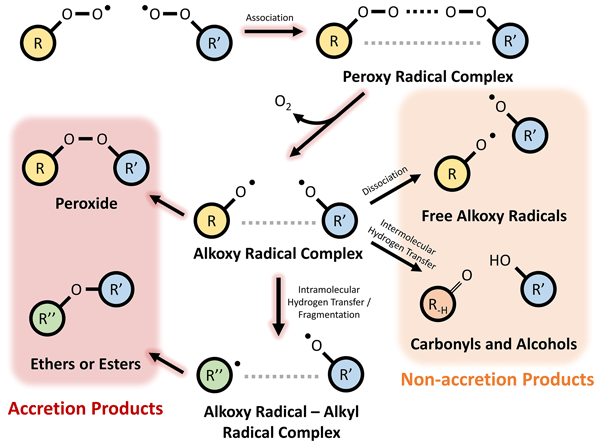
This work outlines an investigation into an understudied atmospheric chemical reaction pathway with the potential to form particulate pollution that has important impacts on air quality and climate. It suggests that this chemical pathway is responsible for a large fraction of the atmospheric particulate matter observed in tropical forested regions, but also highlights the need for further ambient and lab investigations to inform an accurate representation of this process in atmospheric models.
Sungah Kang, Jürgen Wildt, Iida Pullinen, Luc Vereecken, Cheng Wu, Andreas Wahner, Sören R. Zorn, and Thomas F. Mentel
Atmos. Chem. Phys., 25, 15715–15740, https://doi.org/10.5194/acp-25-15715-2025, https://doi.org/10.5194/acp-25-15715-2025, 2025
Short summary
Short summary
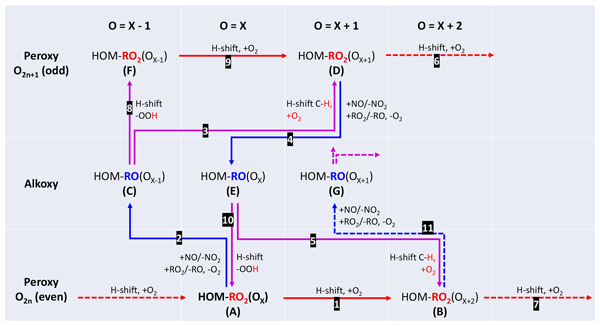
Highly oxygenated organic molecules by atmospheric oxidation of plant emitted monoterpenes are important components in secondary organic aerosol formation. Autoxidation of organic peroxy radicals is one important pathway of their formation. We show that isomerization of highly oxygenated alkoxy radicals leads to highly oxygenated peroxy radicals that continue the autoxidation chain. Alkoxy-peroxy steps may dominate the formation of highly oxygenated molecules at high nitrogen oxide levels.
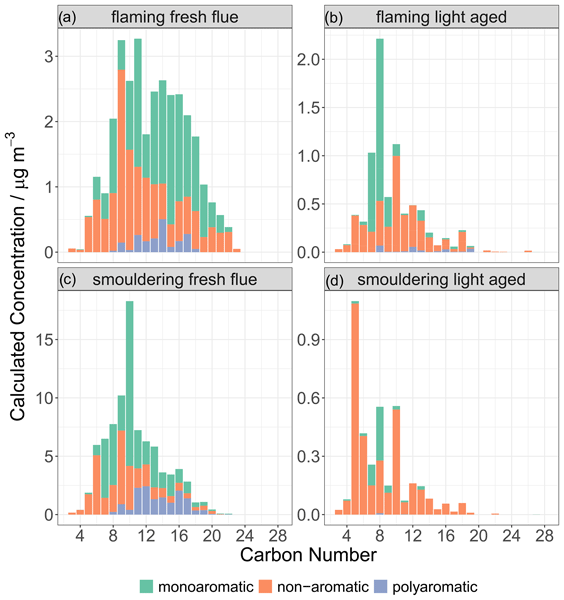
Rhianna L. Evans, Daniel J. Bryant, Aristeidis Voliotis, Dawei Hu, Huihui Wu, Sara Aisyah Syafira, Osayomwanbor E. Oghama, Gordon McFiggans, Jacqueline F. Hamilton, and Andrew R. Rickard
Atmos. Chem. Phys., 25, 4367–4389, https://doi.org/10.5194/acp-25-4367-2025, https://doi.org/10.5194/acp-25-4367-2025, 2025
Short summary
Short summary
The chemical composition of organic aerosol derived from wood-burning emissions under different burning conditions was characterised. Fresh emissions from flaming and smouldering were largely aromatic in nature, whereas upon aging the aromatic content decreased. This decrease was greater for smouldering due to the loss of toxic polyaromatic species, whereas under flaming conditions highly toxic polyaromatic species were produced. These differences present an important challenge for future policy.
Barbara Ervens, Andrew Rickard, Bernard Aumont, William P. L. Carter, Max McGillen, Abdelwahid Mellouki, John Orlando, Bénédicte Picquet-Varrault, Paul Seakins, William R. Stockwell, Luc Vereecken, and Timothy J. Wallington
Atmos. Chem. Phys., 24, 13317–13339, https://doi.org/10.5194/acp-24-13317-2024, https://doi.org/10.5194/acp-24-13317-2024, 2024
Short summary
Short summary
Chemical mechanisms describe the chemical processes in atmospheric models that are used to describe the changes in the atmospheric composition. Therefore, accurate chemical mechanisms are necessary to predict the evolution of air pollution and climate change. The article describes all steps that are needed to build chemical mechanisms and discusses the advances and needs of experimental and theoretical research activities needed to build reliable chemical mechanisms.
Lauri Franzon, Marie Camredon, Richard Valorso, Bernard Aumont, and Theo Kurtén
Atmos. Chem. Phys., 24, 11679–11699, https://doi.org/10.5194/acp-24-11679-2024, https://doi.org/10.5194/acp-24-11679-2024, 2024
Short summary
Short summary
In this article we investigate the formation of large, sticky molecules from various organic compounds entering the atmosphere as primary emissions and the degree to which these processes may contribute to organic aerosol particle mass. More specifically, we qualitatively investigate a recently discovered chemical reaction channel for one of the most important short-lived radical compounds, peroxy radicals, and discover which of these reactions are most atmospherically important.
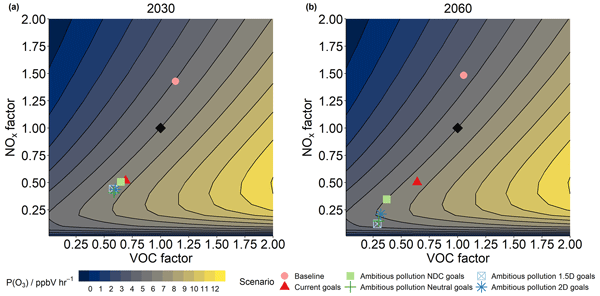
Beth S. Nelson, Zhenze Liu, Freya A. Squires, Marvin Shaw, James R. Hopkins, Jacqueline F. Hamilton, Andrew R. Rickard, Alastair C. Lewis, Zongbo Shi, and James D. Lee
Atmos. Chem. Phys., 24, 9031–9044, https://doi.org/10.5194/acp-24-9031-2024, https://doi.org/10.5194/acp-24-9031-2024, 2024
Short summary
Short summary
The impact of combined air quality and carbon neutrality policies on O3 formation in Beijing was investigated. Emissions inventory data were used to estimate future pollutant mixing ratios relative to ground-level observations. O3 production was found to be most sensitive to changes in alkenes, but large reductions in less reactive compounds led to larger reductions in future O3 production. This study highlights the importance of understanding the emissions of organic pollutants.
Vignesh Vasudevan-Geetha, Lee Tiszenkel, Zhizhao Wang, Robin Russo, Daniel Bryant, Julia Lee-Taylor, Kelley Barsanti, and Shan-Hu Lee
EGUsphere, https://doi.org/10.5194/egusphere-2024-2454, https://doi.org/10.5194/egusphere-2024-2454, 2024
Preprint archived
Short summary
Short summary
Our laboratory experiments using two high-resolution mass spectrometers show that these OOMs can also form within the particle phase, in addition to gas-to-particle conversion processes. Our results demonstrate that particle-phase formation processes can contribute to the formation and growth of new particles in biogenic environments.
Tommaso Galeazzo, Bernard Aumont, Marie Camredon, Richard Valorso, Yong B. Lim, Paul J. Ziemann, and Manabu Shiraiwa
Atmos. Chem. Phys., 24, 5549–5565, https://doi.org/10.5194/acp-24-5549-2024, https://doi.org/10.5194/acp-24-5549-2024, 2024
Short summary
Short summary
Secondary organic aerosol (SOA) derived from n-alkanes is a major component of anthropogenic particulate matter. We provide an analysis of n-alkane SOA by chemistry modeling, machine learning, and laboratory experiments, showing that n-alkane SOA adopts low-viscous semi-solid or liquid states. Our results indicate few kinetic limitations of mass accommodation in SOA formation, supporting the application of equilibrium partitioning for simulating n-alkane SOA in large-scale atmospheric models.

Ernst-Peter Röth and Luc Vereecken
Atmos. Chem. Phys., 24, 2625–2638, https://doi.org/10.5194/acp-24-2625-2024, https://doi.org/10.5194/acp-24-2625-2024, 2024
Short summary
Short summary
The paper presents the radical and molecular product quantum yields in the photolysis reaction of CHDO at wavelengths above 300 nm. Two different approaches based on literature data are used, with results falling within both approaches' uncertainty ranges. Simple functional forms are presented for use in photochemical models of the atmosphere.
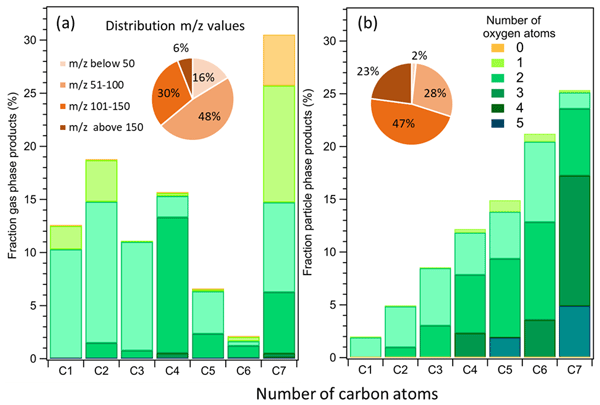
Victor Lannuque, Barbara D'Anna, Evangelia Kostenidou, Florian Couvidat, Alvaro Martinez-Valiente, Philipp Eichler, Armin Wisthaler, Markus Müller, Brice Temime-Roussel, Richard Valorso, and Karine Sartelet
Atmos. Chem. Phys., 23, 15537–15560, https://doi.org/10.5194/acp-23-15537-2023, https://doi.org/10.5194/acp-23-15537-2023, 2023
Short summary
Short summary
Large uncertainties remain in understanding secondary organic aerosol (SOA) formation from toluene oxidation. In this study, speciation measurements in gaseous and particulate phases were carried out, providing partitioning and volatility data on individual toluene SOA components at different temperatures. A new detailed oxidation mechanism was developed to improve modeled speciation, and effects of different processes involved in gas–particle partitioning at the molecular scale are explored.
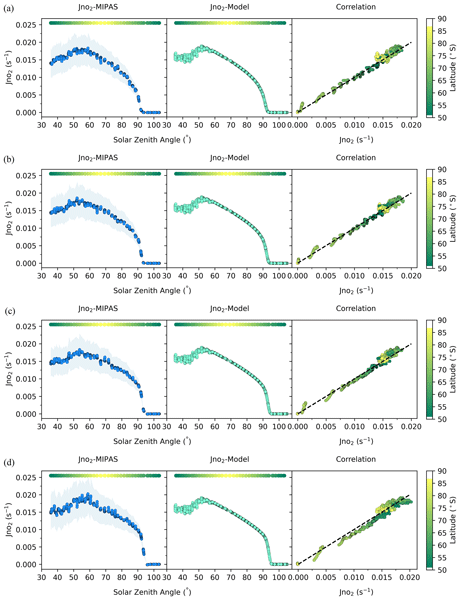
Jian Guan, Susan Solomon, Sasha Madronich, and Douglas Kinnison
Atmos. Chem. Phys., 23, 10413–10422, https://doi.org/10.5194/acp-23-10413-2023, https://doi.org/10.5194/acp-23-10413-2023, 2023
Short summary
Short summary
This paper provides a novel method to obtain a global and accurate photodissociation coefficient for NO2 (J(NO2)) based on satellite data, and the results are shown to be consistent with model results. The J(NO2) value decreases as the solar zenith angle increases and has a weak altitude dependence. A key finding is that the satellite-derived J(NO2) increases in the polar regions, in good agreement with model predictions, due to the effects of ice and snow on surface albedo.
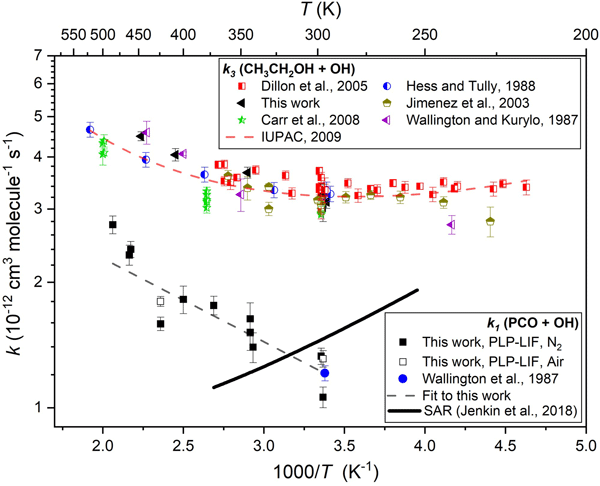
Caterina Mapelli, James K. Donnelly, Úna E. Hogan, Andrew R. Rickard, Abbie T. Robinson, Fergal Byrne, Con Rob McElroy, Basile F. E. Curchod, Daniel Hollas, and Terry J. Dillon
Atmos. Chem. Phys., 23, 7767–7779, https://doi.org/10.5194/acp-23-7767-2023, https://doi.org/10.5194/acp-23-7767-2023, 2023
Short summary
Short summary
Solvents are chemical compounds with countless uses in the chemical industry, and they also represent one of the main sources of pollution in the chemical sector. Scientists are trying to develop new
greensafer solvents which present favourable advantages when compared to traditional solvents. Since the assessment of these green solvents often lacks air quality considerations, this study aims to understand the behaviour of these compounds, investigating their reactivity in the troposphere.
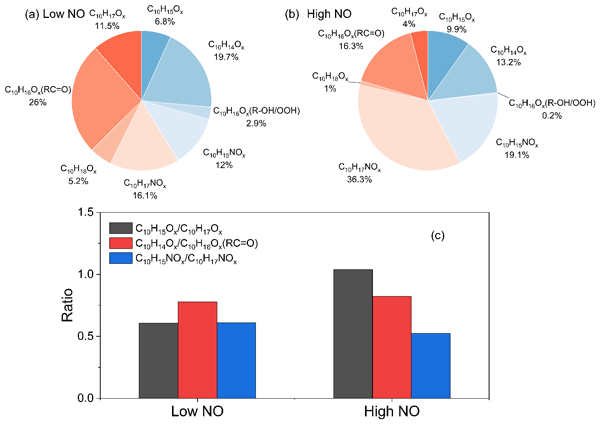
Hao Luo, Luc Vereecken, Hongru Shen, Sungah Kang, Iida Pullinen, Mattias Hallquist, Hendrik Fuchs, Andreas Wahner, Astrid Kiendler-Scharr, Thomas F. Mentel, and Defeng Zhao
Atmos. Chem. Phys., 23, 7297–7319, https://doi.org/10.5194/acp-23-7297-2023, https://doi.org/10.5194/acp-23-7297-2023, 2023
Short summary
Short summary
Oxidation of limonene, an element emitted by trees and chemical products, by OH, a daytime oxidant, forms many highly oxygenated organic molecules (HOMs), including C10-20 compounds. HOMs play an important role in new particle formation and growth. HOM formation can be explained by the chemistry of peroxy radicals. We found that a minor branching ratio initial pathway plays an unexpected, significant role. Considering this pathway enables accurate simulations of HOMs and other concentrations.
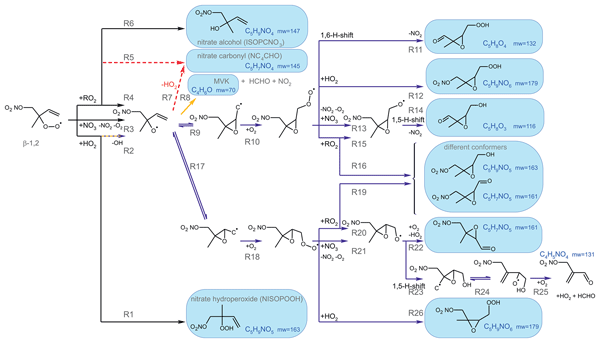
Philip T. M. Carlsson, Luc Vereecken, Anna Novelli, François Bernard, Steven S. Brown, Bellamy Brownwood, Changmin Cho, John N. Crowley, Patrick Dewald, Peter M. Edwards, Nils Friedrich, Juliane L. Fry, Mattias Hallquist, Luisa Hantschke, Thorsten Hohaus, Sungah Kang, Jonathan Liebmann, Alfred W. Mayhew, Thomas Mentel, David Reimer, Franz Rohrer, Justin Shenolikar, Ralf Tillmann, Epameinondas Tsiligiannis, Rongrong Wu, Andreas Wahner, Astrid Kiendler-Scharr, and Hendrik Fuchs
Atmos. Chem. Phys., 23, 3147–3180, https://doi.org/10.5194/acp-23-3147-2023, https://doi.org/10.5194/acp-23-3147-2023, 2023
Short summary
Short summary
The investigation of the night-time oxidation of the most abundant hydrocarbon, isoprene, in chamber experiments shows the importance of reaction pathways leading to epoxy products, which could enhance particle formation, that have so far not been accounted for. The chemical lifetime of organic nitrates from isoprene is long enough for the majority to be further oxidized the next day by daytime oxidants.
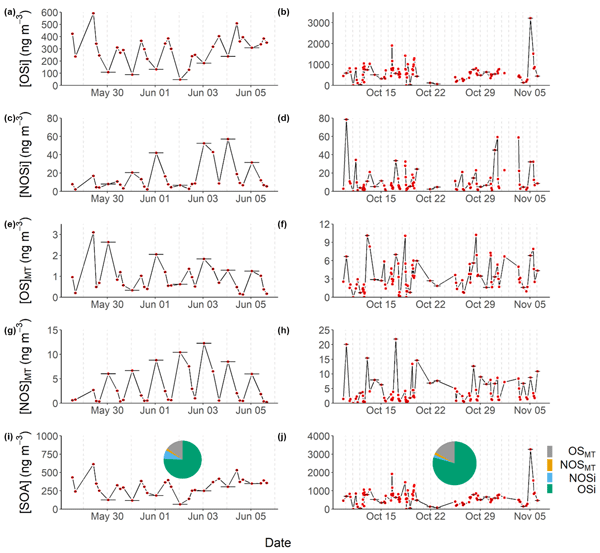
Daniel J. Bryant, Beth S. Nelson, Stefan J. Swift, Sri Hapsari Budisulistiorini, Will S. Drysdale, Adam R. Vaughan, Mike J. Newland, James R. Hopkins, James M. Cash, Ben Langford, Eiko Nemitz, W. Joe F. Acton, C. Nicholas Hewitt, Tuhin Mandal, Bhola R. Gurjar, Shivani, Ranu Gadi, James D. Lee, Andrew R. Rickard, and Jacqueline F. Hamilton
Atmos. Chem. Phys., 23, 61–83, https://doi.org/10.5194/acp-23-61-2023, https://doi.org/10.5194/acp-23-61-2023, 2023
Short summary
Short summary
This paper investigates the sources of isoprene and monoterpene compounds and their particulate-phase oxidation products in Delhi, India. This was done to improve our understanding of the sources, concentrations, and fate of volatile emissions in megacities. By studying the chemical composition of offline filter samples, we report that a significant share of the oxidised organic aerosol in Delhi is from isoprene and monoterpenes. This has implications for human health and policy development.
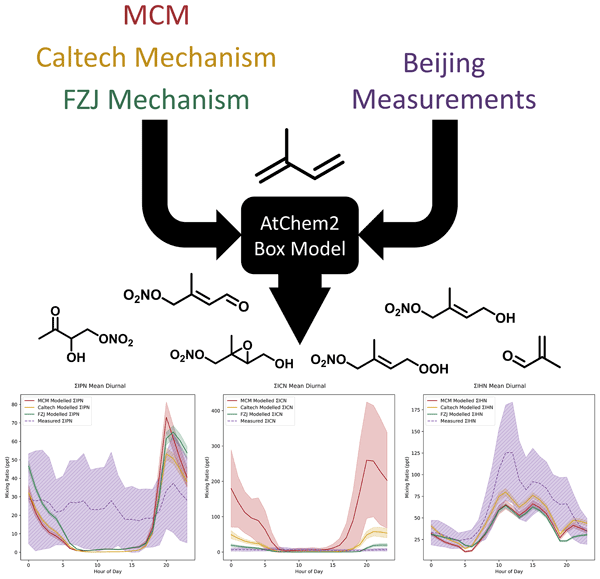
Alfred W. Mayhew, Ben H. Lee, Joel A. Thornton, Thomas J. Bannan, James Brean, James R. Hopkins, James D. Lee, Beth S. Nelson, Carl Percival, Andrew R. Rickard, Marvin D. Shaw, Peter M. Edwards, and Jaqueline F. Hamilton
Atmos. Chem. Phys., 22, 14783–14798, https://doi.org/10.5194/acp-22-14783-2022, https://doi.org/10.5194/acp-22-14783-2022, 2022
Short summary
Short summary
Isoprene nitrates are chemical species commonly found in the atmosphere that are important for their impacts on air quality and climate. This paper compares 3 different representations of the chemistry of isoprene nitrates in computational models highlighting cases where the choice of chemistry included has significant impacts on the concentration and composition of the modelled nitrates. Calibration of mass spectrometers is also shown to be an important factor when analysing isoprene nitrates.
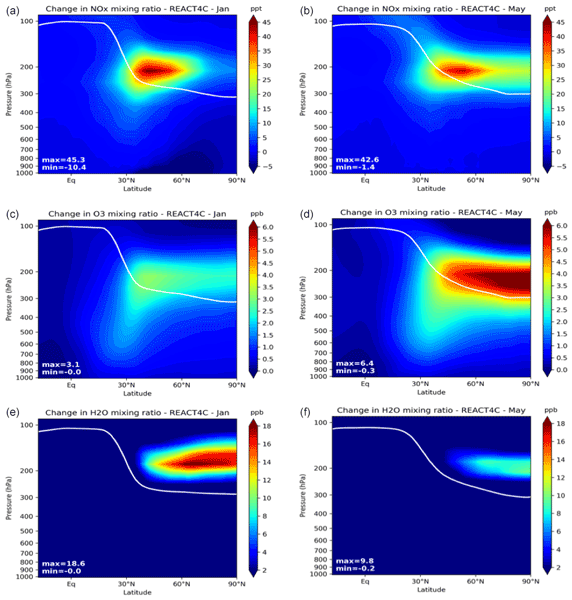
Etienne Terrenoire, Didier A. Hauglustaine, Yann Cohen, Anne Cozic, Richard Valorso, Franck Lefèvre, and Sigrun Matthes
Atmos. Chem. Phys., 22, 11987–12023, https://doi.org/10.5194/acp-22-11987-2022, https://doi.org/10.5194/acp-22-11987-2022, 2022
Short summary
Short summary
Aviation NOx emissions not only have an impact on global climate by changing ozone and methane levels in the atmosphere, but also contribute to the deterioration of local air quality. The LMDZ-INCA global model is applied to re-evaluate the impact of aircraft NOx and aerosol emissions on climate. We investigate the impact of present-day and future (2050) aircraft emissions on atmospheric composition and the associated radiative forcings of climate for ozone, methane and aerosol direct forcings.
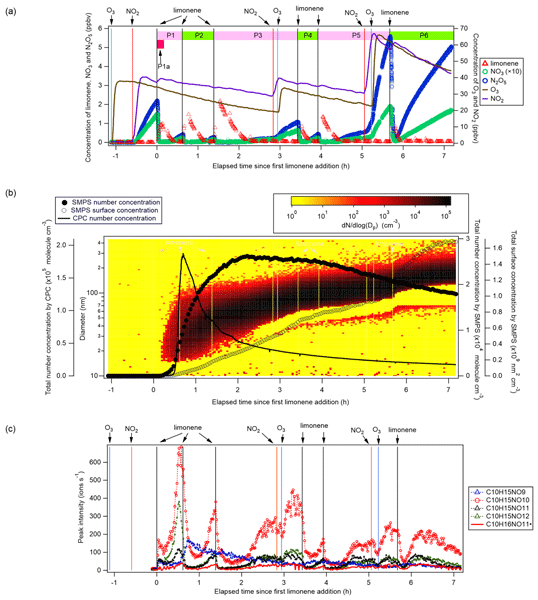
Yindong Guo, Hongru Shen, Iida Pullinen, Hao Luo, Sungah Kang, Luc Vereecken, Hendrik Fuchs, Mattias Hallquist, Ismail-Hakki Acir, Ralf Tillmann, Franz Rohrer, Jürgen Wildt, Astrid Kiendler-Scharr, Andreas Wahner, Defeng Zhao, and Thomas F. Mentel
Atmos. Chem. Phys., 22, 11323–11346, https://doi.org/10.5194/acp-22-11323-2022, https://doi.org/10.5194/acp-22-11323-2022, 2022
Short summary
Short summary
The oxidation of limonene, a common volatile emitted by trees and chemical products, by NO3, a nighttime oxidant, forms many highly oxygenated organic molecules (HOM), including C10-30 compounds. Most of the HOM are second-generation organic nitrates, in which carbonyl-substituted C10 nitrates accounted for a major fraction. Their formation can be explained by chemistry of peroxy radicals. HOM, especially low-volatile ones, play an important role in nighttime new particle formation and growth.
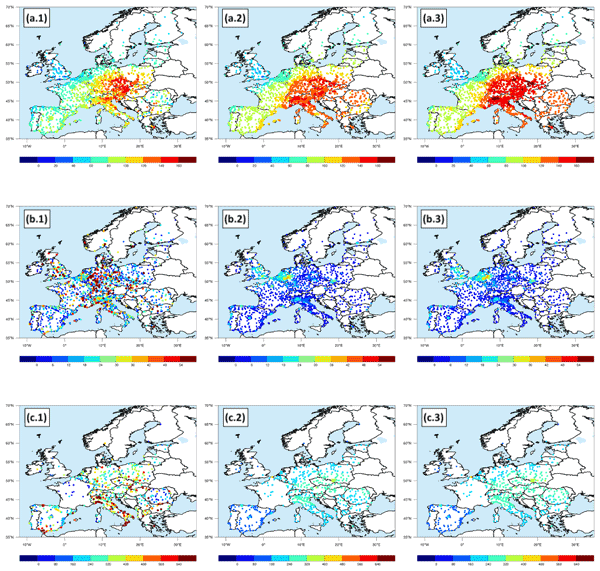
Mauro Morichetti, Sasha Madronich, Giorgio Passerini, Umberto Rizza, Enrico Mancinelli, Simone Virgili, and Mary Barth
Geosci. Model Dev., 15, 6311–6339, https://doi.org/10.5194/gmd-15-6311-2022, https://doi.org/10.5194/gmd-15-6311-2022, 2022
Short summary
Short summary
In the present study, we explore the effect of making simple changes to the existing WRF-Chem MEGAN v2.04 emissions to provide MEGAN updates that can be used independently of the land surface model chosen. The changes made to the MEGAN algorithm implemented in WRF-Chem were the following: (i) update of the emission activity factors, (ii) update of emission factor values for each plant functional type (PFT), and (iii) the assignment of the emission factor by PFT to isoprene.
Emily B. Franklin, Lindsay D. Yee, Bernard Aumont, Robert J. Weber, Paul Grigas, and Allen H. Goldstein
Atmos. Meas. Tech., 15, 3779–3803, https://doi.org/10.5194/amt-15-3779-2022, https://doi.org/10.5194/amt-15-3779-2022, 2022
Short summary
Short summary
The composition of atmospheric aerosols are extremely complex, containing hundreds of thousands of estimated individual compounds. The majority of these compounds have never been catalogued in widely used databases, making them extremely difficult for atmospheric chemists to identify and analyze. In this work, we present Ch3MS-RF, a machine-learning-based model to enable characterization of complex mixtures and prediction of structure-specific properties of unidentifiable organic compounds.
Mike J. Newland, Camille Mouchel-Vallon, Richard Valorso, Bernard Aumont, Luc Vereecken, Michael E. Jenkin, and Andrew R. Rickard
Atmos. Chem. Phys., 22, 6167–6195, https://doi.org/10.5194/acp-22-6167-2022, https://doi.org/10.5194/acp-22-6167-2022, 2022
Short summary
Short summary
Alkene ozonolysis produces Criegee intermediates, which can act as oxidants or decompose to give a range of closed-shell and radical products, including OH. Therefore it is essential to accurately represent the chemistry of Criegee intermediates in atmospheric models in order to understand their impacts on atmospheric composition. Here we provide a mechanism construction protocol by which the central features of alkene ozonolysis chemistry can be included in an automatic mechanism generator.
Cited articles
Alfarra, R., Camredon, M., Cazaunau, M., Doussin, J.-F., Fuchs, H., Jorga, S., McFiggans, G., Newland, M. J., Pandis, S., Rickard, A. R., and Saathoff, H.: Physical and Chemical Characterization of the Chamber, in: A Practical Guide to Atmospheric Simulation Chambers, edited by: Doussin, J.-F., Fuchs, H., Kiendler-Scharr, A., Seakins, P., and Wenger, J., Physical and Chemical Characterization of the Chamber, Springer International Publishing, Cham, 73–111, https://doi.org/10.1007/978-3-031-22277-1_2, 2023.
Atkinson, R. and Arey, J.: Atmospheric Degradation of Volatile Organic Compounds, Chem. Rev., 103, 4605–4638, https://doi.org/10.1021/cr0206420, 2003.
Aumont, B., Szopa, S., and Madronich, S.: Modelling the evolution of organic carbon during its gas-phase tropospheric oxidation: development of an explicit model based on a self generating approach, Atmos. Chem. Phys., 5, 2497–2517, https://doi.org/10.5194/acp-5-2497-2005, 2005.
Aumont, B., Camredon, M., Lee-Taylor, J., and Valorso, R.: GECKO-A: Generator for Explicit Chemistry and Kinetics of Organics in the Atmosphere, Zenodo [code], https://doi.org/10.5281/zenodo.15309905, 2025a.
Aumont, B., Camredon, M., Lee-Taylor, J., and Valorso, R.: Box Model for GECKO-A, Zenodo [code], https://doi.org/10.5281/zenodo.15310153, 2025b.
Aumont, B., Valorso, R., Rickard, A., Jenkin, M., Lee-Taylor, J., Orlando, J., Madronich, S., Vereecken, L., and Camredon, M.: Data for “GECKO-A v1.0: Exploring VOC Oxidation Trajectories Through Comparison with the MCM”, Zenodo [data set], https://doi.org/10.5281/zenodo.23034925, 2026.
Berndt, T., Mentler, B., Scholz, W., Fischer, L., Herrmann, H., Kulmala, M., and Hansel, A.: Accretion Product Formation from Ozonolysis and OH Radical Reaction of α-Pinene: Mechanistic Insight and the Influence of Isoprene and Ethylene, Environ. Sci. Technol., 52, 11069–11077, https://doi.org/10.1021/acs.est.8b02210, 2018.
Bertrand, A., Stefenelli, G., Pieber, S. M., Bruns, E. A., Temime-Roussel, B., Slowik, J. G., Wortham, H., Prévôt, A. S. H., El Haddad, I., and Marchand, N.: Influence of the vapor wall loss on the degradation rate constants in chamber experiments of levoglucosan and other biomass burning markers, Atmos. Chem. Phys., 18, 10915–10930, https://doi.org/10.5194/acp-18-10915-2018, 2018.
Bianchi, F., Kurtén, T., Riva, M., Mohr, C., Rissanen, M. P., Roldin, P., Berndt, T., Crounse, J. D., Wennberg, P. O., Mentel, T. F., Wildt, J., Junninen, H., Jokinen, T., Kulmala, M., Worsnop, D. R., Thornton, J. A., Donahue, N., Kjaergaard, H. G., and Ehn, M.: Highly Oxygenated Organic Molecules (HOM) from Gas-Phase Autoxidation Involving Peroxy Radicals: A Key Contributor to Atmospheric Aerosol, Chem. Rev., 119, 3472–3509, https://doi.org/10.1021/acs.chemrev.8b00395, 2019.
Bloss, C., Wagner, V., Jenkin, M. E., Volkamer, R., Bloss, W. J., Lee, J. D., Heard, D. E., Wirtz, K., Martin-Reviejo, M., Rea, G., Wenger, J. C., and Pilling, M. J.: Development of a detailed chemical mechanism (MCMv3.1) for the atmospheric oxidation of aromatic hydrocarbons, Atmos. Chem. Phys., 5, 641–664, https://doi.org/10.5194/acp-5-641-2005, 2005a.
Bloss, C., Wagner, V., Bonzanini, A., Jenkin, M. E., Wirtz, K., Martin-Reviejo, M., and Pilling, M. J.: Evaluation of detailed aromatic mechanisms (MCMv3 and MCMv3.1) against environmental chamber data, Atmos. Chem. Phys., 5, 623–639, https://doi.org/10.5194/acp-5-623-2005, 2005b.
Calvert, J. G., Orlando, J. J., Stockwell, W. R., and Wallington, T. J.: The Mechanisms of Reactions Influencing Atmospheric Ozone, Oxford University Press, https://doi.org/10.1093/oso/9780190233020.001.0001, 2015.
Camredon, M., Aumont, B., Lee-Taylor, J., and Madronich, S.: The SOA/VOC/NOx system: an explicit model of secondary organic aerosol formation, Atmos. Chem. Phys., 7, 5599–5610, https://doi.org/10.5194/acp-7-5599-2007, 2007.
Carlsson, P. T. M., Vereecken, L., Novelli, A., Bernard, F., Brown, S. S., Brownwood, B., Cho, C., Crowley, J. N., Dewald, P., Edwards, P. M., Friedrich, N., Fry, J. L., Hallquist, M., Hantschke, L., Hohaus, T., Kang, S., Liebmann, J., Mayhew, A. W., Mentel, T., Reimer, D., Rohrer, F., Shenolikar, J., Tillmann, R., Tsiligiannis, E., Wu, R., Wahner, A., Kiendler-Scharr, A., and Fuchs, H.: Comparison of isoprene chemical mechanisms under atmospheric night-time conditions in chamber experiments: evidence of hydroperoxy aldehydes and epoxy products from NO3 oxidation, Atmos. Chem. Phys., 23, 3147–3180, https://doi.org/10.5194/acp-23-3147-2023, 2023.
Carter, W. P. L., Jiang, J., Orlando, J. J., and Barsanti, K. C.: Derivation of atmospheric reaction mechanisms for volatile organic compounds by the SAPRC mechanism generation system (MechGen), Atmos. Chem. Phys., 25, 199–242, https://doi.org/10.5194/acp-25-199-2025, 2025a.
Carter, W. P. L., Jiang, J., Wang, Z., and Barsanti, K. C.: The SAPRC atmospheric chemical mechanism generation system (MechGen), Geosci. Model Dev., 18, 8461–8483, https://doi.org/10.5194/gmd-18-8461-2025, 2025b.
Couvidat, F., Sartelet, K., and Seigneur, C.: Investigating the Impact of Aqueous-Phase Chemistry and Wet Deposition on Organic Aerosol Formation Using a Molecular Surrogate Modeling Approach, Environ. Sci. Technol., 47, 914–922, https://doi.org/10.1021/es3034318, 2013.
Crounse, J. D., Nielsen, L. B., Jørgensen, S., Kjaergaard, H. G., and Wennberg, P. O.: Autoxidation of Organic Compounds in the Atmosphere, J. Phys. Chem. Lett., 4, 3513–3520, https://doi.org/10.1021/jz4019207, 2013.
Ehn, M., Thornton, J. A., Kleist, E., Sipilä, M., Junninen, H., Pullinen, I., Springer, M., Rubach, F., Tillmann, R., Lee, B., Lopez-Hilfiker, F., Andres, S., Acir, I.-H., Rissanen, M., Jokinen, T., Schobesberger, S., Kangasluoma, J., Kontkanen, J., Nieminen, T., Kurtén, T., Nielsen, L. B., Jørgensen, S., Kjaergaard, H. G., Canagaratna, M., Maso, M. D., Berndt, T., Petäjä, T., Wahner, A., Kerminen, V.-M., Kulmala, M., Worsnop, D. R., Wildt, J., and Mentel, T. F.: A large source of low-volatility secondary organic aerosol, Nature, 506, 476–479, https://doi.org/10.1038/nature13032, 2014.
Ervens, B., Rickard, A., Aumont, B., Carter, W. P. L., McGillen, M., Mellouki, A., Orlando, J., Picquet-Varrault, B., Seakins, P., Stockwell, W. R., Vereecken, L., and Wallington, T. J.: Opinion: Challenges and needs of tropospheric chemical mechanism development, Atmos. Chem. Phys., 24, 13317–13339, https://doi.org/10.5194/acp-24-13317-2024, 2024.
Franzon, L., Camredon, M., Valorso, R., Aumont, B., and Kurtén, T.: Ether and ester formation from peroxy radical recombination: a qualitative reaction channel analysis, Atmos. Chem. Phys., 24, 11679–11699, https://doi.org/10.5194/acp-24-11679-2024, 2024.
Franzon, L., Savolainen, A., Iyer, S., Rissanen, M., and Kurtén, T.: Rapid unimolecular reactions of acyl peroxy radicals: extending the structure–activity relationships, Phys. Chem. Chem. Phys., 27, 12198–12210, https://doi.org/10.1039/D5CP01175B, 2025.
Goldstein, A. H. and Galbally, I. E.: Known and Unexplored Organic Constituents in the Earth's Atmosphere, Environ. Sci. Technol., 41, 1514–1521, https://doi.org/10.1021/es072476p, 2007.
Hallquist, M., Wenger, J. C., Baltensperger, U., Rudich, Y., Simpson, D., Claeys, M., Dommen, J., Donahue, N. M., George, C., Goldstein, A. H., Hamilton, J. F., Herrmann, H., Hoffmann, T., Iinuma, Y., Jang, M., Jenkin, M. E., Jimenez, J. L., Kiendler-Scharr, A., Maenhaut, W., McFiggans, G., Mentel, T. F., Monod, A., Prévôt, A. S. H., Seinfeld, J. H., Surratt, J. D., Szmigielski, R., and Wildt, J.: The formation, properties and impact of secondary organic aerosol: current and emerging issues, Atmos. Chem. Phys., 9, 5155–5236, https://doi.org/10.5194/acp-9-5155-2009, 2009.
Heald, C. L. and Kroll, J. H.: The fuel of atmospheric chemistry: Toward a complete description of reactive organic carbon, Sci. Adv., 6, eaay8967, https://doi.org/10.1126/sciadv.aay8967, 2020.
Hodzic, A., Aumont, B., Knote, C., Lee-Taylor, J., Madronich, S., and Tyndall, G.: Volatility dependence of Henry's law constants of condensable organics: Application to estimate depositional loss of secondary organic aerosols, Geophys. Res. Lett., 41, 4795–4804, https://doi.org/10.1002/2014GL060649, 2014.
Isaacman-VanWertz, G. and Aumont, B.: Impact of organic molecular structure on the estimation of atmospherically relevant physicochemical parameters, Atmos. Chem. Phys., 21, 6541–6563, https://doi.org/10.5194/acp-21-6541-2021, 2021.
Jenkin, M. E., Saunders, S. M., and Pilling, M. J.: The tropospheric degradation of volatile organic compounds: A protocol for mechanism development, Atmos. Environ., 31, 81–104, https://doi.org/10.1016/S1352-2310(96)00105-7, 1997.
Jenkin, M. E., Wyche, K. P., Evans, C. J., Carr, T., Monks, P. S., Alfarra, M. R., Barley, M. H., McFiggans, G. B., Young, J. C., and Rickard, A. R.: Development and chamber evaluation of the MCM v3.2 degradation scheme for β-caryophyllene, Atmos. Chem. Phys., 12, 5275–5308, https://doi.org/10.5194/acp-12-5275-2012, 2012.
Jenkin, M. E., Young, J. C., and Rickard, A. R.: The MCM v3.3.1 degradation scheme for isoprene, Atmos. Chem. Phys., 15, 11433–11459, https://doi.org/10.5194/acp-15-11433-2015, 2015.
Jenkin, M. E., Valorso, R., Aumont, B., Rickard, A. R., and Wallington, T. J.: Estimation of rate coefficients and branching ratios for gas-phase reactions of OH with aliphatic organic compounds for use in automated mechanism construction, Atmos. Chem. Phys., 18, 9297–9328, https://doi.org/10.5194/acp-18-9297-2018, 2018a.
Jenkin, M. E., Valorso, R., Aumont, B., Rickard, A. R., and Wallington, T. J.: Estimation of rate coefficients and branching ratios for gas-phase reactions of OH with aromatic organic compounds for use in automated mechanism construction, Atmos. Chem. Phys., 18, 9329–9349, https://doi.org/10.5194/acp-18-9329-2018, 2018b.
Jenkin, M. E., Valorso, R., Aumont, B., and Rickard, A. R.: Estimation of rate coefficients and branching ratios for reactions of organic peroxy radicals for use in automated mechanism construction, Atmos. Chem. Phys., 19, 7691–7717, https://doi.org/10.5194/acp-19-7691-2019, 2019.
Jenkin, M. E., Valorso, R., Aumont, B., Newland, M. J., and Rickard, A. R.: Estimation of rate coefficients for the reactions of O3 with unsaturated organic compounds for use in automated mechanism construction, Atmos. Chem. Phys., 20, 12921–12937, https://doi.org/10.5194/acp-20-12921-2020, 2020.
Jo, Y., Jang, M., Han, S., Madhu, A., Koo, B., Jia, Y., Yu, Z., Kim, S., and Park, J.: CAMx–UNIPAR simulation of secondary organic aerosol mass formed from multiphase reactions of hydrocarbons under the Central Valley urban atmospheres of California, Atmos. Chem. Phys., 24, 487–508, https://doi.org/10.5194/acp-24-487-2024, 2024.
Kerdouci, J., Picquet-Varrault, B., and Doussin, J.-F.: Structure–activity relationship for the gas-phase reactions of NO3 radical with organic compounds: Update and extension to aldehydes, Atmos. Environ., 84, 363–372, https://doi.org/10.1016/j.atmosenv.2013.11.024, 2014.
Kim, Y., Sartelet, K., and Couvidat, F.: Modeling the effect of non-ideality, dynamic mass transfer and viscosity on SOA formation in a 3-D air quality model, Atmos. Chem. Phys., 19, 1241–1261, https://doi.org/10.5194/acp-19-1241-2019, 2019.
Krechmer, J. E., Pagonis, D., Ziemann, P. J., and Jimenez, J. L.: Quantification of Gas-Wall Partitioning in Teflon Environmental Chambers Using Rapid Bursts of Low-Volatility Oxidized Species Generated in Situ, Environ. Sci. Technol., 50, 5757–5765, https://doi.org/10.1021/acs.est.6b00606, 2016.
La, Y. S., Camredon, M., Ziemann, P. J., Valorso, R., Matsunaga, A., Lannuque, V., Lee-Taylor, J., Hodzic, A., Madronich, S., and Aumont, B.: Impact of chamber wall loss of gaseous organic compounds on secondary organic aerosol formation: explicit modeling of SOA formation from alkane and alkene oxidation, Atmos. Chem. Phys., 16, 1417–1431, https://doi.org/10.5194/acp-16-1417-2016, 2016.
Lannuque, V., Camredon, M., Couvidat, F., Hodzic, A., Valorso, R., Madronich, S., Bessagnet, B., and Aumont, B.: Exploration of the influence of environmental conditions on secondary organic aerosol formation and organic species properties using explicit simulations: development of the VBS-GECKO parameterization, Atmos. Chem. Phys., 18, 13411–13428, https://doi.org/10.5194/acp-18-13411-2018, 2018.
Lee-Taylor, J., Madronich, S., Aumont, B., Baker, A., Camredon, M., Hodzic, A., Tyndall, G. S., Apel, E., and Zaveri, R. A.: Explicit modeling of organic chemistry and secondary organic aerosol partitioning for Mexico City and its outflow plume, Atmos. Chem. Phys., 11, 13219–13241, https://doi.org/10.5194/acp-11-13219-2011, 2011.
Lee-Taylor, J., Hodzic, A., Madronich, S., Aumont, B., Camredon, M., and Valorso, R.: Multiday production of condensing organic aerosol mass in urban and forest outflow, Atmos. Chem. Phys., 15, 595–615, https://doi.org/10.5194/acp-15-595-2015, 2015.
Lee-Taylor, J., Carter, W. P. L., Aumont, B., Orlando, J. J., Wang, Z., Camredon, M., Valorso, R., and Barsanti, K. C.: Comparison of the GECKO-A and SAPRC MechGen Atmospheric Chemical Mechanism Generators, EGUsphere [preprint], https://doi.org/10.5194/egusphere-2026-4908, 2026.
Lim, Y. B. and Ziemann, P. J.: Kinetics of the heterogeneous conversion of 1,4-hydroxycarbonyls to cyclic hemiacetals and dihydrofurans on organic aerosol particles, Phys. Chem. Chem. Phys., 11, 8029–8039, https://doi.org/10.1039/b904333k, 2009.
Madronich, S. and Flocke, S.: Theoretical Estimation of Biologically Effective UV Radiation at the Earth's Surface, in: Solar Ultraviolet Radiation, Springer, 23–48, https://doi.org/10.1007/978-3-662-03375-3_3, 1997.
Matsunaga, A. and Ziemann, P. J.: Gas-Wall Partitioning of Organic Compounds in a Teflon Film Chamber and Potential Effects on Reaction Product and Aerosol Yield Measurements, Aerosol Sci. Tech., 44, 881–892, https://doi.org/10.1080/02786826.2010.501044, 2010.
Mayhew, A. W., Franzon, L., Bates, K. H., Kurtén, T., Lopez-Hilfiker, F. D., Mohr, C., Rickard, A. R., Thornton, J. A., and Haskins, J. D.: The global importance of gas-phase peroxy radical accretion reactions for secondary organic aerosol loading, Atmos. Chem. Phys., 25, 17027–17046, https://doi.org/10.5194/acp-25-17027-2025, 2025.
McGillen, M. R., Carter, W. P. L., Mellouki, A., Orlando, J. J., Picquet-Varrault, B., and Wallington, T. J.: Database for the kinetics of the gas-phase atmospheric reactions of organic compounds, Earth Syst. Sci. Data, 12, 1203–1216, https://doi.org/10.5194/essd-12-1203-2020, 2020.
McVay, R. C., Zhang, X., Aumont, B., Valorso, R., Camredon, M., La, Y. S., Wennberg, P. O., and Seinfeld, J. H.: SOA formation from the photooxidation of α-pinene: systematic exploration of the simulation of chamber data, Atmos. Chem. Phys., 16, 2785–2802, https://doi.org/10.5194/acp-16-2785-2016, 2016.
Monks, P. S., Archibald, A. T., Colette, A., Cooper, O., Coyle, M., Derwent, R., Fowler, D., Granier, C., Law, K. S., Mills, G. E., Stevenson, D. S., Tarasova, O., Thouret, V., von Schneidemesser, E., Sommariva, R., Wild, O., and Williams, M. L.: Tropospheric ozone and its precursors from the urban to the global scale from air quality to short-lived climate forcer, Atmos. Chem. Phys., 15, 8889–8973, https://doi.org/10.5194/acp-15-8889-2015, 2015.
Mouchel-Vallon, C., Bräuer, P., Camredon, M., Valorso, R., Madronich, S., Herrmann, H., and Aumont, B.: Explicit modeling of volatile organic compounds partitioning in the atmospheric aqueous phase, Atmos. Chem. Phys., 13, 1023–1037, https://doi.org/10.5194/acp-13-1023-2013, 2013.
Mouchel-Vallon, C., Deguillaume, L., Monod, A., Perroux, H., Rose, C., Ghigo, G., Long, Y., Leriche, M., Aumont, B., Patryl, L., Armand, P., and Chaumerliac, N.: CLEPS 1.0: A new protocol for cloud aqueous phase oxidation of VOC mechanisms, Geosci. Model Dev., 10, 1339–1362, https://doi.org/10.5194/gmd-10-1339-2017, 2017.
Mouchel-Vallon, C., Lee-Taylor, J., Hodzic, A., Artaxo, P., Aumont, B., Camredon, M., Gurarie, D., Jimenez, J.-L., Lenschow, D. H., Martin, S. T., Nascimento, J., Orlando, J. J., Palm, B. B., Shilling, J. E., Shrivastava, M., and Madronich, S.: Exploration of oxidative chemistry and secondary organic aerosol formation in the Amazon during the wet season: explicit modeling of the Manaus urban plume with GECKO-A, Atmos. Chem. Phys., 20, 5995–6014, https://doi.org/10.5194/acp-20-5995-2020, 2020.
Myrdal, P. B. and Yalkowsky, S. H.: Estimating Pure Component Vapor Pressures of Complex Organic Molecules, Ind. Eng. Chem. Res., 36, 2494–2499, https://doi.org/10.1021/ie950242l, 1997.
Nah, T., McVay, R. C., Zhang, X., Boyd, C. M., Seinfeld, J. H., and Ng, N. L.: Influence of seed aerosol surface area and oxidation rate on vapor wall deposition and SOA mass yields: a case study with α-pinene ozonolysis, Atmos. Chem. Phys., 16, 9361–9379, https://doi.org/10.5194/acp-16-9361-2016, 2016.
Nannoolal, Y., Rarey, J., Ramjugernath, D., and Cordes, W.: Estimation of pure component properties: Part 1. Estimation of the normal boiling point of non-electrolyte organic compounds via group contributions and group interactions, Fluid Phase Equilib., 226, 45–63, https://doi.org/10.1016/j.fluid.2004.09.001, 2004.
Nannoolal, Y., Rarey, J., and Ramjugernath, D.: Estimation of pure component properties: Part 3. Estimation of the vapor pressure of non-electrolyte organic compounds via group contributions and group interactions, Fluid Phase Equilib., 269, 117–133, https://doi.org/10.1016/j.fluid.2008.04.020, 2008.
Newland, M. J., Mouchel-Vallon, C., Valorso, R., Aumont, B., Vereecken, L., Jenkin, M. E., and Rickard, A. R.: Estimation of mechanistic parameters in the gas-phase reactions of ozone with alkenes for use in automated mechanism construction, Atmos. Chem. Phys., 22, 6167–6195, https://doi.org/10.5194/acp-22-6167-2022, 2022.
Pankow, J. F.: An absorption model of gas/particle partitioning of organic compounds in the atmosphere, Atmos. Environ., 28, 185–188, https://doi.org/10.1016/1352-2310(94)90093-0, 1994.
Pankow, J. F. and Asher, W. E.: SIMPOL.1: a simple group contribution method for predicting vapor pressures and enthalpies of vaporization of multifunctional organic compounds, Atmos. Chem. Phys., 8, 2773–2796, https://doi.org/10.5194/acp-8-2773-2008, 2008.
Peng, Z., Lee-Taylor, J., Stark, H., Orlando, J. J., Aumont, B., and Jimenez, J. L.: Evolution of OH reactivity in NO-free volatile organic compound photooxidation investigated by the fully explicit GECKO-A model, Atmos. Chem. Phys., 21, 14649–14669, https://doi.org/10.5194/acp-21-14649-2021, 2021.
Perraud, V., Bruns, E. A., Ezell, M. J., Johnson, S. N., Yu, Y., Alexander, M. L., Zelenyuk, A., Imre, D., Chang, W. L., Dabdub, D., Pankow, J. F., and Finlayson-Pitts, B. J.: Nonequilibrium atmospheric secondary organic aerosol formation and growth, P. Natl. Acad. Sci. USA, 109, 2836–2841, https://doi.org/10.1073/pnas.1119909109, 2012.
Poling, B. E., Prausnitz, J. M., and O'Connell, J. P.: The Properties of Gases and Liquids, in: 5th Edn., McGraw-Hill, New York, ISBN 978-0-07-011682-5, 2001.
Praske, E., Otkjær, R. V., Crounse, J. D., Hethcox, J. C., Stoltz, B. M., Kjaergaard, H. G., and Wennberg, P. O.: Atmospheric autoxidation is increasingly important in urban and suburban North America, P. Natl. Acad. Sci. USA, 115, 64–69, https://doi.org/10.1073/pnas.1715540115, 2018.
Pye, H. O. T., Murphy, B. N., Xu, L., Ng, N. L., Carlton, A. G., Guo, H., Weber, R., Vasilakos, P., Appel, K. W., Budisulistiorini, S. H., Surratt, J. D., Nenes, A., Hu, W., Jimenez, J. L., Isaacman-VanWertz, G., Misztal, P. K., and Goldstein, A. H.: On the implications of aerosol liquid water and phase separation for organic aerosol mass, Atmos. Chem. Phys., 17, 343–369, https://doi.org/10.5194/acp-17-343-2017, 2017.
Pye, H. O. T., D'Ambro, E. L., Lee, B. H., Schobesberger, S., Takeuchi, M., Zhao, Y., Lopez-Hilfiker, F., Liu, J., Shilling, J. E., Xing, J., Mathur, R., Middlebrook, A. M., Liao, J., Welti, A., Graus, M., Warneke, C., de Gouw, J. A., Holloway, J. S., Ryerson, T. B., Pollack, I. B., and Thornton, J. A.: Anthropogenic enhancements to production of highly oxygenated molecules from autoxidation, P. Natl. Acad. Sci. USA, 116, 6641–6646, https://doi.org/10.1073/pnas.1810774116, 2019.
Pye, H. O. T., Place, B. K., Murphy, B. N., Seltzer, K. M., D'Ambro, E. L., Allen, C., Piletic, I. R., Farrell, S., Schwantes, R. H., Coggon, M. M., Saunders, E., Xu, L., Sarwar, G., Hutzell, W. T., Foley, K. M., Pouliot, G., Bash, J., and Stockwell, W. R.: Linking gas, particulate, and toxic endpoints to air emissions in the Community Regional Atmospheric Chemistry Multiphase Mechanism (CRACMM), Atmos. Chem. Phys., 23, 5043–5099, https://doi.org/10.5194/acp-23-5043-2023, 2023.
Raventos-Duran, T., Camredon, M., Valorso, R., Mouchel-Vallon, C., and Aumont, B.: Structure-activity relationships to estimate the effective Henry's law constants of organics of atmospheric interest, Atmos. Chem. Phys., 10, 7643–7654, https://doi.org/10.5194/acp-10-7643-2010, 2010.
Rissanen, M. P., Kurtén, T., Sipilä, M., Thornton, J. A., Kangasluoma, J., Sarnela, N., Junninen, H., Jørgensen, S., Schallhart, S., Kajos, M. K., Taipale, R., Springer, M., Mentel, T. F., Ruuskanen, T., Petäjä, T., Worsnop, D. R., Kjaergaard, H. G., and Ehn, M.: The Formation of Highly Oxidized Multifunctional Products in the Ozonolysis of Cyclohexene, J. Am. Chem. Soc., 136, 15596–15606, https://doi.org/10.1021/ja507146s, 2014.
Roldin, P., Ehn, M., Kurtén, T., Olenius, T., Rissanen, M. P., Sarnela, N., Elm, J., Rantala, P., Hao, L., Hyttinen, N., Heikkinen, L., Worsnop, D. R., Pichelstorfer, L., Xavier, C., Clusius, P., Öström, E., Petäjä, T., Kulmala, M., Vehkamäki, H., Virtanen, A., Riipinen, I., and Boy, M.: The role of highly oxygenated organic molecules in the Boreal aerosol-cloud-climate system, Nat. Commun., 10, 4370, https://doi.org/10.1038/s41467-019-12338-8, 2019.
Saunders, S. M., Jenkin, M. E., Derwent, R. G., and Pilling, M. J.: Protocol for the development of the Master Chemical Mechanism, MCM v3 (Part A): tropospheric degradation of non-aromatic volatile organic compounds, Atmos. Chem. Phys., 3, 161–180, https://doi.org/10.5194/acp-3-161-2003, 2003.
Schervish, M., Donahue, N. M., and Shiraiwa, M.: Effects of volatility, viscosity, and non-ideality on particle–particle mixing timescales of secondary organic aerosols, Aerosol Sci. Tech., 58, 411–426, https://doi.org/10.1080/02786826.2023.2256827, 2024.
Seinfeld, J. H. and Pandis, S. N.: Atmospheric Chemistry and Physics: From Air Pollution to Climate Change, in: 3rd Edn., John Wiley & Sons, Hoboken, New Jersey, ISBN 978-1-118-94740-1, 2016.
Shiraiwa, M. and Seinfeld, J. H.: Equilibration timescale of atmospheric secondary organic aerosol partitioning, Geophys. Res. Lett., 39, https://doi.org/10.1029/2012GL054008, 2012.
Shiraiwa, M., Zuend, A., Bertram, A. K., and Seinfeld, J. H.: Gas–particle partitioning of atmospheric aerosols: interplay of physical state, non-ideal mixing and morphology, Phys. Chem. Chem. Phys., 15, 11441–11453, https://doi.org/10.1039/C3CP51595H, 2013.
Shrivastava, M., Cappa, C. D., Fan, J., Goldstein, A. H., Guenther, A. B., Jimenez, J. L., Kuang, C., Laskin, A., Martin, S. T., Ng, N. L., Petaja, T., Pierce, J. R., Rasch, P. J., Roldin, P., Seinfeld, J. H., Shilling, J., Smith, J. N., Thornton, J. A., Volkamer, R., Wang, J., Worsnop, D. R., Zaveri, R. A., Zelenyuk, A., and Zhang, Q.: Recent advances in understanding secondary organic aerosol: Implications for global climate forcing, Rev. Geophys., 55, 509–559, https://doi.org/10.1002/2016RG000540, 2017.
Tilgner, A., Schaefer, T., Alexander, B., Barth, M., Collett Jr., J. L., Fahey, K. M., Nenes, A., Pye, H. O. T., Herrmann, H., and McNeill, V. F.: Acidity and the multiphase chemistry of atmospheric aqueous particles and clouds, Atmos. Chem. Phys., 21, 13483–13536, https://doi.org/10.5194/acp-21-13483-2021, 2021.
Valorso, R., Aumont, B., Camredon, M., Raventos-Duran, T., Mouchel-Vallon, C., Ng, N. L., Seinfeld, J. H., Lee-Taylor, J., and Madronich, S.: Explicit modelling of SOA formation from α-pinene photooxidation: sensitivity to vapour pressure estimation, Atmos. Chem. Phys., 11, 6895–6910, https://doi.org/10.5194/acp-11-6895-2011, 2011.
Vereecken, L. and Nozière, B.: H migration in peroxy radicals under atmospheric conditions, Atmos. Chem. Phys., 20, 7429–7458, https://doi.org/10.5194/acp-20-7429-2020, 2020.
Vereecken, L. and Peeters, J.: Nontraditional (Per)oxy Ring-Closure Paths in the Atmospheric Oxidation of Isoprene and Monoterpenes, J. Phys. Chem. A, 108, 5197–5204, https://doi.org/10.1021/jp049219g, 2004.
Vereecken, L. and Peeters, J.: Decomposition of substituted alkoxy radicals – part I: a generalized structure–activity relationship for reaction barrier heights, Phys. Chem. Chem. Phys., 11, 9062–9074, https://doi.org/10.1039/B909712K, 2009.
Vereecken, L. and Peeters, J.: A structure–activity relationship for the rate coefficient of H-migration in substituted alkoxy radicals, Phys. Chem. Chem. Phys., 12, 12608–12620, https://doi.org/10.1039/C0CP00387E, 2010.
Vereecken, L. and Peeters, J.: A theoretical study of the OH-initiated gas-phase oxidation mechanism of β-pinene (C10H16): first generation products, Phys. Chem. Chem. Phys., 14, 3802–3815, https://doi.org/10.1039/c2cp23711c, 2012.
Vereecken, L., Aumont, B., Barnes, I., Bozzelli, J. W., Goldman, M. J., Green, W. H., Madronich, S., McGillen, M. R., Mellouki, A., Orlando, J. J., Picquet-Varrault, B., Rickard, A. R., Stockwell, W. R., Wallington, T. J., and Carter, W. P. L.: Perspective on Mechanism Development and Structure-Activity Relationships for Gas-Phase Atmospheric Chemistry, Int. J. Chem. Kinet., 50, 435–469, https://doi.org/10.1002/kin.21172, 2018.
Vereecken, L., Vu, G., Wahner, A., Kiendler-Scharr, A., and Nguyen, H. M. T.: A structure activity relationship for ring closure reactions in unsaturated alkylperoxy radicals, Phys. Chem. Chem. Phys., 23, 16564–16576, https://doi.org/10.1039/D1CP02758A, 2021a.
Vereecken, L., Carlsson, P. T. M., Novelli, A., Bernard, F., Brown, S. S., Cho, C., Crowley, J. N., Fuchs, H., Mellouki, W., Reimer, D., Shenolikar, J., Tillmann, R., Zhou, L., Kiendler-Scharr, A., and Wahner, A.: Theoretical and experimental study of peroxy and alkoxy radicals in the NO3-initiated oxidation of isoprene, Phys. Chem. Chem. Phys., 23, 5496–5515, https://doi.org/10.1039/d0cp06267g, 2021b.
Verwer, J. G.: Gauss–Seidel Iteration for Stiff ODES from Chemical Kinetics, SIAM J. Sci. Comput., 15, 1243–1250, https://doi.org/10.1137/0915076, 1994.
Verwer, J. G., Blom, J. G., van Loon, M., and Spee, E. J.: A comparison of stiff ODE solvers for atmospheric chemistry problems, Atmos. Environ., 30, 49–58, https://doi.org/10.1016/1352-2310(95)00283-5, 1996.
Wang, Z., Couvidat, F., and Sartelet, K.: GENerator of reduced Organic Aerosol mechanism (GENOA v1.0): an automatic generation tool of semi-explicit mechanisms, Geosci. Model Dev., 15, 8957–8982, https://doi.org/10.5194/gmd-15-8957-2022, 2022.
Wang, Z., Couvidat, F., and Sartelet, K.: Implementation of a parallel reduction algorithm in the GENerator of reduced Organic Aerosol mechanisms (GENOA v2.0): Application to multiple monoterpene aerosol precursors, J. Aerosol Sci., 174, 106248, https://doi.org/10.1016/j.jaerosci.2023.106248, 2023.
Wang, Z., Carter, W. P. L., Lee-Taylor, J., Orlando, J., Ye, Q., Valorso, R., Camredon, M., Aumont, B., and Barsanti, K.: GENOA v3: A flexible framework for reduction and exploration of highly detailed chemical mechanisms, EGUsphere [preprint], https://doi.org/10.5194/egusphere-2026-1921, 2026.
Wania, F., Lei, Y. D., Wang, C., Abbatt, J. P. D., and Goss, K.-U.: Using the chemical equilibrium partitioning space to explore factors influencing the phase distribution of compounds involved in secondary organic aerosol formation, Atmos. Chem. Phys., 15, 3395–3412, https://doi.org/10.5194/acp-15-3395-2015, 2015.
Wennberg, P. O., Bates, K. H., Crounse, J. D., Dodson, L. G., McVay, R. C., Mertens, L. A., Nguyen, T. B., Praske, E., Schwantes, R. H., Smarte, M. D., St Clair, J. M., Teng, A. P., Zhang, X., and Seinfeld, J. H.: Gas-Phase Reactions of Isoprene and Its Major Oxidation Products, Chem. Rev., 118, 3337–3390, https://doi.org/10.1021/acs.chemrev.7b00439, 2018.
Yeh, G. K. and Ziemann, P. J.: Gas-Wall Partitioning of Oxygenated Organic Compounds: Measurements, Structure–Activity Relationships, and Correlation with Gas Chromatographic Retention Factor, Aerosol Sci. Tech., 49, 727–738, https://doi.org/10.1080/02786826.2015.1068427, 2015.
Zuend, A. and Seinfeld, J. H.: Modeling the gas-particle partitioning of secondary organic aerosol: the importance of liquid-liquid phase separation, Atmos. Chem. Phys., 12, 3857–3882, https://doi.org/10.5194/acp-12-3857-2012, 2012.
Short summary
This study presents the first open-source release of a tool that automatically generates chemical mechanisms for the atmospheric oxidation of organic compounds. Simulations for five hydrocarbons, under conditions ranging from urban to remote, are compared with a benchmark mechanism. Results show that describing successive oxidation steps is key to simulating the formation of low-volatility and water-soluble species important for aerosols. A reduced mechanism reproduces most of these results.
This study presents the first open-source release of a tool that automatically generates...


Altmetrics
Final-revised paper
Preprint