
Articles | Volume 19, issue 20
https://doi.org/10.5194/gmd-19-10203-2026
© Author(s) 2026. This work is distributed under
the Creative Commons Attribution 4.0 License.
the Creative Commons Attribution 4.0 License.
Special issue:
https://doi.org/10.5194/gmd-19-10203-2026
© Author(s) 2026. This work is distributed under
the Creative Commons Attribution 4.0 License.
the Creative Commons Attribution 4.0 License.
Development and technical paper
| 
27 Oct 2026
Development and technical paper |
| 27 Oct 2026
| 27 Oct 2026
Including the triple isotopic composition of dissolved oxygen in the ocean into the iLOVECLIM model (version 1.1.7): development and evaluation
Emeline Clermont
CORRESPONDING AUTHOR

Laboratoire des Sciences du Climat et de l'Environnement (LSCE), CEA, CNRS, UVSQ, Université Paris-Saclay, Gif-sur-Yvette, France
Institut Pierre-Simon Laplace (IPSL), Université Versailles Saint-Quentin, Guyancourt, France
Ji-Woong Yang
Laboratoire des Sciences du Climat et de l'Environnement (LSCE), CEA, CNRS, UVSQ, Université Paris-Saclay, Gif-sur-Yvette, France
Institut Pierre-Simon Laplace (IPSL), Université Versailles Saint-Quentin, Guyancourt, France
Thomas Extier
Univ. Bordeaux, CNRS, Bordeaux INP, EPOC, UMR 5805, 33600 Pessac, France
Didier M. Roche
Laboratoire des Sciences du Climat et de l'Environnement (LSCE), CEA, CNRS, UVSQ, Université Paris-Saclay, Gif-sur-Yvette, France
Institut Pierre-Simon Laplace (IPSL), Université Versailles Saint-Quentin, Guyancourt, France
Related authors
No articles found.
Thibaut Caley, Niclas Rieger, Martin Werner, Claire Waelbroeck, Héloise Barathieu, Tamara Happé, and Didier M. Roche
Clim. Past, 22, 247–263, https://doi.org/10.5194/cp-22-247-2026, https://doi.org/10.5194/cp-22-247-2026, 2026
Short summary
Short summary
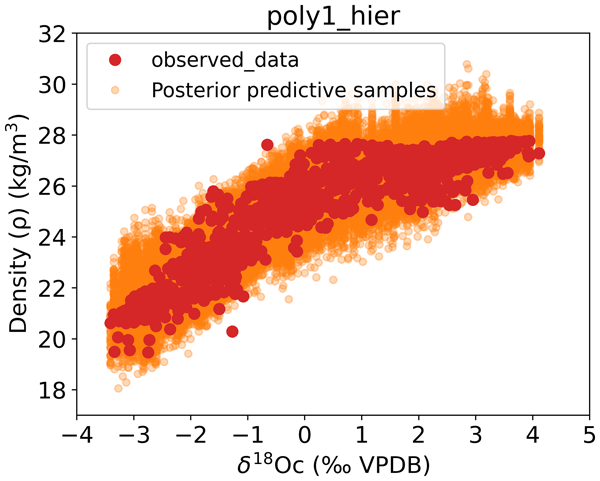
Density of seawater is a critical property that controls ocean dynamics. We developed the use of the δ18Oc of planktonic foraminifera as a surface paleodensity proxy for the ocean using Bayesian regression models calibrated to mean annual surface density. We reconstructed annual surface density during the last glacial maximum and late Holocene time periods. These results will be used to evaluate numerical climate models in their ability to simulate past ocean surface density.
Jean-Baptiste Brenner, Aurélien Quiquet, Didier M. Roche, Didier Paillard, and Pradeebane Vaittinada Ayar
Geosci. Model Dev., 19, 1075–1101, https://doi.org/10.5194/gmd-19-1075-2026, https://doi.org/10.5194/gmd-19-1075-2026, 2026
Short summary
Short summary
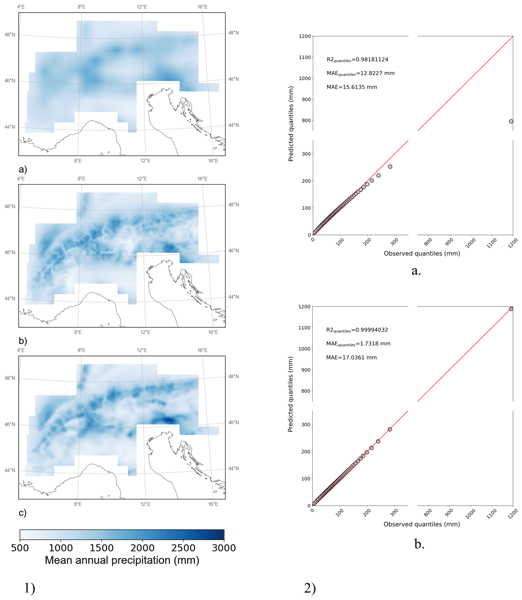
Due to the limited spatial and temporal coverage of observations, global models are essential tools to study climate. However, long-term climate data at fine spatial scale are difficult to obtain because of elevated computational costs such algorithms involve. This paper presents a simple model based on the description of climate/topography interactions to generate local precipitation fields at low cost. The objective is to provide a flexible and easy to use method for paleoclimate studies.
Maxence Menthon, Pepijn Bakker, Aurélien Quiquet, Didier M. Roche, and Ronja Reese
Geosci. Model Dev., 18, 7297–7320, https://doi.org/10.5194/gmd-18-7297-2025, https://doi.org/10.5194/gmd-18-7297-2025, 2025
Short summary
Short summary
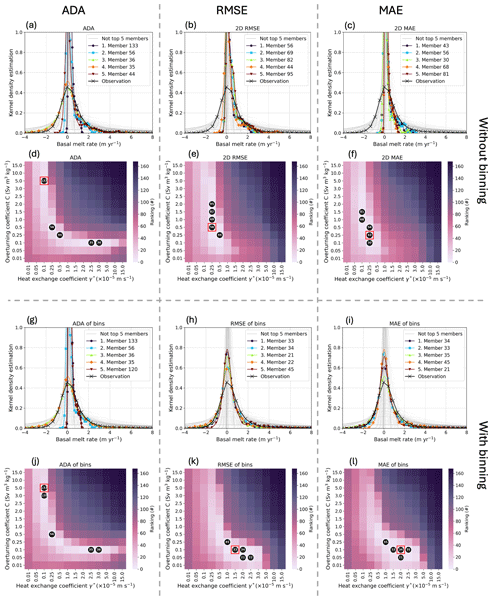
Here, we implement a basal ice shelf melt module (PICO – Postdam Ice-shelf Cavity mOdel) in an ice sheet model (GRISLI) and test six simple statistical methods to calibrate this module. We show that calculating the mean absolute error of bins best fits the observational datasets under multiple conditions and without using temperature corrections. Additionally, we show that calibration at a smaller scale than all Antarctic ice shelves is not needed. Finally, we assess the impact with future projections until 2300.
Takashi Obase, Laurie Menviel, Ayako Abe-Ouchi, Tristan Vadsaria, Ruza Ivanovic, Brooke Snoll, Sam Sherriff-Tadano, Paul J. Valdes, Lauren Gregoire, Marie-Luise Kapsch, Uwe Mikolajewicz, Nathaelle Bouttes, Didier Roche, Fanny Lhardy, Chengfei He, Bette Otto-Bliesner, Zhengyu Liu, and Wing-Le Chan
Clim. Past, 21, 1443–1463, https://doi.org/10.5194/cp-21-1443-2025, https://doi.org/10.5194/cp-21-1443-2025, 2025
Short summary
Short summary
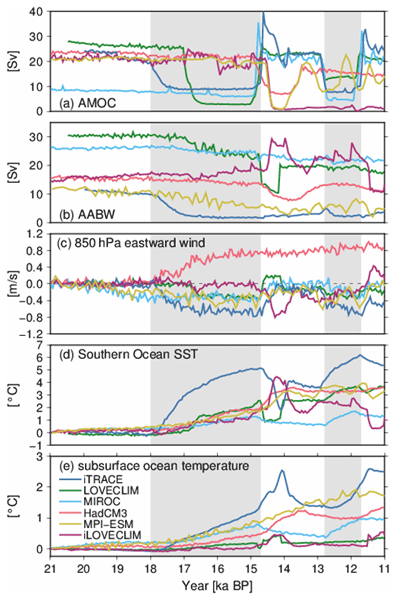
This study analyses transient simulations of the last deglaciation performed by six climate models to understand the processes driving high-southern-latitude temperature changes. We find that atmospheric CO2 and AMOC (Atlantic Meridional Overturning Circulation) changes are the primary drivers of the warming and cooling during the middle stage of the deglaciation. The analysis highlights the model's sensitivity of CO2 and AMOC to meltwater and the meltwater history of temperature changes at high southern latitudes.
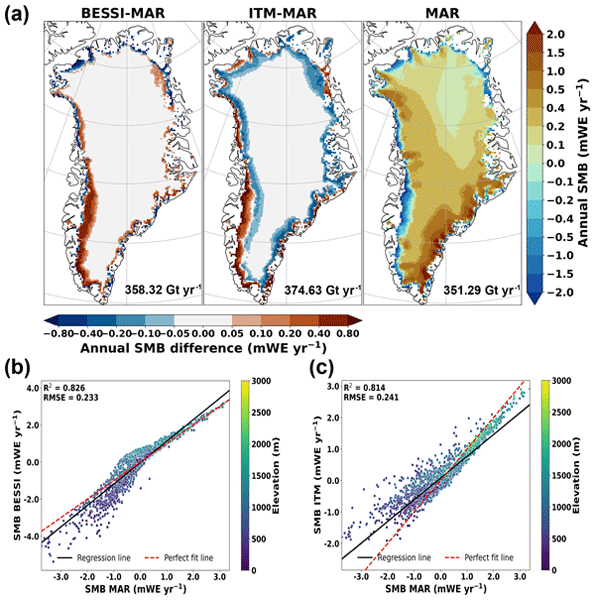
Thi-Khanh-Dieu Hoang, Aurélien Quiquet, Christophe Dumas, Andreas Born, and Didier M. Roche
Clim. Past, 21, 27–51, https://doi.org/10.5194/cp-21-27-2025, https://doi.org/10.5194/cp-21-27-2025, 2025
Short summary
Short summary
To improve the simulation of surface mass balance (SMB) that influences the advance–retreat of ice sheets, we run a snow model, the BErgen Snow SImulator (BESSI), with transient climate forcing obtained from an Earth system model, iLOVECLIM, over Greenland and Antarctica during the Last Interglacial (LIG; 130–116 ka). Compared to the simple existing SMB scheme of iLOVECLIM, BESSI gives more details about SMB processes with higher physics constraints while maintaining a low computational cost.
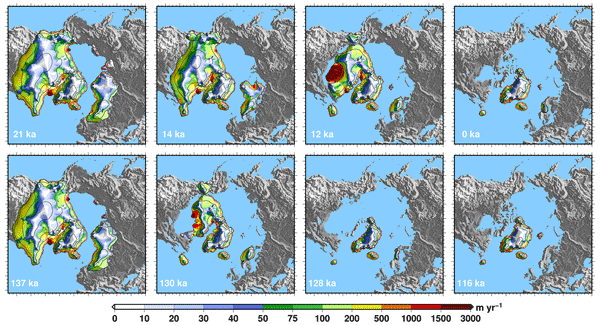
Aurélien Quiquet and Didier M. Roche
Clim. Past, 20, 1365–1385, https://doi.org/10.5194/cp-20-1365-2024, https://doi.org/10.5194/cp-20-1365-2024, 2024
Short summary
Short summary
In this work, we use the same experimental protocol to simulate the last two glacial terminations with a coupled ice sheet–climate model. Major differences among the two terminations are that the ice sheets retreat earlier and the Atlantic oceanic circulation is more prone to collapse during the penultimate termination. However, for both terminations the pattern of ice retreat is similar, and this retreat is primarily explained by orbital forcing changes and greenhouse gas concentration changes.
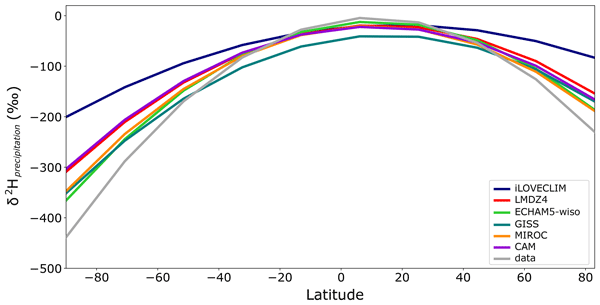
Thomas Extier, Thibaut Caley, and Didier M. Roche
Geosci. Model Dev., 17, 2117–2139, https://doi.org/10.5194/gmd-17-2117-2024, https://doi.org/10.5194/gmd-17-2117-2024, 2024
Short summary
Short summary
Stable water isotopes are used to infer changes in the hydrological cycle for different time periods in climatic archive and climate models. We present the implementation of the δ2H and δ17O water isotopes in the coupled climate model iLOVECLIM and calculate the d- and 17O-excess. Results of a simulation under preindustrial conditions show that the model correctly reproduces the water isotope distribution in the atmosphere and ocean in comparison to data and other global circulation models.
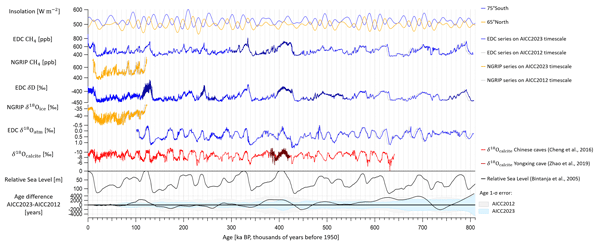
Marie Bouchet, Amaëlle Landais, Antoine Grisart, Frédéric Parrenin, Frédéric Prié, Roxanne Jacob, Elise Fourré, Emilie Capron, Dominique Raynaud, Vladimir Ya Lipenkov, Marie-France Loutre, Thomas Extier, Anders Svensson, Etienne Legrain, Patricia Martinerie, Markus Leuenberger, Wei Jiang, Florian Ritterbusch, Zheng-Tian Lu, and Guo-Min Yang
Clim. Past, 19, 2257–2286, https://doi.org/10.5194/cp-19-2257-2023, https://doi.org/10.5194/cp-19-2257-2023, 2023
Short summary
Short summary
A new federative chronology for five deep polar ice cores retrieves 800 000 years of past climate variations with improved accuracy. Precise ice core timescales are key to studying the mechanisms linking changes in the Earth’s orbit to the diverse climatic responses (temperature and atmospheric greenhouse gas concentrations). To construct the chronology, new measurements from the oldest continuous ice core as well as glaciological modeling estimates were combined in a statistical model.
Nathaelle Bouttes, Fanny Lhardy, Aurélien Quiquet, Didier Paillard, Hugues Goosse, and Didier M. Roche
Clim. Past, 19, 1027–1042, https://doi.org/10.5194/cp-19-1027-2023, https://doi.org/10.5194/cp-19-1027-2023, 2023
Short summary
Short summary
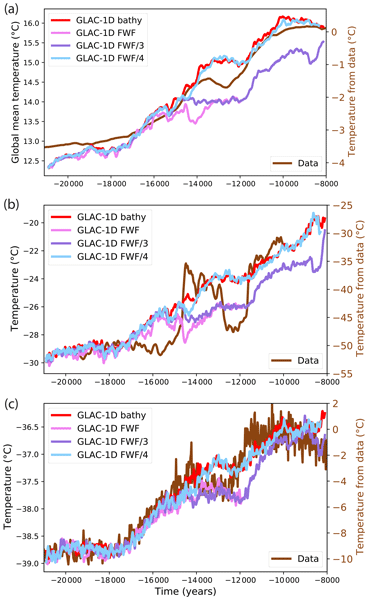
The last deglaciation is a period of large warming from 21 000 to 9000 years ago, concomitant with ice sheet melting. Here, we evaluate the impact of different ice sheet reconstructions and different processes linked to their changes. Changes in bathymetry and coastlines, although not often accounted for, cannot be neglected. Ice sheet melt results in freshwater into the ocean with large effects on ocean circulation, but the timing cannot explain the observed abrupt climate changes.
Frank Arthur, Didier M. Roche, Ralph Fyfe, Aurélien Quiquet, and Hans Renssen
Clim. Past, 19, 87–106, https://doi.org/10.5194/cp-19-87-2023, https://doi.org/10.5194/cp-19-87-2023, 2023
Short summary
Short summary
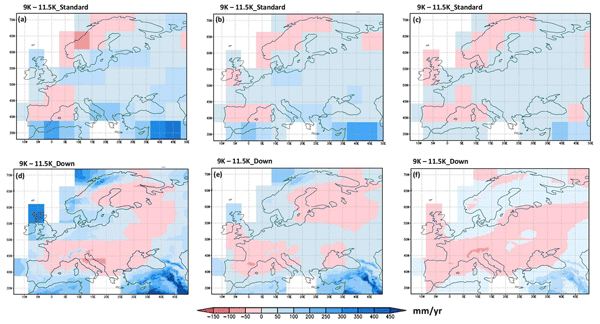
This paper simulates transcient Holocene climate in Europe by applying an interactive downscaling to the standard version of the iLOVECLIM model. The results show that downscaling presents a higher spatial variability in better agreement with proxy-based reconstructions as compared to the standard model, particularly in the Alps, the Scandes, and the Mediterranean. Our downscaling scheme is numerically cheap, which can perform kilometric multi-millennial simulations suitable for future studies.
Pepijn Bakker, Hugues Goosse, and Didier M. Roche
Clim. Past, 18, 2523–2544, https://doi.org/10.5194/cp-18-2523-2022, https://doi.org/10.5194/cp-18-2523-2022, 2022
Short summary
Short summary
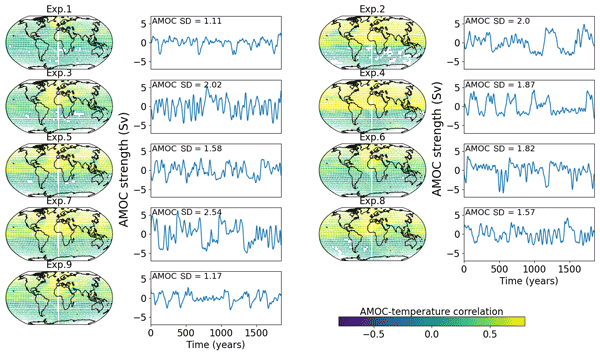
Natural climate variability plays an important role in the discussion of past and future climate change. Here we study centennial temperature variability and the role of large-scale ocean circulation variability using different climate models, geological reconstructions and temperature observations. Unfortunately, uncertainties in models and geological reconstructions are such that more research is needed before we can describe the characteristics of natural centennial temperature variability.
Huan Li, Hans Renssen, and Didier M. Roche
Clim. Past, 18, 2303–2319, https://doi.org/10.5194/cp-18-2303-2022, https://doi.org/10.5194/cp-18-2303-2022, 2022
Short summary
Short summary
In past warm periods, the Sahara region was covered by vegetation. In this paper we study transitions from this
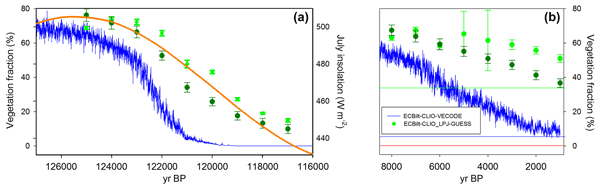
greenstate to the desert state we find today. For this purpose, we have used a global climate model coupled to a vegetation model to perform transient simulations. We analyzed the model results to assess the effect of vegetation shifts on the abruptness of the transition. We find that the vegetation feedback was more efficient during the last interglacial than during the Holocene.
Thomas Extier, Katharina D. Six, Bo Liu, Hanna Paulsen, and Tatiana Ilyina
Clim. Past, 18, 273–292, https://doi.org/10.5194/cp-18-273-2022, https://doi.org/10.5194/cp-18-273-2022, 2022
Short summary
Short summary
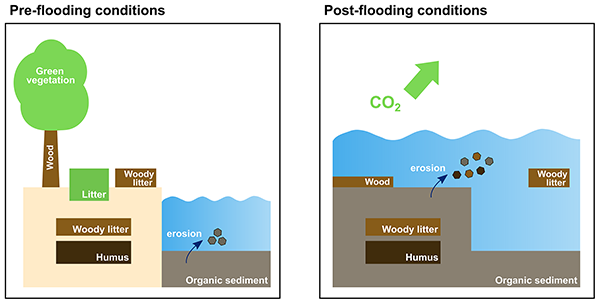
The role of land–sea fluxes during deglacial flooding in ocean biogeochemistry and CO2 exchange remains poorly constrained due to the lack of climate models that consider such fluxes. We implement the terrestrial organic matter fluxes into the ocean at a transiently changing land–sea interface in MPI-ESM and investigate their effect during the last deglaciation. Most of the terrestrial carbon goes to the ocean during flooding events of Meltwater Pulse 1a, which leads to regional CO2 outgassing.
Cited articles
Angert, A., Barkan, E., Barnett, B., Brugnoli, E., Davidson, E. A., Fessenden, J., Maneepong, S., Panapitukkul, N., Randerson, J. T., Savage, K., Yakir, D., and Luz, B.: Contribution of soil respiration in tropical, temperate, and boreal forests to the 18O enrichment of atmospheric O2, Global Biogeochem. Cy., 17, https://doi.org/10.1029/2003GB002056, 2003. a
Argo: Argo float data and metadata from Global Data Assembly Centre (Argo GDAC), Argo [data set], https://doi.org/10.17882/42182, 2025. a
Ash, J., Hu, H., and Yeung, L.: What fractionates oxygen isotopes during respiration? Insights from multiple isotopologue measurements and theory, ACS Earth and Space Chemistry, 4, 50–66, https://doi.org/10.1021/acsearthspacechem.9b00230, 2020. a
Behrenfeld, M. J. and Falkowski, P. G.: Photosynthetic rates derived from satellite-based chlorophyll concentration, Limnol. Oceanogr., 42, 1–20, https://doi.org/10.4319/lo.1997.42.1.0001, 1997. a
Bender, M., Sowers, T., and Labeyrie, L.: The Dole Effect and its variations during the last 130 000 years as measured in the Vostok Ice Core, Global Biogeochem. Cy., 8, 363–376, https://doi.org/10.1029/94GB00724, 1994. a
Bender, M. L.: The δ18O of dissolved O2 in seawater: A unique tracer of circulation and respiration in the deep sea, J. Geophys. Res., 95, 22243–22252, https://doi.org/10.1029/JC095iC12p22243, 1990. a, b
Bender, M. L. and Grande, K. D.: Production, respiration, and the isotope geochemistry of O2 in the upper water column, Global Biogeochem. Cy., 1, 49–59, https://doi.org/10.1029/GB001i001p00049, 1987. a
Bender, M. L., Tilbrook, B., Cassar, N., Jonsson, B., Poisson, A., and Trull, T. W.: Ocean productivity south of Australia during spring and summer, Deep-Sea Res. Pt. I, 112, 68–78, https://doi.org/10.1016/j.dsr.2016.02.018, 2016. a
Benson, B. B. and Krause, D.: The concentration and isotopic fractionation of gases dissolved in freshwater in equilibrium with the atmosphere. 1. Oxygen, Limnol. Oceanogr., 25, 662–671, https://doi.org/10.4319/lo.1980.25.4.0662, 1980. a
Benson, B. B. and Krause, D.: The concentration and isotopic fractionation of oxygen dissolved in freshwater and seawater in equilibrium with the atmosphere1, Limnol. Oceanogr., 29, 620–632, https://doi.org/10.4319/lo.1984.29.3.0620, 1984. a
Bereiter, B., Eggleston, S., Schmitt, J., Nehrbass-Ahles, C., Stocker, T. F., Fischer, H., Kipfstuhl, S., and Chappellaz, J.: Revision of the EPICA Dome C CO2 record from 800 to 600 kyr before present, Geophys. Res. Lett., 42, 542–549, https://doi.org/10.1002/2014GL061957, 2015. a
Berger, A.: Long-Term Variations of Daily Insolation and Quaternary Climatic Changes, https://journals.ametsoc.org/view/journals/atsc/35/12/1520-0469_1978_035_2362_ltvodi_2_0_co_2.xml (last access: 10 September 2025), 1978. a
Blunier, T., Barnett, B., Bender, M. L., and Hendricks, M. B.: Biological oxygen productivity during the last 60 000 years from triple oxygen isotope measurements, Global Biogeochem. Cy., 16, https://doi.org/10.1029/2001GB001460, 2002. a
Bouttes, N., Roche, D. M., Mariotti, V., and Bopp, L.: Including an ocean carbon cycle model into iLOVECLIM (v1.0), Geosci. Model Dev., 8, 1563–1576, https://doi.org/10.5194/gmd-8-1563-2015, 2015. a, b
Castro-Morales, K., Cassar, N., Shoosmith, D. R., and Kaiser, J.: Biological production in the Bellingshausen Sea from oxygen-to-argon ratios and oxygen triple isotopes, Biogeosciences, 10, 2273–2291, https://doi.org/10.5194/bg-10-2273-2013, 2013.
Clermont, E.: Model outputs: oxygen, oxygen isotopes and gross primary productivity of oxygen (iLOVECLIM v1.1.7), Zenodo [code], https://doi.org/10.5281/zenodo.17379193, 2025. a
Clermont, E. and Roche, D. M.: iLOVECLIM source code (version 1.1.7), Zenodo [code], https://doi.org/10.5281/zenodo.17379487, 2025. a
Extier, T.: Variations climatiques et variations du cycle hydrologique aux basses latitudes au cours du Quaternaire: une approche combinant modèle et données, phdthesis, Université Paris Saclay (COmUE), https://theses.hal.science/tel-02986449, 2019. a
Goosse, H. and Fichefet, T.: Importance of ice-ocean interactions for the global ocean circulation: A model study, J. Geophys. Res., 104, 23337–23355, https://doi.org/10.1029/1999JC900215, 1999. a
Goosse, H., Brovkin, V., Fichefet, T., Haarsma, R., Huybrechts, P., Jongma, J., Mouchet, A., Selten, F., Barriat, P.-Y., Campin, J.-M., Deleersnijder, E., Driesschaert, E., Goelzer, H., Janssens, I., Loutre, M.-F., Morales Maqueda, M. A., Opsteegh, T., Mathieu, P.-P., Munhoven, G., Pettersson, E. J., Renssen, H., Roche, D. M., Schaeffer, M., Tartinville, B., Timmermann, A., and Weber, S. L.: Description of the Earth system model of intermediate complexity LOVECLIM version 1.2, Geosci. Model Dev., 3, 603–633, https://doi.org/10.5194/gmd-3-603-2010, 2010. a, b, c
Guy, R. D., Fogel, M. L., and Berry, J. A.: Photosynthetic Fractionation of the Stable Isotopes of Oxygen and Carbon, Plant Physiol., 101, 37–47, https://doi.org/10.1104/pp.101.1.37, 1993. a
Helman, Y., Barkan, E., Eisenstadt, D., Luz, B., and Kaplan, A.: Fractionation of the Three Stable Oxygen Isotopes by Oxygen-Producing and Oxygen-Consuming Reactions in Photosynthetic Organisms, Plant Physiol., 138, 2292–2298, https://doi.org/10.1104/pp.105.063768, 2005. a
Hendricks, M. B., Bender, M. L., and Barnett, B. A.: Net and gross O2 production in the southern ocean from measurements of biological O2 saturation and its triple isotope composition, Deep-Sea Res. Pt. I, 51, 1541–1561, https://doi.org/10.1016/j.dsr.2004.06.006, 2004. a, b, c, d
Hu, H., Yeung, L., Berelson, W., and Young, E.: Depth profiles of dissolved O2 saturation and isotopologues from the R/V Yellowfin and R/V Kilo Moana from 2016-09-14 to 2017-08-28, Biological and Chemical Oceanography Data Management Office [data set], https://doi.org/10.1575/1912/bco-dmo.753594.1, 2018. a, b, c
Huang, K., Ducklow, H., Vernet, M., Cassar, N., and Bender, M. L.: Export production and its regulating factors in the West Antarctica Peninsula region of the Southern Ocean, Global Biogeochem. Cy., 26, https://doi.org/10.1029/2010GB004028, 2012.
Huang, Y., Nicholson, D., Huang, B., and Cassar, N.: Global Estimates of Marine Gross Primary Production Based on Machine Learning Upscaling of Field Observations, Global Biogeochem. Cy., 35, e2020GB006718, https://doi.org/10.1029/2020GB006718, 2021. a, b, c, d
Johnson, R. J., Bates, N., Lethaby, P. J., Smith, D., Medley, C., Stuart, E., and May, R.: Primary productivity estimates from the incubation of seawater collected at the Bermuda Atlantic Time-series Study (BATS) site from December 1988 through December 2024, https://doi.org/10.26008/1912/BCO-DMO.893182.6, 2025. a
Juranek, L. and Quay, P.: Using Triple Isotopes of Dissolved Oxygen to Evaluate Global Marine Productivity, Annu. Rev. Mar. Sci., 5, 503–524, https://doi.org/10.1146/annurev-marine-121211-172430, 2013. a, b, c, d
Juranek, L. W. and Quay, P. D.: Basin-wide photosynthetic production rates in the subtropical and tropical Pacific Ocean determined from dissolved oxygen isotope ratio measurements, Global Biogeochem. Cy., 24, https://doi.org/10.1029/2009GB003492, 2010. a
Juranek, L. W., Quay, P. D., Feely, R. A., Lockwood, D., Karl, D. M., and Church, M. J.: Biological production in the NE Pacific and its influence on air–sea CO2 flux: Evidence from dissolved oxygen isotopes and O2
Keeling, R. F., Stephens, B. B., Najjar, R. G., Doney, S. C., Archer, D., and Heimann, M.: Seasonal variations in the atmospheric O2/N2 ratio in relation to the kinetics of air-sea gas exchange, Global Biogeochem. Cy., 12, 141–163, https://doi.org/10.1029/97GB02339, 1998. a
Kiddon, J., Bender, M. L., Orchardo, J., Caron, D. A., Goldman, J. C., and Dennett, M.: Isotopic fractionation of oxygen by respiring marine organisms, Global Biogeochem. Cy., 7, 679–694, https://doi.org/10.1029/93GB01444, 1993. a
Knox, M., Quay, P. D., and Wilbur, D.: Kinetic isotopic fractionation during air–water gas transfer of O2, N2, CH4, and H2, J. Geophys. Res., 97, 20335–20343, https://doi.org/10.1029/92JC00949, 1992. a, b
Kroopnick, P. and Craig, H.: Oxygen isotope fractionation in dissolved oxygen in the deep sea, Earth Planet. Sc. Lett., 32, 375–388, https://doi.org/10.1016/0012-821X(76)90078-9, 1976. a
Kroopnick, P. M.: Respiration, photosynthesis, and oxygen isotope fractionation in oceanic surface water1, Limnol. Oceanogr., 20, 988–992, https://doi.org/10.4319/lo.1975.20.6.0988, 1975. a
Landais, A., Lathiere, J., Barkan, E., and Luz, B.: Reconsidering the change in global biosphere productivity between the Last Glacial Maximum and present day from the triple oxygen isotopic composition of air trapped in ice cores, Global Biogeochem. Cy., 21, 2006GB002739, https://doi.org/10.1029/2006GB002739, 2007. a, b
Levine, N. M., Bender, M. L., and Doney, S. C.: The δ18O of dissolved O2 as a tracer of mixing and respiration in the mesopelagic ocean, Global Biogeochem. Cy., 23, 2007GB003162, https://doi.org/10.1029/2007GB003162, 2009. a, b, c
Li, B., Hu, H., Berelson, W. M., Adkins, J. F., and Yeung, L. Y.: On the Use of Dissolved Oxygen Isotopologues as Biogeochemical Tracers in the Northeast Pacific Ocean, J. Geophys. Res.-Oceans, 127, https://doi.org/10.1029/2022JC018617, 2022. a, b, c
Loulergue, L., Schilt, A., Spahni, R., Masson-Delmotte, V., Blunier, T., Lemieux, B., Barnola, J.-M., Raynaud, D., Stocker, T. F., and Chappellaz, J.: Orbital and millennial-scale features of atmospheric CH4 over the past 800 000 years, Nature, 453, 383–386, https://doi.org/10.1038/nature06950, 2008. a
Luz, B. and Barkan, E.: Assessment of Oceanic Productivity with the Triple-Isotope Composition of Dissolved Oxygen, Science, 288, 2028–2031, https://doi.org/10.1126/science.288.5473.2028, 2000. a, b
Luz, B. and Barkan, E.: Net and gross oxygen production from O2/Ar,
Luz, B., Barkan, E., Bender, M. L., Thiemens, M. H., and Boering, K. A.: Triple-isotope composition of atmospheric oxygen as a tracer of biosphere productivity, Nature, 400, 547–550, https://doi.org/10.1038/22987, 1999. a, b
Marcus, R. A.: Theory of mass-independent fractionation of isotopes, phase space accessibility, and a role of isotopic symmetry, P. Natl. Acad. Sci. USA, 110, 17703–17707, https://doi.org/10.1073/pnas.1213080110, 2013. a
Marra, J.: Approaches to the Measurement of Plankton Production, in: Phytoplankton Productivity, edited by: Williams, P. J. L. B., Thomas, D. N., and Reynolds, C. S., 1 edn., Wiley, 78–108, https://doi.org/10.1002/9780470995204.ch4, 2002. a
Miller, M. F.: Isotopic fractionation and the quantification of 17O anomalies in the oxygen three-isotope system: an appraisal and geochemical significance, Geochimica et Cosmochimica Acta, 66, 1881–1889, https://doi.org/10.1016/S0016-7037(02)00832-3, 2002. a
Munro, D. R., Quay, P. D., Juranek, L. W., and Goericke, R.: Biological production rates off the Southern California coast estimated from triple O2 isotopes and O2:Ar gas ratios, Limnol. Oceanogr., 58, 1312–1328, https://doi.org/10.4319/lo.2013.58.4.1312, 2013. a
Musan, I., Gildor, H., Barkan, E., Smethie, W. M., and Luz, B.: Evidence From Dissolved O2 Isotopes in North Atlantic Deep Water for a Recent Climatic Shift, Geophys. Res. Lett., 50, https://doi.org/10.1029/2022GL100489, 2023. a, b, c, d
Nicholson, D., Stanley, R. H. R., and Doney, S. C.: The triple oxygen isotope tracer of primary productivity in a dynamic ocean model, Global Biogeochem. Cy., 28, 538–552, https://doi.org/10.1002/2013GB004704, 2014. a, b
Nicholson, D. P., Stanley, R. H. R., Barkan, E., Karl, D. M., Luz, B., Quay, P. D., and Doney, S. C.: Evaluating triple oxygen isotope estimates of gross primary production at the Hawaii Ocean Time-series and Bermuda Atlantic Time-series Study sites, J. Geophys. Res., 117, https://doi.org/10.1029/2010JC006856, 2012. a, b, c, d, e, f
Opsteegh, J. D., Haarsma, R. J., Selten, F. M., and Kattenberg, A.: ECBILT: a dynamic alternative to mixed boundary conditions in ocean models, Tellus A, 50, 348, https://doi.org/10.3402/tellusa.v50i3.14524, 1998. a
Palevsky, H. I., Quay, P. D., Lockwood, D. E., and Nicholson, D. P.: The annual cycle of gross primary production, net community production, and export efficiency across the North Pacific Ocean, Global Biogeochem. Cy., 30, 361–380, https://doi.org/10.1002/2015GB005318, 2016. a, b, c, d
Quay, P. D., Emerson, S., Wilbur, D. O., Stump, C., and Knox, M.: The δ18O of dissolved O2 in the surface waters of the subarctic Pacific: A tracer of biological productivity, J. Geophys. Res.-Oceans, 98, 8447–8458, https://doi.org/10.1029/92JC03017, 1993. a
Quay, P. D., Wilbur, D. O., Richey, J. E., Devol, A. H., Benner, R., and Forsberg, B. R.: The 18O:16O of dissolved oxygen in rivers and lakes in the Amazon Basin: Determining the ratio of respiration to photosynthesis rates in freshwaters, Limnol. Oceanogr., 40, 718–729, https://doi.org/10.4319/lo.1995.40.4.0718, 1995. a
Reagan, J. R., Garcia, H. E., Boyer, T. P., Baranova, O. K., Bouchard, C., Cross, S. L., Dukhovskoy, D., Grodsky, A., Locarnini, R. A., Mishonov, A. V., Paver, C. R., Seidov, D., and Wang, Z.: World Ocean Atlas 2023: Product Documentation, https://repository.library.noaa.gov/view/noaa/70581 (last access: 9 September 2025), 2023. a, b
Reutenauer, C., Landais, A., Blunier, T., Bréant, C., Kageyama, M., Woillez, M.-N., Risi, C., Mariotti, V., and Braconnot, P.: Quantifying molecular oxygen isotope variations during a Heinrich stadial, Clim. Past, 11, 1527–1551, https://doi.org/10.5194/cp-11-1527-2015, 2015. a
Roche, D. M., Dokken, T. M., Goosse, H., Renssen, H., and Weber, S. L.: Climate of the Last Glacial Maximum: sensitivity studies and model-data comparison with the LOVECLIM coupled model, Clim. Past, 3, 205–224, https://doi.org/10.5194/cp-3-205-2007, 2007. a
Sarma, V. V. S. S., Abe, O., and Saino, T.: Spatial variations in time-integrated plankton metabolic rates in Sagami Bay using triple oxygen isotopes and O2:Ar ratios, Limnol. Oceanogr., 53, 1776–1783, https://doi.org/10.4319/lo.2008.53.5.1776, 2008.
Schilt, A., Baumgartner, M., Blunier, T., Schwander, J., Spahni, R., Fischer, H., and Stocker, T. F.: Glacial–interglacial and millennial-scale variations in the atmospheric nitrous oxide concentration during the last 800 000 years, Quaternary Sci. Rev., 29, 182–192, https://doi.org/10.1016/j.quascirev.2009.03.011, 2010. a
Six, K. D. and Maier-Reimer, E.: Effects of plankton dynamics on seasonal carbon fluxes in an ocean general circulation model, Global Biogeochem. Cy., 10, 559–583, https://doi.org/10.1029/96GB02561, 1996. a, b
Stanley, R. H. R., Sandwith, Z. O., and Williams, W. J.: Rates of summertime biological productivity in the Beaufort Gyre: A comparison between the low and record-low ice conditions of August 2011 and 2012, J. Marine Syst., 147, 29–44, https://doi.org/10.1016/j.jmarsys.2014.04.006, 2015. a
Sutherland, K. M., Johnston, D. T., Hemingway, J. D., Wankel, S. D., and Ward, C. P.: Revised microbial and photochemical triple-oxygen isotope effects improve marine gross oxygen production estimates, PNAS Nexus, 1, pgac233, https://doi.org/10.1093/pnasnexus/pgac233, 2022. a
Thiemens, M. H., Jackson, T., Mauersberger, K., Schueler, B., and Morton, J.: Oxygen isotope fractionation in stratospheric CO2, Geophys. Res. Lett., 18, 669–672, https://doi.org/10.1029/91GL00121, 1991. a
Wanninkhof, R.: Relationship between wind speed and gas exchange over the ocean, J. Geophys. Res., 97, 7373–7382, https://doi.org/10.1029/92JC00188, 1992. a
Westberry, T., Behrenfeld, M. J., Siegel, D. A., and Boss, E.: Carbon-based primary productivity modeling with vertically resolved photoacclimation, Global Biogeochem. Cy., 22, https://doi.org/10.1029/2007GB003078, 2008. a
White, A., Karl, D., and Fujieki, L.: Primary productivity measurements for the Hawaii Ocean Time-Series (HOT) program from October 1988 to December 2023 at Station ALOHA, https://doi.org/10.26008/1912/bco-dmo.737163.4, 2025. a
Wurgaft, E., Musan, I., Rivlin, T., and Luz, B.: Weak isotopic fractionation of dissolved O2 during community respiration, Limnol. Oceanogr., 67, 1794–1804, https://doi.org/10.1002/lno.12167, 2022. a, b
Yeung, L. Y., Berelson, W. M., Young, E. D., Prokopenko, M. G., Rollins, N., Coles, V. J., Montoya, J. P., Carpenter, E. J., Steinberg, D. K., Foster, R. A., Capone, D. G., and Yager, P. L.: Impact of diatom-diazotroph associations on carbon export in the Amazon River plume, Geophys. Res. Lett., 39, https://doi.org/10.1029/2012GL053356, 2012. a, b
Yung, Y. L., DeMore, W. B., and Pinto, J. P.: Isotopic exchange between carbon dioxide and ozone via O(1D) in the stratosphere, Geophys. Res. Lett., 18, 13–16, https://doi.org/10.1029/90GL02478, 1991. a
Short summary
The triple isotopic composition of atmospheric oxygen (17Δ) is used to reconstruct past global biospheric productivity. We present the first implementation of the oceanic contribution (17Δocean) in the intermediate-complexity model iLOVECLIM. Photosynthesis, respiration, and air–sea gas exchange are represented under preindustrial conditions. Model results agree with observations, providing a future key tool to study marine biogeochemical processes and past ocean biospheric productivity.
The triple isotopic composition of atmospheric oxygen (17Δ) is used to reconstruct past global...


Special issue
Altmetrics
Final-revised paper
Preprint