
Articles | Volume 18, issue 23
https://doi.org/10.5194/gmd-18-9565-2025
© Author(s) 2025. This work is distributed under
the Creative Commons Attribution 4.0 License.
the Creative Commons Attribution 4.0 License.
https://doi.org/10.5194/gmd-18-9565-2025
© Author(s) 2025. This work is distributed under
the Creative Commons Attribution 4.0 License.
the Creative Commons Attribution 4.0 License.
Model description paper
| 
04 Dec 2025
Model description paper |
| 04 Dec 2025
| 04 Dec 2025
The glacial systems model (GSM) Version 25G
Lev Tarasov
CORRESPONDING AUTHOR

Department of Physics and Physical Oceanography, Memorial University of Newfoundland and Labrador, A1B 3X7, St. John's, Canada
Benoit S. Lecavalier
Department of Physics and Physical Oceanography, Memorial University of Newfoundland and Labrador, A1B 3X7, St. John's, Canada
Defence Research & Development Canada (DRDC), Suffield Research Centre, P.O. Box 4000, Station Main, Medicine Hat, T1A 8K6, Alberta, Canada
Kevin Hank
Natural Environment Research Council, British Antarctic Survey, High Cross, Madingley Road, Cambridge, CB3 0ET, United Kingdom
David Pollard
Earth and Environmental Systems Institute, Pennsylvania State University, University Park, PA 16802, USA
Department of Earth, Geographic, and Climate Sciences, University of Massachusetts, Amherst, MA 01003, USA
Related authors
Alexis Arturo Goffin, Lev Tarasov, Ívar Örn Benediktsson, and Joseph M. Licciardi
Clim. Past, 22, 825–843, https://doi.org/10.5194/cp-22-825-2026, https://doi.org/10.5194/cp-22-825-2026, 2026
Short summary
Short summary
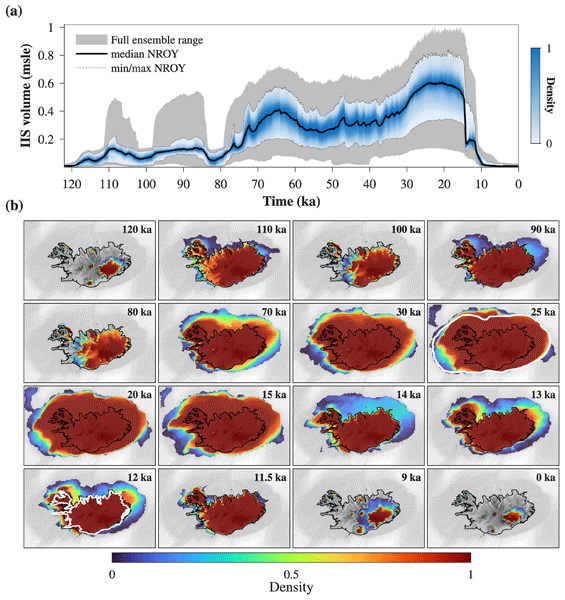
We simulated the Icelandic Ice Sheet over the last 120 kyr using an ice sheet model constrained by geological data with robust uncertainty assessment. At the Last Glacial Maximum, ice reached the continental shelf break, with a potential ice bridge connecting to the Greenland Ice Sheet. Model consistency with geological constraints during deglaciation is only possible with meltwater-driven ice fracture at the ice sheet margin, destabilizing the marine ice sheet and accelerating its collapse.
Benoit S. Lecavalier and Lev Tarasov
The Cryosphere, 19, 6673–6689, https://doi.org/10.5194/tc-19-6673-2025, https://doi.org/10.5194/tc-19-6673-2025, 2025
Short summary
Short summary
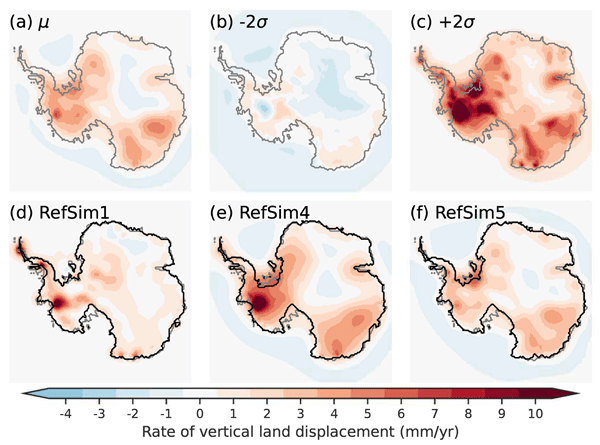
To simulate the past evolution of the Antarctic ice sheet (AIS) during past warm and cold periods, a modelling analysis was performed that compared thousands of AIS simulations to a large collection of field observations. As the AIS changes, so does the surface load which leads to crustal deformation, gravitational and sea-level change. The present-day rate of bedrock deformation due to past AIS changes is used with satellite observations to infer AIS changes due to contemporary climate change.
Benoit S. Lecavalier and Lev Tarasov
The Cryosphere, 19, 919–953, https://doi.org/10.5194/tc-19-919-2025, https://doi.org/10.5194/tc-19-919-2025, 2025
Short summary
Short summary
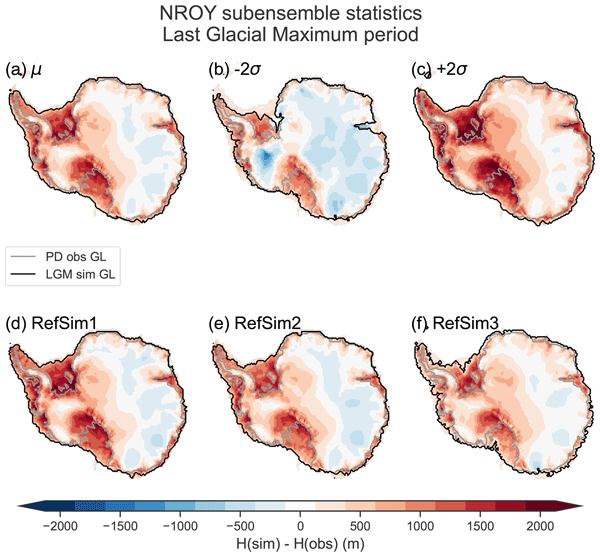
We present the evolution of the Antarctic Ice Sheet (AIS) over the last 200 kyr by means of a history-matching analysis where an updated observational database constrained ~ 10 000 model simulations. During peak glaciation at the Last Glacial Maximum (LGM), the best-fitting sub-ensemble of AIS simulations reached an excess grounded ice volume relative to the present of 9.2 to 26.5 m equivalent sea level relative to the present. The LGM AIS volume can help resolve the LGM missing-ice problem.
Marilena Sophie Geng, Lev Tarasov, and April Sue Dalton
EGUsphere, https://doi.org/10.5194/egusphere-2025-495, https://doi.org/10.5194/egusphere-2025-495, 2025
Preprint archived
Short summary
Short summary
We used a fully coupled ice-climate model to simulate the last two glacial inceptions, and compare the ensemble simulated ice sheet evolution to limited geological data. Our results show that Northern Hemisphere ice sheets grew rapidly, sometimes merging in ways not previously assumed and that capturing one glacial inception does not guarantee capturing another. These findings improve our understanding of ice-age dynamics and highlight challenges in predicting past and future climate evolution.
Ryan Love, Glenn A. Milne, Parviz Ajourlou, Soran Parang, Lev Tarasov, and Konstantin Latychev
Geosci. Model Dev., 17, 8535–8551, https://doi.org/10.5194/gmd-17-8535-2024, https://doi.org/10.5194/gmd-17-8535-2024, 2024
Short summary
Short summary
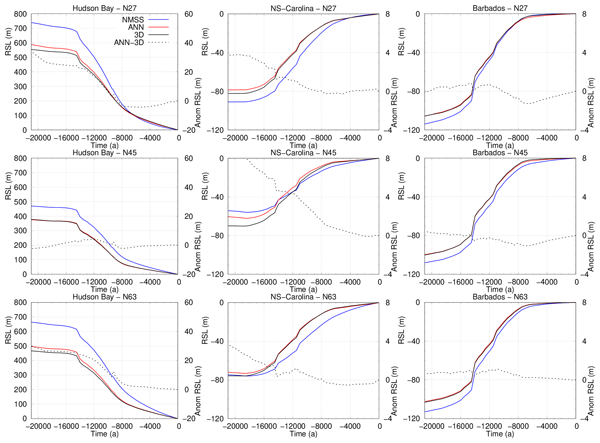
A relatively recent advance in glacial isostatic adjustment modeling has been the development of models that include 3D Earth structure, as opposed to 1D structure. However, a major limitation is the computational expense. We have developed a method using artificial neural networks to emulate the influence of 3D Earth models to affordably constrain the viscosity parameter space. Our results indicate that the misfits are of a scale such that useful predictions of relative sea level can be made.
Kevin Hank and Lev Tarasov
Clim. Past, 20, 2499–2524, https://doi.org/10.5194/cp-20-2499-2024, https://doi.org/10.5194/cp-20-2499-2024, 2024
Short summary
Short summary
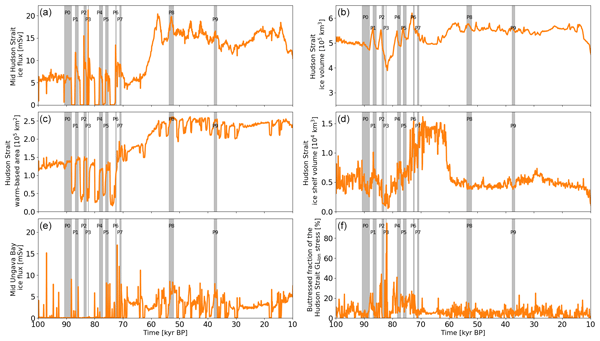
The ice-rafted debris signature of Heinrich events in marine sedimentary cores is usually attributed to massive ice discharge from the Laurentide Ice Sheet. However, the driving mechanism of this pulsed discharge remains unclear. We compare three previously proposed hypotheses and examine the role of relevant system processes. We find ice stream surge cycling is the most likely mechanism, but its character is sensitive to both the geothermal heat flux and the form of the basal drag law.
Matthew Drew and Lev Tarasov
EGUsphere, https://doi.org/10.5194/egusphere-2024-620, https://doi.org/10.5194/egusphere-2024-620, 2024
Preprint withdrawn
Short summary
Short summary
We model the sediment-ice-climate system over North America for the last 2.58 Myr showing that ice sheets are capable of excavating features the size of the Hudson bay. This work provides a basis for reconstructing past landscapes important to climate modelling efforts, helping us to understand past earth system change.
Brian R. Crow, Lev Tarasov, Michael Schulz, and Matthias Prange
Clim. Past, 20, 281–296, https://doi.org/10.5194/cp-20-281-2024, https://doi.org/10.5194/cp-20-281-2024, 2024
Short summary
Short summary
An abnormally warm period around 400,000 years ago is thought to have resulted in a large melt event for the Greenland Ice Sheet. Using a sequence of climate model simulations connected to an ice model, we estimate a 50 % melt of Greenland compared to today. Importantly, we explore how the exact methodology of connecting the temperatures and precipitation from the climate model to the ice sheet model can influence these results and show that common methods could introduce errors.
Matthew Drew and Lev Tarasov
The Cryosphere, 17, 5391–5415, https://doi.org/10.5194/tc-17-5391-2023, https://doi.org/10.5194/tc-17-5391-2023, 2023
Short summary
Short summary
The interaction of fast-flowing regions of continental ice sheets with their beds governs how quickly they slide and therefore flow. The coupling of fast ice to its bed is controlled by the pressure of meltwater at its base. It is currently poorly understood how the physical details of these hydrologic systems affect ice speedup. Using numerical models we find, surprisingly, that they largely do not, except for the duration of the surge. This suggests that cheap models are sufficient.
Ryan Love, Lev Tarasov, Heather Andres, Alan Condron, Xu Zhang, and Gerrit Lohmann
EGUsphere, https://doi.org/10.5194/egusphere-2023-2225, https://doi.org/10.5194/egusphere-2023-2225, 2023
Preprint archived
Short summary
Short summary
Freshwater injection into bands across the North Atlantic are a mainstay of climate modelling when investigating topics such as climate change or the role of glacial runoff in the glacial climate system. However, this approach is unrealistic and results in a systematic bias in the climate response to a given flux of freshwater. We evaluate the magnitude of this bias by comparison to two other approaches for introducing freshwater into a coupled climate model setup for glacial conditions.
Kevin Hank, Lev Tarasov, and Elisa Mantelli
Geosci. Model Dev., 16, 5627–5652, https://doi.org/10.5194/gmd-16-5627-2023, https://doi.org/10.5194/gmd-16-5627-2023, 2023
Short summary
Short summary
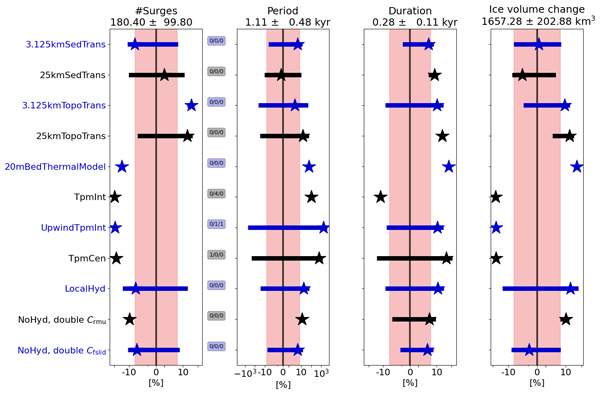
Physically meaningful modeling of geophysical system instabilities is numerically challenging, given the potential effects of purely numerical artifacts. Here we explore the sensitivity of ice stream surge activation to numerical and physical model aspects. We find that surge characteristics exhibit a resolution dependency but converge at higher horizontal grid resolutions and are significantly affected by the incorporation of bed thermal and sub-glacial hydrology models.
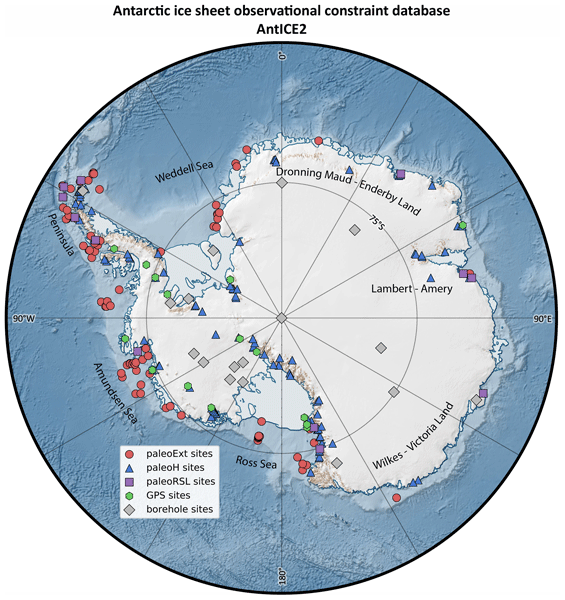
Benoit S. Lecavalier, Lev Tarasov, Greg Balco, Perry Spector, Claus-Dieter Hillenbrand, Christo Buizert, Catherine Ritz, Marion Leduc-Leballeur, Robert Mulvaney, Pippa L. Whitehouse, Michael J. Bentley, and Jonathan Bamber
Earth Syst. Sci. Data, 15, 3573–3596, https://doi.org/10.5194/essd-15-3573-2023, https://doi.org/10.5194/essd-15-3573-2023, 2023
Short summary
Short summary
The Antarctic Ice Sheet Evolution constraint database version 2 (AntICE2) consists of a large variety of observations that constrain the evolution of the Antarctic Ice Sheet over the last glacial cycle. This includes observations of past ice sheet extent, past ice thickness, past relative sea level, borehole temperature profiles, and present-day bedrock displacement rates. The database is intended to improve our understanding of past Antarctic changes and for ice sheet model calibrations.
Lev Tarasov and Michael Goldstein
EGUsphere, https://doi.org/10.5194/egusphere-2022-1410, https://doi.org/10.5194/egusphere-2022-1410, 2023
Preprint archived
Short summary
Short summary
This overview: 1. Illustrates how current climate and/or ice sheet model-based inferences about the past tend to have little interpretable value about the real world given inadequate accounting of uncertainties. 2. Explains Bayesian inference to a non-statistical community. 3. Sketches out some tractable inferential steps for computationally expensive models in a way that meaningfully accounts for uncertainties. 4. Lays out some steps for the community to move forward.
Lev Tarasov and Michael Goldstein
Clim. Past Discuss., https://doi.org/10.5194/cp-2021-145, https://doi.org/10.5194/cp-2021-145, 2021
Revised manuscript not accepted
Short summary
Short summary
This review: 1. Illustrates how current climate and/or ice sheet model-based inferences about the past tend to have limited interpretable value about the real world given inadequate accounting of uncertainties. 2. Explains Bayesian inference to a non-statistical community. 3. Sketches out tractable Bayesian inference for computationally expensive models in a way that meaningfully accounts for uncertainties. 4. Lays out some steps for the community to move forward.
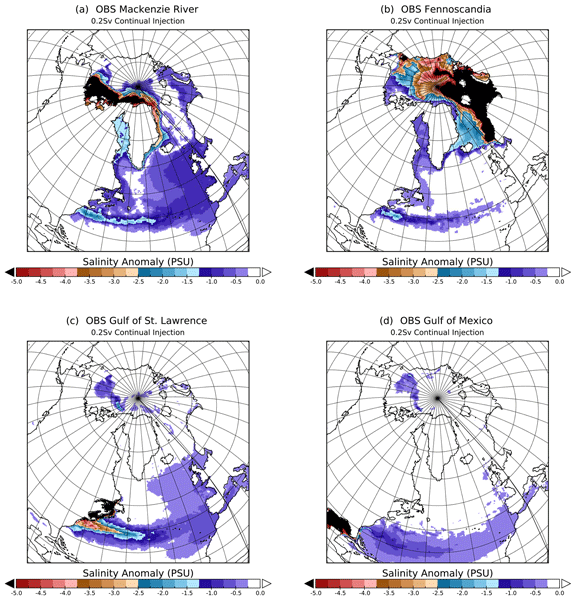
Ryan Love, Heather J. Andres, Alan Condron, and Lev Tarasov
Clim. Past, 17, 2327–2341, https://doi.org/10.5194/cp-17-2327-2021, https://doi.org/10.5194/cp-17-2327-2021, 2021
Short summary
Short summary
Freshwater, in the form of glacial runoff, is hypothesized to play a critical role in centennial- to millennial-scale climate variability and climate transitions. We track the routing of glaciologically constrained freshwater volumes in glacial ocean simulations. Our simulations capture important generally not well-represented small-scale features (boundary currents, eddies). We show that the dilution of freshwater as it is transported to key climate regions reduces the freshening to 20 %–60 %.
Alexis Arturo Goffin, Lev Tarasov, Ívar Örn Benediktsson, and Joseph M. Licciardi
Clim. Past, 22, 825–843, https://doi.org/10.5194/cp-22-825-2026, https://doi.org/10.5194/cp-22-825-2026, 2026
Short summary
Short summary
We simulated the Icelandic Ice Sheet over the last 120 kyr using an ice sheet model constrained by geological data with robust uncertainty assessment. At the Last Glacial Maximum, ice reached the continental shelf break, with a potential ice bridge connecting to the Greenland Ice Sheet. Model consistency with geological constraints during deglaciation is only possible with meltwater-driven ice fracture at the ice sheet margin, destabilizing the marine ice sheet and accelerating its collapse.
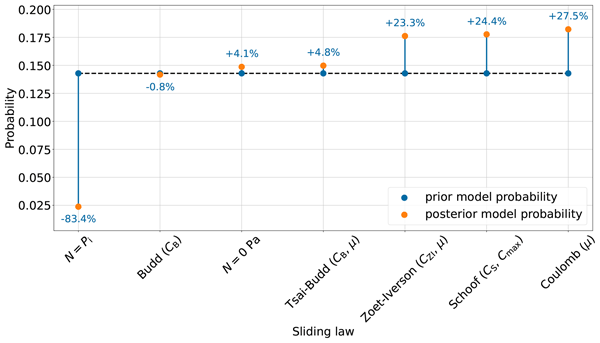
Kevin Hank, Robert J. Arthern, C. Rosie Williams, Alex M. Brisbourne, Andrew M. Smith, James A. Smith, Anna Wåhlin, and Sridhar Anandakrishnan
The Cryosphere, 20, 495–510, https://doi.org/10.5194/tc-20-495-2026, https://doi.org/10.5194/tc-20-495-2026, 2026
Short summary
Short summary
The slipperiness at the ice base is a key uncertainty in sea level rise projections. Alternative formulations of the sliding law exist, but limited access to the ice base makes it difficult to validate them. We introduce a new approach using observations and model output to infer a basal sliding law. For Pine Island Glacier, currently the largest single contributor to sea level rise in Antarctica, the results provide support for a Coulomb-type sliding law and widespread low effective pressures.
Benoit S. Lecavalier and Lev Tarasov
The Cryosphere, 19, 6673–6689, https://doi.org/10.5194/tc-19-6673-2025, https://doi.org/10.5194/tc-19-6673-2025, 2025
Short summary
Short summary
To simulate the past evolution of the Antarctic ice sheet (AIS) during past warm and cold periods, a modelling analysis was performed that compared thousands of AIS simulations to a large collection of field observations. As the AIS changes, so does the surface load which leads to crustal deformation, gravitational and sea-level change. The present-day rate of bedrock deformation due to past AIS changes is used with satellite observations to infer AIS changes due to contemporary climate change.
Benoit S. Lecavalier and Lev Tarasov
The Cryosphere, 19, 919–953, https://doi.org/10.5194/tc-19-919-2025, https://doi.org/10.5194/tc-19-919-2025, 2025
Short summary
Short summary
We present the evolution of the Antarctic Ice Sheet (AIS) over the last 200 kyr by means of a history-matching analysis where an updated observational database constrained ~ 10 000 model simulations. During peak glaciation at the Last Glacial Maximum (LGM), the best-fitting sub-ensemble of AIS simulations reached an excess grounded ice volume relative to the present of 9.2 to 26.5 m equivalent sea level relative to the present. The LGM AIS volume can help resolve the LGM missing-ice problem.
Marilena Sophie Geng, Lev Tarasov, and April Sue Dalton
EGUsphere, https://doi.org/10.5194/egusphere-2025-495, https://doi.org/10.5194/egusphere-2025-495, 2025
Preprint archived
Short summary
Short summary
We used a fully coupled ice-climate model to simulate the last two glacial inceptions, and compare the ensemble simulated ice sheet evolution to limited geological data. Our results show that Northern Hemisphere ice sheets grew rapidly, sometimes merging in ways not previously assumed and that capturing one glacial inception does not guarantee capturing another. These findings improve our understanding of ice-age dynamics and highlight challenges in predicting past and future climate evolution.
Ryan Love, Glenn A. Milne, Parviz Ajourlou, Soran Parang, Lev Tarasov, and Konstantin Latychev
Geosci. Model Dev., 17, 8535–8551, https://doi.org/10.5194/gmd-17-8535-2024, https://doi.org/10.5194/gmd-17-8535-2024, 2024
Short summary
Short summary
A relatively recent advance in glacial isostatic adjustment modeling has been the development of models that include 3D Earth structure, as opposed to 1D structure. However, a major limitation is the computational expense. We have developed a method using artificial neural networks to emulate the influence of 3D Earth models to affordably constrain the viscosity parameter space. Our results indicate that the misfits are of a scale such that useful predictions of relative sea level can be made.
Kevin Hank and Lev Tarasov
Clim. Past, 20, 2499–2524, https://doi.org/10.5194/cp-20-2499-2024, https://doi.org/10.5194/cp-20-2499-2024, 2024
Short summary
Short summary
The ice-rafted debris signature of Heinrich events in marine sedimentary cores is usually attributed to massive ice discharge from the Laurentide Ice Sheet. However, the driving mechanism of this pulsed discharge remains unclear. We compare three previously proposed hypotheses and examine the role of relevant system processes. We find ice stream surge cycling is the most likely mechanism, but its character is sensitive to both the geothermal heat flux and the form of the basal drag law.
Matthew Drew and Lev Tarasov
EGUsphere, https://doi.org/10.5194/egusphere-2024-620, https://doi.org/10.5194/egusphere-2024-620, 2024
Preprint withdrawn
Short summary
Short summary
We model the sediment-ice-climate system over North America for the last 2.58 Myr showing that ice sheets are capable of excavating features the size of the Hudson bay. This work provides a basis for reconstructing past landscapes important to climate modelling efforts, helping us to understand past earth system change.
Brian R. Crow, Lev Tarasov, Michael Schulz, and Matthias Prange
Clim. Past, 20, 281–296, https://doi.org/10.5194/cp-20-281-2024, https://doi.org/10.5194/cp-20-281-2024, 2024
Short summary
Short summary
An abnormally warm period around 400,000 years ago is thought to have resulted in a large melt event for the Greenland Ice Sheet. Using a sequence of climate model simulations connected to an ice model, we estimate a 50 % melt of Greenland compared to today. Importantly, we explore how the exact methodology of connecting the temperatures and precipitation from the climate model to the ice sheet model can influence these results and show that common methods could introduce errors.
Matthew Drew and Lev Tarasov
The Cryosphere, 17, 5391–5415, https://doi.org/10.5194/tc-17-5391-2023, https://doi.org/10.5194/tc-17-5391-2023, 2023
Short summary
Short summary
The interaction of fast-flowing regions of continental ice sheets with their beds governs how quickly they slide and therefore flow. The coupling of fast ice to its bed is controlled by the pressure of meltwater at its base. It is currently poorly understood how the physical details of these hydrologic systems affect ice speedup. Using numerical models we find, surprisingly, that they largely do not, except for the duration of the surge. This suggests that cheap models are sufficient.
Ryan Love, Lev Tarasov, Heather Andres, Alan Condron, Xu Zhang, and Gerrit Lohmann
EGUsphere, https://doi.org/10.5194/egusphere-2023-2225, https://doi.org/10.5194/egusphere-2023-2225, 2023
Preprint archived
Short summary
Short summary
Freshwater injection into bands across the North Atlantic are a mainstay of climate modelling when investigating topics such as climate change or the role of glacial runoff in the glacial climate system. However, this approach is unrealistic and results in a systematic bias in the climate response to a given flux of freshwater. We evaluate the magnitude of this bias by comparison to two other approaches for introducing freshwater into a coupled climate model setup for glacial conditions.
Kevin Hank, Lev Tarasov, and Elisa Mantelli
Geosci. Model Dev., 16, 5627–5652, https://doi.org/10.5194/gmd-16-5627-2023, https://doi.org/10.5194/gmd-16-5627-2023, 2023
Short summary
Short summary
Physically meaningful modeling of geophysical system instabilities is numerically challenging, given the potential effects of purely numerical artifacts. Here we explore the sensitivity of ice stream surge activation to numerical and physical model aspects. We find that surge characteristics exhibit a resolution dependency but converge at higher horizontal grid resolutions and are significantly affected by the incorporation of bed thermal and sub-glacial hydrology models.
Benoit S. Lecavalier, Lev Tarasov, Greg Balco, Perry Spector, Claus-Dieter Hillenbrand, Christo Buizert, Catherine Ritz, Marion Leduc-Leballeur, Robert Mulvaney, Pippa L. Whitehouse, Michael J. Bentley, and Jonathan Bamber
Earth Syst. Sci. Data, 15, 3573–3596, https://doi.org/10.5194/essd-15-3573-2023, https://doi.org/10.5194/essd-15-3573-2023, 2023
Short summary
Short summary
The Antarctic Ice Sheet Evolution constraint database version 2 (AntICE2) consists of a large variety of observations that constrain the evolution of the Antarctic Ice Sheet over the last glacial cycle. This includes observations of past ice sheet extent, past ice thickness, past relative sea level, borehole temperature profiles, and present-day bedrock displacement rates. The database is intended to improve our understanding of past Antarctic changes and for ice sheet model calibrations.
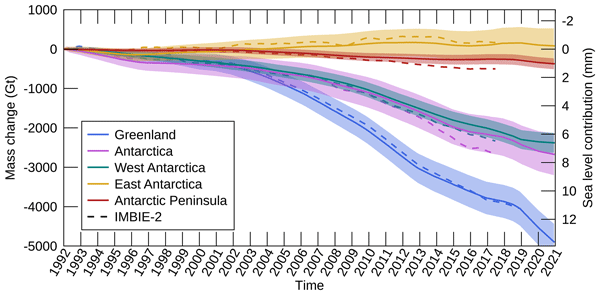
Inès N. Otosaka, Andrew Shepherd, Erik R. Ivins, Nicole-Jeanne Schlegel, Charles Amory, Michiel R. van den Broeke, Martin Horwath, Ian Joughin, Michalea D. King, Gerhard Krinner, Sophie Nowicki, Anthony J. Payne, Eric Rignot, Ted Scambos, Karen M. Simon, Benjamin E. Smith, Louise S. Sørensen, Isabella Velicogna, Pippa L. Whitehouse, Geruo A, Cécile Agosta, Andreas P. Ahlstrøm, Alejandro Blazquez, William Colgan, Marcus E. Engdahl, Xavier Fettweis, Rene Forsberg, Hubert Gallée, Alex Gardner, Lin Gilbert, Noel Gourmelen, Andreas Groh, Brian C. Gunter, Christopher Harig, Veit Helm, Shfaqat Abbas Khan, Christoph Kittel, Hannes Konrad, Peter L. Langen, Benoit S. Lecavalier, Chia-Chun Liang, Bryant D. Loomis, Malcolm McMillan, Daniele Melini, Sebastian H. Mernild, Ruth Mottram, Jeremie Mouginot, Johan Nilsson, Brice Noël, Mark E. Pattle, William R. Peltier, Nadege Pie, Mònica Roca, Ingo Sasgen, Himanshu V. Save, Ki-Weon Seo, Bernd Scheuchl, Ernst J. O. Schrama, Ludwig Schröder, Sebastian B. Simonsen, Thomas Slater, Giorgio Spada, Tyler C. Sutterley, Bramha Dutt Vishwakarma, Jan Melchior van Wessem, David Wiese, Wouter van der Wal, and Bert Wouters
Earth Syst. Sci. Data, 15, 1597–1616, https://doi.org/10.5194/essd-15-1597-2023, https://doi.org/10.5194/essd-15-1597-2023, 2023
Short summary
Short summary
By measuring changes in the volume, gravitational attraction, and ice flow of Greenland and Antarctica from space, we can monitor their mass gain and loss over time. Here, we present a new record of the Earth’s polar ice sheet mass balance produced by aggregating 50 satellite-based estimates of ice sheet mass change. This new assessment shows that the ice sheets have lost (7.5 x 10¹²) t of ice between 1992 and 2020, contributing 21 mm to sea level rise.
Lev Tarasov and Michael Goldstein
EGUsphere, https://doi.org/10.5194/egusphere-2022-1410, https://doi.org/10.5194/egusphere-2022-1410, 2023
Preprint archived
Short summary
Short summary
This overview: 1. Illustrates how current climate and/or ice sheet model-based inferences about the past tend to have little interpretable value about the real world given inadequate accounting of uncertainties. 2. Explains Bayesian inference to a non-statistical community. 3. Sketches out some tractable inferential steps for computationally expensive models in a way that meaningfully accounts for uncertainties. 4. Lays out some steps for the community to move forward.
Lev Tarasov and Michael Goldstein
Clim. Past Discuss., https://doi.org/10.5194/cp-2021-145, https://doi.org/10.5194/cp-2021-145, 2021
Revised manuscript not accepted
Short summary
Short summary
This review: 1. Illustrates how current climate and/or ice sheet model-based inferences about the past tend to have limited interpretable value about the real world given inadequate accounting of uncertainties. 2. Explains Bayesian inference to a non-statistical community. 3. Sketches out tractable Bayesian inference for computationally expensive models in a way that meaningfully accounts for uncertainties. 4. Lays out some steps for the community to move forward.
Ryan Love, Heather J. Andres, Alan Condron, and Lev Tarasov
Clim. Past, 17, 2327–2341, https://doi.org/10.5194/cp-17-2327-2021, https://doi.org/10.5194/cp-17-2327-2021, 2021
Short summary
Short summary
Freshwater, in the form of glacial runoff, is hypothesized to play a critical role in centennial- to millennial-scale climate variability and climate transitions. We track the routing of glaciologically constrained freshwater volumes in glacial ocean simulations. Our simulations capture important generally not well-represented small-scale features (boundary currents, eddies). We show that the dilution of freshwater as it is transported to key climate regions reduces the freshening to 20 %–60 %.
Cited articles
Albrecht, T., Winkelmann, R., and Levermann, A.: Glacial-cycle simulations of the Antarctic Ice Sheet with the Parallel Ice Sheet Model (PISM) – Part 2: Parameter ensemble analysis, The Cryosphere, 14, 633–656, https://doi.org/10.5194/tc-14-633-2020, 2020a. a
Albrecht, T., Winkelmann, R., and Levermann, A.: Glacial-cycle simulations of the Antarctic Ice Sheet with the Parallel Ice Sheet Model (PISM) – Part 1: Boundary conditions and climatic forcing, The Cryosphere, 14, 599–632, https://doi.org/10.5194/tc-14-599-2020, 2020b. a, b
Andres, H. J. and Tarasov, L.: Towards understanding potential atmospheric contributions to abrupt climate changes: characterizing changes to the North Atlantic eddy-driven jet over the last deglaciation, Clim. Past, 15, 1621–1646, https://doi.org/10.5194/cp-15-1621-2019, 2019. a, b
Asay-Davis, X. S., Jourdain, N. C., and Nakayama, Y.: Developments in simulating and parameterizing interactions between the Southern Ocean and the Antarctic ice sheet, Current Climate Change Reports, 3, 316–329, https://doi.org/10.1007/s40641-017-0071-0, 2017. a
Bahadory, T. and Tarasov, L.: LCice 1.0 – a generalized Ice Sheet System Model coupler for LOVECLIM version 1.3: description, sensitivities, and validation with the Glacial Systems Model (GSM version D2017.aug17), Geosci. Model Dev., 11, 3883–3902, https://doi.org/10.5194/gmd-11-3883-2018, 2018. a, b, c
Bakker, P., Rogozhina, I., Merkel, U., and Prange, M.: Hypersensitivity of glacial summer temperatures in Siberia, Clim. Past, 16, 371–386, https://doi.org/10.5194/cp-16-371-2020, 2020. a
Barker, S., Knorr, G., Edwards, R. L., Parrenin, F., Putnam, A. E., Skinner, L. C., Wolff, E., and Ziegler, M.: 800,000 years of abrupt climate variability, Science, 334, 347–351, https://doi.org/10.1126/science.1203580, 2011. a
Bazin, L., Landais, A., Lemieux-Dudon, B., Toyé Mahamadou Kele, H., Veres, D., Parrenin, F., Martinerie, P., Ritz, C., Capron, E., Lipenkov, V., Loutre, M.-F., Raynaud, D., Vinther, B., Svensson, A., Rasmussen, S. O., Severi, M., Blunier, T., Leuenberger, M., Fischer, H., Masson-Delmotte, V., Chappellaz, J., and Wolff, E.: An optimized multi-proxy, multi-site Antarctic ice and gas orbital chronology (AICC2012): 120–800 ka, Clim. Past, 9, 1715–1731, https://doi.org/10.5194/cp-9-1715-2013, 2013. a
Berends, C. J., Goelzer, H., and van de Wal, R. S. W.: The Utrecht Finite Volume Ice-Sheet Model: UFEMISM (version 1.0), Geosci. Model Dev., 14, 2443–2470, https://doi.org/10.5194/gmd-14-2443-2021, 2021. a, b
Berends, C. J., Goelzer, H., Reerink, T. J., Stap, L. B., and van de Wal, R. S. W.: Benchmarking the vertically integrated ice-sheet model IMAU-ICE (version 2.0), Geosci. Model Dev., 15, 5667–5688, https://doi.org/10.5194/gmd-15-5667-2022, 2022. a
Berger, A. and Loutre, M.: Insolation values for the climate of the last 10 million years, Quaternary Science Reviews, 10, 297–317, https://doi.org/10.1016/0277-3791(91)90033-q, 1991. a
Bernard, H.: A Theoretical Model of Glacial Abrasion, Journal of Glaciology, 23, 39–50, https://doi.org/10.3189/s0022143000029725, 1979. a
Boeira Dias, F., Rintoul, S. R., Richter, O., Galton-Fenzi, B. K., Zika, J. D., Pellichero, V. i., and Uotila, P.: Sensitivity of simulated water mass transformation on the Antarctic shelf to tides, topography and model resolution, Frontiers in Marine Science, 10, https://doi.org/10.3389/fmars.2023.1027704, 2023. a
Boulton, G.: Processes of Glacier Erosion on Different Substrata, Journal of Glaciology, 23, 15–38, https://doi.org/10.3189/s0022143000029713, 1979. a
Braconnot, P., Otto-Bliesner, B., Harrison, S., Joussaume, S., Peterchmitt, J.-Y., Abe-Ouchi, A., Crucifix, M., Driesschaert, E., Fichefet, Th., Hewitt, C. D., Kageyama, M., Kitoh, A., Laîné, A., Loutre, M.-F., Marti, O., Merkel, U., Ramstein, G., Valdes, P., Weber, S. L., Yu, Y., and Zhao, Y.: Results of PMIP2 coupled simulations of the Mid-Holocene and Last Glacial Maximum – Part 1: experiments and large-scale features, Clim. Past, 3, 261–277, https://doi.org/10.5194/cp-3-261-2007, 2007. a
Braconnot, P., Harrison, S. P., Kageyama, M., Bartlein, P. J., Masson-Delmotte, V., Abe-Ouchi, A., Otto-Bliesner, B., and Zhao, Y.: Evaluation of climate models using palaeoclimatic data, Nature Climate Change, 2, 417–424, https://doi.org/10.1038/nclimate1456, 2012. a
Budd, W. F. and Smith, I. N.: The growth and retreat of ice sheets in response to orbital radiation changes, in: Sea Level, Ice and Climatic Changes, vol. 131, Int. Ass. of Hydrol. Sci., 369–409, 1981. a
Cornford, S., Martin, D., Graves, D., Ranken, D., Brocq, A. L., Gladstone, R., Payne, A., Ng, E., , and Lipscomb, W. H.: Adaptive mesh, finite volume modeling of marine ice sheets, J. Comput. Phys., 232, 529–549, https://doi.org/10.1016/j.bbr.2011.03.031, 2013. a
Cornford, S. L., Seroussi, H., Asay-Davis, X. S., Gudmundsson, G. H., Arthern, R., Borstad, C., Christmann, J., Dias dos Santos, T., Feldmann, J., Goldberg, D., Hoffman, M. J., Humbert, A., Kleiner, T., Leguy, G., Lipscomb, W. H., Merino, N., Durand, G., Morlighem, M., Pollard, D., Rückamp, M., Williams, C. R., and Yu, H.: Results of the third Marine Ice Sheet Model Intercomparison Project (MISMIP+), The Cryosphere, 14, 2283–2301, https://doi.org/10.5194/tc-14-2283-2020, 2020. a
Dalton, A. S., Margold, M., Stokes, C. R., Tarasov, L., Dyke, A. S., Adams, R. S., Allard, S., Arends, H. E., Atkinson, N., Attig, J. W., Barnett, P. J., Barnett, R. L., Batterson, M., Bernatchez, P., Borns Jr., H. W., Breckenridge, A., Briner, J. P., Brouard, E., Campbell, J. E., Carlson, A. E., Clague, J. J., Curry, B. B., Daigneault, R.-A., Dubé-Loubert, H., Easterbrook, D. J., Franzi, D. A., Friedrich, H. G., Funder, S., Gauthier, M. S., Gowan, A. S., Harris, K. L., Hétu, B., Hooyer, T. S., Jennings, C. E., Johnson, M. D., Kehew, A. E., Kelley, S. E., Kerr, D., King, E. L., Kjeldsen, K. K., Knaeble, A. R., Lajeunesse, P., Lakeman, T. R., Lamothe, M., Larson, P., Lavoie, M., Loope, H. M., Lowell, T. V., Lusardi, B. A., Manz, L., McMartin, I., Nixon, F. C., Occhietti, S., Parkhill, M. A., Piper, D. J. W., Pronk, A. G., Richard, P. J. H., Ridge, J. C., Ross, M., Roy, M., Seaman, A., Shaw, J., Stea, R. R., Teller, J. T., Thompson, W. B., Thorleifson, L. H., Utting, D. J., Veillette, J. J., Ward, B. C., Weddle, T. K., and Wright Jr., H. E.: An updated radiocarbon-based ice margin chronology for the last deglaciation of the North American Ice Sheet Complex, Quaternary Science Reviews, 234, 106 223, https://doi.org/10.1016/j.quascirev.2020.106223, 2020. a
Dalton, A. S., Stokes, C. R., and Batchelor, C. L.: Evolution of the Laurentide and Innuitian ice sheets prior to the Last Glacial Maximum (115 ka to 25 ka, Earth-Science Reviews, 224, 103875, https://doi.org/10.1016/j.earscirev.2021.103875, 2022. a
Davies, J. H.: Global map of solid Earth surface heat flow, Geochemistry Geophysics Geosystems, 14, 4608–4622, https://doi.org/10.1002/ggge.20271, 2013. a
Deblonde, G., Peltier, W. R., and Hyde, W. T.: Simulations of continental ice sheet growth over the last glacial-interglacial cycle: Experiments with a one level seasonal energy balance model including seasonal ice albedo feedback, Glob. Planet. Change., 98, 37–55, 1992. a
Drew, M. and Tarasov, L.: Surging of a Hudson Strait-scale ice stream: subglacial hydrology matters but the process details mostly do not, The Cryosphere, 17, 5391–5415, https://doi.org/10.5194/tc-17-5391-2023, 2023. a, b, c
Fairbanks, R. G.: A 17,000-year glacio-eustatic sea level record: influence of glacial melting rates on the Younger Dryas event and deep-ocean circulation, Nature, 342, 637–641, 1989. a
Fan, S., Wang, T., Prior, D. J., Breithaupt, T., Hager, T. F., and Wallis, D.: Flow laws for ice constrained by 70 years of laboratory experiments, Nature Geoscience, 18, 296–304, https://doi.org/10.1038/s41561-025-01661-z, 2025. a, b
Fausto, R. S., Ahlstrom, A. P., Van As, D., Boggild, C. E., and Johnsen, S. J.: A new present-day temperature parameterization for Greenland, J. Glaciol., 55, 95–105, https://doi.org/10.3189/002214309788608985, 2009. a
Favier, L., Jourdain, N. C., Jenkins, A., Merino, N., Durand, G., Gagliardini, O., Gillet-Chaulet, F., and Mathiot, P.: Assessment of sub-shelf melting parameterisations using the ocean–ice-sheet coupled model NEMO(v3.6)–Elmer/Ice(v8.3) , Geosci. Model Dev., 12, 2255–2283, https://doi.org/10.5194/gmd-12-2255-2019, 2019. a
Fettweis, X., Box, J. E., Agosta, C., Amory, C., Kittel, C., Lang, C., van As, D., Machguth, H., and Gallée, H.: Reconstructions of the 1900–2015 Greenland ice sheet surface mass balance using the regional climate MAR model, The Cryosphere, 11, 1015–1033, https://doi.org/10.5194/tc-11-1015-2017, 2017. a, b
Forget, G., Campin, J.-M., Heimbach, P., Hill, C. N., Ponte, R. M., and Wunsch, C.: ECCO version 4: an integrated framework for non-linear inverse modeling and global ocean state estimation, Geosci. Model Dev., 8, 3071–3104, https://doi.org/10.5194/gmd-8-3071-2015, 2015. a
Fowler, A.: On the rheology of till, Annals of Glaciology, 37, 55–59, https://doi.org/10.3189/172756403781815951, 2003. a
Fowler, A. C.: Sub-Temperate Basal Sliding, Journal of Glaciology, 32, 3–5, https://doi.org/10.3189/S0022143000006808, 1986. a
Fraedrich, K.: A suite of user-friendly global climate models: Hysteresis experiments, European Physical Journal Plus, 127, https://doi.org/10.1140/epjp/i2012-12053-7, 2012. a
Fukumori, I., Heimbach, P., Ponte, R. M., and Wunsch, C.: A dynamically consistent, multivariable ocean climatology, Bulletin of the American Meteorological Society, 99, 2107–2128, https://doi.org/10.1175/BAMS-D-17-0213.1, 2018. a
Fulton, R. J.: Surficial materials of Canada, Geological Survey of Canada, Map 1880A, scale 1:5000000, online, https://doi.org/10.4095/205040, 1995. a
Gabbi, J., Carenzo, M., Pellicciotti, F., Bauder, A., and Funk, M.: A comparison of empirical and physically based glacier surface melt models for long-term simulations of glacier response, Journal of Glaciology, 60, 1140–1154, https://doi.org/10.3189/2014JoG14J011, 2014. a
Gagliardini, O., Cohen, D., Raback, P., and Zwinger, T.: Finite-element modeling of subglacial cavities and related friction law, Journal of Geophysical Research: Earth Surface, 112, https://doi.org/10.1029/2006JF000576, 2007. a
Ganopolski, A., Calov, R., and Claussen, M.: Simulation of the last glacial cycle with a coupled climate ice-sheet model of intermediate complexity, Clim. Past, 6, 229–244, https://doi.org/10.5194/cp-6-229-2010, 2010. a
Geng, M. S., Tarasov, L., and Dalton, A. S.: A comparison of the last two glacial inceptions (MIS 7/5) via fully coupled transient ice and climate modeling, EGUsphere [preprint], https://doi.org/10.5194/egusphere-2025-495, 2025. a, b, c
Gillet-Chaulet, F., Durand, G., Gagliardini, O., Mosbeux, C., Mouginot, J., Remy, F., and Ritz, C.: Assimilation of surface velocities acquired between 1996 and 2010 to constrain the form of the basal friction law under Pine Island Glacier, Geophysical Research Letters, 43, 10311–10321, https://doi.org/10.1002/2016GL069937, 2016. a
Glen, J. W.: Experiments on the deformation of ice, J. Glaciol., 111–114, https://doi.org/10.3189/S0022143000034067, 1952. a
Goelzer, H., Nowicki, S., Edwards, T., Beckley, M., Abe-Ouchi, A., Aschwanden, A., Calov, R., Gagliardini, O., Gillet-Chaulet, F., Golledge, N. R., Gregory, J., Greve, R., Humbert, A., Huybrechts, P., Kennedy, J. H., Larour, E., Lipscomb, W. H., Le clec'h, S., Lee, V., Morlighem, M., Pattyn, F., Payne, A. J., Rodehacke, C., Rückamp, M., Saito, F., Schlegel, N., Seroussi, H., Shepherd, A., Sun, S., van de Wal, R., and Ziemen, F. A.: Design and results of the ice sheet model initialisation experiments initMIP-Greenland: an ISMIP6 intercomparison, The Cryosphere, 12, 1433–1460, https://doi.org/10.5194/tc-12-1433-2018, 2018. a
Goldsby, D. L. and Kohlstedt, D. L.: Superplastic deformation of ice: Experimental observations, Journal of Geophysical Research: Solid Earth, 106, 11017–11030, https://doi.org/10.1029/2000jb900336, 2001. a
Han, H. K., Gomez, N., and Wan, J. X. W.: Capturing the interactions between ice sheets, sea level and the solid Earth on a range of timescales: a new “time window” algorithm, Geosci. Model Dev., 15, 1355–1373, https://doi.org/10.5194/gmd-15-1355-2022, 2022. a, b
Hank, K. and Tarasov, L.: The comparative role of physical system processes in Hudson Strait ice stream cycling: a comprehensive model-based test of Heinrich event hypotheses, Clim. Past, 20, 2499–2524, https://doi.org/10.5194/cp-20-2499-2024, 2024. a
Hersbach, H., Bell, B., Berrisford, P., Biavati, G., Horanyi, A., Munoz Sabater, J., Nicolas, J., Peubey, C., Radu, R., Rozum, I., Schepers, D., Simmons, A., Soci, C., Dee, D., and Thepaut, J.-N.: ERA5 monthly averaged data on single levels from 1940 to present, Copernicus Climate Change Service (C3S) Climate Data Store (CDS) [data set], https://doi.org/10.24381/cds.f17050d7, 2023. a
Hindmarsh, R. C. and Payne, A. J.: Time-step limits for stable solutions of the ice sheet equation, Ann. Glaciol., 23, 74–85, 1996. a
Hughes, A. L., Gyllencreutz, R., Lohne, Ø. S., Mangerud, J., and Svendsen, J. I.: The last Eurasian ice sheets–a chronological database and time-slice reconstruction, DATED-1, Boreas, 45, 1–45, https://doi.org/10.1111/bor.12142, 2016. a
Hyde, W. T., Crowley, T. J., Kim, K.-Y., and North, G. R.: Comparison of GCM and energy balance model simulations of seasonal temperature changes over the past 18000 years, Journal of Climate, 2, 864–887, 1989. a
Irvine-Fynn, T. D. L., Hanna, E., Barrand, N. E., Porter, P. R., Kohler, J., and Hodson, A. J.: Examination of a physically based, high-resolution, distributed Arctic temperature-index melt model, on Midtre Lovenbreen, Svalbard, Hydrological Processes, 28, 134–149, https://doi.org/10.1002/hyp.9526, 2014. a, b
Joughin, I., Smith, B. E., and Schoof, C. G.: Regularized Coulomb Friction Laws for Ice Sheet Sliding: Application to Pine Island Glacier, Antarctica, Geophysical Research Letters, 46, 4764–4771, https://doi.org/10.1029/2019gl082526, 2019. a
Jouzel, J. and Masson-Delmotte, V.: EPICA Dome C Ice Core 800KYr deuterium data and temperature estimates, Supplement to: Jouzel, J., Masson-Delmotte, V., Cattani, O., Dreyfus, G., Falourd, S., Hoffmann, G.; Minster, B., Nouet, J., Barnola, J.-M., Chappellaz, J. A., Fischer, H., Gallet, J. C., Johnsen, S. J., Leuenberger, M. C., Loulergue, L., Luethi, D., Oerter, H., Parrenin, F., Raisbeck, G. M., Raynaud, D., Schilt, A., Schwander, J., Selmo, E., Souchez, R. A., Spahni, R., Stauffer, B., Steffensen, J. P., Stenni, B., Stocker, T. F., Tison, J.-L., Werner, M., and Wolff, E. W. (2007): Orbital and millennial Antarctic climate variability over the past 800,000 years, Science, 317, 793–797, https://doi.org/10.1126/science.1141038, PANGAEA [data set], https://doi.org/10.1594/PANGAEA.683655, 2007. a
Kincaid, D. R., Oppe, T. C., and Joubert, W. D.: An Overview of NSPCG: A Nonsymmetric Preconditioned Conjugate Gradient Package, in: Practical Iterative Methods for Large Scale Computations, edited by: Boley, L., Truhlar, D. G., Saad, Y., Wyatt, R. E., and Collins, L. A., North-Holland, Amsterdam, 283–293, ISBN 0444880232, 9780444880239, 1989. a, b
Kopp, R. E., Simons, F. J., Mitrovica, J. X., Maloof, A. C., and Oppenheimer, M.: Probabilistic assessment of sea level during the last interglacial stage, Nature, 462, 863–U51, https://doi.org/{10.1038/nature08686}, 2009. a
Krapp, M., Robinson, A., and Ganopolski, A.: SEMIC: an efficient surface energy and mass balance model applied to the Greenland ice sheet, The Cryosphere, 11, 1519–1535, https://doi.org/10.5194/tc-11-1519-2017, 2017. a
Kutzbach, J. and Wright Jr, H.: Simulation of the climate of 18,000 years BP: Results for the North American/North Atlantic/European sector and comparison with the geologic record of North America, Quaternary Science Reviews, 4, 147–187, 1985. a
Lambeck, K., Rouby, H., Purcell, A., Sun, Y., and Sambridge, M.: Sea level and global ice volumes from the Last Glacial Maximum to the Holocene, Proceedings of the National Academy of Sciences, 111, 15296–15303, https://doi.org/10.1073/pnas.1411762111, 2014. a
Larour, E., Seroussi, H., Morlighem, M., and Rignot, E.: Continental scale, high order, high spatial resolution, ice sheet modeling using the Ice Sheet System Model (ISSM), Journal of Geophysical Research, 117, F01022, https://doi.org/10.1029/2011JF002140, 2012. a
Lazeroms, W. M. J., Jenkins, A., Rienstra, S. W., and van de Wal, R. S. W.: An Analytical Derivation of Ice-Shelf Basal Melt Based on the Dynamics of Meltwater Plumes, Journal of Physical Oceanography, 49, 917–939, https://doi.org/10.1175/JPO-D-18-0131.1, 2019. a, b
Le Morzadec, K., Tarasov, L., Morlighem, M., and Seroussi, H.: A new sub-grid surface mass balance and flux model for continental-scale ice sheet modelling: testing and last glacial cycle, Geosci. Model Dev., 8, 3199–3213, https://doi.org/10.5194/gmd-8-3199-2015, 2015. a, b, c, d
Lecavalier, B. S. and Tarasov, L.: A history-matching analysis of the Antarctic Ice Sheet since the Last Interglacial – Part 1: Ice sheet evolution, The Cryosphere, 19, 919–953, https://doi.org/10.5194/tc-19-919-2025, 2025. a, b
Lecavalier, B. S., Milne, G. A., Simpson, M. J., Wake, L., Huybrechts, P., Tarasov, L., Kjeldsen, K. K., Funder, S., Long, A. J., Woodroffe, S., Dyke, A. S., and Larsen, N. K.: A model of Greenland ice sheet deglaciation constrained by observations of relative sea level and ice extent, Quaternary Science Reviews, 102, 54 – 84, https://doi.org/10.1016/j.quascirev.2014.07.018, 2014. a, b
Lecavalier, B. S., Fisher, D. A., Milne, G. A., Vinther, B. M., Tarasov, L., Huybrechts, P., Lacelle, D., Main, B., Zheng, J., Bourgeois, J., and Dyke, A. S.: High Arctic Holocene temperature record from the Agassiz ice cap and Greenland ice sheet evolution, Proceedings of the National Academy of Sciences, 114, 5952–5957, https://doi.org/10.1073/pnas.1616287114, 2017. a
Li, X., Sun, B., Siegert, M. J., Bingham, R. G., Tang, X., Zhang, D., Cui, X., and Zhang, X.: Characterization of subglacial landscapes by a two-parameter roughness index, Journal of Glaciology, 56, 831–836, https://doi.org/10.3189/002214310794457326, 2010. a
Lipscomb, W. H., Price, S. F., Hoffman, M. J., Leguy, G. R., Bennett, A. R., Bradley, S. L., Evans, K. J., Fyke, J. G., Kennedy, J. H., Perego, M., Ranken, D. M., Sacks, W. J., Salinger, A. G., Vargo, L. J., and Worley, P. H.: Description and evaluation of the Community Ice Sheet Model (CISM) v2.1, Geosci. Model Dev., 12, 387–424, https://doi.org/10.5194/gmd-12-387-2019, 2019. a
Lisiecki, L. E. and Raymo, M. E.: A Pliocene-Pleistocene stack of 57 globally distributed benthic δ18O records, Paleoceanography, 20, PA1003, https://doi.org/10.1029/2004PA001071, 2005. a
Liu, Z., Otto-Bliesner, B. L., He, F., Brady, E. C., Tomas, R., Clark, P. U., Carlson, A. E., Lynch-Stieglitz, J., Curry, W., Brook, E., Erickson, D., Jacob, R., Kutzbach, J., and Cheng, J.: Transient Simulation of Last Deglaciation with a New Mechanism for Bolling-Allerod Warming, Science, 325, 310314, https://doi.org/10.1126/science.1171041, 2009. a, b, c
Lofverstrom, M. and Liakka, J.: The influence of atmospheric grid resolution in a climate model-forced ice sheet simulation, The Cryosphere, 12, 1499–1510, https://doi.org/10.5194/tc-12-1499-2018, 2018. a
Love, R., Milne, G. A., Tarasov, L., Engelhart, S. E., Hijma, M. P., Latychev, K., Horton, B. P., and Tornqvist, T. E.: The contribution of glacial isostatic adjustment to projections of sea-level change along the Atlantic and Gulf coasts of North America, Earth's Future, 4, 440–464, https://doi.org/10.1002/2016EF000363, 2016. a, b
Ma, Y., Gagliardini, O., Ritz, C., Gillet-Chaulet, F., Durand, G., and Montagnat, M.: Enhancement factors for grounded ice and ice shelves inferred from an anisotropic ice-flow model, Journal of Glaciology, 56, 805–812, https://doi.org/10.3189/002214310794457209, 2010. a, b, c
MacGregor, J. A., Fahnestock, M. A., Paden, J. D., Li, J., Harbeck, J. P., and Aschwanden, A.: A revised and expanded deep radiostratigraphy of the Greenland Ice Sheet from airborne radar sounding surveys between 1993 and 2019, Earth Syst. Sci. Data, 17, 2911–2931, https://doi.org/10.5194/essd-17-2911-2025, 2025. a
Maier, N., Gimbert, F., Gillet-Chaulet, F., and Gilbert, A.: Basal traction mainly dictated by hard-bed physics over grounded regions of Greenland, The Cryosphere, 15, 1435–1451, https://doi.org/10.5194/tc-15-1435-2021, 2021. a, b
Maris, M. N. A., de Boer, B., Ligtenberg, S. R. M., Crucifix, M., van de Berg, W. J., and Oerlemans, J.: Modelling the evolution of the Antarctic ice sheet since the last interglacial, The Cryosphere, 8, 1347–1360, https://doi.org/10.5194/tc-8-1347-2014, 2014. a
Marshall, S. J., Tarasov, L., Clarke, G. K. C., and Peltier, W. R.: Glaciology of Ice Age cycles: Physical processes and modelling challenges, Can. J. Earth Sci., 37, 769–793, 2000. a
Melanson, A., Bell, T., and Tarasov, L.: Numerical Modelling of Subglacial Erosion and Sediment Transport and its Application to the North American Ice Sheets over the Last Glacial Cycle, Quat. Sci. Rev., 68, 154–174, https://doi.org/10.1016/j.quascirev.2013.02.017, 2013. a
Mitrovica, J. and Peltier, W.: A comparison of methods for the inversion of viscoelastic relaxation spectra, Geophysical journal international, 108, 410–414, 1992. a
Mitrovica, J. X. and Peltier, W. R.: On Postglacial Geoid Subsidence Over the Equatorial Oceans, J. Geophys. Res., 96, 20053–20071, 1991. a
Morlighem, M., Williams, C. N., Rignot, E., An, L., Arndt, J. E., Bamber, J. L., Catania, G., Chauché, N., Dowdeswell, J. A., Dorschel, B., Fenty, I., Hogan, K., Howat, I., Hubbard, A., Jakobsson, M., Jordan, T. M., Kjeldsen, K. K., Millan, R., Mayer, L., Mouginot, J., Noël, B. P. Y. Y., O'Cofaigh, C., Palmer, S., Rysgaard, S., Seroussi, H., Siegert, M. J., Slabon, P., Straneo, F., van den Broeke, M. R., Weinrebe, W., Wood, M., Zinglersen, K. B., Cofaigh, C. Ó., Palmer, S., Rysgaard, S., Seroussi, H., Siegert, M. J., Slabon, P., Straneo, F., van den Broeke, M. R., Weinrebe, W., Wood, M., and Zinglersen, K. B.: BedMachine v3: Complete bed topography and ocean bathymetry mapping of Greenland from multibeam echo sounding combined with mass conservation, Geophysical Research Letters, 44, 11–051, https://doi.org/10.1002/2017GL074954, 2017. a
Morlighem, M., Rignot, E., Binder, T., Blankenship, D., Drews, R., Eagles, G., Eisen, O., Ferraccioli, F., Forsberg, R., Fretwell, P., Goel, V., Greenbaum, J. S., Gudmundsson, H., Guo, J., Helm, V., Hofstede, C., Howat, I., Humbert, A., Jokat, W., Karlsson, N. B., Lee, W. S., Matsuoka, K., Millan, R., Mouginot, J., Paden, J., Pattyn, F., Roberts, J., Rosier, S., Ruppel, A., Seroussi, H., Smith, E. C., Steinhage, D., Sun, B., Broeke, M. R. v. d., Ommen, T. D. v., Wessem, M. v., and Young, D. A.: Deep glacial troughs and stabilizing ridges unveiled beneath the margins of the Antarctic ice sheet, Nature Geoscience, 13, 132–137, https://doi.org/10.1038/s41561-019-0510-8, 2019. a
Mottaghy, D. and Rath, V.: Latent heat effects in subsurface heat transport modelling and their impact on palaeotemperature reconstructions, Geophys. J. Int., 164, 236–245, 2006. a
Myhre, G., Highwood, E., Shine, K., and Stordal, F.: New estimates of radiative forcing due to well mixed greenhouse gases, Geophysical Research Letters, 25, 2715–2718, https://doi.org/10.1029/98GL01908, 1998. a
Neal, R. M.: Bayesian Learning for Neural Networks, vol. 118 of Lecture Notes in Statistics, Springer-Verlag, New York, https://doi.org/10.1007/978-1-4612-0745-0, 1996. a
NGRIP dating group: Greenland Ice Core Chronology 2005 (GICC05), IGBP PAGES/World Data Center for Paleoclimatology, Data Contribution Series # 2006-118, https://www.ncei.noaa.gov/pub/data/paleo/icecore/greenland/summit/ngrip/gicc05-60ka-20yr.txt (last access: 2 December 2025), 2006. a
Noël, B., van de Berg, W. J., van Wessem, J. M., van Meijgaard, E., van As, D., Lenaerts, J. T. M., Lhermitte, S., Kuipers Munneke, P., Smeets, C. J. P. P., van Ulft, L. H., van de Wal, R. S. W., and van den Broeke, M. R.: Modelling the climate and surface mass balance of polar ice sheets using RACMO2 – Part 1: Greenland (1958–2016), The Cryosphere, 12, 811–831, https://doi.org/10.5194/tc-12-811-2018, 2018. a
North Greenland Ice Core Project members: High-resolution record of Northern Hemisphere climate extending into the last interglacial period, Nature, 431, 147–151, https://doi.org/10.1038/nature02805, 2004. a
Osterkamp, T. E.: Freezing and thawing of soils and permafrost containing unfrozen water or brine, Water Resour. Res., 23, 2279–2285, 1987. a
Pattyn, F., Schoof, C., Perichon, L., Hindmarsh, R. C. A., Bueler, E., de Fleurian, B., Durand, G., Gagliardini, O., Gladstone, R., Goldberg, D., Gudmundsson, G. H., Huybrechts, P., Lee, V., Nick, F. M., Payne, A. J., Pollard, D., Rybak, O., Saito, F., and Vieli, A.: Results of the Marine Ice Sheet Model Intercomparison Project, MISMIP, The Cryosphere, 6, 573–588, https://doi.org/10.5194/tc-6-573-2012, 2012. a
Pattyn, F., Perichon, L., Durand, G., Favier, L., Gagliardini, O., Hindmarsh, R. C. A., Zwinger, T., Albrecht, T., Cornford, S. L., Docquier, D., Fürst, J. J., Goldberg, D., Gudmundsson, G. H., Humbert, A., Hütten, M., Huybrechts, P., Jouvet, G., Kleiner, T., Larour, E., Martin, D., Morlighem, M., Payne, A. J., Pollard, D., Rückamp, M., Rybak, O., Seroussi, H., Thoma, M., and Wilkens, N.: Grounding-line migration in plan-view marine ice-sheet models: results of the ice2sea MISMIP3d intercomparison, Journal of Glaciology, 59, 410–422, https://doi.org/10.3189/2013JoG12J129, 2013. a
Peltier, W. R.: Glacial isostatic adjustment II: the inverse problem, Geophys. J. R. Astron. Soc., 46, 669–706, 1976. a
Peltier, W. R.: Ice age paleotopography, Science, 265, 195–201, 1994. a
Peltier, W. R.: Global glacial isostatic adjustment and the surface of the ice-age Earth: the ICE-5G(VM2) model and GRACE, Annu. Rev. Earth Planet Sci., 32, 111–149, 2004. a
Peltier, W. R. and Fairbanks, F. G.: Global Glacial Ice Volume and Last Glacial Maximum Duration from an Extended Barbados Sea Level Record, Quat. Sci. Rev., 25, 3322–3337, 2006. a
Peltier, W. R., Goldsby, D. L., Kohlstedt, D. L., and Tarasov, L.: Ice-age ice-sheet rheology: constraints from Last Glacial Maximum form of the Laurentide ice sheet, Ann. Glaciol., 30, 163–176, 2000. a
Quiquet, A., Dumas, C., Ritz, C., Peyaud, V., and Roche, D. M.: The GRISLI ice sheet model (version 2.0): calibration and validation for multi-millennial changes of the Antarctic ice sheet, Geosci. Model Dev., 11, 5003–5025, https://doi.org/10.5194/gmd-11-5003-2018, 2018. a
Reese, R., Winkelmann, R., and Gudmundsson, G. H.: Grounding-line flux formula applied as a flux condition in numerical simulations fails for buttressed Antarctic ice streams, The Cryosphere, 12, 3229–3242, https://doi.org/10.5194/tc-12-3229-2018, 2018. a
Reijmer, C. H., van den Broeke, M. R., Fettweis, X., Ettema, J., and Stap, L. B.: Refreezing on the Greenland ice sheet: a comparison of parameterizations, The Cryosphere, 6, 743–762, https://doi.org/10.5194/tc-6-743-2012, 2012. a, b, c, d
Richter, O., Gwyther, D. E., Galton-Fenzi, B. K., and Naughten, K. A.: The Whole Antarctic Ocean Model (WAOM v1.0): development and evaluation, Geosci. Model Dev., 15, 617–647, https://doi.org/10.5194/gmd-15-617-2022, 2022. a
Rieckh, T., Born, A., Robinson, A., Law, R., and Gülle, G.: Design and performance of ELSA v2.0: an isochronal model for ice-sheet layer tracing, Geosci. Model Dev., 17, 6987–7000, https://doi.org/10.5194/gmd-17-6987-2024, 2024. a
Rignot, E., Xu, Y., Menemenlis, D., Mouginot, J., Scheuchl, B., Li, X., Morlighem, M., Seroussi, H., van den Broeke, M., Fenty, I., Cai, C., An, L., and de Fleurian, B.: Modeling of ocean-induced ice melt rates of five west Greenland glaciers over the past two decades, Geophysical Research Letters, 43, 6374–6382, https://doi.org/10.1002/2016GL068784, 2016. a, b, c
Robinson, A. and Goelzer, H.: The importance of insolation changes for paleo ice sheet modeling, The Cryosphere, 8, 1419–1428, https://doi.org/10.5194/tc-8-1419-2014, 2014. a
Robinson, A., Alvarez-Solas, J., Montoya, M., Goelzer, H., Greve, R., and Ritz, C.: Description and validation of the ice-sheet model Yelmo (version 1.0), Geosci. Model Dev., 13, 2805–2823, https://doi.org/10.5194/gmd-13-2805-2020, 2020. a
Roe, G. H.: Orographic precipitation, Annu. Rev. Earth Planet. Sci., 33, 645–671, 2005. a
Sato, T. and Greve, R.: Sensitivity experiments for the Antarctic ice sheet with varied sub-ice-shelf melting rates, Annals of Glaciology, 53, 221–228, https://doi.org/10.3189/2012AoG60A042, 2012. a
Scherrenberg, M. D. W., Berends, C. J., Stap, L. B., and van de Wal, R. S. W.: Modelling feedbacks between the Northern Hemisphere ice sheets and climate during the last glacial cycle, Clim. Past, 19, 399–418, https://doi.org/10.5194/cp-19-399-2023, 2023. a
Schohn, C. M., Iverson, N. R., Zoet, L. K., Fowler, J. R., and Morgan-Witts, N.: Linear-viscous flow of temperate ice, Science, 387, 182–185, https://doi.org/10.1126/science.adp7708, 2025. a
Schoof, C.: The effect of cavitation on glacier sliding, Proceedings Of The Royal Society A-Mathematical Physical And Engineering Sciences, 461, 609–627, https://doi.org/{10.1098/rspa.2004.1350}, 2005. a
Schoof, C.: Marine ice-sheet dynamics. Part 1. The case of rapid sliding, J. Fluid Mech., 573, 27–55, https://doi.org/{10.1017/S0022112006003570}, 2007. a, b, c, d
Seguinot, J. and Rogozhina, I.: Correspondence: Daily temperature variability predetermined by thermal conditions over ice-sheet surfaces, Journal of Glaciology, 60, 603–605, https://doi.org/10.3189/2014JoG14J036, 2014. a
Seroussi, H. and Morlighem, M.: Representation of basal melting at the grounding line in ice flow models, The Cryosphere, 12, 3085–3096, https://doi.org/10.5194/tc-12-3085-2018, 2018. a, b, c
Seroussi, H., Nowicki, S., Simon, E., Abe-Ouchi, A., Albrecht, T., Brondex, J., Cornford, S., Dumas, C., Gillet-Chaulet, F., Goelzer, H., Golledge, N. R., Gregory, J. M., Greve, R., Hoffman, M. J., Humbert, A., Huybrechts, P., Kleiner, T., Larour, E., Leguy, G., Lipscomb, W. H., Lowry, D., Mengel, M., Morlighem, M., Pattyn, F., Payne, A. J., Pollard, D., Price, S. F., Quiquet, A., Reerink, T. J., Reese, R., Rodehacke, C. B., Schlegel, N.-J., Shepherd, A., Sun, S., Sutter, J., Van Breedam, J., van de Wal, R. S. W., Winkelmann, R., and Zhang, T.: initMIP-Antarctica: an ice sheet model initialization experiment of ISMIP6, The Cryosphere, 13, 1441–1471, https://doi.org/10.5194/tc-13-1441-2019, 2019. a
Smith, M. W. and Riseborough, D. W.: Climate and the Limits of Permafrost: A Zonal Analysis, Permafrost Periglac. Process., 13, 1–15, 2002. a
Stephens, G., Campbell, G., and Haar, T. V.: Earth radiation budgets, Journal of Geophysical Research: Oceans, 86, 9739–9760, 1981. a
Tarasov, L.: The glacial systems model (GSM) Version 25G, code archive, Zenodo [code], https://doi.org/10.5281/zenodo.17364330, 2025. a
Tarasov, L. and Goldstein, M.: Assessing uncertainty in past ice and climate evolution: overview, stepping-stones, and challenges, EGUsphere [preprint], https://doi.org/10.5194/egusphere-2022-1410, 2023. a, b, c
Tarasov, L. and Peltier, W. R.: A high-resolution model of the 100 kyr Ice Age cycle, Ann. Glaciol., 25, 58–65, 1997b. a
Tarasov, L. and Peltier, W. R.: Greenland glacial history and local geodynamic consequences, Geophys. J. Int., 150, 198–229, 2002. a
Tarasov, L. and Peltier, W. R.: Greenland glacial history, borehole constraints and Eemian extent, J. Geophys. Res., 108, 2124–2143, 2003. a
Tarasov, L. and Peltier, W. R.: The coevolution of continental ice cover and permafrost extent over the last glacial-interglacial cycle in North America, J. Geophys. Res.-Earth Surface, 112, https://doi.org/10.1029/2006JF000661, 2007. a, b
Tarasov, L., Dyke, A. S., Neal, R. M., and Peltier, W. R.: A data-calibrated distribution of deglacial chronologies for the North American ice complex from glaciological modeling, Earth Planet. Sc. Let., 315–316, 30–40, https://doi.org/10.1016/j.epsl.2011.09.010, 2012. a
van Calcar, C. J., van de Wal, R. S. W., Blank, B., de Boer, B., and van der Wal, W.: Simulation of a fully coupled 3D glacial isostatic adjustment – ice sheet model for the Antarctic ice sheet over a glacial cycle, Geosci. Model Dev., 16, 5473–5492, https://doi.org/10.5194/gmd-16-5473-2023, 2023. a, b, c
van de Berg, W. J., van den Broeke, M., Ettema, J., van Meijgaard, E., and Kaspar, F.: Significant contribution of insolation to Eemian melting of the Greenland ice sheet, Nature Geoscience, 4, 679–683, https://doi.org/10.1038/NGEO1245, 2011. a, b
Verjans, V., Robel, A. A., Seroussi, H., Ultee, L., and Thompson, A. F.: The Stochastic Ice-Sheet and Sea-Level System Model v1.0 (StISSM v1.0), Geosci. Model Dev., 15, 8269–8293, https://doi.org/10.5194/gmd-15-8269-2022, 2022. a, b
Waelbroeck, C., Labeyrie, L., Michel, E., Duplessy, J., McManus, J., Lambeck, K., Balbon, E., and Labracherie, M.: Sea-level and deep water temperature changes derived from benthic foraminifera isotopic records, Quat. Sci. Rev., 21, 295–305, https://doi.org/10.1016/S0277-3791(01)00101-9, 2002. a
Wake, L. M. and Marshall, S. J.: Assessment of current methods of positive degree-day calculation using in situ observations from glaciated regions, Journal of Glaciology, 61, 329–344, https://doi.org/10.3189/2015JoG14J116, 2015. a, b, c, d
Weertman, J.: On the sliding of glaciers, J. Glaciol., 3, 33–38, 1957. a
Whitehouse, P. L., Gomez, N., King, M. A., and Wiens, D. A.: Solid Earth change and the evolution of the Antarctic Ice Sheet, Nature Communications, 10, https://doi.org/10.1038/s41467-018-08068-y, 2019. a
Wilkens, N., Behrens, J., Kleiner, T., Rippin, D., Rückamp, M., and Humbert, A.: Thermal structure and basal sliding parametrisation at Pine Island Glacier – a 3-D full-Stokes model study, The Cryosphere, 9, 675–690, https://doi.org/10.5194/tc-9-675-2015, 2015. a
Willeit, M., Ganopolski, A., Robinson, A., and Edwards, N. R.: The Earth system model CLIMBER-X v1.0 – Part 1: Climate model description and validation, Geosci. Model Dev., 15, 5905–5948, https://doi.org/10.5194/gmd-15-5905-2022, 2022. a
Williams, P. J. and Smith, M. W.: The frozen earth: fundamentals of geocryology, Alden Press, Oxford, ISBN 9780521424233, 0521424232, 1989. a
Winkelmann, R., Martin, M. A., Haseloff, M., Albrecht, T., Bueler, E., Khroulev, C., and Levermann, A.: The Potsdam Parallel Ice Sheet Model (PISM-PIK) – Part 1: Model description, The Cryosphere, 5, 715–726, https://doi.org/10.5194/tc-5-715-2011, 2011. a, b, c
Short summary
We document the glacial system model (GSM), a 3D glaciological ice sheet systems model specifically designed for large ensemble modelling in glacial cycle contexts. The model is distinguished by the breadth of relevant processes represented for this context. This ranges from meltwater surface drainage with proglacial lake formation to state-of-the-art subglacial sediment production/transport/deposition. The other key distinguishing design feature is attention to addressing process uncertainties.
We document the glacial system model (GSM), a 3D glaciological ice sheet systems model...


