Articles | Volume 18, issue 24
https://doi.org/10.5194/gmd-18-10143-2025
© Author(s) 2025. This work is distributed under
the Creative Commons Attribution 4.0 License.
https://doi.org/10.5194/gmd-18-10143-2025
© Author(s) 2025. This work is distributed under
the Creative Commons Attribution 4.0 License.
GUST1.0: a GPU-accelerated 3D urban surface temperature model

School of Atmospheric Sciences, Sun Yat-sen University, and Southern Marine Science and Engineering Guangdong Laboratory (Zhuhai), Zhuhai 519082, PR China
China Meteorological Administration Xiong'an Atmospheric Boundary Layer Key Laboratory, Xiong'an, PR China
Guanwen Chen
School of Atmospheric Sciences, Sun Yat-sen University, and Southern Marine Science and Engineering Guangdong Laboratory (Zhuhai), Zhuhai 519082, PR China
China Meteorological Administration Xiong'an Atmospheric Boundary Layer Key Laboratory, Xiong'an, PR China
Jian Hang
School of Atmospheric Sciences, Sun Yat-sen University, and Southern Marine Science and Engineering Guangdong Laboratory (Zhuhai), Zhuhai 519082, PR China
China Meteorological Administration Xiong'an Atmospheric Boundary Layer Key Laboratory, Xiong'an, PR China
Department of Risk and Disaster Reduction, University College London, London, UK
Related authors
No articles found.
Ruidong Li, Jiapei Liu, Ting Sun, Jian Shao, Fuqiang Tian, and Guangheng Ni
Hydrol. Earth Syst. Sci., 29, 5677–5694, https://doi.org/10.5194/hess-29-5677-2025, https://doi.org/10.5194/hess-29-5677-2025, 2025
Short summary
Short summary
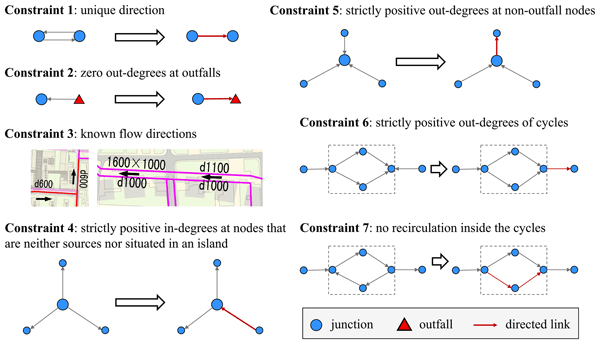
This work presents a new approach to simulate sewer drainage effects from incomplete information in the context of urban flooding, given missing information like flow directions and nodal depths. Tested in Yinchuan, China, our approach exhibits high accuracy in reproducing flood depths and reliably outperforms existing methods in various rainfall scenarios. Our method offers a reliable tool for cities with limited sewer data to improve flood simulation performance.
Bu Li, Ting Sun, Fuqiang Tian, Mahmut Tudaji, Li Qin, and Guangheng Ni
Hydrol. Earth Syst. Sci., 28, 4521–4538, https://doi.org/10.5194/hess-28-4521-2024, https://doi.org/10.5194/hess-28-4521-2024, 2024
Short summary
Short summary
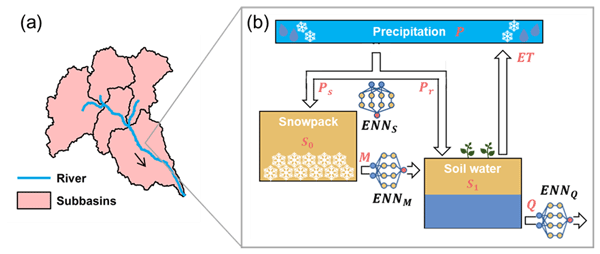
This paper developed hybrid semi-distributed hydrological models by employing a process-based model as the backbone and utilizing deep learning to parameterize and replace internal modules. The main contribution is to provide a high-performance tool enriched with explicit hydrological knowledge for hydrological prediction and to improve understanding about the hydrological sensitivities to climate change in large alpine basins.
Ting Sun, Hamidreza Omidvar, Zhenkun Li, Ning Zhang, Wenjuan Huang, Simone Kotthaus, Helen C. Ward, Zhiwen Luo, and Sue Grimmond
Geosci. Model Dev., 17, 91–116, https://doi.org/10.5194/gmd-17-91-2024, https://doi.org/10.5194/gmd-17-91-2024, 2024
Short summary
Short summary
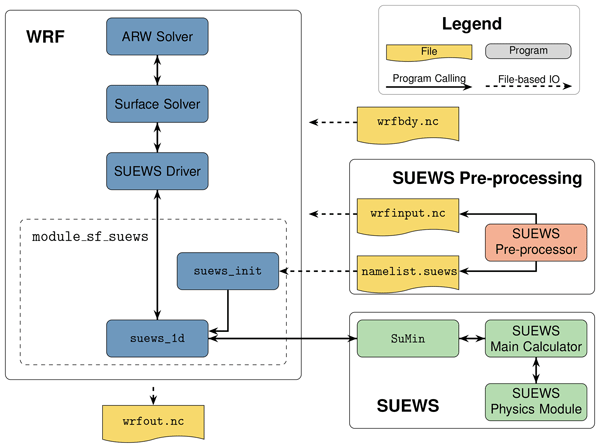
For the first time, we coupled a state-of-the-art urban land surface model – Surface Urban Energy and Water Scheme (SUEWS) – with the widely-used Weather Research and Forecasting (WRF) model, creating an open-source tool that may benefit multiple applications. We tested our new system at two UK sites and demonstrated its potential by examining how human activities in various areas of Greater London influence local weather conditions.
Ruidong Li, Ting Sun, Fuqiang Tian, and Guang-Heng Ni
Geosci. Model Dev., 16, 751–778, https://doi.org/10.5194/gmd-16-751-2023, https://doi.org/10.5194/gmd-16-751-2023, 2023
Short summary
Short summary
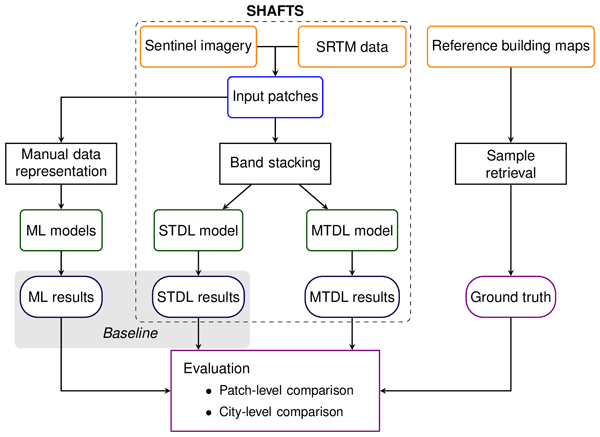
We developed SHAFTS (Simultaneous building Height And FootprinT extraction from Sentinel imagery), a multi-task deep-learning-based Python package, to estimate average building height and footprint from Sentinel imagery. Evaluation in 46 cities worldwide shows that SHAFTS achieves significant improvement over existing machine-learning-based methods.
Hamidreza Omidvar, Ting Sun, Sue Grimmond, Dave Bilesbach, Andrew Black, Jiquan Chen, Zexia Duan, Zhiqiu Gao, Hiroki Iwata, and Joseph P. McFadden
Geosci. Model Dev., 15, 3041–3078, https://doi.org/10.5194/gmd-15-3041-2022, https://doi.org/10.5194/gmd-15-3041-2022, 2022
Short summary
Short summary
This paper extends the applicability of the SUEWS to extensive pervious areas outside cities. We derived various parameters such as leaf area index, albedo, roughness parameters and surface conductance for non-urban areas. The relation between LAI and albedo is also explored. The methods and parameters discussed can be used for both online and offline simulations. Using appropriate parameters related to non-urban areas is essential for assessing urban–rural differences.
Luolin Wu, Jian Hang, Xuemei Wang, Min Shao, and Cheng Gong
Geosci. Model Dev., 14, 4655–4681, https://doi.org/10.5194/gmd-14-4655-2021, https://doi.org/10.5194/gmd-14-4655-2021, 2021
Short summary
Short summary
In order to investigate street-scale flow and air quality, this study has developed APFoam 1.0 to examine the reactive pollutant formation and dispersion in the urban area. The model has been validated and shows good agreement with wind tunnel experimental data. Model sensitivity cases reveal that vehicle emissions, background concentrations, and wind conditions are the key factors affecting the photochemical reaction process.
Cited articles
Bentham, T. and Britter, R.: Spatially averaged flow within obstacle arrays, Atmospheric Environment, 37, 2037–2043, https://doi.org/10.1016/S1352-2310(03)00123-7, 2003.
Caliot, C., d'Alençon, L., Blanco, S., Forest, V., Fournier, R., Hourdin, F., Retailleau, F., Schoetter, R., and Villefranque, N.: Coupled heat transfers resolution by Monte Carlo in urban geometry including direct and diffuse solar irradiations, International Journal of Heat and Mass Transfer, 222, 125139, https://doi.org/10.1016/j.ijheatmasstransfer.2023.125139, 2024.
Carmeliet, J. and Derome, D.: How to beat the heat in cities through urban climate modelling, Nature Reviews Physics, 6, 2–3, https://doi.org/10.1038/s42254-023-00673-1, 2024.
Chen, G., Mei, S.-J., Hang, J., Li, Q., and Wang, X.: URANS simulations of urban microclimates: Validated by scaled outdoor experiments, Building and Environment, 272, 112691, https://doi.org/10.1016/j.buildenv.2025.112691, 2025.
Ebi, K. L., Capon, A., Berry, P., Broderick, C., de Dear, R., Havenith, G., Honda, Y., Kovats, R. S., Ma, W., Malik, A., Morris, N. B., Nybo, L., Seneviratne, S. I., Vanos, J., and Jay, O.: Hot weather and heat extremes: health risks, The Lancet, 398, 698–708, https://doi.org/10.1016/S0140-6736(21)01208-3, 2021.
Eingrüber, N., Domm, A., Korres, W., and Schneider, K.: Simulation of the heat mitigation potential of unsealing measures in cities by parameterizing grass grid pavers for urban microclimate modelling with ENVI-met (V5), Geosci. Model Dev., 18, 141–160, https://doi.org/10.5194/gmd-18-141-2025, 2025.
Fan, Y., Zhao, Y., Torres, J. F., Xu, F., Lei, C., Li, Y., and Carmeliet, J.: Natural convection over vertical and horizontal heated flat surfaces: A review of recent progress focusing on underpinnings and implications for heat transfer and environmental applications, Physics of Fluids, 33, 101301, https://doi.org/10.1063/5.0065125, 2021.
Feng, J., Gao, K., Khan, H., Ulpiani, G., Vasilakopoulou, K., Young Yun, G., and Santamouris, M.: Overheating of Cities: Magnitude, Characteristics, Impact, Mitigation and Adaptation, and Future Challenges, Annual Review of Environment and Resources, 48, 651–679, https://doi.org/10.1146/annurev-environ-112321-093021, 2023.
Forouzandeh, A.: Prediction of surface temperature of building surrounding envelopes using holistic microclimate ENVI-met model, Sustainable Cities and Society, 70, 102878, https://doi.org/10.1016/j.scs.2021.102878, 2021.
Grimmond, C. S. B. and Oke, T. R.: Aerodynamic properties of urban areas derived from analysis of surface form, Journal of Applied Meteorology, 38, 1262, https://doi.org/10.1175/1520-0450(1999)038<1262:APOUAD>2.0.CO;2, 1999.
Grimmond, C. S. B., Blackett, M., Best, M. J., Barlow, J., Baik, J.-J., Belcher, S. E., Bohnenstengel, S. I., Calmet, I., Chen, F., Dandou, A., Fortuniak, K., Gouvea, M. L., Hamdi, R., Hendry, M., Kawai, T., Kawamoto, Y., Kondo, H., Krayenhoff, E. S., Lee, S.-H., Loridan, T., Martilli, A., Masson, V., Miao, S., Oleson, K., Pigeon, G., Porson, A., Ryu, Y.-H., Salamanca, F., Shashua-Bar, L., Steeneveld, G.-J., Tombrou, M., Voogt, J., Young, D., and Zhang, N.: The International Urban Energy Balance Models Comparison Project: First Results from Phase 1, Journal of Applied Meteorology and Climatology, 49, 1268–1292, https://doi.org/10.1175/2010JAMC2354.1, 2010.
Grimmond, C. S. B., Blackett, M., Best, M. J., Baik, J.-J., Belcher, S. E., Beringer, J., Bohnenstengel, S. I., Calmet, I., Chen, F., Coutts, A., Dandou, A., Fortuniak, K., Gouvea, M. L., Hamdi, R., Hendry, M., Kanda, M., Kawai, T., Kawamoto, Y., Kondo, H., Krayenhoff, E. S., Lee, S.-H., Loridan, T., Martilli, A., Masson, V., Miao, S., Oleson, K., Ooka, R., Pigeon, G., Porson, A., Ryu, Y.-H., Salamanca, F., Steeneveld, G. J., Tombrou, M., Voogt, J. A., Young, D. T., and Zhang, N.: Initial results from Phase 2 of the international urban energy balance model comparison, International Journal of Climatology, 31, 244–272, https://doi.org/10.1002/joc.2227, 2011.
Hang, J. and Chen, G.: Experimental study of urban microclimate on scaled street canyons with various aspect ratios, Urban Climate, 46, 101299, https://doi.org/10.1016/j.uclim.2022.101299, 2022.
Hang, J., Zeng, L., Li, X., and Wang, D.: Evaluation of a single-layer urban energy balance model using measured energy fluxes by scaled outdoor experiments in humid subtropical climate, Building and Environment, 254, 111364, https://doi.org/10.1016/j.buildenv.2024.111364, 2024.
Hang, J., Lu, M., Ren, L., Dong, H., Zhao, Y., and Zhao, N.: Cooling performance of near-infrared and traditional high-reflective coatings under various coating modes and building area densities in 3D urban models: Scaled outdoor experiments, Sustainable Cities and Society, 121, 106200, https://doi.org/10.1016/j.scs.2025.106200, 2025.
Hénon, A., Mestayer, P. G., Lagouarde, J.-P., and Voogt, J. A.: An urban neighborhood temperature and energy study from the CAPITOUL experiment with the Solene model, Theoretical and Applied Climatology, 110, 197–208, https://doi.org/10.1007/s00704-012-0616-z, 2012.
Kondo, A., Ueno, M., Kaga, A., and Yamaguchi, K.: The Influence Of Urban Canopy Configuration On Urban Albedo, Boundary-Layer Meteorology, 100, 225–242, https://doi.org/10.1023/A:1019243326464, 2001.
Krayenhoff, E. S. and Voogt, J. A.: A microscale three-dimensional urban energy balance model for studying surface temperatures, Boundary-Layer Meteorology, 123, 433–461, https://doi.org/10.1007/s10546-006-9153-6, 2007.
Manoli, G., Fatichi, S., Schläpfer, M., Yu, K., Crowther, T. W., Meili, N., Burlando, P., Katul, G. G., and Bou-Zeid, E.: Magnitude of urban heat islands largely explained by climate and population, Nature, 573, 55–60, https://doi.org/10.1038/s41586-019-1512-9, 2019.
Mei, S.-J.: GUST1.0: A GPU-accelerated 3D Urban Surface Temperature Model (1.1), Zenodo [code and data set], https://doi.org/10.5281/zenodo.17138571, 2025.
Mei, S.-J. and Yuan, C.: Three-dimensional simulation of building thermal plumes merging in calm conditions: Turbulence model evaluation and turbulence structure analysis, Building and Environment, 203, 108097, https://doi.org/10.1016/j.buildenv.2021.108097, 2021.
Mei, S.-J., Chen, G., Wang, K., and Hang, J.: Parameterizing urban canopy radiation transfer using three-dimensional urban morphological parameters, Urban Climate, 60, 102363, https://doi.org/10.1016/j.uclim.2025.102363, 2025.
Musy, M., Malys, L., Morille, B., and Inard, C.: The use of SOLENE-microclimat model to assess adaptation strategies at the district scale, Urban Climate, 14, 213–223, https://doi.org/10.1016/j.uclim.2015.07.004, 2015.
Nice, K. A., Coutts, A. M., and Tapper, N. J.: Development of the VTUF-3D v1.0 urban micro-climate model to support assessment of urban vegetation influences on human thermal comfort, Urban climate, 24, 1052–1076, https://doi.org/10.1016/j.uclim.2017.12.008, 2018.
Owens, S. O., Majumdar, D., Wilson, C. E., Bartholomew, P., and van Reeuwijk, M.: A conservative immersed boundary method for the multi-physics urban large-eddy simulation model uDALES v2.0, Geosci. Model Dev., 17, 6277–6300, https://doi.org/10.5194/gmd-17-6277-2024, 2024.
Reindl, D. T., Beckman, W. A., and Duffie, J. A.: Diffuse fraction correlations, Solar Energy, 45, 1–7, https://doi.org/10.1016/0038-092X(90)90060-P, 1990.
Resler, J., Krč, P., Belda, M., Juruš, P., Benešová, N., Lopata, J., Vlček, O., Damašková, D., Eben, K., Derbek, P., Maronga, B., and Kanani-Sühring, F.: PALM-USM v1.0: A new urban surface model integrated into the PALM large-eddy simulation model, Geosci. Model Dev., 10, 3635–3659, https://doi.org/10.5194/gmd-10-3635-2017, 2017.
Rodriguez, A., Lecigne, B., Wood, S., Carmeliet, J., Kubilay, A., and Derome, D.: Optimal representation of tree foliage for local urban climate modeling, Sustainable Cities and Society, 115, 105857, https://doi.org/10.1016/j.scs.2024.105857, 2024.
Salim, M. H., Schlünzen, K. H., Grawe, D., Boettcher, M., Gierisch, A. M. U., and Fock, B. H.: The microscale obstacle-resolving meteorological model MITRAS v2.0: model theory, Geosci. Model Dev., 11, 3427–3445, https://doi.org/10.5194/gmd-11-3427-2018, 2018.
Schoetter, R., Caliot, C., Chung, T.-Y., Hogan, R. J., and Masson, V.: Quantification of Uncertainties of Radiative Transfer Calculation in Urban Canopy Models, Boundary-Layer Meteorology, 189, 103–138, https://doi.org/10.1007/s10546-023-00827-9, 2023.
Talebi, S., Gharehbash, K., and Jalali, H. R.: Study on random walk and its application to solution of heat conduction equation by Monte Carlo method, Progress in Nuclear Energy, 96, 18–35, https://doi.org/10.1016/j.pnucene.2016.12.004, 2017.
Toparlar, Y., Blocken, B., Vos, P., van Heijst, G. J. F., Janssen, W. D., van Hooff, T., Montazeri, H., and Timmermans, H. J. P.: CFD simulation and validation of urban microclimate: A case study for Bergpolder Zuid, Rotterdam, Building and Environment, 83, 79–90, https://doi.org/10.1016/j.buildenv.2014.08.004, 2015.
Tregan, J. M., Amestoy, J. L., Bati, M., Bezian, J.-J., Blanco, S., Brunel, L., Caliot, C., Charon, J., Cornet, J.-F., Coustet, C., d'Alençon, L., Dauchet, J., Dutour, S., Eibner, S., El Hafi, M., Eymet, V., Farges, O., Forest, V., Fournier, R., Galtier, M., Gattepaille, V., Gautrais, J., He, Z., Hourdin, F., Ibarrart, L., Joly, J.-L., Lapeyre, P., Lavieille, P., Lecureux, M.-H., Lluc, J., Miscevic, M., Mourtaday, N., Nyffenegger-Péré, Y., Pelissier, L., Penazzi, L., Piaud, B., Rodrigues-Viguier, C., Roques, G., Roger, M., Saez, T., Terrée, G., Villefranque, N., Vourc'h, T., and Yaacoub, D.: Coupling radiative, conductive and convective heat-transfers in a single Monte Carlo algorithm: A general theoretical framework for linear situations, PLoS One, 18, e0283681, https://doi.org/10.1371/journal.pone.0283681, 2023.
Tuholske, C., Caylor, K., Funk, C., Verdin, A., Sweeney, S., Grace, K., Peterson, P., and Evans, T.: Global urban population exposure to extreme heat, Proceedings of the National Academy of Sciences of the United States of America, 118, e2024792118, https://doi.org/10.1073/pnas.2024792118, 2021.
Villefranque, N., Hourdin, F., d'Alençon, L., Blanco, S., Boucher, O., Caliot, C., Coustet, C., Dauchet, J., El Hafi, M., Eymet, V., Farges, O., Forest, V., Fournier, R., Gautrais, J., Masson, V., Piaud, B., and Schoetter, R.: The “teapot in a city”: A paradigm shift in urban climate modeling, Science Advances, 8, eabp8934, https://doi.org/10.1126/sciadv.abp8934, 2022.
Voogt, J. A. and Oke, T. R.: Effects of urban surface geometry on remotely-sensed surface temperature, International Journal of Remote Sensing, 19, 895–920, https://doi.org/10.1080/014311698215784, 1998.
Wang, K., Li, Y., Li, Y., and Lin, B.: Stone forest as a small-scale field model for the study of urban climate, International Journal of Climatology, 38, 3723–3731, https://doi.org/10.1002/joc.5536, 2018.
Wang, W., Wang, X., and Ng, E.: The coupled effect of mechanical and thermal conditions on pedestrian-level ventilation in high-rise urban scenarios, Building and Environment, 191, 107586, https://doi.org/10.1016/j.buildenv.2021.107586, 2021.
Wu, Z., Shi, Y., Ren, L., and Hang, J.: Scaled outdoor experiments to assess impacts of tree evapotranspiration and shading on microclimates and energy fluxes in 2D street canyons, Sustainable Cities and Society, 108, 105486, https://doi.org/10.1016/j.scs.2024.105486, 2024.
Yang, X. and Li, Y.: Development of a Three-Dimensional Urban Energy Model for Predicting and Understanding Surface Temperature Distribution, Boundary-Layer Meteorology, 149, 303–321, https://doi.org/10.1007/s10546-013-9842-x, 2013.
Yang, X. and Li, Y.: The impact of building density and building height heterogeneity on average urban albedo and street surface temperature, Building and Environment, 90, 146–156, https://doi.org/10.1016/j.buildenv.2015.03.037, 2015.
Yoshida, K., Miwa, S., Yamaki, H., and Honda, H.: Analyzing the impact of CUDA versions on GPU applications, Parallel Computing, 120, 103081, https://doi.org/10.1016/j.parco.2024.103081, 2024.
Yuan, C., Shan, R., Zhang, Y., Li, X.-X., Yin, T., Hang, J., and Norford, L.: Multilayer urban canopy modelling and mapping for traffic pollutant dispersion at high density urban areas, Science of The Total Environment, 647, 255–267, https://doi.org/10.1016/j.scitotenv.2018.07.409, 2019.
Yuan, C., Adelia, A. S., Mei, S., He, W., Li, X.-X., and Norford, L.: Mitigating intensity of urban heat island by better understanding on urban morphology and anthropogenic heat dispersion, Building and Environment, 176, 106876, https://doi.org/10.1016/j.buildenv.2020.106876, 2020.
Short summary
Cities face growing heat challenges due to dense buildings, but predicting surface temperatures is complex because sunlight, airflow, and heat radiation interact. By simulating how sunlight bounces between structures and how heat transfers through materials, we accurately predicted temperatures on roofs, roads, and walls. The model successfully handled intricate city layouts thanks to GPU speed. By revealing which heat matters most, we aim to guide smarter city designs for a warming climate.
Cities face growing heat challenges due to dense buildings, but predicting surface temperatures...