
Articles | Volume 18, issue 24
https://doi.org/10.5194/gmd-18-10095-2025
© Author(s) 2025. This work is distributed under
the Creative Commons Attribution 4.0 License.
the Creative Commons Attribution 4.0 License.
https://doi.org/10.5194/gmd-18-10095-2025
© Author(s) 2025. This work is distributed under
the Creative Commons Attribution 4.0 License.
the Creative Commons Attribution 4.0 License.
Development and technical paper
| 
18 Dec 2025
Development and technical paper |
| 18 Dec 2025
| 18 Dec 2025
An emulator-based modelling framework for studying astronomical controls on ocean anoxia with an application to the Devonian

Earth and Life Institute, UCLouvain, Louvain-la-Neuve, Belgium
Pierre Maffre
Géosciences Environnement Toulouse, CNRS – Université Paul Sabatier, Toulouse, France
Aix-Marseille Université, CNRS, IRD, INRA, Coll. France, CEREGE, Aix-en-Provence, France
Yves Goddéris
Géosciences Environnement Toulouse, CNRS – Université Paul Sabatier, Toulouse, France
Paul J. Valdes
School of Geographical Sciences, University of Bristol, Bristol, BS8 1SS, United Kingdom
Justin Gérard
Earth and Life Institute, UCLouvain, Louvain-la-Neuve, Belgium
Jarno J. C. Huygh
SediCClim, ULiège, Liège, Belgium
Anne-Christine Da Silva
SediCClim, ULiège, Liège, Belgium
Michel Crucifix
Earth and Life Institute, UCLouvain, Louvain-la-Neuve, Belgium
Related authors
Jarno J. C. Huygh, Carlton E. Brett, James J. Zambito IV, Ian J. Forsythe, Loïc Sablon, Justin Gérard, Michel Crucifix, and Anne-Christine Da Silva
EGUsphere, https://doi.org/10.5194/egusphere-2026-2034, https://doi.org/10.5194/egusphere-2026-2034, 2026
This preprint is open for discussion and under review for Climate of the Past (CP).
Short summary
Short summary
We analyzed rocks from the Sherburne Formation (New York, USA) to investigate how Milankovitch cycles influenced climate ~380 million years ago. The record shows strong precession, obliquity, and eccentricity signals, including nonlinear interactions. These patterns reveal pantropical teleconnections and demonstrate that Devonian climate was highly sensitive to orbital forcing.
Justin Gérard, Alexandre Pohl, Loïc Sablon, Jarno Huygh, Anne-Christine Da Silva, and Michel Crucifix
Clim. Past, 22, 1003–1021, https://doi.org/10.5194/cp-22-1003-2026, https://doi.org/10.5194/cp-22-1003-2026, 2026
Short summary
Short summary
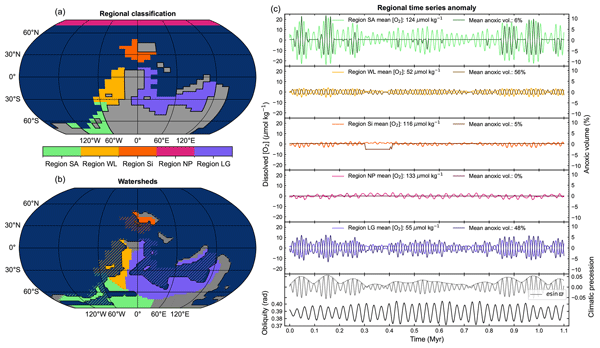
We studied how changes in Earth’s orbit affected ocean oxygen during the Devonian, a time of repeated environmental crises and extinctions. Using computer simulations, we show that certain orbital cycles, especially eccentricity maxima, exacerbate oxygen loss in the oceans, while obliquity also played a key role at high latitudes. The results also help explain why records from different places show contrasting signals and provide new insight into how natural climate cycles can affect ocean life.
Justin Gérard, Loïc Sablon, Jarno J. C. Huygh, Anne-Christine Da Silva, Alexandre Pohl, Christian Vérard, and Michel Crucifix
Clim. Past, 21, 239–260, https://doi.org/10.5194/cp-21-239-2025, https://doi.org/10.5194/cp-21-239-2025, 2025
Short summary
Short summary
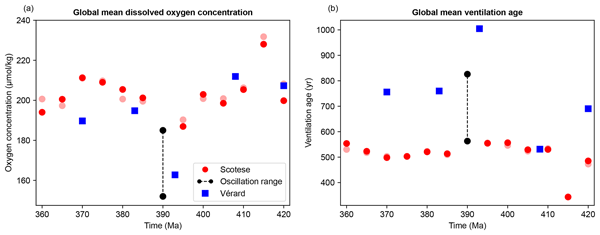
We used cGENIE, a climate model, to explore how changes in continental configuration, CO2 levels, and orbital configuration affected ocean oxygen levels during the Devonian period (419–359 million years ago). Key factors contributing to ocean anoxia were identified, highlighting the influence of continental configurations, atmospheric conditions, and orbital changes. Our findings offer new insights into the causes and prolonged durations of Devonian ocean anoxic events.
Linlin Chen, Alexander Farnsworth, and Paul Valdes
EGUsphere, https://doi.org/10.5194/egusphere-2026-2755, https://doi.org/10.5194/egusphere-2026-2755, 2026
This preprint is open for discussion and under review for Geoscientific Model Development (GMD).
Short summary
Short summary
Peatlands store vast amounts of carbon and have interacted with climate through Earth’s history, but their past global distribution is hard to estimate. We developed PeatClim v1.0, a machine learning model that predicts potential peatland occurrence from climate. Results show northern peatlands are linked to annual temperature range, while tropical peatlands depend more on annual rainfall. The model can improve reconstructions of past peatland extent, carbon storage, and climate feedbacks.
Jeanne Millot-Weil, Paul Valdes, and Alexander Farnsworth
EGUsphere, https://doi.org/10.5194/egusphere-2026-3719, https://doi.org/10.5194/egusphere-2026-3719, 2026
Short summary
Short summary
The Mid-Pleistocene Transition (MPT, ~1 million years ago) marked a major shift in glacial–interglacial cycles, linked to interactions between ice sheet and greenhouse gases (Ghg). Their individual contributions to glacial-interglacial changes during this period is unclear. Using climate model experiments, we untangle their respective impacts and show that Ghg impact directly surface temperature at the MPT, whereas ice sheets mainly influence ocean circulation changes.
Jarno J. C. Huygh, Carlton E. Brett, James J. Zambito IV, Ian J. Forsythe, Loïc Sablon, Justin Gérard, Michel Crucifix, and Anne-Christine Da Silva
EGUsphere, https://doi.org/10.5194/egusphere-2026-2034, https://doi.org/10.5194/egusphere-2026-2034, 2026
This preprint is open for discussion and under review for Climate of the Past (CP).
Short summary
Short summary
We analyzed rocks from the Sherburne Formation (New York, USA) to investigate how Milankovitch cycles influenced climate ~380 million years ago. The record shows strong precession, obliquity, and eccentricity signals, including nonlinear interactions. These patterns reveal pantropical teleconnections and demonstrate that Devonian climate was highly sensitive to orbital forcing.
Justin Gérard, Alexandre Pohl, Loïc Sablon, Jarno Huygh, Anne-Christine Da Silva, and Michel Crucifix
Clim. Past, 22, 1003–1021, https://doi.org/10.5194/cp-22-1003-2026, https://doi.org/10.5194/cp-22-1003-2026, 2026
Short summary
Short summary
We studied how changes in Earth’s orbit affected ocean oxygen during the Devonian, a time of repeated environmental crises and extinctions. Using computer simulations, we show that certain orbital cycles, especially eccentricity maxima, exacerbate oxygen loss in the oceans, while obliquity also played a key role at high latitudes. The results also help explain why records from different places show contrasting signals and provide new insight into how natural climate cycles can affect ocean life.
Hayley Lauren Bricker, Yurena Yanes, Alexa Terrazas, Alexandrea Jay Arnold, Jesse Bloom Bateman, Paul Valdes, Alexander Farnsworth, Robert Eagle, and Aradhna K. Tripati
EGUsphere, https://doi.org/10.5194/egusphere-2025-6270, https://doi.org/10.5194/egusphere-2025-6270, 2026
Short summary
Short summary
At the Last Glacial Maximum (LGM) ~21,000 years ago, global temperatures were 3–6 °C cooler than today. In Northwest Africa, a region influenced by complex seasonal oceanic and atmospheric processes, the nearby Canary Islands offer valuable insight. We analyzed modern and LGM land snails using carbonate clumped isotope thermometry and δ18O isotope analysis to assess temperature and precipitation. We find ~8 degrees of cooling during the LGM and no major changes in water source since then.
Nick R. Hayes, Daniel J. Lunt, Yves Goddéris, Richard D. Pancost, and Heather Buss
Clim. Past, 21, 2601–2618, https://doi.org/10.5194/cp-21-2601-2025, https://doi.org/10.5194/cp-21-2601-2025, 2025
Short summary
Short summary
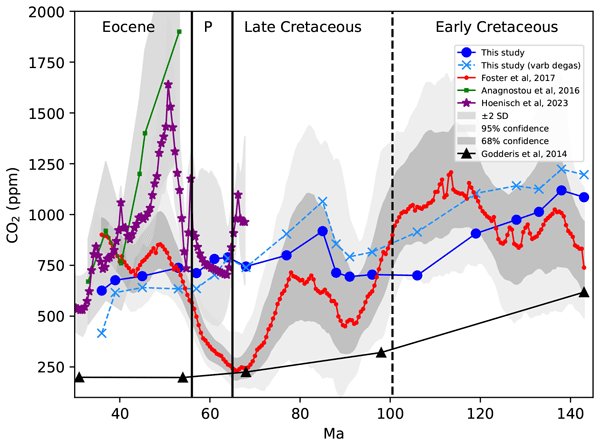
The breakdown of volcanic rocks by water helps balance the climate of the Earth by sequestering atmospheric CO2. The rate of CO2 sequestration is referred to as "weatherability". Our modelling study finds that continental position strongly impacts CO2 concentrations, that runoff strongly controls weatherability, that changes in weatherability may explain long-term trends in atmospheric CO2 concentrations, and that even relatively localised changes in weatherability may have global impacts.
Alison J. McLaren, Louise C. Sime, Simon Wilson, Jeff Ridley, Qinggang Gao, Merve Gorguner, Giorgia Line, Martin Werner, and Paul Valdes
Geosci. Model Dev., 18, 8129–8142, https://doi.org/10.5194/gmd-18-8129-2025, https://doi.org/10.5194/gmd-18-8129-2025, 2025
Short summary
Short summary
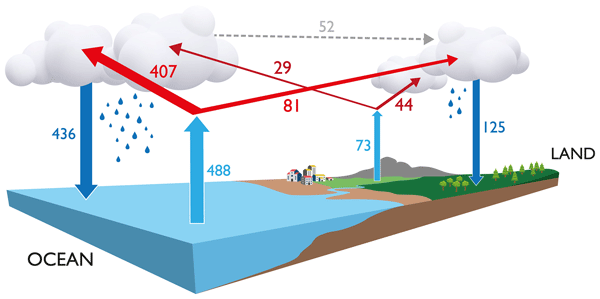
We describe a new development in a state-of-the-art computer atmosphere model, which follows the movement of the model’s water. This provides an efficient way to track all the model's rain and snow back to the average location of the evaporative source, as shown in a present-day simulation. The new scheme can be used in simulations of the future to predict how sources of regional rain or snowfall might change owing to human actions, providing useful information for water management purposes.
Victor Couplet and Michel Crucifix
EGUsphere, https://doi.org/10.5194/egusphere-2025-4959, https://doi.org/10.5194/egusphere-2025-4959, 2025
Short summary
Short summary
Some parts of the Earth system, like ice sheets or the Amazon rainforest, may start changing on their own once pushed past a limit, even if the original pressure stops. A major concern is whether these “tipping elements” can trigger one another, setting off domino-like cascades. Here we use a simple climate model to investigate this possibility. We show that strong emission cuts are needed to lower the risk of triggering such cascades.
Takahito Mitsui, Peter Ditlevsen, Niklas Boers, and Michel Crucifix
Earth Syst. Dynam., 16, 1569–1584, https://doi.org/10.5194/esd-16-1569-2025, https://doi.org/10.5194/esd-16-1569-2025, 2025
Short summary
Short summary
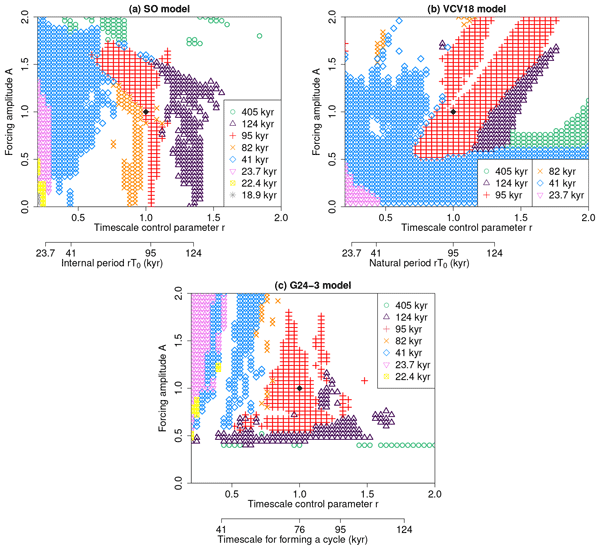
The late Pleistocene glacial cycles are dominated by a 100-kyr periodicity, rather than other major astronomical periods like 19, 23, 41, or 400 kyr. Various models propose distinct mechanisms to explain this, but their diversity may obscure the key factor behind the 100-kyr periodicity. We propose a timescale-matching hypothesis, suggesting that the ice-sheet climate system responds to astronomical forcing at ∼100 kyr because its intrinsic timescale is closer to 100 kyr than to other periods.
Pierre Maffre, Yves Goddéris, Guillaume Le Hir, Élise Nardin, Anta-Clarisse Sarr, and Yannick Donnadieu
Geosci. Model Dev., 18, 6367–6413, https://doi.org/10.5194/gmd-18-6367-2025, https://doi.org/10.5194/gmd-18-6367-2025, 2025
Short summary
Short summary
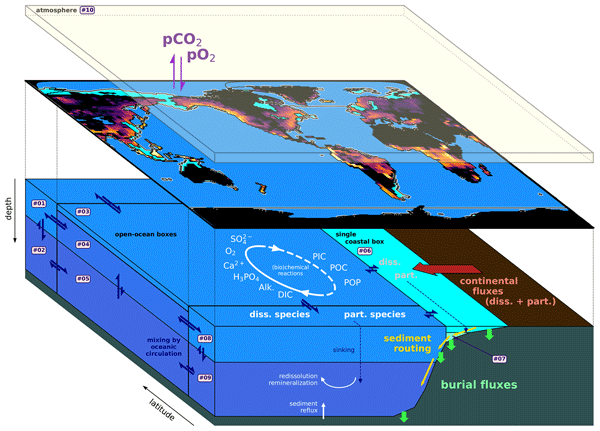
A new version (v7) of the numerical model GEOCLIM is presented here. GEOCLIM models the evolution of ocean and atmosphere chemical composition on multi-million-year timescales, including carbon and oxygen cycles, CO2, and climate. GEOCLIM is associated with a climate model, and a new procedure to link the climate model to GEOCLIM is presented here. GEOCLIM is applied here to investigate the evolution of ocean oxygenation following Earth's orbital parameter variations around 94 million years ago.
Takashi Obase, Laurie Menviel, Ayako Abe-Ouchi, Tristan Vadsaria, Ruza Ivanovic, Brooke Snoll, Sam Sherriff-Tadano, Paul J. Valdes, Lauren Gregoire, Marie-Luise Kapsch, Uwe Mikolajewicz, Nathaelle Bouttes, Didier Roche, Fanny Lhardy, Chengfei He, Bette Otto-Bliesner, Zhengyu Liu, and Wing-Le Chan
Clim. Past, 21, 1443–1463, https://doi.org/10.5194/cp-21-1443-2025, https://doi.org/10.5194/cp-21-1443-2025, 2025
Short summary
Short summary
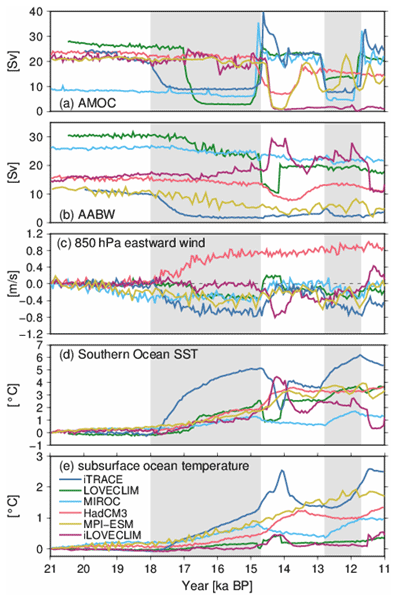
This study analyses transient simulations of the last deglaciation performed by six climate models to understand the processes driving high-southern-latitude temperature changes. We find that atmospheric CO2 and AMOC (Atlantic Meridional Overturning Circulation) changes are the primary drivers of the warming and cooling during the middle stage of the deglaciation. The analysis highlights the model's sensitivity of CO2 and AMOC to meltwater and the meltwater history of temperature changes at high southern latitudes.
Lilian Vanderveken and Michel Crucifix
Nonlin. Processes Geophys., 32, 189–200, https://doi.org/10.5194/npg-32-189-2025, https://doi.org/10.5194/npg-32-189-2025, 2025
Short summary
Short summary
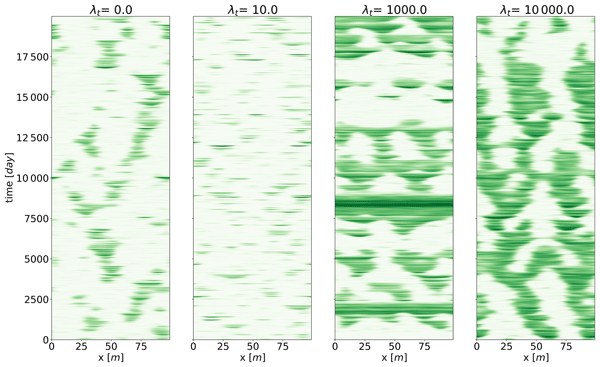
Vegetation patterns in semi-arid regions arise from interactions between plants and environmental factors. This study uses a numerical model to explore how vegetation responds to changes in rainfall and random disturbances. We identify key timescales that influence resilience, showing that ecosystems rely on both stable and unstable states to adapt. These findings offer insights into the resilience mechanisms that help ecosystems maintain stability under environmental stress.
Victor Couplet, Marina Martínez Montero, and Michel Crucifix
Geosci. Model Dev., 18, 3081–3129, https://doi.org/10.5194/gmd-18-3081-2025, https://doi.org/10.5194/gmd-18-3081-2025, 2025
Short summary
Short summary
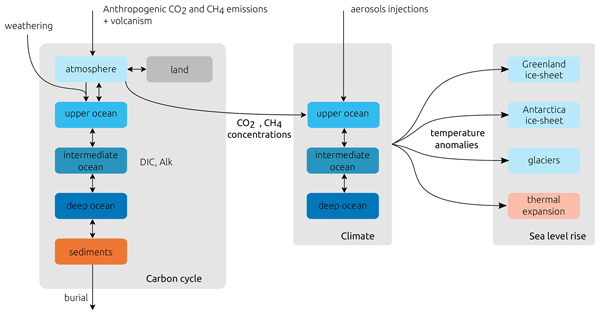
We present SURFER v3.0, a simple climate model designed to estimate the impact of CO2 and CH4 emissions on global temperatures, sea levels, and ocean pH. We added new carbon cycle processes and calibrated the model to observations and results from more complex models, enabling use over timescales ranging from decades to millions of years. SURFER v3.0 is fast, transparent, and easy to use, making it an ideal tool for policy assessments and suitable for educational purposes.
Elisa Ziegler, Nils Weitzel, Jean-Philippe Baudouin, Marie-Luise Kapsch, Uwe Mikolajewicz, Lauren Gregoire, Ruza Ivanovic, Paul J. Valdes, Christian Wirths, and Kira Rehfeld
Clim. Past, 21, 627–659, https://doi.org/10.5194/cp-21-627-2025, https://doi.org/10.5194/cp-21-627-2025, 2025
Short summary
Short summary
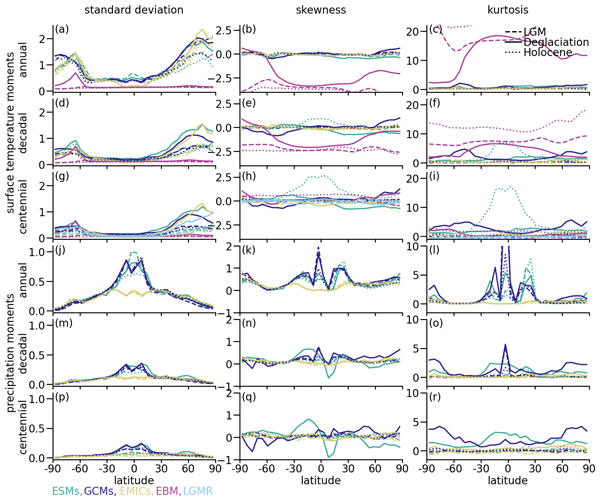
During the Last Deglaciation, global surface temperature rose by about 4–7 °C over several millennia. We show that changes in year-to-year up to century-to-century fluctuations of temperature and precipitation during the Deglaciation were mostly larger than during either the preceding or succeeding more stable periods in 15 climate model simulations. The analysis demonstrates how ice sheets, meltwater, and volcanism influence simulated variability to inform future simulation protocols.
Justin Gérard, Loïc Sablon, Jarno J. C. Huygh, Anne-Christine Da Silva, Alexandre Pohl, Christian Vérard, and Michel Crucifix
Clim. Past, 21, 239–260, https://doi.org/10.5194/cp-21-239-2025, https://doi.org/10.5194/cp-21-239-2025, 2025
Short summary
Short summary
We used cGENIE, a climate model, to explore how changes in continental configuration, CO2 levels, and orbital configuration affected ocean oxygen levels during the Devonian period (419–359 million years ago). Key factors contributing to ocean anoxia were identified, highlighting the influence of continental configurations, atmospheric conditions, and orbital changes. Our findings offer new insights into the causes and prolonged durations of Devonian ocean anoxic events.
Yixuan Xie, Daniel J. Lunt, and Paul J. Valdes
Clim. Past, 20, 2561–2585, https://doi.org/10.5194/cp-20-2561-2024, https://doi.org/10.5194/cp-20-2561-2024, 2024
Short summary
Short summary
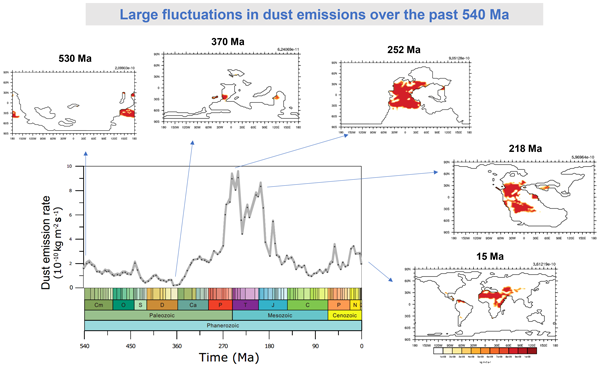
Desert dust plays a crucial role in the climate system; while it is relatively well studied for the present day, we still lack knowledge on how it was in the past and on its underlying mechanism in the multi-million-year timescale of Earth’s history. For the first time, we simulate dust emissions using the newly developed DUSTY1.0 model over the past 540 million years with a temporal resolution of ~5 million years. We find that palaeogeography is the primary control of these variations.
Violet L. Patterson, Lauren J. Gregoire, Ruza F. Ivanovic, Niall Gandy, Jonathan Owen, Robin S. Smith, Oliver G. Pollard, Lachlan C. Astfalck, and Paul J. Valdes
Clim. Past, 20, 2191–2218, https://doi.org/10.5194/cp-20-2191-2024, https://doi.org/10.5194/cp-20-2191-2024, 2024
Short summary
Short summary
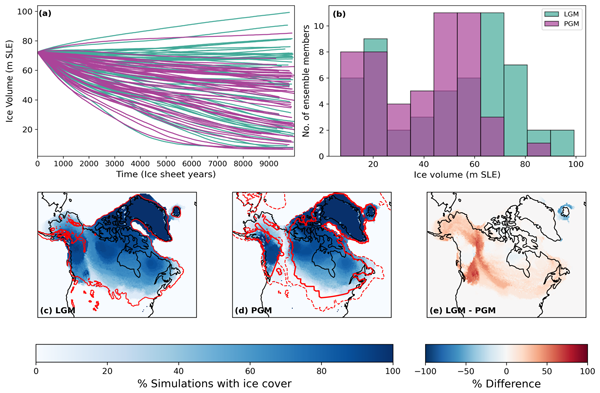
Simulations of the last two glacial periods are run using a computer model in which the atmosphere and ice sheets interact. The results show that the initial conditions used in the simulations are the primary reason for the difference in simulated North American ice sheet volume between each period. Thus, the climate leading up to the glacial maxima and other factors, such as vegetation, are important contributors to the differences in the ice sheets at the Last and Penultimate glacial maxima.
Dongyu Zheng, Andrew S. Merdith, Yves Goddéris, Yannick Donnadieu, Khushboo Gurung, and Benjamin J. W. Mills
Geosci. Model Dev., 17, 5413–5429, https://doi.org/10.5194/gmd-17-5413-2024, https://doi.org/10.5194/gmd-17-5413-2024, 2024
Short summary
Short summary
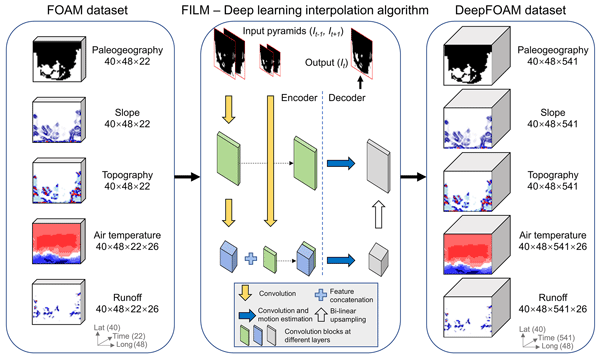
This study uses a deep learning method to upscale the time resolution of paleoclimate simulations to 1 million years. This improved resolution allows a climate-biogeochemical model to more accurately predict climate shifts. The method may be critical in developing new fully continuous methods that are able to be applied over a moving continental surface in deep time with high resolution at reasonable computational expense.
Brooke Snoll, Ruza Ivanovic, Lauren Gregoire, Sam Sherriff-Tadano, Laurie Menviel, Takashi Obase, Ayako Abe-Ouchi, Nathaelle Bouttes, Chengfei He, Feng He, Marie Kapsch, Uwe Mikolajewicz, Juan Muglia, and Paul Valdes
Clim. Past, 20, 789–815, https://doi.org/10.5194/cp-20-789-2024, https://doi.org/10.5194/cp-20-789-2024, 2024
Short summary
Short summary
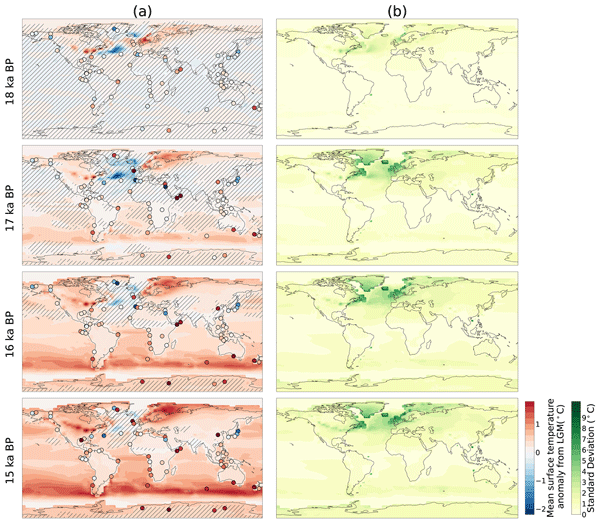
Geological records show rapid climate change throughout the recent deglaciation. The drivers of these changes are still misunderstood but are often attributed to shifts in the Atlantic Ocean circulation from meltwater input. A cumulative effort to understand these processes prompted numerous simulations of this period. We use these to explain the chain of events and our collective ability to simulate them. The results demonstrate the importance of the meltwater amount used in the simulation.
Justin Gérard and Michel Crucifix
Earth Syst. Dynam., 15, 293–306, https://doi.org/10.5194/esd-15-293-2024, https://doi.org/10.5194/esd-15-293-2024, 2024
Short summary
Short summary
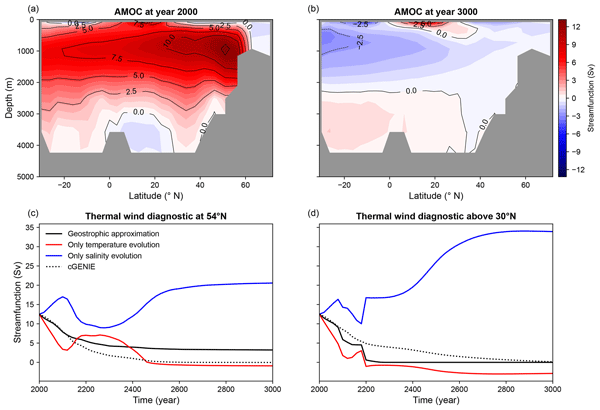
We used cGENIE, a climate model, to investigate the Atlantic Meridional Overturning Circulation (AMOC) slowdown under a warming scenario. We apply a diagnostic that was used in a previous study (Levang and Schmitt, 2020) to separate the temperature from salinity contribution to this slowdown. We find that, in our model, the initial slowdown of the AMOC was driven by temperature and that salinity takes the lead for the termination of the circulation.
Jonas Van Breedam, Philippe Huybrechts, and Michel Crucifix
Clim. Past, 19, 2551–2568, https://doi.org/10.5194/cp-19-2551-2023, https://doi.org/10.5194/cp-19-2551-2023, 2023
Short summary
Short summary
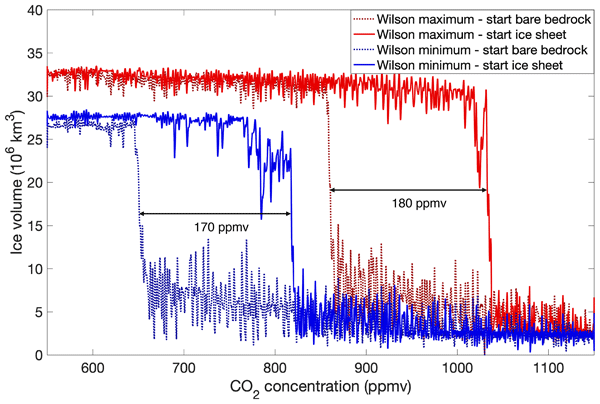
We investigated the different boundary conditions to allow ice sheet growth and ice sheet decline of the Antarctic ice sheet when it appeared ∼38–34 Myr ago. The thresholds for ice sheet growth and decline differ because of the different climatological conditions above an ice sheet (higher elevation and higher albedo) compared to a bare topography. We found that the ice–albedo feedback and the isostasy feedback respectively ease and delay the transition from a deglacial to glacial state.
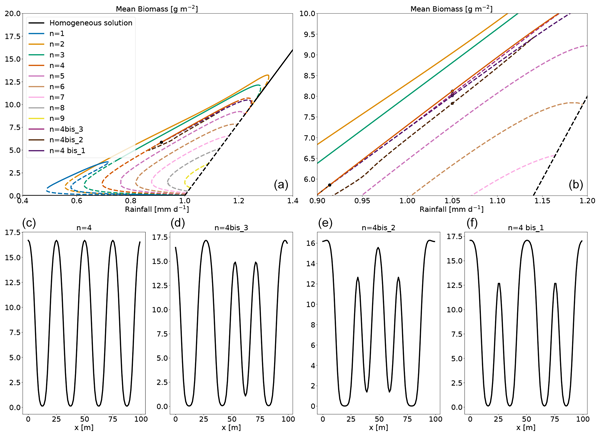
Lilian Vanderveken, Marina Martínez Montero, and Michel Crucifix
Nonlin. Processes Geophys., 30, 585–599, https://doi.org/10.5194/npg-30-585-2023, https://doi.org/10.5194/npg-30-585-2023, 2023
Short summary
Short summary
In semi-arid regions, hydric stress affects plant growth. In these conditions, vegetation patterns develop and effectively allow for vegetation to persist under low water input. The formation of patterns and the transition between patterns can be studied with small models taking the form of dynamical systems. Our study produces a full map of stable and unstable solutions in a canonical vegetation model and shows how they determine the transitions between different patterns.
Vincent Regard, Rafael Almar, Marcan Graffin, Sébastien Carretier, Edward Anthony, Roshanka Ranasinghe, and Pierre Maffre
Nat. Hazards Earth Syst. Sci. Discuss., https://doi.org/10.5194/nhess-2023-165, https://doi.org/10.5194/nhess-2023-165, 2023
Publication in NHESS not foreseen
Short summary
Short summary
The erosion of sandy beaches affects human activities and ecosystems. Research has mainly focused on sea level and wave changes, and while localized sediment research is abundant, the global effect of reduced fluvial sediment supply remains unexplored. This study presents a global sediment model that demonstrates the significant impact of river dams on beach erosion worldwide. Sediment can travel long distances via wave-induced transport, often away from river outlets.
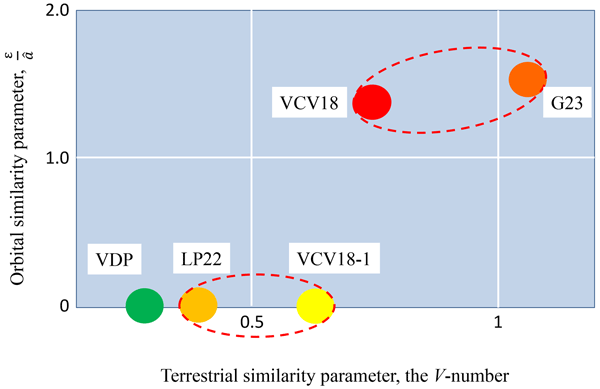
Mikhail Y. Verbitsky and Michel Crucifix
Clim. Past, 19, 1793–1803, https://doi.org/10.5194/cp-19-1793-2023, https://doi.org/10.5194/cp-19-1793-2023, 2023
Short summary
Short summary
Are phenomenological dynamical paleoclimate models physically similar to Nature? We demonstrated that though they may be very accurate in reproducing empirical time series, this is not sufficient to claim physical similarity with Nature until similarity parameters are considered. We suggest that the diagnostics of physical similarity should become a standard procedure before a phenomenological model can be utilized for interpretations of historical records or future predictions.
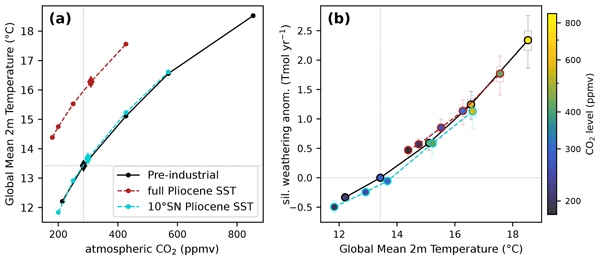
Pierre Maffre, John C. H. Chiang, and Nicholas L. Swanson-Hysell
Clim. Past, 19, 1461–1479, https://doi.org/10.5194/cp-19-1461-2023, https://doi.org/10.5194/cp-19-1461-2023, 2023
Short summary
Short summary
CO2 consumption by chemical alteration of continental silicate rocks regulates atmospheric CO2 and Earth's mean climate. The efficiency of this regulation is affected by the amount of continental precipitation and may have been reduced 3 to 4 million years ago because of different patterns of sea surface temperature. This process could have contributed to the warmer climate of that time.
Caitlyn R. Witkowski, Vittoria Lauretano, Alex Farnsworth, Shufeng Li, Shi-Hu Li, Jan Peter Mayser, B. David A. Naafs, Robert A. Spicer, Tao Su, He Tang, Zhe-Kun Zhou, Paul J. Valdes, and Richard D. Pancost
EGUsphere, https://doi.org/10.5194/egusphere-2023-373, https://doi.org/10.5194/egusphere-2023-373, 2023
Preprint archived
Short summary
Short summary
Untangling the complex tectonic evolution in the Tibetan region can help us understand its impacts on climate, the Asian monsoon system, and the development of major biodiversity hotspots. We show that this “missing link” site between high elevation Tibet and low elevation coastal China had a dynamic environment but no temperature change, meaning its been at its current-day elevation for the past 34 million years.
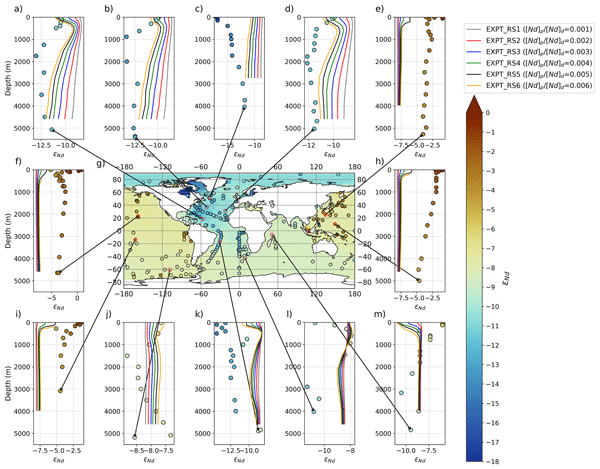
Suzanne Robinson, Ruza F. Ivanovic, Lauren J. Gregoire, Julia Tindall, Tina van de Flierdt, Yves Plancherel, Frerk Pöppelmeier, Kazuyo Tachikawa, and Paul J. Valdes
Geosci. Model Dev., 16, 1231–1264, https://doi.org/10.5194/gmd-16-1231-2023, https://doi.org/10.5194/gmd-16-1231-2023, 2023
Short summary
Short summary
We present the implementation of neodymium (Nd) isotopes into the ocean model of FAMOUS (Nd v1.0). Nd fluxes from seafloor sediment and incorporation of Nd onto sinking particles represent the major global sources and sinks, respectively. However, model–data mismatch in the North Pacific and northern North Atlantic suggest that certain reactive components of the sediment interact the most with seawater. Our results are important for interpreting Nd isotopes in terms of ocean circulation.
Michael P. Erb, Nicholas P. McKay, Nathan Steiger, Sylvia Dee, Chris Hancock, Ruza F. Ivanovic, Lauren J. Gregoire, and Paul Valdes
Clim. Past, 18, 2599–2629, https://doi.org/10.5194/cp-18-2599-2022, https://doi.org/10.5194/cp-18-2599-2022, 2022
Short summary
Short summary
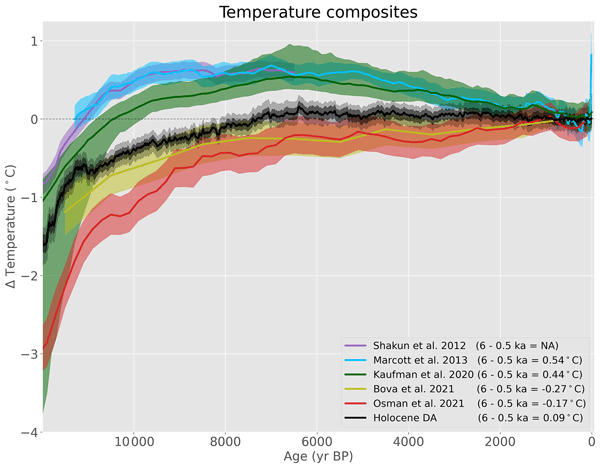
To look at climate over the past 12 000 years, we reconstruct spatial temperature using natural climate archives and information from model simulations. Our results show mild global mean warmth around 6000 years ago, which differs somewhat from past reconstructions. Undiagnosed seasonal biases in the data could explain some of the observed temperature change, but this still would not explain the large difference between many reconstructions and climate models over this period.
Marina Martínez Montero, Michel Crucifix, Victor Couplet, Nuria Brede, and Nicola Botta
Geosci. Model Dev., 15, 8059–8084, https://doi.org/10.5194/gmd-15-8059-2022, https://doi.org/10.5194/gmd-15-8059-2022, 2022
Short summary
Short summary
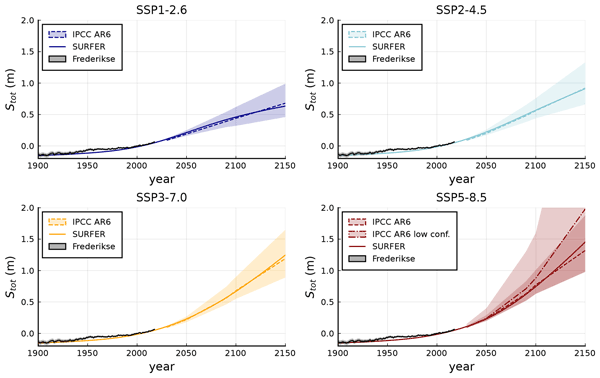
We present SURFER, a lightweight model that links CO2 emissions and geoengineering to ocean acidification and sea level rise from glaciers, ocean thermal expansion and Greenland and Antarctic ice sheets. The ice sheet module adequately describes the tipping points of both Greenland and Antarctica. SURFER is understandable, fast, accurate up to several thousands of years, capable of emulating results obtained by state of the art models and well suited for policy analyses.
Jonas Van Breedam, Philippe Huybrechts, and Michel Crucifix
Geosci. Model Dev., 14, 6373–6401, https://doi.org/10.5194/gmd-14-6373-2021, https://doi.org/10.5194/gmd-14-6373-2021, 2021
Short summary
Short summary
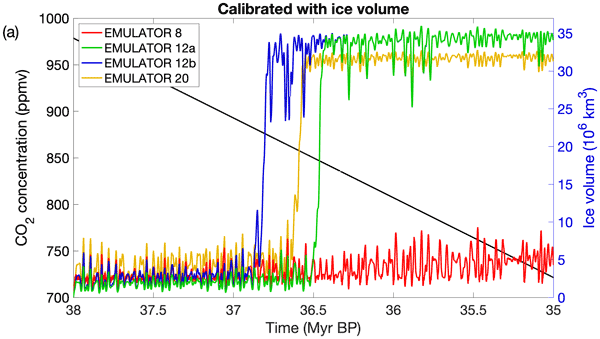
Ice sheets are an important component of the climate system and interact with the atmosphere through albedo variations and changes in the surface height. On very long timescales, it is impossible to directly couple ice sheet models with climate models and other techniques have to be used. Here we present a novel coupling method between ice sheets and the atmosphere by making use of an emulator to simulate ice sheet–climate interactions for several million years.
Cited articles
Algeo, T. J. and Scheckler, S. E.: Land Plant Evolution and Weathering Rate Changes in the Devonian, J. Earth Sci., 21, 75–78, https://doi.org/10.1007/s12583-010-0173-2, 2010. a
Arndt, S., Regnier, P., Goddéris, Y., and Donnadieu, Y.: GEOCLIM reloaded (v 1.0): a new coupled earth system model for past climate change, Geosci. Model Dev., 4, 451–481, https://doi.org/10.5194/gmd-4-451-2011, 2011. a, b
Bahcall, J. N., Pinsonneault, M. H., and Basu, S.: Solar Models: Current Epoch and Time Dependences, Neutrinos, and Helioseismological Properties, Astrophys. J., 555, 990, https://doi.org/10.1086/321493, 2001. a
Bates, S., Sienz, J., and Toropov, V.: Formulation of the Optimal Latin Hypercube Design of Experiments Using a Permutation Genetic Algorithm, https://doi.org/10.2514/6.2004-2011, 2012. a
Becker, R. T., Marshall, J. E. A., Da Silva, A. C., Agterberg, F. P., Gradstein, F. M., and Ogg, J. G.: Chapter 22 – The Devonian Period, in: Geologic Time Scale 2020, edited by: Gradstein, F. M., Ogg, J. G., Schmitz, M. D., and Ogg, G. M., Elsevier, 733–810, ISBN 978-0-12-824360-2, https://doi.org/10.1016/B978-0-12-824360-2.00022-X, 2020. a
Beckers, T.: An Introduction to Gaussian Process Models, arXiv [preprint], arXiv:2102.05497 [cs, eess], https://doi.org/10.48550/arXiv.2102.05497, 2021. a
Berger, A. and Loutre, M. F.: Insolation values for the climate of the last 10 million years, Quaternary Sci. Rev., 10, 297–317, https://doi.org/10.1016/0277-3791(91)90033-Q, 1991. a
Berger, A. and Loutre, M. F.: Precession, Eccentricity, Obliquity, Insolation and Paleoclimates, in: Long-Term Climatic Variations, edited by: Duplessy, J.-C. and Spyridakis, M.-T., Springer, Berlin, Heidelberg, 107–151, ISBN 978-3-642-79066-9, https://doi.org/10.1007/978-3-642-79066-9_5, 1994. a
Berger, A. and Yin, Q.: Orbital Forcing (Astronomical Theory of Paleoclimates), in: Encyclopedia of Geology (Second Edition), edited by: Alderton, D. and Elias, S. A., Academic Press, Oxford, 435–443, ISBN 978-0-08-102909-1, https://doi.org/10.1016/B978-0-12-409548-9.11990-6, 2021. a
Bezanson, J., Karpinski, S., Shah, V. B., and Edelman, A.: Julia: A fast dynamic language for technical computing, arXiv [preprint], https://doi.org/10.48550/arXiv.1209.5145, 2012. a
Bounceur, N., Crucifix, M., and Wilkinson, R. D.: Global sensitivity analysis of the climate–vegetation system to astronomical forcing: an emulator-based approach, Earth Syst. Dynam., 6, 205–224, https://doi.org/10.5194/esd-6-205-2015, 2015. a, b, c, d
Brugger, J., Hofmann, M., Petri, S., and Feulner, G.: On the Sensitivity of the Devonian Climate to Continental Configuration, Vegetation Cover, Orbital Configuration, CO2 Concentration, and Insolation, Paleoceanogr. Paleoclimatol., 34, 1375–1398, https://doi.org/10.1029/2019PA003562, 2019. a
Cai, C., Xu, C., Fakhraee, M., Chen, D., and Peng, Y.: Significant fluctuation in the global sulfate reservoir and oceanic redox state during the Late Devonian event, PNAS Nexus, 1, pgac122, https://doi.org/10.1093/pnasnexus/pgac122, 2022. a
Carmichael, S. K., Waters, J. A., Königshof, P., Suttner, T. J., and Kido, E.: Paleogeography and Paleoenvironments of the Late Devonian Kellwasser Event: A Review of Its Sedimentological and Geochemical Expression, Global Planet. Change, 183, 102984, https://doi.org/10.1016/j.gloplacha.2019.102984, 2019. a
Cox, P., Betts, R., Bunton, C., Essery, R., Rowntree, P., and Smith, J.: The impact of new land surface physics on the GCM simulation of climate and climate sensitivity, Clim. Dynam., 15, 183–203, 1999. a
Cox, P. M.: Description of the TRIFFID dynamic global vegetation model, Hadley Centre, Met Office, London Road, Bracknell, Berks, RG122SY, UK, 17 pp., https://www.researchgate.net/publication/245877262_Description_of_the_TRIFFID_dynamic_global_vegetation_model (last access: 4 December 2025), 2001. a
Cox, P. M., Betts, R. A., Jones, C. D., Spall, S. A., and Totterdell, I. J.: Acceleration of global warming due to carbon-cycle feedbacks in a coupled climate model, Nature, 408, 184–187, 2000. a
Crucifix, M.: Generation of sample climatic precession and obliquity solutions for running climate experiments over the Devonian, Zenodo [code and data set], https://doi.org/10.5281/zenodo.14894811, 2025. a, b
Da Silva, A.-C., Sinnesael, M., Claeys, P., Davies, J. H. F. L., de Winter, N. J., Percival, L. M. E., Schaltegger, U., and De Vleeschouwer, D.: Anchoring the Late Devonian mass extinction in absolute time by integrating climatic controls and radio-isotopic dating, Sci. Rep., 10, 12940, https://doi.org/10.1038/s41598-020-69097-6, 2020. a
De Vleeschouwer, D., Da Silva, A.-C., Sinnesael, M., Chen, D., Day, J. E., Whalen, M. T., Guo, Z., and Claeys, P.: Timing and pacing of the Late Devonian mass extinction event regulated by eccentricity and obliquity, Nat. Commun., 8, 2268, https://doi.org/10.1038/s41467-017-02407-1, 2017. a, b, c, d
De Vleeschouwer, D., Percival, L. M. E., Wichern, N. M. A., and Batenburg, S. J.: Pre-Cenozoic Cyclostratigraphy and Palaeoclimate Responses to Astronomical Forcing, Nat. Rev. Earth Environ., 5, 59–74, https://doi.org/10.1038/s43017-023-00505-x, 2024. a, b, c
Dixit, V. K. and Rackauckas, C.: Optimization.jl: A Unified Optimization Package, Zenodo [code], https://doi.org/10.5281/zenodo.7738525, 2023. a
Donnadieu, Y., Goddéris, Y., Pierrehumbert, R., Dromart, G., Fluteau, F., and Jacob, R.: A GEOCLIM simulation of climatic and biogeochemical consequences of Pangea breakup, Geochem. Geophy. Geosy., 7, https://doi.org/10.1029/2006GC001278, 2006. a, b
Duvenaud, D., Lloyd, J., Grosse, R., Tenenbaum, J., and Zoubin, G.: Structure Discovery in Nonparametric Regression through Compositional Kernel Search, in: Proceedings of the 30th International Conference on Machine Learning, PMLR, 1166–1174, http://proceedings.mlr.press/v28/duvenaud13.pdf (last access: 4 December 2025), 2013. a
Eliáš, J. and Vořechovský, M.: Modification of the Audze–Eglājs criterion to achieve a uniform distribution of sampling points, Adv. Eng. Softw., 100, 82–96, https://doi.org/10.1016/j.advengsoft.2016.07.004, 2016. a
Essery, R., Best, M., and Cox, P.: MOSES 2.2 technical documentation, in: vol. 30, Hadley Centre for Climate Prediction and Research, https://www.researchgate.net/profile/Peter-Cox-3/publication/265199825_MOSES_22_technical_documentation/links/549815310cf2c5a7e34292fe/MOSES-22-technical-documentation.pdf (last access: 4 December 2025), 2001. a
Farhat, M., Auclair-Desrotour, P., Boué, G., and Laskar, J.: The resonant tidal evolution of the Earth-Moon distance, Astron. Astrophys., 665, L1, https://doi.org/10.1051/0004-6361/202243445, 2022. a
Gabet, E. J. and Mudd, S. M.: A theoretical model coupling chemical weathering rates with denudation rates, Geology, 37, 151–154, https://doi.org/10.1130/G25270A.1, 2009. a
Gérard, J., Sablon, L., Huygh, J. J. C., Da Silva, A.-C., Pohl, A., Vérard, C., and Crucifix, M.: Exploring the Mechanisms of Devonian Oceanic Anoxia: Impact of Ocean Dynamics, Palaeogeography, and Orbital Forcing, Clim. Past, 21, 239–260, https://doi.org/10.5194/cp-21-239-2025, 2025. a
Goddéris, Y. and Donnadieu, Y.: A sink- or a source-driven carbon cycle at the geological timescale? Relative importance of palaeogeography versus solid Earth degassing rate in the Phanerozoic climatic evolution, Geol. Mag., 156, 355–365, https://doi.org/10.1017/S0016756817001054, 2019. a, b
Haddad, E. E., Boyer, D. L., Droser, M. L., Lee, B. K., Lyons, T. W., and Love, G. D.: Ichnofabrics and Chemostratigraphy Argue against Persistent Anoxia during the Upper Kellwasser Event in New York State, Palaeogeogr. Palaeocl. Palaeoecol., 490, 178–190, https://doi.org/10.1016/j.palaeo.2017.10.025, 2018. a
Hartmann, J. and Moosdorf, N.: The New Global Lithological Map Database GLiM: A Representation of Rock Properties at the Earth Surface, Geochem. Geophy. Geosy., 13, https://doi.org/10.1029/2012GC004370, 2012. a
Higdon, D., Gattiker, J., Williams, B., and Rightley, M.: Computer Model Calibration Using High-Dimensional Output, J. Am. Stat. Assoc., 103, 570–583, https://doi.org/10.1198/016214507000000888, 2008. a
Holden, P. B. and Edwards, N. R.: Dimensionally Reduced Emulation of an AOGCM for Application to Integrated Assessment Modelling, Geophys. Res. Lett., 37, https://doi.org/10.1029/2010GL045137, 2010. a
Iman, R. L., Helton, J. C., and Campbell, J. E.: An approach to sensitivity analysis of computer models: Part I – Introduction, input variable selection and preliminary variable assessment, J. Qual. Technol., 13, 174–183, 1981. a
Innes, M.: Don't Unroll Adjoint: Differentiating SSA-Form Programs, arXiv [preprint], https://doi.org/10.48550/arXiv.1810.07951, 2019. a
Kennedy, M. and O'Hagan, A.: Predicting the output from a complex computer code when fast approximations are available, Biometrika, 87, 1–13, https://doi.org/10.1093/biomet/87.1.1, 2000. a, b
Laskar, J.: Chapter 4 – Astrochronology, in: Geologic Time Scale 2020, edited by: Gradstein, F. M., Ogg, J. G., Schmitz, M. D., and Ogg, G. M., Elsevier, 139–158, ISBN 978-0-12-824360-2, https://doi.org/10.1016/B978-0-12-824360-2.00004-8, 2020. a
Laskar, J., Robutel, P., Joutel, F., Gastineau, M., Correia, A. C. M., and Levrard, B.: A long-term numerical solution for the insolation quantities of the Earth, Astron. Astrophys., 428, 261–285, https://doi.org/10.1051/0004-6361:20041335, 2004. a
Laskar, J., Fienga, A., Gastineau, M., and Manche, H.: La2010: a new orbital solution for the long-term motion of the Earth, Astron. Astrophys., 532, https://doi.org/10.1051/0004-6361/201116836, 2011. a, b
Lin, L. I.-K.: A Concordance Correlation Coefficient to Evaluate Reproducibility, Biometrics, 45, 255–268, https://doi.org/10.2307/2532051, 1989. a
Lu, M., Lu, Y., Ikejiri, T., Sun, D., Carroll, R. E., Blair, E. H., Algeo, T. J., and Sun, Y.: Periodic oceanic euxinia and terrestrial fluxes linked to astronomical forcing during the Late Devonian Frasnian-Famennian mass extinction, Earth Planet. Sc. Lett., 562, 116839, https://doi.org/10.1016/j.epsl.2021.116839, 2021. a
Ma, K., Hinnov, L., Zhang, X., and Gong, Y.: Astronomical climate changes trigger Late Devonian bio- and environmental events in South China, Global Planet. Change, 215, 103874, https://doi.org/10.1016/j.gloplacha.2022.103874, 2022. a, b
Ma, K., Hinnov, L., Wang, Z., Wang, K., Zong, R., Zhang, X., Song, J., Bai, Y., and Gong, Y.: Astronomically Forced Dynamics of Late Devonian (Famennian) Sea Level and Biotic Recovery in Western Junggar, Northwest China, Global Planet. Change, 245, 104677, https://doi.org/10.1016/j.gloplacha.2024.104677, 2025. a, b
Maffre, P., Swanson-Hysell, N. L., and Goddéris, Y.: Limited Carbon Cycle Response to Increased Sulfide Weathering Due to Oxygen Feedback, Geophys. Res. Lett., 48, e2021GL094589, https://doi.org/10.1029/2021GL094589, 2021. a, b, c
Maffre, P., Godderis, Y., Pohl, A., Donnadieu, Y., Carretier, S., and Hir, G. L.: The Complex Response of Continental Silicate Rock Weathering to the Colonization of the Continents by Vascular Plants in the Devonian, Am. J. Sci., 322, 461–492, https://doi.org/10.2475/03.2022.02, 2022. a
Maffre, P., Goddéris, Y., Le Hir, G., Nardin, É., Sarr, A.-C., and Donnadieu, Y.: GEOCLIM7, an Earth System Model for Multi-Million-Year Evolution of the Geochemical Cycles and Climate, Geosci. Model Dev., 18, 6367–6413, https://doi.org/10.5194/gmd-18-6367-2025, 2025. a, b
Marcilly, C. M., Torsvik, T. H., Domeier, M., and Royer, D. L.: New paleogeographic and degassing parameters for long-term carbon cycle models, Gondwana Res., 97, 176–203, https://doi.org/10.1016/j.gr.2021.05.016, 2021. a
McKay, M. D., Beckman, R. J., and Conover, W. J.: A comparison of three methods for selecting values of input variables in the analysis of output from a computer code, Technometrics, 42, 55–61, 2000. a
Milankovitch, M.: Kanon der Erdbestrahlung und seine Anwendung auf das Eiszeitenproblem, Roy. Serb. Acad. Spec. Publ., 133, 1–633, 1941. a
Mogavero, F. and Laskar, J.: The origin of chaos in the Solar System through computer algebra, Astron. Astrophys., 662, L3, https://doi.org/10.1051/0004-6361/202243327, 2022. a
Müller, R. D., Dutkiewicz, A., Zahirovic, S., Merdith, A. S., Scotese, C. R., Mills, B. J. W., Ilano, L., and Mather, B.: Solid Earth Carbon Degassing and Sequestration Since 1 Billion Years Ago, Geochem. Geophy. Geosy., 25, e2024GC011713, https://doi.org/10.1029/2024GC011713, 2024. a
Oakley, J. and O'Hagan, A.: Bayesian inference for the uncertainty distribution of computer model outputs, Biometrika, 89, 769–784, https://doi.org/10.1093/biomet/89.4.769, 2002. a
Park, Y., Maffre, P., Goddéris, Y., Macdonald, F. A., Anttila, E. S. C., and Swanson-Hysell, N. L.: Emergence of the Southeast Asian Islands as a Driver for Neogene Cooling, P. Natl. Acad. Sci. USA, 117, 25319–25326, https://doi.org/10.1073/pnas.2011033117, 2020. a
Percival, L. M. E., Davies, J. H. F. L., Schaltegger, U., De Vleeschouwer, D., Da Silva, A.-C., and Föllmi, K. B.: Precisely dating the Frasnian–Famennian boundary: implications for the cause of the Late Devonian mass extinction, Sci. Rep., 8, 9578, https://doi.org/10.1038/s41598-018-27847-7, 2018. a
Reershemius, T. and Planavsky, N. J.: What Controls the Duration and Intensity of Ocean Anoxic Events in the Paleozoic and the Mesozoic?, Earth-Sci. Rev., 221, 103787, https://doi.org/10.1016/j.earscirev.2021.103787, 2021. a
Rougier, J., Guillas, S., Maute, A., and Richmond, A. D.: Expert Knowledge and Multivariate Emulation: The Thermosphere–Ionosphere Electrodynamics General Circulation Model (TIE-GCM), Technometrics, 51, 414–424, https://doi.org/10.1198/TECH.2009.07123, 2009. a
Sablon, L.: HadSM3 Emulator for the Devonian: Dataset and Code, Zenodo [code and data set], https://doi.org/10.5281/zenodo.15113858, 2025a. a
Sablon, L.: GEOCLIM6.1-EMUL, Zenodo [code], https://doi.org/10.5281/zenodo.15114774, 2025b. a
Scotese, C. R. and Wright, N. M.: PALEOMAP Paleodigital Elevation Models (PaleoDEMS) for the Phanerozoic, Zenodo [data set], https://doi.org/10.5281/zenodo.5460860, 2018. a, b
Sharaf, S. G. and Boudnikova, N. A.: Secular variations of elements of the Earth's orbit which influences the climates of the geological past, Tr. Inst. Theor. Astron. Leningrad, 11, 231–261, 1967. a
Šidlichovský, M. and Nesvorný, D.: Frequency Modified Fourier Transform and Its Application to Asteroids, in: The Dynamical Behaviour of Our Planetary System, edited by: Dvorak, R. and Henrard, J., Springer Netherlands, Dordrecht, 137–148, ISBN 978-94-011-5510-6, https://doi.org/10.1007/978-94-011-5510-6_9, 1997. a
Smart, M. S., Filippelli, G., Gilhooly, W. P., Ozaki, K., Reinhard, C. T., Marshall, J. E. A., and Whiteside, J. H.: The Expansion of Land Plants during the Late Devonian Contributed to the Marine Mass Extinction, Commun. Earth Environ., 4, 1–13, https://doi.org/10.1038/s43247-023-01087-8, 2023. a
Sobol', I. M.: Global Sensitivity Indices for Nonlinear Mathematical Models and Their Monte Carlo Estimates, Math. Comput. Simul., 55, 271–280, https://doi.org/10.1016/S0378-4754(00)00270-6, 2001. a
Urban, N. M. and Fricker, T. E.: A Comparison of Latin Hypercube and Grid Ensemble Designs for the Multivariate Emulation of an Earth System Model, Comput. Geosci., 36, 746–755, https://doi.org/10.1016/j.cageo.2009.11.004, 2010. a
Urquhart, M., Ljungskog, E., and Sebben, S.: Surrogate-based optimisation using adaptively scaled radial basis functions, Appl. Soft Comput., 88, 106050, https://doi.org/10.1016/j.asoc.2019.106050, 2020. a
Valdes, P. J., Armstrong, E., Badger, M. P. S., Bradshaw, C. D., Bragg, F., Crucifix, M., Davies-Barnard, T., Day, J. J., Farnsworth, A., Gordon, C., Hopcroft, P. O., Kennedy, A. T., Lord, N. S., Lunt, D. J., Marzocchi, A., Parry, L. M., Pope, V., Roberts, W. H. G., Stone, E. J., Tourte, G. J. L., and Williams, J. H. T.: The BRIDGE HadCM3 family of climate models: HadCM3@Bristol v1.0, Geosci. Model Dev., 10, 3715–3743, https://doi.org/10.5194/gmd-10-3715-2017, 2017. a
Valdes, P. J., Scotese, C. R., and Lunt, D. J.: Deep ocean temperatures through time, Clim. Past, 17, 1483–1506, https://doi.org/10.5194/cp-17-1483-2021, 2021. a, b
Van Breedam, J., Huybrechts, P., and Crucifix, M.: A Gaussian process emulator for simulating ice sheet–climate interactions on a multi-million-year timescale: CLISEMv1.0, Geosci. Model Dev., 14, 6373–6401, https://doi.org/10.5194/gmd-14-6373-2021, 2021. a, b, c, d
West, A. J.: Thickness of the Chemical Weathering Zone and Implications for Erosional and Climatic Drivers of Weathering and for Carbon-Cycle Feedbacks, Geology, 40, 811–814, https://doi.org/10.1130/G33041.1, 2012. a
Whalen, M. T., De Vleeschouwer, D., Payne, J. H., Day, J. E. J., Over, D. J., and Claeys, P.: Pattern and timing of the Late Devonian biotic crisis in Western Canada: Insights from carbon isotopes and astronomical calibration of magnetic susceptibility data, in: New advances in Devonian carbonates: Outcrop analogs, reservoirs and chronostratigraphy, vol. 107, edited by: Playton, T. E., Kerans, C., and Weissenberger, J. A., Society for Sedimentary Geology, ISBN 978-1-56576-344-9, https://doi.org/10.2110/sepmsp.107.02, 2017. a
Wichern, N. M. A., Bialik, O. M., Nohl, T., Percival, L. M. E., Becker, R. T., Kaskes, P., Claeys, P., and De Vleeschouwer, D.: Astronomically paced climate and carbon cycle feedbacks in the lead-up to the Late Devonian Kellwasser Crisis, Clim. Past, 20, 415–448, https://doi.org/10.5194/cp-20-415-2024, 2024. a, b, c, d, e, f
Widmann, D., Tebbutt, W., st–, Galy-Fajou, T., Yalburgi, S., Ge, H., Carlo Surace, S., david-vicente, Soldát, S., andreaskoher, Vikram, Wright, T., Ridderbusch, S., Viljoen, R., Schmitz, N., Bosch, N., Xu, L., Skovbekk, J., and Vaverka, J.: JuliaGaussianProcesses/AbstractGPs.jl: v0.5.24 (v0.5.24), Zenodo [code], https://doi.org/10.5281/zenodo.5120024, 2025. a
Wilkinson, R. D.: Bayesian Calibration of Expensive Multivariate Computer Experiments, in: Large-Scale Inverse Problems and Quantification of Uncertainty, chap. 10, John Wiley & Sons, Ltd, 195–215, ISBN 978-0-470-68585-3, https://doi.org/10.1002/9780470685853.ch10, 2010. a, b
Williams, K. D., Senior, C. A., Slingo, A., and Mitchell, J. F. B.: Towards evaluating cloud response to climate change using clustering technique identification of cloud regimes, Clim. Dynam., 24, 701–719, https://doi.org/10.1007/s00382-004-0512-z, 2005. a
Zeebe, R. E. and Kocken, I. J.: Applying astronomical solutions and Milanković forcing in the Earth sciences, Earth-Sci. Rev., 104959, https://doi.org/10.1016/j.earscirev.2024.104959, 2024. a, b
Zeebe, R. E. and Lantink, M. L.: Milanković Forcing in Deep Time, Paleoceanogr. Paleoclimatol., 39, e2024PA004861, https://doi.org/10.1029/2024PA004861, 2024. a
Short summary
We propose an innovative climate modelling framework that combines statistical methods with climate simulations to study Earth's environmental systems. The model captures how orbital changes and carbon dioxide levels influence climate atmospheric dynamics, offering a detailed and efficient way to explore long-term processes. This tool provides new opportunities to investigate Earth's climate history and its implications for future changes.
We propose an innovative climate modelling framework that combines statistical methods with...


