Articles | Volume 6, issue 4
https://doi.org/10.5194/gmd-6-1109-2013
© Author(s) 2013. This work is distributed under
the Creative Commons Attribution 3.0 License.
https://doi.org/10.5194/gmd-6-1109-2013
© Author(s) 2013. This work is distributed under
the Creative Commons Attribution 3.0 License.
Evaluation of WRF-SFIRE performance with field observations from the FireFlux experiment
A. K. Kochanski
Department of Atmospheric Science, University of Utah, Salt Lake City, UT, USA
M. A. Jenkins
Department of Atmospheric Science, University of Utah, Salt Lake City, UT, USA
Department of Earth and Space Science and Engineering, York University, Toronto, ON, Canada
J. Mandel
Department of Mathematical and Statistical Sciences, University of Colorado Denver, Denver, CO, USA
J. D. Beezley
Météo France and CERFACS, Toulouse, France
C. B. Clements
Department of Meteorology and Climate Science, San José State University, San José, CA, USA
S. Krueger
Department of Atmospheric Science, University of Utah, Salt Lake City, UT, USA
Related authors
No articles found.
James Simmons, Jesse Anderson, Corey Bois, Hamed Fahandezh Sadi, Kadja Flore Gali, Suryadev Pratap Singh, Andrei Vakhtin, Kurt Hibert, Bruce Boe, Youssef Wehbe, Steve Krueger, Raymond A. Shaw, and Will Cantrell
Atmos. Chem. Phys., 26, 10881–10891, https://doi.org/10.5194/acp-26-10881-2026, https://doi.org/10.5194/acp-26-10881-2026, 2026
Short summary
Short summary
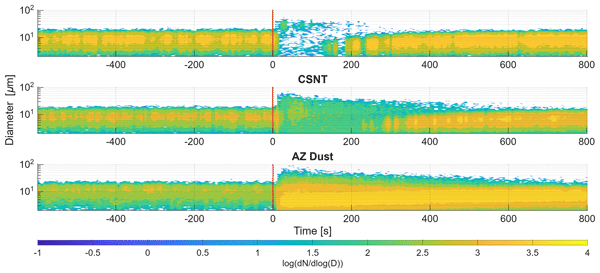
Precipitation from warm clouds requires large droplets to promote collision-coalescence. As part of an investigation into cloud seeding, we tested two hygroscopic materials in a laboratory cloud chamber where they formed large droplets and increased the concentration of liquid water. Sodium chloride particles with diameters of 4 to 25 micrometers proved most effective, supporting in-cloud seeding for precipitation enhancement in warm clouds, particularly in arid regions.
Zeen Zhu, Fan Yang, Steven Krueger, and Yangang Liu
Atmos. Chem. Phys., 25, 18461–18474, https://doi.org/10.5194/acp-25-18461-2025, https://doi.org/10.5194/acp-25-18461-2025, 2025
Short summary
Short summary
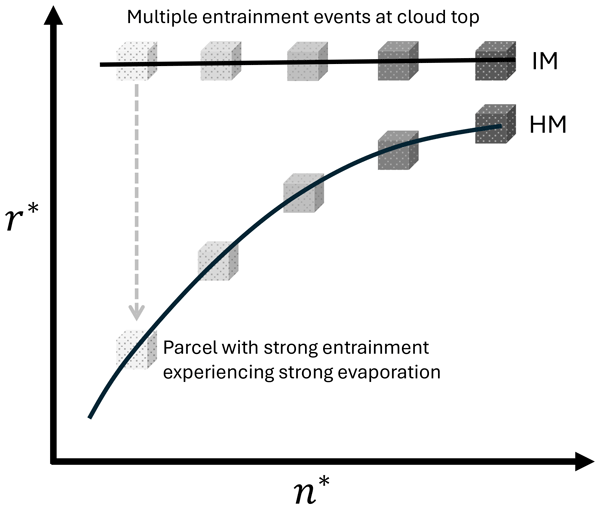
To better understand cloud behavior, we used model simulation to study how the air mix in clouds. Our results show that the pattern of mixing seen from aircraft measurements may not reflect the true mixing process happening inside clouds. This result suggests that care is needed when using aircraft data to study the cloud mixing process and that new ways of observing clouds could offer clearer insights.
Karlie N. Rees, Timothy J. Garrett, Thomas D. DeWitt, Corey Bois, Steven K. Krueger, and Jérôme C. Riedi
Nonlin. Processes Geophys., 31, 497–513, https://doi.org/10.5194/npg-31-497-2024, https://doi.org/10.5194/npg-31-497-2024, 2024
Short summary
Short summary
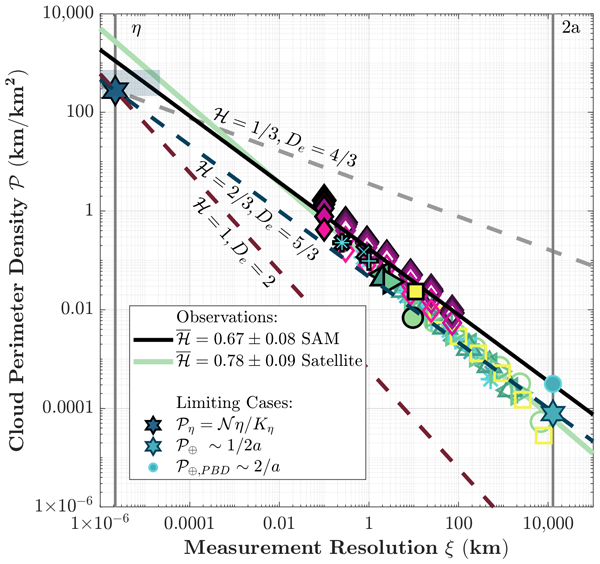
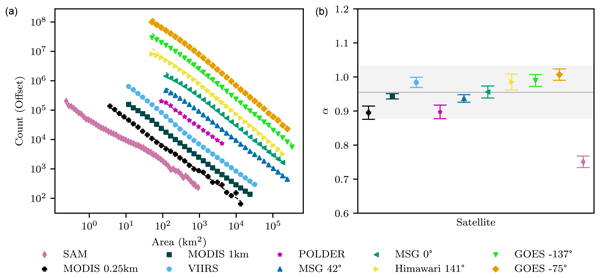
The shapes of clouds viewed from space reflect vertical and horizontal motions in the atmosphere. We theorize that, globally, cloud perimeter complexity is related to the dimension of turbulence also governed by horizontal and vertical motions. We find agreement between theory and observations from various satellites and a numerical model and, remarkably, that the theory applies globally using only basic planetary physical parameters from the smallest scales of turbulence to the planetary scale.
Aaron Wang, Steve Krueger, Sisi Chen, Mikhail Ovchinnikov, Will Cantrell, and Raymond A. Shaw
Atmos. Chem. Phys., 24, 10245–10260, https://doi.org/10.5194/acp-24-10245-2024, https://doi.org/10.5194/acp-24-10245-2024, 2024
Short summary
Short summary
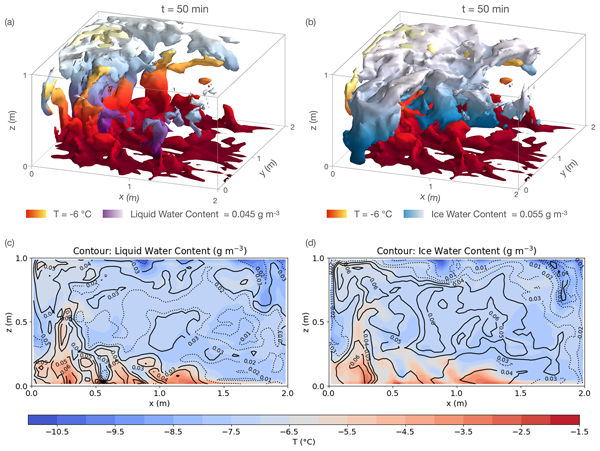
We employ two methods to examine a laboratory experiment on clouds with both ice and liquid phases. The first assumes well-mixed properties; the second resolves the spatial distribution of turbulence and cloud particles. Results show that while the trends in mean properties generally align, when turbulence is resolved, liquid droplets are not fully depleted by ice due to incomplete mixing. This underscores the threshold of ice mass fraction in distinguishing mixed-phase clouds from ice clouds.
Zeen Zhu, Fan Yang, Pavlos Kollias, Raymond A. Shaw, Alex B. Kostinski, Steve Krueger, Katia Lamer, Nithin Allwayin, and Mariko Oue
Atmos. Meas. Tech., 17, 1133–1143, https://doi.org/10.5194/amt-17-1133-2024, https://doi.org/10.5194/amt-17-1133-2024, 2024
Short summary
Short summary
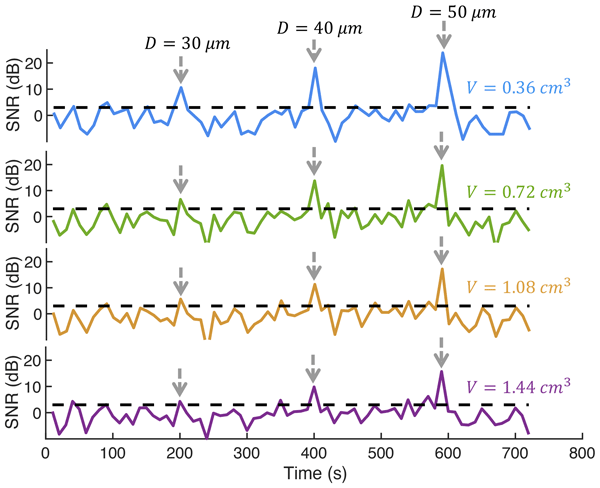
In this article, we demonstrate the feasibility of applying advanced radar technology to detect liquid droplets generated in the cloud chamber. Specifically, we show that using radar with centimeter-scale resolution, single drizzle drops with a diameter larger than 40 µm can be detected. This study demonstrates the applicability of remote sensing instruments in laboratory experiments and suggests new applications of ultrahigh-resolution radar for atmospheric sensing.
Thomas D. DeWitt, Timothy J. Garrett, Karlie N. Rees, Corey Bois, Steven K. Krueger, and Nicolas Ferlay
Atmos. Chem. Phys., 24, 109–122, https://doi.org/10.5194/acp-24-109-2024, https://doi.org/10.5194/acp-24-109-2024, 2024
Short summary
Short summary
Viewed from space, a defining feature of Earth's atmosphere is the wide spectrum of cloud sizes. A recent study predicted the distribution of cloud sizes, and this paper compares the prediction to observations. Although there is nuance in viewing perspective, we find robust agreement with theory across different climatological conditions, including land–ocean contrasts, time of year, or latitude, suggesting a minor role for Coriolis forces, aerosol loading, or surface temperature.
Cited articles
Anderson, H.: Aids to determining fuel models for estimating fire behavior, USDA Forest Service, Intermountain Forest and Range Experiment Station, General Technical Report INT-122, 22 pp., 1982.
Andrews, P. L., Bevins, C. D., and Seli, R. C.: BehavePlus fire modeling system, version 4.0: User's guide revised. General Tech. Report RMRS-GTR-106WWW Revised, US Department of Agriculture, Forest Service, Rocky Mountain Research Station, Ogden, UT, 132 pp., 2008.
Balbi, J.-H., Rossi, J.-L., Marcelli, T., and Santoni, P.-A. : A 3D Physical Real-Time Model of Surface Fires Across Fuel Beds, Combusion Sci. Tech., 179, 2511–2537, https://doi.org/10.1080/00102200701484449, 2007.
Banta, R., Olivier, L., Holloway, E., Kropfli, R., Bartram, B., Cupp, R., and Post, M.: Smoke-column observations from two forest fires using Doppler lidar and Doppler radar, J. Appl. Meteor., 31, 1328–1349, https://doi.org/10.1175/1520-0450(1992)031<1328:SCOFTF>2.0.CO;2, 1992.
Beer T.: The interaction of wind and fire, Bound.-Lay. Meteorol., 54, 287–308, https://doi.org/10.1007/BF00183958, 1991.
Beezley, J. D., Kochanski, A., Kondratenko, V. Y., Mandel, J., and Sousedik, B.: Simulation of the Meadow Creek fire using WRFFire, Poster at AGU Fall Meeting 2010, available at: http://www.openwfm.org/wiki/File:Agu10 jb.pdf (last access: 4 July 2011), 2010.
Beezley, J. D.: Importing High-resolution Datasets into Geogrid, Paper P2, 12th WRF Users' Workshop, National Center for Atmospheric Research, 20–24 June 2011, available at: http://www.mmm.ucar.edu/wrf/users/workshops/WS2011/Extended202011/P2_Beezley_ExtendedAbstract_11.pdf (last access: 23 July 2013), 2011.
Brown, R. A.: Longitudinal instabilities and secondary flows in the planetary boundary layer: A review, Rev. Geophys. Space Phys., 18, 683–697, 1980.
Charland, A. M. and Clements, C. B.: Kinematic structure of a wildland fire plume observed by Doppler lidar, J. Geophys. Res. Atmos., 118, 3200–3212, https://doi.org/10.1002/jgrd.50308, 2013.
Cheney, N. P. and Gould, J. S.: Fire growth in grassland fuels, Int. J. Wildland Fire, 5, 237–347, https://doi.org/10.1071/WF9950237, 1995.
Cheney, N. P. and Gould, J.: Fire Growth and Acceleration, Int. J. Wildland Fire, 7, 1–5, 1997.
Cheney, N. P., Gould, J. S., and Catchpole, W. R.: The influence of fuel, weather and fire shape variables on fire-spread in grasslands, Int. J. Wildland Fire, 3, 31–44, https://doi.org/10.1071/WF9930031, 1993.
Chow, F. and Street, R.: Evaluation of Turbulence Closure Models for Large-Eddy Simulation over Complex Terrain: Flow over Askervein Hill, J. Appl. Meteorol. Climatol., 48, 1050–1065, https://doi.org/10.1175/2008JAMC1862.1, 2009.
Clark, T. L., Jenkins, M. A., Coen, J., and Packham, D.: A coupled atmospheric-fire model: Convective feedback on fire line dynamics, J. Appl. Meteorol., 35, 875–901, https://doi.org/10.1175/1520-0450(1996)035<0875:ACAMCF>2.0.CO;2, 1996a.
Clark, T. L., Jenkins, M. A., Coen, J., and Packham, D.: A coupled atmosphere-fire model: role of the convective Froude number and dynamic fingering at the fire line, Int. J. Wildland Fire, 6, 177–190, https://doi.org/10.1071/WF9960177, 1996b.
Clark, T. L., Radke, L., Coen, J., and Middleton, D.: Analysis of small-scale convective dynamics in a crown fire using infrared video camera imagery, J. Appl. Meteorol., 38, 1401–1420, https://doi.org/10.1175/1520-0450(1999)038<1401:AOSSCD>2.0.CO;2, 1999.
Clark, T. L., Griffiths, M., Reeder, M. J., and Latham, D.: Numerical simulations of grassland fires in the Northern Territory, Australia: A new subgrid-scale fire parameterization, J. Geophys. Res., 108, 4589, https://doi.org/10.1029/2002JD003340, 2003.
Clements, C. B.: Thermodynamic structure of a grass fire plume, Int. J. Wildland Fire, 19, 895–902, https://doi.org/10.1071/WF09009, 2010.
Clements, C. B., Zhong, S., Goodrick, S., Li, J., Bian, X., Potter, B. E., Heilman, W. E., Charney, J. J., Perna, R., Jang, M., Lee, D., Patel, M., Street, S., and Aumann, G.: Observing the dynamics of wildland grass fires: FireFlux – a field validation experiment, B. Am. Meteorol. Soc., 88, 1369–1382, https://doi.org/10.1175/BAMS-88-9-1369, 2007.
Clements, C. B., Zhong, S., Bian, X., Heilman, W. E., and Byun, D. W.: First observations of turbulence generated by grass fires, J. Geophys. Res., 113, D22102, https://doi.org/10.1029/2008JD010014, 2008.
Coen, J. L.: Simulation of the Big Elk Fire using coupled atmosphere-fire modeling, Intl. J. Wildland Fire, 14, 49–59, https://doi.org/10.1071/WF04047, 2005.
Coen, J., Cameron, M., Michalakes, J., Patton, E., Riggan, P., and Yedinak, K.: WRF-Fire: Coupled weather-wildland fire modeling with the Weather Research and Forecasting model, J. Appl. Meteor. Climatol., 52, 16–38, https://doi.org/10.1175/JAMC-D-12-023.1, 2013.
Cunningham, P. and Linn, R. R.: Numerical simulations of grass fires using a coupled atmosphere-fire model: Dynamics of fire spread, J. Geophys. Res., 112, D05108, https://doi.org/10.1029/2006JD007638, 2007.
Cunningham, P., Goodrick, S. L., Hussaini, M. Y., and Linn, R. R.: Coherent vortical structures in numerical simulations of buoyant plumes from wildland fires, Int. J. Wildland Fire, 14, 61–75, https://doi.org/10.1071/WF04044, 2005.
Etling, D. and Brown, R. A.: Roll vortices in the planetary boundary layer: a review, Bound.-Lay. Meteorol., 65, 215–248, 1993.
Filippi, J.-B., Bosseur, F., Mari, C., Lac, C., Lemoigne, P., Cuenot, B., Veynante, D., Cariolle, D., and Balbi, J. H.: Coupled atmosphere-wildland fire modelling, J. Adv. Model. Earth Syst., 1, 9 pp., https://doi.org/10.3894/JAMES.2009.1.11, 2009.
Filippi, J.-B., Pialat, X., and Clements, C. B.: Assessment of ForeFire/Meso-NH for wildland fire/atmosphere coupled simulation of the FireFlux experiment, Proceedings of the Combustion Institute, 65, 2633–2640, https://doi.org/10.1016/j.proci.2012.07.022, 2013.
Finney, M. A.: FARSITE: Fire Area Simulator-model development and evaluation, Res. Pap. RMRS-RP-4, Ogden, UT: US Department of Agriculture, Forest Service, Rocky Mountain Research Station, 1–47, 1998.
Jolly, W. M.: Sensitivity of a surface fire spread model and associated fire behaviour fuel models to changes in live fuel moisture, Int. J. Wildland Fire, 16, 503–509, https://doi.org/10.1071/WF06077, 2007.
Kochanski, A., Jenkins, M. A., Krueger, S. K., Mandel, J., Beezley, J. D., and Clements, C. B.: Coupled atmosphere-fire simulations of FireFlux: Impacts of model resolution on its performance, Paper 10.2, Ninth Symposium on Fire and Forest Meteorology, Palm Springs, October 2011, available at: http://ams.confex.com/ams/9FIRE/webprogram/Paper192314.html (last access: July 2013), 2011.
Linn, R.: A transport model for prediction of wildfire behavior, OSTI ID: 505313; Legacy ID: DE97007825 LA–13334-T Technical Report, https://doi.org/10.2172/505313, 212 pp., 1997.
Linn, R. and Cunningham, P.: Numerical simulations of grass fires using a coupled atmosphere-fire model: Basic fire behavior and dependence on wind speed, J. Geophys. Res., 110, 2156–2202, https://doi.org/10.1029/2004JD005597, 2005.
Linn, R., Reisner, J., Colman, J. J., and Winterkamp, J.: Studying wildfire behavior using FIRETEC, Int. J. Wildland Fire, 11 , 233–246, https://doi.org/10.1071/WF02007, 2002.
Mandel, J., Beezley, J. D., Coen, J. L., and Kim, M.: Data assimilation for wildland fires. Ensemble Kalman filters in coupled atmosphere-surface models, IEEE Control Syst. Magazine, 29, 47–65, 2009.
Mandel, J., Beezley, J. D., and Kochanski, A. K.: Coupled atmosphere-wildland fire modeling with WRF 3.3 and SFIRE 2011, Geosci. Model Dev., 4, 591–610, https://doi.org/10.5194/gmd-4-591-2011, 2011.
Mell, W., Jenkins, M., Gould, J., and Cheney, P.: A physics-based approach to modelling grassland fires, Int. J. Wildland Fire, 16, 1–22, https://doi.org/10.1071/WF06002, 2007.
Morvan, D. and Dupy, J. L.: Modeling of fire spread through a forest fuel bed using a multiphase formulation, Combustion Flame, 127, 1981–1994, https://doi.org/10.1016/S0010-2180(01)00302-9, 2001.
OpenWFM: Fire code in WRF release, Open Wildland Fire Modeling e-Community, available at: http://www.openwfm.org/wiki/Fire_code_in_WRF_release (last access: November 2012), 2012.
Osher, S. and Fedkiw, R.: Level Set Methods and Dynamic Implicit Surfaces, Springer, New York, 2003.
Papadopoulos, G. D. and Pavlidou, F.-N.: A comparative review of wildfire simulators, Syst. J., 5, 233–243, https://doi.org/10.1109/JSYST.2011.2125230, 2011.
Rothermel, R. C.: A mathematical model for predicting fire spread in wildland fires, USDA Forest Service Research Paper INT-115, 1972.
Sullivan, A. L.: Wildland surface fire spread modelling, 1990–2007: 1: Physical and quasi-physical models, Int. J. Wildland Fire, 18, 349–368, https://doi.org/10.1071/WF06143, 2009.
Sun, R., Jenkins, M. A., Krueger, S., Mell, W., and Charney, J.: An evaluation of fire-plume properties simulated with the Fire Dynamics Simulator (FDS) and the Clark coupled wildfire model, Canadian. J. Forest. Res., 36, 2894–2907, https://doi.org/10.1139/x06-138, 2006.
Sun, R., Krueger, S. K., Jenkins, M. A., Zulauf, M. A., and Charney, J. J.: The importance of fire-atmosphere coupling and boundary-layer turbulence to wildfire spread, Int. J. Wildland Fire, 18, 50–60, https://doi.org/10.1071/WF07072, 2009.
Tymstra, C., Bryce, R., Wotton, B., Taylor, S., and Armitage, O.: Development and Structure of Prometheus: the Canadian Wildland Fire Growth Simulation Model, Northern Forestry Centre, Edmonton, Alberta Canada, 2010.
Altmetrics
Final-revised paper
Preprint