
Articles | Volume 19, issue 20
https://doi.org/10.5194/gmd-19-9935-2026
© Author(s) 2026. This work is distributed under
the Creative Commons Attribution 4.0 License.
the Creative Commons Attribution 4.0 License.
https://doi.org/10.5194/gmd-19-9935-2026
© Author(s) 2026. This work is distributed under
the Creative Commons Attribution 4.0 License.
the Creative Commons Attribution 4.0 License.
Model description paper
| 
16 Oct 2026
Model description paper |
| 16 Oct 2026
| 16 Oct 2026
Meso-NH-ISO v1.0: a water stable isotopologue scheme in the non-hydrostatic mesoscale atmospheric model Meso-NH – application to a 2D West African squall line
Christelle Barthe
CORRESPONDING AUTHOR

Laboratoire d'Aérologie (LAERO), Université de Toulouse, CNRS, IRD, Toulouse, France
Françoise Vimeux
HydroSciences Montpellier (HSM), Université Montpellier, CNRS, IMT, IRD, Montpellier, France
Laboratoire des Sciences du Climat et de l'Environnement (LSCE), CEA, CNRS, UVSQ, Université Paris-Saclay, Gif-sur-Yvette, France
Camille Risi
Laboratoire de Météorologie Dynamique (LMD), CNRS, ENS, X, UPMC, Paris, France
Sören François
Laboratoire des Sciences du Climat et de l'Environnement (LSCE), CEA, CNRS, UVSQ, Université Paris-Saclay, Gif-sur-Yvette, France
Related authors
Vincent Noel, Hélène Chepfer, Christelle Barthe, and John Yorks
Atmos. Chem. Phys., 26, 5603–5615, https://doi.org/10.5194/acp-26-5603-2026, https://doi.org/10.5194/acp-26-5603-2026, 2026
Short summary
Short summary
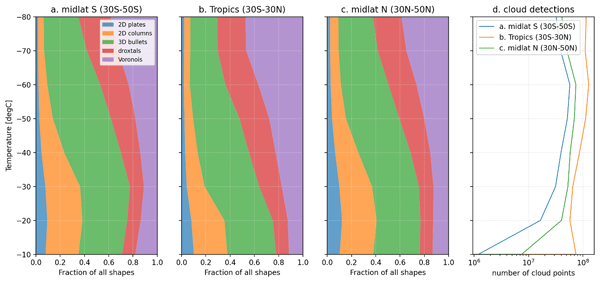
The shape of crystals in ice clouds drives their impact on the earth energy balance. These shapes are very variable and hard to categorize. In this paper, we use a recently developed method to classify clouds in categories of crystal shape. We apply this method to 33 months of measurements from a lidar in space. We discuss how the importance of shape categories changes with the time of the day. These results could be useful for people who try to simulate clouds in atmospheric models.
Inès Vongpaseut and Christelle Barthe
Atmos. Chem. Phys., 25, 14945–14965, https://doi.org/10.5194/acp-25-14945-2025, https://doi.org/10.5194/acp-25-14945-2025, 2025
Short summary
Short summary
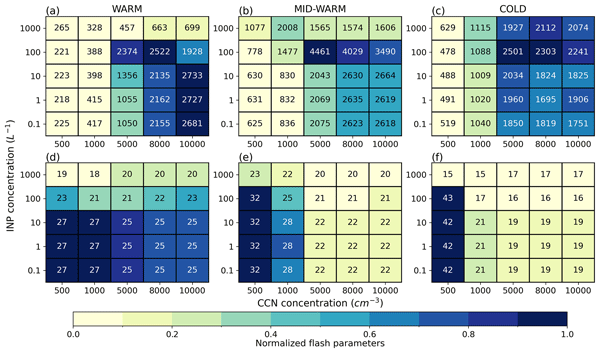
Three idealized storms that differ by their cloud base temperature were simulated in order to assess the impact of ice production on cloud electrical activity. Ice production is impacted by aerosols that either can form cloud droplets or ice crystals and processes that form ice crystals from pre-existing cloud particles. All those processes can interact and affect the electrical activity and differently according to the cloud conditions.
Juan Escobar, Philippe Wautelet, Joris Pianezze, Florian Pantillon, Thibaut Dauhut, Christelle Barthe, and Jean-Pierre Chaboureau
Geosci. Model Dev., 18, 2679–2700, https://doi.org/10.5194/gmd-18-2679-2025, https://doi.org/10.5194/gmd-18-2679-2025, 2025
Short summary
Short summary
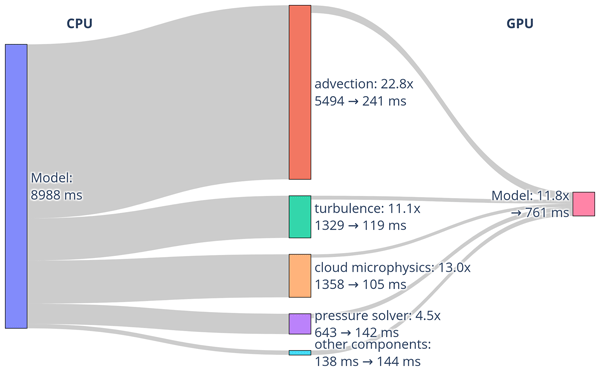
The Meso-NH weather research code is adapted for GPUs using OpenACC, leading to significant performance and energy efficiency improvements. Called MESONH-v55-OpenACC, it includes enhanced memory management, communication optimizations and a new solver. On the AMD MI250X Adastra platform, it achieved up to 6× speedup and 2.3× energy efficiency gain compared to CPUs. Storm simulations at 100 m resolution show positive results, positioning the code for future use on exascale supercomputers.
Marie Taufour, Jean-Pierre Pinty, Christelle Barthe, Benoît Vié, and Chien Wang
Geosci. Model Dev., 17, 8773–8798, https://doi.org/10.5194/gmd-17-8773-2024, https://doi.org/10.5194/gmd-17-8773-2024, 2024
Short summary
Short summary
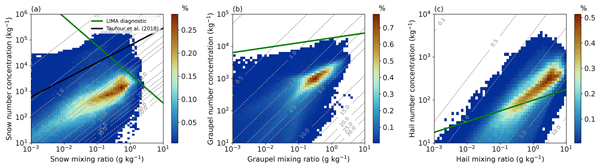
We have developed a complete two-moment version of the LIMA (Liquid Ice Multiple Aerosols) microphysics scheme. We have focused on collection processes, where the hydrometeor number transfer is often estimated in proportion to the mass transfer. The impact of these parameterizations on a convective system and the prospects for more realistic estimates of secondary parameters (reflectivity, hydrometeor size) are shown in a first test on an idealized case.
Vincent Noel, Hélène Chepfer, Christelle Barthe, and John Yorks
Atmos. Chem. Phys., 26, 5603–5615, https://doi.org/10.5194/acp-26-5603-2026, https://doi.org/10.5194/acp-26-5603-2026, 2026
Short summary
Short summary
The shape of crystals in ice clouds drives their impact on the earth energy balance. These shapes are very variable and hard to categorize. In this paper, we use a recently developed method to classify clouds in categories of crystal shape. We apply this method to 33 months of measurements from a lidar in space. We discuss how the importance of shape categories changes with the time of the day. These results could be useful for people who try to simulate clouds in atmospheric models.

Di Wang, Camille Risi, Lide Tian, Di Yang, Gabriel J. Bowen, Siteng Fan, Yang Su, Hongxi Pang, and Laurent Z. X. Li
Atmos. Meas. Tech., 18, 7349–7368, https://doi.org/10.5194/amt-18-7349-2025, https://doi.org/10.5194/amt-18-7349-2025, 2025
Short summary
Short summary
We developed and validated a model to correct for water vapor diffusion in sampling bags, enabling reconstruction of the original isotopic composition. We quantified all major sources of error and their uncertainties and introduced permeability experiments as a necessary step before field sampling. This study improves the accuracy, reliability, and standardization of atmospheric isotope observations using air bags.
Inès Vongpaseut and Christelle Barthe
Atmos. Chem. Phys., 25, 14945–14965, https://doi.org/10.5194/acp-25-14945-2025, https://doi.org/10.5194/acp-25-14945-2025, 2025
Short summary
Short summary
Three idealized storms that differ by their cloud base temperature were simulated in order to assess the impact of ice production on cloud electrical activity. Ice production is impacted by aerosols that either can form cloud droplets or ice crystals and processes that form ice crystals from pre-existing cloud particles. All those processes can interact and affect the electrical activity and differently according to the cloud conditions.
Juan Escobar, Philippe Wautelet, Joris Pianezze, Florian Pantillon, Thibaut Dauhut, Christelle Barthe, and Jean-Pierre Chaboureau
Geosci. Model Dev., 18, 2679–2700, https://doi.org/10.5194/gmd-18-2679-2025, https://doi.org/10.5194/gmd-18-2679-2025, 2025
Short summary
Short summary
The Meso-NH weather research code is adapted for GPUs using OpenACC, leading to significant performance and energy efficiency improvements. Called MESONH-v55-OpenACC, it includes enhanced memory management, communication optimizations and a new solver. On the AMD MI250X Adastra platform, it achieved up to 6× speedup and 2.3× energy efficiency gain compared to CPUs. Storm simulations at 100 m resolution show positive results, positioning the code for future use on exascale supercomputers.
Marie Taufour, Jean-Pierre Pinty, Christelle Barthe, Benoît Vié, and Chien Wang
Geosci. Model Dev., 17, 8773–8798, https://doi.org/10.5194/gmd-17-8773-2024, https://doi.org/10.5194/gmd-17-8773-2024, 2024
Short summary
Short summary
We have developed a complete two-moment version of the LIMA (Liquid Ice Multiple Aerosols) microphysics scheme. We have focused on collection processes, where the hydrometeor number transfer is often estimated in proportion to the mass transfer. The impact of these parameterizations on a convective system and the prospects for more realistic estimates of secondary parameters (reflectivity, hydrometeor size) are shown in a first test on an idealized case.

Mohamed Ayache, Jean-Claude Dutay, Anne Mouchet, Kazuyo Tachikawa, Camille Risi, and Gilles Ramstein
Geosci. Model Dev., 17, 6627–6655, https://doi.org/10.5194/gmd-17-6627-2024, https://doi.org/10.5194/gmd-17-6627-2024, 2024
Short summary
Short summary
Water isotopes (δ18O, δD) are one of the most widely used proxies in ocean climate research. Previous studies using water isotope observations and modelling have highlighted the importance of understanding spatial and temporal isotopic variability for a quantitative interpretation of these tracers. Here we present the first results of a high-resolution regional dynamical model (at 1/12° horizontal resolution) developed for the Mediterranean Sea, one of the hotspots of ongoing climate change.
Amaelle Landais, Cécile Agosta, Françoise Vimeux, Olivier Magand, Cyrielle Solis, Alexandre Cauquoin, Niels Dutrievoz, Camille Risi, Christophe Leroy-Dos Santos, Elise Fourré, Olivier Cattani, Olivier Jossoud, Bénédicte Minster, Frédéric Prié, Mathieu Casado, Aurélien Dommergue, Yann Bertrand, and Martin Werner
Atmos. Chem. Phys., 24, 4611–4634, https://doi.org/10.5194/acp-24-4611-2024, https://doi.org/10.5194/acp-24-4611-2024, 2024
Short summary
Short summary
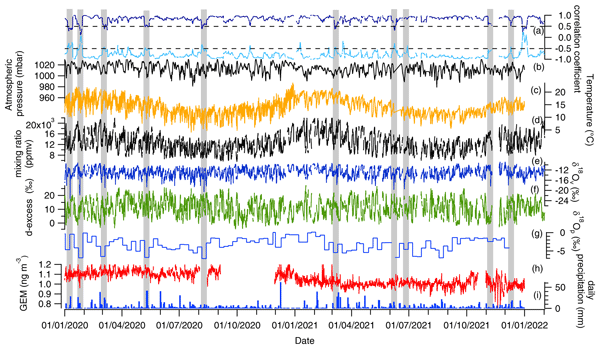
We have monitored water vapor isotopes since January 2020 on Amsterdam Island in the Indian Ocean. We show 11 periods associated with abrupt negative excursions of water vapor δ18Ο. Six of these events show a decrease in gaseous elemental mercury, suggesting subsidence of air from a higher altitude. Accurately representing the water isotopic signal during these cold fronts is a real challenge for the atmospheric components of Earth system models equipped with water isotopes.
Di Wang, Lide Tian, Camille Risi, Xuejie Wang, Jiangpeng Cui, Gabriel J. Bowen, Kei Yoshimura, Zhongwang Wei, and Laurent Z. X. Li
Atmos. Chem. Phys., 23, 3409–3433, https://doi.org/10.5194/acp-23-3409-2023, https://doi.org/10.5194/acp-23-3409-2023, 2023
Short summary
Short summary
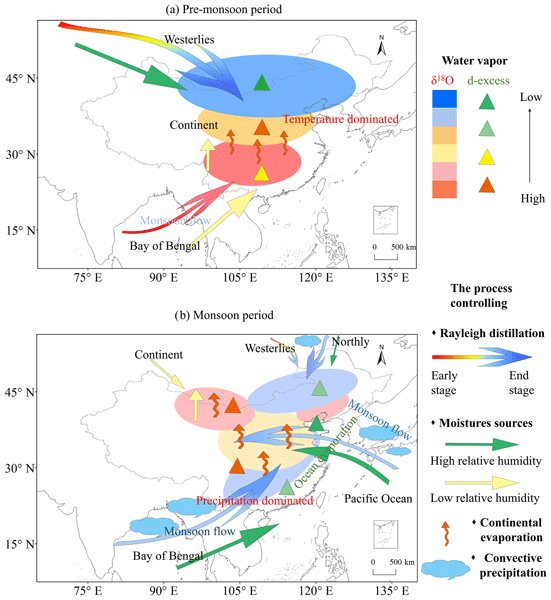
To better understand the spatial and temporal distribution of vapor isotopes, we present two vehicle-based spatially continuous snapshots of the near-surface vapor isotopes in China during the pre-monsoon and monsoon periods. These observations are explained well by different moisture sources and processes along the air mass trajectories. Our results suggest that proxy records need to be interpreted in the context of regional systems and sources of moisture.
Jiacheng Chen, Jie Chen, Xunchang John Zhang, Peiyi Peng, and Camille Risi
Earth Syst. Sci. Data Discuss., https://doi.org/10.5194/essd-2021-460, https://doi.org/10.5194/essd-2021-460, 2022
Manuscript not accepted for further review
Short summary
Short summary
To make full use of the advantages of isotope observations and simulations, this study generates a new dataset by integrating multi-GCM data based on data fusion and bias correction methods. This dataset contains monthly δ18Op over mainland China for the 1870–2017 period with a spatial resolution of 50–60 km. The built isoscape shows similar spatial and temporal distribution characteristics to observations, which is reliable and useful to extend the time and space of observations in China.
Cited articles
Aggarwal, P. K., Romatschke, U., Araguas-Araguas, L., Belachew, D., Longstaffe, F. J., Berg, P., Schumacher, C., and Funk, A.: Proportions of convective and stratiform precipitation revealed in water isotope ratios, Nat. Geosci., 9, 624–629, https://doi.org/10.1038/ngeo2739, 2016. a, b
Arnault, J., Jung, G., Haese, B., Fersch, B., Rummler, T., Wei, J., Zhang, Z., and Kunstmann, H.: A Joint Soil-Vegetation-Atmospheric Modeling Procedure of Water Isotopologues: Implementation and Application to Different Climate Zones With WRF-Hydro-Iso, J. Adv. Model. Earth Sy., 13, e2021MS002562, https://doi.org/10.1029/2021MS002562, 2021. a, b
Barthe, C., Vimeux, F., and François, S.: Meso-NH-ISO v1.0: Water isotope scheme in MesoNH-v5-5-0, Zenodo [code, data set], https://doi.org/10.5281/zenodo.18428400, 2026. a
Bechtold, P., Bazile, E., Guichard, F., Mascart, P., and Richard, E.: A mass-flux convection scheme for regional and global models, Q. J. Roy. Meteor. Soc., 127, 869–886, https://doi.org/10.1002/qj.49712757309, 2001. a
Bolot, M., Legras, B., and Moyer, E. J.: Modelling and interpreting the isotopic composition of water vapour in convective updrafts, Atmos. Chem. Phys., 13, 7903–7935, https://doi.org/10.5194/acp-13-7903-2013, 2013. a
Bony, S., Risi, C., and Vimeux, F.: Influence of convective processes on the isotopic composition (δ18O and δD) of precipitation and water vapor in the Tropics. Part 1: Radiative-convective equilibrium and TOGA-COARE simulations, J. Geophys. Res.-Atmos., 113, https://doi.org/10.1029/2008JD009942, 2008. a, b, c
Caniaux, G., Redelsperger, J.-L., and Lafore, J.-P.: A Numerical Study of the Stratiform Region of a Fast-Moving Squall Line. Part I: General Description and Water and Heat Budgets, J. Atmos. Sci., 51, 2046–2074, https://doi.org/10.1175/1520-0469(1994)051<2046:ANSOTS>2.0.CO;2, 1994. a, b, c, d, e, f, g, h
Chakraborty, S., Sinha, N., Chattopadhyay, R., Sengupta, S., Mohan, P., and Datye, A.: Atmospheric controls on the precipitation isotopes over the Andaman Islands, Bay of Bengal, Sci. Rep., 6, 1–11, https://doi.org/10.1038/srep19555, 2016. a
Chalon, J.-P., Jaubert, G., Lafore, J.-P., and Roux, F.: The West African Squall Line Observed on 23 June 1981 during COPT81: Mesoscale Structure and Transports, J. Atmos. Sci., 45, 2744–2763, https://doi.org/10.1175/1520-0469(1988)045<2744:TWASLO>2.0.CO;2, 1988. a, b, c
Chang, C.-Y. and Yoshizaki, M.: Three-Dimensional Modeling Study of Squall Lines Observed in COPT81, J. Atmos. Sci., 50, 161–183, https://doi.org/10.1175/1520-0469(1993)050<0161:TDMSOS>2.0.CO;2, 1993. a
Chong, M., Amayenc, P., Scialom, G., and Testud, J.: A Tropical Squall Line Observed during the COPT 81 Experiment in West Africa. Part 1: Kinematic Structure Inferred from Dual-Doppler Radar Data, Mon. Weather Rev., 115, 670–694, https://doi.org/10.1175/1520-0493(1987)115<0670:ATSLOD>2.0.CO;2, 1987. a
Ciais, P. and Jouzel, J.: Deuterium and oxygen 18 in precipitation: Isotopic model, including mixed cloud processes, J. Geophys. Res.-Atmos., 99, 16793–16803, https://doi.org/10.1029/94JD00412, 1994. a
Cohard, J.-M. and Pinty, J.-P.: A comprehensive two-moment warm microphysical bulk scheme. I: Description and tests, Q. J. Roy. Meteor. Soc., 126, 1815–1842, https://doi.org/10.1002/qj.49712656613, 2000. a
Craig, H.: Isotopic variations in meteoric waters, Science, 133, 1702–1703, https://doi.org/10.1126/science.133.3465.1702, 1961. a
Cruz, F. W., Vuille, M., Burns, S. J., Wang, X., Cheng, H., Werner, M., Edwards, R. L., Karmann, I., Auler, A. S., and Nguyen, H.: Orbitally driven east-west antiphasing of South American precipitation, Nat. Geosci., 2, 210–214, https://doi.org/10.1038/ngeo444, 2009. a
Cuxart, J., Bougeault, P., and Redelsperger, J.-L.: A turbulence scheme allowing for mesoscale and large-eddy simulations, Q. J. Roy. Meteor. Soc., 126, 1–30, https://doi.org/10.1002/qj.49712656202, 2000. a, b
Dansgaard: Stable isotopes in precipitation, Tellus, 16, 436–468, https://doi.org/10.3402/tellusa.v16i4.8993, 1964. a, b
Dubos, T., Dubey, S., Tort, M., Mittal, R., Meurdesoif, Y., and Hourdin, F.: DYNAMICO-1.0, an icosahedral hydrostatic dynamical core designed for consistency and versatility, Geosci. Model Dev., 8, 3131–3150, https://doi.org/10.5194/gmd-8-3131-2015, 2015. a
Gamache, J. F. and Houze, R. A.: Mesoscale air motions associated with a tropical squall line, Mon. Weather Rev., 110, 118–135, https://doi.org/10.1175/1520-0493(1982)110<0118:MAMAWA>2.0.CO;2, 1981. a
Graf, P., Wernli, H., Pfahl, S., and Sodemann, H.: A new interpretative framework for below-cloud effects on stable water isotopes in vapour and rain, Atmos. Chem. Phys., 19, 747–765, https://doi.org/10.5194/acp-19-747-2019, 2019. a
Hall, W. D. and Pruppacher, H. R.: The Survival of Ice Particles Falling from Cirrus Clouds in Subsaturated Air, J. Atmos. Sci., 33, 1995–2006, https://doi.org/10.1175/1520-0469(1976)033<1995:TSOIPF>2.0.CO;2, 1976. a
Hanisco, T., Moyer, E., Weinstock, E., St Claire, J. M., Sayres, D. S., Smith, J. B., Lockwood, R., Anderson, J. G., Dessler, A. E., Keutsh, F. N., Spackman, J. R., Read, W. G., and Bui, T. P.: Observations of deep convective influence on stratospheric water vapor and its isotopic composition, Geophys. Res. Lett., 34, https://doi.org/10.1029/2006GL027899, 2007. a
Hiron, T. and Flossmann, A.: Oxygen isotopic fractionation in clouds: A bin-resolved microphysics model approach, J. Geophys. Res.-Atmos., 125, https://doi.org/10.1029/2019JD031753, 2020. a
Hogan, R. J. and Bozzo, A.: A Flexible and Efficient Radiation Scheme for the ECMWF Model, J. Adv. Model. Earth Sy., 10, 1990–2008, https://doi.org/10.1029/2018MS001364, 2018. a
Hourdin, F., Rio, C., Grandpeix, J.-Y., Madeleine, J.-B., Cheruy, F., Rochetin, N., Jam, A., Musat, I., Idelkadi, A., Fairhead, L., Foujols, M.-A., Mellul, L., Traore, A.-K., Dufresne, J.-L., Boucher, O., Lefebvre, M.-P., Millour, E., Vignon, E., Jouhaud, J., Diallo, F. B., Lott, F., Gastineau, G., Caubel, A., Meurdesoif, Y., and Ghattas, J.: LMDZ6A: The atmospheric component of the IPSL climate model with improved and better tuned physics, J. Adv. Model. Earth Sy., 12, e2019MS001892, https://doi.org/10.1029/2019MS001892, 2020. a
Houze, R. A.: Structure and dynamics of a tropical squall line system, Mon. Weather Rev., 105, 1540–1567, https://doi.org/10.1175/1520-0493(1977)105<1540:SADOAT>2.0.CO;2, 1977. a
Jouzel, J. and Merlivat, L.: Deuterium and oxygen 18 in precipitation: Modeling of the isotopic effects during snow formation, J. Geophys. Res.-Atmos., 89, 11749–11757, https://doi.org/10.1029/JD089iD07p11749, 1984. a, b
Kessler, E.: On the Distribution and Continuity of Water Substance in Atmospheric Circulations, 1–84, American Meteorological Society, Boston, MA, https://doi.org/10.1007/978-1-935704-36-2_1, 1969. a
Kurita, N.: Water isotopic variability in response to mesoscale convective system over the tropical ocean, J. Geophy. Res.-Atmos., 118, 10376–10390, https://doi.org/10.1002/jgrd.50754, 2013. a, b, c
Lac, C., Chaboureau, J.-P., Masson, V., Pinty, J.-P., Tulet, P., Escobar, J., Leriche, M., Barthe, C., Aouizerats, B., Augros, C., Aumond, P., Auguste, F., Bechtold, P., Berthet, S., Bielli, S., Bosseur, F., Caumont, O., Cohard, J.-M., Colin, J., Couvreux, F., Cuxart, J., Delautier, G., Dauhut, T., Ducrocq, V., Filippi, J.-B., Gazen, D., Geoffroy, O., Gheusi, F., Honnert, R., Lafore, J.-P., Lebeaupin Brossier, C., Libois, Q., Lunet, T., Mari, C., Maric, T., Mascart, P., Mogé, M., Molinié, G., Nuissier, O., Pantillon, F., Peyrillé, P., Pergaud, J., Perraud, E., Pianezze, J., Redelsperger, J.-L., Ricard, D., Richard, E., Riette, S., Rodier, Q., Schoetter, R., Seyfried, L., Stein, J., Suhre, K., Taufour, M., Thouron, O., Turner, S., Verrelle, A., Vié, B., Visentin, F., Vionnet, V., and Wautelet, P.: Overview of the Meso-NH model version 5.4 and its applications, Geosci. Model Dev., 11, 1929–1969, https://doi.org/10.5194/gmd-11-1929-2018, 2018. a, b, c
Lacour, J.-L., Risi, C., Worden, J., Clerbaux, C., and Coheur, P.-F.: Isotopic signature of convection's depth in water vapor as seen from IASI and TES D observations, Earth Planet. Sc. Lett., 7, 9645–9663, https://doi.org/10.5194/acp-17-9645-2017, 2017. a
Lafore, J.-P. and Moncrieff, M. W.: A numerical investigation of the organization and interaction of the convective and startiform regions of tropical squall lines, J. Atmos. Sci., 46, 521–544, https://doi.org/10.1175/1520-0469(1989)046<0521:ANIOTO>2.0.CO;2, 1989. a
Lafore, J.-P., Redelsperger, J.-L., and Jaubert, G.: Comparison between a Tree-dimensional simulation and Doppler radar Data of a tropical squall line: transports of mass, momentum, heat and moisture, J. Atmos. Sci., 45, 3483–3500, https://doi.org/10.1175/1520-0469(1988)045<3483:CBATDS>2.0.CO;2, 1988. a
Lafore, J. P., Stein, J., Asencio, N., Bougeault, P., Ducrocq, V., Duron, J., Fischer, C., Héreil, P., Mascart, P., Masson, V., Pinty, J. P., Redelsperger, J. L., Richard, E., and Vilà-Guerau de Arellano, J.: The Meso-NH Atmospheric Simulation System. Part I: adiabatic formulation and control simulations, Ann. Geophys., 16, 90–109, https://doi.org/10.1007/s00585-997-0090-6, 1998. a
Lawrence, J. R., Gedzelman, S. D., Dexheimer, D., Cho, H.-K., Carrie, G. D., Gasparini, R., Anderson, C. R., Bowman, K. P., and Biggerstaff, M. I.: Stable isotopic composition of water vapor in the tropics, J. Geophys. Res.-Atmos., 109, D06115, https://doi.org/10.1029/2003JD004046, 2004. a
Lee, J.-E. and Fung, I.: “Amount effect” of water isotopes and quantitative analysis of post-condensation processes, Hydrol. Process., 22, 1–8, https://doi.org/10.1002/hyp.6637, 2008. a
Lee, J.-E., Fung, I., DePaolo, D., and Fennig, C. C.: Analysis of the global distribution of water isotopes using the NCAR atmospheric general circulation model, J. Geophys. Res., 112, D16306, https://doi.org/10.1029/2006JD007657, 2007. a
Masson, V., Le Moigne, P., Martin, E., Faroux, S., Alias, A., Alkama, R., Belamari, S., Barbu, A., Boone, A., Bouyssel, F., Brousseau, P., Brun, E., Calvet, J.-C., Carrer, D., Decharme, B., Delire, C., Donier, S., Essaouini, K., Gibelin, A.-L., Giordani, H., Habets, F., Jidane, M., Kerdraon, G., Kourzeneva, E., Lafaysse, M., Lafont, S., Lebeaupin Brossier, C., Lemonsu, A., Mahfouf, J.-F., Marguinaud, P., Mokhtari, M., Morin, S., Pigeon, G., Salgado, R., Seity, Y., Taillefer, F., Tanguy, G., Tulet, P., Vincendon, B., Vionnet, V., and Voldoire, A.: The SURFEXv7.2 land and ocean surface platform for coupled or offline simulation of earth surface variables and fluxes, Geosci. Model Dev., 6, 929–960, https://doi.org/10.5194/gmd-6-929-2013, 2013. a
Merlivat, L.: Molecular diffusivities of H
Meyers, M. P., DeMott, P. J., and Cotton, W. R.: New Primary Ice-Nucleation Parameterizations in an Explicit Cloud Model, J. Appl. Meteorol. Clim., 31, 708–721, https://doi.org/10.1175/1520-0450(1992)031<0708:NPINPI>2.0.CO;2, 1992. a
Mlawer, E. J., Taubman, S. J., Brown, P. D., Iacono, M. J., and Clough, S. A.: Radiative transfer for inhomogeneous atmospheres: RRTM, a validated correlated-k model for the longwave, J. Geophys. Res.-Atmos., 102, 16663–16682, https://doi.org/10.1029/97JD00237, 1997. a
Moore, M., Kuang, Z., and Blossey, P. N.: A moisture budget perspective of the amount effect, Geophys. Res. Lett., 41, 1329–1335, https://doi.org/10.1002/2013GL058302, 2014. a
Moore, M., Blossey, P., Muhlbauer, A., and Kuang, Z.: Microphysical controls on the isotopic composition of wintertime orographic precipitation, J. Geophys. Res., 121, 7235–7253, https://doi.org/10.1002/2015JD023763, 2016. a
Morcrette, J.-J.: Radiation and cloud radiative properties in the European Centre for Medium Range Weather Forecasts forecasting system, J. Geophys. Res.-Atmos., 96, 9121–9132, https://doi.org/10.1029/89JD01597, 1991. a
Moyer, E. J., Irion, F. W., Yung, Y. L., and Gunson, M. R.: ATMOS stratospheric deuterated water and implications for troposphere-stratosphere transport, Geophys. Res. Lett., 23, 2385–2388, https://doi.org/10.1029/96GL01489, 1996. a
Pergaud, J., Masson, V., Malardel, S., and Couvreux, F.: A Parameterization of Dry Thermals and Shallow Cumuli for Mesoscale Numerical Weather Prediction, Bound.-Lay. Meteorol., 132, 83–106, https://doi.org/10.1007/s10546-009-9388-0, 2009. a
Pfahl, S., Wernli, H., and Yoshimura, K.: The isotopic composition of precipitation from a winter storm – a case study with the limited-area model COSMOiso, Atmos. Chem. Phys., 12, 1629–1648, https://doi.org/10.5194/acp-12-1629-2012, 2012. a, b
Pinty, J. P. and Jabouille, P.: A mixed-phase cloud parameterization for use in mesoscale non hydrostatic model: simulations of a squall line and of orographic precipitations, in: Proceedings of Conf. on Cloud Physics, 217–220, Amer. Meteor. Soc Everett, WA, https://worldcat.org/oclc/39920280 (last access: 14 October 2026), 1998. a, b, c, d
Randall, D., Khairoutdinov, M., Arakawa, A., and Grabowski, W.: Breaking the cloud parameterization deadlock, B. Amer. Meteorol. Soc., 84, 1547–1564, https://doi.org/10.1175/BAMS-84-11-1547, 2003. a
Redelsperger, J.-L. and Lafore, J.-P.: A Three-Dimensional Simulation of a Tropical Squall Line: Convective Organization and Thermodynamic Vertical Transport, J. Atmos. Sci., 45, 1334–1356, https://doi.org/10.1175/1520-0469(1988)045<1334:ATDSOA>2.0.CO;2, 1988. a, b
Riette, S.: Development of “Physical Parametrizations with PYthon” (PPPY, version 1.1) and its usage to reduce the time-step dependency in a microphysical scheme, Geosci. Model Dev., 13, 443–460, https://doi.org/10.5194/gmd-13-443-2020, 2020. a, b
Rindsberger, M., Jaffe, S., Rahamim, S., and Gat, R.: Patterns of the isotopic composition of precipitation in time and space: data from the Israeli storm water collection program, Tellus B, 42, 263–271, https://doi.org/10.3402/tellusb.v42i3.15218, 1990. a, b
Risi, C., Bony, S., and Vimeux, F.: Influence of convective processes on the isotopic composition (δ18O and δD) of precipitation and water vapor in the Tropics: Part 2: Physical interpretation of the amount effect, J. Geophys. Res.-Atmos., 113, D19306, https://doi.org/10.1029/2008JD009943, 2008a. a, b
Risi, C., Bony, S., Vimeux, F., Descroix, L., Ibrahim, B., Lebreton, E., Mamadou, I., and Sultan, B.: What controls the isotopic composition of the African monsoon precipitation? Insights from event-based precipitation collected during the 2006 AMMA campaign, Geophys. Res. Lett., 35, https://doi.org/10.1029/2008GL035920, 2008b. a
Risi, C., Muller, C., and Blossey, P.: Rain evaporation, snow melt, and entrainment at the heart of water vapor isotopic variations in the tropical troposphere, according to large-eddy simulations and a two-column model, J. Adv. Model. Earth Sci., 13, e2020MS002381, https://doi.org/10.1029/2020MS002381, 2021. a, b, c, d, e
Risi, C., Muller, C., Vimeux, F., Blossey, P., Védeau, G., Dufaux, C., and Abramian, S.: What controls the mesoscale variations in water isotopic composition within tropical cyclones and squall lines? Cloud resolving model simulations, J. Adv. Model. Earth Sci., 15, e2022MS003331, https://doi.org/10.1029/2022MS003331, 2023. a, b, c, d
Roux, F.: The West African Squall Line Observed on 23 June 1981 during COPT 81: Kinematics and Thermodynamics of the Convective Region, J. Atmos. Sci., 45, 406–426, https://doi.org/10.1175/1520-0469(1988)045<0406:TWASLO>2.0.CO;2, 1988. a
Roux, F., Testud, J., Payen, M., and Pinty, B.: West African Squall-Line Thermodynamic Structure Retrieved from Dual-Doppler Radar Observations, J. Atmos. Sci., 41, 3104–3121, https://doi.org/10.1175/1520-0469(1984)041<3104:WASLTS>2.0.CO;2, 1984. a
Seinfeld, J. and Pandis, S.: Atmospheric Chemistry and Physics: From Air Pollution to Climate Change, Wiley, ISBN 9781119221166, 2016. a
Smith, J. A., Ackerman, A. S., Jensen, E. J., and Toon, O. B.: Role of deep convection in establishing the isotopic composition of water vapor in the tropical transition layer, Geophys. Res. Lett., 33, https://doi.org/10.1029/2005GL024078, 2006. a
Stevens, B., Satoh, M., Auger, L., Biercamp, J., Bretherton, C. S., Chen, X., Düben, P., Judt, F., Khairoutdinov, M., Klocke, D., Kodama, C., Kornblueh, L., Lin, S.-J., Neumann, P., Putman, W. M., Röber, N., Shibuya, R., Vanniere, B., Vidale, P. L., Wedi, N., and Zhou, L.: DYAMOND: The DYnamics of the atmospheric general circulation modeled on non-hydrostatic domains, Prog. Earth Planet. Sc., 6, 61, https://doi.org/10.1186/s40645-019-0304-z, 2019. a
Tanoue, M., Yashiro, H., Takano, Y., Yoshimura, K., Kodama, C., and Satoh, M.: Modeling Water Isotopes Using a Global Non-Hydrostatic Model With an Explicit Convection: Comparison With Gridded Data Sets and Site Observations, J. Geophys. Res.-Atmos., 128, e2021JD036419, https://doi.org/10.1029/2021JD036419, 2023. a
Taufour, M., Pinty, J.-P., Barthe, C., Vié, B., and Wang, C.: LIMA (v2.0): A full two-moment cloud microphysical scheme for the mesoscale non-hydrostatic model Meso-NH v5-6, Geosci. Model Dev., 17, 8773–8798, https://doi.org/10.5194/gmd-17-8773-2024, 2024. a, b
Taupin, J.-D. and Gallaire, R.: Variabilité isotopique à l'échelle infra-événement de quelques épisodes pluvieux dans la région de Niamey, Niger, C.R. Acad. Sci. II A, 326, 493–498, https://doi.org/10.1016/S1251-8050(98)80076-1, 1998. a, b
Torri, G., Ma, D., and Kuang, Z.: Stable Water Isotopes and Large-Scale Vertical Motions in the Tropics, J. Geophys. Res.-Atmos., 122, 3703–3717, https://doi.org/10.1002/2016JD026154, 2017. a
Tremoy, G., Vimeux, F., Soumana, S., Souley, I., Risi, C., Cattani, O., Favreau, G., and Oi, M.: Clustering mesoscale convective systems with laser-based water vapor delta18O monitoring in Niamey (Niger), J. Geophys. Res.-Atmos., 119, 5079–5103, https://doi.org/10.1002/2013JD020968, 2014. a, b, c, d, e, f, g, h
Tulet, P., Crassier, V., Cousin, F., Suhre, K., and Rosset, R.: ORILAM, a three-moment lognormal aerosol scheme for mesoscale atmospheric model: Online coupling into the Meso-NH-C model and validation on the Escompte campaign, J. Geophys. Res.-Atmos., 110, https://doi.org/10.1029/2004JD005716, 2005. a
Tulet, P., Grini, A., Griffin, R. J., and Petitcol, S.: ORILAM-SOA: A computationally efficient model for predicting secondary organic aerosols in three-dimensional atmospheric models, J. Geophys. Res.-Atmos., 111, https://doi.org/10.1029/2006JD007152, 2006. a
Vié, B., Pinty, J.-P., Berthet, S., and Leriche, M.: LIMA (v1.0): A quasi two-moment microphysical scheme driven by a multimodal population of cloud condensation and ice freezing nuclei, Geosci. Model Dev., 9, 567–586, https://doi.org/10.5194/gmd-9-567-2016, 2016. a, b
Vimeux, F., Risi, C., Barthe, C., François, S., Cauquoin, A., Jossou, O., Metzger, J.-M., Cattani, O., Minster, B., and Werner, M.: Is the isotopic composition of precipitation a robust indicator for past reconstructions of tropical cyclones frequency? A case study on Réunion Island from rain and water vapor isotopic observations, J. Geophys. Res.-Atmos., 129, e2023JD039794, https://doi.org/10.1029/2001JD002038, 2024. a, b
Wang, Y. J., Cheng, H., Edwards, R. L., An, Z. S., Wu, J. Y., Shen, C. C., and Dorale, J. A.: A high-resolution absolute-dated late Pleistocene Monsoon record from Hulu Cave, China, Science, 294, 2345–2348, https://doi.org/10.1126/science.1064618, 2001. a
Webb, M. J., Lock, A. P., Bretherton, C. S., Bony, S., Cole, J. N., Idelkadi, A., Kang, S. M., Koshiro, T., Kawai, H., Ogura, T., Roehrig, R., Shin, Y., Mauritsen, T., Sherwood, S. C., Vial, J., Watanabe, M., Woelfle, M. D., and Zhao, M.: The impact of parametrized convection on cloud feedback, Philos. T. Roy. Soc. A, 373, https://doi.org/10.1098/rsta.2014.0414, 2015. a
Webster, C. R. and Heymsfield, A. J.: Water Isotope Ratios D/H, 18O/16O, 17O/16O in and out of Clouds Map Dehydration Pathways, Science, 302, 1742–1746, https://doi.org/10.1126/science.1089496, 2003. a
Wing, A. A., Reed, K. A., Satoh, M., Stevens, B., Bony, S., and Ohno, T.: Radiative–convective equilibrium model intercomparison project, Geosci. Model Dev., 11, 793–813, https://doi.org/10.5194/gmd-11-793-2018, 2018. a
Worden, J., Noone, D., and Bowman, K.: Importance of rain evaporation and continental convection in the tropical water cycle, Nature, 445, 528–532, https://doi.org/10.1038/nature05508, 2007. a, b
Short summary
We implemented water stable isotopologues in the non-hydrostatic mesoscale atmospheric model Meso-NH. We validated this isotopic version (Meso-NH-ISO) with a simulation of a well-documented squall line in the Sahel region. In future works, simulations with Meso-NH-ISO will be done on real cases of cyclones or squall lines. The goal is to better interpret and quantify isotopic observations on the field in terms of atmospheric processes that drive development and intensity of those thunderstorms.
We implemented water stable isotopologues in the non-hydrostatic mesoscale atmospheric model...


