Articles | Volume 19, issue 16
https://doi.org/10.5194/gmd-19-7893-2026
© Author(s) 2026. This work is distributed under
the Creative Commons Attribution 4.0 License.
https://doi.org/10.5194/gmd-19-7893-2026
© Author(s) 2026. This work is distributed under
the Creative Commons Attribution 4.0 License.
Paleoclimate data assimilation with adaptive observation error inflation and adaptive localization

Ge Luo
State Key Laboratory of Climate System Prediction and Risk Management/Key Laboratory of Meteorological Disaster, Ministry of Education/Collaborative Innovation Center on Forecast and Evaluation of Meteorological Disasters, Nanjing University of Information Science and Technology, Nanjing 210044, China
School of Atmospheric Sciences, Nanjing University of Information Science and Technology, Nanjing 210044, China
State Key Laboratory of Climate System Prediction and Risk Management/Key Laboratory of Meteorological Disaster, Ministry of Education/Collaborative Innovation Center on Forecast and Evaluation of Meteorological Disasters, Nanjing University of Information Science and Technology, Nanjing 210044, China
School of Atmospheric Sciences, Nanjing University of Information Science and Technology, Nanjing 210044, China
Climate and Global Dynamics Laboratory, NSF National Center for Atmospheric Research, Boulder, CO, USA
Jiuwei Zhao
State Key Laboratory of Climate System Prediction and Risk Management/Key Laboratory of Meteorological Disaster, Ministry of Education/Collaborative Innovation Center on Forecast and Evaluation of Meteorological Disasters, Nanjing University of Information Science and Technology, Nanjing 210044, China
School of Atmospheric Sciences, Nanjing University of Information Science and Technology, Nanjing 210044, China
Related authors
No articles found.
Natalie J. Burls, Nicky M. Wright, R. Paul Acosta, Catherine D. Bradshaw, Edward Gasson, Lennert B. Stap, Gilles Ramstein, Anna Ruth W. Halberstadt, Agatha M. De Boer, Funda Akgün, David J. Cantrill, Manuel Casas-Gallego, Nela Doláková, Boglarka Erdei, Alex Farnsworth, Sarah Feakins, Ran Feng, Tamara Fletcher, Frédéric Fluteau, J. A. Mattias Green, Anna S. von der Heydt, Matthew Huber, David K. Hutchinson, Dimiter Ivanov, Mine Sezgül Kayseri-Özer, Gregor Knorr, Marianna Kováčová, Caroline H. Lear, Allegra N. LeGrande, Shufeng Li, Xiaoqing Liu, Daniel J. Lunt, Katrin Meissner, Yunfa Miao, Trusha J. Naik, Javier B. Navarro, Joseph B. Novak, Diana Ochoa, Guy J.G. Paxman, Matthew J. Pound, James W. B. Rae, Tammo Reichgelt, Martin Renoult, Francesca Sangiorgi, Anta-Clarisse Sarr, Diane Segalla, Pierre Sepulchre, Amelia Shevenell, Sebastian Steinig, Eivind Straume, Caroline A. E. Strömberg, Clay Tabor, Torsten Utescher, Julia E. Weiffenbach, Elżbieta Worobiec, Yurui Zhang, Feng Zhu, Jiang Zhu, Alexandra Auderset, Florence Colleoni, Aisling Dolan, Rachel Havranek, Ann Holbourn, Nicholas Herold, Daeun Lee, James W. Marschalek, Bryce Mitsunaga, Sevi Modestou, Lina Perez-Angel, Mae Saslaw, Sinda Sosdian, Elena Stiles, Yong Sun, Ning Tan, Zhongshi Zhang, and Yan Zhao
EGUsphere, https://doi.org/10.5194/egusphere-2026-3595, https://doi.org/10.5194/egusphere-2026-3595, 2026
This preprint is open for discussion and under review for Geoscientific Model Development (GMD).
Short summary
Short summary
Simulating warm paleoclimates increases our understanding of the mechanisms that drive climatic change and tipping points. The Miocene Epoch, specifically the Miocene Climatic Optimum, has been identified as a particularly valuable past warm climate to simulate, meriting the design of a coordinated Miocene Model Intercomparison Project. Here we synthesize the latest available literature and present the experimental design for coordinated Miocene simulations and sensitivity studies.
Meng-Er Song, Lin Chen, Yongqiang Yu, Bo An, Jiuwei Zhao, and Hai Zhi
Geosci. Model Dev., 19, 4725–4747, https://doi.org/10.5194/gmd-19-4725-2026, https://doi.org/10.5194/gmd-19-4725-2026, 2026
Short summary
Short summary
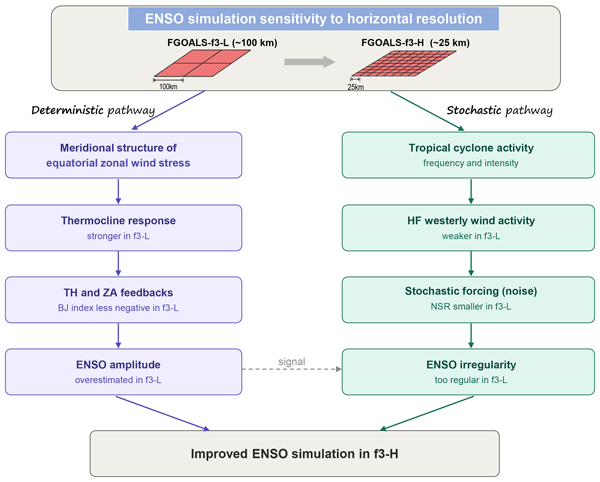
This study evaluates how horizontal resolution (~ 25 vs. ~ 100 km) affects El Niño–Southern Oscillation (ENSO) simulation in the Chinese Academy of Sciences Flexible Global Ocean-Atmosphere-Land System (CAS FGOALS-f3) climate model. A reproducible, process-based framework reveals ENSO biases stem from resolution-dependent air–sea feedbacks and high-frequency atmospheric variability. This work informs future development for the FGOALS-f3 family and serves as a reference for CMIP6/CMIP7 evaluation.
Michael N. Evans, Lucie J. Lücke, Kevin J. Fan, and Feng Zhu
Earth Syst. Sci. Data, 18, 1185–1202, https://doi.org/10.5194/essd-18-1185-2026, https://doi.org/10.5194/essd-18-1185-2026, 2026
Short summary
Short summary
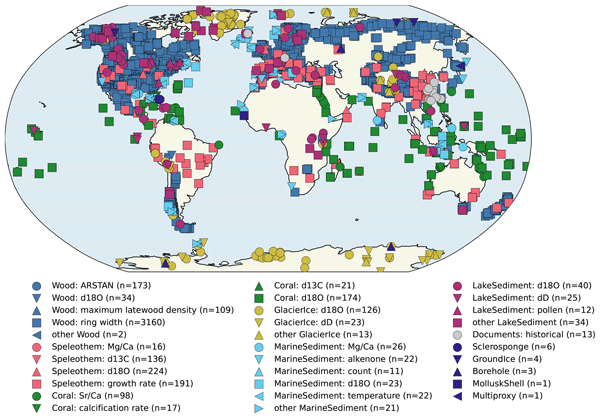
We present a database of databases (DoD2k) and toolkit (DT2k) for Common Era (1–2000 A.D.) paleoclimate research. DoD2k contains 4781 unique records assembled from 5 curated databases using DT2k. We analyze for common features across moisture and temperature sensitive records, and we test cave carbonate data simulations against observations. DoD2k is expected to be useful for attributing climate change on decadal timescales and for improving data models and paleoclimate reconstructions.
Yongbo Zhou, Yubao Liu, Wei Han, Yuefei Zeng, Haofei Sun, Peilong Yu, and Lijian Zhu
Atmos. Meas. Tech., 17, 6659–6675, https://doi.org/10.5194/amt-17-6659-2024, https://doi.org/10.5194/amt-17-6659-2024, 2024
Short summary
Short summary
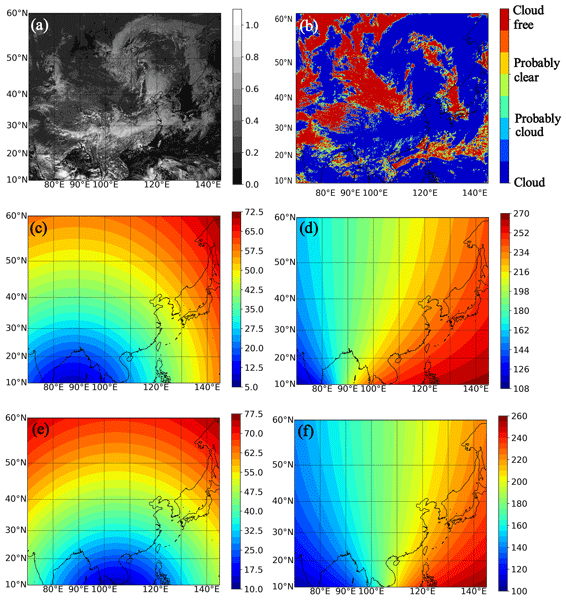
The study explored differences between the visible reflectance provided by the Fengyun-4A satellite and its equivalent derived from the China Meteorological Administration Mesoscale model using a forward operator. The observation-minus-simulation biases were able to monitor the performance of the satellite visible instrument. The biases were corrected based on a first-order approximation method, which promotes the data assimilation of satellite visible reflectance in real-world cases.
Feng Zhu, Julien Emile-Geay, Gregory J. Hakim, Dominique Guillot, Deborah Khider, Robert Tardif, and Walter A. Perkins
Geosci. Model Dev., 17, 3409–3431, https://doi.org/10.5194/gmd-17-3409-2024, https://doi.org/10.5194/gmd-17-3409-2024, 2024
Short summary
Short summary
Climate field reconstruction encompasses methods that estimate the evolution of climate in space and time based on natural archives. It is useful to investigate climate variations and validate climate models, but its implementation and use can be difficult for non-experts. This paper introduces a user-friendly Python package called cfr to make these methods more accessible, thanks to the computational and visualization tools that facilitate efficient and reproducible research on past climates.
Silke Trömel, Clemens Simmer, Ulrich Blahak, Armin Blanke, Sabine Doktorowski, Florian Ewald, Michael Frech, Mathias Gergely, Martin Hagen, Tijana Janjic, Heike Kalesse-Los, Stefan Kneifel, Christoph Knote, Jana Mendrok, Manuel Moser, Gregor Köcher, Kai Mühlbauer, Alexander Myagkov, Velibor Pejcic, Patric Seifert, Prabhakar Shrestha, Audrey Teisseire, Leonie von Terzi, Eleni Tetoni, Teresa Vogl, Christiane Voigt, Yuefei Zeng, Tobias Zinner, and Johannes Quaas
Atmos. Chem. Phys., 21, 17291–17314, https://doi.org/10.5194/acp-21-17291-2021, https://doi.org/10.5194/acp-21-17291-2021, 2021
Short summary
Short summary
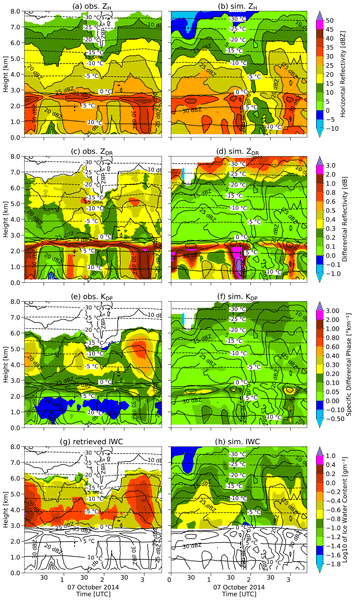
The article introduces the ACP readership to ongoing research in Germany on cloud- and precipitation-related process information inherent in polarimetric radar measurements, outlines pathways to inform atmospheric models with radar-based information, and points to remaining challenges towards an improved fusion of radar polarimetry and atmospheric modelling.
Cited articles
Brady, E., Stevenson, S., Bailey, D., Liu, Z., Noone, D., Nusbaumer, J., Otto-Bliesner, B. L., Tabor, C., Tomas, R., Wong, T., Zhang, J., and Zhu, J.: The connected isotopic water cycle in the Community Earth System Model version 1, J. Adv. Model. Earth Sy., 11, 2547–2566, 2019. a
Dee, S., Emile-Geay, J., Evans, M., Allam, A., Steig, E., and Thompson, D.: PRYSM: An open-source framework for PRoxY System Modeling, with applications to oxygen-isotope systems, J. Adv. Model. Earth Sy., 7, 1220–1247, 2015. a
Evans, M. N., Tolwinski-Ward, S. E., Thompson, D. M., and Anchukaitis, K. J.: Applications of proxy system modeling in high resolution paleoclimatology, Quaternary Sci. Rev., 76, 16–28, 2013. a
Evensen, G.: Sequential data assimilation with a nonlinear quasi-geostrophic model using Monte Carlo methods to forecast error statistics, J. Geophys. Res.-Oceans, 99, 10143–10162, 1994. a
Goosse, H.: Reconstructed and simulated temperature asymmetry between continents in both hemispheres over the last centuries, Clim. Dynam., 48, 1483–1501, 2017. a
Guillot, D., Rajaratnam, B., and Emile-Geay, J.: Statistical paleoclimate reconstructions via Markov random fields, Ann. Appl. Stat., 9, 324–352, 2015. a
Houtekamer, P. L. and Mitchell, H. L.: Data assimilation using an ensemble Kalman filter technique, Mon. Weather Rev., 126, 796–811, 1998. a
Houtekamer, P. L. and Mitchell, H. L.: A sequential ensemble Kalman filter for atmospheric data assimilation, Mon. Weather Rev., 129, 123–137, 2001. a
Huber, P. J.: Robust estimation of a location parameter, in: Breakthroughs in statistics: Methodology and distribution, Springer, 492–518, https://doi.org/10.1007/978-1-4612-4380-9_35, 1992. a
Kageyama, M., Harrison, S. P., Kapsch, M.-L., Lofverstrom, M., Lora, J. M., Mikolajewicz, U., Sherriff-Tadano, S., Vadsaria, T., Abe-Ouchi, A., Bouttes, N., Chandan, D., Gregoire, L. J., Ivanovic, R. F., Izumi, K., LeGrande, A. N., Lhardy, F., Lohmann, G., Morozova, P. A., Ohgaito, R., Paul, A., Peltier, W. R., Poulsen, C. J., Quiquet, A., Roche, D. M., Shi, X., Tierney, J. E., Valdes, P. J., Volodin, E., and Zhu, J.: The PMIP4 Last Glacial Maximum experiments: preliminary results and comparison with the PMIP3 simulations, Clim. Past, 17, 1065–1089, https://doi.org/10.5194/cp-17-1065-2021, 2021. a
Lei, L. and Anderson, J. L.: Comparisons of empirical localization techniques for serial ensemble Kalman filters in a simple atmospheric general circulation model, Mon. Weather Rev., 142, 739–754, 2014a. a
Lei, L. and Anderson, J. L.: Empirical localization of observations for serial ensemble Kalman filter data assimilation in an atmospheric general circulation model, Mon. Weather Rev., 142, 1835–1851, 2014b. a
Lenssen, N. J., Schmidt, G. A., Hansen, J. E., Menne, M. J., Persin, A., Ruedy, R., and Zyss, D.: Improvements in the GISTEMP uncertainty model, J. Geophys. Res.-Atmos., 124, 6307–6326, 2019. a
Liu, Z., Zhu, J., Rosenthal, Y., Zhang, X., Otto-Bliesner, B. L., Timmermann, A., Smith, R. S., Lohmann, G., Zheng, W., and Elison Timm, O.: The Holocene temperature conundrum, P. Natl. Acad. Sci. USA, 111, E3501–E3505, 2014. a
Lorenz, E. N.: Empirical orthogonal functions and statistical weather prediction, Vol. 1, Department of Meteorology, Massachusetts Institute of Technology, Cambridge, 1956. a
Luo, G., Zeng, Y., Zhu, F., and Zhao, J.: Paleoclimate data assimilation with adaptive observation error inflation and adaptive localization, Version v2, Zenodo [data set/code], https://doi.org/10.5281/zenodo.19015635, 2026. a
Mann, M. E., Bradley, R. S., and Hughes, M. K.: Global-scale temperature patterns and climate forcing over the past six centuries, Nature, 392, 779–787, 1998. a
Mann, M. E., Zhang, Z., Hughes, M. K., Bradley, R. S., Miller, S. K., Rutherford, S., and Ni, F.: Proxy-based reconstructions of hemispheric and global surface temperature variations over the past two millennia, P. Natl. Acad. Sci. USA, 105, 13252–13257, 2008. a
Osman, M. B., Tierney, J. E., Zhu, J., Tardif, R., Hakim, G. J., King, J., and Poulsen, C. J.: Globally resolved surface temperatures since the Last Glacial Maximum, Nature, 599, 239–244, 2021. a
PAGES 2k Consortium: A global multiproxy database for temperature reconstructions of the Common Era, Scientific Data, 4, 170088, https://doi.org/10.1038/sdata.2017.88, 2017. a
Parzen, E.: On estimation of a probability density function and mode, Ann. Math. Stat., 33, 1065–1076, 1962. a
Phipps, S. J., McGregor, H. V., Gergis, J., Gallant, A. J., Neukom, R., Stevenson, S., Ackerley, D., Brown, J. R., Fischer, M. J., and Van Ommen, T. D.: Paleoclimate data–model comparison and the role of climate forcings over the past 1500 years, J. Climate, 26, 6915–6936, 2013. a
Steiger, N. J., Hakim, G. J., Steig, E. J., Battisti, D. S., and Roe, G. H.: Assimilation of time-averaged pseudoproxies for climate reconstruction, J. Climate, 27, 426–441, 2014. a
Sun, H., Lei, L., Liu, Z., Ning, L., and Tan, Z.-M.: An online paleoclimate data assimilation with a deep learning-based network, J. Adv. Model. Earth Sy., 17, e2024MS004675, https://doi.org/10.1029/2024MS004675, 2025. a, b
Tardif, R., Hakim, G. J., Perkins, W. A., Horlick, K. A., Erb, M. P., Emile-Geay, J., Anderson, D. M., Steig, E. J., and Noone, D.: Last Millennium Reanalysis with an expanded proxy database and seasonal proxy modeling, Clim. Past, 15, 1251–1273, https://doi.org/10.5194/cp-15-1251-2019, 2019. a, b, c, d, e
Tingley, M. P., Craigmile, P. F., Haran, M., Li, B., Mannshardt, E., and Rajaratnam, B.: Piecing together the past: statistical insights into paleoclimatic reconstructions, Quaternary Sci. Rev., 35, 1–22, 2012. a
Vaccaro, A., Emile-Geay, J., Guillot, D., Verna, R., Morice, C., Kennedy, J., and Rajaratnam, B.: Climate field completion via Markov random fields: Application to the HadCRUT4. 6 temperature dataset, J. Climate, 34, 4169–4188, 2021. a
von Storch, H., Cubasch, U., Gonzalez-Rouco, J. F., Jones, J. M., Voss, R., Widmann, M., and Zorita, E.: Combining paleoclimatic evidence and GCMs by means of data assimilation through upscaling and nudging (DATUN), in: Proceedings of the 11th symposium on global change studies, 28–31, 2000. a
Wang, J., Emile-Geay, J., Guillot, D., McKay, N. P., and Rajaratnam, B.: Fragility of reconstructed temperature patterns over the Common Era: Implications for model evaluation, Geophys. Res. Lett., 42, 7162–7170, 2015. a
Whitaker, J. S. and Hamill, T. M.: Ensemble data assimilation without perturbed observations, Mon. Weather Rev., 130, 1913–1924, 2002. a
Widmann, M., Goosse, H., van der Schrier, G., Schnur, R., and Barkmeijer, J.: Using data assimilation to study extratropical Northern Hemisphere climate over the last millennium, Clim. Past, 6, 627–644, https://doi.org/10.5194/cp-6-627-2010, 2010. a
Zeng, Y. and Janjić, T.: Study of conservation laws with the local ensemble transform kalman filter, Q. J. Roy. Meteor. Soc., 699, 2359–2372, 2016. a
Zhu, F., Emile-Geay, J., Anchukaitis, K. J., McKay, N. P., Stevenson, S., and Meng, Z.: A pseudoproxy emulation of the PAGES 2k database using a hierarchy of proxy system models, Scientific Data, 10, 624, https://doi.org/10.1038/s41597-023-02489-1, 2023. a
Zhu, F., Emile-Geay, J., Hakim, G. J., Guillot, D., Khider, D., Tardif, R., and Perkins, W. A.: cfr: a Python package for Climate Field Reconstruction, Version v2024.1.26, Zenodo [code], https://doi.org/10.5281/zenodo.10575537, 2024a. a
Zhu, F., Emile-Geay, J., Hakim, G. J., Guillot, D., Khider, D., Tardif, R., and Perkins, W. A.: cfr (v2024.1.26): a Python package for climate field reconstruction, Geosci. Model Dev., 17, 3409–3431, https://doi.org/10.5194/gmd-17-3409-2024, 2024b. a, b
Short summary
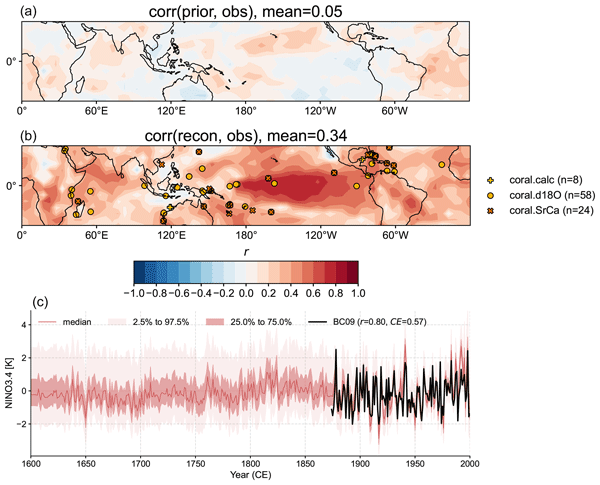
Reconstructing past temperatures from sparse coral records is challenging. We developed two adaptive methods to improve how model simulations are combined with proxy data. The first adjusts trust in each record based on model consistency; the second adapts how far each record influences the reconstruction. Our approach improved accuracy and better captured El Niño–Southern Oscillation patterns, especially in data‑poor regions. These strategies enable more reliable climate reconstructions
Reconstructing past temperatures from sparse coral records is challenging. We developed two...