
Articles | Volume 19, issue 14
https://doi.org/10.5194/gmd-19-6467-2026
© Author(s) 2026. This work is distributed under
the Creative Commons Attribution 4.0 License.
the Creative Commons Attribution 4.0 License.
https://doi.org/10.5194/gmd-19-6467-2026
© Author(s) 2026. This work is distributed under
the Creative Commons Attribution 4.0 License.
the Creative Commons Attribution 4.0 License.
Model description paper
| 
17 Jul 2026
Model description paper |
| 17 Jul 2026
| 17 Jul 2026
The next generation sea-ice model neXtSIM, version 2

Nansen Environmental and Remote Sensing Center, Bergen, Norway
Bjerknes Centre for Climate Research, Bergen, Norway
Guillaume Boutin
Nansen Environmental and Remote Sensing Center, Bergen, Norway
Bjerknes Centre for Climate Research, Bergen, Norway
Timothy Williams
Nansen Environmental and Remote Sensing Center, Bergen, Norway
Bjerknes Centre for Climate Research, Bergen, Norway
Anton Korosov
Nansen Environmental and Remote Sensing Center, Bergen, Norway
Bjerknes Centre for Climate Research, Bergen, Norway
Heather Regan
Nansen Environmental and Remote Sensing Center, Bergen, Norway
Bjerknes Centre for Climate Research, Bergen, Norway
Jonathan Rheinlænder
Nansen Environmental and Remote Sensing Center, Bergen, Norway
Bjerknes Centre for Climate Research, Bergen, Norway
Pierre Rampal
CNRS, Institut des Géosciences de l'Environnement, Grenoble, France
Daniela Flocco
Dipartimento di Scienze della Terra, dell'Ambiente e delle Risorse, Università degli Studi di Napoli “Federico II”, Napoli, Italy
Consorzio Nazionale Interuniversitario per le Scienze del Mare – CoNISMa, Rome, Italy
Abdoulaye Samaké
Université des Sciences, des Techniques et des Technologies de Bamako, Bamako, Mali
Richard Davy
Nansen Environmental and Remote Sensing Center, Bergen, Norway
Bjerknes Centre for Climate Research, Bergen, Norway
Timothy Spain
Nansen Environmental and Remote Sensing Center, Bergen, Norway
Bjerknes Centre for Climate Research, Bergen, Norway
Sean Chua
Nansen Environmental and Remote Sensing Center, Bergen, Norway
Bjerknes Centre for Climate Research, Bergen, Norway
Related authors
Jonathan Winfield Rheinlænder, Einar Örn Ólason, Céline Heuzé, and Guillaume Boutin
EGUsphere, https://doi.org/10.5194/egusphere-2026-5106, https://doi.org/10.5194/egusphere-2026-5106, 2026
This preprint is open for discussion and under review for The Cryosphere (TC).
Short summary
Short summary
Polynyas are "holes" in the sea-ice cover where large amounts of new ice form, but they are not represented in climate models. We used a novel sea-ice model, compared against satellite data, to study Arctic polynya activity over 18 winters. We found that polynyas account for up to 11 % of total winter ice production in the Arctic, despite only covering a small area. Our results suggest that earlier satellite estimates may have been too high.
Fabien Salmon, Pierre Rampal, Stéphanie Leroux, Timothy Williams, Einar Ólason, and Nicolas Barral
EGUsphere, https://doi.org/10.5194/egusphere-2026-1869, https://doi.org/10.5194/egusphere-2026-1869, 2026
Short summary
Short summary
Accurate modeling of sea ice dynamics is a major challenge for forecasting its future evolution and assessing its impact on climate change. This paper presents the parallelisation of state-of-the art sea-ice dynamics model NeXtSIM. The code was interfaced with a new parallel version of the remeshing library MMG. Validation and performance of the code are discussed. Simulations with a uniform 1km spatial resolution are run, which is unprecedented with this kind of lagrangian sea-ice models.
Marek Muchow, Einar Ólason, and Arttu Polojärvi
EGUsphere, https://doi.org/10.5194/egusphere-2025-6421, https://doi.org/10.5194/egusphere-2025-6421, 2026
Short summary
Short summary
Sea-ice ridges increase the ice thickness beyond values created by thermodynamic growth. We simulated ridging using a discrete-element-method model and compared the resulting ice thickness changes to commonly used methods in continuum sea-ice modeling. The discrete-element-method simulations have a higher spatial resolution. We observe both triangular and trapezoidal ridges. Both ridge shapes influence the amount of thick ice after deformation, which we describe with an analytical function.
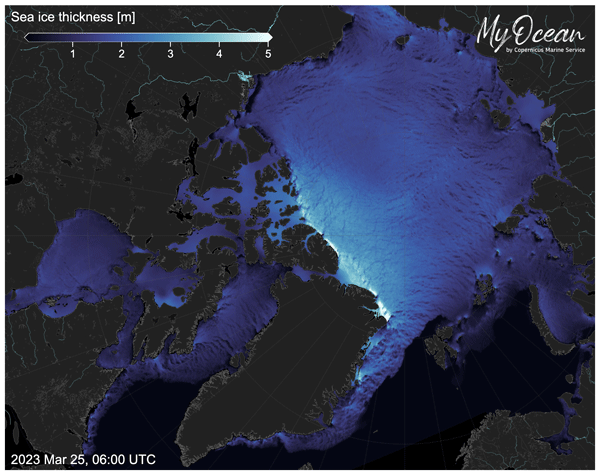
Laurent Bertino, Patrick Heimbach, Ed Blockley, and Einar Ólason
State Planet, 5-opsr, 14, https://doi.org/10.5194/sp-5-opsr-14-2025, https://doi.org/10.5194/sp-5-opsr-14-2025, 2025
Short summary
Short summary
Forecasts of sea ice are in high demand in the polar regions, and they are also quickly improving and becoming more easily accessible to non-experts. We provide here a brief status of the short-term forecasting services – typically 10 d ahead – and an outlook of their upcoming developments.
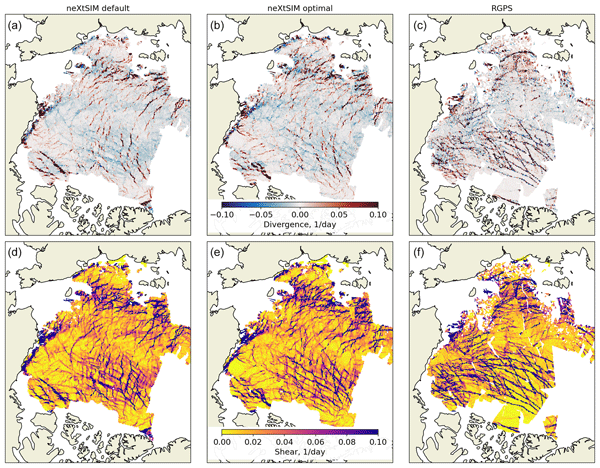
Anton Korosov, Yue Ying, and Einar Ólason
Geosci. Model Dev., 18, 885–904, https://doi.org/10.5194/gmd-18-885-2025, https://doi.org/10.5194/gmd-18-885-2025, 2025
Short summary
Short summary
We have developed a new method to improve the accuracy of sea ice models, which predict how ice moves and deforms due to wind and ocean currents. Traditional models use parameters that are often poorly defined. The new approach uses machine learning to fine-tune these parameters by comparing simulated ice drift with satellite data. The method identifies optimal settings for the model by analysing patterns in ice deformation. This results in more accurate simulations of sea ice drift forecasting.
Simon Driscoll, Alberto Carrassi, Julien Brajard, Laurent Bertino, Einar Ólason, Marc Bocquet, and Amos Lawless
EGUsphere, https://doi.org/10.5194/egusphere-2024-2476, https://doi.org/10.5194/egusphere-2024-2476, 2024
Preprint archived
Short summary
Short summary
The formation and evolution of sea ice melt ponds (ponds of melted water) are complex, insufficiently understood and represented in models with considerable uncertainty. These uncertain representations are not traditionally included in climate models potentially causing the known underestimation of sea ice loss in climate models. Our work creates the first observationally based machine learning model of melt ponds that is also a ready and viable candidate to be included in climate models.
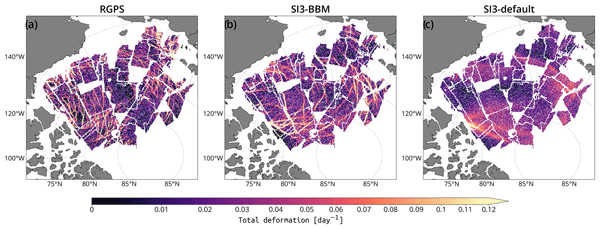
Laurent Brodeau, Pierre Rampal, Einar Ólason, and Véronique Dansereau
Geosci. Model Dev., 17, 6051–6082, https://doi.org/10.5194/gmd-17-6051-2024, https://doi.org/10.5194/gmd-17-6051-2024, 2024
Short summary
Short summary
A new brittle sea ice rheology, BBM, has been implemented into the sea ice component of NEMO. We describe how a new spatial discretization framework was introduced to achieve this. A set of idealized and realistic ocean and sea ice simulations of the Arctic have been performed using BBM and the standard viscous–plastic rheology of NEMO. When compared to satellite data, our simulations show that our implementation of BBM leads to a fairly good representation of sea ice deformations.
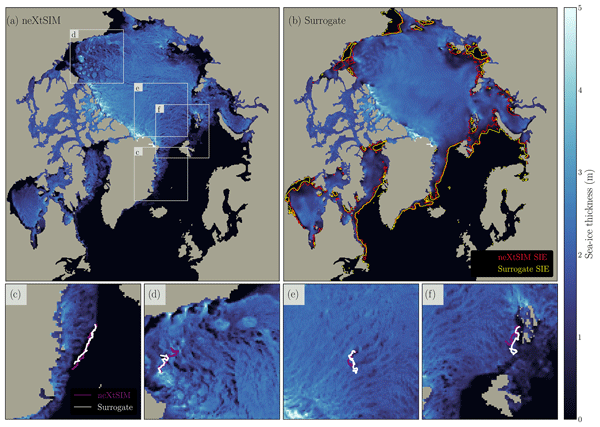
Charlotte Durand, Tobias Sebastian Finn, Alban Farchi, Marc Bocquet, Guillaume Boutin, and Einar Ólason
The Cryosphere, 18, 1791–1815, https://doi.org/10.5194/tc-18-1791-2024, https://doi.org/10.5194/tc-18-1791-2024, 2024
Short summary
Short summary
This paper focuses on predicting Arctic-wide sea-ice thickness using surrogate modeling with deep learning. The model has a predictive power of 12 h up to 6 months. For this forecast horizon, persistence and daily climatology are systematically outperformed, a result of learned thermodynamics and advection. Consequently, surrogate modeling with deep learning proves to be effective at capturing the complex behavior of sea ice.
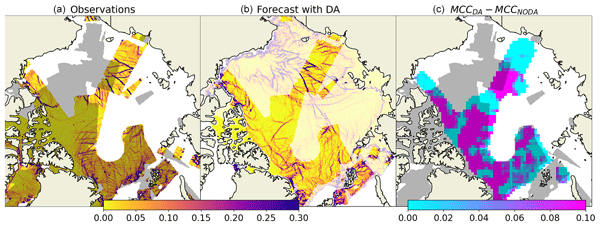
Anton Korosov, Pierre Rampal, Yue Ying, Einar Ólason, and Timothy Williams
The Cryosphere, 17, 4223–4240, https://doi.org/10.5194/tc-17-4223-2023, https://doi.org/10.5194/tc-17-4223-2023, 2023
Short summary
Short summary
It is possible to compute sea ice motion from satellite observations and detect areas where ice converges (moves together), forms ice ridges or diverges (moves apart) and opens leads. However, it is difficult to predict the exact motion of sea ice and position of ice ridges or leads using numerical models. We propose a new method to initialise a numerical model from satellite observations to improve the accuracy of the forecasted position of leads and ridges for safer navigation.
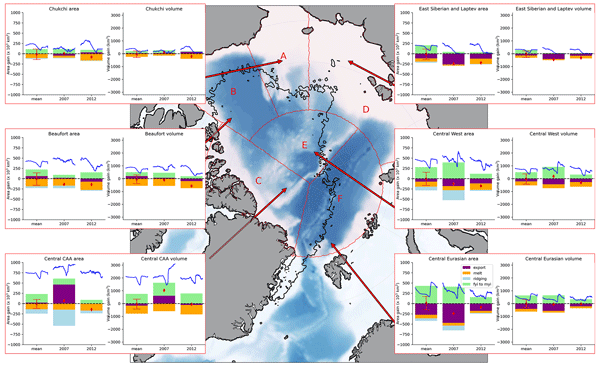
Heather Regan, Pierre Rampal, Einar Ólason, Guillaume Boutin, and Anton Korosov
The Cryosphere, 17, 1873–1893, https://doi.org/10.5194/tc-17-1873-2023, https://doi.org/10.5194/tc-17-1873-2023, 2023
Short summary
Short summary
Multiyear ice (MYI), sea ice that survives the summer, is more resistant to changes than younger ice in the Arctic, so it is a good indicator of sea ice resilience. We use a model with a new way of tracking MYI to assess the contribution of different processes affecting MYI. We find two important years for MYI decline: 2007, when dynamics are important, and 2012, when melt is important. These affect MYI volume and area in different ways, which is important for the interpretation of observations.
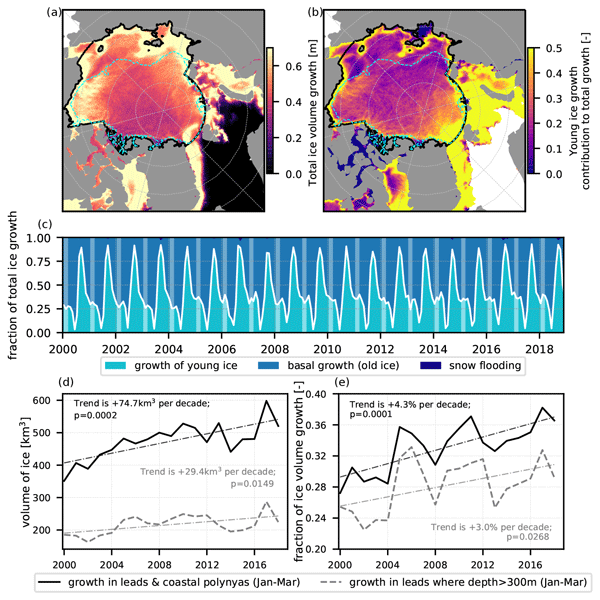
Guillaume Boutin, Einar Ólason, Pierre Rampal, Heather Regan, Camille Lique, Claude Talandier, Laurent Brodeau, and Robert Ricker
The Cryosphere, 17, 617–638, https://doi.org/10.5194/tc-17-617-2023, https://doi.org/10.5194/tc-17-617-2023, 2023
Short summary
Short summary
Sea ice cover in the Arctic is full of cracks, which we call leads. We suspect that these leads play a role for atmosphere–ocean interactions in polar regions, but their importance remains challenging to estimate. We use a new ocean–sea ice model with an original way of representing sea ice dynamics to estimate their impact on winter sea ice production. This model successfully represents sea ice evolution from 2000 to 2018, and we find that about 30 % of ice production takes place in leads.
Jonathan Winfield Rheinlænder, Einar Örn Ólason, Céline Heuzé, and Guillaume Boutin
EGUsphere, https://doi.org/10.5194/egusphere-2026-5106, https://doi.org/10.5194/egusphere-2026-5106, 2026
This preprint is open for discussion and under review for The Cryosphere (TC).
Short summary
Short summary
Polynyas are "holes" in the sea-ice cover where large amounts of new ice form, but they are not represented in climate models. We used a novel sea-ice model, compared against satellite data, to study Arctic polynya activity over 18 winters. We found that polynyas account for up to 11 % of total winter ice production in the Arctic, despite only covering a small area. Our results suggest that earlier satellite estimates may have been too high.
Francesco Cocetta, Doroteaciro Iovino, Andrea Cipollone, and Daniela Flocco
EGUsphere, https://doi.org/10.5194/egusphere-2026-4349, https://doi.org/10.5194/egusphere-2026-4349, 2026
This preprint is open for discussion and under review for The Cryosphere (TC).
Short summary
Short summary
Arctic sea ice is rapidly changing toward a new climate state characterized by thinner and more seasonal ice. To understand these changes, we use reconstructions of ocean and sea ice states to investigate the transition zone between consolidated pack ice and open ocean. Our results show clear differences from central pack ice, highlighting the need for better representation in climate models and opening the path toward identifying specific indicators of its evolution.
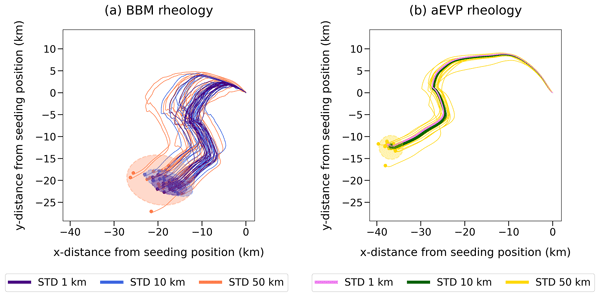
Lohenn Fiol, Stephanie Leroux, Pierre Rampal, and Jean-Michel Brankart
The Cryosphere, 20, 4655–4680, https://doi.org/10.5194/tc-20-4655-2026, https://doi.org/10.5194/tc-20-4655-2026, 2026
Short summary
Short summary
We examine how uncertainty in the initial position of sea ice features (leads, ridges), affects daily-to-weekly winter sea-ice forecasts. Using ensemble simulations with a sea ice–ocean model, we compare two formulations of sea ice mechanics. We show that pack-ice dynamics are highly sensitive to this choice: one formulation strongly amplifies small initial errors, while the other damps them. Our results highlight the need for ensemble forecasts to capture uncertainty and risks in the Arctic.
Anton Korosov, Jonathan Rheinlænder, Richard Davy, François Massonnet, and David Babb
State Planet Discuss., https://doi.org/10.5194/sp-2026-5, https://doi.org/10.5194/sp-2026-5, 2026
Preprint under review for SP
Short summary
Short summary
The Arctic sea ice cover has changed dramatically over the last few decades. Thick, old ice that has survived several years is being replaced by thinner ice that forms each winter and melts easily. We examined Arctic sea ice age from 1991 to 2025 using satellite observations and found that during the rapid transition from 2003 to 2008, the area covered by multi-year ice decreased sharply, likely due to altered sea ice dynamics. Then, the Arctic has remained in a new state with much less old ice.
Céline Heuzé, Jonathan W. Rheinlænder, Tian Tian, and Carmen Hau Man Wong
The Cryosphere, 20, 3643–3682, https://doi.org/10.5194/tc-20-3643-2026, https://doi.org/10.5194/tc-20-3643-2026, 2026
Short summary
Short summary
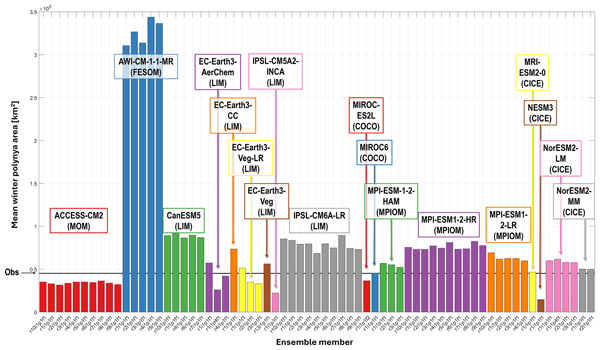
When the sea ice opens in winter in so-called “polynyas”, the entire climate system is affected from deep water ventilation to cloud formation, along with the ecosystem. In observations, winter Arctic polynyas have been increasing along with climate change. We here show that we cannot predict their future using global climate models as they do not represent winter Arctic polynyas correctly: they open over too large areas but too rarely, and for the wrong reason.
Fabien Salmon, Pierre Rampal, Stéphanie Leroux, Timothy Williams, Einar Ólason, and Nicolas Barral
EGUsphere, https://doi.org/10.5194/egusphere-2026-1869, https://doi.org/10.5194/egusphere-2026-1869, 2026
Short summary
Short summary
Accurate modeling of sea ice dynamics is a major challenge for forecasting its future evolution and assessing its impact on climate change. This paper presents the parallelisation of state-of-the art sea-ice dynamics model NeXtSIM. The code was interfaced with a new parallel version of the remeshing library MMG. Validation and performance of the code are discussed. Simulations with a uniform 1km spatial resolution are run, which is unprecedented with this kind of lagrangian sea-ice models.
Aikaterini Tavri, Chris Horvat, Brodie Pearson, Guillaume Boutin, Anne Hansen, and Ara Lee
The Cryosphere, 20, 3073–3089, https://doi.org/10.5194/tc-20-3073-2026, https://doi.org/10.5194/tc-20-3073-2026, 2026
Short summary
Short summary
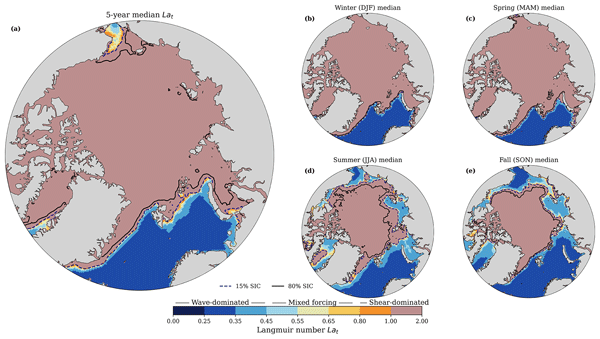
In the Arctic, declining sea ice allows waves to penetrate farther into ice-covered regions, altering ocean–atmosphere exchanges of heat and momentum. Wave–wind interactions can enhance upper-ocean mixing and influence heat storage, but this process is poorly understood in sea ice. Using a coupled wave–sea ice model, we show that such mixing is intermittent and localized, yet likely to become more important as Arctic sea ice continues to decline.
Julien Brajard, Anton Korosov, Fabio Mangini, Richard Davy, and Yiguo Wang
EGUsphere, https://doi.org/10.5194/egusphere-2026-2318, https://doi.org/10.5194/egusphere-2026-2318, 2026
Short summary
Short summary
Small details in Arctic sea ice thickness, such as ridges, cracks and leads, are difficult to observe with satellites and are rarely represented in climate models, even though they strongly influence sea ice motion and its interaction with the climate system. In this study, we introduce an artificial intelligence method that reconstructs realistic small‑scale ice thickness features from coarse observations. The results show more accurate estimates and physically realistic sea ice patterns.
Anton Korosov, Léo Edel, Heather Regan, Thomas Lavergne, Signe Aaboe, and Emily Jane Down
Earth Syst. Sci. Data, 18, 721–740, https://doi.org/10.5194/essd-18-721-2026, https://doi.org/10.5194/essd-18-721-2026, 2026
Short summary
Short summary
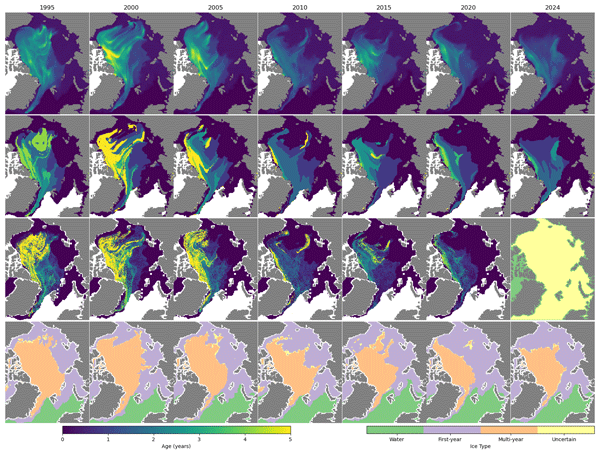
We present a new long-term record of Arctic sea ice age spanning from 1991 to 2024. Using satellite data and a new tracking method, it maps fractions of sea ice from first- to sixth-year and includes uncertainty estimates. The dataset shows a decline in older ice and more first-year ice, it agrees well with buoy data, and supports Arctic monitoring, climate research, navigation, and model evaluation.
Marek Muchow, Einar Ólason, and Arttu Polojärvi
EGUsphere, https://doi.org/10.5194/egusphere-2025-6421, https://doi.org/10.5194/egusphere-2025-6421, 2026
Short summary
Short summary
Sea-ice ridges increase the ice thickness beyond values created by thermodynamic growth. We simulated ridging using a discrete-element-method model and compared the resulting ice thickness changes to commonly used methods in continuum sea-ice modeling. The discrete-element-method simulations have a higher spatial resolution. We observe both triangular and trapezoidal ridges. Both ridge shapes influence the amount of thick ice after deformation, which we describe with an analytical function.
Valentin Ludwig, Caroline Ribere, Sara Fleury, Christian Haas, Michel Tsamados, Mahmoud El Hajj, Jerome Bouffard, Michele Scagliola, Marion Bocquet, Eric de Boisseson, Vincent Boulenger, Guillaume Boutin, Laurence Connor, Léo Edel, Stefan Hendricks, Ferran Hernández Macià, Marcus Huntemann, Lars Kaleschke, Frank Kauker, Jack Landy, Tom Megain, Alek Petty, Till Soya Rasmussen, Mads Hvid Ribergaard, Robert Ricker, Axel Schweiger, Hoyeon Shi, Xiangshan Tian-Kunze, Donghui Yi, and Alessandro Di Bella
EGUsphere, https://doi.org/10.5194/egusphere-2025-6201, https://doi.org/10.5194/egusphere-2025-6201, 2026
Short summary
Short summary
Our paper compares Arctic sea-ice thickness datasets from models, reanalyses, satellite-only, and multi-product sources. We validate them against Beaufort Sea reference data, compare large-scale products, and analyse time series. Cross-product biases range from 0.2–0.4 m, RMSDs from 0.4–0.9 m, and correlations from 0.5–0.8. We find no 2010–2023 trend, but 1995–2023 thinning of ~ 0.5 m in November and ~ 0.3 m in March.
Nicolas Guillaume Alexandre Mokus, Véronique Dansereau, Guillaume Boutin, Jean-Pierre Auclair, and Alexandre Tlili
Geosci. Model Dev., 19, 261–288, https://doi.org/10.5194/gmd-19-261-2026, https://doi.org/10.5194/gmd-19-261-2026, 2026
Short summary
Short summary
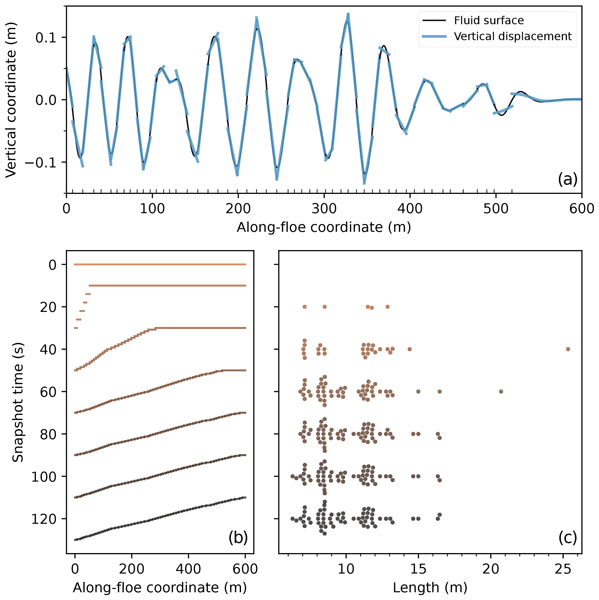
Arctic sea ice recedes, and is thus more exposed to waves, which can fracture continuous pack ice into smaller floes. These are more mobile and easier to melt. Ice fracture itself is not well understood, because of harsh field conditions. We propose a novel criterion parametrising this process, and incorporate it into a numerical model that simulates wave propagation. This criterion can be compared to existing ones. We relate our results to lab experiments, and find qualitative agreement.
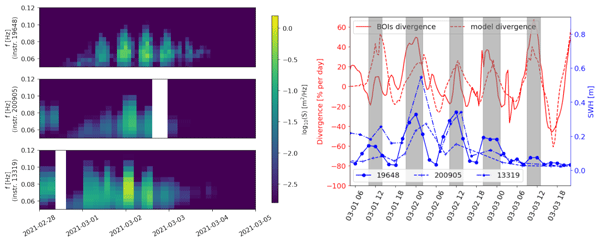
Jean Rabault, Trygve Halsne, Ana Carrasco, Anton Korosov, Joey Voermans, Patrik Bohlinger, Jens Boldingh Debernard, Malte Müller, Øyvind Breivik, Takehiko Nose, Gaute Hope, Fabrice Collard, Sylvain Herlédan, Tsubasa Kodaira, Nick Hughes, Qin Zhang, Kai Håkon Christensen, Alexander Babanin, Lars Willas Dreyer, Cyril Palerme, Lotfi Aouf, Konstantinos Christakos, Atle Jensen, Johannes Röhrs, Aleksey Marchenko, Graig Sutherland, Trygve Kvåle Løken, and Takuji Waseda
The Cryosphere, 19, 6229–6260, https://doi.org/10.5194/tc-19-6229-2025, https://doi.org/10.5194/tc-19-6229-2025, 2025
Short summary
Short summary
We observe strongly modulated waves-in-ice significant wave height using buoys deployed East of Svalbard. We show that these observations likely cannot be explained by wave-current interaction or tide-induced modulation alone. We also demonstrate a strong correlation between the waves height modulation, and the rate of sea ice convergence. Therefore, our data suggest that the rate of sea ice convergence and divergence may modulate wave in ice energy dissipation.
Sara Aparício, Simon Driscoll, and Daniela Flocco
EGUsphere, https://doi.org/10.5194/egusphere-2025-4480, https://doi.org/10.5194/egusphere-2025-4480, 2025
Short summary
Short summary
This study examines how scientists monitor Arctic melt ponds, pools of water forming on sea ice during summer, which absorb more sunlight than ice, creating a feedback loop affecting global climate. It reviews current satellites and field campaigns to acquire data; algorithms used to process it. It analyses over forty studies, comparing datasets, regions studied, and major limitations allowing to identify future research areas to improve Earth observations of melt ponds.
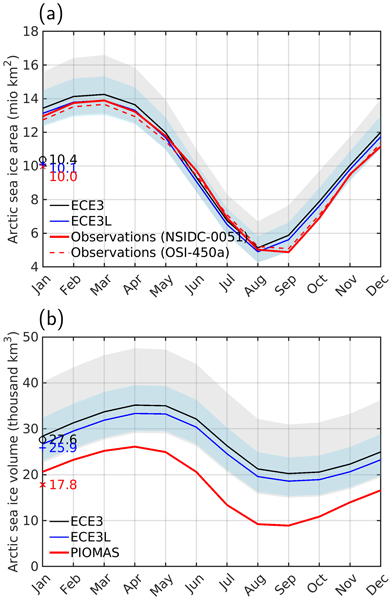
Tian Tian, Richard Davy, Leandro Ponsoni, and Shuting Yang
The Cryosphere, 19, 2751–2768, https://doi.org/10.5194/tc-19-2751-2025, https://doi.org/10.5194/tc-19-2751-2025, 2025
Short summary
Short summary
We introduced a modulating factor to the surface heat flux in the EC-Earth3 model to address the lack of parameterization for turbulent exchange over sea ice leads and correct the bias in Arctic sea ice. Three pairwise experiments showed that the amplified heat flux effectively reduces the overestimated sea ice, especially during cold periods, thereby improving agreement with observed and reanalysis data for sea ice area, volume, and ice edge, particularly in the North Atlantic sector.
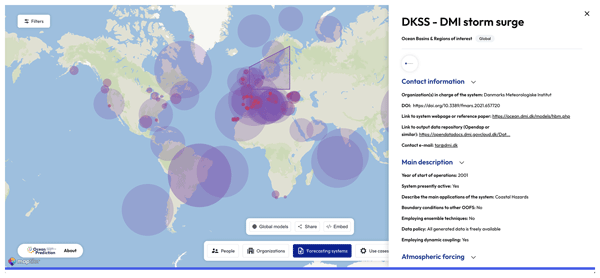
Mauro Cirano, Enrique Alvarez-Fanjul, Arthur Capet, Stefania Ciliberti, Emanuela Clementi, Boris Dewitte, Matias Dinápoli, Ghada El Serafy, Patrick Hogan, Sudheer Joseph, Yasumasa Miyazawa, Ivonne Montes, Diego A. Narvaez, Heather Regan, Claudia G. Simionato, Gregory C. Smith, Joanna Staneva, Clemente A. S. Tanajura, Pramod Thupaki, Claudia Urbano-Latorre, Jennifer Veitch, and Jorge Zavala Hidalgo
State Planet, 5-opsr, 5, https://doi.org/10.5194/sp-5-opsr-5-2025, https://doi.org/10.5194/sp-5-opsr-5-2025, 2025
Short summary
Short summary
Operational ocean forecasting systems (OOFSs) are crucial for human activities, environmental monitoring, and policymaking. An assessment across eight key regions highlights strengths and gaps, particularly in coastal and biogeochemical forecasting. AI offers improvements, but collaboration, knowledge sharing, and initiatives like the OceanPrediction Decade Collaborative Centre (DCC) are key to enhancing accuracy, accessibility, and global forecasting capabilities.
Laurent Bertino, Patrick Heimbach, Ed Blockley, and Einar Ólason
State Planet, 5-opsr, 14, https://doi.org/10.5194/sp-5-opsr-14-2025, https://doi.org/10.5194/sp-5-opsr-14-2025, 2025
Short summary
Short summary
Forecasts of sea ice are in high demand in the polar regions, and they are also quickly improving and becoming more easily accessible to non-experts. We provide here a brief status of the short-term forecasting services – typically 10 d ahead – and an outlook of their upcoming developments.

Jennifer Veitch, Enrique Alvarez-Fanjul, Arthur Capet, Stefania Ciliberti, Mauro Cirano, Emanuela Clementi, Fraser Davidson, Ghada el Serafy, Guilherme Franz, Patrick Hogan, Sudheer Joseph, Svitlana Liubartseva, Yasumasa Miyazawa, Heather Regan, and Katerina Spanoudaki
State Planet, 5-opsr, 6, https://doi.org/10.5194/sp-5-opsr-6-2025, https://doi.org/10.5194/sp-5-opsr-6-2025, 2025
Short summary
Short summary
Ocean forecast systems provide information about a future state of the ocean. This information is provided in the form of decision support tools, or downstream applications, that can be accessed by various stakeholders to support livelihoods, coastal resilience and the good governance of the marine environment. This paper provides an overview of the various downstream applications of ocean forecast systems that are utilized around the world.
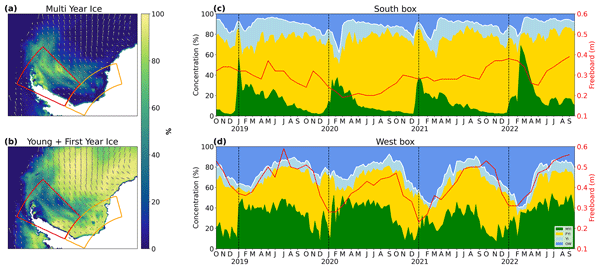
Mukund Gupta, Heather Regan, Younghyun Koo, Sean Minhui Tashi Chua, Xueke Li, and Petra Heil
The Cryosphere, 19, 1241–1257, https://doi.org/10.5194/tc-19-1241-2025, https://doi.org/10.5194/tc-19-1241-2025, 2025
Short summary
Short summary
The sea ice cover is composed of floes, whose shapes set the material properties of the pack. Here, we use a satellite product (ICESat-2) to investigate these floe shapes within the Weddell Sea in Antarctica. We find that floes tend to become smaller during the melt season, while their thickness distribution exhibits different behavior between the western and southern regions of the pack. These metrics will help calibrate models and improve our understanding of sea ice physics across scales.
Chloe A. Brashear, Tyler R. Jones, Valerie Morris, Bruce H. Vaughn, William H. G. Roberts, William B. Skorski, Abigail G. Hughes, Richard Nunn, Sune Olander Rasmussen, Kurt M. Cuffey, Bo M. Vinther, Todd Sowers, Christo Buizert, Vasileios Gkinis, Christian Holme, Mari F. Jensen, Sofia E. Kjellman, Petra M. Langebroek, Florian Mekhaldi, Kevin S. Rozmiarek, Jonathan W. Rheinlænder, Margit H. Simon, Giulia Sinnl, Silje Smith-Johnsen, and James W. C. White
Clim. Past, 21, 529–546, https://doi.org/10.5194/cp-21-529-2025, https://doi.org/10.5194/cp-21-529-2025, 2025
Short summary
Short summary
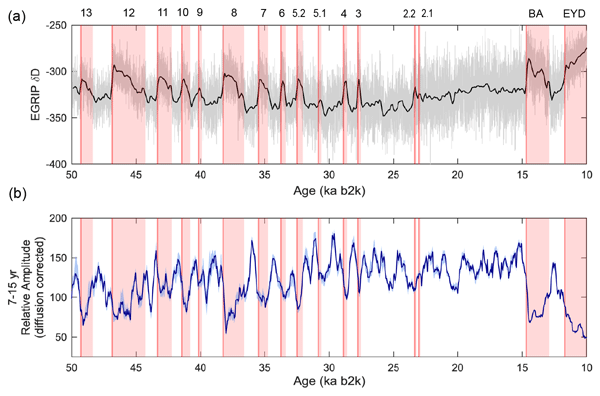
We use a series of spectral techniques to quantify the strength of high-frequency climate variability in northeastern Greenland to 50 000 ka before present. Importantly, we find that variability consistently decreases hundreds of years prior to Dansgaard–Oeschger warming events. Model simulations suggest a change in North Atlantic sea ice behavior contributed to this pattern, thus providing new information on the conditions which preceded abrupt climate change during the Last Glacial Period.

Léo Edel, Jiping Xie, Anton Korosov, Julien Brajard, and Laurent Bertino
The Cryosphere, 19, 731–752, https://doi.org/10.5194/tc-19-731-2025, https://doi.org/10.5194/tc-19-731-2025, 2025
Short summary
Short summary
This study developed a new method to estimate Arctic sea ice thickness from 1992 to 2010 using a combination of machine learning and data assimilation. By training a machine learning model on data from 2011 to 2022, past errors in sea ice thickness can be corrected, leading to improved estimations. This approach provides insights into historical changes in sea ice thickness, showing a notable decline from 1992 to 2022, and offers a valuable resource for future studies.
Anton Korosov, Yue Ying, and Einar Ólason
Geosci. Model Dev., 18, 885–904, https://doi.org/10.5194/gmd-18-885-2025, https://doi.org/10.5194/gmd-18-885-2025, 2025
Short summary
Short summary
We have developed a new method to improve the accuracy of sea ice models, which predict how ice moves and deforms due to wind and ocean currents. Traditional models use parameters that are often poorly defined. The new approach uses machine learning to fine-tune these parameters by comparing simulated ice drift with satellite data. The method identifies optimal settings for the model by analysing patterns in ice deformation. This results in more accurate simulations of sea ice drift forecasting.
Rémy Lapere, Louis Marelle, Pierre Rampal, Laurent Brodeau, Christian Melsheimer, Gunnar Spreen, and Jennie L. Thomas
Atmos. Chem. Phys., 24, 12107–12132, https://doi.org/10.5194/acp-24-12107-2024, https://doi.org/10.5194/acp-24-12107-2024, 2024
Short summary
Short summary
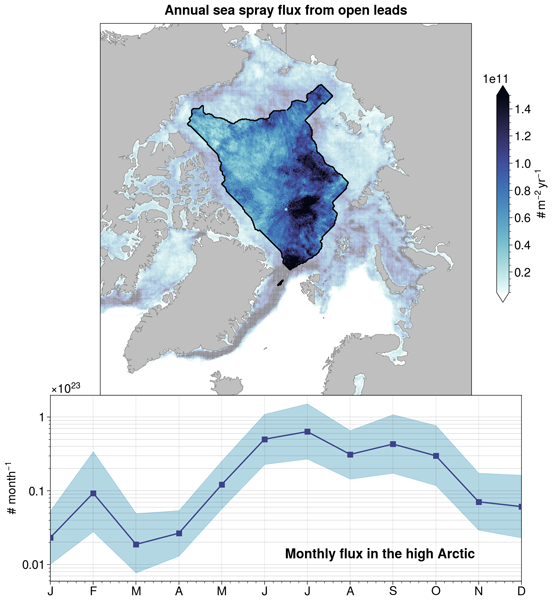
Elongated open-water areas in sea ice, called leads, can release marine aerosols into the atmosphere. In the Arctic, this source of atmospheric particles could play an important role for climate. However, the amount, seasonality and spatial distribution of such emissions are all mostly unknown. Here, we propose a first parameterization for sea spray aerosols emitted through leads in sea ice and quantify their impact on aerosol populations in the high Arctic.
Simon Driscoll, Alberto Carrassi, Julien Brajard, Laurent Bertino, Einar Ólason, Marc Bocquet, and Amos Lawless
EGUsphere, https://doi.org/10.5194/egusphere-2024-2476, https://doi.org/10.5194/egusphere-2024-2476, 2024
Preprint archived
Short summary
Short summary
The formation and evolution of sea ice melt ponds (ponds of melted water) are complex, insufficiently understood and represented in models with considerable uncertainty. These uncertain representations are not traditionally included in climate models potentially causing the known underestimation of sea ice loss in climate models. Our work creates the first observationally based machine learning model of melt ponds that is also a ready and viable candidate to be included in climate models.
Laurent Brodeau, Pierre Rampal, Einar Ólason, and Véronique Dansereau
Geosci. Model Dev., 17, 6051–6082, https://doi.org/10.5194/gmd-17-6051-2024, https://doi.org/10.5194/gmd-17-6051-2024, 2024
Short summary
Short summary
A new brittle sea ice rheology, BBM, has been implemented into the sea ice component of NEMO. We describe how a new spatial discretization framework was introduced to achieve this. A set of idealized and realistic ocean and sea ice simulations of the Arctic have been performed using BBM and the standard viscous–plastic rheology of NEMO. When compared to satellite data, our simulations show that our implementation of BBM leads to a fairly good representation of sea ice deformations.
Andreas Stokholm, Jørgen Buus-Hinkler, Tore Wulf, Anton Korosov, Roberto Saldo, Leif Toudal Pedersen, David Arthurs, Ionut Dragan, Iacopo Modica, Juan Pedro, Annekatrien Debien, Xinwei Chen, Muhammed Patel, Fernando Jose Pena Cantu, Javier Noa Turnes, Jinman Park, Linlin Xu, Katharine Andrea Scott, David Anthony Clausi, Yuan Fang, Mingzhe Jiang, Saeid Taleghanidoozdoozan, Neil Curtis Brubacher, Armina Soleymani, Zacharie Gousseau, Michał Smaczny, Patryk Kowalski, Jacek Komorowski, David Rijlaarsdam, Jan Nicolaas van Rijn, Jens Jakobsen, Martin Samuel James Rogers, Nick Hughes, Tom Zagon, Rune Solberg, Nicolas Longépé, and Matilde Brandt Kreiner
The Cryosphere, 18, 3471–3494, https://doi.org/10.5194/tc-18-3471-2024, https://doi.org/10.5194/tc-18-3471-2024, 2024
Short summary
Short summary
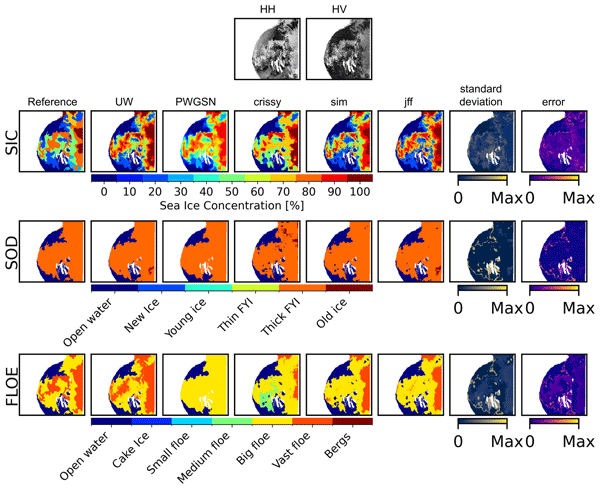
The AutoICE challenge encouraged the development of deep learning models to map multiple aspects of sea ice – the amount of sea ice in an area and the age and ice floe size – using multiple sources of satellite and weather data across the Canadian and Greenlandic Arctic. Professionally drawn operational sea ice charts were used as a reference. A total of 179 students and sea ice and AI specialists participated and produced maps in broad agreement with the sea ice charts.
Yumeng Chen, Polly Smith, Alberto Carrassi, Ivo Pasmans, Laurent Bertino, Marc Bocquet, Tobias Sebastian Finn, Pierre Rampal, and Véronique Dansereau
The Cryosphere, 18, 2381–2406, https://doi.org/10.5194/tc-18-2381-2024, https://doi.org/10.5194/tc-18-2381-2024, 2024
Short summary
Short summary
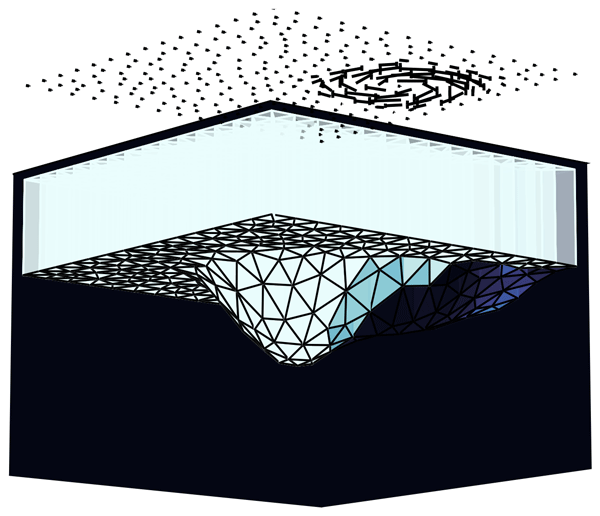
We explore multivariate state and parameter estimation using a data assimilation approach through idealised simulations in a dynamics-only sea-ice model based on novel rheology. We identify various potential issues that can arise in complex operational sea-ice models when model parameters are estimated. Even though further investigation will be needed for such complex sea-ice models, we show possibilities of improving the observed and the unobserved model state forecast and parameter accuracy.

Stephen Outten and Richard Davy
Weather Clim. Dynam., 5, 753–762, https://doi.org/10.5194/wcd-5-753-2024, https://doi.org/10.5194/wcd-5-753-2024, 2024
Short summary
Short summary
The North Atlantic Oscillation is linked to wintertime weather events over Europe. One feature often overlooked is how much the climate variability explained by the NAO has changed over time. We show that there has been a considerable increase in the percentage variance explained by the NAO over the 20th century and that this is not reproduced by 50 CMIP6 climate models, which are generally biased too high. This has implications for projections and prediction of weather events in the region.
Charlotte Durand, Tobias Sebastian Finn, Alban Farchi, Marc Bocquet, Guillaume Boutin, and Einar Ólason
The Cryosphere, 18, 1791–1815, https://doi.org/10.5194/tc-18-1791-2024, https://doi.org/10.5194/tc-18-1791-2024, 2024
Short summary
Short summary
This paper focuses on predicting Arctic-wide sea-ice thickness using surrogate modeling with deep learning. The model has a predictive power of 12 h up to 6 months. For this forecast horizon, persistence and daily climatology are systematically outperformed, a result of learned thermodynamics and advection. Consequently, surrogate modeling with deep learning proves to be effective at capturing the complex behavior of sea ice.
Anton Korosov, Pierre Rampal, Yue Ying, Einar Ólason, and Timothy Williams
The Cryosphere, 17, 4223–4240, https://doi.org/10.5194/tc-17-4223-2023, https://doi.org/10.5194/tc-17-4223-2023, 2023
Short summary
Short summary
It is possible to compute sea ice motion from satellite observations and detect areas where ice converges (moves together), forms ice ridges or diverges (moves apart) and opens leads. However, it is difficult to predict the exact motion of sea ice and position of ice ridges or leads using numerical models. We propose a new method to initialise a numerical model from satellite observations to improve the accuracy of the forecasted position of leads and ridges for safer navigation.
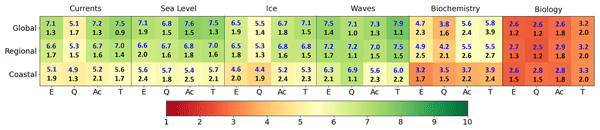
Stefania A. Ciliberti, Enrique Alvarez Fanjul, Jay Pearlman, Kirsten Wilmer-Becker, Pierre Bahurel, Fabrice Ardhuin, Alain Arnaud, Mike Bell, Segolene Berthou, Laurent Bertino, Arthur Capet, Eric Chassignet, Stefano Ciavatta, Mauro Cirano, Emanuela Clementi, Gianpiero Cossarini, Gianpaolo Coro, Stuart Corney, Fraser Davidson, Marie Drevillon, Yann Drillet, Renaud Dussurget, Ghada El Serafy, Katja Fennel, Marcos Garcia Sotillo, Patrick Heimbach, Fabrice Hernandez, Patrick Hogan, Ibrahim Hoteit, Sudheer Joseph, Simon Josey, Pierre-Yves Le Traon, Simone Libralato, Marco Mancini, Pascal Matte, Angelique Melet, Yasumasa Miyazawa, Andrew M. Moore, Antonio Novellino, Andrew Porter, Heather Regan, Laia Romero, Andreas Schiller, John Siddorn, Joanna Staneva, Cecile Thomas-Courcoux, Marina Tonani, Jose Maria Garcia-Valdecasas, Jennifer Veitch, Karina von Schuckmann, Liying Wan, John Wilkin, and Romane Zufic
State Planet, 1-osr7, 2, https://doi.org/10.5194/sp-1-osr7-2-2023, https://doi.org/10.5194/sp-1-osr7-2-2023, 2023
Heather Regan, Pierre Rampal, Einar Ólason, Guillaume Boutin, and Anton Korosov
The Cryosphere, 17, 1873–1893, https://doi.org/10.5194/tc-17-1873-2023, https://doi.org/10.5194/tc-17-1873-2023, 2023
Short summary
Short summary
Multiyear ice (MYI), sea ice that survives the summer, is more resistant to changes than younger ice in the Arctic, so it is a good indicator of sea ice resilience. We use a model with a new way of tracking MYI to assess the contribution of different processes affecting MYI. We find two important years for MYI decline: 2007, when dynamics are important, and 2012, when melt is important. These affect MYI volume and area in different ways, which is important for the interpretation of observations.
Sukun Cheng, Yumeng Chen, Ali Aydoğdu, Laurent Bertino, Alberto Carrassi, Pierre Rampal, and Christopher K. R. T. Jones
The Cryosphere, 17, 1735–1754, https://doi.org/10.5194/tc-17-1735-2023, https://doi.org/10.5194/tc-17-1735-2023, 2023
Short summary
Short summary
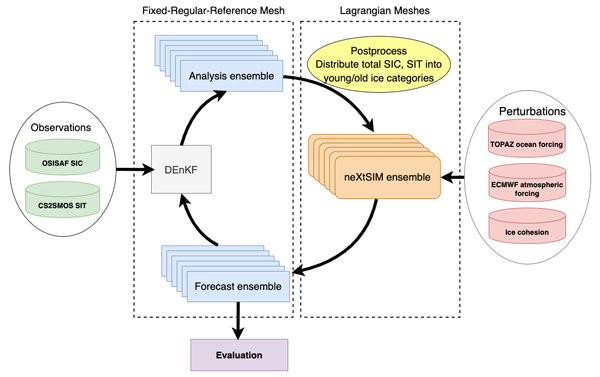
This work studies a novel application of combining a Lagrangian sea ice model, neXtSIM, and data assimilation. It uses a deterministic ensemble Kalman filter to incorporate satellite-observed ice concentration and thickness in simulations. The neXtSIM Lagrangian nature is handled using a remapping strategy on a common homogeneous mesh. The ensemble is formed by perturbing air–ocean boundary conditions and ice cohesion. Thanks to data assimilation, winter Arctic sea ice forecasting is enhanced.
Karina von Schuckmann, Audrey Minière, Flora Gues, Francisco José Cuesta-Valero, Gottfried Kirchengast, Susheel Adusumilli, Fiammetta Straneo, Michaël Ablain, Richard P. Allan, Paul M. Barker, Hugo Beltrami, Alejandro Blazquez, Tim Boyer, Lijing Cheng, John Church, Damien Desbruyeres, Han Dolman, Catia M. Domingues, Almudena García-García, Donata Giglio, John E. Gilson, Maximilian Gorfer, Leopold Haimberger, Maria Z. Hakuba, Stefan Hendricks, Shigeki Hosoda, Gregory C. Johnson, Rachel Killick, Brian King, Nicolas Kolodziejczyk, Anton Korosov, Gerhard Krinner, Mikael Kuusela, Felix W. Landerer, Moritz Langer, Thomas Lavergne, Isobel Lawrence, Yuehua Li, John Lyman, Florence Marti, Ben Marzeion, Michael Mayer, Andrew H. MacDougall, Trevor McDougall, Didier Paolo Monselesan, Jan Nitzbon, Inès Otosaka, Jian Peng, Sarah Purkey, Dean Roemmich, Kanako Sato, Katsunari Sato, Abhishek Savita, Axel Schweiger, Andrew Shepherd, Sonia I. Seneviratne, Leon Simons, Donald A. Slater, Thomas Slater, Andrea K. Steiner, Toshio Suga, Tanguy Szekely, Wim Thiery, Mary-Louise Timmermans, Inne Vanderkelen, Susan E. Wjiffels, Tonghua Wu, and Michael Zemp
Earth Syst. Sci. Data, 15, 1675–1709, https://doi.org/10.5194/essd-15-1675-2023, https://doi.org/10.5194/essd-15-1675-2023, 2023
Short summary
Short summary
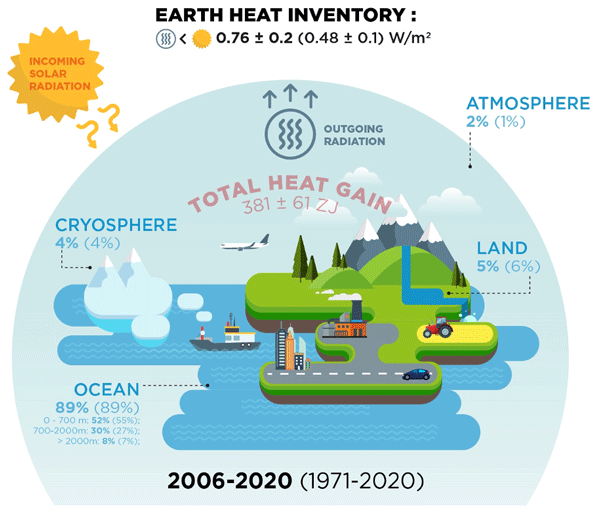
Earth's climate is out of energy balance, and this study quantifies how much heat has consequently accumulated over the past decades (ocean: 89 %, land: 6 %, cryosphere: 4 %, atmosphere: 1 %). Since 1971, this accumulated heat reached record values at an increasing pace. The Earth heat inventory provides a comprehensive view on the status and expectation of global warming, and we call for an implementation of this global climate indicator into the Paris Agreement’s Global Stocktake.
Guillaume Boutin, Einar Ólason, Pierre Rampal, Heather Regan, Camille Lique, Claude Talandier, Laurent Brodeau, and Robert Ricker
The Cryosphere, 17, 617–638, https://doi.org/10.5194/tc-17-617-2023, https://doi.org/10.5194/tc-17-617-2023, 2023
Short summary
Short summary
Sea ice cover in the Arctic is full of cracks, which we call leads. We suspect that these leads play a role for atmosphere–ocean interactions in polar regions, but their importance remains challenging to estimate. We use a new ocean–sea ice model with an original way of representing sea ice dynamics to estimate their impact on winter sea ice production. This model successfully represents sea ice evolution from 2000 to 2018, and we find that about 30 % of ice production takes place in leads.
Stephen Outten, Camille Li, Martin P. King, Lingling Suo, Peter Y. F. Siew, Hoffman Cheung, Richard Davy, Etienne Dunn-Sigouin, Tore Furevik, Shengping He, Erica Madonna, Stefan Sobolowski, Thomas Spengler, and Tim Woollings
Weather Clim. Dynam., 4, 95–114, https://doi.org/10.5194/wcd-4-95-2023, https://doi.org/10.5194/wcd-4-95-2023, 2023
Short summary
Short summary
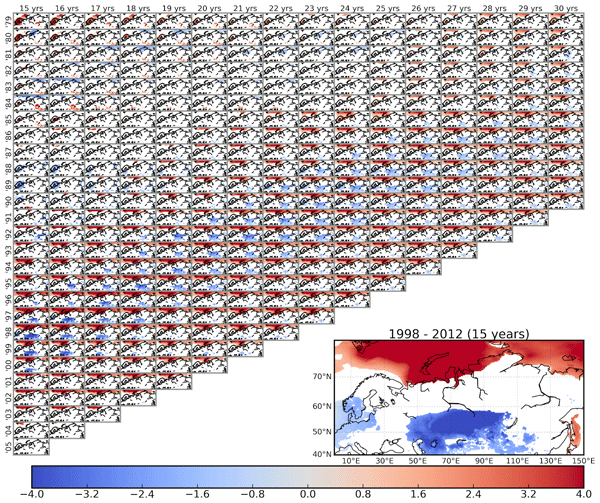
Strong disagreement exists in the scientific community over the role of Arctic sea ice in shaping wintertime Eurasian cooling. The observed Eurasian cooling can arise naturally without sea-ice loss but is expected to be a rare event. We propose a framework that incorporates sea-ice retreat and natural variability as contributing factors. A helpful analogy is of a dice roll that may result in cooling, warming, or anything in between, with sea-ice loss acting to load the dice in favour of cooling.
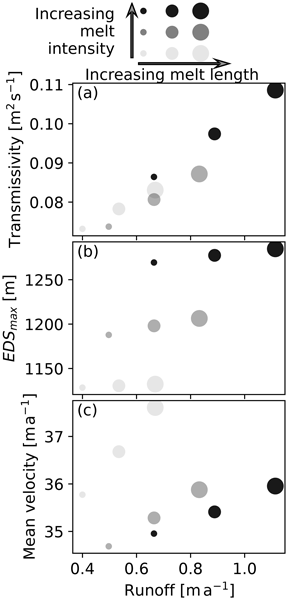
Basile de Fleurian, Richard Davy, and Petra M. Langebroek
The Cryosphere, 16, 2265–2283, https://doi.org/10.5194/tc-16-2265-2022, https://doi.org/10.5194/tc-16-2265-2022, 2022
Short summary
Short summary
As temperature increases, more snow and ice melt at the surface of ice sheets. Here we use an ice dynamics and subglacial hydrology model with simplified geometry and climate forcing to study the impact of variations in meltwater on ice dynamics. We focus on the variations in length and intensity of the melt season. Our results show that a longer melt season leads to faster glaciers, but a more intense melt season reduces glaciers' seasonal velocities, albeit leading to higher peak velocities.
Cited articles
Adcroft, A., Anderson, W., Balaji, V., Blanton, C., Bushuk, M., Dufour, C. O., Dunne, J. P., Griffies, S. M., Hallberg, R., Harrison, M. J., Held, I. M., Jansen, M. F., John, J. G., Krasting, J. P., Langenhorst, A. R., Legg, S., Liang, Z., McHugh, C., Radhakrishnan, A., Reichl, B. G., Rosati, T., Samuels, B. L., Shao, A., Stouffer, R., Winton, M., Wittenberg, A. T., Xiang, B., Zadeh, N., and Zhang, R.: The GFDL global ocean and sea ice model OM4.0: Model description and simulation features, J. Adv. Model. Earth Syst., 11, 3167–3211, https://doi.org/10.1029/2019ms001726, 2019. a
Amitrano, D., Grasso, J. R., and Hantz, D.: From diffuse to localised damage through elastic interaction, Geophys. Res. Lett., 26, 2109–2112, https://doi.org/10.1029/1999gl900388, 1999. a
Assmy, P., Fernández-Méndez, M., Duarte, P., Meyer, A., Randelhoff, A., Mundy, C. J., Olsen, L. M., Kauko, H. M., Bailey, A., Chierici, M., Cohen, L., Doulgeris, A. P., Ehn, J. K., Fransson, A., Gerland, S., Hop, H., Hudson, S. R., Hughes, N., Itkin, P., Johnsen, G., King, J. A., Koch, B. P., Koenig, Z., Kwasniewski, S., Laney, S. R., Nicolaus, M., Pavlov, A. K., Polashenski, C. M., Provost, C., Rösel, A., Sandbu, M., Spreen, G., Smedsrud, L. H., Sundfjord, A., Taskjelle, T., Tatarek, A., Wiktor, J., Wagner, P. M., Wold, A., Steen, H., and Granskog, M. A.: Leads in Arctic pack ice enable early phytoplankton blooms below snow-covered sea ice, Sci. Rep., 7, https://doi.org/10.1038/srep40850, 2017. a
Bielak, J.: The finite element method: A primer, Springer International Publishing, ISBN 9783031563690, https://doi.org/10.1007/978-3-031-56369-0, 2024. a
Bitz, C. M. and Lipscomb, W. H.: An energy-conserving thermodynamic model of sea ice, J. Geophys. Res.-Oceans, 104, 15669–15677, https://doi.org/10.1029/1999jc900100, 1999. a
Bitz, C. M., Holland, M. M., Weaver, A. J., and Eby, M.: Simulating the ice-thickness distribution in a coupled climate model, J. Geophys. Res.-Oceans, 106, 2441–2463, https://doi.org/10.1029/1999jc000113, 2001. a
Bouchat, A., Hutter, N., Chanut, J., Dupont, F., Dukhovskoy, D., Garric, G., Lee, Y., Lemieux, J.-F., Lique, C., Losch, M., Maslowski, W., Myers, P. G., Ólason, E., Rampal, P., Rasmussen, T., Talandier, C., Tremblay, B., and Wang, Q.: Sea ice rheology experiment (SIREx), part I: Scaling and statistical properties of sea-ice deformation fields, J. Geophys. Res.-Oceans, 127, e2021JC017667, https://doi.org/10.1029/2021jc017667, 2022. a, b
Boutin, G., Williams, T., Rampal, P., Ólason, E., and Lique, C.: Wave–sea–ice interactions in a brittle rheological framework, The Cryosphere, 15, 431–457, https://doi.org/10.5194/tc-15-431-2021, 2021. a, b
Boutin, G., Williams, T., Horvat, C., and Brodeau, L.: Modelling the Arctic wave-affected marginal ice zone: a comparison with ICESat-2 observations, Philos. T. Roy. Soc. A, 380, https://doi.org/10.1098/rsta.2021.0262, 2022. a
Boutin, G., Ólason, E., Rampal, P., Regan, H., Lique, C., Talandier, C., Brodeau, L., and Ricker, R.: Arctic sea ice mass balance in a new coupled ice–ocean model using a brittle rheology framework, The Cryosphere, 17, 617–638, https://doi.org/10.5194/tc-17-617-2023, 2023. a, b, c, d, e, f, g, h, i, j, k, l, m, n
Braden, B.: The Surveyor's Area Formula, College Math. J., 17, 326–337, https://doi.org/10.1080/07468342.1986.11972974, 1986. a
Briegleb, B., Bitz, C., Hunke, E., Lipscomb, W., Holland, M., Schramm, J., and Moritz, R.: Scientific Description of the Sea Ice Component in the Community Climate System Model, Version 3, NCAR Technical Note NCAR/TN-463+STR, National Center for Atmospheric Research, Boulder, Colorado, https://doi.org/10.5065/D6HH6H1P, 2004. a
Brodeau, L., Rampal, P., Ólason, E., and Dansereau, V.: Implementation of a brittle sea ice rheology in an Eulerian, finite-difference, C-grid modeling framework: impact on the simulated deformation of sea ice in the Arctic, Geosci. Model Dev., 17, 6051–6082, https://doi.org/10.5194/gmd-17-6051-2024, 2024. a, b
CMEMS: Arctic Ocean Physics Reanalysis, CMEMS [data set], https://doi.org/10.48670/moi-00007, 2025. a
Connolley, W. M., Gregory, J. M., Hunke, E., and McLaren, A. J.: On the consistent scaling of terms in the sea-ice dynamics equation, J. Phys. Oceanogr., 34, 1776–1780, https://doi.org/10.1175/1520-0485(2004)034<1776:OTCSOT>2.0.CO;2, 2004. a
Craig, A., Valcke, S., and Coquart, L.: Development and performance of a new version of the OASIS coupler, OASIS3-MCT_3.0, Geosci. Model Dev., 10, 3297–3308, https://doi.org/10.5194/gmd-10-3297-2017, 2017. a, b
Danilov, S., Wang, Q., Timmermann, R., Iakovlev, N., Sidorenko, D., Kimmritz, M., Jung, T., and Schröter, J.: Finite-element sea ice model (FESIM), version 2, Geosci. Model Dev., 8, 1747–1761, https://doi.org/10.5194/gmd-8-1747-2015, 2015. a, b, c
Dansereau, V.: A Maxwell-Elasto-Brittle model for the drift and deformation of sea ice, theses, Université Grenoble Alpes, https://tel.archives-ouvertes.fr/tel-01316987 (last access: 15 July 2026), 2016. a
Dansereau, V., Weiss, J., Saramito, P., and Lattes, P.: A Maxwell elasto-brittle rheology for sea ice modelling, The Cryosphere, 10, 1339–1359, https://doi.org/10.5194/tc-10-1339-2016, 2016. a, b, c, d
Ebert, E. E., Schramm, J. L., and Curry, J. A.: Disposition of solar radiation in sea ice and the upper ocean, J. Geophys. Res.-Oceans, 100, 15965–15975, https://doi.org/10.1029/95jc01672, 1995. a
Farrell, S. L., Duncan, K., Buckley, E. M., Richter-Menge, J., and Li, R.: Mapping Sea Ice Surface Topography in High Fidelity With ICESat-2, Geophys. Res. Lett., 47, e2020GL090708, https://doi.org/10.1029/2020GL090708, 2020. a
Flocco, D., Feltham, D. L., Bailey, E., and Schroeder, D.: The refreezing of melt ponds on Arctic sea ice, J. Geophys. Res.-Oceans, 120, 647–659, https://doi.org/10.1002/2014jc010140, 2015. a
Geuzaine, C. and Remacle, J.-F.: Gmsh: A 3-D finite element mesh generator with built-in pre- and post-processing facilities, Int. J. Numer. Meth. Eng., 79, 1309–1331, https://doi.org/10.1002/nme.2579, 2009. a
Goessling, H. F., Tietsche, S., Day, J. J., Hawkins, E., and Jung, T.: Predictability of the Arctic sea ice edge, Geophys. Res. Lett., 43, 1642–1650, https://doi.org/10.1002/2015GL067232, 2016. a
Grachev, A. A., Andreas, E. L., Fairall, C. W., Guest, P. S., and Persson, P. O. G.: SHEBA flux–profile relationships in the stable atmospheric boundary layer, Bound.-Lay. Meteorol., 124, 315–333, https://doi.org/10.1007/s10546-007-9177-6, 2007. a
Hecht, F.: BAMG: Bi-dimensional Anisotropic Mesh Generator, Tech. rep., FreeFem
Hersbach, H., Bell, B., Berrisford, P., Biavati, G., Horányi, A., Muñoz Sabater, J., Nicolas, J., Peubey, C., Radu, R., Rozum, I., Schepers, D., Simmons, A., Soci, C., Dee, D., and Thépaut, J.-N.: ERA5 hourly data on single levels from 1940 to present, Copernicus Climate Change Service (C3S) Climate Data Store (CDS) [data set], https://doi.org/10.24381/cds.adbb2d47, 2018. a
Hersbach, H., Bell, B., Berrisford, P., Hirahara, S., Horányi, A., Muñoz-Sabater, J., Nicolas, J., Peubey, C., Radu, R., Schepers, D., Simmons, A., Soci, C., Abdalla, S., Abellan, X., Balsamo, G., Bechtold, P., Biavati, G., Bidlot, J., Bonavita, M., De Chiara, G., Dahlgren, P., Dee, D., Diamantakis, M., Dragani, R., Flemming, J., Forbes, R., Fuentes, M., Geer, A., Haimberger, L., Healy, S., Hogan, R. J., Hólm, E., Janisková, M., Keeley, S., Laloyaux, P., Lopez, P., Lupu, C., Radnoti, G., de Rosnay, P., Rozum, I., Vamborg, F., Villaume, S., and Thépaut, J.-N.: The ERA5 global reanalysis, Q. J. Roy. Meteorol. Soc., 146, 1999–2049, https://doi.org/10.1002/qj.3803, 2020. a
Hunke, E. C. and Bitz, C. M.: Age characteristics in a multidecadal Arctic sea ice simulation, J. Geophys. Res., 114, https://doi.org/10.1029/2008jc005186, 2009. a
Hunke, E. C. and Lipscomb, W. H.: CICE: the Los Alamos sea ice model documentation and software user's manual version 4.1, Tech. Rep. LA-CC-06-012, T-3 Fluid Dynamics Group, Los Alamos National Laboratory, https://csdms.colorado.edu/w/images/CICE_documentation_and_software_user's_manual.pdf (last access: 15 July 2026), 2010. a
Hutter, N., Bouchat, A., Dupont, F., Dukhovskoy, D., Koldunov, N., Lee, Y., Lemieux, J.-F., Lique, C., Losch, M., Maslowski, W., Myers, P. G., Ólason, E., Rampal, P., Rasmussen, T., Talandier, C., Tremblay, B., and Wang, Q.: Sea ice rheology experiment (SIREx), part II: Evaluating linear kinematic features in high-resolution sea-ice simulations, J. Geophys. Res.-Oceans, 127, e2021JC017666, https://doi.org/10.1029/2021jc017666, 2022. a, b
Istomina, L., Niehaus, H., and Spreen, G.: Updated Arctic melt pond fraction dataset and trends 2002–2023 using ENVISAT and Sentinel-3 remote sensing data, The Cryosphere, 19, 83–105, https://doi.org/10.5194/tc-19-83-2025, 2025. a
Itkin, P., Spreen, G., Hvidegaard, S. M., Skourup, H., Wilkinson, J., Gerland, S., and Granskog, M. A.: Contribution of deformation to sea ice mass balance: A case study from an N‐ICE2015 storm, Geophys. Res. Lett., 45, 789–796, https://doi.org/10.1002/2017gl076056, 2018. a
Kader, B. and Yaglom, A.: Mean fields and fluctuation moments in unstably stratified turbulent boundary layers, J. Fluid Mech., 212, 637–662, 1990. a
Korosov, A., Rampal, P., Ying, Y., Ólason, E., and Williams, T.: Towards improving short-term sea ice predictability using deformation observations, The Cryosphere, 17, 4223–4240, https://doi.org/10.5194/tc-17-4223-2023, 2023. a
Korosov, A., Ying, Y., and Ólason, E.: Tuning parameters of a sea ice model using machine learning, Geosci. Model Dev., 18, 885–904, https://doi.org/10.5194/gmd-18-885-2025, 2025. a
Lapere, R., Marelle, L., Rampal, P., Brodeau, L., Melsheimer, C., Spreen, G., and Thomas, J. L.: Modeling the contribution of leads to sea spray aerosol in the high Arctic, Atmos. Chem. Phys., 24, 12107–12132, https://doi.org/10.5194/acp-24-12107-2024, 2024. a
Larour, E., Seroussi, H., Morlighem, M., and Rignot, E.: Continental scale, high order, high spatial resolution, ice sheet modeling using the Ice Sheet System Model (ISSM), J. Geophys. Res.-Earth, 117, f01022, https://doi.org/10.1029/2011JF002140, 2012. a
Lavergne, T. and Down, E.: A climate data record of year-round global sea-ice drift from the EUMETSAT Ocean and Sea Ice Satellite Application Facility (OSI SAF), Earth Syst. Sci. Data, 15, 5807–5834, https://doi.org/10.5194/essd-15-5807-2023, 2023. a, b
Lavergne, T., Sørensen, A. M., Kern, S., Tonboe, R., Notz, D., Aaboe, S., Bell, L., Dybkjær, G., Eastwood, S., Gabarro, C., Heygster, G., Killie, M. A., Brandt Kreiner, M., Lavelle, J., Saldo, R., Sandven, S., and Pedersen, L. T.: Version 2 of the EUMETSAT OSI SAF and ESA CCI sea-ice concentration climate data records, The Cryosphere, 13, 49–78, https://doi.org/10.5194/tc-13-49-2019, 2019. a
Lemieux, J.-F., Knoll, D. A., Tremblay, B., Holland, D. M., and Losch, M.: A comparison of the Jacobian-free Newton–Krylov method and the EVP model for solving the sea ice momentum equation with a viscous-plastic formulation: A serial algorithm study, J. Comput. Phys., 231, 5926–5944, https://doi.org/10.1016/j.jcp.2012.05.024, 2012. a, b
Lemieux, J.-F., Tremblay, L. B., Dupont, F., Plante, M., Smith, G. C., and Dumont, D.: A basal stress parameterization for modeling landfast ice, J. Geophys. Res.-Oceans, 120, 3157–3173, https://doi.org/10.1002/2014JC010678, 2015. a
Leppäranta, M.: The drift of sea ice, in: 2nd Edn., Springer-Verlag GmbH, ISBN 978-3-642-04683-4, 2011. a
Lyakhovsky, V., Ben‐Zion, Y., and Agnon, A.: Distributed damage, faulting, and friction, J.Geophys. Res.-Solid, 102, 27635–27649, https://doi.org/10.1029/97jb01896, 1997. a
Marsan, D., Stern, H., Lindsay, R., and Weiss, J.: Scale dependence and localization of the deformation of Arctic sea ice, Phys. Rev. Lett., 93, 178501, https://doi.org/10.1103/physrevlett.93.178501, 2004. a, b
Mellor, G. L. and Kantha, L.: An ice-ocean coupled model, J. Geophys. Res., 94, 10937–10954, https://doi.org/10.1029/JC094iC08p10937, 1989. a
Ólason, E., Rampal, P., and Dansereau, V.: On the statistical properties of sea-ice lead fraction and heat fluxes in the Arctic, The Cryosphere, 15, 1053–1064, https://doi.org/10.5194/tc-15-1053-2021, 2021. a, b
Ólason, E., Boutin, G., Korosov, A., Rampal, P., Williams, T., Kimmritz, M., Dansereau, V., and Samaké, A.: A new brittle rheology and numerical framework for large-scale sea-ice models, J. Adv. Model. Earth Syst., 14, https://doi.org/10.1029/2021ms002685, 2022. a, b, c, d, e, f, g, h, i, j, k, l, m, n, o, p, q, r, s, t, u
Ólason, E., Boutin, G., Williams, T., Korosov, A., Regan, H., Rheinlænder, J. W., Rampal, P., Flocco, D., SAMAKE, A., Davy, R., Timothy, S., and Chua, S.: neXtSIM, the next generation sea ice model (2.4.2), Zenodo [code], https://doi.org/10.5281/zenodo.14724536, 2025 (code also available at: https://github.com/nansencenter/nextsim, last access: 15 July 2026). a
OSI SAF: Global Sea Ice Drift Climate Data Record Release v1.0 – Multimission, OSI SAF [data set], https://doi.org/10.15770/EUM_SAF_OSI_0012, 2022. a
OSI SAF: Sea Ice Concentration Climate Data Record Release 3.1 – Multimission, OSI SAF [data set], https://doi.org/10.15770/EUM_SAF_OSI_0023, 2025. a
Perovich, D. K., Grenfell, T. C., Richter‐Menge, J. A., Light, B., Tucker, W. B., and Eicken, H.: Thin and thinner: Sea ice mass balance measurements during SHEBA, J. Geophys. Res.-Oceans, 108, https://doi.org/10.1029/2001jc001079, 2003. a, b
Plante, M., Tremblay, B., Losch, M., and Lemieux, J.-F.: Landfast sea ice material properties derived from ice bridge simulations using the Maxwell elasto-brittle rheology, The Cryosphere, 14, 2137–2157, https://doi.org/10.5194/tc-14-2137-2020, 2020. a, b
Pohl, C., Istomina, L., Tietsche, S., Jäkel, E., Stapf, J., Spreen, G., and Heygster, G.: Broadband albedo of Arctic sea ice from MERIS optical data, The Cryosphere, 14, 165–182, https://doi.org/10.5194/tc-14-165-2020, 2020. a
Rampal, P., Weiss, J., Marsan, D., Lindsay, R., and Stern, H.: Scaling properties of sea ice deformation from buoy dispersion analysis, J. Geophys. Res.-Oceans, 113, https://doi.org/10.1029/2007JC004143, c03002, 2008. a, b
Rampal, P., Bouillon, S., Bergh, J., and Ólason, E.: Arctic sea-ice diffusion from observed and simulated Lagrangian trajectories, The Cryosphere, 10, 1513–1527, https://doi.org/10.5194/tc-10-1513-2016, 2016a. a, b, c
Rampal, P., Dansereau, V., Ólason, E., Bouillon, S., Williams, T., Korosov, A., and Samaké, A.: On the multi-fractal scaling properties of sea ice deformation, The Cryosphere, 13, 2457–2474, https://doi.org/10.5194/tc-13-2457-2019, 2019. a, b, c
Rao, G. H. S.: Finite element methods vs. Classical methods, in: 1st Edn., New Age International (P) Ltd., Publishers, New Delhi, ISBN 9788122420500, 2007. a
Regan, H. C., Rheinlaender, J. W., Boutin, G., Semper, S., Willmes, S., and Olason, E.: Rapid winter mixed-layer deepening linked to sea ice breakup in the Beaufort Sea, ESS Open Archive, https://doi.org/10.22541/essoar.175095697.77260616/v1, 2025. a
Rheinlænder, J. W., Regan, H., Rampal, P., Boutin, G., Ólason, E., and Davy, R.: Breaking the ice: Exploring the changing dynamics of winter breakup events in the Beaufort Sea, J. Geophys. Res.-Oceans, 129, https://doi.org/10.1029/2023jc020395, 2024. a
Ricker, R., Hendricks, S., Kaleschke, L., Tian-Kunze, X., King, J., and Haas, C.: A weekly Arctic sea-ice thickness data record from merged CryoSat-2 and SMOS satellite data, The Cryosphere, 11, 1607–1623, https://doi.org/10.5194/tc-11-1607-2017, 2017. a
Rigby, F. A. and Hanson, A.: Evolution of a large Arctic pressure ridge, AIDJEX Bull., 34, 43–71, 1976. a
Rousset, C., Vancoppenolle, M., Madec, G., Fichefet, T., Flavoni, S., Barthélemy, A., Benshila, R., Chanut, J., Levy, C., Masson, S., and Vivier, F.: The Louvain-La-Neuve sea ice model LIM3.6: global and regional capabilities, Geosci. Model Dev., 8, 2991–3005, https://doi.org/10.5194/gmd-8-2991-2015, 2015. a
Sakov, P., Counillon, F., Bertino, L., Lister, K. A., Oke, P. R., and Korablev, A.: TOPAZ4: An ocean sea ice data assimilation system for the North Atlantic and Arctic, Ocean Sci., 8, 633–656, https://doi.org/10.5194/os-8-633-2012, 2012. a
Salganik, E., Lange, B. A., Katlein, C., Matero, I., Anhaus, P., Muilwijk, M., Høyland, K. V., and Granskog, M. A.: Observations of preferential summer melt of Arctic sea-ice ridge keels from repeated multibeam sonar surveys, The Cryosphere, 17, 4873–4887, https://doi.org/10.5194/tc-17-4873-2023, 2023. a
Schapery, R. A.: Nonlinear viscoelastic and viscoplastic constitutive equations with growing damage, Int. J. Fract., 97, 33–66, https://doi.org/10.1023/a:1018695329398, 1999. a
Semtner, A.: On modeling the seasonal thermodynamic cycle of sea ice in studies of climatic-change, Climatic Change, 6, 27–37, https://doi.org/10.1007/bf00141666, 1984. a, b
Semtner, A. J.: A model for the thermodynamic growth of sea ice in numerical investigations of climate, J. Phys. Oceanogr., 6, 379–389, https://doi.org/10.1175/1520-0485(1976)006<0379:AMFTTG>2.0.CO;2, 1976. a, b, c, d
Skyllingstad, E. D., Paulson, C. A., Pegau, W. S., McPhee, M. G., and Stanton, T.: Effects of keels on ice bottom turbulence exchange, J. Geophys. Res.-Oceans, 108, https://doi.org/10.1029/2002jc001488, 2003. a
Smith, M. M., Fuchs, N., Salganik, E., Perovich, D. K., Raphael, I., Granskog, M. A., Schulz, K., Shupe, M. D., and Webster, M.: Formation and fate of freshwater on an ice floe in the Central Arctic, The Cryosphere, 19, 619–644, https://doi.org/10.5194/tc-19-619-2025, 2025. a, b, c
Stull, R. B.: An introduction to boundary layer meteorology, in: vol. 13, Springer Science & Business Media, ISBN 978-90-277-2769-5, 2012. a
Sulsky, D., Schreyer, H., Peterson, K., Kwok, R., and Coon, M.: Using the material-point method to model sea ice dynamics, J. Geophys. Res.-Oceans, 112, https://doi.org/10.1029/2005JC003329, 2007. a
Tsamados, M., Feltham, D. L., Schroeder, D., Flocco, D., Farrell, S. L., Kurtz, N., Laxon, S. W., and Bacon, S.: Impact of variable atmospheric and oceanic form drag on simulations of Arctic sea ice, J. Phys. Oceanogr., 44, 1329–1353, https://doi.org/10.1175/jpo-d-13-0215.1, 2014. a
Turner, A. K. and Hunke, E. C.: Impacts of a mushy-layer thermodynamic approach in global sea-ice simulations using the CICE sea-ice model, J. Geophys. Res.-Oceans, 120, 1253–1275, https://doi.org/10.1002/2014jc010358, 2015. a
Watts, M., Maslowski, W., Lee, Y. J., Kinney, J. C., and Osinski, R.: A spatial evaluation of Arctic sea ice and regional limitations in CMIP6 historical simulations, J. Climate, 34, 6399–6420, https://doi.org/10.1175/jcli-d-20-0491.1, 2021. a
Webster, M. A., Holland, M., Wright, N. C., Hendricks, S., Hutter, N., Itkin, P., Light, B., Linhardt, F., Perovich, D. K., Raphael, I. A., Smith, M. M., von Albedyll, L., and Zhang, J.: Spatiotemporal evolution of melt ponds on Arctic sea ice: MOSAiC observations and model results, Elementa, 10, 000072, https://doi.org/10.1525/elementa.2021.000072, 2022. a, b
Winton, M.: A reformulated three-layer sea ice model, J. Atmos. Ocean. Tech., 17, 525–531, https://doi.org/10.1175/1520-0426(2000)017<0525:ARTLSI>2.0.CO;2, 2000. a, b, c
Zhang, J. and Rothrock, D. A.: Modeling global sea ice with a thickness and enthalpy distribution model in generalized curvilinear coordinates, Mon. Weather Rev., 131, 681–697, https://doi.org/10.1175/1520-0493(2003)131<0845:mgsiwa>2.0.co;2, 2003. a
Short summary
This paper introduces a new version of the neXtSIM sea-ice model. NeXtSIM is unique among sea-ice models in how it represents sea-ice dynamics, focusing on features such as cracks and ridges and how these impact interactions between the atmosphere and ocean where sea ice is present. The new version introduces some physical parameterisations and model options detailed and explained in the paper. Following the paper's publication, the neXtSIM code will be released publicly for the first time.
This paper introduces a new version of the neXtSIM sea-ice model. NeXtSIM is unique among...


