
Articles | Volume 19, issue 14
https://doi.org/10.5194/gmd-19-6451-2026
© Author(s) 2026. This work is distributed under
the Creative Commons Attribution 4.0 License.
the Creative Commons Attribution 4.0 License.
https://doi.org/10.5194/gmd-19-6451-2026
© Author(s) 2026. This work is distributed under
the Creative Commons Attribution 4.0 License.
the Creative Commons Attribution 4.0 License.
Model description paper
| 
17 Jul 2026
Model description paper |
| 17 Jul 2026
| 17 Jul 2026
JCM v1.1: a differentiable, intermediate-complexity atmospheric model
Ellen H. Davenport
Scripps Institution of Oceanography, University of California San Diego, La Jolla, USA
J. Varan Madan
Scripps Institution of Oceanography, University of California San Diego, La Jolla, USA
Rebecca Gjini
Scripps Institution of Oceanography, University of California San Diego, La Jolla, USA
Cecil H. and Ida M. Green Institute of Geophysics and Planetary Physics, University of California San Diego, La Jolla, USA
Jared Brzenski
Scripps Institution of Oceanography, University of California San Diego, La Jolla, USA
Benjamin Crawford
Halıcıoğlu Data Science Institute, University of California San Diego, La Jolla, USA
Nick Ho
Department of Computer Science and Engineering, University of California San Diego, La Jolla, USA
Tien-Yiao Hsu
Scripps Institution of Oceanography, University of California San Diego, La Jolla, USA
Yueshan Liang
Department of Bioengineering, University of California San Diego, La Jolla, USA
Zhixing Liu
Scripps Institution of Oceanography, University of California San Diego, La Jolla, USA
Veeramakali Manivannan
Department of Computer Science and Engineering, University of California San Diego, La Jolla, USA
Eric Pham
Halıcıoğlu Data Science Institute, University of California San Diego, La Jolla, USA
Rohith Vutukuru
Department of Computer Science and Engineering, University of California San Diego, La Jolla, USA
Andrew I. L. Williams
Scripps Institution of Oceanography, University of California San Diego, La Jolla, USA
Zhiqi Yang
Scripps Institution of Oceanography, University of California San Diego, La Jolla, USA
Rose Yu
Department of Computer Science and Engineering, University of California San Diego, La Jolla, USA
Nicholas J. Lutsko
Scripps Institution of Oceanography, University of California San Diego, La Jolla, USA
Stephan Hoyer
Google Research, Mountain View, CA, USA
Duncan Watson-Parris
CORRESPONDING AUTHOR

Scripps Institution of Oceanography, University of California San Diego, La Jolla, USA
Halıcıoğlu Data Science Institute, University of California San Diego, La Jolla, USA
Related authors
No articles found.
Hailing Jia, David Neubauer, Yusuf Bhatti, Duncan Watson-Parris, Philip Stier, Johannes Quaas, Daniel Partridge, Ardit Arifi, Anne Kubin, Athanasios Nenes, Muhammed Irfan, Ulas Im, Carl Svenhag, Nick Schutgens, Bastiaan van Diedenhoven, Sylvaine Ferrachat, Ulrike Lohmann, Ina Tegen, Alice Henkes, Guangliang Fu, and Otto Hasekamp
EGUsphere, https://doi.org/10.5194/egusphere-2026-3275, https://doi.org/10.5194/egusphere-2026-3275, 2026
Short summary
Short summary
Tiny aerosol particles affect Earth’s climate by interacting with clouds and sunlight, but their impact remains uncertain. Combining climate model simulations and emulators, we explored millions of model variants across different aerosol and cloud settings to identify the causes of the uncertainty. We found that aerosol emissions and cloud convection are key contributors. Our work suggests that better integration of existing observations could help reduce these uncertainties in the future.
Sophie Wynn, Duncan Watson-Parris, Brandon M. Duran, and Johannes Mülmenstädt
EGUsphere, https://doi.org/10.5194/egusphere-2026-2811, https://doi.org/10.5194/egusphere-2026-2811, 2026
Short summary
Short summary
Climate models use uncertain parameters to represent aerosol–cloud processes. To identify which parameters are most important, commonly scientists a multitude of simulations where these parameters are varied uniformly. We show that restricting our analysis to simulations matching the base cloud state gives a different and more meaningful answer about which parameters drive the forcing related to aerosol-cloud interactions.
Rebecca Gjini, Matthias Morzfeld, Franziska Glassmeier, and Graham Feingold
EGUsphere, https://doi.org/10.5194/egusphere-2026-2871, https://doi.org/10.5194/egusphere-2026-2871, 2026
Short summary
Short summary
We connect two very different types of precipitating stratocumulus cloud models. The first model is a high-resolution simulation that can realistically represent clouds. The second model is a simple, 1D equation that interprets clouds as prey and rain as the predator of clouds. We evaluate the extent to which a simplified cloud model can represent selected aspects of a realistic cloud simulation under different meteorological conditions, highlighting both successes and limitations.
Eliza K. Duncan, George Jordan, Paul Kim, James M. Haywood, Duncan Watson-Parris, Ben Johnson, Alistair Sellar, Zak Kipling, João Teixeira, Florent Malavelle, and Daniel G. Partridge
EGUsphere, https://doi.org/10.5194/egusphere-2026-1043, https://doi.org/10.5194/egusphere-2026-1043, 2026
Short summary
Short summary
The 2014–15 Holuhraun eruption offers a natural experiment to assess how well climate models can capture the changes in aerosol associated with the plume. We investigate the aerosol lifecycle during transport to identify key differences in climate models' representation of aerosol processes, which could affect the models’ ability to capture changes in cloud properties. Our study highlights the importance of the representation of boundary layer nucleation processes in climate models.
Stephanie Fiedler, Fiona M. O'Connor, Duncan Watson-Parris, Robert J. Allen, William J. Collins, Paul T. Griffiths, Matthew Kasoar, Jarmo Kikstra, Jasper F. Kok, Lee T. Murray, Fabien Paulot, Maria Sand, Steven T. Turnock, James Weber, Laura J. Wilcox, and Vaishali Naik
Geosci. Model Dev., 19, 3477–3508, https://doi.org/10.5194/gmd-19-3477-2026, https://doi.org/10.5194/gmd-19-3477-2026, 2026
Short summary
Short summary
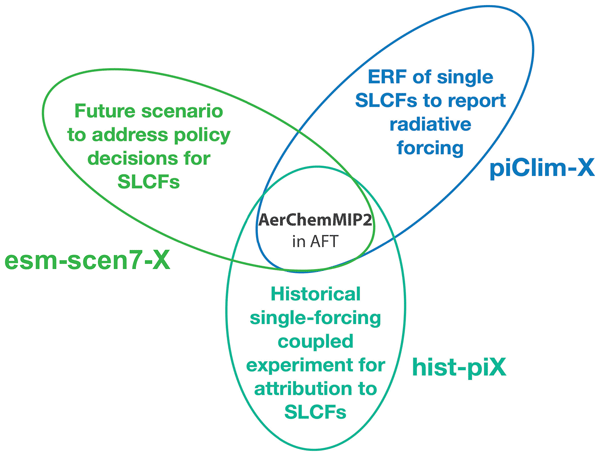
The Aerosol and Chemistry Model Intercomparison Project phase two (AerChemMIP2) allows the community to compare results from contemporary Earth system models. AerChemMIP2 is asking modelling centres to perform experiments following the same protocol. It includes experiments for enabling new science and for tracking progress. Model output will be used for addressing research and policy questions about anthropogenic and natural drivers of climate change, and the impacts on air quality.
Tien-Yiao Hsu, Matthew R. Mazloff, Sarah T. Gille, Hai Lin, K. Andrew Peterson, Rui Sun, Aneesh C. Subramanian, and Luca Delle Monache
Weather Clim. Dynam., 7, 681–694, https://doi.org/10.5194/wcd-7-681-2026, https://doi.org/10.5194/wcd-7-681-2026, 2026
Short summary
Short summary
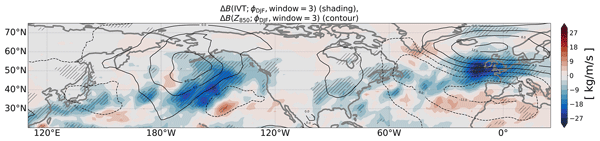
We examine the impact of replacing persistent sea surface temperature with a dynamical ocean model on 15 d weather forecasts over the North Pacific and Atlantic during wintertime. With the usage of an uncoupled atmospheric model, a coupled atmosphere-ocean model, and ERA5 for validation, we find that latent heat flux bias variance is reduced by 10 %–20 % in the Pacific. This improves forecasts of integrated vapor transport, enhancing the prediction of weather extremes in mid- to high latitudes.
Yusuf A. Bhatti, Duncan Watson-Parris, Leighton A. Regayre, Hailing Jia, David Neubauer, Ulas Im, Carl Svenhag, Nick Schutgens, Athanasios Tsikerdekis, Athanasios Nenes, Muhammed Irfan, Bastiaan van Diedenhoven, Ardit Arifi, Guangliang Fu, and Otto P. Hasekamp
Atmos. Chem. Phys., 26, 269–293, https://doi.org/10.5194/acp-26-269-2026, https://doi.org/10.5194/acp-26-269-2026, 2026
Short summary
Short summary
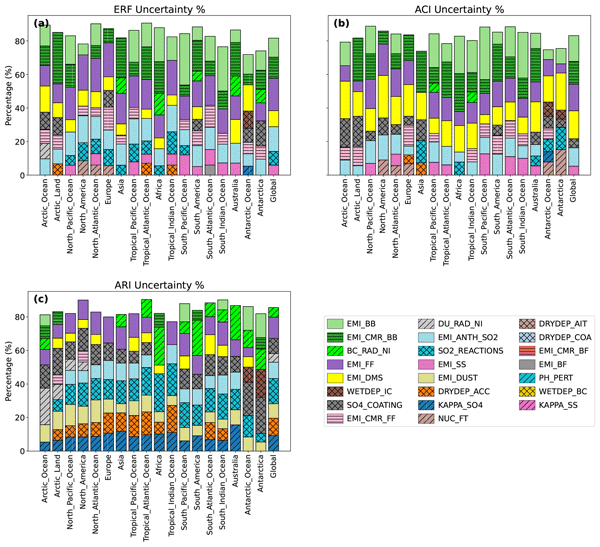
Aerosols (small airborne particles) impact Earth's climate, but their extent is unknown. By running climate model simulations and using machine learning to emulate millions of additional variants with different settings, we found that natural emissions like sea spray and sulfur are key sources of uncertainty in climate predictions. Our work shows that understanding these natural processes better can help improve climate models and make future climate projections more accurate.
Sini Talvinen, Paul Kim, Emanuele Tovazzi, Eemeli Holopainen, Roxana Cremer, Thomas Kühn, Harri Kokkola, Zak Kipling, David Neubauer, João C. Teixeira, Alistair Sellar, Duncan Watson-Parris, Yang Yang, Jialei Zhu, Srinath Krishnan, Annele Virtanen, and Daniel G. Partridge
Atmos. Chem. Phys., 25, 14449–14478, https://doi.org/10.5194/acp-25-14449-2025, https://doi.org/10.5194/acp-25-14449-2025, 2025
Short summary
Short summary
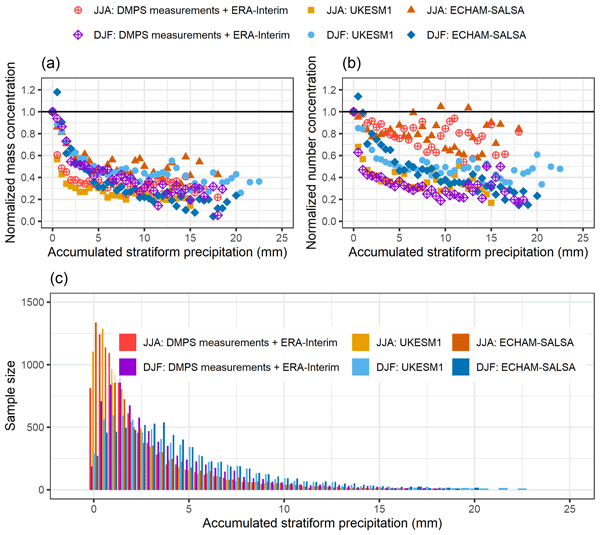
Climate models struggle to predict how clouds and aerosols interact, affecting Earth’s energy balance. This study compares models to observations to see how they describe effects of clouds and rain on aerosols. While both models show similar overall trends, seasonal differences emerged. These, however, align with differences in key variables participating in cloud formation. The study provides insights on how to improve the representation of aerosol-cloud interactions in climate models.
George Jordan, Florent Malavelle, Jim Haywood, Ying Chen, Ben Johnson, Daniel Partridge, Amy Peace, Eliza Duncan, Duncan Watson-Parris, David Neubauer, Anton Laakso, Martine Michou, and Pierre Nabat
Atmos. Chem. Phys., 25, 13393–13428, https://doi.org/10.5194/acp-25-13393-2025, https://doi.org/10.5194/acp-25-13393-2025, 2025
Short summary
Short summary
The 2014–15 Holuhraun eruption created a vast aerosol plume that acted as a natural experiment to assess how well climate models capture changes in cloud properties due to increased aerosol. We find that climate models represent the observed shift to smaller, more numerous cloud droplets well. However, climate models diverge in their aerosol-induced changes to large-scale cloud properties, particularly cloud liquid water content. Our study shows that Holuhraun had a cooling effect on the Earth.
Paul T. Griffiths, Laura J. Wilcox, Robert J. Allen, Vaishali Naik, Fiona M. O'Connor, Michael Prather, Alex Archibald, Florence Brown, Makoto Deushi, William Collins, Stephanie Fiedler, Naga Oshima, Lee T. Murray, Bjørn H. Samset, Chris Smith, Steven Turnock, Duncan Watson-Parris, and Paul J. Young
Atmos. Chem. Phys., 25, 8289–8328, https://doi.org/10.5194/acp-25-8289-2025, https://doi.org/10.5194/acp-25-8289-2025, 2025
Short summary
Short summary
The Aerosol Chemistry Model Intercomparison Project (AerChemMIP) aimed to quantify the climate and air quality impacts of aerosols and chemically reactive gases. We review its contribution to AR6 (Sixth Assessment Report of the Intergovernmental Panel on Climate Change) and the wider understanding of the role of these species in climate and climate change. We identify challenges and provide recommendations to improve the utility and uptake of climate model data, detailed summary tables of CMIP6 models, experiments, and emergent diagnostics.
Ross J. Herbert, Andrew I. L. Williams, Philipp Weiss, Duncan Watson-Parris, Elisabeth Dingley, Daniel Klocke, and Philip Stier
Atmos. Chem. Phys., 25, 7789–7814, https://doi.org/10.5194/acp-25-7789-2025, https://doi.org/10.5194/acp-25-7789-2025, 2025
Short summary
Short summary
Clouds exist at scales that climate models struggle to represent, limiting our knowledge of how climate change may impact clouds. Here we use a new kilometer-scale global model representing an important step towards the necessary scale. We focus on how aerosol particles modify clouds, radiation, and precipitation. We find the magnitude and manner of responses tend to vary from region to region, highlighting the potential of global kilometer-scale simulations and a need to represent aerosols in climate models.
Duncan Watson-Parris, Laura J. Wilcox, Camilla W. Stjern, Robert J. Allen, Geeta Persad, Massimo A. Bollasina, Annica M. L. Ekman, Carley E. Iles, Manoj Joshi, Marianne T. Lund, Daniel McCoy, Daniel M. Westervelt, Andrew I. L. Williams, and Bjørn H. Samset
Atmos. Chem. Phys., 25, 4443–4454, https://doi.org/10.5194/acp-25-4443-2025, https://doi.org/10.5194/acp-25-4443-2025, 2025
Short summary
Short summary
In 2020, regulations by the International Maritime Organization aimed to reduce aerosol emissions from ships. These aerosols previously had a cooling effect, which the regulations might reduce, revealing more greenhouse gas warming. Here we find that, while there is regional warming, the global 2020–2040 temperature rise is only +0.03 °C. This small change is difficult to distinguish from natural climate variability, indicating the regulations have had a limited effect on observed warming to date.
Peer Nowack and Duncan Watson-Parris
Atmos. Chem. Phys., 25, 2365–2384, https://doi.org/10.5194/acp-25-2365-2025, https://doi.org/10.5194/acp-25-2365-2025, 2025
Short summary
Short summary
In our article, we review uncertainties in global climate change projections and current methods using Earth observations as constraints, which is crucial for climate risk assessments and for informing society. We then discuss how machine learning can advance the field, discussing recent work that provides potentially stronger and more robust links between observed data and future climate projections. We further discuss the challenges of applying machine learning to climate science.

Brandon M. Duran, Casey J. Wall, Nicholas J. Lutsko, Takuro Michibata, Po-Lun Ma, Yi Qin, Margaret L. Duffy, Brian Medeiros, and Matvey Debolskiy
Atmos. Chem. Phys., 25, 2123–2146, https://doi.org/10.5194/acp-25-2123-2025, https://doi.org/10.5194/acp-25-2123-2025, 2025
Short summary
Short summary
We use satellite simulator data generated by global climate models to investigate how aerosol particles impact the radiative properties of liquid clouds. Specifically, we quantify the radiative perturbations arising from aerosol-driven changes in the number density of cloud droplets, the vertically integrated cloud water mass, and the cloud amount. Our results show that, in models, aerosol effects on the number density of cloud droplets contribute the most to anthropogenic climate forcing.
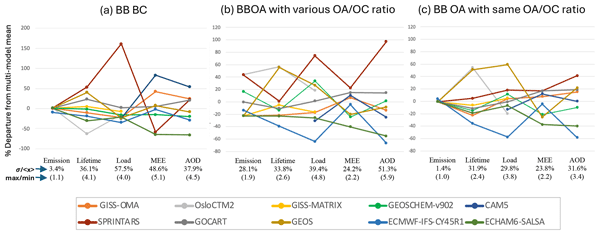
Mariya Petrenko, Ralph Kahn, Mian Chin, Susanne E. Bauer, Tommi Bergman, Huisheng Bian, Gabriele Curci, Ben Johnson, Johannes W. Kaiser, Zak Kipling, Harri Kokkola, Xiaohong Liu, Keren Mezuman, Tero Mielonen, Gunnar Myhre, Xiaohua Pan, Anna Protonotariou, Samuel Remy, Ragnhild Bieltvedt Skeie, Philip Stier, Toshihiko Takemura, Kostas Tsigaridis, Hailong Wang, Duncan Watson-Parris, and Kai Zhang
Atmos. Chem. Phys., 25, 1545–1567, https://doi.org/10.5194/acp-25-1545-2025, https://doi.org/10.5194/acp-25-1545-2025, 2025
Short summary
Short summary
We compared smoke plume simulations from 11 global models to each other and to satellite smoke amount observations aimed at constraining smoke source strength. In regions where plumes are thick and background aerosol is low, models and satellites compare well. However, the input emission inventory tends to underestimate in many places, and particle property and loss rate assumptions vary enormously among models, causing uncertainties that require systematic in situ measurements to resolve.
Maria R. Russo, Sadie L. Bartholomew, David Hassell, Alex M. Mason, Erica Neininger, A. James Perman, David A. J. Sproson, Duncan Watson-Parris, and Nathan Luke Abraham
Geosci. Model Dev., 18, 181–191, https://doi.org/10.5194/gmd-18-181-2025, https://doi.org/10.5194/gmd-18-181-2025, 2025
Short summary
Short summary
Observational data and modelling capabilities have expanded in recent years, but there are still barriers preventing these two data sources from being used in synergy. Proper comparison requires generating, storing, and handling a large amount of data. This work describes the first step in the development of a new set of software tools, the VISION toolkit, which can enable the easy and efficient integration of observational and model data required for model evaluation.
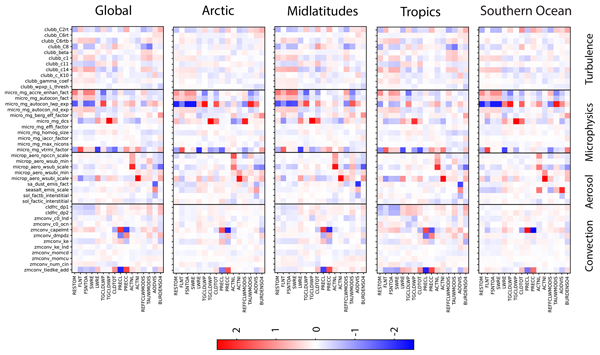
Trude Eidhammer, Andrew Gettelman, Katherine Thayer-Calder, Duncan Watson-Parris, Gregory Elsaesser, Hugh Morrison, Marcus van Lier-Walqui, Ci Song, and Daniel McCoy
Geosci. Model Dev., 17, 7835–7853, https://doi.org/10.5194/gmd-17-7835-2024, https://doi.org/10.5194/gmd-17-7835-2024, 2024
Short summary
Short summary
We describe a dataset where 45 parameters related to cloud processes in the Community Earth System Model version 2 (CESM2) Community Atmosphere Model version 6 (CAM6) are perturbed. Three sets of perturbed parameter ensembles (263 members) were created: current climate, preindustrial aerosol loading and future climate with sea surface temperature increased by 4 K.
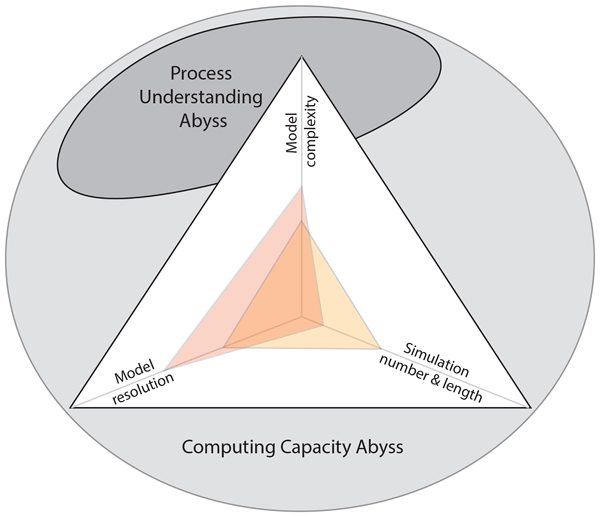
Stephanie Fiedler, Vaishali Naik, Fiona M. O'Connor, Christopher J. Smith, Paul Griffiths, Ryan J. Kramer, Toshihiko Takemura, Robert J. Allen, Ulas Im, Matthew Kasoar, Angshuman Modak, Steven Turnock, Apostolos Voulgarakis, Duncan Watson-Parris, Daniel M. Westervelt, Laura J. Wilcox, Alcide Zhao, William J. Collins, Michael Schulz, Gunnar Myhre, and Piers M. Forster
Geosci. Model Dev., 17, 2387–2417, https://doi.org/10.5194/gmd-17-2387-2024, https://doi.org/10.5194/gmd-17-2387-2024, 2024
Short summary
Short summary
Climate scientists want to better understand modern climate change. Thus, climate model experiments are performed and compared. The results of climate model experiments differ, as assessed in the latest Intergovernmental Panel on Climate Change (IPCC) assessment report. This article gives insights into the challenges and outlines opportunities for further improving the understanding of climate change. It is based on views of a group of experts in atmospheric composition–climate interactions.
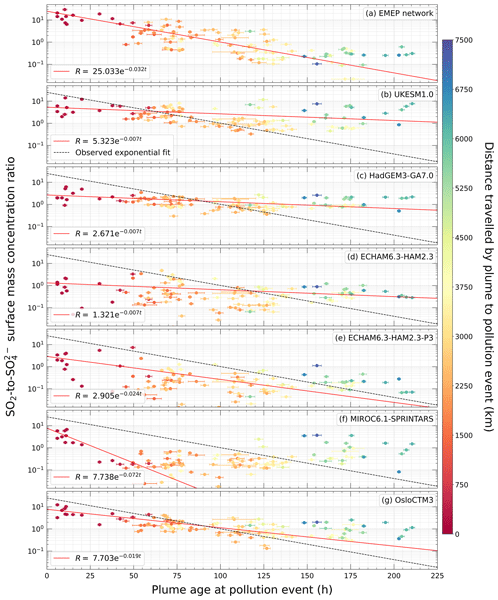
George Jordan, Florent Malavelle, Ying Chen, Amy Peace, Eliza Duncan, Daniel G. Partridge, Paul Kim, Duncan Watson-Parris, Toshihiko Takemura, David Neubauer, Gunnar Myhre, Ragnhild Skeie, Anton Laakso, and James Haywood
Atmos. Chem. Phys., 24, 1939–1960, https://doi.org/10.5194/acp-24-1939-2024, https://doi.org/10.5194/acp-24-1939-2024, 2024
Short summary
Short summary
The 2014–15 Holuhraun eruption caused a huge aerosol plume in an otherwise unpolluted region, providing a chance to study how aerosol alters cloud properties. This two-part study uses observations and models to quantify this relationship’s impact on the Earth’s energy budget. Part 1 suggests the models capture the observed spatial and chemical evolution of the plume, yet no model plume is exact. Understanding these differences is key for Part 2, where changes to cloud properties are explored.
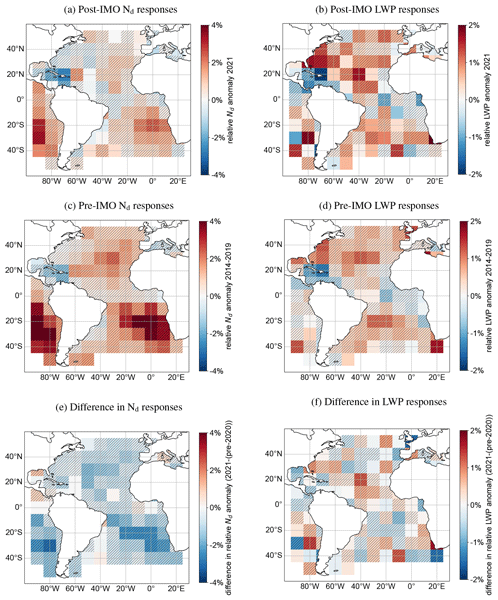
Peter Manshausen, Duncan Watson-Parris, Matthew W. Christensen, Jukka-Pekka Jalkanen, and Philip Stier
Atmos. Chem. Phys., 23, 12545–12555, https://doi.org/10.5194/acp-23-12545-2023, https://doi.org/10.5194/acp-23-12545-2023, 2023
Short summary
Short summary
Aerosol from burning fuel changes cloud properties, e.g., the number of droplets and the content of water. Here, we study how clouds respond to different amounts of shipping aerosol. Droplet numbers increase linearly with increasing aerosol over a broad range until they stop increasing, while the amount of liquid water always increases, independently of emission amount. These changes in cloud properties can make them reflect more or less sunlight, which is important for the earth's climate.
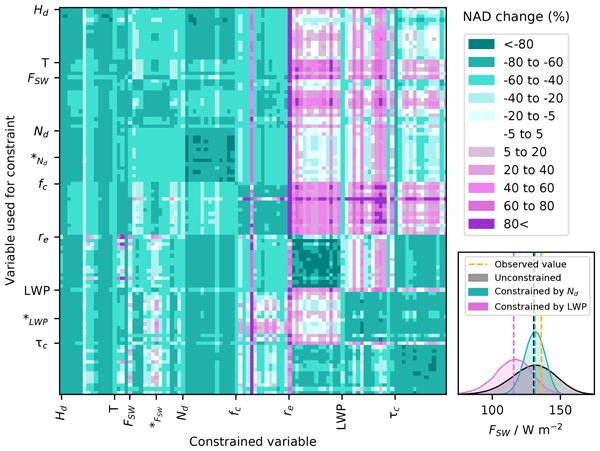
Leighton A. Regayre, Lucia Deaconu, Daniel P. Grosvenor, David M. H. Sexton, Christopher Symonds, Tom Langton, Duncan Watson-Paris, Jane P. Mulcahy, Kirsty J. Pringle, Mark Richardson, Jill S. Johnson, John W. Rostron, Hamish Gordon, Grenville Lister, Philip Stier, and Ken S. Carslaw
Atmos. Chem. Phys., 23, 8749–8768, https://doi.org/10.5194/acp-23-8749-2023, https://doi.org/10.5194/acp-23-8749-2023, 2023
Short summary
Short summary
Aerosol forcing of Earth’s energy balance has persisted as a major cause of uncertainty in climate simulations over generations of climate model development. We show that structural deficiencies in a climate model are exposed by comprehensively exploring parametric uncertainty and that these deficiencies limit how much the model uncertainty can be reduced through observational constraint. This provides a future pathway towards building models with greater physical realism and lower uncertainty.
Leighton A. Regayre, Lucia Deaconu, Daniel P. Grosvenor, David Sexton, Christopher C. Symonds, Tom Langton, Duncan Watson-Paris, Jane P. Mulcahy, Kirsty J. Pringle, Mark Richardson, Jill S. Johnson, John Rostron, Hamish Gordon, Grenville Lister, Philip Stier, and Ken S. Carslaw
EGUsphere, https://doi.org/10.5194/egusphere-2022-1330, https://doi.org/10.5194/egusphere-2022-1330, 2022
Preprint archived
Short summary
Short summary
We show that potential structural deficiencies in a climate model can be exposed by comprehensively exploring its parametric uncertainty, and that these deficiencies limit how much the model uncertainty can be reduced through observational constraint. Combined consideration of parametric and structural uncertainties provides a future pathway towards building models that have greater physical realism and lower uncertainty.
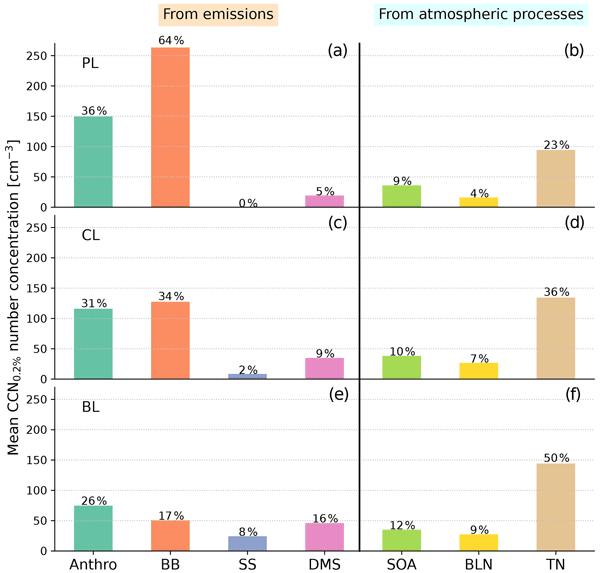
Haochi Che, Philip Stier, Duncan Watson-Parris, Hamish Gordon, and Lucia Deaconu
Atmos. Chem. Phys., 22, 10789–10807, https://doi.org/10.5194/acp-22-10789-2022, https://doi.org/10.5194/acp-22-10789-2022, 2022
Short summary
Short summary
Extensive stratocumulus clouds over the south-eastern Atlantic (SEA) can lead to a cooling effect on the climate. A key pathway by which aerosols affect cloud properties is by acting as cloud condensation nuclei (CCN). Here, we investigated the source attribution of CCN in the SEA as well as the cloud responses. Our results show that aerosol nucleation contributes most to CCN in the marine boundary layer. In terms of emissions, anthropogenic sources contribute most to the CCN and cloud droplets.
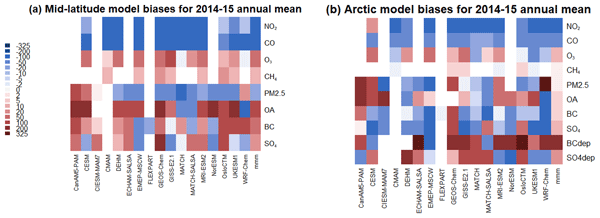
Cynthia H. Whaley, Rashed Mahmood, Knut von Salzen, Barbara Winter, Sabine Eckhardt, Stephen Arnold, Stephen Beagley, Silvia Becagli, Rong-You Chien, Jesper Christensen, Sujay Manish Damani, Xinyi Dong, Konstantinos Eleftheriadis, Nikolaos Evangeliou, Gregory Faluvegi, Mark Flanner, Joshua S. Fu, Michael Gauss, Fabio Giardi, Wanmin Gong, Jens Liengaard Hjorth, Lin Huang, Ulas Im, Yugo Kanaya, Srinath Krishnan, Zbigniew Klimont, Thomas Kühn, Joakim Langner, Kathy S. Law, Louis Marelle, Andreas Massling, Dirk Olivié, Tatsuo Onishi, Naga Oshima, Yiran Peng, David A. Plummer, Olga Popovicheva, Luca Pozzoli, Jean-Christophe Raut, Maria Sand, Laura N. Saunders, Julia Schmale, Sangeeta Sharma, Ragnhild Bieltvedt Skeie, Henrik Skov, Fumikazu Taketani, Manu A. Thomas, Rita Traversi, Kostas Tsigaridis, Svetlana Tsyro, Steven Turnock, Vito Vitale, Kaley A. Walker, Minqi Wang, Duncan Watson-Parris, and Tahya Weiss-Gibbons
Atmos. Chem. Phys., 22, 5775–5828, https://doi.org/10.5194/acp-22-5775-2022, https://doi.org/10.5194/acp-22-5775-2022, 2022
Short summary
Short summary
Air pollutants, like ozone and soot, play a role in both global warming and air quality. Atmospheric models are often used to provide information to policy makers about current and future conditions under different emissions scenarios. In order to have confidence in those simulations, in this study we compare simulated air pollution from 18 state-of-the-art atmospheric models to measured air pollution in order to assess how well the models perform.

Matthew W. Christensen, Andrew Gettelman, Jan Cermak, Guy Dagan, Michael Diamond, Alyson Douglas, Graham Feingold, Franziska Glassmeier, Tom Goren, Daniel P. Grosvenor, Edward Gryspeerdt, Ralph Kahn, Zhanqing Li, Po-Lun Ma, Florent Malavelle, Isabel L. McCoy, Daniel T. McCoy, Greg McFarquhar, Johannes Mülmenstädt, Sandip Pal, Anna Possner, Adam Povey, Johannes Quaas, Daniel Rosenfeld, Anja Schmidt, Roland Schrödner, Armin Sorooshian, Philip Stier, Velle Toll, Duncan Watson-Parris, Robert Wood, Mingxi Yang, and Tianle Yuan
Atmos. Chem. Phys., 22, 641–674, https://doi.org/10.5194/acp-22-641-2022, https://doi.org/10.5194/acp-22-641-2022, 2022
Short summary
Short summary
Trace gases and aerosols (tiny airborne particles) are released from a variety of point sources around the globe. Examples include volcanoes, industrial chimneys, forest fires, and ship stacks. These sources provide opportunistic experiments with which to quantify the role of aerosols in modifying cloud properties. We review the current state of understanding on the influence of aerosol on climate built from the wide range of natural and anthropogenic laboratories investigated in recent decades.
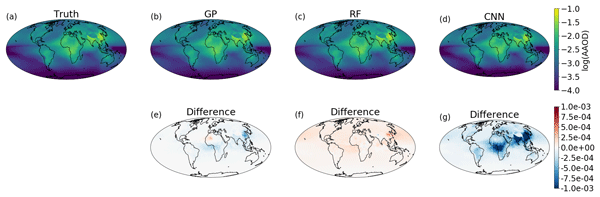
Duncan Watson-Parris, Andrew Williams, Lucia Deaconu, and Philip Stier
Geosci. Model Dev., 14, 7659–7672, https://doi.org/10.5194/gmd-14-7659-2021, https://doi.org/10.5194/gmd-14-7659-2021, 2021
Short summary
Short summary
The Earth System Emulator (ESEm) provides a fast and flexible framework for emulating a wide variety of Earth science datasets and tools for constraining (or tuning) models of any complexity. Three distinct use cases are presented that demonstrate the utility of ESEm and provide some insight into the use of machine learning for emulation in these different settings. The open-source Python package is freely available so that it might become a valuable tool for the community.
Cited articles
Abadi, M., Agarwal, A., Barham, P., Brevdo, E., Chen, Z., Citro, C., Corrado, G. S., Davis, A., Dean, J., Devin, M., Ghemawat, S., Goodfellow, I., Harp, A., Irving, G., Isard, M., Jia, Y., Józefowicz, R., Kaiser, L., Kudlur, M., Levenberg, J., Mané, D., Monga, R., Moore, S., Murray, D., Olah, C., Schuster, M., Shlens, J., Steiner, B., Sutskever, I., Talwar, K., Tucker, P., Vanhoucke, V., Vasudevan, V., Viégas, F., Vinyals, O., Warden, P., Wattenberg, M., Wicke, M., Yu, Y., and Zheng, X.: TensorFlow: Large-Scale Machine Learning on Heterogeneous Systems, software library for numerical computation using data flow graphs, https://www.tensorflow.org (last access: 29 May 2026), 2015. a
Amezcua, J., Kalnay, E., and Williams, P. D.: The effects of the RAW filter on the climatology and forecast skill of the SPEEDY model, Mon. Weather Rev., 139, 608–619, https://doi.org/10.1175/2010MWR3530.1, 2011. a
Arcomano, T., Szunyogh, I., Wikner, A., Hunt, B. R., and Ott, E.: A Hybrid Atmospheric Model Incorporating Machine Learning Can Capture Dynamical Processes Not Captured by Its Physics-Based Component, J. Atmos. Sci., 77, https://doi.org/10.1175/JAS-D-20-0082.1, 2020. a
Arcomano, T., Szunyogh, I., Wikner, A., Hunt, B. R., and Ott, E.: A Hybrid Atmospheric Model Incorporating Machine Learning Can Capture Dynamical Processes Not Captured by Its Physics-Based Component, Geophys. Res. Lett., 50, https://doi.org/10.1029/2022GL102649, 2023. a
Blondel, M. and Roulet, V.: The Elements of Differentiable Programming, arXiv [preprint], https://doi.org/10.48550/arXiv.2403.14606, 2024. a
Brenowitz, N. D. and Bretherton, C. S.: Spatially Extended Tests of a Neural Network Parametrization Trained by Coarse-graining, J. Adv. Model. Earth Sy., 11, 2728–2744, https://doi.org/10.1029/2019MS001711, 2019. a
Cintra, R. S. and de Campos Velho, H. F.: Data Assimilation by Artificial Neural Networks for an Atmospheric General Circulation Model: Conventional Observation, arXiv [preprint], https://doi.org/10.48550/arXiv.1407.4360, 2014. a
Dask Development Team: Dask: Library for dynamic task scheduling and parallel computing in Python, parallel computing library for analytics, https://www.dask.org (last access: 29 May 2026), 2015. a
Davenport, E., Madan, J. V., and Watson-Parris, D.: JCM v1.0 Supplementary Data, Zenodo [data set], https://doi.org/10.5281/zenodo.20140142, 2026. a
Dee, D. P., Uppala, S. M., Simmons, A. J., Berrisford, P., Poli, P., Kobayashi, S., Andrae, U., Balmaseda, M. A., Balsamo, G., Bauer, P., Bechtold, P., Beljaars, A. C. M., van de Berg, L., Bidlot, J., Bormann, N., Delsol, C., Dragani, R., Fuentes, M., Geer, A. J., Haimberger, L., Healy, S. B., Hersbach, H., Hólm, E. V., Isaksen, L., Kållberg, P., Köhler, M., Matricardi, M., McNally, A. P., Monge-Sanz, B. M., Morcrette, J.-J., Park, B.-K., Peubey, C., de Rosnay, P., Tavolato, C., Thépaut, J.-N., and Vitart, F.: The ERA-Interim reanalysis: Configuration and performance of the data assimilation system, Q. J. Roy. Meteor. Soc., 137, 553–597, https://doi.org/10.1002/qj.828, 2011. a
Durran, D. R.: Numerical Methods for Wave Equations in Geophysical Fluid Dynamics, vol. 32 of Texts in Applied Mathematics, Springer, https://doi.org/10.1007/978-1-4757-3081-4, 1999. a
Eidhammer, T., Gettelman, A., Thayer-Calder, K., Watson-Parris, D., Elsaesser, G., Morrison, H., van Lier-Walqui, M., Song, C., and McCoy, D.: An extensible perturbed parameter ensemble for the Community Atmosphere Model version 6, Geosci. Model Dev., 17, 7835–7853, https://doi.org/10.5194/gmd-17-7835-2024, 2024. a
Evensen, G., Vossepoel, F. C., and van Leeuwen, P. J.: A Unified Formulation of the State and Parameter Estimation Problem, Springer, ISBN 9783030967093, https://doi.org/10.1007/978-3-030-96709-3, 2020. a
Fang, J., Bowman, K., Zhao, W., Lian, X., and Gentine, P.: Differentiable Land Model Reveals Global Environmental Controls on Ecological Parameters, arXiv [preprint], https://doi.org/10.48550/arXiv.2411.09654, 2024. a, b
Gelbrecht, M., White, A., Bathiany, S., and Boers, N.: Differentiable programming for Earth system modeling, Geosci. Model Dev., 16, 3123–3135, https://doi.org/10.5194/gmd-16-3123-2023, 2023. a
Gelbrecht, M., Klöwer, M., and Boers, N.: PseudospectralNet: Toward Hybrid Atmospheric Models for Climate Simulations, J. Adv. Model. Earth Sy., 17, e2025MS004969, https://doi.org/10.1029/2025MS004969, 2025. a
Giering, R. and Kaminski, T.: Recipes for adjoint code construction, Trans. Math. Software, 24, 437–474, https://doi.org/10.1145/293686.2936, 1998. a
Gill, A. E.: Some Simple Solutions for Heat-Induced Tropical Circulation, Q. J. Roy. Meteor. Soc., 106, 447–462, https://doi.org/10.1256/smsqj.44904, 1980. a
Giorgetta, M. A., Brokopf, R., Crueger, T., Esch, M., Fiedler, S., Helmert, J., Hohenegger, C., Kornblueh, L., Köhler, M., Manzini, E., Mauritsen, T., Nam, C., Raddatz, T., Rast, S., Reinert, D., Sakradzija, M., Schmidt, H., Schneck, R., Schnur, R., Silvers, L., Wan, H., Zängl, G., and Stevens, B.: ICON-A, the Atmosphere Component of the ICON Earth System Model: I. Model Description, J. Adv. Model. Earth Sy., 10, 1613–1637, https://doi.org/10.1029/2017MS001242, 2018. a
Häfner, D., Jacobsen, R. L., Eden, C., Kristensen, M. R. B., Jochum, M., Nuterman, R., and Vinter, B.: Veros v0.1 – a fast and versatile ocean simulator in pure Python, Geosci. Model Dev., 11, 3299–3312, https://doi.org/10.5194/gmd-11-3299-2018, 2018. a, b
Häfner, D., Nuterman, R., and Jochum, M.: Fast, Cheap, and Turbulent – Global Ocean Modeling With GPU Acceleration in Python, J. Adv. Model. Earth Sy., 13, e2021MS002717, https://doi.org/10.1029/2021MS002717, 2021. a
Hartmann, D. L.: Global Physical Climatology, Elsevier, 2nd Edn., https://doi.org/10.1016/C2009-0-00030-0, 2016. a
Hatfield, S.: speedy.f90 (version 1.0.0), Zenodo [code], https://doi.org/10.5281/zenodo.5816982, 2022. a
Hawkins, E. and Sutton, R.: The Potential to Narrow Uncertainty in Regional Climate Predictions, B. Am. Meteor. Soc., 90, 1095–1107, https://doi.org/10.1175/2009BAMS2607.1, 2009. a
Heimbach, P., Hill, C., and Giering, R.: An efficient exact adjoint of the parallel MIT General Circulation Model, generated via automatic differentiation, Future Gener. Comp. Sy., 21, 1356–1371, https://doi.org/10.1016/j.future.2004.11.010, 2005. a
Hoyer, S., Hamman, J., and xarray Developers: xarray: N-D labeled arrays and datasets in Python, open-source data analysis library for labeled multidimensional arrays, https://xarray.dev (last access: 29 May 2026), 2014. a
Kay, J. E., Deser, C., Phillips, A., Mai, A., Hannay, C., Strand, G., Arblaster, J. M., Bates, S. C., Danabasoglu, G., and Edwards, J.: The Community Earth System Model (CESM) Large Ensemble Project: A Community Resource for Studying Climate Change in the Presence of Internal Climate Variability, B. Am. Meteor. Soc., 96, 1333–1349, https://doi.org/10.1175/bams-d-13-00255.1, 2015. a
Kennedy, M. C. and O'Hagan, A.: Bayesian calibration of computer models, J. Roy. Stat. Soc. Ser. B, 63, 425–464, https://doi.org/10.1111/1467-9868.00294, 2001. a
Klöwer, M., Gelbrecht, M., Hotta, D., Willmert, J., Silvestri, S., Wagner, G. L., White, A., Hatfield, S., Kimpson, T., Constantinou, N. C., and Hill, C.: SpeedyWeather.jl: Reinventing atmospheric general circulation models towards interactivity and extensibility, J. Open Source Softw., 9, 6323, https://doi.org/10.21105/joss.06323, 2024. a
Kochkov, D., Yuval, J., Langmore, I., Norgaard, P., Smith, J., Mooers, G., Klöwer, M., Lottes, J., Rasp, S., Düben, P., Hatfield, S., Battaglia, P., Sanchez-Gonzalez, A., Willson, M., Brenner, M. P., and Hoyer, S.: Neural general circulation models for weather and climate, Nature, 632, 1060–1066, https://doi.org/10.1038/s41586-024-07744-y, 2024. a, b, c
Kucharski, F. and Molteni, F.: Description of the ICTP AGCM (SPEEDY) Version 41, Tech. rep., Abdus Salam International Centre for Theoretical Physics (ICTP), https://users.ictp.it/~kucharsk/speedy_description/km_ver41_appendixA.pdf (last access: 29 May 2026), 2013. a
Kucharski, F., Molteni, F., and Bracco, A.: Decadal interactions between the western tropical Pacific and the North Atlantic Oscillation, Clim. Dynam., 26, 79–91, https://doi.org/10.1007/s00382-005-0085-5, 2006. a
Kucharski, F., Molteni, F., King, M. P., Farneti, R., Kang, I.-S., and Feudale, L.: On the Need of Intermediate Complexity General Circulation Models: A “SPEEDY” Example, B. Am. Meteor. Soc., 94, 25–30, https://doi.org/10.1175/BAMS-D-11-00238.1, 2013. a
Lorenz, E. N.: Seminar on Predictability, 4–8 September 1995, Vol. 1, https://www.ecmwf.int/en/elibrary/75462-predictability-problem-partly-solved (last access: 29 May 2026), 1995. a
Madan, J. V., Davenport, E. H., Gjini, R., Brzenski, J., Ho, N., Hsu, T.-Y., Liang, Y., Liu, Z., Manivannan, V., Pham, E., Vutukuru, R., Williams, A. I., Yang, Z., Yu, R., Lutsko, N., Hoyer, S., and Watson-Parris, D.: JAX Circulation Model, Zenodo [code], https://doi.org/10.5281/zenodo.20140172, 2026. a
Matsuno, T.: Quasi-Geostrophic Motions in the Equatorial Area, J. Meteorol. Soc. Jpn., 44, 25–43, https://doi.org/10.2151/jmsj1965.44.1_25, 1966. a
Molteni, F.: Atmospheric simulations using a GCM with simplified physical parametrizations. I: model climatology and variability in multi-decadal experiments, Clim. Dynam., 20, 175–191, https://doi.org/10.1007/s00382-002-0268-2, 2003. a
NumPy Developers: NumPy: Fundamental package for array computing in Python, open-source numerical computing library for Python, https://numpy.org (last access: 29 May 2026), 2006. a
Paszke, A., Gross, S., Massa, F., Lerer, A., Chanan, G., Bradbury, J., Killeen, T., Lin, Z., Gimelshein, N., Antiga, L., Desmaison, A., Köpf, A., Yang, E. Z., DeVito, Z., Raison, M., Tejani, A., Chilamkurthy, S., Steiner, B., Fang, L., Bai, J., and Chintala, S.: PyTorch, deep learning framework, https://pytorch.org (last access: 29 May 2026), 2016. a
Rasp, S.: Coupled online learning as a way to tackle instabilities and biases in neural network parameterizations: general algorithms and Lorenz 96 case study (v1.0), Geosci. Model Dev., 13, 2185–2196, https://doi.org/10.5194/gmd-13-2185-2020, 2020. a, b
Rasp, S., Pritchard, M. S., and Gentine, P.: Deep learning to represent subgrid processes in climate models, P. Natl. Acad. Sci. USA, 115, 9684–9689, https://doi.org/10.1073/pnas.1810286115, 2018. a
Regayre, L. A., Deaconu, L., Grosvenor, D. P., Sexton, D. M. H., Symonds, C., Langton, T., Watson-Paris, D., Mulcahy, J. P., Pringle, K. J., Richardson, M., Johnson, J. S., Rostron, J. W., Gordon, H., Lister, G., Stier, P., and Carslaw, K. S.: Identifying climate model structural inconsistencies allows for tight constraint of aerosol radiative forcing, Atmos. Chem. Phys., 23, 8749–8768, https://doi.org/10.5194/acp-23-8749-2023, 2023. a
Rodgers, K. B., Lee, S.-S., Rosenbloom, N., Timmermann, A., Danabasoglu, G., Deser, C., Edwards, J., Kim, J.-E., Simpson, I. R., Stein, K., Stuecker, M. F., Yamaguchi, R., Bódai, T., Chung, E.-S., Huang, L., Kim, W. M., Lamarque, J.-F., Lombardozzi, D. L., Wieder, W. R., and Yeager, S. G.: Ubiquity of human-induced changes in climate variability, Earth Syst. Dynam., 12, 1393–1411, https://doi.org/10.5194/esd-12-1393-2021, 2021. a
Ruiz, J. J. and Pulido, M.: Parameter Estimation Using Ensemble-Based Data Assimilation in the Presence of Model Error, Mon. Weather Rev., 143, 1568–1582, https://doi.org/10.1175/MWR-D-14-00017.1, 2015. a
Sapienza, F., Bolibar, J., Schäfer, F., Groenke, B., Pal, A., Boussange, V., Heimbach, P., Hooker, G., Pérez, F., Persson, P.-O., and Rackauckas, C.: Differentiable Programming for Differential Equations: A Review, arXiv [preprint], https://doi.org/10.48550/arXiv.2406.09699, 2025. a, b
Schneider, T., Lan, S., Stuart, A., and Teixeira, J.: Earth System Modeling 2.0: A Blueprint for Models That Learn From Observations and Targeted High-Resolution Simulations, Geophys. Res. Lett., 44, 12396–12417, https://doi.org/10.1002/2017GL076101, 2017. a
Schneider, T., Leung, L. R., and Wills, R. C. J.: Opinion: Optimizing climate models with process knowledge, resolution, and artificial intelligence, Atmos. Chem. Phys., 24, 7041–7062, https://doi.org/10.5194/acp-24-7041-2024, 2024. a
Shaw, T. A. and Stevens, B.: The other climate crisis, Nature, 639, 877–887, https://doi.org/10.1038/s41586-025-08680-1, 2025. a
Slater, L. J., Arnal, L., Boucher, M.-A., Chang, A. Y.-Y., Moulds, S., Murphy, C., Nearing, G., Shalev, G., Shen, C., Speight, L., Villarini, G., Wilby, R. L., Wood, A., and Zappa, M.: Hybrid forecasting: blending climate predictions with AI models, Hydrol. Earth Syst. Sci., 27, 1865–1889, https://doi.org/10.5194/hess-27-1865-2023, 2023. a
Sluka, T. C., Penny, S. G., Kalnay, E., and Miyoshi, T.: Assimilating atmospheric observations into the ocean using strongly coupled ensemble data assimilation, Geophys. Res. Lett., 43, https://doi.org/10.1002/2015GL067238, 2016. a
Tiedtke, M.: A Comprehensive Mass Flux Scheme for Cumulus Parameterization in Large‐Scale Models, Mon. Weather Rev., 117, 1779–1800, https://doi.org/10.1175/1520-0493(1989)117<1779:ACMFSF>2.0.CO;2, 1989. a
Viterbo, P. and Beljaars, A. C. M.: An improved land surface parametrization scheme in the ECMWF model and its validation, J. Climate, 8, 2716–2748, https://doi.org/10.1175/1520-0442(1995)008<2716:AILSPS>2.0.CO;2, 1995. a
Wagner, G. L., Silvestri, S., Constantinou, N. C., Ramadhan, A., Campin, J.-M., Hill, C., Chor, T., Strong-Wright, J., Lee, X. K., Poulin, F., Souza, A., Burns, K. J., Marshall, J., and Ferrari, R.: High-level, high-resolution ocean modeling at all scales with Oceananigans, arXiv [preprint], arXiv:2502.14148, https://doi.org/10.48550/arXiv.2502.14148, 2025. a
Watson-Parris, D.: Integrating top-down energetic constraints with bottom-up process-based constraints for more accurate projections of future warming, Geophys. Res. Lett., 52, e2024GL114269, https://doi.org/10.1029/2024GL114269, 2025. a
Watson-Parris, D., Williams, A., Deaconu, L., and Stier, P.: Model calibration using ESEm v1.1.0 – an open, scalable Earth system emulator, Geosci. Model Dev., 14, 7659–7672, https://doi.org/10.5194/gmd-14-7659-2021, 2021. a
Whitaker, J. S. and Kar, S. K.: Implicit–Explicit Runge–Kutta Methods for Fast–Slow Wave Problems, Mon. Weather Rev., 141, 3426–3434, https://doi.org/10.1175/mwr-d-13-00132.1, 2013. a
Williams, P. D.: The RAW Filter: An Improvement to the Robert–Asselin Filter in Semi-Implicit Integrations, Mon. Weather Rev., 139, 1996–2007, https://doi.org/10.1175/2010MWR3601.1, 2011. a
Yu, S., Hannah, W. M., Peng, L., Lin, J., Bhouri, M. A., Gupta, R., Lütjens, B., Will, J. C., Behrens, G., Busecke, J. J. M., Loose, N., Stern, C., Beucler, T., Harrop, B. E., Hillman, B. R., Jenney, A. M., Ferretti, S. L., Liu, N., Anandkumar, A., Brenowitz, N. D., Eyring, V., Geneva, N., Gentine, P., Mandt, S., Pathak, J., Subramaniam, A., Vondrick, C., Yu, R., Zanna, L., Zheng, T., Abernathey, R. P., Ahmed, F., Bader, D. C., Baldi, P., Barnes, E. A., Bretherton, C. S., Caldwell, P. M., Chuang, W., Han, Y., Huang, Y., Iglesias-Suarez, F., Jantre, S., Kashinath, K., Khairoutdinov, M., Kurth, T., Lutsko, N. J., Ma, P.-L., Mooers, G., Neelin, J. D., Randall, D. A., Shamekh, S., Taylor, M. A., Urban, N. M., Yuval, J., Zhang, G. J., and Pritchard, M. S.: ClimSim: A Large Multi-scale Dataset for Hybrid Physics-ML Climate Emulation, in: Advances in Neural Information Processing Systems 36 (NeurIPS 2023), https://proceedings.neurips.cc/paper/2023/hash/45fbcc01349292f5e059a0b8b02c8c3f-Abstract-Datasets_and_Benchmarks.html (last access: 29 May 2026), 2023. a
Short summary
We introduce version 1.1 of the JAX Circulation Model (JCM), an open-source atmosphere model. JCM is written in JAX, a framework for high-performance Python code that supports automatic differentiation (automated calculation of how sensitive any program output is to any input). JCM's differentiability and modular design make it easier to train, test, and combine physical-theory-based and data-driven model components, thus providing a flexible and modern platform to facilitate climate research.
We introduce version 1.1 of the JAX Circulation Model (JCM), an open-source atmosphere model....


