
Articles | Volume 19, issue 13
https://doi.org/10.5194/gmd-19-6335-2026
© Author(s) 2026. This work is distributed under
the Creative Commons Attribution 4.0 License.
the Creative Commons Attribution 4.0 License.
https://doi.org/10.5194/gmd-19-6335-2026
© Author(s) 2026. This work is distributed under
the Creative Commons Attribution 4.0 License.
the Creative Commons Attribution 4.0 License.
Development and technical paper
| 
15 Jul 2026
Development and technical paper |
| 15 Jul 2026
| 15 Jul 2026
mLDNDCv1.0: a machine learning-based surrogate of LandscapeDNDC for optimising cropping systems in Denmark
Meshach Ojo Aderele
Pioneer Center Land-CRAFT, Department of Agroecology, Aarhus University, Aarhus, Denmark
Department of Agroecology, Aarhus University, Blichers Allé 20, 8830 Tjele, Denmark
Edwin Haas
Institute of Meteorology and Climate Research, Atmospheric Environmental Research (IMK-IFU), Karlsruhe Institute of Technology (KIT), Garmisch-Partenkirchen, Germany
Licheng Liu
Department of Bioproducts and Biosystems Engineering, University of Minnesota, St. Paul, MN 55108, USA
João Serra
Pioneer Center Land-CRAFT, Department of Agroecology, Aarhus University, Aarhus, Denmark
Department of Agroecology, Aarhus University, Blichers Allé 20, 8830 Tjele, Denmark
Forest Research Centre CEF, Associate Laboratory TERRA, Instituto Superior de Agronomía, Universidade de Lisboa, 1349-017, Lisbon, Portugal
David Kraus
Institute of Meteorology and Climate Research, Atmospheric Environmental Research (IMK-IFU), Karlsruhe Institute of Technology (KIT), Garmisch-Partenkirchen, Germany
Klaus Butterbach-Bahl
Pioneer Center Land-CRAFT, Department of Agroecology, Aarhus University, Aarhus, Denmark
Department of Agroecology, Aarhus University, Blichers Allé 20, 8830 Tjele, Denmark
Institute of Meteorology and Climate Research, Atmospheric Environmental Research (IMK-IFU), Karlsruhe Institute of Technology (KIT), Garmisch-Partenkirchen, Germany

Pioneer Center Land-CRAFT, Department of Agroecology, Aarhus University, Aarhus, Denmark
Department of Agroecology, Aarhus University, Blichers Allé 20, 8830 Tjele, Denmark
Institute of Meteorology and Climate Research, Atmospheric Environmental Research (IMK-IFU), Karlsruhe Institute of Technology (KIT), Garmisch-Partenkirchen, Germany
Related authors
No articles found.
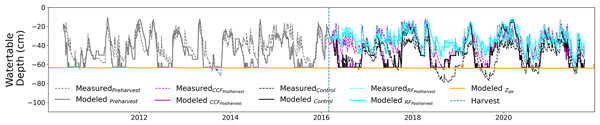
Ahmed Hasan Shahriyer, David Kraus, Tiina Markkanen, Mika Korkiakoski, Helena Rautakoski, Suvi Orttenvuori, Yao Gao, Henri Kajasilta, Rüdiger Grote, Annalea Lohila, and Tuula Aalto
Geosci. Model Dev., 19, 8815–8838, https://doi.org/10.5194/gmd-19-8815-2026, https://doi.org/10.5194/gmd-19-8815-2026, 2026
Short summary
Short summary
Using the process-based model LandscapeDNDC, we successfully simulated the hydrological and carbon-cycle responses of a drained peatland ecosystem under control, rotational forestry and continuous cover forestry management. The developed framework provides a valuable tool for evaluating future management scenarios and supporting the development of forest management strategies aimed at achieving climate neutrality in peatland ecosystems.
Andrew Smerald, Hannes Imhof, Edwin Haas, David Kraus, Lioba Martin, Kathrin Fuchs, John Akubia, Ali Sakhaee, Cora Vos, Roland Fuß, Clemens Scheer, and Ralf Kiese
EGUsphere, https://doi.org/10.5194/egusphere-2026-4010, https://doi.org/10.5194/egusphere-2026-4010, 2026
Short summary
Short summary
Countries produce a yearly greenhouse gas inventory that is used to monitor and design climate policies. Agricultural N2O emissions are especially uncertain, due to measurement difficulties. Using a process-based model combined with high resolution management data we show that, in comparison with current methods, N2O emissions can be mapped with high spatial and temporal resolution.
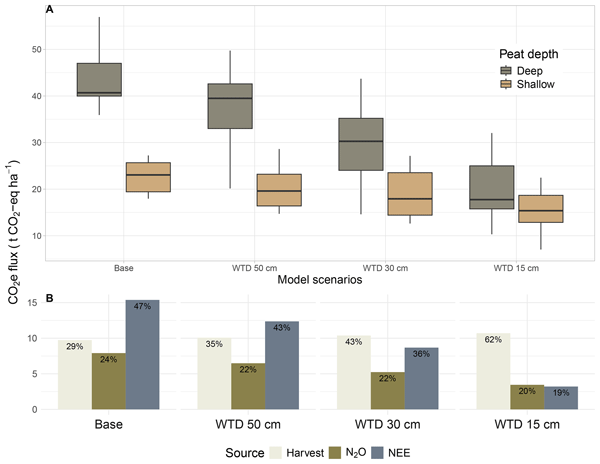
Henri Kajasilta, Stephanie Gerin, Milla Niiranen, Miika Läpikivi, Maarit Liimatainen, David Kraus, Henriikka Vekuri, Mika Korkiakoski, Liisa Kulmala, Jari Liski, and Julius Vira
Biogeosciences, 23, 3567–3590, https://doi.org/10.5194/bg-23-3567-2026, https://doi.org/10.5194/bg-23-3567-2026, 2026
Short summary
Short summary
We modelled different water table scenarios in drained agricultural peatlands to investigate the impact of water management on greenhouse gas emissions. Our results show that raising the water table reduces emissions, even in fields with thinner peat layers and conservative water management practices. Carbon dioxide emissions were more affected than nitrous oxide emissions. This study sheds light on the role of peatlands in mitigating emissions. Simulations were run using a process-based model.
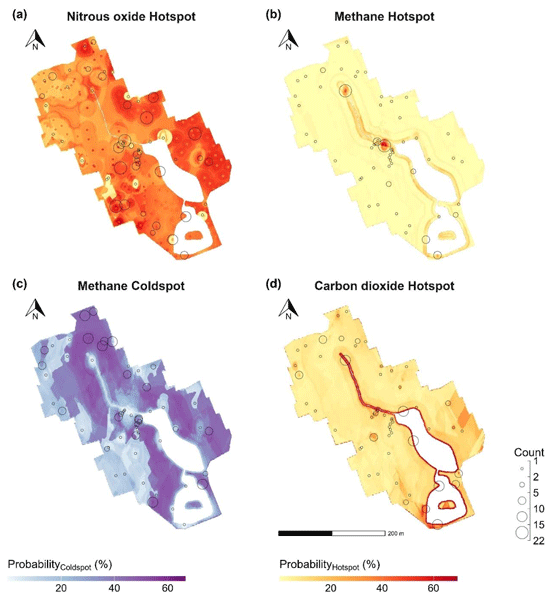
Xiao Bai, Tom Cripps, João Serra, Klaus Butterbach-Bahl, and Zhisheng Yao
Biogeosciences, 23, 3207–3223, https://doi.org/10.5194/bg-23-3207-2026, https://doi.org/10.5194/bg-23-3207-2026, 2026
Short summary
Short summary
This study examines the spatiotemporal variability of soil CH4, N2O and CO2 fluxes based on measurements across 56 spatial sites in an urban park. Our results show that soils in urban greenspaces function as sources of N2O and weak sinks of CH4. We developed random forest models to predict the probability of hot and cold spots of gas fluxes. Our study offers valuable insights into scaling gas fluxes in urban greenspaces, enabling a better assessment of how urbanization affects landscape fluxes.
Odysseas Sifounakis, Edwin Haas, Klaus Butterbach-Bahl, Eleni Katragkou, Maria Chara Karypidou, and Maria P. Papadopoulou
EGUsphere, https://doi.org/10.5194/egusphere-2025-5311, https://doi.org/10.5194/egusphere-2025-5311, 2025
Short summary
Short summary
Using bio-geochemical models and future climate scenarios, we mapped all nitrogen and carbon fluxes from croplands. Climate change will strain food production – especially under climate change – yet soil carbon losses stay moderate where farming sustains. Nitrous oxide (a major greenhouse gas) tends to fall, while ammonia losses rise. Reporting the full balance improves transparency and guides smarter fertilizer use and soil management.
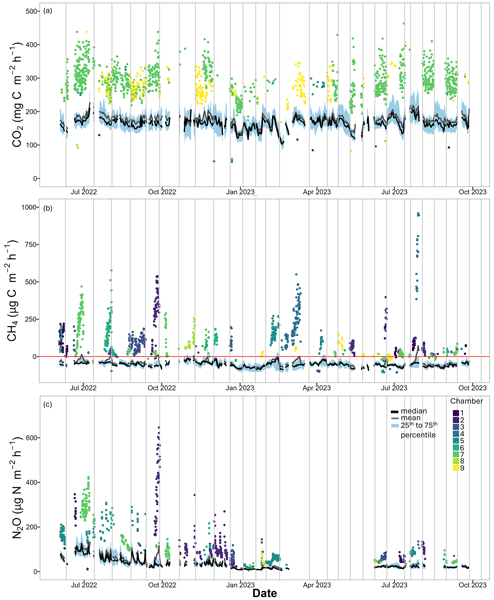
Roxanne Daelman, Marijn Bauters, Matti Barthel, Emmanuel Bulonza, Lodewijk Lefevre, José Mbifo, Johan Six, Klaus Butterbach-Bahl, Benjamin Wolf, Ralf Kiese, and Pascal Boeckx
Biogeosciences, 22, 1529–1542, https://doi.org/10.5194/bg-22-1529-2025, https://doi.org/10.5194/bg-22-1529-2025, 2025
Short summary
Short summary
The increase in atmospheric concentrations of several greenhouse gases (GHGs) since 1750 is attributed to human activity. However, natural ecosystems, such as tropical forests, also contribute to GHG budgets. The Congo Basin hosts the second largest tropical forest and is understudied. In this study, measurements of soil GHG exchange were carried out during 16 months in a tropical forest in the Congo Basin. Overall, the soil acted as a major source of CO2 and N2O and a minor sink of CH4.
Carolin Boos, Sophie Reinermann, Raul Wood, Ralf Ludwig, Anne Schucknecht, David Kraus, and Ralf Kiese
EGUsphere, https://doi.org/10.5194/egusphere-2024-2864, https://doi.org/10.5194/egusphere-2024-2864, 2024
Preprint archived
Short summary
Short summary
We applied a biogeochemical model on grasslands in the pre-Alpine Ammer region in Germany and analyzed the influence of soil and climate on annual yields. In drought affected years, total yields were decreased by 4 %. Overall, yields decrease with rising elevation, but less so in drier and hotter years, whereas soil organic carbon has a positive impact on yields, especially in drier years. Our findings imply, that adapted management in the region allows to mitigate yield losses from drought.
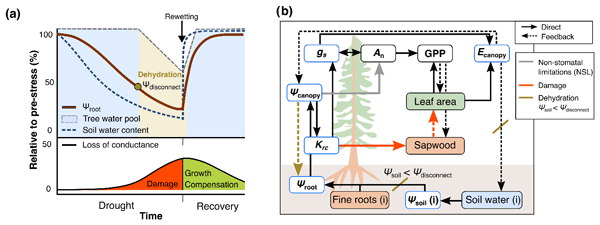
Daniel Nadal-Sala, Rüdiger Grote, David Kraus, Uri Hochberg, Tamir Klein, Yael Wagner, Fedor Tatarinov, Dan Yakir, and Nadine K. Ruehr
Biogeosciences, 21, 2973–2994, https://doi.org/10.5194/bg-21-2973-2024, https://doi.org/10.5194/bg-21-2973-2024, 2024
Short summary
Short summary
A hydraulic model approach is presented that can be added to any physiologically based ecosystem model. Simulated plant water potential triggers stomatal closure, photosynthesis decline, root–soil resistance increases, and sapwood and foliage senescence. The model has been evaluated at an extremely dry site stocked with Aleppo pine and was able to represent gas exchange, soil water content, and plant water potential. The model also responded realistically regarding leaf senescence.
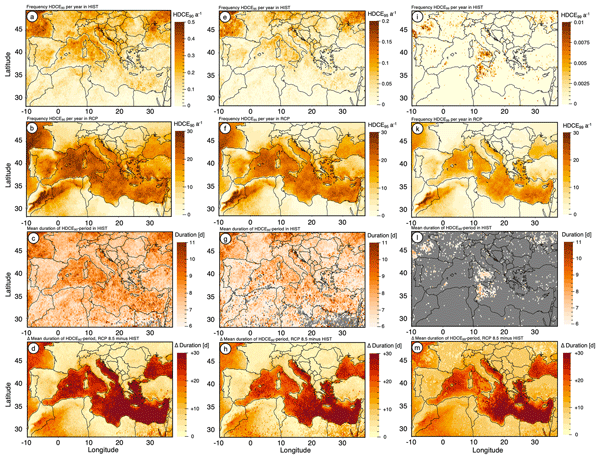
Patrick Olschewski, Mame Diarra Bousso Dieng, Hassane Moutahir, Brian Böker, Edwin Haas, Harald Kunstmann, and Patrick Laux
Nat. Hazards Earth Syst. Sci., 24, 1099–1134, https://doi.org/10.5194/nhess-24-1099-2024, https://doi.org/10.5194/nhess-24-1099-2024, 2024
Short summary
Short summary
We applied a multivariate and dependency-preserving bias correction method to climate model output for the Greater Mediterranean Region and investigated potential changes in false-spring events (FSEs) and heat–drought compound events (HDCEs). Results project an increase in the frequency of FSEs in middle and late spring as well as increases in frequency, intensity, and duration for HDCEs. This will potentially aggravate the risk of crop loss and failure and negatively impact food security.
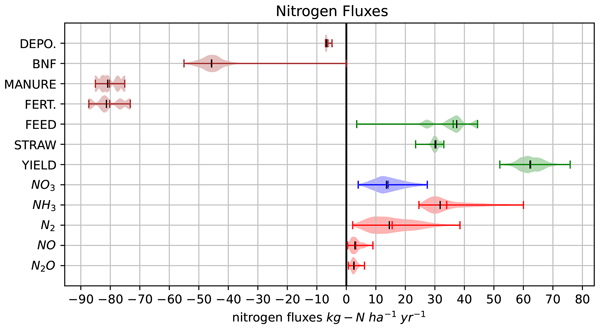
Odysseas Sifounakis, Edwin Haas, Klaus Butterbach-Bahl, and Maria P. Papadopoulou
Biogeosciences, 21, 1563–1581, https://doi.org/10.5194/bg-21-1563-2024, https://doi.org/10.5194/bg-21-1563-2024, 2024
Short summary
Short summary
We performed a full assessment of the carbon and nitrogen cycles of a cropland ecosystem. An uncertainty analysis and quantification of all carbon and nitrogen fluxes were deployed. The inventory simulations include greenhouse gas emissions of N2O, NH3 volatilization and NO3 leaching from arable land cultivation in Greece. The inventory also reports changes in soil organic carbon and nitrogen stocks in arable soils.
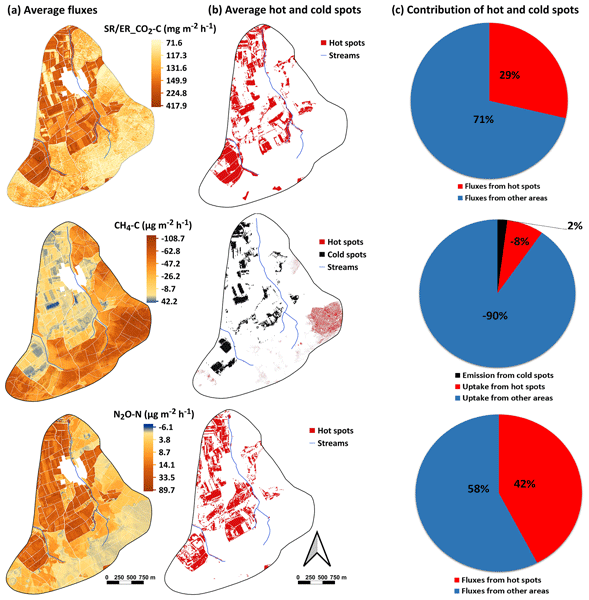
Elizabeth Gachibu Wangari, Ricky Mwangada Mwanake, Tobias Houska, David Kraus, Gretchen Maria Gettel, Ralf Kiese, Lutz Breuer, and Klaus Butterbach-Bahl
Biogeosciences, 20, 5029–5067, https://doi.org/10.5194/bg-20-5029-2023, https://doi.org/10.5194/bg-20-5029-2023, 2023
Short summary
Short summary
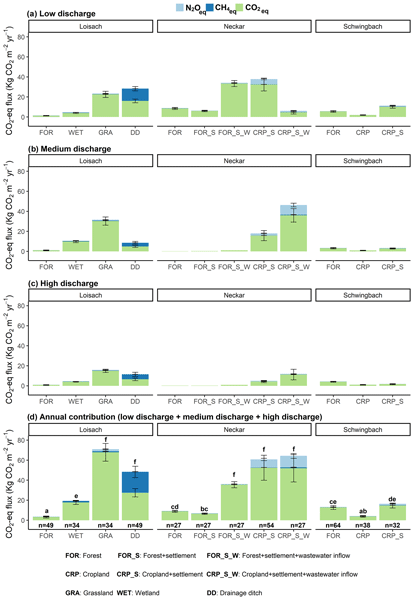
Agricultural landscapes act as sinks or sources of the greenhouse gases (GHGs) CO2, CH4, or N2O. Various physicochemical and biological processes control the fluxes of these GHGs between ecosystems and the atmosphere. Therefore, fluxes depend on environmental conditions such as soil moisture, soil temperature, or soil parameters, which result in large spatial and temporal variations of GHG fluxes. Here, we describe an example of how this variation may be studied and analyzed.
Ricky Mwangada Mwanake, Gretchen Maria Gettel, Elizabeth Gachibu Wangari, Clarissa Glaser, Tobias Houska, Lutz Breuer, Klaus Butterbach-Bahl, and Ralf Kiese
Biogeosciences, 20, 3395–3422, https://doi.org/10.5194/bg-20-3395-2023, https://doi.org/10.5194/bg-20-3395-2023, 2023
Short summary
Short summary
Despite occupying <1 %; of the globe, streams are significant sources of greenhouse gas (GHG) emissions. In this study, we determined anthropogenic effects on GHG emissions from streams. We found that anthropogenic-influenced streams had up to 20 times more annual GHG emissions than natural ones and were also responsible for seasonal peaks. Anthropogenic influences also altered declining GHG flux trends with stream size, with potential impacts on stream-size-based spatial upscaling techniques.

Joseph Okello, Marijn Bauters, Hans Verbeeck, Samuel Bodé, John Kasenene, Astrid Françoys, Till Engelhardt, Klaus Butterbach-Bahl, Ralf Kiese, and Pascal Boeckx
Biogeosciences, 20, 719–735, https://doi.org/10.5194/bg-20-719-2023, https://doi.org/10.5194/bg-20-719-2023, 2023
Short summary
Short summary
The increase in global and regional temperatures has the potential to drive accelerated soil organic carbon losses in tropical forests. We simulated climate warming by translocating intact soil cores from higher to lower elevations. The results revealed increasing temperature sensitivity and decreasing losses of soil organic carbon with increasing elevation. Our results suggest that climate warming may trigger enhanced losses of soil organic carbon from tropical montane forests.
Licheng Liu, Shaoming Xu, Jinyun Tang, Kaiyu Guan, Timothy J. Griffis, Matthew D. Erickson, Alexander L. Frie, Xiaowei Jia, Taegon Kim, Lee T. Miller, Bin Peng, Shaowei Wu, Yufeng Yang, Wang Zhou, Vipin Kumar, and Zhenong Jin
Geosci. Model Dev., 15, 2839–2858, https://doi.org/10.5194/gmd-15-2839-2022, https://doi.org/10.5194/gmd-15-2839-2022, 2022
Short summary
Short summary
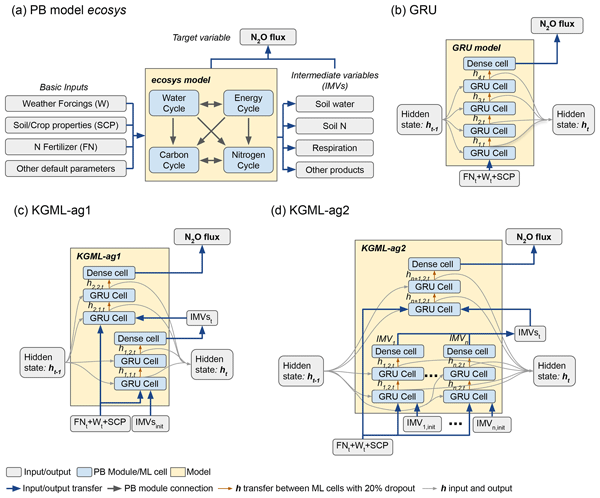
By incorporating the domain knowledge into a machine learning model, KGML-ag overcomes the well-known limitations of process-based models due to insufficient representations and constraints, and unlocks the “black box” of machine learning models. Therefore, KGML-ag can outperform existing approaches on capturing the hot moment and complex dynamics of N2O flux. This study will be a critical reference for the new generation of modeling paradigm for biogeochemistry and other geoscience processes.
Cited articles
Abdu, A., Laekemariam, F., Gidago, G., Kebede, A., and Getaneh, L.: Variability analysis of soil properties, mapping, and crop test responses in Southern Ethiopia, Heliyon, 9, e14013, https://doi.org/10.1016/j.heliyon.2023.e14013, 2023.
Aderele, M. O., Srivastava, A. K., Butterbach-Bahl, K., and Rahimi, J.: Integrating machine learning with agroecosystem modelling: Current state and future challenges, Eur. J. Agron., 168, 127610, https://doi.org/10.1016/j.eja.2025.127610, 2025a.
Aderele, M. O., Haas, E., Smerald, A., Blicher-Mathiesen, G., Butterbach-Bahl, K., and Rahimi, J.: The environmental trade-off of fertiliser, residue and catch crop management in Danish cropping systems, Agr. Syst., 229, 104433, https://doi.org/10.1016/j.agsy.2025.104433, 2025b.
Aderele, M. O., Haas, E., Liu, L., Serra, J., Kraus, D., Butterbach-Bahl, K., and Rahimi, J.: mLDNDCv1.0: A Machine Learning-based Surrogate of LandscapeDNDC for Optimising Cropping Systems in Denmark, Zenodo [code], https://doi.org/10.5281/zenodo.18278475, 2026a.
Aderele, M. O., Haas, E., Liu, L., Serra, J., Kraus, D., Butterbach-Bahl, K., and Rahimi, J.: mLDNDCv1.0: A Machine Learning-based Surrogate of LandscapeDNDC for Optimising Cropping Systems in Denmark, Zenodo [data set], https://doi.org/10.5281/zenodo.18573226, 2026b.
Akiba, T., Sano, S., Yanase, T., Ohta, T., and Koyama, M.: Optuna: A next-generation hyperparameter optimization framework, Adv. Intel. Soft. Compu., 2623–2631, https://doi.org/10.1145/3292500.3330701, 2019.
Al-Musawi, Z. K., Vona, V., and Kulmány, I. M.: Utilizing different crop rotation systems for agricultural and environmental sustainability: A review, Agronomy, 15, 1966, https://doi.org/10.3390/agronomy15081966, 2025.
Antón, R., Derrien, D., Urmeneta, H., van der Heijden, G., Enrique, A., and Virto, I.: Organic carbon storage and dynamics as affected by the adoption of irrigation in a cultivated calcareous Mediterranean Soil, Frontiers in Soil Science, 2, 831775, https://doi.org/10.3389/fsoil.2022.831775, 2022.
Attia, A., Govind, A., Qureshi, A. S., Feike, T., Rizk, M. S., Shabana, M. M. A., and Kheir, A. M. S.: Coupling process-based models and machine learning algorithms for predicting yield and evapotranspiration of maize in arid environments, Water (Switzerland), 14, https://doi.org/10.3390/w14223647, 2022.
Baker, R. E. and Anttila-Hughes, J.: Characterizing the contribution of high temperatures to child undernourishment in Sub-Saharan Africa, Sci. Rep.-UK, 10, 1–10, https://doi.org/10.1038/s41598-020-74942-9, 2020.
Barua, S. K., Berg, P., Bruvoll, A., Cederberg, C., Drinkwater, K. F., Eide, A., Eythorsdottir, E., Guðjónsson, S., Gudmundsson, L. A., Gundersen, P., Hoel, A. H., Jarp, J., Jørgensen, R. B., Kantanen, J., Kettunen-Præbel, A., Løvendahl, P., Meuwissen, T., Olesen, J. E., Portin, A., Rognli, O. A., and Stiansen, J. E.: Climate change and primary industries: Impacts, adaptation and mitigation in the Nordic countries, Nordisk Ministerråd, https://doi.org/10.6027/tn2014-552, 2014.
Blank, J. and Deb, K.: Pymoo: Multi-Objective Optimization in Python, IEEE Access, 8, 89497–89509, https://doi.org/10.1109/access.2020.2990567, 2020.
Borisov, V., Leemann, T., Sebler, K., Haug, J., Pawelczyk, M., and Kasneci, G.: Deep neural networks and tabular data: A survey, IEEE T. Neur. Net. Lear., 35, 7499–7519, https://doi.org/10.1109/tnnls.2022.3229161, 2024.
Chen, T. and Guestrin, C.: XGBoost: A Scalable tree boosting system, Adv. Intel. Soft. Compu., 13–17 August 2016, 785–794, https://doi.org/10.1145/2939672.2939785, 2016.
Ciarlo, E., Conti, M., Bartoloni, N., and Rubio, G.: The effect of moisture on nitrous oxide emissions from soil and the
Dalgaard, T., Hansen, B., Hasler, B., Hertel, O., Hutchings, N. J., Jacobsen, B. H., Jensen, L. S., Kronvang, B., Olesen, J. E., Schjørring, J. K., Kristensen, I. S., Graversgaard, M., Termansen, M., and Vejre, H.: Policies for agricultural nitrogen management – trends, challenges and prospects for improved efficiency in Denmark, Environ. Res. Lett., 9, 115002, https://doi.org/10.1088/1748-9326/9/11/115002, 2014.
Deb, K., Pratap, A., Agarwal, S., and Meyarivan, T.: A fast and elitist multiobjective genetic algorithm: NSGA-II, IEEE T. Evolut. Comput., 6, 182–197, https://doi.org/10.1109/4235.996017, 2002.
Diba, F., Shimizu, M., and Hatano, R.: Effects of soil aggregate size, moisture content and fertilizer management on nitrous oxide production in a volcanic ash soil, Soil Sci. Plant Nutr., 57, 733–747, https://doi.org/10.1080/00380768.2011.604767, 2011.
Droutsas, I., Challinor, A. J., Deva, C. R., and Wang, E.: Integration of machine learning into process-based modelling to improve simulation of complex crop responses, In Silico Plants, 4, 1–16, https://doi.org/10.1093/insilicoplants/diac017, 2022.
Emde, D., Hannam, K. D., Most, I., Nelson, L. M., and Jones, M. D.: Soil organic carbon in irrigated agricultural systems: A meta-analysis, Global Change. Biol., 27, 3898, https://doi.org/10.1111/gcb.15680, 2021.
Friedman, J. H.: Greedy function approximation: A gradient boosting machine, Ann. Statist., 29, 1189–1232, https://doi.org/10.1214/aos/1013203451, 2001.
Grados, D., Kraus, D., Haas, E., Butterbach-Bahl, K., Olesen, J. E., and Abalos, D.: Common agronomic adaptation strategies to climate change may increase soil greenhouse gas emission in Northern Europe, Agr. Forest. Meteorol., 349, 109966, https://doi.org/10.1016/j.agrformet.2024.109966, 2024.
Grote, R., Lavoir, A. V., Rambal, S., Staudt, M., Zimmer, I., and Schnitzler, J. P.: Modelling the drought impact on monoterpene fluxes from an evergreen Mediterranean forest canopy, Oecologia, 160, 213–223, https://doi.org/10.1007/s00442-009-1298-9, 2009.
Haas, E., Klatt, S., Fröhlich, A., Kraft, P., Werner, C., Kiese, R., Grote, R., Breuer, L., and Butterbach-Bahl, K.: LandscapeDNDC: A process model for simulation of biosphere–atmosphere-hydrosphere exchange processes at site and regional scale, Landsc. Ecol., 28, 615–636, https://doi.org/10.1007/s10980-012-9772-x, 2013.
Haas, E., Carozzi, M., Massad, R. S., Scheer, C., and Butterbach-Bahl, K.: Testing the performance of CERES-EGC and LandscapeDNDC to simulate effects of residue management on soil N2O emissions, ResidueGas deliverable report 4.1, https://projects.au.dk/fileadmin/projects/residuegas/D_reports/ResidueGas_D4.1.pdf (last access: 9 July 2026), 2021.
Haas, E., Carozzi, M., Massad, R. S., Butterbach-Bahl, K., and Scheer, C.: Long term impact of residue management on soil organic carbon stocks and nitrous oxide emissions from European croplands, Sci. Total Environ., 836, 154932, https://doi.org/10.1016/j.scitotenv.2022.154932, 2022.
Hansen, L. B., Callesen, G. M., Schou, J. S., Filippelli, R., Hasler, B., Lundhede, T., Termansen, M., and Levin, G.: Land use allocation to achieve multiple goals for climate, aquatic environment, and biodiversity: A scenario analysis for Denmark, Danish Journal of Economics, 2025, 65–77, 2025.
Hastie, T., Tibshirani, R., and Friedman, J.: The elements of statistical learning: data mining, inference, and prediction, 2nd Edn., Springer, 1–764, https://doi.org/10.1007/b94608, 2009.
Hénault, C., Bourennane, H., Ayzac, A., Ratié, C., Saby, N. P. A., Cohan, J. P., Eglin, T., and Gall, C. Le: Management of soil pH promotes nitrous oxide reduction and thus mitigates soil emissions of this greenhouse gas, Sci. Rep., 9, 20182, https://doi.org/10.1038/s41598-019-56694-3, 2019.
Huang, Y. and Gerber, S.: Global soil nitrous oxide emissions in a dynamic carbon-nitrogen model, Biogeosciences, 12, 6405–6427, https://doi.org/10.5194/bg-12-6405-2015, 2015.
Jeong, D., Kim, D., Choi, T., and Seo, Y.: A process-based modeling method for describing production processes of ship block assembly planning, Processes, 8, 880, https://doi.org/10.3390/pr8070880, 2020.
Kapoor, S. and Perrone, V.: A simple and fast baseline for tuning large XGBoost models, arXiv [preprint], https://doi.org/10.48550/arXiv.2111.06924, 12 November 2021.
Karwowska, Z., Aasmets, O., Esko, T., Milani, L., Metspalu, A., Metspalu, M., Kosciolek, T., and Org, E.: Effects of data transformation and model selection on feature importance in microbiome classification data, Microbiome, 13, 2, https://doi.org/10.1186/S40168-024-01996-6, 2025.
Kasper, M., Foldal, C., Kitzler, B., Haas, E., Strauss, P., Eder, A., Zechmeister-Boltenstern, S., and Amon, B.: N2O emissions and
Ke, G., Meng, Q., Finley, T., Wang, T., Chen, W., Ma, W., Ye, Q., and Liu, T.-Y.: LightGBM: a highly efficient gradient boosting decision tree, in: Proceedings of the 31st International Conference on Neural Information Processing Systems (NIPS'17), Curran Associates Inc., Red Hook, NY, USA, 3149–3157, https://papers.nips.cc/paper/6907-lightgbm-a-highly-efficient-gradient-boosting-decision-tree.pdf (last access: 9 July 2026), 2017.
Kiese, R., Heinzeller, C., Werner, C., Wochele, S., Grote, R., and Butterbach-Bahl, K.: Quantification of nitrate leaching from German forest ecosystems by use of a process oriented biogeochemical model, Environ. Pollut., 159, 3204–3214, https://doi.org/10.1016/j.envpol.2011.05.004, 2011.
Kim, Y. W., Cha, Y. K., and Shin, J.: A modular deep learning surrogate model for simulating harmful algal blooms in complex process-based systems, Water Res., 285, 124059, https://doi.org/10.1016/j.watres.2025.124059, 2025.
Kollmer, M.: Carbon sequestration dynamics of agricultural soils: constraining a biogeochemical model with long-term field measurements, MSc thesis, Faculty of Environment and Natural Resources, Albert-Ludwigs-University Freiburg, Freiburg im Breisgau, Germany, 2023.
Kraus, D., Weller, S., Klatt, S., Haas, E., Wassmann, R., Kiese, R., and Butterbach-Bahl, K.: A new LandscapeDNDC biogeochemical module to predict CH4 and N2O emissions from lowland rice and upland cropping systems, Plant Soil, 386, 125–149, https://doi.org/10.1007/s11104-014-2255-x, 2015.
Kraus, D., Weller, S., Klatt, S., Santabárbara, I., Haas, E., Wassmann, R., Werner, C., Kiese, R., and Butterbach-Bahl, K.: How well can we assess impacts of agricultural land management changes on the total greenhouse gas balance (CO2, CH4 and N2O) of tropical rice-cropping systems with a biogeochemical model?, Agr. Ecosyst. Environ., 224, 104–115, https://doi.org/10.1016/j.agee.2016.03.037, 2016.
Kraus, D., Werner, C., Janz, B., Klatt, S., Sander, B. O., Wassmann, R., Kiese, R., and Butterbach-Bahl, K.: Greenhouse Gas Mitigation Potential of Alternate Wetting and Drying for Rice Production at National Scale – A Modeling Case Study for the Philippines, J. Geophys. Res.-Biogeosci., 127, https://doi.org/10.1029/2022jg006848, 2022.
Kuhn, M. and Johnson, K.: Applied predictive modeling, Springer, New York, Heidelberg, Dordrecht, London, 1–600, https://doi.org/10.1007/978-1-4614-6849-3, 2013.
Kuśmierz, S., Skowrońska, M., Tkaczyk, P., Lipiński, W., and Mielniczuk, J.: Soil organic carbon and mineral nitrogen contents in soils as affected by their pH, texture and fertilization, Agronomy, 13, 267, https://doi.org/10.3390/agronomy13010267, 2023.
Lessmann, M., Ros, G. H., Young, M. D., and de Vries, W.: Global variation in soil carbon sequestration potential through improved cropland management, Global Change Biol., 28, 1162–1177, https://doi.org/10.1111/GCB.15954, 2022.
Li, Z., Cui, S., Zhang, Q., Xu, G., Feng, Q., Chen, C., and Li, Y.: Optimizing wheat yield, water, and nitrogen use efficiency with water and nitrogen inputs in china: A synthesis and life cycle assessment, Front. Plant Sci., 13, 930484, https://doi.org/10.3389/FPLS.2022.930484, 2022.
Liebermann, R., Breuer, L., Houska, T., Kraus, D., Moser, G., and Kraft, P.: Simulating long-term development of greenhouse gas emissions, plant biomass, and soil moisture of a temperate grassland ecosystem under elevated atmospheric CO2, Agronomy, 10, 50, https://doi.org/10.3390/agronomy10010050, 2019.
Lu, D. and Ricciuto, D.: Efficient surrogate modeling methods for large-scale Earth system models based on machine-learning techniques, Geosci. Model Dev., 12, 1791–1807, https://doi.org/10.5194/gmd-12-1791-2019, 2019.
Lundberg, S. M. and Lee, S.-I.: A unified approach to interpreting model predictions, in: Proceedings of the 31st International Conference on Neural Information Processing Systems (NIPS'17), Curran Associates Inc., Red Hook, NY, USA, 4768–4777, https://proceedings.neurips.cc/paper_files/paper/2017/file/8a20a8621978632d76c43dfd28b67767-Paper.pdf (last access: 9 July 2026), 2017.
Luo, Z., Wang, E., and Bryan, B.: A meta-model for soil carbon stock in agricultural soils, in: Proceedings of the 19th International Congress on Modelling and Simulation (MODSIM2011), Perth, Australia, 12–16 December 2011, Modelling and Simulation Society of Australia and New Zealand, https://doi.org/10.36334/modsim.2011.b1.luo, 2011.
Ma, J., Kang, F., Cheng, X., and Han, H.: Response of soil organic carbon and nitrogen to nitrogen deposition in a Larix principis-rupprechtii plantation, Sci. Rep., 8, 8638, https://doi.org/10.1038/s41598-018-26966-5, 2018.
Maaz, T. M., Sapkota, T. B., Eagle, A. J., Kantar, M. B., Bruulsema, T. W., and Majumdar, K.: Meta-analysis of yield and nitrous oxide outcomes for nitrogen management in agriculture, Global Change Biol., 27, 2343, https://doi.org/10.1111/GCB.15588, 2021.
Malcolm, B. J., Cameron, K. C., Curtin, D., Di, H. J., Beare, M. H., Johnstone, P. R., and Edwards, G. R.: Organic matter amendments to soil can reduce nitrate leaching losses from livestock urine under simulated fodder beet grazing, Agr. Ecosyst. Environ., 272, 10–18, https://doi.org/10.1016/j.agee.2018.11.003, 2019.
Molina-Herrera, S., Haas, E., Klatt, S., Kraus, D., Augustin, J., Magliulo, V., Tallec, T., Ceschia, E., Ammann, C., Loubet, B., Skiba, U., Jones, S., Brümmer, C., Butterbach-Bahl, K., and Kiese, R.: A modeling study on mitigation of N2O emissions and NO3 leaching at different agricultural sites across Europe using LandscapeDNDC, Sci. Total Environ., 553, 128–140, https://doi.org/10.1016/j.scitotenv.2015.12.099, 2016.
Nguyen, T. H., Nong, D., and Paustian, K.: Surrogate-based multi-objective optimization of management options for agricultural landscapes using artificial neural networks, Ecol. Model., 400, 1–13, https://doi.org/10.1016/j.ecolmodel.2019.02.018, 2019.
Nielsen, O.-K., Plejdrup, M. S., Winther, M., Nielsen, M., Gyldenkærne, S., Mikkelsen, M. H., Albrektsen, R., Thomsen, M., Hjelgaard, K., Fauser, P., Bruun, H. G., Johannsen, V. K., Nord-Larsen, T., Vesterdal, L., Callesen, I., Caspersen, O. H., Scott-Bentsen, N., Rasmussen, E., Petersen, S. B., Olsen, T. M., and Hansen, M. G.: Denmark's national inventory report 2020: Emission inventories 1990–2018 – Submitted under the United Nations Framework Convention on Climate Change and the Kyoto Protocol, Aarhus University, DCE – Danish Centre for Environment and Energy, Aarhus, Denmark, Scientific Report No. 372, 904 pp., http://dce2.au.dk/pub/SR372.pdf (last access: 9 July 2026), 2020.
Pacheco, A. L. and Sumreen Hina, N.: Global meta-analysis of nitrate leaching vulnerability in synthetic and organic fertilizers over the past four decades, Water, 16, 457, https://doi.org/10.3390/w16030457, 2024.
Perlman, J., Hijmans, R. J., and Horwath, W. R.: A metamodelling approach to estimate global N2O emissions from agricultural soils, Global Ecol. Biogeogr., 23, 912–924, https://doi.org/10.1111/geb.12166, 2014.
Piñeros Garcet, J. D., Ordoñez, A., Roosen, J., and Vanclooster, M.: Metamodelling: Theory, concepts and application to nitrate leaching modelling, Ecol. Model., 193, 629–644, https://doi.org/10.1016/j.ecolmodel.2005.08.045, 2006.
Prokhorenkova, L., Gusev, G., Vorobev, A., Dorogush, A. V., and Gulin, A.: CatBoost: unbiased boosting with categorical features, in: Proceedings of the 32nd International Conference on Neural Information Processing Systems (NIPS'18), Montréal, Canada, 3–8 December 2018, Curran Associates Inc., Red Hook, NY, USA, 6639–6649, https://papers.neurips.cc/paper/7898-catboost-unbiased-boosting-with-categorical-features.pdf (last access: 9 July 2026), 2018.
Pugliese, L., Heckrath, G. J., Iversen, B. V., and Straface, S.: Treatment systems for agricultural drainage water and farmyard runoff in Denmark: Case studies, Handbook of Environmental Chemistry, 117, 45–65, https://doi.org/10.1007/698_2021_784, 2023.
Pylianidis, C., Snow, V., Overweg, H., Osinga, S., Kean, J., and Athanasiadis, I. N.: Simulation-assisted machine learning for operational digital twins, Environ. Modell. Softw., 148, https://doi.org/10.1016/j.envsoft.2021.105274, 2022.
Quemada, M., Baranski, M., Nobel-de Lange, M. N. J., Vallejo, A., and Cooper, J. M.: Meta-analysis of strategies to control nitrate leaching in irrigated agricultural systems and their effects on crop yield, Agr. Ecosyst. Environ., 174, 1–10, https://doi.org/10.1016/j.agee.2013.04.018, 2013.
Rahimi, J., Haas, E., Scheer, C., Grados, D., Abalos, D., Aderele, M. O., Blicher-Mathiesen, G., and Butterbach-Bahl, K.: Aggregation of activity data on crop management can induce large uncertainties in estimates of regional nitrogen budgets, npj Sustainable Agriculture, 2, 1–10, https://doi.org/10.1038/s44264-024-00015-3, 2024.
Ren, K., Wang, Z., Wu, J., Zhao, K., Huang, M., and Li, Y.: One-off irrigation enhances wheat yield and water productivity: Evidence from meta-analysis and a three-year and three-site field experiment, Agr. Water Manage., 317, 109628, https://doi.org/10.1016/j.agwat.2025.109628, 2025.
Rolighed, J.: Processing of agricultural register data and calculation of reference leaching for nitrate with NLES5, Aarhus University, DCE – Danish Centre for Environment and Energy, Aarhus, Denmark, Technical Note No. 62, 34 pp., https://dce.au.dk/fileadmin/dce.au.dk/Udgivelser/Notater_2023/N2023_62.pdf (last access: 9 July 2026), 2023.
Schuster, J., Mittermayer, M., Maidl, F. X., Nätscher, L., and Hülsbergen, K. J.: Spatial variability of soil properties, nitrogen balance and nitrate leaching using digital methods on heterogeneous arable fields in southern Germany, Precis. Agric., 24, 647–676, https://doi.org/10.1007/s11119-022-09967-3, 2022.
Shahhosseini, M., Martinez-Feria, R. A., Hu, G., and Archontoulis, S. V.: Maize yield and nitrate loss prediction with machine learning algorithms, Environ. Res. Lett., 14, https://doi.org/10.1088/1748-9326/ab5268, 2019.
Shcherbak, I., Millar, N., and Robertson, G. P.: Global metaanalysis of the nonlinear response of soil nitrous oxide (N2O) emissions to fertilizer nitrogen, P. Natl. Acad. Sci. USA, 111, 9199–9204, https://doi.org/10.1073/pnas.1322434111, 2014.
Shi, Y., Han, L., Zhang, X., Sobeih, T., Gaiser, T., Thuy, N. H., Behrend, D., Srivastava, A. K., Halder, K., and Ewert, F.: Deep learning meets process-based models: a hybrid approach to agricultural challenges, arXiv [preprint], https://doi.org/10.48550/arXiv.2504.16141, 22 April 2025.
Shwartz-Ziv, R. and Armon, A.: Tabular data: Deep learning is not all you need, Inform. Fusion, 81, 84–90, https://doi.org/10.1016/J.INFFUS.2021.11.011, 2022.
Slessarev, E. W., Mayer, A., Kelly, C., Georgiou, K., Pett-Ridge, J., and Nuccio, E. E.: Initial soil organic carbon stocks govern changes in soil carbon: Reality or artifact?, Global Change Biol., 29, 1239, https://doi.org/10.1111/gcb.16491, 2022.
Smerald, A., Kraus, D., Rahimi, J., Fuchs, K., Kiese, R., Butterbach-Bahl, K., and Scheer, C.: A redistribution of nitrogen fertiliser across global croplands can help achieve food security within environmental boundaries, Commun. Earth Environ., 4, https://doi.org/10.1038/s43247-023-00970-8, 2023.
Styczen, M. E., Abrahamsen, P., Hansen, S., and Knudsen, L.: Analysis of the significant drop in protein content in Danish grain crops from 1990–2015 based on N-response in fertilizer trials, Eur. J. Agron., 115, 126013, https://doi.org/10.1016/j.eja.2020.126013, 2020.
Sun, W., He, Z., Ma, D., Liu, B., Li, R., Wang, S., and Malekian, A.: Response of soil carbon and nitrogen stocks to irrigation – A global meta-analysis, Sci. Total Environ., 957, 177641, https://doi.org/10.1016/j.scitotenv.2024.177641, 2024.
Sutton, R. S. and Matheus, C. J.: Learning polynomial functions by feature construction, Proceedings of the 8th International Workshop on Machine Learning, ICML, 1991, 208–212, https://doi.org/10.1016/b978-1-55860-200-7.50045-3, 1991.
Vermeulen, S. J., Campbell, B. M., and Ingram, J. S. I.: Climate change and food systems, Annu. Rev. Env. Resour., 37, 195–222, https://doi.org/10.1146/annurev-environ-020411-130608, 2012.
Villa-Vialaneix, N., Follador, M., Ratto, M., and Leip, A.: A comparison of eight metamodeling techniques for the simulation of N2O fluxes and N leaching from corn crops, Environ. Modell. Softw., 34, 51–66, https://doi.org/10.1016/j.envsoft.2011.05.003, 2012.
Vogeler, I., Thomsen, I. K., Jensen, J. L., and Hansen, E. M.: Marginal nitrate leaching around the recommended nitrogen fertilizer rate in winter cereals, Soil Use Manage., 38, 503–514, https://doi.org/10.1111/sum.12673, 2022.
Wang, C., Amon, B., Schulz, K., and Mehdi, B.: Factors that influence nitrous oxide emissions from agricultural soils as well as their representation in simulation models: A review, Agronomy, 11, 770, https://doi.org/10.3390/agronomy11040770, 2021a.
Wang, Y., Yao, Z., Zhan, Y., Zheng, X., Zhou, M., Yan, G., Wang, L., Werner, C., and Butterbach-Bahl, K.: Potential benefits of liming to acid soils on climate change mitigation and food security, Global Change Biol., 27, 2807–2821, https://doi.org/10.1111/gcb.15607, 2021b.
Weisberg, S.: Yeo-Johnson power transformations, Department of Applied Statistics, University of Minnesota, St. Paul, MN, USA, 4 pp., https://www.stat.umn.edu/arc/yjpower.pdf (last access: 9 July 2026), 2001.
Wezel, A., Herren, B. G., Kerr, R. B., Barrios, E., Gonçalves, A. L. R., and Sinclair, F.: Agroecological principles and elements and their implications for transitioning to sustainable food systems. A review, Agron. Sustain. Dev., 40, 1–13, https://doi.org/10.1007/s13593-020-00646-z, 2020.
Xiao, L., Wang, G., Zhou, H., Jin, X., and Luo, Z.: Coupling agricultural system models with machine learning to facilitate regional predictions of management practices and crop production, Environ. Res. Lett., 17, https://doi.org/10.1088/1748-9326/ac9c71, 2022.
Xiao, L., Wang, G., Wang, E., Liu, S., Chang, J., Zhang, P., Zhou, H., Wei, Y., Zhang, H., Zhu, Y., Shi, Z., and Luo, Z.: Spatiotemporal co-optimization of agricultural management practices towards climate-smart crop production, Nat. Food, 5, 59–71, https://doi.org/10.1038/s43016-023-00891-x, 2024.
Yang, X., Xiong, J., Du, T., Ju, X., Gan, Y., Li, S., Xia, L., Shen, Y., Pacenka, S., Steenhuis, T. S., Siddique, K. H. M., Kang, S., and Butterbach-Bahl, K.: Diversifying crop rotation increases food production, reduces net greenhouse gas emissions and improves soil health, Nat. Commun., 15, 198, https://doi.org/10.1038/s41467-023-44464-9, 2024.
Yao, Z., Yan, G., Ma, L., Wang, Y., Zhang, H., Zheng, X., Wang, R., Liu, C., Wang, Y., Zhu, B., Zhou, M., Rahimi, J., and Butterbach-Bahl, K.: Soil C/N ratio is the dominant control of annual N2O fluxes from organic soils of natural and semi-natural ecosystems, Agr. Forest. Meteorol., 327, 109198, https://doi.org/10.1016/j.agrformet.2022.109198, 2022.
Zhang, F., Qu, Z., Zhao, Q., Xi, Z., and Liu, Z.: Mechanisms of N2O emission in drip-irrigated saline soils: Unraveling the role of soil moisture variation in nitrification and denitrification, Agronomy, 15, 10, https://doi.org/10.3390/agronomy15010010, 2024.
Zhang, N., Zhou, X., Kang, M., Hu, B. G., Heuvelink, E., and Marcelis, L. F. M.: Machine learning versus crop growth models: an ally, not a rival, AoB Plants, 15, plac061, https://doi.org/10.1093/aobpla/plac061, 2022.
Zhou, L. T., Sun, S., Zhang, Z. T., Zhang, F. L., Guo, S. B., Shi, Y. Y., and Yang, X. G.: High yield and water use efficiency synergistical improvement irrigation scheme of winter wheat in North China Plain based on meta-analysis, Chinese Journal of Agrometeorology, 43, 515, https://doi.org/10.3969/j.issn.1000-6362.2022.07.001, 2022.
Žurovec, O., Wall, D. P., Brennan, F. P., Krol, D. J., Forrestal, P. J., and Richards, K. G.: Increasing soil pH reduces fertiliser derived N2O emissions in intensively managed temperate grassland, Agr. Ecosyst. Environ., 311, 107319, https://doi.org/10.1016/j.agee.2021.107319, 2021.
Short summary
This study develops a fast, data‑driven tool to virtually test millions of ways to manage winter wheat fields in Denmark, without running slow process-based crop models each time. It finds fertilizer, residue, manure, catch crop and irrigation strategies that cut nitrogen pollution and greenhouse gases while increasing yields and soil carbon, all without using more fertilizer overall.
This study develops a fast, data‑driven tool to virtually test millions of ways to manage...


