
Articles | Volume 19, issue 13
https://doi.org/10.5194/gmd-19-6231-2026
© Author(s) 2026. This work is distributed under
the Creative Commons Attribution 4.0 License.
the Creative Commons Attribution 4.0 License.
https://doi.org/10.5194/gmd-19-6231-2026
© Author(s) 2026. This work is distributed under
the Creative Commons Attribution 4.0 License.
the Creative Commons Attribution 4.0 License.
Development and technical paper
| 
13 Jul 2026
Development and technical paper |
| 13 Jul 2026
| 13 Jul 2026
Development of the TCWA2 bulk cloud microphysics scheme and its integration with a dual-polarization radar operator for forecasting applications
Technology Development Division, Central Weather Administration, Taipei, Taiwan
Jen-Ping Chen
Department of Atmospheric Sciences, National Taiwan University, Taipei, Taiwan
International Degree Program in Climate Change and Sustainable Development, National Taiwan University, Taipei, Taiwan
Research Center for Environmental Changes, Academia Sinica, Taipei, Taiwan
Zhiquan Liu
NSF National Center for Atmospheric Research, Boulder, CO, USA
Siou-Ying Jiang
Technology Development Division, Central Weather Administration, Taipei, Taiwan
Department of Atmospheric Sciences, National Taiwan University, Taipei, Taiwan
Rong Kong
NSF National Center for Atmospheric Research, Boulder, CO, USA
Ying-Jhang Wu
Technology Development Division, Central Weather Administration, Taipei, Taiwan
Department of Atmospheric Sciences, National Taiwan University, Taipei, Taiwan
Junmei Ban
NSF National Center for Atmospheric Research, Boulder, CO, USA
Ling-Feng Hsiao
Technology Development Division, Central Weather Administration, Taipei, Taiwan
Yu-Shuang Tang
Technology Development Division, Central Weather Administration, Taipei, Taiwan
Department of Atmospheric Sciences, National Central University, Taoyuan, Taiwan
Pao-Liang Chang
Technology Development Division, Central Weather Administration, Taipei, Taiwan
Jing-Shan Hong
Technology Development Division, Central Weather Administration, Taipei, Taiwan
Related authors
No articles found.
Wen-Chien Lee, Ming-Hao Huang, Wei-Chieh Huang, Jen-Ping Chen, Yen-Jen Lai, Haojia Ren, and Hui-Ming Hung
Atmos. Chem. Phys., 26, 10947–10963, https://doi.org/10.5194/acp-26-10947-2026, https://doi.org/10.5194/acp-26-10947-2026, 2026
Short summary
Short summary
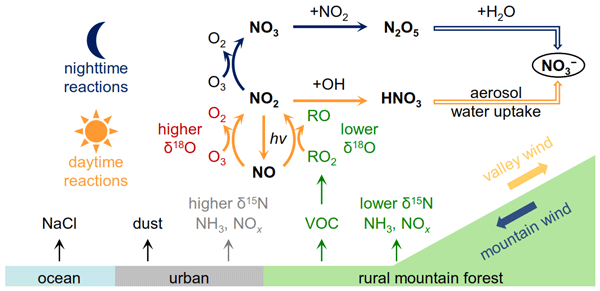
We studied nitrogen pollution in Taiwan's mountain forests to track how urban emissions reach and transform in remote areas. Isotope analysis and statistical modeling revealed that combustion sources contributed 50–83 % of ammonia, while nitrate forms continuously from urban to rural sampling sites. The findings show that persistent urban pollution strongly impacts mountain ecosystems, offering key insights for air quality management.
Xuewei Zhang, Zhiquan Liu, Lipeng Jiang, Tao Sun, I-Han Chen, Dale M. Barker, and Jinzhong Min
EGUsphere, https://doi.org/10.5194/egusphere-2026-2982, https://doi.org/10.5194/egusphere-2026-2982, 2026
Short summary
Short summary
This study explores how high-resolution infrared observations from the Himawari-9 weather satellite can improve forecasts of rapidly evolving hazardous weather systems in tropical regions. By incorporating these observations, including information from cloudy areas, into a regional forecast system, we found improvements in short-range forecasts of clouds and rainfall. These results suggest the potential of such geostationary satellite data for improving tropical weather prediction.
Xuewei Zhang, Lipeng Jiang, Zhiquan Liu, Tao Sun, Wei Wang, and I-Han Chen
EGUsphere, https://doi.org/10.5194/egusphere-2026-1476, https://doi.org/10.5194/egusphere-2026-1476, 2026
Short summary
Short summary
Rapidly evolving clouds over the tropical area, where complex terrain and tropical weather conditions interact, are difficult to predict. This study uses frequent, high-resolution Himawari-9 satellite observations to evaluate how well a weather model predicts cloud amount, cloud type, cloud height, and daily cloud changes over this region. The aim is to support future model development, improve cloud forecasts, and make better use of satellite observations in cloudy areas.
Tao Sun, I-Han Chen, Craig S. Schwartz, Zhiquan Liu, Hugh Zhang, and Dale Barker
EGUsphere, https://doi.org/10.5194/egusphere-2026-2476, https://doi.org/10.5194/egusphere-2026-2476, 2026
Short summary
Short summary
We implemented an effective way to use weather radar observations in a modern weather analysis and forecasting system. By linking radar information with temperature, moisture, and rainfall processes, the method enables the model to adjust these conditions more consistently. Case studies show clear improvements in the location and intensity of rainfall forecasts over the deep tropics.
Jen-Ping Chen, I-Chun Tsai, Li-Wei Kuo, and Gong-Do Hwang
Atmos. Chem. Phys., 26, 6909–6927, https://doi.org/10.5194/acp-26-6909-2026, https://doi.org/10.5194/acp-26-6909-2026, 2026
Short summary
Short summary
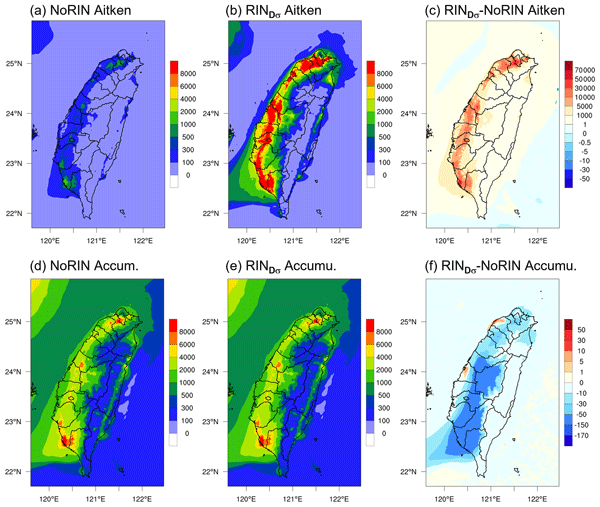
This study identifies a previously unrepresented process, Recondensation-Induced Nucleation (RIN), linking combustion microphysics to ambient ultrafine particle formation. Laboratory engine experiments, parcel modeling, and Community Multiscale Air Quality (CMAQ) simulations show that including RIN can significantly reduce number concentration underestimation from 75 % to 22 % while maintaining PM2.5 accuracy, providing a mechanistic basis for improving urban aerosol modeling.
Junmei Ban, Zhiquan Liu, Byoung-Joo Jung, Ivette Hernandez Banos, Benjamin Ruston, and Andrew Collard
EGUsphere, https://doi.org/10.5194/egusphere-2026-1047, https://doi.org/10.5194/egusphere-2026-1047, 2026
Short summary
Short summary
The assimilation of all-sky radiances in MPAS–JEDI, the data assimilation system for the Model for Prediction Across Scales–Atmosphere (MPAS-A) based on the Joint Effort for Data Assimilation Integration (JEDI), has been extended in this study to incorporate ATMS observations. Month-long cycling experiments demonstrate consistent and encouraging improvements in dynamical, thermodynamic, and moisture-related fields resulting from the assimilation of all-sky ATMS radiances.
Qing Zheng, Wei Sun, Zhiquan Liu, Jiajia Mao, Jieying He, Jian Li, and Xingwen Jiang
Geosci. Model Dev., 19, 731–754, https://doi.org/10.5194/gmd-19-731-2026, https://doi.org/10.5194/gmd-19-731-2026, 2026
Short summary
Short summary
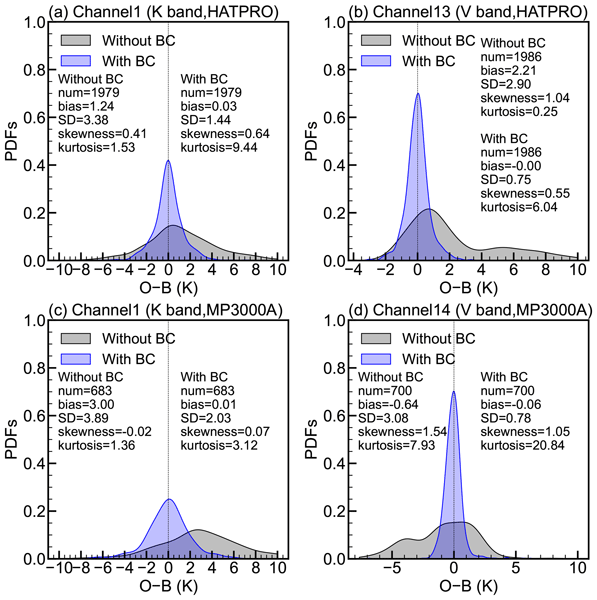
Ground-based microwave radiometers (GMWRs) offer high temporal resolution observations with strong sensitivity to the lower atmosphere, making them valuable for data assimilation. However, their assimilation has traditionally focused on retrieved profiles. This study implemented the direct assimilation of brightness temperatures from GMWRs with a machine learning-based bias correction scheme. The results show improvements in the low-level atmospheric structure and precipitation predictions.
Tao Sun, Jonathan J. Guerrette, Zhiquan Liu, Junmei Ban, Byoung-Joo Jung, Ivette Hernandez Banos, and Chris Snyder
Geosci. Model Dev., 18, 8569–8587, https://doi.org/10.5194/gmd-18-8569-2025, https://doi.org/10.5194/gmd-18-8569-2025, 2025
Short summary
Short summary
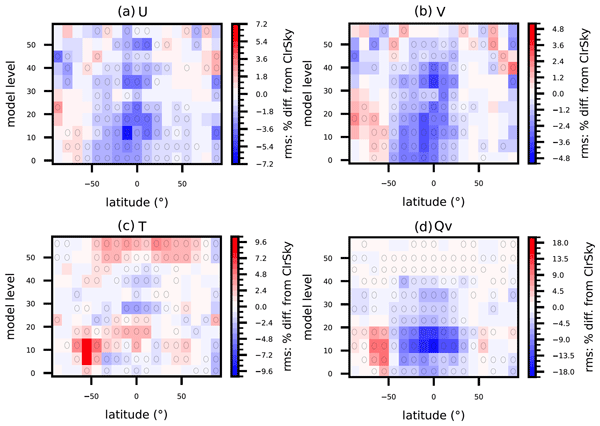
We evaluated a new ensemble data assimilation system that uses satellite observations in all weather conditions for global weather forecasts. The results show that including cloud- and precipitation-affected satellite data improves forecasts of moisture, wind, and clouds, especially in the tropics. This work highlights the potential of this new ensemble data assimilation system to enhance global weather forecasts.
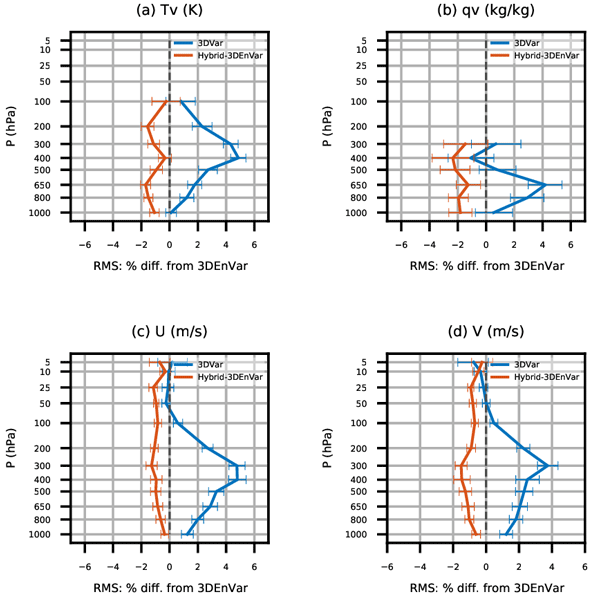
Byoung-Joo Jung, Benjamin Ménétrier, Chris Snyder, Zhiquan Liu, Jonathan J. Guerrette, Junmei Ban, Ivette Hernández Baños, Yonggang G. Yu, and William C. Skamarock
Geosci. Model Dev., 17, 3879–3895, https://doi.org/10.5194/gmd-17-3879-2024, https://doi.org/10.5194/gmd-17-3879-2024, 2024
Short summary
Short summary
We describe the multivariate static background error covariance (B) for the JEDI-MPAS 3D-Var data assimilation system. With tuned B parameters, the multivariate B gives physically balanced analysis increment fields in the single-observation test framework. In the month-long cycling experiment with a global 60 km mesh, 3D-Var with static B performs stably. Due to its simple workflow and minimal computational requirements, JEDI-MPAS 3D-Var can be useful for the research community.
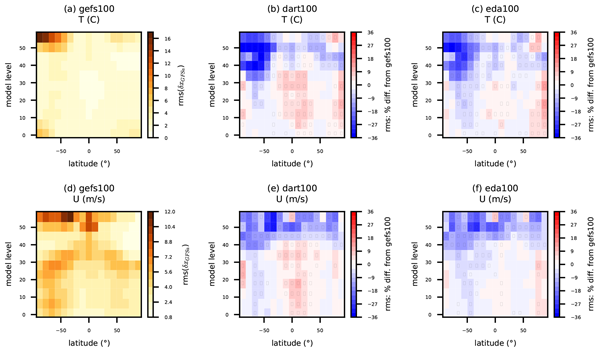
Jonathan J. Guerrette, Zhiquan Liu, Chris Snyder, Byoung-Joo Jung, Craig S. Schwartz, Junmei Ban, Steven Vahl, Yali Wu, Ivette Hernández Baños, Yonggang G. Yu, Soyoung Ha, Yannick Trémolet, Thomas Auligné, Clementine Gas, Benjamin Ménétrier, Anna Shlyaeva, Mark Miesch, Stephen Herbener, Emily Liu, Daniel Holdaway, and Benjamin T. Johnson
Geosci. Model Dev., 16, 7123–7142, https://doi.org/10.5194/gmd-16-7123-2023, https://doi.org/10.5194/gmd-16-7123-2023, 2023
Short summary
Short summary
We demonstrate an ensemble of variational data assimilations (EDA) with the Model for Prediction Across Scales and the Joint Effort for Data assimilation Integration (JEDI) software framework. When compared to 20-member ensemble forecasts from operational initial conditions, those from 80-member EDA-generated initial conditions improve flow-dependent error covariances and subsequent 10 d forecasts. These experiments are repeatable for any atmospheric model with a JEDI interface.

Zhiquan Liu, Chris Snyder, Jonathan J. Guerrette, Byoung-Joo Jung, Junmei Ban, Steven Vahl, Yali Wu, Yannick Trémolet, Thomas Auligné, Benjamin Ménétrier, Anna Shlyaeva, Stephen Herbener, Emily Liu, Daniel Holdaway, and Benjamin T. Johnson
Geosci. Model Dev., 15, 7859–7878, https://doi.org/10.5194/gmd-15-7859-2022, https://doi.org/10.5194/gmd-15-7859-2022, 2022
Short summary
Short summary
JEDI-MPAS 1.0.0, a new data assimilation (DA) system for the MPAS model, was publicly released for community use. This article describes JEDI-MPAS's implementation of the ensemble–variational DA technique and demonstrates its robustness and credible performance by incrementally adding three types of microwave radiances (clear-sky AMSU-A, all-sky AMSU-A, clear-sky MHS) to a non-radiance DA experiment. We intend to periodically release new and improved versions of JEDI-MPAS in upcoming years.
Cited articles
Bringi, V. N. and Chandrasekar, V.: Polarimetric Doppler Weather Radar: Principles and Application, Cambridge University Press, 636 pp., https://doi.org/10.1017/CBO9780511541094, 2001.
Chang, P.-L., Zhang, J., Tang, Y.-S., Tang, L., Lin, P.-F., Langston, C., Kaney, B., Chen, C.-R., and Howard, K.: An Operational Multi-Radar Multi-Sensor QPE System in Taiwan, B. Am. Meteorol. Soc., 102, 555–577, https://doi.org/10.1175/BAMS-D-20-0043.1, 2021.
Chen, F. and Dudhia, J.: Coupling an advanced land surface-hydrology model with the Penn State-NCAR MM5 modeling system. Part I: Model implementation and sensitivity, Mon. Weather Rev., 129, 569–585, https://doi.org/10.1175/1520-0493(2001)129<0569:CAALSH>2.0.CO;2, 2001.
Chen, J.-P.: Predictions of saturation ratio for cloud microphysical models, J. Atmos. Sci., 51, 1332–1338, https://doi.org/10.1175/1520-0469(1994)051<1332:POSRFC>2.0.CO;2, 1994.
Chen, J.-P. and Lamb, D.: The theoretical basis for the parameterization of ice crystal habits: Growth by vapor deposition, J. Atmos. Sci., 51, 1206–1221, https://doi.org/10.1175/1520-0469(1994)051<1206:TTBFTP>2.0.CO;2, 1994a.
Chen, J.-P. and Tsai, T.-C.: Triple-moment modal parameterization for the adaptive growth habit of pristine ice crystals, J. Atmos. Sci., 73, 2105–2122, https://doi.org/10.1175/JAS-D-15-0220.1, 2016.
Chen, J.-P., Hsieh, T.-W., Lin, Y.-C., and Yu, C.-K.: Accurate parameterization of precipitation particles' fall speeds for bulk cloud microphysics schemes, Atmos. Res., 273, 106171, https://doi.org/10.1016/j.atmosres.2022.106171, 2022.
Fan, J., Han, B., Varble, A., Morrison, H., North, K., Kollias, P., Chen, B., Dong, X., Giangrande, S. E., Khain, A., Lin, Y., Mansell, E., Milbrandt, J. A., Stenz, R., Thompson, G., and Wang, Y.: Cloud-resolving model intercomparison of an MC3E squall line case: Part I – Convective updrafts, J. Geophys. Res., 122, 9351–9378, https://doi.org/10.1002/2017JD026622, 2017.
Harrington, J. Y., Sulia, K., and Morrison, H.: A method for adaptive habit prediction in bulk microphysical models. Part I: Theoretical development, J. Atmos. Sci., 70, 349–364, https://doi.org/10.1175/JAS-D-12-040.1, 2013a.
Heymsfield, A. J., Bansemer, A., and Twohy, C. H.: Refinements to ice particle mass dimensional and terminal velocity relationships for ice clouds. Part I: Temperature dependence, J. Atmos. Sci., 64, 1047–1067, https://doi.org/10.1175/JAS3890.1, 2007.
Hong, S.-Y. and Lim, J.-O. J.: The WRF single–moment 6–class microphysics scheme (WSM6), J. Korean Meteor. Soc., 42, 129–151, 2006.
Hong, S.-Y., Noh, Y., and Dudhia, J.: A new vertical diffusion package with an explicit treatment of entrainment processes, Mon. Weather Rev., 134, 2318–2341, https://doi.org/10.1175/MWR3199.1, 2006.
Iacono, M. J., Delamere, J. S., Mlawer, E. J., Shephard, M. W., Clough, S. A., and Collins, W. D.: Radiative forcing by long–lived greenhouse gases: Calculations with the AER radiative transfer models, J. Geophys. Res., 113, D13103, https://doi.org/10.1029/2008JD009944, 2008.
Hernandez-Deckers, D., Matsui, T., and Fridlind, A. M.: Updraft dynamics and microphysics: on the added value of the cumulus thermal reference frame in simulations of aerosol–deep convection interactions, Atmos. Chem. Phys., 22, 711–724, https://doi.org/10.5194/acp-22-711-2022, 2022.
Hubbert, J., Bringi, V. N., Carey, L. D., and Bolen, S.: CSUCHILL polarimetric radar measurements from a severe hail storm in eastern Colorado, J. Appl. Meteor., 37, 749–775, https://doi.org/10.1175/1520-0450(1998)037<0749:CCPRMF>2.0.CO;2, 1998.
Illingworth, A. J., Goddard, J. W. F., and Cherry, S. M.: Polarization radar studies of precipitation development in convective storms, Q. J. Roy. Meteor. Soc., 113, 469–489, https://doi.org/10.1002/qj.49711347604, 1987.
Jensen, A. A. and Harrington, J. Y.: Modeling ice crystal aspect ratio evolution during riming: A single-particle growth model, J. Atmos. Sci., 72, 2569–2590, https://doi.org/10.1175/JAS-D-14-0297.1, 2015.
Jensen, A. A., Harrington, J. Y., Morrison, H., and Milbrandt, J. A.: Predicting ice shape evolution in a bulk microphysics model, J. Atmos. Sci., 74, 2081–2104, https://doi.org/10.1175/JAS-D-16-0350.1, 2017.
Johnson, M., Jung, Y., Dawson, D., and Xue, M.: Comparison of simulated polarimetric signatures in idealized supercell storms using two-moment bulk microphysics schemes in WRF, Mon. Weather Rev., 144, 971–996, https://doi.org/10.1175/MWR-D-15-0233.1, 2016.
Jung, Y., Zhang, G., and Xue, M.: Assimilation of simulated polarimetric radar data for a convective storm using ensemble Kalman filter. Part I: Observation operators for reflectivity and polarimetric variables, Mon. Weather Rev., 136, 2228–2245, https://doi.org/10.1175/2007MWR2083.1, 2008.
Khairoutdinov, M. and Kogan, Y.: A new cloud physics parameterization in a large-eddy simulation model of marine stratocumulus, Mon. Weather Rev., 128, 229–243, https://doi.org/10.1175/1520-0493(2000)128<0229:ANCPPI>2.0.CO;2, 2000.
Khvorostyanov, V. I. and Curry, J. A.: Terminal velocities of droplets and crystals: Power laws with continuous parameters over the size spectrum, J. Atmos. Sci., 59, 1872–1884, https://doi.org/10.1175/1520-0469(2002)059<1872:TVODAC>2.0.CO;2, 2002.
Kumjian, M. R.: Principles and applications of dual-polarization weather radar. Part I: Description of the polarimetric radar variables, J. Operational Meteor., 1, 226–242, https://doi.org/10.15191/nwajom.2013.0119, 2013.
Kumjian, M. R. and Prat, O. P.: The impact of raindrop collisional processes on the polarimetric radar variables, J. Atmos. Sci., 71, 3052–3067, https://doi.org/10.1175/JAS-D-13-0357.1, 2014.
Kumjian, M. R. and Ryzhkov, A. V.: Polarimetric signatures in supercell thunderstorms, J. Appl. Meteorol. Clim., 47, 1940–1961, https://doi.org/10.1175/2007JAMC1874.1, 2008.
Kumjian, M. R. and Ryzhkov, A. V.: The impact of size sorting on the polarimetric radar variables, J. Atmos. Sci., 69, 2042–2060, https://doi.org/10.1175/JAS-D-11-0125.1, 2012.
Loney, M. L., Zrnić, D. S., Straka, J. M., and Ryzhkov, A. V.: Enhanced polarimetric radar signatures above the melting level in a supercell storm, J. Appl. Meteorol., 41, 1179–1194, https://doi.org/10.1175/1520-0450(2002)041<1179:EPRSAT>2.0.CO;2, 2002.
Lim, K. S. S. and Hong, S. Y.: Development of an effective double-moment cloud microphysics scheme with prognostic cloud condensation nuclei (CCN) for weather and climate models, Mon. Weather Rev., 138, 1587–1612, https://doi.org/10.1175/2009MWR2968.1, 2010.
Lin, Y. L., Farley, R., and Orville, H. D.: Bulk parameterization of the snow field in a cloud model, J. Clim. Appl. Meteorol., 22, 1065–1092, https://doi.org/10.1175/1520-0450(1983)022<1065:BPOTSF>2.0.CO;2, 1983.
Locatelli, J. D. and Hobbs, P. V.: Fall speeds and masses of solid precipitation particles, J. Geophys. Res., 79, 2185–2197, https://doi.org/10.1029/JC079i015p02185, 1974.
Matsui, T., Dolan, B., Rutledge, S. A., Tao, W.-K., Iguchi, T., Barnum, J., and Lang, S. E.: POLARRIS: A POLArimetric Radar Retrieval and Instrument Simulator, J. Geophys. Res.-Atmos., 124, 4634–4657, https://doi.org/10.1029/2018JD028317, 2019.
Maxwell Garnett, J. C.: Color in metal glasses and in metallic films, Philos. T. Roy. Soc. London, A203, 385–420, https://doi.org/10.1098/rsta.1904.0024, 1904.
Milbrandt, J. A. and Yau, M. K.: A multimoment bulk microphysics parameterization. Part I: analysis of the role of the spectral shape parameter, J. Atmos. Sci., 62, 3051–3064, https://doi.org/10.1175/JAS3534.1, 2005a.
Milbrandt, J. A. and Yau, M. K.: A multimoment bulk microphysics parameterization. Part II: A proposed three moment closure and scheme description, J. Atmos. Sci., 62, 3065–3081, https://doi.org/10.1175/JAS3535.1, 2005b.
Milbrandt, J. A., Yau, M. K., Mailhot, J., Bélair, S., and McTaggart-Cowan, R.: Simulation of an orographic precipitation event during IMPROVE-2. Part II: Sensitivity to the number of moments in the bulk microphysics scheme, Mon. Weather Rev., 138, 625–642, https://doi.org/10.1175/2009MWR3121.1, 2010.
Milbrandt, J. A., Morrison, H., and Cholette, M.: Impacts of predicted liquid fraction and multiple ice-phase categories on the simulation of hail in the Predicted Particle Properties (P3) microphysics scheme, J. Adv. Model. Earth Sy., 17, e2024MS004404, https://doi.org/10.1029/2024MS004404, 2025.
Monin, A. S. and Obukhov, A. M.: Basic laws of turbulent mixing in the surface layer of the atmosphere, Contrib. Geophys. Inst. Acad. Sci. USSR, 151, 163–187, 1954.
Morrison, H. and Grabowski, W. W.: Comparison of bulk and bin warm-rain microphysics models using a kinematic framework, J. Atmos. Sci., 64, 2839–2861, https://doi.org/10.1175/JAS3980, 2007.
Morrison, H. and Milbrandt, J. A.: Parameterization of cloud microphysics based on the prediction of bulk ice particle properties. Part I: Scheme description and idealized tests, J. Atmos. Sci., 72, 287–311, https://doi.org/10.1175/JAS-D-14-0065.1, 2015.
Morrison, H., Thompson, G., and Tatarskii, V.: Impact of Cloud Microphysics on the Development of Trailing Stratiform Precipitation in a Simulated Squall Line: Comparison of One– and Two–Moment Schemes, Mon. Weather Rev., 137, 991–1007, https://doi.org/10.1175/2008MWR2556.1, 2009.
Morrison, H., Milbrandt, J. A., and Cholette, M.: A complete three-moment representation of ice in the Predicted Particle Properties (P3) microphysics scheme, J. Adv. Model. Earth Sy., 17, e2024MS004644, https://doi.org/10.1029/2024MS004644, 2025.
Pfeifer, M., Craig, G. C., Hagen, M., and Keil, C.: A polarimetric radar forward operator for model evaluation, J. Appl. Meteorol. Clim., 47, 3202–3220, https://doi.org/10.1175/2008JAMC1793.1, 2008.
Pruppacher, H. R. and Klett, J. D.: Microphysics of Clouds and Precipitation, Kluwer Academic, 954 pp., https://doi.org/10.1007/978-0-306-48100-0, 1997.
Putnam, B. J., Xue, M., Jung, Y., Snook, N., and Zhang, G.: The analysis and prediction of microphysical states and polari metric radar variables in a mesoscale convective system using double-moment microphysics, multinetwork radar data, and the ensemble Kalman filter, Mon. Weather Rev., 142, 141–162, https://doi.org/10.1175/MWR-D-13-00042.1, 2014.
Rutledge, S. A. and Hobbs, P. V.: The mesoscale and microscale structure and organization of clouds and precipitation in midlatitude cyclones. Part VIII: A model for the “seeder-feeder” process in warm-frontal rainbands, J. Atmos. Sci., 40, 1185–1206, https://doi.org/10.1175/1520-0469(1983)040<0543:TMAMSA>2.0.CO;2, 1983.
Ryzhkov, A. and Zrnić, D. S.: Radar Polarimetry for Weather Observations, Springer, 486 pp., https://doi.org/10.1007/978-3-030-05093-1, 2019.
Ryzhkov, A., Pinsky, M., Pokrovsky, A., and Khain, A.: Polarimetric radar observation operator for a cloud model with spectral microphysics, J. Appl. Meteorol. Clim., 50, 873–894, https://doi.org/10.1175/2010JAMC2363.1, 2011.
Seifert, A.: On the parameterization of evaporation of raindrops as simulated by a one-dimensional rainshaft model, J. Atmos. Sci., 65, 3608–3619, https://doi.org/10.1175/2008JAS2586.1, 2008.
Skamarock, W. C., Klemp, J. B., Duda, M. G., Fowler, L. D., Park, S. H., and Ringler, T. D.: A multiscale nonhydrostatic atmospheric model using centroidal Voronoi tesselations and C-grid staggering, Mon. Weather Rev., 140, 3090–3105, https://doi.org/10.1175/MWR-D-11-00215.1, 2012.
Skamarock, W. C., Duda, M. G., Ha, S., and Park, S. H.: Limited-area atmospheric modeling using an unstructured mesh, Mon. Weather Rev., 146, 3445–3460, https://doi.org/10.1175/MWR-D-18-0155.1, 2018.
Skamarock, W. C., Klemp, J. B., Dudhia, J., Gill, D. O., Liu, Z., Berner, J., Wang, W., Powers, J. G., Duda, M. G., Barker, D. M., and Huang, X.-Y.: A Description of the Advanced Research WRF Version 4, NCAR Tech. Note NCAR/TN-556+STR, 145 pp., https://doi.org/10.5065/1dfh-6p97, 2019.
Tao, W. K. and Simpson, J. S.: Goddard cumulus ensemble model. Part I: Model description, Terr. Atmos. Ocean. Sci., 4, 35–72, https://doi.org/10.3319/TAO.1993.4.1.35(A), 1993.
Thompson, G., Field, P. R., Rasmussen, R. M., and Hall, W. D.: Explicit forecasts of winter precipitation using an improved bulk microphysics scheme. Part II: Implementation of a new snow parameterization, Mon. Weather Rev., 136, 5095–5115, https://doi.org/10.1175/2008MWR2387.1, 2008.
Tsai, T.-C.: Source code for the TCWA2 microphysics scheme with embedded dual-polarization radar operator in MPAS (v1-GMD), Zenodo [code], https://doi.org/10.5281/zenodo.21231493, 2026a.
Tsai, T.-C.: Model outputs for TCWA2 WRF and MPAS simulations, Zenodo [data set], https://doi.org/10.5281/zenodo.18502380, 2026b.
Tsai, T.-C. and Chen, J.-P.: Multi-moment ice bulk microphysics scheme with consideration for particle shape and apparent density. Part I: Methodology and idealized simulation, J. Atmos. Sci., 77, 1821–1850, https://doi.org/10.1175/JAS-D-19-0125.1, 2020.
Tsai, T.-C., Chen, J.-P., Chen, Y.-H., You, C.-R., Huang, H.-L., Hsu, H., Lin, C.-H., Jiang, S.-Y., Hsiao, L.-F., Chen, D.-S., Chang, P.-L., and Hong, J.-S.: Improving global and regional weather prediction through the TCWA1 bulk cloud microphysics scheme, ESS Open Archive [preprint], https://doi.org/10.22541/essoar.175977420.00233137/v1, 2026.
Ulbrich, C. W.: Natural variations in the analytical form of the raindrop size distribution, J. Clim. Appl. Meteorol., 22, 1764–1775, https://doi.org/10.1175/1520-0450(1983)022<1764:NVITAF>2.0.CO;2, 1983.
Van de Hulst, H. C.: Light Scattering by Small Particles, Dover, 470 pp., ISBN 978-0-486-64228-4, 1981.
Wang, W.: Forecasting convection with a “scale-aware” Tiedtke cumulus parameterization scheme at kilometer scales, Weather Forecast., 37, 1491–1507, https://doi.org/10.1175/WAF-D-21-0179.1, 2022.
Weisman, M. L. and Klemp, J. B.: The dependence of numerically simulated convective storms on vertical wind shear and buoyancy, Mon. Weather Rev., 110, 504–520, https://doi.org/10.1175/1520-0493(1982)110<0504:TDONSC>2.0.CO;2, 1982.
Weisman, M. L. and Klemp, J. B.: The structure and classification of numerically simulated convective storms in directionally varying wind shears, Mon. Weather Rev., 112, 2479–2498, https://doi.org/10.1175/1520-0493(1984)112<2479:TSACON>2.0.CO;2, 1984.
Wolfensberger, D. and Berne, A.: From model to radar variables: a new forward polarimetric radar operator for COSMO, Atmos. Meas. Tech., 11, 3883–3916, https://doi.org/10.5194/amt-11-3883-2018, 2018.
Zhang, G., Gao, J., and Du, M.: Parameterized forward operators for simulation and assimilation of polarimetric radar data with numerical weather predictions, Adv. Atmos. Sci., 38, 737–754, https://doi.org/10.1007/s00376-021-0289-6, 2021.
Ziegler, C. L.: Retrieval of thermal and microphysical variables in observed convective storms. Part 1: Model development and preliminary testing, J. Atmos. Sci., 42, 1487–1509, https://doi.org/10.1175/1520-0469(1985)042<1487:ROTAMV>2.0.CO;2, 1985.
Short summary
We developed a new cloud microphysics scheme that links simulated cloud and precipitation particles with radar signals. Idealized squall line and a real thunderstorm case in Taiwan show that the scheme produces physically meaningful storm structures and encouraging radar comparisons, while further refinement is still needed for ice particles, hydrometeor orientation, and radar-viewing assumptions.
We developed a new cloud microphysics scheme that links simulated cloud and precipitation...


