
Articles | Volume 19, issue 12
https://doi.org/10.5194/gmd-19-5305-2026
© Author(s) 2026. This work is distributed under
the Creative Commons Attribution 4.0 License.
the Creative Commons Attribution 4.0 License.
https://doi.org/10.5194/gmd-19-5305-2026
© Author(s) 2026. This work is distributed under
the Creative Commons Attribution 4.0 License.
the Creative Commons Attribution 4.0 License.
Model evaluation paper
| 
22 Jun 2026
Model evaluation paper |
| 22 Jun 2026
| 22 Jun 2026
Benchmarking photolysis rates with Socrates (24.11): species for Earth and exoplanets
Sophia M. Adams
CORRESPONDING AUTHOR

Department of Physics and Astronomy, Faculty of Environment, Science and Economy, University of Exeter, Exeter, EX4 4QL, UK
James Manners
Met Office, Fitzroy Road, Exeter, EX1 3PB, UK
Nathan Mayne
Department of Physics and Astronomy, Faculty of Environment, Science and Economy, University of Exeter, Exeter, EX4 4QL, UK
Mei Ting Mak
Department of Physics and Astronomy, Faculty of Environment, Science and Economy, University of Exeter, Exeter, EX4 4QL, UK
Atmospheric, Oceanic, and Planetary Physics Department, University of Oxford, Oxford, OX1 3PU, UK
Éric Hébrard
Department of Physics and Astronomy, Faculty of Environment, Science and Economy, University of Exeter, Exeter, EX4 4QL, UK
Related authors
No articles found.
Martin R. Willett, Melissa E. Brooks, Andrew Bushell, Paul Earnshaw, Charline Marzin, Samantha Smith, Lorenzo Tomassini, Nathan Luke Abraham, Martin Best, John M. Edwards, Kalli Furtado, Catherine Hardacre, Alan J. Hewitt, Ben Johnson, Adrian Lock, Jane P. Mulcahy, James Manners, Alistair Sellar, Peter Sheridan, Warren Tennant, Kwinten Van Weverberg, Vidya Varma, and Michael Whitall
EGUsphere, https://doi.org/10.5194/egusphere-2026-2425, https://doi.org/10.5194/egusphere-2026-2425, 2026
Short summary
Short summary
Global Atmosphere and Land (GAL) configurations of the Unified Model (UM) and JULES are developed for use in any global atmospheric modelling application. We describe the latest version, GAL9. We compare GAL9 with its predecessor and show that it gives improved forecasts of weather and climate. GAL9 has been used for weather forecasts in the UK from early 2026 and it will be used to study the Earth's climate.
Denis E. Sergeev, Nathan J. Mayne, Thomas Bendall, Ian A. Boutle, Alex Brown, Iva Kavčič, James Kent, Krisztian Kohary, James Manners, Thomas Melvin, Enrico Olivier, Lokesh K. Ragta, Ben Shipway, Jon Wakelin, Nigel Wood, and Mohamed Zerroukat
Geosci. Model Dev., 16, 5601–5626, https://doi.org/10.5194/gmd-16-5601-2023, https://doi.org/10.5194/gmd-16-5601-2023, 2023
Short summary
Short summary
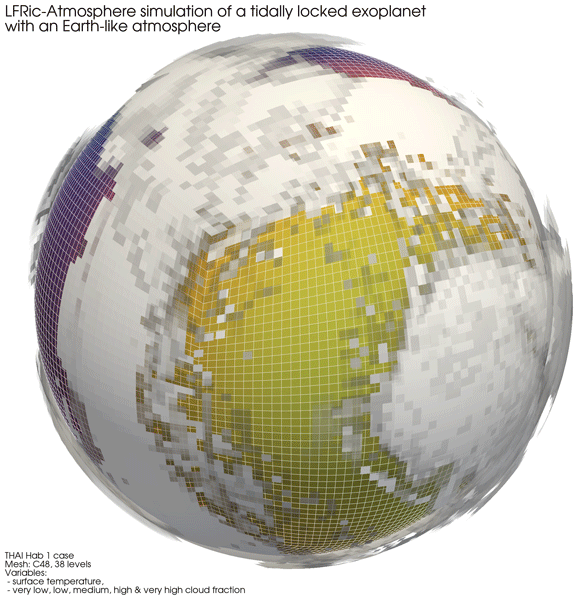
Three-dimensional climate models are one of the best tools we have to study planetary atmospheres. Here, we apply LFRic-Atmosphere, a new model developed by the Met Office, to seven different scenarios for terrestrial planetary climates, including four for the exoplanet TRAPPIST-1e, a primary target for future observations. LFRic-Atmosphere reproduces these scenarios within the spread of the existing models across a range of key climatic variables, justifying its use in future exoplanet studies.
Danny McCulloch, Denis E. Sergeev, Nathan Mayne, Matthew Bate, James Manners, Ian Boutle, Benjamin Drummond, and Kristzian Kohary
Geosci. Model Dev., 16, 621–657, https://doi.org/10.5194/gmd-16-621-2023, https://doi.org/10.5194/gmd-16-621-2023, 2023
Short summary
Short summary
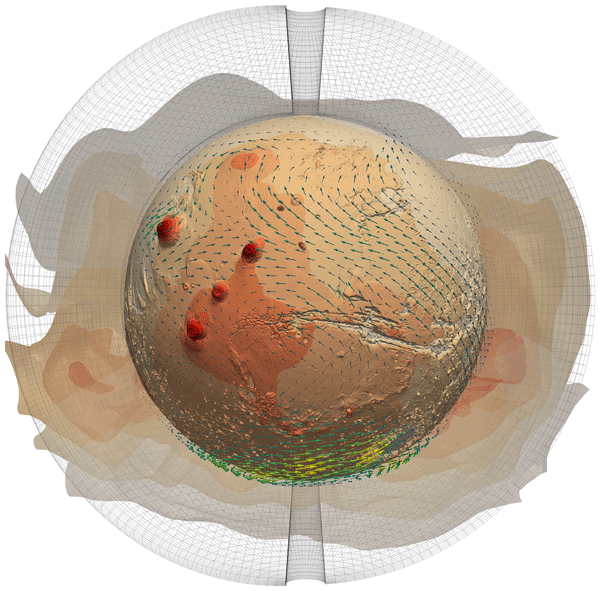
We present results from the Met Office Unified Model (UM) to study the dry Martian climate. We describe our model set-up conditions and run two scenarios, with radiatively active/inactive dust. We compare both scenarios to results from an existing Mars climate model, the planetary climate model. We find good agreement in winds and air temperatures, but dust amounts differ between models. This study highlights the importance of using the UM for future Mars research.
Cited articles
Adams, S., Ford, R., Hambley, M., Hobson, J., Kavčič, I., Maynard, C., Melvin, T., Müller, E., Mullerworth, S., Porter, A., Rezny, M., Shipway, B., and Wong, R.: LFRic: Meeting the challenges of scalability and performance portability in Weather and Climate models, J. Parall. Distrib. Comput., 132, 383–396, https://doi.org/10.1016/j.jpdc.2019.02.007, 2019. a
Adams, S., Manners, J., Mayne, N., Mak, M. T., and Hébrard, E.: Benchmarking Photolysis Rates, Zenodo [code and data set], https://doi.org/10.5281/zenodo.15941222, 2025. a
Akimoto, H.: Atmospheric reaction chemistry, Springer, https://doi.org/10.1007/978-4-431-55870-5, 2016. a, b, c
Amundsen, D. S., Baraffe, I., Tremblin, P., Manners, J., Hayek, W., Mayne, N. J., and Acreman, D. M.: Accuracy tests of radiation schemes used in hot Jupiter global circulation models, Astron. Astrophys., 564, A59, https://doi.org/10.1051/0004-6361/201323169, 2014. a
Anglada-Escudé, G., Amado, P. J., Barnes, J., Berdiñas, Z. M., Butler, R. P., Coleman, G. A. L., de La Cueva, I., Dreizler, S., Endl, M., Giesers, B., Jeffers, S. V., Jenkins, J. S., Jones, H. R. A., Kiraga, M., Kürster, M., López-González, M. J., Marvin, C. J., Morales, N., Morin, J., Nelson, R. P., Ortiz, J. L., Ofir, A., Paardekooper, S.-J., Reiners, A., Rodríguez, E., Rodríguez-López, C., Sarmiento, L. F., Strachan, J. P., Tsapras, Y., Tuomi, M., and Zechmeister, M.: A terrestrial planet candidate in a temperate orbit around Proxima Centauri, Nature, 536, 437–440, https://doi.org/10.1038/nature19106, 2016. a, b
Archibald, A. T., O'Connor, F. M., Abraham, N. L., Archer-Nicholls, S., Chipperfield, M. P., Dalvi, M., Folberth, G. A., Dennison, F., Dhomse, S. S., Griffiths, P. T., Hardacre, C., Hewitt, A. J., Hill, R. S., Johnson, C. E., Keeble, J., Köhler, M. O., Morgenstern, O., Mulcahy, J. P., Ordóñez, C., Pope, R. J., Rumbold, S. T., Russo, M. R., Savage, N. H., Sellar, A., Stringer, M., Turnock, S. T., Wild, O., and Zeng, G.: Description and evaluation of the UKCA stratosphere–troposphere chemistry scheme (StratTrop vn 1.0) implemented in UKESM1, Geosci. Model Dev., 13, 1223–1266, https://doi.org/10.5194/gmd-13-1223-2020, 2020. a
Arney, G., Domagal-Goldman, S. D., Meadows, V. S., Wolf, E. T., Schwieterman, E., Charnay, B., Claire, M., Hébrard, E., and Trainer, M. G.: The pale orange dot: the spectrum and habitability of hazy Archean Earth, Astrobiology, 16, 873–899, https://doi.org/10.1089/ast.2015.1422, 2016. a
Atkinson, R., Baulch, D. L., Cox, R. A., Crowley, J. N., Hampson, R. F., Hynes, R. G., Jenkin, M. E., Rossi, M. J., and Troe, J.: Evaluated kinetic and photochemical data for atmospheric chemistry: Volume I-gas phase reactions of Ox, HOx, NOx and SOx species, Atmos. Chem. Phys., 4, 1461–1738, https://doi.org/10.5194/acp-4-1461-2004, 2004. a, b, c
Au, J. W. and Brion, C.: Absolute oscillator strenghts for the valence-shell photoabsorption (2–200 eV) and the molecular and dissociative photoionization (11–80 eV) of nitrogen dioxide, Chem. Phys., 218, 109–126, https://doi.org/10.1016/S0301-0104(97)00065-7, 1997. a
Bass, A. M., Ledford Jr., A. E., and Laufer, A. H.: Extinction coefficients of NO2 and N2O4, J. Res. Natl. Bureau Standard. Sect. A, 80, 143, https://doi.org/10.6028/jres.080A.017, 1976. a
Bednarz, E. M., Maycock, A. C., Telford, P. J., Braesicke, P., Abraham, N. L., and Pyle, J. A.: Simulating the atmospheric response to the 11-year solar cycle forcing with the UM-UKCA model: the role of detection method and natural variability, Atmos. Chem. Phys., 19, 5209–5233, https://doi.org/10.5194/acp-19-5209-2019, 2019. a
Bhongade, A., Marsh, D. R., Sainsbury-Martinez, F., and Cooke, G.: Asymmetries in the Simulated Ozone Distribution on TRAPPIST-1e due to Orography, Astrophys. J., 977, 96, https://doi.org/10.3847/1538-4357/ad8f2f, 2024. a
Bian, H. and Prather, M. J.: Fast-J2: Accurate simulation of stratospheric photolysis in global chemical models, J. Atmos. Chem., 41, 281–296, https://doi.org/10.1023/A:1014980619462, 2002. a, b, c, d
Blitz, M., Heard, D., Pilling, M., Arnold, S., and Chipperfield, M.: Pressure and temperature-dependent quantum yields for the photodissociation of acetone between 279 and 327.5 nm, Geophys. Res. Lett., 31, https://doi.org/10.1029/2003GL018793, 2004. a
Boutle, I. A., Mayne, N. J., Drummond, B., Manners, J., Goyal, J., Lambert, F. H., Acreman, D. M., and Earnshaw, P. D.: Exploring the climate of Proxima b with the Met Office Unified Model, Astron. Astrophys., 601, A120, https://doi.org/10.1051/0004-6361/201630020, 2017. a
Braam, M., Palmer, P. I., Decin, L., Ridgway, R. J., Zamyatina, M., Mayne, N. J., Sergeev, D. E., and Abraham, N. L.: Lightning-induced chemistry on tidally-locked Earth-like exoplanets, Mon. Notic. Roy. Astron. Soc., 517, 2383–2402, https://doi.org/10.1093/mnras/stac2722, 2022. a, b, c
Braam, M., Palmer, P. I., Decin, L., Mayne, N. J., Manners, J., and Rugheimer, S.: Earth-like exoplanets in spin-orbit resonances: climate dynamics, 3D atmospheric chemistry, and observational signatures, arXiv [preprint], arXiv:2410.19108, https://doi.org/10.3847/PSJ/ad9565, 2024. a
Brion, J., Chakir, A., Charbonnier, J., Daumont, D., Parisse, C., and Malicet, J.: Absorption spectra measurements for the ozone molecule in the 350–830 nm region, J. Atmos. Chem., 30, 291–299, https://doi.org/10.1023/A:1006036924364, 1998. a, b
Burkholder, J., Sander, S., Abbatt, J., Barker, J., Cappa, C., Crounse, J., Dibble, T., Huie, R., Kolb, C., and Kurylo, M.: Chemical Kinetics and Photochemical Data for Use in Atmospheric Studies; Evaluation Number 19, Tech. rep., JPL Publication 19-5, Jet Propulsion Laboratory, Pasadena, http://jpldataeval.jpl.nasa.gov (last access: 3 August 2025), 2020. a, b, c, d, e, f, g, h, i, j, k, l, m, n, o, p, q, r, s, t, u, v, w, x, y, z, aa, ab, ac, ad, ae, af, ag, ah, ai, aj, ak, al
Burkholder, J. B., Talukdar, R. K., Ravishankara, A., and Solomon, S.: Temperature dependence of the HNO3 UV absorption cross sections, J. Geophys. Res.-Atmos., 98, 22937–22948, https://doi.org/10.1029/93JD02178, 1993. a, b, c, d
Burrows, J. P., Richter, A., Dehn, A., Deters, B., Himmelmann, S., Voigt, S., and Orphal, J.: Atmospheric remote-sensing reference data from GOME–2. Temperature-dependent absorption cross sections of O3 in the 231–794 nm range, J. Quant. Spectrosc. Ra., 61, 509–517, https://doi.org/10.1016/S0022-4073(98)00037-5, 1999. a
Chan, W., Cooper, G., and Brion, C.: The electronic spectrum of water in the discrete and continuum regions. Absolute optical oscillator strengths for photoabsorption (6–200 eV), Chem. Phys., 178, 387–400, https://doi.org/10.1016/0301-0104(93)85078-M, 1993. a
Chan, W., Cooper, G., and Brion, C.: Discrete and continuum photoabsorption oscillator strengths for the electronic spectrum of nitrous oxide (5.5–203 eV), Chem. Phys., 180, 77–88, https://doi.org/10.1016/0301-0104(93)E0386-A, 1994. a
Chang, W., Cooper, G., and Brion, C.: Absolute optical oscillator strengths for the photoabsorption of nitric oxide (5–30 eV) at high resolution, Chem. Phys., 170, 111–121, https://doi.org/10.1016/0301-0104(93)80097-S, 1993. a
Chen, H., Wolf, E. T., Zhan, Z., and Horton, D. E.: Habitability and spectroscopic observability of warm M-dwarf exoplanets evaluated with a 3D chemistry-climate model, Astrophys. J., 886, 16, https://doi.org/10.3847/1538-4357/ab4f7e, 2019. a
Chipperfield, M., Kinnison, D., Eyring, V., Shepherd, T., and Waugh, D.: CCMVal-2 report on the evaluation of chemistry-climate models – Chapter 6, Stratospheric Chemistry, SPARC Report on the Evaluation of Chemistry-Climate Models, https://aparc-climate.org/publications/sparc-report-no-5/ (last access: 3 August 2025), 2010. a, b, c, d, e, f
Chipperfield, M., Liang, Q., Engel, A., Newman, P., Ko, M., Reimann, S., Strahan, S., Atlas, E., Burkholder, J., and Plumb, R.: SPARC, 2013: SPARC Report on the Lifetimes of Stratospheric Ozone-Deleting Substances, Their Replacements, and Related Species – Chapter 5: Model Estimates of Lifetimes, WCRP-15, 6 pp., https://aparc-climate.org/publications/sparc-report-no-6/ (last access: 9 August 2025), 2013. a
Christie, D., Mayne, N., Gillard, R., Manners, J., Hébrard, E., Lines, S., and Kohary, K.: The impact of phase equilibrium cloud models on GCM simulations of GJ 1214b, Mon. Notic. Roy. Astron. Soc., 517, 1407–1421, https://doi.org/10.1093/mnras/stac2763, 2022. a
Cook, G. R., Metzger, P. H., and Ogawa, M.: Photoionization and Absorption Coefficients of N2O, J. Opt. Soc. Am., 58, 129–136, https://doi.org/10.1364/JOSA.58.000129, 1968. a
Cooke, G., Marsh, D., Walsh, C., and Youngblood, A.: Degenerate Interpretations of O3 Spectral Features in Exoplanet Atmosphere Observations Due to Stellar UV Uncertainties: A 3D Case Study with TRAPPIST-1 e, Astrophys. J., 959, 45, https://doi.org/10.3847/1538-4357/ad0381, 2023. a
Cooper, G., Anderson, J. E., and Brion, C.: Absolute photoabsorption and photoionization of formaldehyde in the VUV and soft X-ray regions (3–200 eV), Chemi. Phys., 209, 61–77, https://doi.org/10.1016/0301-0104(96)00079-1, 1996. a
Drummond, B., Tremblin, P., Baraffe, I., Amundsen, D. S., Mayne, N. J., Venot, O., and Goyal, J.: The effects of consistent chemical kinetics calculations on the pressure-temperature profiles and emission spectra of hot Jupiters, Astron. Astrophys., 594, A69, https://doi.org/10.1051/0004-6361/201628799, 2016. a
Eager-Nash, J. K., Mayne, N. J., Nicholson, A. E., Prins, J. E., Young, O. C., Daines, S. J., Sergeev, D. E., Lambert, F. H., Manners, J., Boutle, I. A., Wolf, E. T., Kamp, I. E., Kohary, K., and Lenton, T. M.: 3D climate simulations of the Archean find that methane has a strong cooling effect at high concentrations, J. Geophys. Res.-Atmos., 128, e2022JD037544, https://doi.org/10.1029/2022JD037544, 2023. a, b
Eager-Nash, J. K., Daines, S. J., McDermott, J. W., Andrews, P., Grain, L. A., Bishop, J., Rogers, A. A., Smith, J. W. G., Khalek, C., Boxer, T. J., Mak, M. T., Ridgway, R. J., Hébrard, E., Lambert, F. H., Lenton, T. M., and Mayne, N. J.: Simulating biosignatures from pre-oxygen photosynthesizing life on TRAPPIST-1e, Mon. Notic. Roy. Astron. Soc., 531, 468–494, https://doi.org/10.1093/mnras/stae1142, 2024. a, b
Edwards, J. and Slingo, A.: Studies with a flexible new radiation code. I: Choosing a configuration for a large-scale model, Q. J. Roy. Meteorol. Soc., 122, 689–719, https://doi.org/10.1002/qj.49712253107, 1996. a
Fally, S., Vandaele, A. C., Carleer, M., Hermans, C., Jenouvrier, A., Mérienne, M.-F., Coquart, B., and Colin, R.: Fourier transform spectroscopy of the O2 Herzberg bands. III. Absorption cross sections of the collision-induced bands and of the Herzberg continuum, J. Molec. Spectrosc., 204, 10–20, https://doi.org/10.1006/jmsp.2000.8204, 2000. a
Fennelly, J. and Torr, D.: Photoionization and photoabsorption cross sections of O, N2, O2, and N for aeronomic calculations, Atom. Data Nucl. Data Tabl., 51, 321–363, https://doi.org/10.1016/0092-640X(92)90004-2, 1992. a, b, c
Fillion, J.-H., Ruiz, J., Yang, X.-F., Castillejo, M., Rostas, F., and Lemaire, J.-L.: High resolution photoabsorption and photofragment fluorescence spectroscopy of water between 10.9 and 12 eV, J. Chem. Phys., 120, 6531–6541, https://doi.org/10.1063/1.1652566, 2004. a
France, K., Loyd, R. P., Youngblood, A., Brown, A., Schneider, P. C., Hawley, S. L., Froning, C. S., Linsky, J. L., Roberge, A., Buccino, A. P., Davenport, J. R., Fontenla, J. M., Kaltenegger, L., Kowalski, A. F., Mauas, P. J., Miguel, Y., Redfield, S., Rugheimer, S., Tian, F., Vieytes, M. C., Walkowicz, L. M., and Weisenburger, K. L.: The MUSCLES treasury survey. I. Motivation and overview, Astrophys. J., 820, 89, https://doi.org/10.3847/0004-637X/820/2/89, 2016. a, b
Gierczak, T., Burkholder, J. B., Bauerle, S., and Ravishankara, A.: Photochemistry of acetone under tropospheric conditions, Chem. Phys., 231, 229–244, https://doi.org/10.1016/S0301-0104(98)00006-8, 1998. a
Gordon, I. E., Rothman, L. S., Hargreaves, R., Hashemi, R., Karlovets, E. V., Skinner, F., Conway, E. K., Hill, C., Kochanov, R. V., and Tan, Y.: The HITRAN2020 molecular spectroscopic database, J. Quant. Spectrosc. Ra., 277, 107949, https://doi.org/10.1016/j.jqsrt.2021.107949, 2022. a, b, c, d
Harwood, M., Jones, R., Cox, R., Lutman, E., and Rattigan, O.: Temperature-dependent absorption cross-sections of N2O5, J. Photochem. Photobiol. A, 73, 167–175, https://doi.org/10.1016/1010-6030(93)90001-2, 1993. a, b
Harwood, M. H., Burkholder, J. B., and Ravishankara, A.: Photodissociation of BrONO2 and N2O5: Quantum yields for NO3 production at 248, 308, and 352.5 nm, J. Phys. Chem. A, 102, 1309–1317, https://doi.org/10.1021/jp9729829, 1998. a
Henke, B. L., Gullikson, E. M., and Davis, J. C.: X-ray interactions: photoabsorption, scattering, transmission, and reflection at E=50–30,000 eV, Z=1–92, Atom. Data Nucl. Data Tabl., 54, 181–342, https://doi.org/10.1006/adnd.1993.1013, 1993. a
Hubrich, C. and Stuhl, F.: The ultraviolet absorption of some halogenated methanes and ethanes of atmospheric interest, J. Photochem., 12, 93–107, https://doi.org/10.1016/0047-2670(80)85031-3, 1980. a, b
Iida, Y., Carnovale, F., Daviel, S., and Brion, C.: Absolute oscillator strengths for photoabsorption and the molecular and dissociative photoionization of nitric oxide, Chem. Phys., 105, 211–225, https://doi.org/10.1016/0301-0104(86)80070-2, 1986. a
Jackson, D. R., Bruinsma, S., Negrin, S., Stolle, C., Budd, C. J., Gonzalez, R. D., Down, E., Griffin, D. J., Griffith, M. J., Kervalishvili, G., Lubián Arenillas, D., Manners, J., Matzka, J., Shprits, Y. Y., Vasile, R., and Zhelavskaya, I. S.: The space weather atmosphere models and indices (SWAMI) project: Overview and first results, J. Space Weather Space Clim., 10, 18, https://doi.org/10.1051/swsc/2020019, 2020. a, b
Kahan, T. F., Washenfelder, R. A., Vaida, V., and Brown, S. S.: Cavity-Enhanced Measurements of Hydrogen Peroxide Absorption Cross Sections from 353 to 410 nm, J. Phys. Chem. A, 116, 5941–5947, https://doi.org/10.1021/jp2104616, 2012. a, b
Keller-Rudek, H., Moortgat, G. K., Sander, R., and Sörensen, R.: The MPI-Mainz UV/VIS spectral atlas of gaseous molecules of atmospheric interest, Earth Syst. Sci. Data, 5, 365–373, https://doi.org/10.5194/essd-5-365-2013, 2013. a, b, c, d
Kenner, R., Rohrer, F., and Stuhl, F.: OH (A) production in the 193-nm photolysis of HONO, J. Phys. Chem., 90, https://doi.org/10.1021/j100403a015, 1986. a
Lacoursiere, J., Meyer, S., Faris, G., Slanger, T., Lewis, B., and Gibson, S.: The O (1D) yield from O2 photodissociation near H Lyman-α (121.6 nm), J. Chem. Phys., 110, 1949–1958, https://doi.org/10.1063/1.477852, 1999. a, b
Linsky, J. L. and Redfield, S.: Inferring Intrinsic Stellar EUV and Lyman-Alpha Fluxes and Their Effects on Exoplanet Atmospheres, Space Sci. Rev., 220, 32, https://doi.org/10.1007/s11214-024-01064-3, 2024. a
Loyd, R. P., France, K., Youngblood, A., Schneider, C., Brown, A., Hu, R., Linsky, J., Froning, C. S., Redfield, S., Rugheimer, S., and Tian, F.: The MUSCLES Treasury Survey. III. X-ray to infrared spectra of 11 M and K stars hosting planets, Astrophys. J., 824, 102, https://doi.org/10.3847/0004-637X/824/2/102, 2016. a, b
Lu, H.-C., Chen, H.-K., Chen, H.-F., Cheng, B.-M., and Ogilvie, J.: Absorption cross section of molecular oxygen in the transition
Mak, M., Mayne, N., Sergeev, D., Manners, J., Eager-Nash, J., Arney, G., Hébrard, E., and Kohary, K.: 3D simulations of the Archean Earth including photochemical haze profiles, J. Geophys. Res.-Atmos., 128, e2023JD039343, https://doi.org/10.1029/2023JD039343, 2023. a, b, c
Mak, M. T., Sergeev, D. E., Mayne, N., Banks, N., Eager-Nash, J., Manners, J., Arney, G., Hébrard, É., and Kohary, K.: 3D simulations of TRAPPIST-1e with varying CO2, CH4, and haze profiles, Mon. Notic. Roy. Astron. Soc., 529, 3971–3987, https://doi.org/10.1093/mnras/stae741, 2024. a
Malicet, J., Daumont, D., Charbonnier, J., Parisse, C., Chakir, A., and Brion, J.: Ozone UV spectroscopy. II. Absorption cross-sections and temperature dependence, J. Atmos. Chem., 21, 263–273, https://doi.org/10.1007/BF00696758, 1995. a
Manners, J.: A fast and flexible scheme for photolysis and radiative heating of the whole atmosphere, in: AIP Conference Proceedings, vol. 2988, AIP Publishing, https://doi.org/10.1063/5.0185476, 2024. a, b, c
Manners, J., Edwards, J. M., Hill, P., and Thelen, J.-C.: Socrates Technical Guide: Suite Of Community RAdiative Transfer codes based on Edwards and Slingo, Tech. rep., Met Office, Exeter, UK, https://github.com/MetOffice/socrates/releases/download/um13.7/socrates_techguide.pdf (last access: 18 July 2025), 2024. a
Mason, N., Gingell, J., Davies, J., Zhao, H., Walker, I., and Siggel, M.: VUV optical absorption and electron energy-loss spectroscopy of ozone, J. Phys. B, 29, 3075, https://doi.org/10.1088/0953-4075/29/14/019, 1996. a
Matsumi, Y., Comes, F., Hancock, G., Hofzumahaus, A., Hynes, A., Kawasaki, M., and Ravishankara, A.: Quantum yields for production of O (1D) in the ultraviolet photolysis of ozone: Recommendation based on evaluation of laboratory data, J. Geophys. Res.-Atmos., 107, ACH-1, https://doi.org/10.1029/2001JD000510, 2002. a, b, c
Matsunaga, F. and Watanabe, K.: Total and photoionization coefficients and dissociation continua of O2 in the 580–1070 Åregion, Sci. Light, 16, 31–42, 1967. a
Matthes, K., Funke, B., Andersson, M. E., Barnard, L., Beer, J., Charbonneau, P., Clilverd, M. A., Dudok de Wit, T., Haberreiter, M., Hendry, A., Jackman, C. H., Kretzschmar, M., Kruschke, T., Kunze, M., Langematz, U., Marsh, D. R., Mayock, A. C., Misios, S., Rodger, C. J., Scaife, A. A., Seppälä, A., Shangguan, M., Sinnhuber, M., Tourpali, K., Usoskin, I., van de Kamp, M., Verronen, P. T., and Versick, S.: Solar forcing for CMIP6 (v3.2), Geosci. Model Dev., 10, 2247–2302, https://doi.org/10.5194/gmd-10-2247-2017, 2017. a
Mayor, E., Velasco, A., and Martin, I.: Photodissociation of the δ(0,0) and δ(1,0) bands of nitric oxide in the stratosphere and the mesosphere: A molecular-adapted quantum defect orbital calculation of photolysis rate constants, J. Geophys. Res.-Atmos., 112, https://doi.org/10.1029/2007JD008643, 2007. a
McCulloch, D., Sergeev, D. E., Mayne, N., Bate, M., Manners, J., Boutle, I., Drummond, B., and Kohary, K.: A modern-day Mars climate in the Met Office Unified Model: dry simulations, Geosci. Model Dev., 16, 621–657, https://doi.org/10.5194/gmd-16-621-2023, 2023. a
Meller, R. and Moortgat, G. K.: Temperature dependence of the absorption cross sections of formaldehyde between 223 and 323 K in the wavelength range 225–375 nm, J. Geophys. Res.-Atmos., 105, 7089–7101, https://doi.org/10.1029/1999JD901074, 2000. a
Merienne, M., Jenouvrier, A., and Coquart, B.: The NO2 absorption spectrum. I: Absorption cross-sections at ambient temperature in the 300–500 nm region, J. Atmos. Chem., 20, 281–297, https://doi.org/10.1007/BF00694498, 1995. a
Molina, L. and Molina, M.: Absolute absorption cross sections of ozone in the 185-to 350-nm wavelength range, J. Geophys. Res.-Atmos., 91, 14501–14508, https://doi.org/10.1029/JD091iD13p14501, 1986. a
Mota, R., Parafita, R., Giuliani, A., Hubin-Franskin, M.-J., Lourenco, J., Garcia, G., Hoffmann, S., Mason, N., Ribeiro, P., Raposo, M., and Limão-Vieira, P.: Water VUV electronic state spectroscopy by synchrotron radiation, Chem. Phys. Lett., 416, 152–159, https://doi.org/10.1016/j.cplett.2005.09.073, 2005. a
Mynard, A., Kent, J., Smith, E. R., Wilson, A., Wivell, K., Nelson, N., Hort, M., Bowles, J., Tiddeman, D., Langridge, J. M., Drummond, B., and Steven, A. J.: Long-term airborne measurements of pollutants over the United Kingdom to support air quality model development and evaluation, Atmos. Meas. Tech., 16, 4229–4261, https://doi.org/10.5194/amt-16-4229-2023, 2023. a
Nee, J. B., Yang, J. C., Lee, P. C., Wang, X. Y., and Kuo, C. T.: Photoabsorption cross sections of N2O in 100–220 nm, Chinese J. Phys., 172–180, https://doi.org/10.6122/CJP, 1999. a
Neu, J. L., Prather, M. J., and Penner, J. E.: Global atmospheric chemistry: Integrating over fractional cloud cover, J. Geophys. Res.-Atmos., 112, https://doi.org/10.1029/2006JD008007, 2007. a, b
Ni, Q., Hill, C., Yurchenko, S., Pezzella, M., Fateev, A., Qin, Z., Venot, O., and Tennyson, J.: ExoPhoto: A database of temperature dependent photodissociation cross sections, RAS Tech. Instr., https://doi.org/10.1093/rasti/rzaf020, 2025. a
Nicovich, J. M. and Wine, P. H.: Temperature-dependent absorption cross sections for hydrogen peroxide vapor, J. Geophys. Res.-Atmos., 93, 2417–2421, https://doi.org/10.1029/JD093iD03p02417, 1988. a, b
Ogawa, S. and Ogawa, M.: Absorption Cross Sections of O2 (a1Δg) and O2 (X3Σg−) in the Region from 1087 to 1700 Å, Can. J. Phys., 53, 1845–1852, https://doi.org/10.1139/p75-236, 1975. a
Osborne, B. A., Marston, G., Kaminski, L., Jones, N. C., Gingell, J. M., Mason, N., Walker, I. C., Delwiche, J., and Hubin-Franskin, M.-J.: Vacuum ultraviolet spectrum of dinitrogen pentoxide, J. Quant. Spectrosc. Ra., 64, 67–74, https://doi.org/10.1016/S0022-4073(99)00104-1, 2000. a, b
Pincus, R., Buehler, S. A., Brath, M., Crevoisier, C., Jamil, O., Franklin Evans, K., Manners, J., Menzel, R. L., Mlawer, E. J., Paynter, D., Pernak, R. L., and Tellier, Y.: Benchmark calculations of radiative forcing by greenhouse gases, J. Geophys. Res.-Atmos., 125, e2020JD033483, https://doi.org/10.1029/2020JD033483, 2020. a
Prather, M.: Solution of the inhomogeneous Rayleigh scattering atmosphere, Astrophys. J., 192, 787, https://doi.org/10.1086/153117, 1974. a, b
Rabalais, J. W., McDonald, J. M., Scherr, V., and McGlynn, S. P.: Electronic spectroscopy of isoelectronic molecules. II. Linear triatomic groupings containing sixteen valence electrons, Chem. Rev., 73–108, https://doi.org/10.1021/cr60269a004, 1971. a
Ranjan, S., Wordsworth, R., and Sasselov, D. D.: The surface UV environment on planets orbiting M dwarfs: implications for prebiotic chemistry and the need for experimental follow-up, Astrophys. J., 843, 110, https://doi.org/10.3847/1538-4357/aa773e, 2017. a
Ranjan, S., Schwieterman, E. W., Harman, C., Fateev, A., Sousa-Silva, C., Seager, S., and Hu, R.: Photochemistry of anoxic abiotic habitable planet atmospheres: impact of new H2O cross sections, Astrophys. J., 896, 148, https://doi.org/10.3847/1538-4357/ab9363, 2020. a
Ribas, I., Gregg, M. D., Boyajian, T. S., and Bolmont, E.: The full spectral radiative properties of Proxima Centauri, Astron. Astrophys., 603, A58, https://doi.org/10.1063/5.0185476, 2017. a, b
Rimmer, P. B., Xu, J., Thompson, S. J., Gillen, E., Sutherland, J. D., and Queloz, D.: The origin of RNA precursors on exoplanets, Sci. Adv., 4, eaar3302, https://doi.org/10.1126/sciadv.aar3302, 2018. a
Rimmer, P. B., Thompson, S. J., Xu, J., Russell, D. A., Green, N. J., Ritson, D. J., Sutherland, J. D., and Queloz, D. P.: Timescales for prebiotic photochemistry under realistic surface ultraviolet conditions, Astrobiology, 21, 1099–1120, https://doi.org/10.1089/ast.2020.2335, 2021. a
Sander, S., Friedl, R., Golden, D., Kurylo, M., Moortgat, G., Wine, P., Ravishankara, A., Kolb, C., Molina, M., and Finlayson-Pitts, B.: Chemical Kinetics and Photochemical Data for Use in Atmospheric Studies; Evaluation Number 15, Tech. rep., JPL Publication 06-2, Jet Propulsion Laboratory, Pasadena, http://jpldataeval.jpl.nasa.gov (last access: 24 July 2025), 2006. a
Sander, S., Abbatt, J., Barker, J., Burkholder, J., Friedl, R., Golden, D., Huie, R., Kolb, C., Kurylo, M., Moortgat, G., Orkin, V., and Wine, P.: Chemical Kinetics and Photochemical Data for Use in Atmospheric Studies; Evaluation Number 17, Tech. rep., JPL Publication 10-6, Jet Propulsion Laboratory, Pasadena, http://jpldataeval.jpl.nasa.gov (last access: 1 August 2025), 2011. a
Sander, S. P.: Temperature dependence of the nitrogen trioxide absorption spectrum, J. Phys. Chem., 90, 4135–4142, https://doi.org/10.1021/j100408a060, 1986. a
Savage, N., Agnew, P., Davis, L., Ordóñez, C., Thorpe, R., Johnson, C., O'Connor, F., and Dalvi, M.: Air quality modelling using the Met Office Unified Model (AQUM OS24-26): model description and initial evaluation, Geosci. Model Dev., 6, 353–372, https://doi.org/10.5194/gmd-6-353-2013, 2013. a
Selwyn, G., Podolske, J., and Johnston, H. S.: Nitrous oxide ultraviolet absorption spectrum at stratospheric temperatures, Geophys. Res. Lett., 4, 427–430, https://doi.org/10.1029/GL004i010p00427, 1977. a, b
Showman, A. P. and Guillot, T.: Atmospheric Circulation and Tides of “51Peg b-like” Planets, arXiv [preprint], https://doi.org/10.48550/arXiv.astro-ph/0202236, 2002. a
Solomon, S. C. and Qian, L.: Solar extreme-ultraviolet irradiance for general circulation models, J. Geophys. Res.-Space, 110, https://doi.org/10.1029/2005JA011160, 2005. a, b, c, d
Stutz, J., Kim, E., Platt, U., Bruno, P., Perrino, C., and Febo, A.: UV-visible absorption cross sections of nitrous acid, J. Geophys. Res.-Atmos., 105, 14585–14592, https://doi.org/10.1029/2000JD900003, 2000. a, b, c
Suto, M. and Lee, L.: OH(
Suto, M. and Lee, L.: Photoabsorption and photodissociation of HONO2 in the 105–220 nm region, J. Chem. Phys., 81, 1294–1297, https://doi.org/10.1063/1.447816, 1984. a
Suto, M., Wang, X., and Lee, L.: Fluorescence from VUV excitation of formaldehyde, J. Chem. Phys., 85, 4228–4233, https://doi.org/10.1063/1.451793, 1986. a
Talukdar, R., Burkholder, J., Gilles, M., Roberts, J., and Ravishankara, A. R.: Atmospheric fate of several alkyl nitrates Part 2UV absorption cross-sections and photodissociation quantum yields, J. Chem. Soc., Faraday Transact., 93, 2797–2805, https://doi.org/10.1039/A701781B, 1997. a
Talukdar, R. K., Burkholder, J. B., Schmoltner, A.-M., Roberts, J. M., Wilson, R. R., and Ravishankara, A.: Investigation of the loss processes for peroxyacetyl nitrate in the atmosphere: UV photolysis and reaction with OH, J. Geophys. Res.-Atmos., 100, 14163–14173, https://doi.org/10.1029/95JD00545, 1995. a
Taylor, W., Allston, T., Moscato, M., Fazekas, G., Kozlowski, R., and Takacs, G.: Atmospheric photodissociation lifetimes for nitromethane, methyl nitrite, and methyl nitrate, Int. J. Chem. Kinet., 12, 231–240, https://doi.org/10.1002/kin.550120404, 1980. a
Telford, P., Abraham, N., Archibald, A., Braesicke, P., Dalvi, M., Morgenstern, O., O'Connor, F., Richards, N., and Pyle, J.: Implementation of the Fast-JX Photolysis scheme (v6.4) into the UKCA component of the MetUM chemistry-climate model (v7.3), Geosci. Model Dev., 6, 161–177, https://doi.org/10.5194/gmd-6-161-2013, 2013. a
Tennyson, J., Yurchenko, S. N., Al-Refaie, A. F., Barton, E. J., Chubb, K. L., Coles, P. A., Diamantopoulou, S., Gorman, M. N., Hill, C., Lam, A. Z., Lodi, L., McKemmish, L. K., Yueqi, N., Owens, A., Polyanski, O. L., Rivlin, T., Sousa-Silva, C., Underwood, D. S., Yachmenev, A., and Zak, E.: The ExoMol database: Molecular line lists for exoplanet and other hot atmospheres, J. Molec. Spectrosc., 327, 73–94, https://doi.org/10.1016/j.jms.2016.05.002, 2016. a, b, c
Tuomi, M., Jones, H. R. A., Butler, R. P., Arriagada, P., Vogt, S. S., Burt, J., Laughlin, G., Holden, B., Shectman, S. A., Crane, J. D., Thompson, I., Keiser, S., Jenkins, J. S., Berdiñas, Z., Diaz, M., Kiraga, M., and Barnes, J. R.: Frequency of planets orbiting M dwarfs in the Solar neighbourhood, arXiv [preprint], arXiv:1906.04644, https://doi.org/10.48550/arXiv.1906.04644, 2019. a
Vandaele, A. C., Hermans, C., Simon, P. C., Carleer, M., Colin, R., Fally, S., Merienne, M.-F., Jenouvrier, A., and Coquart, B.: Measurements of the NO2 absorption cross-section from 42 000 cm−1 to 10 000 cm−1 (238–1000 nm) at 220 K and 294 K, J. Quant. Spectrosc. Ra., 59, 171–184, https://doi.org/10.1016/S0022-4073(97)00168-4, 1998. a, b
Venot, O., Bénilan, Y., Fray, N., Gazeau, M.-C., Lefèvre, F., Es-sebbar, E., Hébrard, E., Schwell, M., Bahrini, C., Montmessin, F., Lefèvre, M., and Waldman, I. P.: VUV-absorption cross section of carbon dioxide from 150 to 800 K and applications to warm exoplanetary atmospheres, Astron. Astrophys., 609, A34, https://doi.org/10.1051/0004-6361/201731295, 2018. a
Walters, D., Baran, A. J., Boutle, I., Brooks, M., Earnshaw, P., Edwards, J., Furtado, K., Hill, P., Lock, A., Manners, J., Morcrette, C., Mulcahy, J., Sanchez, C., Smith, C., Stratton, R., Tennant, W., Tomassini, L., Van Weverberg, K., Vosper, S., Willet, M., Browse, J., Bushell, A., Carslaw, K., Dalvi, M., Essery, R., Gedney, N., Hardiman, S., Johnson, B., Johnson, C., Jones, A., Mann, G., Milton, S., Rumbold, H., Sellar, A., Ujiie, M., Whitall, M., Williams, K., and Zerroukat, M.: The Met Office Unified Model global atmosphere 7.0/7.1 and JULES global land 7.0 configurations, Geosci. Model Dev., 12, 1909–1963, https://doi.org/10.5194/gmd-12-1909-2019, 2019. a
Watanabe, K. and Marmo, F.: Photoionization and total absorption cross section of gases. II. O2 and N2 in the region 850–1500 A, J. Chem. Phys., 25, 965–971, https://doi.org/10.1063/1.1743151, 1956. a
Wild, O. and Prather, M. J.: Excitation of the primary tropospheric chemical mode in a global three-dimensional model, J. Geophys. Res.-Atmos., 105, 24647–24660, https://doi.org/10.1029/2000JD900399, 2000. a, b, c, d
Wilson, D. J., Froning, C. S., Duvvuri, G. M., Youngblood, A., France, K., Brown, A., Schneider, P. C., Berta-Thompson, Z., Buccino, A. P., Linsky, J., Parke Loyd, R. O., Miguel, Y., Newton, E., Pineda, S., Redfield, S., Roberge, A., Rugheimer, S., and Vieyte, M. C.: The Mega-MUSCLES Treasury Survey: X-ray to infrared Spectral Energy Distributions of a representative sample of M dwarfs, Astrophys. J., 978, 85, https://doi.org/10.3847/1538-4357/ad9251, 2024. a
Wong, A., Yurchenko, S. N., Bernath, P., Müller, H. S., McConkey, S., and Tennyson, J.: Exomol line list – XXI. Nitric oxide (NO), Mon. Notic. Roy. Astron. Soc., 470, 882–897, https://doi.org/10.1093/mnras/stx1211, 2017. a, b
Yao, F., Wilson, I., and Johnston, H.: Temperature-dependent ultraviolet absorption spectrum for dinitrogen pentoxide, J. Phys. Chem., 86, 3611–3615, https://doi.org/10.1021/j100215a023, 1982. a
Yates, J. S., Palmer, P. I., Manners, J., Boutle, I., Kohary, K., Mayne, N., and Abraham, L.: Ozone chemistry on tidally locked M dwarf planets, Mon. Notic. Roy. Astron. Soc., 492, 1691–1705, https://doi.org/10.1093/mnras/stz3520, 2020. a
Yoshino, K., Esmond, J., Cheung, A.-C., Freeman, D., and Parkinson, W.: High resolution absorption cross sections in the transmission window region of the Schumann-Runge bands and Herzberg continuum of O2, Planet. Space Sci., 40, 185–192, https://doi.org/10.1016/0032-0633(92)90056-T, 1992. a, b, c
Youngblood, A., France, K., Loyd, R. P., Linsky, J. L., Redfield, S., Schneider, P. C., Wood, B. E., Brown, A., Froning, C., Miguel, Y., Rugheimer, S., and Walkowicz, L.: The MUSCLES Treasury Survey. II. Intrinsic Lyα and extreme ultraviolet spectra of K and M dwarfs with exoplanets, Astrophys. J., 824, 101, https://doi.org/10.3847/0004-637X/824/2/101, 2016. a, b
Zamyatina, M., Christie, D. A., Hébrard, E., Mayne, N. J., Radica, M., Taylor, J., Baskett, H., Moore, B., Lils, C., Sergeev, D. E., Ahrer, E.-M., Manners, J., Kohary, K., and Feinstein, A. D.: Quenching-driven equatorial depletion and limb asymmetries in hot Jupiter atmospheres: WASP-96b example, Mon. Notic. Roy. Astron. Soc., stae600, https://doi.org/10.1093/mnras/stae600, 2024. a, b
Zelikoff, M., Watanabe, K., and Inn, E. C. Y.: Absorption Coefficients of Gases in the Vacuum Ultraviolet. Part II. Nitrous Oxide, J. Chem. Phys., 21, 1643–1647, https://doi.org/10.1063/1.1698636, 1953. a, b
Short summary
We perform calculations of photolysis reactions using an existing model but including updated input data. These reactions are important in shaping the composition of our upper atmosphere and that of other planets, for example, controlling ozone formation and destruction. The results of our model are compared with those of previous benchmarks, and rates of various reactions provided to facilitate other researchers in developing accurate schemes to capture photolysis in planetary atmospheres.
We perform calculations of photolysis reactions using an existing model but including updated...


