Articles | Volume 19, issue 12
https://doi.org/10.5194/gmd-19-5237-2026
© Author(s) 2026. This work is distributed under
the Creative Commons Attribution 4.0 License.
https://doi.org/10.5194/gmd-19-5237-2026
© Author(s) 2026. This work is distributed under
the Creative Commons Attribution 4.0 License.
Application of flux footprint equations from Kljun et al. (2015) to field eddy-covariance systems for footprint characteristics into flux network datasets

Xinhua Zhou
Ker Laboratory, Qingyuan Forest CERN, National Observation and Research Station, Liaoning Province, Shenyang 110016, China
Global Science Program, Campbell Scientific Inc., Logan, UT 84321, USA
Zhi Chen
CORRESPONDING AUTHOR
Key Laboratory of Ecosystem Network Observation and Modeling, Institute of Geographic Sciences and Natural Resources Research, Chinese Academy of Sciences, Beijing 100101, China
Ryan Campbell
Global Science Program, Campbell Scientific Inc., Logan, UT 84321, USA
Atefeh Hosseini
Global Science Program, Campbell Scientific Inc., Logan, UT 84321, USA
Ker Laboratory, Qingyuan Forest CERN, National Observation and Research Station, Liaoning Province, Shenyang 110016, China
Qingyuan Forest CERN, National Observation and Research Station, Liaoning Province, Shenyang 110016, China
Xiufen Li
Department of Agricultural Meteorology, Shenyang Agricultural University, Shenyang 110866, China
Jianmin Chu
Experimental Center of Desert Forestry, Chinese Academy of Forestry, Dengkou 015200, China
Sen Wu
Shenzhen Zray-Co Technology Co. Ltd., Shenzhen 518133, China
Ning Zheng
Shenzhen Zray-Co Technology Co. Ltd., Shenzhen 518133, China
Jiaojun Zhu
Ker Laboratory, Qingyuan Forest CERN, National Observation and Research Station, Liaoning Province, Shenyang 110016, China
Qingyuan Forest CERN, National Observation and Research Station, Liaoning Province, Shenyang 110016, China
Related authors
Dexiong Teng, Jiaojun Zhu, Tian Gao, Fengyuan Yu, Yuan Zhu, Xinhua Zhou, and Bai Yang
Atmos. Meas. Tech., 17, 5581–5599, https://doi.org/10.5194/amt-17-5581-2024, https://doi.org/10.5194/amt-17-5581-2024, 2024
Short summary
Short summary
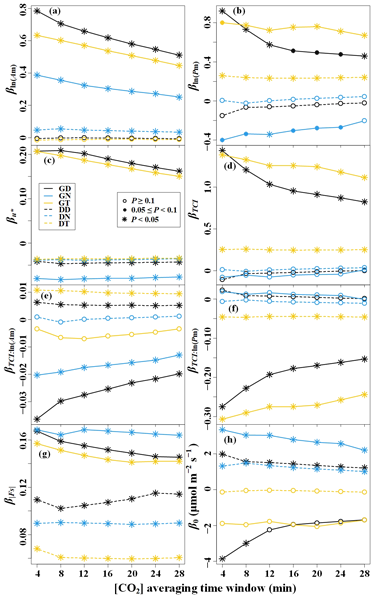
Dense canopy weakens turbulent mixing, leading to significant CO2 storage (Fs), a key part of net ecosystem exchange (NEE) measured using eddy covariance. Gust-biased Fs measurements complicate NEE estimation in forests with complex terrain. We analyzed gust-induced CO2 fluctuations and their impact on Fs. Fs and its contribution to NEE can be explained by terrain complexity and turbulent mixing. This work highlights how gusts over complex terrain affect the Fs and NEE measurements.
Xinhua Zhou, Tian Gao, Ning Zheng, Bai Yang, Yanlei Li, Fengyuan Yu, Tala Awada, and Jiaojun Zhu
Geosci. Instrum. Method. Data Syst., 11, 335–357, https://doi.org/10.5194/gi-11-335-2022, https://doi.org/10.5194/gi-11-335-2022, 2022
Short summary
Short summary
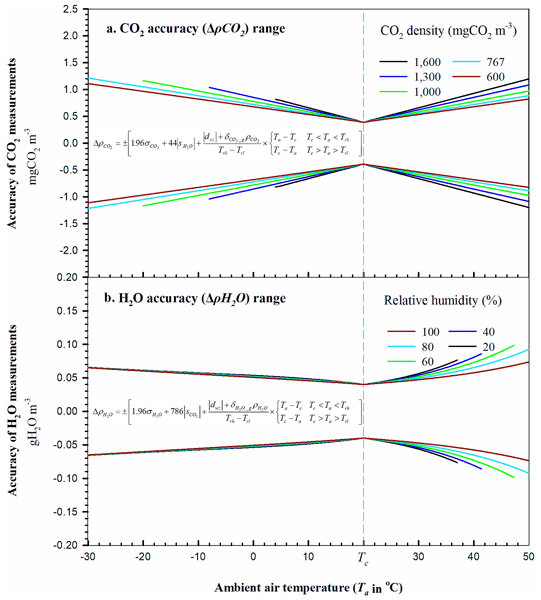
Overall accuracy of CO2/H2O data from open-path eddy-covariance systems is modeled for data analysis. The model is further formulated into CO2 and H2O accuracy equations for uses. Based on atmospheric physics and bio-environment, both equations are used to evaluate accuracy of ecosystem CO2/H2O data and, as rationales, to assess field CO2/H2O zero and span procedures for the systems. The procedures are assessed for measurement improvement. An impractical H2O span while cold is found unnecessary.
Xinhua Zhou, Tian Gao, Eugene S. Takle, Xiaojie Zhen, Andrew E. Suyker, Tala Awada, Jane Okalebo, and Jiaojun Zhu
Atmos. Meas. Tech., 15, 95–115, https://doi.org/10.5194/amt-15-95-2022, https://doi.org/10.5194/amt-15-95-2022, 2022
Short summary
Short summary
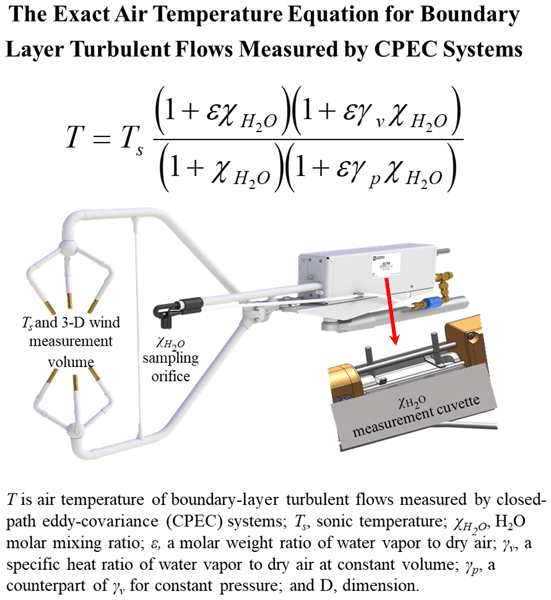
Air temperature from sonic temperature and air moisture has been used without an exact equation. We present an exact equation of such air temperature for closed-path eddy-covariance flux measurements. Air temperature from this equation is equivalent to sonic temperature in its accuracy and frequency response. It is a choice for advanced flux topics because, with it, thermodynamic variables in the flux measurements can be temporally synchronized and spatially matched at measurement scales.
Yu Liang, Tianxiao Ma, Bo Liu, Zhihua Liu, Hong S. He, Jian Yang, Yude Pan, Chao Yue, Xianli Wang, Mia Wu, Wenru Xu, and Jiaojun Zhu
EGUsphere, https://doi.org/10.5194/egusphere-2026-2906, https://doi.org/10.5194/egusphere-2026-2906, 2026
This preprint is open for discussion and under review for Biogeosciences (BG).
Short summary
Short summary
Wildfire CO2 emissions are a major but uncertain part of the global carbon cycle. We reviewed satellite emission datasets, fire-enabled models, future projections, and paleo-archives to assess global wildfire CO2 emissions from 1700 to 2100. Annual estimates differ by up to 40 % because of uncertainties in fire detection, fuel consumption, and emission factors. Tropical fires dominate global CO2 wildfire emissions, while extreme wildfire seasons increasingly shape year-to-year variability.
Dexiong Teng, Jiaojun Zhu, Tian Gao, Fengyuan Yu, Yuan Zhu, Xinhua Zhou, and Bai Yang
Atmos. Meas. Tech., 17, 5581–5599, https://doi.org/10.5194/amt-17-5581-2024, https://doi.org/10.5194/amt-17-5581-2024, 2024
Short summary
Short summary
Dense canopy weakens turbulent mixing, leading to significant CO2 storage (Fs), a key part of net ecosystem exchange (NEE) measured using eddy covariance. Gust-biased Fs measurements complicate NEE estimation in forests with complex terrain. We analyzed gust-induced CO2 fluctuations and their impact on Fs. Fs and its contribution to NEE can be explained by terrain complexity and turbulent mixing. This work highlights how gusts over complex terrain affect the Fs and NEE measurements.
Wei Zhang, Xunhua Zheng, Siqi Li, Shenghui Han, Chunyan Liu, Zhisheng Yao, Rui Wang, Kai Wang, Xiao Chen, Guirui Yu, Zhi Chen, Jiabing Wu, Huimin Wang, Junhua Yan, and Yong Li
Geosci. Model Dev. Discuss., https://doi.org/10.5194/gmd-2024-141, https://doi.org/10.5194/gmd-2024-141, 2024
Revised manuscript not accepted
Short summary
Short summary
Process-oriented biogeochemical models are promising tools for estimating the carbon fluxes of forest ecosystems. In this study, the hydro-biogeochemical model of CNMM-DNDC was improved by incorporating a new forest growth module derived from the Biome-BGC. The updated model was validated using the multiple-year observed carbon fluxes and showed better performance in capturing the daily dynamics and annual variations. The sensitive eco-physiological parameters were also identified.
Xinhua Zhou, Tian Gao, Ning Zheng, Bai Yang, Yanlei Li, Fengyuan Yu, Tala Awada, and Jiaojun Zhu
Geosci. Instrum. Method. Data Syst., 11, 335–357, https://doi.org/10.5194/gi-11-335-2022, https://doi.org/10.5194/gi-11-335-2022, 2022
Short summary
Short summary
Overall accuracy of CO2/H2O data from open-path eddy-covariance systems is modeled for data analysis. The model is further formulated into CO2 and H2O accuracy equations for uses. Based on atmospheric physics and bio-environment, both equations are used to evaluate accuracy of ecosystem CO2/H2O data and, as rationales, to assess field CO2/H2O zero and span procedures for the systems. The procedures are assessed for measurement improvement. An impractical H2O span while cold is found unnecessary.
Xinhua Zhou, Tian Gao, Eugene S. Takle, Xiaojie Zhen, Andrew E. Suyker, Tala Awada, Jane Okalebo, and Jiaojun Zhu
Atmos. Meas. Tech., 15, 95–115, https://doi.org/10.5194/amt-15-95-2022, https://doi.org/10.5194/amt-15-95-2022, 2022
Short summary
Short summary
Air temperature from sonic temperature and air moisture has been used without an exact equation. We present an exact equation of such air temperature for closed-path eddy-covariance flux measurements. Air temperature from this equation is equivalent to sonic temperature in its accuracy and frequency response. It is a choice for advanced flux topics because, with it, thermodynamic variables in the flux measurements can be temporally synchronized and spatially matched at measurement scales.
Cited articles
AmeriFlux: Data Variables, Lawrence Berkeley National Laboratory, 1–12, http://ameriflux.lbl.gov/data/aboutdata/data-variables (last access: 3 June 2026), 2018.
Batchvarova, E. and Gryning, S. E.: Applied model for the growth of the daytime mixed layer, Bound.-Lay. Meteorol., 56, 261–274, https://doi.org/10.1007/BF00120423, 1991.
Burden, R. L., Faires, J. D., and Burden, A. M.: Numerical Analysis, in: 10th Edn., Gengage Learning, Boston, p. 896, https://doi.org/10.13140/2.1.4830.2406, 2016.
Campbell Scientific Inc.: EasyFlux® DL CR6OP or CR1KXOP for CR6 or CR1000X and Open-Path Eddy-Covariance Systems, Product Manual, Logan, UT, USA, 176 pp., https://www.campbellsci.com/easyflux-dl (last access: 3 June 2026), 2022.
Campbell Scientific Inc.: SkyVUETM PRO (CS135), Lidar Ceilometer, Product Manual, Logan, UT, USA, 133 pp., https://www.campbellsci.com/skyvuepro (last access: 3 June 2026), 2025.
Fu, S., Chen, J. M., Zhang, J., Cheng, Z., Miao, G., Wang, R., Yang, M., and Zeng, H.: Flux footprints over a forested hill derived from a Lagrangian particle model coupled into a large-eddy simulation model. J. Geophys. Res.-Atmos., 130, e2025JD043591, https://doi.org/10.1029/2025JD043591, 2025.
Göckede, M., Rebmann, C., and Foken, T.: A combination of quality assessment tools for eddy covariance measurements with footprint modelling for the characterization of complex site, Agr. Forest Meteorol., 127, 175–188, https://doi.org/10.1016/j.agrformet.2004.07.012, 2004.
Högström, U.: Review of some basic characteristics of the atmospheric surface layer, Bound.-Lay. Meteorol., 78, 215–246, https://doi.org/10.1007/BF00120937, 1996.
Horst, T. W.: Lagrangian similarity modeling of vertical diffusion from a ground-level source, J. Appl. Meteorol., 18, 733–740, https://doi.org/10.1175/1520-0450(1979)018<0733:LSMOVD>2.0.CO;2, 1979.
Horst, T. W. and Weil, J. C.: Footprint estimation for scalar flux measurements in the atmospheric surface layer, Bound.-Lay. Meteorol., 59, 279–296, https://doi.org/10.1007/BF00119817, 1992.
Horst, T. W. and Weil, J. C.: How far is far enough?: The fetch requirements for micrometeorological measurement of surface fluxes, J. Atmos. Ocean. Tech., 11, 1018–1025, https://doi.org/10.1175/1520-0426(1994)011<1018:HFIFET>2.0.CO;2, 1994.
Hsieh, C. I., Katul, G., and Chi, T. W.: An approximate analytical model for footprint estimation of scalar fluxes in thermal stratified atmospheric flows, Adv. Water Resour., 23, 765–772, https://doi.org/10.1016/S0309-1708(99)00042-1, 2000.
Kaimal, J. C. and Finnigan, J. J.: Atmospheric Boundary Layer Flows: Their Structure and Measurement, Oxford University Press, Oxford, 3–31, https://doi.org/10.1093/oso/9780195062397.001.0001, 1994.
Kljun, N., Calanca, P., Rotach, M. W., and Schmid, H.P.: A simple parameterization for flux footprint predictions, Bound.-Lay. Meteorol., 112, 503–523, https://doi.org/10.1023/B:BOUN.0000030653.71031.96, 2004.
Kljun, N., Calanca, P., Rotach, M. W., and Schmid, H. P.: A simple two-dimensional parameterisation for flux footprint prediction (FFP), Geosci. Model. Dev., 8, 3695–3713, https://doi.org/10.5194/gmd-8-3695-2015, 2015.
Kormann, R. and Meixner, F. X.: Analytical footprint model for non-neutral stratification, Bound.-Lay. Meteorol., 99, 207–224, https://doi.org/10.1023/A:1018991015119, 2001.
Leclerc, M. Y. and Foken, T.: Footprints in Micrometeorology and Ecology, Springer, New York, p. 239, https://doi.org/10.1007/978-3-642-54545-0, 2014.
Lumley, J. L. and Panofsky, H. A.: The structure of Atmospheric Turbulence, Intercedence Publishers, A Division of John Wiley & Sons, New York, p. 239, https://doi.org/10.1002/qj.49709138926, 1964.
Munger, J. W., Loescher, H. W., and Luo, H.: Measurement, tower, and site design considerations, in: Eddy Covariance: A Practical Guide to Measurement and Data Analysis, edited by: Aubinet, M., Vesala, T., and Papale, D., Springer Netherlands, Dordrecht, 21–58, https://doi.org/10.1007/978-94-007-2351-1_2, 2012.
Nemes, G.: New asymptotic expansion for the Gamma function, Arch. Math., 95, 161–169, https://doi.org/10.1007/s00013-010-0146-9, 2010.
Nieuwstadt, F. T. M.: The steady-state height and resistance laws of the nocturnal boundary layer: theory compared with Cabauw observations, Bound.-Lay. Meteorol., 20, 3–17, https://doi.org/10.1007/BF00119920, 1981.
Oke, T. R.: Boundary Layer Climates, in: 2nd Edn., Tayloe & Francis Group, Oxfordshire, p. 464, https://doi.org/10.4324/9780203407219, 1987.
Pasquill, F. and Smith, F. B.: Atmospheric Diffusion, Ellis Horwood Limited, in: 3rd Edn., J. Wiley and Sons, New York, USA, https://doi.org/10.1002/qj.49711046416, 1983.
Raupach, M. R., Antonia, R. A., and Rajagopalan, S.: Rough-wall turbulent boundary layer, Appl. Mech. Rev., 44, 1–25, https://doi.org/10.1115/1.3119492, 1991.
Rebmann, C., Kolle, O., Heinesch, B., Queck, R., Ibrom, A., and Aubinet, M.: Data acquisition and flux calculations, in: Eddy Covariance: A Practical Guide to Measurement and Data Analysis, edited by: Aubinet, M., Vesala, T., and Papale, D., Springer Netherlands, Dordrecht, 59–83, https://doi.org/10.1007/978-94-007-2351-1_3, 2012.
Rebmann, C., Aubinet, M., Schmid, H. P., Arriga, N., Aurela, M., Burba, G., Clement, R., Ligne, A. D., Fratini, G., Gielen, B., Grace, J., Graf, A., Gross, P., Haapanala, S., Herbst, M., Hörtnagl, L., Ibrom, A., Joly, L., Kljun, N., Kolle, O., Kowalski, A., Lindroth, A., Loustau, D., Mammarella, I., Mauder, M., Merbold, L., Metzger, S., Mölder, M., Montagnani, L., Papale, D., Pavelka, M., Peichl, M., Roland, M., Serrano-Ortiz, P., Siebicke, L., Steinbrecher, R., Tuovinen, J. P., Vesala, T., Wohlfahrt, G., and Franz, D.: ICOS eddy covariance flux-station site setup: a review, Int. Agrophys., 32, 471–494, https://doi.org/10.1515/intag-2017-0044, 2018.
Rosenberg, N. J., Blad, B. L., and Verma, S. B.: Microclimate: The Biology Environment, 2nd Edition, John Wiley & Sons, p. 495, ISBN 978-0-471-06066-6, 1983.
Schmid, H. P.: Source areas for scalar and scalar fluxes, Bound.-Lay. Meteorol., 67, 293–318, https://doi.org/10.1007/BF00713146, 1994.
Schmid, H. P.: Experimental Design for Flux Measurements: Matching Scales of Observations and Fluxes, Agr. Forest Meteorol., 87, 179–200, https://doi.org/10.1016/S0168-1923(97)00011-7, 1997.
Schmid, H. P.: Footprint modeling for vegetation atmosphere exchange studies: a review and perspective, Agr. Forest. Meteorol., 113, 159–183, https://doi.org/10.1016/S0168-1923(02)00107-7, 2002.
Snedecor, G. W. and Cochran, W. G.: Statistical Methods, in: 8th Edn., Iowa State University Press, Ames, IA, USA, p. 502, ISBN 0-8138-1561-6, 1989.
Steinfeld, G., Raasch, S., and Markkanen, T.: Footprints in homogeneously and heterogeneously driven boundary layers derived from a Lagrangian Stochastic Particle Model embedded into large-eddy simulation, Bound.-Lay. Meteorol., 129, 225–248, https://doi.org/10.1007/s10546-008-9317-7, 2008.
Stull, R. B.: An Introduction to Boundary Layer Meteorology, Kluwer Academic Publishers, the Netherlands, p. 666, https://doi.org/10.1007/978-94-009-3027-8, 1988.
Wallace, J. M. and Hobbs, P. V.: Atmospheric Science: An Introductory Survey, Elsevier, Amsterdam, p. 483, ISBN 9780127329512, 2006.
Zhou, X. H. and Chen, Z.: The code and datasets related to Application of flux footprint equations from Kljun et al. (2015) to field eddy-covariance systems for footprint characteristics into flux network datasets, Zenodo [code and data set], https://doi.org/10.5281/zenodo.18143076, 2026.
Short summary
To help environmental researchers better understand the sources of greenhouse gas measurements, we developed a practical method for field instruments to calculate the footprints. By using simplified math and efficient computing, our approach allows real-time analysis of measurement zones, which was previously too complex for on-site processing. This enables more accurate data collection worldwide, helping improve climate change monitoring and ecosystem studies.
To help environmental researchers better understand the sources of greenhouse gas measurements,...