Articles | Volume 19, issue 10
https://doi.org/10.5194/gmd-19-4547-2026
© Author(s) 2026. This work is distributed under
the Creative Commons Attribution 4.0 License.
https://doi.org/10.5194/gmd-19-4547-2026
© Author(s) 2026. This work is distributed under
the Creative Commons Attribution 4.0 License.
A hybrid framework for the spin-up and initialization of distributed coupled ecohydrological-biogeochemical models

Taiqi Lian
Laboratory of Catchment Hydrology and Geomorphology, École Polytechnique Fédérale de Lausanne (EPFL), 1951 Sion, Switzerland
Ziyan Zhang
Department of Civil and Environmental Engineering, Imperial College London, London, UK
Athanasios Paschalis
Department of Civil and Environmental Engineering, University of Cyprus, Nicosia, Cyprus
Laboratory of Catchment Hydrology and Geomorphology, École Polytechnique Fédérale de Lausanne (EPFL), 1951 Sion, Switzerland
Related authors
No articles found.
Jianning Ren, Zhaoyang Luo, Xiangzhong Luo, Stefano Galelli, Athanasios Paschalis, Valeriy Ivanov, Shanti Shwarup Mahto, and Simone Fatichi
EGUsphere, https://doi.org/10.5194/egusphere-2025-4570, https://doi.org/10.5194/egusphere-2025-4570, 2025
Preprint archived
Short summary
Short summary
Southeast Asia’s water and carbon fluxes remain poorly understood due to limited field observations and modelling. Using available data and computer models, we show the region is mostly energy-limited: evapotranspiration is controlled by relative humidity, while plant productivity is driven by solar radiation. In some particular areas, such as the Tibetan Plateau, savannas, and dry deciduous forests, water availability is the main limiting factor.
Jordi Buckley Paules, Simone Fatichi, Bonnie Warring, and Athanasios Paschalis
Geosci. Model Dev., 18, 1287–1305, https://doi.org/10.5194/gmd-18-1287-2025, https://doi.org/10.5194/gmd-18-1287-2025, 2025
Short summary
Short summary
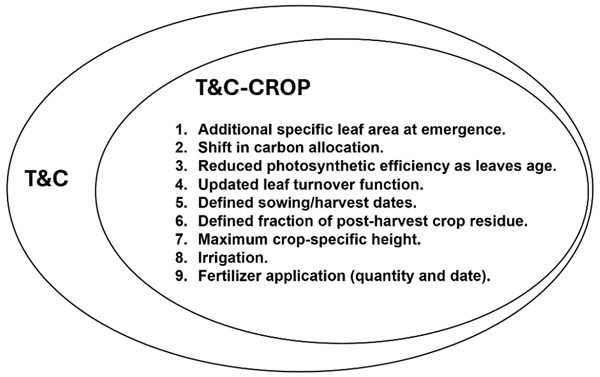
We present and validate enhancements to the process-based T&C model aimed at improving its representation of crop growth and management practices. The updated model, T&C-CROP, enables applications such as analysing the hydrological and carbon storage impacts of land use transitions (e.g. conversions between crops, forests, and pastures) and optimizing irrigation and fertilization strategies in response to climate change.
Tobias Karl David Weber, Lutz Weihermüller, Attila Nemes, Michel Bechtold, Aurore Degré, Efstathios Diamantopoulos, Simone Fatichi, Vilim Filipović, Surya Gupta, Tobias L. Hohenbrink, Daniel R. Hirmas, Conrad Jackisch, Quirijn de Jong van Lier, John Koestel, Peter Lehmann, Toby R. Marthews, Budiman Minasny, Holger Pagel, Martine van der Ploeg, Shahab Aldin Shojaeezadeh, Simon Fiil Svane, Brigitta Szabó, Harry Vereecken, Anne Verhoef, Michael Young, Yijian Zeng, Yonggen Zhang, and Sara Bonetti
Hydrol. Earth Syst. Sci., 28, 3391–3433, https://doi.org/10.5194/hess-28-3391-2024, https://doi.org/10.5194/hess-28-3391-2024, 2024
Short summary
Short summary
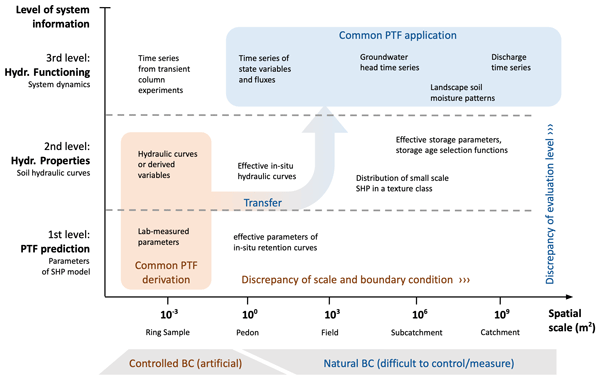
Pedotransfer functions (PTFs) are used to predict parameters of models describing the hydraulic properties of soils. The appropriateness of these predictions critically relies on the nature of the datasets for training the PTFs and the physical comprehensiveness of the models. This roadmap paper is addressed to PTF developers and users and critically reflects the utility and future of PTFs. To this end, we present a manifesto aiming at a paradigm shift in PTF research.
Abrar Habib, Athanasios Paschalis, Adrian P. Butler, Christian Onof, John P. Bloomfield, and James P. R. Sorensen
Hydrol. Earth Syst. Sci. Discuss., https://doi.org/10.5194/hess-2023-27, https://doi.org/10.5194/hess-2023-27, 2023
Preprint withdrawn
Short summary
Short summary
Components of the hydrological cycle exhibit a “memory” in their behaviour which quantifies how long a variable would stay at high/low values. Being able to model and understand what affects it is vital for an accurate representation of the hydrological elements. In the current work, it is found that rainfall affects the fractal behaviour of groundwater levels, which implies that changes to rainfall due to climate change will change the periods of flood and drought in groundwater-fed catchments.
Cited articles
Ammann, C., Spirig, C., Leifeld, J., and Neftel, A.: Assessment of the nitrogen and carbon budget of two managed temperate grassland fields, Agr. Ecosyst. Environ., 133, 150–162, https://doi.org/10.1016/j.agee.2009.05.006, 2009. a
Baroni, G., Schalge, B., Rakovec, O., Kumar, R., Schüler, L., Samaniego, L., Simmer, C., and Attinger, S.: A Comprehensive Distributed Hydrological Modeling Intercomparison to Support Process Representation and Data Collection Strategies, Water Resour. Res., 55, 990–1010, https://doi.org/10.1029/2018WR023941, 2019. a
Botter, M., Zeeman, M., Burlando, P., and Fatichi, S.: Impacts of fertilization on grassland productivity and water quality across the European Alps under current and warming climate: insights from a mechanistic model, Biogeosciences, 18, 1917–1939, https://doi.org/10.5194/bg-18-1917-2021, 2021. a
Breiman, L.: Random Forests, Mach. Learn., 45, 5–32, https://doi.org/10.1023/A:1010933404324, 2001. a, b
Carranza, C., Nolet, C., Pezij, M., and Van Der Ploeg, M.: Root zone soil moisture estimation with Random Forest, J. Hydrol., 593, 125840, https://doi.org/10.1016/j.jhydrol.2020.125840, 2021. a
Chaney, N. W., Van Huijgevoort, M. H. J., Shevliakova, E., Malyshev, S., Milly, P. C. D., Gauthier, P. P. G., and Sulman, B. N.: Harnessing Big Data to Rethink Land Heterogeneity in Earth System Models, Hydrol. Earth Syst. Sci., 22, 3311–3330, https://doi.org/10.5194/hess-22-3311-2018, 2018. a
Christensen, L., Tague, C. L., and Baron, J. S.: Spatial patterns of simulated transpiration response to climate variability in a snow dominated mountain ecosystem, Hydrol. Process., 22, 3576–3588, https://doi.org/10.1002/hyp.6961, 2008. a
Fatichi, S., Ivanov, V. Y., and Caporali, E.: A Mechanistic Ecohydrological Model to Investigate Complex Interactions in Cold and Warm Water-controlled Environments: 2. Spatiotemporal Analyses, J. Adv. Model. Earth Syst., 4, 2011MS000087, https://doi.org/10.1029/2011MS000087, 2012a. a, b, c
Fatichi, S., Ivanov, V. Y., and Caporali, E.: A mechanistic ecohydrological model to investigate complex interactions in cold and warm water-controlled environments: 1. Theoretical framework and plot-scale analysis, J. Adv. Model. Earth Syst., 4, 2011MS000086, https://doi.org/10.1029/2011MS000086, 2012b. a, b, c
Fatichi, S., Pappas, C., and Ivanov, V. Y.: Modeling plant–water interactions: an ecohydrological overview from the cell to the global scale, WIREs Water, 3, 327–368, https://doi.org/10.1002/wat2.1125, 2016. a
Fatichi, S., Manzoni, S., Or, D., and Paschalis, A.: A Mechanistic Model of Microbially Mediated Soil Biogeochemical Processes: A Reality Check, Global Biogeochem. Cy., 33, 620–648, https://doi.org/10.1029/2018GB006077, 2019. a, b, c, d
Feng, W., Plante, A. F., and Six, J.: Improving Estimates of Maximal Organic Carbon Stabilization by Fine Soil Particles, Biogeochemistry, 112, 81–93, https://doi.org/10.1007/s10533-011-9679-7, 2013. a
Friedlingstein, P., O'Sullivan, M., Jones, M. W., Andrew, R. M., Hauck, J., Landschützer, P., Le Quéré, C., Li, H., Luijkx, I. T., Olsen, A., Peters, G. P., Peters, W., Pongratz, J., Schwingshackl, C., Sitch, S., Canadell, J. G., Ciais, P., Jackson, R. B., Alin, S. R., Arneth, A., Arora, V., Bates, N. R., Becker, M., Bellouin, N., Berghoff, C. F., Bittig, H. C., Bopp, L., Cadule, P., Campbell, K., Chamberlain, M. A., Chandra, N., Chevallier, F., Chini, L.P., Colligan, T., Decayeux, J., Djeutchouang, L. M., Dou, X., Duran Rojas, C., Enyo, K., Evans, W., Fay, A. R., Feely, R. A., Ford, D. J., Foster, A., Gasser, T., Gehlen, M., Gkritzalis, T., Grassi, G., Gregor, L., Gruber, N., Gürses, Ö., Harris, I., Hefner, M., Heinke, J., Hurtt, G. C., Iida, Y., Ilyina, T., Jacobson, A. R., Jain, A. K., Jarníková, T., Jersild, A., Jiang, F., Jin, Z., Kato, E., Keeling, R. F., Klein Goldewijk, K., Knauer, J., Korsbakken, J. I., Lan, X., Lauvset, S. K., Lefèvre, N., Liu, Z., Liu, J., Ma, L., Maksyutov, S., Marland, G., Mayot, N., McGuire, P. C., Metzl, N., Monacci, N. M., Morgan, E. J., Nakaoka, S.-I., Neill, C., Niwa, Y., Nützel, T., Olivier, L., Ono, T., Palmer, P. I., Pierrot, D., Qin, Z., Resplandy, L., Roobaert, A., Rosan, T. M., Rödenbeck, C., Schwinger, J., Smallman, T. L., Smith, S. M., Sospedra-Alfonso, R., Steinhoff, T., Sun, Q., Sutton, A. J., Séférian, R., Takao, S., Tatebe, H., Tian, H., Tilbrook, B., Torres, O., Tourigny, E., Tsujino, H., Tubiello, F., Van Der Werf, G., Wanninkhof, R., Wang, X., Yang, D., Yang, X., Yu, Z., Yuan, W., Yue, X., Zaehle, S., Zeng, N., and Zeng, J.: Global Carbon Budget 2024, Earth Syst. Sci. Data, 17, 965–1039, https://doi.org/10.5194/essd-17-965-2025, 2025. a
Guo, L. B. and Gifford, R. M.: Soil carbon stocks and land use change: a meta analysis, Global Change Biol., 8, 345–360, https://doi.org/10.1046/j.1354-1013.2002.00486.x, 2002. a
Gupta, S., Lehmann, P., Bonetti, S., Papritz, A., and Or, D.: Global Prediction of Soil Saturated Hydraulic Conductivity Using Random Forest in a Covariate‐Based GeoTransfer Function (CoGTF) Framework, J. Adv. Model. Earth Syst., 13, e2020MS002242, https://doi.org/10.1029/2020MS002242, 2021. a
Gupta, S., Hasler, J. K., and Alewell, C.: Mining soil data of Switzerland: New maps for soil texture, soil organic carbon, nitrogen, and phosphorus, Geoderma Reg., 36, e00747, https://doi.org/10.1016/j.geodrs.2023.e00747, 2024. a, b, c
Hashimoto, S., Wattenbach, M., and Smith, P.: A new scheme for initializing process-based ecosystem models by scaling soil carbon pools, Ecol. Model., 222, 3598–3602, https://doi.org/10.1016/j.ecolmodel.2011.08.011, 2011. a, b
Ilstedt, U.: Changes in soil chemical and microbial properties after a wildfire in a tropical rainforest in Sabah, Malaysia, Soil Biol. Biochem., 35, 1071–1078, https://doi.org/10.1016/S0038-0717(03)00152-4, 2003. a
Kim, K. B., Kwon, H.-H., and Han, D.: Exploration of warm-up period in conceptual hydrological modelling, J. Hydrol., 556, 194–210, https://doi.org/10.1016/j.jhydrol.2017.11.015, 2018. a
Krinner, G., Viovy, N., De Noblet‐Ducoudré, N., Ogée, J., Polcher, J., Friedlingstein, P., Ciais, P., Sitch, S., and Prentice, I. C.: A dynamic global vegetation model for studies of the coupled atmosphere‐biosphere system, Global Biogeochem. Cy., 19, 2003GB002199, https://doi.org/10.1029/2003GB002199, 2005. a, b
Kunkel, V., Wells, T., and Hancock, G.: Modelling soil organic carbon using vegetation indices across large catchments in eastern Australia, Sci. Total Environ., 817, 152690, https://doi.org/10.1016/j.scitotenv.2021.152690, 2022. a
Li, J., Zhang, D., and Liu, M.: Factors controlling the spatial distribution of soil organic carbon in Daxing’anling Mountain, Sci. Rep., 10, 12659, https://doi.org/10.1038/s41598-020-69590-y, 2020. a
Lian, T., Fatichi, S., and Bonetti, S.: TeC_BG_2D Ecohydrological Model: V1.0.0, Zenodo [code], https://doi.org/10.5281/ZENODO.18084473, 2025a. a
Lian, T., Zhang, Z., Paschalis, A., and Bonetti, S.: TeC_BG_2D_Spin_up: V2.0.0, Zenodo [code], https://doi.org/10.5281/ZENODO.17213868, 2025c. a
Loh, W.-Y.: Regression trees with unbiased variable selection and interaction detection, Statistica sinica, JSTOR, 361–386, https://www.jstor.org/stable/24306967 (last access: 24 May 2026), 2002. a
Lugato, E., Panagos, P., Bampa, F., Jones, A., and Montanarella, L.: A new baseline of organic carbon stock in European agricultural soils using a modelling approach, Global Change Biol., 20, 313–326, https://doi.org/10.1111/gcb.12292, 2014. a
Lundberg, S. M. and Lee, S.-I.: A Unified Approach to Interpreting Model Predictions, in: Advances in Neural Information Processing Systems, vol. 30, edited by: Guyon, I., Luxburg, U. V., Bengio, S., Wallach, H., Fergus, R., Vishwanathan, S., and Garnett, R., Curran Associates, Inc., https://proceedings.neurips.cc/paper_files/paper/2017/file/8a20a8621978632d76c43dfd28b67767-Paper.pdf (last access: 24 May 2026), 2017. a
Mahdavi, S., Salehi, B., Granger, J., Amani, M., Brisco, B., and Huang, W.: Remote sensing for wetland classification: a comprehensive review, GISci. Remote Sens., 55, 623–658, https://doi.org/10.1080/15481603.2017.1419602, 2018. a
Manzoni, S., Schimel, J. P., and Porporato, A.: Responses of soil microbial communities to water stress: results from a meta-analysis, Ecology, 93, 930–938, https://doi.org/10.1890/11-0026.1, 2012. a
Manzoni, S., Schaeffer, S. M., Katul, G., Porporato, A., and Schimel, J. P.: A theoretical analysis of microbial eco-physiological and diffusion limitations to carbon cycling in drying soils, Soil Biol. Biochem., 73, 69–83, https://doi.org/10.1016/j.soilbio.2014.02.008, 2014. a
Martin, M., Orton, T., Lacarce, E., Meersmans, J., Saby, N., Paroissien, J., Jolivet, C., Boulonne, L., and Arrouays, D.: Evaluation of modelling approaches for predicting the spatial distribution of soil organic carbon stocks at the national scale, Geoderma, 223–225, 97–107, https://doi.org/10.1016/j.geoderma.2014.01.005, 2014. a
Martín-López, J. M., Verchot, L. V., Martius, C., and Da Silva, M.: Modeling the Spatial Distribution of Soil Organic Carbon and Carbon Stocks in the Casanare Flooded Savannas of the Colombian Llanos, Wetlands, 43, 65, https://doi.org/10.1007/s13157-023-01705-3, 2023. a
Matus, F. J.: Fine Silt and Clay Content Is the Main Factor Defining Maximal C and N Accumulations in Soils: A Meta-Analysis, Sci. Rep., 11, 6438, https://doi.org/10.1038/s41598-021-84821-6, 2021. a
Meersmans, J., De Ridder, F., Canters, F., De Baets, S., and Van Molle, M.: A multiple regression approach to assess the spatial distribution of Soil Organic Carbon (SOC) at the regional scale (Flanders, Belgium), Geoderma, 143, 1–13, https://doi.org/10.1016/j.geoderma.2007.08.025, 2008. a
Moyano, F. E., Manzoni, S., and Chenu, C.: Responses of soil heterotrophic respiration to moisture availability: An exploration of processes and models, Soil Biol. Biochem., 59, 72–85, https://doi.org/10.1016/j.soilbio.2013.01.002, 2013. a
Nave, L. E., Vance, E. D., Swanston, C. W., and Curtis, P. S.: Fire effects on temperate forest soil C and N storage, Ecol. Appl., 21, 1189–1201, https://doi.org/10.1890/10-0660.1, 2011. a
Nemo, Klumpp, K., Coleman, K., Dondini, M., Goulding, K., Hastings, A., Jones, M. B., Leifeld, J., Osborne, B., Saunders, M., Scott, T., Teh, Y. A., and Smith, P.: Soil Organic Carbon (SOC) Equilibrium and Model Initialisation Methods: an Application to the Rothamsted Carbon (RothC) Model, Environ. Model. Assess., 22, 215–229, https://doi.org/10.1007/s10666-016-9536-0, 2017. a
Ng, G. C., Bedford, D. R., and Miller, D. M.: A mechanistic modeling and data assimilation framework for Mojave Desert ecohydrology, Water Resour. Res., 50, 4662–4685, https://doi.org/10.1002/2014WR015281, 2014. a
Nigrelli, G., Fratianni, S., Zampollo, A., Turconi, L., and Chiarle, M.: The altitudinal temperature lapse rates applied to high elevation rockfalls studies in the Western European Alps, Theor. Appl. Climatol., 131, 1479–1491, https://doi.org/10.1007/s00704-017-2066-0, 2018. a
Noto, L. V., Ivanov, V. Y., Bras, R. L., and Vivoni, E. R.: Effects of initialization on response of a fully-distributed hydrologic model, J. Hydrol., 352, 107–125, https://doi.org/10.1016/j.jhydrol.2007.12.031, 2008. a
Parras-Alcántara, L., Lozano-García, B., and Galán-Espejo, A.: Soil organic carbon along an altitudinal gradient in the Despeñaperros Natural Park, southern Spain, Solid Earth, 6, 125–134, https://doi.org/10.5194/se-6-125-2015, 2015. a
Parvizi, Y. and Fatehi, S.: Geospatial digital mapping of soil organic carbon using machine learning and geostatistical methods in different land uses, Sci. Rep., 15, 4449, https://doi.org/10.1038/s41598-025-88062-9, 2025. a, b
Paschalis, A., Bonetti, S., Guo, Y., and Fatichi, S.: On the Uncertainty Induced by Pedotransfer Functions in Terrestrial Biosphere Modeling, Water Resour. Res., 58, e2021WR031871, https://doi.org/10.1029/2021WR031871, 2022. a
Pawusch, L., Scheurer, S., Nowak, W., and Maxwell, R. M.: HydroStartML: A Combined Machine Learning and Physics-Based Approach to Reduce Hydrological Model Spin-up Time, Adv. Water Resour., 206, 105124, https://doi.org/10.1016/j.advwatres.2025.105124, 2025. a
Pazúr, R., Huber, N., Weber, D., Ginzler, C., and Price, B.: Cropland and grassland map of Switzerland based on Sentinel-2 data, EnviDat [data set], https://doi.org/10.16904/ENVIDAT.205, 2021. a
Peters, J., Baets, B. D., Verhoest, N. E., Samson, R., Degroeve, S., Becker, P. D., and Huybrechts, W.: Random forests as a tool for ecohydrological distribution modelling, Ecol. Model., 207, 304–318, https://doi.org/10.1016/j.ecolmodel.2007.05.011, 2007. a, b
Qiu, H., Niu, J., Baas, D. G., and Phanikumar, M. S.: An integrated watershed-scale framework to model nitrogen transport and transformations, Sci. Total Environ., 882, 163348, https://doi.org/10.1016/j.scitotenv.2023.163348, 2023. a
Qu, Y., Maksyutov, S., and Zhuang, Q.: Technical Note: An efficient method for accelerating the spin-up process for process-based biogeochemistry models, Biogeosciences, 15, 3967–3973, https://doi.org/10.5194/bg-15-3967-2018, 2018. a, b
Randerson, J. T., Hoffman, F. M., Thornton, P. E., Mahowald, N. M., Lindsay, K., Lee, Y., Nevison, C. D., Doney, S. C., Bonan, G., Stöckli, R., Covey, C., Running, S. W., and Fung, I. Y.: Systematic assessment of terrestrial biogeochemistry in coupled climate–carbon models, Global Change Biol., 15, 2462–2484, https://doi.org/10.1111/j.1365-2486.2009.01912.x, 2009. a
Ruiz, S., Or, D., and Schymanski, S. J.: Soil Penetration by Earthworms and Plant Roots–Mechanical Energetics of Bioturbation of Compacted Soils, PLOS ONE, 10, e0128914, https://doi.org/10.1371/journal.pone.0128914, 2015. a
Schwarz, E., Ghersheen, S., Belyazid, S., and Manzoni, S.: When and why microbial-explicit soil organic carbon models can be unstable, Biogeosciences, 21, 3441–3461, https://doi.org/10.5194/bg-21-3441-2024, 2024. a
Seck, A., Welty, C., and Maxwell, R. M.: Spin‐up behavior and effects of initial conditions for an integrated hydrologic model, Water Resour. Res., 51, 2188–2210, https://doi.org/10.1002/2014WR016371, 2015. a, b
Senarath, S. U. S., Ogden, F. L., Downer, C. W., and Sharif, H. O.: On the calibration and verification of two‐dimensional, distributed, Hortonian, continuous watershed models, Water Resour. Res., 36, 1495–1510, https://doi.org/10.1029/2000WR900039, 2000. a
Shi, M., Yang, Z.-L., Lawrence, D. M., Dickinson, R. E., and Subin, Z. M.: Spin-up processes in the Community Land Model version 4 with explicit carbon and nitrogen components, Ecol. Model., 263, 308–325, https://doi.org/10.1016/j.ecolmodel.2013.04.008, 2013. a
Shi, Y., Eissenstat, D. M., He, Y., and Davis, K. J.: Using a spatially-distributed hydrologic biogeochemistry model with a nitrogen transport module to study the spatial variation of carbon processes in a Critical Zone Observatory, Ecol. Model., 380, 8–21, https://doi.org/10.1016/j.ecolmodel.2018.04.007, 2018. a, b
Simon, S. M., Glaum, P., and Valdovinos, F. S.: Interpreting random forest analysis of ecological models to move from prediction to explanation, Sci. Rep., 13, 3881, https://doi.org/10.1038/s41598-023-30313-8, 2023. a
Six, J., Conant, R. T., Paul, E. A., and Paustian, K.: Stabilization Mechanisms of Soil Organic Matter: Implications for C-saturation of Soils, Plant Soil, 241, 155–176, https://doi.org/10.1023/A:1016125726789, 2002. a
Stähli, M.: Longterm hydrological observatory alptal (central switzerland), EnviDat [data set], https://doi.org/10.16904/envidat.380, 2018. a
Stähli, M., Seibert, J., Kirchner, J. W., Von Freyberg, J., and Van Meerveld, I.: Hydrological trends and the evolution of catchment research in the Alptal valley, central Switzerland, Hydrol. Process., 35, e14113, https://doi.org/10.1002/hyp.14113, 2021. a, b
Stone, M.: Cross-Validatory Choice and Assessment of Statistical Predictions (With Discussion), J. Roy. Stat. Soc. Ser. B, 38, 102, https://doi.org/10.1111/j.2517-6161.1976.tb01573.x, 1976. a
Sun, Y., Goll, D. S., Chang, J., Ciais, P., Guenet, B., Helfenstein, J., Huang, Y., Lauerwald, R., Maignan, F., Naipal, V., Wang, Y., Yang, H., and Zhang, H.: Global Evaluation of the Nutrient-Enabled Version of the Land Surface Model ORCHIDEE-CNP v1.2 (R5986), Geosci. Model Dev., 14, 1987–2010, https://doi.org/10.5194/gmd-14-1987-2021, 2021. a
Sun, Y., Goll, D. S., Huang, Y., Ciais, P., Wang, Y.-P., Bastrikov, V., and Wang, Y.: Machine Learning for Accelerating Process-based Computation of Land Biogeochemical Cycles, Global Change Biol., 29, 3221–3234, https://doi.org/10.1111/gcb.16623, 2023. a
Tague, C. L. and Band, L. E.: RHESSys: Regional Hydro-Ecologic Simulation System – An Object-Oriented Approach to Spatially Distributed Modeling of Carbon, Water, and Nutrient Cycling, Earth Interact., 8, 1–42, https://doi.org/10.1175/1087-3562(2004)8<1:RRHSSO>2.0.CO;2, 2004. a, b, c
Teng, M., Zeng, L., Xiao, W., Huang, Z., Zhou, Z., Yan, Z., and Wang, P.: Spatial variability of soil organic carbon in Three Gorges Reservoir area, China, Sci. Total Environ., 599-600, 1308–1316, https://doi.org/10.1016/j.scitotenv.2017.05.085, 2017. a
Thornton, P., Law, B., Gholz, H. L., Clark, K. L., Falge, E., Ellsworth, D., Goldstein, A., Monson, R., Hollinger, D., Falk, M., Chen, J., and Sparks, J.: Modeling and measuring the effects of disturbance history and climate on carbon and water budgets in evergreen needleleaf forests, Agr. Forest Meteorol., 113, 185–222, https://doi.org/10.1016/S0168-1923(02)00108-9, 2002. a
Tyralis, H., Papacharalampous, G., and Langousis, A.: A Brief Review of Random Forests for Water Scientists and Practitioners and Their Recent History in Water Resources, Water, 11, 910, https://doi.org/10.3390/w11050910, 2019. a
Verhoef, A., Zeng, Y., Agam, N., Best, M., Bonetti, S., Boussetta, S., Chaney, N., Cuntz, M., Edwards, J., Gupta, S., Heitman, J., Huang, M., Jarvis, N., Jiang, S., Kandala, R., Kiałka, F., Lian, T., Mu, M., Nemes, A., Paulus, S. J., Raoult, N., Reddy, K. N., Romano, N., Sabot, M., Vanderborght, J., Van Der Ploeg, M., Van Oevelen, P., Wang, Y., Wang, Y., Weber, T. K. D., Marthews, T., and Weihermüller, L.: Rethinking Soils in Land Surface Models, B. Am. Meteorol. Soc., 107, E665–E674, https://doi.org/10.1175/BAMS-D-26-0003.1, 2026. a
Xia, J. Y., Luo, Y. Q., Wang, Y.-P., Weng, E. S., and Hararuk, O.: A semi-analytical solution to accelerate spin-up of a coupled carbon and nitrogen land model to steady state, Geosci. Model Dev., 5, 1259–1271, https://doi.org/10.5194/gmd-5-1259-2012, 2012. a
Yan, Z., Bond-Lamberty, B., Todd-Brown, K. E., Bailey, V. L., Li, S., Liu, C., and Liu, C.: A moisture function of soil heterotrophic respiration that incorporates microscale processes, Nat. Commun., 9, 2562, https://doi.org/10.1038/s41467-018-04971-6, 2018. a
Yang, Y., Zhao, R., and Biswas, A.: Delineating Dynamic Hydrological Response Units to Improve Simulations of Extreme Runoff Events in Changing Environments, J. Hydrol., 656, 133000, https://doi.org/10.1016/j.jhydrol.2025.133000, 2025. a
Yao, Y., Dai, Q., Gao, R., Yi, X., Wang, Y., and Hu, Z.: Characteristics and factors influencing soil organic carbon composition by vegetation type in spoil heaps, Front. Plant Sci., 14, 1240217, https://doi.org/10.3389/fpls.2023.1240217, 2023. a
Zeraatpisheh, M., Garosi, Y., Reza Owliaie, H., Ayoubi, S., Taghizadeh-Mehrjardi, R., Scholten, T., and Xu, M.: Improving the spatial prediction of soil organic carbon using environmental covariates selection: A comparison of a group of environmental covariates, Catena, 208, 105723, https://doi.org/10.1016/j.catena.2021.105723, 2022. a, b
Zhan, X., Xue, Y., and Collatz, G.: An analytical approach for estimating CO2 and heat fluxes over the Amazonian region, Ecol. Model., 162, 97–117, https://doi.org/10.1016/S0304-3800(02)00405-2, 2003. a
Zhang, W., Li, Y., Zhu, B., Zheng, X., Liu, C., Tang, J., Su, F., Zhang, C., Ju, X., and Deng, J.: A process-oriented hydro-biogeochemical model enabling simulation of gaseous carbon and nitrogen emissions and hydrologic nitrogen losses from a subtropical catchment, Sci. Total Environ., 616–617, 305–317, https://doi.org/10.1016/j.scitotenv.2017.09.261, 2018. a
Zhang, Y., Chen, A., Wang, Z., Wang, X., Lin, Y., and Ye, C.: Soil organic carbon accumulation along a chronosequence of vegetation colonization on debris flow fans in Southwest China, Catena, 223, 106936, https://doi.org/10.1016/j.catena.2023.106936, 2023. a
Zhu, M., Feng, Q., Qin, Y., Cao, J., Zhang, M., Liu, W., Deo, R. C., Zhang, C., Li, R., and Li, B.: The role of topography in shaping the spatial patterns of soil organic carbon, Catena, 176, 296–305, https://doi.org/10.1016/j.catena.2019.01.029, 2019. a
Short summary
Initializing spatially distributed ecohydrological models with soil biogeochemistry is computationally expensive, especially when lateral fluxes must be resolved. We developed a hybrid initialization framework that combines 1D flux-tracking spin-up simulations with random forest extrapolation to generate spatially heterogeneous, topography-informed initial conditions. The approach captures the effects of topography and lateral transport while reducing computational costs by up to 90 %.
Initializing spatially distributed ecohydrological models with soil biogeochemistry is...