
Articles | Volume 19, issue 9
https://doi.org/10.5194/gmd-19-3801-2026
© Author(s) 2026. This work is distributed under
the Creative Commons Attribution 4.0 License.
the Creative Commons Attribution 4.0 License.
https://doi.org/10.5194/gmd-19-3801-2026
© Author(s) 2026. This work is distributed under
the Creative Commons Attribution 4.0 License.
the Creative Commons Attribution 4.0 License.
Development and technical paper
| 
11 May 2026
Development and technical paper |
| 11 May 2026
| 11 May 2026
Advancing the BRAMS wildfire–atmosphere modelling system: application to an extreme wildfire event

Centre for Environmental and Marine Studies (CESAM) and Department of Environment and Planning, University of Aveiro, Campus Universitário de Santiago, Aveiro, Portugal
Luiz Flávio Rodrigues
Center for Weather Forecasting and Climate Studies (CPTEC), National Institute for Space Research, Cachoeira Paulista, SP, Brazil
Karla M. Longo
National Institute for Space Research (INPE), Sāo José dos Campos, SP, Brazil
Mateus Ferreira e Freitas
Multiuser Laboratory of High Performance Computing (LaMCAD), UFG Innovation Agency, Federal University of Goiás (UFG), Samambaia Campus, Goiânia, GO, Brazil
National Institute for Space Research (INPE), Sāo José dos Campos, SP, Brazil
Rodrigo Braz
Center for Weather Forecasting and Climate Studies (CPTEC), National Institute for Space Research, Cachoeira Paulista, SP, Brazil
Valter Ferreira de Oliveira
National Institute for Space Research (INPE), Cachoeira Paulista, SP, Brazil
Sílvia Coelho
Centre for Environmental and Marine Studies (CESAM) and Department of Environment and Planning, University of Aveiro, Campus Universitário de Santiago, Aveiro, Portugal
Ana Isabel Miranda
Centre for Environmental and Marine Studies (CESAM) and Department of Environment and Planning, University of Aveiro, Campus Universitário de Santiago, Aveiro, Portugal
Related authors
Nilton Évora do Rosário, Karla M. Longo, Pedro H. Toso, Saulo R. Freitas, Marcia A. Yamasoe, Luiz Flávio Rodrigues, Otavio Medeiros, Haroldo Campos Velho, Isilda da Cunha Menezes, and Ana Isabel Miranda
Geosci. Model Dev., 19, 2691–2716, https://doi.org/10.5194/gmd-19-2691-2026, https://doi.org/10.5194/gmd-19-2691-2026, 2026
Short summary
Short summary
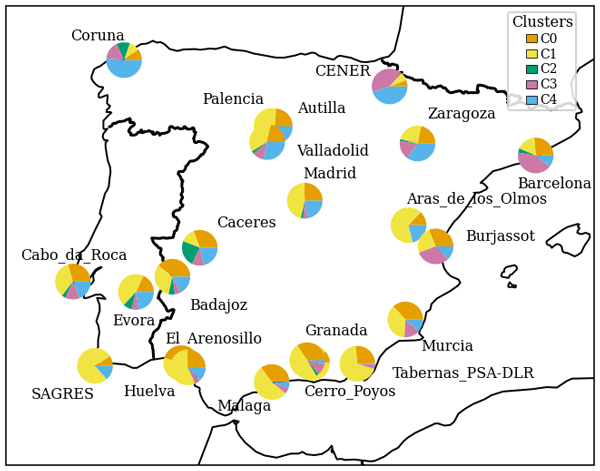
This study maps aerosol regimes over the Iberian Peninsula using AERONET data and machine learning. Five types were identified, from Saharan dust to smoke, highlighting differences in particle size and absorption. Combining observations with model data improves aerosol representation in climate simulations, reducing uncertainties and enhancing understanding of regional air quality and climate impacts.
Jordan Schnell, Ravan Ahmadov, Georg A. Grell, Joseph B. Olson, Eric James, Ming Hu, Ka Yee Wong, Brian McDonald, Rebecca H. Schwantes, Jian He, Colin Harkins, Wayne M. Angevine, Brian Jamison, R. Bradley Pierce, Matthew Coggon, Barry Baker, Saulo Freitas, Gabriel Pereira, and Marina Tsidulko
EGUsphere, https://doi.org/10.5194/egusphere-2026-4786, https://doi.org/10.5194/egusphere-2026-4786, 2026
This preprint is open for discussion and under review for Geoscientific Model Development (GMD).
Short summary
Short summary
The Rapid-Refresh model coupled to Chemistry is an experimental weather and chemistry model that includes emissions from human and natural sources that are connected to simulated weather, the effect of aerosols on radiation and clouds, and updated vertical mixing. We compare simulated air quality and weather to ground-based and remotely-sensed observations during the 2020 North American wildfires, demonstrating that our model physics developments and coupling with chemistry improves predictions.
Nilton Évora do Rosário, Karla M. Longo, Pedro H. Toso, Saulo R. Freitas, Marcia A. Yamasoe, Luiz Flávio Rodrigues, Otavio Medeiros, Haroldo Campos Velho, Isilda da Cunha Menezes, and Ana Isabel Miranda
Geosci. Model Dev., 19, 2691–2716, https://doi.org/10.5194/gmd-19-2691-2026, https://doi.org/10.5194/gmd-19-2691-2026, 2026
Short summary
Short summary
This study maps aerosol regimes over the Iberian Peninsula using AERONET data and machine learning. Five types were identified, from Saharan dust to smoke, highlighting differences in particle size and absorption. Combining observations with model data improves aerosol representation in climate simulations, reducing uncertainties and enhancing understanding of regional air quality and climate impacts.
Ian Chang, Lan Gao, Connor J. Flynn, Yohei Shinozuka, Sarah J. Doherty, Michael S. Diamond, Karla M. Longo, Gonzalo A. Ferrada, Gregory R. Carmichael, Patricia Castellanos, Arlindo M. da Silva, Pablo E. Saide, Calvin Howes, Zhixin Xue, Marc Mallet, Ravi Govindaraju, Qiaoqiao Wang, Yafang Cheng, Yan Feng, Sharon P. Burton, Richard A. Ferrare, Samuel E. LeBlanc, Meloë S. Kacenelenbogen, Kristina Pistone, Michal Segal-Rozenhaimer, Kerry G. Meyer, Ju-Mee Ryoo, Leonhard Pfister, Adeyemi A. Adebiyi, Robert Wood, Paquita Zuidema, Sundar A. Christopher, and Jens Redemann
Atmos. Chem. Phys., 23, 4283–4309, https://doi.org/10.5194/acp-23-4283-2023, https://doi.org/10.5194/acp-23-4283-2023, 2023
Short summary
Short summary
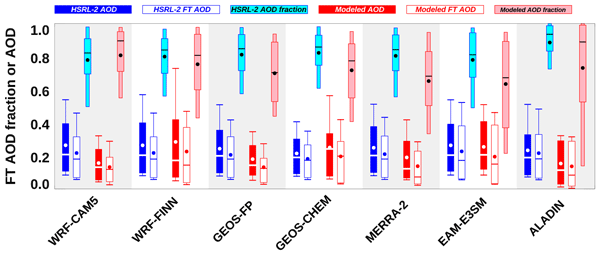
Abundant aerosols are present above low-level liquid clouds over the southeastern Atlantic during late austral spring. The model simulation differences in the proportion of aerosol residing in the planetary boundary layer and in the free troposphere can greatly affect the regional aerosol radiative effects. This study examines the aerosol loading and fractional aerosol loading in the free troposphere among various models and evaluates them against measurements from the NASA ORACLES campaign.
Yunyao Li, Daniel Tong, Siqi Ma, Saulo R. Freitas, Ravan Ahmadov, Mikhail Sofiev, Xiaoyang Zhang, Shobha Kondragunta, Ralph Kahn, Youhua Tang, Barry Baker, Patrick Campbell, Rick Saylor, Georg Grell, and Fangjun Li
Atmos. Chem. Phys., 23, 3083–3101, https://doi.org/10.5194/acp-23-3083-2023, https://doi.org/10.5194/acp-23-3083-2023, 2023
Short summary
Short summary
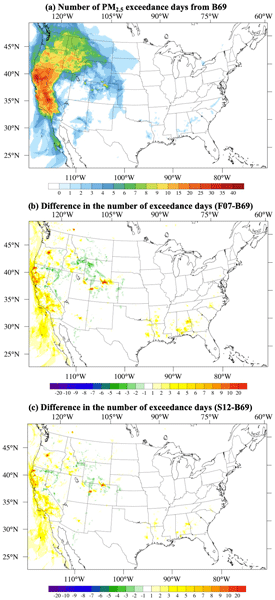
Plume height is important in wildfire smoke dispersion and affects air quality and human health. We assess the impact of plume height on wildfire smoke dispersion and the exceedances of the National Ambient Air Quality Standards. A higher plume height predicts lower pollution near the source region, but higher pollution in downwind regions, due to the faster spread of the smoke once ejected, affects pollution exceedance forecasts and the early warning of extreme air pollution events.
Gonzalo A. Ferrada, Meng Zhou, Jun Wang, Alexei Lyapustin, Yujie Wang, Saulo R. Freitas, and Gregory R. Carmichael
Geosci. Model Dev., 15, 8085–8109, https://doi.org/10.5194/gmd-15-8085-2022, https://doi.org/10.5194/gmd-15-8085-2022, 2022
Short summary
Short summary
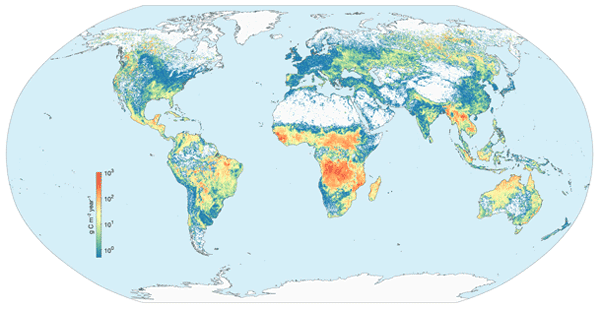
The smoke from fires is composed of different compounds that interact with the atmosphere and can create poor air-quality episodes. Here, we present a new fire inventory based on satellite observations from the Visible Infrared Imaging Radiometer Suite (VIIRS). We named this inventory the VIIRS-based Fire Emission Inventory (VFEI). Advantages of VFEI are its high resolution (~500 m) and that it provides information for many species. VFEI is publicly available and has provided data since 2012.
Aditya Kumar, R. Bradley Pierce, Ravan Ahmadov, Gabriel Pereira, Saulo Freitas, Georg Grell, Chris Schmidt, Allen Lenzen, Joshua P. Schwarz, Anne E. Perring, Joseph M. Katich, John Hair, Jose L. Jimenez, Pedro Campuzano-Jost, and Hongyu Guo
Atmos. Chem. Phys., 22, 10195–10219, https://doi.org/10.5194/acp-22-10195-2022, https://doi.org/10.5194/acp-22-10195-2022, 2022
Short summary
Short summary
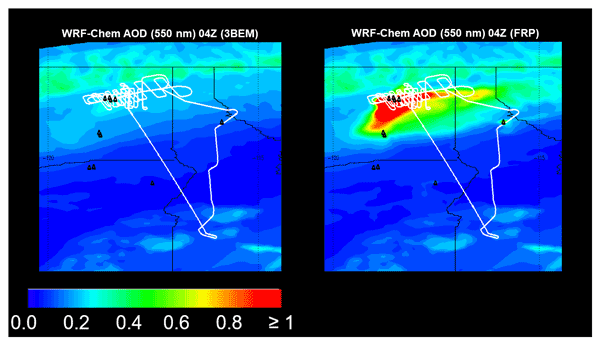
We use the WRF-Chem model with new implementations of GOES-16 wildfire emissions and plume rise based on fire radiative power (FRP) to interpret aerosol observations during the 2019 NASA–NOAA FIREX-AQ field campaign and perform model evaluations. The model shows significant improvements in simulating the variety of aerosol loading environments sampled during FIREX-AQ. Our results also highlight the importance of accurate wildfire diurnal cycle and aerosol chemical mechanisms in models.
Cited articles
Adetona, O., Reinhardt, T. E., Domitrovich, J., Broyles, G., Adetona, A. M., Kleinman, M. T., Ottmar, R. D., and Naeher, L. P.: Review of the health effects of wildland fire smoke on wildland firefighters and the public, Inhal. Toxicol., 28, 95–139, https://doi.org/10.3109/08958378.2016.1145771, 2016.
Àgueda, A., Pastor, E., Pérez, Y., and Planas, E.: Experimental study of the emissivity of flames resulting from the combustion of forest fuels, Int. J. Therm. Sci., 49, 543–554, https://doi.org/10.1016/j.ijthermalsci.2009.09.006, 2010.
Ahmadov, R., Grell, G., James, E., Csiszar, I., Tsidulko, M., Pierce, B., McKeen, S., Benjamin, S., Alexander, C., Pereira, G., Freitas, S., and Goldberg, M.: Using VIIRS fire radiative power data to simulate biomass burning emissions, plume rise and smoke transport in a real-time air quality modeling system, Int. Geosci. Remote Se., 2017-July, 2806–2808, https://doi.org/10.1109/IGARSS.2017.8127581, 2017.
Albini, F. A.: Estimating Wildfire Behavior and Effects, USDA Forest Service, Intermountain Research Station, General Technical Report, 30, 1976.
Alexander, M. E.: Help with making crown fire hazard assessments, Gen. Tech. Rep. INT-251. Ogden, UT: U.S. Department of Agriculture, Forest Service, Intermountain Forest and Range Experiment Station, 147–156, 1988.
Anderson, H. E.: Aids to determining fuel models for estimating fire behavior, US Department of Agriculture, Forest Service, Intermountain Forest and Range Experiment Station, 122, 1982.
Anderson, K., Chen, J., Englefield, P., Griffin, D., Makar, P. A., and Thompson, D.: The Global Forest Fire Emissions Prediction System version 1.0, Geosci. Model Dev., 17, 7713–7749, https://doi.org/10.5194/gmd-17-7713-2024, 2024.
Andreae, M. O. and Gelencsér, A.: Black carbon or brown carbon? The nature of light-absorbing carbonaceous aerosols, Atmos. Chem. Phys., 6, 3131–3148, https://doi.org/10.5194/acp-6-3131-2006, 2006.
Andreae, M. O. and Merlet, P.: Emission of trace gases and aerosols from biomass burning, Global Biogeochem. Cy., 15, 955–966, 2001.
Andreae, M. O. and Rosenfeld, D.: Aerosol-cloud-precipitation interactions. Part 1. The nature and sources of cloud-active aerosols, Earth-Sci. Rev., 89, 13–41, https://doi.org/10.1016/j.earscirev.2008.03.001, 2008.
Andrews, P. L. and Rothermel, R. C.: Charts for interpreting wildland fire behavior characteristics, U.S. Department of Agriculture, Forest Service, Intermountain Forest and Range Experiment Station, Ogden, General Technical Report, INT-GTR-13, 21 pp., 1982.
Apte, J. S., Brauer, M., Cohen, A. J., Ezzati, M., and Pope, C. A.: Ambient PM2.5 Reduces Global and Regional Life Expectancy, Environ. Sci. Tech. Lett., 5, 546–551, https://doi.org/10.1021/acs.estlett.8b00360, 2018.
Aranami, K., Davies, T., and Wood, N.: A mass restoration scheme for limited-area models with semi-Lagrangian advection, Q. J. Roy. Meteor. Soc., 141), 1795–1803, https://doi.org/10.1002/qj.2482, 2015.
Baughman, R. G. and Albini, F. A.: Estimating Midflame Windspeeds, in: Proceedings Sixth Conference on Fire and Forest Meteorology, Sixth Conference on Fire and Forest Meteorology, Society of American Foresters, Washington, DC., 88–92, 1980.
Bermejo, R. and Conde, J.: A Conservative Quasi-Monotone Semi-Lagrangian Scheme, Am. Meteorol. Soc., 423–430, https://doi.org/10.1175/1520-0493(2002)130<0423:ACQMSL>2.0.CO;2, 2002.
Biscoe, J. and Warren, B. E.: An X-Ray Study of Carbon Black, J. Appl. Phys., 13, 364–371, 1942.
Bohren, C. F. and Huffman, D. R.: Absorption and scattering of light by small particles, John Wiley & Sons, Ltd., 2008.
Bond, T. C. and Bergstrom, R. W.: Light absorption by carbonaceous particles: An investigative review, Aerosol Sci. Tech., 40, 27–67, https://doi.org/10.1080/02786820500421521, 2006.
Bond, T. C., Streets, D. G., Yarber, K. F., Nelson, S. M., Woo, J. H., and Klimont, Z.: A technology-based global inventory of black and organic carbon emissions from combustion, J. Geophys. Res.-Atmos., 109, 1–43, https://doi.org/10.1029/2003JD003697, 2004.
Bond, T. C., Doherty, S. J., Fahey, D. W., Forster, P. M., Berntsen, T., DeAngelo, B. J., Flanner, M. G., Ghan, S., Kärcher, B., Koch, D., Kinne, S., Kondo, Y., Quinn, P. K., Sarofim, M. C., Schultz, M. G., Schulz, M., Venkataraman, C., and Zhang, H.: Bounding the role of black carbon in the climate system: A scientific assessment, J. Geophys. Res.-Atmos., 118, 5380–5552, https://doi.org/10.1002/jgrd.50171, 2013.
Buchard, V., da Silva, A. M., Colarco, P. R., Darmenov, A., Randles, C. A., Govindaraju, R., Torres, O., Campbell, J., and Spurr, R.: Using the OMI aerosol index and absorption aerosol optical depth to evaluate the NASA MERRA Aerosol Reanalysis, Atmos. Chem. Phys., 15, 5743–5760, https://doi.org/10.5194/acp-15-5743-2015, 2015.
Buchard, V., da Silva, A. M., Randles, C. A., Colarco, P., Ferrare, R., Hair, J., Hostetler, C., Tackett, J., and Winker, D.: Evaluation of the surface PM2.5 in Version 1 of the NASA MERRA Aerosol Reanalysis over the United States, Atmos. Environ., 125, 100–111, https://doi.org/10.1016/j.atmosenv.2015.11.004, 2016.
CAMS: Copernicus Atmosphere Monitoring Service, https://atmosphere.copernicus.eu/ (last access: 1 November 2024), 2015.
Carrico, C. M., Petters, M. D., Kreidenweiss, S. M., Collett, J. L., Guenter, E., and Malm, W. C.: Aerosol hygroscopicity and cloud droplet activation of extracts of filters from biomass burning experiments, J. Geophys. Res.-Atmos., 113, 1–9, https://doi.org/10.1029/2007JD009274, 2008.
Carroll, B. J., Strobach, E., Baidar, S., Holloway, M. W., McCarty, B., Marchbanks, R., and Brewer, W. A.: Wildfire Smoke Shading Observations: Impacts on Boundary Layer Mixing and Thermally Driven Smoke Transport, J. Geophys. Res.-Atmos., 130, https://doi.org/10.1029/2024JD043303, 2025.
Chakrabarty, R. K., Gyawali, M., Yatavelli, R. L. N., Pandey, A., Watts, A. C., Knue, J., Chen, L.-W. A., Pattison, R. R., Tsibart, A., Samburova, V., and Moosmüller, H.: Brown carbon aerosols from burning of boreal peatlands: microphysical properties, emission factors, and implications for direct radiative forcing, Atmos. Chem. Phys., 16, 3033–3040, https://doi.org/10.5194/acp-16-3033-2016, 2016.
Clark, T. L., Jenkins, M. A., Coen, J. L., and Packham, D. R.: A coupled atmosphere-fire model: Role of the convective froude number and dynamic fingering at the fireline, Int. J. Wildland Fire, 6, 177–190, https://doi.org/10.1071/WF9960177, 1996.
Clark, T. L., Coen, J., and Latham, D.: Description of a coupled atmosphere-fire model, Int. J. Wildland Fire, 13, 49–63, https://doi.org/10.1071/WF03043, 2004.
Clinton, N. E., Gong, P., and Scott, K.: Quantification of pollutants emitted from very large wildland fires in Southern California, USA, Atmos. Environ., 40, 3686–3695, https://doi.org/10.1016/j.atmosenv.2006.02.016, 2006.
Coen, J. L.: Simulation of the Big Elk Fire using coupled atmosphere–fire modeling, Int. J. Wildland Fire, 14, 49–59, https://doi.org/10.1071/WF04047, 2005.
Curci, G., Hogrefe, C., Bianconi, R., Im, U., Balzarini, A., Baró, R., Brunner, D., Forkel, R., Giordano, L., Hirtl, M., Honzak, L., Jiménez-Guerrero, P., Knote, C., Langer, M., Makar, P. A., Pirovano, G., Pérez, J. L., San José, R., and Syrakov, D.: Uncertainties of simulated aerosol optical properties induced by assumptions on aerosol physical and chemical properties: An AQMEII-2 perspective, Atmos. Environ., 115, 541–552, https://doi.org/10.1016/j.atmosenv.2014.09.009, 2015.
Daniels, J., Liang, L., Benedict, K. B., Brahney, J., Rangel, R., Weathers, K. C., and Ponette-González, A. G.: Satellite-based aerosol optical depth estimates over the continental U.S. during the 2020 wildfire season: Roles of smoke and land cover, Sci. Total Environ., 921, 171122, https://doi.org/10.1016/j.scitotenv.2024.171122, 2024.
Darmenov, A. S., and da Silva, A.: The Quick Fire Emissions Dataset (QFED) – Documentation of versions 2.1, 2.2 and 2.4., NASA//TM-2015-104606, NASA Global Modeling and Assimilation Office, 38, 183 pp., 2015.
do Rosário, N. É., Longo, K. M., Toso, P. H., Freitas, S. R., Yamasoe, M. A., Rodrigues, L. F., Medeiros, O., Velho, H. C., Menezes, I. D. C., and Miranda, A. I.: Machine learning-driven characterization and prescription of aerosol optical properties for atmospheric models, Geosci. Model Dev., 19, 2691–2716, https://doi.org/10.5194/gmd-19-2691-2026, 2026.
Eck, T. F., Holben, B. N., Giles, D. M., Slutsker, I., Sinyuk, A., Schafer, J. S., Smirnov, A., Sorokin, M., Reid, J. S., Sayer, A. M., Hsu, N. C., Shi, Y. R., Levy, R. C., Lyapustin, A., Arif Rahman, M., Liew, S.-C., Salinas Cortijo, S. V., and Li, T.: AERONET Remotely Sensed Measurements and Retrievals of Biomass Burning Aerosol Optical Properties During the 2015 Indonesian Burning Season, J. Geophys. Res.-Atmos., 124, 4722–4740, https://doi.org/10.1029/2018JD030182, 2019.
Engelhart, G. J., Hennigan, C. J., Miracolo, M. A., Robinson, A. L., and Pandis, S. N.: Cloud condensation nuclei activity of fresh primary and aged biomass burning aerosol, Atmos. Chem. Phys., 12, 7285–7293, https://doi.org/10.5194/acp-12-7285-2012, 2012.
ERA5: Fifth generation ECMWF reanalysis for the global climate and weather, https://www.ecmwf.int/en/forecasts/dataset/ecmwf-reanalysis-v5 (last access: 5 March 2025), 2019.
Fernandes, A. P., Lopes, D., Sorte, S., Monteiro, A., Gama, C., Reis, J., Menezes, I., Osswald, T., Borrego, C., Almeida, M., Ribeiro, L. M., Viegas, D. X., and Miranda, A. I.: Smoke emissions from the extreme wildfire events in central Portugal in October 2017, Int. J. Wildland Fire, 1–13, https://doi.org/10.1071/WF21097, 2022.
Ferrare, R. A., Fraser, R. S., and Kaufman, Y. J.: Satellite measurements of large-scale air pollution: Measurements of forest fire smoke, J. Geophys. Res.-Atmos/, 95, 9911–9925, 1990.
Filippi, J. B., Pialat, X., and Clements, C. B.: Assessment of ForeFire/Meso-NH for wildland fire/atmosphere coupled simulation of the FireFlux experiment, P. Combust. Inst., 34, 2633–2640, https://doi.org/10.1016/j.proci.2012.07.022, 2013.
Forestry Canada Fire Danger Group: Development and structure of the Canadian Forest Fire Behavior Prediction System, Inf. Rep. ST-X-3, 63 pp., 1992.
Frausto-Vicencio, I., Heerah, S., Meyer, A. G., Parker, H. A., Dubey, M., and Hopkins, F. M.: Ground solar absorption observations of total column CO, CO2, CH4, and aerosol optical depth from California's Sequoia Lightning Complex Fire: emission factors and modified combustion efficiency at regional scales, Atmos. Chem. Phys., 23, 4521–4543, https://doi.org/10.5194/acp-23-4521-2023, 2023.
Freitas, S. R., Longo, K. M., and Andreae, M. O.: Impact of including the plume rise of vegetation fires in numerical simulations of associated atmospheric pollutants, Geophys. Res. Lett., 33, L17808, https://doi.org/10.1029/2006GL026608, 2006.
Freitas, S. R., Longo, K. M., Chatfield, R., Latham, D., Silva Dias, M. A. F., Andreae, M. O., Prins, E., Santos, J. C., Gielow, R., and Carvalho Jr., J. A.: Including the sub-grid scale plume rise of vegetation fires in low resolution atmospheric transport models, Atmos. Chem. Phys., 7, 3385–3398, https://doi.org/10.5194/acp-7-3385-2007, 2007.
Freitas, S. R., Longo, K. M., Silva Dias, M. A. F., Chatfield, R., Silva Dias, P., Artaxo, P., Andreae, M. O., Grell, G., Rodrigues, L. F., Fazenda, A., and Panetta, J.: The Coupled Aerosol and Tracer Transport model to the Brazilian developments on the Regional Atmospheric Modeling System (CATT-BRAMS) – Part 1: Model description and evaluation, Atmos. Chem. Phys., 9, 2843–2861, https://doi.org/10.5194/acp-9-2843-2009, 2009.
Freitas, S. R., Longo, K. M., Trentmann, J., and Latham, D.: Technical Note: Sensitivity of 1-D smoke plume rise models to the inclusion of environmental wind drag, Atmos. Chem. Phys., 10, 585–594, https://doi.org/10.5194/acp-10-585-2010, 2010.
Freitas, S. R., Panetta, J., Longo, K. M., Rodrigues, L. F., Moreira, D. S., Rosário, N. E., Silva Dias, P. L., Silva Dias, M. A. F., Souza, E. P., Freitas, E. D., Longo, M., Frassoni, A., Fazenda, A. L., Santos e Silva, C. M., Pavani, C. A. B., Eiras, D., França, D. A., Massaru, D., Silva, F. B., Santos, F. C., Pereira, G., Camponogara, G., Ferrada, G. A., Campos Velho, H. F., Menezes, I., Freire, J. L., Alonso, M. F., Gácita, M. S., Zarzur, M., Fonseca, R. M., Lima, R. S., Siqueira, R. A., Braz, R., Tomita, S., Oliveira, V., and Martins, L. D.: The Brazilian developments on the Regional Atmospheric Modeling System (BRAMS 5.2): an integrated environmental model tuned for tropical areas, Geosci. Model Dev., 10, 189–222, https://doi.org/10.5194/gmd-10-189-2017, 2017.
Gelaro, R., McCarty, W., Suárez, M. J., Todling, R., Molod, A., Takacs, L., Randles, C. A., Darmenov, A., Bosilovich, M. G., Reichle, R., Wargan, K., Coy, L., Cullather, R., Draper, C., Akella, S., Buchard, V., Conaty, A., da Silva, A. M., Gu, W., and Kim, B.: The modern-era retrospective analysis for research and applications, version 2 (MERRA-2), J. Climate, 30, 5419–5454, https://doi.org/10.1175/JCLI-D-16-0758.1, 2017.
Gesch, D. B., Verdin, K. L., and Greenlee, S. K.: New land surface digital elevation model covers the earth, EOS Trans. Am. Geophys. Un., 80, 69–70, https://doi.org/10.1029/99EO00050, 1999.
Gevaerd, R. and Freitas, S.: Estimativa operacional da umidade do solo para iniciação de modelos de previsão numérica da atmosfera Parte I: Descrição da metodologia e validação, Revista Brasileira de Meteorologia, 21, 59–73, 2006.
Gili, J., Maín, A., van Drooge, B. L., and Viana, M.: Source-resolved black carbon and PM2.5 exposures during wildfires and prescribed burns, Environ. Pollut., 368, 125660, https://doi.org/10.1016/j.envpol.2025.125660, 2025.
Hinds, W. C.: Aerosol Technology: Properties, Behavior, and Measurement of Airborne Particles, Wiley-Interscience, New York, 1999.
Huff, A. K., Kondragunta, S., Zhang, H., Laszlo, I., Zhou, M., Caicedo, V., Delgado, R., and Levy, R.: Tracking smoke from a prescribed fire and its impacts on local air quality using temporally resolved GOES-16 ABI aerosol optical depth (AOD), J. Atmos. Ocean. Tech., 38, 963–976, https://doi.org/10.1175/JTECH-D-20-0162.1, 2021.
ICNF: Portuguese National Forest Inventory 6, Statistics and Cartography, Abundance, State and Condition of National Forest Resources, http://www.icnf.pt/portal/florestas/ifn (last access: 1 November 2024), 2015.
Jaffe, D., Chand, D., Hafner, W., Westerling, A., and Spracklen, D.: Influence of fires on O3 concentrations in the western U.S., Environ. Sci. Technol., 42, 5885–5891, https://doi.org/10.1021/es800084k, 2008.
Kassianov, E., Flynn, C. J., Barnard, J. C., Berg, L. K., Beus, S. J., Chen, X., China, S., Comstock, J. M., Ermold, B. D., Fakoya, A. A., Kulkarni, G., Lata, N. N., McDowell, N. G., Morris, V. R., Pekour, M. S., Rasmussen, H. J., and Riihimaki, L. D.: Radiative impact of record-breaking wildfires from integrated ground-based data, Sci. Rep., 15, 1–12, https://doi.org/10.1038/s41598-025-85103-1, 2025.
Kirchstetter, T. W. and Novakov, T.: Evidence that the spectral dependence of light absorption by aerosols is affected by organic carbon, J. Geophys. Res.-Atmos., 109, 1–12, https://doi.org/10.1029/2004JD004999, 2004.
Kochanski, A. K., Jenkins, M. A., Yedinak, K., Mandel, J., Beezley, J., and Lamb, B.: Toward an integrated system for fire, smoke and air quality simulations, Int. J. Wildland Fire, 25, 534–546, 2015.
Kochanski, A. K., Herron-Thorpe, F., Mallia, D. V., Mandel, J., and Vaughan, J. K.: Integration of a Coupled Fire-Atmosphere Model Into a Regional Air Quality Forecasting System for Wildfire Events, Front. Forest. Glob. Change, 4, 1–14, https://doi.org/10.3389/ffgc.2021.728726, 2021.
Lack, D. A. and Cappa, C. D.: Impact of brown and clear carbon on light absorption enhancement, single scatter albedo and absorption wavelength dependence of black carbon, Atmos. Chem. Phys., 10, 4207–4220, https://doi.org/10.5194/acp-10-4207-2010, 2010.
Landis, M. S., Pancras, P. J., Graney, J. R., White, E. M., Edgerton, E. S., Legge, A., and Percy, K. E.: Source apportionment of ambient fine and coarse particulate matter at the Fort McKay community site, in the Athabasca Oil Sands Region, Alberta, Canada, Sci. Total Environ., 584–585, 105–117, https://doi.org/10.1016/j.scitotenv.2017.01.110, 2017.
Lareau, N. P. and Clements, C. B.: Cold Smoke: smoke-induced density currents cause unexpected smoke transport near large wildfires, Atmos. Chem. Phys., 15, 11513–11520, https://doi.org/10.5194/acp-15-11513-2015, 2015.
Longo, K. M., Freitas, S. R., Andreae, M. O., Setzer, A., Prins, E., and Artaxo, P.: The Coupled Aerosol and Tracer Transport model to the Brazilian developments on the Regional Atmospheric Modeling System (CATT-BRAMS) – Part 2: Model sensitivity to the biomass burning inventories, Atmos. Chem. Phys., 10, 5785–5795, https://doi.org/10.5194/acp-10-5785-2010, 2010.
Longo, K. M., Freitas, S. R., Pirre, M., Marécal, V., Rodrigues, L. F., Panetta, J., Alonso, M. F., Rosário, N. E., Moreira, D. S., Gácita, M. S., Arteta, J., Fonseca, R., Stockler, R., Katsurayama, D. M., Fazenda, A., and Bela, M.: The Chemistry CATT-BRAMS model (CCATT-BRAMS 4.5): a regional atmospheric model system for integrated air quality and weather forecasting and research, Geosci. Model Dev., 6, 1389–1405, https://doi.org/10.5194/gmd-6-1389-2013, 2013.
Lopes, D., Menezes, I. C., Reis, J., Coelho, S., Almeida, M., Viegas, D. X., Borrego, C., and Miranda, A. I.: The Short-Term Impacts of the 2017 Portuguese Wildfires on Human Health and Visibility: A Case Study, Fire, 7, https://doi.org/10.3390/fire7100342, 2024.
Makar, P. A., Akingunola, A., Chen, J., Pabla, B., Gong, W., Stroud, C., Sioris, C., Anderson, K., Cheung, P., Zhang, J., and Milbrandt, J.: Forest-fire aerosol–weather feedbacks over western North America using a high-resolution, online coupled air-quality model, Atmos. Chem. Phys., 21, 10557–10587, https://doi.org/10.5194/acp-21-10557-2021, 2021.
Mandel, J., Beezley, J. D., Coen, J. L., and Kim, M.: Data assimilation for wildland fires: Ensemble Kalman filters in coupled atmosphere-surface models, IEEE Contr. Syst. Mag., 47–65, https://doi.org/10.1109/MCS.2009.932224, 2009.
Mandel, J., Beezley, J. D., and Kochanski, A. K.: Coupled atmosphere-wildland fire modeling with WRF 3.3 and SFIRE 2011, Geosci. Model Dev., 4, 591–610, https://doi.org/10.5194/gmd-4-591-2011, 2011.
McArthur, A. G.: Weather and grassland fire behaviour, Leaflet, Forestry Timber Bureau Australia, 100, 23 pp., 1966.
McArthur, A. G.: Fire behaviour in Eucalypt forests, Leaflet, Forestry Timber Bureau Australia, 9th Commonw. For. Conf., New Delhi, 107, 25 pp., 1967.
Menezes, I. C.: Construção de um Modelo de Interacção Atmosfera/fogo Aplicado à Gestão Florestal e Avaliação de Risco de fogos Florestais no Alentejo, Doctoral Thesis from University of Évora, 2015.
Menezes, I. C., Freitas, S. R., Lima, R. S., Fonseca, R. M., Oliveira, V., Braz, R., Dias, S., Surový, P., and Ribeiro, N. A.: Application of the coupled brams-sfire atmospheric and fire interactions models to the south of portugal, Revista Brasileira de Meteorologia, 36, 423–440, https://doi.org/10.1590/0102-77863630101, 2021.
Menezes, I. C., Lopes, D., Fernandes, A. P., Borrego, C., Viegas, D. X., and Miranda, A. I.: Atmospheric dynamics and fire-induced phenomena: Insights from a comprehensive analysis of the Sertã wildfire event, Atmos. Res., 310, https://doi.org/10.1016/j.atmosres.2024.107649, 2024.
Menezes, I. C., Rodrigues, L. F., Longo, K. M., Ferreira e Freitas, M., Freitas, S. R., and Miranda, A. I.: Brazilian Developments of the Regional Atmospheric Modeling System, Zenodo [data set], https://doi.org/10.5281/zenodo.19392038, 2025.
MERRA-2: Global Modeling and Assimilation Office (GMAO): MERRA-2 inst3_3d_asm_Cp3D: IAU State, Meteorology Instantaneous 3-hourly (p-coord, 0.625x0.5L42), version 5.12.4, Goddard Space Flight Center Distributed Active Archive Center (GSFC DAAC) [data set], https://doi.org/10.5067/VJAFPLI1CSIV, 2015.
Miranda, A. I.: An integrated numerical system to estimate air quality effects of forest fires, Int. J. Wildland Fire, 13, 217–226, 2004.
Miranda, A. I., Martins, V., Cascão, P., Amorim, J. H., Valente, J., Tavares, R., Borrego, C., Tchepel, O., Ferreira, A. J., Cordeiro, C. R., Viegas, D. X., Ribeiro, L. M., and Pita, L. P.: Monitoring of firefighters exposure to smoke during fire experiments in Portugal, Environ. Int., 36, 736–745, https://doi.org/10.1016/j.envint.2010.05.009, 2010.
Monks, S. A., Arnold, S. R., and Chipperfield, M. P.: Evidence for El Niño-Southern Oscillation (ENSO) influence on Arctic CO interannual variability through biomass burning emissions, Geophys. Res. Lett., 39, 1–6, https://doi.org/10.1029/2012GL052512, 2012.
Moreira, D. S., Freitas, S. R., Bonatti, J. P., Mercado, L. M., Rosário, N. M. É., Longo, K. M., Miller, J. B., Gloor, M., and Gatti, L. V.: Coupling between the JULES land-surface scheme and the CCATT-BRAMS atmospheric chemistry model (JULES-CCATT-BRAMS1.0): applications to numerical weather forecasting and the CO2 budget in South America, Geosci. Model Dev., 6, 1243–1259, https://doi.org/10.5194/gmd-6-1243-2013, 2013.
Oliveira, E. R., Silva, B. T., Lopes, D., Corticeiro, S., Alves, F. L., Disperati, L., and Gama, C.: The Detection of Small-Scale Open-Burning Agriculture Fires Through Remote Sensing, Remote Sens., 17, 1–21, https://doi.org/10.3390/rs17010051, 2025.
Osswald, T., Gama, C., Fernandes, A. P., Lopes, D., and Miranda, A. I.: Effects of the wildfires in August 2021 on the air quality of Athens through a numerical simulation, Int. J. Wildland Fire, 1633–1645, https://doi.org/10.1071/WF22148, 2023.
Paton-Walsh, C., Jones, N. B., Wilson, S. R., Haverd, V., Meier, A., Griffith, D. W. T., and Rinsland, C. P.: Measurements of trace gas emissions from Australian forest fires and correlations with coincident measurements of aerosol optical depth, J. Geophys. Res.-Atmos., 110, 1–6, https://doi.org/10.1029/2005JD006202, 2005.
Pereira, G.: Estimativa e assimilação das emissões de gases traços e aerossóis de queimadas em modelos de química atmosférica, Tese de Doutorado Instituto Nacional de Pesquisas Espaciais (INPE), 2013.
Pereira, G., Longo, K. M., Freitas, S. R., Mataveli, G., Oliveira, V. J., Santos, P. R., Rodrigues, L. F., and Cardozo, F. S.: Improving the south America wildfires smoke estimates: Integration of polar-orbiting and geostationary satellite fire products in the Brazilian biomass burning emission model (3BEM), Atmos. Environ., 273, 118954, https://doi.org/10.1016/j.atmosenv.2022.118954, 2022.
Petters, M. D. and Kreidenweis, S. M.: A single parameter representation of hygroscopic growth and cloud condensation nucleus activity, Atmos. Chem. Phys., 7, 1961–1971, https://doi.org/10.5194/acp-7-1961-2007, 2007.
Procopio, A. S., Remer, L. A., Artaxo, P., Kaufman, Y. J., and Holben, B. N.: Modeled spectral optical properties for smoke aerosols in Amazonia, Geophys. Res. Lett., 30, 1–5, https://doi.org/10.1029/2003GL018063, 2003.
Pueschel, R. F., Livingston, J. M., Russell, P. B., Colburn, D. A., Ackerman, T. P., Allen, D. A., and Einfeld, W.: Smoke optical depths: Magnitude, variability, and wavelength dependence, J. Geophys. Res.-Atmos., 93, 8388–8402, 1988.
Radmanoviæ, K., Dukiæ, I., and Pervan, S.: Specifièni toplinski kapacitet drva, Drvna Industrija, 65, 151–157, https://doi.org/10.5552/drind.2014.1333, 2014.
Randles, C. A., da Silva, A. M., Buchard, V., Colarco, P. R., Darmenov, A., Govindaraju, R., Smirnov, A., Holben, B., Ferrare, R., Hair, J., Shinozuka, Y., and Flynn, C. J.: The MERRA-2 aerosol reanalysis, 1980 onward. Part I: System description and data assimilation evaluation, J. Climate, 30, 6823–6850, https://doi.org/10.1175/JCLI-D-16-0609.1, 2017.
Reid, J. S. and Hobbs, P. V.: Physical and optical properties of young smoke from individual biomass fires in Brazil, J. Geophys. Res.-Atmos., 103, 32013–32030, 1998.
Reid, J. S., Eck, T. F., Christopher, S. A., Hobbs, P. V., and Holben, B.: Use of the Ångstrom exponent to estimate the variability of optical and physical properties of aging smoke particles in Brazil, J. Geophys. Res.-Atmos., 104, 27473–27489, https://doi.org/10.1029/1999JD900833, 1999.
Reid, J. S., Eck, T. F., Christopher, S. A., Koppmann, R., Dubovik, O., Eleuterio, D. P., Holben, B. N., Reid, E. A., and Zhang, J.: A review of biomass burning emissions part III: intensive optical properties of biomass burning particles, Atmos. Chem. Phys., 5, 827–849, https://doi.org/10.5194/acp-5-827-2005, 2005.
Relvas, H., Lopes, D., and Armengol, J. M.: Empowering communities: Advancements in air quality monitoring and citizen engagement, Urban Climate, 60, https://doi.org/10.1016/j.uclim.2025.102344, 2025.
Reynolds, R. W., Rayner, N. A., Smith, T. M., Stokes, D. C., and Wang, W.: An improved in situ and satellite SST analysis for climate, J. Climate, 15, 1609–1625, https://doi.org/10.1175/1520-0442(2002)015<1609:AIISAS>2.0.CO;2, 2002.
Riggan, P. J., Tissell, R. G., Lockwood, R. N., Brass, J. A., Pereira, J. A. R., Miranda, H. S., Miranda, A. C., Campos, T., and Higgins, R.: Remote measurement of energy and carbon flux from wildfires in Brazil, Ecol. Appl., 14, 855–872, https://doi.org/10.1890/02-5162, 2004.
Rothermel, R. C.: A Mathematical Model for Predicting Fire Spread in Wildland Fuels, US Department of Agriculture, Forest Service, Intermountain Research Station, 115, 1972.
Rothermel, R. C.: Predicting behavior and size of crown fires in the northern Rocky Mountains, USDA Forest Service, Intermountain Research Station, Research Paper, INT-438, 46, 1991.
Scott, J. H. and Burgan, R. E.: Comprehensive set of standard fire behavior fuel models for use with Rothermel's surface fire spread model, Gen. Tech. Rep. RMRS-GTR-153. Fort Collins, CO: US Department of Agriculture, Forest Service, Rocky Mountain Research Station, 2004.
Scott, J. H. and Reinhardt, E. D.: Assessing crown fire potential by linking models of surface and crown fire behavior, Forest Service, Rocky Mountain Research Station, September, https://doi.org/10.2737/RMRS-RP-29, 2001.
Seinfeld, J. H. and Pandis, S. N.: Atmospheric chemistry and physics: from air pollution to climate change, John Wiley & Sons, Ltd., 2016.
Shinozuka, Y. and Redemann, J.: Horizontal variability of aerosol optical depth observed during the ARCTAS airborne experiment, Atmos. Chem. Phys., 11, 8489–8495, https://doi.org/10.5194/acp-11-8489-2011, 2011.
Sørensen, B., Kaas, E., and Korsholm, U. S.: A mass-conserving and multi-tracer efficient transport scheme in the online integrated Enviro-HIRLAM model, Geosci. Model Dev., 6, 1029–1042, https://doi.org/10.5194/gmd-6-1029-2013, 2013.
Tripoli, G. J. and Cotton, W. R.: The Colorado State University three-dimensional cloud/mesoscale model. Part I: General theoretical framework and sensitivity experiments, Journal de Recherches Atmospheriques, 16, 185–220, 1982.
Valente, J., Miranda, A. I., Lopes, A. G., Borrego, C., Viegas, D. X., and Lopes, M.: Local-scale modelling system to simulate smoke dispersion., Int. J. Wildland Fire, 16, 196–203, 2007.
Van Wagner, C. E.: A spread index for crown fires in spring., Canadian Forest Service, Petawawa Nat. For. Inst, Inf. Rep., 1974.
Van Wagner, C. E.: Conditions for the start and spread of crown fire, Can. J. Forest Res., 7, 23–34, 1977.
Van Wagner, C. E.: Prediction of crown fire behavior in conifer stands, in: Proceedings of the 10th Conference on Fire and Forest Meteorology, edited by: MacIver, D. C., Auld, H., and Whitewood, R., 207–212, 1989.
Van Wagner, C. E.: Prediction of crown fire behavior in two stands of jack pine, Can. J. Forest Res., 23, 442–449, 1993.
Yamasoe, M. A., von Randow, C., Manzi, A. O., Schafer, J. S., Eck, T. F., and Holben, B. N.: Effect of smoke and clouds on the transmissivity of photosynthetically active radiation inside the canopy, Atmos. Chem. Phys., 6, 1645–1656, https://doi.org/10.5194/acp-6-1645-2006, 2006.
Ye, X., Arab, P., Ahmadov, R., James, E., Grell, G. A., Pierce, B., Kumar, A., Makar, P., Chen, J., Davignon, D., Carmichael, G. R., Ferrada, G., McQueen, J., Huang, J., Kumar, R., Emmons, L., Herron-Thorpe, F. L., Parrington, M., Engelen, R., Peuch, V.-H., da Silva, A., Soja, A., Gargulinski, E., Wiggins, E., Hair, J. W., Fenn, M., Shingler, T., Kondragunta, S., Lyapustin, A., Wang, Y., Holben, B., Giles, D. M., and Saide, P. E.: Evaluation and intercomparison of wildfire smoke forecasts from multiple modeling systems for the 2019 Williams Flats fire, Atmos. Chem. Phys., 21, 14427–14469, https://doi.org/10.5194/acp-21-14427-2021, 2021.
Yumimoto, K., Tanaka, T. Y., Yoshida, M., Kikuchi, M., Nagao, T. M., Murakami, H., and Maki, T.: Assimilation and forecasting experiment for heavy Siberian wildfire smoke in May 2016 with Himawari-8 aerosol optical thickness, J. Meteorol. Soc. Jpn. II, https://doi.org/10.2151/jmsj.2018-035, 2018.
Zerroukat, M. and Shipway, B. J.: ZLF (Zero Lateral Flux): a simple mass conservation method for semi-Lagrangian-based limited-area models, Q. J. Roy. Meteor. Soc., 143, 2578–2584, https://doi.org/10.1002/qj.3108, 2017.
Short summary
The Brazilian Regional Atmospheric Modeling System (BRAMS) was enhanced with crown fire spread in the surface fire spread (SFIRE) module and dynamic smoke emissions, enabling coupled fire–atmosphere–radiation simulations. Applied to the 2017 Sertã wildfire, the results show qualitative agreement with MERRA-2 aerosol optical depth (AOD), capturing the main plume structure, timing, and smoke-driven radiative effects, as well as interactions affecting atmospheric instability and inversion layers.
The Brazilian Regional Atmospheric Modeling System (BRAMS) was enhanced with crown fire spread...


