
Articles | Volume 19, issue 9
https://doi.org/10.5194/gmd-19-3757-2026
© Author(s) 2026. This work is distributed under
the Creative Commons Attribution 4.0 License.
the Creative Commons Attribution 4.0 License.
https://doi.org/10.5194/gmd-19-3757-2026
© Author(s) 2026. This work is distributed under
the Creative Commons Attribution 4.0 License.
the Creative Commons Attribution 4.0 License.
Model description paper
| 
08 May 2026
Model description paper |
| 08 May 2026
| 08 May 2026
A novel cluster-based learning scheme to design optimal networks for atmospheric greenhouse gas monitoring (CRO2A version 1.0)
David Matajira-Rueda
CORRESPONDING AUTHOR

Université de Reims Champagne-Ardenne, CNRS, Climate Impacts on Environment Laboratory (CIEL), AtmosphEric Research and Observations LABoratory (AEROLAB), Campus du Moulin de la Housse, 51687 Reims CEDEX 2, France
Charbel Abdallah
Université de Reims Champagne-Ardenne, CNRS, Climate Impacts on Environment Laboratory (CIEL), AtmosphEric Research and Observations LABoratory (AEROLAB), Campus du Moulin de la Housse, 51687 Reims CEDEX 2, France
Thomas Lauvaux
Université de Reims Champagne-Ardenne, CNRS, Climate Impacts on Environment Laboratory (CIEL), AtmosphEric Research and Observations LABoratory (AEROLAB), Campus du Moulin de la Housse, 51687 Reims CEDEX 2, France
Laboratoire des Sciences du Climat et de l'Environnement (LSCE), IPSL, CEA-CNRS-UVSQ, Université Paris-Saclay, 91191 Gif-sur-Yvette CEDEX, France
Related authors
No articles found.
Félix Langot, Cyril Crevoisier, Thomas Lauvaux, Antoine Berchet, Sophie Luise Wittig, Charbel Abdallah, Anke Roiger, Klaus-Dirk Gottschaldt, and Alina Fiehn
EGUsphere, https://doi.org/10.5194/egusphere-2026-5620, https://doi.org/10.5194/egusphere-2026-5620, 2026
This preprint is open for discussion and under review for Atmospheric Chemistry and Physics (ACP).
Short summary
Short summary
Wetlands in the far north are a major source of methane, a powerful greenhouse gas, but how much they release is poorly known. We flew an aircraft over northern Sweden, targeting known emission hotspots, and worked backwards from the methane measured in the air to estimate emissions on the ground. Models get the average right over these hotspots, but release methane steadily where real wetlands emit in bursts. Capturing that rhythm is what will let us track this source as the climate warms.
Alohotsy Rafalimanana, Thomas Lauvaux, Charbel Abdallah, Mali Chariot, Michel Ramonet, Josselin Doc, Olivier Laurent, Morgan Lopez, Anja Raznjevic, Maarten Krol, Leena Järvi, Andreas Christen, Dana Looschelders, Leslie David, Olivier Sanchez, Laura Bignotti, Benjamin Loubet, Sue Grimmond, and William Morrison
EGUsphere, https://doi.org/10.5194/egusphere-2026-2581, https://doi.org/10.5194/egusphere-2026-2581, 2026
Short summary
Short summary
Using WRF-Chem simulations over Greater Paris at resolutions from 900 m to 100 m (LES), we show that horizontal resolution critically shapes urban CO2 plume structure. Mesoscale runs underestimate spatial contrasts by a factor of 2–3, with representativeness errors of 29–61 % (near-surface) and 21–59 % (XCO2). LES improves intra-urban variability and enables more accurate spatial attribution of emissions, a key step toward reliable top-down estimates for city-scale climate mitigation.
Zhenglun Yang, Yukio Terao, Thomas Lauvaux, Tomohiro Oda, Charbel Abdallah, Masahide Nishihashi, Makoto Saito, Hirofumi Ohyama, Shigeyuki Ishidoya, Hirofumi Sugawara, Toshinobu Machida, Motoki Sasakawa, and Yasunori Tohjima
EGUsphere, https://doi.org/10.5194/egusphere-2026-2178, https://doi.org/10.5194/egusphere-2026-2178, 2026
Short summary
Short summary
Cities need accurate emission estimates for climate action. We compared five emission inventories over the Greater Tokyo Area using measurements from four sites and an atmospheric transport model. We found that measurements at the four sites show distinct features of the inventories in emission amount and spatial distribution. Site choice is important for evaluating urban emissions. These findings can help improve emission inventories, future urban observations and simulations.
Alohotsy Rafalimanana, Thomas Lauvaux, Charbel Abdallah, Mali Chariot, Michel Ramonet, Josselin Doc, Olivier Laurent, Morgan Lopez, Anja Raznjevic, Maarten Krol, Leena Järvi, Andreas Christen, Dana Looschelders, Leslie David, Olivier Sanchez, Laura Bignotti, Benjamin Loubet, Sue Grimmond, and William Morrison
EGUsphere, https://doi.org/10.5194/egusphere-2026-2109, https://doi.org/10.5194/egusphere-2026-2109, 2026
Short summary
Short summary
This study explores how city design and buildings affect CO2 levels in the air over Paris. Using a transport model, we tested different urban canopy models to represent the city environment and its influence on air motion. We found that realistic descriptions of urban surfaces are crucial, especially in winter, for accurately showing how CO2 builds up and disperses, leading to better satellite monitoring of city CO2 emissions.

Félix Langot, Cyril Crevoisier, Thomas Lauvaux, Charbel Abdallah, Jérôme Pernin, Xin Lin, Marielle Saunois, Axel Guedj, Thomas Ponthieu, Julien Moyé, Michel Ramonet, Anke Roiger, Klaus-Dirk Gottschaldt, and Alina Fiehn
Atmos. Meas. Tech., 18, 5955–5983, https://doi.org/10.5194/amt-18-5955-2025, https://doi.org/10.5194/amt-18-5955-2025, 2025
Short summary
Short summary
Our study compares outputs from meteorological and atmospheric composition models to data from the MAGIC2021 campaign that took place in Sweden. Our results highlight performance differences among models, revealing strengths and weaknesses of different modelling techniques. We also found that wetland emission inventories overestimated emissions in regional simulations. This work helps to refine methane emission predictions, essential for understanding climate change.
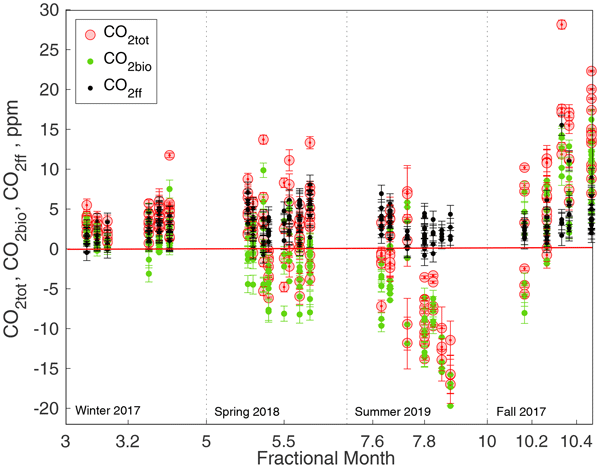
Bianca C. Baier, John B. Miller, Colm Sweeney, Scott J. Lehman, Chad Wolak, Joshua P. DiGangi, Yonghoon Choi, Kenneth Davis, Sha Feng, and Thomas Lauvaux
Atmos. Chem. Phys., 25, 10479–10497, https://doi.org/10.5194/acp-25-10479-2025, https://doi.org/10.5194/acp-25-10479-2025, 2025
Short summary
Short summary
CO2 radiocarbon content (Δ14CO2) is a unique tracer that helps to accurately quantify anthropogenic CO2 emitted into the atmosphere. Δ14CO2 measured in airborne flask samples is used to distinguish fossil versus biogenic CO2 sources. Mid-Atlantic US CO2 variability is found to be driven by the biosphere. Errors in modeled fossil fuel CO2 are evaluated using Δ14CO2 airborne data as an avenue to improving future regional models of atmospheric CO2 transport.
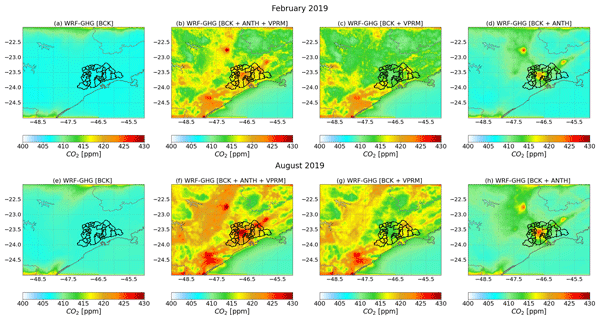
Rafaela Cruz Alves Alberti, Thomas Lauvaux, Angel Liduvino Vara-Vela, Ricard Segura Barrero, Christoffer Karoff, Maria de Fátima Andrade, Márcia Talita Amorim Marques, Noelia Rojas Benavente, Osvaldo Machado Rodrigues Cabral, Humberto Ribeiro da Rocha, and Rita Yuri Ynoue
Atmos. Chem. Phys., 25, 9803–9829, https://doi.org/10.5194/acp-25-9803-2025, https://doi.org/10.5194/acp-25-9803-2025, 2025
Short summary
Short summary
This study addresses uncertainties in atmospheric models by analyzing CO2 dynamics in a complex urban environment characterized by a dense population and tropical vegetation. High-accuracy sensors were deployed, and the Weather Research and Forecasting model coupled with Chemistry (WRF-Chem) was utilized to simulate CO2 transport, capturing variations and assessing contributions from both anthropogenic and biogenic sources.
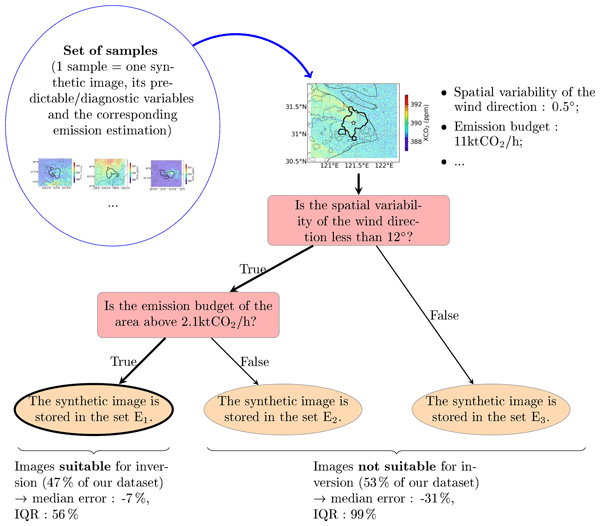
Alexandre Danjou, Grégoire Broquet, Andrew Schuh, François-Marie Bréon, and Thomas Lauvaux
Atmos. Meas. Tech., 18, 533–554, https://doi.org/10.5194/amt-18-533-2025, https://doi.org/10.5194/amt-18-533-2025, 2025
Short summary
Short summary
We study the capacity of XCO2 spaceborne imagery to estimate urban CO2 emissions with synthetic data. We define automatic and standard methods and objective criteria for image selection. The wind variability and urban emission budget guide the emission estimation error. Images with low wind variability and high urban emissions account for 47 % of images and give a bias in the emission estimation of −7 % and a spread of 56 %. Other images give a bias of −31 % and a spread of 99 %.
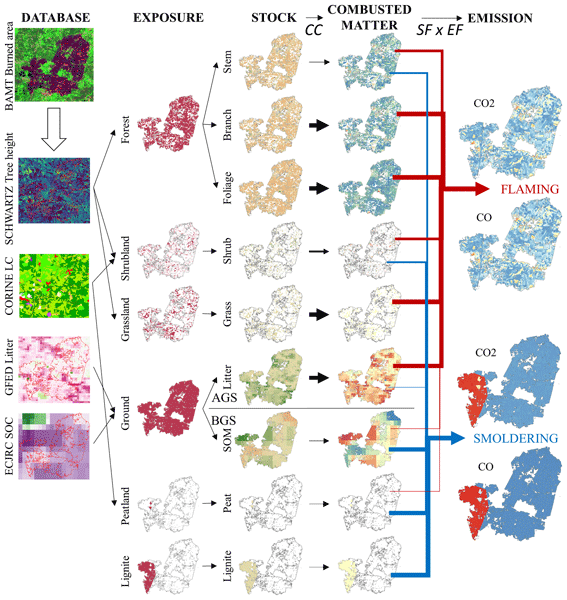
Lilian Vallet, Charbel Abdallah, Thomas Lauvaux, Lilian Joly, Michel Ramonet, Philippe Ciais, Morgan Lopez, Irène Xueref-Remy, and Florent Mouillot
Biogeosciences, 22, 213–242, https://doi.org/10.5194/bg-22-213-2025, https://doi.org/10.5194/bg-22-213-2025, 2025
Short summary
Short summary
The 2022 fire season had a huge impact on European temperate forest, with several large fires exhibiting prolonged soil combustion reported. We analyzed CO and CO2 concentration recorded at nearby atmospheric towers, revealing intense smoldering combustion. We refined a fire emission model to incorporate this process. We estimated 7.95 Mteq CO2 fire emission, twice the global estimate. Fires contributed to 1.97 % of France's annual carbon footprint, reducing forest carbon sink by 30 % this year.
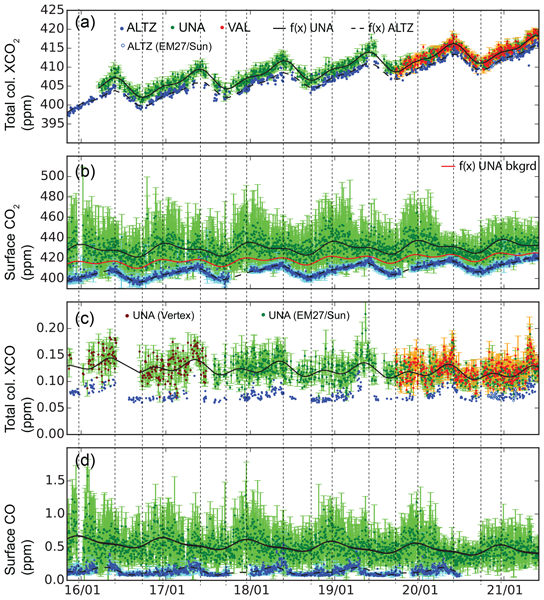
Noémie Taquet, Wolfgang Stremme, María Eugenia González del Castillo, Victor Almanza, Alejandro Bezanilla, Olivier Laurent, Carlos Alberti, Frank Hase, Michel Ramonet, Thomas Lauvaux, Ke Che, and Michel Grutter
Atmos. Chem. Phys., 24, 11823–11848, https://doi.org/10.5194/acp-24-11823-2024, https://doi.org/10.5194/acp-24-11823-2024, 2024
Short summary
Short summary
We characterize the variability in CO and CO2 emissions over Mexico City from long-term time-resolved Fourier transform infrared spectroscopy solar absorption and surface measurements from 2013 to 2021. Using the average intraday CO growth rate from total columns, the average CO / CO2 ratio and TROPOMI data, we estimate the interannual variability in the CO and CO2 anthropogenic emissions of Mexico City, highlighting the effect of an unprecedented drop in activity due to the COVID-19 lockdown.
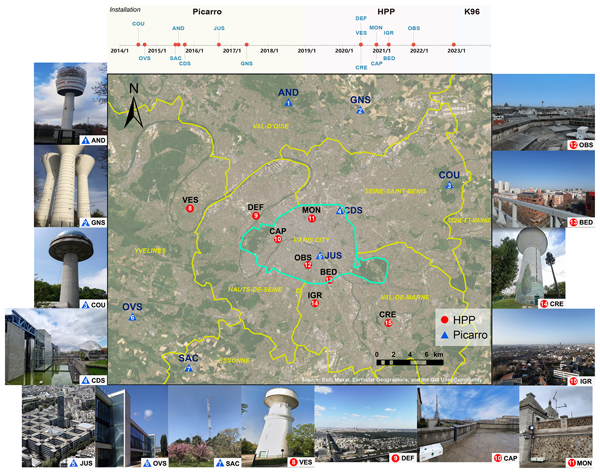
Jinghui Lian, Olivier Laurent, Mali Chariot, Luc Lienhardt, Michel Ramonet, Hervé Utard, Thomas Lauvaux, François-Marie Bréon, Grégoire Broquet, Karina Cucchi, Laurent Millair, and Philippe Ciais
Atmos. Meas. Tech., 17, 5821–5839, https://doi.org/10.5194/amt-17-5821-2024, https://doi.org/10.5194/amt-17-5821-2024, 2024
Short summary
Short summary
We have designed and deployed a mid-cost medium-precision CO2 sensor monitoring network in Paris since July 2020. The data are automatically calibrated by a newly implemented data processing system. The accuracies of the mid-cost instruments vary from 1.0 to 2.4 ppm for hourly afternoon measurements. Our model–data analyses highlight prospects for integrating mid-cost instrument data with high-precision measurements to improve fine-scale CO2 emission quantification in urban areas.
Josselin Doc, Michel Ramonet, François-Marie Bréon, Delphine Combaz, Mali Chariot, Morgan Lopez, Marc Delmotte, Cristelle Cailteau-Fischbach, Guillaume Nief, Nathanaël Laporte, Thomas Lauvaux, and Philippe Ciais
EGUsphere, https://doi.org/10.5194/egusphere-2024-2826, https://doi.org/10.5194/egusphere-2024-2826, 2024
Short summary
Short summary
Description of the network for measuring greenhouse gas concentrations in the Paris region and analysis of eight years of continuous monitoring.
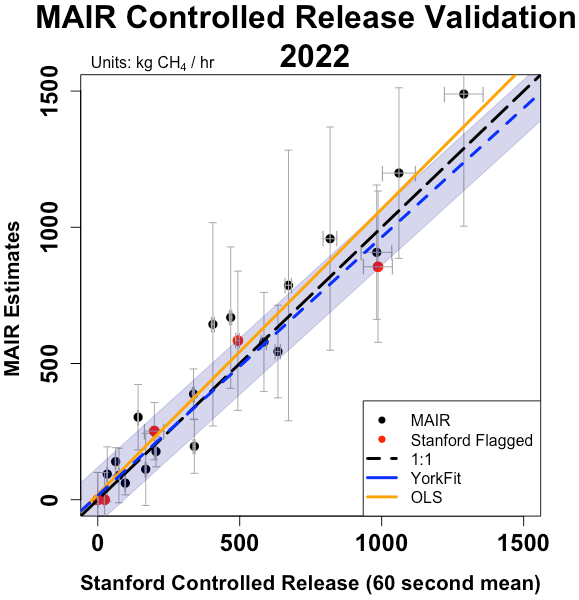
Apisada Chulakadabba, Maryann Sargent, Thomas Lauvaux, Joshua S. Benmergui, Jonathan E. Franklin, Christopher Chan Miller, Jonas S. Wilzewski, Sébastien Roche, Eamon Conway, Amir H. Souri, Kang Sun, Bingkun Luo, Jacob Hawthrone, Jenna Samra, Bruce C. Daube, Xiong Liu, Kelly Chance, Yang Li, Ritesh Gautam, Mark Omara, Jeff S. Rutherford, Evan D. Sherwin, Adam Brandt, and Steven C. Wofsy
Atmos. Meas. Tech., 16, 5771–5785, https://doi.org/10.5194/amt-16-5771-2023, https://doi.org/10.5194/amt-16-5771-2023, 2023
Short summary
Short summary
We show that MethaneAIR, a precursor to the MethaneSAT satellite, demonstrates accurate point source quantification during controlled release experiments and regional observations in 2021 and 2022. Results from our two independent quantification methods suggest the accuracy of our sensor and algorithms is better than 25 % for sources emitting 200 kg h−1 or more. Insights from these measurements help establish the capabilities of MethaneSAT and MethaneAIR.
Ioannis Cheliotis, Thomas Lauvaux, Jinghui Lian, Theodoros Christoudias, George Georgiou, Alba Badia, Frédéric Chevallier, Pramod Kumar, Yathin Kudupaje, Ruixue Lei, and Philippe Ciais
EGUsphere, https://doi.org/10.5194/egusphere-2023-2487, https://doi.org/10.5194/egusphere-2023-2487, 2023
Preprint withdrawn
Short summary
Short summary
A consistent estimation of CO2 emissions is complicated due to the scarcity of CO2 observations. In this study, we showcase the potential to improve the CO2 emissions estimations from the NO2 concentrations based on the NO2-to-CO2 ratio, which should be constant for a source co-emitting NO2 and CO2, by comparing satellite observations with atmospheric chemistry and transport model simulations for NO2 and CO2. Furthermore, we demonstrate the significance of the chemistry in NO2 simulations.
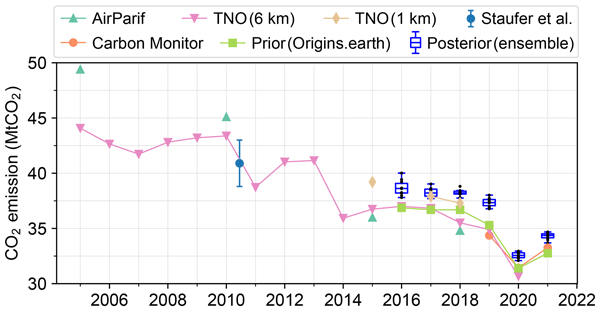
Jinghui Lian, Thomas Lauvaux, Hervé Utard, François-Marie Bréon, Grégoire Broquet, Michel Ramonet, Olivier Laurent, Ivonne Albarus, Mali Chariot, Simone Kotthaus, Martial Haeffelin, Olivier Sanchez, Olivier Perrussel, Hugo Anne Denier van der Gon, Stijn Nicolaas Camiel Dellaert, and Philippe Ciais
Atmos. Chem. Phys., 23, 8823–8835, https://doi.org/10.5194/acp-23-8823-2023, https://doi.org/10.5194/acp-23-8823-2023, 2023
Short summary
Short summary
This study quantifies urban CO2 emissions via an atmospheric inversion for the Paris metropolitan area over a 6-year period from 2016 to 2021. Results show a long-term decreasing trend of about 2 % ± 0.6 % per year in the annual CO2 emissions over Paris. We conclude that our current capacity can deliver near-real-time CO2 emission estimates at the city scale in under a month, and the results agree within 10 % with independent estimates from multiple city-scale inventories.
Joffrey Dumont Le Brazidec, Pierre Vanderbecken, Alban Farchi, Marc Bocquet, Jinghui Lian, Grégoire Broquet, Gerrit Kuhlmann, Alexandre Danjou, and Thomas Lauvaux
Geosci. Model Dev., 16, 3997–4016, https://doi.org/10.5194/gmd-16-3997-2023, https://doi.org/10.5194/gmd-16-3997-2023, 2023
Short summary
Short summary
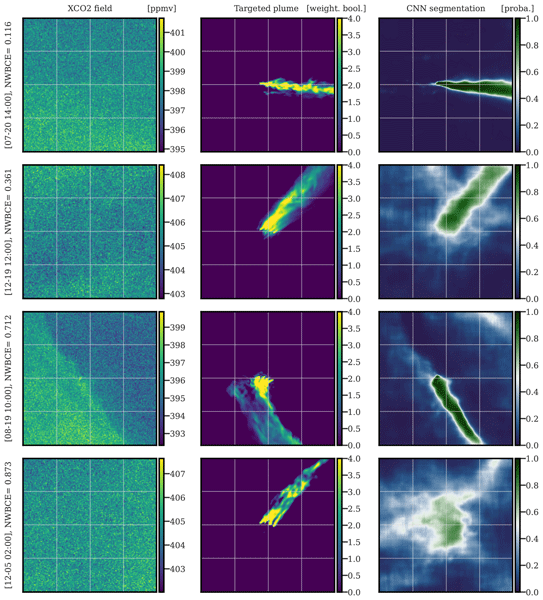
Monitoring of CO2 emissions is key to the development of reduction policies. Local emissions, from cities or power plants, may be estimated from CO2 plumes detected in satellite images. CO2 plumes generally have a weak signal and are partially concealed by highly variable background concentrations and instrument errors, which hampers their detection. To address this problem, we propose and apply deep learning methods to detect the contour of a plume in simulated CO2 satellite images.
E. Ouerghi, T. Ehret, C. de Franchis, G. Facciolo, T. Lauvaux, E. Meinhardt, and J.-M. Morel
ISPRS Ann. Photogramm. Remote Sens. Spatial Inf. Sci., V-3-2022, 147–154, https://doi.org/10.5194/isprs-annals-V-3-2022-147-2022, https://doi.org/10.5194/isprs-annals-V-3-2022-147-2022, 2022
Zhu Deng, Philippe Ciais, Zitely A. Tzompa-Sosa, Marielle Saunois, Chunjing Qiu, Chang Tan, Taochun Sun, Piyu Ke, Yanan Cui, Katsumasa Tanaka, Xin Lin, Rona L. Thompson, Hanqin Tian, Yuanzhi Yao, Yuanyuan Huang, Ronny Lauerwald, Atul K. Jain, Xiaoming Xu, Ana Bastos, Stephen Sitch, Paul I. Palmer, Thomas Lauvaux, Alexandre d'Aspremont, Clément Giron, Antoine Benoit, Benjamin Poulter, Jinfeng Chang, Ana Maria Roxana Petrescu, Steven J. Davis, Zhu Liu, Giacomo Grassi, Clément Albergel, Francesco N. Tubiello, Lucia Perugini, Wouter Peters, and Frédéric Chevallier
Earth Syst. Sci. Data, 14, 1639–1675, https://doi.org/10.5194/essd-14-1639-2022, https://doi.org/10.5194/essd-14-1639-2022, 2022
Short summary
Short summary
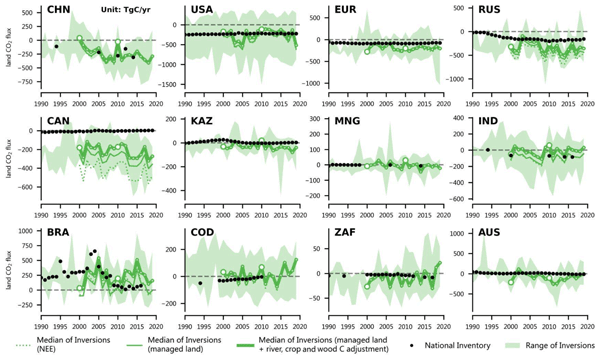
In support of the global stocktake of the Paris Agreement on climate change, we proposed a method for reconciling the results of global atmospheric inversions with data from UNFCCC national greenhouse gas inventories (NGHGIs). Here, based on a new global harmonized database that we compiled from the UNFCCC NGHGIs and a comprehensive framework presented in this study to process the results of inversions, we compared their results of carbon dioxide (CO2), methane (CH4), and nitrous oxide (N2O).
Cited articles
Abdallah, C.: CRO2A – Illustrative example data (Version 0) [Data set], Zenodo [data set], https://doi.org/10.5281/zenodo.17161463, 2025. a
Andrews, A. E., Kofler, J. D., Trudeau, M. E., Williams, J. C., Neff, D. H., Masarie, K. A., Chao, D. Y., Kitzis, D. R., Novelli, P. C., Zhao, C. L., Dlugokencky, E. J., Lang, P. M., Crotwell, M. J., Fischer, M. L., Parker, M. J., Lee, J. T., Baumann, D. D., Desai, A. R., Stanier, C. O., De Wekker, S. F. J., Wolfe, D. E., Munger, J. W., and Tans, P. P.: CO2, CO, and CH4 measurements from tall towers in the NOAA Earth System Research Laboratory's Global Greenhouse Gas Reference Network: instrumentation, uncertainty analysis, and recommendations for future high-accuracy greenhouse gas monitoring efforts, Atmos. Meas. Tech., 7, 647–687, https://doi.org/10.5194/amt-7-647-2014, 2014. a
Bangare, S. L., Dubal, A., Bangare, P. S., and Patil, S.: Reviewing Otsu's method for image thresholding, Int. J. Appl. Eng. Res., 10, 21777–21783, 2015. a
Bousquet, P., Peylin, P., Ciais, P., Quéré, C. L., Friedlingstein, P., and Tans, P. P.: Regional Changes in Carbon Dioxide Fluxes of Land and Oceans Since 1980, Science, 290, 1342–1346, https://doi.org/10.1126/science.290.5495.1342, 2000. a
Chevallier, F., Remaud, M., O'Dell, C. W., Baker, D., Peylin, P., and Cozic, A.: Objective evaluation of surface- and satellite-driven carbon dioxide atmospheric inversions, Atmos. Chem. Phys., 19, 14233–14251, https://doi.org/10.5194/acp-19-14233-2019, 2019. a
Copernicus Climate Change Service: ERA5 hourly data on pressure levels from 1940 to present, https://doi.org/10.24381/CDS.BD0915C6, 2018. a
Debnath, S., Govardhan, G., Jat, R., Kalita, G., Yadav, P., Jena, C., Kumar, R., and Ghude, S. D.: Black carbon emissions and its impact on the monsoon rainfall patterns over the Indian subcontinent: Insights into localized warming effects, Atmospheric Environ.: X, 22, 100257, https://doi.org/10.1016/j.aeaoa.2024.100257, 2024. a
de Burgh-Day, C. O. and Leeuwenburg, T.: Machine learning for numerical weather and climate modelling: a review, Geosci. Model Dev., 16, 6433–6477, https://doi.org/10.5194/gmd-16-6433-2023, 2023. a, b
Doan, Q.-V., Amagasa, T., Pham, T.-H., Sato, T., Chen, F., and Kusaka, H.: Structural k-means (S k-means) and clustering uncertainty evaluation framework (CUEF) for mining climate data, Geosci. Model Dev., 16, 2215–2233, https://doi.org/10.5194/gmd-16-2215-2023, 2023. a, b, c
Doc, J., Ramonet, M., Bréon, F.-M., Combaz, D., Chariot, M., Lopez, M., Delmotte, M., Cailteau-Fischbach, C., Nief, G., Laporte, N., Lauvaux, T., and Ciais, P.: The monitoring network of greenhouse gas (CO2, CH4) in the Paris' region, EGUsphere [preprint], https://doi.org/10.5194/egusphere-2024-2826, 2024. a
Enting, I. G. and Mansbridge, J. V.: Seasonal sources and sinks of atmospheric CO2 Direct inversion of filtered data, Tellus B, 41, 111–126, https://doi.org/10.3402/tellusb.v41i2.15056, 1989. a
Guo, Y., Roychoudhury, C., Mirrezaei, M. A., Kumar, R., Sorooshian, A., and Arellano, A. F.: Investigating ground-level ozone pollution in semi-arid and arid regions of Arizona using WRF-Chem v4.4 modeling, Geosci. Model Dev., 17, 4331–4353, https://doi.org/10.5194/gmd-17-4331-2024, 2024. a
Hadamard, J.: Sur les problemes aux derivees partielles et leur signification physique, Princeton University Bulletin, 49–52, 1902. a
Hari, P., Petäjä, T., Bäck, J., Kerminen, V.-M., Lappalainen, H. K., Vihma, T., Laurila, T., Viisanen, Y., Vesala, T., and Kulmala, M.: Conceptual design of a measurement network of the global change, Atmos. Chem. Phys., 16, 1017–1028, https://doi.org/10.5194/acp-16-1017-2016, 2016. a
Kort, E. A., Angevine, W. M., Duren, R., and Miller, C. E.: Surface observations for monitoring urban fossil fuel CO2 emissions: Minimum site location requirements for the Los Angeles megacity, J. Geophys. Res.-Atmos., 118, 1577–1584, https://doi.org/10.1002/jgrd.50135, 2013. a
Lauvaux, T., Schuh, A. E., Bocquet, M., Wu, L., Richardson, S., Miles, N., and Davis, K. J.: Network design for mesoscale inversions of CO2 sources and sinks, Tellus B, 64, 17980, https://doi.org/10.3402/tellusb.v64i0.17980, 2012. a, b
Lian, J., Lauvaux, T., Utard, H., Bréon, F.-M., Broquet, G., Ramonet, M., Laurent, O., Albarus, I., Chariot, M., Kotthaus, S., Haeffelin, M., Sanchez, O., Perrussel, O., Denier van der Gon, H. A., Dellaert, S. N. C., and Ciais, P.: Can we use atmospheric CO2 measurements to verify emission trends reported by cities? Lessons from a 6-year atmospheric inversion over Paris, Atmos. Chem. Phys., 23, 8823–8835, https://doi.org/10.5194/acp-23-8823-2023, 2023. a
Liu, D. and Yu, J.: Otsu Method and K-means, in: vol. 1, 2009 Ninth International Conference on Hybrid Intelligent Systems, 344–349, https://doi.org/10.1109/HIS.2009.74, 2009. a
Lopez-Coto, I., Ghosh, S., Prasad, K., and Whetstone, J.: Tower-based greenhouse gas measurement network design – The National Institute of Standards and Technology North East Corridor Testbed, Adv. Atmos. Sci., 34, 1095–1105, https://doi.org/10.1007/s00376-017-6094-6, 2017. a
Lucas, D. D., Yver Kwok, C., Cameron-Smith, P., Graven, H., Bergmann, D., Guilderson, T. P., Weiss, R., and Keeling, R.: Designing optimal greenhouse gas observing networks that consider performance and cost, Geosci. Instrum. Meth. Data Syst., 4, 121–137, https://doi.org/10.5194/gi-4-121-2015, 2015. a, b
Mahadevan, P., Wofsy, S. C., Matross, D. M., Xiao, X., Dunn, A. L., Lin, J. C., Gerbig, C., Munger, J. W., Chow, V. Y., and Gottlieb, E. W.: A satellite‐based biosphere parameterization for net ecosystem CO2 exchange: Vegetation Photosynthesis and Respiration Model (VPRM), Global Biogeochem. Cy., 22, https://doi.org/10.1029/2006gb002735, 2008. a
Matajira-Rueda, D., Abdallah, C., and Lauvaux, T.: CRO2A, Zenodo [code and data set], https://doi.org/10.5281/zenodo.17161303, 2025. a
Miles, N. L., Richardson, S. J., Davis, K. J., Lauvaux, T., Andrews, A. E., West, T. O., Bandaru, V., and Crosson, E. R.: Large amplitude spatial and temporal gradients in atmospheric boundary layer CO2mole fractions detected with a tower-based network in the U.S. upper Midwest, J. Geophys. Res.-Biogeo., 117, https://doi.org/10.1029/2011JG001781, 2012. a
Miles, N. L., Richardson, S. J., Lauvaux, T., Davis, K. J., Balashov, N. V., Deng, A., Turnbull, J. C., Sweeney, C., Gurney, K. R., Patarasuk, R., Razlivanov, I., Cambaliza, M. O. L., and Shepson, P. B.: Quantification of urban atmospheric boundary layer greenhouse gas dry mole fraction enhancements in the dormant season: Results from the Indianapolis Flux Experiment (INFLUX), Elementa, 5, 27, https://doi.org/10.1525/elementa.127, 2017. a
Nalini, K., Sijikumar, S., Valsala, V., Tiwari, Y. K., and Ramachandran, R.: Designing surface CO2 monitoring network to constrain the Indian land fluxes, Atmos. Environ., 218, 117003, https://doi.org/10.1016/j.atmosenv.2019.117003, 2019. a, b
Nickless, A., Ziehn, T., Rayner, P. J., Scholes, R. J., and Engelbrecht, F.: Greenhouse gas network design using backward Lagrangian particle dispersion modelling – Part 2: Sensitivity analyses and South African test case, Atmos. Chem. Phys., 15, 2051–2069, https://doi.org/10.5194/acp-15-2051-2015, 2015. a
Nickless, A., Scholes, R. J., Vermeulen, A., Beck, J., López-Ballesteros, A., Ardö, J., Karstens, U., Rigby, M., Kasurinen, V., Pantazatou, K., Jorch, V., and Kutsch, W.: Greenhouse gas observation network design for Africa, Tellus B, 72, 1–30, https://doi.org/10.1080/16000889.2020.1824486, 2020. a, b
Patra, P. K. and Maksyutov, S.: Incremental approach to the optimal network design for CO2 surface source inversion, Geophys. Res. Lett., 29, 97-1–97-4, https://doi.org/10.1029/2001GL013943, 2002. a, b
Rayner, P. J., Enting, I. G., and Trudinger, C. M.: Optimizing the CO2 observing network for constraining sources and sinks, Tellus B, 48, 433–444, https://doi.org/10.3402/tellusb.v48i4.15924, 1996. a
Shiga, Y. P., Michalak, A. M., Randolph Kawa, S., and Engelen, R. J.: In-situ CO2 monitoring network evaluation and design: A criterion based on atmospheric CO2 variability, J. Geophys. Res.-Atmos., 118, 2007–2018, https://doi.org/10.1002/jgrd.50168, 2013. a, b
Shusterman, A. A., Teige, V. E., Turner, A. J., Newman, C., Kim, J., and Cohen, R. C.: The BErkeley Atmospheric CO2 Observation Network: initial evaluation, Atmospheric Chemistry and Physics, 16, 13449–13463, https://doi.org/10.5194/acp-16-13449-2016, 2016. a
Sim, S., Jeong, S., Park, C., Shin, J., Kim, I., Ban, S., and Lim, C.-S.: Designing an Atmospheric Monitoring Network to Verify National CO2 Emissions, Asia-Pacif. J. Atmos. Sci., 60, 131–141, 2024. a
Skamarock, W. C., Klemp, J. B., Dudhia, J., Gill, D. O., Barker, D. M., Duda, M. G., Huang, X.-Y., Wang, W., and Powers, J. G.: A description of the advanced research WRF version 3, NCAR technical note 475, 10-5065, NCAR, https://doi.org/10.5065/D68S4MVH, 2008. a
Super, I., Dellaert, S. N. C., Visschedijk, A. J. H., and Denier van der Gon, H. A. C.: Uncertainty analysis of a European high-resolution emission inventory of CO2 and CO to support inverse modelling and network design, Atmos. Chem. Phys., 20, 1795–1816, https://doi.org/10.5194/acp-20-1795-2020, 2020. a
Taquet, N., Stremme, W., González del Castillo, M. E., Almanza, V., Bezanilla, A., Laurent, O., Alberti, C., Hase, F., Ramonet, M., Lauvaux, T., Che, K., and Grutter, M.: CO2 and CO temporal variability over Mexico City from ground-based total column and surface measurements, Atmos. Chem. Phys., 24, 11823–11848, https://doi.org/10.5194/acp-24-11823-2024, 2024. a
Theodoridis, S. and Koutroumbas, K.: Pattern recognition, Elsevier, ISBN 9780080949123, 2006. a
Thompson, R. L. and Pisso, I.: A flexible algorithm for network design based on information theory, Atmos. Meas. Tech., 16, 235–246, https://doi.org/10.5194/amt-16-235-2023, 2023. a
van der Gon, H. D., Kuenen, J., Boleti, E., Muntean, M., Maenhout, G., Marshall, J., and Haussaire, J.: Emissions and natural fluxes Dataset, CHE Consortium, TNO, https://che-project.eu/ (last access: 5 May 2026), 2019. a
van der Woude, A. M., Peters, W., Joetzjer, E., Lafont, S., Koren, G., Ciais, P., Ramonet, M., Xu, Y., , Bastos, A., Botía, S., Sitch, S., de Kok, R., Kneuer, T., Kubistin, D., Jacotot, A., Loubet, B., Herig-Coimbra, P.-H., Loustau, D., and Luijkx, I. T.: Temperature extremes of 2022 reduced carbon uptake by forests in Europe, Nat. Commun., 14, 6218, https://doi.org/10.1038/s41467-023-41851-0, 2023. a
Vardag, S. N. and Maiwald, R.: Optimising urban measurement networks for CO2 flux estimation: a high-resolution observing system simulation experiment using GRAMM/GRAL, Geosci. Model Dev., 17, 1885–1902, https://doi.org/10.5194/gmd-17-1885-2024, 2024. a
Villalobos, Y., Gómez-Ortiz, C., Scholze, M., Monteil, G., Karstens, U., Fiore, A., Brunner, D., Thanwerdas, J., and Cristofanelli, P.: Towards improving top–down national CO2 estimation in Europe: potential from expanding the ICOS atmospheric network in Italy, Environ. Res. Lett., 20, 054002, https://doi.org/10.1088/1748-9326/adc41e, 2025. a
Wang, H. and Song, M.: Ckmeans. 1d.dp: optimal k-means clustering in one dimension by dynamic programming, R J., 3, 29–33, 2011. a
Wang, Y., Tian, X., Duan, M., Zhu, D., Liu, D., Zhang, H., Zhou, M., Zhao, M., Jin, Z., Ding, J., Wang, T., and Piao, S.: Optimal design of surface CO2 observation network to constrain China's land carbon sink, Sci. Bull., 68, 1678–1686, https://doi.org/10.1016/j.scib.2023.07.010, 2023. a
Ziehn, T., Nickless, A., Rayner, P. J., Law, R. M., Roff, G., and Fraser, P.: Greenhouse gas network design using backward Lagrangian particle dispersion modelling – Part 1: Methodology and Australian test case, Atmos. Chem. Phys., 14, 9363–9378, https://doi.org/10.5194/acp-14-9363-2014, 2014. a, b, c, d, e, f, g, h, i, j, k, l, m, n, o, p, q, r, s, t, u, v
Ziehn, T., Law, R. M., Rayner, P. J., and Roff, G.: Designing optimal greenhouse gas monitoring networks for Australia, Geosci. Instrum. Meth. Data Syst., 5, 1–15, https://doi.org/10.5194/gi-5-1-2016, 2016. a
Short summary
This study presents a scheme, Concepteur de Réseaux Optimaux d’Observations Atmosphériques (CRO2A), for designing optimal mesoscale atmospheric monitoring networks without relying on typical inverse modeling assumptions. It leverages direct simulations of greenhouse gas concentrations to minimize the number of ground-based monitoring stations and maximize network performance through automated processing at a balanced computational cost, while being compatible with high-performance computing.
This study presents a scheme, Concepteur de Réseaux Optimaux d’Observations Atmosphériques...


