
Articles | Volume 19, issue 9
https://doi.org/10.5194/gmd-19-3617-2026
© Author(s) 2026. This work is distributed under
the Creative Commons Attribution 4.0 License.
the Creative Commons Attribution 4.0 License.
https://doi.org/10.5194/gmd-19-3617-2026
© Author(s) 2026. This work is distributed under
the Creative Commons Attribution 4.0 License.
the Creative Commons Attribution 4.0 License.
Model description paper
| 
05 May 2026
Model description paper |
| 05 May 2026
| 05 May 2026
Incorporating observed fire severity in refined emissions estimates for boreal and temperate forest fires in the carbon budget model CBM-CFS3 v1.2
Dan K. Thompson
CORRESPONDING AUTHOR
Natural Resources Canada, Canadian Forest Service, Great Lakes Forestry Centre, Sault Ste. Marie, Canada
Ellen Whitman
Natural Resources Canada, Canadian Forest Service, Northern Forestry Centre, Edmonton, Canada
Mark Hafer
Natural Resources Canada, Canadian Forest Service, Pacific Forestry Centre, Victoria, Canada
Oleksandra Hararuk
Natural Resources Canada, Canadian Forest Service, Northern Forestry Centre, Edmonton, Canada
Chelene Hanes
Natural Resources Canada, Canadian Forest Service, Great Lakes Forestry Centre, Sault Ste. Marie, Canada
Vinicius Manvailer Goncalves
Natural Resources Canada, Canadian Forest Service, Pacific Forestry Centre, Victoria, Canada
Ben Hudson
Natural Resources Canada, Canadian Forest Service, Pacific Forestry Centre, Victoria, Canada
Related authors
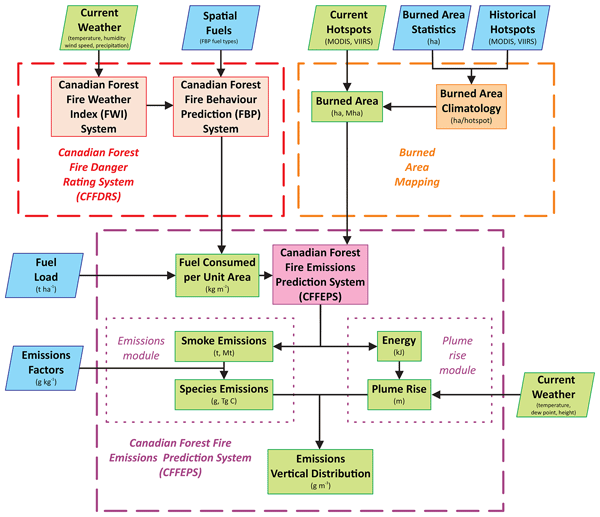
Kerry Anderson, Jack Chen, Peter Englefield, Debora Griffin, Paul A. Makar, and Dan Thompson
Geosci. Model Dev., 17, 7713–7749, https://doi.org/10.5194/gmd-17-7713-2024, https://doi.org/10.5194/gmd-17-7713-2024, 2024
Short summary
Short summary
The Global Forest Fire Emissions Prediction System (GFFEPS) is a model that predicts smoke and carbon emissions from wildland fires. The model calculates emissions from the ground up based on satellite-detected fires, modelled weather and fire characteristics. Unlike other global models, GFFEPS uses daily weather conditions to capture changing burning conditions on a day-to-day basis. GFFEPS produced lower carbon emissions due to the changing weather not captured by the other models.
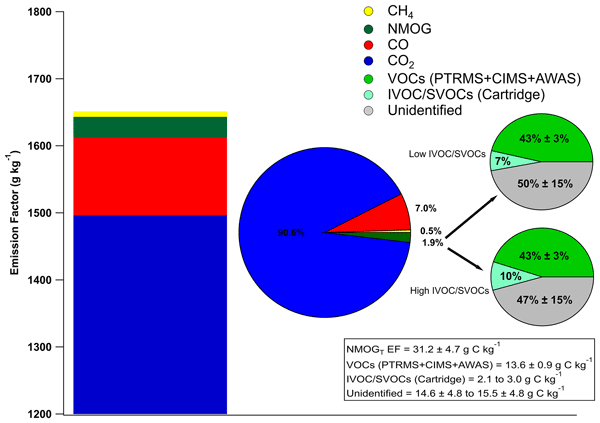
Katherine L. Hayden, Shao-Meng Li, John Liggio, Michael J. Wheeler, Jeremy J. B. Wentzell, Amy Leithead, Peter Brickell, Richard L. Mittermeier, Zachary Oldham, Cristian M. Mihele, Ralf M. Staebler, Samar G. Moussa, Andrea Darlington, Mengistu Wolde, Daniel Thompson, Jack Chen, Debora Griffin, Ellen Eckert, Jenna C. Ditto, Megan He, and Drew R. Gentner
Atmos. Chem. Phys., 22, 12493–12523, https://doi.org/10.5194/acp-22-12493-2022, https://doi.org/10.5194/acp-22-12493-2022, 2022
Short summary
Short summary
In this study, airborne measurements provided the most detailed characterization, to date, of boreal forest wildfire emissions. Measurements showed a large diversity of air pollutants expanding the volatility range typically reported. A large portion of organic species was unidentified, likely comprised of complex organic compounds. Aircraft-derived emissions improve wildfire chemical speciation and can support reliable model predictions of pollution from boreal forest wildfires.
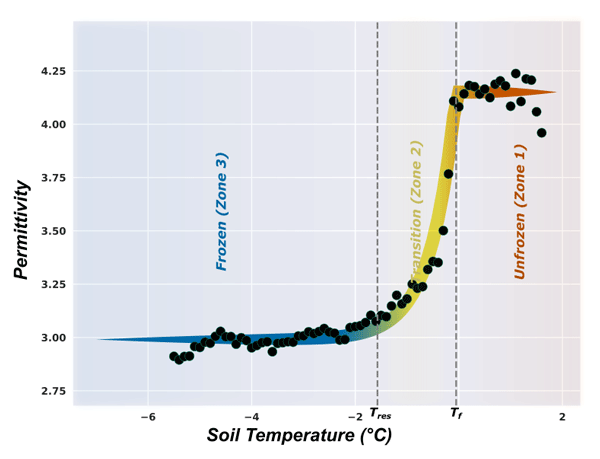
Hesam Salmabadi, Renato Pardo Lara, Aaron Berg, Alex Mavrovic, Chelene Hanes, Benoit Montpetit, and Alexandre Roy
The Cryosphere, 20, 1635–1654, https://doi.org/10.5194/tc-20-1635-2026, https://doi.org/10.5194/tc-20-1635-2026, 2026
Short summary
Short summary
Current satellite monitoring often oversimplifies soil freezing by assuming it happens exactly at 0°C. We analyzed ground data across Canada and found that soil often stays in a partially frozen state for months, even when air temperatures are well below freezing, revealing a major gap in how we track seasonally frozen ground.
Kerry Anderson, Jack Chen, Peter Englefield, Debora Griffin, Paul A. Makar, and Dan Thompson
Geosci. Model Dev., 17, 7713–7749, https://doi.org/10.5194/gmd-17-7713-2024, https://doi.org/10.5194/gmd-17-7713-2024, 2024
Short summary
Short summary
The Global Forest Fire Emissions Prediction System (GFFEPS) is a model that predicts smoke and carbon emissions from wildland fires. The model calculates emissions from the ground up based on satellite-detected fires, modelled weather and fire characteristics. Unlike other global models, GFFEPS uses daily weather conditions to capture changing burning conditions on a day-to-day basis. GFFEPS produced lower carbon emissions due to the changing weather not captured by the other models.
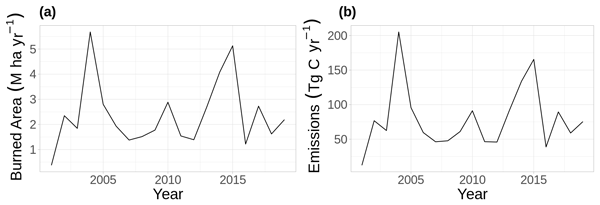
Stefano Potter, Sol Cooperdock, Sander Veraverbeke, Xanthe Walker, Michelle C. Mack, Scott J. Goetz, Jennifer Baltzer, Laura Bourgeau-Chavez, Arden Burrell, Catherine Dieleman, Nancy French, Stijn Hantson, Elizabeth E. Hoy, Liza Jenkins, Jill F. Johnstone, Evan S. Kane, Susan M. Natali, James T. Randerson, Merritt R. Turetsky, Ellen Whitman, Elizabeth Wiggins, and Brendan M. Rogers
Biogeosciences, 20, 2785–2804, https://doi.org/10.5194/bg-20-2785-2023, https://doi.org/10.5194/bg-20-2785-2023, 2023
Short summary
Short summary
Here we developed a new burned-area detection algorithm between 2001–2019 across Alaska and Canada at 500 m resolution. We estimate 2.37 Mha burned annually between 2001–2019 over the domain, emitting 79.3 Tg C per year, with a mean combustion rate of 3.13 kg C m−2. We found larger-fire years were generally associated with greater mean combustion. The burned-area and combustion datasets described here can be used for local- to continental-scale applications of boreal fire science.
Katherine L. Hayden, Shao-Meng Li, John Liggio, Michael J. Wheeler, Jeremy J. B. Wentzell, Amy Leithead, Peter Brickell, Richard L. Mittermeier, Zachary Oldham, Cristian M. Mihele, Ralf M. Staebler, Samar G. Moussa, Andrea Darlington, Mengistu Wolde, Daniel Thompson, Jack Chen, Debora Griffin, Ellen Eckert, Jenna C. Ditto, Megan He, and Drew R. Gentner
Atmos. Chem. Phys., 22, 12493–12523, https://doi.org/10.5194/acp-22-12493-2022, https://doi.org/10.5194/acp-22-12493-2022, 2022
Short summary
Short summary
In this study, airborne measurements provided the most detailed characterization, to date, of boreal forest wildfire emissions. Measurements showed a large diversity of air pollutants expanding the volatility range typically reported. A large portion of organic species was unidentified, likely comprised of complex organic compounds. Aircraft-derived emissions improve wildfire chemical speciation and can support reliable model predictions of pollution from boreal forest wildfires.
Cited articles
Akagi, S. K., Yokelson, R. J., Wiedinmyer, C., Alvarado, M. J., Reid, J. S., Karl, T., Crounse, J. D., and Wennberg, P. O.: Emission factors for open and domestic biomass burning for use in atmospheric models, Atmos. Chem. Phys., 11, 4039–4072, https://doi.org/10.5194/acp-11-4039-2011, 2011. a
Alexander, M. E.: Surface fire spread potential in trembling aspen during summer in the Boreal Forest Region of Canada, Forest. Chronic., 86, 200–212, https://doi.org/10.5558/tfc86200-2, 2010. a
Andreae, M. O.: Emission of trace gases and aerosols from biomass burning – an updated assessment, Atmos. Chem. Phys., 19, 8523–8546, https://doi.org/10.5194/acp-19-8523-2019, 2019. a
Angers, V. A., Gauthier, S., Drapeau, P., Jayen, K., Bergeron, Y., Angers, V. A., Gauthier, S., Drapeau, P., Jayen, K., and Bergeron, Y.: Tree mortality and snag dynamics in North American boreal tree species after a wildfire: a long-term study, Int. J. Wildland Fire, 20, 751–763, https://doi.org/10.1071/WF10010, 2011. a, b, c, d
Barber, Q. E., Jain, P., Whitman, E., Thompson, D. K., Guindon, L., Parks, S. A., Wang, X., Hethcoat, M. G., and Parisien, M.-A.: The Canadian Fire Spread Dataset, Sci. Data, 11, 764, https://doi.org/10.1038/s41597-024-03436-4, 2024. a, b
Beilman, D. W., Vitt, D. H., Bhatti, J. S., and Forest, S.: Peat carbon stocks in the southern Mackenzie River Basin: uncertainties revealed in a high-resolution case study, Global Change Biol., 14, 1221–1232, https://doi.org/10.1111/j.1365-2486.2008.01565.x, 2008. a
Benscoter, B. W., Thompson, D. K., Waddington, J. M., Flannigan, M. D., Wotton, B. M., d. Groot, W. J., and Turetsky, M. R.: Interactive effects of vegetation, soil moisture and bulk density on depth of burning of thick organic soils, Int. J. Wildland Fire, 20, 418–429, https://doi.org/10.1071/WF08183, 2011. a
Bernier, P. Y., Gauthier, S., Jean, P.-O., Manka, F., Boulanger, Y., Beaudoin, A., and Guindon, L.: Mapping Local Effects of Forest Properties on Fire Risk across Canada, Forests, 7, 157, https://doi.org/10.3390/f7080157, 2016. a, b
Binte Shahid, S., Lacey, F. G., Wiedinmyer, C., Yokelson, R. J., and Barsanti, K. C.: NEIVAv1.0: Next-generation Emissions InVentory expansion of Akagi et al. (2011) version 1.0, Geosci. Model Dev., 17, 7679–7711, https://doi.org/10.5194/gmd-17-7679-2024, 2024. a
Bona, K. A., Shaw, C., Thompson, D. K., Hararuk, O., Webster, K., Zhang, G., Voicu, M., and Kurz, W. A.: The Canadian model for peatlands (CaMP): A peatland carbon model for national greenhouse gas reporting, Ecol. Model., 431, 109164, https://doi.org/10.1016/j.ecolmodel.2020.109164, 2020. a, b, c
Bona, K. A., Webster, K. L., Thompson, D. K., Hararuk, O., Zhang, G., and Kurz, W. A.: Using the Canadian Model for Peatlands (CaMP) to examine greenhouse gas emissions and carbon sink strength in Canada’s boreal and temperate peatlands, Ecol. Model., 490, 110633, https://doi.org/10.1016/j.ecolmodel.2024.110633, 2024. a
Boulanger, Y., Sirois, L., and Hébert, C.: Fire severity as a determinant factor of the decomposition rate of fire-killed black spruce in the northern boreal forest, Can. J. Forest Res., 41, 370–379, https://doi.org/10.1139/X10-218, 2011. a
Boulanger, Y., Arseneault, D., Bélisle, A. C., Bergeron, Y., Boucher, J., Boucher, Y., Danneyrolles, V., Erni, S., Gachon, P., Girardin, M. P., Grant, E., Grondin, P., Jetté, J.-P., Labadie, G., Leblond, M., Leduc, A., Puigdevall, J. P., St-Laurent, M.-H., Tremblay, J., and Waldron, K.: The 2023 wildfire season in Québec: an overview of extreme conditions, impacts, lessons learned and considerations for the future, Can. J. Forest Res., 55, https://doi.org/10.1139/cjfr-2023-0298, 2024. a, b
Bourgeau-Chavez, L. L., Grelik, S. L., Billmire, M., Jenkins, L. K., Kasischke, E. S., and Turetsky, M. R.: Mapping Boreal Peatland Fire Severity and Assessing their Potential Vulnerability to Early Season Wildland Fire, Front. Forests Global Change, 3, https://doi.org/10.3389/ffgc.2020.00020, 2020. a
Brecka, A. F. J., Boulanger, Y., Searle, E. B., Taylor, A. R., Price, D. T., Zhu, Y., Shahi, C., and Chen, H. Y. H.: Sustainability of Canada's forestry sector may be compromised by impending climate change, Forest Ecol. Manage., 474, 118352, https://doi.org/10.1016/j.foreco.2020.118352, 2020. a
Brown, J. K. and DeByle, N. V.: Fire damage, mortality, and suckering in aspen, Can. J. Forest Res., 17, 1100–1109, https://doi.org/10.1139/x87-168, 1987. a, b
Byrne, B., Liu, J., Bowman, K. W., Pascolini-Campbell, M., Chatterjee, A., Pandey, S., Miyazaki, K., van der Werf, G. R., Wunch, D., Wennberg, P. O., Roehl, C. M., and Sinha, S.: Carbon emissions from the 2023 Canadian wildfires, Nature, 633, 835–839, https://doi.org/10.1038/s41586-024-07878-z, 2024. a, b, c, d
Chen, J., Anderson, K., Pavlovic, R., Moran, M. D., Englefield, P., Thompson, D. K., Munoz-Alpizar, R., and Landry, H.: The FireWork v2.0 air quality forecast system with biomass burning emissions from the Canadian Forest Fire Emissions Prediction System v2.03, Geosci. Model Dev., 12, 3283–3310, https://doi.org/10.5194/gmd-12-3283-2019, 2019. a, b, c, d, e, f, g
Clark, T. L., Radke, L., Coen, J., and Middleton, D.: Analysis of Small-Scale Convective Dynamics in a Crown Fire Using Infrared Video Camera Imagery, J. Appl. Meteorol., 38, 1401–1420, https://doi.org/10.1175/1520-0450(1999)038<1401:AOSSCD>2.0.CO;2, 1999. a
Cocke, A. E., Fulé, P. Z., and Crouse, J. E.: Comparison of burn severity assessments using Differenced Normalized Burn Ratio and ground data, Int. J. Wildland Fire, 14, 189–198, https://doi.org/10.1071/WF04010, 2005. a
Coen, J. L., Schroeder, W., and Quayle, B.: The Generation and Forecast of Extreme Winds during the Origin and Progression of the 2017 Tubbs Fire, Atmosphere, 9, 462, https://doi.org/10.3390/atmos9120462, 2018. a
Cumming, S. G.: Effective fire suppression in boreal forests, Can. J. Forest Res., 35, 772–786, https://doi.org/10.1139/x04-174, 2005. a
Davies, G. M., Domènech, R., Gray, A., and Johnson, P. C. D.: Vegetation structure and fire weather influence variation in burn severity and fuel consumption during peatland wildfires, Biogeosciences, 13, 389–398, https://doi.org/10.5194/bg-13-389-2016, 2016. a
de Groot, W., Flannigan, M. D., and Cantin, A. S.: Climate change impacts on future boreal fire regimes, Forest Ecol. Manage., 294, 35–44, https://doi.org/10.1016/j.foreco.2012.09.027, 2013. a
de Groot, W., Hanes, C. C., and Wang, Y.: Crown fuel consumption in Canadian boreal forest fires, Int. J. Wildland Fire, https://doi.org/10.1071/WF21049, 2022. a, b
Eidenshink, J., Schwind, B., Brewer, K., Zhu, Z.-L., Quayle, B., and Howard, S.: A Project for Monitoring Trends in Burn Severity, Fire Ecol., 3, 3–21, https://doi.org/10.4996/fireecology.0301003, 2007. a
Elzhov, T. V., Mullen, K. M., Spiess, A.-N., and Bolker, B.: minpack.lm: R Interface to the Levenberg-Marquardt Nonlinear Least-Squares Algorithm Found in MINPACK, Plus Support for Bounds, https://cran.r-project.org/web/packages/minpack.lm/index.html (last access: 24 April 2026), 2023. a
French, N. H. F., Graham, J., Whitman, E., and Bourgeau-Chavez, L. L.: Quantifying surface severity of the 2014 and 2015 fires in the Great Slave Lake area of Canada, Int. J. Wildland Fire, 29, 892–906, https://doi.org/10.1071/WF20008, 2020. a, b
Gibson, C. M., Chasmer, L. E., Thompson, D. K., Quinton, W. L., Flannigan, M. D., and Olefeldt, D.: Wildfire as a major driver of recent permafrost thaw in boreal peatlands, Nat. Commun., 9, 1–9, https://doi.org/10.1038/s41467-018-05457-1, 2018. a
Gibson, C. M., Estop-Aragonés, C., Flannigan, M., Thompson, D. K., and Olefeldt, D.: Increased deep soil respiration detected despite reduced overall respiration in permafrost peat plateaus following wildfire, Environ. Res. Lett., 14, 125001, https://doi.org/10.1088/1748-9326/ab4f8d, 2019. a
Griffin, D., Chen, J., Anderson, K., Makar, P., McLinden, C. A., Dammers, E., and Fogal, A.: Biomass burning CO emissions: exploring insights through TROPOMI-derived emissions and emission coefficients, Atmos. Chem. Phys., 24, 10159–10186, https://doi.org/10.5194/acp-24-10159-2024, 2024. a
Guindon, L., Bernier, P., Beaudoin, A., Pouliot, D., Villemaire, P., Hall, R., Latifovic, R., and St-Amant, R.: Annual mapping of large forest disturbances across Canada's forests using 250 m MODIS imagery from 2000 to 2011, Can. J. Forest Res., 44, 1545–1554, https://doi.org/10.1139/cjfr-2014-0229, 2014. a
Guindon, L., Gauthier, S., Manka, F., Parisien, M., Whitman, D. E., Bernier, P., Beaudoin, A., Villemaire, P., and Skakun, R.: Trends in wildfire burn severity across Canada, 1985 to 2015, Can. J. Forest Res., 51, https://doi.org/10.1139/cjfr-2020-0353, 2020. a
Guindon, L., Manka, F., Correia, D. L., Villemaire, P., Smiley, B., Bernier, P., Gauthier, S., Beaudoin, A., Boucher, J., and Boulanger, Y.: A new approach for Spatializing the CAnadian National Forest Inventory (SCANFI) using Landsat dense time series, Can. J. Forest Res., 54, https://doi.org/10.1139/cjfr-2023-0118, 2024. a
Hall, R. J., Freeburn, J. T., Groot, W. J. d., Pritchard, J. M., Lynham, T. J., and Landry, R.: Remote sensing of burn severity: experience from western Canada boreal fires, Int. J. Wildland Fire, 17, 476–489, https://doi.org/10.1071/WF08013, 2008. a, b, c
Hall, R. J., Skakun, R. S., Metsaranta, J. M., Landry, R., Fraser, R. H., Raymond, D., Gartrell, M., Decker, V., and Little, J.: Generating annual estimates of forest fire disturbance in Canada: the National Burned Area Composite, Int. J. Wildland Fire, 29, 878–891, https://doi.org/10.1071/WF19201, 2020. a, b, c
Hanes, C. C., Wang, X., Jain, P., Parisien, M.-A., Little, J. M., and Flannigan, M. D.: Fire-regime changes in Canada over the last half century, Can. J. Forest Res., 49, 256–269, https://doi.org/10.1139/cjfr-2018-0293, 2019. a
Hanes, C. C., Wang, X., and d. Groot, W. J.: Dead and down woody debris fuel loads in Canadian forests, Int. J. Wildland Fire, 30, 871–885, https://doi.org/10.1071/WF21023, 2021. a
Hanes, C. C., Wotton, M., Woolford, D. G., Martell, D. L., and Flannigan, M.: Mapping organic layer thickness and fuel load of the boreal forest in Alberta, Canada, Geoderma, 417, 115827, https://doi.org/10.1016/j.geoderma.2022.115827, 2022. a
Hanes, C. C., Wotton, M., Bourgeau-Chavez, L., Woolford, D. G., Bélair, S., Martell, D., and Flannigan, M. D.: Evaluation of new methods for drought estimation in the Canadian Forest Fire Danger Rating System, Int. J. Wildland Fire, 32, 836–853, https://doi.org/10.1071/WF22112, 2023. a
Hayden, K. L., Li, S.-M., Liggio, J., Wheeler, M. J., Wentzell, J. J. B., Leithead, A., Brickell, P., Mittermeier, R. L., Oldham, Z., Mihele, C. M., Staebler, R. M., Moussa, S. G., Darlington, A., Wolde, M., Thompson, D., Chen, J., Griffin, D., Eckert, E., Ditto, J. C., He, M., and Gentner, D. R.: Reconciling the total carbon budget for boreal forest wildfire emissions using airborne observations, Atmos. Chem. Phys., 22, 12493–12523, https://doi.org/10.5194/acp-22-12493-2022, 2022. a
Héon, J., Arseneault, D., and Parisien, M.-A.: Resistance of the boreal forest to high burn rates, P. Natl. Acad. Sci. USA, 111, 13888–13893, https://doi.org/10.1073/pnas.1409316111, 2014. a
Hessburg, P. F., Miller, C. L., Parks, S. A., Povak, N. A., Taylor, A. H., Higuera, P. E., Prichard, S. J., North, M. P., Collins, B. M., Hurteau, M. D., Larson, A. J., Allen, C. D., Stephens, S. L., Rivera-Huerta, H., Stevens-Rumann, C. S., Daniels, L. D., Gedalof, Z., Gray, R. W., Kane, V. R., Churchill, D. J., Hagmann, R. K., Spies, T. A., Cansler, C. A., Belote, R. T., Veblen, T. T., Battaglia, M. A., Hoffman, C., Skinner, C. N., Safford, H. D., and Salter, R. B.: Climate, Environment, and Disturbance History Govern Resilience of Western North American Forests, Front. Ecol. Evol., 7, https://doi.org/10.3389/fevo.2019.00239, 2019. a
Holden, S. R., Berhe, A. A., and Treseder, K. K.: Decreases in soil moisture and organic matter quality suppress microbial decomposition following a boreal forest fire, Soil Biol. Biochem., 87, 1–9, https://doi.org/10.1016/j.soilbio.2015.04.005, 2015. a
Hood, S. and Lutes, D.: Predicting Post-Fire Tree Mortality for 12 Western US Conifers Using the First Order Fire Effects Model (FOFEM), Fire Ecol., 13, 66–84, https://doi.org/10.4996/fireecology.130290243, 2017. a, b
Hornbrook, R. S., Blake, D. R., Diskin, G. S., Fried, A., Fuelberg, H. E., Meinardi, S., Mikoviny, T., Richter, D., Sachse, G. W., Vay, S. A., Walega, J., Weibring, P., Weinheimer, A. J., Wiedinmyer, C., Wisthaler, A., Hills, A., Riemer, D. D., and Apel, E. C.: Observations of nonmethane organic compounds during ARCTAS – Part 1: Biomass burning emissions and plume enhancements, Atmos. Chem. Phys., 11, 11103–11130, https://doi.org/10.5194/acp-11-11103-2011, 2011. a, b, c, d, e
Huang, X. and Rein, G.: Downward spread of smouldering peat fire: the role of moisture, density and oxygen supply, Int. J. Wildland Fire, 26, 907–918, https://doi.org/10.1071/WF16198, 2017. a
Huda, Q., Lyder, D., Collins, M., Schroeder, D., Thompson, D. K., Marshall, G., Leon, A. J., Hidalgo, K., and Hossain, M.: Study of Fuel-Smoke Dynamics in a Prescribed Fire of Boreal Black Spruce Forest through Field-Deployable Micro Sensor Systems, Fire, 3, 30, https://doi.org/10.3390/fire3030030, 2020. a
Jain, P., Barber, Q. E., Taylor, S. W., Whitman, E., Castellanos Acuna, D., Boulanger, Y., Chavardès, R. D., Chen, J., Englefield, P., Flannigan, M., Girardin, M. P., Hanes, C. C., Little, J., Morrison, K., Skakun, R. S., Thompson, D. K., Wang, X., and Parisien, M.-A.: Drivers and Impacts of the Record-Breaking 2023 Wildfire Season in Canada, Nat. Commun., 15, 6764, https://doi.org/10.1038/s41467-024-51154-7, 2024. a, b, c, d, e
Jones, M. W., Kelley, D. I., Burton, C. A., Di Giuseppe, F., Barbosa, M. L. F., Brambleby, E., Hartley, A. J., Lombardi, A., Mataveli, G., McNorton, J. R., Spuler, F. R., Wessel, J. B., Abatzoglou, J. T., Anderson, L. O., Andela, N., Archibald, S., Armenteras, D., Burke, E., Carmenta, R., Chuvieco, E., Clarke, H., Doerr, S. H., Fernandes, P. M., Giglio, L., Hamilton, D. S., Hantson, S., Harris, S., Jain, P., Kolden, C. A., Kurvits, T., Lampe, S., Meier, S., New, S., Parrington, M., Perron, M. M. G., Qu, Y., Ribeiro, N. S., Saharjo, B. H., San-Miguel-Ayanz, J., Shuman, J. K., Tanpipat, V., van der Werf, G. R., Veraverbeke, S., and Xanthopoulos, G.: State of Wildfires 2023–2024, Earth Syst. Sci. Data, 16, 3601–3685, https://doi.org/10.5194/essd-16-3601-2024, 2024. a
Kaiser, J. W., Heil, A., Andreae, M. O., Benedetti, A., Chubarova, N., Jones, L., Morcrette, J.-J., Razinger, M., Schultz, M. G., Suttie, M., and van der Werf, G. R.: Biomass burning emissions estimated with a global fire assimilation system based on observed fire radiative power, Biogeosciences, 9, 527–554, https://doi.org/10.5194/bg-9-527-2012, 2012. a
Kasischke, E. S., O'Neill, K. P., French, N. H. F., and Bourgeau-Chavez, L. L.: Controls on Patterns of Biomass Burning in Alaskan Boreal Forests, Springer, 173–196, ISBN 978-0-387-21629-4, https://doi.org/10.1007/978-0-387-21629-4_10, 2000. a
Key, C. H. and Benson, N. C.: Landscape Assessment (LA), in: FIREMON: Fire effects monitoring and inventory system, Gen. Tech. Rep. RMRS-GTR-164-CD, edited by: Lutes, D. C., Keane, R. E., Caratti, J. F., Key, C. H., Benson, N. C., Sutherland, S., and Gangi, L. J., Department of Agriculture, Forest Service, Rocky Mountain Research Station. Fort Collins, CO, USA, LA-1-55, 164, https://www.fs.usda.gov/treesearch/pubs/24066 (last access: 24 April 2026), 2006. a, b
Kuntzemann, C. E., Whitman, E., Stralberg, D., Parisien, M.-A., Thompson, D. K., and Nielsen, S. E.: Peatlands promote fire refugia in boreal forests of northern Alberta, Canada, Ecosphere, 14, e4510, https://doi.org/10.1002/ecs2.4510, 2023. a
Kurz, W. A., Apps, M., Banfield, E., and Stinson, G.: Forest carbon accounting at the operational scale, Forest. Chronic., 78, 672–679, https://doi.org/10.5558/tfc78672-5, 2002. a
Kurz, W. A., Dymond, C. C., White, T. M., Stinson, G., Shaw, C. H., Rampley, G. J., Smyth, C., Simpson, B. N., Neilson, E. T., Trofymow, J. A., Metsaranta, J., and Apps, M. J.: CBM-CFS3: A model of carbon-dynamics in forestry and land-use change implementing IPCC standards, Ecol. Model., 220, 480–504, https://doi.org/10.1016/j.ecolmodel.2008.10.018, 2009. a, b
Letang, D. and de Groot, W.: Forest floor depths and fuel loads in upland Canadian forests, Can. J. Forest Res., 42, 1551–1565, https://doi.org/10.1139/x2012-093, 2012. a, b, c, d
Linn, R. R., Goodrick, S. L., Brambilla, S., Brown, M. J., Middleton, R. S., O'Brien, J. J., and Hiers, J. K.: QUIC-fire: A fast-running simulation tool for prescribed fire planning, Environ. Model. Softw., 125, 104616, https://doi.org/10.1016/j.envsoft.2019.104616, 2020. a
McAlpine, R. S.: Testing the Effect of Fuel Consumption on Fire Spread Rate, Int. J. Wildland Fire, 5, 143–152, https://doi.org/10.1071/wf9950143, 1995. a
McRae, D. J., Lynham, T. J., and Frech, R. J.: Understory prescribed burning in red pine and white pine, Forest. Chronic., 70, 395–401, https://doi.org/10.5558/tfc70395-4, 1994. a
McRae, D. J., Stocks, B. J., Mason, J. A., Lynham, T. J., Blake, T. W., and Hanes, C. C.: Influence of ignition type on fire behavior in semi-mature jack pine, Information Report GLC-X-19, https://ostrnrcan-dostrncan.canada.ca/handle/1845/236967 (last access: 24 April 2026), 2017. a
Melton, J. R., Arora, V. K., Wisernig-Cojoc, E., Seiler, C., Fortier, M., Chan, E., and Teckentrup, L.: CLASSIC v1.0: the open-source community successor to the Canadian Land Surface Scheme (CLASS) and the Canadian Terrestrial Ecosystem Model (CTEM) – Part 1: Model framework and site-level performance, Geosci. Model Dev., 13, 2825–2850, https://doi.org/10.5194/gmd-13-2825-2020, 2020. a
Michaletz, S. T. and Johnson, E. A.: A heat transfer model of crown scorch in forest fires, Can. J. Forest Res., 36, 2839–2851, https://doi.org/10.1139/x06-158, 2006. a
O'Donnell, J. A., Harden, J. W., McGUIRE, A. D., Kanevskiy, M. Z., Jorgenson, M. T., and Xu, X.: The effect of fire and permafrost interactions on soil carbon accumulation in an upland black spruce ecosystem of interior Alaska: implications for post-thaw carbon loss, Global Change Biol., 17, 1461–1474, https://doi.org/10.1111/j.1365-2486.2010.02358.x, 2011. a
Ottmar, R. D., Burns, M. F., Hall, J. N., and Hanson, A. D.: CONSUME: users guide, Gen. Tech. Rep. PNW-GTR-304. US Department of Agriculture, Forest Service, Pacific Northwest Research Station, Portland, OR, 118 pp., https://doi.org/10.2737/PNW-GTR-304, 1993. a
Parisien, M.-A., Barber, Q. E., Hirsch, K. G., Stockdale, C. A., Erni, S., Wang, X., Arseneault, D., and Parks, S. A.: Fire deficit increases wildfire risk for many communities in the Canadian boreal forest, Nat. Commun., 11, 1–9, https://doi.org/10.1038/s41467-020-15961-y, 2020. a
Parks, S. A., Dillon, G. K., and Miller, C.: A New Metric for Quantifying Burn Severity: The Relativized Burn Ratio, Remote Sens., 6, 1827–1844, https://doi.org/10.3390/rs6031827, 2014. a
Parks, S. A., Parisien, M.-A., Miller, C., Holsinger, L. M., and Baggett, L. S.: Fine-scale spatial climate variation and drought mediate the likelihood of reburning, Ecol. Appl., 28, 573–586, https://doi.org/10.1002/eap.1671, 2018. a, b
Parks, S. A., Holsinger, L. M., Koontz, M. J., Collins, L., Whitman, E., Parisien, M.-A., Loehman, R. A., Barnes, J. L., Bourdon, J.-F., Boucher, J., Boucher, Y., Caprio, A. C., Collingwood, A., Hall, R. J., Park, J., Saperstein, L. B., Smetanka, C., Smith, R. J., and Soverel, N.: Giving Ecological Meaning to Satellite-Derived Fire Severity Metrics across North American Forests, Remote Sens., 11, 1735, https://doi.org/10.3390/rs11141735, 2019. a, b
Pérez-Izquierdo, L., Clemmensen, K. E., Strengbom, J., Nilsson, M.-C., and Lindahl, B.: Quantification of tree fine roots by real-time PCR, Plant Soil, 440, 593–600, https://doi.org/10.1007/s11104-019-04096-9, 2019. a
Saberi, S., Agne, M., Harvey, B. J., Saberi, S., Agne, M., and Harvey, B. J.: Do you CBI what I see? The relationship between the Composite Burn Index and quantitative field measures of burn severity varies across gradients of forest structure, Int. J. Wildland Fire, 31, 112–123, https://doi.org/10.1071/WF21062, 2022. a, b
Santín, C., Doerr, S. H., Preston, C. M., and González-Rodríguez, G.: Pyrogenic organic matter production from wildfires: a missing sink in the global carbon cycle, Global Change Biol., 21, 1621–1633, https://doi.org/10.1111/gcb.12800, 2015. a
Simon, H., Beck, L., Bhave, P. V., Divita, F., Hsu, Y., Luecken, D., Mobley, J. D., Pouliot, G. A., Reff, A., Sarwar, G., and Strum, M.: The development and uses of EPA's SPECIATE database, Atmos. Pollut. Res., 1, 196–206, https://doi.org/10.5094/APR.2010.026, 2010. a
Skakun, R., Castilla, G., Metsaranta, J., Whitman, E., Rodrigue, S., Little, J., Groenewegen, K., and Coyle, M.: Extending the National Burned Area Composite Time Series of Wildfires in Canada, Remote Sens., 14, 3050, https://doi.org/10.3390/rs14133050, 2022. a
Smyth, C., Xie, S., Zaborniak, T., Fellows, M., Phillips, C., and Kurz, W. A.: Development of a prototype modeling system to estimate the GHG mitigation potential of forest and wildfire management, Methods X, 101985, https://doi.org/10.1016/j.mex.2022.101985, 2022. a
Smyth, C., Fellows, M., Morken, S., and Magnan, M.: Development of national post-fire restoration system to assess net GHG impacts and salvage biomass availability, Methods X, 13, 102932, https://doi.org/10.1016/j.mex.2024.102932, 2024. a
Smyth, C., Fellows, M., and Cantin, A.: Forest wildfire emissions using the Canadian Fire Effects Model within the Generic Carbon Budget Model, Ecol. Model., 514, 111490, https://doi.org/10.1016/j.ecolmodel.2026.111490, 2026. a
Stenzel, J. E., Bartowitz, K. J., Hartman, M. D., Lutz, J. A., Kolden, C. A., Smith, A. M. S., Law, B. E., Swanson, M. E., Larson, A. J., Parton, W. J., and Hudiburg, T. W.: Fixing a snag in carbon emissions estimates from wildfires, Global Change Biol., 25, 3985–3994, https://doi.org/10.1111/gcb.14716, 2019. a
Stinson, G., Kurz, W. A., Smyth, C. E., Neilson, E. T., Dymond, C. C., Metsaranta, J. M., Boisvenue, C., Rampley, G. J., Li, Q., White, T. M., and Blain, D.: An inventory-based analysis of Canada's managed forest carbon dynamics, 1990 to 2008, Global Change Biol., 17, 2227–2244, https://doi.org/10.1111/j.1365-2486.2010.02369.x, 2011. a
Stinson, G., Thandi, G., Aitkin, D., Bailey, C., Boyd, J., Colley, M., Fraser, C., Gelhorn, L., Groenewegen, K., Hogg, A., Kapron, J., Leboeuf, A., Makar, M., Montigny, M., Pittman, B., Price, K., Salkeld, T., Smith, L., Viveiros, A., and Wilson, D.: A new approach for mapping forest management areas in Canada, Forest. Chronic., 95, 101–112, https://doi.org/10.5558/tfc2019-017, 2019. a
Stocks, B. J., Mason, J. A., Todd, J. B., Bosch, E. M., Wotton, B. M., Amiro, B. D., Flannigan, M. D., Hirsch, K. G., Logan, K. A., Martell, D. L., and Skinner, W. R.: Large forest fires in Canada, 1959–1997, J. Geophys. Res.-Atmos., 5–12, https://doi.org/10.1029/2001JD000484, 2002. a
Stocks, B. J., Alexander, M. E., Wotton, B. M., Stefner, C. N., Flannigan, M. D., Taylor, S. W., Lavoie, N., Mason, J. A., Hartley, G. R., Maffey, M. E., Dalrymple, G. N., Blake, T. W., Cruz, M. G., and Lanoville, R. A.: Crown fire behaviour in a northern jack pine-black spruce forest, Can. J. Forest Res., 34, 1548–1560, https://doi.org/10.1139/x04-054, 2004. a
Strong, W. L. and La Roi, G. H.: Root density-soil relationships in selected boreal forests of central Alberta, Canada, Forest Ecol. Manage., 12, 233–251, https://doi.org/10.1016/0378-1127(85)90093-3, 1985. a
Talucci, A. C. and Krawchuk, M. A.: Dead forests burning: the influence of beetle outbreaks on fire severity and legacy structure in sub-boreal forests, Ecosphere, 10, e02744, https://doi.org/10.1002/ecs2.2744, 2019. a, b
Talucci, A. C., Loranty, M. M., Holloway, J. E., Rogers, B. M., Alexander, H. D., Baillargeon, N., Baltzer, J. L., Berner, L. T., Breen, A., Brodt, L., Buma, B., Dean, J., Delcourt, C. J. F., Diaz, L. R., Dieleman, C. M., Douglas, T. A., Frost, G. V., Gaglioti, B. V., Hewitt, R. E., Hollingsworth, T., Jorgenson, M. T., Lara, M. J., Loehman, R. A., Mack, M. C., Manies, K. L., Minions, C., Natali, S. M., O'Donnell, J. A., Olefeldt, D., Paulson, A. K., Rocha, A. V., Saperstein, L. B., Shestakova, T. A., Sistla, S., Sizov, O., Soromotin, A., Turetsky, M. R., Veraverbeke, S., and Walvoord, M. A.: Permafrost–wildfire interactions: active layer thickness estimates for paired burned and unburned sites in northern high latitudes, Earth Syst. Sci. Data, 17, 2887–2909, https://doi.org/10.5194/essd-17-2887-2025, 2025. a
Thompson, D. K. and Whitman, E.: RMarkdown code and data supporting: Incorporating observed fire severity in refined emissions estimates for boreal and temperate forest fires in the carbon budget model CBM-CFS3, Zenodo [code and data set], https://doi.org/10.5281/zenodo.17517166, 2026. a, b, c
Thompson, D. K., Simpson, B. N., Whitman, E., Barber, Q. E., and Parisien, M.-A.: Peatland Hydrological Dynamics as A Driver of Landscape Connectivity and Fire Activity in the Boreal Plain of Canada, Forests, 10, 534, https://doi.org/10.3390/f10070534, 2019. a
Trofymow, J. A., Moore, T. R., Titus, B., Prescott, C., Morrison, I., Siltanen, M., Smith, S., Fyles, J., Wein, R., Camiré, C., Duschene, L., Kozak, L., Kranabetter, M., and Visser, S.: Rates of litter decomposition over 6 years in Canadian forests: influence of litter quality and climate, Can. J. Forest Res., 32, 789–804, https://doi.org/10.1139/x01-117, 2002. a
Turetsky, M. R., Amiro, B. D., Bosch, E., and Bhatti, J. S.: Historical burn area in western Canadian peatlands and its relationship to fire weather indices, Global Biogeochem. Cy., 18, https://doi.org/10.1029/2004GB002222, 2004. a
Van Wagner, C. E.: Duff Consumption by Fire in Eastern Pine Stands, Can. J. Forest Res., 2, 34–39, https://doi.org/10.1139/x72-006, 1972. a
Van Wagner, C. E.: Development and structure of the Canadian Forest Fire Weather Index System, Canadian Forestry Service, ISBN 978-0-662-15198-2, https://ostrnrcan-dostrncan.canada.ca/handle/1845/228434 (last access: 24 April 2026), 1987. a
Vay, S. A., Choi, Y., Vadrevu, K. P., Blake, D. R., Tyler, S. C., Wisthaler, A., Hecobian, A., Kondo, Y., Diskin, G. S., Sachse, G. W., Woo, J.-H., Weinheimer, A. J., Burkhart, J. F., Stohl, A., and Wennberg, P. O.: Patterns of CO2 and radiocarbon across high northern latitudes during International Polar Year 2008, J. Geophys. Res.-Atmos., 116, https://doi.org/10.1029/2011JD015643, 2011. a
Voshtani, S., Jones, D. B. A., Wunch, D., Pendergrass, D. C., Wennberg, P. O., Pollard, D. F., Morino, I., Ohyama, H., Deutscher, N. M., Hase, F., Sussmann, R., Weidmann, D., Kivi, R., García, O., Té, Y., Chen, J., Anderson, K., Stevens, R., Kondragunta, S., Zhu, A., Worthy, D., Racki, S., McKain, K., Makarova, M. V., Jones, N., Mahieu, E., Cadena-Caicedo, A., Cristofanelli, P., Labuschagne, C., Kozlova, E., Seitz, T., Steinbacher, M., Mahdi, R., and Murata, I.: Quantifying CO emissions from boreal wildfires by assimilating TROPOMI and TCCON observations, Atmos. Chem. Phys., 25, 15527–15565, https://doi.org/10.5194/acp-25-15527-2025, 2025. a, b
Walker, X. J., Baltzer, J. L., Cumming, S. G., Day, N. J., Johnstone, J. F., Rogers, B. M., Solvik, K., Turetsky, M. R., and Mack, M. C.: Soil organic layer combustion in boreal black spruce and jack pine stands of the Northwest Territories, Canada, Int. J. Wildland Fire, 27, 125, https://doi.org/10.1071/WF17095, 2018a. a
Walker, X. J., Rogers, B. M., Baltzer, J. L., Cumming, S. G., Day, N. J., Goetz, S. J., Johnstone, J. F., Schuur, E. A. G., Turetsky, M. R., and Mack, M. C.: Cross-scale controls on carbon emissions from boreal forest megafires, Global Change Biol., 24, 4251–4265, https://doi.org/10.1111/gcb.14287, 2018b. a
Walker, X. J., Baltzer, J. L., Bourgeau-Chavez, L. L., Day, N. J., De Groot, W., Dieleman, C., Hoy, E. E., Johnstone, J. F., Kane, E. S., Parisien, M. A., Potter, S., Rogers, B. M., Turetsky, M. R., Veraverbeke, S., Whitman, E., and Mack, M. C.: ABoVE: Synthesis of Burned and Unburned Forest Site Data, AK and Canada, 1983–2016, ORNL DAAC, https://doi.org/10.3334/ORNLDAAC/1744, 2020a. a, b, c, d
Walker, X. J., Rogers, B. M., Veraverbeke, S., Johnstone, J. F., Baltzer, J. L., Barrett, K., Bourgeau-Chavez, L., Day, N. J., de Groot, W. J., Dieleman, C. M., Goetz, S., Hoy, E., Jenkins, L. K., Kane, E. S., Parisien, M.-A., Potter, S., Schuur, E. a. G., Turetsky, M., Whitman, E., and Mack, M. C.: Fuel availability not fire weather controls boreal wildfire severity and carbon emissions, Nat. Clim. Change, 1–7, https://doi.org/10.1038/s41558-020-00920-8, 2020b. a, b, c
Wang, X., Oliver, J., Swystun, T., Hanes, C. C., Erni, S., and Flannigan, M. D.: Critical fire weather conditions during active fire spread days in Canada, Sci. Total Environ., 161831, https://doi.org/10.1016/j.scitotenv.2023.161831, 2023. a
White, J. C., Wulder, M. A., Hermosilla, T., Coops, N. C., and Hobart, G. W.: A nationwide annual characterization of 25years of forest disturbance and recovery for Canada using Landsat time series, Remote Sens. Environ., 194, 303–321, https://doi.org/10.1016/j.rse.2017.03.035, 2017. a
Whitman, E., Parisien, M.-A., Holsinger, L. M., Park, J., and Parks, S. A.: A method for creating a burn severity atlas: an example from Alberta, Canada, Int. J. Wildland Fire, https://doi.org/10.1071/WF19177, 2020. a, b
Whitman, E., Barber, Q. E., Jain, P., Parks, S. A., Guindon, L., Thompson, D. K., and Parisien, M.-A.: A modest increase in fire weather overcomes resistance to fire spread in recently burned boreal forests, Global Change Biol., 30, e17363, https://doi.org/10.1111/gcb.17363, 2024. a, b
Wotton, B. M., Gould, J. S., McCaw, W. L., Cheney, N. P., and Taylor, S. W.: Flame temperature and residence time of fires in dry eucalypt forest, Int. J. Wildland Fire, 21, 270–281, https://doi.org/10.1071/WF10127, 2011. a
Short summary
Emissions from fires are tallied in Canada's National Forest Carbon Monitoring Accounting and Reporting System. Mapped fire extents and regional carbon stock estimates are used, but a fixed and high fire severity is assumed. This paper improves on existing methods by calculating fire emissions based on mapped fire severity. This new method compares well against independent measurements for the 2023 fires in Canada.
Emissions from fires are tallied in Canada's National Forest Carbon Monitoring Accounting and...


