
Articles | Volume 19, issue 8
https://doi.org/10.5194/gmd-19-3509-2026
© Author(s) 2026. This work is distributed under
the Creative Commons Attribution 4.0 License.
the Creative Commons Attribution 4.0 License.
https://doi.org/10.5194/gmd-19-3509-2026
© Author(s) 2026. This work is distributed under
the Creative Commons Attribution 4.0 License.
the Creative Commons Attribution 4.0 License.
Model description paper
| 
29 Apr 2026
Model description paper |
| 29 Apr 2026
| 29 Apr 2026
Impact of soil heterogeneity and lateral heat fluxes on soil temperature simulations in a permafrost-affected soil
Melanie Alexandra Thurner
CORRESPONDING AUTHOR

Institute of Soil Science, University of Hamburg, Hamburg, Germany
KIT-Campus Alpin, Garmisch-Partenkirchen, Germany
Xavier Rodriguez-Lloveras
Institute of Soil Science, University of Hamburg, Hamburg, Germany
Christian Beer
CORRESPONDING AUTHOR
Institute of Soil Science, University of Hamburg, Hamburg, Germany
Related authors
Philipp de Vrese, Tobias Stacke, Veronika Gayler, Helena Bergstedt, Clemens von Baeckmann, Melanie Thurner, Christian Beer, and Victor Brovkin
Geosci. Model Dev., 19, 9203–9234, https://doi.org/10.5194/gmd-19-9203-2026, https://doi.org/10.5194/gmd-19-9203-2026, 2026
Short summary
Short summary
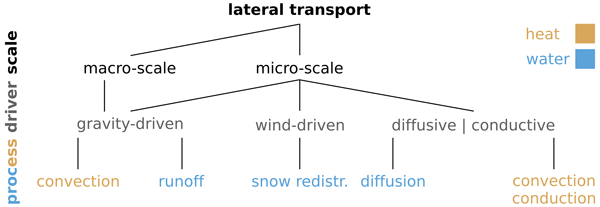
The spatial variability in the land surface properties is often not captured by the resolution of land surface models. To overcome this limitation, most models subdivide the grid cells into fractions with homogeneous characteristics, for which the land processes are calculated separately. In reality, the fractions interact via the lateral exchange of water and heat, and the present manuscript details an approach to include these fluxes in the land component of the ICON modeling framework.
Martin Thurner, Kailiang Yu, Stefano Manzoni, Anatoly Prokushkin, Melanie A. Thurner, Zhiqiang Wang, and Thomas Hickler
Biogeosciences, 22, 1475–1493, https://doi.org/10.5194/bg-22-1475-2025, https://doi.org/10.5194/bg-22-1475-2025, 2025
Short summary
Short summary
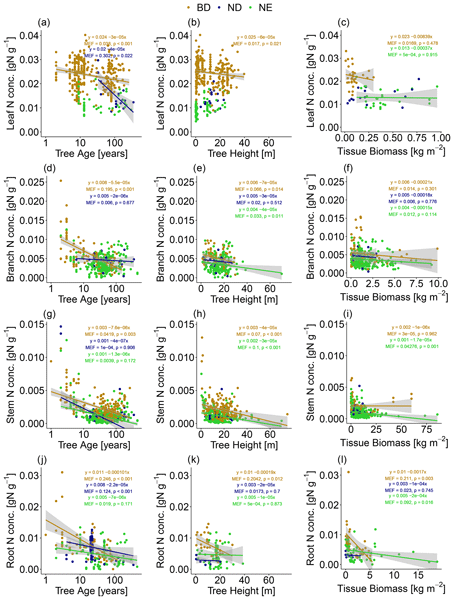
Nitrogen concentrations in tree tissues (leaves, branches, stems, and roots) are related to photosynthesis, growth, and respiration and thus to vegetation carbon uptake. Our novel database allows us to identify the controls of tree tissue nitrogen concentrations in boreal and temperate forests, such as tree age/size, species, and climate. Changes therein will affect tissue nitrogen concentrations and thus also vegetation carbon uptake.
Melanie A. Thurner, Silvia Caldararu, Jan Engel, Anja Rammig, and Sönke Zaehle
Biogeosciences, 21, 1391–1410, https://doi.org/10.5194/bg-21-1391-2024, https://doi.org/10.5194/bg-21-1391-2024, 2024
Short summary
Short summary
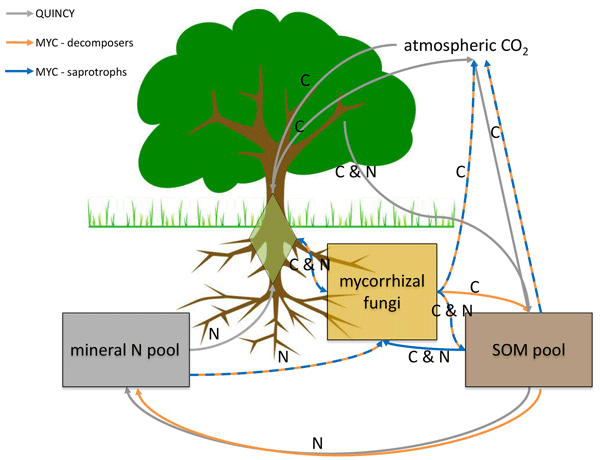
Due to their crucial role in terrestrial ecosystems, we implemented mycorrhizal fungi into the QUINCY terrestrial biosphere model. Fungi interact with mineral and organic soil to support plant N uptake and, thus, plant growth. Our results suggest that the effect of mycorrhizal interactions on simulated ecosystem dynamics is minor under constant environmental conditions but necessary to reproduce and understand observed patterns under changing conditions, such as rising atmospheric CO2.
Youssef Saadaoui, Christian Beer, Peter Mueller, Friederike Neiske, Joscha N. Becker, Annette Eschenbach, and Philipp Porada
Biogeosciences, 23, 6803–6816, https://doi.org/10.5194/bg-23-6803-2026, https://doi.org/10.5194/bg-23-6803-2026, 2026
Short summary
Short summary
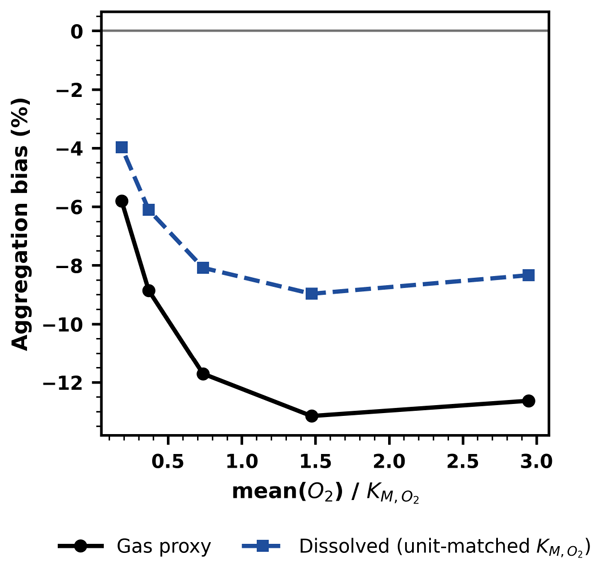
In marsh soils, oxygen concentrations are high close to plant roots and decline to near zero within millimetres. Microorganisms do not decompose organic matter in proportion to oxygen. Many models nevertheless use a single average oxygen concentration. Using Elbe River soils, we compared this approach with a calculation over the full range. The single average overestimated carbon dioxide release by about 12 %. Marsh soils may therefore store more carbon than models predict.
Philipp de Vrese, Tobias Stacke, Veronika Gayler, Helena Bergstedt, Clemens von Baeckmann, Melanie Thurner, Christian Beer, and Victor Brovkin
Geosci. Model Dev., 19, 9203–9234, https://doi.org/10.5194/gmd-19-9203-2026, https://doi.org/10.5194/gmd-19-9203-2026, 2026
Short summary
Short summary
The spatial variability in the land surface properties is often not captured by the resolution of land surface models. To overcome this limitation, most models subdivide the grid cells into fractions with homogeneous characteristics, for which the land processes are calculated separately. In reality, the fractions interact via the lateral exchange of water and heat, and the present manuscript details an approach to include these fluxes in the land component of the ICON modeling framework.
Christian Knoblauch, Christian Beer, and Carolina Voigt
Biogeosciences, 23, 3615–3635, https://doi.org/10.5194/bg-23-3615-2026, https://doi.org/10.5194/bg-23-3615-2026, 2026
Short summary
Short summary
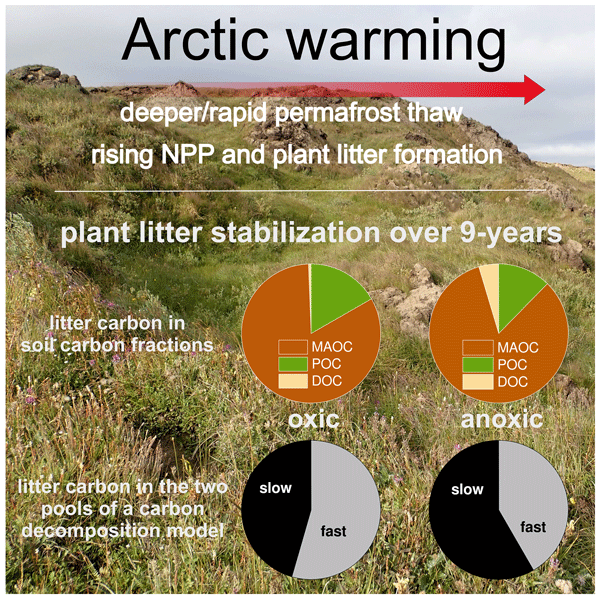
Carbon release from thawing permafrost receives ample attention since it may cause rising greenhouse gas concentrations in the atmosphere. However, we demonstrate through a 9-year lasting incubation experiment that thawing permafrost stabilizes a substantial amount of fresh plant litter carbon from increasing plant productivity for decades. Although litter carbon is faster decomposed than the permafrost carbon it may contribute to the build-up of organic carbon in thawing permafrost soils.
Luana S. Basso, Goran Georgievski, Victor Brovkin, Christian Beer, Christian Rödenbeck, and Mathias Göckede
Biogeosciences, 23, 2815–2830, https://doi.org/10.5194/bg-23-2815-2026, https://doi.org/10.5194/bg-23-2815-2026, 2026
Short summary
Short summary
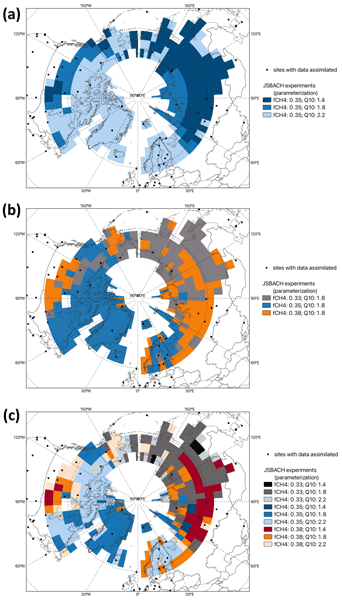
This study examines how combining atmospheric inversion with process-based modelling can reduce discrepancies in estimates of Arctic wetland CH4 emissions. We conducted a series of inversion experiments, each incorporating CH4 wetland fluxes from process-based models with different CH4 production parameterizations. Our results showed that no single parameterization captures the complexity of Arctic–Boreal emissions; instead, region-specific adjustments are needed to reduce discrepancies.
Marius Moser, Lara Kaiser, Victor Brovkin, and Christian Beer
Biogeosciences, 23, 605–621, https://doi.org/10.5194/bg-23-605-2026, https://doi.org/10.5194/bg-23-605-2026, 2026
Short summary
Short summary
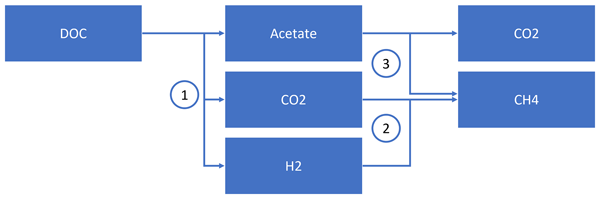
Arctic warming might lead to increased carbon dioxide and methane emissions. Process-based prediction of their ratio is important for projecting the future carbon cycle. However, land surface models often assume a constant ratio. To overcome this limitation, we identify three core processes for representing methanogenesis accurately in land surface models: fermentation, acetoclastic methanogenesis, and hydrogenotrophic methanogenesis.
Marina Falke, Leena Leppänen, Jaakko Nissilä, and Christian Beer
EGUsphere, https://doi.org/10.5194/egusphere-2025-5771, https://doi.org/10.5194/egusphere-2025-5771, 2025
Short summary
Short summary
The study examined spatial and temporal variability of taiga snowpack during spring melt using weekly measurements of height, stratigraphy, temperature, and density at four Sodankylä sites. Snow height peaked on 30 Mar. Density increased through melt, reaching ~ 500 kg/m³ by late Apr–early May. Snow structure shifted from depth hoar to melt forms, and temperatures reached 0 °C throughout. By 10 May, snow cover disappeared. Findings highlight evolving, heterogeneous melt-season snow properties.
Lin Yu, Thomas Kleinen, Min Jung Kwon, Christian Knoblauch, and Christian Beer
EGUsphere, https://doi.org/10.5194/egusphere-2025-4648, https://doi.org/10.5194/egusphere-2025-4648, 2025
Short summary
Short summary
We studied how adding biochar to soils might affect future climate. Using computer simulations, we found that while global averages of temperature and rainfall change little, extreme events respond more clearly. Heat waves and heavy rain are reduced in many regions, though drought risks rise in some dry areas. These results suggest that biochar could help moderate harmful climate extremes, especially on land, but with region-specific effects.
Christian Beer
Earth Syst. Dynam., 16, 1527–1537, https://doi.org/10.5194/esd-16-1527-2025, https://doi.org/10.5194/esd-16-1527-2025, 2025
Short summary
Short summary
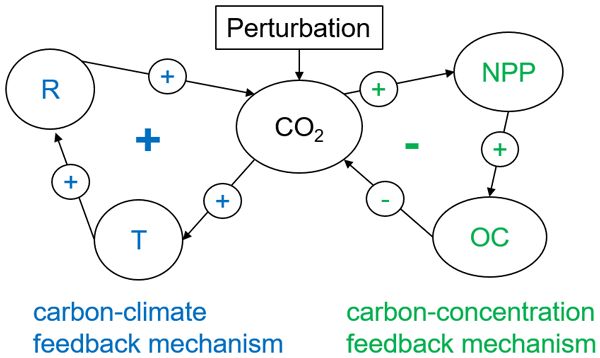
Fauna and flora respire carbon dioxide into the atmosphere, which is a major carbon flux into the atmosphere. The underlying biochemical processes are complex, and we generalize them either assuming a first-order chemical reaction of carbon and oxygen to carbon dioxide or assuming enzymatic reactions. Here, we show that these assumptions lead to large differences in estimating the carbon–climate feedback until 2100 and the remaining carbon budget to keep warming below 2°C.
Martin Thurner, Kailiang Yu, Stefano Manzoni, Anatoly Prokushkin, Melanie A. Thurner, Zhiqiang Wang, and Thomas Hickler
Biogeosciences, 22, 1475–1493, https://doi.org/10.5194/bg-22-1475-2025, https://doi.org/10.5194/bg-22-1475-2025, 2025
Short summary
Short summary
Nitrogen concentrations in tree tissues (leaves, branches, stems, and roots) are related to photosynthesis, growth, and respiration and thus to vegetation carbon uptake. Our novel database allows us to identify the controls of tree tissue nitrogen concentrations in boreal and temperate forests, such as tree age/size, species, and climate. Changes therein will affect tissue nitrogen concentrations and thus also vegetation carbon uptake.
Melanie A. Thurner, Silvia Caldararu, Jan Engel, Anja Rammig, and Sönke Zaehle
Biogeosciences, 21, 1391–1410, https://doi.org/10.5194/bg-21-1391-2024, https://doi.org/10.5194/bg-21-1391-2024, 2024
Short summary
Short summary
Due to their crucial role in terrestrial ecosystems, we implemented mycorrhizal fungi into the QUINCY terrestrial biosphere model. Fungi interact with mineral and organic soil to support plant N uptake and, thus, plant growth. Our results suggest that the effect of mycorrhizal interactions on simulated ecosystem dynamics is minor under constant environmental conditions but necessary to reproduce and understand observed patterns under changing conditions, such as rising atmospheric CO2.
Cited articles
Aalto, J., Scherrer, D., Lenoir, J., Guisan, A., and Luoto, M.: Biogeophysical controls on soil-atmosphere thermal differences: implications on warming Arctic ecosystems, Environ. Res. Lett., 13, 074003, https://doi.org/10.1088/1748-9326/aac83e, 2018. a, b
Aas, K. S., Martin, L., Nitzbon, J., Langer, M., Boike, J., Lee, H., Berntsen, T. K., and Westermann, S.: Thaw processes in ice-rich permafrost landscapes represented with laterally coupled tiles in a land surface model, The Cryosphere, 13, 591–609, https://doi.org/10.5194/tc-13-591-2019, 2019. a, b, c, d, e, f, g, h, i, j, k
Aga, J., Boike, J., Langer, M., Ingeman-Nielsen, T., and Westermann, S.: Simulating ice segregation and thaw consolidation in permafrost environments with the CryoGrid community model, The Cryosphere, 17, 4179–4206, https://doi.org/10.5194/tc-17-4179-2023, 2023. a, b
Batjes, N. H.: Total carbon and nitrogen in the soils of the world, Eur. J. Soil Sci., 47, 151–163, 1996. a
Beer, C.: The Arctic carbon count, Nat. Geosci., 1, 569–570, 2008. a
Beer, C., Porada, P., Ekici, A., and Brakebusch, M.: Effects of short-term variability of meteorological variables on soil temperature in permafrost regions, The Cryosphere, 12, 741–757, https://doi.org/10.5194/tc-12-741-2018, 2018. a, b
Beer, C., Knoblauch, C., Hoyt, A. M., Hugelius, G., Palmtag, J., Mueller, C. W., and Trumbore, S.: Vertical pattern of organic matter decomposability in cryoturbated permafrost-affected soils, Environ. Res. Lett., 17, 104023, https://doi.org/10.1088/1748-9326/ac9198, 2022. a
Bockheim, J. G.: Importance of cryoturbation in redistributing organic carbon in permafrost-affected soils, Soil Sci. Soc. Am. J., 71, 1335–1342, 2007. a
Burke, E. J., Hartley, I. P., and Jones, C. D.: Uncertainties in the global temperature change caused by carbon release from permafrost thawing, The Cryosphere, 6, 1063–1076, https://doi.org/10.5194/tc-6-1063-2012, 2012. a
Burke, E. J., Zhang, Y., and Krinner, G.: Evaluating permafrost physics in the Coupled Model Intercomparison Project 6 (CMIP6) models and their sensitivity to climate change, The Cryosphere, 14, 3155–3174, https://doi.org/10.5194/tc-14-3155-2020, 2020. a, b, c, d
Chadburn, S., Burke, E., Essery, R., Boike, J., Langer, M., Heikenfeld, M., Cox, P., and Friedlingstein, P.: An improved representation of physical permafrost dynamics in the JULES land-surface model, Geosci. Model Dev., 8, 1493–1508, https://doi.org/10.5194/gmd-8-1493-2015, 2015a. a
Chadburn, S. E., Burke, E. J., Essery, R. L. H., Boike, J., Langer, M., Heikenfeld, M., Cox, P. M., and Friedlingstein, P.: Impact of model developments on present and future simulations of permafrost in a global land-surface model, The Cryosphere, 9, 1505–1521, https://doi.org/10.5194/tc-9-1505-2015, 2015b. a, b, c
Clapp, R. B. and Hornberger, G. M.: Empirical equations for some soil hydraulic properties, Water Resour. Res., 14, 601–604, 1978. a
Conant, R. T., Ryan, M. G., Ågren, G. I., Birge, H. E., Davidson, E. A., Eliasson, P. E., Evans, S. E., Frey, S. D., Giardina, C. P., Hopkins, F. M., Hyvönen, R., Kirschbaum, M. U. F., Lavallee, J. M., Leifeld, J., Parton, W. J., Steinweg, J. M., Wallenstein, M. D., Wetterstedt, J. Å. M., and Bradford, M. A.: Temperature and soil organic matter decomposition rates–synthesis of current knowledge and a way forward, Global Change Biol., 17, 3392–3404, 2011. a
de Vrese, P., Georgievski, G., Gonzalez Rouco, J. F., Notz, D., Stacke, T., Steinert, N. J., Wilkenskjeld, S., and Brovkin, V.: Representation of soil hydrology in permafrost regions may explain large part of inter-model spread in simulated Arctic and subarctic climate, The Cryosphere, 17, 2095–2118, https://doi.org/10.5194/tc-17-2095-2023, 2023. a, b
De Vries, D. and Van Wijk, W.: Physics of plant environment, Environmental Control of Plant Growth, 5, 5–22, https://doi.org/10.1016/B978-0-12-244350-3.X5001-0, 1963. a, b, c
Fu, Z., Wu, Q., Zhang, W., He, H., and Wang, L.: Water migration and segregated ice formation in frozen ground: current advances and future perspectives, Front. Earth Sci., 10, 826961, https://doi.org/10.3389/feart.2022.826961, 2022. a
Gao, B. and Coon, E. T.: Evaluating simplifications of subsurface process representations for field-scale permafrost hydrology models, The Cryosphere, 16, 4141–4162, https://doi.org/10.5194/tc-16-4141-2022, 2022. a, b
Gentsch, N., Mikutta, R., Alves, R. J. E., Barta, J., Čapek, P., Gittel, A., Hugelius, G., Kuhry, P., Lashchinskiy, N., Palmtag, J., Richter, A., Šantrůčková, H., Schnecker, J., Shibistova, O., Urich, T., Wild, B., and Guggenberger, G.: Storage and transformation of organic matter fractions in cryoturbated permafrost soils across the Siberian Arctic, Biogeosciences, 12, 4525–4542, https://doi.org/10.5194/bg-12-4525-2015, 2015. a, b
Hagemann, S., Blome, T., Ekici, A., and Beer, C.: Soil-frost-enabled soil-moisture–precipitation feedback over northern high latitudes, Earth Syst. Dynam., 7, 611–625, https://doi.org/10.5194/esd-7-611-2016, 2016. a
Harden, J. W., Koven, C. D., Ping, C.-L., Hugelius, G., David McGuire, A., Camill, P., Jorgenson, T., Kuhry, P., Michaelson, G. J., O'Donnell, J. A., Schuur, E. A. G., Tarnocai, C., Johnson, K., and Grosse, G.: Field information links permafrost carbon to physical vulnerabilities of thawing, Geophys. Res. Lett., 39, https://doi.org/10.1029/2012GL051958, 2012. a
Harman, I. N. and Finnigan, J. J.: A simple unified theory for flow in the canopy and roughness sublayer, Bound.-Lay. Meteorol., 123, 339–363, 2007. a
Harman, I. N. and Finnigan, J. J.: Scalar concentration profiles in the canopy and roughness sublayer, Bound.-Lay. Meteorol., 129, 323–351, 2008. a
He, R., Jia, N., Jin, H., Wang, H., and Li, X.: Experimental Study on Thermal Conductivity of Organic-Rich Soils under Thawed and Frozen States, Geofluids, 2021, 1–12, https://doi.org/10.1155/2021/7566669, 2021. a
Jobbágy, E. G. and Jackson, R. B.: The vertical distribution of soil organic carbon and its relation to climate and vegetation, Ecol. Appl., 10, 423–436, 2000. a
Langridge, J.: Biochemical aspects of temperature response, Annu. Rev. Plant Physiol., 14, 441–462, 1963. a
Lawrence, D. M., Koven, C. D., Swenson, S. C., Riley, W. J., and Slater, A.: Permafrost thaw and resulting soil moisture changes regulate projected high-latitude CO2 and CH4 emissions, Environ. Res. Lett., 10, 094011, https://doi.org/10.1088/1748-9326/10/9/094011, 2015. a
Leonaviciute, N.: Predicting soil bulk and particle densities by pedotransfer functions from existing soil data in Lithuania, Geografijos metraštis, 33, 7–330, 2000. a
Martín, M. Á., Reyes, M., and Taguas, F. J.: Estimating soil bulk density with information metrics of soil texture, Geoderma, 287, 66–70, 2017. a
Mellor, M.: Engineering properties of snow, J. Glaciol., 19, 15–66, 1977. a
Miralles, D. G., Vilà-Guerau de Arellano, J., McVicar, T. R., and Mahecha, M. D.: Vegetation–climate feedbacks across scales, Ann. NY Acad. Sci., https://doi.org/10.1111/nyas.15286, 2025. a
Nitzbon, J., Langer, M., Martin, L. C. P., Westermann, S., Schneider von Deimling, T., and Boike, J.: Effects of multi-scale heterogeneity on the simulated evolution of ice-rich permafrost lowlands under a warming climate, The Cryosphere, 15, 1399–1422, https://doi.org/10.5194/tc-15-1399-2021, 2021. a, b, c, d, e
Ping, C.-L., Michaelson, G. J., Jorgenson, M. T., Kimble, J. M., Epstein, H., Romanovsky, V. E., and Walker, D. A.: High stocks of soil organic carbon in the North American Arctic region, Nat. Geosci., 1, 615–619, 2008. a
Rixen, C., Høye, T. T., Macek, P., Aerts, R., Alatalo, J. M., Anderson, J. T., Arnold, P. A., Barrio, I. C., Bjerke, J. W., Björkman, M. P., Blok, D., Blume-Werry, G., Boike, J., Bokhorst, S., Carbognani, M., Christiansen, C. T., Convey, P., Cooper, E. J., Cornelissen, J. H. C., Coulson, S. J., Dorrepaal, E., Elberling, B., Elmendorf, S. C., Elphinstone, C., Forte, T. G. W., Frei, E. R., Geange, S. R., Gehrmann, F., Gibson, C., Grogan, P., Halbritter, A. H., Harte, J., Henry, G. H. R., Inouye, D. W., Irwin, R. E., Jespersen, G., Jónsdóttir, I. S., Jung, J. Y., Klinges, D. H., Kudo, G., Lämsä, J., Lee, H., Lembrechts, J. J., Lett, S., Lynn, J. S., Mann, H. M. R., Mastepanov, M., Morse, J., Myers-Smith, I. H., Olofsson, J., Paavola, R., Petraglia, A., Phoenix, G. K., Semenchuk, P., Siewert, M. B., Slatyer, R., Spasojevic, M. J., Suding, K., Sullivan, P., Thompson, K. L., Väisänen, M., Vandvik, V., Venn, S., Walz, J., Way, R., Welker, J. M., Wipf, S., and Zong, S.: Winters are changing: snow effects on Arctic and alpine tundra ecosystems, Arctic Science, 8, 572–608, 2022. a
Schädel, C., Rogers, B. M., Lawrence, D. M., Koven, C. D., Brovkin, V., Burke, E. J., Genet, H., Huntzinger, D. N., Jafarov, E., McGuire, A. D., Riley, W. J., and Natali, S. M.: Earth system models must include permafrost carbon processes, Nat. Clim. Change, 1–3, https://doi.org/10.1038/s41558-023-01909-9, 2024. a, b, c, d, e, f, g
Siewert, M. B., Lantuit, H., Richter, A., and Hugelius, G.: Permafrost causes unique fine-scale spatial variability across tundra soils, Global Biogeochem. Cy., 35, e2020GB006659, https://doi.org/10.1029/2020GB006659, 2021. a, b
Smith, N. D., Burke, E. J., Schanke Aas, K., Althuizen, I. H. J., Boike, J., Christiansen, C. T., Etzelmüller, B., Friborg, T., Lee, H., Rumbold, H., Turton, R. H., Westermann, S., and Chadburn, S. E.: Explicitly modelling microtopography in permafrost landscapes in a land surface model (JULES vn5.4_microtopography), Geosci. Model Dev., 15, 3603–3639, https://doi.org/10.5194/gmd-15-3603-2022, 2022. a, b
Thurner, M. A., Rodriguez-Lloveras, X., and Beer, C.: DynSoM-2D_v1.0, Zenodo [code, data set], https://doi.org/10.5281/zenodo.16852391, 2025. a, b, c
Viovy, N.: CRUNCEP version 7-atmospheric forcing data for the community land model, NSF National Center for Atmospheric Research, https://doi.org/10.5065/PZ8F-F017, 2018. a, b
Westermann, S., Langer, M., Boike, J., Heikenfeld, M., Peter, M., Etzelmüller, B., and Krinner, G.: Simulating the thermal regime and thaw processes of ice-rich permafrost ground with the land-surface model CryoGrid 3, Geosci. Model Dev., 9, 523–546, https://doi.org/10.5194/gmd-9-523-2016, 2016. a
Zhu, D., Ciais, P., Krinner, G., Maignan, F., Jornet Puig, A., and Hugelius, G.: Controls of soil organic matter on soil thermal dynamics in the northern high latitudes, Nat. Commun., 10, 3172, https://doi.org/10.1038/s41467-019-11103-1, 2019. a
Short summary
Soil texture varies over centimeters, which is overseen by large-scale models, likely causing simulation errors. We developed a 2-dimesional geophysical soil model (DynSoM-2D) with a resolution of 10 cm and ran it with different setups at a permafrost-affected site. Using high-resolution input, DynSoM-2D simulates a warmer soil, which thaws deeper and has an extended snow-free period in summer. These changes can impact ecosystem dynamics, but have little effect on yearly soil-air heat exchange.
Soil texture varies over centimeters, which is overseen by large-scale models, likely causing...


