
Articles | Volume 19, issue 8
https://doi.org/10.5194/gmd-19-3075-2026
© Author(s) 2026. This work is distributed under
the Creative Commons Attribution 4.0 License.
the Creative Commons Attribution 4.0 License.
https://doi.org/10.5194/gmd-19-3075-2026
© Author(s) 2026. This work is distributed under
the Creative Commons Attribution 4.0 License.
the Creative Commons Attribution 4.0 License.
Model description paper
| 
21 Apr 2026
Model description paper |
| 21 Apr 2026
| 21 Apr 2026
Landslide-Tsurrogate v1.0: a computationally efficient framework for probabilistic tsunami hazard assessment applied to Mayotte (France)

Division for Marine and Environmental Research, Ruđer Bošković Institute, Bijenička cesta 54, 10000 Zagreb, Croatia
Institute for Adriatic Crops and Karst Reclamation, Put Duilova 11, 21000 Split, Croatia
Institut de Physique du Globe de Paris, University Paris Cité, 1 rue Jussieu, 75238 Paris CEDEX 05, France
Anne Mangeney
Institut de Physique du Globe de Paris, University Paris Cité, 1 rue Jussieu, 75238 Paris CEDEX 05, France
Anne Le Friant
Institut de Physique du Globe de Paris, University Paris Cité, 1 rue Jussieu, 75238 Paris CEDEX 05, France
Marc Peruzzetto
BRGM, 75012 Paris, France
Antoine Lucas
Institut de Physique du Globe de Paris, University Paris Cité, 1 rue Jussieu, 75238 Paris CEDEX 05, France
Manuel J. Castro Díaz
Departamento Análisis Matemático, Estadística e Investigación Operativa, y Matemática Aplicada, Universidad de Málaga, Campus Teatinos S/N, Málaga 29080, Spain
Enrique Fernández-Nieto
Departamento de Matemàtica Aplicada I, Universidad de Sevilla, E.T.S. Arquitectura. Avda Reina Mercedes, 41012 Sevilla, Spain
Related authors
Cléa Denamiel
Ocean Sci., 21, 1909–1931, https://doi.org/10.5194/os-21-1909-2025, https://doi.org/10.5194/os-21-1909-2025, 2025
Short summary
Short summary
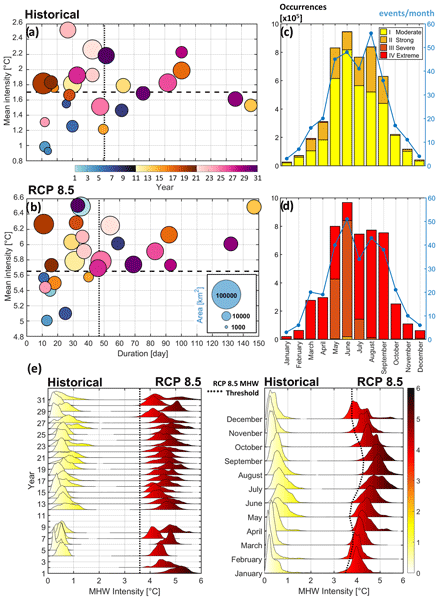
This study advances our understanding of Adriatic marine heatwaves (MHWs) under historical and far-future extreme warming scenarios, emphasizing the critical role of the Po River plume and Adriatic natural variability in shaping MHW dynamics. While the pseudo-global-warming (PGW) approach used in the study provides valuable insights, future research should adopt more comprehensive modelling frameworks to better capture the complexities of future climate change and its impacts on MHWs.
Davide Bonaldo, Sandro Carniel, Renato R. Colucci, Cléa Denamiel, Petra Pranić, Fabio Raicich, Antonio Ricchi, Lorenzo Sangelantoni, Ivica Vilibić, and Maria Letizia Vitelletti
Ocean Sci., 21, 1003–1031, https://doi.org/10.5194/os-21-1003-2025, https://doi.org/10.5194/os-21-1003-2025, 2025
Short summary
Short summary
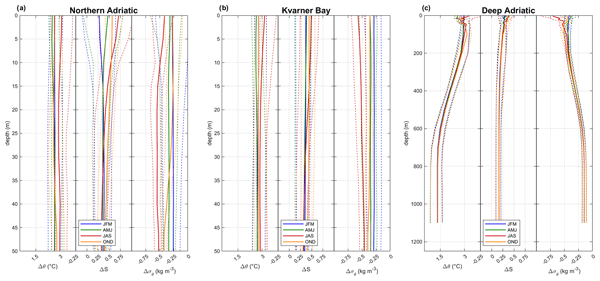
We present a high-resolution modelling effort to investigate the possible end-of-century evolution of the main physical processes in the Adriatic Sea in a severe climate change scenario, with an ensemble approach (i.e. use of multiple simulations) allowing us to control the uncertainty of the predictions. Our model exhibits a satisfactory capability to reproduce the recent past and provides a basis for a set of multidisciplinary studies in this area over a multi-decadal horizon.
Cléa Denamiel, Iva Tojčić, and Petra Pranić
Ocean Sci., 21, 37–62, https://doi.org/10.5194/os-21-37-2025, https://doi.org/10.5194/os-21-37-2025, 2025
Short summary
Short summary
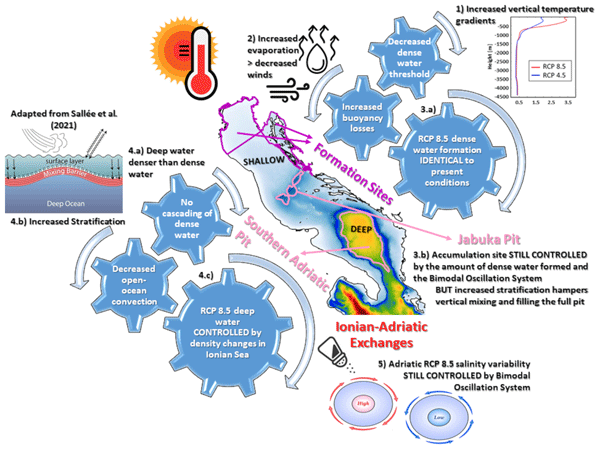
We use a high-resolution atmosphere–ocean model to project Adriatic Dense Water dynamics under extreme warming. We find that a 15 % increase in sea surface evaporation will offset a 25 % decrease in extreme windstorms. As a result, future dense water will form at the same rate as today but will be too light to reach the Adriatic's deepest parts, making deep-water presence reliant on exchanges with the Ionian Sea.
Petra Pranić, Cléa Denamiel, Ivica Janeković, and Ivica Vilibić
Ocean Sci., 19, 649–670, https://doi.org/10.5194/os-19-649-2023, https://doi.org/10.5194/os-19-649-2023, 2023
Short summary
Short summary
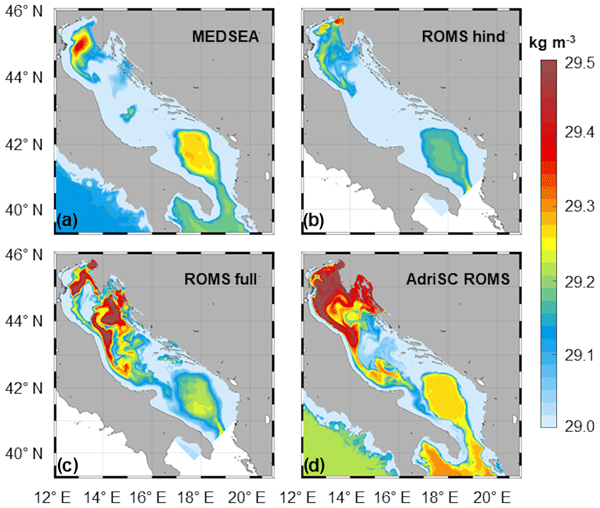
In this study, we analyse and compare the results of four different approaches in modelling bora-driven dense-water dynamics in the Adriatic. The study investigated the likely requirements for modelling the ocean circulation in the Adriatic and found that a 31-year run of a fine-resolution Adriatic climate model is able to outperform most aspects of the newest reanalysis product, a short-term hindcast and data-assimilated simulation, in reproducing the dense-water dynamics in the Adriatic Sea.
Cléa Denamiel and Ivica Vilibić
EGUsphere, https://doi.org/10.5194/egusphere-2023-913, https://doi.org/10.5194/egusphere-2023-913, 2023
Preprint archived
Short summary
Short summary
We present a new methodology using coupled atmosphere-ocean-wave models and demonstrate the feasibility to provide meter scale assessments of the impact of climate change on storm surge hazards. We show that sea level variations and distributions can be derived at the climate scale in the Adriatic Sea small lagoons and bays. We expect that the newly developed methodology could lead to more targeted adaptation strategies in regions of the world vulnerable to atmospherically driven extreme events.
Mattia de' Michieli Vitturi, Alessandro Tadini, Andrea Bevilacqua, Juan F. Rodríguez-Gálvez, Matteo Cerminara, Tomaso Esposti Ongaro, Augusto Neri, Matteo Trolese, Jorge Macías, Manuel J. Castro, Cipriano Escalante, Sergio Ortega, José M. González-Vida, and Stefano Lorito
EGUsphere, https://doi.org/10.5194/egusphere-2026-1602, https://doi.org/10.5194/egusphere-2026-1602, 2026
Short summary
Short summary
This study presents a Probabilistic Tsunami Hazard Assessment for Stromboli, Italy, quantifying long-term risks from landslide-generated tsunamis. By combining new simulation databases with expert-derived probabilities, it introduces a method to model hazard uncertainty. Results show significant risk to coastal areas over 50 years, with high probabilities of inundation exceeding 0.5 m and notable chances of severe impacts at key locations.
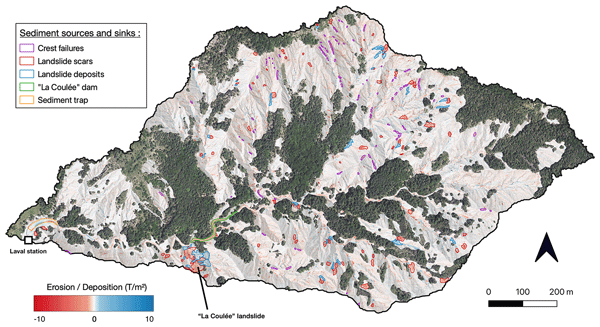
Yassine Boukhari, Antoine Lucas, Caroline Le Bouteiller, Sébastien Klotz, Gabrielle Chabaud, and Stéphane Jacquemoud
Earth Surf. Dynam., 13, 1205–1228, https://doi.org/10.5194/esurf-13-1205-2025, https://doi.org/10.5194/esurf-13-1205-2025, 2025
Short summary
Short summary
We combine aerial and drone Light Detection and Ranging surveys with sediment export and density measurements to assess catchment-scale mass balance in a badland environment. Landslides and crest failures are found to contribute 15 % of total mass export while affecting only 1 % of bare surfaces. Flood-condition drainage reconstruction shows low-drainage areas export 3.5 times more sediment than other slopes.
Cléa Denamiel
Ocean Sci., 21, 1909–1931, https://doi.org/10.5194/os-21-1909-2025, https://doi.org/10.5194/os-21-1909-2025, 2025
Short summary
Short summary
This study advances our understanding of Adriatic marine heatwaves (MHWs) under historical and far-future extreme warming scenarios, emphasizing the critical role of the Po River plume and Adriatic natural variability in shaping MHW dynamics. While the pseudo-global-warming (PGW) approach used in the study provides valuable insights, future research should adopt more comprehensive modelling frameworks to better capture the complexities of future climate change and its impacts on MHWs.
Davide Bonaldo, Sandro Carniel, Renato R. Colucci, Cléa Denamiel, Petra Pranić, Fabio Raicich, Antonio Ricchi, Lorenzo Sangelantoni, Ivica Vilibić, and Maria Letizia Vitelletti
Ocean Sci., 21, 1003–1031, https://doi.org/10.5194/os-21-1003-2025, https://doi.org/10.5194/os-21-1003-2025, 2025
Short summary
Short summary
We present a high-resolution modelling effort to investigate the possible end-of-century evolution of the main physical processes in the Adriatic Sea in a severe climate change scenario, with an ensemble approach (i.e. use of multiple simulations) allowing us to control the uncertainty of the predictions. Our model exhibits a satisfactory capability to reproduce the recent past and provides a basis for a set of multidisciplinary studies in this area over a multi-decadal horizon.
Cléa Denamiel, Iva Tojčić, and Petra Pranić
Ocean Sci., 21, 37–62, https://doi.org/10.5194/os-21-37-2025, https://doi.org/10.5194/os-21-37-2025, 2025
Short summary
Short summary
We use a high-resolution atmosphere–ocean model to project Adriatic Dense Water dynamics under extreme warming. We find that a 15 % increase in sea surface evaporation will offset a 25 % decrease in extreme windstorms. As a result, future dense water will form at the same rate as today but will be too light to reach the Adriatic's deepest parts, making deep-water presence reliant on exchanges with the Ionian Sea.
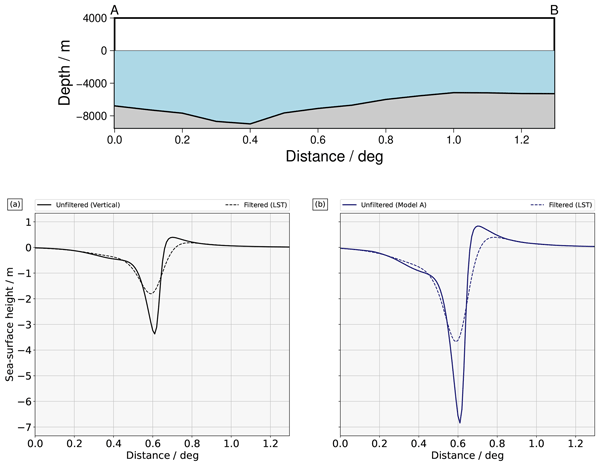
Alice Abbate, José M. González Vida, Manuel J. Castro Díaz, Fabrizio Romano, Hafize Başak Bayraktar, Andrey Babeyko, and Stefano Lorito
Nat. Hazards Earth Syst. Sci., 24, 2773–2791, https://doi.org/10.5194/nhess-24-2773-2024, https://doi.org/10.5194/nhess-24-2773-2024, 2024
Short summary
Short summary
Modelling tsunami generation due to a rapid submarine earthquake is a complex problem. Under a variety of realistic conditions in a subduction zone, we propose and test an efficient solution to this problem: a tool that can compute the generation of any potential tsunami in any ocean in the world. In the future, we will explore solutions that would also allow us to model tsunami generation by slower (time-dependent) seafloor displacement.
Petra Pranić, Cléa Denamiel, Ivica Janeković, and Ivica Vilibić
Ocean Sci., 19, 649–670, https://doi.org/10.5194/os-19-649-2023, https://doi.org/10.5194/os-19-649-2023, 2023
Short summary
Short summary
In this study, we analyse and compare the results of four different approaches in modelling bora-driven dense-water dynamics in the Adriatic. The study investigated the likely requirements for modelling the ocean circulation in the Adriatic and found that a 31-year run of a fine-resolution Adriatic climate model is able to outperform most aspects of the newest reanalysis product, a short-term hindcast and data-assimilated simulation, in reproducing the dense-water dynamics in the Adriatic Sea.
Cléa Denamiel and Ivica Vilibić
EGUsphere, https://doi.org/10.5194/egusphere-2023-913, https://doi.org/10.5194/egusphere-2023-913, 2023
Preprint archived
Short summary
Short summary
We present a new methodology using coupled atmosphere-ocean-wave models and demonstrate the feasibility to provide meter scale assessments of the impact of climate change on storm surge hazards. We show that sea level variations and distributions can be derived at the climate scale in the Adriatic Sea small lagoons and bays. We expect that the newly developed methodology could lead to more targeted adaptation strategies in regions of the world vulnerable to atmospherically driven extreme events.
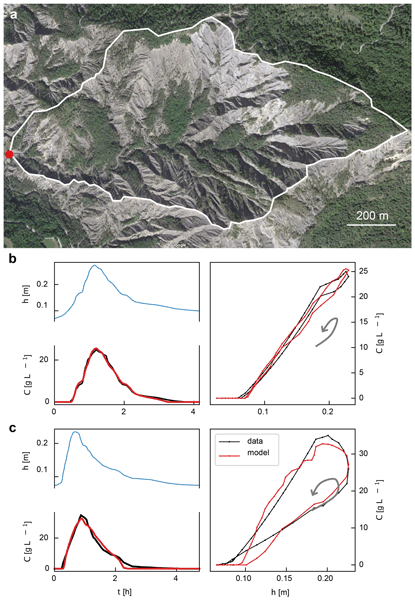
Amande Roque-Bernard, Antoine Lucas, Eric Gayer, Pascal Allemand, Céline Dessert, and Eric Lajeunesse
Earth Surf. Dynam., 11, 363–381, https://doi.org/10.5194/esurf-11-363-2023, https://doi.org/10.5194/esurf-11-363-2023, 2023
Short summary
Short summary
Sediment transport in rivers is an important matter in Earth surface dynamics. We offer a new framework of understanding of the suspended sediment transport through observatory chronicles and a simple model that is able to catch the behavior during a flood event as well as time series in a steep river catchment. We validate our approach in both tropical and alpine environments, which also offers additional estimates of the size of the suspended sediment.
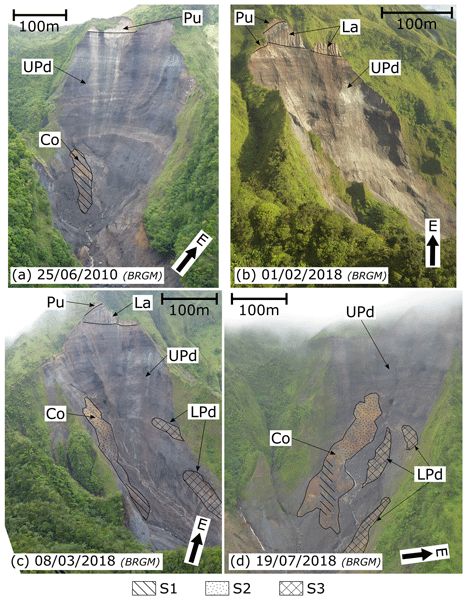
Marc Peruzzetto, Yoann Legendre, Aude Nachbaur, Thomas J. B. Dewez, Yannick Thiery, Clara Levy, and Benoit Vittecoq
Nat. Hazards Earth Syst. Sci., 22, 3973–3992, https://doi.org/10.5194/nhess-22-3973-2022, https://doi.org/10.5194/nhess-22-3973-2022, 2022
Short summary
Short summary
Volcanic edifices result from successive construction and dismantling phases. Thus, the geological units forming volcanoes display complex geometries. We show that such geometries can be reconstructed thanks to aerial views, topographic surveys and photogrammetric models. In our case study of the Samperre cliff (Martinique, Lesser Antilles), it allows us to link destabilizations from a rocky cliff to the existence of a filled paleo-valley and estimate a potentially unstable volume.
Cited articles
Abramowitz, M. and Stegun, I. A.: Handbook of Mathematical Functions: With Formulas, Graphs, and Mathematical Tables, Courier Corporation, ISBN 978-0-486-61272-0, 1965. a
Brecht, R., Cardoso-Bihlo, E., and Bihlo, A.: Physics-Informed Neural Networks for Tsunami Inundation Modeling, J. Comput. Phys., 536, 114066, https://doi.org/10.1016/j.jcp.2025.114066, 2025. a
Bulthuis, K., Arnst, M., Sun, S., and Pattyn, F.: Uncertainty quantification of the multi-centennial response of the Antarctic ice sheet to climate change, The Cryosphere, 13, 1349–1380, https://doi.org/10.5194/tc-13-1349-2019, 2019. a
Castro, M. J., Ferreiro, A. M. F., García-Rodríguez, J. A., González-Vida, J. M., MacíAs, J., Parés, C., and Vázquez-Cendón, M. E.: The Numerical Treatment of Wet/Dry Fronts in Shallow Flows: Application to One-Layer and Two-Layer Systems, Math. Comput. Model., 42, 419–439, https://doi.org/10.1016/J.MCM.2004.01.016, 2005. a
Castro, M. J., Ortega, S., de la Asunción, M., Mantas, J. M., and Gallardo, J. M.: GPU Computing for Shallow Water Flow Simulation Based on Finite Volume Schemes, C.R. Mécanique, 339, 165–184, https://doi.org/10.1016/J.CRME.2010.12.004, 2011. a
Cesca, S., Letort, J., Razafindrakoto, H. N. T., Heimann, S., Rivalta, E., Isken, M. P., Nikkhoo, M., Passarelli, L., Petersen, G. M., Cotton, F., and Dahm, T.: Drainage of a deep magma reservoir near Mayotte inferred from seismicity and deformation, Nat. Geosci., 13, 87–93, https://doi.org/10.1038/s41561-019-0505-5, 2020. a
Clenshaw, C. W. and Curtis, A. R.: A Method for Numerical Integration on an Automatic Computer, Numer. Math., 2, 197–205, https://doi.org/10.1007/BF01386223, 1960. a
Constantine, P. G., Eldred, M. S., and Phipps, E. T.: Sparse Pseudospectral Approximation Method, Comput. Method. Appl. M., 229–232, 1–12, https://doi.org/10.1016/j.cma.2012.03.019, 2012. a, b
Crestaux, T., Le Maître, O., and Martinez, J.-M.: Polynomial Chaos Expansion for Sensitivity Analysis, Reliab. Eng. Syst. Safe., 94, 1161–1172, https://doi.org/10.1016/j.ress.2008.10.008, 2009. a
Denamiel, C.: Landslide-Tsurrogate-V1.0 (GMD-v1.0), Zenodo [ICE, software, data set], https://doi.org/10.5281/zenodo.17519408, 2025. a, b
Denamiel, C., Šepić, J., Huan, X., Bolzer, C., and Vilibić, I.: Stochastic Surrogate Model for Meteotsunami Early Warning System in the Eastern Adriatic Sea, J. Geophys. Res.-Oceans, 124, 8485–8499, https://doi.org/10.1029/2019JC015574, 2019. a, b, c, d
Denamiel, C., Huan, X., Šepić, J., and Vilibić, I.: Uncertainty Propagation Using Polynomial Chaos Expansions for Extreme Sea Level Hazard Assessment: The Case of the Eastern Adriatic Meteotsunamis, J. Phys. Oceanogr., 50, 1005–1021, https://doi.org/10.1175/JPO-D-19-0147.1, 2020. a, b, c
Denamiel, C., Huan, X., and Vilibić, I.: Conceptual Design of Extreme Sea-Level Early Warning Systems Based on Uncertainty Quantification and Engineering Optimization Methods, Frontiers in Marine Science, 8, https://doi.org/10.3389/fmars.2021.650279, 2021. a
Ernst, O. G., Mugler, A., Starkloff, H.-J., and Ullmann, E.: On the Convergence of Generalized Polynomial Chaos Expansions, ESAIM-Math. Model. Num., 46, 317–339, https://doi.org/10.1051/m2an/2011045, 2012. a
Escalante, C., de Luna, T. M., and Castro, M. J.: Non-Hydrostatic Pressure Shallow Flows: GPU Implementation Using Finite Volume and Finite Difference Scheme, Appl. Math. Comput., 338, 631–659, https://doi.org/10.1016/J.AMC.2018.06.035, 2018. a
Escalante, C., Fernández-Nieto, E. D., Garres-Díaz, J., Morales de Luna, T., and Penel, Y.: Non-Hydrostatic Layer-Averaged Approximation of Euler System with Enhanced Dispersion Properties, Comput. Appl. Math., 42, 177, https://doi.org/10.1007/s40314-023-02309-7, 2023. a
Fernández-Nieto, E. D., Garres-Díaz, J., Mangeney, A., and Narbona-Reina, G.: A Multilayer Shallow Model for Dry Granular Flows with the μ(I)-Rheology: Application to Granular Collapse on Erodible Beds, J. Fluid Mech., 798, 643–681, https://doi.org/10.1017/JFM.2016.333, 2016. a
Feuillet, N., Jorry, S., Crawford, W. C., Deplus, C., Thinon, I., Jacques, E., Saurel, J. M., Lemoine, A., Paquet, F., Satriano, C., Aiken, C., Foix, O., Kowalski, P., Laurent, A., Rinnert, E., Cathalot, C., Donval, J. P., Guyader, V., Gaillot, A., Scalabrin, C., Moreira, M., Peltier, A., Beauducel, F., Grandin, R., Ballu, V., Daniel, R., Pelleau, P., Gomez, J., Besançon, S., Geli, L., Bernard, P., Bachelery, P., Fouquet, Y., Bertil, D., Lemarchand, A., and der Woerd, J. V.: Birth of a Large Volcanic Edifice Offshore Mayotte via Lithosphere-Scale Dyke Intrusion, Nat. Geosci., 14, 787–795, https://doi.org/10.1038/s41561-021-00809-x, 2021. a, b, c, d
Formaggia, L., Guadagnini, A., Imperiali, I., Lever, V., Porta, G., Riva, M., Scotti, A., and Tamellini, L.: Global Sensitivity Analysis through Polynomial Chaos Expansion of a Basin-Scale Geochemical Compaction Model, Computat. Geosci., 17, 25–42, https://doi.org/10.1007/s10596-012-9311-5, 2013. a
Fornberg, B. and Sloan, D. M.: A Review of Pseudospectral Methods for Solving Partial Differential Equations, Acta Numer., 3, 203–267, https://doi.org/10.1017/S0962492900002440, 1994. a
Garres-Díaz, J., Bouchut, F., Fernández-Nieto, E. D., Mangeney, A., and Narbona-Reina, G.: Multilayer Models for Shallow Two-Phase Debris Flows with Dilatancy Effects, J. Comput. Phys., 419, 109699, https://doi.org/10.1016/J.JCP.2020.109699, 2020. a
Gerstner, T. and Griebel, M.: Numerical Integration Using Sparse Grids, Numer. Algorithms, 18, 209–232, https://doi.org/10.1023/A:1019129717644, 1998. a, b
Giraldi, L., Le Maître, O. P., Mandli, K. T., Dawson, C. N., Hoteit, I., and Knio, O. M.: Bayesian Inference of Earthquake Parameters from Buoy Data Using a Polynomial Chaos-Based Surrogate, Comput. Geosci., 21, 683–699, https://doi.org/10.1007/s10596-017-9646-z, 2017. a
González-Vida, J. M., Macías, J., Castro, M. J., Sánchez-Linares, C., de la Asunción, M., Ortega-Acosta, S., and Arcas, D.: The Lituya Bay landslide-generated mega-tsunami – numerical simulation and sensitivity analysis, Nat. Hazards Earth Syst. Sci., 19, 369–388, https://doi.org/10.5194/nhess-19-369-2019, 2019. a
Guillas, S., Sarri, A., Day, S. J., Liu, X., and Dias, F.: Functional Emulation of High Resolution Tsunami Modelling over Cascadia, Ann. Appl. Stat., 12, 2023–2053, https://doi.org/10.1214/18-AOAS1142, 2018. a
Heiss, F. and Winschel, V.: Likelihood Approximation by Numerical Integration on Sparse Grids, J. Econometrics, 144, 62–80, https://doi.org/10.1016/j.jeconom.2007.12.004, 2008. a
Holtz, M.: Sparse Grid Quadrature in High Dimensions with Applications in Finance and Insurance, vol. 77 of Lecture Notes in Computational Science and Engineering, Springer, Berlin, Heidelberg, ISBN 978-3-642-16003-5, https://doi.org/10.1007/978-3-642-16004-2, 2011. a, b
Jaynes, E. T.: Information Theory and Statistical Mechanics, Phys. Rev., 106, 620–630, https://doi.org/10.1103/PhysRev.106.620, 1957. a
Jop, P., Forterre, Y., and Pouliquen, O.: A Constitutive Law for Dense Granular Flows, Nature, 441, 727–730, https://doi.org/10.1038/nature04801, 2006. a, b
Knio, O. M. and Le Maître, O. P.: Uncertainty Propagation in CFD Using Polynomial Chaos Decomposition, Fluid Dyn. Res., 38, 616–640, https://doi.org/10.1016/j.fluiddyn.2005.12.003, 2006. a
Leone, F., Gherardi, M., Péroche, M., Lagahé, E., Aumond, P., Siliezar Montoya, J., Idaroussi Tsima, F., Poulain, P., Le Friant, A., Mangeney, A., Hachim Mogne, S., and Roudier, V.: Mayotte se prépare au risque tsunami: modélisations, alerte, évacuation, sensibilisation, EchoGéo, 64, https://doi.org/10.4000/echogeo.25078, 2023. a
Linares-Sánchez, C., Castro-Diaz, M. J., and Gonzalez-Vida, J. M.: Simulación Numérica de Tsunamis Generados Por Avalanchas Submarinas: Aplicación al Caso de Lituya-Bay, PhD thesis, University of Malaga, Repositorio Institucional de la Universidad de Málaga, http://hdl.handle.net/10630/7702 (last access: 20 April 2026), 2011. a
Liu, P. L.-F., Woo, S.-B., and Cho, Y.-S.: Computer Programs for Tsunami Propagation and Inundation, Cornell University, 25, 49, 1998. a
Løvholt, F., Harbitz, C. B., and Haugen, K. B.: A Parametric Study of Tsunamis Generated by Submarine Slides in the Ormen Lange/Storegga Area off Western Norway, in: Ormen Lange – an Integrated Study for Safe Field Development in the Storegga Submarine Area, edited by: Solheim, A., Bryn, P., Berg, K., Sejrup, H. P., and Mienert, J., 219–231, Elsevier, Oxford, ISBN 978-0-08-044694-3, https://doi.org/10.1016/B978-0-08-044694-3.50023-8, 2005. a
Løvholt, F., Pedersen, G., Harbitz, C. B., Glimsdal, S., and Kim, J.: On the Characteristics of Landslide Tsunamis, Philosophical Transactions of the Royal Society A: Mathematical, Phys. Eng. Sci., 373, 20140376, https://doi.org/10.1098/rsta.2014.0376, 2015. a, b
Løvholt, F., Glimsdal, S., and Harbitz, C. B.: On the Landslide Tsunami Uncertainty and Hazard, Landslides, 17, 2301–2315, https://doi.org/10.1007/s10346-020-01429-z, 2020. a
Luo, Y., Chen, W., Su, Z., Shi, X., Luo, J., Qu, X., Chen, Z., and Lin, Y.: Deep Learning Network for NMR Spectra Reconstruction in Time-Frequency Domain and Quality Assessment, Nat. Commun., 16, 2342, https://doi.org/10.1038/s41467-025-57721-w, 2025. a
Lynett, P. and Liu, P. L.-F.: A Two-Layer Approach to Wave Modelling, P. Roy. Soc. Lond. A Mat., 460, 2637–2669, https://doi.org/10.1098/rspa.2004.1305, 2004. a
Lynett, P. J., Wu, T.-R., and Liu, P. L. F.: Modeling Wave Runup with Depth-Integrated Equations, Coast. Eng., 46, 89–107, https://doi.org/10.1016/S0378-3839(02)00043-1, 2002. a
Ma, G., Shi, F., and Kirby, J. T.: Shock-Capturing Non-Hydrostatic Model for Fully Dispersive Surface Wave Processes, Ocean Model., 43–44, 22–35, https://doi.org/10.1016/j.ocemod.2011.12.002, 2012. a
Mangeney, A., Bouchut, F., Thomas, N., Vilotte, J. P., and Bristeau, M. O.: Numerical Modeling of Self-Channeling Granular Flows and of Their Levee-Channel Deposits, J. Geophys. Res.-Earth, 112, 2017, https://doi.org/10.1029/2006JF000469, 2007. a
Marbœuf, A., Mangeney, A., Le Friant, A., Castro, M. J., Fernández-Nieto, E., Lucas, A., Poulain, P., Moatty, A., Silver, M., Pedreros, R., Lemoine, A., and Løvholt, F.: Rheology and Bathymetry Effects Captured by a Multilayer Landslide-Tsunami Model, Geophys. J. Int., 242, ggaf232, https://doi.org/10.1093/gji/ggaf232, 2025. a, b, c, d, e, f, g, h, i, j, k
Martin, H. A., Peruzzetto, M., Viroulet, S., Mangeney, A., Lagrée, P. Y., Popinet, S., Maury, B., Lefebvre-Lepot, A., Maday, Y., and Bouchut, F.: Numerical Simulations of Granular Dam Break: Comparison between Discrete Element, Navier-Stokes, and Thin-Layer Models, Phys. Rev. E, 108, 054902, https://doi.org/10.1103/PHYSREVE.108.054902, 2023. a, b
Mercury, N., Lemoine, A., Doubre, C., Bertil, D., Woerd, J. V. D., Hoste-Colomer, R., and Battaglia, J.: Onset of a Submarine Eruption East of Mayotte, Comoros Archipelago: The First Ten Months Seismicity of the Seismo-Volcanic Sequence (2018–2019), C.R. Geosci., 354, 105–136, https://doi.org/10.5802/crgeos.191, 2022. a
Najm, H. N., Debusschere, B. J., Marzouk, Y. M., Widmer, S., and Le Maître, O. P.: Uncertainty Quantification in Chemical Systems, Int. J. Numer. Meth. Eng., 80, 789–814, https://doi.org/10.1002/nme.2551, 2009. a
Patterson, T. N. L.: The Optimum Addition of Points to Quadrature Formulae, Math. Comput., 22, 847–856, https://doi.org/10.1090/S0025-5718-68-99866-9, 1968. a
Poulain, P., Friant, A. L., Pedreros, R., Mangeney, A., Filippini, A. G., Grandjean, G., Lemoine, A., Fernández-Nieto, E. D., Diaz, M. J. C., and Peruzzetto, M.: Numerical Simulation of Submarine Landslides and Generated Tsunamis: Application to the on-Going Mayotte Seismo-Volcanic Crisis, C.R. Géosci., 354, 361–390, https://doi.org/10.5802/crgeos.138, 2022. a, b, c, d, e
Poulain, P., Friant, A. L., Mangeney, A., Viroulet, S., Fernandez-Nieto, E., Diaz, M. C., Peruzzetto, M., Grandjean, G., Bouchut, F., Pedreros, R., and Komorowski, J. C.: Performance and Limits of a Shallow-Water Model for Landslide-Generated Tsunamis: From Laboratory Experiments to Simulations of Flank Collapses at Montagne Pelée (Martinique), Geophys. J. Int., 233, 796–825, https://doi.org/10.1093/GJI/GGAC482, 2023. a, b, c
Pouliquen, O. and Forterre, Y.: Friction Law for Dense Granular Flows: Application to the Motion of a Mass down a Rough Inclined Plane, J. Fluid Mech., 453, 133–151, https://doi.org/10.1017/S0022112001006796, 2002. a, b
Rasmussen, C. E. and Williams, C. K. I.: Gaussian Processes for Machine Learning, The MIT Press, ISBN 978-0-262-25683-4, https://doi.org/10.7551/mitpress/3206.001.0001, 2005. a
Roeber, V., Cheung, K. F., and Kobayashi, M. H.: Shock-Capturing Boussinesq-type Model for Nearshore Wave Processes, Coastal Eng. 57, 407–423, https://doi.org/10.1016/J.COASTALENG.2009.11.007, 2010. a
Roger, J.: Potential Tsunami Hazard Related to the Seismic Activity East of Mayotte Island, Comoros Archipelago, Science of Tsunami Hazards, 38, 118–131, 2019. a
Roger, J. H. M., Bull, S., Watson, S. J., Mueller, C., Hillman, J. I. T., Wolter, A., Lamarche, G., Power, W., Lane, E., Woelz, S., and Davidson, S.: A Review of Approaches for Submarine Landslide-Tsunami Hazard Identification and Assessment, Mar. Petrol. Geol., 162, 106729, https://doi.org/10.1016/J.MARPETGEO.2024.106729, 2024. a, b
Salmanidou, D. M., Beck, J., Pazak, P., and Guillas, S.: Probabilistic, high-resolution tsunami predictions in northern Cascadia by exploiting sequential design for efficient emulation, Nat. Hazards Earth Syst. Sci., 21, 3789–3807, https://doi.org/10.5194/nhess-21-3789-2021, 2021. a
Saltelli, A.: Sensitivity Analysis for Importance Assessment, Risk Anal., 22, 579–590, https://doi.org/10.1111/0272-4332.00040, 2002. a
Savage, S. B. and Hutter, K.: The Motion of a Finite Mass of Granular Material down a Rough Incline, J. Fluid Mech., 199, 177–215, https://doi.org/10.1017/S0022112089000340, 1989. a
Scala, A., Lorito, S., Sánchez, C. E., Romano, F., Festa, G., Abbate, A., Bayraktar, H. B., Castro, M. J., Macías, J., and Gonzalez-Vida, J. M.: Assessing the Optimal Tsunami Inundation Modeling Strategy for Large Earthquakes in Subduction Zones, J. Geophys. Res.-Oceans, 129, e2024JC020941, https://doi.org/10.1029/2024JC020941, 2024. a
Sobol', I. M.: Global Sensitivity Indices for Nonlinear Mathematical Models and Their Monte Carlo Estimates, Math. Comput. Simulat., 55, 271–280, https://doi.org/10.1016/S0378-4754(00)00270-6, 2001. a
Soize, C. and Ghanem, R.: Physical Systems with Random Uncertainties: Chaos Representations with Arbitrary Probability Measure, SIAM J. Sci. Comput., 26, 395–410, https://doi.org/10.1137/S1064827503424505, 2004. a, b
Sraj, I., Mandli, K. T., Knio, O. M., Dawson, C. N., and Hoteit, I.: Uncertainty Quantification and Inference of Manning's Friction Coefficients Using DART Buoy Data during the Tōhoku Tsunami, Ocean Model., 83, 82–97, https://doi.org/10.1016/j.ocemod.2014.09.001, 2014. a
Sudret, B.: Global Sensitivity Analysis Using Polynomial Chaos Expansions, Reliab. Eng. Syst. Safe., 93, 964–979, https://doi.org/10.1016/j.ress.2007.04.002, 2008. a
Sultan, N., Jouet, G., Riboulot, V., Terzariol, M., Garziglia, S., Cattaneo, A., Giraudeau, J., and Jorry, S.: Sea-level fluctuations control the distribution of highly liquefaction-prone layers on volcanic-carbonate slopes, Geology, 51, 402–407, https://doi.org/10.1130/G50785.1, 2023. a
Trefethen, L. N.: Is Gauss Quadrature Better than Clenshaw–Curtis?, SIAM Rev., 50, 67–87, https://doi.org/10.1137/060659831, 2008. a
von Toussaint, U.: Bayesian Inference in Physics, Rev. Mod. Phys., 83, 943–999, https://doi.org/10.1103/RevModPhys.83.943, 2011. a
Wang, M., Wan, Z., and Huang, Q.: A New Uncertain Analysis Method for the Prediction of Acoustic Field with Random and Interval Parameters, Shock Vib., 2016, 3693262, https://doi.org/10.1155/2016/3693262, 2016. a
Watts, P., Grilli, S. T., Kirby, J. T., Fryer, G. J., and Tappin, D. R.: Landslide tsunami case studies using a Boussinesq model and a fully nonlinear tsunami generation model, Nat. Hazards Earth Syst. Sci., 3, 391–402, https://doi.org/10.5194/nhess-3-391-2003, 2003. a
Xiu, D. and Karniadakis, G. E.: The Wiener–Askey Polynomial Chaos for Stochastic Differential Equations, SIAM J. Sci. Comput., 24, 619–644, https://doi.org/10.1137/S1064827501387826, 2002. a, b, c
Short summary
Landslide-Tsurrogate v1.0 is an open-source Python/MATLAB tool that create surrogate models that replace costly numerical simulations. These models estimate tsunami hazards from submarine landslides in a few seconds. Based on polynomial chaos expansions, they also enable sensitivity analyses, fast probabilistic results, and user-friendly visualization. Tested in Mayotte, Landslide-Tsurrogate v1.0 can be applied to any coastal region.
Landslide-Tsurrogate v1.0 is an open-source Python/MATLAB tool that create surrogate models that...


