
Articles | Volume 19, issue 5
https://doi.org/10.5194/gmd-19-1833-2026
© Author(s) 2026. This work is distributed under
the Creative Commons Attribution 4.0 License.
the Creative Commons Attribution 4.0 License.
https://doi.org/10.5194/gmd-19-1833-2026
© Author(s) 2026. This work is distributed under
the Creative Commons Attribution 4.0 License.
the Creative Commons Attribution 4.0 License.
Development and technical paper
| 
04 Mar 2026
Development and technical paper |
| 04 Mar 2026
| 04 Mar 2026
Deposition velocity concept does not apply to fluxes of ambient aerosol
Rostislav Kouznetsov
CORRESPONDING AUTHOR

Finnish Meteorological Institute, Helsinki, Finland
Mikhail Sofiev
Finnish Meteorological Institute, Helsinki, Finland
Andreas Uppstu
Finnish Meteorological Institute, Helsinki, Finland
Risto Hänninen
Finnish Meteorological Institute, Helsinki, Finland
Related authors
Mikhail Sofiev and Rostislav Kouznetsov
EGUsphere, https://doi.org/10.5194/egusphere-2026-89, https://doi.org/10.5194/egusphere-2026-89, 2026
Short summary
Short summary
Satellites can observe fires globally, but sensitivity of instruments in space is limited: they miss small fires and cannot see through clouds. We analyzed the MODIS and VIIRS fire observations and obtained their sensitivity to small fires, which depends on the resolution of the instrument, timing of the observation (day or night), and details of the data processing. We developed a procedure for comparing fire model predictions with satellite observations accounting for their limited sensitivity
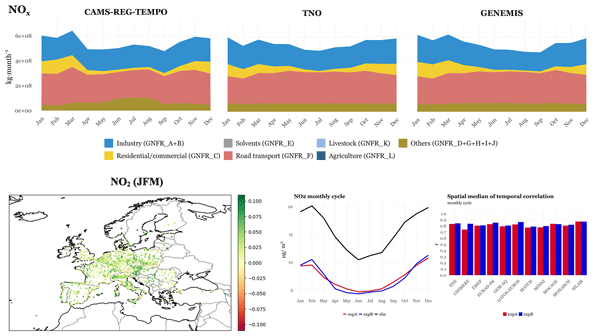
Marc Guevara, Augustin Colette, Antoine Guion, Valentin Petiot, Mario Adani, Joaquim Arteta, Anna Benedictow, Robert Bergström, Andrea Bolignano, Paula Camps, Ana C. Carvalho, Jesper Heile Christensen, Florian Couvidat, Ilaria D'Elia, Hugo Denier van der Gon, Gaël Descombes, John Douros, Hilde Fagerli, Yalda Fatahi, Elmar Friese, Lise Frohn, Michael Gauss, Camilla Geels, Risto Hänninen, Kaj Hansen, Oriol Jorba, Jacek W. Kaminski, Rostislav Kouznetsov, Richard Kranenburg, Jeroen Kuenen, Victor Lannuque, Frédérik Meleux, Agnes Nyíri, Yuliia Palamarchuk, Carlos Pérez García-Pando, Lennard Robertson, Felicita Russo, Arjo Segers, Mikhail Sofiev, Joanna Struzewska, Renske Timmermans, Andreas Uppstu, Alvaro Valdebenito, and Zhuyun Ye
Atmos. Chem. Phys., 25, 13245–13278, https://doi.org/10.5194/acp-25-13245-2025, https://doi.org/10.5194/acp-25-13245-2025, 2025
Short summary
Short summary
Air quality models require hourly emissions to accurately represent dispersion and physico-chemical processes in the atmosphere. Since emission inventories are typically provided at the annual level, emissions are downscaled to a refined temporal resolution using temporal profiles. This study quantifies the impact of using new anthropogenic temporal profiles on the performance of an European air quality multi-model ensemble. Overall, the findings indicate an improvement of the modelling results.
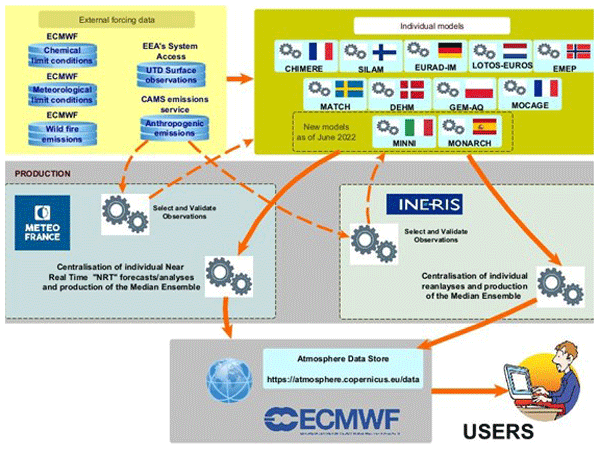
Augustin Colette, Gaëlle Collin, François Besson, Etienne Blot, Vincent Guidard, Frédérik Meleux, Adrien Royer, Valentin Petiot, Claire Miller, Oihana Fermond, Alizé Jeant, Mario Adani, Joaquim Arteta, Anna Benedictow, Robert Bergström, Dene Bowdalo, Jorgen Brandt, Gino Briganti, Ana C. Carvalho, Jesper Heile Christensen, Florian Couvidat, Ilaria D'Elia, Massimo D'Isidoro, Hugo Denier van der Gon, Gaël Descombes, Enza Di Tomaso, John Douros, Jeronimo Escribano, Henk Eskes, Hilde Fagerli, Yalda Fatahi, Johannes Flemming, Elmar Friese, Lise Frohn, Michael Gauss, Camilla Geels, Guido Guarnieri, Marc Guevara, Antoine Guion, Jonathan Guth, Risto Hänninen, Kaj Hansen, Ulas Im, Ruud Janssen, Marine Jeoffrion, Mathieu Joly, Luke Jones, Oriol Jorba, Evgeni Kadantsev, Michael Kahnert, Jacek W. Kaminski, Rostislav Kouznetsov, Richard Kranenburg, Jeroen Kuenen, Anne Caroline Lange, Joachim Langner, Victor Lannuque, Francesca Macchia, Astrid Manders, Mihaela Mircea, Agnes Nyiri, Miriam Olid, Carlos Pérez García-Pando, Yuliia Palamarchuk, Antonio Piersanti, Blandine Raux, Miha Razinger, Lennard Robertson, Arjo Segers, Martijn Schaap, Pilvi Siljamo, David Simpson, Mikhail Sofiev, Anders Stangel, Joanna Struzewska, Carles Tena, Renske Timmermans, Thanos Tsikerdekis, Svetlana Tsyro, Svyatoslav Tyuryakov, Anthony Ung, Andreas Uppstu, Alvaro Valdebenito, Peter van Velthoven, Lina Vitali, Zhuyun Ye, Vincent-Henri Peuch, and Laurence Rouïl
Geosci. Model Dev., 18, 6835–6883, https://doi.org/10.5194/gmd-18-6835-2025, https://doi.org/10.5194/gmd-18-6835-2025, 2025
Short summary
Short summary
The Copernicus Atmosphere Monitoring Service – Regional Production delivers daily forecasts, analyses, and reanalyses of air quality in Europe. The service relies on a distributed modelling production by 11 leading European modelling teams following stringent requirements with an operational design that has no equivalent in the world. All the products are free, open, and quality-assured and disseminated with a high level of reliability.
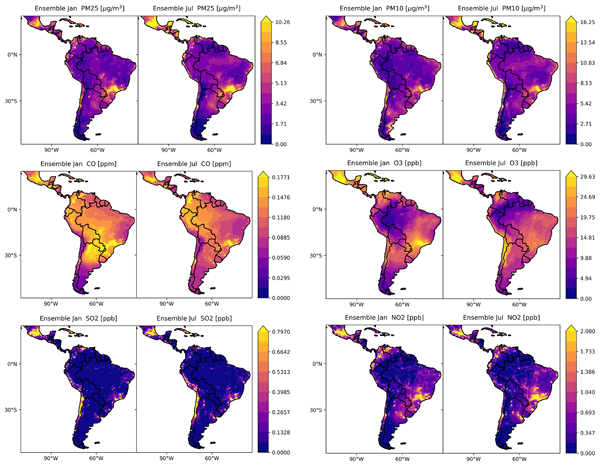
Jorge E. Pachón, Mariel A. Opazo, Pablo Lichtig, Nicolas Huneeus, Idir Bouarar, Guy Brasseur, Cathy W. Y. Li, Johannes Flemming, Laurent Menut, Camilo Menares, Laura Gallardo, Michael Gauss, Mikhail Sofiev, Rostislav Kouznetsov, Julia Palamarchuk, Andreas Uppstu, Laura Dawidowski, Nestor Y. Rojas, María de Fátima Andrade, Mario E. Gavidia-Calderón, Alejandro H. Delgado Peralta, and Daniel Schuch
Geosci. Model Dev., 17, 7467–7512, https://doi.org/10.5194/gmd-17-7467-2024, https://doi.org/10.5194/gmd-17-7467-2024, 2024
Short summary
Short summary
Latin America (LAC) has some of the most populated urban areas in the world, with high levels of air pollution. Air quality management in LAC has been traditionally focused on surveillance and building emission inventories. This study performed the first intercomparison and model evaluation in LAC, with interesting and insightful findings for the region. A multiscale modeling ensemble chain was assembled as a first step towards an air quality forecasting system.
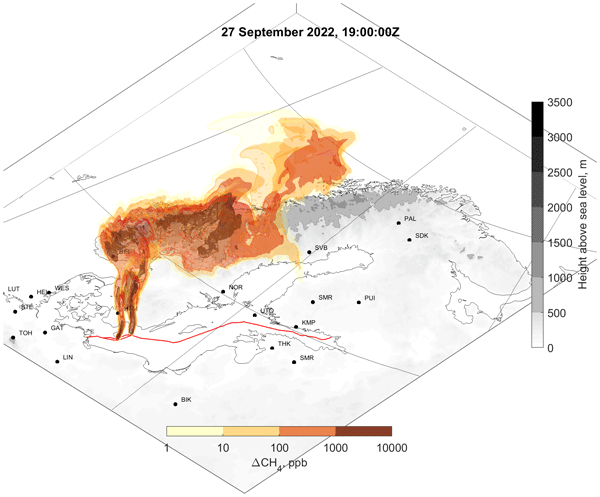
Rostislav Kouznetsov, Risto Hänninen, Andreas Uppstu, Evgeny Kadantsev, Yalda Fatahi, Marje Prank, Dmitrii Kouznetsov, Steffen Manfred Noe, Heikki Junninen, and Mikhail Sofiev
Atmos. Chem. Phys., 24, 4675–4691, https://doi.org/10.5194/acp-24-4675-2024, https://doi.org/10.5194/acp-24-4675-2024, 2024
Short summary
Short summary
By relying solely on publicly available media reports, we were able to infer the temporal evolution and the injection height for the Nord Stream gas leaks in September 2022. The inventory specifies locations, vertical distributions, and temporal evolution of the methane sources. The inventory can be used to simulate the event with atmospheric transport models. The inventory is supplemented with a set of observational data tailored to evaluate the results of the simulated atmospheric dispersion.
Heidi Hellén, Rostislav Kouznetsov, Kaisa Kraft, Jukka Seppälä, Mika Vestenius, Jukka-Pekka Jalkanen, Lauri Laakso, and Hannele Hakola
Atmos. Chem. Phys., 24, 4717–4731, https://doi.org/10.5194/acp-24-4717-2024, https://doi.org/10.5194/acp-24-4717-2024, 2024
Short summary
Short summary
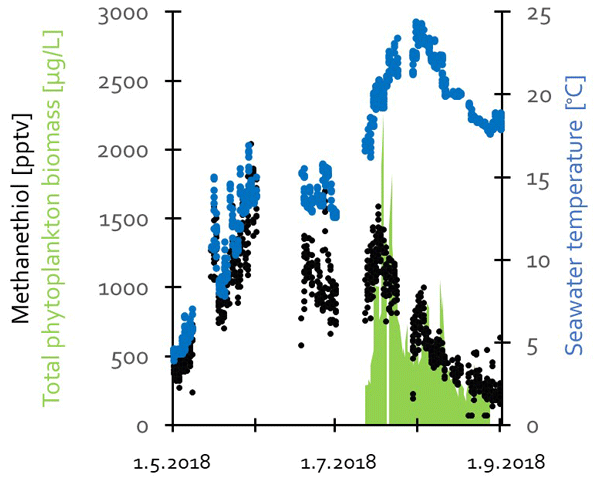
Mixing ratios of C2-C5 NMHCs and methanethiol were measured on an island in the Baltic Sea using an in situ gas chromatograph. Shipping emissions were found to be an important source of ethene, ethyne, propene, and benzene. High summertime mixing ratios of methanethiol and dependence of mixing ratios on seawater temperature and height indicated the biogenic origin to possibly be phytoplankton or macroalgae. These emissions may have a strong impact on SO2 production and new particle formation.
Risto Matias Hänninen, Rostislav Kouznetsov, and Mikhail Sofiev
Geosci. Model Dev. Discuss., https://doi.org/10.5194/gmd-2023-3, https://doi.org/10.5194/gmd-2023-3, 2023
Preprint withdrawn
Short summary
Short summary
Chemistry transport models describe the motion of particles and gases in atmosphere, containing chemistry equations that allow reaction between different species. The widely used carbon-bond chemistry schemes are originally written in a numerically problematic form that drives some concentrations to unphysical negative values. Here the chemistry equations are re-written in a form where this problem is absent, allowing an easier integration of the equations into any chemistry transport model.
Sanna Saarikoski, Heidi Hellén, Arnaud P. Praplan, Simon Schallhart, Petri Clusius, Jarkko V. Niemi, Anu Kousa, Toni Tykkä, Rostislav Kouznetsov, Minna Aurela, Laura Salo, Topi Rönkkö, Luis M. F. Barreira, Liisa Pirjola, and Hilkka Timonen
Atmos. Chem. Phys., 23, 2963–2982, https://doi.org/10.5194/acp-23-2963-2023, https://doi.org/10.5194/acp-23-2963-2023, 2023
Short summary
Short summary
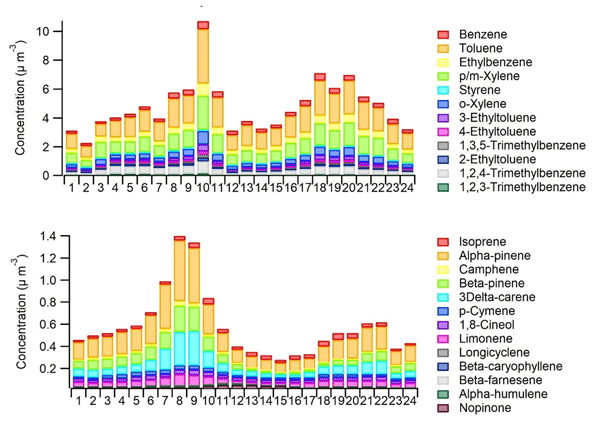
This study elucidates properties and sources of volatile organic compounds (VOCs) and organic aerosol (OA) in a traffic environment. Anthropogenic VOCs (aVOCs) were clearly higher than biogenic VOCs (bVOCs), but bVOCs produced a larger portion of oxidation products. OA consisted mostly of oxygenated OA, representing secondary OA (SOA). SOA was partly associated with bVOCs, but it was also related to long-range transport. Primary OA originated mostly from traffic.
Svetlana Sofieva, Eija Asmi, Nina S. Atanasova, Aino E. Heikkinen, Emeline Vidal, Jonathan Duplissy, Martin Romantschuk, Rostislav Kouznetsov, Jaakko Kukkonen, Dennis H. Bamford, Antti-Pekka Hyvärinen, and Mikhail Sofiev
Atmos. Meas. Tech., 15, 6201–6219, https://doi.org/10.5194/amt-15-6201-2022, https://doi.org/10.5194/amt-15-6201-2022, 2022
Short summary
Short summary
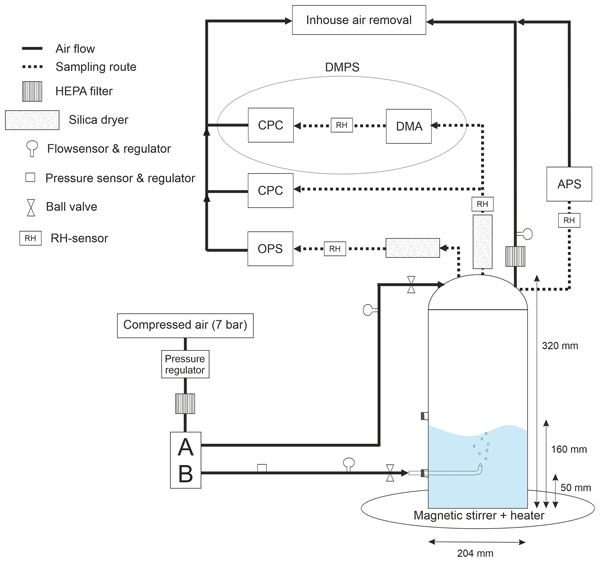
A new bubble-generating glass chamber design with an extensive set of aerosol production experiments is presented to re-evaluate bubble-bursting-mediated aerosol production as a function of water parameters: bubbling air flow, water salinity, and temperature. Our main findings suggest modest dependence of aerosol production on the water salinity and a strong dependence on temperature below ~ 10 °C.
Yalda Fatahi, Rostislav Kouznetsov, and Mikhail Sofiev
Geosci. Model Dev., 14, 7459–7475, https://doi.org/10.5194/gmd-14-7459-2021, https://doi.org/10.5194/gmd-14-7459-2021, 2021
Short summary
Short summary
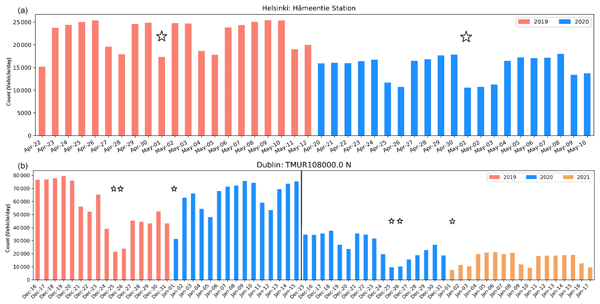
Incorporating information on public holidays into anthropogenic sector emissions results in substantial short-term improvement of the chemistry transport model SILAM scores. The largest impact was found for NOx, which is controlled by the changes in the traffic intensity. Certain improvements were also found for other species, but the signal was weaker than that for NOx.
Mikhail Sofiev and Rostislav Kouznetsov
EGUsphere, https://doi.org/10.5194/egusphere-2026-89, https://doi.org/10.5194/egusphere-2026-89, 2026
Short summary
Short summary
Satellites can observe fires globally, but sensitivity of instruments in space is limited: they miss small fires and cannot see through clouds. We analyzed the MODIS and VIIRS fire observations and obtained their sensitivity to small fires, which depends on the resolution of the instrument, timing of the observation (day or night), and details of the data processing. We developed a procedure for comparing fire model predictions with satellite observations accounting for their limited sensitivity
Marc Guevara, Augustin Colette, Antoine Guion, Valentin Petiot, Mario Adani, Joaquim Arteta, Anna Benedictow, Robert Bergström, Andrea Bolignano, Paula Camps, Ana C. Carvalho, Jesper Heile Christensen, Florian Couvidat, Ilaria D'Elia, Hugo Denier van der Gon, Gaël Descombes, John Douros, Hilde Fagerli, Yalda Fatahi, Elmar Friese, Lise Frohn, Michael Gauss, Camilla Geels, Risto Hänninen, Kaj Hansen, Oriol Jorba, Jacek W. Kaminski, Rostislav Kouznetsov, Richard Kranenburg, Jeroen Kuenen, Victor Lannuque, Frédérik Meleux, Agnes Nyíri, Yuliia Palamarchuk, Carlos Pérez García-Pando, Lennard Robertson, Felicita Russo, Arjo Segers, Mikhail Sofiev, Joanna Struzewska, Renske Timmermans, Andreas Uppstu, Alvaro Valdebenito, and Zhuyun Ye
Atmos. Chem. Phys., 25, 13245–13278, https://doi.org/10.5194/acp-25-13245-2025, https://doi.org/10.5194/acp-25-13245-2025, 2025
Short summary
Short summary
Air quality models require hourly emissions to accurately represent dispersion and physico-chemical processes in the atmosphere. Since emission inventories are typically provided at the annual level, emissions are downscaled to a refined temporal resolution using temporal profiles. This study quantifies the impact of using new anthropogenic temporal profiles on the performance of an European air quality multi-model ensemble. Overall, the findings indicate an improvement of the modelling results.
Augustin Colette, Gaëlle Collin, François Besson, Etienne Blot, Vincent Guidard, Frédérik Meleux, Adrien Royer, Valentin Petiot, Claire Miller, Oihana Fermond, Alizé Jeant, Mario Adani, Joaquim Arteta, Anna Benedictow, Robert Bergström, Dene Bowdalo, Jorgen Brandt, Gino Briganti, Ana C. Carvalho, Jesper Heile Christensen, Florian Couvidat, Ilaria D'Elia, Massimo D'Isidoro, Hugo Denier van der Gon, Gaël Descombes, Enza Di Tomaso, John Douros, Jeronimo Escribano, Henk Eskes, Hilde Fagerli, Yalda Fatahi, Johannes Flemming, Elmar Friese, Lise Frohn, Michael Gauss, Camilla Geels, Guido Guarnieri, Marc Guevara, Antoine Guion, Jonathan Guth, Risto Hänninen, Kaj Hansen, Ulas Im, Ruud Janssen, Marine Jeoffrion, Mathieu Joly, Luke Jones, Oriol Jorba, Evgeni Kadantsev, Michael Kahnert, Jacek W. Kaminski, Rostislav Kouznetsov, Richard Kranenburg, Jeroen Kuenen, Anne Caroline Lange, Joachim Langner, Victor Lannuque, Francesca Macchia, Astrid Manders, Mihaela Mircea, Agnes Nyiri, Miriam Olid, Carlos Pérez García-Pando, Yuliia Palamarchuk, Antonio Piersanti, Blandine Raux, Miha Razinger, Lennard Robertson, Arjo Segers, Martijn Schaap, Pilvi Siljamo, David Simpson, Mikhail Sofiev, Anders Stangel, Joanna Struzewska, Carles Tena, Renske Timmermans, Thanos Tsikerdekis, Svetlana Tsyro, Svyatoslav Tyuryakov, Anthony Ung, Andreas Uppstu, Alvaro Valdebenito, Peter van Velthoven, Lina Vitali, Zhuyun Ye, Vincent-Henri Peuch, and Laurence Rouïl
Geosci. Model Dev., 18, 6835–6883, https://doi.org/10.5194/gmd-18-6835-2025, https://doi.org/10.5194/gmd-18-6835-2025, 2025
Short summary
Short summary
The Copernicus Atmosphere Monitoring Service – Regional Production delivers daily forecasts, analyses, and reanalyses of air quality in Europe. The service relies on a distributed modelling production by 11 leading European modelling teams following stringent requirements with an operational design that has no equivalent in the world. All the products are free, open, and quality-assured and disseminated with a high level of reliability.
Jorge E. Pachón, Mariel A. Opazo, Pablo Lichtig, Nicolas Huneeus, Idir Bouarar, Guy Brasseur, Cathy W. Y. Li, Johannes Flemming, Laurent Menut, Camilo Menares, Laura Gallardo, Michael Gauss, Mikhail Sofiev, Rostislav Kouznetsov, Julia Palamarchuk, Andreas Uppstu, Laura Dawidowski, Nestor Y. Rojas, María de Fátima Andrade, Mario E. Gavidia-Calderón, Alejandro H. Delgado Peralta, and Daniel Schuch
Geosci. Model Dev., 17, 7467–7512, https://doi.org/10.5194/gmd-17-7467-2024, https://doi.org/10.5194/gmd-17-7467-2024, 2024
Short summary
Short summary
Latin America (LAC) has some of the most populated urban areas in the world, with high levels of air pollution. Air quality management in LAC has been traditionally focused on surveillance and building emission inventories. This study performed the first intercomparison and model evaluation in LAC, with interesting and insightful findings for the region. A multiscale modeling ensemble chain was assembled as a first step towards an air quality forecasting system.
Branko Sikoparija, Predrag Matavulj, Isidora Simovic, Predrag Radisic, Sanja Brdar, Vladan Minic, Danijela Tesendic, Evgeny Kadantsev, Julia Palamarchuk, and Mikhail Sofiev
Atmos. Meas. Tech., 17, 5051–5070, https://doi.org/10.5194/amt-17-5051-2024, https://doi.org/10.5194/amt-17-5051-2024, 2024
Short summary
Short summary
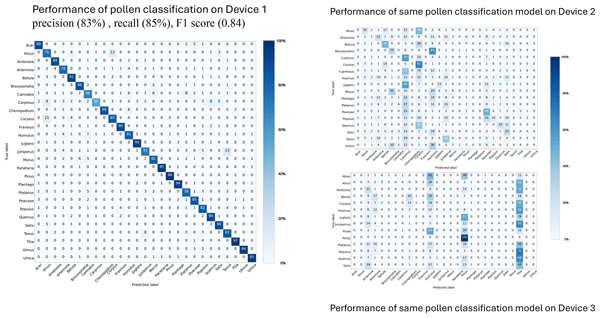
We assess the suitability of a Rapid-E+ particle counter for use in pollen monitoring networks. The criterion was the ability of different devices to provide the same signal for the same pollen type, which would allow for unified reference libraries and recognition algorithms for Rapid-E+. We tested three devices and found notable differences between their fluorescence measurements. Each one showed potential for pollen identification, but the large variability between them needs to be addressed.
Heidi Hellén, Rostislav Kouznetsov, Kaisa Kraft, Jukka Seppälä, Mika Vestenius, Jukka-Pekka Jalkanen, Lauri Laakso, and Hannele Hakola
Atmos. Chem. Phys., 24, 4717–4731, https://doi.org/10.5194/acp-24-4717-2024, https://doi.org/10.5194/acp-24-4717-2024, 2024
Short summary
Short summary
Mixing ratios of C2-C5 NMHCs and methanethiol were measured on an island in the Baltic Sea using an in situ gas chromatograph. Shipping emissions were found to be an important source of ethene, ethyne, propene, and benzene. High summertime mixing ratios of methanethiol and dependence of mixing ratios on seawater temperature and height indicated the biogenic origin to possibly be phytoplankton or macroalgae. These emissions may have a strong impact on SO2 production and new particle formation.
Rostislav Kouznetsov, Risto Hänninen, Andreas Uppstu, Evgeny Kadantsev, Yalda Fatahi, Marje Prank, Dmitrii Kouznetsov, Steffen Manfred Noe, Heikki Junninen, and Mikhail Sofiev
Atmos. Chem. Phys., 24, 4675–4691, https://doi.org/10.5194/acp-24-4675-2024, https://doi.org/10.5194/acp-24-4675-2024, 2024
Short summary
Short summary
By relying solely on publicly available media reports, we were able to infer the temporal evolution and the injection height for the Nord Stream gas leaks in September 2022. The inventory specifies locations, vertical distributions, and temporal evolution of the methane sources. The inventory can be used to simulate the event with atmospheric transport models. The inventory is supplemented with a set of observational data tailored to evaluate the results of the simulated atmospheric dispersion.
Leena Kangas, Jaakko Kukkonen, Mari Kauhaniemi, Kari Riikonen, Mikhail Sofiev, Anu Kousa, Jarkko V. Niemi, and Ari Karppinen
Atmos. Chem. Phys., 24, 1489–1507, https://doi.org/10.5194/acp-24-1489-2024, https://doi.org/10.5194/acp-24-1489-2024, 2024
Short summary
Short summary
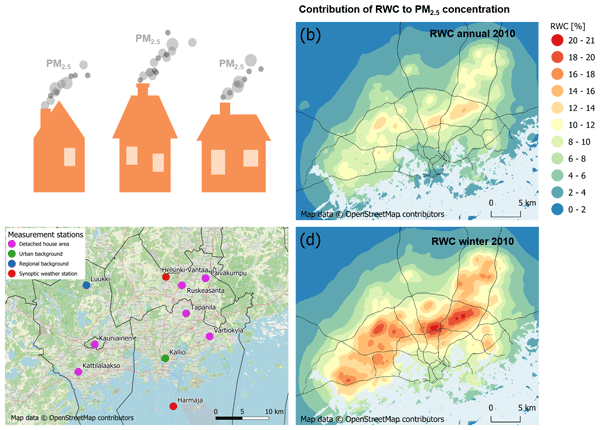
Residential wood combustion is a major source of fine particulate matter. This study has evaluated the contribution of residential wood combustion to fine particle concentrations and its year-to-year and seasonal variation in te Helsinki metropolitan area. The average concentrations attributed to wood combustion in winter were up to 10- or 15-fold compared to summer. Wood combustion caused 12 % to 14 % of annual fine particle concentrations. In winter, the contribution ranged from 16 % to 21 %.
Risto Matias Hänninen, Rostislav Kouznetsov, and Mikhail Sofiev
Geosci. Model Dev. Discuss., https://doi.org/10.5194/gmd-2023-3, https://doi.org/10.5194/gmd-2023-3, 2023
Preprint withdrawn
Short summary
Short summary
Chemistry transport models describe the motion of particles and gases in atmosphere, containing chemistry equations that allow reaction between different species. The widely used carbon-bond chemistry schemes are originally written in a numerically problematic form that drives some concentrations to unphysical negative values. Here the chemistry equations are re-written in a form where this problem is absent, allowing an easier integration of the equations into any chemistry transport model.
Yunyao Li, Daniel Tong, Siqi Ma, Saulo R. Freitas, Ravan Ahmadov, Mikhail Sofiev, Xiaoyang Zhang, Shobha Kondragunta, Ralph Kahn, Youhua Tang, Barry Baker, Patrick Campbell, Rick Saylor, Georg Grell, and Fangjun Li
Atmos. Chem. Phys., 23, 3083–3101, https://doi.org/10.5194/acp-23-3083-2023, https://doi.org/10.5194/acp-23-3083-2023, 2023
Short summary
Short summary
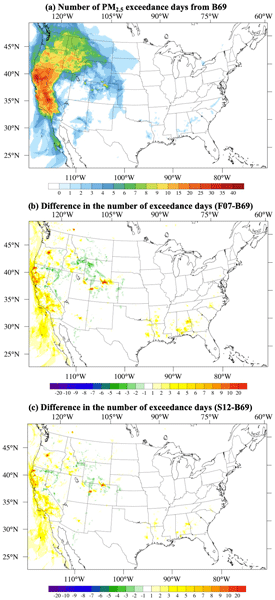
Plume height is important in wildfire smoke dispersion and affects air quality and human health. We assess the impact of plume height on wildfire smoke dispersion and the exceedances of the National Ambient Air Quality Standards. A higher plume height predicts lower pollution near the source region, but higher pollution in downwind regions, due to the faster spread of the smoke once ejected, affects pollution exceedance forecasts and the early warning of extreme air pollution events.
Sanna Saarikoski, Heidi Hellén, Arnaud P. Praplan, Simon Schallhart, Petri Clusius, Jarkko V. Niemi, Anu Kousa, Toni Tykkä, Rostislav Kouznetsov, Minna Aurela, Laura Salo, Topi Rönkkö, Luis M. F. Barreira, Liisa Pirjola, and Hilkka Timonen
Atmos. Chem. Phys., 23, 2963–2982, https://doi.org/10.5194/acp-23-2963-2023, https://doi.org/10.5194/acp-23-2963-2023, 2023
Short summary
Short summary
This study elucidates properties and sources of volatile organic compounds (VOCs) and organic aerosol (OA) in a traffic environment. Anthropogenic VOCs (aVOCs) were clearly higher than biogenic VOCs (bVOCs), but bVOCs produced a larger portion of oxidation products. OA consisted mostly of oxygenated OA, representing secondary OA (SOA). SOA was partly associated with bVOCs, but it was also related to long-range transport. Primary OA originated mostly from traffic.
Svetlana Sofieva, Eija Asmi, Nina S. Atanasova, Aino E. Heikkinen, Emeline Vidal, Jonathan Duplissy, Martin Romantschuk, Rostislav Kouznetsov, Jaakko Kukkonen, Dennis H. Bamford, Antti-Pekka Hyvärinen, and Mikhail Sofiev
Atmos. Meas. Tech., 15, 6201–6219, https://doi.org/10.5194/amt-15-6201-2022, https://doi.org/10.5194/amt-15-6201-2022, 2022
Short summary
Short summary
A new bubble-generating glass chamber design with an extensive set of aerosol production experiments is presented to re-evaluate bubble-bursting-mediated aerosol production as a function of water parameters: bubbling air flow, water salinity, and temperature. Our main findings suggest modest dependence of aerosol production on the water salinity and a strong dependence on temperature below ~ 10 °C.
Outi Meinander, Pavla Dagsson-Waldhauserova, Pavel Amosov, Elena Aseyeva, Cliff Atkins, Alexander Baklanov, Clarissa Baldo, Sarah L. Barr, Barbara Barzycka, Liane G. Benning, Bojan Cvetkovic, Polina Enchilik, Denis Frolov, Santiago Gassó, Konrad Kandler, Nikolay Kasimov, Jan Kavan, James King, Tatyana Koroleva, Viktoria Krupskaya, Markku Kulmala, Monika Kusiak, Hanna K. Lappalainen, Michał Laska, Jerome Lasne, Marek Lewandowski, Bartłomiej Luks, James B. McQuaid, Beatrice Moroni, Benjamin Murray, Ottmar Möhler, Adam Nawrot, Slobodan Nickovic, Norman T. O’Neill, Goran Pejanovic, Olga Popovicheva, Keyvan Ranjbar, Manolis Romanias, Olga Samonova, Alberto Sanchez-Marroquin, Kerstin Schepanski, Ivan Semenkov, Anna Sharapova, Elena Shevnina, Zongbo Shi, Mikhail Sofiev, Frédéric Thevenet, Throstur Thorsteinsson, Mikhail Timofeev, Nsikanabasi Silas Umo, Andreas Uppstu, Darya Urupina, György Varga, Tomasz Werner, Olafur Arnalds, and Ana Vukovic Vimic
Atmos. Chem. Phys., 22, 11889–11930, https://doi.org/10.5194/acp-22-11889-2022, https://doi.org/10.5194/acp-22-11889-2022, 2022
Short summary
Short summary
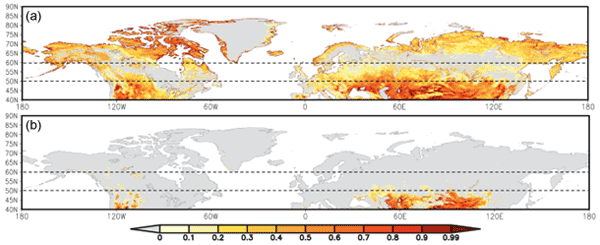
High-latitude dust (HLD) is a short-lived climate forcer, air pollutant, and nutrient source. Our results suggest a northern HLD belt at 50–58° N in Eurasia and 50–55° N in Canada and at >60° N in Eurasia and >58° N in Canada. Our addition to the previously identified global dust belt (GDB) provides crucially needed information on the extent of active HLD sources with both direct and indirect impacts on climate and environment in remote regions, which are often poorly understood and predicted.
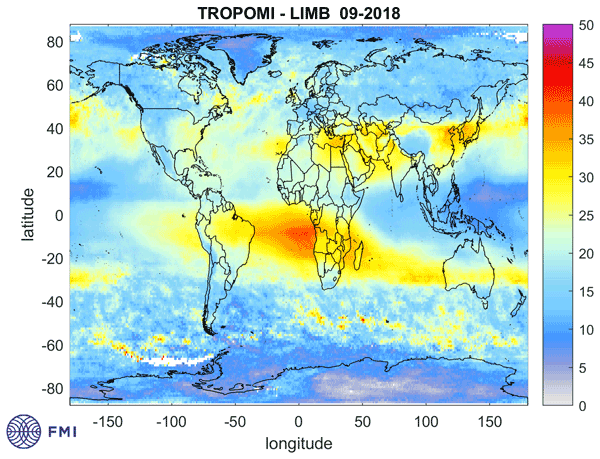
Viktoria F. Sofieva, Risto Hänninen, Mikhail Sofiev, Monika Szeląg, Hei Shing Lee, Johanna Tamminen, and Christian Retscher
Atmos. Meas. Tech., 15, 3193–3212, https://doi.org/10.5194/amt-15-3193-2022, https://doi.org/10.5194/amt-15-3193-2022, 2022
Short summary
Short summary
We present tropospheric ozone column datasets that have been created using combinations of total ozone column from OMI and TROPOMI with stratospheric ozone column datasets from several available limb-viewing instruments (MLS, OSIRIS, MIPAS, SCIAMACHY, OMPS-LP, GOMOS). The main results are (i) several methodological developments, (ii) new tropospheric ozone column datasets from OMI and TROPOMI, and (iii) a new high-resolution dataset of ozone profiles from limb satellite instruments.
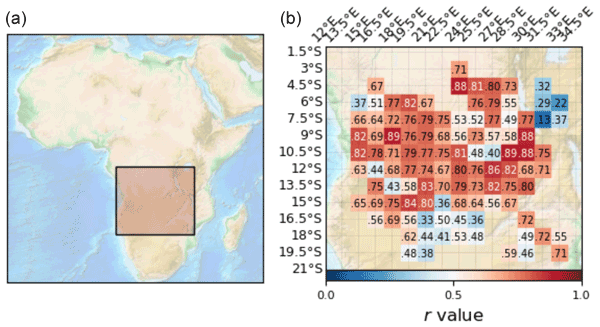
Tero M. Partanen and Mikhail Sofiev
Nat. Hazards Earth Syst. Sci., 22, 1335–1346, https://doi.org/10.5194/nhess-22-1335-2022, https://doi.org/10.5194/nhess-22-1335-2022, 2022
Short summary
Short summary
The presented method aims to forecast regional wildfire-emitted radiative power in a time-dependent manner several days in advance. The temporal fire radiative power can be converted to an emission production rate, which can be implemented in air quality forecasting simulations. It is shown that in areas with a high incidence of wildfires, the fire radiative power is quite predictable, but otherwise it is not.
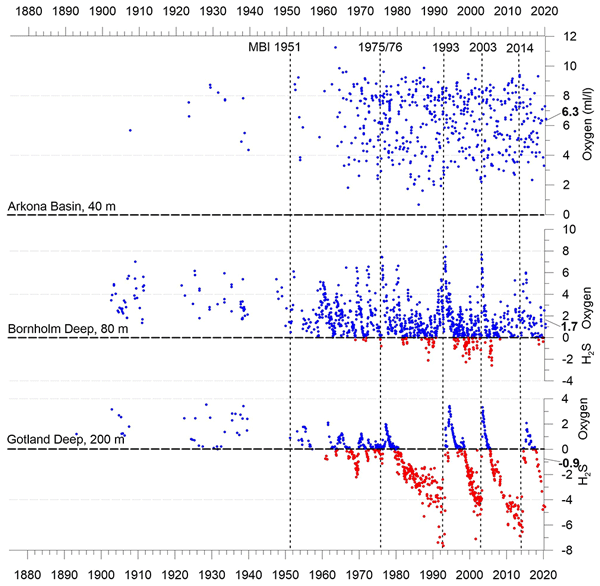
Karol Kuliński, Gregor Rehder, Eero Asmala, Alena Bartosova, Jacob Carstensen, Bo Gustafsson, Per O. J. Hall, Christoph Humborg, Tom Jilbert, Klaus Jürgens, H. E. Markus Meier, Bärbel Müller-Karulis, Michael Naumann, Jørgen E. Olesen, Oleg Savchuk, Andreas Schramm, Caroline P. Slomp, Mikhail Sofiev, Anna Sobek, Beata Szymczycha, and Emma Undeman
Earth Syst. Dynam., 13, 633–685, https://doi.org/10.5194/esd-13-633-2022, https://doi.org/10.5194/esd-13-633-2022, 2022
Short summary
Short summary
The paper covers the aspects related to changes in carbon, nitrogen, and phosphorus (C, N, P) external loads; their transformations in the coastal zone; changes in organic matter production (eutrophication) and remineralization (oxygen availability); and the role of sediments in burial and turnover of C, N, and P. Furthermore, this paper also focuses on changes in the marine CO2 system, the structure of the microbial community, and the role of contaminants for biogeochemical processes.
Yalda Fatahi, Rostislav Kouznetsov, and Mikhail Sofiev
Geosci. Model Dev., 14, 7459–7475, https://doi.org/10.5194/gmd-14-7459-2021, https://doi.org/10.5194/gmd-14-7459-2021, 2021
Short summary
Short summary
Incorporating information on public holidays into anthropogenic sector emissions results in substantial short-term improvement of the chemistry transport model SILAM scores. The largest impact was found for NOx, which is controlled by the changes in the traffic intensity. Certain improvements were also found for other species, but the signal was weaker than that for NOx.
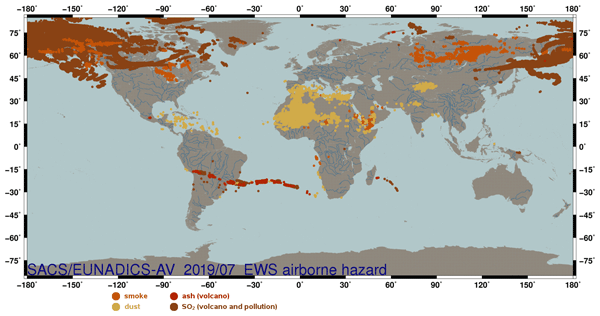
Hugues Brenot, Nicolas Theys, Lieven Clarisse, Jeroen van Gent, Daniel R. Hurtmans, Sophie Vandenbussche, Nikolaos Papagiannopoulos, Lucia Mona, Timo Virtanen, Andreas Uppstu, Mikhail Sofiev, Luca Bugliaro, Margarita Vázquez-Navarro, Pascal Hedelt, Michelle Maree Parks, Sara Barsotti, Mauro Coltelli, William Moreland, Simona Scollo, Giuseppe Salerno, Delia Arnold-Arias, Marcus Hirtl, Tuomas Peltonen, Juhani Lahtinen, Klaus Sievers, Florian Lipok, Rolf Rüfenacht, Alexander Haefele, Maxime Hervo, Saskia Wagenaar, Wim Som de Cerff, Jos de Laat, Arnoud Apituley, Piet Stammes, Quentin Laffineur, Andy Delcloo, Robertson Lennart, Carl-Herbert Rokitansky, Arturo Vargas, Markus Kerschbaum, Christian Resch, Raimund Zopp, Matthieu Plu, Vincent-Henri Peuch, Michel Van Roozendael, and Gerhard Wotawa
Nat. Hazards Earth Syst. Sci., 21, 3367–3405, https://doi.org/10.5194/nhess-21-3367-2021, https://doi.org/10.5194/nhess-21-3367-2021, 2021
Short summary
Short summary
The purpose of the EUNADICS-AV (European Natural Airborne Disaster Information and Coordination System for Aviation) prototype early warning system (EWS) is to develop the combined use of harmonised data products from satellite, ground-based and in situ instruments to produce alerts of airborne hazards (volcanic, dust, smoke and radionuclide clouds), satisfying the requirement of aviation air traffic management (ATM) stakeholders (https://cordis.europa.eu/project/id/723986).
Cited articles
Ahlm, L., Krejci, R., Nilsson, E. D., Mårtensson, E. M., Vogt, M., and Artaxo, P.: Emission and dry deposition of accumulation mode particles in the Amazon Basin, Atmos. Chem. Phys., 10, 10237–10253, https://doi.org/10.5194/acp-10-10237-2010, 2010. a
Blechschmidt, A.-M., Arteta, J., Coman, A., Curier, L., Eskes, H., Foret, G., Gielen, C., Hendrick, F., Marécal, V., Meleux, F., Parmentier, J., Peters, E., Pinardi, G., Piters, A. J. M., Plu, M., Richter, A., Segers, A., Sofiev, M., Valdebenito, Á. M., Van Roozendael, M., Vira, J., Vlemmix, T., and Burrows, J. P.: Comparison of tropospheric NO2 columns from MAX-DOAS retrievals and regional air quality model simulations, Atmos. Chem. Phys., 20, 2795–2823, https://doi.org/10.5194/acp-20-2795-2020, 2020. a
Brenot, H., Theys, N., Clarisse, L., van Gent, J., Hurtmans, D. R., Vandenbussche, S., Papagiannopoulos, N., Mona, L., Virtanen, T., Uppstu, A., Sofiev, M., Bugliaro, L., Vázquez-Navarro, M., Hedelt, P., Parks, M. M., Barsotti, S., Coltelli, M., Moreland, W., Scollo, S., Salerno, G., Arnold-Arias, D., Hirtl, M., Peltonen, T., Lahtinen, J., Sievers, K., Lipok, F., Rüfenacht, R., Haefele, A., Hervo, M., Wagenaar, S., Som de Cerff, W., de Laat, J., Apituley, A., Stammes, P., Laffineur, Q., Delcloo, A., Lennart, R., Rokitansky, C.-H., Vargas, A., Kerschbaum, M., Resch, C., Zopp, R., Plu, M., Peuch, V.-H., Van Roozendael, M., and Wotawa, G.: EUNADICS-AV early warning system dedicated to supporting aviation in the case of a crisis from natural airborne hazards and radionuclide clouds, Nat. Hazards Earth Syst. Sci., 21, 3367–3405, https://doi.org/10.5194/nhess-21-3367-2021, 2021. a
Businger, J. A.: Evaluation of the Accuracy with Which Dry Deposition Can Be Measured with Current Micrometeorological Techniques, J. Climate Appl. Meteor., 25, 1100–1124, https://doi.org/10.1175/1520-0450(1986)025<1100:EOTAWW>2.0.CO;2, 1986. a
Buzorius, G., Rannik, Ü., Nilsson, E., Vesala, T., and Kulmala, M.: Analysis of Measurement Techniques to Determine Dry Deposition Velocities of Aerosol Particles with Diameters Less than 100 Nm, Journal of Aerosol Science, 34, 747–764, https://doi.org/10.1016/S0021-8502(03)00025-9, 2003. a
Caffrey, P. F., Ondov, J. M., Zufall, M. J., and Davidson, C. I.: Determination of Size-Dependent Dry Particle Deposition Velocities with Multiple Intrinsic Elemental Tracers, Environ. Sci. Technol., 32, 1615–1622, https://doi.org/10.1021/es970644f, 1998. a
Chamberlain, A. C.: Transport of Gases to and from Surfaces with Bluff and Wave-like Roughness Elements, Quarterly Journal of the Royal Meteorological Society, 94, 318–332, https://doi.org/10.1002/qj.49709440108, 1968. a
Clough, W. S.: The Deposition of Particles on Moss and Grass Surfaces, Atmospheric Environment, 9, 1113–1119, https://doi.org/10.1016/0004-6981(75)90187-0, 1975. a
Colette, A., Collin, G., Besson, F., Blot, E., Guidard, V., Meleux, F., Royer, A., Petiot, V., Miller, C., Fermond, O., Jeant, A., Adani, M., Arteta, J., Benedictow, A., Bergström, R., Bowdalo, D., Brandt, J., Briganti, G., Carvalho, A. C., Christensen, J. H., Couvidat, F., D'Elia, I., D'Isidoro, M., Denier van der Gon, H., Descombes, G., Di Tomaso, E., Douros, J., Escribano, J., Eskes, H., Fagerli, H., Fatahi, Y., Flemming, J., Friese, E., Frohn, L., Gauss, M., Geels, C., Guarnieri, G., Guevara, M., Guion, A., Guth, J., Hänninen, R., Hansen, K., Im, U., Janssen, R., Jeoffrion, M., Joly, M., Jones, L., Jorba, O., Kadantsev, E., Kahnert, M., Kaminski, J. W., Kouznetsov, R., Kranenburg, R., Kuenen, J., Lange, A. C., Langner, J., Lannuque, V., Macchia, F., Manders, A., Mircea, M., Nyiri, A., Olid, M., Pérez García-Pando, C., Palamarchuk, Y., Piersanti, A., Raux, B., Razinger, M., Robertson, L., Segers, A., Schaap, M., Siljamo, P., Simpson, D., Sofiev, M., Stangel, A., Struzewska, J., Tena, C., Timmermans, R., Tsikerdekis, T., Tsyro, S., Tyuryakov, S., Ung, A., Uppstu, A., Valdebenito, A., van Velthoven, P., Vitali, L., Ye, Z., Peuch, V.-H., and Rouïl, L.: Copernicus Atmosphere Monitoring Service – Regional Air Quality Production System v1.0, Geosci. Model Dev., 18, 6835–6883, https://doi.org/10.5194/gmd-18-6835-2025, 2025. a, b, c
Connan, O., Pellerin, G., Maro, D., Damay, P., Hébert, D., Roupsard, P., Rozet, M., and Laguionie, P.: Dry Deposition Velocities of Particles on Grass: Field Experimental Data and Comparison with Models, Journal of Aerosol Science, 126, 58–67, https://doi.org/10.1016/j.jaerosci.2018.08.004, 2018. a
Contini, D., Donateo, A., Belosi, F., Grasso, F. M., Santachiara, G., and Prodi, F.: Deposition Velocity of Ultrafine Particles Measured with the Eddy-Correlation Method over the Nansen Ice Sheet (Antarctica), J. Geophys. Res., 115, 2009JD013600, https://doi.org/10.1029/2009JD013600, 2010. a
Dougle, P. G., Veefkind, J., and Ten Brink, H. M.: Crystallisation of Mixtures of Ammonium Nitrate, Ammonium Sulphate and Soot, Journal of Aerosol Science, 29, 375–386, https://doi.org/10.1016/S0021-8502(97)10003-9, 1998. a
Duan, B., Fairall, C. W., and Thomson, D. W.: Eddy Correlation Measurements of the Dry Deposition of Particles in Wintertime, J. Appl. Meteor., 27, 642–652, https://doi.org/10.1175/1520-0450(1988)027<0642:ECMOTD>2.0.CO;2, 1988. a
Emerson, E. W., Hodshire, A. L., DeBolt, H. M., Bilsback, K. R., Pierce, J. R., McMeeking, G. R., and Farmer, D. K.: Revisiting Particle Dry Deposition and Its Role in Radiative Effect Estimates, Proc. Natl. Acad. Sci. U.S.A., 117, 26076–26082, https://doi.org/10.1073/pnas.2014761117, 2020. a, b, c
Fagerli, H., Tsyro, S., Griesfeller, J., Gauss, M., Heinesen, D., Valdebenito, A., Caspel, W. V., Segers, A., Timmermans, R., Schaap, M., Kouznetsov, R., Uppstu, A., Guion, A., Raux, B., Couvidat, F., Jorba, O., Geels, C., Frohn, L., Arteta, J., Flemming, J., Remy, S., and Huijnen, V.: Task 4041 – Report on the Dedicated Study to Evaluate Deposition Fluxes for Key Pollutants, Tech. Rep. CAMS2_40_2021SC1, Copernicus Atmosphere Monitoring Service 2 (CAMS), https://nextcloud.meteo.fr/s/3BggsMZJQoRJpFM (last access: 26 February 2026), 2023. a, b
Farmer, D. K., Chen, Q., Kimmel, J. R., Docherty, K. S., Nemitz, E., Artaxo, P. A., Cappa, C. D., Martin, S. T., and Jimenez, J. L.: Chemically Resolved Particle Fluxes Over Tropical and Temperate Forests, Aerosol Science and Technology, 47, 818–830, https://doi.org/10.1080/02786826.2013.791022, 2013. a, b, c
Farmer, D. K., Boedicker, E. K., and DeBolt, H. M.: Dry Deposition of Atmospheric Aerosols: Approaches, Observations, and Mechanisms, Annu. Rev. Phys. Chem., 72, 375–397, https://doi.org/10.1146/annurev-physchem-090519-034936, 2021. a
Gallagher, M. W., Beswick, K. M., Duyzer, J., Westrate, H., Choularton, T. W., and Hummelshøj, P.: Measurements of Aerosol Fluxes to Speulder Forest Using a Micrometeorological Technique, Atmospheric Environment, 31, 359–373, https://doi.org/10.1016/S1352-2310(96)00057-X, 1997. a, b, c, d, e, f, g, h, i
Galperin, M. and Sofiev, M.: The Long-Range Transport of Ammonia and Ammonium in the Northern Hemisphere, Atmospheric Environment, 32, 373–380, https://doi.org/10.1016/S1352-2310(97)00045-9, 1998. a
Garland, J. A.: On the Size Dependence of Particle Deposition, Water, Air, and Soil Pollution: Focus, 1, 323–332, https://doi.org/10.1023/A:1013183911748, 2001. a
Giorgi, F.: A Particle Dry-deposition Parameterization Scheme for Use in Tracer Transport Models, J. Geophys. Res., 91, 9794–9806, https://doi.org/10.1029/JD091iD09p09794, 1986. a
Gordon, M., Staebler, R. M., Liggio, J., Vlasenko, A., Li, S.-M., and Hayden, K.: Aerosol flux measurements above a mixed forest at Borden, Ontario, Atmos. Chem. Phys., 11, 6773–6786, https://doi.org/10.5194/acp-11-6773-2011, 2011. a
Grönholm, T., Aalto, P. P., Hiltunen, V., Rannik, Ü., Rinne, J., Laakso, L., Hyvönen, S., Vesala, T., and Kulmala, M.: Measurements of Aerosol Particle Dry Deposition Velocity Using the Relaxed Eddy Accumulation Technique, Tellus B: Chemical and Physical Meteorology, 59, 381, https://doi.org/10.1111/j.1600-0889.2007.00268.x, 2007. a
Grönholm, T., Launiainen, S., Ahlm, L., Mårtensson, E. M., Kulmala, M., Vesala, T., and Nilsson, E. D.: Aerosol Particle Dry Deposition to Canopy and Forest Floor Measured by Two-layer Eddy Covariance System, J. Geophys. Res., 114, 2008JD010663, https://doi.org/10.1029/2008JD010663, 2009. a, b
Hicks, B. B., Baldocchi, D. D., Meyers, T. P., Hosker, R. P., and Matt, D. R.: A Preliminary Multiple Resistance Routine for Deriving Dry Deposition Velocities from Measured Quantities, Water Air Soil Pollut, 36, 311–330, https://doi.org/10.1007/BF00229675, 1987. a
Jylhä, K., Kämäräinen, M., Fortelius, C., Gregow, H., Helander, J., Hyvärinen, O., Johansson, M., Karppinen, A., Korpinen, A., Kouznetsov, R., Kurzeneva, E., Leijala, U., Mäkelä, A., Pellikka, H., Saku, S., Sandberg J., Sofiev, M., Vajda, A., Venäläinen, A., and Vira, J.: Recent Meteorological and Marine Studies to Support Nuclear Power Plant Safety in Finland, Energy, 165, 1102–1118, https://doi.org/10.1016/j.energy.2018.09.033, 2018. a
Kouznetsov, R., Sofiev, M., Vira, J., and Stiller, G.: Simulating age of air and the distribution of SF6 in the stratosphere with the SILAM model, Atmos. Chem. Phys., 20, 5837–5859, https://doi.org/10.5194/acp-20-5837-2020, 2020. a
Kuenen, J., Denier van der Gon, H., Visschedijk, A., and van der Brugh, H.: High Resolution European Emission Inventory for the Years 2003–2007, Report TNO-060-UT-2011-00588, TNO, Utrecht, the Netherlands, 2011. a
Kukkonen, J., Olsson, T., Schultz, D. M., Baklanov, A., Klein, T., Miranda, A. I., Monteiro, A., Hirtl, M., Tarvainen, V., Boy, M., Peuch, V.-H., Poupkou, A., Kioutsioukis, I., Finardi, S., Sofiev, M., Sokhi, R., Lehtinen, K. E. J., Karatzas, K., San José, R., Astitha, M., Kallos, G., Schaap, M., Reimer, E., Jakobs, H., and Eben, K.: A review of operational, regional-scale, chemical weather forecasting models in Europe, Atmos. Chem. Phys., 12, 1–87, https://doi.org/10.5194/acp-12-1-2012, 2012. a
Lavi, A., Farmer, D. K., Segre, E., Moise, T., Rotenberg, E., Jimenez, J. L., and Rudich, Y.: Fluxes of Fine Particles Over a Semi-Arid Pine Forest: Possible Effects of a Complex Terrain, Aerosol Science and Technology, 47, 906–915, https://doi.org/10.1080/02786826.2013.800940, 2013. a, b, c, d
Mammarella, I., Rannik, Ü., Aalto, P., Keronen, P., Vesala, T., and Kulmala, M.: Long-Term Aerosol Particle Flux Observations. Part II: Particle Size Statistics and Deposition Velocities, Atmospheric Environment, 45, 3794–3805, https://doi.org/10.1016/j.atmosenv.2011.04.022, 2011. a
Matsuda, K., Fujimura, Y., Hayashi, K., Takahashi, A., and Nakaya, K.: Deposition Velocity of PM2.5 Sulfate in the Summer above a Deciduous Forest in Central Japan, Atmospheric Environment, 44, 4582–4587, https://doi.org/10.1016/j.atmosenv.2010.08.015, 2010. a
Matsuda, K., Watanabe, I., Mizukami, K., Ban, S., and Takahashi, A.: Dry Deposition of PM2.5 Sulfate above a Hilly Forest Using Relaxed Eddy Accumulation, Atmospheric Environment, 107, 255–261, https://doi.org/10.1016/j.atmosenv.2015.02.050, 2015. a
Meng, Z. and Seinfeld, J. H.: Time Scales to Achieve Atmospheric Gas-Aerosol Equilibrium for Volatile Species, Atmospheric Environment, 30, 2889–2900, https://doi.org/10.1016/1352-2310(95)00493-9, 1996. a, b, c
Mozurkewich, M.: The Dissociation Constant of Ammonium Nitrate and Its Dependence on Temperature, Relative Humidity and Particle Size, Atmospheric Environment. Part A. General Topics, 27, 261–270, https://doi.org/10.1016/0960-1686(93)90356-4, 1993. a
Nemitz, E. and Sutton, M. A.: Gas-particle interactions above a Dutch heathland: III. Modelling the influence of the NH3-HNO3-NH4NO3 equilibrium on size-segregated particle fluxes, Atmos. Chem. Phys., 4, 1025–1045, https://doi.org/10.5194/acp-4-1025-2004, 2004. a, b
Nemitz, E., Gallagher, M. W., Duyzer, J. H., and Fowler, D.: Micrometeorological Measurements of Particle Deposition Velocities to Moorland Vegetation, Quarterly Journal of the Royal Meteorological Society, 128, 2281–2300, 2002. a
Nemitz, E., Dorsey, J. R., Flynn, M. J., Gallagher, M. W., Hensen, A., Erisman, J.-W., Owen, S. M., Dämmgen, U., and Sutton, M. A.: Aerosol fluxes and particle growth above managed grassland, Biogeosciences, 6, 1627–1645, https://doi.org/10.5194/bg-6-1627-2009, 2009. a, b, c
Pachón, J. E., Opazo, M. A., Lichtig, P., Huneeus, N., Bouarar, I., Brasseur, G., Li, C. W. Y., Flemming, J., Menut, L., Menares, C., Gallardo, L., Gauss, M., Sofiev, M., Kouznetsov, R., Palamarchuk, J., Uppstu, A., Dawidowski, L., Rojas, N. Y., Andrade, M. D. F., Gavidia-Calderón, M. E., Delgado Peralta, A. H., and Schuch, D.: Air quality modeling intercomparison and multiscale ensemble chain for Latin America, Geosci. Model Dev., 17, 7467–7512, https://doi.org/10.5194/gmd-17-7467-2024, 2024. a
Petersen, A. K., Brasseur, G. P., Bouarar, I., Flemming, J., Gauss, M., Jiang, F., Kouznetsov, R., Kranenburg, R., Mijling, B., Peuch, V.-H., Pommier, M., Segers, A., Sofiev, M., Timmermans, R., van der A, R., Walters, S., Xie, Y., Xu, J., and Zhou, G.: Ensemble forecasts of air quality in eastern China – Part 2: Evaluation of the MarcoPolo–Panda prediction system, version 1, Geosci. Model Dev., 12, 1241–1266, https://doi.org/10.5194/gmd-12-1241-2019, 2019. a
Petroff, A., Murphy, J., Thomas, S., and Geddes, J.: Size-Resolved Aerosol Fluxes above a Temperate Broadleaf Forest, Atmospheric Environment, 190, 359–375, https://doi.org/10.1016/j.atmosenv.2018.07.012, 2018. a, b, c, d
Pryor, S.: Size-Resolved Particle Deposition Velocities of Sub-100 Nm Diameter Particles over a Forest, Atmospheric Environment, 40, 6192–6200, https://doi.org/10.1016/j.atmosenv.2006.04.066, 2006. a, b
Pryor, S. C., Larsen, S. E., Sørensen, L. L., Barthelmie, R. J., Gronholm, T., Kulmala, M., Launiainen, S., Rannik, U., and Vesala, T.: Particle Fluxes over Forests: Analyses of Flux Methods and Functional Dependencies, Journal of Geophysical Research, 112, D07205, https://doi.org/10.1029/2006JD008066, 2007. a
Pryor, S. C., Gallagher, M., Sievering, H., Larsen, S. E., Barthelmie, R. J., Birsan, F., Nemitz, E., Rinne, J., Kulmala, M., Grönholm, T., Taipale, R., and Vesala, T.: A Review of Measurement and Modelling Results of Particle Atmosphere – Surface Exchange, Tellus B, 60B, 42–75, https://doi.org/10.1111/j.1600-0889.2007.00298.x, 2008. a
Pryor, S. C., Barthelmie, R. J., Spaulding, A. M., Larsen, S. E., and Petroff, A.: Size-Resolved Fluxes of Sub-100-Nm Particles over Forests, J. Geophys. Res., 114, https://doi.org/10.1029/2009JD012248, 2009. a, b
Rannik, Ü., Aalto, P., Keronen, P., Vesala, T., and Kulmala, M.: Interpretation of Aerosol Particle Fluxes over a Pine Forest: Dry Deposition and Random Errors, J. Geophys. Res., 108, 2003JD003542, https://doi.org/10.1029/2003JD003542, 2003a. a
Rannik, Ü., Markkanen, T., Raittila, J., Hari, P., and Vesala, T.: Turbulence Statistics Inside and Over Forest: Influence on Footprint Prediction, Boundary-Layer Meteorology, 109, 163–189, https://doi.org/10.1023/A:1025404923169, 2003b. a
Rannik, Ü., Mammarella, I., Aalto, P., Keronen, P., Vesala, T., and Kulmala, M.: Long-Term Aerosol Particle Flux Observations Part I: Uncertainties and Time-Average Statistics, Atmospheric Environment, 43, 3431–3439, https://doi.org/10.1016/j.atmosenv.2009.02.049, 2009. a
Rohbock, E.: Atmospheric Removal of Airborne Metals by Wet and Dry Deposition, in: Deposition of Atmospheric Pollutants, edited by: Georgii, H.-W. and Pankrath, J., 159–171, Springer Netherlands, Dordrecht, ISBN 978-94-009-7866-9, 978-94-009-7864-5, https://doi.org/10.1007/978-94-009-7864-5_16, 1982. a
Ryder, J.: Emission, Deposition and Chemical Conversion of Atmospheric Trace Substances in and above Vegetation Canopies, School for Earth, Atmospheric and Environmental Sciences University of Manchester, Manchester, https://nora.nerc.ac.uk/id/eprint/525861 (last access: 26 February 2026), 2010. a
Schaap, M., Kraneburg, R., Michaud van der Wal, C., Geers, L., Kouznetsov, R., and Bergström, R.: National Scale Modelling of Nitrogen Deposition in the Netherlands, Report TNO-2025-R11248, TNO, Utrecht, the Netherlands, 2026. a
Sehmel, G. A.: Particle and Gas Dry Deposition: A Review, Atmospheric Environment, 14, 983–1011, https://doi.org/10.1016/0004-6981(80)90031-1, 1980. a
Sehmel, G. A. and Sutter, S. L.: Particle Deposition Rates on a Water Surface as a Function of Particle Diameter and Air Velocity, Journal de Recherches Atmospheriques, 8, 911–920, 1974. a
Seinfeld, J. and Pandis, S.: Atmospheric Chemistry and Physics, Wiley, New York, ISBN 0-471-1816-0, 1998. a
Shiraiwa, M. and Seinfeld, J. H.: Equilibration Timescale of Atmospheric Secondary Organic Aerosol Partitioning, Geophysical Research Letters, 39, 2012GL054008, https://doi.org/10.1029/2012GL054008, 2012. a, b
Sievering, H.: Profile Measurements of Particle Mass Transfer at the Air-Water Interface, Atmospheric Environment, 15, 123–129, https://doi.org/10.1016/0004-6981(81)90003-2, 1981. a
Sievering, H., Cooke, J., and Pueschel, R.: Importance of Deposition Velocity for Sulfur Gas to Sulfate Particle Transformation Rates at the Four Corners Power Plant, Atmospheric Environment, 15, 2593–2596, https://doi.org/10.1016/0004-6981(81)90076-7, 1981. a, b, c
SILAM team: fmidev/silam-model: Silam_v6_1 For the revised version of dry-deposition paper (silam_v6_1_1), Zenodo [code], https://doi.org/10.5281/zenodo.18782316, 2026. a
Simpson, D., Andersson, C., Christensen, J. H., Engardt, M., Geels, C., Nyiri, A., Posch, M., Soares, J., Sofiev, M., Wind, P., and Langner, J.: Impacts of climate and emission changes on nitrogen deposition in Europe: a multi-model study, Atmos. Chem. Phys., 14, 6995–7017, https://doi.org/10.5194/acp-14-6995-2014, 2014. a
Slinn, S. and Slinn, W.: Predictions for Particle Deposition on Natural Waters, Atmospheric Environment, 14, 1013–1016, https://doi.org/10.1016/0004-6981(80)90032-3, 1980. a
Slinn, W.: Predictions for Particle Deposition to Vegetative Canopies, Atmospheric Environment, 16, 1785–1794, https://doi.org/10.1016/0004-6981(82)90271-2, 1982. a, b, c, d
Sofiev, M.: A Model for the Evaluation of Long-Term Airborne Pollution Transport at Regional and Continental Scales, Atmospheric Environment, 34, 2481–2493, https://doi.org/10.1016/S1352-2310(99)00415-X, 2000. a
Sofiev, M.: Extended Resistance Analogy for Construction of the Vertical Diffusion Scheme for Dispersion Models, Journal of Geophysical Research, 107, 4159, https://doi.org/10.1029/2001JD001233, 2002. a, b
Sofiev, M., Vira, J., Kouznetsov, R., Prank, M., Soares, J., and Genikhovich, E.: Construction of the SILAM Eulerian atmospheric dispersion model based on the advection algorithm of Michael Galperin, Geosci. Model Dev., 8, 3497–3522, https://doi.org/10.5194/gmd-8-3497-2015, 2015. a
Sofiev, M., Winebrake, J. J., Johansson, L., Carr, E. W., Prank, M., Soares, J., Vira, J., Kouznetsov, R., Jalkanen, J.-P., and Corbett, J. J.: Cleaner Fuels for Ships Provide Public Health Benefits with Climate Tradeoffs, Nature Communications, 9, 406, https://doi.org/10.1038/s41467-017-02774-9, 2018. a
Sofiev, M., Palamarchuk, Y., Bédard, A., Basagana, X., Anto, J. M., Kouznetsov, R., Urzua, R. D., Bergmann, K. C., Fonseca, J. A., De Vries, G., Van Erd, M., Annesi-Maesano, I., Laune, D., Pépin, J. L., Jullian-Desayes, I., Zeng, S., Czarlewski, W., and Bousquet, J.: A Demonstration Project of Global Alliance against Chronic Respiratory Diseases: Prediction of Interactions between Air Pollution and Allergen Exposure – the Mobile Airways Sentinel NetworK-Impact of Air POLLution on Asthma and Rhinitis Approach, Chinese Medical Journal, 133, 1561–1567, https://doi.org/10.1097/CM9.0000000000000916, 2020. a, b
Sun, F., Yin, Z., Lun, X., Zhao, Y., Li, R., Shi, F., and Yu, X.: Deposition Velocity of PM2.5 in the Winter and Spring above Deciduous and Coniferous Forests in Beijing, China, PLoS ONE, 9, e97723, https://doi.org/10.1371/journal.pone.0097723, 2014. a
Vong, R. J., Vickers, D., and Covert, D. S.: Eddy Correlation Measurements of Aerosol Deposition to Grass, Tellus B: Chemical and Physical Meteorology, 56, 105, https://doi.org/10.3402/tellusb.v56i2.16414, 2004. a, b
Vong, R. J., Vong, I. J., Vickers, D., and Covert, D. S.: Size-dependent aerosol deposition velocities during BEARPEX'07, Atmos. Chem. Phys., 10, 5749–5758, https://doi.org/10.5194/acp-10-5749-2010, 2010. a, b
Wesely, M. L., Cook, D. R., Hart, R. L., and Speer, R. E.: Measurements and Parameterization of Particulate Sulfur Dry Deposition over Grass, J. Geophys. Res., 90, 2131–2143, https://doi.org/10.1029/JD090iD01p02131, 1985. a, b
Zufall, M. J., Davidson, C. I., Caffrey, P. F., and Ondov, J. M.: Airborne Concentrations and Dry Deposition Fluxes of Particulate Species to Surrogate Surfaces Deployed in Southern Lake Michigan, Envirionmental Science and Technology, 32, 1623–1628, https://doi.org/10.1021/es9706458, 1998. a
Short summary
The paper addresses a two-order-of-magnitude discrepancy in deposition velocities of accumulation-mode aerosols measured with different methods. This uncertainty affects current atmospheric deposition models. By explicitly accounting for gas-particle transition and explicitly evaluating the observed quantities we could reproduce the observations . Resolving the discrepancy, reduces uncertainties in simulated concentrations and fallout.
The paper addresses a two-order-of-magnitude discrepancy in deposition velocities of...


