
Articles | Volume 19, issue 4
https://doi.org/10.5194/gmd-19-1645-2026
© Author(s) 2026. This work is distributed under
the Creative Commons Attribution 4.0 License.
the Creative Commons Attribution 4.0 License.
https://doi.org/10.5194/gmd-19-1645-2026
© Author(s) 2026. This work is distributed under
the Creative Commons Attribution 4.0 License.
the Creative Commons Attribution 4.0 License.
Model description paper
| 
27 Feb 2026
Model description paper |
| 27 Feb 2026
| 27 Feb 2026
The atmospheric composition component of the ICON modeling framework: ICON-ART version 2025.10
Gholam Ali Hoshyaripour
CORRESPONDING AUTHOR

Karlsruhe Institute of Technology (KIT), Karlsruhe, Germany
Andreas Baer
Karlsruhe Institute of Technology (KIT), Karlsruhe, Germany
Sascha Bierbauer
Karlsruhe Institute of Technology (KIT), Karlsruhe, Germany
Julia Bruckert
Karlsruhe Institute of Technology (KIT), Karlsruhe, Germany
Dominik Brunner
Swiss Federal Laboratories for Materials Science and Technology (EMPA), Dübendorf, Switzerland
Jochen Förstner
Deutscher Wetterdienst (DWD), Offenbach am Main, Germany
Arash Hamzehloo
Swiss Federal Laboratories for Materials Science and Technology (EMPA), Dübendorf, Switzerland
Valentin Hanft
Karlsruhe Institute of Technology (KIT), Karlsruhe, Germany
Corina Keller
Swiss Federal Laboratories for Materials Science and Technology (EMPA), Dübendorf, Switzerland
Martina Klose
Karlsruhe Institute of Technology (KIT), Karlsruhe, Germany
Pankaj Kumar
Karlsruhe Institute of Technology (KIT), Karlsruhe, Germany
Patrick Ludwig
Karlsruhe Institute of Technology (KIT), Karlsruhe, Germany
Enrico Metzner
Karlsruhe Institute of Technology (KIT), Karlsruhe, Germany
Lisa Muth
Karlsruhe Institute of Technology (KIT), Karlsruhe, Germany
Andreas Pauling
Federal Office of Meteorology and Climatology MeteoSwiss, Zurich, Switzerland
Nikolas Porz
Deutscher Wetterdienst (DWD), Offenbach am Main, Germany
Maryam Ramezani Ziarani
Karlsruhe Institute of Technology (KIT), Karlsruhe, Germany
Mathematical Institute for Machine Learning and Data Science, Katholische Universität Eichstätt-Ingolstadt, Ingolstadt, Germany
Thomas Reddmann
Karlsruhe Institute of Technology (KIT), Karlsruhe, Germany
Luca Reißig
Karlsruhe Institute of Technology (KIT), Karlsruhe, Germany
Roland Ruhnke
Karlsruhe Institute of Technology (KIT), Karlsruhe, Germany
Khompat Satitkovitchai
Karlsruhe Institute of Technology (KIT), Karlsruhe, Germany
Axel Seifert
Deutscher Wetterdienst (DWD), Offenbach am Main, Germany
Miriam Sinnhuber
Karlsruhe Institute of Technology (KIT), Karlsruhe, Germany
Michael Steiner
Swiss Federal Laboratories for Materials Science and Technology (EMPA), Dübendorf, Switzerland
Stefan Versick
Karlsruhe Institute of Technology (KIT), Karlsruhe, Germany
Heike Vogel
Karlsruhe Institute of Technology (KIT), Karlsruhe, Germany
Michael Weimer
Karlsruhe Institute of Technology (KIT), Karlsruhe, Germany
Institute of Environmental Physics (IUP), University of Bremen, Bremen, Germany
Sven Werchner
Karlsruhe Institute of Technology (KIT), Karlsruhe, Germany
Corinna Hoose
Karlsruhe Institute of Technology (KIT), Karlsruhe, Germany
Related authors
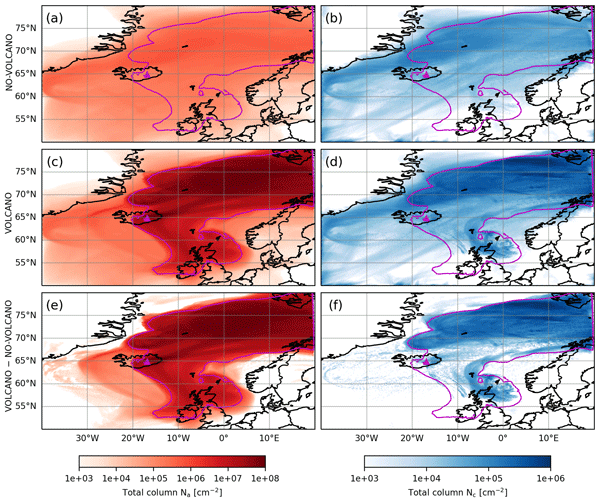
Fatemeh Zarei, Julia Bruckert, Gholam Ali Hoshyaripour, and Corinna Hoose
Atmos. Chem. Phys., 26, 9697–9719, https://doi.org/10.5194/acp-26-9697-2026, https://doi.org/10.5194/acp-26-9697-2026, 2026
Short summary
Short summary
Volcanic eruptions are a rich source of aerosol particles, such as sulfate and ash, that can impact cloud droplet and ice crystal formation. They lead to strong local perturbations of clouds. In this study, these processes were simulated with a numerical model. In two contrasting case studies of an Icelandic and a Caribbean volcano, the perturbations to processes involving liquid droplets and ice crystals are investigated.
N'Datchoh Evelyne Touré, Peter Knippertz, Andreas H. Fink, Marlon Maranan, Julia Bruckert, Gholamali Hoshyaripour, Jasmin Haupt, and Arona Diedhiou
EGUsphere, https://doi.org/10.5194/egusphere-2026-3128, https://doi.org/10.5194/egusphere-2026-3128, 2026
Short summary
Short summary
Rapid urbanization in Africa drives increasing air pollution. Once released, pollutants can travel long distances and impact remote areas. Here, we investigate the dispersion of pollutants from cities along the West African Guinean Coast by the land-sea breeze (LSB) circulation during the dry season using idealized tracer experiments with a weather prediction model. The experiments quantify the typical inland penetration of pollutants and show a transport to the Atlantic Ocean aloft.
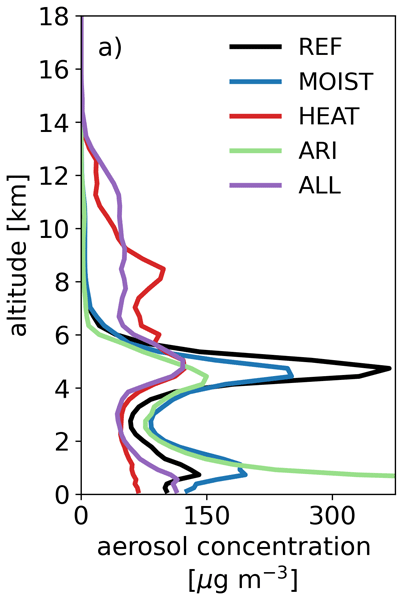
Lisa Janina Muth, Gholam Ali Hoshyaripour, Bernhard Vogel, Heike Vogel, and Corinna Hoose
Atmos. Chem. Phys., 26, 8505–8528, https://doi.org/10.5194/acp-26-8505-2026, https://doi.org/10.5194/acp-26-8505-2026, 2026
Short summary
Short summary
Wildfire plume injection height is key for atmospheric impact but hard to model. This study simulates the 2019/2020 Australian wildfires, testing fire-atmosphere feedbacks. Heat release increases plume rise; moisture has minor effects. Aerosol-radiation interaction lowers injection height initially, then lofts it. Only the combined simulation matches observed upper troposphere aerosol layers, especially during peak fire intensity.
Hengheng Zhang, Gholam Ali Hoshyaripour, Heike Vogel, Frank Wagner, Thomas Leisner, Jochen Förstner, and Harald Saathoff
EGUsphere, https://doi.org/10.5194/egusphere-2025-5980, https://doi.org/10.5194/egusphere-2025-5980, 2026
Short summary
Short summary
We studied several major dust storms that traveled from the Sahara to Europe using ground-based light measurements, sunlight sensors, particle counters, and a modern weather and dust model. We reveal when the dust arrived, how it moved and mixed in the air, and why each event behaved differently. Our results help improve forecasts of dust episodes that influence air quality, visibility, and solar energy across Europe.
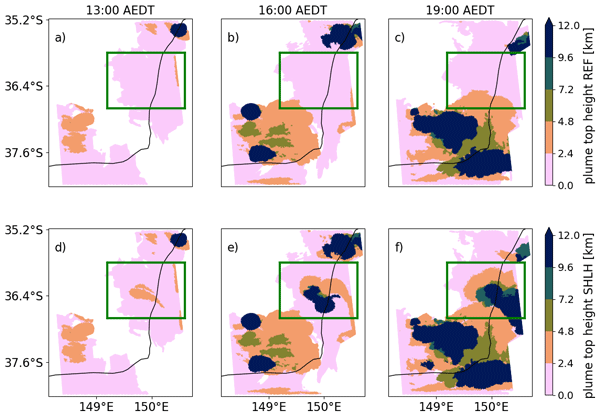
Lisa Janina Muth, Sascha Bierbauer, Corinna Hoose, Bernhard Vogel, Heike Vogel, and Gholam Ali Hoshyaripour
Atmos. Chem. Phys., 25, 16027–16040, https://doi.org/10.5194/acp-25-16027-2025, https://doi.org/10.5194/acp-25-16027-2025, 2025
Short summary
Short summary
In our study, we explore how intense wildfires create thunderstorm-like clouds that can affect weather and climate globally. Using simulations with high resolution, we found that fire heat and moisture help form these clouds, lifting particles high into the atmosphere. This process is crucial for understanding how fires affect the environment. Despite some differences from observational data, our findings match well over time, showing the importance of fire-induced heat in cloud formation.
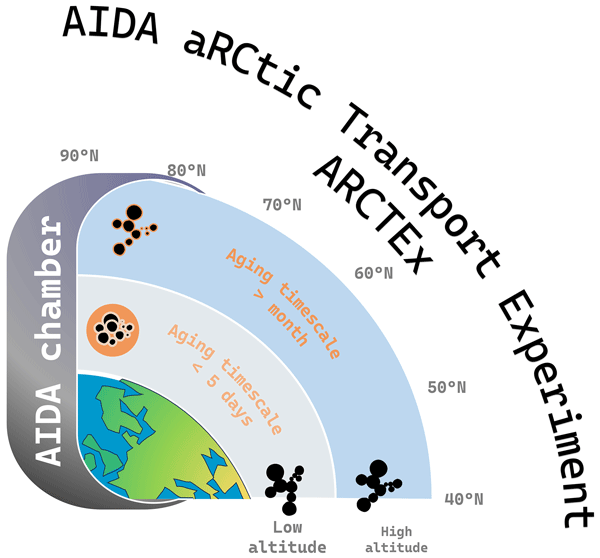
Marco Zanatta, Pia Bogert, Patrick Ginot, Yiwei Gong, Gholam Ali Hoshyaripour, Yaqiong Hu, Feng Jiang, Paolo Laj, Yanxia Li, Claudia Linke, Ottmar Möhler, Harald Saathoff, Martin Schnaiter, Nsikanabasi Silas Umo, Franziska Vogel, and Robert Wagner
Aerosol Research, 3, 477–502, https://doi.org/10.5194/ar-3-477-2025, https://doi.org/10.5194/ar-3-477-2025, 2025
Short summary
Short summary
Back carbon is an atmospheric pollutant from combustion and contributes to the Arctic warming. However, its properties change as it travels through the atmosphere, affecting its impact. We recreated Arctic transport conditions in a laboratory to study how black carbon evolves over time. Our findings show that temperature and altitude strongly influence its transformation, providing key insights for improving climate models and understanding Arctic pollution.
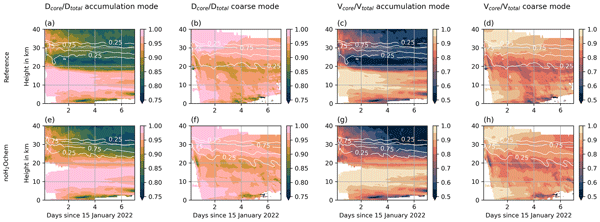
Julia Bruckert, Simran Chopra, Richard Siddans, Charlotte Wedler, and Gholam Ali Hoshyaripour
Atmos. Chem. Phys., 25, 9859–9884, https://doi.org/10.5194/acp-25-9859-2025, https://doi.org/10.5194/acp-25-9859-2025, 2025
Short summary
Short summary
The 2022 Hunga eruption emitted about 150 Tg of water vapor into the stratosphere. Here, we show that the water vapor injection not only accelerates SO2 oxidation and sulfate production but also increases the aging of ash (coating of ash by sulfate). Our study shows that aerosol aging alone does not explain the rapid loss of ash after the Hunga eruption as observed by satellite instruments. However, some ash might be masked in the observation due to the strong coating.
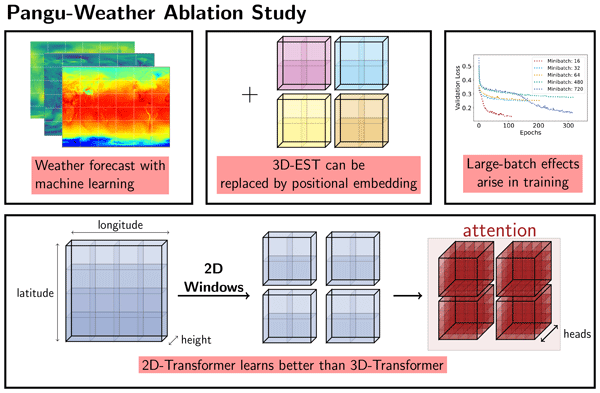
Deifilia To, Julian Quinting, Gholam Ali Hoshyaripour, Markus Götz, Achim Streit, and Charlotte Debus
Geosci. Model Dev., 17, 8873–8884, https://doi.org/10.5194/gmd-17-8873-2024, https://doi.org/10.5194/gmd-17-8873-2024, 2024
Short summary
Short summary
Pangu-Weather is a breakthrough machine learning model in medium-range weather forecasting that considers 3D atmospheric information. We show that using a simpler 2D framework improves robustness, speeds up training, and reduces computational needs by 20 %–30 %. We introduce a training procedure that varies the importance of atmospheric variables over time to speed up training convergence. Decreasing computational demand increases the accessibility of training and working with the model.
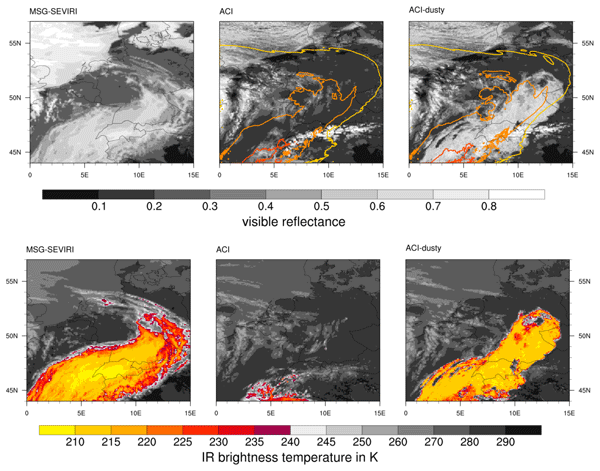
Axel Seifert, Vanessa Bachmann, Florian Filipitsch, Jochen Förstner, Christian M. Grams, Gholam Ali Hoshyaripour, Julian Quinting, Anika Rohde, Heike Vogel, Annette Wagner, and Bernhard Vogel
Atmos. Chem. Phys., 23, 6409–6430, https://doi.org/10.5194/acp-23-6409-2023, https://doi.org/10.5194/acp-23-6409-2023, 2023
Short summary
Short summary
We investigate how mineral dust can lead to the formation of cirrus clouds. Dusty cirrus clouds lead to a reduction in solar radiation at the surface and, hence, a reduced photovoltaic power generation. Current weather prediction systems are not able to predict this interaction between mineral dust and cirrus clouds. We have developed a new physical description of the formation of dusty cirrus clouds. Overall we can show a considerable improvement in the forecast quality of clouds and radiation.
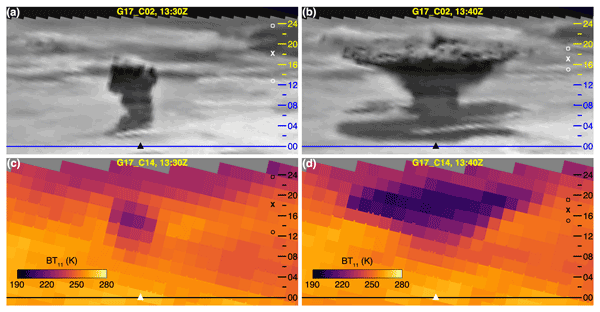
Ákos Horváth, James L. Carr, Dong L. Wu, Julia Bruckert, Gholam Ali Hoshyaripour, and Stefan A. Buehler
Atmos. Chem. Phys., 22, 12311–12330, https://doi.org/10.5194/acp-22-12311-2022, https://doi.org/10.5194/acp-22-12311-2022, 2022
Short summary
Short summary
We estimate plume heights for the April 2021 La Soufrière daytime eruptions using GOES-17 near-limb side views and GOES-16–MODIS stereo views. These geometric heights are then compared with brightness-temperature-based radiometric height estimates to characterize the biases of the latter. We also show that the side view method can be applied to infrared imagery and thus nighttime eruptions, albeit with larger uncertainty.

Julia Bruckert, Gholam Ali Hoshyaripour, Ákos Horváth, Lukas O. Muser, Fred J. Prata, Corinna Hoose, and Bernhard Vogel
Atmos. Chem. Phys., 22, 3535–3552, https://doi.org/10.5194/acp-22-3535-2022, https://doi.org/10.5194/acp-22-3535-2022, 2022
Short summary
Short summary
Volcanic emissions endanger aviation and public health and also influence weather and climate. Forecasting the volcanic-plume dispersion is therefore a critical yet sophisticated task. Here, we show that explicit treatment of volcanic-plume dynamics and eruption source parameters significantly improves volcanic-plume dispersion forecasts. We further demonstrate the lofting of the SO2 due to a heating of volcanic particles by sunlight with major implications for volcanic aerosol research.
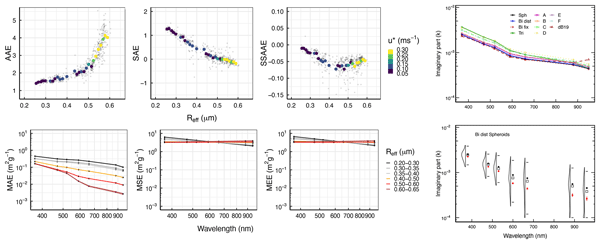
Jesús Yus-Díez, Jeronimo Escribano, Marco Pandolfi, Andrés Alastuey, Cristina González-Flórez, Adolfo Gonzalez-Romero, María Gonçalves Ageitos, Matic Ivančič, Martina Klose, Konrad Kandler, Vincenzo Obiso, Agnesh Panta, Cristina Reche, Martin Rigler, Xavier Querol, and Carlos Perez García-Pando
Atmos. Chem. Phys., 26, 14531–14557, https://doi.org/10.5194/acp-26-14531-2026, https://doi.org/10.5194/acp-26-14531-2026, 2026
Short summary
Short summary
Here we present measurements of dust optical properties during active emissions at a source region in the Moroccan Sahara. We present results on its single scattering albedo, absorption and scattering wavelength dependence and mass efficiency. Furthermore, we have performed imaginary refractive index (k) retrieval under varying assumptions of the refractive index real part, and particle sphericity. We also provide a comparison between the k retrievals and estimations on dust k from AERONET.
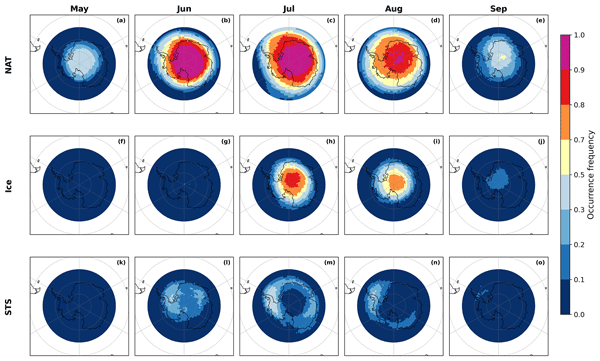
Isabelle Sangha, Nathan L. Abraham, Andrew Orr, Hua Lu, Michael C. Pitts, Lamont R. Poole, and Michael Weimer
Geosci. Model Dev., 19, 9857–9877, https://doi.org/10.5194/gmd-19-9857-2026, https://doi.org/10.5194/gmd-19-9857-2026, 2026
Short summary
Short summary
The UK Earth System Model is updated with an improved polar stratospheric cloud scheme. The performance of the scheme is evaluated against satellite data. While the model fails to form the full range of observed ice, the scheme improves its ability to represent different polar stratospheric cloud types and their variations. This brings the model closer to satellite observations and highlights the need for further development to capture the polar stratospheric clouds with high number densities.
Sandro Meier, Dominik Brunner, and Gerrit Kuhlmann
EGUsphere, https://doi.org/10.5194/egusphere-2026-5235, https://doi.org/10.5194/egusphere-2026-5235, 2026
This preprint is open for discussion and under review for Atmospheric Chemistry and Physics (ACP).
Short summary
Short summary
Accurate computer-generated methane plumes could improve efforts to find and measure greenhouse gas emissions. We compared metre-scale simulations with images of controlled methane releases collected from an aircraft in France. The model reproduced most observed plume shapes and variations, but the viewing geometry caused important differences. Accounting for these effects can make satellite measurements and automated plume detection more reliable.
Tabea Unser, Rumeng Li, Peter Knippertz, Francesco Benincasa, Miguel Castrillo, Oriol Jorba, Carlos Pérez García-Pando, and Martina Klose
EGUsphere, https://doi.org/10.5194/egusphere-2026-5004, https://doi.org/10.5194/egusphere-2026-5004, 2026
This preprint is open for discussion and under review for Geoscientific Model Development (GMD).
Short summary
Short summary
Haboobs are dust storms formed when cold air from thunderstorms spreads outward near the surface, but their characteristics and contribution to dust emissions are poorly quantified. We developed an automated algorithm to identify and track haboobs in a high-resolution model with an interactive dust cycle. Applied over North Africa and the Middle East, the algorithm enables estimates of when and where haboobs occur and how much dust they emit, with the model reproducing their key characteristics.
Arash Hamzehloo, Erik F. M. Koene, Nikolai Ponomarev, Michael Steiner, Sven Werchner, Xavier Lapillonne, William B. Sawyer, Michael Jähn, Lukas Emmenegger, and Dominik Brunner
EGUsphere, https://doi.org/10.5194/egusphere-2026-2531, https://doi.org/10.5194/egusphere-2026-2531, 2026
This preprint is open for discussion and under review for Geoscientific Model Development (GMD).
Short summary
Short summary
Tracking where greenhouse gases and air pollutants come from, and where plants absorb carbon dioxide, requires demanding computer simulations of the atmosphere. We rewrote key parts of a widely used atmospheric model so that they run efficiently on graphics processors. The new code runs six times faster than before and uses energy more efficiently. This supports air-quality monitoring, climate research, and combining satellite data with high-resolution simulations of cities and ecosystems.
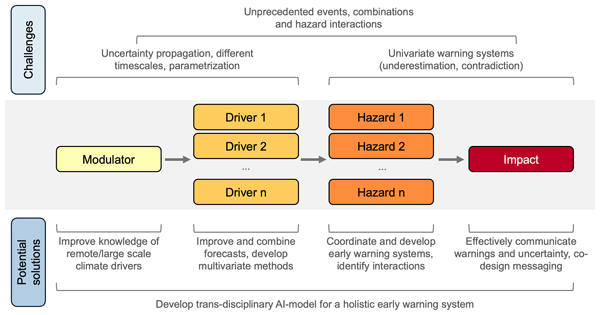
Kai Kornhuber, Emanuele Bevacqua, Mariana Madruga de Brito, Wiebke S. Jäger, Pauline Rivoire, Cassandra D. W. Rogers, Fabiola Banfi, Fulden Batibeniz, James Carruthers, Carlo De Michele, Silvia De Angeli, Cristina Deidda, Marleen C. de Ruiter, Andreas H. Fink, Henrique M. D. Goulart, Katharina Küpfer, Patrick Ludwig, Douglas Maraun, Gabriele Messori, Shruti Nath, Fiachra O'Loughlin, Joaquim G. Pinto, Benjamin Poschlod, Alexandre M. Ramos, Colin Raymond, Andreia F. S. Ribeiro, Deepti Singh, Laura Suarez Gutierrez, Philip J. Ward, and Christopher J. White
Nat. Hazards Earth Syst. Sci., 26, 4309–4334, https://doi.org/10.5194/nhess-26-4309-2026, https://doi.org/10.5194/nhess-26-4309-2026, 2026
Short summary
Short summary
Impacts from extreme weather events may become more severe due to increased likelihood of compounding events under global warming, which challenge present day climate modelling and forecasting capacities. In this perspective we reflect on the usability of compound event research to bridge the gap between academic research and real-world applications.
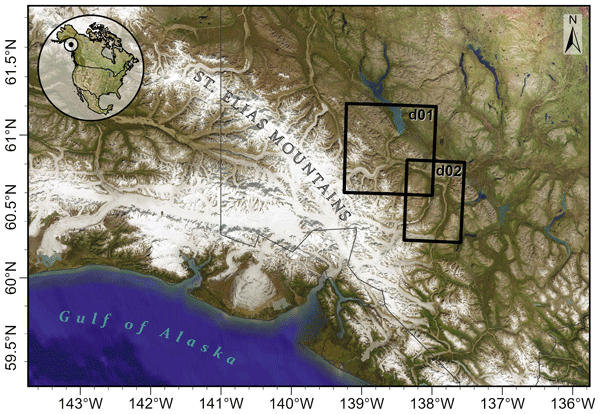
Daniel Bellamy, Martina Klose, Daniel F. Nadeau, Sebastian Engelstaedter, Richard Washington, and James King
Atmos. Chem. Phys., 26, 12613–12639, https://doi.org/10.5194/acp-26-12613-2026, https://doi.org/10.5194/acp-26-12613-2026, 2026
Short summary
Short summary
Mineral dust emissions are simulated for the first time from proglacial valleys of the St. Elias Mountains (western Canada/Alaska) to elucidate their contributions to regional climate forcing and global mineral dust loading. We implement a regional-scale dust emission model and evaluate simulated meteorology, dust emissions, and boundary layer processes for a holistic evaluation of how well aerosol dispersion can be simulated within this remote, mountainous landscape.
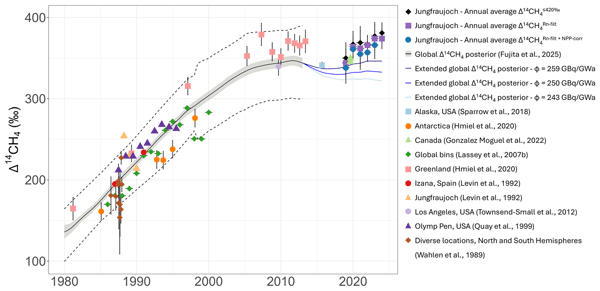
Thomas Laemmel, Dylan Geissbühler, Stephan Henne, Ryo Fujita, Heather Graven, Christophe Espic, Matthias Bantle, Negar Haghipour, Franz Conen, Dominik Brunner, Martin Steinbacher, Giulia Zazzeri, Samuel Hammer, Markus Leuenberger, and Sönke Szidat
Atmos. Chem. Phys., 26, 12019–12036, https://doi.org/10.5194/acp-26-12019-2026, https://doi.org/10.5194/acp-26-12019-2026, 2026
Short summary
Short summary
Carbon dioxide and methane are the two main anthropogenic greenhouse gases responsible for current climate change. Beside the measurement of their atmospheric concentration, the analysis of the abundance of their isotope carbon-14 (14C) gives hints about their origin, either biogenic or fossil. Here we present six years of atmospheric 14CH4 and 14CO2 measurements at a high-elevation alpine site in Switzerland (Jungfraujoch) and discuss the observed trends in both local and global views.
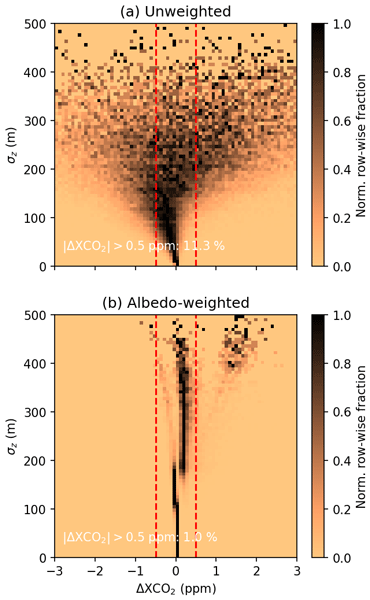
Michael Weimer, Maximilian Reuter, Michael Hilker, Stefan Noël, Michael Buchwitz, Yasjka Meijer, Rüdiger Lang, Julia Marshall, Heinrich Bovensmann, John P. Burrows, and Hartmut Bösch
Atmos. Meas. Tech., 19, 5425–5455, https://doi.org/10.5194/amt-19-5425-2026, https://doi.org/10.5194/amt-19-5425-2026, 2026
Short summary
Short summary
Greenhouse gas column measurements from space using reflected sunlight have to make assumptions about the Earth's surface elevation. Usually, it assumed that the elevation representing the satellite's spatial sample is the unweighted average of high-resolution surface elevation data. We find and show with many examples that the surface elevation should be weighted by the surface reflectance in the respective wavelength bands. This improves errors in the retrieval of trace gases.
Miriam Simm, Tom Beucler, and Corinna Hoose
EGUsphere, https://doi.org/10.48550/arXiv.2606.20165, https://doi.org/10.48550/arXiv.2606.20165, 2026
Short summary
Short summary
During numerical weather prediction simulations, it is impractical to routinely save microphysical process rates due to storage constraints. We built PRecover, a machine learning-based method that recovers these process rates from ICON simulation output. Most instantaneous process rates are recovered accurately, and PRecover generalizes well, as shown in two case studies. This enables process-oriented studies of cloud microphysics even when the underlying process rates were not saved initially.
Wolfgang Woiwode, Bärbel Vogel, Valentin Lauther, Jens-Uwe Grooß, Jeremy Harrison, Sören Johansson, Jörn Ungermann, Peter Braesicke, Markus Dick, Andreas Engel, Felix Friedl-Vallon, Norbert Glatthor, Thomas Gulde, Michael Höpfner, Markus Jesswein, Jan Kaumanns, Timo Keber, Anne Kleinert, Erik Kretschmer, Guido Maucher, Tom Neubert, Hans Nordmeyer, Christof Piesch, Felix Plöger, Peter Preusse, Markus Retzlaff, Sebastian Rhode, Heinz Rongen, Georg Schardt, Tanja Schuck, Björn-Martin Sinnhuber, Johannes Strobel, Franziska Trinkl, Ronja Van Luijt, Stefan Versick, C. Michael Volk, Gerald Wetzel, Peter Hoor, and Martin Riese
EGUsphere, https://doi.org/10.5194/egusphere-2026-3271, https://doi.org/10.5194/egusphere-2026-3271, 2026
This preprint is open for discussion and under review for Atmospheric Chemistry and Physics (ACP).
Short summary
Short summary
Filaments of CH2Cl2-rich air are revealed by airborne infrared limb-imaging observations in late summer 2023 above the North Pacific, Canada and Alaska and traced back to the Asian Summer Monsoon region. Involving new spectroscopic data, high CH2Cl2 levels were retrieved in the troposphere and moderate enhancements also in air masses with characteristics of the lowermost stratosphere. Mesoscale filaments are shown to transport substantial amounts of CH2Cl2 across the North Pacific.
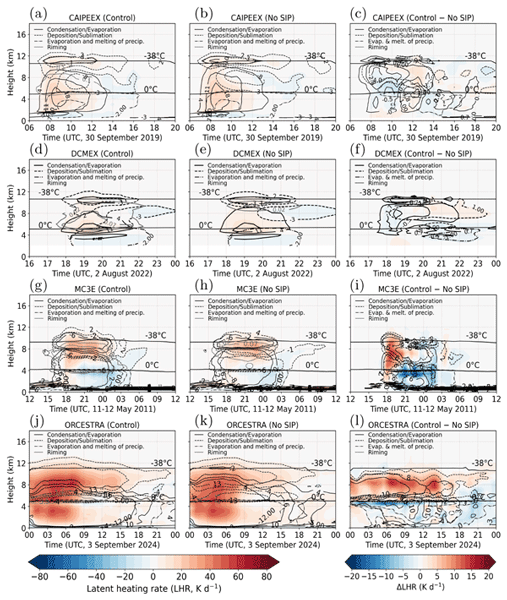
Deepak Waman, Julian Meusel, Behrooz Keshtgar, Gabriella Wallentin, Christian Barthlott, Sachin Patade, Sonali Shete, Thara Prabhakaran, Romain Fievet, Declan Finney, Alan Blyth, and Corinna Hoose
Atmos. Chem. Phys., 26, 11371–11407, https://doi.org/10.5194/acp-26-11371-2026, https://doi.org/10.5194/acp-26-11371-2026, 2026
Short summary
Short summary
We use a weather model with aircraft and satellite data to study ice multiplication in thunderstorms across India, Mexico, Oklahoma, and the tropical Atlantic. This process can create spurious ice particles in clouds, thereby increasing latent and radiative heating that strengthens stratiform ascents in storms and extends anvil-cloud lifetimes. These results improve our understanding of how small-scale ice processes influence large-scale storm behavior and rainfall patterns.
Leonie von Terzi, Axel Seifert, Christoph Siewert, Fabian Jakub, and Stefan Kneifel
EGUsphere, https://doi.org/10.5194/egusphere-2026-3865, https://doi.org/10.5194/egusphere-2026-3865, 2026
Short summary
Short summary
A distinct temperature layer in clouds promotes growth of dendritic ice crystals, producing characteristic radar signatures whose origin has remained unclear. We combined radar observations with microphysical simulations to identify the dominant microphysical processes. Collisions breaking particles into fragments prove essential to reproducing the signatures, alongside crystal growth and aggregation, clarifying the link between radar signals and ice processes for weather models.
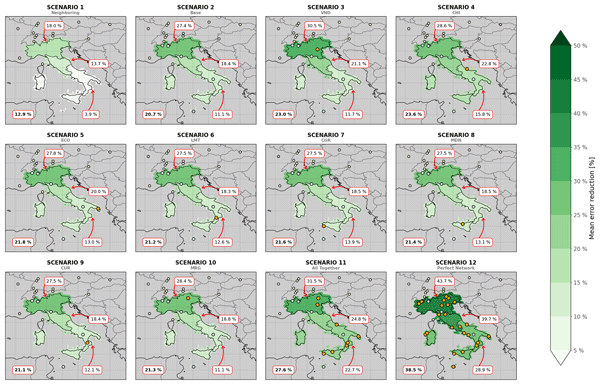
Joël Thanwerdas, Paolo Cristofanelli, Angela Fiore, Rianne Dröge, Sophie Van Mil, Yohanna Villalobos, Zhendong Wu, and Dominik Brunner
Atmos. Chem. Phys., 26, 10477–10507, https://doi.org/10.5194/acp-26-10477-2026, https://doi.org/10.5194/acp-26-10477-2026, 2026
Short summary
Short summary
We assess how expanding Italy’s sparse ICOS (Integrated Carbon Observation System) methane network could improve methane emission estimates. Using transport modelling, data assimilation methods and synthetic observations, we test eight candidate sites. Chieti, in Central Italy and Mount Venda, in Northern Italy, provide the strongest added constraints, respectively. The framework developed here can be applied to other countries to optimize their atmospheric measurement networks and to improve constraints on greenhouse gas emissions.
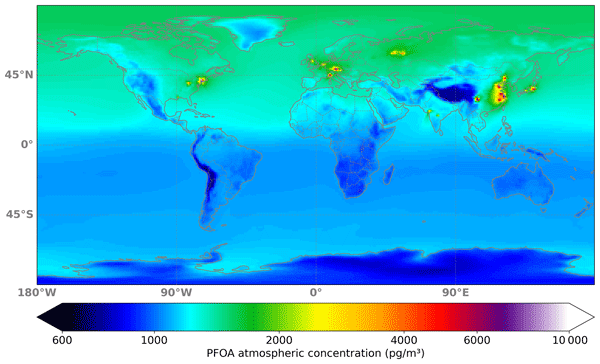
Hiram Meza-Landero, Julia Bruckert, Ronny Petrik, Pascal Simon, Elena Mikheeva, Heike Vogel, Volker Matthias, Johannes Bieser, and Martin Otto Paul Ramacher
Geosci. Model Dev., 19, 6587–6626, https://doi.org/10.5194/gmd-19-6587-2026, https://doi.org/10.5194/gmd-19-6587-2026, 2026
Short summary
Short summary
To understand how persistent hazardous industrial chemicals travel through the air and are deposited back on Earth's surface, we created a new computer model that combines meteorology and chemistry in clouds and clean air. Using the most recent global emissions data, this model represents the trajectory and changes of these chemicals, matching patterns in many areas and overlooking others. The work seeks to improve global monitoring and modeling of hazardous chemicals.
Audrey McManemin, Catherine Juéry, Vincent Blandin, Matthew Baker, Stéphane Bauguitte, Dominik Brunner, Philippine Burdeau, James Lawrence France, Anders M. Fredenslund, Andreas Hueni, Gerrit Kuhlmann, Patryk Łakomiec, Sando Meier, Roberto Paglini, Roubina Papaconstantinou, Jean-Daniel Paris, Pierre-Yves Quehe, Thomas Röckmann, Charlotte Scheutz, Martina Schmidt, Marius Vögtli, Julia B. Wietzel, and Adam R. Brandt
EGUsphere, https://doi.org/10.5194/egusphere-2026-1744, https://doi.org/10.5194/egusphere-2026-1744, 2026
Short summary
Short summary
Researchers tested five university-led systems to measure methane leaks at a facility in France. By releasing known amounts of gas, researchers checked if mobile tools on vehicles and planes could accurately detect and quantify emissions. Most sensors were excellent at finding leaks, but their accuracy in measuring the exact emission rate varied. Weather, especially low wind, significantly impacted results. These findings help improve how we track greenhouse gases to meet climate goals.
Gabriella Wallentin, Alexander Böhmländer, Ross Herbert, Heike Wex, Charlotte M. Beall, Pia Bogert, Zoé Brasseur, Jie Chen, Jessie M. Creamean, Paul J. DeMott, Oliver Eckermann, Kunfeng Gao, Xianda Gong, Silvia Henning, Naruki Hiranuma, Christina S. McCluskey, Christos Mitsios, Ottmar Möhler, Athanasios Nenes, Mark D. Tarn, Christian Tatzelt, Ping Tian, Yutaka Tobo, Franziska Vogel, André Welti, Elise Wilbourn, Jennifer Winstone, and Corinna Hoose
EGUsphere, https://doi.org/10.5194/egusphere-2026-4134, https://doi.org/10.5194/egusphere-2026-4134, 2026
This preprint is open for discussion and under review for Atmospheric Measurement Techniques (AMT).
Short summary
Short summary
Ice nucleating particles (INPs) are aerosols essential for cloud ice formation in the temperature range -38 °C and 0 °C. Due to measurement challenges, the availability of observations of INPs remains scarce. This study applies machine learning to predict a global INP distribution using aerosol mass concentration reanalysis and observed INPs. This manuscript demonstrates that even with limited measurements, the occurrence of INPs can be estimated, following the spatial pattern of key aerosols.
Fatemeh Zarei, Julia Bruckert, Gholam Ali Hoshyaripour, and Corinna Hoose
Atmos. Chem. Phys., 26, 9697–9719, https://doi.org/10.5194/acp-26-9697-2026, https://doi.org/10.5194/acp-26-9697-2026, 2026
Short summary
Short summary
Volcanic eruptions are a rich source of aerosol particles, such as sulfate and ash, that can impact cloud droplet and ice crystal formation. They lead to strong local perturbations of clouds. In this study, these processes were simulated with a numerical model. In two contrasting case studies of an Icelandic and a Caribbean volcano, the perturbations to processes involving liquid droplets and ice crystals are investigated.
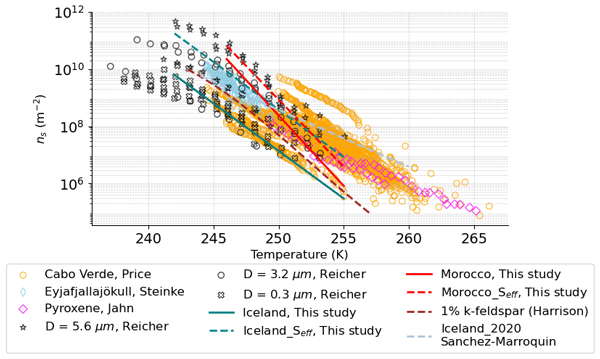
Sebastian Vergara-Palacio, Alexei Kiselev, Franziska Vogel, Adolfo González-Romero, Romy Fösig, Xavier Querol, Corinna Hoose, Nsikanabasi Silas Umo, Ottmar Möhler, Konrad Kandler, Carlos Pérez García-Pando, and Martina Klose
Atmos. Chem. Phys., 26, 9113–9147, https://doi.org/10.5194/acp-26-9113-2026, https://doi.org/10.5194/acp-26-9113-2026, 2026
Short summary
Short summary
Atmospheric mineral dust can help clouds form ice, changing cloud properties and affecting weather and climate. We tested dust from Morocco and Iceland in more than 300 controlled laboratory experiments. Icelandic samples were up to 100 times less able to promote ice formation than Moroccan samples, and showed mineral-composition dependence. The results show the role of larger dust particles in ice nucleation and their relationship with mineralogy and size for low- and high-latitude sources.
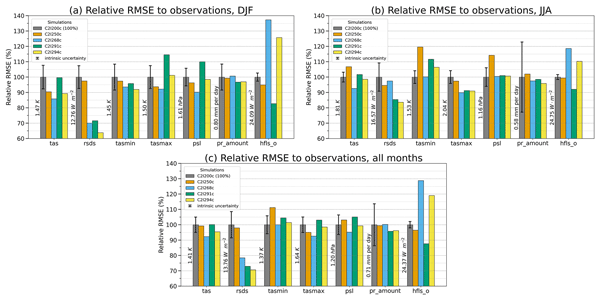
Beate Geyer, Angelo Campanale, Evgenii Churiulin, Hendrik Feldmann, Klaus Goergen, Stefan Hagemann, Ha Thi Minh Ho-Hagemann, Muhammed Muhshif Karadan, Klaus Keuler, Pavel Khain, Divyaja Lawand, Patrick Ludwig, Vera Maurer, Sergei Petrov, Stefan Poll, Christopher Purr, Emmanuele Russo, Martina Schubert-Frisius, Jan-Peter Schulz, Shweta Singh, Christian Steger, Heimo Truhetz, and Andreas Will
Geosci. Model Dev., 19, 5439–5490, https://doi.org/10.5194/gmd-19-5439-2026, https://doi.org/10.5194/gmd-19-5439-2026, 2026
Short summary
Short summary
Complex models in environmental science typically have a lot of tuning parameters, which has to be set by the users depending on the application. This study presents a new method of objective tuning of a huge number of parameters, by combining expert judgement with automated tuning called Linear Meta-Model optimisation (LiMMo). The method is successfully applied to the regional climate model named ICON (Icosahedral Non-hydrostatic)-CLM (Climate Limited-area Modelling) over Europe.
N'Datchoh Evelyne Touré, Peter Knippertz, Andreas H. Fink, Marlon Maranan, Julia Bruckert, Gholamali Hoshyaripour, Jasmin Haupt, and Arona Diedhiou
EGUsphere, https://doi.org/10.5194/egusphere-2026-3128, https://doi.org/10.5194/egusphere-2026-3128, 2026
Short summary
Short summary
Rapid urbanization in Africa drives increasing air pollution. Once released, pollutants can travel long distances and impact remote areas. Here, we investigate the dispersion of pollutants from cities along the West African Guinean Coast by the land-sea breeze (LSB) circulation during the dry season using idealized tracer experiments with a weather prediction model. The experiments quantify the typical inland penetration of pollutants and show a transport to the Atlantic Ocean aloft.
Lisa Janina Muth, Gholam Ali Hoshyaripour, Bernhard Vogel, Heike Vogel, and Corinna Hoose
Atmos. Chem. Phys., 26, 8505–8528, https://doi.org/10.5194/acp-26-8505-2026, https://doi.org/10.5194/acp-26-8505-2026, 2026
Short summary
Short summary
Wildfire plume injection height is key for atmospheric impact but hard to model. This study simulates the 2019/2020 Australian wildfires, testing fire-atmosphere feedbacks. Heat release increases plume rise; moisture has minor effects. Aerosol-radiation interaction lowers injection height initially, then lofts it. Only the combined simulation matches observed upper troposphere aerosol layers, especially during peak fire intensity.
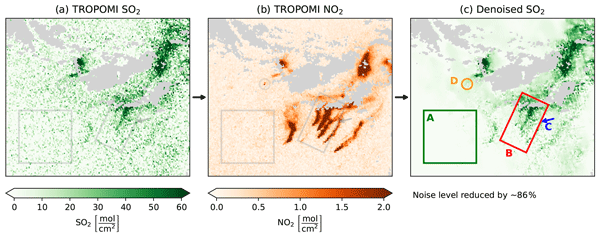
Erik Franciscus Maria Koene, Gerrit Kuhlmann, and Dominik Brunner
Atmos. Meas. Tech., 19, 3999–4012, https://doi.org/10.5194/amt-19-3999-2026, https://doi.org/10.5194/amt-19-3999-2026, 2026
Short summary
Short summary
We developed methods to reduce noise in satellite images that track air pollution. By using clearer measurements of a related gas, our techniques improve image quality by up to 80 percent, allowing more accurate identification of pollution sources. Tested with simulated and real satellite data, this approach could enhance monitoring of emissions and support better environmental decisions.
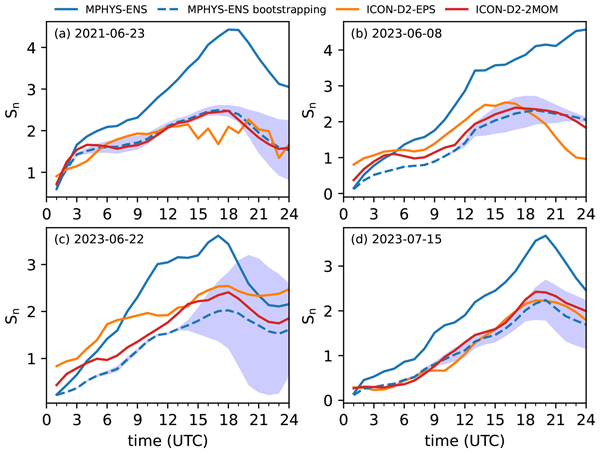
Christian Barthlott, Beata Czajka, Christoph Gebhardt, and Corinna Hoose
Atmos. Chem. Phys., 26, 6061–6081, https://doi.org/10.5194/acp-26-6061-2026, https://doi.org/10.5194/acp-26-6061-2026, 2026
Short summary
Short summary
The study uses the ICOsahedral Non-hydrostatic (ICON) model to examine how microphysical uncertainties affect summertime convection in central Europe. A 108-member ensemble varying aerosol and cloud parameters showed strong differences in precipitation intensity and location but little impact on convection onset. Results highlight that cloud microphysics is a key source of forecast uncertainty in convective weather prediction.
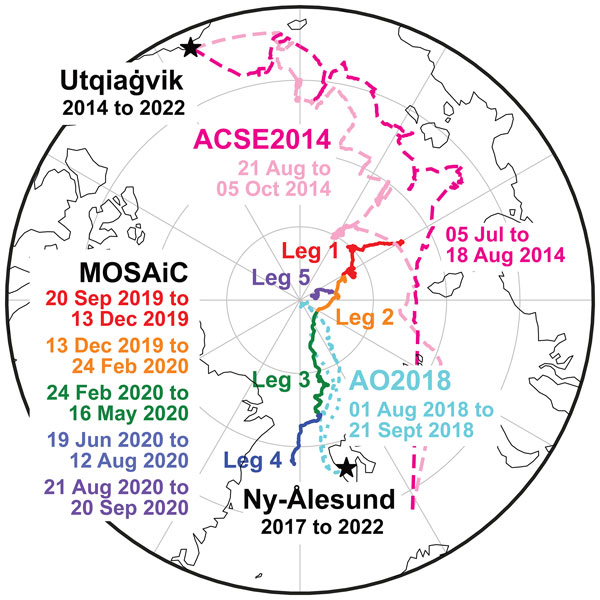
Peggy Achtert, Torsten Seelig, Gabriella Wallentin, Luisa Ickes, Matthew D. Shupe, Corinna Hoose, and Matthias Tesche
Atmos. Chem. Phys., 26, 3049–3068, https://doi.org/10.5194/acp-26-3049-2026, https://doi.org/10.5194/acp-26-3049-2026, 2026
Short summary
Short summary
We quantify the occurrence of single- and multi-layer clouds in the Arctic based on combining soundings with cloud-radar observations. We also assess the rate of ice-crystal seeding in multi-layer cloud systems as this is an important initiator of glaciation in super-cooled liquid cloud layers. We find an abundance of multi-layer clouds in the Arctic with seeding in about half to two thirds of cases in which the gap between upper and lower layers ranges between 100 and 1000 m.
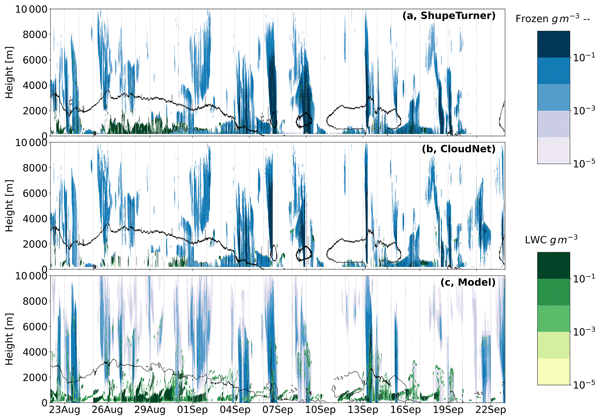
Gabriella Wallentin, Luisa Ickes, Peggy Achtert, Matthias Tesche, and Corinna Hoose
Atmos. Chem. Phys., 26, 3069–3089, https://doi.org/10.5194/acp-26-3069-2026, https://doi.org/10.5194/acp-26-3069-2026, 2026
Short summary
Short summary
Multilayer clouds are cloud systems with two or more vertically stacked cloud layers. Using a weather prediction model, we simulate clouds in the Arctic during a month. The model is evaluated against observations collected during the ship campaign MOSAiC (Multidisciplinary Drifting Observatory for the Study of Arctic Climate). We find that multilayer clouds frequently occur in the region, in fact, they dominate the cloud occurrence. The study highlights the importance of representing these clouds in simulations over the Arctic.
Tobias Spiegl, Ulrike Langematz, Wenjuan Huo, Jürgen Kröger, Thomas Reddmann, Franziska Kappenberger, Sebastian Wahl, Maryam Ramezani Ziarani, Holger Pohlmann, and Miriam Sinnhuber
EGUsphere, https://doi.org/10.5194/egusphere-2026-126, https://doi.org/10.5194/egusphere-2026-126, 2026
Short summary
Short summary
The SOLCHECK project studied how fluctuations in the Sun’s energy output affect weather and climate. Strong solar storms deplete ozone and raise ultraviolet irradiance, the impact of the 11-year solar cycle depends on stratospheric dynamics, and long-term Grand Solar Minima leave fingerprints in past and future climate states. The large model ensemble explored in SOLCHECK helped to separate the various solar effects from human-driven change and improved our understanding of climate feedbacks.
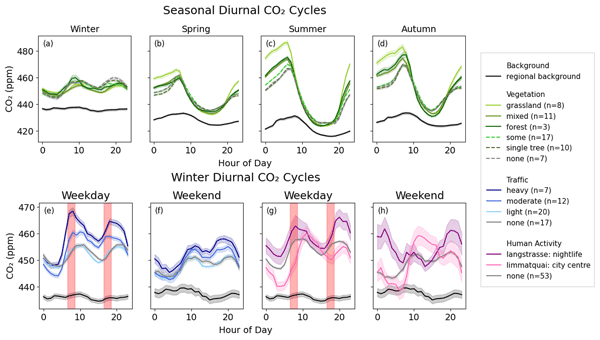
Luce Creman, Stuart K. Grange, Pascal Rubli, Andrea Fischer, Dominik Brunner, Christoph Hueglin, Lukas Emmenegger, and Leonie Bernet
Atmos. Meas. Tech., 19, 1441–1463, https://doi.org/10.5194/amt-19-1441-2026, https://doi.org/10.5194/amt-19-1441-2026, 2026
Short summary
Short summary
ZiCOS-L is a network of low-cost sensors in Zurich (Switzerland) to monitor carbon dioxide (CO2) concentrations. After correcting for drift and checking the sensor performance, we found that local factors like traffic, public events and vegetation affect CO2 levels. Even though the sensors have higher uncertainties than other sensors, the lower cost allows for a denser network with detailed insights into CO2 levels across the city, helping cities track emissions and support climate action plans.
Yichen Jia, Hendrik Andersen, David Neubauer, Ulrike Lohmann, Corinna Hoose, and Jan Cermak
EGUsphere, https://doi.org/10.5194/egusphere-2026-569, https://doi.org/10.5194/egusphere-2026-569, 2026
Short summary
Short summary
Understanding how ocean clouds respond to air pollution is important for climate projections. Using artificial intelligence and a climate model, we show that some model settings produce very high cloud cover, leaving little room for further cloud growth as pollution increases. This “headroom effect” can make cloud responses appear weak. Our results highlight the need to consider existing cloud conditions when interpreting how cloud cover responds to the environment.
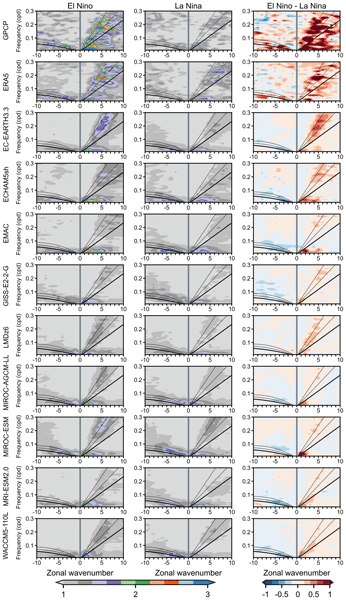
Dillon Elsbury, Federico Serva, Julie M. Caron, Seung-Yoon Back, Clara Orbe, Jadwiga H. Richter, James A. Anstey, Neal Butchart, Chih-Chieh Chen, Javier García-Serrano, Anne Glanville, Yoshio Kawatani, Tobias Kerzenmacher, Francois Lott, Hiroaki Naoe, Scott Osprey, Froila M. Palmeiro, Seok-Woo Son, Masakazu Taguchi, Stefan Versick, Shingo Watanabe, and Kohei Yoshida
Weather Clim. Dynam., 7, 317–339, https://doi.org/10.5194/wcd-7-317-2026, https://doi.org/10.5194/wcd-7-317-2026, 2026
Short summary
Short summary
We used climate models to test how constant El Niño and La Niña ocean conditions shape the Madden-Julian Oscillation during northern winter. El Niño made this weather pattern move faster, while La Niña slowed it down. The Quasi-Biennial Oscillation, a repeating wind pattern high in the atmosphere, had little effect. This shows that long-lasting ocean conditions mainly drive the changes we found.
Hengheng Zhang, Gholam Ali Hoshyaripour, Heike Vogel, Frank Wagner, Thomas Leisner, Jochen Förstner, and Harald Saathoff
EGUsphere, https://doi.org/10.5194/egusphere-2025-5980, https://doi.org/10.5194/egusphere-2025-5980, 2026
Short summary
Short summary
We studied several major dust storms that traveled from the Sahara to Europe using ground-based light measurements, sunlight sensors, particle counters, and a modern weather and dust model. We reveal when the dust arrived, how it moved and mixed in the air, and why each event behaved differently. Our results help improve forecasts of dust episodes that influence air quality, visibility, and solar energy across Europe.
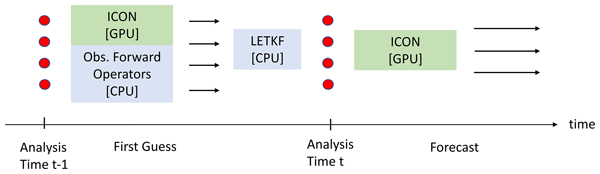
Xavier Lapillonne, Daniel Hupp, Fabian Gessler, André Walser, Andreas Pauling, Annika Lauber, Benjamin Cumming, Carlos Osuna, Christoph Müller, Claire Merker, Daniel Leuenberger, David Leutwyler, Dmitry Alexeev, Gabriel Vollenweider, Guillaume Van Parys, Jonas Jucker, Lukas Jansing, Marco Arpagaus, Marco Induni, Marek Jacob, Matthias Kraushaar, Michael Jähn, Mikael Stellio, Oliver Fuhrer, Petra Baumann, Philippe Steiner, Pirmin Kaufmann, Remo Dietlicher, Ralf Müller, Sergey Kosukhin, Thomas C. Schulthess, Ulrich Schättler, Victoria Cherkas, and William Sawyer
Geosci. Model Dev., 19, 755–772, https://doi.org/10.5194/gmd-19-755-2026, https://doi.org/10.5194/gmd-19-755-2026, 2026
Short summary
Short summary
The ICON climate and numerical weather prediction model was fully ported to Graphical Processing Units (GPUs) using OpenACC compiler directives, covering all components required for operational weather prediction. The GPU port together with several performance optimizations led to a speed-up of 5.6× when comparing to traditional Central Processing Units (CPUs) . Thanks to this adaptation effort, MeteoSwiss became the first national weather service to run the ICON model operationally on GPUs.
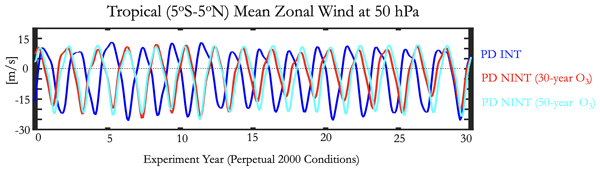
Clara Orbe, Alison Ming, Gabriel Chiodo, Michael Prather, Mohamadou Diallo, Qi Tang, Andreas Chrysanthou, Hiroaki Naoe, Xin Zhou, Irina Thaler, Dillon Elsbury, Ewa Bednarz, Jonathon S. Wright, Aaron Match, Shingo Watanabe, James Anstey, Tobias Kerzenmacher, Stefan Versick, Marion Marchand, Feng Li, and James Keeble
Geosci. Model Dev., 19, 773–794, https://doi.org/10.5194/gmd-19-773-2026, https://doi.org/10.5194/gmd-19-773-2026, 2026
Short summary
Short summary
The quasi-biennial oscillation (QBO) is the main source of wind fluctuations in the tropical stratosphere, which can couple to surface climate. However, models do a poor job of simulating the QBO in the lower stratosphere, for reasons that remain unclear. One possibility is that models do not completely represent how ozone influences the QBO-associated wind variations. Here we propose a multi-model framework for assessing how ozone influences the QBO in recent past and future climates.
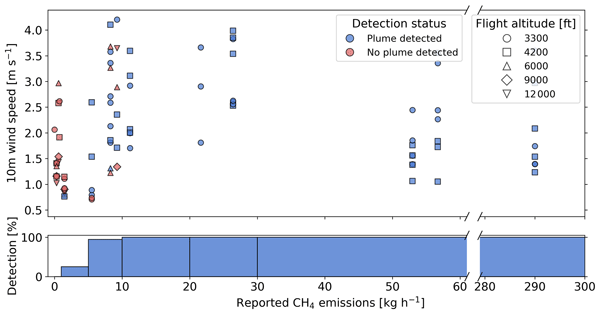
Sandro Meier, Marius Vögtli, Andreas Hueni, Audrey McManemin, Adam R. Brandt, Catherine Juéry, Vincent Blandin, Dominik Brunner, and Gerrit Kuhlmann
Atmos. Meas. Tech., 19, 333–358, https://doi.org/10.5194/amt-19-333-2026, https://doi.org/10.5194/amt-19-333-2026, 2026
Short summary
Short summary
We tested a new airborne imaging instrument to detect and measure methane emissions. Flying over controlled test releases in France, we compared our measurements with known release rates. The instrument detected emissions as low as 5.5 kilograms per hour in good weather and 1.45 kilograms per hour in ideal conditions. Our results show that better wind information is crucial for accurate totals. Our new instrument is important for helping target methane leaks in energy and waste systems.
Nikolai Ponomarev, Michael Steiner, Erik Koene, Pascal Rubli, Stuart Grange, Lionel Constantin, Michel Ramonet, Leslie David, Arash Hamzehloo, Lukas Emmenegger, and Dominik Brunner
Atmos. Chem. Phys., 26, 547–570, https://doi.org/10.5194/acp-26-547-2026, https://doi.org/10.5194/acp-26-547-2026, 2026
Short summary
Short summary
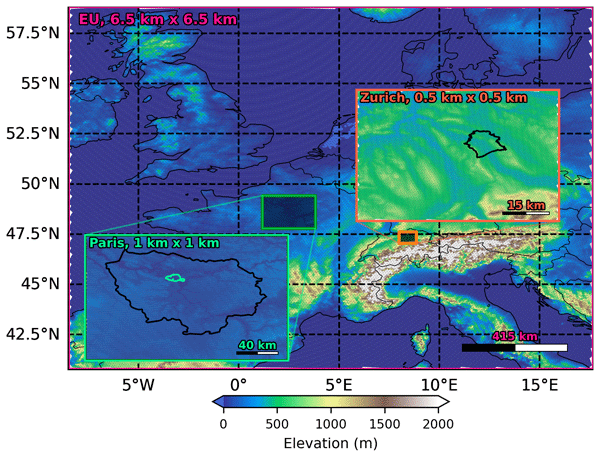
Urban inversions are gaining increasing attention, as cities are major contributors to anthropogenic emissions, making accurate emission estimates at this scale essential for supporting climate action plans and verifying reported emission reductions. We estimated carbon dioxide emissions in Zurich and Paris over one year by combining atmospheric observations with mesoscale model simulations. Our study shows how factors like city size, terrain, and measurement methods affect emission estimates.
Sarah Vervalcke, Quentin Errera, Roland Eichinger, Thomas Reddmann, Simon Chabrillat, Marc Op de beeck, Gabriele Stiller, and Emmanuel Mahieu
Atmos. Chem. Phys., 26, 391–409, https://doi.org/10.5194/acp-26-391-2026, https://doi.org/10.5194/acp-26-391-2026, 2026
Short summary
Short summary
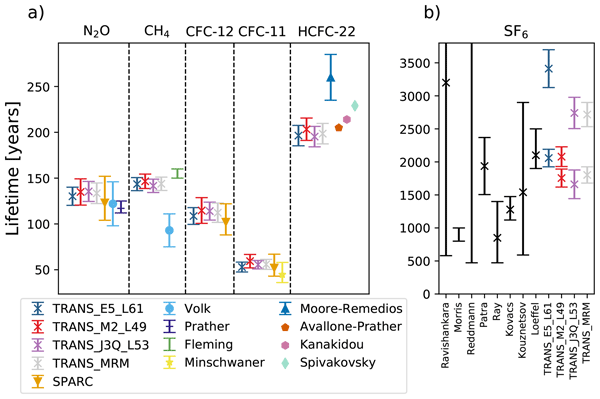
This study presents three simulations of atmospheric chemistry with the Belgian Assimilation System for Chemical Observations chemistry transport model, driven by different meteorological data sets. Newly implemented SF6 chemistry enables stratospheric transport studies. Results agree with satellite observations. The derived lifetimes of six trace gases agree with the literature, but SF6 shows larger sensitivity to the choice of meteorology. The lifetime of SF6 ranges from 1900 to 2600 years.
Eleftherios Ioannidis, Antoon Meesters, Michael Steiner, Dominik Brunner, Friedemann Reum, Isabelle Pison, Antoine Berchet, Rona Thompson, Espen Sollum, Frank-Thomas Koch, Christoph Gerbig, Fenjuan Wang, Shamil Maksyutov, Aki Tsuruta, Maria Tenkanen, Tuula Aalto, Guillaume Monteil, Hong Lin, Ge Ren, Marko Scholze, and Sander Houweling
Earth Syst. Sci. Data, 18, 167–198, https://doi.org/10.5194/essd-18-167-2026, https://doi.org/10.5194/essd-18-167-2026, 2026
Short summary
Short summary
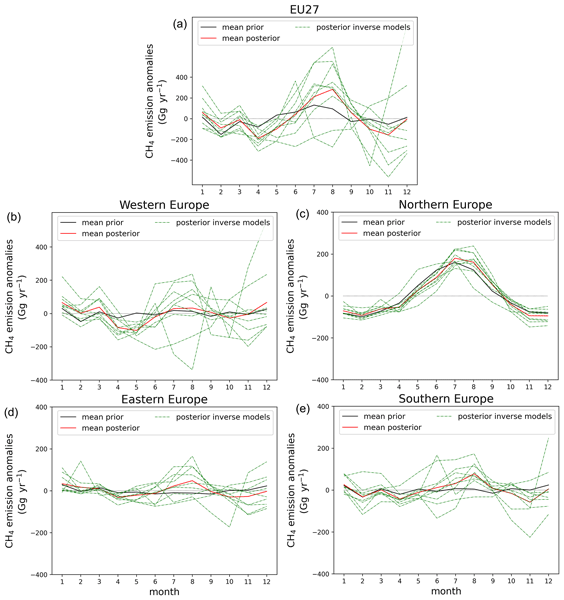
This paper describes a detailed study on CH4 European emissions, using different methodologies (9 total inverse models). The study spans over 15 years and provides detailed information on European CH4 emission trends and seasonality, using in-situ data, including Integrated Carbon Observation System (ICOS) network. Our results highlight the importance of improving details in the inversion setup, such as the treatment of lateral boundary conditions to narrow the uncertainty ranges further.
Hannah Meyer, Konrad Kandler, Sylvain Dupont, Jerónimo Escribano, Jessica Girdwood, George Nikolich, Andrés Alastuey, Vicken Etyemezian, Cristina González-Flórez, Adolfo González-Romero, Tareq Hussein, Mark Irvine, Peter Knippertz, Ottmar Möhler, Xavier Querol, Chris Stopford, Franziska Vogel, Frederik Weis, Andreas Wieser, Carlos Pérez García-Pando, and Martina Klose
Atmos. Meas. Tech., 19, 21–61, https://doi.org/10.5194/amt-19-21-2026, https://doi.org/10.5194/amt-19-21-2026, 2026
Short summary
Short summary
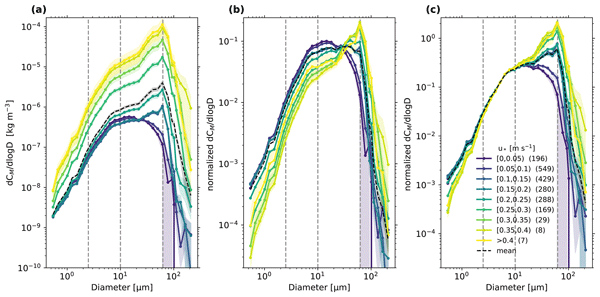
Mineral dust particles emitted from dry soils are of various sizes, yet the abundance of very large particles is not well understood. Here we measured the dust size distribution from fine to giant particles at an emission source during a field campaign in Jordan (J-WADI) using multiple instruments. Our findings show that large particles make up a significant part of the total dust mass. This knowledge is essential to improve climate models and to predict dust impacts on climate and environment.
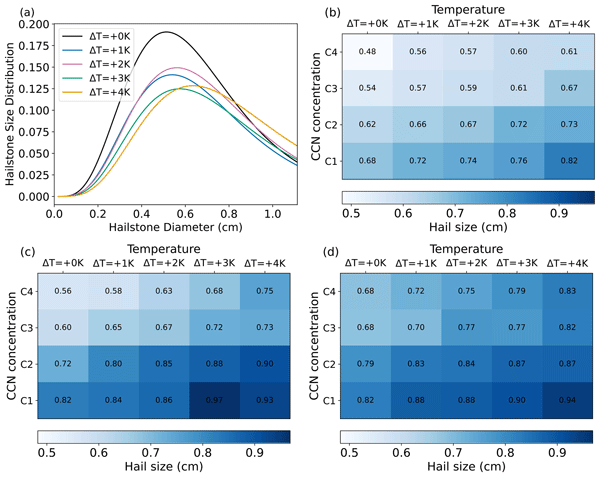
Lina Lucas, Christian Barthlott, Corinna Hoose, and Peter Knippertz
Atmos. Chem. Phys., 25, 18527–18548, https://doi.org/10.5194/acp-25-18527-2025, https://doi.org/10.5194/acp-25-18527-2025, 2025
Short summary
Short summary
We studied how climate change and cleaner air could affect severe storms in Germany. Using high-resolution weather simulations of past supercell storms under warmer and less polluted conditions, we found that storms may become more intense, with heavier rainfall and larger hailstones. These changes suggest an increased risk of damage in the future. Our findings help improve understanding of how extreme storms may evolve in a changing climate.
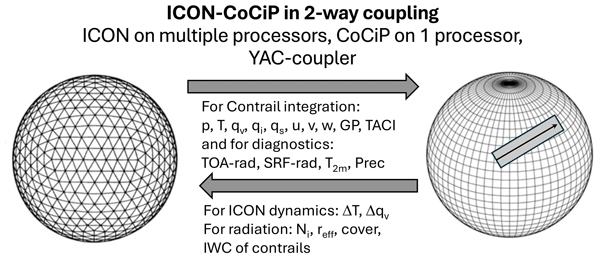
Ulrich Schumann and Axel Seifert
Atmos. Chem. Phys., 25, 18571–18597, https://doi.org/10.5194/acp-25-18571-2025, https://doi.org/10.5194/acp-25-18571-2025, 2025
Short summary
Short summary
Contrails caused by aircraft flying in cold and humid air masses, impact weather and climate. For reduction of the climate impact, one should avoid flights forming warming contrails. This requires good weather forecast of contrail formation conditions and contrail effects. We present a two-way coupling of the Contrail Cirrus Prediction model (CoCiP) with the global Icosahedral Non-hydrostatic numerical weather model (ICON). We find that contrails are predictable – but only for a finite period.
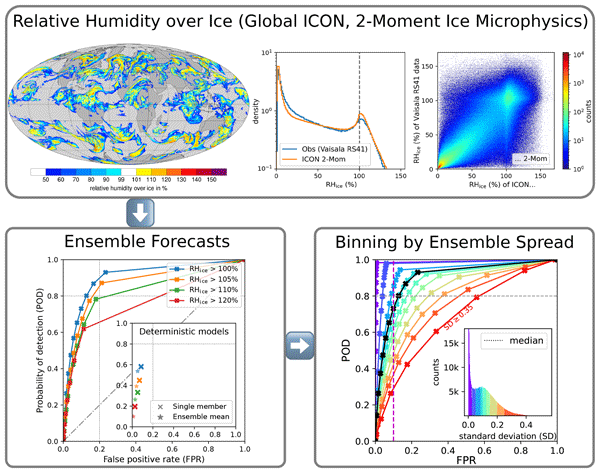
Maleen Hanst, Carmen G. Köhler, Axel Seifert, and Linda Schlemmer
Atmos. Chem. Phys., 25, 17253–17274, https://doi.org/10.5194/acp-25-17253-2025, https://doi.org/10.5194/acp-25-17253-2025, 2025
Short summary
Short summary
Persistent condensation trails typically occur due to aircraft flying through certain cold and humid regions. In most cases, these contrails have a warming impact on the climate. Predicting these regions in advance allows flight planners to re-route airplanes. We show that an adaptation of the ice microphysics scheme in a certain weather forecast model improves the prediction of these regions. Running an ensemble of simulations with this scheme improves the prediction quality even further.
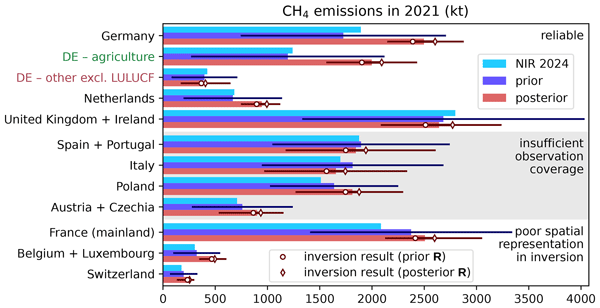
Valentin Bruch, Thomas Rösch, Diego Jiménez de la Cuesta Otero, Beatrice Ellerhoff, Buhalqem Mamtimin, Niklas Becker, Anne-Marlene Blechschmidt, Jochen Förstner, and Andrea K. Kaiser-Weiss
Atmos. Chem. Phys., 25, 17187–17204, https://doi.org/10.5194/acp-25-17187-2025, https://doi.org/10.5194/acp-25-17187-2025, 2025
Short summary
Short summary
Estimating emissions of greenhouse gases such as methane for individual countries is fundamental for climate mitigation policies. We use a numerical weather model to simulate how methane emissions are transported to observation sites. Based on the observations, we estimate the emissions in Central Europe in 2021. For Germany and the Benelux, we find higher emissions than expected from the national emission reporting. We provide sector-specific estimates to support national emission reporting.
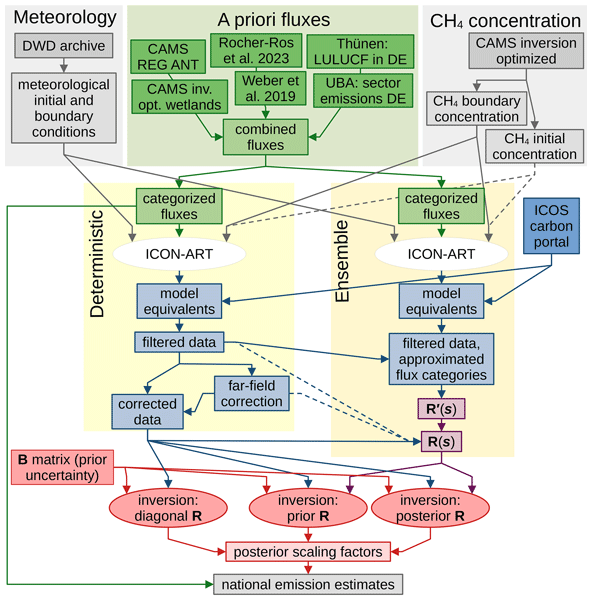
Valentin Bruch, Thomas Rösch, Diego Jiménez de la Cuesta Otero, Beatrice Ellerhoff, Buhalqem Mamtimin, Niklas Becker, Anne-Marlene Blechschmidt, Jochen Förstner, and Andrea K. Kaiser-Weiss
Atmos. Chem. Phys., 25, 17159–17185, https://doi.org/10.5194/acp-25-17159-2025, https://doi.org/10.5194/acp-25-17159-2025, 2025
Short summary
Short summary
Estimating emissions of greenhouse gases such as methane for individual countries is fundamental for climate mitigation policies. Numerical models can simulate how such emissions are transported to observation sites. Based on the observations, one can estimate the emissions. We describe how operational numerical weather prediction can help determine the model uncertainties and thereby improve the emission estimates. We test our system using simulated observations.
Lisa Janina Muth, Sascha Bierbauer, Corinna Hoose, Bernhard Vogel, Heike Vogel, and Gholam Ali Hoshyaripour
Atmos. Chem. Phys., 25, 16027–16040, https://doi.org/10.5194/acp-25-16027-2025, https://doi.org/10.5194/acp-25-16027-2025, 2025
Short summary
Short summary
In our study, we explore how intense wildfires create thunderstorm-like clouds that can affect weather and climate globally. Using simulations with high resolution, we found that fire heat and moisture help form these clouds, lifting particles high into the atmosphere. This process is crucial for understanding how fires affect the environment. Despite some differences from observational data, our findings match well over time, showing the importance of fire-induced heat in cloud formation.
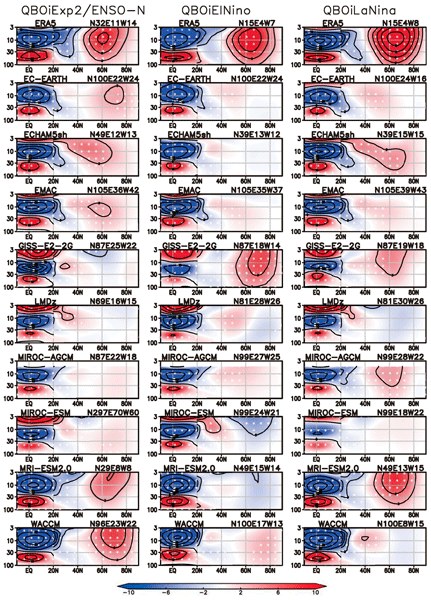
Hiroaki Naoe, Jorge L. García-Franco, Chang-Hyun Park, Mario Rodrigo, Froila M. Palmeiro, Federico Serva, Masakazu Taguchi, Kohei Yoshida, James A. Anstey, Javier García-Serrano, Seok-Woo Son, Yoshio Kawatani, Neal Butchart, Kevin Hamilton, Chih-Chieh Chen, Anne Glanville, Tobias Kerzenmacher, François Lott, Clara Orbe, Scott Osprey, Mijeong Park, Jadwiga H. Richter, Stefan Versick, and Shingo Watanabe
Weather Clim. Dynam., 6, 1419–1442, https://doi.org/10.5194/wcd-6-1419-2025, https://doi.org/10.5194/wcd-6-1419-2025, 2025
Short summary
Short summary
Links between the stratospheric Quasi-Biennial Oscillation (QBO) and atmospheric circulations in the tropics, subtropics, and polar regions, as well as their modulation by the El Nino–Southern Oscillation, are examined through model experiments. The QBO–polar vortex connection is reproduced by a multi-model ensemble at about half the observed amplitude. Weak performance of QBO signals in these regions is likely due to unrealistically weak QBO amplitudes in the lower stratosphere.
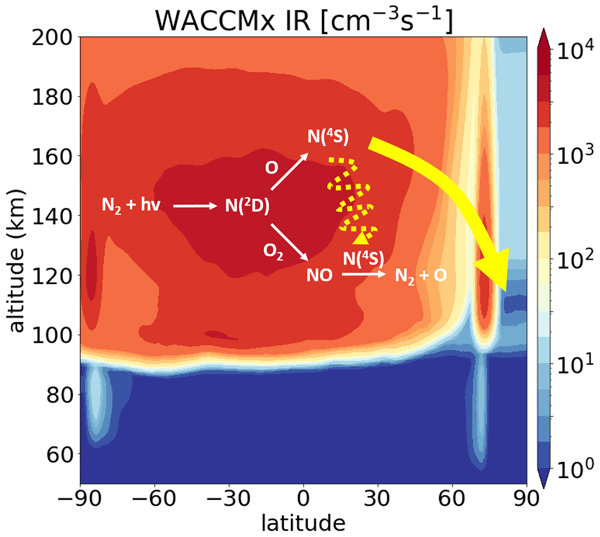
Miriam Sinnhuber, Christina Arras, Stefan Bender, Bernd Funke, Hanli Liu, Daniel R. Marsh, Thomas Reddmann, Eugene Rozanov, Timofei Sukhodolov, Monika E. Szelag, and Jan Maik Wissing
Atmos. Chem. Phys., 25, 14719–14734, https://doi.org/10.5194/acp-25-14719-2025, https://doi.org/10.5194/acp-25-14719-2025, 2025
Short summary
Short summary
Nitric oxide in the upper atmosphere varies with solar activity. Observations show that this starts a chain of processes affecting the ozone layer and climate system. This is often underestimated in models. We compare five models which show large differences in simulated NO. Analysis of these discrepancies identify two processes which interact with each other: the balance between atomic and molecular oxygen in the thermosphere, and a poleward - downward transport in the winter thermosphere.
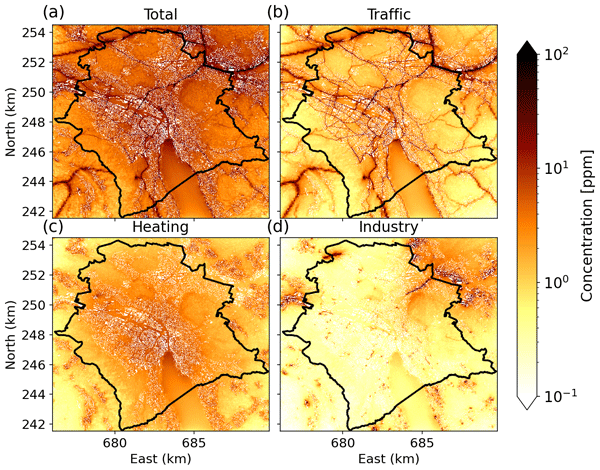
Dominik Brunner, Ivo Suter, Leonie Bernet, Lionel Constantin, Stuart K. Grange, Pascal Rubli, Junwei Li, Jia Chen, Alessandro Bigi, and Lukas Emmenegger
Atmos. Chem. Phys., 25, 14387–14410, https://doi.org/10.5194/acp-25-14387-2025, https://doi.org/10.5194/acp-25-14387-2025, 2025
Short summary
Short summary
To support the city of Zurich in tracking its path to net-zero greenhouse gas emissions planned to be reached by 2040, a CO2 emission monitoring system was established. The system combines a dense network of CO2 sensors with a high-resolution atmospheric transport model GRAMM/GRAL. This study presents the setup of the model together with its numerous inputs and evaluates its performance in comparison with observations from the CO2 sensor network.
Marco Zanatta, Pia Bogert, Patrick Ginot, Yiwei Gong, Gholam Ali Hoshyaripour, Yaqiong Hu, Feng Jiang, Paolo Laj, Yanxia Li, Claudia Linke, Ottmar Möhler, Harald Saathoff, Martin Schnaiter, Nsikanabasi Silas Umo, Franziska Vogel, and Robert Wagner
Aerosol Research, 3, 477–502, https://doi.org/10.5194/ar-3-477-2025, https://doi.org/10.5194/ar-3-477-2025, 2025
Short summary
Short summary
Back carbon is an atmospheric pollutant from combustion and contributes to the Arctic warming. However, its properties change as it travels through the atmosphere, affecting its impact. We recreated Arctic transport conditions in a laboratory to study how black carbon evolves over time. Our findings show that temperature and altitude strongly influence its transformation, providing key insights for improving climate models and understanding Arctic pollution.
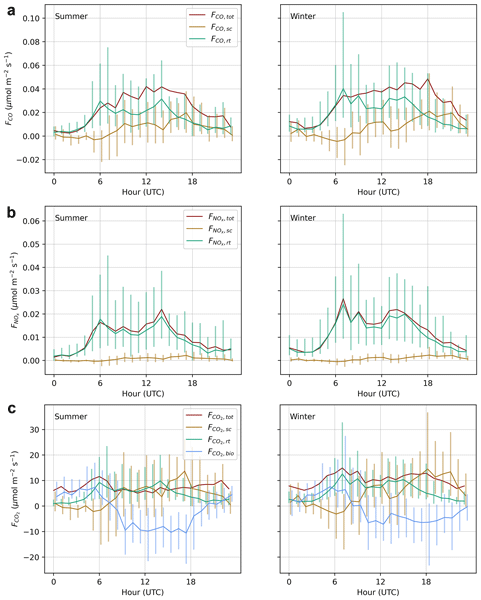
Rainer Hilland, Josh Hashemi, Stavros Stagakis, Dominik Brunner, Lionel Constantin, Natascha Kljun, Ann-Kristin Kunz, Betty Molinier, Samuel Hammer, Lukas Emmenegger, and Andreas Christen
Atmos. Chem. Phys., 25, 14279–14299, https://doi.org/10.5194/acp-25-14279-2025, https://doi.org/10.5194/acp-25-14279-2025, 2025
Short summary
Short summary
We present a study of simultaneously measured fluxes of carbon dioxide (CO2) and co-emitted species in the city of Zurich. Flux measurements of CO2 alone cannot be attributed to specific emission sectors, such as road transport or residential heating. We present a model which uses the measured ratios of CO2 to carbon monoxide (CO) and nitrogen oxides (NOx) as well as sector-specific reference ratios, to attribute measured fluxes to their emission sectors.
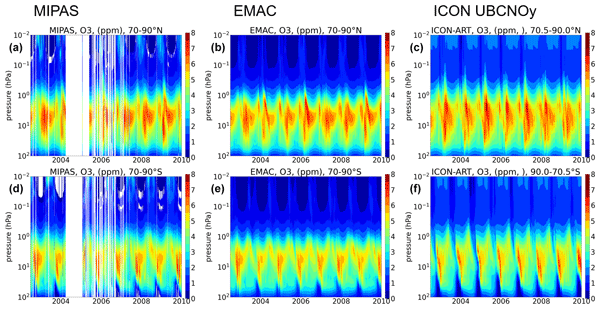
Maryam Ramezani Ziarani, Miriam Sinnhuber, Thomas Reddmann, Bernd Funke, Stefan Bender, and Michael Prather
Geosci. Model Dev., 18, 7891–7905, https://doi.org/10.5194/gmd-18-7891-2025, https://doi.org/10.5194/gmd-18-7891-2025, 2025
Short summary
Short summary
Our study aims to present a new method for incorporating top-down solar forcing into stratospheric ozone relying on linearized ozone scheme. The addition of geomagnetic forcing led to significant ozone losses in the polar upper stratosphere of both hemispheres due to the catalytic cycles involving NOy. In addition to the particle precipitation effect, accounting for solar UV variability in the ICON-ART model leads to the changes in ozone in the tropical stratosphere.
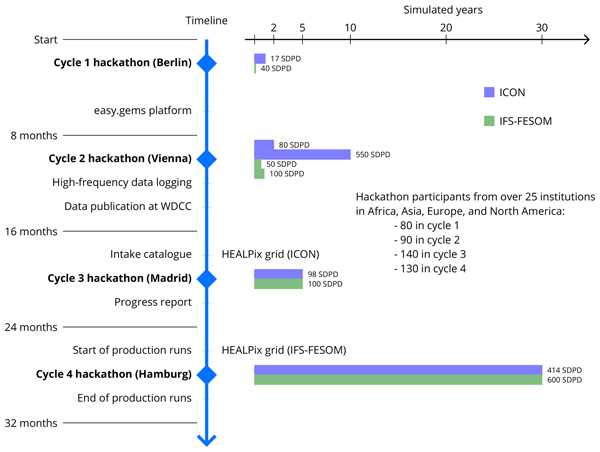
Hans Segura, Xabier Pedruzo-Bagazgoitia, Philipp Weiss, Sebastian K. Müller, Thomas Rackow, Junhong Lee, Edgar Dolores-Tesillos, Imme Benedict, Matthias Aengenheyster, Razvan Aguridan, Gabriele Arduini, Alexander J. Baker, Jiawei Bao, Swantje Bastin, Eulàlia Baulenas, Tobias Becker, Sebastian Beyer, Hendryk Bockelmann, Nils Brüggemann, Lukas Brunner, Suvarchal K. Cheedela, Sushant Das, Jasper Denissen, Ian Dragaud, Piotr Dziekan, Madeleine Ekblom, Jan Frederik Engels, Monika Esch, Richard Forbes, Claudia Frauen, Lilli Freischem, Diego García-Maroto, Philipp Geier, Paul Gierz, Álvaro González-Cervera, Katherine Grayson, Matthew Griffith, Oliver Gutjahr, Helmuth Haak, Ioan Hadade, Kerstin Haslehner, Shabeh ul Hasson, Jan Hegewald, Lukas Kluft, Aleksei Koldunov, Nikolay Koldunov, Tobias Kölling, Shunya Koseki, Sergey Kosukhin, Josh Kousal, Peter Kuma, Arjun U. Kumar, Rumeng Li, Nicolas Maury, Maximilian Meindl, Sebastian Milinski, Kristian Mogensen, Bimochan Niraula, Jakub Nowak, Divya Sri Praturi, Ulrike Proske, Dian Putrasahan, René Redler, David Santuy, Domokos Sármány, Reiner Schnur, Patrick Scholz, Dmitry Sidorenko, Dorian Spät, Birgit Sützl, Daisuke Takasuka, Adrian Tompkins, Alejandro Uribe, Mirco Valentini, Menno Veerman, Aiko Voigt, Sarah Warnau, Fabian Wachsmann, Marta Wacławczyk, Nils Wedi, Karl-Hermann Wieners, Jonathan Wille, Marius Winkler, Yuting Wu, Florian Ziemen, Janos Zimmermann, Frida A.-M. Bender, Dragana Bojovic, Sandrine Bony, Simona Bordoni, Patrice Brehmer, Marcus Dengler, Emanuel Dutra, Saliou Faye, Erich Fischer, Chiel van Heerwaarden, Cathy Hohenegger, Heikki Järvinen, Markus Jochum, Thomas Jung, Johann H. Jungclaus, Noel S. Keenlyside, Daniel Klocke, Heike Konow, Martina Klose, Szymon Malinowski, Olivia Martius, Thorsten Mauritsen, Juan Pedro Mellado, Theresa Mieslinger, Elsa Mohino, Hanna Pawłowska, Karsten Peters-von Gehlen, Abdoulaye Sarré, Pajam Sobhani, Philip Stier, Lauri Tuppi, Pier Luigi Vidale, Irina Sandu, and Bjorn Stevens
Geosci. Model Dev., 18, 7735–7761, https://doi.org/10.5194/gmd-18-7735-2025, https://doi.org/10.5194/gmd-18-7735-2025, 2025
Short summary
Short summary
The Next Generation of Earth Modeling Systems project (nextGEMS) developed two Earth system models that use horizontal grid spacing of 10 km and finer, giving more fidelity to the representation of local phenomena, globally. In its fourth cycle, nextGEMS simulated the Earth System climate over the 2020–2049 period under the SSP3-7.0 scenario. Here, we provide an overview of nextGEMS, insights into the model development, and the realism of multi-decadal, kilometer-scale simulations.
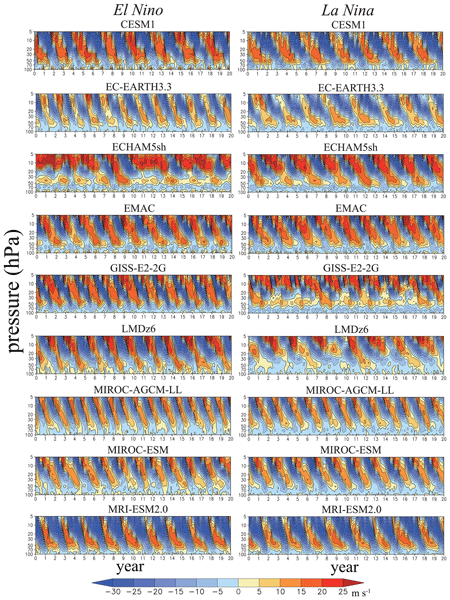
Yoshio Kawatani, Kevin Hamilton, Shingo Watanabe, Masakazu Taguchi, Federico Serva, James A. Anstey, Jadwiga H. Richter, Neal Butchart, Clara Orbe, Scott M. Osprey, Hiroaki Naoe, Dillon Elsbury, Chih-Chieh Chen, Javier García-Serrano, Anne Glanville, Tobias Kerzenmacher, François Lott, Froila M. Palmeiro, Mijeong Park, Stefan Versick, and Kohei Yoshida
Weather Clim. Dynam., 6, 1045–1073, https://doi.org/10.5194/wcd-6-1045-2025, https://doi.org/10.5194/wcd-6-1045-2025, 2025
Short summary
Short summary
The Quasi-Biennial Oscillation (QBO) of the tropical stratospheric mean winds has been relatively steady over the 7 decades it has been observed, but there are always cycle-to-cycle variations. This study used several global atmospheric models to investigate systematic modulation of the QBO by the El Niño/La Niña cycle. All models simulated shorter periods during El Niño, in agreement with observations. By contrast, the models disagreed even on the sign of the El Niño effect on QBO amplitude.
Andrea L. Campoverde, Uwe Ehret, Patrick Ludwig, and Joaquim G. Pinto
EGUsphere, https://doi.org/10.5194/egusphere-2025-3988, https://doi.org/10.5194/egusphere-2025-3988, 2025
Short summary
Short summary
Droughts are becoming more common in Europe. Our study used vast climate data to uncover extreme unseen low-water events. These simulations show the potential droughts becoming more severe and lasting longer than the damaging 2018 event, which impacted shipping and industry. This research highlights the urgent need for adaptation measures to prevent costly economic and ecological consequences for the Rhine's waterway.
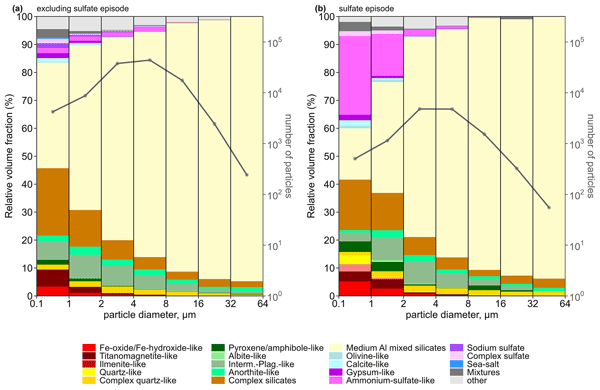
Agnesh Panta, Konrad Kandler, Kerstin Schepanski, Andres Alastuey, Pavla Dagsson Waldhauserova, Sylvain Dupont, Melanie Eknayan, Cristina González-Flórez, Adolfo González-Romero, Martina Klose, Mara Montag, Xavier Querol, Jesús Yus-Díez, and Carlos Pérez García-Pando
Atmos. Chem. Phys., 25, 10457–10478, https://doi.org/10.5194/acp-25-10457-2025, https://doi.org/10.5194/acp-25-10457-2025, 2025
Short summary
Short summary
Iceland is among the most active dust source areas in the world. Dust properties are influenced by particle size, mineralogy, shape, and mixing state. This work characterizes freshly emitted individual aerosol particles of Icelandic dust using electron microscopy. Our study provides insights into critical particle-specific information and will contribute to better constraining climate models that consider mineralogical variations in their representation of the dust cycle.
Julia Bruckert, Simran Chopra, Richard Siddans, Charlotte Wedler, and Gholam Ali Hoshyaripour
Atmos. Chem. Phys., 25, 9859–9884, https://doi.org/10.5194/acp-25-9859-2025, https://doi.org/10.5194/acp-25-9859-2025, 2025
Short summary
Short summary
The 2022 Hunga eruption emitted about 150 Tg of water vapor into the stratosphere. Here, we show that the water vapor injection not only accelerates SO2 oxidation and sulfate production but also increases the aging of ash (coating of ash by sulfate). Our study shows that aerosol aging alone does not explain the rapid loss of ash after the Hunga eruption as observed by satellite instruments. However, some ash might be masked in the observation due to the strong coating.
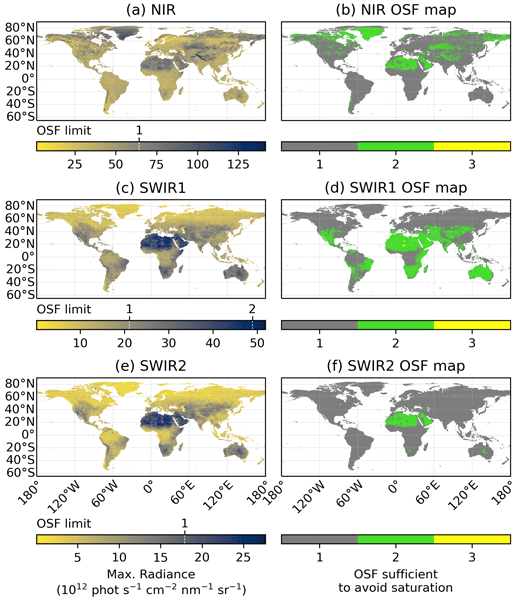
Michael Weimer, Michael Hilker, Stefan Noël, Max Reuter, Michael Buchwitz, Blanca Fuentes Andrade, Rüdiger Lang, Bernd Sierk, Yasjka Meijer, Heinrich Bovensmann, John P. Burrows, and Hartmut Bösch
Atmos. Meas. Tech., 18, 3321–3340, https://doi.org/10.5194/amt-18-3321-2025, https://doi.org/10.5194/amt-18-3321-2025, 2025
Short summary
Short summary
Optical detectors have a maximum signal (saturation). Exceedance means that the measurement has to be discarded. We investigate where saturation will occur for the future European satellite mission dedicated to CO2 monitoring (CO2M) and strategies to avoid saturation. Saturation impacts coverage and precision, both of which are important for estimation of local CO2 emissions. We find that taking two pictures per sampling should be sufficient to avoid saturation for CO2M, with some impact on CO2 precision.
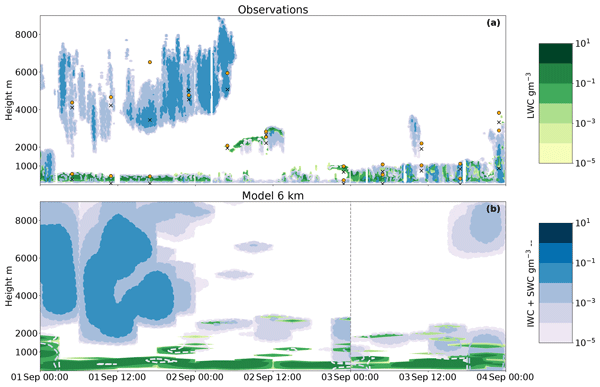
Gabriella Wallentin, Annika Oertel, Luisa Ickes, Peggy Achtert, Matthias Tesche, and Corinna Hoose
Atmos. Chem. Phys., 25, 6607–6631, https://doi.org/10.5194/acp-25-6607-2025, https://doi.org/10.5194/acp-25-6607-2025, 2025
Short summary
Short summary
Multilayer clouds are common in the Arctic but remain underrepresented. We use an atmospheric model to simulate multilayer cloud cases from the Arctic expedition MOSAiC 2019/2020. We find that it is complex to accurately model these cloud layers due to the lack of correct temperature profiles. The model also struggles to capture the observed cloud phase and the relative concentration of cloud droplets and cloud ice. We constrain our model to measured aerosols to mitigate this issue.
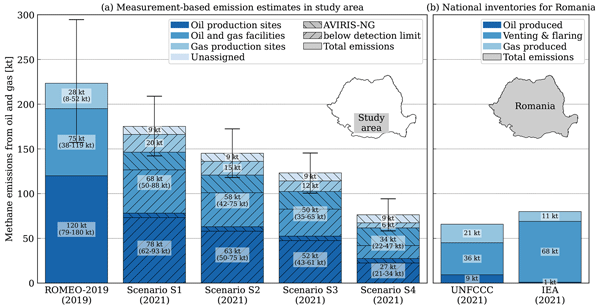
Gerrit Kuhlmann, Foteini Stavropoulou, Stefan Schwietzke, Daniel Zavala-Araiza, Andrew Thorpe, Andreas Hueni, Lukas Emmenegger, Andreea Calcan, Thomas Röckmann, and Dominik Brunner
Atmos. Chem. Phys., 25, 5371–5385, https://doi.org/10.5194/acp-25-5371-2025, https://doi.org/10.5194/acp-25-5371-2025, 2025
Short summary
Short summary
A measurement campaign in 2019 found that methane emissions from oil and gas in Romania were significantly higher than reported. In 2021, our follow-up campaign using airborne remote sensing showed a marked decreases in emissions by 20 %–60 % due to improved infrastructure. The study highlights the importance of measurement-based emission monitoring and illustrates the value of a multi-scale assessment integrating ground-based observations with large-scale airborne remote sensing campaigns.
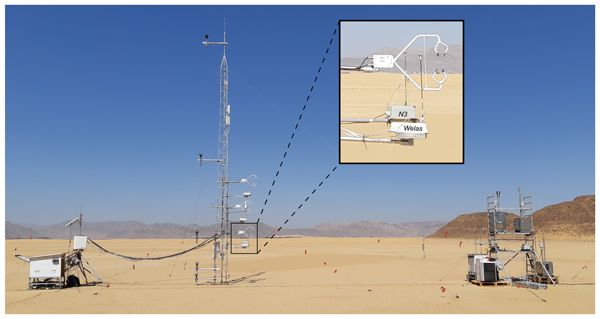
Sylvain Dupont, Eric Lamaud, Mark R. Irvine, Jean-Marc Bonnefond, Adolfo González-Romero, Andrés Alastuey, Cristina González-Flórez, Xavier Querol, Konrad Kandler, Martina Klose, and Carlos Pérez García-Pando
Atmos. Meas. Tech., 18, 2183–2200, https://doi.org/10.5194/amt-18-2183-2025, https://doi.org/10.5194/amt-18-2183-2025, 2025
Short summary
Short summary
Low-cost optical particle counters (OPCs) offer new opportunities to monitor dust particles from wind soil erosion. Their price, size, and power consumption are lower than those of traditional OPCs. We tested the ability of the low-cost OPC-N3 from Alphasense to estimate dust emission flux during erosion events in Jordan. N3 estimated the dust flux well, with differences of less than 30 % compared to a traditional OPC. Our results confirm the potential of low-cost OPCs for dust erosion research.
Patricia Coll-Hidalgo, Raquel Nieto, Alexandre Ramos, Patrick Ludwig, and Luis Gimeno
EGUsphere, https://doi.org/10.5194/egusphere-2025-1775, https://doi.org/10.5194/egusphere-2025-1775, 2025
Preprint withdrawn
Short summary
Short summary
This study uses Lagrangian moisture tracking and high-resolution weather simulations to trace moisture sources for Storm Ianos (Sept 2020). The analysis identified the Ionian Basin and southwestern Balkans as the primary sources, with secondary contributions from the surrounding seas. Large transport moisture traveled via three main pathways, with the Marmara-Black Sea route most significant. For record-breaking rainfall local evaporation over Greece and the Ionian Sea dominated moisture uptake.
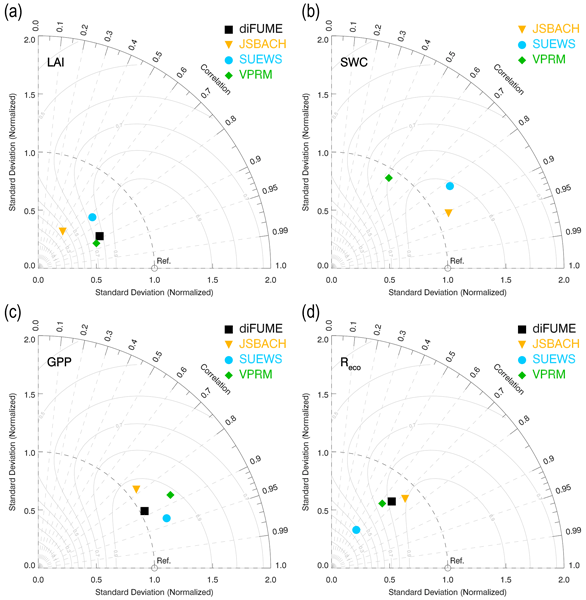
Stavros Stagakis, Dominik Brunner, Junwei Li, Leif Backman, Anni Karvonen, Lionel Constantin, Leena Järvi, Minttu Havu, Jia Chen, Sophie Emberger, and Liisa Kulmala
Biogeosciences, 22, 2133–2161, https://doi.org/10.5194/bg-22-2133-2025, https://doi.org/10.5194/bg-22-2133-2025, 2025
Short summary
Short summary
The balance between CO2 uptake and emissions from urban green areas is still not well understood. This study evaluated for the first time the urban park CO2 exchange simulations with four different types of biosphere model by comparing them with observations. Even though some advantages and disadvantages of the different model types were identified, there was no strong evidence that more complex models performed better than simple ones.
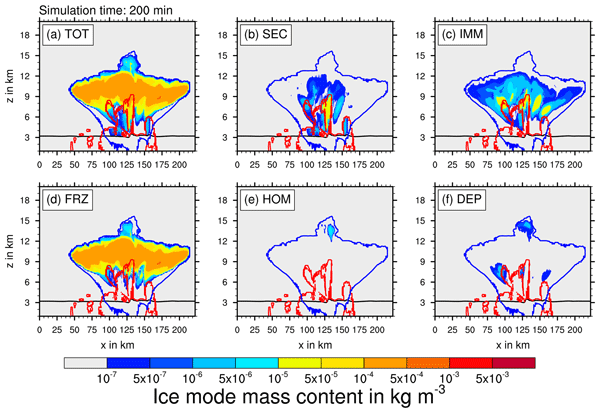
Tim Lüttmer, Peter Spichtinger, and Axel Seifert
Atmos. Chem. Phys., 25, 4505–4529, https://doi.org/10.5194/acp-25-4505-2025, https://doi.org/10.5194/acp-25-4505-2025, 2025
Short summary
Short summary
We investigate ice formation pathways in idealized convective clouds using a novel microphysics scheme that distinguishes between five ice classes each with their own unique formation mechanism. Ice crystals from rime splintering form the lowermost layer of ice crystals around the updraft core. The majority of ice crystals in the anvil of the convective cloud stems from frozen droplets. Ice stemming from homogeneous and deposition nucleation was only relevant in the overshoot.
Lena Feld, Pablo Schmid, Marios Mermigkas, Dimitrios Balis, Jochen Gross, Darko Dubravica, Carlos Alberti, Benedikt Herkommer, Stefan Versick, Roland Ruhnke, Frank Hase, and Peter Braesicke
EGUsphere, https://doi.org/10.5194/egusphere-2025-639, https://doi.org/10.5194/egusphere-2025-639, 2025
Short summary
Short summary
Our goal is to measure CO2 emissions from cities, to verify and improve our knowledge of reported anthropogenic emissions. We use atmospheric measurements and simulations of CO2 transport to find an independent estimate. This study investigates the CO2 emissions of the city of Thessaloniki, where the reported emissions differ. The data we collected indicates that the emissions are larger than stated by the ODIAC inventory, which we used for our simulations.
Joël Thanwerdas, Antoine Berchet, Lionel Constantin, Aki Tsuruta, Michael Steiner, Friedemann Reum, Stephan Henne, and Dominik Brunner
Geosci. Model Dev., 18, 1505–1544, https://doi.org/10.5194/gmd-18-1505-2025, https://doi.org/10.5194/gmd-18-1505-2025, 2025
Short summary
Short summary
The Community Inversion Framework (CIF) brings together methods for estimating greenhouse gas fluxes from atmospheric observations. The initial ensemble method implemented in CIF was found to be incomplete and could hardly be compared to other ensemble methods employed in the inversion community. In this paper, we present and evaluate a new implementation of the ensemble mode, building upon the initial developments.
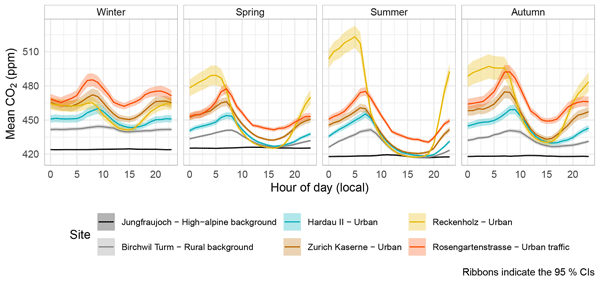
Stuart K. Grange, Pascal Rubli, Andrea Fischer, Dominik Brunner, Christoph Hueglin, and Lukas Emmenegger
Atmos. Chem. Phys., 25, 2781–2806, https://doi.org/10.5194/acp-25-2781-2025, https://doi.org/10.5194/acp-25-2781-2025, 2025
Short summary
Short summary
Carbon dioxide (CO2) is a very important atmospheric pollutant, and to better understand the gas's source and sink dynamics, a mid-cost sensor network hosting 26 sites was deployed in and around Zurich, Switzerland. The sensor measurement performance was quantified, and natural and anthropogenic CO2 emission sources were explored with a focus on what drives high CO2 levels. The observations will be used further by others to validate what is thought to be known about CO2 emissions in the region.
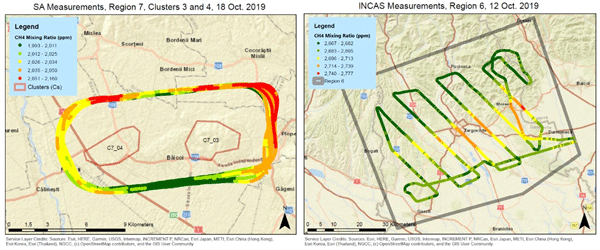
Hossein Maazallahi, Foteini Stavropoulou, Samuel Jonson Sutanto, Michael Steiner, Dominik Brunner, Mariano Mertens, Patrick Jöckel, Antoon Visschedijk, Hugo Denier van der Gon, Stijn Dellaert, Nataly Velandia Salinas, Stefan Schwietzke, Daniel Zavala-Araiza, Sorin Ghemulet, Alexandru Pana, Magdalena Ardelean, Marius Corbu, Andreea Calcan, Stephen A. Conley, Mackenzie L. Smith, and Thomas Röckmann
Atmos. Chem. Phys., 25, 1497–1511, https://doi.org/10.5194/acp-25-1497-2025, https://doi.org/10.5194/acp-25-1497-2025, 2025
Short summary
Short summary
This article presents insights from airborne in situ measurements collected during the ROmanian Methane Emissions from Oil and gas (ROMEO) campaign supported by two models. Results reveal Romania's oil and gas methane emissions were significantly under-reported to the United Nations Framework Convention on Climate Change (UNFCCC) in 2019. A large underestimation was also found in the Emissions Database for Global Atmospheric Research (EDGAR) v7.0 for the study domain in the same year.
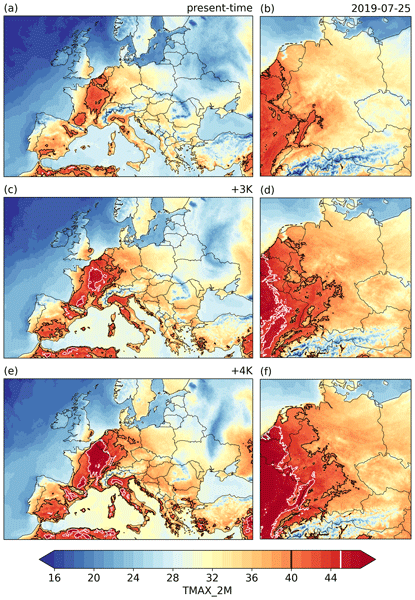
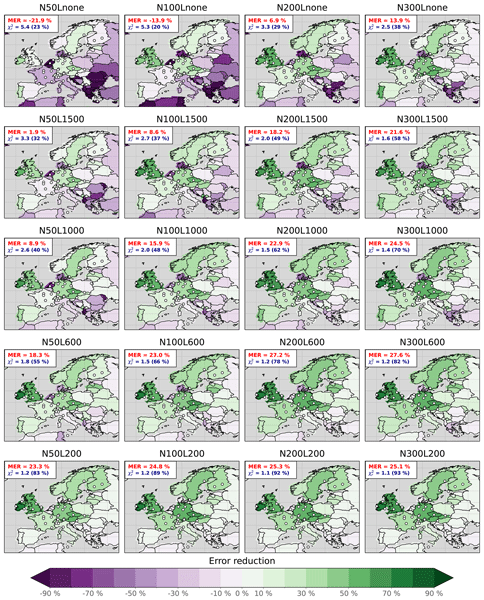
Tatiana Klimiuk, Patrick Ludwig, Antonio Sanchez-Benitez, Helge F. Goessling, Peter Braesicke, and Joaquim G. Pinto
Earth Syst. Dynam., 16, 239–255, https://doi.org/10.5194/esd-16-239-2025, https://doi.org/10.5194/esd-16-239-2025, 2025
Short summary
Short summary
Our study examines potential changes in heatwaves in central Europe due to global warming, using the 2019 summer heatwave as an example. By producing high-resolution storylines, we provide insights into how future heatwaves might spread, how they might persist for longer, and where stronger or weaker temperature increases may occur. This research helps us understand regional thermodynamic responses and highlights the importance of local strategies to protect communities from future heat events.
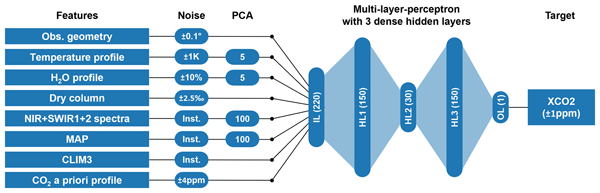
Maximilian Reuter, Michael Hilker, Stefan Noël, Antonio Di Noia, Michael Weimer, Oliver Schneising, Michael Buchwitz, Heinrich Bovensmann, John P. Burrows, Hartmut Bösch, and Ruediger Lang
Atmos. Meas. Tech., 18, 241–264, https://doi.org/10.5194/amt-18-241-2025, https://doi.org/10.5194/amt-18-241-2025, 2025
Short summary
Short summary
Carbon dioxide (CO2) and methane (CH4) are the main anthropogenic greenhouse gases. The European Copernicus CO2 monitoring satellite mission CO2M will provide measurements of their atmospheric concentrations, but the accuracy requirements are demanding and conventional retrieval methods computationally expensive. We present a new retrieval algorithm based on artificial neural networks that has the potential to meet the stringent requirements of the CO2M mission with minimal computational effort.
Diego Santaren, Janne Hakkarainen, Gerrit Kuhlmann, Erik Koene, Frédéric Chevallier, Iolanda Ialongo, Hannakaisa Lindqvist, Janne Nurmela, Johanna Tamminen, Laia Amorós, Dominik Brunner, and Grégoire Broquet
Atmos. Meas. Tech., 18, 211–239, https://doi.org/10.5194/amt-18-211-2025, https://doi.org/10.5194/amt-18-211-2025, 2025
Short summary
Short summary
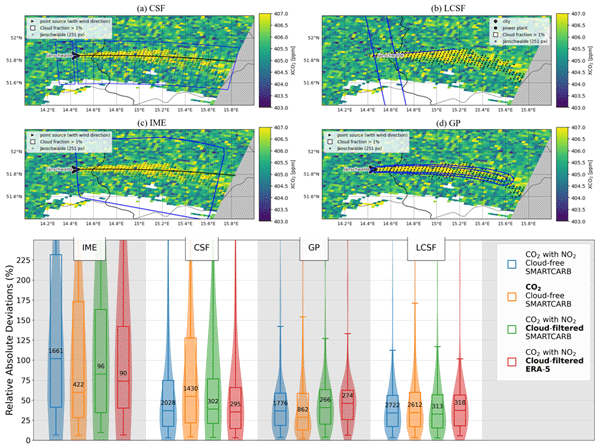
This study evaluates data-driven inversion methods for estimating CO2 emissions from local sources, such as power plants and cities, using meteorological data and XCO2 and NO2 satellite images rather than atmospheric transport modeling. We assess and compare the performance of five different methods using simulations of 1 year of satellite images, taken from the upcoming Copernicus CO2 Monitoring Mission, covering 15 power plants and the city of Berlin, Germany.
Deifilia To, Julian Quinting, Gholam Ali Hoshyaripour, Markus Götz, Achim Streit, and Charlotte Debus
Geosci. Model Dev., 17, 8873–8884, https://doi.org/10.5194/gmd-17-8873-2024, https://doi.org/10.5194/gmd-17-8873-2024, 2024
Short summary
Short summary
Pangu-Weather is a breakthrough machine learning model in medium-range weather forecasting that considers 3D atmospheric information. We show that using a simpler 2D framework improves robustness, speeds up training, and reduces computational needs by 20 %–30 %. We introduce a training procedure that varies the importance of atmospheric variables over time to speed up training convergence. Decreasing computational demand increases the accessibility of training and working with the model.
Michael Steiner, Luca Cantarello, Stephan Henne, and Dominik Brunner
Atmos. Chem. Phys., 24, 12447–12463, https://doi.org/10.5194/acp-24-12447-2024, https://doi.org/10.5194/acp-24-12447-2024, 2024
Short summary
Short summary
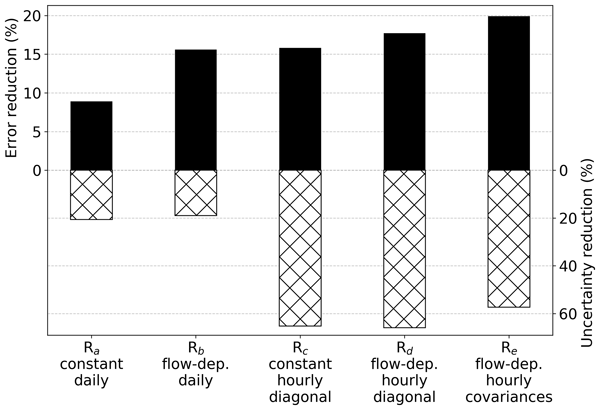
Atmospheric greenhouse gas inversions have great potential to independently check reported bottom-up emissions; however they are subject to large uncertainties. It is paramount to address and reduce the largest source of uncertainty, which stems from the representation of atmospheric transport in the models. In this study, we show that the use of a temporally varying flow-dependent atmospheric transport uncertainty can enhance the accuracy of emission estimation in an idealized experiment.
Ana Maria Roxana Petrescu, Glen P. Peters, Richard Engelen, Sander Houweling, Dominik Brunner, Aki Tsuruta, Bradley Matthews, Prabir K. Patra, Dmitry Belikov, Rona L. Thompson, Lena Höglund-Isaksson, Wenxin Zhang, Arjo J. Segers, Giuseppe Etiope, Giancarlo Ciotoli, Philippe Peylin, Frédéric Chevallier, Tuula Aalto, Robbie M. Andrew, David Bastviken, Antoine Berchet, Grégoire Broquet, Giulia Conchedda, Stijn N. C. Dellaert, Hugo Denier van der Gon, Johannes Gütschow, Jean-Matthieu Haussaire, Ronny Lauerwald, Tiina Markkanen, Jacob C. A. van Peet, Isabelle Pison, Pierre Regnier, Espen Solum, Marko Scholze, Maria Tenkanen, Francesco N. Tubiello, Guido R. van der Werf, and John R. Worden
Earth Syst. Sci. Data, 16, 4325–4350, https://doi.org/10.5194/essd-16-4325-2024, https://doi.org/10.5194/essd-16-4325-2024, 2024
Short summary
Short summary
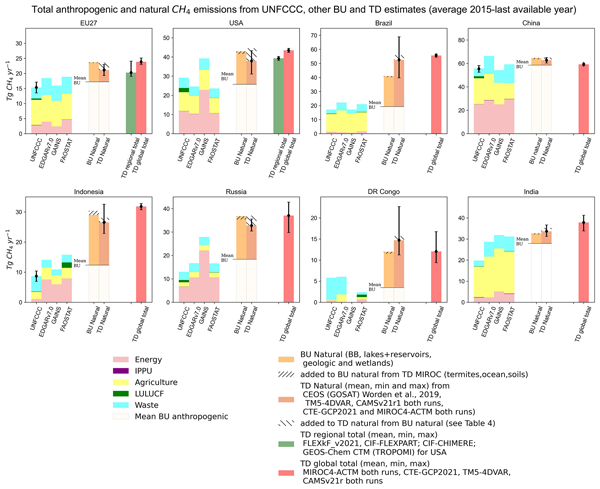
This study provides an overview of data availability from observation- and inventory-based CH4 emission estimates. It systematically compares them and provides recommendations for robust comparisons, aiming to steadily engage more parties in using observational methods to complement their UNFCCC submissions. Anticipating improvements in atmospheric modelling and observations, future developments need to resolve knowledge gaps in both approaches and to better quantify remaining uncertainty.
Selina M. Kiefer, Patrick Ludwig, Sebastian Lerch, Peter Knippertz, and Joaquim G. Pinto
EGUsphere, https://doi.org/10.5194/egusphere-2024-2955, https://doi.org/10.5194/egusphere-2024-2955, 2024
Preprint withdrawn
Short summary
Short summary
Weather forecasts 14 days in advance generally have a low skill but not always. We identify reasons thereof depending on the atmospheric flow, shown by Weather Regimes (WRs). If the WRs during the forecasts follow climatological patterns, forecast skill is increased. The forecast of a cold-wave day is better when the European Blocking WR (high pressure around the British Isles) is present a few days before a cold-wave day. These results can be used to assess the reliability of predictions.
Adolfo González-Romero, Cristina González-Flórez, Agnesh Panta, Jesús Yus-Díez, Patricia Córdoba, Andres Alastuey, Natalia Moreno, Melani Hernández-Chiriboga, Konrad Kandler, Martina Klose, Roger N. Clark, Bethany L. Ehlmann, Rebecca N. Greenberger, Abigail M. Keebler, Phil Brodrick, Robert Green, Paul Ginoux, Xavier Querol, and Carlos Pérez García-Pando
Atmos. Chem. Phys., 24, 9155–9176, https://doi.org/10.5194/acp-24-9155-2024, https://doi.org/10.5194/acp-24-9155-2024, 2024
Short summary
Short summary
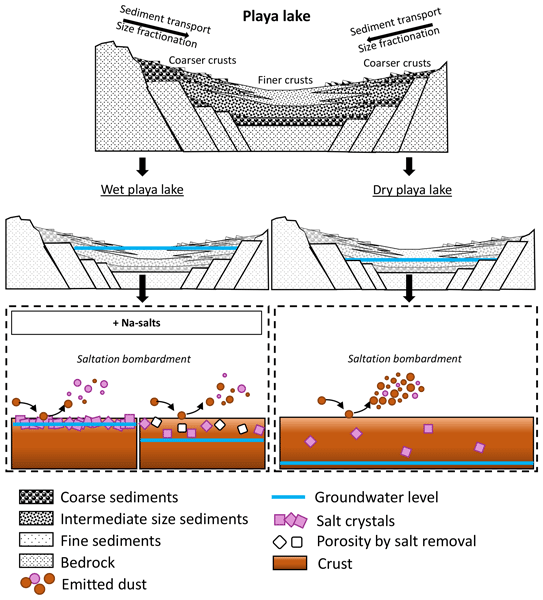
In this research, we studied the dust-emitting properties of crusts and aeolian ripples from the Mojave Desert. These properties are key to understanding the effect of dust upon climate. We found two different playa lakes according to the groundwater regime, which implies differences in crusts' cohesion state and mineralogy, which can affect the dust emission potential and properties. We also compare them with Moroccan Sahara crusts and Icelandic top sediments.
Andrea L. Campoverde, Uwe Ehret, Patrick Ludwig, and Joaquim G. Pinto
Geosci. Model Dev. Discuss., https://doi.org/10.5194/gmd-2024-134, https://doi.org/10.5194/gmd-2024-134, 2024
Revised manuscript not accepted
Short summary
Short summary
We looked at how well the model WRF-Hydro performed during the 2018 drought event in the River Rhine basin, even though it is typically used for floods. We used the meteorological ERA5 reanalysis dataset to simulate River Rhine’s streamflow and adjusted the model using parameters and actual discharge measurements. We focused on Lake Constance, a key part of the basin, but found issues with the model’s lake outflow simulation. By removing the lake module, we obtained more accurate results.
Oliver Schneising, Michael Buchwitz, Maximilian Reuter, Michael Weimer, Heinrich Bovensmann, John P. Burrows, and Hartmut Bösch
Atmos. Chem. Phys., 24, 7609–7621, https://doi.org/10.5194/acp-24-7609-2024, https://doi.org/10.5194/acp-24-7609-2024, 2024
Short summary
Short summary
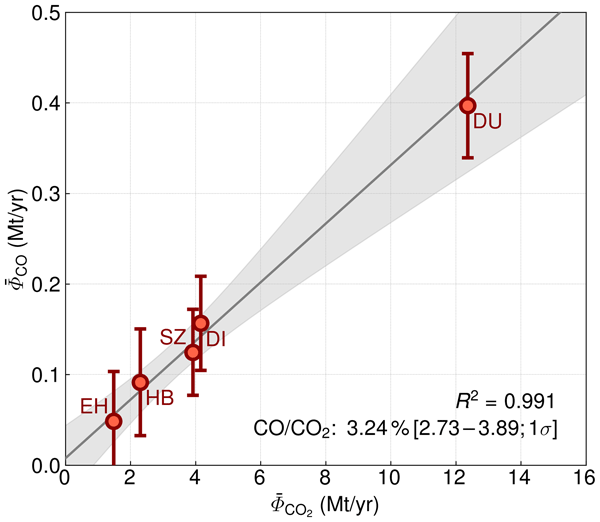
Large quantities of CO and CO2 are emitted during conventional steel production. As satellite-based estimates of CO2 emissions at the facility level are challenging, co-emitted CO can indicate the carbon footprint of steel plants. We estimate CO emissions for German steelworks and use CO2 emissions from emissions trading data to derive a sector-specific CO/CO2 emission ratio for the steel industry; it is a prerequisite to use CO as a proxy for CO2 emissions from similar steel production sites.
Sandro Meier, Erik F. M. Koene, Maarten Krol, Dominik Brunner, Alexander Damm, and Gerrit Kuhlmann
Atmos. Chem. Phys., 24, 7667–7686, https://doi.org/10.5194/acp-24-7667-2024, https://doi.org/10.5194/acp-24-7667-2024, 2024
Short summary
Short summary
Nitrogen oxides (NOx = NO + NO2) are important air pollutants. This study addresses the challenge of accurately estimating NOx emissions from NO2 satellite observations. We develop a realistic model to convert NO2 to NOx by using simulated plumes from various power plants. We apply the model to satellite NO2 observations, significantly reducing biases in estimated NOx emissions. The study highlights the potential for a consistent, high-resolution estimation of NOx emissions using satellite data.
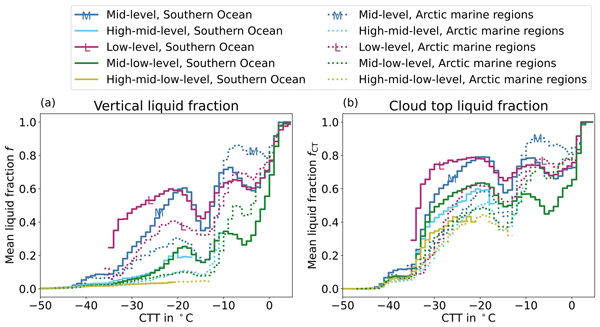
Barbara Dietel, Odran Sourdeval, and Corinna Hoose
Atmos. Chem. Phys., 24, 7359–7383, https://doi.org/10.5194/acp-24-7359-2024, https://doi.org/10.5194/acp-24-7359-2024, 2024
Short summary
Short summary
Uncertainty with respect to cloud phases over the Southern Ocean and Arctic marine regions leads to large uncertainties in the radiation budget of weather and climate models. This study investigates the phases of low-base and mid-base clouds using satellite-based remote sensing data. A comprehensive analysis of the correlation of cloud phase with various parameters, such as temperature, aerosols, sea ice, vertical and horizontal cloud extent, and cloud radiative effect, is presented.
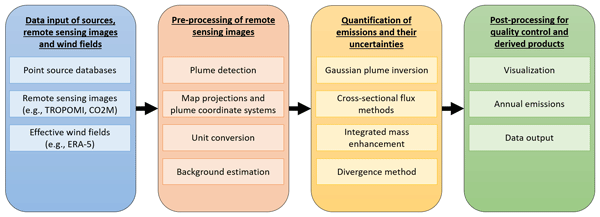
Gerrit Kuhlmann, Erik Koene, Sandro Meier, Diego Santaren, Grégoire Broquet, Frédéric Chevallier, Janne Hakkarainen, Janne Nurmela, Laia Amorós, Johanna Tamminen, and Dominik Brunner
Geosci. Model Dev., 17, 4773–4789, https://doi.org/10.5194/gmd-17-4773-2024, https://doi.org/10.5194/gmd-17-4773-2024, 2024
Short summary
Short summary
We present a Python software library for data-driven emission quantification (ddeq). It can be used to determine the emissions of hot spots (cities, power plants and industry) from remote sensing images using different methods. ddeq can be extended for new datasets and methods, providing a powerful community tool for users and developers. The application of the methods is shown using Jupyter notebooks included in the library.
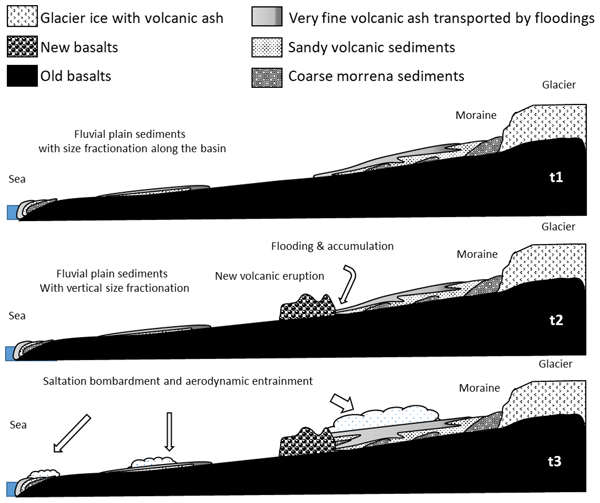
Adolfo González-Romero, Cristina González-Flórez, Agnesh Panta, Jesús Yus-Díez, Patricia Córdoba, Andres Alastuey, Natalia Moreno, Konrad Kandler, Martina Klose, Roger N. Clark, Bethany L. Ehlmann, Rebecca N. Greenberger, Abigail M. Keebler, Phil Brodrick, Robert O. Green, Xavier Querol, and Carlos Pérez García-Pando
Atmos. Chem. Phys., 24, 6883–6910, https://doi.org/10.5194/acp-24-6883-2024, https://doi.org/10.5194/acp-24-6883-2024, 2024
Short summary
Short summary
The knowledge of properties from dust emitted in high latitudes such as in Iceland is scarce. This study focuses on the particle size, mineralogy, cohesion, and iron mode of occurrence and reflectance spectra of dust-emitting sediments. Icelandic top sediments have lower cohesion state, coarser particle size, distinctive mineralogy, and 3-fold bulk Fe content, with a large presence of magnetite compared to Saharan crusts.
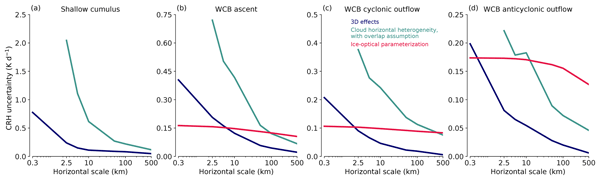
Behrooz Keshtgar, Aiko Voigt, Bernhard Mayer, and Corinna Hoose
Atmos. Chem. Phys., 24, 4751–4769, https://doi.org/10.5194/acp-24-4751-2024, https://doi.org/10.5194/acp-24-4751-2024, 2024
Short summary
Short summary
Cloud-radiative heating (CRH) affects extratropical cyclones but is uncertain in weather and climate models. We provide a framework to quantify uncertainties in CRH within an extratropical cyclone due to four factors and show that the parameterization of ice optical properties contributes significantly to uncertainty in CRH. We also argue that ice optical properties, by affecting CRH on spatial scales of 100 km, are relevant for the large-scale dynamics of extratropical cyclones.
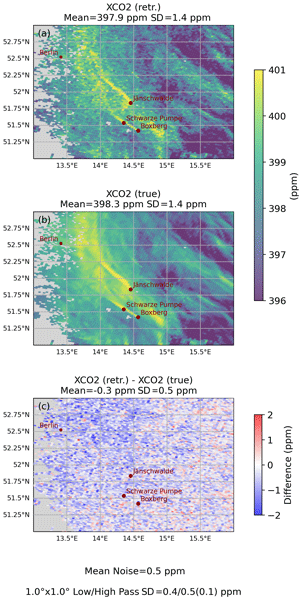
Stefan Noël, Michael Buchwitz, Michael Hilker, Maximilian Reuter, Michael Weimer, Heinrich Bovensmann, John P. Burrows, Hartmut Bösch, and Ruediger Lang
Atmos. Meas. Tech., 17, 2317–2334, https://doi.org/10.5194/amt-17-2317-2024, https://doi.org/10.5194/amt-17-2317-2024, 2024
Short summary
Short summary
FOCAL-CO2M is one of the three operational retrieval algorithms which will be used to derive XCO2 and XCH4 from measurements of the forthcoming European CO2M mission. We present results of applications of FOCAL-CO2M to simulated spectra, from which confidence is gained that the algorithm is able to fulfil the challenging requirements on systematic errors for the CO2M mission (spatio-temporal bias ≤ 0.5 ppm for XCO2 and ≤ 5 ppb for XCH4).
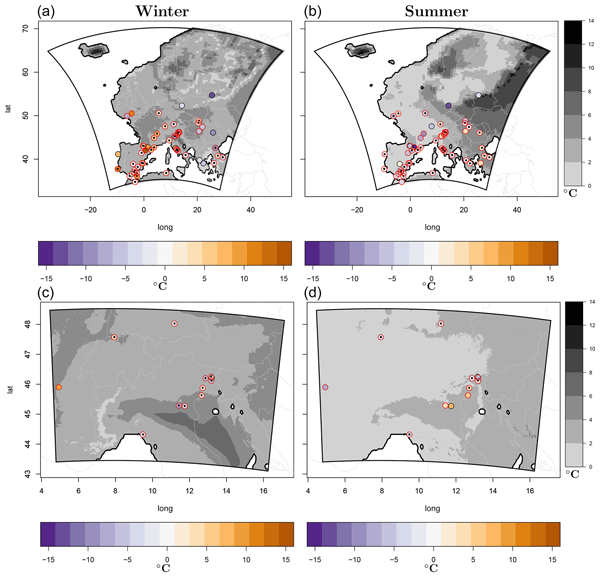
Emmanuele Russo, Jonathan Buzan, Sebastian Lienert, Guillaume Jouvet, Patricio Velasquez Alvarez, Basil Davis, Patrick Ludwig, Fortunat Joos, and Christoph C. Raible
Clim. Past, 20, 449–465, https://doi.org/10.5194/cp-20-449-2024, https://doi.org/10.5194/cp-20-449-2024, 2024
Short summary
Short summary
We present a series of experiments conducted for the Last Glacial Maximum (~21 ka) over Europe using the regional climate Weather Research and Forecasting model (WRF) at convection-permitting resolutions. The model, with new developments better suited to paleo-studies, agrees well with pollen-based climate reconstructions. This agreement is improved when considering different sources of uncertainty. The effect of convection-permitting resolutions is also assessed.
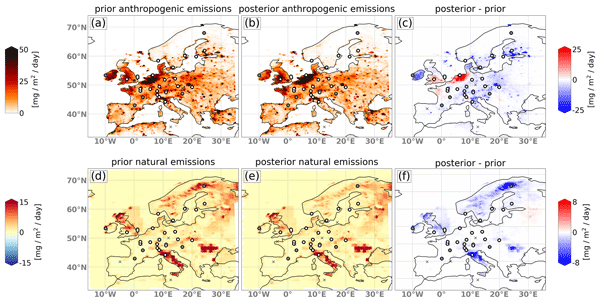
Michael Steiner, Wouter Peters, Ingrid Luijkx, Stephan Henne, Huilin Chen, Samuel Hammer, and Dominik Brunner
Atmos. Chem. Phys., 24, 2759–2782, https://doi.org/10.5194/acp-24-2759-2024, https://doi.org/10.5194/acp-24-2759-2024, 2024
Short summary
Short summary
The Paris Agreement increased interest in estimating greenhouse gas (GHG) emissions of individual countries, but top-down emission estimation is not yet considered policy-relevant. It is therefore paramount to reduce large errors and to build systems that are based on the newest atmospheric transport models. In this study, we present the first application of ICON-ART in the inverse modeling of GHG fluxes with an ensemble Kalman filter and present our results for European CH4 emissions.
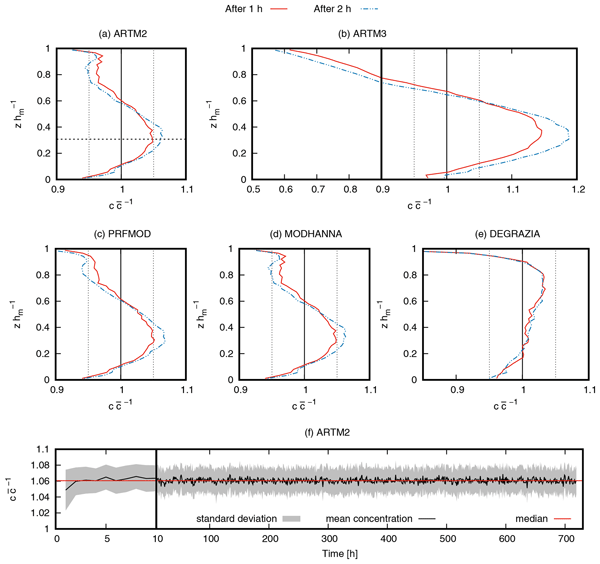
Robert Hanfland, Dominik Brunner, Christiane Voigt, Alina Fiehn, Anke Roiger, and Margit Pattantyús-Ábrahám
Atmos. Chem. Phys., 24, 2511–2534, https://doi.org/10.5194/acp-24-2511-2024, https://doi.org/10.5194/acp-24-2511-2024, 2024
Short summary
Short summary
To show that the three-dimensional dispersion of plumes simulated by the Atmospheric Radionuclide Transport Model within the planetary boundary layer agrees with real plumes, we identify the most important input parameters and analyse the turbulence properties of five different turbulence models in very unstable stratification conditions using their deviation from the well-mixed state. Simulations show that one model agrees slightly better in unstable stratification conditions.
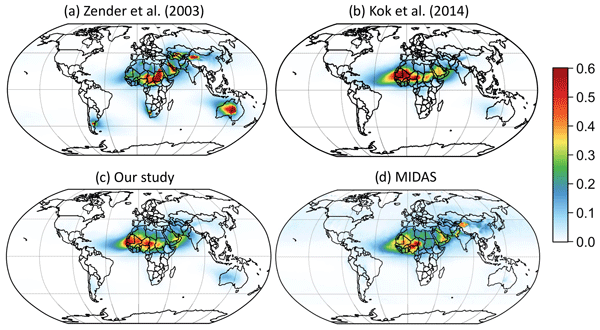
Danny M. Leung, Jasper F. Kok, Longlei Li, Natalie M. Mahowald, David M. Lawrence, Simone Tilmes, Erik Kluzek, Martina Klose, and Carlos Pérez García-Pando
Atmos. Chem. Phys., 24, 2287–2318, https://doi.org/10.5194/acp-24-2287-2024, https://doi.org/10.5194/acp-24-2287-2024, 2024
Short summary
Short summary
This study uses a premier Earth system model to evaluate a new desert dust emission scheme proposed in our companion paper. We show that our scheme accounts for more dust emission physics, hence matching better against observations than other existing dust emission schemes do. Our scheme's dust emissions also couple tightly with meteorology, hence likely improving the modeled dust sensitivity to climate change. We believe this work is vital for improving dust representation in climate models.
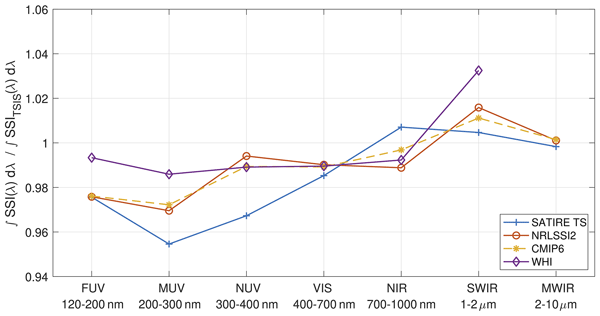
Bernd Funke, Thierry Dudok de Wit, Ilaria Ermolli, Margit Haberreiter, Doug Kinnison, Daniel Marsh, Hilde Nesse, Annika Seppälä, Miriam Sinnhuber, and Ilya Usoskin
Geosci. Model Dev., 17, 1217–1227, https://doi.org/10.5194/gmd-17-1217-2024, https://doi.org/10.5194/gmd-17-1217-2024, 2024
Short summary
Short summary
We outline a road map for the preparation of a solar forcing dataset for the upcoming Phase 7 of the Coupled Model Intercomparison Project (CMIP7), considering the latest scientific advances made in the reconstruction of solar forcing and in the understanding of climate response while also addressing the issues that were raised during CMIP6.
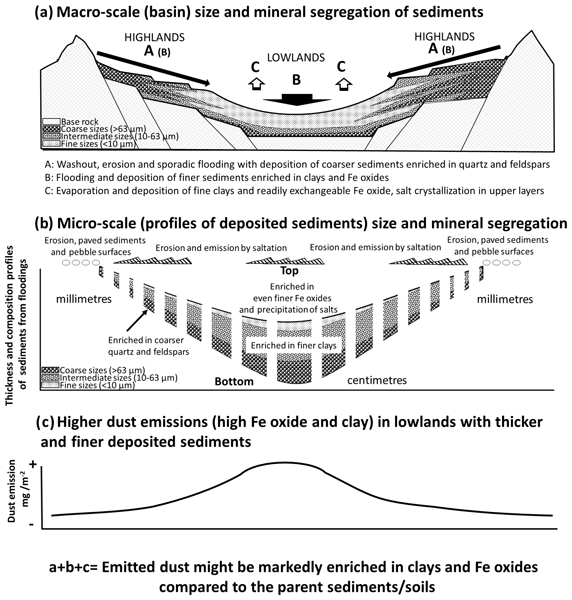
Adolfo González-Romero, Cristina González-Flórez, Agnesh Panta, Jesús Yus-Díez, Cristina Reche, Patricia Córdoba, Natalia Moreno, Andres Alastuey, Konrad Kandler, Martina Klose, Clarissa Baldo, Roger N. Clark, Zongbo Shi, Xavier Querol, and Carlos Pérez García-Pando
Atmos. Chem. Phys., 23, 15815–15834, https://doi.org/10.5194/acp-23-15815-2023, https://doi.org/10.5194/acp-23-15815-2023, 2023
Short summary
Short summary
The effect of dust emitted from desertic surfaces upon climate and ecosystems depends on size and mineralogy, but data from soil mineral atlases of desert soils are scarce. We performed particle-size distribution, mineralogy, and Fe speciation in southern Morocco. Results show coarser particles with high quartz proportion are near the elevated areas, while in depressed areas, sizes are finer, and proportions of clays and nano-Fe oxides are higher. This difference is important for dust modelling.
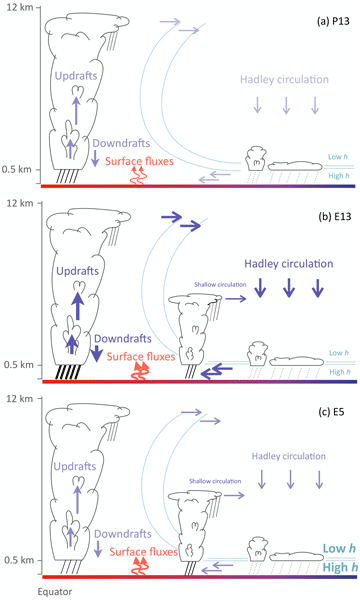
Hyunju Jung, Peter Knippertz, Yvonne Ruckstuhl, Robert Redl, Tijana Janjic, and Corinna Hoose
Weather Clim. Dynam., 4, 1111–1134, https://doi.org/10.5194/wcd-4-1111-2023, https://doi.org/10.5194/wcd-4-1111-2023, 2023
Short summary
Short summary
A narrow rainfall belt in the tropics is an important feature for large-scale circulations and the global water cycle. The accurate simulation of this rainfall feature has been a long-standing problem, with the reasons behind that unclear. We present a novel diagnostic tool that allows us to disentangle processes important for rainfall, which changes due to modifications in model. Using our diagnostic tool, one can potentially identify sources of uncertainty in weather and climate models.
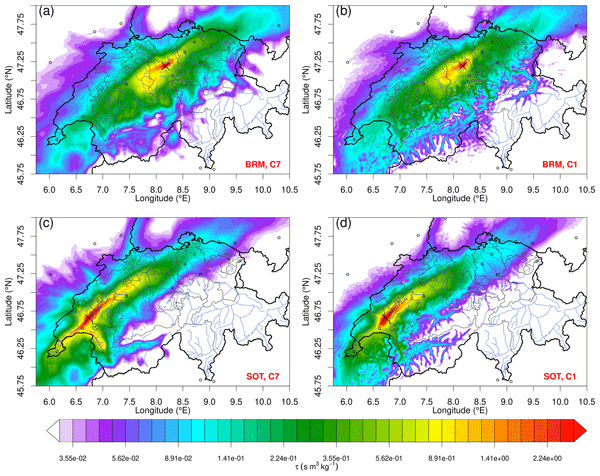
Ioannis Katharopoulos, Dominique Rust, Martin K. Vollmer, Dominik Brunner, Stefan Reimann, Simon J. O'Doherty, Dickon Young, Kieran M. Stanley, Tanja Schuck, Jgor Arduini, Lukas Emmenegger, and Stephan Henne
Atmos. Chem. Phys., 23, 14159–14186, https://doi.org/10.5194/acp-23-14159-2023, https://doi.org/10.5194/acp-23-14159-2023, 2023
Short summary
Short summary
The effectiveness of climate change mitigation needs to be scrutinized by monitoring greenhouse gas (GHG) emissions. Countries report their emissions to the UN in a bottom-up manner. By combining atmospheric observations and transport models someone can independently validate emission estimates in a top-down fashion. We report Swiss emissions of synthetic GHGs based on kilometer-scale transport and inverse modeling, highlighting the role of appropriate resolution in complex terrain.
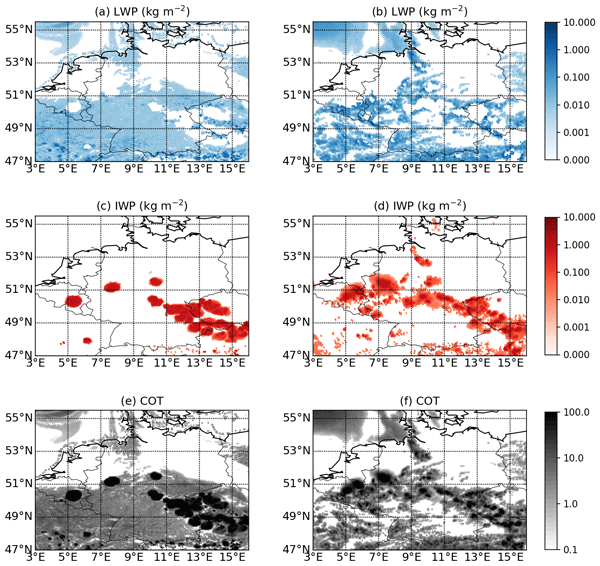
Cunbo Han, Corinna Hoose, Martin Stengel, Quentin Coopman, and Andrew Barrett
Atmos. Chem. Phys., 23, 14077–14095, https://doi.org/10.5194/acp-23-14077-2023, https://doi.org/10.5194/acp-23-14077-2023, 2023
Short summary
Short summary
Cloud phase has been found to significantly impact cloud thermodynamics and Earth’s radiation budget, and various factors influence it. This study investigates the sensitivity of the cloud-phase distribution to the ice-nucleating particle concentration and thermodynamics. Multiple simulation experiments were performed using the ICON model at the convection-permitting resolution of 1.2 km. Simulation results were compared to two different retrieval products based on SEVIRI measurements.
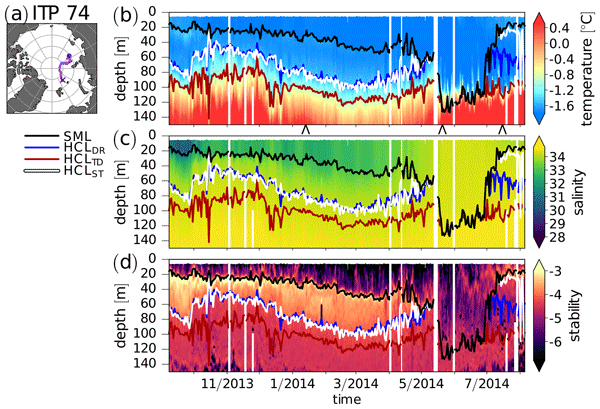
Enrico P. Metzner and Marc Salzmann
Ocean Sci., 19, 1453–1464, https://doi.org/10.5194/os-19-1453-2023, https://doi.org/10.5194/os-19-1453-2023, 2023
Short summary
Short summary
The Arctic Ocean cold halocline separates the cold surface mixed layer from the underlying warm Atlantic Water, and thus provides a precondition for sea ice formation. Here, we introduce a new method for detecting the halocline base and compare it to two existing methods. We show that the largest differences between the methods are found in the regions that are most prone to a halocline retreat in a warming climate, and we discuss the advantages and disadvantages of the three methods.
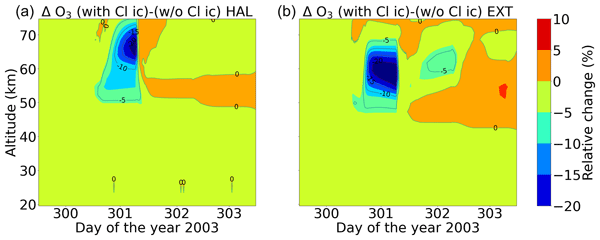
Monali Borthakur, Miriam Sinnhuber, Alexandra Laeng, Thomas Reddmann, Peter Braesicke, Gabriele Stiller, Thomas von Clarmann, Bernd Funke, Ilya Usoskin, Jan Maik Wissing, and Olesya Yakovchuk
Atmos. Chem. Phys., 23, 12985–13013, https://doi.org/10.5194/acp-23-12985-2023, https://doi.org/10.5194/acp-23-12985-2023, 2023
Short summary
Short summary
Reduced ozone levels resulting from ozone depletion mean more exposure to UV radiation, which has various effects on human health. We analysed solar events to see what influence it has on the chemistry of Earth's atmosphere and how this atmospheric chemistry change can affect the ozone. To do this, we used an atmospheric model considering only chemistry and compared it with satellite data. The focus was mainly on the contribution of chlorine, and we found about 10 %–20 % ozone loss due to that.
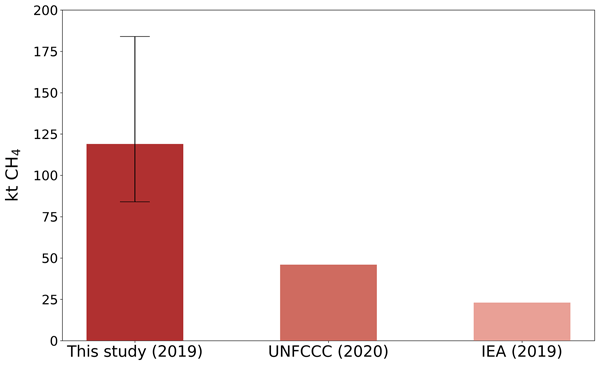
Foteini Stavropoulou, Katarina Vinković, Bert Kers, Marcel de Vries, Steven van Heuven, Piotr Korbeń, Martina Schmidt, Julia Wietzel, Pawel Jagoda, Jaroslav M. Necki, Jakub Bartyzel, Hossein Maazallahi, Malika Menoud, Carina van der Veen, Sylvia Walter, Béla Tuzson, Jonas Ravelid, Randulph Paulo Morales, Lukas Emmenegger, Dominik Brunner, Michael Steiner, Arjan Hensen, Ilona Velzeboer, Pim van den Bulk, Hugo Denier van der Gon, Antonio Delre, Maklawe Essonanawe Edjabou, Charlotte Scheutz, Marius Corbu, Sebastian Iancu, Denisa Moaca, Alin Scarlat, Alexandru Tudor, Ioana Vizireanu, Andreea Calcan, Magdalena Ardelean, Sorin Ghemulet, Alexandru Pana, Aurel Constantinescu, Lucian Cusa, Alexandru Nica, Calin Baciu, Cristian Pop, Andrei Radovici, Alexandru Mereuta, Horatiu Stefanie, Alexandru Dandocsi, Bas Hermans, Stefan Schwietzke, Daniel Zavala-Araiza, Huilin Chen, and Thomas Röckmann
Atmos. Chem. Phys., 23, 10399–10412, https://doi.org/10.5194/acp-23-10399-2023, https://doi.org/10.5194/acp-23-10399-2023, 2023
Short summary
Short summary
In this study, we quantify CH4 emissions from onshore oil production sites in Romania at source and facility level using a combination of ground- and drone-based measurement techniques. We show that the total CH4 emissions in our studied areas are much higher than the emissions reported to UNFCCC, and up to three-quarters of the detected emissions are related to operational venting. Our results suggest that oil and gas production infrastructure in Romania holds a massive mitigation potential.
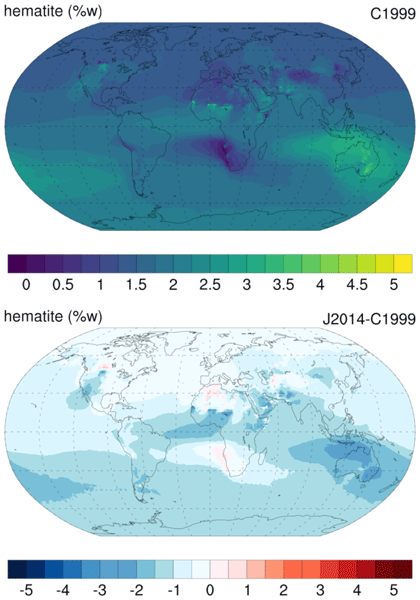
María Gonçalves Ageitos, Vincenzo Obiso, Ron L. Miller, Oriol Jorba, Martina Klose, Matt Dawson, Yves Balkanski, Jan Perlwitz, Sara Basart, Enza Di Tomaso, Jerónimo Escribano, Francesca Macchia, Gilbert Montané, Natalie M. Mahowald, Robert O. Green, David R. Thompson, and Carlos Pérez García-Pando
Atmos. Chem. Phys., 23, 8623–8657, https://doi.org/10.5194/acp-23-8623-2023, https://doi.org/10.5194/acp-23-8623-2023, 2023
Short summary
Short summary
Dust aerosols affect our climate differently depending on their mineral composition. We include dust mineralogy in an atmospheric model considering two existing soil maps, which still have large associated uncertainties. The soil data and the distribution of the minerals in different aerosol sizes are key to our model performance. We find significant regional variations in climate-relevant variables, which supports including mineralogy in our current models and the need for improved soil maps.
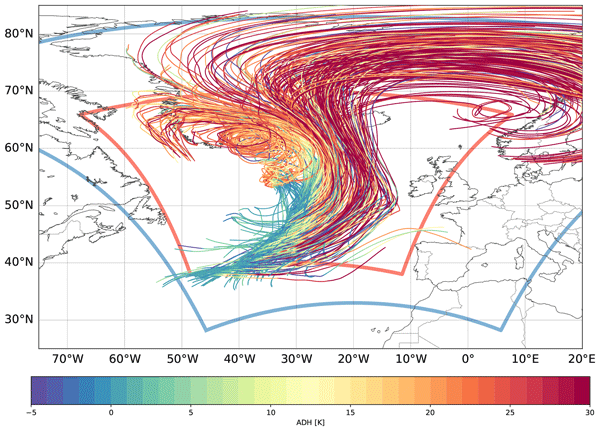
Annika Oertel, Annette K. Miltenberger, Christian M. Grams, and Corinna Hoose
Atmos. Chem. Phys., 23, 8553–8581, https://doi.org/10.5194/acp-23-8553-2023, https://doi.org/10.5194/acp-23-8553-2023, 2023
Short summary
Short summary
Warm conveyor belts (WCBs) are cloud- and precipitation-producing airstreams in extratropical cyclones that are important for the large-scale flow and cloud radiative forcing. We analyze cloud formation processes during WCB ascent in a two-moment microphysics scheme. Quantification of individual diabatic heating rates shows the importance of condensation, vapor deposition, rain evaporation, melting, and cloud-top radiative cooling for total heating and WCB-related potential vorticity structure.
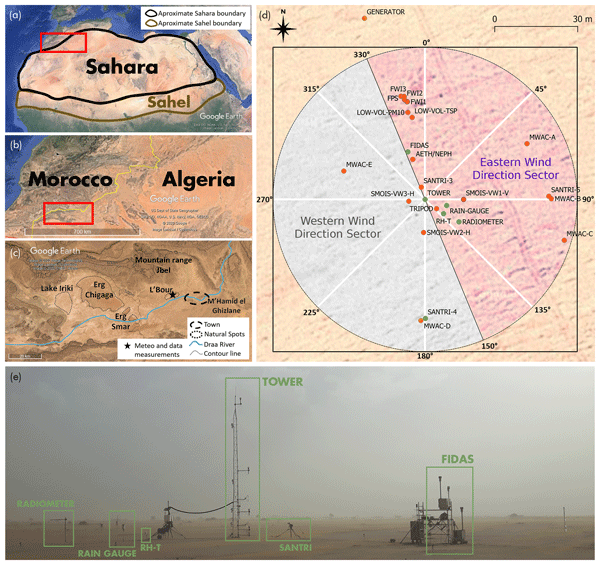
Cristina González-Flórez, Martina Klose, Andrés Alastuey, Sylvain Dupont, Jerónimo Escribano, Vicken Etyemezian, Adolfo Gonzalez-Romero, Yue Huang, Konrad Kandler, George Nikolich, Agnesh Panta, Xavier Querol, Cristina Reche, Jesús Yus-Díez, and Carlos Pérez García-Pando
Atmos. Chem. Phys., 23, 7177–7212, https://doi.org/10.5194/acp-23-7177-2023, https://doi.org/10.5194/acp-23-7177-2023, 2023
Short summary
Short summary
Atmospheric mineral dust consists of tiny mineral particles that are emitted by wind erosion from arid regions. Its particle size distribution (PSD) affects its impact on the Earth's system. Nowadays, there is an incomplete understanding of the emitted dust PSD and a lot of debate about its variability. Here, we try to address these issues based on the measurements performed during a wind erosion and dust emission field campaign in the Moroccan Sahara within the framework of FRAGMENT project.
Christian Scharun, Roland Ruhnke, and Peter Braesicke
Geosci. Model Dev. Discuss., https://doi.org/10.5194/gmd-2023-91, https://doi.org/10.5194/gmd-2023-91, 2023
Publication in GMD not foreseen
Short summary
Short summary
The identification and quantification of greenhouse gas (GHG) emissions is an important task for monitoring mitigation strategies under climate change. With RICHARD 1.0, we developed a novel approach using spatiotemporal proxy data and a selection algorithm to detect GHG emission hotspots. By using a one year dataset of global climate model output we showed that RICHARD is able to determine and quantify the source strengths of GHG emission hotspots much more precisely than conventional methods.
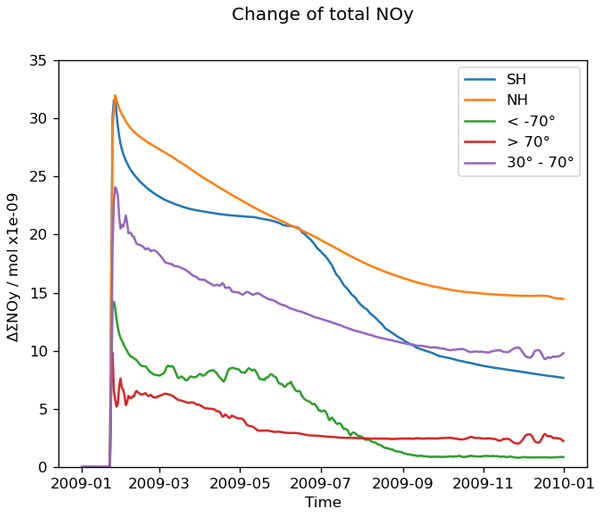
Thomas Reddmann, Miriam Sinnhuber, Jan Maik Wissing, Olesya Yakovchuk, and Ilya Usoskin
Atmos. Chem. Phys., 23, 6989–7000, https://doi.org/10.5194/acp-23-6989-2023, https://doi.org/10.5194/acp-23-6989-2023, 2023
Short summary
Short summary
Recent analyses of isotopic records of ice cores and sediments have shown that very strong explosions may occur on the Sun, perhaps about one such explosion every 1000 years. Such explosions pose a real threat to humankind. It is therefore of great interest to study the impact of such explosions on Earth. We analyzed how the explosions would affect the chemistry of the middle atmosphere and show that the related ozone loss is not dramatic and that the atmosphere will recover within 1 year.
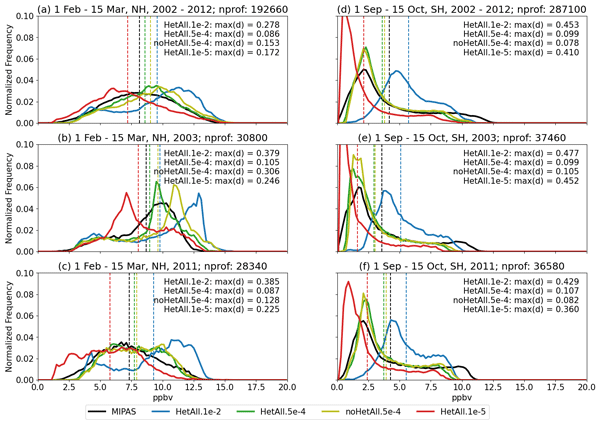
Michael Weimer, Douglas E. Kinnison, Catherine Wilka, and Susan Solomon
Atmos. Chem. Phys., 23, 6849–6861, https://doi.org/10.5194/acp-23-6849-2023, https://doi.org/10.5194/acp-23-6849-2023, 2023
Short summary
Short summary
We investigate the influence of the number density of nitric acid trihydrate (NAT) particles on associated trace gases in the lower stratosphere using data from a satellite, ozonesondes and simulations by a community chemistry climate model. By comparing probability density functions between observations and the model, we find that the standard NAT number density should be reduced for future simulations with the model.
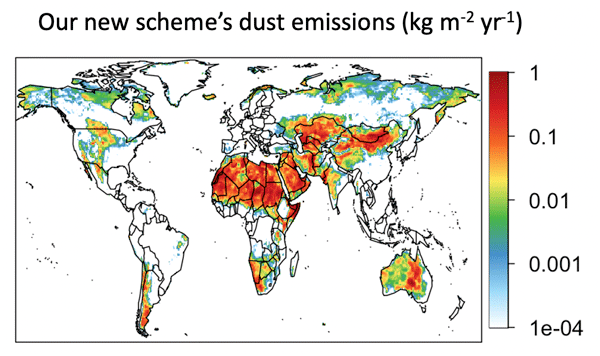
Danny M. Leung, Jasper F. Kok, Longlei Li, Gregory S. Okin, Catherine Prigent, Martina Klose, Carlos Pérez García-Pando, Laurent Menut, Natalie M. Mahowald, David M. Lawrence, and Marcelo Chamecki
Atmos. Chem. Phys., 23, 6487–6523, https://doi.org/10.5194/acp-23-6487-2023, https://doi.org/10.5194/acp-23-6487-2023, 2023
Short summary
Short summary
Desert dust modeling is important for understanding climate change, as dust regulates the atmosphere's greenhouse effect and radiation. This study formulates and proposes a more physical and realistic desert dust emission scheme for global and regional climate models. By considering more aeolian processes in our emission scheme, our simulations match better against dust observations than existing schemes. We believe this work is vital in improving dust representation in climate models.
Axel Seifert, Vanessa Bachmann, Florian Filipitsch, Jochen Förstner, Christian M. Grams, Gholam Ali Hoshyaripour, Julian Quinting, Anika Rohde, Heike Vogel, Annette Wagner, and Bernhard Vogel
Atmos. Chem. Phys., 23, 6409–6430, https://doi.org/10.5194/acp-23-6409-2023, https://doi.org/10.5194/acp-23-6409-2023, 2023
Short summary
Short summary
We investigate how mineral dust can lead to the formation of cirrus clouds. Dusty cirrus clouds lead to a reduction in solar radiation at the surface and, hence, a reduced photovoltaic power generation. Current weather prediction systems are not able to predict this interaction between mineral dust and cirrus clouds. We have developed a new physical description of the formation of dusty cirrus clouds. Overall we can show a considerable improvement in the forecast quality of clouds and radiation.

Patrick Ludwig, Florian Ehmele, Mário J. Franca, Susanna Mohr, Alberto Caldas-Alvarez, James E. Daniell, Uwe Ehret, Hendrik Feldmann, Marie Hundhausen, Peter Knippertz, Katharina Küpfer, Michael Kunz, Bernhard Mühr, Joaquim G. Pinto, Julian Quinting, Andreas M. Schäfer, Frank Seidel, and Christina Wisotzky
Nat. Hazards Earth Syst. Sci., 23, 1287–1311, https://doi.org/10.5194/nhess-23-1287-2023, https://doi.org/10.5194/nhess-23-1287-2023, 2023
Short summary
Short summary
Heavy precipitation in July 2021 led to widespread floods in western Germany and neighboring countries. The event was among the five heaviest precipitation events of the past 70 years in Germany, and the river discharges exceeded by far the statistical 100-year return values. Simulations of the event under future climate conditions revealed a strong and non-linear effect on flood peaks: for +2 K global warming, an 18 % increase in rainfall led to a 39 % increase of the flood peak in the Ahr river.
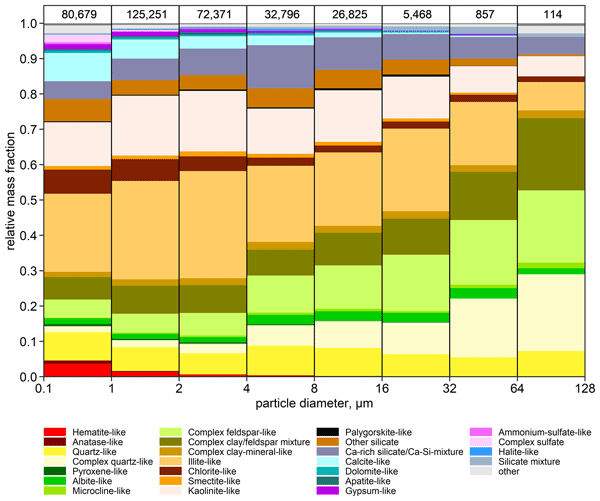
Agnesh Panta, Konrad Kandler, Andres Alastuey, Cristina González-Flórez, Adolfo González-Romero, Martina Klose, Xavier Querol, Cristina Reche, Jesús Yus-Díez, and Carlos Pérez García-Pando
Atmos. Chem. Phys., 23, 3861–3885, https://doi.org/10.5194/acp-23-3861-2023, https://doi.org/10.5194/acp-23-3861-2023, 2023
Short summary
Short summary
Desert dust is a major aerosol component of the Earth system and affects the climate. Dust properties are influenced by particle size, mineralogy, shape, and mixing state. This work characterizes freshly emitted individual mineral dust particles from a major source region using electron microscopy. Our new insights into critical particle-specific information will contribute to better constraining climate models that consider mineralogical variations in their representation of the dust cycle.
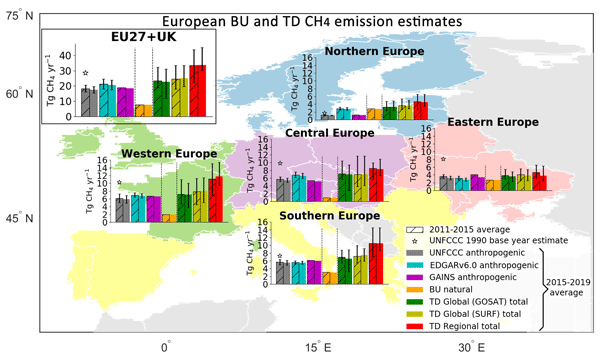
Ana Maria Roxana Petrescu, Chunjing Qiu, Matthew J. McGrath, Philippe Peylin, Glen P. Peters, Philippe Ciais, Rona L. Thompson, Aki Tsuruta, Dominik Brunner, Matthias Kuhnert, Bradley Matthews, Paul I. Palmer, Oksana Tarasova, Pierre Regnier, Ronny Lauerwald, David Bastviken, Lena Höglund-Isaksson, Wilfried Winiwarter, Giuseppe Etiope, Tuula Aalto, Gianpaolo Balsamo, Vladislav Bastrikov, Antoine Berchet, Patrick Brockmann, Giancarlo Ciotoli, Giulia Conchedda, Monica Crippa, Frank Dentener, Christine D. Groot Zwaaftink, Diego Guizzardi, Dirk Günther, Jean-Matthieu Haussaire, Sander Houweling, Greet Janssens-Maenhout, Massaer Kouyate, Adrian Leip, Antti Leppänen, Emanuele Lugato, Manon Maisonnier, Alistair J. Manning, Tiina Markkanen, Joe McNorton, Marilena Muntean, Gabriel D. Oreggioni, Prabir K. Patra, Lucia Perugini, Isabelle Pison, Maarit T. Raivonen, Marielle Saunois, Arjo J. Segers, Pete Smith, Efisio Solazzo, Hanqin Tian, Francesco N. Tubiello, Timo Vesala, Guido R. van der Werf, Chris Wilson, and Sönke Zaehle
Earth Syst. Sci. Data, 15, 1197–1268, https://doi.org/10.5194/essd-15-1197-2023, https://doi.org/10.5194/essd-15-1197-2023, 2023
Short summary
Short summary
This study updates the state-of-the-art scientific overview of CH4 and N2O emissions in the EU27 and UK in Petrescu et al. (2021a). Yearly updates are needed to improve the different respective approaches and to inform on the development of formal verification systems. It integrates the most recent emission inventories, process-based model and regional/global inversions, comparing them with UNFCCC national GHG inventories, in support to policy to facilitate real-time verification procedures.
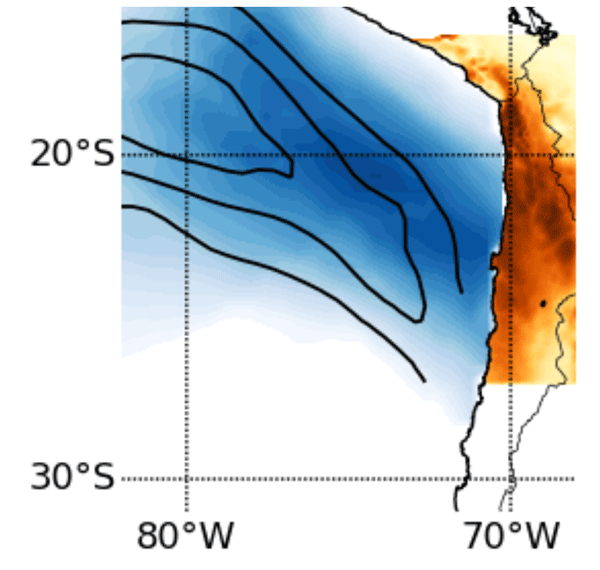
Mark Reyers, Stephanie Fiedler, Patrick Ludwig, Christoph Böhm, Volker Wennrich, and Yaping Shao
Clim. Past, 19, 517–532, https://doi.org/10.5194/cp-19-517-2023, https://doi.org/10.5194/cp-19-517-2023, 2023
Short summary
Short summary
In this study we performed high-resolution climate model simulations for the hyper-arid Atacama Desert for the mid-Pliocene (3.2 Ma). The aim is to uncover the atmospheric processes that are involved in the enhancement of strong rainfall events during this period. We find that strong upper-level moisture fluxes (so-called moisture conveyor belts) originating in the tropical eastern Pacific are the main driver for increased rainfall in the mid-Pliocene.
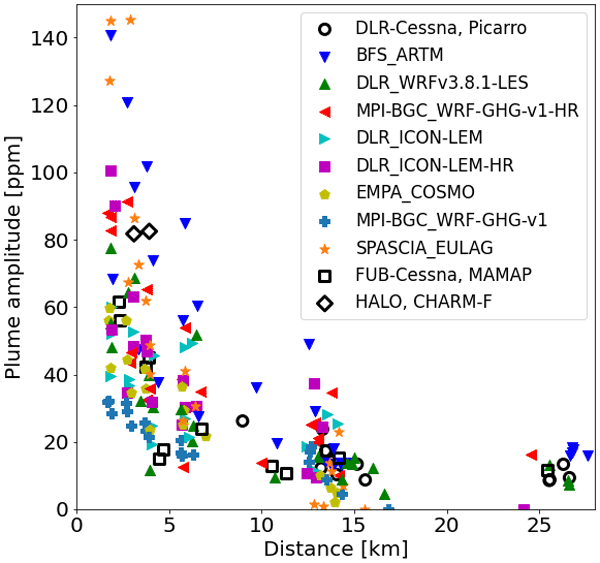
Dominik Brunner, Gerrit Kuhlmann, Stephan Henne, Erik Koene, Bastian Kern, Sebastian Wolff, Christiane Voigt, Patrick Jöckel, Christoph Kiemle, Anke Roiger, Alina Fiehn, Sven Krautwurst, Konstantin Gerilowski, Heinrich Bovensmann, Jakob Borchardt, Michal Galkowski, Christoph Gerbig, Julia Marshall, Andrzej Klonecki, Pascal Prunet, Robert Hanfland, Margit Pattantyús-Ábrahám, Andrzej Wyszogrodzki, and Andreas Fix
Atmos. Chem. Phys., 23, 2699–2728, https://doi.org/10.5194/acp-23-2699-2023, https://doi.org/10.5194/acp-23-2699-2023, 2023
Short summary
Short summary
We evaluated six atmospheric transport models for their capability to simulate the CO2 plumes from two of the largest power plants in Europe by comparing the models against aircraft observations collected during the CoMet (Carbon Dioxide and Methane Mission) campaign in 2018. The study analyzed how realistically such plumes can be simulated at different model resolutions and how well the planned European satellite mission CO2M will be able to quantify emissions from power plants.
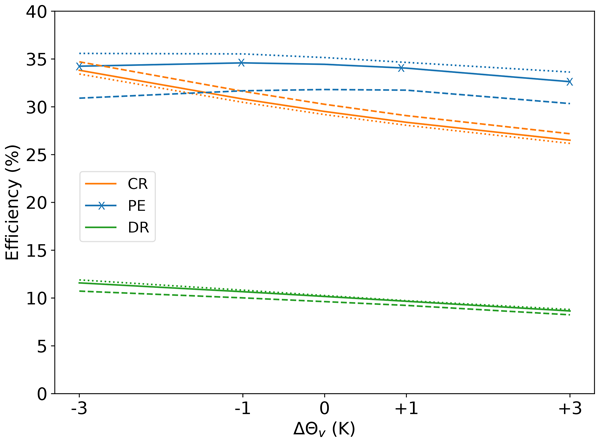
Julia Thomas, Andrew Barrett, and Corinna Hoose
Atmos. Chem. Phys., 23, 1987–2002, https://doi.org/10.5194/acp-23-1987-2023, https://doi.org/10.5194/acp-23-1987-2023, 2023
Short summary
Short summary
We study the sensitivity of rain formation processes during a heavy-rainfall event over mountains to changes in temperature and pollution. Total rainfall increases by 2 % K−1, and a 6 % K−1 increase is found at the highest altitudes, caused by a mixed-phase seeder–feeder mechanism (frozen cloud particles melt and grow further as they fall through a liquid cloud layer). In a cleaner atmosphere this process is enhanced. Thus the risk of severe rainfall in mountains may increase in the future.
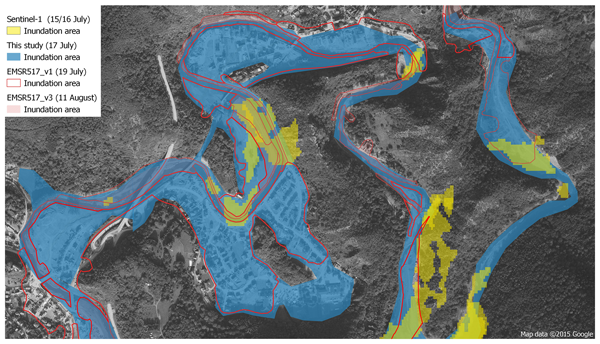
Susanna Mohr, Uwe Ehret, Michael Kunz, Patrick Ludwig, Alberto Caldas-Alvarez, James E. Daniell, Florian Ehmele, Hendrik Feldmann, Mário J. Franca, Christian Gattke, Marie Hundhausen, Peter Knippertz, Katharina Küpfer, Bernhard Mühr, Joaquim G. Pinto, Julian Quinting, Andreas M. Schäfer, Marc Scheibel, Frank Seidel, and Christina Wisotzky
Nat. Hazards Earth Syst. Sci., 23, 525–551, https://doi.org/10.5194/nhess-23-525-2023, https://doi.org/10.5194/nhess-23-525-2023, 2023
Short summary
Short summary
The flood event in July 2021 was one of the most severe disasters in Europe in the last half century. The objective of this two-part study is a multi-disciplinary assessment that examines the complex process interactions in different compartments, from meteorology to hydrological conditions to hydro-morphological processes to impacts on assets and environment. In addition, we address the question of what measures are possible to generate added value to early response management.
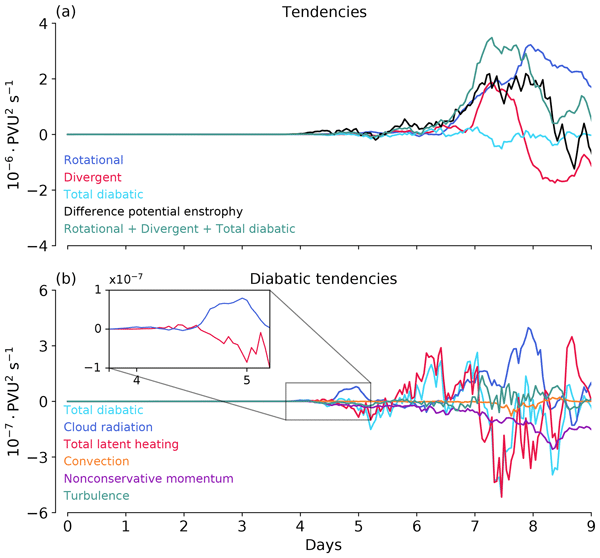
Behrooz Keshtgar, Aiko Voigt, Corinna Hoose, Michael Riemer, and Bernhard Mayer
Weather Clim. Dynam., 4, 115–132, https://doi.org/10.5194/wcd-4-115-2023, https://doi.org/10.5194/wcd-4-115-2023, 2023
Short summary
Short summary
Forecasting extratropical cyclones is challenging due to many physical factors influencing their behavior. One such factor is the impact of heating and cooling of the atmosphere by the interaction between clouds and radiation. In this study, we show that cloud-radiative heating (CRH) increases the intensity of an idealized cyclone and affects its predictability. We find that CRH affects the cyclone mostly via increasing latent heat release and subsequent changes in the synoptic circulation.
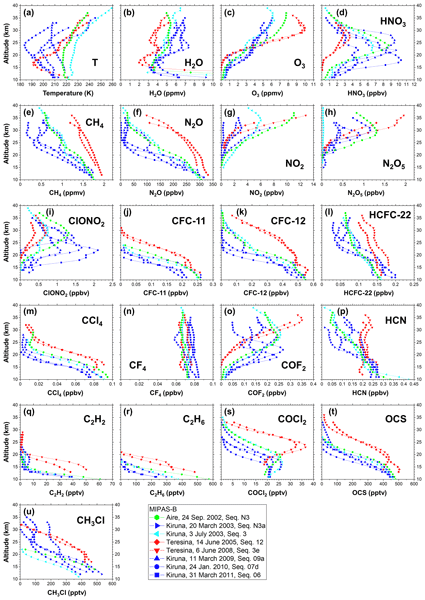
Gerald Wetzel, Michael Höpfner, Hermann Oelhaf, Felix Friedl-Vallon, Anne Kleinert, Guido Maucher, Miriam Sinnhuber, Janna Abalichin, Angelika Dehn, and Piera Raspollini
Atmos. Meas. Tech., 15, 6669–6704, https://doi.org/10.5194/amt-15-6669-2022, https://doi.org/10.5194/amt-15-6669-2022, 2022
Short summary
Short summary
Satellite measurements of stratospheric trace gases are essential for monitoring distributions and trends of these species on a global scale. Here, we compare the final MIPAS ESA Level 2 version 8 data (temperature and trace gases) with measurements obtained with the balloon version of MIPAS in terms of data agreement of both sensors, including combined errors. For most gases, we find a 5 % to 20 % agreement of the retrieved vertical profiles of both MIPAS instruments in the lower stratosphere.
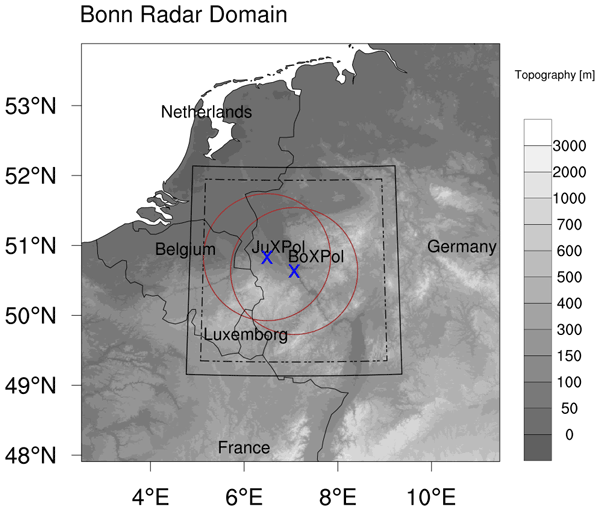
Prabhakar Shrestha, Jana Mendrok, and Dominik Brunner
Atmos. Chem. Phys., 22, 14095–14117, https://doi.org/10.5194/acp-22-14095-2022, https://doi.org/10.5194/acp-22-14095-2022, 2022
Short summary
Short summary
The study extends the Terrestrial Systems Modeling Platform with gas-phase chemistry aerosol dynamics and a radar forward operator to enable detailed studies of aerosol–cloud–precipitation interactions. This is demonstrated using a case study of a deep convective storm, which showed that the strong updraft in the convective core of the storm produced aerosol-tower-like features, which affected the size of the hydrometeors and the simulated polarimetric features (e.g., ZDR and KDP columns).
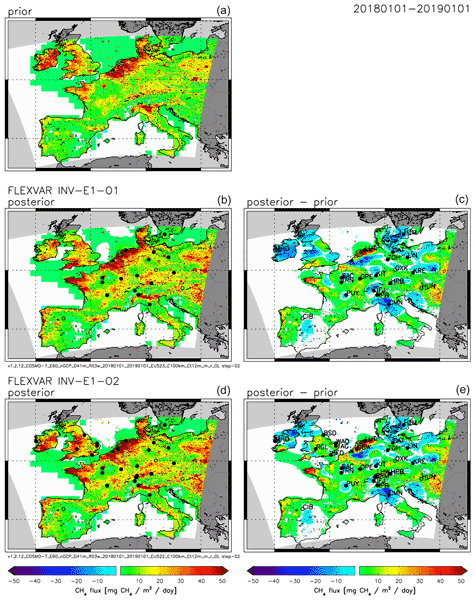
Peter Bergamaschi, Arjo Segers, Dominik Brunner, Jean-Matthieu Haussaire, Stephan Henne, Michel Ramonet, Tim Arnold, Tobias Biermann, Huilin Chen, Sebastien Conil, Marc Delmotte, Grant Forster, Arnoud Frumau, Dagmar Kubistin, Xin Lan, Markus Leuenberger, Matthias Lindauer, Morgan Lopez, Giovanni Manca, Jennifer Müller-Williams, Simon O'Doherty, Bert Scheeren, Martin Steinbacher, Pamela Trisolino, Gabriela Vítková, and Camille Yver Kwok
Atmos. Chem. Phys., 22, 13243–13268, https://doi.org/10.5194/acp-22-13243-2022, https://doi.org/10.5194/acp-22-13243-2022, 2022
Short summary
Short summary
We present a novel high-resolution inverse modelling system, "FLEXVAR", and its application for the inverse modelling of European CH4 emissions in 2018. The new system combines a high spatial resolution of 7 km x 7 km with a variational data assimilation technique, which allows CH4 emissions to be optimized from individual model grid cells. The high resolution allows the observations to be better reproduced, while the derived emissions show overall good consistency with two existing models.
Ákos Horváth, James L. Carr, Dong L. Wu, Julia Bruckert, Gholam Ali Hoshyaripour, and Stefan A. Buehler
Atmos. Chem. Phys., 22, 12311–12330, https://doi.org/10.5194/acp-22-12311-2022, https://doi.org/10.5194/acp-22-12311-2022, 2022
Short summary
Short summary
We estimate plume heights for the April 2021 La Soufrière daytime eruptions using GOES-17 near-limb side views and GOES-16–MODIS stereo views. These geometric heights are then compared with brightness-temperature-based radiometric height estimates to characterize the biases of the latter. We also show that the side view method can be applied to infrared imagery and thus nighttime eruptions, albeit with larger uncertainty.
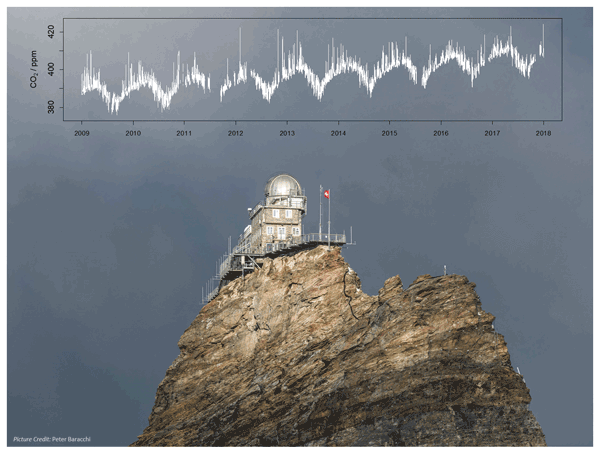
Simone M. Pieber, Béla Tuzson, Stephan Henne, Ute Karstens, Christoph Gerbig, Frank-Thomas Koch, Dominik Brunner, Martin Steinbacher, and Lukas Emmenegger
Atmos. Chem. Phys., 22, 10721–10749, https://doi.org/10.5194/acp-22-10721-2022, https://doi.org/10.5194/acp-22-10721-2022, 2022
Short summary
Short summary
Understanding regional greenhouse gas emissions into the atmosphere is a prerequisite to mitigate climate change. In this study, we investigated the regional contributions of carbon dioxide (CO2) at the location of the high Alpine observatory Jungfraujoch (JFJ, Switzerland, 3580 m a.s.l.). To this purpose, we combined receptor-oriented atmospheric transport simulations for CO2 concentration in the period 2009–2017 with stable carbon isotope (δ13C–CO2) information.

Natalia E. Chubarova, Heike Vogel, Elizaveta E. Androsova, Alexander A. Kirsanov, Olga B. Popovicheva, Bernhard Vogel, and Gdaliy S. Rivin
Atmos. Chem. Phys., 22, 10443–10466, https://doi.org/10.5194/acp-22-10443-2022, https://doi.org/10.5194/acp-22-10443-2022, 2022
Short summary
Short summary
Effects of urban aerosol pollution in Moscow were analyzed using the COSMO-ART chemical transport model and intensive measurement campaigns. We show that urban aerosol comprises about 15–20% of columnar aerosol content, consisting mainly of fine aerosol mode. The black carbon (BC) fraction is about 5 %, depending on particle dispersion intensity (IPD). The BC fraction low value explains weak absorbing properties of the Moscow atmosphere. IPD also defines the daily cycle of urban aerosol species.
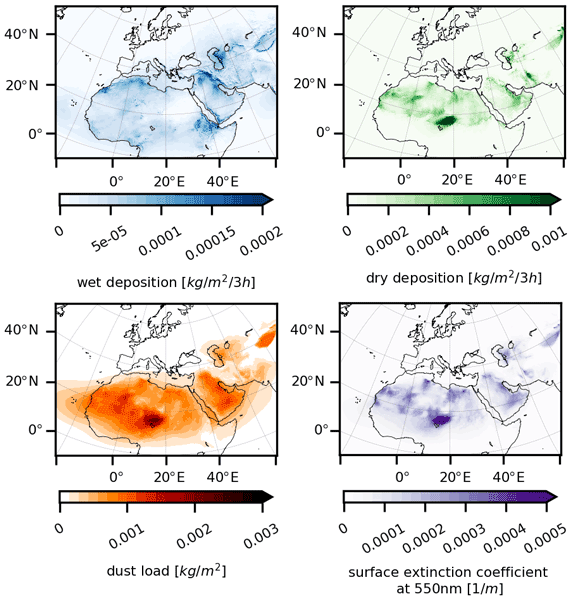
Enza Di Tomaso, Jerónimo Escribano, Sara Basart, Paul Ginoux, Francesca Macchia, Francesca Barnaba, Francesco Benincasa, Pierre-Antoine Bretonnière, Arnau Buñuel, Miguel Castrillo, Emilio Cuevas, Paola Formenti, María Gonçalves, Oriol Jorba, Martina Klose, Lucia Mona, Gilbert Montané Pinto, Michail Mytilinaios, Vincenzo Obiso, Miriam Olid, Nick Schutgens, Athanasios Votsis, Ernest Werner, and Carlos Pérez García-Pando
Earth Syst. Sci. Data, 14, 2785–2816, https://doi.org/10.5194/essd-14-2785-2022, https://doi.org/10.5194/essd-14-2785-2022, 2022
Short summary
Short summary
MONARCH reanalysis of desert dust aerosols extends the existing observation-based information for mineral dust monitoring by providing 3-hourly upper-air, surface and total column key geophysical variables of the dust cycle over Northern Africa, the Middle East and Europe, at a 0.1° horizontal resolution in a rotated grid, from 2007 to 2016. This work provides evidence of the high accuracy of this data set and its suitability for air quality and health and climate service applications.
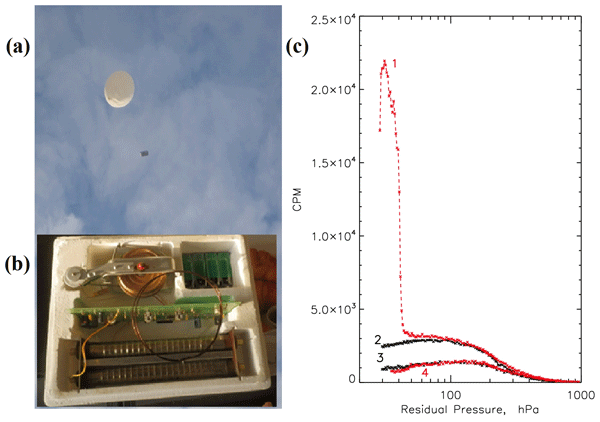
Irina Mironova, Miriam Sinnhuber, Galina Bazilevskaya, Mark Clilverd, Bernd Funke, Vladimir Makhmutov, Eugene Rozanov, Michelle L. Santee, Timofei Sukhodolov, and Thomas Ulich
Atmos. Chem. Phys., 22, 6703–6716, https://doi.org/10.5194/acp-22-6703-2022, https://doi.org/10.5194/acp-22-6703-2022, 2022
Short summary
Short summary
From balloon measurements, we detected unprecedented, extremely powerful, electron precipitation over the middle latitudes. The robustness of this event is confirmed by satellite observations of electron fluxes and chemical composition, as well as by ground-based observations of the radio signal propagation. The applied chemistry–climate model shows the almost complete destruction of ozone in the mesosphere over the region where high-energy electrons were observed.

Emmanuele Russo, Bijan Fallah, Patrick Ludwig, Melanie Karremann, and Christoph C. Raible
Clim. Past, 18, 895–909, https://doi.org/10.5194/cp-18-895-2022, https://doi.org/10.5194/cp-18-895-2022, 2022
Short summary
Short summary
In this study a set of simulations are performed with the regional climate model COSMO-CLM for Europe, for the mid-Holocene and pre-industrial periods. The main aim is to better understand the drivers of differences between models and pollen-based summer temperatures. Results show that a fundamental role is played by spring soil moisture availability. Additionally, results suggest that model bias is not stationary, and an optimal configuration could not be the best under different forcing.
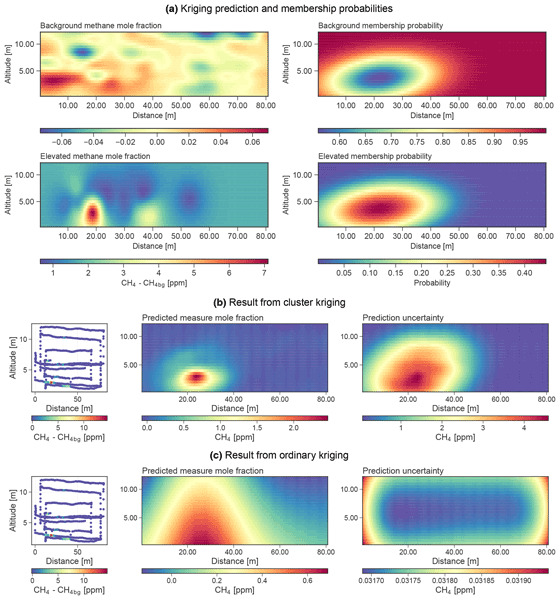
Randulph Morales, Jonas Ravelid, Katarina Vinkovic, Piotr Korbeń, Béla Tuzson, Lukas Emmenegger, Huilin Chen, Martina Schmidt, Sebastian Humbel, and Dominik Brunner
Atmos. Meas. Tech., 15, 2177–2198, https://doi.org/10.5194/amt-15-2177-2022, https://doi.org/10.5194/amt-15-2177-2022, 2022
Short summary
Short summary
Mapping trace gas emission plumes using in situ measurements from unmanned aerial vehicles (UAVs) is an emerging and attractive possibility to quantify emissions from localized sources. We performed an extensive controlled-release experiment to develop an optimal quantification method and to determine the related uncertainties under various environmental and sampling conditions. Our approach was successful in quantifying local methane sources from drone-based measurements.
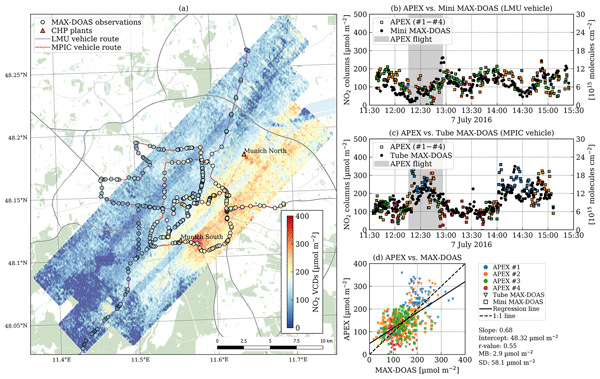
Gerrit Kuhlmann, Ka Lok Chan, Sebastian Donner, Ying Zhu, Marc Schwaerzel, Steffen Dörner, Jia Chen, Andreas Hueni, Duc Hai Nguyen, Alexander Damm, Annette Schütt, Florian Dietrich, Dominik Brunner, Cheng Liu, Brigitte Buchmann, Thomas Wagner, and Mark Wenig
Atmos. Meas. Tech., 15, 1609–1629, https://doi.org/10.5194/amt-15-1609-2022, https://doi.org/10.5194/amt-15-1609-2022, 2022
Short summary
Short summary
Nitrogen dioxide (NO2) is an air pollutant whose concentration often exceeds air quality guideline values, especially in urban areas. To map the spatial distribution of NO2 in Munich, we conducted the Munich NO2 Imaging Campaign (MuNIC), where NO2 was measured with stationary, mobile, and airborne in situ and remote sensing instruments. The campaign provides a unique dataset that has been used to compare the different instruments and to study the spatial variability of NO2 and its sources.
Julia Bruckert, Gholam Ali Hoshyaripour, Ákos Horváth, Lukas O. Muser, Fred J. Prata, Corinna Hoose, and Bernhard Vogel
Atmos. Chem. Phys., 22, 3535–3552, https://doi.org/10.5194/acp-22-3535-2022, https://doi.org/10.5194/acp-22-3535-2022, 2022
Short summary
Short summary
Volcanic emissions endanger aviation and public health and also influence weather and climate. Forecasting the volcanic-plume dispersion is therefore a critical yet sophisticated task. Here, we show that explicit treatment of volcanic-plume dynamics and eruption source parameters significantly improves volcanic-plume dispersion forecasts. We further demonstrate the lofting of the SO2 due to a heating of volcanic particles by sunlight with major implications for volcanic aerosol research.
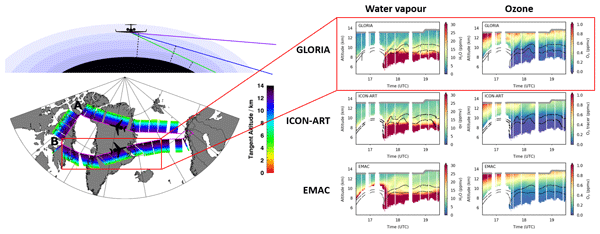
Florian Haenel, Wolfgang Woiwode, Jennifer Buchmüller, Felix Friedl-Vallon, Michael Höpfner, Sören Johansson, Farahnaz Khosrawi, Oliver Kirner, Anne Kleinert, Hermann Oelhaf, Johannes Orphal, Roland Ruhnke, Björn-Martin Sinnhuber, Jörn Ungermann, Michael Weimer, and Peter Braesicke
Atmos. Chem. Phys., 22, 2843–2870, https://doi.org/10.5194/acp-22-2843-2022, https://doi.org/10.5194/acp-22-2843-2022, 2022
Short summary
Short summary
We compare remote sensing observations of H2O, O3, HNO3 and clouds in the upper troposphere–lowermost stratosphere during an Arctic winter long-range research flight with simulations by two different state-of-the-art model systems. We find good agreement for dynamical structures, trace gas distributions and clouds. We investigate model biases and sensitivities, with the goal of aiding model development and improving our understanding of processes in the upper troposphere–lowermost stratosphere.
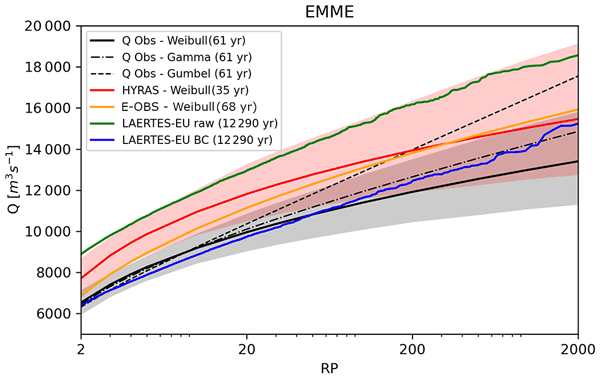
Florian Ehmele, Lisa-Ann Kautz, Hendrik Feldmann, Yi He, Martin Kadlec, Fanni D. Kelemen, Hilke S. Lentink, Patrick Ludwig, Desmond Manful, and Joaquim G. Pinto
Nat. Hazards Earth Syst. Sci., 22, 677–692, https://doi.org/10.5194/nhess-22-677-2022, https://doi.org/10.5194/nhess-22-677-2022, 2022
Short summary
Short summary
For various applications, it is crucial to have profound knowledge of the frequency, severity, and risk of extreme flood events. Such events are characterized by very long return periods which observations can not cover. We use a large ensemble of regional climate model simulations as input for a hydrological model. Precipitation data were post-processed to reduce systematic errors. The representation of precipitation and discharge is improved, and estimates of long return periods become robust.

Sheena Loeffel, Roland Eichinger, Hella Garny, Thomas Reddmann, Frauke Fritsch, Stefan Versick, Gabriele Stiller, and Florian Haenel
Atmos. Chem. Phys., 22, 1175–1193, https://doi.org/10.5194/acp-22-1175-2022, https://doi.org/10.5194/acp-22-1175-2022, 2022
Short summary
Short summary
SF6-derived trends of stratospheric AoA from observations and model simulations disagree in sign. SF6 experiences chemical degradation, which we explicitly integrate in a global climate model. In our simulations, the AoA trend changes sign when SF6 sinks are considered; thus, the process has the potential to reconcile simulated with observed AoA trends. We show that the positive AoA trend is due to the SF6 sinks themselves and provide a first approach for a correction to account for SF6 loss.
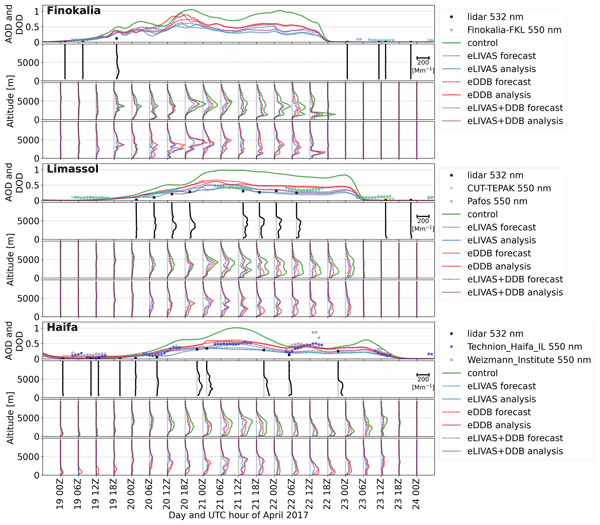
Jerónimo Escribano, Enza Di Tomaso, Oriol Jorba, Martina Klose, Maria Gonçalves Ageitos, Francesca Macchia, Vassilis Amiridis, Holger Baars, Eleni Marinou, Emmanouil Proestakis, Claudia Urbanneck, Dietrich Althausen, Johannes Bühl, Rodanthi-Elisavet Mamouri, and Carlos Pérez García-Pando
Atmos. Chem. Phys., 22, 535–560, https://doi.org/10.5194/acp-22-535-2022, https://doi.org/10.5194/acp-22-535-2022, 2022
Short summary
Short summary
We explore the benefits and consistency in adding lidar dust observations in a dust optical depth assimilation. We show that adding lidar data to a dust optical depth assimilation has valuable benefits and the dust analysis improves. We discuss the impact of the narrow satellite footprint of the lidar dust observations on the assimilation.
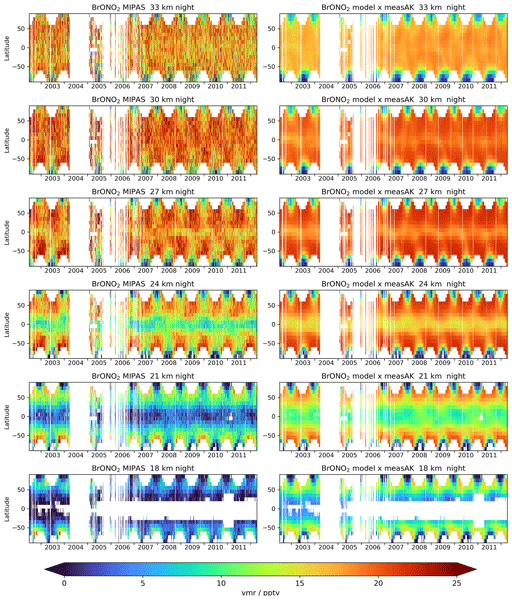
Michael Höpfner, Oliver Kirner, Gerald Wetzel, Björn-Martin Sinnhuber, Florian Haenel, Sören Johansson, Johannes Orphal, Roland Ruhnke, Gabriele Stiller, and Thomas von Clarmann
Atmos. Chem. Phys., 21, 18433–18464, https://doi.org/10.5194/acp-21-18433-2021, https://doi.org/10.5194/acp-21-18433-2021, 2021
Short summary
Short summary
BrONO2 is an important reservoir gas for inorganic stratospheric bromine linked to the chemical cycles of stratospheric ozone depletion. Presently infrared limb sounding is the only way to measure BrONO2 in the atmosphere. We provide global distributions of BrONO2 derived from MIPAS observations 2002–2012. Comparisons with EMAC atmospheric modelling show an overall agreement and enable us to derive an independent estimate of stratospheric bromine of 21.2±1.4pptv based on the BrONO2 measurements.
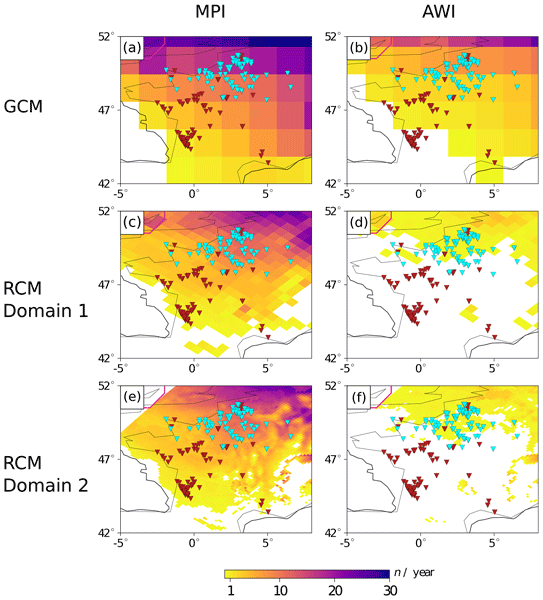
Kim H. Stadelmaier, Patrick Ludwig, Pascal Bertran, Pierre Antoine, Xiaoxu Shi, Gerrit Lohmann, and Joaquim G. Pinto
Clim. Past, 17, 2559–2576, https://doi.org/10.5194/cp-17-2559-2021, https://doi.org/10.5194/cp-17-2559-2021, 2021
Short summary
Short summary
We use regional climate simulations for the Last Glacial Maximum to reconstruct permafrost and to identify areas of thermal contraction cracking of the ground in western Europe. We find ground cracking, a precondition for the development of permafrost proxies, south of the probable permafrost border, implying that permafrost was not the limiting factor for proxy development. A good agreement with permafrost and climate proxy data is achieved when easterly winds are modelled more frequently.
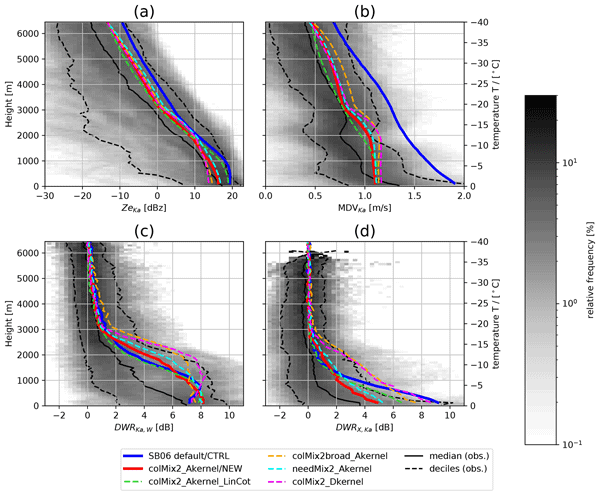
Markus Karrer, Axel Seifert, Davide Ori, and Stefan Kneifel
Atmos. Chem. Phys., 21, 17133–17166, https://doi.org/10.5194/acp-21-17133-2021, https://doi.org/10.5194/acp-21-17133-2021, 2021
Short summary
Short summary
Modeling precipitation is of great relevance, e.g., for mitigating damage caused by extreme weather. A key component in accurate precipitation modeling is aggregation, i.e., sticking together of snowflakes. Simulating aggregation is difficult due to multiple parameters that are not well-known. Knowing how these parameters affect aggregation can help its simulation. We put new parameters in the model and select a combination of parameters with which the model can simulate observations better.
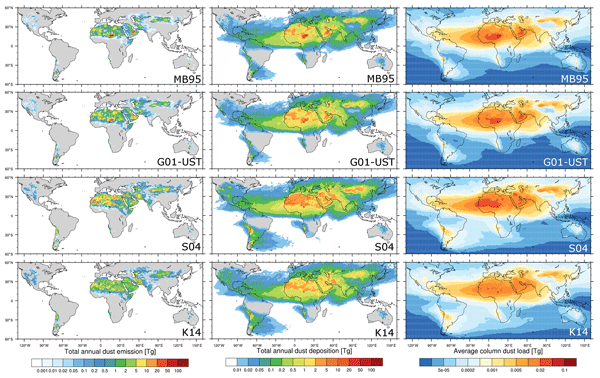
Martina Klose, Oriol Jorba, María Gonçalves Ageitos, Jeronimo Escribano, Matthew L. Dawson, Vincenzo Obiso, Enza Di Tomaso, Sara Basart, Gilbert Montané Pinto, Francesca Macchia, Paul Ginoux, Juan Guerschman, Catherine Prigent, Yue Huang, Jasper F. Kok, Ron L. Miller, and Carlos Pérez García-Pando
Geosci. Model Dev., 14, 6403–6444, https://doi.org/10.5194/gmd-14-6403-2021, https://doi.org/10.5194/gmd-14-6403-2021, 2021
Short summary
Short summary
Mineral soil dust is a major atmospheric airborne particle type. We present and evaluate MONARCH, a model used for regional and global dust-weather prediction. An important feature of the model is that it allows different approximations to represent dust, ranging from more simplified to more complex treatments. Using these different treatments, MONARCH can help us better understand impacts of dust in the Earth system, such as its interactions with radiation.
Cited articles
Abdul-Razzak, H. and Ghan, S. J.: A parameterization of aerosol activation: 2. Multiple aerosol types, Journal of Geophysical Research: Atmospheres, 105, 6837–6844, 2000. a
Abdul-Razzak, H., Ghan, S. J., and Rivera-Carpio, C.: A parameterization of aerosol activation: 1. Single aerosol type, Journal of Geophysical Research: Atmospheres, 103, 6123–6131, 1998. a
Adamov, S. and Pauling, A.: A real-time calibration method for the numerical pollen forecast model COSMO-ART, Aerobiologia, 39, 327–344, https://doi.org/10.1007/s10453-023-09796-5, 2023. a
Adebiyi, A. A., Kok, J. F., Murray, B. J., Ryder, C. L., Stuut, J.-B. W., Kahn, R. A., Knippertz, P., Formenti, P., Mahowald, N. M., Pérez García-Pando, C., Klose, M., Ansmann, A., Samset, B. H., Ito, A., Balkanski, Y., Di Biagio, C., Romanias, M. N., Huang, Y., and Meng, J.: A review of coarse mineral dust in the Earth system, Aeolian Research, 60, https://doi.org/10.1016/j.aeolia.2022.100849, 2023. a, b
Andela, N., Kaiser, J. W., van der Werf, G. R., and Wooster, M. J.: New fire diurnal cycle characterizations to improve fire radiative energy assessments made from MODIS observations, Atmospheric Chemistry and Physics, 15, 8831–8846, https://doi.org/10.5194/acp-15-8831-2015, 2015. a
Baer, A., Tintó Prims, O., Jakub, F., Castrillo, M., Redl, R., Caspart, R., and Klose, M.: auto-icon: seamless management of ICON model runs with Autosubmit, Journal of Open Source Software, in review, 2025a. a
Baer, A., Tintó Prims, O., Jakub, F., Castrillo, M., Redl, R., Caspart, R., and Klose, M.: auto-icon: seamless management of ICON model runs with Autosubmit, Zenodo [code], https://doi.org/10.5281/zenodo.15019211, 2025b. a, b
Baklanov, A.: Chemical weather forecasting: a new concept of integrated modelling, Advances in Science and Research, 4, 23–27, https://doi.org/10.5194/asr-4-23-2010, 2010. a
Baklanov, A., Schlünzen, K., Suppan, P., Baldasano, J., Brunner, D., Aksoyoglu, S., Carmichael, G., Douros, J., Flemming, J., Forkel, R., Galmarini, S., Gauss, M., Grell, G., Hirtl, M., Joffre, S., Jorba, O., Kaas, E., Kaasik, M., Kallos, G., Kong, X., Korsholm, U., Kurganskiy, A., Kushta, J., Lohmann, U., Mahura, A., Manders-Groot, A., Maurizi, A., Moussiopoulos, N., Rao, S. T., Savage, N., Seigneur, C., Sokhi, R. S., Solazzo, E., Solomos, S., Sørensen, B., Tsegas, G., Vignati, E., Vogel, B., and Zhang, Y.: Online coupled regional meteorology chemistry models in Europe: current status and prospects, Atmospheric Chemistry and Physics, 14, 317–398, https://doi.org/10.5194/acp-14-317-2014, 2014. a
Balkanski, Y., Schulz, M., Claquin, T., and Guibert, S.: Reevaluation of Mineral aerosol radiative forcings suggests a better agreement with satellite and AERONET data, Atmospheric Chemistry and Physics, 7, 81–95, https://doi.org/10.5194/acp-7-81-2007, 2007. a
Barthel, S., Tegen, I., and Wolke, R.: Do new sea spray aerosol source functions improve the results of a regional aerosol model?, Atmospheric Environment, 198, 265–278, https://doi.org/10.1016/j.atmosenv.2018.10.016, 2019. a, b
Brasseur, G. and Solomon, S.: Aeronomy of the Middle Atmosphere, vol. 32, Springer Science & Business Media, https://doi.org/10.1007/1-4020-3824-0, 2006. a
Brasseur, G. P. and Kumar, R.: Chemical Weather and Chemical Climate, AGU Advances, 2, e2021AV000399, https://doi.org/10.1029/2021AV000399, 2021. a
Bruckert, J., Hoshyaripour, G. A., Horváth, Á., Muser, L. O., Prata, F. J., Hoose, C., and Vogel, B.: Online treatment of eruption dynamics improves the volcanic ash and SO2 dispersion forecast: case of the 2019 Raikoke eruption, Atmospheric Chemistry and Physics, 22, 3535–3552, https://doi.org/10.5194/acp-22-3535-2022, 2022. a, b, c, d
Bruckert, J., Hirsch, L., Horváth, A., Kahn, R. A., Kölling, T., Muser, L. O., Timmreck, C., Vogel, H., Wallis, S., and Hoshyaripour, G. A.: Dispersion and Aging of Volcanic Aerosols After the La Soufrière Eruption in April 2021, Journal of Geophysical Research: Atmospheres, 128, e2022JD037694, https://doi.org/10.1029/2022JD037694, 2023. a
Bruckert, J., Chopra, S., Siddans, R., Wedler, C., and Hoshyaripour, G. A.: Aerosol dynamic processes in the Hunga plume in January 2022: Does water vapor accelerate aerosol aging?, EGUsphere [preprint], https://doi.org/10.5194/egusphere-2024-4062, 2025. a, b
Buchholz, R. R., Emmons, L. K., Tilmes, S., and The CESM2 Development Team: CESM2.1/CAM-chem Instantaneous Output for Boundary Conditions, Subset used (Lat: 30 to 70, Lon: -15 to 35), UCAR/NCAR – Atmospheric Chemistry Observations and Modeling Laboratory, https://doi.org/10.5065/NMP7-EP60, 2024. a
Carslaw, K. S., Luo, B., and Peter, T.: An analytic expression for the composition of aqueous HNO3-H2SO4 stratospheric aerosols including gas phase removal of HNO3, Geophysical Research Letters, 22, 1877–1880, https://doi.org/10.1029/95GL01668, 1995. a
Constantin, L., Brunner, D., Thanwerdas, J., Keller, C., Steiner, M., and Koene, E.: Emiproc: A Python package for emission inventory processing, Journal of Open Source Software, 10, 7509, https://doi.org/10.21105/joss.07509, 2025. a
Crippa, M., Guizzardi, D., Muntean, M., Schaaf, E., Dentener, F., van Aardenne, J. A., Monni, S., Doering, U., Olivier, J. G. J., Pagliari, V., and Janssens-Maenhout, G.: Gridded emissions of air pollutants for the period 1970–2012 within EDGAR v4.3.2, Earth System Science Data, 10, 1987–2013, https://doi.org/10.5194/essd-10-1987-2018, 2018. a
DeMott, P. J., Prenni, A. J., Liu, X., Kreidenweis, S. M., Petters, M. D., Twohy, C. H., Richardson, M., Eidhammer, T., and Rogers, D.: Predicting global atmospheric ice nuclei distributions and their impacts on climate, Proceedings of the National Academy of Sciences, 107, 11217–11222, https://doi.org/10.1073/pnas.0910818107, 2010. a
DeMott, P. J., Prenni, A. J., McMeeking, G. R., Sullivan, R. C., Petters, M. D., Tobo, Y., Niemand, M., Möhler, O., Snider, J. R., Wang, Z., and Kreidenweis, S. M.: Integrating laboratory and field data to quantify the immersion freezing ice nucleation activity of mineral dust particles, Atmospheric Chemistry and Physics, 15, 393–409, https://doi.org/10.5194/acp-15-393-2015, 2015. a
Deroubaix, A., Hoelzemann, J. J., Ynoue, R. Y., de Almeida Albuquerque, T., Alves, R. C., de Fatima Andrade, M., Andreão, W. L., Bouarar, I., de Souza Fernandes Duarte, E., Elbern, H., Franke, P., Lange, A. C., Lichtig, P., Lugon, L., Martins, L. D., de Arruda Moreira, G., Pedruzzi, R., Rosario, N., and Brasseur, G.: Intercomparison of Air Quality Models in a Megacity: Toward an Operational Ensemble Forecasting System for São Paulo, Journal of Geophysical Research: Atmospheres, 129, e2022JD038179, https://doi.org/10.1029/2022JD038179, 2024. a
Diekmann, C. J.: Analysis of stable water isotopes in tropospheric moisture during the West African Monsoon, Ph.D. thesis, Karlsruher Institut für Technologie (KIT), https://doi.org/10.5445/IR/1000134744, 2021. a, b
Emmons, L. K., Walters, S., Hess, P. G., Lamarque, J.-F., Pfister, G. G., Fillmore, D., Granier, C., Guenther, A., Kinnison, D., Laepple, T., Orlando, J., Tie, X., Tyndall, G., Wiedinmyer, C., Baughcum, S. L., and Kloster, S.: Description and evaluation of the Model for Ozone and Related chemical Tracers, version 4 (MOZART-4), Geoscientific Model Development, 3, 43–67, https://doi.org/10.5194/gmd-3-43-2010, 2010. a
Emmons, L. K., Schwantes, R. H., Orlando, J. J., Tyndall, G., Kinnison, D., Lamarque, J.-F., Marsh, D., Mills, M. J., Tilmes, S., Bardeen, C., Buchholz, R. R., Conley, A., Gettelman, A., Garcia, R., Simpson, I., Blake, D. R., Meinardi, S., and Pétron, G.: The Chemistry Mechanism in the Community Earth System Model Version 2 (CESM2), Journal of Advances in Modeling Earth Systems, 12, https://doi.org/10.1029/2019MS001882, 2020. a, b
Fischbeck, G.: Mass-spectrometric in-situ measurements of atmospheric volatile organic compounds onboard passenger and research aircraft, Ph.D. thesis, Karlsruher Institut für Technologie (KIT), https://doi.org/10.5445/IR/1000085857, 2018. a
Folch, A., Costa, A., and Macedonio, G.: FPLUME-1.0: An integral volcanic plume model accounting for ash aggregation, Geoscientific Model Development, 9, 431–450, https://doi.org/10.5194/gmd-9-431-2016, 2016. a, b
Fountoukis, C. and Nenes, A.: ISORROPIA II: a computationally efficient thermodynamic equilibrium model for K+–Ca2+–Mg2+–
Freitas, S. R., Longo, K. M., and Andreae, M. O.: Impact of including the plume rise of vegetation fires in numerical simulations of associated atmospheric pollutants, Geophysical Research Letters, 33, 1–5, https://doi.org/10.1029/2006GL026608, 2006. a, b
Freitas, S. R., Longo, K. M., Chatfield, R., Latham, D., Silva Dias, M. A. F., Andreae, M. O., Prins, E., Santos, J. C., Gielow, R., and Carvalho Jr., J. A.: Including the sub-grid scale plume rise of vegetation fires in low resolution atmospheric transport models, Atmospheric Chemistry and Physics, 7, 3385–3398, https://doi.org/10.5194/acp-7-3385-2007, 2007. a, b, c
Freitas, S. R., Longo, K. M., Trentmann, J., and Latham, D.: Technical Note: Sensitivity of 1-D smoke plume rise models to the inclusion of environmental wind drag, Atmospheric Chemistry and Physics, 10, 585–594, https://doi.org/10.5194/acp-10-585-2010, 2010. a, b
Funke, B., López-Puertas, M., Stiller, G. P., Versick, S., and von Clarmann, T.: A semi-empirical model for mesospheric and stratospheric NOy produced by energetic particle precipitation, Atmospheric Chemistry and Physics, 16, 8667–8693, https://doi.org/10.5194/acp-16-8667-2016, 2016. a, b
Funke, B., Dudok de Wit, T., Ermolli, I., Haberreiter, M., Kinnison, D., Marsh, D., Nesse, H., Seppälä, A., Sinnhuber, M., and Usoskin, I.: Towards the definition of a solar forcing dataset for CMIP7, Geoscientific Model Development, 17, 1217–1227, https://doi.org/10.5194/gmd-17-1217-2024, 2024. a
Gasch, P., Rieger, D., Walter, C., Khain, P., Levi, Y., Knippertz, P., and Vogel, B.: Revealing the meteorological drivers of the September 2015 severe dust event in the Eastern Mediterranean, Atmospheric Chemistry and Physics, 17, 13573–13604, https://doi.org/10.5194/acp-17-13573-2017, 2017. a, b
Gassmann, A. and Herzog, H.-J.: Towards a consistent numerical compressible non-hydrostatic model using generalized Hamiltonian tools, Quarterly Journal of the Royal Meteorological Society, 134, 1597–1613, https://doi.org/10.1002/qj.297, 2008. a
Giorgetta, M. A., Brokopf, R., Crueger, T., Esch, M., Fiedler, S., Helmert, J., Hohenegger, C., Kornblueh, L., Köhler, M., Manzini, E., Mauritsen, T., Nam, C., Raddatz, T., Rast, S., Reinert, D., Sakradzija, M., Schmidt, H., Schneck, R., Schnur, R., Silvers, L., Wan, H., Zängl, G., and Stevens, B.: ICON-A, the Atmosphere Component of the ICON Earth System Model: I. Model Description, Journal of Advances in Modeling Earth Systems, 10, 1613–1637, https://doi.org/10.1029/2017MS001242, 2018. a
Glotfelty, T., Alapaty, K., He, J., Hawbecker, P., Song, X., and Zhang, G.: The Weather Research and Forecasting Model with Aerosol–Cloud Interactions (WRF-ACI): Development, Evaluation, and Initial Application, Monthly Weather Review, 147, 1491 – 1511, https://doi.org/10.1175/MWR-D-18-0267.1, 2019. a
Gordon, I., Rothman, L., Hargreaves, R., Hashemi, R., Karlovets, E., Skinner, F., Conway, E., Hill, C., Kochanov, R., Tan, Y., Wcisło, P., Finenko, A., Nelson, K., Bernath, P., Birk, M., Boudon, V., Campargue, A., Chance, K., Coustenis, A., Drouin, B., Flaud, J., Gamache, R., Hodges, J., Jacquemart, D., Mlawer, E., Nikitin, A., Perevalov, V., Rotger, M., Tennyson, J., Toon, G., Tran, H., Tyuterev, V., Adkins, E., Baker, A., Barbe, A., Canè, E., Császár, A., Dudaryonok, A., Egorov, O., Fleisher, A., Fleurbaey, H., Foltynowicz, A., Furtenbacher, T., Harrison, J., Hartmann, J., Horneman, V., Huang, X., Karman, T., Karns, J., Kassi, S., Kleiner, I., Kofman, V., Kwabia–Tchana, F., Lavrentieva, N., Lee, T., Long, D., Lukashevskaya, A., Lyulin, O., Makhnev, V., Matt, W., Massie, S., Melosso, M., Mikhailenko, S., Mondelain, D., Müller, H., Naumenko, O., Perrin, A., Polyansky, O., Raddaoui, E., Raston, P., Reed, Z., Rey, M., Richard, C., Tóbiás, R., Sadiek, I., Schwenke, D., Starikova, E., Sung, K., Tamassia, F., Tashkun, S., Vander Auwera, J., Vasilenko, I., Vigasin, A., Villanueva, G., Vispoel, B., Wagner, G., Yachmenev, A., and Yurchenko, S.: The HITRAN2020 molecular spectroscopic database, Journal of Quantitative Spectroscopy and Radiative Transfer, 277, 107949, https://doi.org/10.1016/j.jqsrt.2021.107949, 2022. a
Gouhier, M., Eychenne, J., Azzaoui, N., Guillin, A., Deslandes, M., Poret, M., Costa, A., and Husson, P.: Author Correction: Low efficiency of large volcanic eruptions in transporting very fine ash into the atmosphere (Scientific Reports, (2019), 9, 1, (1449), 10.1038/s41598-019-38595-7), Scientific Reports, 9, 1–12, https://doi.org/10.1038/s41598-019-42489-z, 2019. a
Grell, G. and Baklanov, A.: Integrated modeling for forecasting weather and air quality: A call for fully coupled approaches, Atmospheric Environment, 45, 6845–6851, https://doi.org/10.1016/j.atmosenv.2011.01.017, 2011. a
Grell, G. A., Peckham, S. E., Schmitz, R., McKeen, S. A., Frost, G., Skamarock, W. C., and Eder, B.: Fully coupled “online” chemistry within the WRF model, Atmospheric Environment, 39, 6957–6975, https://doi.org/10.1016/j.atmosenv.2005.04.027, 2005. a
Gruber, S., Blahak, U., Haenel, F., Kottmeier, C., Leisner, T., Muskatel, H., Storelvmo, T., and Vogel, B.: A process study on thinning of Arctic winter cirrus clouds with high-resolution ICON-ART simulations, Journal of geophysical research/D, 124, 5860–5888, https://doi.org/10.1029/2018JD029815, 2019. a
Guenther, A. B., Jiang, X., Heald, C. L., Sakulyanontvittaya, T., Duhl, T., Emmons, L. K., and Wang, X.: The Model of Emissions of Gases and Aerosols from Nature version 2.1 (MEGAN2.1): an extended and updated framework for modeling biogenic emissions, Geoscientific Model Development, 5, 1471–1492, https://doi.org/10.5194/gmd-5-1471-2012, 2012. a
Guevara, M., Tena, C., Porquet, M., Jorba, O., and Pérez García-Pando, C.: HERMESv3, a stand-alone multi-scale atmospheric emission modelling framework – Part 1: global and regional module, Geoscientific Model Development, 12, 1885–1907, https://doi.org/10.5194/gmd-12-1885-2019, 2019. a
Hanson, D. and Mauersberger, K.: Laboratory studies of the nitric acid trihydrate: Implications for the south polar stratosphere, Geophysical Research Letters, 15, 855–858, https://doi.org/10.1029/GL015i008p00855, 1988. a
Harrison, J. J. and Bernath, P. F.: ACE-FTS observations of acetonitrile in the lower stratosphere, Atmospheric Chemistry and Physics, 13, 7405–7413, https://doi.org/10.5194/acp-13-7405-2013, 2013. a
Heinze, R., Dipankar, A., Henken, C. C., Moseley, C., Sourdeval, O., Trömel, S., Xie, X., Adamidis, P., Ament, F., Baars, H., Barthlott, C., Behrendt, A., Blahak, U., Bley, S., Brdar, S., Brueck, M., Crewell, S., Deneke, H., Di Girolamo, P., Evaristo, R., Fischer, J., Frank, C., Friederichs, P., Göcke, T., Gorges, K., Hande, L., Hanke, M., Hansen, A., Hege, H.-C., Hoose, C., Jahns, T., Kalthoff, N., Klocke, D., Kneifel, S., Knippertz, P., Kuhn, A., van Laar, T., Macke, A., Maurer, V., Mayer, B., Meyer, C. I., Muppa, S. K., Neggers, R. A. J., Orlandi, E., Pantillon, F., Pospichal, B., Röber, N., Scheck, L., Seifert, A., Seifert, P., Senf, F., Siligam, P., Simmer, C., Steinke, S., Stevens, B., Wapler, K., Weniger, M., Wulfmeyer, V., Zängl, G., Zhang, D., and Quaas, J.: Large-eddy simulations over Germany using ICON: a comprehensive evaluation, Quarterly Journal of the Royal Meteorological Society, 143, 69–100, https://doi.org/10.1002/qj.2947, 2017. a
Hervig, M. E. and Deshler, T.: Stratospheric aerosol surface area and volume inferred from HALOE, CLAES, and ILAS measurements, Journal of Geophysical Research: Atmospheres, 103, 25345–25352, https://doi.org/10.1029/98JD01962, 1998. a
Hodzic, A. and Madronich, S.: Response of surface ozone over the continental United States to UV radiation declines from the expected recovery of stratospheric ozone, npj Climate and Atmospheric Science, 1, 35, https://doi.org/10.1038/s41612-018-0045-5, 2018. a
Hogan, R. J. and Bozzo, A.: A Flexible and Efficient Radiation Scheme for the ECMWF Model, Journal of Advances in Modeling Earth Systems, 10, 1990–2008, https://doi.org/10.1029/2018MS001364, 2018. a
Hoose, C. and Möhler, O.: Heterogeneous ice nucleation on atmospheric aerosols: a review of results from laboratory experiments, Atmospheric Chemistry and Physics, 12, 9817–9854, https://doi.org/10.5194/acp-12-9817-2012, 2012. a
Hoshyaripour, G. A.: ICON-ART v2025.04: Simulation Data Supporting the GMD Publication, version 2025.04, RADAR4KIT [data set] https://radar.kit.edu/radar/en/dataset/yuabhmjfkj38kyen (last access: 19 January 2025), 2025. a
Hoshyaripour, G. A., Bachmann, V., Förstner, J., Steiner, A., Vogel, H., Wagner, F., Walter, C., and Vogel, B.: Effects of Particle Non-Sphericity on Dust Optical Properties in a Forecast System: Implications for Model-Observation Comparison, Journal of Geophysical Research: Atmospheres, https://doi.org/10.1029/2018JD030228, 2019. a, b, c, d
Hossaini, R., Atlas, E., Dhomse, S. S., Chipperfield, M. P., Bernath, P. F., Fernando, A. M., Mühle, J., Leeson, A. A., Montzka, S. A., Feng, W., Harrison, J. J., Krummel, P., Vollmer, M. K., Reimann, S., O'Doherty, S., Young, D., Maione, M., Arduini, J., and Lunder, C. R.: Recent Trends in Stratospheric Chlorine From Very Short-Lived Substances, Journal of Geophysical Research: Atmospheres, 124, 2318–2335, https://doi.org/10.1029/2018JD029400, 2019. a
Hsu, J. and Prather, M. J.: Global long-lived chemical modes excited in a 3-D chemistry transport model: Stratospheric N2O, NOy, O3 and CH4 chemistry, Geophysical Research Letters, 37, https://doi.org/10.1029/2009GL042243, 2010. a, b
ICON Partnership (dWD, MPI-M, DKRZ, KIT, and C2SM): ICON release 2025.10, WDCC at DKRZ [data set], https://doi.org/10.35089/WDCC/IconRelease2025.10, 2025. a, b
Inness, A., Ades, M., Agustí-Panareda, A., Barré, J., Benedictow, A., Blechschmidt, A.-M., Dominguez, J. J., Engelen, R., Eskes, H., Flemming, J., Huijnen, V., Jones, L., Kipling, Z., Massart, S., Parrington, M., Peuch, V.-H., Razinger, M., Remy, S., Schulz, M., and Suttie, M.: The CAMS reanalysis of atmospheric composition, Atmospheric Chemistry and Physics, 19, 3515–3556, https://doi.org/10.5194/acp-19-3515-2019, 2019. a, b
Jarvis, P. G.: The Interpretation of the Variations in Leaf Water Potential and Stomatal Conductance Found in Canopies in the Field, Philosophical Transactions of the Royal Society of London. Series B, Biological Sciences, 273, 593–610, http://www.jstor.org/stable/2417554 (last access: 15 January 2026), 1976. a
Jähn, M., Kuhlmann, G., Mu, Q., Haussaire, J.-M., Ochsner, D., Osterried, K., Clément, V., and Brunner, D.: An online emission module for atmospheric chemistry transport models: implementation in COSMO-GHG v5.6a and COSMO-ART v5.1-3.1, Geoscientific Model Development, 13, 2379–2392, https://doi.org/10.5194/gmd-13-2379-2020, 2020. a, b, c, d
Jöckel, P., Tost, H., Pozzer, A., Brühl, C., Buchholz, J., Ganzeveld, L., Hoor, P., Kerkweg, A., Lawrence, M. G., Sander, R., Steil, B., Stiller, G., Tanarhte, M., Taraborrelli, D., van Aardenne, J., and Lelieveld, J.: The atmospheric chemistry general circulation model ECHAM5/MESSy1: consistent simulation of ozone from the surface to the mesosphere, Atmospheric Chemistry and Physics, 6, 5067–5104, https://doi.org/10.5194/acp-6-5067-2006, 2006. a
Kaiser, J. W., Suttie, M., Flemming, J., Morcrette, J., Boucher, O., and Schultz, M. G.: Global Real‐time Fire Emission Estimates Based on Space‐borne Fire Radiative Power Observations, AIP Conference Proceedings, 1100, 645–648, https://doi.org/10.1063/1.3117069, 2009. a
Kaiser, J. W., Heil, A., Andreae, M. O., Benedetti, A., Chubarova, N., Jones, L., Morcrette, J.-J., Razinger, M., Schultz, M. G., Suttie, M., and van der Werf, G. R.: Biomass burning emissions estimated with a global fire assimilation system based on observed fire radiative power, Biogeosciences, 9, 527–554, https://doi.org/10.5194/bg-9-527-2012, 2012. a, b, c, d
Kerminen, V.-M. and Wexler, A. S.: The interdependence of aerosol processes and mixing in point source plumes, Atmospheric Environment, 29, 361–375, https://doi.org/10.1016/1352-2310(94)00262-J, 1995. a, b
Klose, M., Jorba, O., Gonçalves Ageitos, M., Escribano, J., Dawson, M. L., Obiso, V., Di Tomaso, E., Basart, S., Montané Pinto, G., Macchia, F., Ginoux, P., Guerschman, J., Prigent, C., Huang, Y., Kok, J. F., Miller, R. L., and Pérez García-Pando, C.: Mineral dust cycle in the Multiscale Online Nonhydrostatic AtmospheRe CHemistry model (MONARCH) Version 2.0, Geoscientific Model Development, 14, 6403–6444, https://doi.org/10.5194/gmd-14-6403-2021, 2021. a, b
Körner, C., Scheel, J. A., and Bauer, H.: Maximum Leaf Diffusive Conductance in Vascular Plants, Photosynthetica, 13, 45–82, 1979. a
Kuenen, J., Dellaert, S., Visschedijk, A., Jalkanen, J.-P., Super, I., and Denier van der Gon, H.: CAMS-REG-v4: a state-of-the-art high-resolution European emission inventory for air quality modelling, Earth Syst. Sci. Data, 14, 491–515, https://doi.org/10.5194/essd-14-491-2022, 2022. a, b
Kukkonen, J., Olsson, T., Schultz, D. M., Baklanov, A., Klein, T., Miranda, A. I., Monteiro, A., Hirtl, M., Tarvainen, V., Boy, M., Peuch, V.-H., Poupkou, A., Kioutsioukis, I., Finardi, S., Sofiev, M., Sokhi, R., Lehtinen, K. E. J., Karatzas, K., San José, R., Astitha, M., Kallos, G., Schaap, M., Reimer, E., Jakobs, H., and Eben, K.: A review of operational, regional-scale, chemical weather forecasting models in Europe, Atmospheric Chemistry and Physics, 12, 1–87, https://doi.org/10.5194/acp-12-1-2012, 2012. a
Kumar, P., Vogel, H., Bruckert, J., Muth, L. J., and Hoshyaripour, G. A.: MieAI: a neural network for calculating optical properties of internally mixed aerosol in atmospheric models, npj Climate and Atmospheric Science, 7, 110, https://doi.org/10.1038/s41612-024-00652-y, 2024. a, b, c
Lana, A., Bell, T. G., Simó, R., Vallina, S. M., Ballabrera-Poy, J., Kettle, A. J., Dachs, J., Bopp, L., Saltzman, E. S., Stefels, J., Johnson, J. E., and Liss, P. S.: An updated climatology of surface dimethlysulfide concentrations and emission fluxes in the global ocean, Global Biogeochemical Cycles, 25, https://doi.org/10.1029/2010GB003850, 2011. a, b, c
Li, J., Han, Z., Zhang, A., and Meng, Z.: The direct and indirect radiative effects of sea salt aerosols over the western Pacific using an online-coupled regional chemistry-climate model with a developed sea salt emission scheme, Atmospheric Research, 303, 107325, https://doi.org/10.1016/j.atmosres.2024.107325, 2024. a
Liu, H.-L., Bardeen, C. G., Foster, B. T., Lauritzen, P., Liu, J., Lu, G., Marsh, D. R., Maute, A., McInerney, J. M., Pedatella, N. M., Qian, L., Richmond, A. D., Roble, R. G., Solomon, S. C., Vitt, F. M., and Wang, W.: Development and Validation of the Whole Atmosphere Community Climate Model With Thermosphere and Ionosphere Extension (WACCM-X 2.0), Journal of Advances in Modeling Earth Systems, 10, 381–402, https://doi.org/10.1002/2017MS001232, 2018. a
Lundgren, K., Vogel, B., Vogel, H., and Kottmeier, C.: Direct radiative effects of sea salt for the Mediterranean region under conditions of low to moderate wind speeds, Journal of Geophysical Research: Atmospheres, 118, 1906–1923, https://doi.org/10.1029/2012JD018629, 2013. a, b, c
Mar, K. A., Ojha, N., Pozzer, A., and Butler, T. M.: Ozone air quality simulations with WRF-Chem (v3.5.1) over Europe: model evaluation and chemical mechanism comparison, Geoscientific Model Development, 9, 3699–3728, https://doi.org/10.5194/gmd-9-3699-2016, 2016. a
Marciani, M. G., Castrillo, M., Utrera, G., Acosta, M. C., Kinoshita, B. P., and Doblas-Reyes, F.: Evaluating the impact of task aggregation in workflows with shared resource environments: use case for the MONARCH application, Geoscientific Model Development, 18, 9709–9721, https://doi.org/10.5194/gmd-18-9709-2025, 2025. a
Mårtensson, E. M., Nilsson, E. D., Leeuw, G. D., Cohen, L. H., and Hansson, H. C.: Laboratory simulations and parameterization of the primary marine aerosol production, Journal of Geophysical Research: Atmospheres, 108, https://doi.org/10.1029/2002JD002263, 2003. a, b
Marti, A., Folch, A., Jorba, O., and Janjic, Z.: Volcanic ash modeling with the online NMMB-MONARCH-ASH v1.0 model: model description, case simulation, and evaluation, Atmospheric Chemistry and Physics, 17, 4005–4030, https://doi.org/10.5194/acp-17-4005-2017, 2017. a, b
Mastin, L. G., Guffanti, M., Servranckx, R., Webley, P., Barsotti, S., Dean, K., Durant, A., Ewert, J. W., Neri, A., Rose, W. I., Schneider, D., Siebert, L., Stunder, B., Swanson, G., Tupper, A., Volentik, A., and Waythomas, C. F.: A multidisciplinary effort to assign realistic source parameters to models of volcanic ash-cloud transport and dispersion during eruptions, Journal of Volcanology and Geothermal Research, 186, 10–21, https://doi.org/10.1016/j.jvolgeores.2009.01.008, 2009. a
Matthes, K., Funke, B., Andersson, M. E., Barnard, L., Beer, J., Charbonneau, P., Clilverd, M. A., Dudok de Wit, T., Haberreiter, M., Hendry, A., Jackman, C. H., Kretzschmar, M., Kruschke, T., Kunze, M., Langematz, U., Marsh, D. R., Maycock, A. C., Misios, S., Rodger, C. J., Scaife, A. A., Seppälä, A., Shangguan, M., Sinnhuber, M., Tourpali, K., Usoskin, I., van de Kamp, M., Verronen, P. T., and Versick, S.: Solar forcing for CMIP6 (v3.2), Geoscientific Model Development, 10, 2247–2302, https://doi.org/10.5194/gmd-10-2247-2017, 2017. a, b
Mclinden, C., Olsen, S., Hannegan, B., Wild, O., Prather, M., and Sundet, J.: Stratospheric ozone in 3-D models: A simple chemistry and the cross-tropopause flux, Journal of Geophysical Research, 105, 14653–14666, https://doi.org/10.1029/2000JD900124, 2000. a, b, c
Menut, L., Cholakian, A., Pennel, R., Siour, G., Mailler, S., Valari, M., Lugon, L., and Meurdesoif, Y.: The CHIMERE chemistry-transport model v2023r1, Geoscientific Model Development, 17, 5431–5457, https://doi.org/10.5194/gmd-17-5431-2024, 2024. a
Monahan, E. C., Spiel, D. E., and Davidson, K. L.: A Model of Marine Aerosol Generation Via Whitecaps and Wave Disruption, in: Oceanic Whitecaps: And Their Role in Air-Sea Exchange Processes, edited by: Monahan, E. C. and Niocaill, G. M., Springer Netherlands, Dordrecht, 167–174, ISBN 978-94-009-4668-2, https://doi.org/10.1007/978-94-009-4668-2_16, 1986. a, b
Müller, W. A., Lorenz, S., Pham, T. V., Schneidereit, A., Brokopf, R., Brovkin, V., Brüggemann, N., Chegini, F., Dommenget, D., Fröhlich, K., Früh, B., Gayler, V., Haak, H., Hagemann, S., Hanke, M., Ilyina, T., Jungclaus, J., Köhler, M., Korn, P., Kornblueh, L., Kroll, C. A., Krüger, J., Castro-Morales, K., Niemeier, U., Pohlmann, H., Polkova, I., Potthast, R., Riddick, T., Schlund, M., Stacke, T., Wirth, R., Yu, D., and Marotzke, J.: The ICON-based Earth System Model for climate predictions and projections (ICON XPP v1.0), Geoscientific Model Development, 18, 9385–9415, https://doi.org/10.5194/gmd-18-9385-2025, 2025. a
Muser, L. O., Hoshyaripour, G. A., Bruckert, J., Horváth, Á., Malinina, E., Wallis, S., Prata, F. J., Rozanov, A., von Savigny, C., Vogel, H., and Vogel, B.: Particle aging and aerosol–radiation interaction affect volcanic plume dispersion: evidence from the Raikoke 2019 eruption, Atmospheric Chemistry and Physics, 20, 15015–15036, https://doi.org/10.5194/acp-20-15015-2020, 2020. a, b, c, d
Muth, L. J., Bierbauer, S., Hoose, C., Vogel, B., Vogel, H., and Hoshyaripour, G. A.: Influence of fire-induced heat and moisture release on pyro-convective cloud dynamics during the Australian New Year’s Event: a study using convection-resolving simulations and satellite data, Atmospheric Chemistry and Physics, 25, 16027–16040, https://doi.org/10.5194/acp-25-16027-2025, 2025. a
NASA: Ozone Watch: Current Status of Ozone, https://ozonewatch.gsfc.nasa.gov/, last access, 12 July 2025. a
Oh, S.-S., Lee, H.-J., Kim, M.-S., Park, M.-S., and Kim, C.-H.: Aerosol-heat flux interactions in the boundary layer during the SIJAQ campaign, Atmospheric Environment, 319, 120306, https://doi.org/10.1016/j.atmosenv.2023.120306, 2024. a
Olsen, S. C., McLinden, C. A., and Prather, M. J.: Stratospheric N2O–NO system: Testing uncertainties in a three-dimensional framework, Journal of Geophysical Research: Atmospheres, 106, 28771–28784, https://doi.org/10.1029/2001JD000559, 2001. a, b
Ott, J., Pritchard, M., Best, N., Linstead, E., Curcic, M., and Baldi, P.: A Fortran-Keras Deep Learning Bridge for Scientific Computing, arXiv [preprint], https://doi.org/10.48550/arXiv.2004.10652, 2020. a
Pauling, A., Gehrig, R., and Clot, B.: Toward optimized temperature sum parameterizations for forecasting the start of the pollen season, Aerobiologia, 30, 45–57, https://doi.org/10.1007/s10453-013-9308-0, 2014. a
Ponomarev, N., Steiner, M., Koene, E., Rubli, P., Grange, S., Constantin, L., Ramonet, M., David, L., Hamzehloo, A., Emmenegger, L., and Brunner, D.: Estimation of CO2 fluxes in the cities of Zurich and Paris using the ICON-ART CTDAS inverse modelling framework, Atmospheric Chemistry and Physics, 26, 547–570, https://doi.org/10.5194/acp-26-547-2026, 2026. a
Prather, M. J.: Photolysis rates in correlated overlapping cloud fields: Cloud-J 7.3c, Geoscientific Model Development, 8, 2587–2595, https://doi.org/10.5194/gmd-8-2587-2015, 2015. a
Prather, M. J., Hsu, J., DeLuca, N. M., Jackman, C. H., Oman, L. D., Douglass, A. R., Fleming, E. L., Strahan, S. E., Steenrod, S. D., Sovde, O. A., Isaksen, I. S. A., Froidevaux, L., and Funke, B.: Measuring and modeling the lifetime of nitrous oxide including its variability, Journal of Geophysical Research: Atmospheres, 5693–5705, https://doi.org/10.1002/2015JD023267, 2015. a
Ramezani Ziarani, M.: Model Experiment Output and Configuration (LINOZV3 Integration into ICON release 2025.04), RADAR4KIT [data set], https://doi.org/10.35097/01n9a0gccv6f2ggk, 2025. a
Ramezani Ziarani, M., Sinnhuber, M., Reddmann, T., Funke, B., Bender, S., and Prather, M.: Implementation of solar UV and energetic particle precipitation within the LINOZ scheme in ICON-ART, Geoscientific Model Development, 18, 7891–7905, https://doi.org/10.5194/gmd-18-7891-2025, 2025. a, b, c, d
Rieger, D., Bangert, M., Bischoff-Gauss, I., Förstner, J., Lundgren, K., Reinert, D., Schröter, J., Vogel, H., Zängl, G., Ruhnke, R., and Vogel, B.: ICON–ART 1.0 – a new online-coupled model system from the global to regional scale, Geoscientific Model Development, 8, 1659–1676, https://doi.org/10.5194/gmd-8-1659-2015, 2015. a, b, c, d, e, f, g, h, i, j, k, l, m, n
Rieger, D., Steiner, A., Bachmann, V., Gasch, P., Förstner, J., Deetz, K., Vogel, B., and Vogel, H.: Impact of the 4 April 2014 Saharan dust outbreak on the photovoltaic power generation in Germany, Atmospheric Chemistry and Physics, 17, 13391–13415, https://doi.org/10.5194/acp-17-13391-2017, 2017. a, b, c, d, e, f
Rieger, D., Köhler, M., Hogan, R. J., Schäfer, S. A. K., Seifert, A., de Lozar, A., and Zängl, G.: ecRad in ICON – Implementation Overview, Report, https://doi.org/10.5676/DWD_pub/nwv/icon_004, 2019. a
Samanta, S., Kulkarni, G., Murugavel, P., Suneetha, P., and Prabha, T. V.: Effects of aerosols on the lifecycle of a mesoscale cloud cluster over the Indian peninsula: A numerical study with a bin-based cloud microphysics scheme, Journal of Atmospheric and Solar-Terrestrial Physics, 260, 106265, https://doi.org/10.1016/j.jastp.2024.106265, 2024. a
Sander, R., Baumgaertner, A., Cabrera-Perez, D., Frank, F., Gromov, S., Grooß, J.-U., Harder, H., Huijnen, V., Jöckel, P., Karydis, V. A., Niemeyer, K. E., Pozzer, A., Riede, H., Schultz, M. G., Taraborrelli, D., and Tauer, S.: The community atmospheric chemistry box model CAABA/MECCA-4.0, Geoscientific Model Development, 12, 1365–1385, https://doi.org/10.5194/gmd-12-1365-2019, 2019. a, b, c
Sandu, A. and Sander, R.: Technical note: Simulating chemical systems in Fortran90 and Matlab with the Kinetic PreProcessor KPP-2.1, Atmospheric Chemistry and Physics, 6, 187–195, https://doi.org/10.5194/acp-6-187-2006, 2006. a
Sandu, A., Verwer, J. G., Blom, J. G., Spee, E., Carmichael, G., and Potra, F.: Benchmarking stiff ode solvers for atmospheric chemistry problems II: Rosenbrock solvers, Atmospheric Environment, 31, 3459–3472, https://doi.org/10.1016/S1352-2310(97)83212-8, 1997. a
Schröter, J., Rieger, D., Stassen, C., Vogel, H., Weimer, M., Werchner, S., Förstner, J., Prill, F., Reinert, D., Zängl, G., Giorgetta, M., Ruhnke, R., Vogel, B., and Braesicke, P.: ICON-ART 2.1: a flexible tracer framework and its application for composition studies in numerical weather forecasting and climate simulations, Geoscientific Model Development, 11, 4043–4068, https://doi.org/10.5194/gmd-11-4043-2018, 2018. a, b, c, d, e, f, g, h, i, j, k, l
Schultz, M. G., Stadtler, S., Schröder, S., Taraborrelli, D., Franco, B., Krefting, J., Henrot, A., Ferrachat, S., Lohmann, U., Neubauer, D., Siegenthaler-Le Drian, C., Wahl, S., Kokkola, H., Kühn, T., Rast, S., Schmidt, H., Stier, P., Kinnison, D., Tyndall, G. S., Orlando, J. J., and Wespes, C.: The chemistry–climate model ECHAM6.3-HAM2.3-MOZ1.0, Geoscientific Model Development, 11, 1695–1723, https://doi.org/10.5194/gmd-11-1695-2018, 2018. a
Seifert, A. and Beheng, K. D.: A two-moment cloud microphysics parameterization for mixed-phase clouds. Part 1: Model description, Meteorology and Atmospheric Physics, 92, 45–66, https://doi.org/10.1007/s00703-005-0112-4, 2006. a, b, c
Seifert, A., Bachmann, V., Filipitsch, F., Förstner, J., Grams, C. M., Hoshyaripour, G. A., Quinting, J., Rohde, A., Vogel, H., Wagner, A., and Vogel, B.: Aerosol–cloud–radiation interaction during Saharan dust episodes: the dusty cirrus puzzle, Atmospheric Chemistry and Physics, 23, 6409–6430, https://doi.org/10.5194/acp-23-6409-2023, 2023. a, b, c
Simpson, D., Benedictow, A., Berge, H., Bergström, R., Emberson, L. D., Fagerli, H., Flechard, C. R., Hayman, G. D., Gauss, M., Jonson, J. E., Jenkin, M. E., Nyíri, A., Richter, C., Semeena, V. S., Tsyro, S., Tuovinen, J.-P., Valdebenito, Á., and Wind, P.: The EMEP MSC-W chemical transport model – technical description, Atmospheric Chemistry and Physics, 12, 7825–7865, https://doi.org/10.5194/acp-12-7825-2012, 2012. a, b
Singh, H. B., Salas, L., Herlth, D., Kolyer, R., Czech, E., Viezee, W., Li, Q., Jacob, D. J., Blake, D., Sachse, G., Harward, C. N., Fuelberg, H., Kiley, C. M., Zhao, Y., and Kondo, Y.: In situ measurements of HCN and CH3CN over the Pacific Ocean: Sources, sinks, and budgets, Journal of Geophysical Research: Atmospheres, 108, https://doi.org/10.1029/2002JD003006, 2003. a
Smith, M. H. and Harrison, N. M.: The sea spray generation function, Journal of Aerosol Science, 29, S189–S190, https://doi.org/10.1016/S0021-8502(98)00280-8, 1998. a, b
Solomon, S.: Stratospheric ozone depletion: A review of concepts and history, Reviews of Geophysics, 37, 275–316, https://doi.org/10.1029/1999RG900008, 1999. a
Solomon, S., Plattner, G.-K., Knutti, R., and Friedlingstein, P.: Irreversible climate change due to carbon dioxide emissions, Proc. Natl. Acad. Sci. U.S.A., 106, 1704–1709, https://doi.org/10.1073/pnas.0812721106, 2009. a
Steiner, M., Peters, W., Luijkx, I., Henne, S., Chen, H., Hammer, S., and Brunner, D.: European CH4 inversions with ICON-ART coupled to the CarbonTracker Data Assimilation Shell, Atmospheric Chemistry and Physics, 24, 2759–2782, https://doi.org/10.5194/acp-24-2759-2024, 2024. a
Super, I., Dellaert, S. N. C., Visschedijk, A. J. H., and Denier van der Gon, H. A. C.: Uncertainty analysis of a European high-resolution emission inventory of CO2 and CO to support inverse modelling and network design, Atmospheric Chemistry and Physics, 20, 1795–1816, https://doi.org/10.5194/acp-20-1795-2020, 2020. a
Suzuki, T.: A Theoretical Model for Dispersion of Tephra, Arc Volcanism: Physics and Tectonics, 95–113, ISBN-10 9027716129, 1983. a
Thanwerdas, J., Berchet, A., Constantin, L., Tsuruta, A., Steiner, M., Reum, F., Henne, S., and Brunner, D.: Improving the ensemble square root filter (EnSRF) in the Community Inversion Framework: a case study with ICON-ART 2024.01, Geoscientific Model Development, 18, 1505–1544, https://doi.org/10.5194/gmd-18-1505-2025, 2025. a
Tørseth, K., Aas, W., Breivik, K., Fjæraa, A. M., Fiebig, M., Hjellbrekke, A. G., Lund Myhre, C., Solberg, S., and Yttri, K. E.: Introduction to the European Monitoring and Evaluation Programme (EMEP) and observed atmospheric composition change during 1972–2009, Atmos. Chem. Phys., 12, 5447–5481, https://doi.org/10.5194/acp-12-5447-2012, 2012. a
Ullrich, R., Hoose, C., Möhler, O., Niemand, M., Wagner, R., Höhler, K., Hiranuma, N., Saathoff, H., and Leisner, T.: A New Ice Nucleation Active Site Parameterization for Desert Dust and Soot, Journal of the Atmospheric Sciences, 74, 699–717, https://doi.org/10.1175/JAS-D-16-0074.1, 2017. a
Ullwer, C.: Untersuchung der Verteilung von aerosolbildenden Spurengasen mit ICON-ART, master's thesis, 2018. a
van den Broek, M. M. P., Williams, J. E., and Bregman, A.: Implementing growth and sedimentation of NAT particles in a global Eulerian model, Atmospheric Chemistry and Physics, 4, 1869–1883, https://doi.org/10.5194/acp-4-1869-2004, 2004. a
Vogel, B., Hoose, C., Vogel, H., and Kottmeier, C.: A model of dust transport applied to the Dead Sea Area, Meteorologische Zeitschrift, 15, 611–624, https://doi.org/10.1127/0941-2948/2006/0168, 2006. a
Vogel, B., Vogel, H., Bäumer, D., Bangert, M., Lundgren, K., Rinke, R., and Stanelle, T.: The comprehensive model system COSMO-ART – Radiative impact of aerosol on the state of the atmosphere on the regional scale, Atmospheric Chemistry and Physics, 9, 8661–8680, https://doi.org/10.5194/acp-9-8661-2009, 2009. a
Vogel, B., Günther, G., Müller, R., Grooß, J.-U., and Riese, M.: Impact of different Asian source regions on the composition of the Asian monsoon anticyclone and of the extratropical lowermost stratosphere, Atmospheric Chemistry and Physics, 15, 13699–13716, https://doi.org/10.5194/acp-15-13699-2015, 2015. a, b, c
Walter, C., Freitas, S. R., Kottmeier, C., Kraut, I., Rieger, D., Vogel, H., and Vogel, B.: The importance of plume rise on the concentrations and atmospheric impacts of biomass burning aerosol, Atmospheric Chemistry and Physics, 16, 9201–9219, https://doi.org/10.5194/acp-16-9201-2016, 2016. a, b, c, d
Weimer, M.: Towards Seamless Simulations of Polar Stratospheric Clouds and Ozone in the Polar Stratosphere with ICON-ART, Ph.D. thesis, Karlsruher Institut für Technologie (KIT), https://doi.org/10.5445/IR/1000100338, 2019. a
Weimer, M., Schröter, J., Eckstein, J., Deetz, K., Neumaier, M., Fischbeck, G., Hu, L., Millet, D. B., Rieger, D., Vogel, H., Vogel, B., Reddmann, T., Kirner, O., Ruhnke, R., and Braesicke, P.: An emission module for ICON-ART 2.0: implementation and simulations of acetone, Geoscientific Model Development, 10, 2471–2494, https://doi.org/10.5194/gmd-10-2471-2017, 2017. a, b, c, d, e, f, g, h
Weimer, M., Buchmüller, J., Hoffmann, L., Kirner, O., Luo, B., Ruhnke, R., Steiner, M., Tritscher, I., and Braesicke, P.: Mountain-wave-induced polar stratospheric clouds and their representation in the global chemistry model ICON-ART, Atmospheric Chemistry and Physics, 21, 9515–9543, https://doi.org/10.5194/acp-21-9515-2021, 2021. a, b
Werchner, S., Gute, E., Hoose, C., Kottmeier, C., Pauling, A., Vogel, H., and Vogel, B.: When do subpollen particles become relevant for ice nucleation processes in clouds?, Journal of Geophysical Research: Atmospheres, 127, e2021JD036340, https://doi.org/10.1029/2021JD036340, 2022. a, b, c
Wesely, M. L. and Hicks, B. B.: Some Factors that Affect the Deposition Rates of Sulfur Dioxide and Similar Gases on Vegetation, Journal of the Air Pollution Control Association, 27, 1110–1116, https://doi.org/10.1080/00022470.1977.10470534, 1977. a
Woo, J.-H., Choi, K.-C., Kim, H. K., Baek, B. H., Jang, M., Eum, J.-H., Song, C. H., Ma, Y.-I., Sunwoo, Y., Chang, L.-S., and Yoo, S. H.: Development of an anthropogenic emissions processing system for Asia using SMOKE, Atmospheric Environment, 58, 5–13, https://doi.org/10.1016/j.atmosenv.2011.10.042, 2012. a
Woodward, S.: Modeling the atmospheric life cycle and radiative impact of mineral dust in the Hadley Centre climate model, Journal of Geophysical Research: Atmospheres, 106, 18155–18166, https://doi.org/10.1029/2000JD900795, 2001. a
Yang, Y., Chen, M., Zhao, X., Chen, D., Fan, S., Guo, J., and Ali, S.: Impacts of aerosol–radiation interaction on meteorological forecasts over northern China by offline coupling of the WRF-Chem-simulated aerosol optical depth into WRF: a case study during a heavy pollution event, Atmospheric Chemistry and Physics, 20, 12527–12547, https://doi.org/10.5194/acp-20-12527-2020, 2020. a
Zängl, G., Reinert, D., Rípodas, P., and Baldauf, M.: The ICON (ICOsahedral Non-hydrostatic) modelling framework of DWD and MPI-M: Description of the non-hydrostatic dynamical core, Quarterly Journal of the Royal Meteorological Society, 141, 563–579, https://doi.org/10.1002/qj.2378, 2015. a
Zhang, W., Wang, H., Zhang, X., Huang, L., Peng, Y., Liu, Z., Zhang, X., and Che, H.: Aerosol–cloud interaction in the atmospheric chemistry model GRAPES_Meso5.1/CUACE and its impacts on mesoscale numerical weather prediction under haze pollution conditions in Jing–Jin–Ji in China, Atmospheric Chemistry and Physics, 22, 15207–15221, https://doi.org/10.5194/acp-22-15207-2022, 2022. a
Zhao, C., Ruby Leung, L., Easter, R., Hand, J., and Avise, J.: Characterization of speciated aerosol direct radiative forcing over California, Journal of Geophysical Research: Atmospheres, 118, 2372–2388, https://doi.org/10.1029/2012jd018364, 2013. a
Zhou, Q.: Relative humidity induced plant pollen grain rupture and conceptual model development, Ph.D. thesis, Washington State University, ISBN 99900525102501842, 2014. a
Zink, K., Pauling, A., Rotach, M. W., Vogel, H., Kaufmann, P., and Clot, B.: EMPOL 1.0: a new parameterization of pollen emission in numerical weather prediction models, Geoscientific Model Development, 6, 1961–1975, https://doi.org/10.5194/gmd-6-1961-2013, 2013. a, b, c, d
Short summary
This paper presents recent advances in ICON-ART, a modeling system that simulates atmospheric composition – such as gases and particles – and their interactions with weather and climate. By integrating updated chemistry, emissions, and aerosol processes, ICON-ART enables detailed, scale-spanning simulations. It supports both scientific research and operational forecasts, contributing to improved air quality, weather and climate predictions.
This paper presents recent advances in ICON-ART, a modeling system that simulates atmospheric...


