Articles | Volume 19, issue 3
https://doi.org/10.5194/gmd-19-1143-2026
© Author(s) 2026. This work is distributed under
the Creative Commons Attribution 4.0 License.
https://doi.org/10.5194/gmd-19-1143-2026
© Author(s) 2026. This work is distributed under
the Creative Commons Attribution 4.0 License.
A revised temperature-dependent remineralization scheme for the Community Earth System Model (v1.2.2)

Elizabeth K. Brabson
CORRESPONDING AUTHOR
Earth & Planetary Sciences, Yale University, New Haven, CT, 06520 USA
Loren F. Doyle
Oceanic, Atmospheric, & Earth Sciences, George Mason University, Fairfax, VA, 22030 USA
R. Paul Acosta
Oceanic, Atmospheric, & Earth Sciences, George Mason University, Fairfax, VA, 22030 USA
Alexey V. Fedorov
Earth & Planetary Sciences, Yale University, New Haven, CT, 06520 USA
Pincelli M. Hull
Earth & Planetary Sciences, Yale University, New Haven, CT, 06520 USA
Natalie J. Burls
Oceanic, Atmospheric, & Earth Sciences, George Mason University, Fairfax, VA, 22030 USA
Related authors
No articles found.
Daniel J. Lunt, Nicky M. Wright, Bram Vaes, Ulrich Salzmann, James W. B. Rae, Thomas Hickler, David K. Hutchinson, Julia Brugger, Jiang Zhu, Sebastian Steinig, A. Nele Meckler, Gordon N. Inglis, David Evans, Agatha M. de Boer, Bette L. Otto-Bliesner, Natalie Burls, Yurui Zhang, Appy Sluijs, Tammo Reichgelt, Igor Niezgodzki, Katrin Meissner, Jean-Baptiste Ladant, Fanni D. Kelemen, Matthew Huber, David Greenwood, Mattias Green, Flavia Boscolo-Galazzo, Mauel Tobias Blau, and Michiel Baatsen
EGUsphere, https://doi.org/10.5194/egusphere-2025-6135, https://doi.org/10.5194/egusphere-2025-6135, 2026
This preprint is open for discussion and under review for Geoscientific Model Development (GMD).
Short summary
Short summary
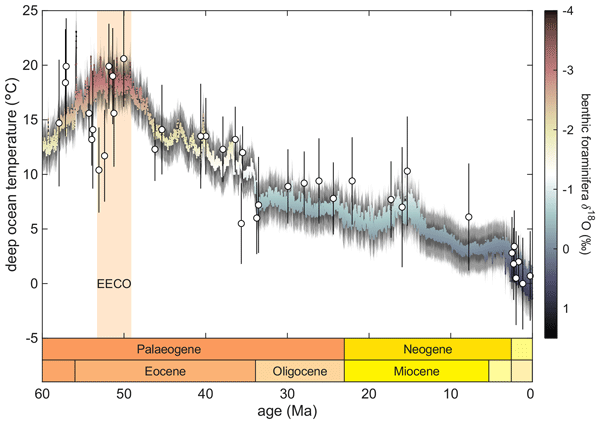
The early Eocene, about 50 million years ago, was a super-warm period of Earth's history, with high concentrations of carbon dioxide in the atmosphere. Here, we provide a framework and experimental design for climate modellers to carry out a coordinated project, simulating this period. This is the second phase of this project, and here we provide updated maps of the Earth's mountains and ocean floor, and vegetation, to enable more accurate modelling.
Georg A. Gottwald, Eli Tziperman, and Alexey Fedorov
EGUsphere, https://doi.org/10.48550/arXiv.2512.22710, https://doi.org/10.48550/arXiv.2512.22710, 2026
This preprint is open for discussion and under review for Nonlinear Processes in Geophysics (NPG).
Short summary
Short summary
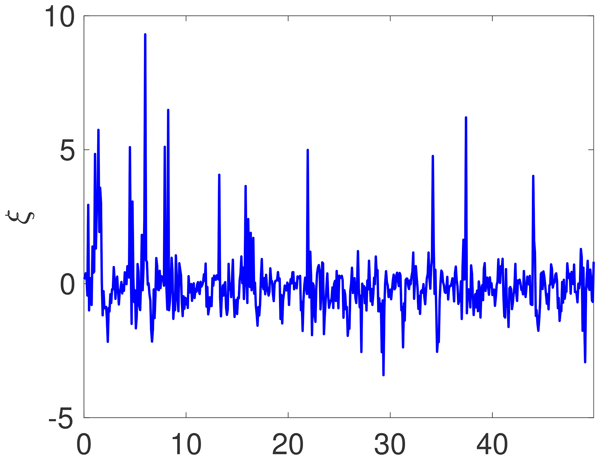
The recharge oscillator model has served as a simple yet powerful toy model for modelling the El Niño-Southern Oscillation. Whereas the addition of Gaussian noise is sufficient to capture the observed overall statistical features, it fails to resolve dynamical signatures associated with major El Niño events. Here we propose to employ a conditional non-Gaussian noise model that better captures the effect of large westerly wind bursts and their effect on major warming events.
Sina Loriani, Yevgeny Aksenov, David I. Armstrong McKay, Govindasamy Bala, Andreas Born, Cristiano Mazur Chiessi, Henk A. Dijkstra, Jonathan F. Donges, Sybren Drijfhout, Matthew H. England, Alexey V. Fedorov, Laura C. Jackson, Kai Kornhuber, Gabriele Messori, Francesco S. R. Pausata, Stefanie Rynders, Jean-Baptiste Sallée, Bablu Sinha, Steven C. Sherwood, Didier Swingedouw, and Thejna Tharammal
Earth Syst. Dynam., 16, 1611–1653, https://doi.org/10.5194/esd-16-1611-2025, https://doi.org/10.5194/esd-16-1611-2025, 2025
Short summary
Short summary
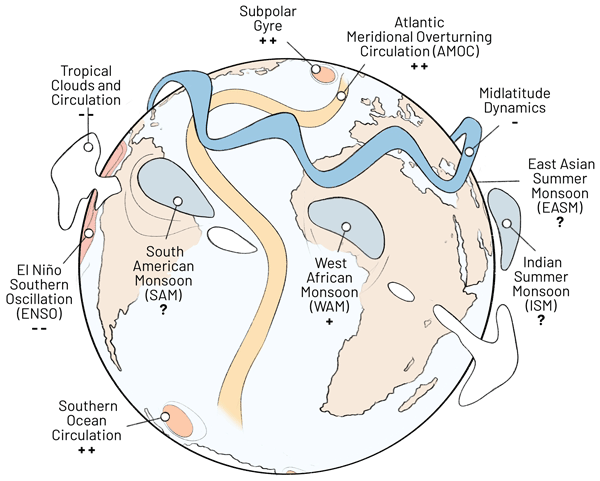
In this work, we draw on palaeo-records, observations, and modelling studies to review tipping points in the ocean overturning circulations, monsoon systems, and global atmospheric circulations. We find indications for tipping in the ocean overturning circulations and the West African monsoon, with potentially severe impacts on the Earth system and humans. Tipping in the other considered systems is regarded as conceivable but is currently not sufficiently supported by evidence.
Arne M. E. Winguth, Mikaela Brown, Pincelli Hull, Elizabeth Griffith, Christine Shields, Ellen Thomas, and Cornelia Winguth
EGUsphere, https://doi.org/10.5194/egusphere-2024-4209, https://doi.org/10.5194/egusphere-2024-4209, 2025
Preprint archived
Short summary
Short summary
The Paleocene-Eocene Thermal Maximum (PETM) about 56 million years ago is characterized by a rapid perturbation of the global carbon cycle. Comparison of sedimentary records with results from a comprehensive Earth system model suggest that environmental changes including benthic foraminifera extinction may have caused by a massive carbon input at the PETM and associate collapse of the ocean circulation due to the greenhouse-gas induced warming.
Alison J. Smith, Emi Ito, Natalie Burls, Leon Clarke, Timme Donders, Robert Hatfield, Stephen Kuehn, Andreas Koutsodendris, Tim Lowenstein, David McGee, Peter Molnar, Alexander Prokopenko, Katie Snell, Blas Valero Garcés, Josef Werne, Christian Zeeden, and the PlioWest Working Consortium
Sci. Dril., 32, 61–72, https://doi.org/10.5194/sd-32-61-2023, https://doi.org/10.5194/sd-32-61-2023, 2023
Short summary
Short summary
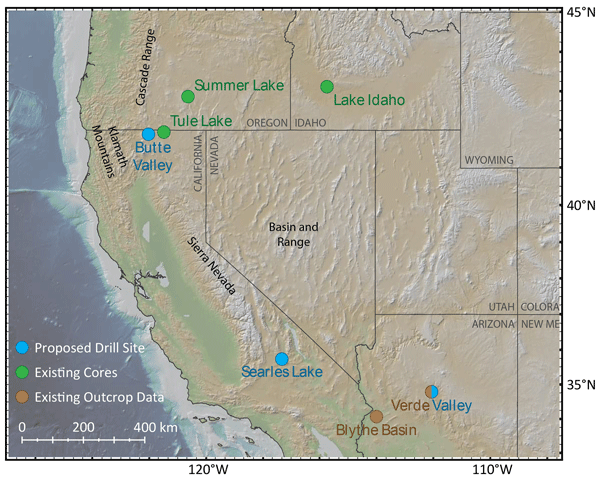
Western North American contains accessible and under-recognized paleolake records that hold the keys to understanding the drivers of wetter conditions in Pliocene Epoch subtropical drylands worldwide. In a 2021 ICDP workshop, we chose five paleolake basins to study that span 7° of latitude in a unique array able to capture a detailed record of hydroclimate during the Early Pliocene warm period and subsequent Pleistocene cooling. We propose new drill cores for three of these basins.
Daniel E. Gaskell and Pincelli M. Hull
Clim. Past, 19, 1265–1274, https://doi.org/10.5194/cp-19-1265-2023, https://doi.org/10.5194/cp-19-1265-2023, 2023
Short summary
Short summary
One of the most common ways of reconstructing temperatures in the geologic past is by analyzing oxygen isotope ratios in fossil shells. However, converting these data to temperatures can be a technically complicated task. Here, we present a new online tool that automates this task.
Zixuan Han, Qiong Zhang, Qiang Li, Ran Feng, Alan M. Haywood, Julia C. Tindall, Stephen J. Hunter, Bette L. Otto-Bliesner, Esther C. Brady, Nan Rosenbloom, Zhongshi Zhang, Xiangyu Li, Chuncheng Guo, Kerim H. Nisancioglu, Christian Stepanek, Gerrit Lohmann, Linda E. Sohl, Mark A. Chandler, Ning Tan, Gilles Ramstein, Michiel L. J. Baatsen, Anna S. von der Heydt, Deepak Chandan, W. Richard Peltier, Charles J. R. Williams, Daniel J. Lunt, Jianbo Cheng, Qin Wen, and Natalie J. Burls
Clim. Past, 17, 2537–2558, https://doi.org/10.5194/cp-17-2537-2021, https://doi.org/10.5194/cp-17-2537-2021, 2021
Short summary
Short summary
Understanding the potential processes responsible for large-scale hydrological cycle changes in a warmer climate is of great importance. Our study implies that an imbalance in interhemispheric atmospheric energy during the mid-Pliocene could have led to changes in the dynamic effect, offsetting the thermodynamic effect and, hence, altering mid-Pliocene hydroclimate cycling. Moreover, a robust westward shift in the Pacific Walker circulation can moisten the northern Indian Ocean.
Catherine V. Davis, Karen Wishner, Willem Renema, and Pincelli M. Hull
Biogeosciences, 18, 977–992, https://doi.org/10.5194/bg-18-977-2021, https://doi.org/10.5194/bg-18-977-2021, 2021
Cited articles
Allen, A. P., Gillooly, J. F., and Brown, J. H.: Linking the global carbon cycle to individual metabolism, Funct. Ecol., 19, 202–213, https://doi.org/10.1111/j.1365-2435.2005.00952.x, 2005.
Armstrong, R. A., Lee, C., Hedges, J. I., Honjo, S., and Wakeham, S. G.: A new, mechanistic model for organic carbon fluxes in the ocean based on the quantitative association of POC with ballast minerals, Deep-Sea Rs. Pt. II, 49, 219–236, https://doi.org/10.1016/S0967-0645(01)00101-1, 2002.
Aumont, O., Ethé, C., Tagliabue, A., Bopp, L., and Gehlen, M.: PISCES-v2: an ocean biogeochemical model for carbon and ecosystem studies, Geosci. Model Dev., 8, 2465–2513, https://doi.org/10.5194/gmd-8-2465-2015, 2015.
Boscolo-Galazzo, F., Crichton, K. A., Ridgwell, A., Mawbey, E. M., Wade, B. S., and Pearson, P. N.: Temperature controls carbon cycling and biological evolution in the ocean twilight zone, Science, 371, 1148–1152, https://doi.org/10.1126/science.abb6643, 2021.
Boyd, P. W.: Toward quantifying the response of the oceans' biological pump to climate change, Front. Mar. Sci., 2, https://doi.org/10.3389/fmars.2015.00077, 2015.
Brabson, E. K., Doyle, L. F., Acosta, R. P., Fedorov, A. V., Hull, P. M., and Burls, N. J.: A Revised Temperature-Dependent Remineralization Scheme for the Community Earth System Model (v1.2.2), Zenodo [data set], https://doi.org/10.5281/zenodo.16748201, 2025.
Brabson, E., Doyle, L. F., Acosta, R. P., Fedorov, A. V., Hull, P. M., and Burls, N. J.: A Revised Temperature-Dependent Remineralization Scheme for the Community Earth System Model (v1.2.2), Zenodo [code], https://doi.org/10.5281/zenodo.18391508, 2026.
Brown, J. H., Gillooly, J. F., Allen, A. P., Savage, V. M., and West, G. B.: Toward a Metabolic Theory of Ecology, Ecology, 85, 1771–1789, https://doi.org/10.1890/03-9000, 2004.
Buesseler, K. O. and Lampitt, R. S. Introduction to “Understanding the Ocean's biological pump: Results from VERTIGO”, Deep-Sea Rs. Pt. II, 55, 1519–1521, https://doi.org/10.1016/j.dsr2.2008.04.009, 2008.
Buesseler, K. O., Barber, R. T., Dickson, M.-L., Hiscock, M. R., Moore, J. K., and Sambrotto, R.: The effect of marginal ice-edge dynamics on production and export in the Southern Ocean along 170° W, Deep-Sea Rs. Pt. II, 50, 579–603, https://doi.org/10.1016/S0967-0645(02)00585-4, 2003.
Buesseler, K. O., Boyd, P. W., Black, E. E., and Siegel, D. A.: Metrics that matter for assessing the ocean biological carbon pump, Proc. Natl. Acad. Sci. USA, 117, 9679–9687, https://doi.org/10.1073/pnas.1918114117, 2020.
Burd, A. B.: Modeling the Vertical Flux of Organic Carbon in the Global Ocean, Annu. Rev. Mar. Sci., 16, 135–161, https://doi.org/10.1146/annurev-marine-022123-102516, 2024.
Burls, N. J. and Fedorov, A. V.: What Controls the Mean East–West Sea Surface Temperature Gradient in the Equatorial Pacific: The Role of Cloud Albedo, J. Climate, 27, 2757–2778, https://doi.org/10.1175/JCLI-D-13-00255.1, 2014.
Cheng, L., Schuckmann, K., Abraham, J., Trenberth, K., Mann, M., Zanna, L., England, M., Zika, J., Fasullo, J., Yu, Y., Pan, Y., Zhu, J., Newsom, E., Bronselaer, B., and Lin, X.: Past and future ocean warming, Nat. Rev. Earth Env., 3, 1–19, https://doi.org/10.1038/s43017-022-00345-1, 2022.
Collier, R. and Dymond, J.: Annual summaries for EqPac sediment trap particulates collected from the U.S. JGOFS EqPac Sediment Trap Array in the Equatorial Pacific in 1992 during the U.S. JGOFS Equatorial Pacific (EqPac) project, Biological and Chemical Oceanography Data Management Office (BCO-DMO) (Version June 7, 1994), http://lod.bco-dmo.org/id/dataset/2608 (last access: 2 February 2026), 1994.
Cram, J. A., Weber, T., Leung, S. W., McDonnell, A. M. P., Liang, J.-H., and Deutsch, C.: The Role of Particle Size, Ballast, Temperature, and Oxygen in the Sinking Flux to the Deep Sea, Global Biogeochem. Cy., 32, 858–876, https://doi.org/10.1029/2017GB005710, 2018.
Crichton, K. A., Wilson, J. D., Ridgwell, A., and Pearson, P. N.: Calibration of temperature-dependent ocean microbial processes in the cGENIE.muffin (v0.9.13) Earth system model, Geosci. Model Dev., 14, 125–149, https://doi.org/10.5194/gmd-14-125-2021, 2021.
Doney, S. C., Glover, D. M., and Najjar, R. G.: A new coupled, one-dimensional biological-physical model for the upper ocean: Applications to the JGOFS Bermuda Atlantic Time-series Study (BATS) site, Deep Sea Research Part II: Topical Studies in Oceanography, 43, 591–624, https://doi.org/10.1016/0967-0645(95)00104-2, 1996.
Eyring, V., Bony, S., Meehl, G. A., Senior, C. A., Stevens, B., Stouffer, R. J., and Taylor, K. E.: Overview of the Coupled Model Intercomparison Project Phase 6 (CMIP6) experimental design and organization, Geosci. Model Dev., 9, 1937–1958, https://doi.org/10.5194/gmd-9-1937-2016, 2016.
Garcia, H. E., Bouchard, C., Cross, S. L., Paver, C. R., Reagan, J. R., Boyer, T. P., Locarnini, R. A., Mishonov, A. V., Baranova, O. K., Seidov, D., Wang, Z., and Dukhovskoy, D.: World Ocean Atlas 2023, Volume 4: Dissolved Inorganic Nutrients (Phosphate, Nitrate, and Silicate), https://doi.org/10.25923/39qw-7j08, 2024.
Henson, S. A., Sanders, R., and Madsen, E.: Global patterns in efficiency of particulate organic carbon export and transfer to the deep ocean, Global Biogeochem. Cy., 26, https://doi.org/10.1029/2011GB004099, 2012.
Henson, S. A., Laufkötter, C., Leung, S., Giering, S. L. C., Palevsky, H. I., and Cavan, E. L.: Uncertain response of ocean biological carbon export in a changing world, Nat. Geosci., 15, 248–254, https://doi.org/10.1038/s41561-022-00927-0, 2022.
Honjo, S. and Dymond, J.: Preliminary sediment trap particulates collected from the U.S. JGOFS Eqpac Moored Sediment Trap Array in the Equatorial Pacific in 1992 during the U.S. JGOFS Equatorial Pacific (EqPac) project, Biological and Chemical Oceanography Data Management Office (BCO-DMO). (Version June 9, 1994), http://lod.bco-dmo.org/id/dataset/2618 (last access: 2 February 2026), 1994.
Hurrell, J. W., Holland, M. M., Gent, P. R., Ghan, S., Kay, J. E., Kushner, P. J., Lamarque, J.-F., Large, W. G., Lawrence, D., Lindsay, K., Lipscomb, W. H., Long, M. C., Mahowald, N., Marsh, D. R., Neale, R. B., Rasch, P., Vavrus, S., Vertenstein, M., Bader, D., Collins, W. D., Hack, J. J., Kiehl, J., and Marshall, S.: The Community Earth System Model: A Framework for Collaborative Research, B. Am. Meteorol. Soc., 94, 1339–1360, https://doi.org/10.1175/BAMS-D-12-00121.1, 2013.
Intergovernmental Panel on Climate Change (IPCC): Ocean, Cryosphere and Sea Level Change, in: Climate Change 2021 – The Physical Science Basis: Working Group I Contribution to the Sixth Assessment Report of the Intergovernmental Panel on Climate Change, Cambridge University Press, Cambridge, 1211–1362, https://doi.org/10.1017/9781009157896.011, 2023.
Jahn, A., Lindsay, K., Giraud, X., Gruber, N., Otto-Bliesner, B. L., Liu, Z., and Brady, E. C.: Carbon isotopes in the ocean model of the Community Earth System Model (CESM1), Geosci. Model Dev., 8, 2419–2434, https://doi.org/10.5194/gmd-8-2419-2015, 2015.
John, E. H., Wilson, J. D., Pearson, P. N., and Ridgwell, A.: Temperature-dependent remineralization and carbon cycling in the warm Eocene oceans, Palaeogeogr. Palaeocl., 413, 158–166, https://doi.org/10.1016/j.palaeo.2014.05.019, 2014.
Keeling, R. F., Körtzinger, A., and Gruber, N.: Ocean Deoxygenation in a Warming World, Annu. Rev. Mar. Sci., 2, 199–229, https://doi.org/10.1146/annurev.marine.010908.163855, 2010.
Laufkötter, C., John, J. G., Stock, C. A., and Dunne, J. P.: Temperature and oxygen dependence of the remineralization of organic matter: Remineralization Of Organic Matter, Global Biogeochem. Cy., 31, 1038–1050, https://doi.org/10.1002/2017GB005643, 2017.
Laws, E. A., Popp, B. N., Bidigare, R. R., Kennicutt, M. C., and Macko, S. A.: Dependence of phytoplankton carbon isotopic composition on growth rate and [CO2)aq: Theoretical considerations and experimental results, Geochim. Cosmochim. Ac., 59, 1131–1138, https://doi.org/10.1016/0016-7037(95)00030-4, 1995.
Laws, E. A., Falkowski, P. G., Smith Jr., W. O., Ducklow, H., and McCarthy, J. J.: Temperature effects on export production in the open ocean, Global Biogeochem. Cy., 14, 1231–1246, https://doi.org/10.1029/1999GB001229, 2000.
Lutz, M., Dunbar, R., and Caldeira, K.: Regional variability in the vertical flux of particulate organic carbon in the ocean interior, Global Biogeochem. Cy., 16, 11-1–11-18, https://doi.org/10.1029/2000GB001383, 2002.
Lutz, M. J., Caldeira, K., Dunbar, R. B., and Behrenfeld, M. J.: Seasonal rhythms of net primary production and particulate organic carbon flux to depth describe the efficiency of biological pump in the global ocean, J. Geophys. Res.-Oceans, 112, https://doi.org/10.1029/2006JC003706, 2007.
Marsay, C. M., Sanders, R. J., Henson, S. A., Pabortsava, K., Achterberg, E. P., and Lampitt, R. S.: Attenuation of sinking particulate organic carbon flux through the mesopelagic ocean, Proc. Natl. Acad. Sci. USA, 112, 1089–1094, https://doi.org/10.1073/pnas.1415311112, 2015.
Martin, J. H., Knauer, G. A., Karl, D. M., and Broenkow, W. W.: VERTEX: carbon cycling in the northeast Pacific, Deep Sea Research Part A. Oceanog. Res. Pap., 34, 267–285, https://doi.org/10.1016/0198-0149(87)90086-0, 1987.
Melnikova, I., Boucher, O., Cadule, P., Ciais, P., Gasser, T., Quilcaille, Y., Shiogama, H., Tachiiri, K., Yokohata, T., and Tanaka, K.: Carbon Cycle Response to Temperature Overshoot Beyond 2 °C: An Analysis of CMIP6 Models, Earth's Future, 9, e2020EF001967, https://doi.org/10.1029/2020EF001967, 2021.
Moore, J. K., Doney, S. C., Kleypas, J. A., Glover, D. M., and Fung, I. Y.: An intermediate complexity marine ecosystem model for the global domain, Deep Sea Research Part II: Topical Studies in Oceanography, 49, 403–462, https://doi.org/10.1016/S0967-0645(01)00108-4, 2002.
Moore, J. K., Doney, S. C., and Lindsay, K.: Upper ocean ecosystem dynamics and iron cycling in a global three-dimensional model, Global Biogeochem. Cy., 18, https://doi.org/10.1029/2004GB002220, 2004.
Moore, J. K., Lindsay, K., Doney, S. C., Long, M. C., and Misumi, K.: Marine Ecosystem Dynamics and Biogeochemical Cycling in the Community Earth System Model [CESM1(BGC)]: Comparison of the 1990s with the 2090s under the RCP4.5 and RCP8.5 Scenarios, J. Climate, 26, 9291–9312, https://doi.org/10.1175/JCLI-D-12-00566.1, 2013.
National Center for Atmospheric Research (NCAR): Derecho: High-Performance Computing System, NSF National Center for Atmospheric Research, https://doi.org/10.5065/qx9a-pg09, 2026.
Nowicki, M., DeVries, T., and Siegel, D. A.: Quantifying the Carbon Export and Sequestration Pathways of the Ocean's Biological Carbon Pump, Global Biogeochem. Cy., 36, e2021GB007083, https://doi.org/10.1029/2021GB007083, 2022.
Plattner, G.-K., Joos, F., Stocker, T. F., and Marchal, O.: Feedback mechanisms and sensitivities of ocean carbon uptake under global warming, Tellus B: Chem. Phys. Meteorology, 53, 564–592, https://doi.org/10.3402/tellusb.v53i5.16637, 2001.
Reagan, J. R., Boyer, T. P., García, H. E., Locarnini, R. A., Baranova, O. K., Bouchard, C., Cross, S. L., Mishonov, A. V., Paver, C. R., Seidov, D., Wang, Z., and Dukhovskoy, D.: World Ocean Atlas 2023 (NCEI Accession 0270533), World Ocean Atlas data product series, NOAA National Centers for Environmental Information [data set], https://doi.org/10.25921/va26-hv25, 2023.
Rodgers, K. B., Aumont, O., Toyama, K., Resplandy, L., Ishii, M., Nakano, T., Sasano, D., Bianchi, D., and Yamaguchi, R.: Low-latitude mesopelagic nutrient recycling controls productivity and export, Nature, 632, 802–807, https://doi.org/10.1038/s41586-024-07779-1, 2024.
Sarmiento, J. L. and Gruber, N.: Ocean Biogeochemical Dynamics, Princeton University Press, ISBN 9780691017075, 2006.
Seo, J., Kim, I., Kang, D.-J., Lee, H., Choi, J. Y., Ra, K., Rho, T., Park, K., and Kim, S. H.: Particulate organic carbon export fluxes across the Seychelles-Chagos thermocline ridge in the western Indian Ocean using 234Th as a tracer, Front Mar. Sci., 10, https://doi.org/10.3389/fmars.2023.1288422, 2024.
Shields, C. A., Bailey, D. A., Danabasoglu, G., Jochum, M., Kiehl, J. T., Levis, S., and Park, S.: The Low-Resolution CCSM4, J. Climate, 25, 3993–4014, https://doi.org/10.1175/JCLI-D-11-00260.1, 2012.
Siegel, D. A., DeVries, T., Cetinić, I., and Bisson, K. M.: Quantifying the Ocean's Biological Pump and Its Carbon Cycle Impacts on Global Scales, Annu. Rev. Mar. Sci., 15, 329–356, https://doi.org/10.1146/annurev-marine-040722-115226, 2023.
Stock, C. A., Dunne, J. P., Fan, S., Ginoux, P., John, J., Krasting, J. P., Laufkötter, C., Paulot, F., and Zadeh, N.: Ocean Biogeochemistry in GFDL's Earth System Model 4.1 and Its Response to Increasing Atmospheric CO2, J. Adv. Model. Earth Sy., 12, e2019MS002043, https://doi.org/10.1029/2019MS002043, 2020.
Weber, T., Cram, J. A., Leung, S. W., DeVries, T., and Deutsch, C.: Deep ocean nutrients imply large latitudinal variation in particle transfer efficiency, Proc. Natl. Acad. Sci. USA, 113, 8606–8611, https://doi.org/10.1073/pnas.1604414113, 2016.
Wilson, J. D., Andrews, O., Katavouta, A., de Melo Viríssimo, F., Death, R. M., Adloff, M., Baker, C. A., Blackledge, B., Goldsworth, F. W., Kennedy-Asser, A. T., Liu, Q., Sieradzan, K. R., Vosper, E., and Ying, R.: The biological carbon pump in CMIP6 models: 21st century trends and uncertainties, Proc. Natl. Acad. Sci. USA, 119, e2204369119, https://doi.org/10.1073/pnas.2204369119, 2022.
Wong, C. S., Whitney, F. A., Crawford, D. W., Iseki, K., Matear, R. J., Johnson, W. K., Page, J. S., and Timothy, D. Seasonal and interannual variability in particle fluxes of carbon, nitrogen and silicon from time series of sediment traps at Ocean Station P, 1982–1993: Relationship to changes in subarctic primary productivity, Deep-Sea Res. Pt. II, 46, 2735–2760, https://doi.org/10.1016/S0967-0645(99)00082-X, 1999.
Wu, J., Lee, Z., Xie, Y., Goes, J., Shang, S., Marra, J. F., Lin, G., Yang, L., and Huang, B.: Reconciling Between Optical and Biological Determinants of the Euphotic Zone Depth, J. Geophys. Res. Oceans, 126, e2020JC016874, https://doi.org/10.1029/2020JC016874, 2021.
Yool, A., Popova, E. E., and Anderson, T. R.: MEDUSA-2.0: an intermediate complexity biogeochemical model of the marine carbon cycle for climate change and ocean acidification studies, Geosci. Model Dev., 6, 1767–1811, https://doi.org/10.5194/gmd-6-1767-2013, 2013.
Zhang, J., Quay, P. D., and Wilbur, D. O.: Carbon isotope fractionation during gas-water exchange and dissolution of CO2, Geochim. Cosmochim. Ac., 59, 107–114, https://doi.org/10.1016/0016-7037(95)91550-D, 1995.
Short summary
Earth System Models are an essential tool for climate studies, yet temperature-sensitive parameters are often absent, resulting in a gap in model predictive capabilities. Organic carbon breakdown, also known as remineralization, is one such process. Here, we add this parameter to the Community Earth System Model and find improved regional patterns of carbon export. The new code will serve as a useful tool to improve the examination of marine carbon cycle feedbacks to changing climate conditions.
Earth System Models are an essential tool for climate studies, yet temperature-sensitive...