
Articles | Volume 19, issue 3
https://doi.org/10.5194/gmd-19-1075-2026
© Author(s) 2026. This work is distributed under
the Creative Commons Attribution 4.0 License.
the Creative Commons Attribution 4.0 License.
https://doi.org/10.5194/gmd-19-1075-2026
© Author(s) 2026. This work is distributed under
the Creative Commons Attribution 4.0 License.
the Creative Commons Attribution 4.0 License.
Model description paper
| 
03 Feb 2026
Model description paper |
| 03 Feb 2026
| 03 Feb 2026
GeoDS (v.1.0): a simple Geographical DownScaling model for long-term precipitation data over complex terrains
Jean-Baptiste Brenner
CORRESPONDING AUTHOR

Laboratoire des Sciences du Climat et de l'Environnement, LSCE/IPSL, CEA-CNRS-UVSQ, Université Paris-Saclay, Gif-sur-Yvette, France
Aurélien Quiquet
Laboratoire des Sciences du Climat et de l'Environnement, LSCE/IPSL, CEA-CNRS-UVSQ, Université Paris-Saclay, Gif-sur-Yvette, France
Didier M. Roche
Laboratoire des Sciences du Climat et de l'Environnement, LSCE/IPSL, CEA-CNRS-UVSQ, Université Paris-Saclay, Gif-sur-Yvette, France
Earth and Climate Cluster, Faculty of Earth and Life Sciences, Vrije Universiteit Amsterdam, Amsterdam, the Netherlands
Didier Paillard
Laboratoire des Sciences du Climat et de l'Environnement, LSCE/IPSL, CEA-CNRS-UVSQ, Université Paris-Saclay, Gif-sur-Yvette, France
Pradeebane Vaittinada Ayar
Laboratoire des Sciences du Climat et de l'Environnement, LSCE/IPSL, CEA-CNRS-UVSQ, Université Paris-Saclay, Gif-sur-Yvette, France
Related authors
No articles found.
Victor van Aanderen, Aurélien Quiquet, Christophe Dumas, Elisabeth Michel, Frederic Parrenin, Catherine Ritz, and Kévin Jiguet-Covex
EGUsphere, https://doi.org/10.5194/egusphere-2026-5288, https://doi.org/10.5194/egusphere-2026-5288, 2026
This preprint is open for discussion and under review for The Cryosphere (TC).
Short summary
Short summary
Ice cores from Dome C provide one of the longest climate records, and Beyond EPICA aims to extend it further. Interpreting these records requires knowing whether Dome C has remained fixed. Using an ice sheet model spanning 800,000 years, we show Dome C has shifted several km during glacial cycles, driven by grounding line migration in the Aurora Subglacial Basin. This displacement can introduce age errors of several tens of thousands of years when interpreting the ice-core record.
Gabriel Fénisse, Aurélien Quiquet, Masa Kageyama, Pierre-Henri Blard, and David Vincent Bekaert
EGUsphere, https://doi.org/10.5194/egusphere-2026-3988, https://doi.org/10.5194/egusphere-2026-3988, 2026
Short summary
Short summary
We study how European temperatures changed since the Last Glacial Maximum using climate models. We compare several global models and a simplified model. Results show that winter temperature changes, together with sensitivity experiments on greenhouse gases, ice-sheet properties, ocean circulation, vegetation, and radiative processes, explain most model differences. The largest disagreements occur near former ice sheets. This highlights key uncertainties in past climate estimates.
Victor van Aalderen, Sylvie Charbit, Aurélien Quiquet, and Christophe Dumas
EGUsphere, https://doi.org/10.5194/egusphere-2026-1137, https://doi.org/10.5194/egusphere-2026-1137, 2026
Short summary
Short summary
The last deglaciation provides a unique opportunity to study the processes driving large-scale ice sheet collapse. However, the mechanisms behind the retreat of the Barents-Kara Ice Sheet remain debated. Here, we use an ice sheet model to show that the collapse was caused by a mechanical instability triggered by rising atmospheric temperatures.
Didier Paillard
Clim. Past, 22, 647–673, https://doi.org/10.5194/cp-22-647-2026, https://doi.org/10.5194/cp-22-647-2026, 2026
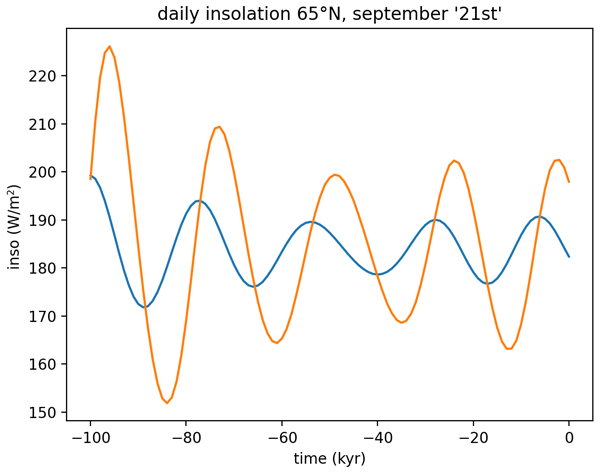
Short summary
Short summary
This paper presents classical and new mathematical formulas to compute various "flavors" of the insolation forcing used to interpret paleoclimatic series, or to simulate climate at different times. It provides a description of the usual concepts while insisting on the difficulties associated with them, like the definition of a calendar. Then it presents novel formulas to compute extrema of insolation for a given latitude. It thus presents a new open-source software package available online.
Rodrigo San Martín, Catherine Ottlé, Anna Sörensson, Pradeebane Vaittinada Ayar, Florent Mouillot, and Marielle Malfante
Nat. Hazards Earth Syst. Sci., 26, 1479–1513, https://doi.org/10.5194/nhess-26-1479-2026, https://doi.org/10.5194/nhess-26-1479-2026, 2026
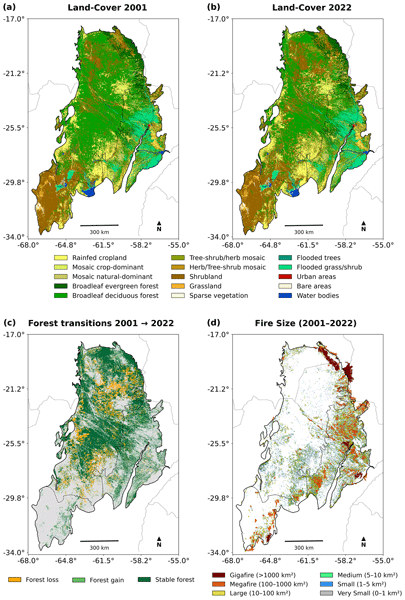
Short summary
Short summary
We studied wildfires in the Gran Chaco, one of the world’s largest dry forests, to understand why some fires become much larger than others. By analyzing thousands of fires together with environmental and landscape data, we found that fire size is mainly shaped by topography and vegetation structure, which determine how continuous fuels are across the landscape. Weather and human factors play a secondary role in explaining final fire size.
Thibaut Caley, Niclas Rieger, Martin Werner, Claire Waelbroeck, Héloise Barathieu, Tamara Happé, and Didier M. Roche
Clim. Past, 22, 247–263, https://doi.org/10.5194/cp-22-247-2026, https://doi.org/10.5194/cp-22-247-2026, 2026
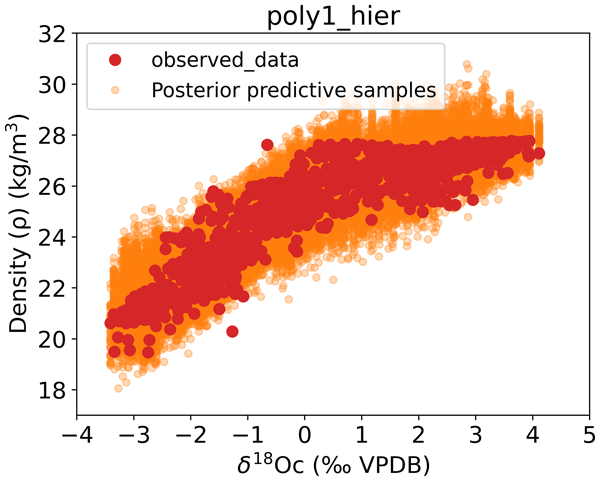
Short summary
Short summary
Density of seawater is a critical property that controls ocean dynamics. We developed the use of the δ18Oc of planktonic foraminifera as a surface paleodensity proxy for the ocean using Bayesian regression models calibrated to mean annual surface density. We reconstructed annual surface density during the last glacial maximum and late Holocene time periods. These results will be used to evaluate numerical climate models in their ability to simulate past ocean surface density.
Emeline Clermont, Ji-Woong Yang, Didier M. Roche, and Thomas Extier
EGUsphere, https://doi.org/10.5194/egusphere-2025-5230, https://doi.org/10.5194/egusphere-2025-5230, 2026
Short summary
Short summary
The triple isotopic composition of atmospheric oxygen (17Δ) is used to reconstruct past global biospheric productivity. We present the first implementation of the oceanic contribution (17Δocean) in the intermediate-complexity model iLOVECLIM. Photosynthesis, respiration, and air-sea gas exchange are represented under preindustrial conditions. Model results agree with observations, providing a future key tool to study marine biogeochemical processes and past ocean biospheric productivity.
Pradeebane Vaittinada Ayar, Stella Bourdin, Davide Faranda, and Mathieu Vrac
Nat. Hazards Earth Syst. Sci., 25, 4655–4672, https://doi.org/10.5194/nhess-25-4655-2025, https://doi.org/10.5194/nhess-25-4655-2025, 2025
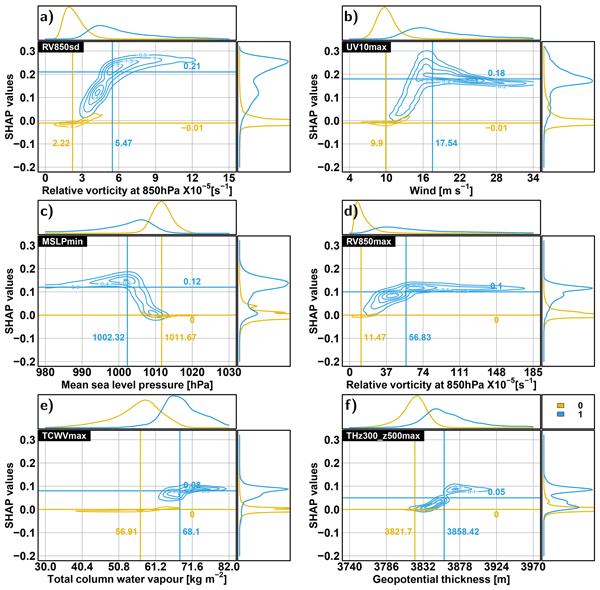
Short summary
Short summary
Tracking tropical cyclones (TCs) remains a matter of interest for investigating observed and simulated tropical cyclones. In this study, Random Forest (RF), a machine learning approach, is considered to track TCs. RF associates the TC occurrence or absence with different atmospheric configurations. Compared to trackers found in the literature, it shows similar performance for tracking TCs, better control over false alarms, more flexibility, and reveals key variables for TCs' detection.
Paul C. Astagneau, Raul R. Wood, Mathieu Vrac, Sven Kotlarski, Pradeebane Vaittinada Ayar, Bastien François, and Manuela I. Brunner
Hydrol. Earth Syst. Sci., 29, 5695–5718, https://doi.org/10.5194/hess-29-5695-2025, https://doi.org/10.5194/hess-29-5695-2025, 2025
Short summary
Short summary
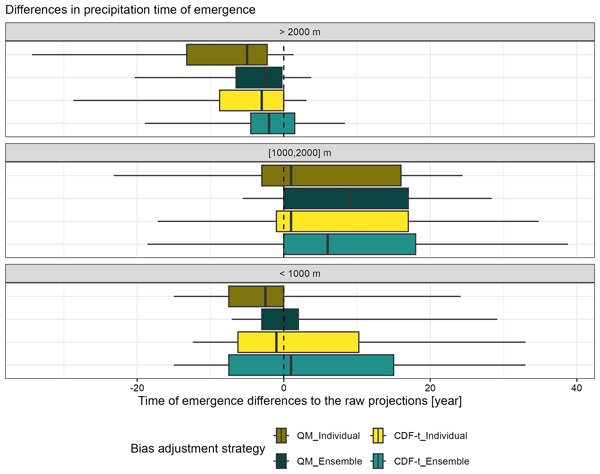
To study floods and droughts that are likely to change in the future, we use climate projections from climate models. However, we first need to adjust the systematic biases of these projections at the catchment scale before using them in hydrological models. Our study compares statistical methods that can adjust these biases but specifically for climate projections that enable a quantification of internal climate variability. We provide recommendations on the most appropriate methods.
Maxence Menthon, Pepijn Bakker, Aurélien Quiquet, Didier M. Roche, and Ronja Reese
Geosci. Model Dev., 18, 7297–7320, https://doi.org/10.5194/gmd-18-7297-2025, https://doi.org/10.5194/gmd-18-7297-2025, 2025
Short summary
Short summary
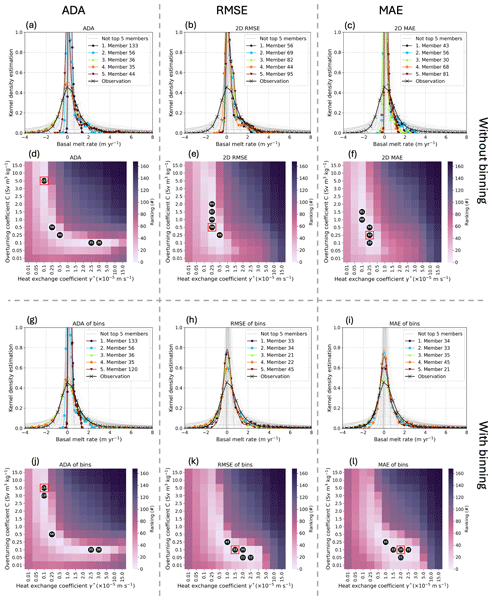
Here, we implement a basal ice shelf melt module (PICO – Postdam Ice-shelf Cavity mOdel) in an ice sheet model (GRISLI) and test six simple statistical methods to calibrate this module. We show that calculating the mean absolute error of bins best fits the observational datasets under multiple conditions and without using temperature corrections. Additionally, we show that calibration at a smaller scale than all Antarctic ice shelves is not needed. Finally, we assess the impact with future projections until 2300.
Johanna Beckmann, Ronja Reese, Felicity S. McCormack, Sue Cook, Lawrence Bird, Dawid Gwyther, Daniel Richards, Matthias Scheiter, Yu Wang, Hélène Seroussi, Ayako Abe‐Ouchi, Torsten Albrecht, Jorge Alvarez‐Solas, Xylar S. Asay‐Davis, Jean‐Baptiste Barre, Constantijn J. Berends, Jorge Bernales, Javier Blasco, Justine Caillet, David M. Chandler, Violaine Coulon, Richard Cullather, Christophe Dumas, Benjamin K. Galton‐Fenzi, Julius Garbe, Fabien Gillet‐Chaulet, Rupert Gladstone, Heiko Goelzer, Nicholas R. Golledge, Ralf Greve, G. Hilmar Gudmundsson, Holly Kyeore Han, Trevor R. Hillebrand, Matthew J. Hoffman, Philippe Huybrechts, Nicolas C. Jourdain, Ann Kristin Klose, Petra M. Langebroek, Gunter R. Leguy, William H. Lipscomb, Daniel P. Lowry, Pierre Mathiot, Marisa Montoya, Mathieu Morlighem, Sophie Nowicki, Frank Pattyn, Antony J. Payne, Tyler Pelle, Aurélien Quiquet, Alexander Robinson, Leopekka Saraste, Erika G. Simon, Sainan Sun, Jake P. Twarog, Luke D. Trusel, Benoit Urruty, Jonas Van Breedam, Roderik S. W. van de Wal, Chen Zhao, and Thomas Zwinger
EGUsphere, https://doi.org/10.5194/egusphere-2025-4069, https://doi.org/10.5194/egusphere-2025-4069, 2025
Short summary
Short summary
Antarctica holds enough ice to raise sea levels by many meters, but its future is uncertain. Warm ocean water melts ice shelves from below, letting inland ice flow faster into the sea. By 2300, Antarctica could add 0.6–4.4 m to sea levels. Our study identifies two key factors—how strongly shelves melt and how the ice responds. These explain much of the range, and refining them in models may improve future predictions.
Takashi Obase, Laurie Menviel, Ayako Abe-Ouchi, Tristan Vadsaria, Ruza Ivanovic, Brooke Snoll, Sam Sherriff-Tadano, Paul J. Valdes, Lauren Gregoire, Marie-Luise Kapsch, Uwe Mikolajewicz, Nathaelle Bouttes, Didier Roche, Fanny Lhardy, Chengfei He, Bette Otto-Bliesner, Zhengyu Liu, and Wing-Le Chan
Clim. Past, 21, 1443–1463, https://doi.org/10.5194/cp-21-1443-2025, https://doi.org/10.5194/cp-21-1443-2025, 2025
Short summary
Short summary
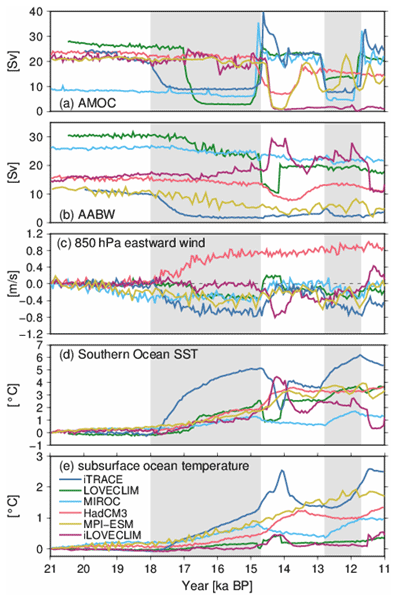
This study analyses transient simulations of the last deglaciation performed by six climate models to understand the processes driving high-southern-latitude temperature changes. We find that atmospheric CO2 and AMOC (Atlantic Meridional Overturning Circulation) changes are the primary drivers of the warming and cooling during the middle stage of the deglaciation. The analysis highlights the model's sensitivity of CO2 and AMOC to meltwater and the meltwater history of temperature changes at high southern latitudes.
Louise Abot, Aurélien Quiquet, and Claire Waelbroeck
Clim. Past, 21, 1123–1142, https://doi.org/10.5194/cp-21-1123-2025, https://doi.org/10.5194/cp-21-1123-2025, 2025
Short summary
Short summary
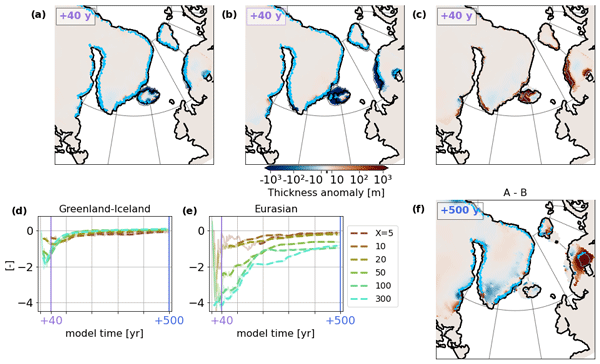
This modeling study examines how the Northern Hemisphere ice sheets interact with oceans during the last glacial period. Amplified melting beneath the ice shelves results in increased freshwater release, cooling the Northern Hemisphere and slowing ocean circulation. Freshwater release and localized ocean cooling dampen ice discharges, showing complex feedback at the interface. This study emphasizes the need for additional modeling studies to clarify the role of the ocean in past abrupt events.
Thi-Khanh-Dieu Hoang, Aurélien Quiquet, Christophe Dumas, Andreas Born, and Didier M. Roche
Clim. Past, 21, 27–51, https://doi.org/10.5194/cp-21-27-2025, https://doi.org/10.5194/cp-21-27-2025, 2025
Short summary
Short summary
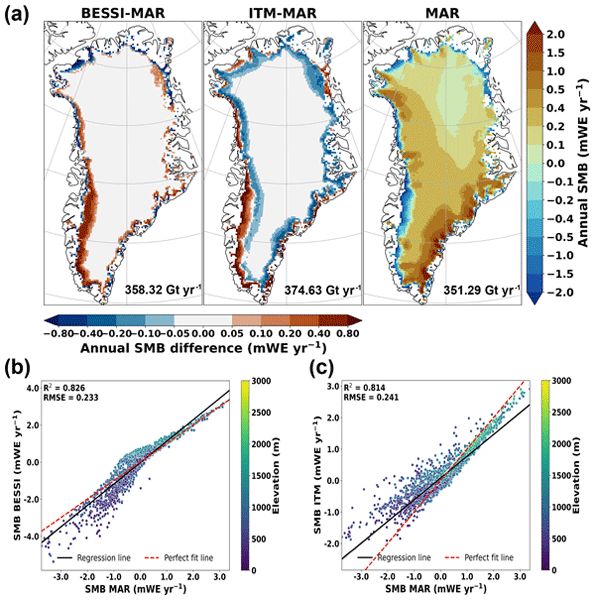
To improve the simulation of surface mass balance (SMB) that influences the advance–retreat of ice sheets, we run a snow model, the BErgen Snow SImulator (BESSI), with transient climate forcing obtained from an Earth system model, iLOVECLIM, over Greenland and Antarctica during the Last Interglacial (LIG; 130–116 ka). Compared to the simple existing SMB scheme of iLOVECLIM, BESSI gives more details about SMB processes with higher physics constraints while maintaining a low computational cost.
Aurélien Quiquet and Didier M. Roche
Clim. Past, 20, 1365–1385, https://doi.org/10.5194/cp-20-1365-2024, https://doi.org/10.5194/cp-20-1365-2024, 2024
Short summary
Short summary
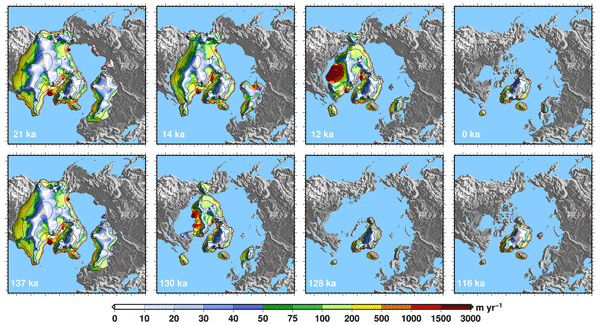
In this work, we use the same experimental protocol to simulate the last two glacial terminations with a coupled ice sheet–climate model. Major differences among the two terminations are that the ice sheets retreat earlier and the Atlantic oceanic circulation is more prone to collapse during the penultimate termination. However, for both terminations the pattern of ice retreat is similar, and this retreat is primarily explained by orbital forcing changes and greenhouse gas concentration changes.
Quentin Pikeroen, Didier Paillard, and Karine Watrin
Geosci. Model Dev., 17, 3801–3814, https://doi.org/10.5194/gmd-17-3801-2024, https://doi.org/10.5194/gmd-17-3801-2024, 2024
Short summary
Short summary
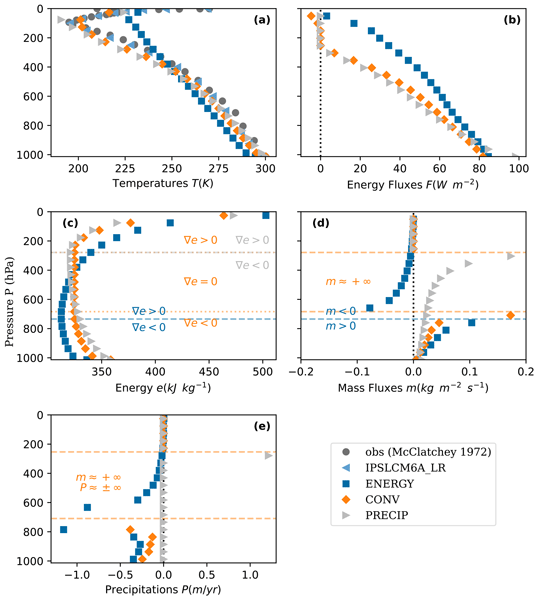
All accurate climate models use equations with poorly defined parameters, where knobs for the parameters are turned to fit the observations. This process is called tuning. In this article, we use another paradigm. We use a thermodynamic hypothesis, the maximum entropy production, to compute temperatures, energy fluxes, and precipitation, where tuning is impossible. For now, the 1D vertical model is used for a tropical atmosphere. The correct order of magnitude of precipitation is computed.
Thomas Extier, Thibaut Caley, and Didier M. Roche
Geosci. Model Dev., 17, 2117–2139, https://doi.org/10.5194/gmd-17-2117-2024, https://doi.org/10.5194/gmd-17-2117-2024, 2024
Short summary
Short summary
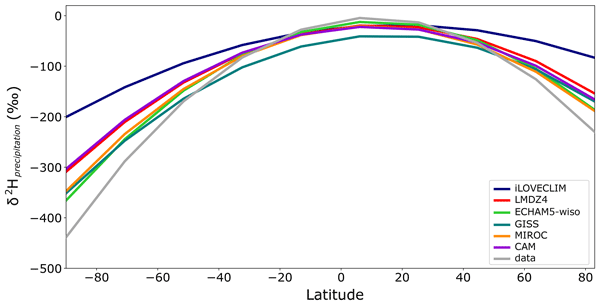
Stable water isotopes are used to infer changes in the hydrological cycle for different time periods in climatic archive and climate models. We present the implementation of the δ2H and δ17O water isotopes in the coupled climate model iLOVECLIM and calculate the d- and 17O-excess. Results of a simulation under preindustrial conditions show that the model correctly reproduces the water isotope distribution in the atmosphere and ocean in comparison to data and other global circulation models.
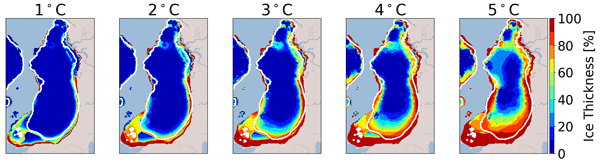
Victor van Aalderen, Sylvie Charbit, Christophe Dumas, and Aurélien Quiquet
Clim. Past, 20, 187–209, https://doi.org/10.5194/cp-20-187-2024, https://doi.org/10.5194/cp-20-187-2024, 2024
Short summary
Short summary
We present idealized numerical experiments to test the main mechanisms that triggered the deglaciation of the past Eurasian ice sheet. Simulations were performed with the GRISLI2.0 ice sheet model. The results indicate that the Eurasian ice sheet was primarily driven by surface melting, due to increased atmospheric temperatures. Basal melting below the ice shelves is only a significant driver if ocean temperatures increase by nearly 10 °C, in contrast with the findings of previous studies.
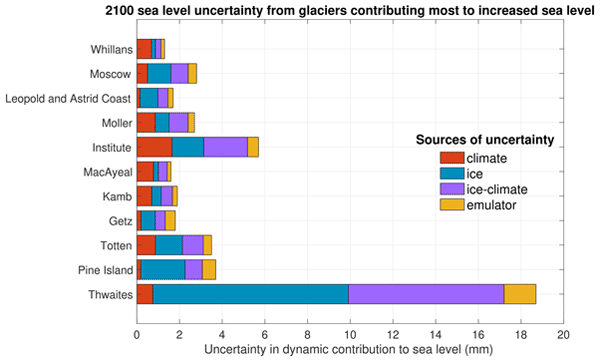
Hélène Seroussi, Vincent Verjans, Sophie Nowicki, Antony J. Payne, Heiko Goelzer, William H. Lipscomb, Ayako Abe-Ouchi, Cécile Agosta, Torsten Albrecht, Xylar Asay-Davis, Alice Barthel, Reinhard Calov, Richard Cullather, Christophe Dumas, Benjamin K. Galton-Fenzi, Rupert Gladstone, Nicholas R. Golledge, Jonathan M. Gregory, Ralf Greve, Tore Hattermann, Matthew J. Hoffman, Angelika Humbert, Philippe Huybrechts, Nicolas C. Jourdain, Thomas Kleiner, Eric Larour, Gunter R. Leguy, Daniel P. Lowry, Chistopher M. Little, Mathieu Morlighem, Frank Pattyn, Tyler Pelle, Stephen F. Price, Aurélien Quiquet, Ronja Reese, Nicole-Jeanne Schlegel, Andrew Shepherd, Erika Simon, Robin S. Smith, Fiammetta Straneo, Sainan Sun, Luke D. Trusel, Jonas Van Breedam, Peter Van Katwyk, Roderik S. W. van de Wal, Ricarda Winkelmann, Chen Zhao, Tong Zhang, and Thomas Zwinger
The Cryosphere, 17, 5197–5217, https://doi.org/10.5194/tc-17-5197-2023, https://doi.org/10.5194/tc-17-5197-2023, 2023
Short summary
Short summary
Mass loss from Antarctica is a key contributor to sea level rise over the 21st century, and the associated uncertainty dominates sea level projections. We highlight here the Antarctic glaciers showing the largest changes and quantify the main sources of uncertainty in their future evolution using an ensemble of ice flow models. We show that on top of Pine Island and Thwaites glaciers, Totten and Moscow University glaciers show rapid changes and a strong sensitivity to warmer ocean conditions.
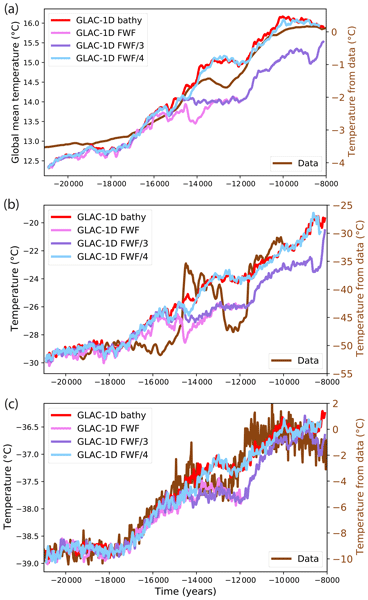
Nathaelle Bouttes, Fanny Lhardy, Aurélien Quiquet, Didier Paillard, Hugues Goosse, and Didier M. Roche
Clim. Past, 19, 1027–1042, https://doi.org/10.5194/cp-19-1027-2023, https://doi.org/10.5194/cp-19-1027-2023, 2023
Short summary
Short summary
The last deglaciation is a period of large warming from 21 000 to 9000 years ago, concomitant with ice sheet melting. Here, we evaluate the impact of different ice sheet reconstructions and different processes linked to their changes. Changes in bathymetry and coastlines, although not often accounted for, cannot be neglected. Ice sheet melt results in freshwater into the ocean with large effects on ocean circulation, but the timing cannot explain the observed abrupt climate changes.
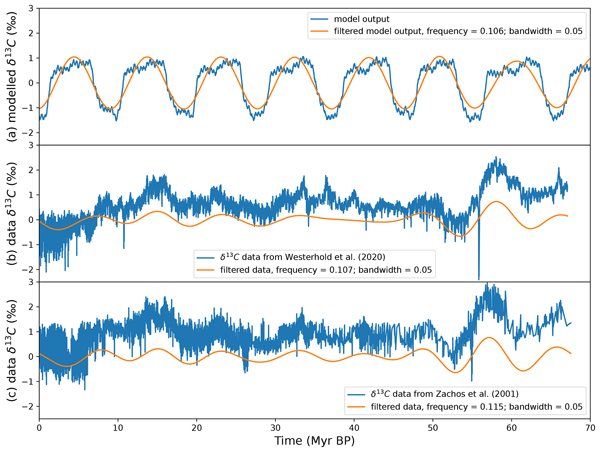
Gaëlle Leloup and Didier Paillard
Earth Syst. Dynam., 14, 291–307, https://doi.org/10.5194/esd-14-291-2023, https://doi.org/10.5194/esd-14-291-2023, 2023
Short summary
Short summary
Records of past carbon isotopes exhibit oscillations. It is clear over very different time periods that oscillations of 400 kyr take place. Also, strong oscillations of approximately 8–9 Myr are seen over different time periods. While earlier modelling studies have been able to produce 400 kyr oscillations, none of them produced 8–9 Myr cycles. Here, we propose a simple model for the carbon cycle that is able to produce 8–9 Myr oscillations in the modelled carbon isotopes.
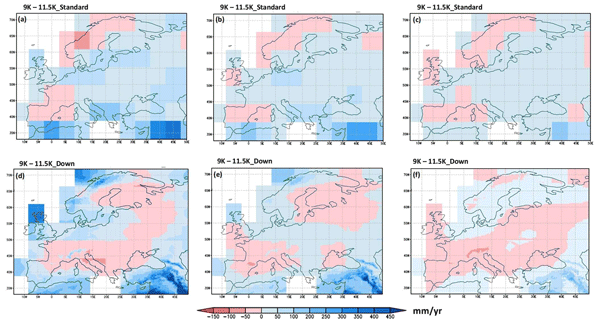
Frank Arthur, Didier M. Roche, Ralph Fyfe, Aurélien Quiquet, and Hans Renssen
Clim. Past, 19, 87–106, https://doi.org/10.5194/cp-19-87-2023, https://doi.org/10.5194/cp-19-87-2023, 2023
Short summary
Short summary
This paper simulates transcient Holocene climate in Europe by applying an interactive downscaling to the standard version of the iLOVECLIM model. The results show that downscaling presents a higher spatial variability in better agreement with proxy-based reconstructions as compared to the standard model, particularly in the Alps, the Scandes, and the Mediterranean. Our downscaling scheme is numerically cheap, which can perform kilometric multi-millennial simulations suitable for future studies.
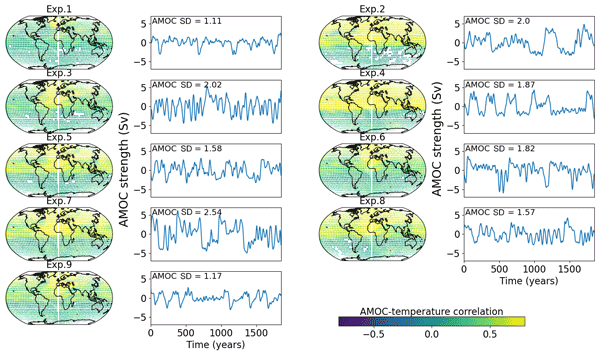
Pepijn Bakker, Hugues Goosse, and Didier M. Roche
Clim. Past, 18, 2523–2544, https://doi.org/10.5194/cp-18-2523-2022, https://doi.org/10.5194/cp-18-2523-2022, 2022
Short summary
Short summary
Natural climate variability plays an important role in the discussion of past and future climate change. Here we study centennial temperature variability and the role of large-scale ocean circulation variability using different climate models, geological reconstructions and temperature observations. Unfortunately, uncertainties in models and geological reconstructions are such that more research is needed before we can describe the characteristics of natural centennial temperature variability.
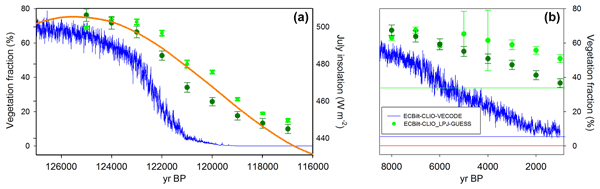
Huan Li, Hans Renssen, and Didier M. Roche
Clim. Past, 18, 2303–2319, https://doi.org/10.5194/cp-18-2303-2022, https://doi.org/10.5194/cp-18-2303-2022, 2022
Short summary
Short summary
In past warm periods, the Sahara region was covered by vegetation. In this paper we study transitions from this
greenstate to the desert state we find today. For this purpose, we have used a global climate model coupled to a vegetation model to perform transient simulations. We analyzed the model results to assess the effect of vegetation shifts on the abruptness of the transition. We find that the vegetation feedback was more efficient during the last interglacial than during the Holocene.
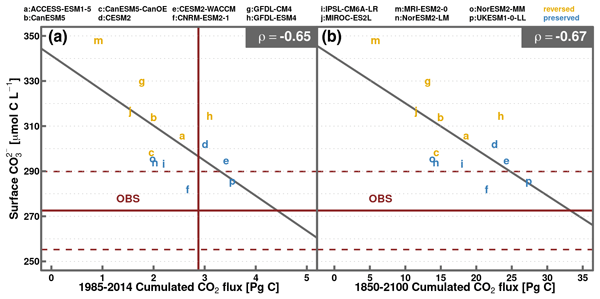
Pradeebane Vaittinada Ayar, Laurent Bopp, Jim R. Christian, Tatiana Ilyina, John P. Krasting, Roland Séférian, Hiroyuki Tsujino, Michio Watanabe, Andrew Yool, and Jerry Tjiputra
Earth Syst. Dynam., 13, 1097–1118, https://doi.org/10.5194/esd-13-1097-2022, https://doi.org/10.5194/esd-13-1097-2022, 2022
Short summary
Short summary
The El Niño–Southern Oscillation is the main driver for the natural variability of global atmospheric CO2. It modulates the CO2 fluxes in the tropical Pacific with anomalous CO2 influx during El Niño and outflux during La Niña. This relationship is projected to reverse by half of Earth system models studied here under the business-as-usual scenario. This study shows models that simulate a positive bias in surface carbonate concentrations simulate a shift in the ENSO–CO2 flux relationship.
Gaëlle Leloup and Didier Paillard
Clim. Past, 18, 547–558, https://doi.org/10.5194/cp-18-547-2022, https://doi.org/10.5194/cp-18-547-2022, 2022
Short summary
Short summary
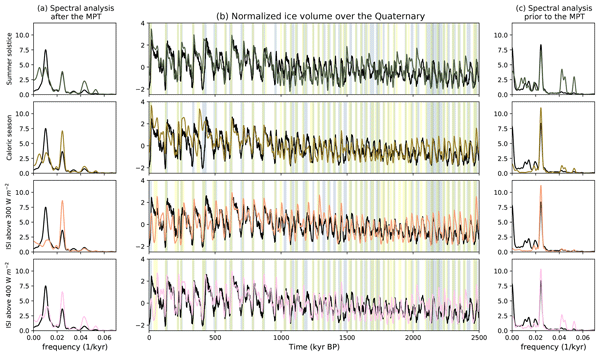
Over the last 2.6 Myr, the Quaternary period has been marked by the alternation of extended and reduced Northern Hemisphere ice sheets, known as glacial-interglacial cycles. With a simple model, we are able to reproduce the main features of the ice volume evolution, like the switch of periodicity, from 41 kyr cycles to 100 kyr cycles, observed in the data after 1 Ma. The quality of the model-data agreement depending on the input insolation and period considered is discussed.
Aurélien Quiquet, Didier M. Roche, Christophe Dumas, Nathaëlle Bouttes, and Fanny Lhardy
Clim. Past, 17, 2179–2199, https://doi.org/10.5194/cp-17-2179-2021, https://doi.org/10.5194/cp-17-2179-2021, 2021
Short summary
Short summary
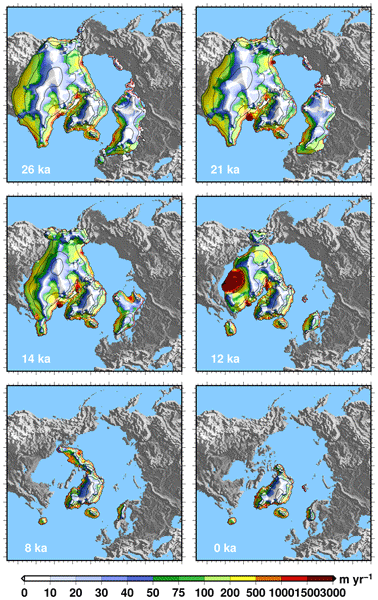
In this paper we discuss results obtained with a set of coupled ice-sheet–climate model experiments for the last 26 kyrs. The model displays a large sensitivity of the oceanic circulation to the amount of the freshwater flux resulting from ice sheet melting. Ice sheet geometry changes alone are not enough to lead to abrupt climate events, and rapid warming at high latitudes is here only reported during abrupt oceanic circulation recoveries that occurred when accounting for freshwater flux.
Cited articles
Aalto, J., Riihimäki, H., Meineri, E., Hylander, K., and Luoto, M.: Revealing topoclimatic heterogeneity using meteorological station data, International Journal of Climatology, 37, 544–556, https://doi.org/10.1002/joc.5020, 2017. a
Annan, J. D., Hargreaves, J. C., and Mauritsen, T.: A new global surface temperature reconstruction for the Last Glacial Maximum, Climate of the Past, 18, 1883–1896, https://doi.org/10.5194/cp-18-1883-2022, 2022. a
Arthur, F., Roche, D. M., Fyfe, R., Quiquet, A., and Renssen, H.: Simulations of the Holocene climate in Europe using an interactive downscaling within the iLOVECLIM model (version 1.1), Climate of the Past, 19, 87–106, https://doi.org/10.5194/cp-19-87-2023, 2023. a
Boé, J., Terray, L., Habets, F., and Martin, E.: Statistical and dynamical downscaling of the Seine basin climate for hydro-meteorological studies, International Journal of Climatology, 27, 1643–1655, https://doi.org/10.1002/joc.1602, 2007. a
Brenner, J.-B.: Code and input data for GeoDS (v.1.0): a simple Geographical DownScaling model for long-term precipitation data over complex terrains, Zenodo [code], https://doi.org/10.5281/zenodo.17045252, 2025a. a
Brenner, J.-B.: Dataset for GeoDS (v.1.0): a simple Geographical DownScaling model for long-term precipitation data over complex terrains, Zenodo [data set], https://doi.org/10.5281/zenodo.16420097, 2025b. a
Böhner, J. and Antonić, O.: Chapter 8 Land-Surface Parameters Specific to Topo-Climatology, in: Developments in Soil Science, edited by: Hengl, T. and Reuter, H. I., vol. 33, Geomorphometry, Elsevier, 195–226, https://doi.org/10.1016/S0166-2481(08)00008-1, 2009. a
Daly, C.: Guidelines for assessing the suitability of spatial climate data sets, International Journal of Climatology, 26, 707–721, https://doi.org/10.1002/joc.1322, 2006. a, b
Daly, C., Neilson, R. P., and Phillips, D. L.: A Statistical-Topographic Model for Mapping Climatological Precipitation over Mountainous Terrain, Journal of Applied Meteorology and Climatology, 33, 140–158, https://doi.org/10.1175/1520-0450(1994)033<0140:ASTMFM>2.0.CO;2, 1994. a
Fettweis, X., Franco, B., Tedesco, M., van Angelen, J. H., Lenaerts, J. T. M., van den Broeke, M. R., and Gallée, H.: Estimating the Greenland ice sheet surface mass balance contribution to future sea level rise using the regional atmospheric climate model MAR, The Cryosphere, 7, 469–489, https://doi.org/10.5194/tc-7-469-2013, 2013. a
Fiddes, J. and Gruber, S.: TopoSCALE v.1.0: downscaling gridded climate data in complex terrain, Geoscientific Model Development, 7, 387–405, https://doi.org/10.5194/gmd-7-387-2014, 2014. a
Frei, C. and Schär, C.: A precipitation climatology of the Alps from high-resolution rain-gauge observations, International Journal of Climatology, 18, 873–900, https://doi.org/10.1002/(SICI)1097-0088(19980630)18:8<873::AID-JOC255>3.0.CO;2-9, 1998. a
Gerlitz, L., Conrad, O., and Böhner, J.: Large-scale atmospheric forcing and topographic modification of precipitation rates over High Asia – a neural-network-based approach, Earth System Dynamics, 6, 61–81, https://doi.org/10.5194/esd-6-61-2015, 2015. a
Hersbach, H., Bell, B., Berrisford, P., Biavati, G., Horányi, A., Muñoz Sabater, J., Nicolas, J., Peubey, C., Radu, R., Schepers, D., Simmons, A., Soci, C., Dee, D., and Thépaut, J.-N.: ERA5 monthly averaged data on pressure levels from 1940 to present, Climate Data Store [data set], https://doi.org/10.24381/cds.6860a573, 2023. a, b
Hourdin, F., Musat, I., Bony, S., Braconnot, P., Codron, F., Dufresne, J.-L., Fairhead, L., Filiberti, M.-A., Friedlingstein, P., Grandpeix, J.-Y., Krinner, G., LeVan, P., Li, Z.-X., and Lott, F.: The LMDZ4 general circulation model: climate performance and sensitivity to parametrized physics with emphasis on tropical convection, Climate Dynamics, 27, 787–813, https://doi.org/10.1007/s00382-006-0158-0, 2006. a
Houze Jr., R. A.: Orographic effects on precipitating clouds, Reviews of Geophysics, 50, https://doi.org/10.1029/2011RG000365, 2012. a
IPCC: Climate Change 2021 – The Physical Science Basis: Working Group I Contribution to the Sixth Assessment Report of the Intergovernmental Panel on Climate Change, Cambridge University Press, 1 edn., ISBN 978-1-009-15789-6, https://doi.org/10.1017/9781009157896, 2023. a
Isotta, F. and Frei, C.: APGD: Alpine precipitation grid dataset, Federal Office of Meteorology and Climatology MeteoSwiss [data set], https://doi.org/10.18751/CLIMATE/GRIDDATA/APGD/1.0, 2013. a, b
Isotta, F. A., Frei, C., Weilguni, V., Perčec Tadić, M., Lassègues, P., Rudolf, B., Pavan, V., Cacciamani, C., Antolini, G., Ratto, S. M., Munari, M., Micheletti, S., Bonati, V., Lussana, C., Ronchi, C., Panettieri, E., Marigo, G., and Vertačnik, G.: The climate of daily precipitation in the Alps: development and analysis of a high-resolution grid dataset from pan-Alpine rain-gauge data, International Journal of Climatology, 34, 1657–1675, https://doi.org/10.1002/joc.3794, 2014. a
Jacob, D., Petersen, J., Eggert, B., Alias, A., Christensen, O. B., Bouwer, L. M., Braun, A., Colette, A., Déqué, M., Georgievski, G., Georgopoulou, E., Gobiet, A., Menut, L., Nikulin, G., Haensler, A., Hempelmann, N., Jones, C., Keuler, K., Kovats, S., Kröner, N., Kotlarski, S., Kriegsmann, A., Martin, E., van Meijgaard, E., Moseley, C., Pfeifer, S., Preuschmann, S., Radermacher, C., Radtke, K., Rechid, D., Rounsevell, M., Samuelsson, P., Somot, S., Soussana, J.-F., Teichmann, C., Valentini, R., Vautard, R., Weber, B., and Yiou, P.: EURO-CORDEX: new high-resolution climate change projections for European impact research, Regional Environmental Change, 14, 563–578, https://doi.org/10.1007/s10113-013-0499-2, 2014. a
Karger, D. N., Conrad, O., Böhner, J., Kawohl, T., Kreft, H., Soria-Auza, R. W., Zimmermann, N. E., Linder, H. P., and Kessler, M.: Climatologies at high resolution for the earth’s land surface areas, Scientific Data, 4, 170122, https://doi.org/10.1038/sdata.2017.122, 2017. a
Karger, D. N., Nobis, M. P., Normand, S., Graham, C. H., and Zimmermann, N. E.: CHELSA-TraCE21k – high-resolution (1 km) downscaled transient temperature and precipitation data since the Last Glacial Maximum, Climate of the Past, 19, 439–456, https://doi.org/10.5194/cp-19-439-2023, 2023. a, b
Ludwig, P., Gómez-Navarro, J. J., Pinto, J. G., Raible, C. C., Wagner, S., and Zorita, E.: Perspectives of regional paleoclimate modeling, Annals of the New York Academy of Sciences, 1436, 54–69, https://doi.org/10.1111/nyas.13865, 2019. a, b
Lynch-Stieglitz, J., Adkins, J. F., Curry, W. B., Dokken, T., Hall, I. R., Herguera, J. C., Hirschi, J. J.-M., Ivanova, E. V., Kissel, C., Marchal, O., Marchitto, T. M., McCave, I. N., McManus, J. F., Mulitza, S., Ninnemann, U., Peeters, F., Yu, E.-F., and Zahn, R.: Atlantic Meridional Overturning Circulation During the Last Glacial Maximum, Science, 316, 66–69, https://doi.org/10.1126/science.1137127, 2007. a
NASA JPL: NASA Shuttle Radar Topography Mission Global 1 arc second, NASA [data set], https://doi.org/10.5067/MEASURES/SRTM/SRTMGL1.003, 2013. a
Peltier, W. R. and Fairbanks, R. G.: Global glacial ice volume and Last Glacial Maximum duration from an extended Barbados sea level record, Quaternary Science Reviews, 25, 3322–3337, https://doi.org/10.1016/j.quascirev.2006.04.010, 2006. a
Pepin, N. C., Arnone, E., Gobiet, A., Haslinger, K., Kotlarski, S., Notarnicola, C., Palazzi, E., Seibert, P., Serafin, S., Schöner, W., Terzago, S., Thornton, J. M., Vuille, M., and Adler, C.: Climate Changes and Their Elevational Patterns in the Mountains of the World, Reviews of Geophysics, 60, e2020RG000730, https://doi.org/10.1029/2020RG000730, 2022. a
Roe, G. H.: OROGRAPHIC PRECIPITATION, Annual Review of Earth and Planetary Sciences, 33, 645–671, https://doi.org/10.1146/annurev.earth.33.092203.122541, 2005. a
Rugenstein, M., Bloch-Johnson, J., Abe-Ouchi, A., Andrews, T., Beyerle, U., Cao, L., Chadha, T., Danabasoglu, G., Dufresne, J.-L., Duan, L., Foujols, M.-A., Frölicher, T., Geoffroy, O., Gregory, J., Knutti, R., Li, C., Marzocchi, A., Mauritsen, T., Menary, M., Moyer, E., Nazarenko, L., Paynter, D., Saint-Martin, D., Schmidt, G. A., Yamamoto, A., and Yang, S.: LongRunMIP: Motivation and Design for a Large Collection of Millennial-Length AOGCM Simulations, Bulletin of the American Meteorological Society, 100, 2551–2570, https://doi.org/10.1175/BAMS-D-19-0068.1, 2019. a
Schoof, J. T.: Statistical Downscaling in Climatology, Geography Compass, 7, 249–265, https://doi.org/10.1111/gec3.12036, 2013. a
Schär, C., Lüthi, D., Beyerle, U., and Heise, E.: The Soil–Precipitation Feedback: A Process Study with a Regional Climate Model, Journal of Climate, 12, 722–741, https://doi.org/10.1175/1520-0442(1999)012<0722:TSPFAP>2.0.CO;2,1999. a
Shepherd, A., Ivins, E., Rignot, E., Smith, B., van den Broeke, M., Velicogna, I., Whitehouse, P., Briggs, K., Joughin, I., Krinner, G., Nowicki, S., Payne, T., Scambos, T., Schlegel, N., A, G., Agosta, C., Ahlstrøm, A., Babonis, G., Barletta, V. R., Bjørk, A. A., Blazquez, A., Bonin, J., Colgan, W., Csatho, B., Cullather, R., Engdahl, M. E., Felikson, D., Fettweis, X., Forsberg, R., Hogg, A. E., Gallee, H., Gardner, A., Gilbert, L., Gourmelen, N., Groh, A., Gunter, B., Hanna, E., Harig, C., Helm, V., Horvath, A., Horwath, M., Khan, S., Kjeldsen, K. K., Konrad, H., Langen, P. L., Lecavalier, B., Loomis, B., Luthcke, S., McMillan, M., Melini, D., Mernild, S., Mohajerani, Y., Moore, P., Mottram, R., Mouginot, J., Moyano, G., Muir, A., Nagler, T., Nield, G., Nilsson, J., Noël, B., Otosaka, I., Pattle, M. E., Peltier, W. R., Pie, N., Rietbroek, R., Rott, H., Sandberg Sørensen, L., Sasgen, I., Save, H., Scheuchl, B., Schrama, E., Schröder, L., Seo, K.-W., Simonsen, S. B., Slater, T., Spada, G., Sutterley, T., Talpe, M., Tarasov, L., van de Berg, W. J., van der Wal, W., van Wessem, M., Vishwakarma, B. D., Wiese, D., Wilton, D., Wagner, T., Wouters, B., Wuite, J., and The IMBIE Team: Mass balance of the Greenland Ice Sheet from 1992 to 2018, Nature, 579, 233–239, https://doi.org/10.1038/s41586-019-1855-2, 2020. a
Smith, R. B.: The Influence of Mountains on the Atmosphere, in: Advances in Geophysics, vol. 21, edited by: Saltzman, B., Elsevier,87–230, https://doi.org/10.1016/S0065-2687(08)60262-9, 1979. a
Smith, R. B. and Barstad, I.: A Linear Theory of Orographic Precipitation, Journal of the Atmospheric Sciences, 61, 1377–1391, https://doi.org/10.1175/1520-0469(2004)061<1377:ALTOOP>2.0.CO;2, 2004. a
Sodemann, H. and Zubler, E.: Seasonal and inter‐annual variability of the moisture sources for Alpine precipitation during 1995–2002, International Journal of Climatology, 30, 947–961, https://doi.org/10.1002/joc.1932, 2009. a
Sun, T., Yan, N., Zhu, W., and Zhuang, Q.: Assessing a machine learning-based downscaling framework for obtaining 1 km daily precipitation from GPM data, Heliyon, 10, https://doi.org/10.1016/j.heliyon.2024.e36368, 2024. a
Tapiador, F. J., Roca, R., Genio, A. D., Dewitte, B., Petersen, W., and Zhang, F.: Is Precipitation a Good Metric for Model Performance?, Bulletin of the American Meteorological Society, 100, 223–233, https://doi.org/10.1175/BAMS-D-17-0218.1, 2019. a
Tesfa, T. K., Leung, L. R., and Ghan, S. J.: Exploring Topography-Based Methods for Downscaling Subgrid Precipitation for Use in Earth System Models, Journal of Geophysical Research: Atmospheres, 125, e2019JD031456, https://doi.org/10.1029/2019JD031456, 2020. a
Vaittinada Ayar, P. V., Vrac, M., Bastin, S., Carreau, J., Déqué, M., and Gallardo, C.: Intercomparison of statistical and dynamical downscaling models under the EURO- and MED-CORDEX initiative framework: present climate evaluations, Climate Dynamics, 46, 1301, https://doi.org/10.1007/s00382-015-2647-5, 2016. a
Vautard, R., Kadygrov, N., Iles, C., Boberg, F., Buonomo, E., Bülow, K., Coppola, E., Corre, L., van Meijgaard, E., Nogherotto, R., Sandstad, M., Schwingshackl, C., Somot, S., Aalbers, E., Christensen, O. B., Ciarlo, J. M., Demory, M.-E., Giorgi, F., Jacob, D., Jones, R. G., Keuler, K., Kjellström, E., Lenderink, G., Levavasseur, G., Nikulin, G., Sillmann, J., Solidoro, C., Sørland, S. L., Steger, C., Teichmann, C., Warrach-Sagi, K., and Wulfmeyer, V.: Evaluation of the Large EURO-CORDEX Regional Climate Model Ensemble, Journal of Geophysical Research: Atmospheres, 126, e2019JD032344, https://doi.org/10.1029/2019JD032344, 2021. a
Vrac, M., Drobinski, P., Merlo, A., Herrmann, M., Lavaysse, C., Li, L., and Somot, S.: Dynamical and statistical downscaling of the French Mediterranean climate: uncertainty assessment, Natural Hazards and Earth System Sciences, 12, 2769–2784, https://doi.org/10.5194/nhess-12-2769-2012, 2012. a
Willmes, C., Becker, D., Verheul, J., Yener, Y., Zickel, M., Bolten, A., Bubenzer, O., and Bareth, G.: AN OPEN SCIENCE APPROACH TO GIS-BASED PALEOENVIRONMENT DATA, ISPRS Ann. Photogramm. Remote Sens. Spatial Inf. Sci., III-2, 159–164, https://doi.org/10.5194/isprs-annals-III-2-159-2016, 2016. a
Short summary
Due to the limited spatial and temporal coverage of observations, global models are essential tools to study climate. However, long-term climate data at fine spatial scale are difficult to obtain because of elevated computational costs such algorithms involve. This paper presents a simple model based on the description of climate/topography interactions to generate local precipitation fields at low cost. The objective is to provide a flexible and easy to use method for paleoclimate studies.
Due to the limited spatial and temporal coverage of observations, global models are essential...


