Articles | Volume 19, issue 20
https://doi.org/10.5194/gmd-19-10263-2026
© Author(s) 2026. This work is distributed under
the Creative Commons Attribution 4.0 License.
https://doi.org/10.5194/gmd-19-10263-2026
© Author(s) 2026. This work is distributed under
the Creative Commons Attribution 4.0 License.
GPU-accelerated three-dimensional variational data assimilation with automatic differentiation for WRF-Chem

Hancheng Ye
College of Meteorology and Oceanography, National University of Defense Technology, Changsha 410073, China
Zengliang Zang
CORRESPONDING AUTHOR
College of Meteorology and Oceanography, National University of Defense Technology, Changsha 410073, China
Yiwen Hu
College of Meteorology and Oceanography, National University of Defense Technology, Changsha 410073, China
Ning Liu
College of Meteorology and Oceanography, National University of Defense Technology, Changsha 410073, China
Yi Li
College of Meteorology and Oceanography, National University of Defense Technology, Changsha 410073, China
Related authors
No articles found.
Wei You, Zengliang Zang, Daichun Wang, Wei Zhong, Shuang Mei, Yiwen Hu, Jianping Guo, and Dan Niu
EGUsphere, https://doi.org/10.5194/egusphere-2026-5573, https://doi.org/10.5194/egusphere-2026-5573, 2026
This preprint is open for discussion and under review for Atmospheric Chemistry and Physics (ACP).
Short summary
Short summary
Models struggle to show how tiny airborne particles are distributed with height. We combined satellite laser measurements with a weather and air-quality model. For two cases over China in December 2019, this added particles where the model had too few and better matched observed vertical patterns. It also improved estimates of total particle amount and surface pollution, though the surface benefit faded after fourteen hours. The approach is promising, but more cases are needed before wider use.
Lina Gao, Junli Jin, Zhiquan Liu, Wei You, Xiang Xie, and Peng Yan
EGUsphere, https://doi.org/10.5194/egusphere-2026-5270, https://doi.org/10.5194/egusphere-2026-5270, 2026
This preprint is open for discussion and under review for Geoscientific Model Development (GMD).
Short summary
Short summary
Accurate PM₂.₅ forecasts are vital for public health. Current models often treat dry particles and humidity separately, despite humidity's strong effect on particle light scattering. We developed a novel framework dynamically coupling these factors, assimilating ground visibility observations to refine both pollution and humidity forecasts. It reduces PM₂.₅ errors by 17 % and improves humidity accuracy in China, offering robust support for mitigation strategies, especially in humid conditions.
Kun Liu, Daosheng Xu, Fei Zheng, Juanxiong He, Chun Li, Jeremy Cheuk-Hin Leung, Mingyang Zhang, Dingchi Zhao, Quanjun He, Yuewei Zhang, Yi Li, and Banglin Zhang
Geosci. Model Dev., 19, 2279–2297, https://doi.org/10.5194/gmd-19-2279-2026, https://doi.org/10.5194/gmd-19-2279-2026, 2026
Short summary
Short summary
The Singular Value Decomposition-three Dimensional Ensemble Variational data assimilation scheme is applied for the first time in the Tropical Regional Atmospheric Model System. With optimized three-dimensional perturbation generation and parallel strategies, computational costs were greatly reduced. Results indicate that the optimized scheme maintains reasonable accuracy while achieving much higher efficiency, suggesting good potential for practical forecasting use.
Liwen Wang, Qian Li, Qi Lv, Xuan Peng, and Wei You
Geosci. Model Dev., 18, 2427–2442, https://doi.org/10.5194/gmd-18-2427-2025, https://doi.org/10.5194/gmd-18-2427-2025, 2025
Short summary
Short summary
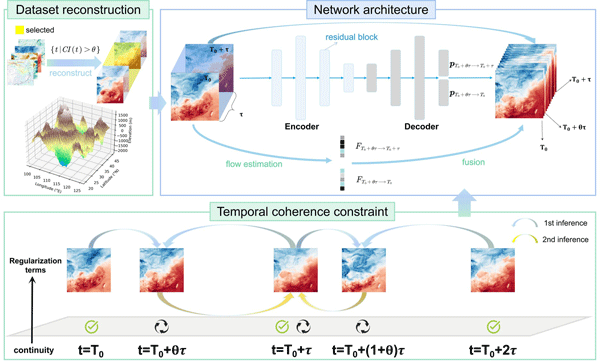
Our research presents a novel deep learning approach called "TemDeep" for downscaling atmospheric variables at arbitrary time resolutions based on temporal coherence. Results show that our method can accurately recover evolution details superior to other methods, reaching 53.7 % in the restoration rate. Our findings are important for advancing weather forecasting models and enabling more precise and reliable predictions to support disaster preparedness, agriculture, and sustainable development.
Lang Liu, Xin Long, Yi Li, Zengliang Zang, Fengwen Wang, Yan Han, Zhier Bao, Yang Chen, Tian Feng, and Jinxin Yang
Atmos. Chem. Phys., 25, 1569–1585, https://doi.org/10.5194/acp-25-1569-2025, https://doi.org/10.5194/acp-25-1569-2025, 2025
Short summary
Short summary
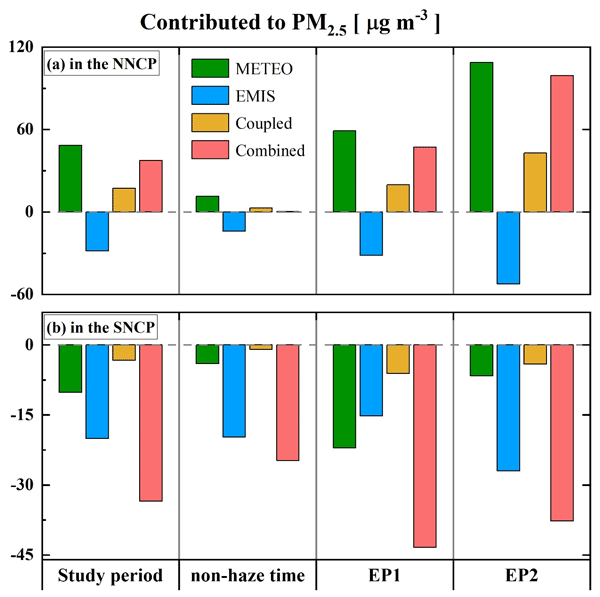
This study uses WRF-Chem to assess how meteorological conditions and emission reductions affected fine particulate matter (PM2.5) in the North China Plain (NCP). It highlights regional disparities: in the northern NCP, adverse weather negated emission reduction effects. In contrast, the southern NCP featured a PM2.5 decrease due to favorable weather and emission reductions. The research highlighted the interaction between emissions, meteorology, and PM2.5.
Yiwen Hu, Zengliang Zang, Xiaoyan Ma, Yi Li, Yanfei Liang, Wei You, Xiaobin Pan, and Zhijin Li
Atmos. Chem. Phys., 22, 13183–13200, https://doi.org/10.5194/acp-22-13183-2022, https://doi.org/10.5194/acp-22-13183-2022, 2022
Short summary
Short summary
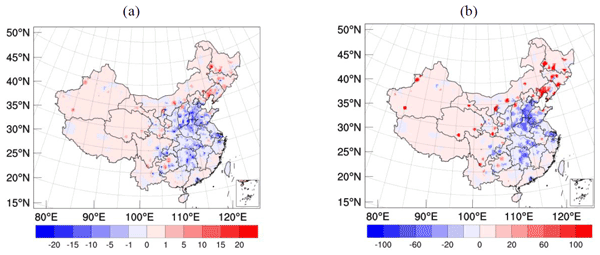
This study developed a four-dimensional variational assimilation (4DVAR) system based on WRF–Chem to optimise SO2 emissions. The 4DVAR system was applied to obtain the SO2 emissions during the early period of the COVID-19 pandemic over China. The results showed that the 4DVAR system effectively optimised emissions to describe the actual changes in SO2 emissions related to the COVID lockdown, and it can thus be used to improve the accuracy of forecasts.
Daichun Wang, Wei You, Zengliang Zang, Xiaobin Pan, Yiwen Hu, and Yanfei Liang
Geosci. Model Dev., 15, 1821–1840, https://doi.org/10.5194/gmd-15-1821-2022, https://doi.org/10.5194/gmd-15-1821-2022, 2022
Short summary
Short summary
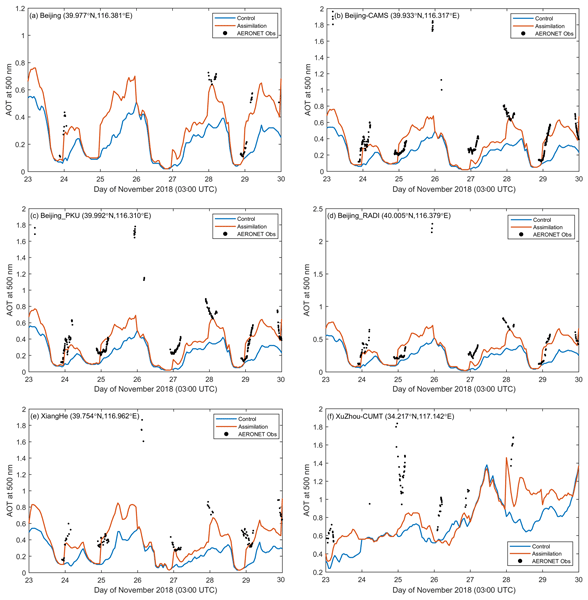
This paper presents a 3D variational data assimilation system for aerosol optical properties, including aerosol optical thickness (AOT) retrievals and lidar-based aerosol profiles, which was developed for a size-resolved sectional model in WRF-Chem. To directly assimilate aerosol optical properties, an observation operator based on the Mie scattering theory was designed. The results show that Himawari-8 AOT assimilation can significantly improve model aerosol analyses and forecasts.
Cited articles
Austin, J.: Toward the four dimensional assimilation of stratospheric chemical constituents, J. Geophys. Res.-Atmos., 97, 2569–2588, https://doi.org/10.1029/91JD02603, 1992.
Beauchamp, M., Karagali, I., Gacitúa, G., Høyer, J. L., Ballarotta, M., and Fablet, R.: Multiscale neural assimilation scheme for high-resolution sea surface temperature reconstruction from satellite observations, Sci. Rep., 15, 39928, https://doi.org/10.1038/s41598-025-23682-9, 2025.
Boudier, P., Fillion, A., Gratton, S., Gürol, S., and Zhang, S.: Data Assimilation Networks, J. Adv. Model Earth Sy., 15, e2022MS003353, https://doi.org/10.1029/2022MS003353, 2023.
Carlton, A. G., Bhave, P. V., Napelenok, S. L., Edney, E. O., Sarwar, G., Pinder, R. W., Pouliot, G. A., and Houyoux, M.: Model Representation of Secondary Organic Aerosol in CMAQv4.7, Environ. Sci. Technol., 44, 8553–8560, https://doi.org/10.1021/es100636q, 2010.
Carter, W. P. L.: Documentation of the SAPRC-99 chemical mechanism for VOC reactivity assessment, Final Report to California Air Resources Board Contract No. 92-329, and South Coast Air Quality Management District Contract No. 95-308, University of California, Riverside, https://ww2.arb.ca.gov/sites/default/files/classic/research/apr/past/92-392_1.pdf (last access: 20 October 2026), 2000.
Chattopadhyay, A., Nabizadeh, E., Bach, E., and Hassanzadeh, P.: Deep learning-enhanced ensemble-based data assimilation for high-dimensional nonlinear dynamical systems, J. Comput. Phys., 477, 111918, https://doi.org/10.1016/j.jcp.2023.111918, 2023.
Chen, D., Liu, Z., Davis, C., and Gu, Y.: Dust radiative effects on atmospheric thermodynamics and tropical cyclogenesis over the Atlantic Ocean using WRF-Chem coupled with an AOD data assimilation system, Atmos. Chem. Phys., 17, 7917–7939, https://doi.org/10.5194/acp-17-7917-2017, 2017.
Chen, H., Gao, J., Sun, T., Chen, Y., Wang, Y., and Carlin, J. T.: Assimilation of Water Vapor Retrievals from ZDR Columns Using the 3DVar Method for Improving the Short-Term Prediction of Convective Storms, Mon. Weather Rev., 152, 1077–1095, https://doi.org/10.1175/MWR-D-23-0196.1, 2024.
Cheng, S., Min, J., Liu, C., and Arcucci, R.: TorchDA: A Python package for performing data assimilation with deep learning forward and transformation functions, Comput. Phys. Commun., 306, 109359, https://doi.org/10.1016/j.cpc.2024.109359, 2025.
De Luca, P., Galletti, A., Giunta, G., and Marcellino, L.: Recursive filter based GPU algorithms in a Data Assimilation scenario, J. Comput. Sci., 53, 101339, https://doi.org/10.1016/j.jocs.2021.101339, 2021.
Denby, B., Schaap, M., Segers, A., Builtjes, P., and Horálek, J.: Comparison of two data assimilation methods for assessing PM10 exceedances on the European scale, Atmos. Environ., 42, 7122–7134, https://doi.org/10.1016/j.atmosenv.2008.05.058, 2008.
Derber, J. and Rosati, A.: A Global Oceanic Data Assimilation System, J. Phys. Oceanogr., 19, 1333–1347, https://doi.org/10.1175/1520-0485(1989)019<1333:AGODAS>2.0.CO;2, 1989.
El Akkraoui, A., Trémolet, Y., and Todling, R.: Preconditioning of variational data assimilation and the use of a bi-conjugate gradient method, Q. J. Roy. Meteor. Soc., 139, 731–741, https://doi.org/10.1002/qj.1997, 2013.
Elbern, H., Schmidt, H., and Ebel, A.: Variational data assimilation for tropospheric chemistry modeling, J. Geophys. Res.-Atmos., 102, 15967–15985, https://doi.org/10.1029/97JD01213, 1997.
Engelen, R. J., Serrar, S., and Chevallier, F.: Four-dimensional data assimilation of atmospheric CO2 using AIRS observations, J. Geophys. Res.-Atmos., 114, 2008JD010739, https://doi.org/10.1029/2008JD010739, 2009.
Fast, J. D., Gustafson, W. I., Easter, R. C., Zaveri, R. A., Barnard, J. C., Chapman, E. G., Grell, G. A., and Peckham, S. E.: Evolution of ozone, particulates, and aerosol direct radiative forcing in the vicinity of Houston using a fully coupled meteorology-chemistry-aerosol model, J. Geophys. Res.-Atmos., 111, https://doi.org/10.1029/2005JD006721, 2006.
Feng, T., G. Li, J. Cao, N. Bei, Z. Shen, W. Zhou, S. Liu, T. Zhang, Y. Li, G., Zhang, R., Fan, J., and Tie, X.: Impacts of black carbon aerosol on photolysis and ozone, J. Geophys. Res., 110, https://doi.org/10.1029/2005jd005898, 2005.
Feng, T., Bei, N., Huang, R.-J., Cao, J., Zhang, Q., Zhou, W., Tie, X., Liu, S., Zhang, T., Su, X., Lei, W., Molina, L. T., and Li, G.: Summertime ozone formation in Xi'an and surrounding areas, China, Atmos. Chem. Phys., 16, 4323–4342, https://doi.org/10.5194/acp-16-4323-2016, 2016.
Frydendall, J., Brandt, J., and Christensen, J. H.: Implementation and testing of a simple data assimilation algorithm in the regional air pollution forecast model, DEOM, Atmos. Chem. Phys., 9, 5475–5488, https://doi.org/10.5194/acp-9-5475-2009, 2009.
Gao, C., Zhang, X., Xiu, A., Tong, Q., Zhao, H., Zhang, S., Yang, G., Zhang, M., and Xie, S.: Intercomparison of multiple two-way coupled meteorology and air quality models (WRF v4.1.1–CMAQ v5.3.1, WRF–Chem v4.1.1, and WRF v3.7.1–CHIMERE v2020r1) in eastern China, Geosci. Model Dev., 17, 2471–2492, https://doi.org/10.5194/gmd-17-2471-2024, 2024.
Grell, G. A., Peckham, S. E., Schmitz, R., McKeen, S. A., Frost, G., Skamarock, W. C., and Eder, B.: Fully coupled “online” chemistry within the WRF model, Atmos. Environ., 39, 6957–6975, https://doi.org/10.1016/j.atmosenv.2005.04.027, 2005.
He, X., Zang, Z., Li, Y., Liu, N., Hu, Y., Liu, L., and You, W.: Inversion of a Near-Real-Time China Gridded Hourly SO2 Emission Inventory Using Deep Learning Combined With 3D-Variational Assimilation, Geophys. Res. Lett., 52, e2024GL114375, https://doi.org/10.1029/2024GL114375, 2025.
Hu, Y., Zang, Z., Ma, X., Li, Y., Liang, Y., You, W., Pan, X., and Li, Z.: Four-dimensional variational assimilation for SO2 emission and its application around the COVID-19 lockdown in the spring 2020 over China, Atmos. Chem. Phys., 22, 13183–13200, https://doi.org/10.5194/acp-22-13183-2022, 2022.
Jiang, Z., Liu, Z., Wang, T., Schwartz, C. S., Lin, H., and Jiang, F.: Probing into the impact of 3DVar assimilation of surface PM10 observations over China using process analysis, J. Geophys. Res.-Atmos., 118, 6738–6749, https://doi.org/10.1002/jgrd.50495, 2013.
Key, O., Takao, S., Giles, D., and Deisenroth, M. P.: Scalable data assimilation with message passing, Environ. Data Sci., 4, e1, https://doi.org/10.1017/eds.2024.47, 2025.
Li, G., Bei, N., Tie, X., and Molina, L. T.: Aerosol effects on the photochemistry in Mexico City during MCMA-2006/MILAGRO campaign, Atmos. Chem. Phys., 11, 5169–5182, https://doi.org/10.5194/acp-11-5169-2011, 2011a.
Li, G., Zavala, M., Lei, W., Tsimpidi, A. P., Karydis, V. A., Pandis, S. N., Canagaratna, M. R., and Molina, L. T.: Simulations of organic aerosol concentrations in Mexico City using the WRF-CHEM model during the MCMA-2006/MILAGRO campaign, Atmos. Chem. Phys., 11, 3789–3809, https://doi.org/10.5194/acp-11-3789-2011, 2011b.
Li, G., Lei, W., Bei, N., and Molina, L. T.: Contribution of garbage burning to chloride and PM2.5 in Mexico City, Atmos. Chem. Phys., 12, 8751–8761, https://doi.org/10.5194/acp-12-8751-2012, 2012.
Li, G., Lei, W., Zavala, M., Volkamer, R., Dusanter, S., Stevens, P., and Molina, L. T.: Impacts of HONO sources on the photochemistry in Mexico City during the MCMA-2006/MILAGO Campaign, Atmos. Chem. Phys., 10, 6551–6567, https://doi.org/10.5194/acp-10-6551-2010, 2010.
Li, Z., Chao, Y., McWilliams, J. C., and Ide, K.: A three-dimensional variational data assimilation scheme for the Regional Ocean Modeling System: Implementation and basic experiments, J. Geophys. Res., 113, 2006JC004042, https://doi.org/10.1029/2006JC004042, 2008.
Li, Z., Zang, Z., Li, Q. B., Chao, Y., Chen, D., Ye, Z., Liu, Y., and Liou, K. N.: A three-dimensional variational data assimilation system for multiple aerosol species with WRF/Chem and an application to PM2.5 prediction, Atmos. Chem. Phys., 13, 4265–4278, https://doi.org/10.5194/acp-13-4265-2013, 2013.
Liang, Y., Zang, Z., Liu, D., Yan, P., Hu, Y., Zhou, Y., and You, W.: Development of a three-dimensional variational assimilation system for lidar profile data based on a size-resolved aerosol model in WRF–Chem model v3.9.1 and its application in PM2.5 forecasts across China, Geosci. Model Dev., 13, 6285–6301, https://doi.org/10.5194/gmd-13-6285-2020, 2020.
Liu, D. C. and Nocedal, J.: On the limited memory BFGS method for large scale optimization, Math. Program., 45, 503–528, https://doi.org/10.1007/BF01589116, 1989.
Lorenc, A. C.: Analysis methods for numerical weather prediction, Q. J. Roy. Meteor. Soc., 112, 1177–1194, https://doi.org/10.1002/qj.49711247414, 1986.
Ma, X., Liu, H., and Peng, Z.: Improving WRF-Chem PM2.5 predictions by combining data assimilation and deep-learning-based bias correction, Environ. Int., 195, 109199, https://doi.org/10.1016/j.envint.2024.109199, 2025.
Moré, J. J. and Thuente, D. J.: Line search algorithms with guaranteed sufficient decrease, ACM Trans. Math. Softw., 20, 286–307, https://doi.org/10.1145/192115.192132, 1994.
National Centers for Environmental Prediction, National Weather Service, NOAA, and U.S. Department of Commerc: NCEP FNL Operational Model Global Tropospheric Analyses, continuing from July 1999, updated daily, NSF National Center for Atmospheric Research, https://doi.org/10.5065/D6M043C6, 2000.
Nocedal, J.: Updating quasi-Newton matrices with limited storage, Math. Comp., 35, 773–782, https://doi.org/10.1090/S0025-5718-1980-0572855-7, 1980.
Pagowski, M., Grell, G. A., McKeen, S. A., Peckham, S. E., and Devenyi, D.: Three-dimensional variational data assimilation of ozone and fine particulate matter observations: some results using the Weather Research and Forecasting-Chemistry model and Grid-point Statistical Interpolation, Q. J. Roy. Meteor. Soc., 136, 2013–2024, https://doi.org/10.1002/qj.700, 2010.
Parrish, D. F. and Derber, J. C.: The National Meteorological Center's Spectral Statistical-Interpolation Analysis System, Mon. Weather Rev., 120, 1747–1763, https://doi.org/10.1175/1520-0493(1992)120<1747:TNMCSS>2.0.CO;2, 1992.
Seo, M.-G. and Kim, H. M.: Effect of meteorological data assimilation using 3DVar on high-resolution simulations of atmospheric CO2 concentrations in East Asia, Atmos. Pollut. Res., 14, 101759, https://doi.org/10.1016/j.apr.2023.101759, 2023.
Tombette, M., Mallet, V., and Sportisse, B.: PM10 data assimilation over Europe with the optimal interpolation method, Atmos. Chem. Phys., 9, 57–70, https://doi.org/10.5194/acp-9-57-2009, 2009.
Tong, D., Cheng, J., Liu, Y., Yu, S., Yan, L., Hong, C., Qin, Y., Zhao, H., Zheng, Y., Geng, G., Li, M., Liu, F., Zhang, Y., Zheng, B., Clarke, L., and Zhang, Q.: Dynamic projection of anthropogenic emissions in China: methodology and 2015–2050 emission pathways under a range of socio-economic, climate policy, and pollution control scenarios, Atmos. Chem. Phys., 20, 5729–5757, https://doi.org/10.5194/acp-20-5729-2020, 2020.
Wang, D., You, W., Zang, Z., Pan, X., He, H., and Liang, Y.: A three-dimensional variational data assimilation system for a size-resolved aerosol model: Implementation and application for particulate matter and gaseous pollutant forecasts across China, Sci. China Earth Sci., 63, 1366–1380, https://doi.org/10.1007/s11430-019-9601-4, 2020.
Wang, D., You, W., Zang, Z., Pan, X., Hu, Y., and Liang, Y.: A three-dimensional variational data assimilation system for aerosol optical properties based on WRF-Chem v4.0: design, development, and application of assimilating Himawari-8 aerosol observations, Geosci. Model Dev., 15, 1821–1840, https://doi.org/10.5194/gmd-15-1821-2022, 2022.
Ye, H.: Geosci_Model_Dev_egusphere-2026-394_PY3DVar_and_FT3DVar_code_and_observation_data, Zenodo [code, data set], https://doi.org/10.5281/zenodo.23077072, 2026.
Xing, L., Wu, J., Elser, M., Tong, S., Liu, S., Li, X., Liu, L., Cao, J., Zhou, J., El-Haddad, I., Huang, R., Ge, M., Tie, X., Prévôt, A. S. H., and Li, G.: Wintertime secondary organic aerosol formation in Beijing–Tianjin–Hebei (BTH): contributions of HONO sources and heterogeneous reactions, Atmos. Chem. Phys., 19, 2343–2359, https://doi.org/10.5194/acp-19-2343-2019, 2019.
Xu, X., Sun, X., Han, W., Zhong, X., Chen, L., Gao, Z., and Li, H.: FuXi-DA: a generalized deep learning data assimilation framework for assimilating satellite observations, npj Clim. Atmos. Sci., 8, 156, https://doi.org/10.1038/s41612-025-01039-3, 2025.
Ye, H., Pan, X., You, W., Zhu, X., Zang, Z., Wang, D., Zhang, X., Hu, Y., and Jin, S.: Impact of CALIPSO profile data assimilation on 3-D aerosol improvement in a size-resolved aerosol model, Atmos. Res., 264, 105877, https://doi.org/10.1016/j.atmosres.2021.105877, 2021.
Ye, H., You, W., Zang, Z., Pan, X., Wang, D., Zhou, N., Hu, Y., Liang, Y., and Yan, P.: Observing system simulation experiment (OSSE)-quantitative evaluation of lidar observation networks to improve 3D aerosol forecasting in China, Atmos. Res., 270, 106069, https://doi.org/10.1016/j.atmosres.2022.106069, 2022.
Zang, Z., Li, Z., Pan, X., Hao, Z., and You, W.: Aerosol data assimilation and forecasting experiments using aircraft and surface observations during CalNex, Tellus B, 68, https://doi.org/10.3402/tellusb.v68.29812, 2016.
Zhang, J., Campbell, J. R., Reid, J. S., Westphal, D. L., Baker, N. L., Campbell, W. F., and Hyer, E. J.: Evaluating the impact of assimilating CALIOP-derived aerosol extinction profiles on a global mass transport model: CALIOP DATA ASSIMILATION, Geophys. Res. Lett., 38, https://doi.org/10.1029/2011GL047737, 2011.
Zheng, B., Cheng, J., Geng, G., Wang, X., Li, M., Shi, Q., Qi, J., Lei, Y., Zhang, Q., and He, K.: Mapping anthropogenic emissions in China at 1 km spatial resolution and its application in air quality modeling, Sci. Bull., 66, 612–620, https://doi.org/10.1016/j.scib.2020.12.008, 2021.
Zhou, Y., Sun, W., Liu, Z., Gao, L., Chen, D., Feng, J., Zhang, T., and Zhou, Z.: Further development and application of the WRFDA-Chem three-dimensional variational (3DVar) system: Joint assimilation of satellite AOD retrievals and surface observations, Atmos. Res., 316, 107942, https://doi.org/10.1016/j.atmosres.2025.107942, 2025.
Short summary
Our study pioneers a PyTorch-based atmospheric pollutant assimilation system that leverages automatic differentiation and Graphics Processing Unit (GPU) acceleration to achieve order-of-magnitude speedups, while maintaining analysis accuracy consistent with the traditional Fortran-based system.
Our study pioneers a PyTorch-based atmospheric pollutant assimilation system that leverages...
Altmetrics
Final-revised paper
Preprint