
Articles | Volume 18, issue 23
https://doi.org/10.5194/gmd-18-9967-2025
© Author(s) 2025. This work is distributed under
the Creative Commons Attribution 4.0 License.
the Creative Commons Attribution 4.0 License.
https://doi.org/10.5194/gmd-18-9967-2025
© Author(s) 2025. This work is distributed under
the Creative Commons Attribution 4.0 License.
the Creative Commons Attribution 4.0 License.
Model description paper
| 
11 Dec 2025
Model description paper |
| 11 Dec 2025
| 11 Dec 2025
DRIVE v1.0: a data-driven framework to estimate road transport emissions and temporal profiles
Daniel Kühbacher
CORRESPONDING AUTHOR

Professorship of Environmental Sensing and Modeling, Technical University of Munich, Munich, Germany
Professorship of Environmental Sensing and Modeling, Technical University of Munich, Munich, Germany
Patrick Aigner
Professorship of Environmental Sensing and Modeling, Technical University of Munich, Munich, Germany
Mario Ilic
Chair of Traffic Engineering and Control, Technical University of Munich, Munich, Germany
Ingrid Super
Department of Climate, Air and Sustainability, TNO, Utrecht, the Netherlands
Hugo Denier van der Gon
Department of Climate, Air and Sustainability, TNO, Utrecht, the Netherlands
Related authors
Patrick Aigner, Jia Chen, Felix Böhm, Mali Chariot, Lukas Emmenegger, Lars Frölich, Stuart Grange, Daniel Kühbacher, Klaus Kürzinger, Olivier Laurent, Moritz Makowski, Pascal Rubli, Adrian Schmitt, and Adrian Wenzel
Atmos. Meas. Tech., 19, 745–773, https://doi.org/10.5194/amt-19-745-2026, https://doi.org/10.5194/amt-19-745-2026, 2026
Short summary
Short summary
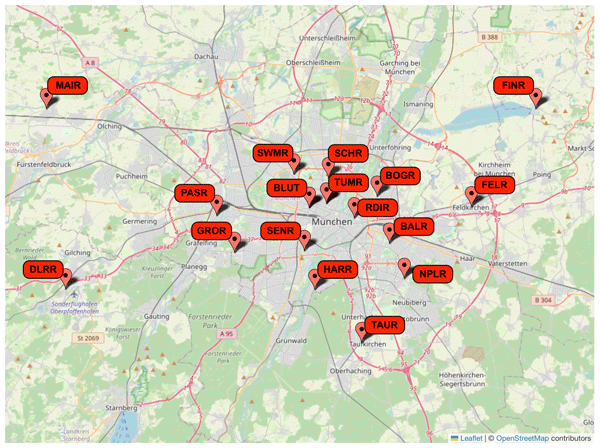
Dense urban CO2 monitoring is challenging due to cost and operational constraints. We developed a mid-cost sensor network for Munich, deployed on 17 rooftops. Temperature-stabilized enclosures and automated 2-point calibration ensured reliable performance, assessed by side-by-side comparison with a Picarro reference. In 1.5 years, the network collected 90 million measurements and resolved urban-rural gradients and seasonal diurnal patterns, capturing spatial CO2 variability at city scale.
Chlöe N. Schooling, Liang Feng, Ingrid Super, and Paul I. Palmer
Atmos. Chem. Phys., 26, 13743–13766, https://doi.org/10.5194/acp-26-13743-2026, https://doi.org/10.5194/acp-26-13743-2026, 2026
Short summary
Short summary
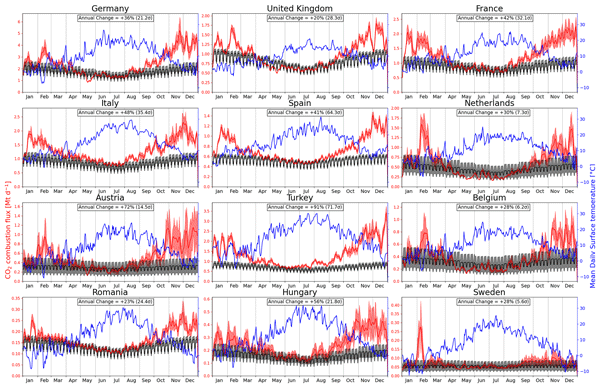
We developed a method to estimate carbon dioxide emissions across Europe using satellite measurements of nitrogen dioxide, which is released alongside fuel combustion. By applying sector-specific ratios, we convert nitrogen dioxide observations into carbon dioxide estimates, revealing stronger seasonal patterns with higher total emissions across Europe, especially in winter. This approach provides more accurate information to monitor human-caused emissions and support climate action.
Jacob B. H. Bushey, Michael Bertolacci, Joshua Benmergui, Julian Kostinek, Maryann Sargent, Marvin Knapp, Ethan Kyzivat, Sasha Ayvazov, Marcus Russi, Zhan Zhang, Apisada Chulakadabba, Jia Chen, Christopher Chan Miller, Sébastien Roche, Lucas A. Estrada, James D. East, Luna Yin, James P. Williams, Anthony Himmelberger, Ritesh Gautam, Mark Omara, and Steven C. Wofsy
EGUsphere, https://doi.org/10.5194/egusphere-2026-4693, https://doi.org/10.5194/egusphere-2026-4693, 2026
This preprint is open for discussion and under review for Atmospheric Measurement Techniques (AMT).
Short summary
Short summary
MethaneSAT was a designed to measure the concentration of methane in the atmosphere over oil and gas producing regions. Our modeling framework uses observations from MethaneSAT to estimate emissions from the Permian Basin. We show that the model accurately captures spatial patterns in emissions and compares well to other models that rely on different atmospheric transport. This data set is valuable for emissions monitoring and mitigation at high spatial resolution and with high precision.
Tobias Grasberger, Jia Chen, Benjamin Zanger, Alessandro Lupoli, Moritz Oliveira Makowski, Josef Stauber, and Felix Krahmer
EGUsphere, https://doi.org/10.5194/egusphere-2026-3161, https://doi.org/10.5194/egusphere-2026-3161, 2026
This preprint is open for discussion and under review for Geoscientific Model Development (GMD).
Short summary
Short summary
As climate change makes reliable city-scale greenhouse gas monitoring more urgent, we developed a new mathematical method to better trace back emissions in cities. We combine approaches that detect point sources with methods that estimate widespread emissions for inferring urban emissions from air measurements. The result is a more accurate emission field reconstruction than traditional methods, adapted to the heterogeneous urban greenhouse gas emissions and supporting targeted climate action.
Ingrid Super, David Mathas, Bastiaan Jonkheid, Arjo Segers, and Jeroen Kuenen
Earth Syst. Sci. Data, 18, 6119–6137, https://doi.org/10.5194/essd-18-6119-2026, https://doi.org/10.5194/essd-18-6119-2026, 2026
Short summary
Short summary
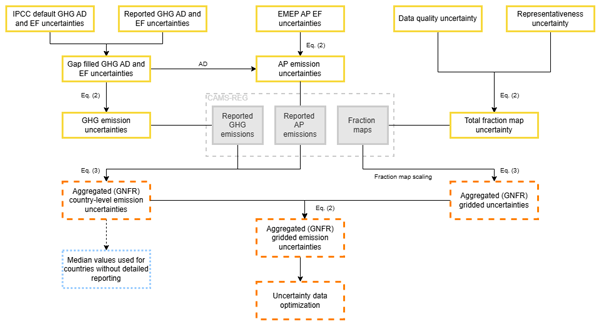
We present an emission uncertainty estimate to support atmospheric monitoring of greenhouse gas and air pollutant emissions using observations. We find significant uncertainties in country-total emissions and in the spatial distribution of emissions, largely dependent on the pollutant considered. A dataset is provided that lists emission uncertainties for a state-of-the-art European emission inventory.
Zhan Zhang, Maryann Sargent, Ethan Manninen, Jack D. Warren, Apisada Chulakadabba, Marcus Russi, Sasha Ayvazov, Joshua Benmergui, Marvin Knapp, Ethan Kyzivat, Christopher C. Miller, Sébastien Roche, Bingkun Luo, David J. Miller, Maya Nasr, Manuel Perez-Carrasco, Kang Sun, James P. Williams, Katlyn MacKay, Mark Omara, Jia Chen, Luis Guanter, Ritesh Gautam, Jonathan Franklin, Xiong Liu, and Steven C. Wofsy
Atmos. Meas. Tech., 19, 4637–4651, https://doi.org/10.5194/amt-19-4637-2026, https://doi.org/10.5194/amt-19-4637-2026, 2026
Short summary
Short summary
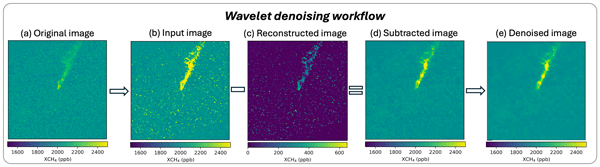
Methane released into the atmosphere is often difficult to detect in satellite imagery because the signals can be weak and hidden by background noise. We developed an automated method that improves the visibility of methane plumes while reducing false detections, decreasing the need for time-consuming manual inspection. The method identifies more small emission sources across different instruments, helping build a more complete understanding of methane emissions and their impacts.
Yanxia Li, Hengheng Zhang, Xuefeng Shi, Yaowei Li, Sophie Abou-Rizk, Jessica B. Smith, Zhaojin An, Adrian Wenzel, Junwei Song, Thomas Leisner, Frank Keutsch, Jia Chen, and Harald Saathoff
EGUsphere, https://doi.org/10.5194/egusphere-2026-2195, https://doi.org/10.5194/egusphere-2026-2195, 2026
Short summary
Short summary
Urban ultrafine particles (<100 nm) sources and growth mechanisms remain poorly constrained. Measurements in a Munich street canyon reveal that UFP number concentrations peak at night due to traffic and cooking emissions trapped under a shallow boundary layer. Particle growth is instead driven by condensation of organic vapours with strong seasonal shifts: biogenic and barbeque charcoal biomass-burning compounds dominate in summer, while combustion-related organics control winter growth.
Jacoline van Es, Juan Bettinelli, Jia Chen, Carina van der Veen, Stephan Henne, and Thomas Röckmann
EGUsphere, https://doi.org/10.5194/egusphere-2026-1813, https://doi.org/10.5194/egusphere-2026-1813, 2026
Short summary
Short summary
The increase in atmospheric methane needs to be reversed to mitigate ongoing global warming. To design effective mitigation strategies at the local/regional level, we need to know what the main sources in different regions. We show that in Hamburg, Germany, biogenic sources are the main contributor to local emissions, with additional contributions from waste and fossil CH4 sources. An unexpected source is the Elbe River, with spiking emissions at low tide when the river banks are exposed.
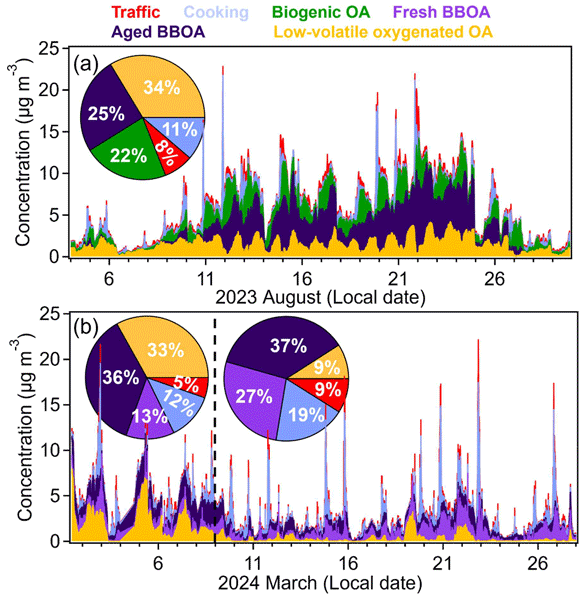
Yanxia Li, Hengheng Zhang, Xuefeng Shi, Yaowei Li, Sophie Abou-Rizk, Jessica B. Smith, Zhaojin An, Adrian Wenzel, Junwei Song, Thomas Leisner, Frank Keutsch, Jia Chen, and Harald Saathoff
Atmos. Chem. Phys., 26, 5813–5837, https://doi.org/10.5194/acp-26-5813-2026, https://doi.org/10.5194/acp-26-5813-2026, 2026
Short summary
Short summary
We analyzed Munich air samples across seasons to identify pollution sources. Traffic contributes less to particles than expected, while biomass burning dominates year-round. Summer barbecuing and winter heating release significant pollution. Monoterpene emissions from plants produce particles at night. Effective air quality improvement requires year-round strategies targeting biomass burning, not just vehicles. Understanding each city's pollution patterns is essential for public health.
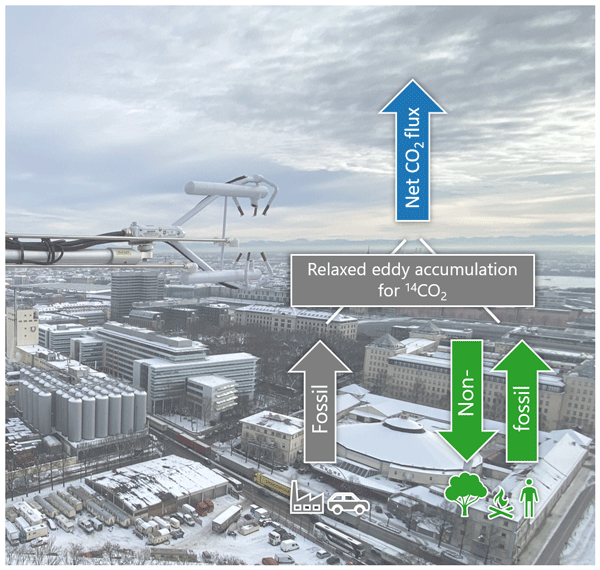
Ann-Kristin Kunz, Samuel Hammer, Patrick Aigner, Laura Bignotti, Lars Borchardt, Jia Chen, Julian Della Coletta, Lukas Emmenegger, Markus Eritt, Xochilt Gutiérrez, Josh Hashemi, Rainer Hilland, Christopher Holst, Armin Jordan, Natascha Kljun, Richard Kneißl, Changxing Lan, Virgile Legendre, Ingeborg Levin, Benjamin Loubet, Matthias Mauder, Betty Molinier, Susanne Preunkert, Michel Ramonet, Stavros Stagakis, and Andreas Christen
Atmos. Chem. Phys., 26, 4967–5003, https://doi.org/10.5194/acp-26-4967-2026, https://doi.org/10.5194/acp-26-4967-2026, 2026
Short summary
Short summary
We present radiocarbon (14C)-based fossil fuel CO2 fluxes from relaxed eddy accumulation measurements on tall towers in the cities of Zurich, Paris, and Munich. By separating net CO2 fluxes into fossil and non-fossil components, these data reveal significant and variable contributions from human, plant, and soil respiration, as well as point-source emissions. These unique insights into CO2 flux composition offer crucial information for observation-based validation of urban emission estimates.
Ethan Manninen, Apisada Chulakadabba, Maryann Sargent, Zhan Zhang, Harshil Kamdar, Jack Warren, Sébastien Roche, Christopher Chan Miller, Ethan Kyzivat, Joshua Benmergui, Jasna Pittman, Eleanor Walker, Jacob Bushey, Jenna Samra, Jacob Hawthorne, Bingkun Luo, Maya Nasr, Kang Sun, Jonathan Franklin, Xiong Liu, Jia Chen, and Steven Wofsy
EGUsphere, https://doi.org/10.5194/egusphere-2026-115, https://doi.org/10.5194/egusphere-2026-115, 2026
Short summary
Short summary
In this work, my coauthors and I interpret methane emissions observed by remote sensing systems as plumes, or point sources. We model the probability that a general imaging spectrometer will detect a plume, and apply this framework to multiple remote sensing systems. We show how two recent systems- MethanAIR and MethaneSAT- provide enough sensitivity to facility scale point sources to effectively characterize most plume emissions in the Permian Basin.
Patrick Aigner, Jia Chen, Felix Böhm, Mali Chariot, Lukas Emmenegger, Lars Frölich, Stuart Grange, Daniel Kühbacher, Klaus Kürzinger, Olivier Laurent, Moritz Makowski, Pascal Rubli, Adrian Schmitt, and Adrian Wenzel
Atmos. Meas. Tech., 19, 745–773, https://doi.org/10.5194/amt-19-745-2026, https://doi.org/10.5194/amt-19-745-2026, 2026
Short summary
Short summary
Dense urban CO2 monitoring is challenging due to cost and operational constraints. We developed a mid-cost sensor network for Munich, deployed on 17 rooftops. Temperature-stabilized enclosures and automated 2-point calibration ensured reliable performance, assessed by side-by-side comparison with a Picarro reference. In 1.5 years, the network collected 90 million measurements and resolved urban-rural gradients and seasonal diurnal patterns, capturing spatial CO2 variability at city scale.
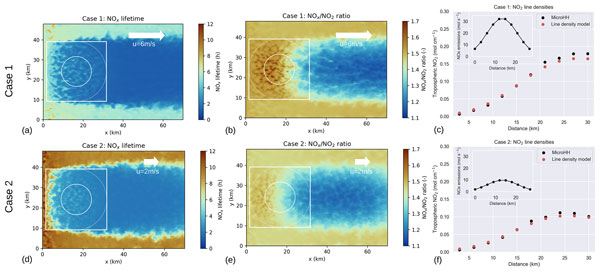
Alba Mols, Klaas Folkert Boersma, Hugo Denier van der Gon, and Maarten Krol
Atmos. Chem. Phys., 26, 1497–1513, https://doi.org/10.5194/acp-26-1497-2026, https://doi.org/10.5194/acp-26-1497-2026, 2026
Short summary
Short summary
We created a new method to estimate city air pollution (NOx emissions) using satellite data. Testing showed our approach works well to track how pollution spreads in urban areas. By combining observations with prior knowledge, we improved the accuracy of emission estimates. Applying this method in Paris, we found emissions were 9 % lower than expected and dropped significantly during COVID-19 lockdowns. Our method offers a reliable way to monitor pollution and support environmental policies.
Friedrich Klappenbach, Jia Chen, Moritz Makowski, Andreas Luther, Ronald C. Cohen, Jonathan E. Franklin, Steven Wofsy, and Taylor Jones
EGUsphere, https://doi.org/10.5194/egusphere-2026-204, https://doi.org/10.5194/egusphere-2026-204, 2026
Short summary
Short summary
This work presents a method to infer the upwind distance of emission sources from observed peak enhancements in atmospheric trace gas measurements. Using meteorological model output, the expected dilution of emissions from candidate source locations is quantified and compared with the observed concentration signals. The method enables the identification of plausible source locations and provides quantitative estimates of their emission strengths.
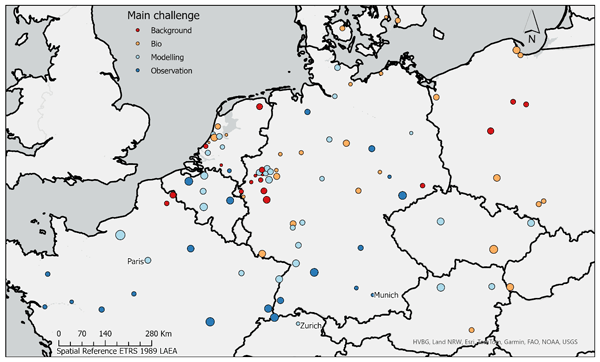
Ida Storm, Ute Karstens, Claudio D'Onofrio, Alex Vermeulen, Samuel Hammer, Ingrid Super, Theo Glauch, and Wouter Peters
Earth Syst. Sci. Data, 17, 6681–6701, https://doi.org/10.5194/essd-17-6681-2025, https://doi.org/10.5194/essd-17-6681-2025, 2025
Short summary
Short summary
Many cities are committed to ambitious CO2 emission reduction targets, supported by climate action plans. Atmospheric measurements are essential to verify that these efforts lead to the expected reductions. Here, we characterise and compare 96 European cities across 18 metrics, linking them to four major challenges in CO2 emissions monitoring. Our framework includes a tool with additional cities and metrics, as well as "mapbooks" for the 96 cities.
Dominik Brunner, Ivo Suter, Leonie Bernet, Lionel Constantin, Stuart K. Grange, Pascal Rubli, Junwei Li, Jia Chen, Alessandro Bigi, and Lukas Emmenegger
Atmos. Chem. Phys., 25, 14387–14410, https://doi.org/10.5194/acp-25-14387-2025, https://doi.org/10.5194/acp-25-14387-2025, 2025
Short summary
Short summary
To support the city of Zurich in tracking its path to net-zero greenhouse gas emissions planned to be reached by 2040, a CO2 emission monitoring system was established. The system combines a dense network of CO2 sensors with a high-resolution atmospheric transport model GRAMM/GRAL. This study presents the setup of the model together with its numerous inputs and evaluates its performance in comparison with observations from the CO2 sensor network.
Marc Guevara, Augustin Colette, Antoine Guion, Valentin Petiot, Mario Adani, Joaquim Arteta, Anna Benedictow, Robert Bergström, Andrea Bolignano, Paula Camps, Ana C. Carvalho, Jesper Heile Christensen, Florian Couvidat, Ilaria D'Elia, Hugo Denier van der Gon, Gaël Descombes, John Douros, Hilde Fagerli, Yalda Fatahi, Elmar Friese, Lise Frohn, Michael Gauss, Camilla Geels, Risto Hänninen, Kaj Hansen, Oriol Jorba, Jacek W. Kaminski, Rostislav Kouznetsov, Richard Kranenburg, Jeroen Kuenen, Victor Lannuque, Frédérik Meleux, Agnes Nyíri, Yuliia Palamarchuk, Carlos Pérez García-Pando, Lennard Robertson, Felicita Russo, Arjo Segers, Mikhail Sofiev, Joanna Struzewska, Renske Timmermans, Andreas Uppstu, Alvaro Valdebenito, and Zhuyun Ye
Atmos. Chem. Phys., 25, 13245–13278, https://doi.org/10.5194/acp-25-13245-2025, https://doi.org/10.5194/acp-25-13245-2025, 2025
Short summary
Short summary
Air quality models require hourly emissions to accurately represent dispersion and physico-chemical processes in the atmosphere. Since emission inventories are typically provided at the annual level, emissions are downscaled to a refined temporal resolution using temporal profiles. This study quantifies the impact of using new anthropogenic temporal profiles on the performance of an European air quality multi-model ensemble. Overall, the findings indicate an improvement of the modelling results.
Augustin Colette, Gaëlle Collin, François Besson, Etienne Blot, Vincent Guidard, Frédérik Meleux, Adrien Royer, Valentin Petiot, Claire Miller, Oihana Fermond, Alizé Jeant, Mario Adani, Joaquim Arteta, Anna Benedictow, Robert Bergström, Dene Bowdalo, Jorgen Brandt, Gino Briganti, Ana C. Carvalho, Jesper Heile Christensen, Florian Couvidat, Ilaria D'Elia, Massimo D'Isidoro, Hugo Denier van der Gon, Gaël Descombes, Enza Di Tomaso, John Douros, Jeronimo Escribano, Henk Eskes, Hilde Fagerli, Yalda Fatahi, Johannes Flemming, Elmar Friese, Lise Frohn, Michael Gauss, Camilla Geels, Guido Guarnieri, Marc Guevara, Antoine Guion, Jonathan Guth, Risto Hänninen, Kaj Hansen, Ulas Im, Ruud Janssen, Marine Jeoffrion, Mathieu Joly, Luke Jones, Oriol Jorba, Evgeni Kadantsev, Michael Kahnert, Jacek W. Kaminski, Rostislav Kouznetsov, Richard Kranenburg, Jeroen Kuenen, Anne Caroline Lange, Joachim Langner, Victor Lannuque, Francesca Macchia, Astrid Manders, Mihaela Mircea, Agnes Nyiri, Miriam Olid, Carlos Pérez García-Pando, Yuliia Palamarchuk, Antonio Piersanti, Blandine Raux, Miha Razinger, Lennard Robertson, Arjo Segers, Martijn Schaap, Pilvi Siljamo, David Simpson, Mikhail Sofiev, Anders Stangel, Joanna Struzewska, Carles Tena, Renske Timmermans, Thanos Tsikerdekis, Svetlana Tsyro, Svyatoslav Tyuryakov, Anthony Ung, Andreas Uppstu, Alvaro Valdebenito, Peter van Velthoven, Lina Vitali, Zhuyun Ye, Vincent-Henri Peuch, and Laurence Rouïl
Geosci. Model Dev., 18, 6835–6883, https://doi.org/10.5194/gmd-18-6835-2025, https://doi.org/10.5194/gmd-18-6835-2025, 2025
Short summary
Short summary
The Copernicus Atmosphere Monitoring Service – Regional Production delivers daily forecasts, analyses, and reanalyses of air quality in Europe. The service relies on a distributed modelling production by 11 leading European modelling teams following stringent requirements with an operational design that has no equivalent in the world. All the products are free, open, and quality-assured and disseminated with a high level of reliability.
August Thomasson, Pontus Roldin, Nick Schutgens, Babitha George, Hugo Denier van der Gon, Guillaume Monteil, and Marko Scholze
EGUsphere, https://doi.org/10.5194/egusphere-2025-1568, https://doi.org/10.5194/egusphere-2025-1568, 2025
Short summary
Short summary
We present top-down black carbon emissions estimates in Europe based on surface observations of concentrations at 24 rural sites from 2021. The annual emissions are 411 ± 10 Gg, overall 18 % higher compared to a traditional bottom-up estimate. Emissions are higher in for instance eastern Europe and the Iberian peninsula but lower in Poland and Italy. Validation with independent observations show overall better match and the uncertainties are reduced.
Arseniy Karagodin-Doyennel, Fredrik Jansson, Bart J. H. van Stratum, Hugo Denier van der Gon, Jordi Vilà-Guerau de Arellano, and Sander Houweling
Geosci. Model Dev., 18, 4571–4599, https://doi.org/10.5194/gmd-18-4571-2025, https://doi.org/10.5194/gmd-18-4571-2025, 2025
Short summary
Short summary
We introduce a new simulation platform based on the Dutch Atmospheric Large-Eddy Simulation (DALES) to simulate carbon dioxide (CO2) emissions and their dispersion in turbulent environments at a hectometer resolution. This model incorporates both anthropogenic emission inventories and online ecosystem fluxes. Simulation results for the main urban area in the Netherlands demonstrate the strong potential of DALES to improve CO2 emission modeling and to support mitigation strategies.
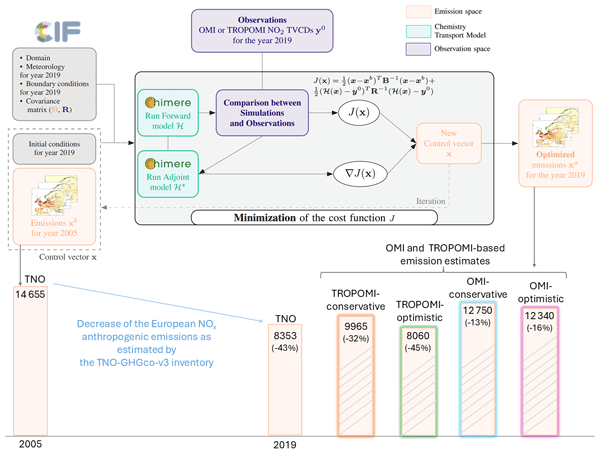
Audrey Fortems-Cheiney, Grégoire Broquet, Elise Potier, Antoine Berchet, Isabelle Pison, Adrien Martinez, Robin Plauchu, Rimal Abeed, Aurélien Sicsik-Paré, Gaelle Dufour, Adriana Coman, Dilek Savas, Guillaume Siour, Henk Eskes, Hugo A. C. Denier van der Gon, and Stijn N. C. Dellaert
Atmos. Chem. Phys., 25, 6047–6068, https://doi.org/10.5194/acp-25-6047-2025, https://doi.org/10.5194/acp-25-6047-2025, 2025
Short summary
Short summary
This study assesses the potential of the Ozone Monitoring Instrument (OMI) and the TROPOspheric Monitoring Instrument (TROPOMI) satellite observations to inform about the decrease in anthropogenic emissions of nitrogen oxides (NOx) in 2019 compared with 2005 at regional to national scales in Europe. Both the OMI and TROPOMI inversions show decreases in European NOx anthropogenic emission budgets in 2019 compared to 2005 but with different magnitudes.
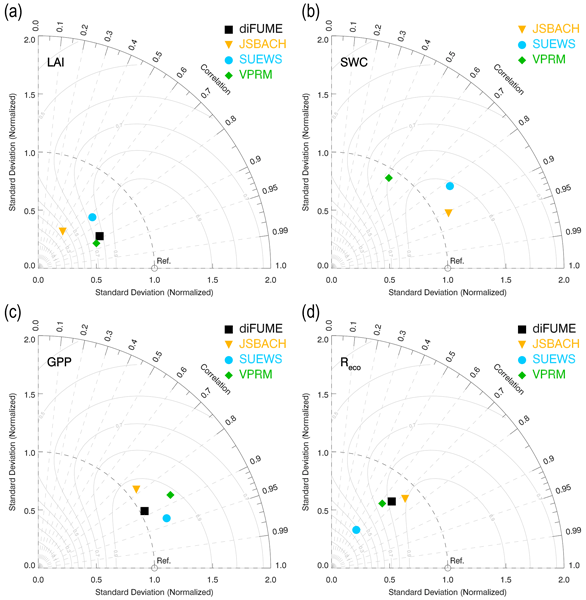
Stavros Stagakis, Dominik Brunner, Junwei Li, Leif Backman, Anni Karvonen, Lionel Constantin, Leena Järvi, Minttu Havu, Jia Chen, Sophie Emberger, and Liisa Kulmala
Biogeosciences, 22, 2133–2161, https://doi.org/10.5194/bg-22-2133-2025, https://doi.org/10.5194/bg-22-2133-2025, 2025
Short summary
Short summary
The balance between CO2 uptake and emissions from urban green areas is still not well understood. This study evaluated for the first time the urban park CO2 exchange simulations with four different types of biosphere model by comparing them with observations. Even though some advantages and disadvantages of the different model types were identified, there was no strong evidence that more complex models performed better than simple ones.
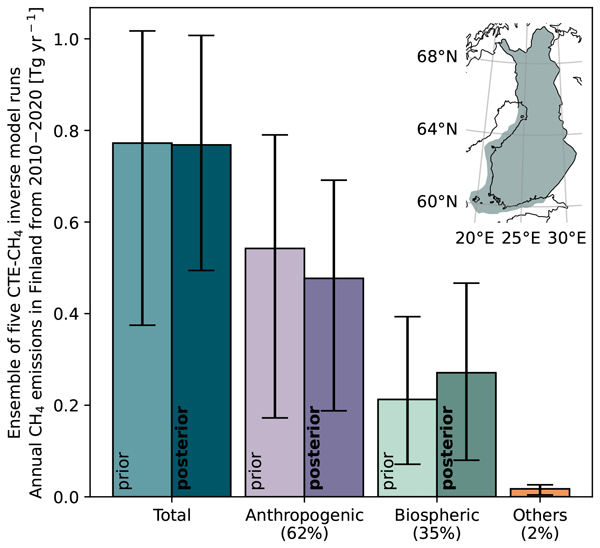
Maria K. Tenkanen, Aki Tsuruta, Hugo Denier van der Gon, Lena Höglund-Isaksson, Antti Leppänen, Tiina Markkanen, Ana Maria Roxana Petrescu, Maarit Raivonen, Hermanni Aaltonen, and Tuula Aalto
Atmos. Chem. Phys., 25, 2181–2206, https://doi.org/10.5194/acp-25-2181-2025, https://doi.org/10.5194/acp-25-2181-2025, 2025
Short summary
Short summary
Accurate national methane (CH4) emission estimates are essential for tracking progress towards climate goals. This study compares estimates from Finland, which use different methods and scales, and shows how well a global model estimates emissions within a country. The bottom-up estimates vary a lot, but constraining them with atmospheric CH4 measurements brought the estimates closer together. We also highlight the importance of quantifying natural emissions alongside anthropogenic emissions.
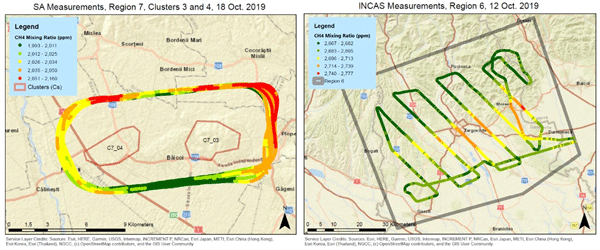
Hossein Maazallahi, Foteini Stavropoulou, Samuel Jonson Sutanto, Michael Steiner, Dominik Brunner, Mariano Mertens, Patrick Jöckel, Antoon Visschedijk, Hugo Denier van der Gon, Stijn Dellaert, Nataly Velandia Salinas, Stefan Schwietzke, Daniel Zavala-Araiza, Sorin Ghemulet, Alexandru Pana, Magdalena Ardelean, Marius Corbu, Andreea Calcan, Stephen A. Conley, Mackenzie L. Smith, and Thomas Röckmann
Atmos. Chem. Phys., 25, 1497–1511, https://doi.org/10.5194/acp-25-1497-2025, https://doi.org/10.5194/acp-25-1497-2025, 2025
Short summary
Short summary
This article presents insights from airborne in situ measurements collected during the ROmanian Methane Emissions from Oil and gas (ROMEO) campaign supported by two models. Results reveal Romania's oil and gas methane emissions were significantly under-reported to the United Nations Framework Convention on Climate Change (UNFCCC) in 2019. A large underestimation was also found in the Emissions Database for Global Atmospheric Research (EDGAR) v7.0 for the study domain in the same year.
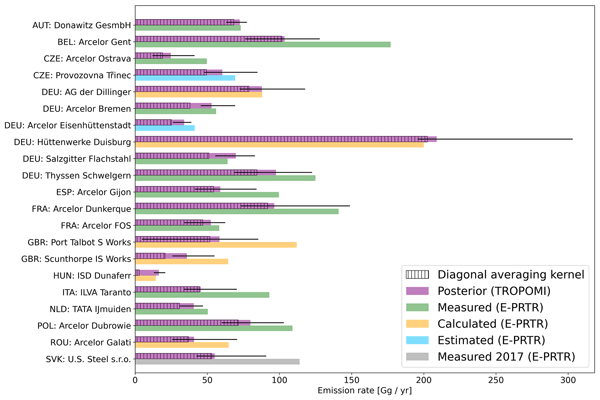
Gijs Leguijt, Joannes D. Maasakkers, Hugo A. C. Denier van der Gon, Arjo J. Segers, Tobias Borsdorff, Ivar R. van der Velde, and Ilse Aben
Atmos. Chem. Phys., 25, 555–574, https://doi.org/10.5194/acp-25-555-2025, https://doi.org/10.5194/acp-25-555-2025, 2025
Short summary
Short summary
The production of steel coincides with large emissions of greenhouse gases and air pollutants including carbon monoxide. European facilities are required to report their emissions, which are estimated using a variety of methods. We evaluate these estimates using carbon monoxide concentrations measured via satellite. We find generally good agreement between our values and those reported but also identify some uncertainties, showing that satellites can provide insights into these emissions.
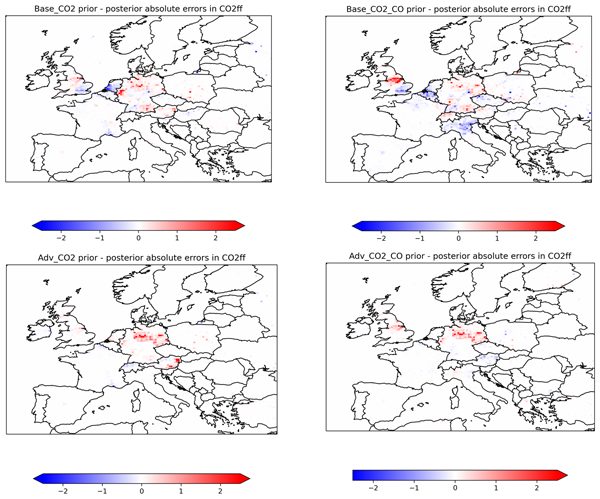
Ingrid Super, Tia Scarpelli, Arjan Droste, and Paul I. Palmer
Geosci. Model Dev., 17, 7263–7284, https://doi.org/10.5194/gmd-17-7263-2024, https://doi.org/10.5194/gmd-17-7263-2024, 2024
Short summary
Short summary
Monitoring greenhouse gas emission reductions requires a combination of models and observations, as well as an initial emission estimate. Each component provides information with a certain level of certainty and is weighted to yield the most reliable estimate of actual emissions. We describe efforts for estimating the uncertainty in the initial emission estimate, which significantly impacts the outcome. Hence, a good uncertainty estimate is key for obtaining reliable information on emissions.
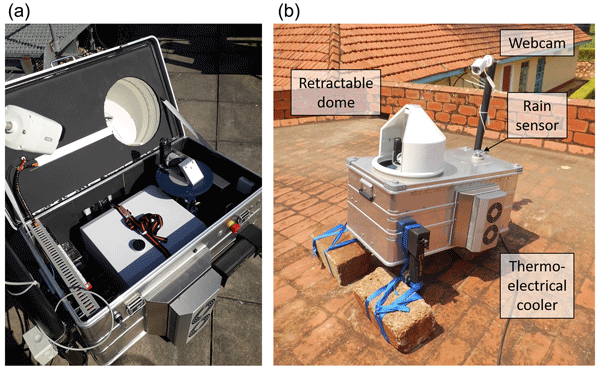
Neil Humpage, Hartmut Boesch, William Okello, Jia Chen, Florian Dietrich, Mark F. Lunt, Liang Feng, Paul I. Palmer, and Frank Hase
Atmos. Meas. Tech., 17, 5679–5707, https://doi.org/10.5194/amt-17-5679-2024, https://doi.org/10.5194/amt-17-5679-2024, 2024
Short summary
Short summary
We used a Bruker EM27/SUN spectrometer within an automated weatherproof enclosure to measure greenhouse gas column concentrations over a 3-month period in Jinja, Uganda. The portability of the EM27/SUN allows us to evaluate satellite and model data in locations not covered by traditional validation networks. This is of particular value in tropical Africa, where extensive terrestrial ecosystems are a significant store of carbon and play a key role in the atmospheric budgets of CO2 and CH4.
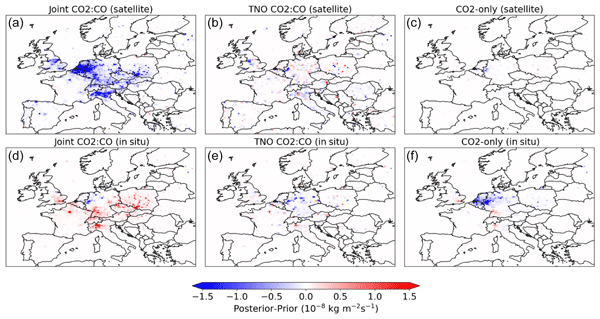
Tia R. Scarpelli, Paul I. Palmer, Mark Lunt, Ingrid Super, and Arjan Droste
Atmos. Chem. Phys., 24, 10773–10791, https://doi.org/10.5194/acp-24-10773-2024, https://doi.org/10.5194/acp-24-10773-2024, 2024
Short summary
Short summary
Under the Paris Agreement, countries must track their anthropogenic greenhouse gas emissions. This study describes a method to determine self-consistent estimates for combustion emissions and natural fluxes of CO2 from atmospheric data. We report consistent estimates inferred using this approach from satellite data and ground-based data over Europe, suggesting that satellite data can be used to determine national anthropogenic CO2 emissions for countries where ground-based CO2 data are absent.
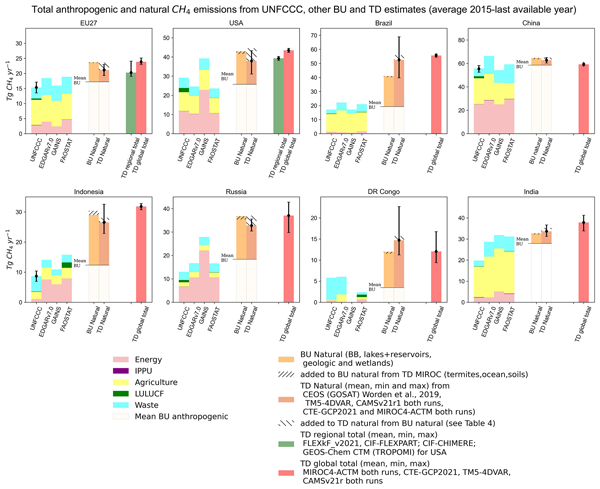
Ana Maria Roxana Petrescu, Glen P. Peters, Richard Engelen, Sander Houweling, Dominik Brunner, Aki Tsuruta, Bradley Matthews, Prabir K. Patra, Dmitry Belikov, Rona L. Thompson, Lena Höglund-Isaksson, Wenxin Zhang, Arjo J. Segers, Giuseppe Etiope, Giancarlo Ciotoli, Philippe Peylin, Frédéric Chevallier, Tuula Aalto, Robbie M. Andrew, David Bastviken, Antoine Berchet, Grégoire Broquet, Giulia Conchedda, Stijn N. C. Dellaert, Hugo Denier van der Gon, Johannes Gütschow, Jean-Matthieu Haussaire, Ronny Lauerwald, Tiina Markkanen, Jacob C. A. van Peet, Isabelle Pison, Pierre Regnier, Espen Solum, Marko Scholze, Maria Tenkanen, Francesco N. Tubiello, Guido R. van der Werf, and John R. Worden
Earth Syst. Sci. Data, 16, 4325–4350, https://doi.org/10.5194/essd-16-4325-2024, https://doi.org/10.5194/essd-16-4325-2024, 2024
Short summary
Short summary
This study provides an overview of data availability from observation- and inventory-based CH4 emission estimates. It systematically compares them and provides recommendations for robust comparisons, aiming to steadily engage more parties in using observational methods to complement their UNFCCC submissions. Anticipating improvements in atmospheric modelling and observations, future developments need to resolve knowledge gaps in both approaches and to better quantify remaining uncertainty.
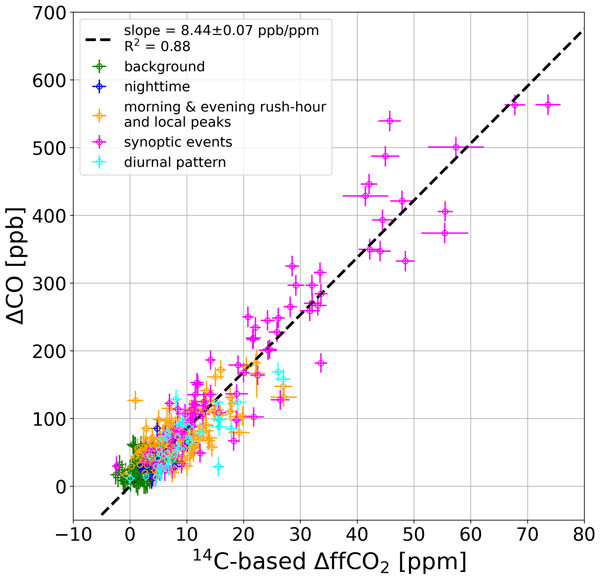
Fabian Maier, Ingeborg Levin, Sébastien Conil, Maksym Gachkivskyi, Hugo Denier van der Gon, and Samuel Hammer
Atmos. Chem. Phys., 24, 8205–8223, https://doi.org/10.5194/acp-24-8205-2024, https://doi.org/10.5194/acp-24-8205-2024, 2024
Short summary
Short summary
We assess the uncertainty in continuous fossil fuel carbon dioxide (ffCO2) estimates derived from carbon monoxide (CO) observations and radiocarbon (14CO2) flask measurements from an urban and a rural site. This study provides the basis for using continuous CO-based ffCO2 observations in atmospheric transport inversion frameworks to derive ffCO2 emission estimates. We also compare the flask-based CO / ffCO2 ratios with modeled ratios to validate an emission inventory for central Europe.
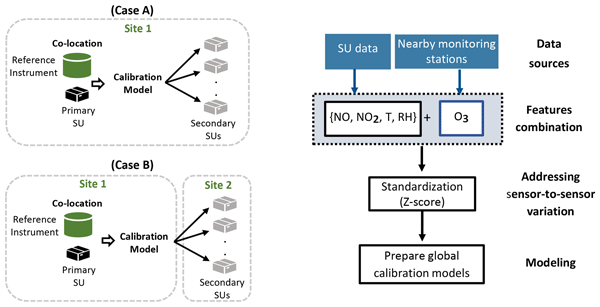
Ayah Abu-Hani, Jia Chen, Vigneshkumar Balamurugan, Adrian Wenzel, and Alessandro Bigi
Atmos. Meas. Tech., 17, 3917–3931, https://doi.org/10.5194/amt-17-3917-2024, https://doi.org/10.5194/amt-17-3917-2024, 2024
Short summary
Short summary
This study examined the transferability of machine learning calibration models among low-cost sensor units targeting NO2 and NO. The global models were evaluated under similar and different emission conditions. To counter cross-sensitivity, the study proposed integrating O3 measurements from nearby reference stations, in Switzerland. The models show substantial improvement when O3 measurements are incorporated, which is more pronounced when in regions with elevated O3 concentrations.
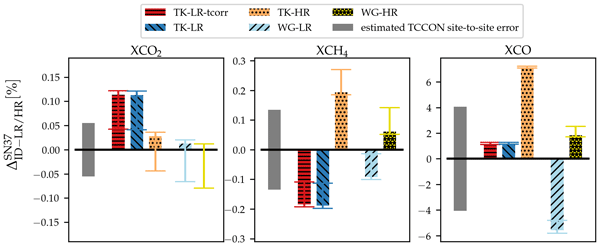
Benedikt Herkommer, Carlos Alberti, Paolo Castracane, Jia Chen, Angelika Dehn, Florian Dietrich, Nicholas M. Deutscher, Matthias Max Frey, Jochen Groß, Lawson Gillespie, Frank Hase, Isamu Morino, Nasrin Mostafavi Pak, Brittany Walker, and Debra Wunch
Atmos. Meas. Tech., 17, 3467–3494, https://doi.org/10.5194/amt-17-3467-2024, https://doi.org/10.5194/amt-17-3467-2024, 2024
Short summary
Short summary
The Total Carbon Column Observing Network is a network of ground-based Fourier transform infrared (FTIR) spectrometers used mainly for satellite validation. To ensure the highest-quality validation data, the network needs to be highly consistent. This is a major challenge, which so far is solved by site comparisons with airborne in situ measurements. In this work, we describe the use of a portable FTIR spectrometer as a travel standard for evaluating the consistency of TCCON sites.
Audrey Fortems-Cheiney, Gregoire Broquet, Elise Potier, Robin Plauchu, Antoine Berchet, Isabelle Pison, Hugo Denier van der Gon, and Stijn Dellaert
Atmos. Chem. Phys., 24, 4635–4649, https://doi.org/10.5194/acp-24-4635-2024, https://doi.org/10.5194/acp-24-4635-2024, 2024
Short summary
Short summary
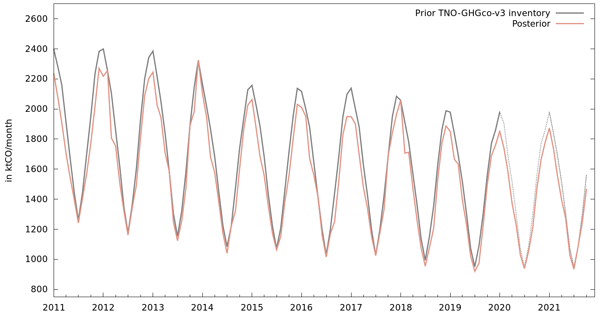
We have estimated the carbon monixide (CO) European emissions from satellite observations of the MOPITT instrument at the relatively high resolution of 0.5° for a period of over 10 years from 2011 to 2021. The analysis of the inversion results reveals the challenges associated with the inversion of CO emissions at the regional scale over Europe.
Ville-Veikko Paunu, Niko Karvosenoja, David Segersson, Susana López-Aparicio, Ole-Kenneth Nielsen, Marlene Schmidt Plejdrup, Throstur Thorsteinsson, Dam Thanh Vo, Jeroen Kuenen, Hugo Denier van der Gon, Jukka-Pekka Jalkanen, Jørgen Brandt, and Camilla Geels
Earth Syst. Sci. Data, 16, 1453–1474, https://doi.org/10.5194/essd-16-1453-2024, https://doi.org/10.5194/essd-16-1453-2024, 2024
Short summary
Short summary
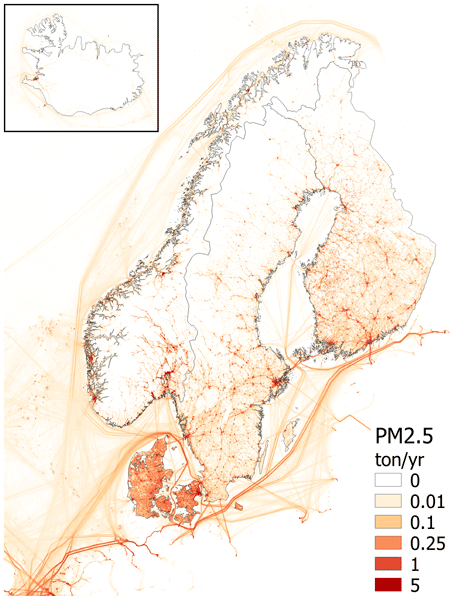
Air pollution is an important cause of adverse health effects, even in Nordic countries. To assess their health impacts, emission inventories with high spatial resolution are needed. We studied how national data and methods for the spatial distribution of the emissions compare to a European level inventory. For road transport the methods are well established, but for machinery and off-road emissions the current recommendations for the spatial distribution of these emissions should be improved.
Ruben Urraca, Greet Janssens-Maenhout, Nicolás Álamos, Lucas Berna-Peña, Monica Crippa, Sabine Darras, Stijn Dellaert, Hugo Denier van der Gon, Mark Dowell, Nadine Gobron, Claire Granier, Giacomo Grassi, Marc Guevara, Diego Guizzardi, Kevin Gurney, Nicolás Huneeus, Sekou Keita, Jeroen Kuenen, Ana Lopez-Noreña, Enrique Puliafito, Geoffrey Roest, Simone Rossi, Antonin Soulie, and Antoon Visschedijk
Earth Syst. Sci. Data, 16, 501–523, https://doi.org/10.5194/essd-16-501-2024, https://doi.org/10.5194/essd-16-501-2024, 2024
Short summary
Short summary
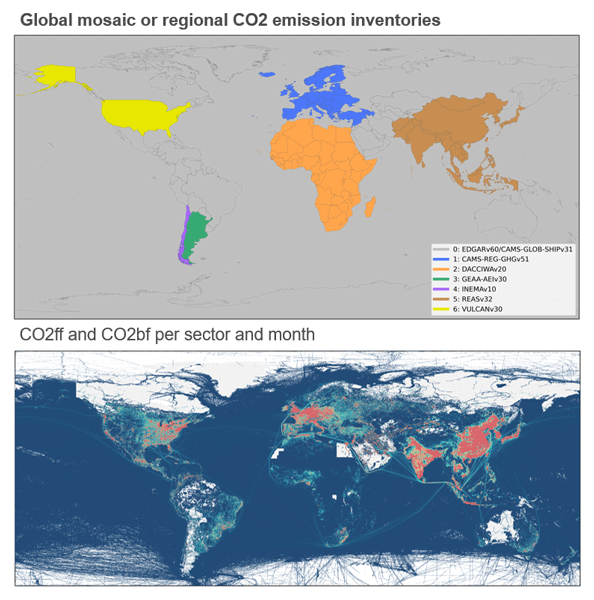
CoCO2-MOSAIC 1.0 is a global mosaic of regional bottom-up inventories providing gridded (0.1×0.1) monthly emissions of anthropogenic CO2. Regional inventories include country-specific information and finer spatial resolution than global inventories. CoCO2-MOSAIC provides harmonized access to these datasets and can be considered as a regionally accepted reference to assess the quality of global inventories, as done in the current paper.
Marc Guevara, Santiago Enciso, Carles Tena, Oriol Jorba, Stijn Dellaert, Hugo Denier van der Gon, and Carlos Pérez García-Pando
Earth Syst. Sci. Data, 16, 337–373, https://doi.org/10.5194/essd-16-337-2024, https://doi.org/10.5194/essd-16-337-2024, 2024
Short summary
Short summary
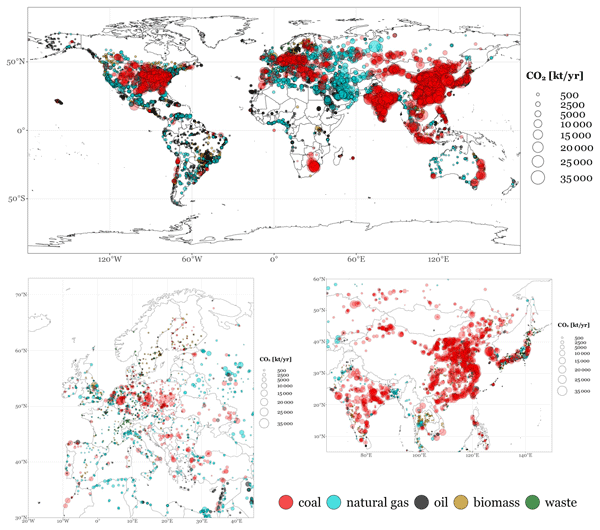
A global dataset of emissions from thermal power plants was created for the year 2018. The resulting catalogue reports annual emissions of CO2 and co-emitted species (NOx, CO, SO2 and CH4) for more than 16000 individual facilities at their exact geographical locations. Information on the temporal and vertical distributions of the emissions is also provided at the facility level. The dataset is intended to support current and future satellite emission monitoring and inverse modelling efforts.
Xinxu Zhao, Jia Chen, Julia Marshall, Michal Gałkowski, Stephan Hachinger, Florian Dietrich, Ankit Shekhar, Johannes Gensheimer, Adrian Wenzel, and Christoph Gerbig
Atmos. Chem. Phys., 23, 14325–14347, https://doi.org/10.5194/acp-23-14325-2023, https://doi.org/10.5194/acp-23-14325-2023, 2023
Short summary
Short summary
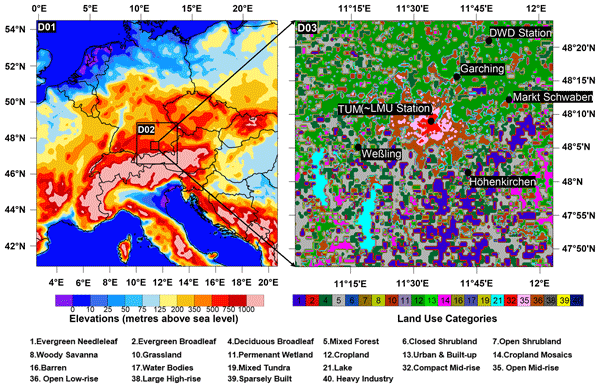
We develop a modeling framework using the Weather Research and Forecasting model at a high spatial resolution (up to 400 m) to simulate atmospheric transport of greenhouse gases and interpret column observations. Output is validated against weather stations and column measurements in August 2018. The differential column method is applied, aided by air-mass transport tracing with the Stochastic Time-Inverted Lagrangian Transport (STILT) model, also for an exploratory measurement interpretation.
Hossein Maazallahi, Antonio Delre, Charlotte Scheutz, Anders M. Fredenslund, Stefan Schwietzke, Hugo Denier van der Gon, and Thomas Röckmann
Atmos. Meas. Tech., 16, 5051–5073, https://doi.org/10.5194/amt-16-5051-2023, https://doi.org/10.5194/amt-16-5051-2023, 2023
Short summary
Short summary
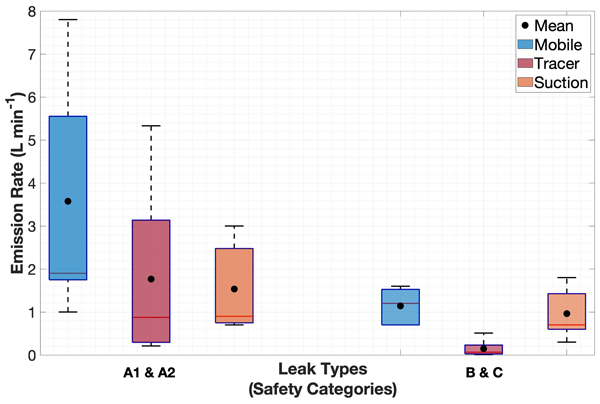
Measurement methods are increasingly deployed to verify reported methane emissions of gas leaks. This study describes unique advantages and limitations of three methods. Two methods are rapidly deployed, but uncertainties and biases exist for some leak locations. In contrast, the suction method could accurately determine leak rates in principle. However, this method, which provides data for the German emission inventory, creates an overall low bias in our study due to non-random site selection.
Matthew J. McGrath, Ana Maria Roxana Petrescu, Philippe Peylin, Robbie M. Andrew, Bradley Matthews, Frank Dentener, Juraj Balkovič, Vladislav Bastrikov, Meike Becker, Gregoire Broquet, Philippe Ciais, Audrey Fortems-Cheiney, Raphael Ganzenmüller, Giacomo Grassi, Ian Harris, Matthew Jones, Jürgen Knauer, Matthias Kuhnert, Guillaume Monteil, Saqr Munassar, Paul I. Palmer, Glen P. Peters, Chunjing Qiu, Mart-Jan Schelhaas, Oksana Tarasova, Matteo Vizzarri, Karina Winkler, Gianpaolo Balsamo, Antoine Berchet, Peter Briggs, Patrick Brockmann, Frédéric Chevallier, Giulia Conchedda, Monica Crippa, Stijn N. C. Dellaert, Hugo A. C. Denier van der Gon, Sara Filipek, Pierre Friedlingstein, Richard Fuchs, Michael Gauss, Christoph Gerbig, Diego Guizzardi, Dirk Günther, Richard A. Houghton, Greet Janssens-Maenhout, Ronny Lauerwald, Bas Lerink, Ingrid T. Luijkx, Géraud Moulas, Marilena Muntean, Gert-Jan Nabuurs, Aurélie Paquirissamy, Lucia Perugini, Wouter Peters, Roberto Pilli, Julia Pongratz, Pierre Regnier, Marko Scholze, Yusuf Serengil, Pete Smith, Efisio Solazzo, Rona L. Thompson, Francesco N. Tubiello, Timo Vesala, and Sophia Walther
Earth Syst. Sci. Data, 15, 4295–4370, https://doi.org/10.5194/essd-15-4295-2023, https://doi.org/10.5194/essd-15-4295-2023, 2023
Short summary
Short summary
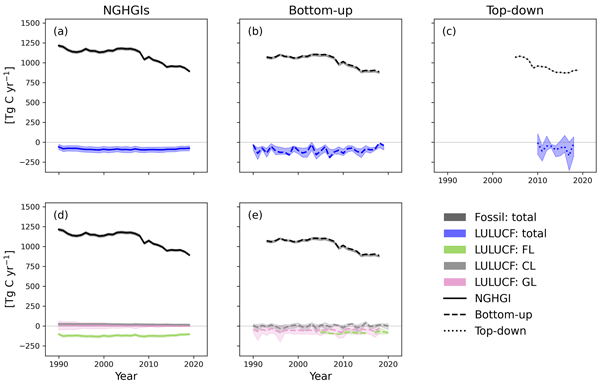
Accurate estimation of fluxes of carbon dioxide from the land surface is essential for understanding future impacts of greenhouse gas emissions on the climate system. A wide variety of methods currently exist to estimate these sources and sinks. We are continuing work to develop annual comparisons of these diverse methods in order to clarify what they all actually calculate and to resolve apparent disagreement, in addition to highlighting opportunities for increased understanding.
Foteini Stavropoulou, Katarina Vinković, Bert Kers, Marcel de Vries, Steven van Heuven, Piotr Korbeń, Martina Schmidt, Julia Wietzel, Pawel Jagoda, Jaroslav M. Necki, Jakub Bartyzel, Hossein Maazallahi, Malika Menoud, Carina van der Veen, Sylvia Walter, Béla Tuzson, Jonas Ravelid, Randulph Paulo Morales, Lukas Emmenegger, Dominik Brunner, Michael Steiner, Arjan Hensen, Ilona Velzeboer, Pim van den Bulk, Hugo Denier van der Gon, Antonio Delre, Maklawe Essonanawe Edjabou, Charlotte Scheutz, Marius Corbu, Sebastian Iancu, Denisa Moaca, Alin Scarlat, Alexandru Tudor, Ioana Vizireanu, Andreea Calcan, Magdalena Ardelean, Sorin Ghemulet, Alexandru Pana, Aurel Constantinescu, Lucian Cusa, Alexandru Nica, Calin Baciu, Cristian Pop, Andrei Radovici, Alexandru Mereuta, Horatiu Stefanie, Alexandru Dandocsi, Bas Hermans, Stefan Schwietzke, Daniel Zavala-Araiza, Huilin Chen, and Thomas Röckmann
Atmos. Chem. Phys., 23, 10399–10412, https://doi.org/10.5194/acp-23-10399-2023, https://doi.org/10.5194/acp-23-10399-2023, 2023
Short summary
Short summary
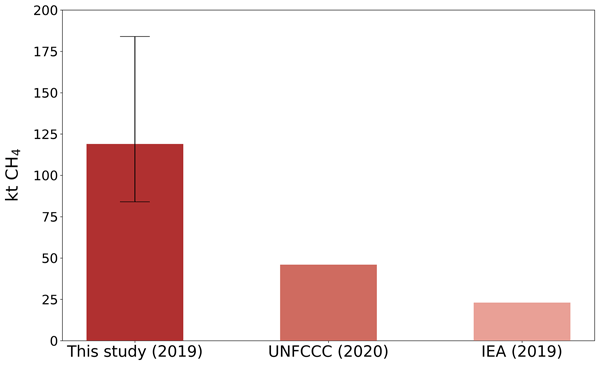
In this study, we quantify CH4 emissions from onshore oil production sites in Romania at source and facility level using a combination of ground- and drone-based measurement techniques. We show that the total CH4 emissions in our studied areas are much higher than the emissions reported to UNFCCC, and up to three-quarters of the detected emissions are related to operational venting. Our results suggest that oil and gas production infrastructure in Romania holds a massive mitigation potential.
Vigneshkumar Balamurugan, Jia Chen, Adrian Wenzel, and Frank N. Keutsch
Atmos. Chem. Phys., 23, 10267–10285, https://doi.org/10.5194/acp-23-10267-2023, https://doi.org/10.5194/acp-23-10267-2023, 2023
Short summary
Short summary
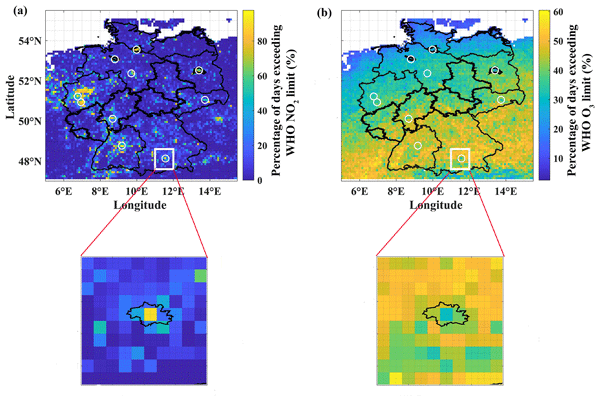
In this study, machine learning models are employed to model NO2 and O3 concentrations. We employed a wide range of sources of data, including meteorological and column satellite measurements, to model NO2 and O3 concentrations. The spatial and temporal variability, and their drivers, were investigated. Notably, the machine learning model established the relationship between NOx and O3. Despite the fact that metropolitan regions are NO2 hotspots, rural areas have high O3 concentrations.
Jean-Philippe Putaud, Enrico Pisoni, Alexander Mangold, Christoph Hueglin, Jean Sciare, Michael Pikridas, Chrysanthos Savvides, Jakub Ondracek, Saliou Mbengue, Alfred Wiedensohler, Kay Weinhold, Maik Merkel, Laurent Poulain, Dominik van Pinxteren, Hartmut Herrmann, Andreas Massling, Claus Nordstroem, Andrés Alastuey, Cristina Reche, Noemí Pérez, Sonia Castillo, Mar Sorribas, Jose Antonio Adame, Tuukka Petaja, Katrianne Lehtipalo, Jarkko Niemi, Véronique Riffault, Joel F. de Brito, Augustin Colette, Olivier Favez, Jean-Eudes Petit, Valérie Gros, Maria I. Gini, Stergios Vratolis, Konstantinos Eleftheriadis, Evangelia Diapouli, Hugo Denier van der Gon, Karl Espen Yttri, and Wenche Aas
Atmos. Chem. Phys., 23, 10145–10161, https://doi.org/10.5194/acp-23-10145-2023, https://doi.org/10.5194/acp-23-10145-2023, 2023
Short summary
Short summary
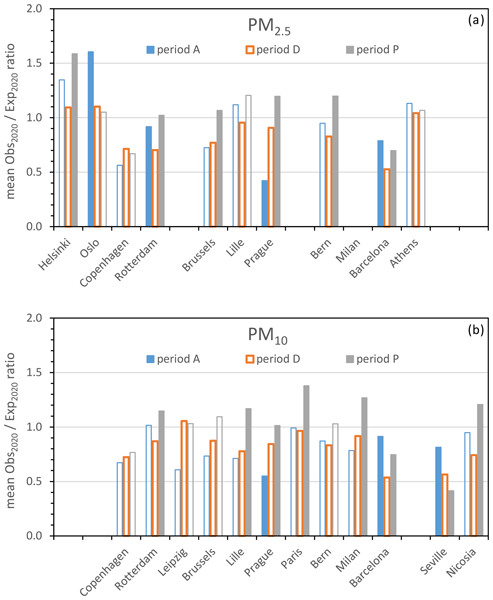
Many European people are still exposed to levels of air pollution that can affect their health. COVID-19 lockdowns in 2020 were used to assess the impact of the reduction in human mobility on air pollution across Europe by comparing measurement data with values that would be expected if no lockdown had occurred. We show that lockdown measures did not lead to consistent decreases in the concentrations of fine particulate matter suspended in the air, and we investigate why.
Gijs Leguijt, Joannes D. Maasakkers, Hugo A. C. Denier van der Gon, Arjo J. Segers, Tobias Borsdorff, and Ilse Aben
Atmos. Chem. Phys., 23, 8899–8919, https://doi.org/10.5194/acp-23-8899-2023, https://doi.org/10.5194/acp-23-8899-2023, 2023
Short summary
Short summary
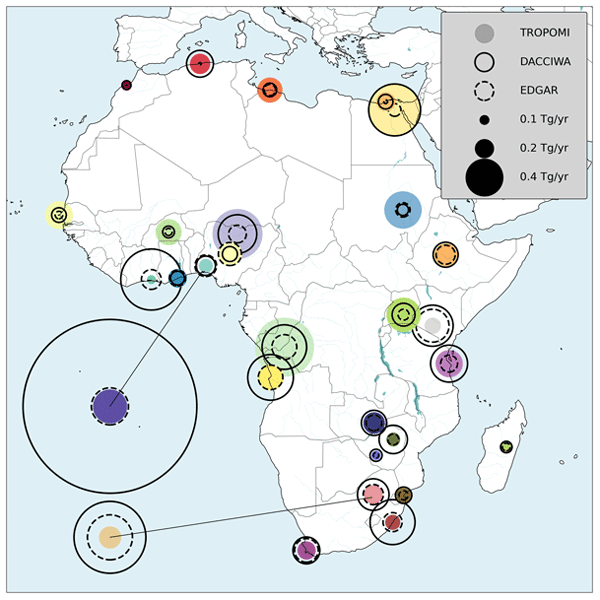
We present a fast method to evaluate carbon monoxide emissions from cities in Africa. Carbon monoxide is important for climate change in an indirect way, as it is linked to ozone, methane, and carbon dioxide. Our measurements are made with a satellite that sees the entire globe every single day. This means that we can check from space whether the current knowledge of emission rates is up to date. We make the comparison and show that the emission rates in northern Africa are underestimated.
Jinghui Lian, Thomas Lauvaux, Hervé Utard, François-Marie Bréon, Grégoire Broquet, Michel Ramonet, Olivier Laurent, Ivonne Albarus, Mali Chariot, Simone Kotthaus, Martial Haeffelin, Olivier Sanchez, Olivier Perrussel, Hugo Anne Denier van der Gon, Stijn Nicolaas Camiel Dellaert, and Philippe Ciais
Atmos. Chem. Phys., 23, 8823–8835, https://doi.org/10.5194/acp-23-8823-2023, https://doi.org/10.5194/acp-23-8823-2023, 2023
Short summary
Short summary
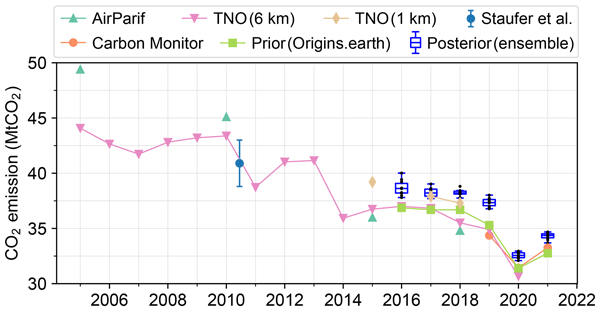
This study quantifies urban CO2 emissions via an atmospheric inversion for the Paris metropolitan area over a 6-year period from 2016 to 2021. Results show a long-term decreasing trend of about 2 % ± 0.6 % per year in the annual CO2 emissions over Paris. We conclude that our current capacity can deliver near-real-time CO2 emission estimates at the city scale in under a month, and the results agree within 10 % with independent estimates from multiple city-scale inventories.
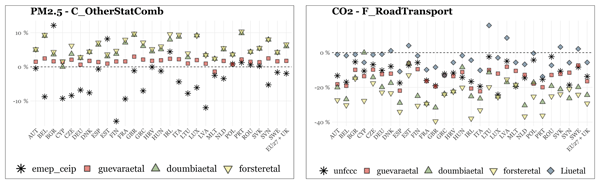
Marc Guevara, Hervé Petetin, Oriol Jorba, Hugo Denier van der Gon, Jeroen Kuenen, Ingrid Super, Claire Granier, Thierno Doumbia, Philippe Ciais, Zhu Liu, Robin D. Lamboll, Sabine Schindlbacher, Bradley Matthews, and Carlos Pérez García-Pando
Atmos. Chem. Phys., 23, 8081–8101, https://doi.org/10.5194/acp-23-8081-2023, https://doi.org/10.5194/acp-23-8081-2023, 2023
Short summary
Short summary
This study provides an intercomparison of European 2020 emission changes derived from official inventories, which are reported by countries under the framework of several international conventions and directives, and non-official near-real-time estimates, the use of which has significantly grown since the COVID-19 outbreak. The results of the work are used to produce recommendations on how best to approach and make use of near-real-time emissions for modelling and monitoring applications.
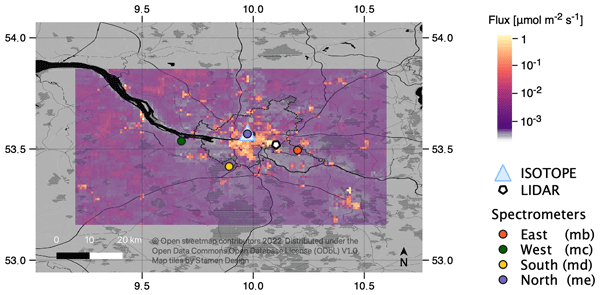
Andreas Forstmaier, Jia Chen, Florian Dietrich, Juan Bettinelli, Hossein Maazallahi, Carsten Schneider, Dominik Winkler, Xinxu Zhao, Taylor Jones, Carina van der Veen, Norman Wildmann, Moritz Makowski, Aydin Uzun, Friedrich Klappenbach, Hugo Denier van der Gon, Stefan Schwietzke, and Thomas Röckmann
Atmos. Chem. Phys., 23, 6897–6922, https://doi.org/10.5194/acp-23-6897-2023, https://doi.org/10.5194/acp-23-6897-2023, 2023
Short summary
Short summary
Large cities emit greenhouse gases which contribute to global warming. In this study, we measured the release of one important green house gas, methane, in Hamburg. Multiple sources that contribute to methane emissions were located and quantified. Methane sources were found to be mainly caused by human activity (e.g., by release from oil and gas refineries). Moreover, potential natural sources have been located, such as the Elbe River and lakes.
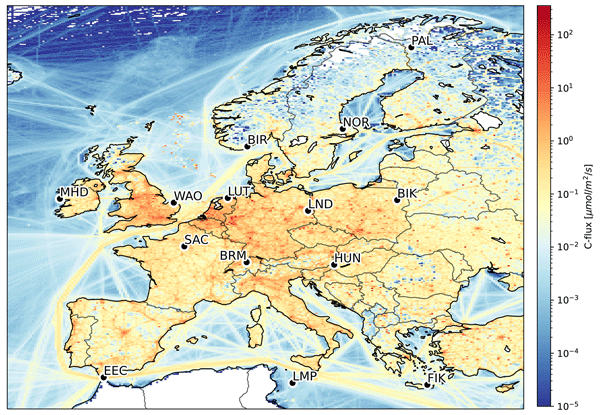
Auke M. van der Woude, Remco de Kok, Naomi Smith, Ingrid T. Luijkx, Santiago Botía, Ute Karstens, Linda M. J. Kooijmans, Gerbrand Koren, Harro A. J. Meijer, Gert-Jan Steeneveld, Ida Storm, Ingrid Super, Hubertus A. Scheeren, Alex Vermeulen, and Wouter Peters
Earth Syst. Sci. Data, 15, 579–605, https://doi.org/10.5194/essd-15-579-2023, https://doi.org/10.5194/essd-15-579-2023, 2023
Short summary
Short summary
To monitor the progress towards the CO2 emission goals set out in the Paris Agreement, the European Union requires an independent validation of emitted CO2. For this validation, atmospheric measurements of CO2 can be used, together with first-guess estimates of CO2 emissions and uptake. To quickly inform end users, it is imperative that this happens in near real-time. To aid these efforts, we create estimates of European CO2 exchange at high resolution in near real time.
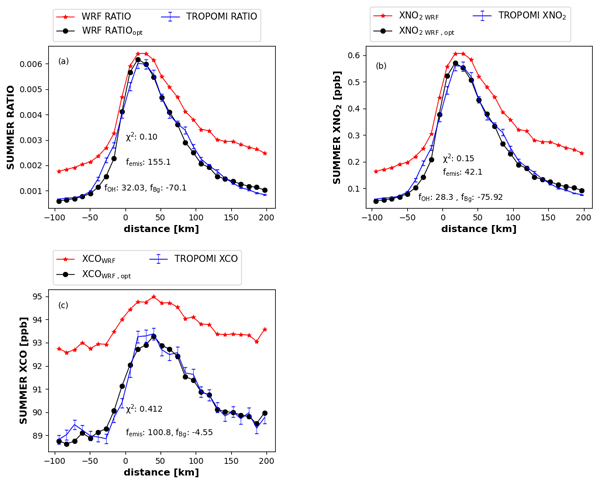
Srijana Lama, Sander Houweling, K. Folkert Boersma, Ilse Aben, Hugo A. C. Denier van der Gon, and Maarten C. Krol
Atmos. Chem. Phys., 22, 16053–16071, https://doi.org/10.5194/acp-22-16053-2022, https://doi.org/10.5194/acp-22-16053-2022, 2022
Short summary
Short summary
Hydroxyl radical (OH) is the important chemical species that determines the lifetime of some greenhouse gases and trace gases. OH plays a vital role in air pollution chemistry. OH has a short lifetime and is extremely difficult to measure directly. OH concentrations derived from the chemistry transport model (CTM) have uncertainties of >50 %. Therefore, in this study, OH is derived indirectly using satellite date in urban plumes.
Maximilian Rißmann, Jia Chen, Gregory Osterman, Xinxu Zhao, Florian Dietrich, Moritz Makowski, Frank Hase, and Matthäus Kiel
Atmos. Meas. Tech., 15, 6605–6623, https://doi.org/10.5194/amt-15-6605-2022, https://doi.org/10.5194/amt-15-6605-2022, 2022
Short summary
Short summary
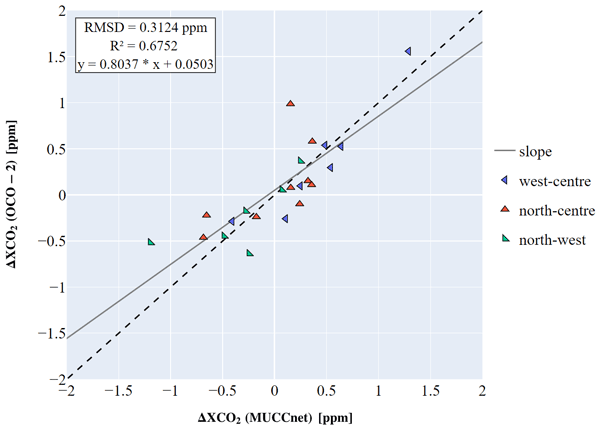
The Orbiting Carbon Observatory 2 (OCO-2) measures atmospheric concentrations of the most potent greenhouse gas, CO2, globally. By comparing its measurements to a ground-based monitoring network in Munich (MUCCnet), we find that the satellite is able to reliably detect urban CO2 concentrations. Furthermore, spatial CO2 differences captured by OCO-2 and MUCCnet are strongly correlated, which indicates that OCO-2 could be helpful in determining urban CO2 emissions from space.
Benjamin Zanger, Jia Chen, Man Sun, and Florian Dietrich
Geosci. Model Dev., 15, 7533–7556, https://doi.org/10.5194/gmd-15-7533-2022, https://doi.org/10.5194/gmd-15-7533-2022, 2022
Short summary
Short summary
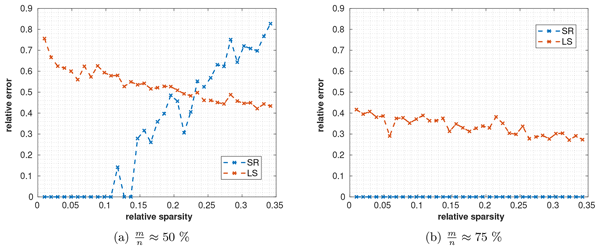
Gaussian priors (GPs) used in least squares inversion do not reflect the true distributions of greenhouse gas emissions well. A method that does not rely on GPs is sparse reconstruction (SR). We show that necessary conditions for SR are satisfied for cities and that the application of a wavelet transform can further enhance sparsity. We apply the theory of compressed sensing to SR. Our results show that SR needs fewer measurements and is superior for assessing unknown emitters compared to GPs.
Fabian Maier, Christoph Gerbig, Ingeborg Levin, Ingrid Super, Julia Marshall, and Samuel Hammer
Geosci. Model Dev., 15, 5391–5406, https://doi.org/10.5194/gmd-15-5391-2022, https://doi.org/10.5194/gmd-15-5391-2022, 2022
Short summary
Short summary
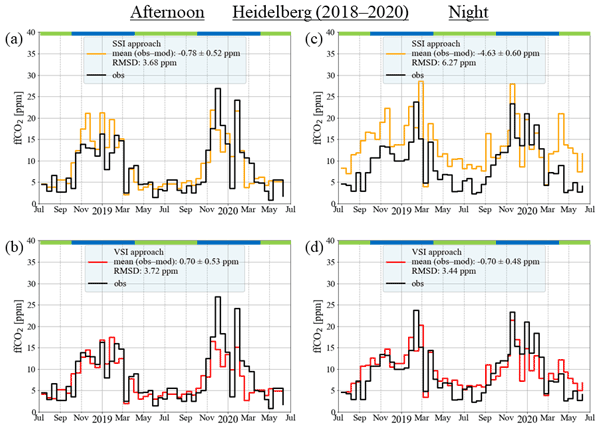
We show that the default representation of point source emissions in WRF–STILT leads to large overestimations when modelling fossil fuel CO2 concentrations for a 30 m high observation site during stable atmospheric conditions. We therefore introduce a novel point source modelling approach in WRF-STILT that takes into account their effective emission heights and results in a much better agreement with observations.
Vigneshkumar Balamurugan, Jia Chen, Zhen Qu, Xiao Bi, and Frank N. Keutsch
Atmos. Chem. Phys., 22, 7105–7129, https://doi.org/10.5194/acp-22-7105-2022, https://doi.org/10.5194/acp-22-7105-2022, 2022
Short summary
Short summary
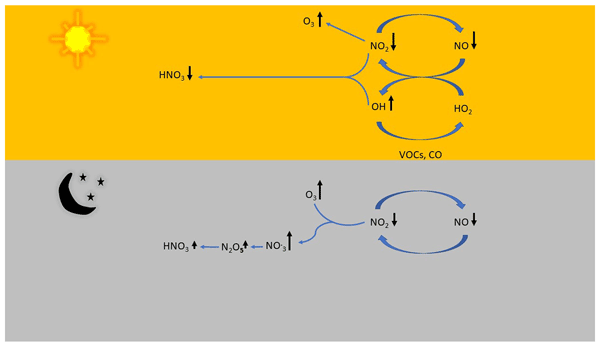
In this study, we investigated the response of secondary pollutants to changes in precursor emissions, focusing on the formation of secondary PM, during the COVID-19 lockdown period. We show that, due to the decrease in primary NOx emissions, atmospheric oxidizing capacity is increased. The nighttime increase in ozone, caused by less NO titration, results in higher NO3 radicals, which contribute significantly to the formation of PM nitrates. O3 should be limited in order to control PM pollution.
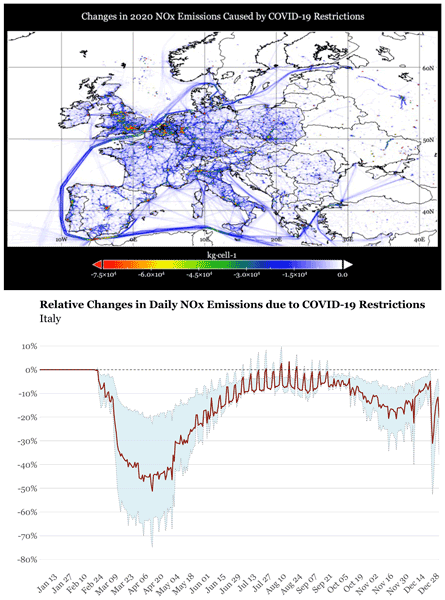
Marc Guevara, Hervé Petetin, Oriol Jorba, Hugo Denier van der Gon, Jeroen Kuenen, Ingrid Super, Jukka-Pekka Jalkanen, Elisa Majamäki, Lasse Johansson, Vincent-Henri Peuch, and Carlos Pérez García-Pando
Earth Syst. Sci. Data, 14, 2521–2552, https://doi.org/10.5194/essd-14-2521-2022, https://doi.org/10.5194/essd-14-2521-2022, 2022
Short summary
Short summary
To control the spread of the COVID-19 disease, European governments implemented mobility restriction measures that resulted in an unprecedented drop in anthropogenic emissions. This work presents a dataset of emission adjustment factors that allows quantifying changes in 2020 European primary emissions per country and pollutant sector at the daily scale. The resulting dataset can be used as input in modelling studies aiming at quantifying the impact of COVID-19 on air quality levels.
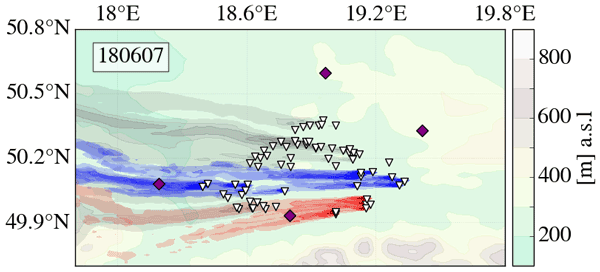
Andreas Luther, Julian Kostinek, Ralph Kleinschek, Sara Defratyka, Mila Stanisavljević, Andreas Forstmaier, Alexandru Dandocsi, Leon Scheidweiler, Darko Dubravica, Norman Wildmann, Frank Hase, Matthias M. Frey, Jia Chen, Florian Dietrich, Jarosław Nȩcki, Justyna Swolkień, Christoph Knote, Sanam N. Vardag, Anke Roiger, and André Butz
Atmos. Chem. Phys., 22, 5859–5876, https://doi.org/10.5194/acp-22-5859-2022, https://doi.org/10.5194/acp-22-5859-2022, 2022
Short summary
Short summary
Coal mining is an extensive source of anthropogenic methane emissions. In order to reduce and mitigate methane emissions, it is important to know how much and where the methane is emitted. We estimated coal mining methane emissions in Poland based on atmospheric methane measurements and particle dispersion modeling. In general, our emission estimates suggest higher emissions than expected by previous annual emission reports.
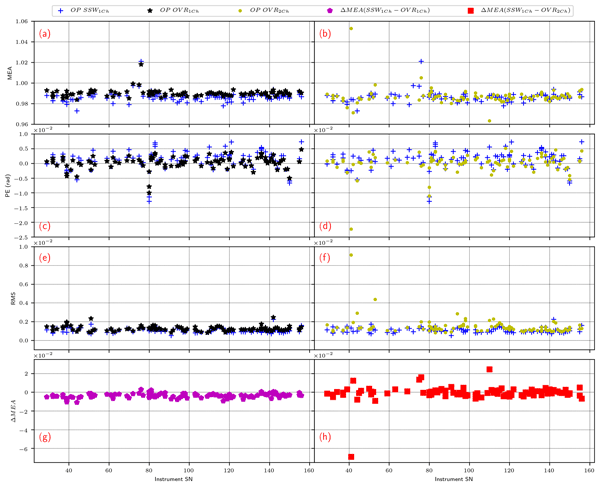
Carlos Alberti, Frank Hase, Matthias Frey, Darko Dubravica, Thomas Blumenstock, Angelika Dehn, Paolo Castracane, Gregor Surawicz, Roland Harig, Bianca C. Baier, Caroline Bès, Jianrong Bi, Hartmut Boesch, André Butz, Zhaonan Cai, Jia Chen, Sean M. Crowell, Nicholas M. Deutscher, Dragos Ene, Jonathan E. Franklin, Omaira García, David Griffith, Bruno Grouiez, Michel Grutter, Abdelhamid Hamdouni, Sander Houweling, Neil Humpage, Nicole Jacobs, Sujong Jeong, Lilian Joly, Nicholas B. Jones, Denis Jouglet, Rigel Kivi, Ralph Kleinschek, Morgan Lopez, Diogo J. Medeiros, Isamu Morino, Nasrin Mostafavipak, Astrid Müller, Hirofumi Ohyama, Paul I. Palmer, Mahesh Pathakoti, David F. Pollard, Uwe Raffalski, Michel Ramonet, Robbie Ramsay, Mahesh Kumar Sha, Kei Shiomi, William Simpson, Wolfgang Stremme, Youwen Sun, Hiroshi Tanimoto, Yao Té, Gizaw Mengistu Tsidu, Voltaire A. Velazco, Felix Vogel, Masataka Watanabe, Chong Wei, Debra Wunch, Marcia Yamasoe, Lu Zhang, and Johannes Orphal
Atmos. Meas. Tech., 15, 2433–2463, https://doi.org/10.5194/amt-15-2433-2022, https://doi.org/10.5194/amt-15-2433-2022, 2022
Short summary
Short summary
Space-borne greenhouse gas missions require ground-based validation networks capable of providing fiducial reference measurements. Here, considerable refinements of the calibration procedures for the COllaborative Carbon Column Observing Network (COCCON) are presented. Laboratory and solar side-by-side procedures for the characterization of the spectrometers have been refined and extended. Revised calibration factors for XCO2, XCO and XCH4 are provided, incorporating 47 new spectrometers.
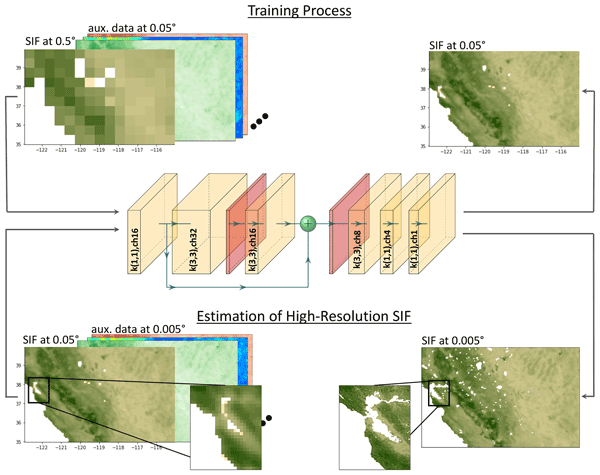
Johannes Gensheimer, Alexander J. Turner, Philipp Köhler, Christian Frankenberg, and Jia Chen
Biogeosciences, 19, 1777–1793, https://doi.org/10.5194/bg-19-1777-2022, https://doi.org/10.5194/bg-19-1777-2022, 2022
Short summary
Short summary
We develop a convolutional neural network, named SIFnet, that increases the spatial resolution of SIF from TROPOMI by a factor of 10 to a spatial resolution of 0.005°. SIFnet utilizes coarse SIF observations, together with a broad range of high-resolution auxiliary data. The insights gained from interpretable machine learning techniques allow us to make quantitative claims about the relationships between SIF and other common parameters related to photosynthesis.
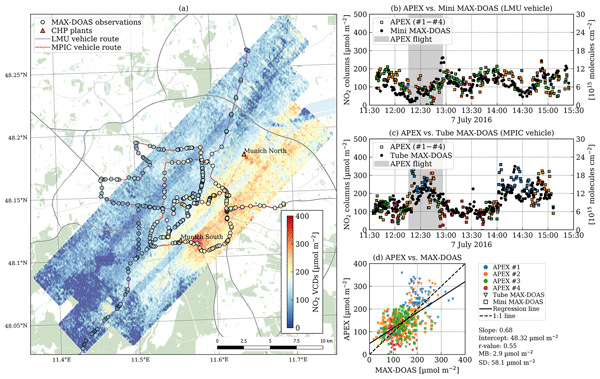
Gerrit Kuhlmann, Ka Lok Chan, Sebastian Donner, Ying Zhu, Marc Schwaerzel, Steffen Dörner, Jia Chen, Andreas Hueni, Duc Hai Nguyen, Alexander Damm, Annette Schütt, Florian Dietrich, Dominik Brunner, Cheng Liu, Brigitte Buchmann, Thomas Wagner, and Mark Wenig
Atmos. Meas. Tech., 15, 1609–1629, https://doi.org/10.5194/amt-15-1609-2022, https://doi.org/10.5194/amt-15-1609-2022, 2022
Short summary
Short summary
Nitrogen dioxide (NO2) is an air pollutant whose concentration often exceeds air quality guideline values, especially in urban areas. To map the spatial distribution of NO2 in Munich, we conducted the Munich NO2 Imaging Campaign (MuNIC), where NO2 was measured with stationary, mobile, and airborne in situ and remote sensing instruments. The campaign provides a unique dataset that has been used to compare the different instruments and to study the spatial variability of NO2 and its sources.
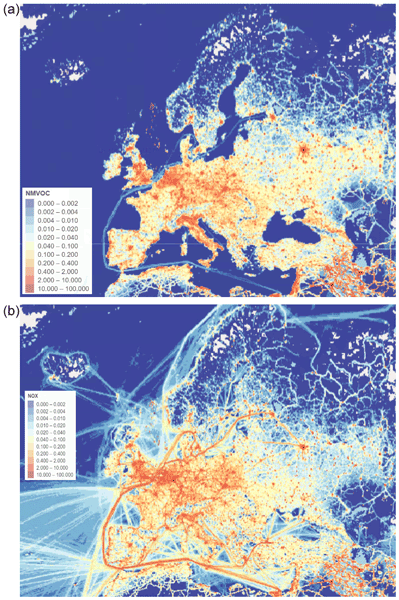
Jeroen Kuenen, Stijn Dellaert, Antoon Visschedijk, Jukka-Pekka Jalkanen, Ingrid Super, and Hugo Denier van der Gon
Earth Syst. Sci. Data, 14, 491–515, https://doi.org/10.5194/essd-14-491-2022, https://doi.org/10.5194/essd-14-491-2022, 2022
Short summary
Short summary
This paper presents an 18-year time series for anthropogenic emissions for the main air pollutants in Europe, distinguishing 15 main source categories. It provides a complete overview of emissions to air and is designed to support air quality modelling. The data build where possible on official country total emissions used in the policy processes, but where necessary alternative data were used. The emission data are spatially distributed at high resolution (~ 6 km x 6 km) in a consistent way.
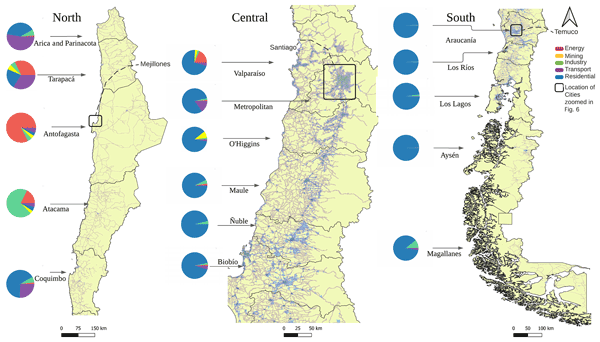
Nicolás Álamos, Nicolás Huneeus, Mariel Opazo, Mauricio Osses, Sebastián Puja, Nicolás Pantoja, Hugo Denier van der Gon, Alejandra Schueftan, René Reyes, and Rubén Calvo
Earth Syst. Sci. Data, 14, 361–379, https://doi.org/10.5194/essd-14-361-2022, https://doi.org/10.5194/essd-14-361-2022, 2022
Short summary
Short summary
This study presents the first high-resolution national inventory of anthropogenic emissions for Chile (Inventario Nacional de Emisiones Antropogénicas, INEMA). Emissions for vehicular, industrial, energy, mining and residential sectors are estimated for the period 2015–2017 and spatially distributed onto a high-resolution grid (1 × 1 km). This inventory will support policies seeking to mitigate climate change and improve air quality by providing qualified scientific spatial emission information.
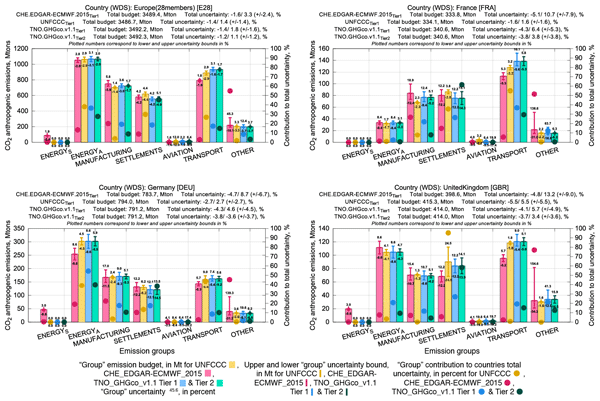
Margarita Choulga, Greet Janssens-Maenhout, Ingrid Super, Efisio Solazzo, Anna Agusti-Panareda, Gianpaolo Balsamo, Nicolas Bousserez, Monica Crippa, Hugo Denier van der Gon, Richard Engelen, Diego Guizzardi, Jeroen Kuenen, Joe McNorton, Gabriel Oreggioni, and Antoon Visschedijk
Earth Syst. Sci. Data, 13, 5311–5335, https://doi.org/10.5194/essd-13-5311-2021, https://doi.org/10.5194/essd-13-5311-2021, 2021
Short summary
Short summary
People worry that growing man-made carbon dioxide (CO2) concentrations lead to climate change. Global models, use of observations, and datasets can help us better understand behaviour of CO2. Here a tool to compute uncertainty in man-made CO2 sources per country per year and month is presented. An example of all sources separated into seven groups (intensive and average energy, industry, humans, ground and air transport, others) is presented. Results will be used to predict CO2 concentrations.
Cited articles
Aigner, P., Kühbacher, D., Chen, J., Althammer, T., Denier van der Gon, H., Hinderer, J., Suhendra, M., Super, I., and Yirtar, B.: Temporal Activity Profiles for the City of Munich (2019–2024), ICOS ERIC – Carbon Portal [data set], https://doi.org/10.18160/Z2CB-JKQ2, 2025. a
Allekotte, M., Knörr, W., Kräck, J., Notter, B., Schäppi, B., Soini, M., Hausberger, S., Tödling, M., and Schadler, D.: Neubewertung der Unsicherheiten der mit den zur Berechnung der Luftschadstoffemissionen im Verkehrssektor verwendeten Parameter und Methoden, Tech. Rep. 152/2023, Umweltbundesamt, ISSN 1862-4804, 2023. a, b, c
Anke, J., Francke, A., Schaefer, L.-M., and Petzoldt, T.: Impact of SARS-CoV-2 on the mobility behaviour in Germany, European Transport Research Review, 13, 10, https://doi.org/10.1186/s12544-021-00469-3, 2021. a
Arioli, M. S., D'Agosto, M. D. A., Amaral, F. G., and Cybis, H. B. B.: The evolution of city-scale GHG emissions inventory methods: a systematic review, Environmental Impact Assessment Review, 80, 106316, https://doi.org/10.1016/j.eiar.2019.106316, 2020. a, b
Baek, B. H., Pedruzzi, R., Park, M., Wang, C.-T., Kim, Y., Song, C.-H., and Woo, J.-H.: The Comprehensive Automobile Research System (CARS) – a Python-based automobile emissions inventory model, Geosci. Model Dev., 15, 4757–4781, https://doi.org/10.5194/gmd-15-4757-2022, 2022. a
Berchet, A., Zink, K., Oettl, D., Brunner, J., Emmenegger, L., and Brunner, D.: Evaluation of high-resolution GRAMM–GRAL (v15.12/v14.8) NOx simulations over the city of Zürich, Switzerland, Geosci. Model Dev., 10, 3441–3459, https://doi.org/10.5194/gmd-10-3441-2017, 2017. a
BMUB: Climate Action Plan 2050 – Principles and Goals of the German Government's Climate Policy, https://www.bundesumweltministerium.de/en/publication/climate-action-plan-2050-en (last access: 10 December 2025), 2016. a
Carter, W. P.: Development of a database for chemical mechanism assignments for volatile organic emissions, J. Air Waste Manage., 65, 1171–1184, https://doi.org/10.1080/10962247.2015.1013646, 2015. a
Chan, E. C., Leitão, J., Kerschbaumer, A., and Butler, T. M.: Yeti 1.0: a generalized framework for constructing bottom-up emission inventories from traffic sources at road-link resolutions, Geosci. Model Dev., 16, 1427–1444, https://doi.org/10.5194/gmd-16-1427-2023, 2023. a
Chapman, L.: Transport and climate change: a review, Journal of Transport Geography, 15, 354–367, https://doi.org/10.1016/j.jtrangeo.2006.11.008, 2007. a
Creutzig, F., Lohrey, S., Emele, L., Le Quéré, C., and Jones, M.: COVID-19 und CO2-Emissionen in Deutschland: Eine Analyse basierend auf den Schätzungen des Global Carbon Projects, Federal Ministry for the Environment, Nature Conservation, and Nuclear Safety, https://www.bmuv.de/fileadmin/Daten_BMU/Download_PDF/Klimaschutz/covid_19_co2_deutschland_bf.pdf (last access: 10 April 2025), 2024. a
Crippa, M., Guizzardi, D., Pisoni, E., Solazzo, E., Guion, A., Muntean, M., Florczyk, A., Schiavina, M., Melchiorri, M., and Hutfilter, A. F.: Global anthropogenic emissions in urban areas: patterns, trends, and challenges, Environ. Res. Lett., 16, 074033, https://doi.org/10.1088/1748-9326/ac00e2, 2021. a
Dellaert, S., Super, I., A., V., and van der Gon, H. D.: High Resolution Scenarios of CO2 and CO Emissions, https://www.che-project.eu/sites/default/files/2019-05/CHE-D4-2-V1-0.pdf (last access: 31 January 2025), 2019. a
Dünnebeil, F., Gugel, B., Schreiner, L., Wachter, P., and Rogge, N.: BISKO Bilanzierungssystematik Kommunal: Methoden und Daten für die kommunale Energie- und Treibhausgasbilanzierung: Neu mit Daten für das Bilanzjahr 2023, Deutsches Institut für Urbanistik, https://doi.org/10.34744/X71P-HA18, 2019. a
EC-JRC: Including Cold-Start Emissions in the Real-Driving Emissions (RDE) Test Procedure: An Assessment of Cold Start Frequencies and Emission Effects, Publications Office, LU, https://doi.org/10.2760/70237, 2017. a
EEA: Health Impacts of Air Pollution in Europe, 2022 – European Environment Agency, Web Report, European Environmental Agency (EEA), https://www.eea.europa.eu/en/analysis/publications/air-quality-in-europe-2022/health-impacts-of-air-pollution-in-europe-2022 (last access: 30 January 2025), 2022. a
FGSV: Handbuch für die Bemessung von Straßenverkehrsanlagen: HBS 2015. Teil S – Stadtstraßen, Forschungsgesellschaft für Straßen- und Verkehrswesen e.V., ISBN 978-3-86446-103-3, 2015. a
Friedrich, M., Pestel, E., Schiller, C., and Simon, R.: Scalable GEH: a quality measure for comparing observed and modeled single values in a travel demand model validation, Transportation Research Record: Journal of the Transportation Research Board, 2673, 722–732, https://doi.org/10.1177/0361198119838849, 2019. a
Gately, C. K., Hutyra, L. R., and Sue Wing, I.: Cities, traffic, and CO2: a multidecadal assessment of trends, drivers, and scaling relationships, Proceedings of the National Academy of Sciences (PNAS), 112, 4999–5004, https://doi.org/10.1073/pnas.1421723112, 2015. a
Gately, C. K., Hutyra, L. R., Peterson, S., and Wing, I. S.: Urban emissions hotspots: quantifying vehicle congestion and air pollution using mobile phone GPS data, Environ. Pollut., 229, 496–504, https://doi.org/10.1016/j.envpol.2017.05.091, 2017. a, b
Guevara, M., Jorba, O., Tena, C., Denier van der Gon, H., Kuenen, J., Elguindi, N., Darras, S., Granier, C., and Pérez García-Pando, C.: Copernicus Atmosphere Monitoring Service TEMPOral profiles (CAMS-TEMPO): global and European emission temporal profile maps for atmospheric chemistry modelling, Earth Syst. Sci. Data, 13, 367–404, https://doi.org/10.5194/essd-13-367-2021, 2021. a
Hausberger, S.: Simulation of Real World Vehicle Exhaust Emissions, Vol. 82, KM-THD Mitteilungen Technical University Graz, ISBN 3-901351-74-4, 2003. a
Hutchins, M. G., Colby, J. D., Marland, G., and Marland, E.: A comparison of five high-resolution spatially-explicit, fossil-fuel, carbon dioxide emission inventories for the United States, Mitig. Adapt. Strat. Gl., 22, 947–972, https://doi.org/10.1007/s11027-016-9709-9, 2017. a
Ibarra-Espinosa, S., Ynoue, R., O'Sullivan, S., Pebesma, E., Andrade, M. D. F., and Osses, M.: VEIN v0.2.2: an R package for bottom–up vehicular emissions inventories, Geosci. Model Dev., 11, 2209–2229, https://doi.org/10.5194/gmd-11-2209-2018, 2018. a
IEA: Empowering Urban Energy Transitions, https://www.iea.org/reports/empowering-urban-energy-transitions (last access: 15 May 2024), 2024. a
IPCC: Climate Change 2014: Mitigation of Climate Change: Working Group III Contribution to the Fifth Assessment Report of the Intergovernmental Panel on Climate Change, edited by: Edenhofer, O., Pichs-Madruga, R., Sokona, Y., Farahani, E., Kadner, S., Seyboth, K., Adler, A., Baum, I., Brunner, S., Eickemeier, P., Kriemann, B., Savolainen, J., Schlömer, S., von Stechow, C., Zwickel, T., and Minx, J. C., Cambridge University Press, New York, NY, ISBN 978-1-107-05821-7, 2014. a
Iglewicz, B. and Hoaglin, D. C.: How to Detect and Handle Outliers, Vol. 16, American Society for Quality Control – Statistics Devision, 1993. a
Jiang, L., Xia, Y., Wang, L., Chen, X., Ye, J., Hou, T., Wang, L., Zhang, Y., Li, M., Li, Z., Song, Z., Jiang, Y., Liu, W., Li, P., Rosenfeld, D., Seinfeld, J. H., and Yu, S.: Hyperfine-resolution mapping of on-road vehicle emissions with comprehensive traffic monitoring and an intelligent transportation system, Atmos. Chem. Phys., 21, 16985–17002, https://doi.org/10.5194/acp-21-16985-2021, 2021. a
Knörr, W., Heidt, C., Gores, S., and Bergk, F.: Fortschreibung des Daten- und Rechenmodells: Energieverbrauch und Schadstoffemissionen des motorisierten Verkehrs in Deutschland 1960–2035, sowie TREMOD, im Auftrag des Umweltbundesamtes, Tech. rep., Ifeu Institut für Energie- und Umweltforschung Heidelberg GmbH, Heidelberg and Berlin, ISSN 1862-4804, 2023. a
Kühbacher, D., Chen, J., Aigner, P., Denier van der Gon, H., Super, I., and Ilic, M.: DRIVE v1.0 – A data-driven framework to estimate road transport emissions and temporal profiles (v1.0), Zenodo [code], https://doi.org/10.5281/zenodo.14644298, 2025a. a
Kühbacher, D., Aigner, P., Chen, J., Hinderer, J., Super, I., Denier van der Gon, H., Dröge, R., Schoenmakers, E., and Hohenberger, T.: Gridded anthropogenic emissions of CO2, CH4 and co-emitted pollutants for the city of Munich for the period 2019–2024, ICOS ERIC – Carbon Portal [data set], https://doi.org/10.18160/2K5S-967C, 2025b. a
Kuenen, J., Dellaert, S., Visschedijk, A., Jalkanen, J.-P., Super, I., and Denier van der Gon, H.: CAMS-REG-v4: a state-of-the-art high-resolution European emission inventory for air quality modelling, Earth Syst. Sci. Data, 14, 491–515, https://doi.org/10.5194/essd-14-491-2022, 2022. a
Li, X., Gu, D., Hohenberger, T. L., Fung, Y. H., Fung, J. C., Lau, A. K., and Liang, Z.: Dynamic quantification of on-road emissions in Hong Kong: impact from traffic congestion and fleet composition variation, Atmospheric Environment, 313, 120059, https://doi.org/10.1016/j.atmosenv.2023.120059, 2023. a
Lu, X.-Y., Varaiya, P., Horowitz, R., and Palen, J.: Faulty loop data analysis and loop fault detection, in: 15th ITS World Congress, Unpublished, https://doi.org/10.13140/2.1.2654.0802, 2008. a, b
Nobis, C. and Kuhnimhof, T.: Mobilität in Deutschland – MiD Ergebnisbericht, Studie von infas, DLR, IVT und infas 360 im Auftrag des Bundesministers für Verkehr und digitale Infrastruktur (FE-Nr. 70.904/15), http://www.mobilitaet-in-deutschland.de (last access: 17 April 2024), 2018. a
Notter, B., Keller, M., Althaus, H.-J., Cox, B., Knörr, W., Heidt, C., Biemann, K., Räder, D., and Jamet, M.: HBEFA 4.1 Development Report, Development report, INFRAS, Sennweg 2, 3012 Bern, https://cdn.prod.website-files.com/6207922a2acc01004530a67e/625e8c74c30e26e022b319c8_HBEFA41_Development_Report.pdf (last access: 4 November 2024), 2019. a, b
Notter, B., Cox, B., Hausberger, S., Matzer, C., Weller, K., Dippold, M., Politschnig, N., Lipp, S., Allekotte, M., Knörr, W., Andre, M., Gangnepain, L., Hult, C., and Jerskjö, M.: HEBFA 4.2 Documentation of Updates, Update report, INFRAS, Sennweg 2, 3012 Bern, https://cdn.prod.website-files.com/6207922a2acc01004530a67e/6217584903e9f9b63093c8c0_HBEFA42_Update_Documentation.pdf (last access: 4 November 2024), 2022. a
Ntziachristos, L. and Samaras, Z.: EMEP/EEA air pollutant emission inventory guidebook 2023 – Update 2024, https://copert.emisia.com/wp-content/uploads/2024/07/1.A.3.b.i-iv-Road-transport-2024.pdf (last access: 12 September 2024), 2024. a
Oda, T. and Maksyutov, S.: A very high-resolution (1 km×1 km) global fossil fuel CO2 emission inventory derived using a point source database and satellite observations of nighttime lights, Atmos. Chem. Phys., 11, 543–556, https://doi.org/10.5194/acp-11-543-2011, 2011. a
Oda, T., Maksyutov, S., and Andres, R. J.: The Open-source Data Inventory for Anthropogenic CO2, version 2016 (ODIAC2016): a global monthly fossil fuel CO2 gridded emissions data product for tracer transport simulations and surface flux inversions, Earth Syst. Sci. Data, 10, 87–107, https://doi.org/10.5194/essd-10-87-2018, 2018. a
Pina, N. and Tchepel, O.: A bottom-up modeling approach to quantify cold start emissions from urban road traffic, International Journal of Sustainable Transportation, 17, 942–955, https://doi.org/10.1080/15568318.2022.2130841, 2023. a
Pinto, J. A., Kumar, P., Alonso, M. F., Andreao, W. L., Pedruzzi, R., dos Santos, F. S., Moreira, D. M., and de Almeida Albuquerque, T. T.: Traffic data in air quality modeling: a review of key variables, improvements in results, open problems and challenges in current research, Atmospheric Pollution Research, 11, 454–468, https://doi.org/10.1016/j.apr.2019.11.018, 2020. a
Qiu, T. Z., Lu, X.-Y., Chow, A. H. F., and Shladover, S. E.: Estimation of freeway traffic density with loop detector and probe vehicle data, Transportation Research Record, 2178, 21–29, https://doi.org/10.3141/2178-03, 2010. a
Referat für Klima und Umweltschutz: Treibhausgas-Monitoring der Landeshauptstadt München 1990 bis 2019; Sitzungsvorlage 20-26 / V 06797, https://risi.muenchen.de/risi/sitzungsvorlage/detail/7205164 (last access: 30 October 2024), 2022. a
Rodriguez-Rey, D., Guevara, M., Linares, M. P., Casanovas, J., Salmerón, J., Soret, A., Jorba, O., Tena, C., and Pérez García-Pando, C.: A coupled macroscopic traffic and pollutant emission modelling system for Barcelona, Transportation Research Part D: Transport and Environment, 92, 102725, https://doi.org/10.1016/j.trd.2021.102725, 2021. a
Schmaus, M., Bawidamann, J., Friedrich, M., Haberl, M., Trenkwalder, L., Fellendorf, M., Uhlig, J., Lohse, R., and Pestel, E.: Flüssiger Verkehr für Klimaschutz und Luftreinhaltung, Final report 14/2023, Umweltbundesamt (UBA), ISSN 1862-4804, 2023. a
Schneider, C., Pelzer, M., Toenges-Schuller, N., Nacken, M., and Niederau, A.: ArcGIS basierte Lösung zur detaillierten, deutsch-landweiten Verteilung (Gridding) nationaler Emissionsjahreswerte auf Basis des Inventars zur Emissionsberichterstattung, Tech. rep., Umweltbundesamt, ISSN 1862-4804, 2016. a
Smit, R., Ntziachristos, L., and Boulter, P.: Validation of road vehicle and traffic emission models a review and meta-analysis, Atmos. Environ., 44, 2943–2953, https://doi.org/10.1016/j.atmosenv.2010.05.022, 2010. a
Super, I., Dellaert, S. N. C., Visschedijk, A. J. H., and Denier van der Gon, H. A. C.: Uncertainty analysis of a European high-resolution emission inventory of CO2 and CO to support inverse modelling and network design, Atmos. Chem. Phys., 20, 1795–1816, https://doi.org/10.5194/acp-20-1795-2020, 2020. a
Super, I., Scarpelli, T., Droste, A., and Palmer, P. I.: Improved definition of prior uncertainties in CO2 and CO fossil fuel fluxes and its impact on multi-species inversion with GEOS-Chem (v12.5), Geosci. Model Dev., 17, 7263–7284, https://doi.org/10.5194/gmd-17-7263-2024, 2024. a
Timpe, C., Kenkmann, T., Hesse, T., Mundt, J., Maaß, C., Kapfer, J., Claas-Reuther, J., Rudolf, A., and Kluth, T.: Maßnahmenplan Klimaneutralität München, https://stadt.muenchen.de/dam/jcr:dc76020e-b14b-42ca-9eea-4c3ce538b951/Massnahmenplan-Klimaneutralitaet-Muenchen.pdf (last access: 30 October 2024), 2021. a
Tsanakas, N., Ekström, J., and Olstam, J.: Estimating emissions from static traffic models: problems and solutions, Journal of Advanced Transportation, 1–17, https://doi.org/10.1155/2020/5401792, 2020. a
UBA: Submission under the United Nations Framework Convention on Climate Change 2024, https://www.umweltbundesamt.de/en/publikationen/submission-under-the-united-nations-framework-9 (last access: 30 November 2024), 2024. a
USEPA: Motor Vehicle Emission Simulator: MOVES5 (Version 5.0.0), https://www.epa.gov/moves (last access: 10 September 2024), 2024. a
Wei, T., Wu, J., and Chen, S.: Keeping track of greenhouse gas emission reduction progress and targets in 167 cities worldwide, Front. Sustain. Cities, 3, https://doi.org/10.3389/frsc.2021.696381, 2021. a
Wen, Y., Zhang, S., Zhang, J., Bao, S., Wu, X., Yang, D., and Wu, Y.: Mapping dynamic road emissions for a megacity by using open-access traffic congestion index data, Applied Energy, 260, 114357–114357, https://doi.org/10.1016/j.apenergy.2019.114357, 2020. a
WHO: WHO global air quality guidelines: particulate matter (PM2.5 and PM10), ozone, nitrogen dioxide, sulfur dioxide and carbon monoxide, ISBN 978-92-4-003422-8, 2021. a
Wu, L., Chang, M., Wang, X., Hang, J., Zhang, J., Wu, L., and Shao, M.: Development of the Real-time On-road Emission (ROE v1.0) model for street-scale air quality modeling based on dynamic traffic big data, Geosci. Model Dev., 13, 23–40, https://doi.org/10.5194/gmd-13-23-2020, 2020. a
Yang, D., Zhang, S., Niu, T., Wang, Y., Xu, H., Zhang, K. M., and Wu, Y.: High-resolution mapping of vehicle emissions of atmospheric pollutants based on large-scale, real-world traffic datasets, Atmos. Chem. Phys., 19, 8831–8843, https://doi.org/10.5194/acp-19-8831-2019, 2019. a
Short summary
We present DRIVE v1.0, a data-driven framework to estimate road transport emissions, their temporal profiles, and the associated uncertainties. The method was applied to the city of Munich, where we present bottom-up emission estimates for the years 2019 to 2022. The estimates are compared against official municipal reports as well as national and European downscaled inventories.
We present DRIVE v1.0, a data-driven framework to estimate road transport emissions, their...


