
Articles | Volume 18, issue 23
https://doi.org/10.5194/gmd-18-9653-2025
© Author(s) 2025. This work is distributed under
the Creative Commons Attribution 4.0 License.
the Creative Commons Attribution 4.0 License.
https://doi.org/10.5194/gmd-18-9653-2025
© Author(s) 2025. This work is distributed under
the Creative Commons Attribution 4.0 License.
the Creative Commons Attribution 4.0 License.
Development and technical paper
| 
04 Dec 2025
Development and technical paper |
| 04 Dec 2025
| 04 Dec 2025
Development of a global 5 arcmin groundwater model (H08-GMv1.0): model setup and steady-state simulation

Department of Civil Engineering, The University of Tokyo, Tokyo, 113-8656, Japan
Naota Hanasaki
Department of Civil Engineering, The University of Tokyo, Tokyo, 113-8656, Japan
National Institute for Environmental Sciences, Tsukuba, 305-8506, Japan
Akiko Matsumura
Research and Development Center, Nippon Koei Co., Ltd., Tsukuba, 300-1259, Japan
Edwin H. Sutanudjaja
Department of Physical Geography, Faculty of Geosciences, Utrecht University, Utrecht, the Netherlands
Taikan Oki
Department of Civil Engineering, The University of Tokyo, Tokyo, 113-8656, Japan
Related authors
Xin Huang, Qing He, Naota Hanasaki, Rolf H. Reichle, and Taikan Oki
EGUsphere, https://doi.org/10.5194/egusphere-2025-2004, https://doi.org/10.5194/egusphere-2025-2004, 2025
Preprint archived
Short summary
Short summary
This study demonstrates a new method using SMAP soil moisture products to identify irrigation effects, tested to be valid in an example region in California's Central Valley and showed great potential for application in arid/ semi-arid regions. The approach offers a simple, straightforward approach to monitoring irrigation signals without additional in-situ data or model tuning, providing a useful tool to extract irrigation water use data in observation-scarce regions.
Naota Hanasaki, Kiyoharu Kajiyama, Yuga Takahashi, Kazufumi Yabu, Yuika Maniwa, and Shinjiro Kanae
EGUsphere, https://doi.org/10.5194/egusphere-2026-5322, https://doi.org/10.5194/egusphere-2026-5322, 2026
This preprint is open for discussion and under review for Geoscientific Model Development (GMD).
Short summary
Short summary
We propose a simple but efficient method for representing cities in global hydrological models. That is, abstract water from sources, distribute it within the city boundary, drain it through sewage, and return it to the downstream water body. Our method enables modelers to conduct city-level water scarcity assessments (i.e., one water scarcity score per city), which offers a clear advantage over conventional basin- or grid-level assessments.
Barry van Jaarsveld, Niko Wanders, Nicole Gyakowah Otoo, Edwin H. Sutanudjaja, Jarno Verkaik, Daniel Zamrsky, and Marc F. P. Bierkens
Earth Syst. Dynam., 17, 1201–1236, https://doi.org/10.5194/esd-17-1201-2026, https://doi.org/10.5194/esd-17-1201-2026, 2026
Short summary
Short summary
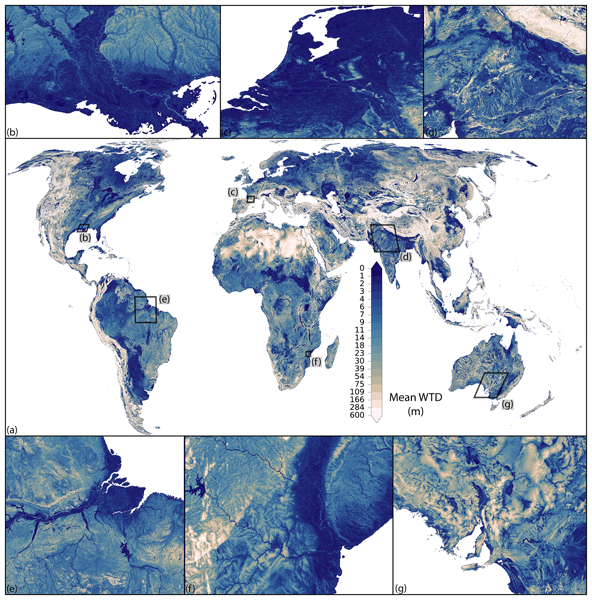
We simulated how global groundwater levels have changed in the past and how they might change in the future. By improving model accuracy and using hyper-resolution data, we can now see where water tables are falling or rising across the world at 1km resolution. These results help communities and decision-makers plan for more sustainable water use in a changing climate.
Emmanuel Okiria, Naota Hanasaki, Simon N. Gosling, Emmanuel Nyenah, Peter Burek, Yusuke Satoh, Sebastian Ostberg, Kedar Otta, and Luca Guillaumot
EGUsphere, https://doi.org/10.5194/egusphere-2026-2043, https://doi.org/10.5194/egusphere-2026-2043, 2026
Short summary
Short summary
We investigated why global hydrological models struggle to simulate reservoir storage. By comparing five models against satellite data from 424 dams, we found they often exaggerate seasonal storage fluctuations due to simple one-size-fits-all global rules. Customising these settings significantly improved accuracy. This proves generic rules are a major flaw. Future models must combine traditional physics with real satellite observations to better predict global water resources.
Jennie C. Steyaert, Edwin H. Sutanudjaja, Marc Bierkens, and Niko Wanders
Hydrol. Earth Syst. Sci., 29, 6499–6527, https://doi.org/10.5194/hess-29-6499-2025, https://doi.org/10.5194/hess-29-6499-2025, 2025
Short summary
Short summary
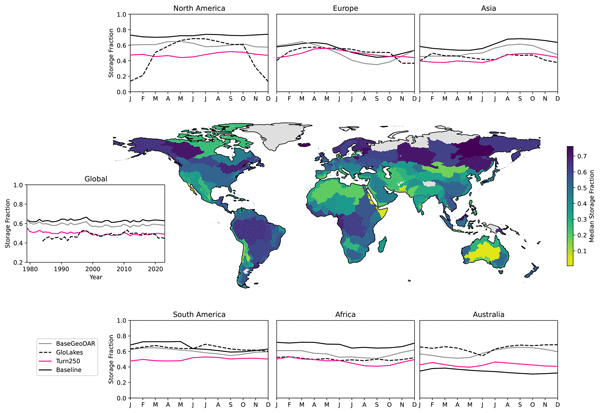
Using machine learning techniques and remotely sensed reservoir data, we develop a workflow to derive reservoir storage bounds. We put these bounds in a global hydrologic model, PCR-GLOBWB 2, and evaluate the difference between generalized operations (the schemes typically in global models) and this data derived method. We find that modelled storage is more accurate in the data derived operations. We also find that generalized operations over estimate storage and can underestimate water gaps.
Xin Huang, Qing He, Naota Hanasaki, Rolf H. Reichle, and Taikan Oki
EGUsphere, https://doi.org/10.5194/egusphere-2025-2004, https://doi.org/10.5194/egusphere-2025-2004, 2025
Preprint archived
Short summary
Short summary
This study demonstrates a new method using SMAP soil moisture products to identify irrigation effects, tested to be valid in an example region in California's Central Valley and showed great potential for application in arid/ semi-arid regions. The approach offers a simple, straightforward approach to monitoring irrigation signals without additional in-situ data or model tuning, providing a useful tool to extract irrigation water use data in observation-scarce regions.
Nicole Gyakowah Otoo, Edwin H. Sutanudjaja, Michelle T. H. van Vliet, Aafke M. Schipper, and Marc F. P. Bierkens
Hydrol. Earth Syst. Sci., 29, 2153–2165, https://doi.org/10.5194/hess-29-2153-2025, https://doi.org/10.5194/hess-29-2153-2025, 2025
Short summary
Short summary
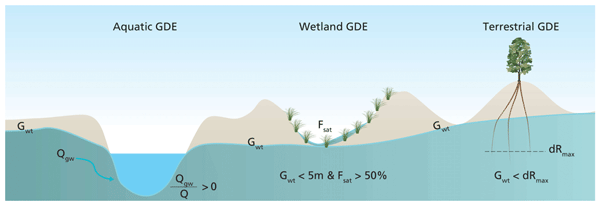
The contribution of groundwater to groundwater-dependent ecosystems (GDEs) is declining as a result of an increase in groundwater abstractions and climate change. This may lead to loss of habitat and biodiversity. This proposed framework enables the mapping and understanding of the temporal and spatial dynamics of GDEs on a large scale. The next step is to assess the global impacts of climate change and water use on GDE extent and health.
Hannes Müller Schmied, Simon Newland Gosling, Marlo Garnsworthy, Laura Müller, Camelia-Eliza Telteu, Atiq Kainan Ahmed, Lauren Seaby Andersen, Julien Boulange, Peter Burek, Jinfeng Chang, He Chen, Lukas Gudmundsson, Manolis Grillakis, Luca Guillaumot, Naota Hanasaki, Aristeidis Koutroulis, Rohini Kumar, Guoyong Leng, Junguo Liu, Xingcai Liu, Inga Menke, Vimal Mishra, Yadu Pokhrel, Oldrich Rakovec, Luis Samaniego, Yusuke Satoh, Harsh Lovekumar Shah, Mikhail Smilovic, Tobias Stacke, Edwin Sutanudjaja, Wim Thiery, Athanasios Tsilimigkras, Yoshihide Wada, Niko Wanders, and Tokuta Yokohata
Geosci. Model Dev., 18, 2409–2425, https://doi.org/10.5194/gmd-18-2409-2025, https://doi.org/10.5194/gmd-18-2409-2025, 2025
Short summary
Short summary
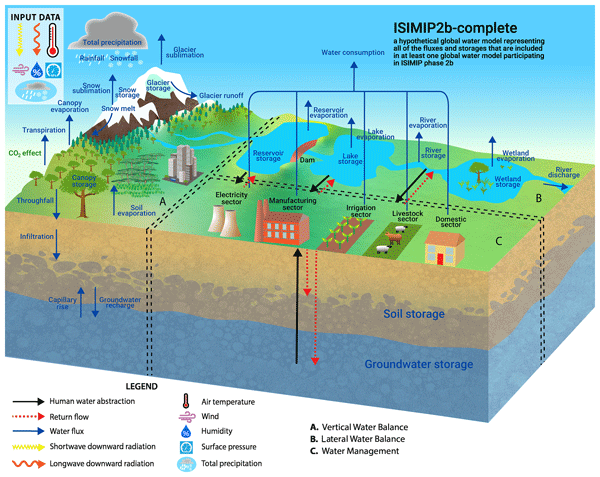
Global water models contribute to the evaluation of important natural and societal issues but are – as all models – simplified representation of reality. So, there are many ways to calculate the water fluxes and storages. This paper presents a visualization of 16 global water models using a standardized visualization and the pathway towards this common understanding. Next to academic education purposes, we envisage that these diagrams will help researchers, model developers, and data users.
Joško Trošelj and Naota Hanasaki
Hydrol. Earth Syst. Sci., 29, 753–766, https://doi.org/10.5194/hess-29-753-2025, https://doi.org/10.5194/hess-29-753-2025, 2025
Short summary
Short summary
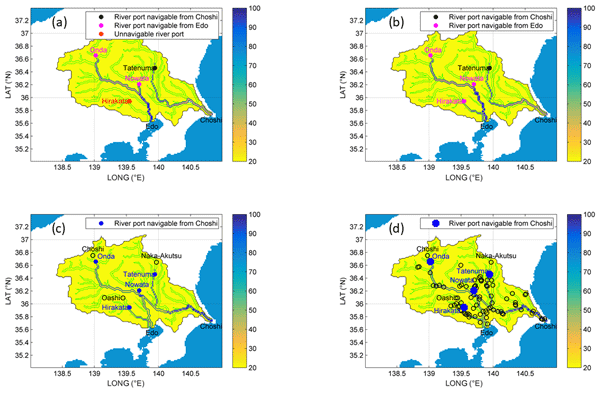
This study presents the first distributed hydrological simulation which confirms claims raised by historians that the eastward diversion project of the Tone River in Japan was conducted 4 centuries ago to increase low flows and subsequent travelling possibilities surrounding the capital, Edo (Tokyo), using inland navigation. We showed that great steps forward can be made for improving quality of life with small human engineering waterworks and small interventions in the regime of natural flows.
Barry van Jaarsveld, Niko Wanders, Edwin H. Sutanudjaja, Jannis Hoch, Bram Droppers, Joren Janzing, Rens L. P. H. van Beek, and Marc F. P. Bierkens
Earth Syst. Dynam., 16, 29–54, https://doi.org/10.5194/esd-16-29-2025, https://doi.org/10.5194/esd-16-29-2025, 2025
Short summary
Short summary
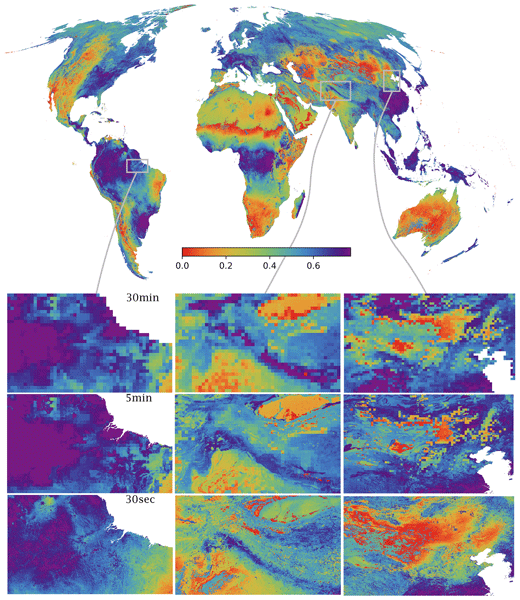
Policy makers use global hydrological models to develop water management strategies and policies. However, it would be better if these models provided information at higher resolution. We present a first-of-its-kind, truly global hyper-resolution model and show that hyper-resolution brings about better estimates of river discharge, and this is especially true for smaller catchments. Our results also suggest that future hyper-resolution models need to include more detailed land cover information.
Shinichiro Nakamura, Fuko Nakai, Yuichiro Ito, Ginga Okada, and Taikan Oki
Hydrol. Earth Syst. Sci., 28, 2329–2342, https://doi.org/10.5194/hess-28-2329-2024, https://doi.org/10.5194/hess-28-2329-2024, 2024
Short summary
Short summary
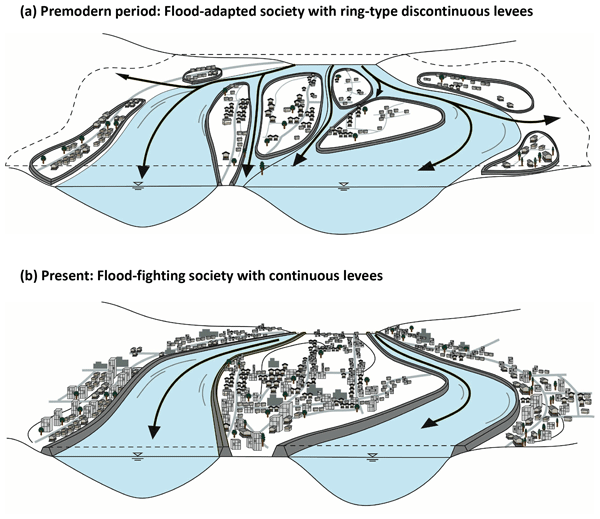
The formation of levee systems is an important factor in determining whether a society fights or adapts to floods. This study presents the levee system transformation process over the past century, from the indigenous levee system to modern continuous levees, and its impacts on human–flood coevolution in the Kiso River basin, Japan, and reveals the interactions between levee systems and human–water systems involving different scales and water phenomena.
Mugni Hadi Hariadi, Gerard van der Schrier, Gert-Jan Steeneveld, Samuel J. Sutanto, Edwin Sutanudjaja, Dian Nur Ratri, Ardhasena Sopaheluwakan, and Albert Klein Tank
Hydrol. Earth Syst. Sci., 28, 1935–1956, https://doi.org/10.5194/hess-28-1935-2024, https://doi.org/10.5194/hess-28-1935-2024, 2024
Short summary
Short summary
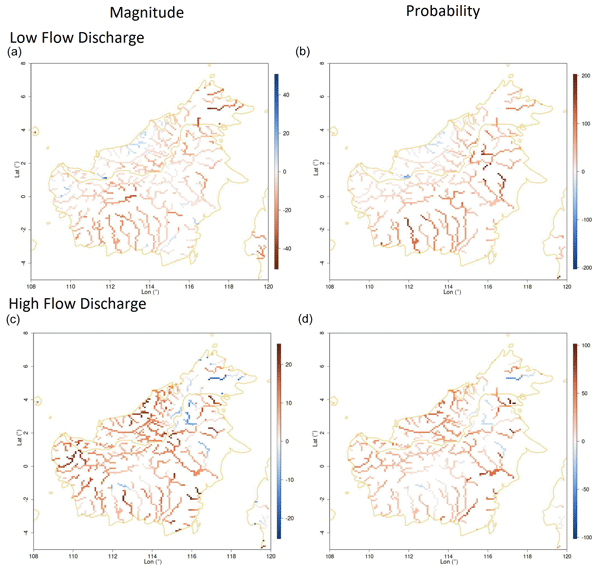
We utilize the high-resolution CMIP6 for extreme rainfall and streamflow projection over Southeast Asia. This region will experience an increase in both dry and wet extremes in the near future. We found a more extreme low flow and high flow, along with an increasing probability of low-flow and high-flow events. We reveal that the changes in low-flow events and their probabilities are not only influenced by extremely dry climates but also by the catchment characteristics.
Jarno Verkaik, Edwin H. Sutanudjaja, Gualbert H. P. Oude Essink, Hai Xiang Lin, and Marc F. P. Bierkens
Geosci. Model Dev., 17, 275–300, https://doi.org/10.5194/gmd-17-275-2024, https://doi.org/10.5194/gmd-17-275-2024, 2024
Short summary
Short summary
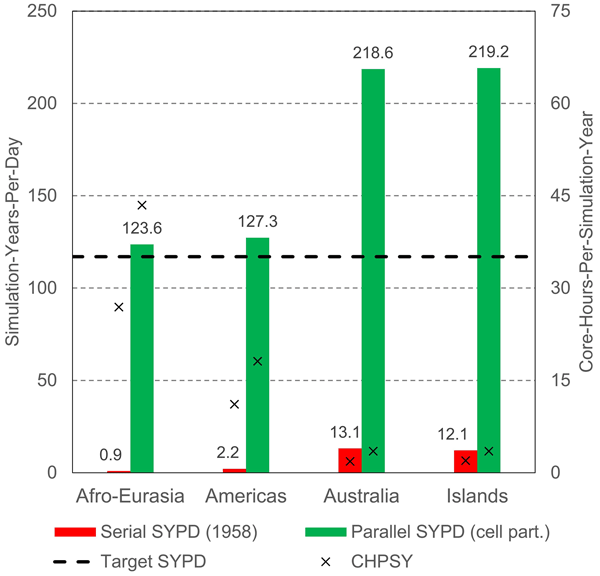
This paper presents the parallel PCR-GLOBWB global-scale groundwater model at 30 arcsec resolution (~1 km at the Equator). Named GLOBGM v1.0, this model is a follow-up of the 5 arcmin (~10 km) model, aiming for a higher-resolution simulation of worldwide fresh groundwater reserves under climate change and excessive pumping. For a long transient simulation using a parallel prototype of MODFLOW 6, we show that our implementation is efficient for a relatively low number of processor cores.
Yuheng Li, Kanon Kino, Alexandre Cauquoin, and Taikan Oki
Clim. Past, 19, 1891–1904, https://doi.org/10.5194/cp-19-1891-2023, https://doi.org/10.5194/cp-19-1891-2023, 2023
Short summary
Short summary
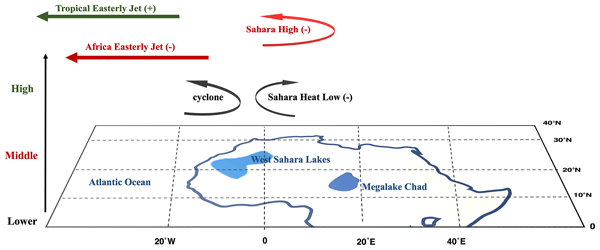
Our study using the isotope-enabled climate model MIROC5-iso model shows that lakes may have contributed to the Green Sahara during the mid-Holocene period (6000 years ago). The lakes induced cyclonic circulation response, enhancing the near-surface monsoon westerly flow and potentially humidifying the northwestern Sahara with the stronger West African Monsoon moving northward. Our findings provide valuable insights into understanding the presence of the Green Sahara during this period.
Kedar Otta, Hannes Müller Schmied, Simon N. Gosling, and Naota Hanasaki
Hydrol. Earth Syst. Sci. Discuss., https://doi.org/10.5194/hess-2023-215, https://doi.org/10.5194/hess-2023-215, 2023
Revised manuscript not accepted
Short summary
Short summary
Reservoirs play important roles in hydrology and water resources management globally and are incorporated into many Global Hydrological Models. Their simulations are, however, poorly validated due to the lack of available long-term in-situ observation data globally. Here we investigated the applicability of the latest satellite-based reservoir storage estimations in the contiguous US. We found that those products are useful for validating reservoir storage simulations when they are normalized.
Edward R. Jones, Marc F. P. Bierkens, Niko Wanders, Edwin H. Sutanudjaja, Ludovicus P. H. van Beek, and Michelle T. H. van Vliet
Geosci. Model Dev., 16, 4481–4500, https://doi.org/10.5194/gmd-16-4481-2023, https://doi.org/10.5194/gmd-16-4481-2023, 2023
Short summary
Short summary
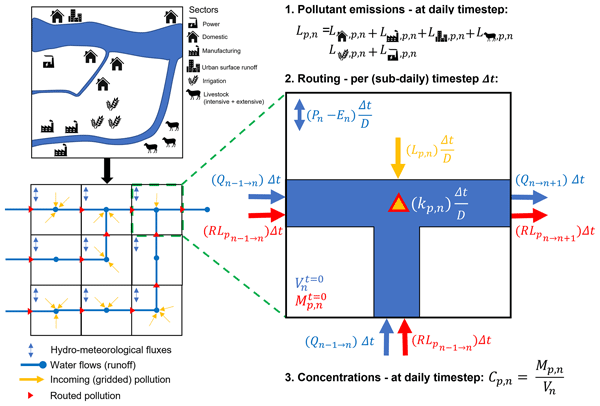
DynQual is a new high-resolution global water quality model for simulating total dissolved solids, biological oxygen demand and fecal coliform as indicators of salinity, organic pollution and pathogen pollution, respectively. Output data from DynQual can supplement the observational record of water quality data, which is highly fragmented across space and time, and has the potential to inform assessments in a broad range of fields including ecological, human health and water scarcity studies.
Zhipin Ai and Naota Hanasaki
Geosci. Model Dev., 16, 3275–3290, https://doi.org/10.5194/gmd-16-3275-2023, https://doi.org/10.5194/gmd-16-3275-2023, 2023
Short summary
Short summary
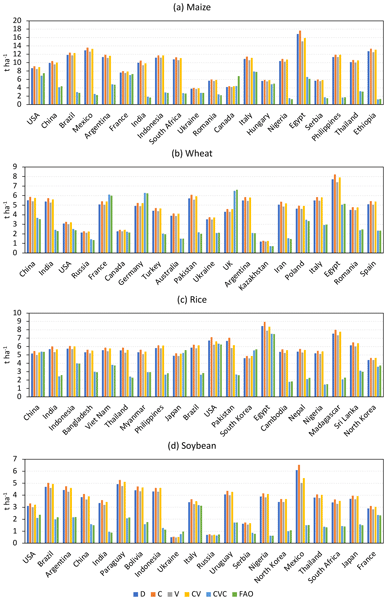
Simultaneously simulating food production and the requirements and availability of water resources in a spatially explicit manner within a single framework remains challenging on a global scale. Here, we successfully enhanced the global hydrological model H08 that considers human water use and management to simulate the yields of four major staple crops: maize, wheat, rice, and soybean. Our improved model will be beneficial for advancing global food–water nexus studies in the future.
Jannis M. Hoch, Edwin H. Sutanudjaja, Niko Wanders, Rens L. P. H. van Beek, and Marc F. P. Bierkens
Hydrol. Earth Syst. Sci., 27, 1383–1401, https://doi.org/10.5194/hess-27-1383-2023, https://doi.org/10.5194/hess-27-1383-2023, 2023
Short summary
Short summary
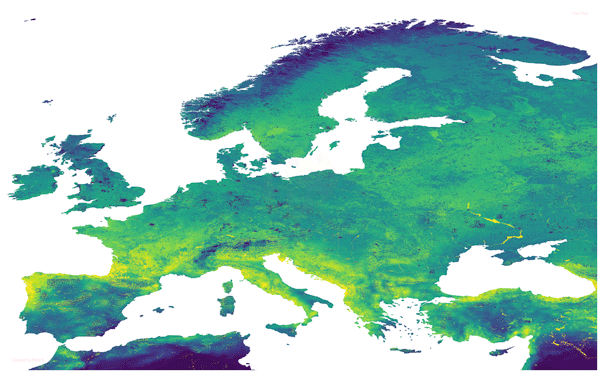
To facilitate locally relevant simulations over large areas, global hydrological models (GHMs) have moved towards ever finer spatial resolutions. After a decade-long quest for hyper-resolution (i.e. equal to or smaller than 1 km), the presented work is a first application of a GHM at 1 km resolution over Europe. This not only shows that hyper-resolution can be achieved but also allows for a thorough evaluation of model results at unprecedented detail and the formulation of future research.

Pau Wiersma, Jerom Aerts, Harry Zekollari, Markus Hrachowitz, Niels Drost, Matthias Huss, Edwin H. Sutanudjaja, and Rolf Hut
Hydrol. Earth Syst. Sci., 26, 5971–5986, https://doi.org/10.5194/hess-26-5971-2022, https://doi.org/10.5194/hess-26-5971-2022, 2022
Short summary
Short summary
We test whether coupling a global glacier model (GloGEM) with a global hydrological model (PCR-GLOBWB 2) leads to a more realistic glacier representation and to improved basin runoff simulations across 25 large-scale basins. The coupling does lead to improved glacier representation, mainly by accounting for glacier flow and net glacier mass loss, and to improved basin runoff simulations, mostly in strongly glacier-influenced basins, which is where the coupling has the most impact.
Vili Virkki, Elina Alanärä, Miina Porkka, Lauri Ahopelto, Tom Gleeson, Chinchu Mohan, Lan Wang-Erlandsson, Martina Flörke, Dieter Gerten, Simon N. Gosling, Naota Hanasaki, Hannes Müller Schmied, Niko Wanders, and Matti Kummu
Hydrol. Earth Syst. Sci., 26, 3315–3336, https://doi.org/10.5194/hess-26-3315-2022, https://doi.org/10.5194/hess-26-3315-2022, 2022
Short summary
Short summary
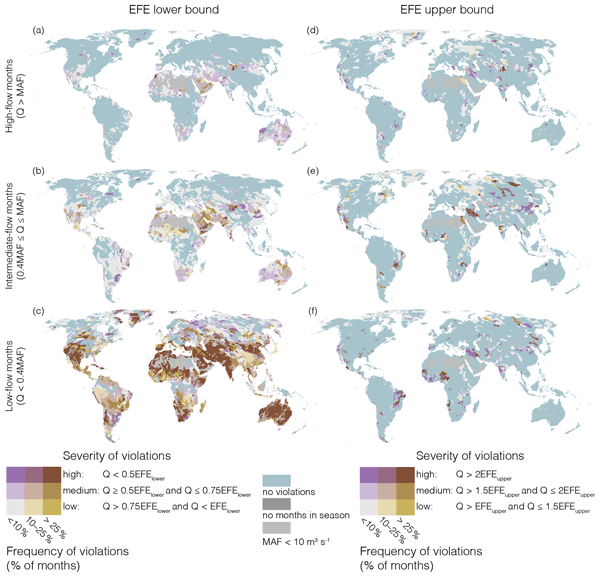
Direct and indirect human actions have altered streamflow across the world since pre-industrial times. Here, we apply a method of environmental flow envelopes (EFEs) that develops the existing global environmental flow assessments by methodological advances and better consideration of uncertainty. By assessing the violations of the EFE, we comprehensively quantify the frequency, severity, and trends of flow alteration during the past decades, illustrating anthropogenic effects on streamflow.

Inne Vanderkelen, Shervan Gharari, Naoki Mizukami, Martyn P. Clark, David M. Lawrence, Sean Swenson, Yadu Pokhrel, Naota Hanasaki, Ann van Griensven, and Wim Thiery
Geosci. Model Dev., 15, 4163–4192, https://doi.org/10.5194/gmd-15-4163-2022, https://doi.org/10.5194/gmd-15-4163-2022, 2022
Short summary
Short summary
Human-controlled reservoirs have a large influence on the global water cycle. However, dam operations are rarely represented in Earth system models. We implement and evaluate a widely used reservoir parametrization in a global river-routing model. Using observations of individual reservoirs, the reservoir scheme outperforms the natural lake scheme. However, both schemes show a similar performance due to biases in runoff timing and magnitude when using simulated runoff.
Saritha Padiyedath Gopalan, Adisorn Champathong, Thada Sukhapunnaphan, Shinichiro Nakamura, and Naota Hanasaki
Hydrol. Earth Syst. Sci., 26, 2541–2560, https://doi.org/10.5194/hess-26-2541-2022, https://doi.org/10.5194/hess-26-2541-2022, 2022
Short summary
Short summary
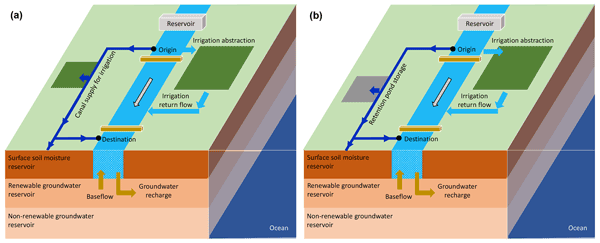
The modelling of diversion canals using hydrological models is important because they play crucial roles in water management. Therefore, we developed a simplified canal diversion scheme and implemented it into the H08 global hydrological model. The developed diversion scheme was validated in the Chao Phraya River basin, Thailand. Region-specific validation results revealed that the H08 model with the diversion scheme could effectively simulate the observed flood diversion pattern in the basin.
Naota Hanasaki, Hikari Matsuda, Masashi Fujiwara, Yukiko Hirabayashi, Shinta Seto, Shinjiro Kanae, and Taikan Oki
Hydrol. Earth Syst. Sci., 26, 1953–1975, https://doi.org/10.5194/hess-26-1953-2022, https://doi.org/10.5194/hess-26-1953-2022, 2022
Short summary
Short summary
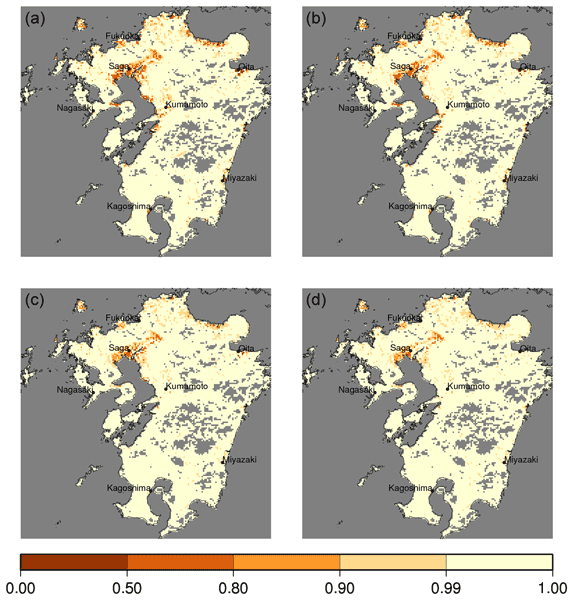
Global hydrological models (GHMs) are usually applied with a spatial resolution of about 50 km, but this time we applied the H08 model, one of the most advanced GHMs, with a high resolution of 2 km to Kyushu island, Japan. Since the model was not accurate as it was, we incorporated local information and improved the model, which revealed detailed water stress in subregions that were not visible with the previous resolution.
Marc F. P. Bierkens, Edwin H. Sutanudjaja, and Niko Wanders
Hydrol. Earth Syst. Sci., 25, 5859–5878, https://doi.org/10.5194/hess-25-5859-2021, https://doi.org/10.5194/hess-25-5859-2021, 2021
Short summary
Short summary
We introduce a simple analytical framework that allows us to estimate to what extent large-scale groundwater withdrawal affects groundwater levels and streamflow. It also calculates which part of the groundwater withdrawal comes out of groundwater storage and which part from a reduction in streamflow. Global depletion rates obtained with the framework are compared with estimates from satellites, from global- and continental-scale groundwater models, and from in situ datasets.
Cited articles
Adler, R. F., Huffman, G. J., Chang, A., Ferraro, R., Xie, P.-P., Janowiak, J., Rudolf, B., Schneider, U., Curtis, S., Bolvin, D., Gruber, A., Susskind, J., Arkin, P., and Nelkin, E.: The Version-2 Global Precipitation Climatology Project (GPCP) Monthly Precipitation Analysis (1979–Present), J. Hydrometeorol., 4, 1147–1167, https://doi.org/10.1175/1525-7541(2003)004%253C1147:TVGPCP%253E2.0.CO;2, 2003.
Akhter, T., Pokhrel, Y., Felfelani, F., Ducharne, A., Lo, M., and Reinecke, R.: Implications of Lateral Groundwater Flow Across Varying Spatial Resolutions in Global Land Surface Modeling, Water Resour. Res., 61, e2024WR038523, https://doi.org/10.1029/2024WR038523, 2025.
Bakker, M., Post, V., Langevin, C. D., Hughes, J. D., White, J. T., Starn, J. J., and Fienen, M. N.: Scripting MODFLOW Model Development Using Python and FloPy, Groundwater, 54, 733–739, https://doi.org/10.1111/gwat.12413, 2016.
Bierkens, M. F. P. and Van Den Hurk, B. J. J. M.: Groundwater convergence as a possible mechanism for multi-year persistence in rainfall, Geophys. Res. Lett., 34, L02402, https://doi.org/10.1029/2006GL028396, 2007.
Braune, E. and Xu, Y.: The Role of Ground Water in Sub-Saharan Africa, Groundwater, 48, 229–238, https://doi.org/10.1111/j.1745-6584.2009.00557.x, 2010.
Burek, P., Satoh, Y., Kahil, T., Tang, T., Greve, P., Smilovic, M., Guillaumot, L., Zhao, F., and Wada, Y.: Development of the Community Water Model (CWatM v1.04) – a high-resolution hydrological model for global and regional assessment of integrated water resources management, Geosci. Model Dev., 13, 3267–3298, https://doi.org/10.5194/gmd-13-3267-2020, 2020.
Calow, R. C., MacDonald, A. M., Nicol, A. L., and Robins, N. S.: Ground Water Security and Drought in Africa: Linking Availability, Access, and Demand, Groundwater, 48, 246–256, https://doi.org/10.1111/j.1745-6584.2009.00558.x, 2010.
Cao, G., Zheng, C., Scanlon, B. R., Liu, J., and Li, W.: Use of flow modeling to assess sustainability of groundwater resources in the North China Plain, Water Resour. Res., 49, 159–175, https://doi.org/10.1029/2012WR011899, 2013.
Condon, L. E. and Maxwell, R. M.: Simulating the sensitivity of evapotranspiration and streamflow to large-scale groundwater depletion, Sci. Adv., 5, eaav4574, https://doi.org/10.1126/sciadv.aav4574, 2019.
Condon, L. E., Kollet, S., Bierkens, M. F. P., Fogg, G. E., Maxwell, R. M., Hill, M. C., Fransen, H. H., Verhoef, A., Van Loon, A. F., Sulis, M., and Abesser, C.: Global Groundwater Modeling and Monitoring: Opportunities and Challenges, Water Resour. Res., 57, https://doi.org/10.1029/2020WR029500, 2021.
Cucchi, M., Weedon, G. P., Amici, A., Bellouin, N., Lange, S., Müller Schmied, H., Hersbach, H., and Buontempo, C.: WFDE5: bias-adjusted ERA5 reanalysis data for impact studies, Earth Syst. Sci. Data, 12, 2097–2120, https://doi.org/10.5194/essd-12-2097-2020, 2020.
Dai, Y., Zeng, X., Dickinson, R. E., Baker, I., Bonan, G. B., Bosilovich, M. G., Denning, A. S., Dirmeyer, P. A., Houser, P. R., Niu, G., Oleson, K. W., Schlosser, C. A., and Yang, Z.-L.: The Common Land Model, B. Am. Meteorol. Soc., 84, 1013–1024, https://doi.org/10.1175/BAMS-84-8-1013, 2003.
Doherty, J. D.: PEST, a Model-Independent Parameter Estimation Code: User's Manual, U.S. Army Engineer Research and Development Center, Vicksburg, MS, USA,https://www.nrc.gov/docs/ML0923/ML092360221.pdf (last access: 2 December 2025), 2023.
Döll, P. and Fiedler, K.: Global-scale modeling of groundwater recharge, Hydrol. Earth Syst. Sci., 12, 863–885, https://doi.org/10.5194/hess-12-863-2008, 2008.
Döll, P., Kaspar, F., and Lehner, B.: A global hydrological model for deriving water availability indicators: model tuning and validation, J. Hydrol., 270, 105–134, https://doi.org/10.1016/S0022-1694(02)00283-4, 2003.
Duan, Q., Sorooshian, S., and Gupta, V.: Effective and efficient global optimization for conceptual rainfall–runoff models, Water Resources Research, 28, 1015–1031, https://doi.org/10.1029/91WR02985, 1992.
Duan, Q., Gupta, V., and Sorooshian, S.: Shuffled complex evolution approach for effective and efficient global minimization, Journal of Optimization Theory and Applications, 76, 501–521, https://doi.org/10.1007/BF00939380, 1993.
Duan, Q., Sorooshian, S., and Gupta, V.: Optimal use of the SCE-UA global optimization method for calibrating watershed models, Journal of Hydrology, 158, 265–284, https://doi.org/10.1016/0022-1694(94)90057-4, 1994.
Fan, Y., Li, H., and Miguez-Macho, G.: Global Patterns of Groundwater Table Depth, Science, 339, 940–943, https://doi.org/10.1126/science.1229881, 2013.
Gao, X., Huo, Z., Xu, X., Qu, Z., Huang, G., Tang, P., and Bai, Y.: Shallow groundwater plays an important role in enhancing irrigation water productivity in an arid area: The perspective from a regional agricultural hydrology simulation, Agr. Water Manage., 208, 43–58, https://doi.org/10.1016/j.agwat.2018.06.009, 2018.
Gee, G. W. and Hillel, D.: Groundwater recharge in arid regions: Review and critique of estimation methods, Hydrol. Process., 2, 255–266, https://doi.org/10.1002/hyp.3360020306, 1988.
Gleeson, T., Smith, L., Moosdorf, N., Hartmann, J., Dürr, H. H., Manning, A. H., Van Beek, L. P. H., and Jellinek, A. M.: Mapping permeability over the surface of the Earth: Mapping global permeability, Geophys. Res. Lett., 38, https://doi.org/10.1029/2010GL045565, 2011.
Gleeson, T., Wada, Y., Bierkens, M. F. P., and Van Beek, L. P. H.: Water balance of global aquifers revealed by groundwater footprint, Nature, 488, 197–200, https://doi.org/10.1038/nature11295, 2012.
Gleeson, T., Moosdorf, N., Hartmann, J., and Van Beek, L. P. H.: A glimpse beneath earth's surface: GLobal HYdrogeology MaPS (GLHYMPS) of permeability and porosity, Geophys. Res. Lett., 41, 3891–3898, https://doi.org/10.1002/2014GL059856, 2014.
Gleeson, T., Wagener, T., Döll, P., Zipper, S. C., West, C., Wada, Y., Taylor, R., Scanlon, B., Rosolem, R., Rahman, S., Oshinlaja, N., Maxwell, R., Lo, M.-H., Kim, H., Hill, M., Hartmann, A., Fogg, G., Famiglietti, J. S., Ducharne, A., de Graaf, I., Cuthbert, M., Condon, L., Bresciani, E., and Bierkens, M. F. P.: GMD perspective: The quest to improve the evaluation of groundwater representation in continental- to global-scale models, Geosci. Model Dev., 14, 7545–7571, https://doi.org/10.5194/gmd-14-7545-2021, 2021.
Gnann, S., Reinecke, R., Stein, L., Wada, Y., Thiery, W., Müller Schmied, H., Satoh, Y., Pokhrel, Y., Ostberg, S., Koutroulis, A., Hanasaki, N., Grillakis, M., Gosling, S. N., Burek, P., Bierkens, M. F. P., and Wagener, T.: Functional relationships reveal differences in the water cycle representation of global water models, Nat Water, 1, 1079–1090, https://doi.org/10.1038/s44221-023-00160-y, 2023.
de Graaf, I. E. M. and Stahl, K.: A model comparison assessing the importance of lateral groundwater flows at the global scale, Environ. Res. Lett., 17, 044020, https://doi.org/10.1088/1748-9326/ac50d2, 2022.
de Graaf, I. E. M., Sutanudjaja, E. H., van Beek, L. P. H., and Bierkens, M. F. P.: A high-resolution global-scale groundwater model, Hydrol. Earth Syst. Sci., 19, 823–837, https://doi.org/10.5194/hess-19-823-2015, 2015.
de Graaf, I. E. M., van Beek, R. L. P. H., Gleeson, T., Moosdorf, N., Schmitz, O., Sutanudjaja, E. H., and Bierkens, M. F. P.: A global-scale two-layer transient groundwater model: Development and application to groundwater depletion, Adv. Water Resour., 102, 53–67, https://doi.org/10.1016/j.advwatres.2017.01.011, 2017.
Gruber, S.: Derivation and analysis of a high-resolution estimate of global permafrost zonation, The Cryosphere, 6, 221–233, https://doi.org/10.5194/tc-6-221-2012, 2012.
Guillaumot, L., Smilovic, M., Burek, P., de Bruijn, J., Greve, P., Kahil, T., and Wada, Y.: Coupling a large-scale hydrological model (CWatM v1.1) with a high-resolution groundwater flow model (MODFLOW 6) to assess the impact of irrigation at regional scale, Geosci. Model Dev., 15, 7099–7120, https://doi.org/10.5194/gmd-15-7099-2022, 2022.
Hanasaki, N., Kanae, S., Oki, T., Masuda, K., Motoya, K., Shirakawa, N., Shen, Y., and Tanaka, K.: An integrated model for the assessment of global water resources – Part 1: Model description and input meteorological forcing, Hydrol. Earth Syst. Sci., 12, 1007–1025, https://doi.org/10.5194/hess-12-1007-2008, 2008a.
Hanasaki, N., Kanae, S., Oki, T., Masuda, K., Motoya, K., Shirakawa, N., Shen, Y., and Tanaka, K.: An integrated model for the assessment of global water resources – Part 2: Applications and assessments, Hydrol. Earth Syst. Sci., 12, 1027–1037, https://doi.org/10.5194/hess-12-1027-2008, 2008b.
Hanasaki, N., Yoshikawa, S., Pokhrel, Y., and Kanae, S.: A global hydrological simulation to specify the sources of water used by humans, Hydrol. Earth Syst. Sci., 22, 789–817, https://doi.org/10.5194/hess-22-789-2018, 2018.
Harbaugh, A. W.: MODFLOW-2005, the US Geological Survey modular ground-water model – the Ground-Water Flow Process, US Geological Survey, https://doi.org/10.3133/tm6A16 2005.
Harbaugh, A. W., Banta, E. R., Hill, M. C., and McDonald, M. G.: MODFLOW-2000, The US Geological Survey Modular Ground-Water Model: User Guide to Modularization Concepts and the Ground-Water Flow Process, US Geological Survey, 2000.
Hartmann, J. and Moosdorf, N.: The new global lithological map database GLiM: A representation of rock properties at the Earth surface: Technical brief, Geochem. Geophy. Geosy., 13, https://doi.org/10.1029/2012GC004370, 2012.
He, Q., Hanasaki, N., Matsumura, A., Sutanudjaja, E., and Oki, T.: Release of H08-GM(v1.0) code (steady-state), Zenodo [code and data set], https://doi.org/10.5281/zenodo.15709184, 2025.
Hersbach, H., Bell, B., Berrisford, P., Hirahara, S., Horányi, A., Muñoz-Sabater, J., Nicolas, J., Peubey, C., Radu, R., Schepers, D., Simmons, A., Soci, C., Abdalla, S., Abellan, X., Balsamo, G., Bechtold, P., Biavati, G., Bidlot, J., Bonavita, M., Chiara, G., Dahlgren, P., Dee, D., Diamantakis, M., Dragani, R., Flemming, J., Forbes, R., Fuentes, M., Geer, A., Haimberger, L., Healy, S., Hogan, R. J., Hólm, E., Janisková, M., Keeley, S., Laloyaux, P., Lopez, P., Lupu, C., Radnoti, G., Rosnay, P., Rozum, I., Vamborg, F., Villaume, S., and Thépaut, J.: The ERA5 global reanalysis, Q. J. Roy. Meteor. Soc., 146, 1999–2049, https://doi.org/10.1002/qj.3803, 2020.
Huggins, X., Gleeson, T., Serrano, D., Zipper, S., Jehn, F., Rohde, M. M., Abell, R., Vigerstol, K., and Hartmann, A.: Overlooked risks and opportunities in groundwatersheds of the world's protected areas, Nat. Sustain., 6, 855–864, https://doi.org/10.1038/s41893-023-01086-9, 2023.
Huscroft, J., Gleeson, T., Hartmann, J., and Börker, J.: Compiling and Mapping Global Permeability of the Unconsolidated and Consolidated Earth: GLobal HYdrogeology MaPS 2.0 (GLHYMPS 2.0), Geophys. Res. Lett., 45, 1897–1904, https://doi.org/10.1002/2017GL075860, 2018.
IGRAC: The Global Groundwater Information System (GGIS), International Groundwater Resources Assessment Centre (IGRAC) database [data set], https://ggis.un-igrac.org/ (last access: 2 December 2025), 2004.
Jasechko, S., Seybold, H., Perrone, D., Fan, Y., and Kirchner, J. W.: Widespread potential loss of streamflow into underlying aquifers across the USA, Nature, 591, 391–395, https://doi.org/10.1038/s41586-021-03311-x, 2021.
Keune, J., Gasper, F., Goergen, K., Hense, A., Shrestha, P., Sulis, M., and Kollet, S.: Studying the influence of groundwater representations on land surface–atmosphere feedbacks during the European heat wave in 2003, JGR Atmospheres, 121, https://doi.org/10.1002/2016JD025426, 2016.
Koirala, S., Yeh, P. J.-F., Hirabayashi, Y., Kanae, S., and Oki, T.: Global-scale land surface hydrologic modeling with the representation of water table dynamics, JGR Atmospheres, 119, 75–89, https://doi.org/10.1002/2013JD020398, 2014.
Kollet, S. J. and Maxwell, R. M.: Capturing the influence of groundwater dynamics on land surface processes using an integrated, distributed watershed model: Influence of groundwater dynamics on land, Water Resour. Res., 44, https://doi.org/10.1029/2007WR006004, 2008.
Krakauer, N. Y., Li, H., and Fan, Y.: Groundwater flow across spatial scales: importance for climate modeling, Environ. Res. Lett., 9, 034003, https://doi.org/10.1088/1748-9326/9/3/034003, 2014.
Kuang, X., Liu, J., Scanlon, B. R., Jiao, J. J., Jasechko, S., Lancia, M., Biskaborn, B. K., Wada, Y., Li, H., Zeng, Z., Guo, Z., Yao, Y., Gleeson, T., Nicot, J.-P., Luo, X., Zou, Y., and Zheng, C.: The changing nature of groundwater in the global water cycle, Science, 383, eadf0630, https://doi.org/10.1126/science.adf0630, 2024.
Lange, S., Menz, C., Gleixner, S., Cucchi, M., Weedon, G. P., Amici, A., Bellouin, N., Müller Schmied, H., Hersbach, H., Buontempo, C., and Cagnazzo, C.: WFDE5 over land merged with ERA5 over the ocean (W5E5 v2.0) (2.0), https://doi.org/10.48364/ISIMIP.342217, 2021.
Langevin, C. D., Hughes, J. D., Banta, E. R., Niswonger, R. G., Panday, S., and Provost, A. M: Documentation for the MODFLOW 6 Groundwater Flow Model, Chapter 55 of Section A, Groundwater Book 6, Modeling Techniques, U.S. Geological Survey, Reston, Virginia, https://doi.org/10.3133/tm6A55, 2017.
Lehner, B., Verdin, K., and Jarvis, A.: New Global Hydrography Derived From Spaceborne Elevation Data, EoS Transactions, 89, 93–94, https://doi.org/10.1029/2008EO100001, 2008.
Margat, J. and Gun, J. V. D.: Groundwater around the World, CRC Press, https://doi.org/10.1201/b13977, 2013.
Maxwell, R. M. and Miller, N. L.: Development of a Coupled Land Surface and Groundwater Model, J. Hydrometeorol., 6, 233–247, https://doi.org/10.1175/JHM422.1, 2005.
Maxwell, R. M., Chow, F. K., and Kollet, S. J.: The groundwater–land-surface–atmosphere connection: Soil moisture effects on the atmospheric boundary layer in fully-coupled simulations, Adv. Water Resour., 30, 2447–2466, https://doi.org/10.1016/j.advwatres.2007.05.018, 2007.
Maxwell, R. M., Condon, L. E., and Kollet, S. J.: A high-resolution simulation of groundwater and surface water over most of the continental US with the integrated hydrologic model ParFlow v3, Geosci. Model Dev., 8, 923–937, https://doi.org/10.5194/gmd-8-923-2015, 2015.
McDonald, M. G. and Harbaugh, A. W.: A modular three-dimensional finite-difference ground-water flow model, https://doi.org/10.3133/twri06A1, 1988.
Medici, G., Munn, J. D., and Parker, B. L.: Delineating aquitard characteristics within a Silurian dolostone aquifer using high-density hydraulic head and fracture datasets, Hydrogeol J, 32, 1663–1691, https://doi.org/10.1007/s10040-024-02824-9, 2024.
Mekonnen, M. M. and Hoekstra, A. Y.: Four billion people facing severe water scarcity, Sci. Adv., 2, e1500323, https://doi.org/10.1126/sciadv.1500323, 2016.
Miguez-Macho, G. and Fan, Y.: A global humidity index with lateral hydrologic flows, Nature, 644, 413–419, https://doi.org/10.1038/s41586-025-09359-3, 2025.
Mu, M., Pitman, A. J., De Kauwe, M. G., Ukkola, A. M., and Ge, J.: How do groundwater dynamics influence heatwaves in southeast Australia?, Weather and Climate Extremes, 37, 100479, https://doi.org/10.1016/j.wace.2022.100479, 2022.
Mukate, S. V., Panaskar, D. B., Wagh, V. M., and Baker, S. J.: Understanding the influence of industrial and agricultural land uses on groundwater quality in semiarid region of Solapur, India, Environ. Dev. Sustain., 22, 3207–3238, https://doi.org/10.1007/s10668-019-00342-3, 2020.
Müller Schmied, H., Cáceres, D., Eisner, S., Flörke, M., Herbert, C., Niemann, C., Peiris, T. A., Popat, E., Portmann, F. T., Reinecke, R., Schumacher, M., Shadkam, S., Telteu, C.-E., Trautmann, T., and Döll, P.: The global water resources and use model WaterGAP v2.2d: model description and evaluation, Geosci. Model Dev., 14, 1037–1079, https://doi.org/10.5194/gmd-14-1037-2021, 2021.
Oki, T. and Sud, Y. C.: Design of Total Runoff Integrating Pathways (TRIP) – A Global River Channel Network, Earth Interact., 2, 1–37, https://doi.org/10.1175/1087-3562(1998)002%253C0001:DOTRIP%253E2.3.CO;2, 1998.
Otoo, N. G., Sutanudjaja, E. H., van Vliet, M. T. H., Schipper, A. M., and Bierkens, M. F. P.: Mapping groundwater-dependent ecosystems using a high-resolution global groundwater model, Hydrol. Earth Syst. Sci., 29, 2153–2165, https://doi.org/10.5194/hess-29-2153-2025, 2025.
Pianosi, F., Beven, K., Freer, J., Hall, J. W., Rougier, J., Stephenson, D. B., and Wagener, T.: Sensitivity analysis of environmental models: A systematic review with practical workflow, Environ. Modell. Softw., 79, 214–232, https://doi.org/10.1016/j.envsoft.2016.02.008, 2016.
Reinecke, R., Foglia, L., Mehl, S., Trautmann, T., Cáceres, D., and Döll, P.: Challenges in developing a global gradient-based groundwater model (G3M v1.0) for the integration into a global hydrological model, Geosci. Model Dev., 12, 2401–2418, https://doi.org/10.5194/gmd-12-2401-2019, 2019a.
Reinecke, R., Foglia, L., Mehl, S., Herman, J. D., Wachholz, A., Trautmann, T., and Döll, P.: Spatially distributed sensitivity of simulated global groundwater heads and flows to hydraulic conductivity, groundwater recharge, and surface water body parameterization, Hydrol. Earth Syst. Sci., 23, 4561–4582, https://doi.org/10.5194/hess-23-4561-2019, 2019b.
Reinecke, R., Müller Schmied, H., Trautmann, T., Andersen, L. S., Burek, P., Flörke, M., Gosling, S. N., Grillakis, M., Hanasaki, N., Koutroulis, A., Pokhrel, Y., Thiery, W., Wada, Y., Yusuke, S., and Döll, P.: Uncertainty of simulated groundwater recharge at different global warming levels: a global-scale multi-model ensemble study, Hydrol. Earth Syst. Sci., 25, 787–810, https://doi.org/10.5194/hess-25-787-2021, 2021.
Reinecke, R., Gnann, S., Stein, L., Bierkens, M., De Graaf, I., Gleeson, T., Essink, G. O., Sutanudjaja, E. H., Ruz Vargas, C., Verkaik, J., and Wagener, T.: Uncertainty in model estimates of global groundwater depth, Environ. Res. Lett., 19, 114066, https://doi.org/10.1088/1748-9326/ad8587, 2024.
Reinecke, R., Stein, L., Gnann, S., Andersson, J. C. M., Arheimer, B., Bierkens, M., Bonetti, S., Güntner, A., Kollet, S., Mishra, S., Moosdorf, N., Nazari, S., Pokhrel, Y., Prudhomme, C., Schewe, J., Shen, C., and Wagener, T.: Uncertainties as a Guide for Global Water Model Advancement, WIREs Water, 12, e70025, https://doi.org/10.1002/wat2.70025, 2025.
Rodell, M., Beaudoing, H. K., and NASA/GSFC/HSL: GLDAS Noah Land Surface Model L4 3 hourly 0.25°×0.25° Subsetted, Version 1, https://doi.org/10.5067/F4KOLPJZHKOT, 2007.
Rohde, M. M., Stella, J. C., Singer, M. B., Roberts, D. A., Caylor, K. K., and Albano, C. M.: Establishing ecological thresholds and targets for groundwater management, Nat. Water, 2, 312–323, https://doi.org/10.1038/s44221-024-00221-w, 2024a.
Rohde, M. M., Albano, C. M., Huggins, X., Klausmeyer, K. R., Morton, C., Sharman, A., Zaveri, E., Saito, L., Freed, Z., Howard, J. K., Job, N., Richter, H., Toderich, K., Rodella, A.-S., Gleeson, T., Huntington, J., Chandanpurkar, H. A., Purdy, A. J., Famiglietti, J. S., Singer, M. B., Roberts, D. A., Caylor, K., and Stella, J. C.: Groundwater-dependent ecosystem map exposes global dryland protection needs, Nature, 632, 101–107, https://doi.org/10.1038/s41586-024-07702-8, 2024b.
Saccò, M., Mammola, S., Altermatt, F., Alther, R., Bolpagni, R., Brancelj, A., Brankovits, D., Fišer, C., Gerovasileiou, V., Griebler, C., Guareschi, S., Hose, G. C., Korbel, K., Lictevout, E., Malard, F., Martínez, A., Niemiller, M. L., Robertson, A., Tanalgo, K. C., Bichuette, M. E., Borko, Š., Brad, T., Campbell, M. A., Cardoso, P., Celico, F., Cooper, S. J. B., Culver, D., Di Lorenzo, T., Galassi, D. M. P., Guzik, M. T., Hartland, A., Humphreys, W. F., Ferreira, R. L., Lunghi, E., Nizzoli, D., Perina, G., Raghavan, R., Richards, Z., Reboleira, A. S. P. S., Rohde, M. M., Fernández, D. S., Schmidt, S. I., Van Der Heyde, M., Weaver, L., White, N. E., Zagmajster, M., Hogg, I., Ruhi, A., Gagnon, M. M., Allentoft, M. E., and Reinecke, R.: Groundwater is a hidden global keystone ecosystem, Glob. Change Biol., 30, e17066, https://doi.org/10.1111/gcb.17066, 2024.
Scanlon, B. R., Faunt, C. C., Longuevergne, L., Reedy, R. C., Alley, W. M., McGuire, V. L., and McMahon, P. B.: Groundwater depletion and sustainability of irrigation in the US High Plains and Central Valley, Proc. Natl. Acad. Sci. USA, 109, 9320–9325, https://doi.org/10.1073/pnas.1200311109, 2012.
Scanlon, B. R., Fakhreddine, S., Rateb, A., De Graaf, I., Famiglietti, J., Gleeson, T., Grafton, R. Q., Jobbagy, E., Kebede, S., Kolusu, S. R., Konikow, L. F., Long, D., Mekonnen, M., Schmied, H. M., Mukherjee, A., MacDonald, A., Reedy, R. C., Shamsudduha, M., Simmons, C. T., Sun, A., Taylor, R. G., Villholth, K. G., Vörösmarty, C. J., and Zheng, C.: Global water resources and the role of groundwater in a resilient water future, Nat. Rev. Earth Environ., 4, 87–101, https://doi.org/10.1038/s43017-022-00378-6, 2023.
Schaller, M. F. and Fan, Y.: River basins as groundwater exporters and importers: Implications for water cycle and climate modeling, J. Geophys. Res., 114, D04103, https://doi.org/10.1029/2008JD010636, 2009.
Siebert, S., Kummu, M., Porkka, M., Döll, P., Ramankutty, N., and Scanlon, B. R.: A global data set of the extent of irrigated land from 1900 to 2005, Hydrol. Earth Syst. Sci., 19, 1521–1545, https://doi.org/10.5194/hess-19-1521-2015, 2015.
Sutanudjaja, E. H., van Beek, L. P. H., de Jong, S. M., van Geer, F. C., and Bierkens, M. F. P.: Large-scale groundwater modeling using global datasets: a test case for the Rhine-Meuse basin, Hydrol. Earth Syst. Sci., 15, 2913–2935, https://doi.org/10.5194/hess-15-2913-2011, 2011.
Sutanudjaja, E. H., van Beek, R., Wanders, N., Wada, Y., Bosmans, J. H. C., Drost, N., van der Ent, R. J., de Graaf, I. E. M., Hoch, J. M., de Jong, K., Karssenberg, D., López López, P., Peßenteiner, S., Schmitz, O., Straatsma, M. W., Vannametee, E., Wisser, D., and Bierkens, M. F. P.: PCR-GLOBWB 2: a 5 arcmin global hydrological and water resources model, Geosci. Model Dev., 11, 2429–2453, https://doi.org/10.5194/gmd-11-2429-2018, 2018.
van Beek, L. P. H., Wada, Y., and Bierkens, M. F. P.: Global monthly water stress: 1. Water balance and water availability: Global monthly water stress, 1, Water Resour. Res., 47, https://doi.org/10.1029/2010WR009791, 2011.
Verkaik, J., Sutanudjaja, E. H., Oude Essink, G. H. P., Lin, H. X., and Bierkens, M. F. P.: GLOBGM v1.0: a parallel implementation of a 30 arcsec PCR-GLOBWB-MODFLOW global-scale groundwater model, Geosci. Model Dev., 17, 275–300, https://doi.org/10.5194/gmd-17-275-2024, 2024.
Wada, Y., van Beek, L. P. H., van Kempen, C. M., Reckman, J. W. T. M., Vasak, S., and Bierkens, M. F. P.: Global depletion of groundwater resources: Global groundwater depletion, Geophys. Res. Lett., 37, https://doi.org/10.1029/2010GL044571, 2010.
Wada, Y., Wisser, D., and Bierkens, M. F. P.: Global modeling of withdrawal, allocation and consumptive use of surface water and groundwater resources, Earth Syst. Dynam., 5, 15–40, https://doi.org/10.5194/esd-5-15-2014, 2014.
Wagener, T., Reinecke, R., and Pianosi, F.: On the evaluation of climate change impact models, WIREs Climate Change, 13, e772, https://doi.org/10.1002/wcc.772, 2022.
Watanabe, K. and Flury, M.: Capillary bundle model of hydraulic conductivity for frozen soil, Water Resour. Res., 44, 2008WR007012, https://doi.org/10.1029/2008WR007012, 2008.
Watanabe, K. and Osada, Y.: Comparison of Hydraulic Conductivity in Frozen Saturated and Unfrozen Unsaturated Soils, Vadose Zone J., 15, 1–7, https://doi.org/10.2136/vzj2015.11.0154, 2016.
Weedon, G. P., Balsamo, G., Bellouin, N., Gomes, S., Best, M. J., and Viterbo, P.: The WFDEI meteorological forcing data set: WATCH Forcing Data methodology applied to ERA-Interim reanalysis data, Water Resour. Res., 50, 7505–7514, https://doi.org/10.1002/2014WR015638, 2014.
Yamazaki, D., Oki, T., and Kanae, S.: Deriving a global river network map and its sub-grid topographic characteristics from a fine-resolution flow direction map, Hydrol. Earth Syst. Sci., 13, 2241–2251, https://doi.org/10.5194/hess-13-2241-2009, 2009.
Yamazaki, D., Kanae, S., Kim, H., and Oki, T.: A physically based description of floodplain inundation dynamics in a global river routing model, Water Resour. Res., 47, 2010WR009726, https://doi.org/10.1029/2010WR009726, 2011.
Yamazaki, D., O'Loughlin, F., Trigg, M. A., Miller, Z. F., Pavelsky, T. M., and Bates, P. D.: Development of the Global Width Database for Large Rivers, Water Resour. Res., 50, 3467–3480, https://doi.org/10.1002/2013WR014664, 2014.
Yang, W., Long, D., Scanlon, B. R., Burek, P., Zhang, C., Han, Z., Butler, J. J., Pan, Y., Lei, X., and Wada, Y.: Human Intervention Will Stabilize Groundwater Storage Across the North China Plain, Water Resour. Res., 58, e2021WR030884, https://doi.org/10.1029/2021WR030884, 2022.
Short summary
This work presents a global groundwater modeling framework at 5 arcmin resolution, developed through an offline coupling of the H08 water resource model and MODFLOW6. The model includes a single-layer aquifer and is designed to capture long-term mean groundwater dynamics under varying climate types. The manuscript describes the model structure, input datasets, and evaluation against available observations.
This work presents a global groundwater modeling framework at 5 arcmin resolution, developed...


