
Articles | Volume 18, issue 22
https://doi.org/10.5194/gmd-18-9189-2025
© Author(s) 2025. This work is distributed under
the Creative Commons Attribution 4.0 License.
the Creative Commons Attribution 4.0 License.
https://doi.org/10.5194/gmd-18-9189-2025
© Author(s) 2025. This work is distributed under
the Creative Commons Attribution 4.0 License.
the Creative Commons Attribution 4.0 License.
Model description paper
| 
28 Nov 2025
Model description paper |
| 28 Nov 2025
| 28 Nov 2025
VaPOrS v1.0.1: an automated model for functional group detection and property prediction of organic compounds via SMILES notation
Mojtaba Bezaatpour
CORRESPONDING AUTHOR

Aerosol Physics Laboratory, Tampere University, 33720 Tampere, Finland
Miikka Dal Maso
Aerosol Physics Laboratory, Tampere University, 33720 Tampere, Finland
Aerosol Physics Laboratory, Tampere University, 33720 Tampere, Finland
Department of Chemistry, University of Helsinki, 00014 Helsinki, Finland
Related authors
No articles found.
Rabbia Asgher, Sakshi Jha, Avinash Kumar, Shawon Barua, Prasenjit Seal, Sana Farhoudian, Siddharth Iyer, and Matti Rissanen
EGUsphere, https://doi.org/10.5194/egusphere-2026-4450, https://doi.org/10.5194/egusphere-2026-4450, 2026
Short summary
Short summary
Furans and substituted furans released by biomass burning react rapidly with ozone and hydroxyl (OH) radicals in the atmosphere. Our laboratory experiments on 2,5-dimethylfuran show that these reactions produce low-volatility, highly oxygenated organic molecules within a fraction of a second through autoxidation. Quantum chemical calculations elucidate the rapid oxidation pathways leading to the formation of these low-volatility vapors that can contribute to atmospheric particle formation.
Nanna Myllys, Tinja Olenius, Juha Kangasluoma, Dominik Stolzenburg, Theo Kurtén, Matti Rissanen, James Smith, and Mikael Ehn
EGUsphere, https://doi.org/10.5194/egusphere-2026-3785, https://doi.org/10.5194/egusphere-2026-3785, 2026
Short summary
Short summary
Recent study proposed that organic nanoparticles can form when carboxylic acids stick together through hydrogen-bond interactions. We re-examined this idea and showed by cluster kinetics simulations that this mechanism cannot explain organic nanoparticle formation in the atmosphere. These findings are important to understand the complexity of atmospheric nanoparticle formation.
Neil M. Donahue, Victoria Hofbauer, Henning Finkenzeller, Dominik Stolzenburg, Paulus S. Bauer, Randall Chiu, Lubna Dada, Jonathan Duplissy, Xu-Cheng He, Martin Heinritzi, Christopher R. Hoyle, Andreas Kürten, Aleksandr Kvashnin, Katrianne Lehtipalo, Naser Mahfouz, Vladimir Makhmutov, Roy L. Mauldin III, Ugo Molteni, Lauriane L. J. Quéléver, Matti Rissanen, Siegfried Schobesberger, Mario Simon, Andrea C. Wagner, Mingyi Wang, Chao Yan, Penglin Ye, Ilona Riipinen, Hamish Gordon, Joachim Curtius, Armin Hansel, Imad El Haddad, Markku Kulmala, Douglas R. Worsnop, Rainer Volkamer, Paul M. Winkler, Jasper Kirkby, and Richard Flagan
Atmos. Meas. Tech., 19, 3363–3396, https://doi.org/10.5194/amt-19-3363-2026, https://doi.org/10.5194/amt-19-3363-2026, 2026
Short summary
Short summary
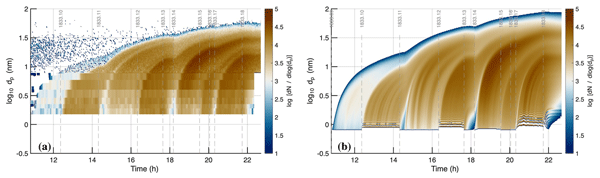
We describe accurate measurement of particle formation and growth in the CERN CLOUD (European Council for Nuclear Research Cosmics Leaving OUtdoor Droplets) chamber, using a suite of gas- and particle-phase instruments. The interconnected measurements establish high accuracy in key particle properties and critically important gas-phase sulfuric acid. This is a template for accurate calibration of similar experiments and thus accurate determination of aerosol nucleation and growth rates, which are an important source of uncertainty in climate science.
Lauri K. Savolainen, Teemu Lepistö, Heidi Hellén, Henna Lintusaari, Milja Jäppi, Jarkko V. Niemi, Kimmo Teinilä, Minna Aurela, Markus Lampimäki, Anu Kousa, Janne Lampilahti, Katrianne Lehtipalo, Tuukka Petäjä, Miikka Dal Maso, Hanna E. Manninen, Hilkka Timonen, and Topi Rönkkö
EGUsphere, https://doi.org/10.5194/egusphere-2026-1692, https://doi.org/10.5194/egusphere-2026-1692, 2026
Short summary
Short summary
The study investigates vehicle fleet emissions of road traffic. Despite technological advances, road traffic is still an important pollution source in urban areas, especially when considering unregulated, but health-relevant, emerging pollutants. We report fuel consumption normalized vehicle fleet emission factors for various regulated and unregulated air pollutants. Also, we show that road traffic has inverse and indirect effects on urban aerosol which are not generally well understood.
Shawon Barua, Avinash Kumar, Prasenjit Seal, Siddharth Iyer, and Matti Rissanen
Atmos. Chem. Phys., 26, 4711–4725, https://doi.org/10.5194/acp-26-4711-2026, https://doi.org/10.5194/acp-26-4711-2026, 2026
Short summary
Short summary
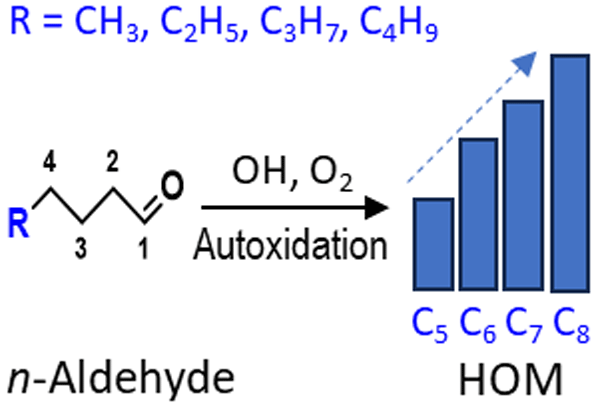
This work illustrates how long chain linear aldehydes have the potential to undergo atmospheric autoxidation and lead to prompt formation of condensable material which subsequently contributes to aerosol formation, deteriorating the air quality of urban atmospheres. We performed laboratory experiments using state-of-the-art mass spectrometry technique combined with a flow reactor under atmospheric conditions to resolve the autoxidation mechanism of n-aldehydes initiated by a common oxidant.
Teemu Lepistö, Hilkka Timonen, Topi Rönkkö, and Miikka Dal Maso
Atmos. Chem. Phys., 26, 4215–4230, https://doi.org/10.5194/acp-26-4215-2026, https://doi.org/10.5194/acp-26-4215-2026, 2026
Short summary
Short summary
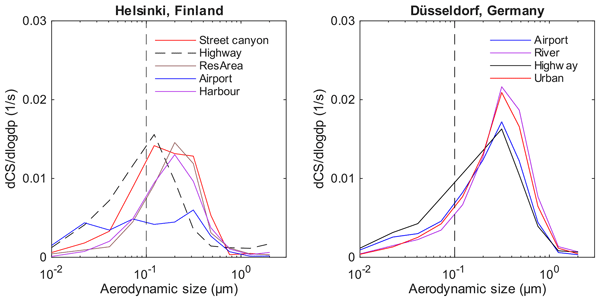
Condensation of vapour molecules onto aerosol particles is a key process regarding aerosol health and climate effects. The condensation sink (CS) estimates the attachment rate of vapour molecules onto existing particles. Here, we explore the concept of size-resolved CS as many of the effects related to condensation are dependent on the size of the existing particles. Our results show clear location-dependent differences in the CS size distributions which may have not been considered before.
Katariina Kylämäki, Milja Jäppi, Leïla Simon, Wojciech Honkisz, Petteri Marjanen, Laura Salo, Teemu Lepistö, Henna Lintusaari, Luis Barreira, Hannu Kuutti, Matti Rissanen, Piotr Bielaczyc, Hilkka Timonen, Päivi Aakko-Saksa, and Topi Rönkkö
EGUsphere, https://doi.org/10.5194/egusphere-2026-224, https://doi.org/10.5194/egusphere-2026-224, 2026
Short summary
Short summary
Oxidation flow reactors (OFRs) simulate atmospheric aging of e.g. anthropogenic emissions. In this study, we aged exhaust from passenger cars in two OFRs with different designs. On average, the OFRs produced comparable particle size distributions and emission factors. However, there were differences between the OFRs in secondary particle formation depending on the fuel and technology of the car and the differences were mostly explained by OFR design.
Giannis Ioannidis, Nikoletta Bouloti, Paul Tremper, Chaofan Li, Christos Boikos, Nikolaos Rapkos, Till Riedel, Miikka Dal Maso, and Leonidas Ntziachristos
EGUsphere, https://doi.org/10.5194/egusphere-2025-193, https://doi.org/10.5194/egusphere-2025-193, 2025
Preprint archived
Short summary
Short summary
This study introduces SOMA (Secondary Organic Module for Aerosol) to model SOA formation in urban environments, using VOC oxidation inputs from GECKO-A. Based on SOA formation experiments, SOMA incorporates correction factors for calibration purposes. A CFD model simulates toluene dispersion in Augsburg, and it’s linked to SOMA to show that background SOA contributes 21–53 % of total mass, fading after 7 hours, providing better understanding of SOA formation dynamics.
Federica Bortolussi, Hilda Sandström, Fariba Partovi, Joona Mikkilä, Patrick Rinke, and Matti Rissanen
Atmos. Chem. Phys., 25, 685–704, https://doi.org/10.5194/acp-25-685-2025, https://doi.org/10.5194/acp-25-685-2025, 2025
Short summary
Short summary
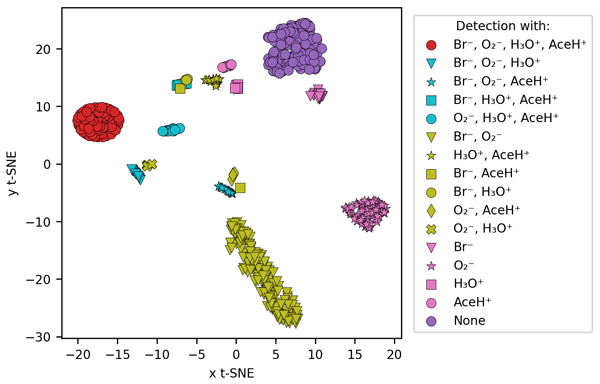
Chemical ionization mass spectrometry (CIMS) is widely used in atmospheric chemistry studies. We still have a limited understanding of the complex functioning of the instrument; therefore, we applied machine learning to provide insights from CIMS analyses. We were able to predict both detection and signal intensity with a fair error, and we found out the most important structural fragments for negative ionization schemes (NH and OH) and positive ones (nitrogen-containing groups).
Henning Finkenzeller, Jyri Mikkilä, Cecilia Righi, Paxton Juuti, Mikko Sipilä, Matti Rissanen, Douglas Worsnop, Aleksei Shcherbinin, Nina Sarnela, and Juha Kangasluoma
Atmos. Meas. Tech., 17, 5989–6001, https://doi.org/10.5194/amt-17-5989-2024, https://doi.org/10.5194/amt-17-5989-2024, 2024
Short summary
Short summary
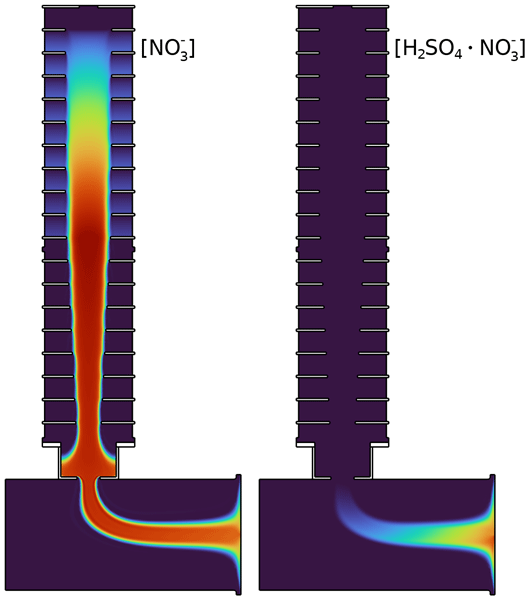
Chemical ionisation mass spectrometry is used in the atmospheric sciences to measure trace gas concentrations. Neutral gases require charging in inlets before the mass-to-charge ratio of the resulting ions can be analysed. This study uses multiphysics modelling to investigate how the MION2 and Eisele type inlets work and shows the effect of tuning parameters and their current limitations. The findings are helpful for inlet users and are expected to aid in developing improved inlets.
Teemu Lepistö, Henna Lintusaari, Laura Salo, Ville Silvonen, Luis M. F. Barreira, Jussi Hoivala, Lassi Markkula, Jarkko V. Niemi, Jakub Ondracek, Kimmo Teinilä, Hanna E. Manninen, Sanna Saarikoski, Hilkka Timonen, Miikka Dal Maso, and Topi Rönkkö
Aerosol Research, 2, 271–289, https://doi.org/10.5194/ar-2-271-2024, https://doi.org/10.5194/ar-2-271-2024, 2024
Short summary
Short summary
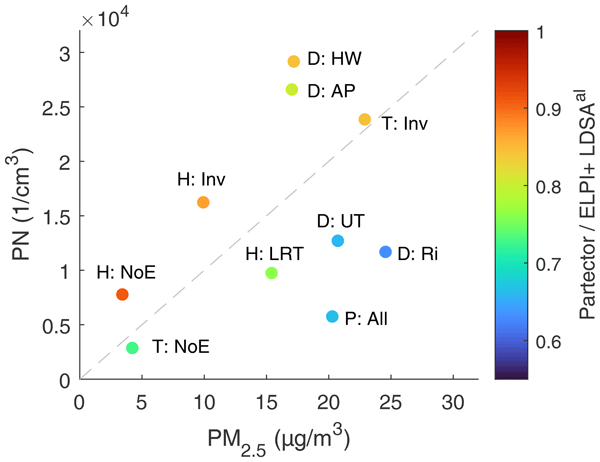
The performances of different particle lung-deposited surface area (LDSAal) measurement methods (Partector, ELPI+, SMPS/DMPS) were compared in ambient conditions. As LDSAal is a health-relevant metric and rather easy to utilise in air quality monitoring, it is crucial to know how the different methods agree, as there are clear differences in their operation. In all, a comparison of different methods can be complicated; still, the methods agree rather well in terms of local pollution (< 400 nm).
Alex Rowell, James Brean, David C. S. Beddows, Zongbo Shi, Avinash Kumar, Matti Rissanen, Miikka Dal Maso, Peter Mettke, Kay Weinhold, Maik Merkel, and Roy M. Harrison
Atmos. Chem. Phys., 24, 10349–10361, https://doi.org/10.5194/acp-24-10349-2024, https://doi.org/10.5194/acp-24-10349-2024, 2024
Short summary
Short summary
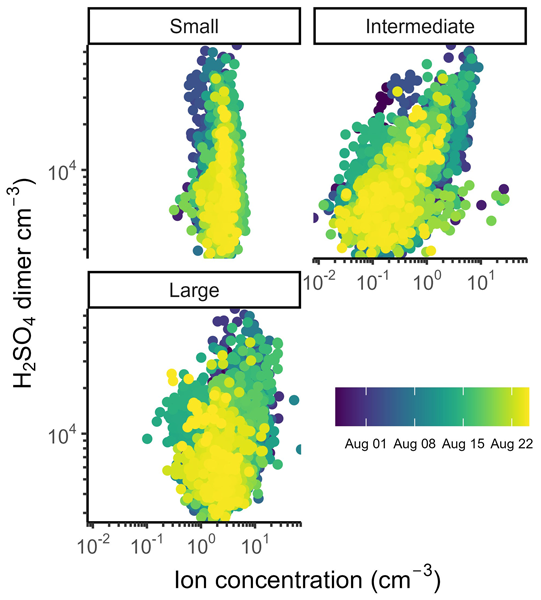
Ions enhance the formation and growth rates of new particles, affecting the Earth's radiation budget. Despite these effects, there is little published data exploring the sources of ions in the urban environment and their role in new particle formation (NPF). Here we show that natural ion sources dominate in urban environments, while traffic is a secondary source. Ions contribute up to 12.7 % of the formation rate of particles, indicating that they are important for forming urban PM.
Stéphanie Alage, Vincent Michoud, Sergio Harb, Bénédicte Picquet-Varrault, Manuela Cirtog, Avinash Kumar, Matti Rissanen, and Christopher Cantrell
Atmos. Meas. Tech., 17, 4709–4724, https://doi.org/10.5194/amt-17-4709-2024, https://doi.org/10.5194/amt-17-4709-2024, 2024
Short summary
Short summary
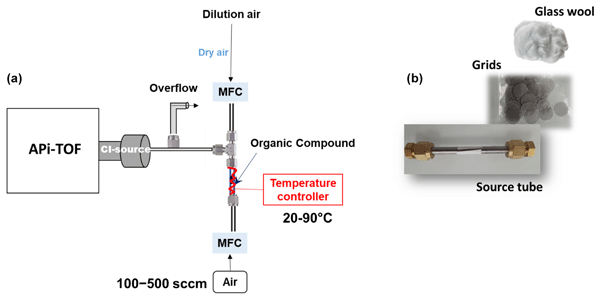
Calibration exercises are essential for determining the accuracy of instruments. We performed calibrations on a NO3¯ ToFCIMS instrument to determine its sensitivity and linearity for detecting various organic compounds. Our findings revealed significant variability, over several orders of magnitude, in the calibration factors obtained. The results suggest that relying on a single calibration factor from H2SO4 for the quantification of all compounds detected by this technique is not appropriate.
Pauli Simonen, Miikka Dal Maso, Pinja Prauda, Anniina Hoilijoki, Anette Karppinen, Pekka Matilainen, Panu Karjalainen, and Jorma Keskinen
Atmos. Meas. Tech., 17, 3219–3236, https://doi.org/10.5194/amt-17-3219-2024, https://doi.org/10.5194/amt-17-3219-2024, 2024
Short summary
Short summary
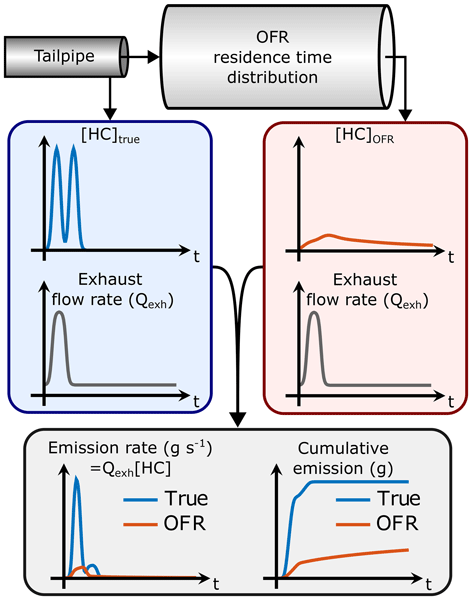
Secondary aerosol is formed in the atmosphere from gaseous emissions. Oxidation flow reactors used in secondary aerosol research do not immediately respond to changes in the inlet concentration of gases because of their broad transfer functions. This may result in incorrect secondary aerosol production factors determined for vehicles. We studied the extent of possible errors and found that oxidation flow reactors with faster responses result in smaller errors.
Romain Salignat, Matti Rissanen, Siddharth Iyer, Jean-Luc Baray, Pierre Tulet, Jean-Marc Metzger, Jérôme Brioude, Karine Sellegri, and Clémence Rose
Atmos. Chem. Phys., 24, 3785–3812, https://doi.org/10.5194/acp-24-3785-2024, https://doi.org/10.5194/acp-24-3785-2024, 2024
Short summary
Short summary
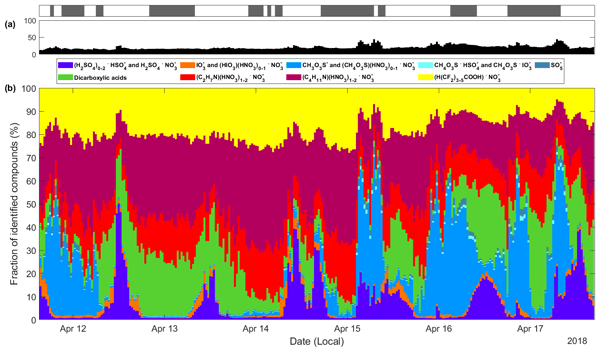
Using mass spectrometry data collected at the Maïdo Observatory (2160 m a.s.l., Réunion), we provide the first detailed analysis of molecular cluster chemical composition specifically in the marine free troposphere. The abundance of the identified species is related both to in situ meteorological parameters and air mass history, which also provide insight into their origin. Our work makes an important contribution to documenting the chemistry and physics of the marine free troposphere.
Magdalena Okuljar, Olga Garmash, Miska Olin, Joni Kalliokoski, Hilkka Timonen, Jarkko V. Niemi, Pauli Paasonen, Jenni Kontkanen, Yanjun Zhang, Heidi Hellén, Heino Kuuluvainen, Minna Aurela, Hanna E. Manninen, Mikko Sipilä, Topi Rönkkö, Tuukka Petäjä, Markku Kulmala, Miikka Dal Maso, and Mikael Ehn
Atmos. Chem. Phys., 23, 12965–12983, https://doi.org/10.5194/acp-23-12965-2023, https://doi.org/10.5194/acp-23-12965-2023, 2023
Short summary
Short summary
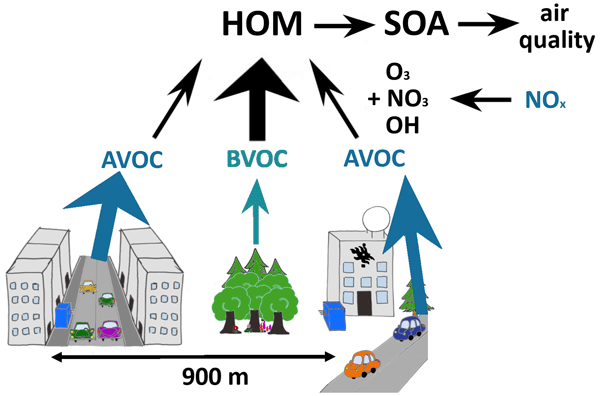
Highly oxygenated organic molecules (HOMs) form secondary organic aerosol that affects air quality and health. In this study, we demonstrate that in a moderately polluted city with abundant vegetation, the composition of HOMs is largely controlled by the effect of NOx on the biogenic volatile organic compound oxidation. Comparing the results from two nearby stations, we show that HOM composition and formation pathways can change considerably within small distances in urban environments.
Xu-Cheng He, Jiali Shen, Siddharth Iyer, Paxton Juuti, Jiangyi Zhang, Mrisha Koirala, Mikko M. Kytökari, Douglas R. Worsnop, Matti Rissanen, Markku Kulmala, Norbert M. Maier, Jyri Mikkilä, Mikko Sipilä, and Juha Kangasluoma
Atmos. Meas. Tech., 16, 4461–4487, https://doi.org/10.5194/amt-16-4461-2023, https://doi.org/10.5194/amt-16-4461-2023, 2023
Short summary
Short summary
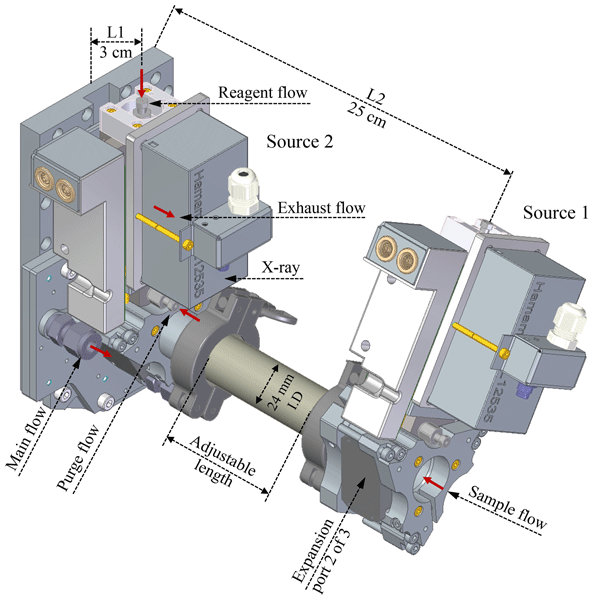
In this study, the upgraded multi-scheme chemical ionisation inlet 2 is presented. Sulfuric acid, hypoiodous acid, iodine, sulfur dioxide, and hydroperoxyl radicals are calibrated, and the improved ion optics allow us to detect sulfuric acid and iodine-containing molecules at as low as a few parts per quadrillion by volume. Additionally, we confirm the reliable detection of iodic acid using both the nitrate and bromide chemical ionisation methods under atmospherically relevant conditions.
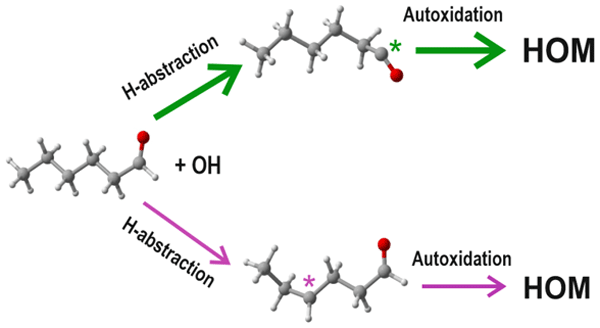
Shawon Barua, Siddharth Iyer, Avinash Kumar, Prasenjit Seal, and Matti Rissanen
Atmos. Chem. Phys., 23, 10517–10532, https://doi.org/10.5194/acp-23-10517-2023, https://doi.org/10.5194/acp-23-10517-2023, 2023
Short summary
Short summary
This work illustrates how a common volatile hydrocarbon, hexanal, has the potential to undergo atmospheric autoxidation that leads to prompt formation of condensable material that subsequently contributes to aerosol formation, deteriorating the air quality of urban atmospheres. We used the combined state-of-the-art quantum chemical modeling and experimental flow reactor experiments under atmospheric conditions to resolve the autoxidation mechanism of hexanal initiated by a common oxidant.
Lukas Pichelstorfer, Pontus Roldin, Matti Rissanen, Noora Hyttinen, Olga Garmash, Carlton Xavier, Putian Zhou, Petri Clusius, Benjamin Foreback, Thomas Golin Almeida, Chenjuan Deng, Metin Baykara, Theo Kurten, and Michael Boy
EGUsphere, https://doi.org/10.5194/egusphere-2023-1415, https://doi.org/10.5194/egusphere-2023-1415, 2023
Preprint archived
Short summary
Short summary
Secondary organic aerosols (SOA) form effectively from gaseous precursors via a process called autoxidation. While key chemical reaction types seem to be known, no general description of autoxidation chemistry exists. In the present work, we present a method to create autoxidation chemistry schemes for any atmospherically relevant hydrocarbon. We exemplarily investigate benzene and its potential to form aerosols. We found that autoxidation, under some conditions, can dominate the SOA formation.
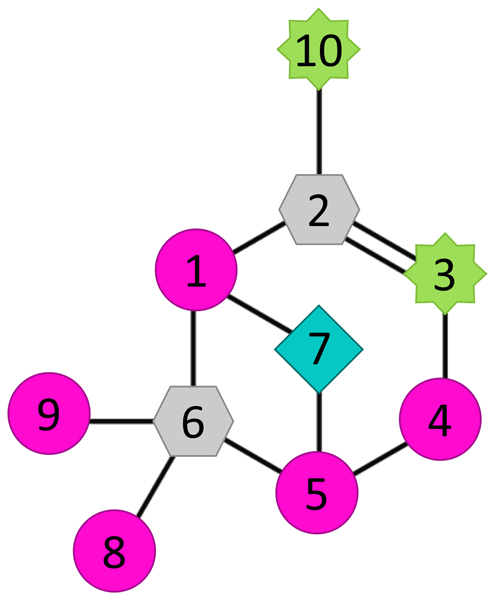
Melissa Meder, Otso Peräkylä, Jonathan G. Varelas, Jingyi Luo, Runlong Cai, Yanjun Zhang, Theo Kurtén, Matthieu Riva, Matti Rissanen, Franz M. Geiger, Regan J. Thomson, and Mikael Ehn
Atmos. Chem. Phys., 23, 4373–4390, https://doi.org/10.5194/acp-23-4373-2023, https://doi.org/10.5194/acp-23-4373-2023, 2023
Short summary
Short summary
We discuss and show the viability of a method where multiple isotopically labelled precursors are used for probing the formation pathways of highly oxygenated organic molecules (HOMs) from the oxidation of the monoterpene a-pinene. HOMs are very important for secondary organic aerosol (SOA) formation in forested regions, and monoterpenes are the single largest source of SOA globally. The fast reactions forming HOMs have thus far remained elusive despite considerable efforts over the last decade.
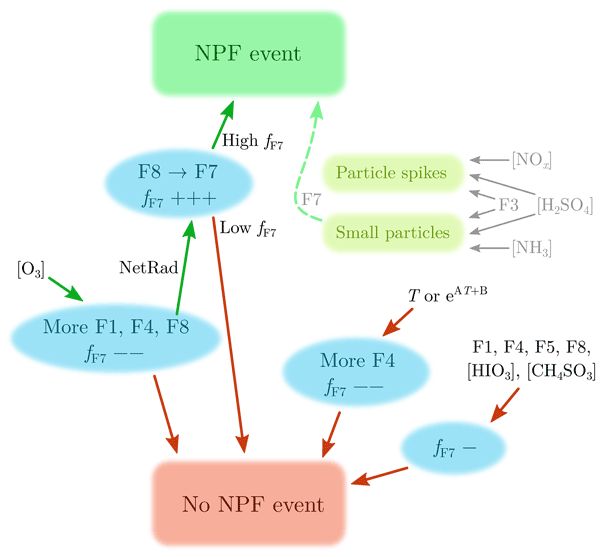
Miska Olin, Magdalena Okuljar, Matti P. Rissanen, Joni Kalliokoski, Jiali Shen, Lubna Dada, Markus Lampimäki, Yusheng Wu, Annalea Lohila, Jonathan Duplissy, Mikko Sipilä, Tuukka Petäjä, Markku Kulmala, and Miikka Dal Maso
Atmos. Chem. Phys., 22, 8097–8115, https://doi.org/10.5194/acp-22-8097-2022, https://doi.org/10.5194/acp-22-8097-2022, 2022
Short summary
Short summary
Atmospheric new particle formation is an important source of the total particle number concentration in the atmosphere. Several parameters for predicting new particle formation events have been suggested before, but the results have been inconclusive. This study proposes an another predicting parameter, related to a specific type of highly oxidized organic molecules, especially for similar locations to the measurement site in this study, which was a coastal agricultural site in Finland.
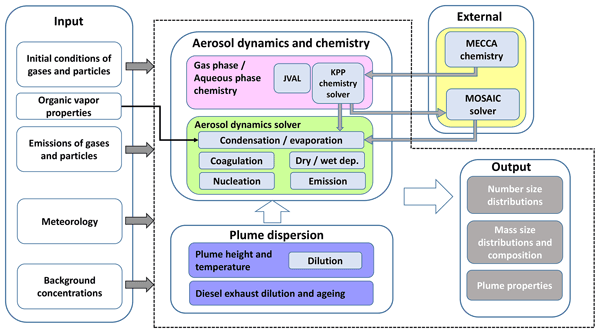
Matthias Karl, Liisa Pirjola, Tiia Grönholm, Mona Kurppa, Srinivasan Anand, Xiaole Zhang, Andreas Held, Rolf Sander, Miikka Dal Maso, David Topping, Shuai Jiang, Leena Kangas, and Jaakko Kukkonen
Geosci. Model Dev., 15, 3969–4026, https://doi.org/10.5194/gmd-15-3969-2022, https://doi.org/10.5194/gmd-15-3969-2022, 2022
Short summary
Short summary
The community aerosol dynamics model MAFOR includes several advanced features: coupling with an up-to-date chemistry mechanism for volatile organic compounds, a revised Brownian coagulation kernel that takes into account the fractal geometry of soot particles, a multitude of nucleation parameterizations, size-resolved partitioning of semi-volatile inorganics, and a hybrid method for the formation of secondary organic aerosols within the framework of condensation and evaporation.
Miska Olin, David Patoulias, Heino Kuuluvainen, Jarkko V. Niemi, Topi Rönkkö, Spyros N. Pandis, Ilona Riipinen, and Miikka Dal Maso
Atmos. Chem. Phys., 22, 1131–1148, https://doi.org/10.5194/acp-22-1131-2022, https://doi.org/10.5194/acp-22-1131-2022, 2022
Short summary
Short summary
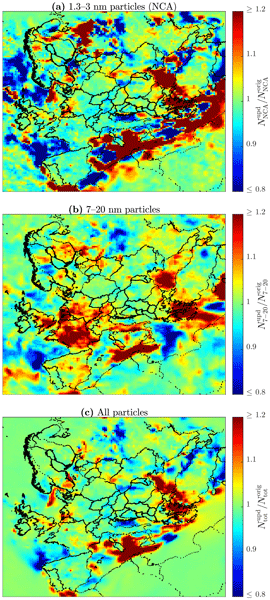
An emission factor particle size distribution was determined from the measurements at an urban traffic site. It was used in updating a pre-existing emission inventory, and regional modeling was performed after the update. Emission inventories typically underestimate nanoparticle emissions due to challenges in determining them with high certainty. This update reveals that the simulated aerosol levels have previously been underestimated especially for urban areas and for sub-50 nm particles.
Dalrin Ampritta Amaladhasan, Claudia Heyn, Christopher R. Hoyle, Imad El Haddad, Miriam Elser, Simone M. Pieber, Jay G. Slowik, Antonio Amorim, Jonathan Duplissy, Sebastian Ehrhart, Vladimir Makhmutov, Ugo Molteni, Matti Rissanen, Yuri Stozhkov, Robert Wagner, Armin Hansel, Jasper Kirkby, Neil M. Donahue, Rainer Volkamer, Urs Baltensperger, Martin Gysel-Beer, and Andreas Zuend
Atmos. Chem. Phys., 22, 215–244, https://doi.org/10.5194/acp-22-215-2022, https://doi.org/10.5194/acp-22-215-2022, 2022
Short summary
Short summary
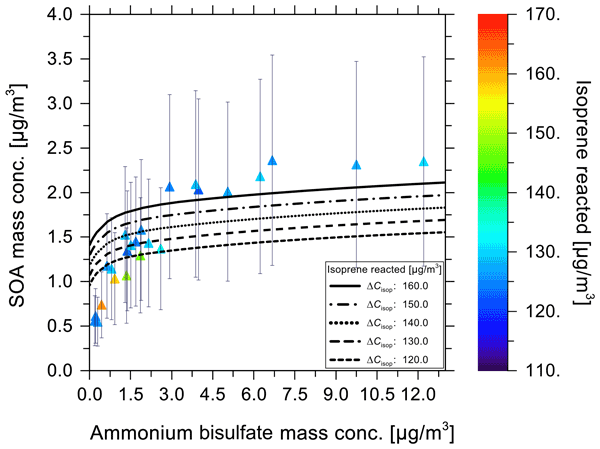
We use a combination of models for gas-phase chemical reactions and equilibrium gas–particle partitioning of isoprene-derived secondary organic aerosols (SOAs) informed by dark ozonolysis experiments conducted in the CLOUD chamber. Our predictions cover high to low relative humidities (RHs) and quantify how SOA mass yields are enhanced at high RH as well as the impact of inorganic seeds of distinct hygroscopicities and acidities on the coupled partitioning of water and semi-volatile organics.
Cited articles
Atkinson, R.: Atmospheric Chemistry of VOCs and NOx, Atmos. Environ., 34, 2063–2101, https://doi.org/10.1016/S1352-2310(99)00460-4, 2000.
Barua, S., Kumar, A., Seal, P., Bezaatpour, M., Jha, S., Myllys, N., Iyer, S., and Rissanen, M.: Rapid Formation of Aerosol Precursors from the Autoxidation of Aromatic Carbonyls and the Remarkable Enhancing Influence of NO Addition, ResearchSquare, https://doi.org/10.21203/rs.3.rs-7332278/v1, 2025.
Berndt, T., Richters, S., Jokinen, T., Hyttinen, N., Kurtén, T., Otkjær, R. V., Kjaergaard, H. G., Stratmann, F., Herrmann, H., Sipilä, M., Kulmala, M., and Ehn, M.: Hydroxyl Radical-Induced Formation of Highly Oxidized Organic Compounds, Nat. Commun., 7, 13677, https://doi.org/10.1038/ncomms13677, 2016.
Bey, I., Jacob, D. J., Yantosca, R. M., Logan, J. A., Field, B. D., Fiore, A. M., Li, Q., Liu, H. Y., Mickley, L. J., and Schultz, M. G.: Global Modeling of Tropospheric Chemistry with Assimilated Meteorology: Model Description and Evaluation, J. Geophys. Res.-Atmos., 106, 23073–23095, https://doi.org/10.1029/2001JD000807, 2001.
Bezaatpour, M.: Raw data for Figures used in the Manuscript, Zenodo [data set], https://doi.org/10.5281/zenodo.15688105, 2025.
Bezaatpour, M., Dal Maso, M., and Rissanen, M.: Mojtababzp/VaPOrS: VaPOrS v1.0.1. V. v.1.0.1, Zenodo [code], https://doi.org/10.5281/ZENODO.15222175, 2025.
Bianchi, F., Kurtén, T., Riva, M., Mohr, C., Rissanen, M. P., Roldin, P., Berndt, T., Crounse, J. D., Wennberg, P. O., Mentel, T. F., Wildt, J., Junninen, H., Jokinen, T., Kulmala, M., Worsnop, D. R., Thornton, J. A., Donahue, N. M., Kjaergaard, H. G., and Ehn, M.: Highly Oxygenated Organic Molecules (HOM) from Gas-Phase Autoxidation Involving Peroxy Radicals: A Key Contributor to Atmospheric Aerosol, Chem. Rev., 119, 3472–3509, https://doi.org/10.1021/acs.chemrev.8b00395, 2019.
Byun, D. and Schere, K. L.: Review of the Governing Equations, Computational Algorithms, and Other Components of the Models-3 Community Multiscale Air Quality (CMAQ) Modeling System, Appl. Mech. Rev., 59, 51–77, https://doi.org/10.1115/1.2128636, 2006.
Compernolle, S., Ceulemans, K., and Müller, J.-F., EVAPORATION: A New Vapour Pressure Estimation Method for Organic Molecules Including Non-Additivity and Intramolecular Interactions, Atmos. Chem. Phys., 11, 9431–9450, https://doi.org/10.5194/acp-11-9431-2011, 2011.
Crounse, J. D., Nielsen, L. B., Jørgensen, S., Kjaergaard, H. G., and Wennberg, P. O.: Autoxidation of Organic Compounds in the Atmosphere, J. Phys. Chem. Lett., 4, 3513–3520, https://doi.org/10.1021/jz4019207, 2013.
Donahue, N. M., Robinson, A. L., Stanier, C. O., and Pandis, S. N.: Coupled Partitioning, Dilution, and Chemical Aging of Semivolatile Organics, Environ. Sci. Technol., 40, 2635–2643, https://doi.org/10.1021/es052297c, 2006.
Eckert, F. and Klamt, A.: Fast Solvent Screening via Quantum Chemistry: COSMO-RS Approach, AIChE J., 48, 369–385, https://doi.org/10.1002/aic.690480220, 2004.
Ehn, M., Thornton, J. A., Kleist, E., Sipilä, M., Junninen, H., Pullinen, I., Springer, M., Rubach, F., Tillmann, R., Lee, B., Lopez-Hilfiker, F., Andres, S., Acir, I.-H., Rissanen, M., Jokinen, T., Schobesberger, S., Kangasluoma, J., Kontkanen, J., Nieminen, T., Kurtén, T., Nielsen, L. B., Jørgensen, S., Kjaergaard, H. G., Canagaratna, M., Dal Maso, M., Berndt, T., Petäjä, T., Wahner, A., Kerminen, V.-M., Kulmala, M., Worsnop, D. R., Wildt, J., and Mentel, T. F.: A Large Source of Low-Volatility Secondary Organic Aerosol, Nature, 506, 476–479, https://doi.org/10.1038/nature13032, 2014.
Epping, R. and Koch, M.: On-Site Detection of Volatile Organic Compounds (VOCs), Molecules, 28, 1598, https://doi.org/10.3390/molecules28041598, 2023.
Goldstein, A. H. and Galbally, I. E.: Known and Unexplored Organic Constituents in the Earth's Atmosphere, Environ. Sci. Technol., 41, 1514–1521, https://doi.org/10.1021/es072476p, 2007.
Grell, G. A., Peckham, S. E., Schmitz, R., McKeen, S. A., Frost, G., Skamarock, W. C., and Eder, B.: Fully Coupled `Online' Chemistry within the WRF Model, Atmos. Environ., 39, 6957–6975, https://doi.org/10.1016/j.atmosenv.2005.04.027, 2005.
Guenther, A., Hewitt, C. N., Erickson, D., Fall, R., Geron, C., Graedel, T., Harley, P., Klinger, L., Lerdau, M., McKay, W. A., Pierce, T., Scholes, B., Steinbrecher, R., Tallamraju, R., Taylor, J., and Zimmerman, P.: A Global Model of Natural Volatile Organic Compound Emissions, J. Geophys. Res.-Atmos., 100, 8873–8892, https://doi.org/10.1029/94JD02950, 1995.
Guenther, A., Karl, T., Harley, P., Wiedinmyer, C., Palmer, P. I., and Geron, C.: Estimates of Global Terrestrial Isoprene Emissions Using MEGAN (Model of Emissions of Gases and Aerosols from Nature), Atmos. Chem. Phys., 6, 3181–3210, https://doi.org/10.5194/acp-6-3181-2006, 2006.
Isaacman-VanWertz, G. and Aumont, B.: Impact of Organic Molecular Structure on the Estimation of Atmospherically Relevant Physicochemical Parameters, Atmos. Chem. Phys., 21, 6541–6563, https://doi.org/10.5194/acp-21-6541-2021, 2021.
Iyer, S., Kumar, A., Savolainen, A., Barua, S., Daub, C., Pichelstorfer, L., Roldin, P., Garmash, O., Seal, P., Kurtén, T., and Rissanen, M.: Molecular rearrangement of bicyclic peroxy radicals is a key route to aerosol from aromatics, Nat. Commun., 14, 4984, https://doi.org/10.1038/s41467-023-40683-0, 2023.
Iyer, S., Rissanen, M. P., Valiev, R., Barua, S., Krechmer, J. E., Thornton, J., Ehn, M., and Kurtén, T.: Molecular Mechanism for Rapid Autoxidation in α-Pinene Ozonolysis, Nat. Commun., 12 , 878, https://doi.org/10.1038/s41467-021-21172-w, 2021.
Jenkin, M. E., Saunders, S. M., Wagner, V., and Pilling, M. J.: Protocol for the Development of the Master Chemical Mechanism, MCM v3 (Part B): Tropospheric Degradation of Aromatic Volatile Organic Compounds, Atmos. Chem. Phys., 3, 181–193, https://doi.org/10.5194/acp-3-181-2003, 2003.
Jenkin, M. E., Valorso, R., Aumont, B., and Rickard, A. R.: Estimation of Rate Coefficients and Branching Ratios for Reactions of Organic Peroxy Radicals for Use in Automated Mechanism Construction, Atmos. Chem. Phys., 19, 7691–7717, https://doi.org/10.5194/acp-19-7691-2019, 2019.
Jimenez, J. L., Canagaratna, M. R., Donahue, N. M., Prevot, A. S. H., Zhang, Q., Kroll, J. H., DeCarlo, P. F., Allan, J. D., Coe, H., Ng, N. L., Aiken, A. C., Docherty, K. S., Ulbrich, I. M., Grieshop, A. P., Robinson, A. L., Duplissy, J., Smith, J. D., Wilson, K. R., Lanz, V. A., Hueglin, C., Sun, Y. L., Tian, J., Laaksonen, A., Raatikainen, T., Rautiainen, J., Vaattovaara, P., Ehn, M., Kulmala, M., Tomlinson, J. M., Collins, D. R., Cubison, M. J., Dunlea, E. J., Huffman, J. A., Onasch, T. B., Alfarra, M. R., Williams, P. I., Bower, K., Kondo, Y., Schneider, J., Drewnick, F., Borrmann, S., Weimer, S., Demerjian, K., Salcedo, D., Cottrell, L., Griffin, R., Takami, A., Miyoshi, T., Hatakeyama, S., Shimono, A., Sun, J. Y., Zhang, Y. M., Dzepina, K., Kimmel, J. R., Sueper, D., Jayne, J. T., Herndon, S. C., Trimborn, A. M., Williams, L. R., Wood, E. C., Middlebrook, A. M., Kolb, C. E., Baltensperger, U., and Worsnop, D. R.: Evolution of Organic Aerosols in the Atmosphere, Science, 326, 1525–1529, https://doi.org/10.1126/science.1180353, 2009.
Joback, K. G. and Reid, R. C.: Estimation of pure-component properties from group-contributions, Chem. Eng. Commun., 57, 233–243, https://doi.org/10.1080/00986448708960487, 1987.
Klamt, A.: Conductor-like Screening Model for Real Solvents: A New Approach to the Quantitative Calculation of Solvation Phenomena, J. Phys. Chem., 99, 2224–2235, https://doi.org/10.1021/j100007a062, 1995.
Klamt, A., Jonas, V., Bürger, T., and Lohrenz, J. C. W.: Refinement and Parametrization of COSMO-RS, J. Phys. Chem. A, 102, 5074–5085, https://doi.org/10.1021/jp980017s, 1998.
Luo, H., Vereecken, L., Shen, H., Kang, S., Pullinen, I., Hallquist, M., Fuchs, H., Wahner, A., Kiendler-Scharr, A., Mentel, T. F., and Zhao, D.: Formation of Highly Oxygenated Organic Molecules from the Oxidation of Limonene by OH Radical, Significant Contribution of H-Abstraction Pathway, Atmos. Chem. Phys., 23, 7297–7319, https://doi.org/10.5194/acp-23-7297-2023, 2023.
Mattila, T., Kulmala, M., and Vesala, T.: On the Condensational Growth of a Multicomponent Droplet, J. Aerosol Sci., 28, 553–564, https://doi.org/10.1016/S0021-8502(96)00458-2, 1997.
McDonald, B. C., de Gouw, J. A., Gilman, J. B., Jathar, S. H., Akherati, A., Cappa, C. D., Jimenez, J. L., Lee-Taylor, J., Hayes, P. L., McKeen, S. A., Cui, Y. Y., Kim, S.-W., Gentner, D. R., Isaacman-VanWertz, G., Goldstein, A. H., Harley, R. A., Frost, G. J., Roberts, J. M., Ryerson, T. B., and Trainer, M.: Volatile Chemical Products Emerging as Largest Petrochemical Source of Urban Organic Emissions, Science, 359, 760–764, https://doi.org/10.1126/science.aaq0524, 2018.
Mellouki, A., Wallington, T. J., and Chen, J.: Atmospheric Chemistry of Oxygenated Volatile Organic Compounds: Impacts on Air Quality and Climate, Chem. Rev., 115, 3984–4014, https://doi.org/10.1021/cr500549n, 2015.
Myrdal, P. B. and Yalkowsky, S. H.: Estimating Pure Component Vapor Pressures of Complex Organic Molecules, Indust. Eng. Chem. Res., 36, 2494–2499, https://doi.org/10.1021/ie950242l, 1997.
Nannoolal, Y., Rarey, J., and Ramjugernath, D.: Estimation of Pure Component Properties, Fluid Phase Equilib., 269, 117–133, https://doi.org/10.1016/j.fluid.2008.04.020, 2008.
Pankow, J. F. and Asher, W. E.: SIMPOL.1: A Simple Group Contribution Method for Predicting Vapor Pressures and Enthalpies of Vaporization of Multifunctional Organic Compounds, Atmos. Chem. Phys., 8, 2773–2796, https://doi.org/10.5194/acp-8-2773-2008, 2008.
Pichelstorfer, L., Roldin, P., Rissanen, M., Hyttinen, N., Garmash, O., Xavier, C., Zhou, P., Clusius, P., Foreback, B., Almeida, T. G., Deng, C., Baykara, M., Kurtén, T., and Boy, M.: Towards Automated Inclusion of Autoxidation Chemistry in Models: From Precursors to Atmospheric Implications, Environ. Sci.-Atmos., 4, 879–896, https://doi.org/10.1039/D4EA00054D, 2024.
Rissanen, M. P., Kurtén, T., Sipilä, M., Thornton, J. A., Kangasluoma, J., Sarnela, N., Junninen, H., Jørgensen, S., Schallhart, S., Kajos, M. K., Taipale, R., Springer, M., Mentel, T. F., Ruuskanen, T., Petäjä, T., Worsnop, D. R., Kjaergaard, H. G., and Ehn, M.: The Formation of Highly Oxidized Multifunctional Products in the Ozonolysis of Cyclohexene, J. Am. Chem. Soc., 136, 15596–15606, https://doi.org/10.1021/ja507146s, 2014.
Roldin, P., Swietlicki, E., Schurgers, G., Arneth, A., Lehtinen, K. E. J., Boy, M., and Kulmala, M.: Development and Evaluation of the Aerosol Dynamics and Gas Phase Chemistry Model ADCHEM, Atmos. Chem. Phys., 11, 5867–5896, https://doi.org/10.5194/acp-11-5867-2011, 2011.
Roldin, P., Eriksson, A. C., Nordin, E. Z., Hermansson, E., Mogensen, D., Rusanen, A., Boy, M., Swietlicki, E., Svenningsson, B., Zelenyuk, A., and Pagels, J.: Modelling Non-Equilibrium Secondary Organic Aerosol Formation and Evaporation with the Aerosol Dynamics, Gas- and Particle-Phase Chemistry Kinetic Multilayer Model ADCHAM, Atmos. Chem. Phys., 14, 7953–7993, https://doi.org/10.5194/acp-14-7953-2014, 2014.
Saunders, S. M., Jenkin, M. E., Derwent, R. G., and Pilling, M. J.: Protocol for the Development of the Master Chemical Mechanism, MCM v3 (Part A): Tropospheric Degradation of Non-Aromatic Volatile Organic Compounds, Atmos. Chem. Phys., 3, 161–180, https://doi.org/10.5194/acp-3-161-2003, 2003.
Schaap, M., Timmermans, R. M. A., Roemer, M., Boersen, G. A. C., Builtjes, P. J. H., Sauter, F. J., Velders, G. J. M., and Beck, J. P.: The LOTOS EUROS Model: Description, Validation and Latest Developments, Int. J. Environ. Pollut., 32, 270–290, https://doi.org/10.1504/IJEP.2008.017106, 2008.
Simon, M., Dada, L., Heinritzi, M., Scholz, W., Stolzenburg, D., Fischer, L., Wagner, A. C., Kürten, A., Rörup, B., He, X.-C., Almeida, J., Baalbaki, R., Baccarini, A., Bauer, P. S., Beck, L., Bergen, A., Bianchi, F., Bräkling, S., Brilke, S., Caudillo, L., Chen, D., Chu, B., Dias, A., Draper, D. C., Duplissy, J., El-Haddad, I., Finkenzeller, H., Frege, C., Gonzalez-Carracedo, L., Gordon, H., Granzin, M., Hakala, J., Hofbauer, V., Hoyle, C. R., Kim, C., Kong, W., Lamkaddam, H., Lee, C. P., Lehtipalo, K., Leiminger, M., Mai, H., Manninen, H. E., Marie, G., Marten, R., Mentler, B., Molteni, U., Nichman, L., Nie, W., Ojdanic, A., Onnela, A., Partoll, E., Petäjä, T., Pfeifer, J., Philippov, M., Quéléver, L. L. J., Ranjithkumar, A., Rissanen, M. P., Schallhart, S., Schobesberger, S., Schuchmann, S., Shen, J., Sipilä, M., Steiner, G., Stozhkov, Y., Tauber, C., Tham, Y. J., Tomé, A. R., Vazquez-Pufleau, M., Vogel, A. L., Wagner, R., Wang, M., Wang, D. S., Wang, Y., Weber, S. K., Wu, Y., Xiao, M., Yan, C., Ye, P., Ye, Q., Zauner-Wieczorek, M., Zhou, X., Baltensperger, U., Dommen, J., Flagan, R. C., Hansel, A., Kulmala, M., Volkamer, R., Winkler, P. M., Worsnop, D. R., Donahue, N. M., Kirkby, J., and Curtius, J.: Molecular Understanding of New-Particle Formation from α-Pinene between −50 and +25 °C, Atmos. Chem. Phys., 20, 9183–9207, https://doi.org/10.5194/acp-20-9183-2020, 2020.
Topping, D., Barley, M., Bane, M. K., Higham, N., Aumont, B., Dingle, N., and McFiggans, G.: UManSysProp v1.0: An Online and Open-Source Facility for Molecular Property Prediction and Atmospheric Aerosol Calculations, Geosci. Model Dev., 9, 899–914, https://doi.org/10.5194/gmd-9-899-2016, 2016.
Vereecken, L., Aumont, B., Barnes, I., Bozzelli, J. W., Goldman, M. J., Green, W. H., Madronich, S., McGillen, M. R., Mellouki, A., Orlando, J. J., Picquet-Varrault, B., Rickard, A. R., Stockwell, W. R., Wallington, T. J., and Carter, W. P. L.: Perspective on Mechanism Development and Structure-Activity Relationships for Gas-Phase Atmospheric Chemistry, Int. J. Chem. Kinet., 50, 435–469, https://doi.org/10.1002/kin.21172, 2018.
WHO – World Health Organization: Air quality guidelines: global update 2005, World Health Organization, Geneva, https://www.who.int/publications/i/item/WHO-SDE-PHE-OEH-06.02 (last access: 25 November 2025), 2006.
Zhao, D., Pullinen, I., Fuchs, H., Schrade, S., Wu, R., Acir, I.-H., Tillmann, R., Rohrer, F., Wildt, J., Guo, Y., Kiendler-Scharr, A., Wahner, A., Kang, S., Vereecken, L., and Mentel, T. F.: Highly Oxygenated Organic Molecule (HOM) Formation in the Isoprene Oxidation by NO3 Radical, Atmos. Chem. Phys., 21, 9681–9704, https://doi.org/10.5194/acp-21-9681-2021, 2021.
Short summary
We developed a computer program that can read chemical formulas and identify key features in thousands of organic compounds. This helps scientists estimate how easily these compounds evaporate, which is important for understanding air pollution and climate. We tested the program using real-world data and found it to be highly accurate. Our work makes it faster and easier to study the behavior of many complex chemicals in the atmosphere.
We developed a computer program that can read chemical formulas and identify key features in...


