
Articles | Volume 19, issue 19
https://doi.org/10.5194/gmd-19-9781-2026
© Author(s) 2026. This work is distributed under
the Creative Commons Attribution 4.0 License.
the Creative Commons Attribution 4.0 License.
https://doi.org/10.5194/gmd-19-9781-2026
© Author(s) 2026. This work is distributed under
the Creative Commons Attribution 4.0 License.
the Creative Commons Attribution 4.0 License.
Development and technical paper
| 
13 Oct 2026
Development and technical paper |
| 13 Oct 2026
| 13 Oct 2026
High-performance geodynamics on GPUs using the PETSc CUDA backend (GAUZZ v1.0.0)
Kyeong-Min Lee
Interdisciplinary Program in Earth Environmental System Science & Engineering, Kangwon National University, Chuncheon, Republic of Korea
Deok-Kyu Jang
Research Institute for Mathematical Sciences, Kangwon National University, Chuncheon, Republic of Korea
Cedric Thieulot
Department of Earth Sciences, Utrecht University, Princetonlaan 8A, Utrecht, the Netherlands

Interdisciplinary Program in Earth Environmental System Science & Engineering, Kangwon National University, Chuncheon, Republic of Korea
Department of Geophysics, Kangwon National University, Chuncheon, Republic of Korea
Related authors
Deok-Kyu Jang, Kyeong-Min Lee, Cedric Thieulot, Whan-Hyuk Choi, and Byung-Dal So
EGUsphere, https://doi.org/10.5194/egusphere-2025-5480, https://doi.org/10.5194/egusphere-2025-5480, 2025
Short summary
Short summary
We developed faster methods for simulating Earth's interior dynamics. Standard iterative algorithms struggle to solve these equations efficiently. We introduced two improvements. First, we reformulated how calculation errors are measured. Second, we added a mass conservation correction. Our method solves the equations much faster while staying accurate. We tested it on multiple benchmark problems, showing significant speed improvements with minimal extra computational cost.
Deok-Kyu Jang, Kyeong-Min Lee, Cedric Thieulot, Whan-Hyuk Choi, and Byung-Dal So
EGUsphere, https://doi.org/10.5194/egusphere-2025-5480, https://doi.org/10.5194/egusphere-2025-5480, 2025
Short summary
Short summary
We developed faster methods for simulating Earth's interior dynamics. Standard iterative algorithms struggle to solve these equations efficiently. We introduced two improvements. First, we reformulated how calculation errors are measured. Second, we added a mass conservation correction. Our method solves the equations much faster while staying accurate. We tested it on multiple benchmark problems, showing significant speed improvements with minimal extra computational cost.
Cedric Thieulot and Wolfgang Bangerth
Solid Earth, 16, 457–476, https://doi.org/10.5194/se-16-457-2025, https://doi.org/10.5194/se-16-457-2025, 2025
Short summary
Short summary
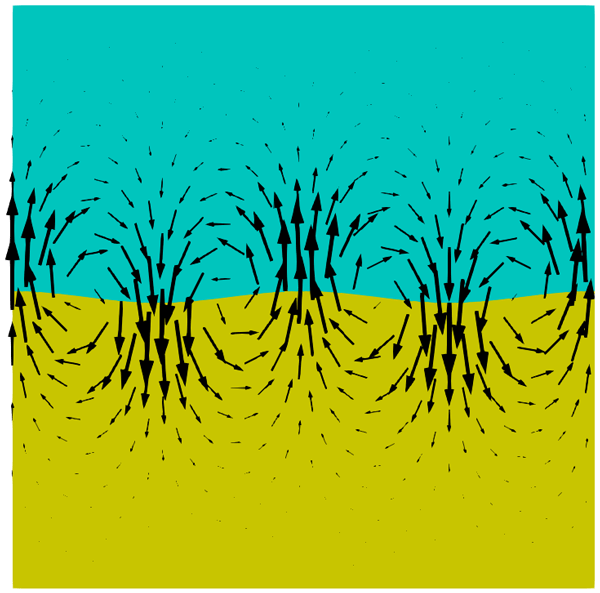
One of the main numerical methods in geodynamics is the finite element method. Many types of elements have been used in the past decades in hundreds of publications. They usually fall under two categories: quadrilaterals and triangles. For the first time we compare results obtained with the most-used elements of each type on a series of geodynamical benchmarks and draw conclusions as to which are the best ones and which are to be preferably avoided.
Erik van der Wiel, Cedric Thieulot, and Douwe J. J. van Hinsbergen
Solid Earth, 15, 861–875, https://doi.org/10.5194/se-15-861-2024, https://doi.org/10.5194/se-15-861-2024, 2024
Short summary
Short summary
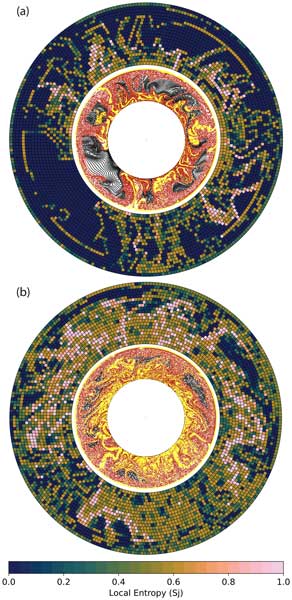
Geodynamic models of mantle convection provide a powerful tool to study the structure and composition of the Earth's mantle. Comparing such models with other datasets is difficult. We explore the use of
configurational entropy, which allows us to quantify mixing in models. The entropy may be used to analyse the mixed state of the mantle as a whole and may also be useful to validate numerical models against anomalies in the mantle that are obtained from seismology and geochemistry.
Rene Gassmöller, Juliane Dannberg, Wolfgang Bangerth, Elbridge Gerry Puckett, and Cedric Thieulot
Geosci. Model Dev., 17, 4115–4134, https://doi.org/10.5194/gmd-17-4115-2024, https://doi.org/10.5194/gmd-17-4115-2024, 2024
Short summary
Short summary
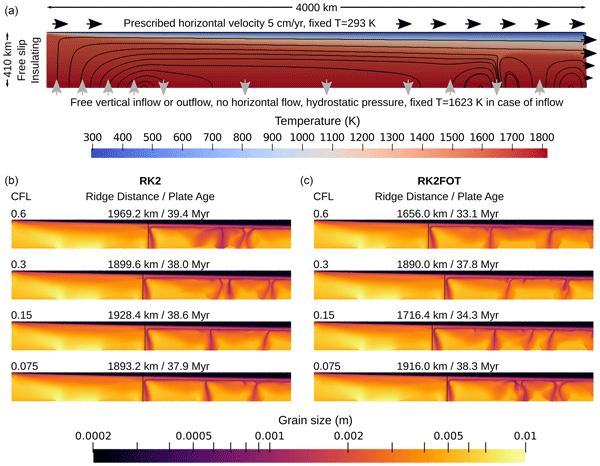
Numerical models that use simulated particles are a powerful tool for investigating flow in the interior of the Earth, but the accuracy of these models is not fully understood. Here we present two new benchmarks that allow measurement of model accuracy. We then document that better accuracy matters for applications like convection beneath an oceanic plate. Our benchmarks and methods are freely available to help the community develop better models.
Su-Jeong Lim, Yi-Jeong Baek, and Byung-Dal So
EGUsphere, https://doi.org/10.5194/egusphere-2023-2987, https://doi.org/10.5194/egusphere-2023-2987, 2024
Preprint archived
Short summary
Short summary
1. The fluidity parameter (A) in Glen's law for n = 4 is widely ranged from 10-35 to 10-29 Pa-4s-1. 2. Critical A range that accurately represents Antarctic ice velocities when n = 4 is constrained from 4.0 × to 16.0 × 10⁻³² Pa-4s-1. 3. The modeling provides an accurate selection range of fluidity parameters in fast-flowing or high-stress regions.
Iris van Zelst, Cedric Thieulot, and Timothy J. Craig
Solid Earth, 14, 683–707, https://doi.org/10.5194/se-14-683-2023, https://doi.org/10.5194/se-14-683-2023, 2023
Short summary
Short summary
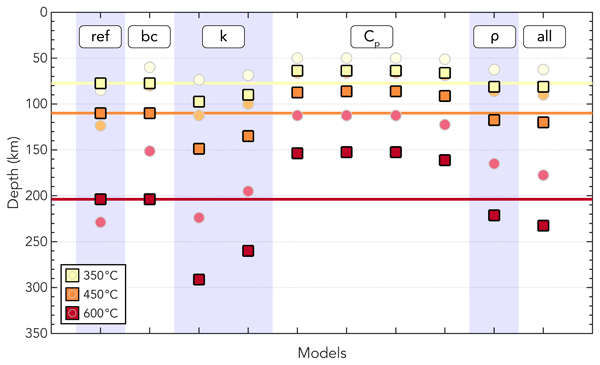
A common simplification in subduction zone models is the use of constant thermal parameters, while experiments have shown that they vary with temperature. We test various formulations of temperature-dependent thermal parameters and show that they change the thermal structure of the subducting slab. We recommend that modelling studies of the thermal structure of subduction zones take the temperature dependence of thermal parameters into account, especially when providing insights into seismicity.
Barend Cornelis Root, Josef Sebera, Wolfgang Szwillus, Cedric Thieulot, Zdeněk Martinec, and Javier Fullea
Solid Earth, 13, 849–873, https://doi.org/10.5194/se-13-849-2022, https://doi.org/10.5194/se-13-849-2022, 2022
Short summary
Short summary
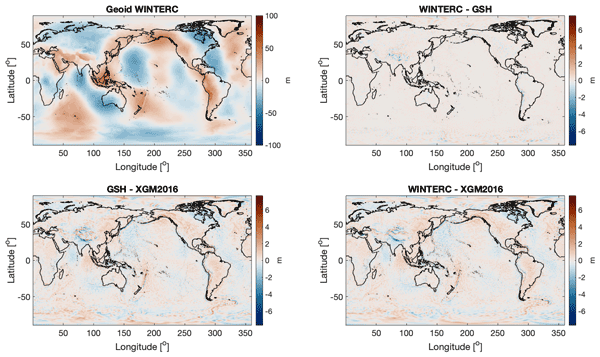
Several alternative gravity modelling techniques and associated numerical codes with their own advantages and limitations are available for the solid Earth community. With upcoming state-of-the-art lithosphere density models and accurate global gravity field data sets, it is vital to understand the differences of the various approaches. In this paper, we discuss the four widely used techniques: spherical harmonics, tesseroid integration, triangle integration, and hexahedral integration.
Iris van Zelst, Fabio Crameri, Adina E. Pusok, Anne Glerum, Juliane Dannberg, and Cedric Thieulot
Solid Earth, 13, 583–637, https://doi.org/10.5194/se-13-583-2022, https://doi.org/10.5194/se-13-583-2022, 2022
Short summary
Short summary
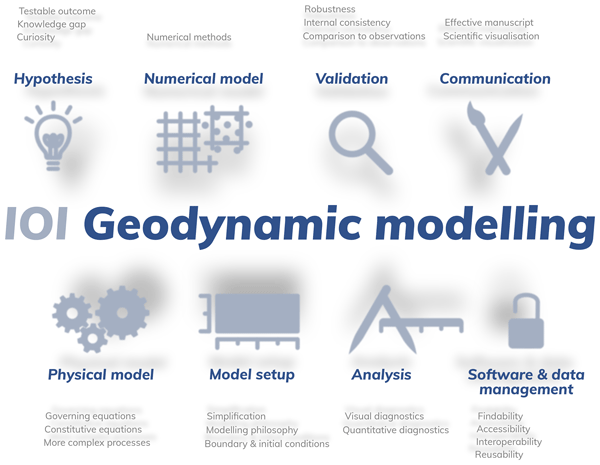
Geodynamic modelling provides a powerful tool to investigate processes in the Earth’s crust, mantle, and core that are not directly observable. In this review, we present a comprehensive yet concise overview of the modelling process with an emphasis on best practices. We also highlight synergies with related fields, such as seismology and geology. Hence, this review is the perfect starting point for anyone wishing to (re)gain a solid understanding of geodynamic modelling as a whole.
Cedric Thieulot and Wolfgang Bangerth
Solid Earth, 13, 229–249, https://doi.org/10.5194/se-13-229-2022, https://doi.org/10.5194/se-13-229-2022, 2022
Short summary
Short summary
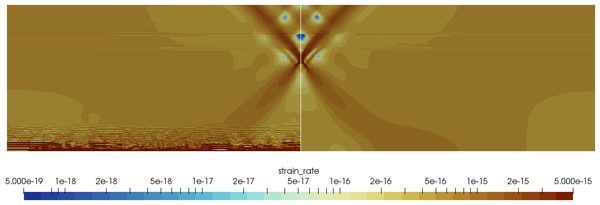
One of the main numerical methods to solve the mass, momentum, and energy conservation equations in geodynamics is the finite-element method. Four main types of elements have been used in the past decades in hundreds of publications. For the first time we compare results obtained with these four elements on a series of geodynamical benchmarks and applications and draw conclusions as to which are the best ones and which are to be preferably avoided.
Cited articles
Adams, A. C., Stegman, D. R., Mohammadzadeh, H., Smrekar, S. E., and Tackley, P. J.: Plume-Induced Delamination Initiated at Rift Zones on Venus, J. Geophys. Res.-Planet., 128, e2023JE007879, https://doi.org/10.1029/2023JE007879, 2023.
Alber, D. M. and Olson, L. N.: Parallel coarse-grid selection, Numer. Linear Algebr., 14, 611–643, https://doi.org/10.1002/nla.541, 2007.
Alkhimenkov, Y. and Podladchikov, Y. Y.: Accelerated pseudo-transient method for elastic, viscoelastic, and coupled hydromechanical problems with applications, Geosci. Model Dev., 18, 563–583, https://doi.org/10.5194/gmd-18-563-2025, 2025.
Alnæs, M. S., Blechta, J., Hake, J., Johansson, A., Kehlet, B., Logg, A., Richardson, C., Ring, J., Rognes, M. E., and Wells, G. N.: The FEniCS project version 1.5, Archive of Numerical Software, 3, https://doi.org/10.11588/ans.2015.100.20553, 2015.
Amestoy, P. R., Duff, I. S., L'Excellent, J.-Y., and Koster, J.: MUMPS: a general purpose distributed memory sparse solver, in: Applied Parallel Computing. New Paradigms for HPC in Industry and Academia, edited by: Sørevik, T., Manne, F., Gebremedhin, A. H., and Moe, R., Springer, Berlin, Heidelberg, 121–130, https://doi.org/10.1007/3-540-70734-4_16, 2001.
Anderson, R., Andrej, J., Barker, A., Bramwell, J., Camier, J.-S., Cerveny, J., Dobrev, V., Dudouit, Y., Fisher, A., Kolev, T., Pazner, W., Stowell, M., Tomov, V., Akkerman, I., Dahm, J., Medina, D., and Zampini, S.: MFEM: A modular finite element methods library, Comput. Math. Appl., 81, 42–74, https://doi.org/10.1016/j.camwa.2020.06.009, 2021.
Balay, S., Abhyankar, S., Adams, M. F., Benson, S., Brown, J., Brune, P., Buschelman, K., Constantinescu, E. M., Dalcin, L., Dener, A., Eijkhout, V., Faibussowitsch, J., Gropp, W. D., Hapla, V., Isaac, T., Jolivet, P., Karpeev, D., Kaushik, D., Knepley, M. G., Kong, F., Kruger, S., May, D. A., McInnes, L. C., Mills, R. T., Mitchell, L., Munson, T., Roman, J. E., Rupp, K., Sanan, P., Sarich, J., Smith, B. F., Suh, H., Zampini, S., Zhang, H., Zhang, H., and Zhang, J.: PETSc/TAO Users Manual, Tech. Rep. ANL-21/39 – Revision 3.23, Argonne National Laboratory, Argonne, IL, USA, https://doi.org/10.2172/2565610, 2025.
Benzi, M., Golub, G. H., and Liesen, J.: Numerical solution of saddle point problems, Acta Numer., 14, 1–137, https://doi.org/10.1017/S0962492904000212, 2005.
Beuchert, M. J. and Podladchikov, Y. Y.: Viscoelastic mantle convection and lithospheric stresses, Geophys. J. Int., 183, 35–63, https://doi.org/10.1111/j.1365-246X.2010.04708.x, 2010.
Blankenbach, B., Busse, F., Christensen, U., Cserepes, L., Gunkel, D., Hansen, U., Harder, H., Jarvis, G., Koch, M., Marquart, G., Moore, D., Olson, P., Schmeling, H., and Schnaubelt, T.: A benchmark comparison for mantle convection codes, Geophys. J. Int., 98, 23–38, https://doi.org/10.1111/j.1365-246X.1989.tb05511.x, 1989.
Bourgouin, L., Mühlhaus, H. B., Hale, A. J., and Arsac, A.: Towards realistic simulations of lava dome growth using the level set method, Acta Geotech., 1, 225–236, https://doi.org/10.1007/s11440-006-0016-6, 2006.
Brandt, A.: Multi-level adaptive solutions to boundary-value problems, Math. Comput., 31, 333–390, https://doi.org/10.1090/S0025-5718-1977-0431719-X, 1977.
Brannick, J., Cao, F., Kahl, K., Falgout, R. D., and Hu, X.: Optimal interpolation and compatible relaxation in classical algebraic multigrid, SIAM J. Sci. Comput., 40, A1473–A1493, https://doi.org/10.1137/17M1123456, 2018.
Brune, S., Popov, A. A., and Sobolev, S. V.: Modeling suggests that oblique extension facilitates rifting and continental break-up, J. Geophys. Res.-Sol. Ea., 117, https://doi.org/10.1029/2011JB008860, 2012.
Burstedde, C., Stadler, G., Alisic, L., Wilcox, L. C., Tan, E., Gurnis, M., and Ghattas, O.: Large-scale adaptive mantle convection simulation, Geophys. J. Int., 192, 889–906, https://doi.org/10.1093/gji/ggs070, 2013.
Capitanio, F. A., Stegman, D. R., Moresi, L. N., and Sharples, W.: Upper plate controls on deep subduction, trench migrations and deformations at convergent margins, Tectonophysics, 483, 80–92, https://doi.org/10.1016/j.tecto.2009.08.020, 2010.
Cecka, C., Lew, A. J., and Darve, E.: Assembly of finite element methods on graphics processors, Int. J. Numer. Meth. Eng., 85, 640–669, https://doi.org/10.1002/nme.2989, 2011.
Chang, J. and So, B.-D.: Partial Nonlinear Iteration During Early Continental Rifting for Symmetric Surface Topography and Heat Flux, Ocean Sci. J., 60, 38, https://doi.org/10.1007/s12601-025-00232-y, 2025.
Chen, C., Pouransari, H., Rajamanickam, S., Boman, E. G., and Darve, E.: A distributed-memory hierarchical solver for general sparse linear systems, Parallel Comput., 74, 49–64, https://doi.org/10.1016/j.parco.2017.12.004, 2018.
Clevenger, T. C. and Heister, T.: Comparison between algebraic and matrix-free geometric multigrid for a Stokes problem on adaptive meshes with variable viscosity, Numer. Linear Algebr., 28, e2375, https://doi.org/10.1002/nla.2375, 2021.
Colli, L., Bunge, H. P., and Oeser, J.: Impact of model inconsistencies on reconstructions of past mantle flow obtained using the adjoint method, Geophys. J. Int., 221, 617–639, https://doi.org/10.1093/gji/ggaa023, 2020.
Crameri, F. and Tackley, P. J.: Parameters controlling dynamically self-consistent plate tectonics and single-sided subduction in global models of mantle convection, J. Geophys. Res.-Sol. Ea., 120, 3680–3706, https://doi.org/10.1002/2014JB011664, 2015.
Crameri, F., Schmeling, H., Golabek, G. J., Duretz, T., Orendt, R., Buiter, S. J. H., May, D. A., Kaus, B. J. P., Gerya, T. V., and Tackley, P. J.: A comparison of numerical surface topography calculations in geodynamic modelling: an evaluation of the “sticky air” method, Geophys. J. Int., 189, 38–54, https://doi.org/10.1111/j.1365-246X.2012.05388.x, 2012.
d'Acremont, E., Leroy, S., and Burov, E. B.: Numerical modelling of a mantle plume: the plume head-lithosphere interaction in the formation of an oceanic large igneous province, Earth Planet. Sc. Lett., 206, 379–396, https://doi.org/10.1016/S0012-821X(02)01058-0, 2003.
Davies, D. R., Wilson, C. R., and Kramer, S. C.: Fluidity: A fully unstructured anisotropic adaptive mesh computational modeling framework for geodynamics, Geochem. Geophy. Geosy., 12, https://doi.org/10.1029/2011GC003551, 2011.
Davies, G. F. and Gurnis, M.: Interaction of mantle dregs with convection: Lateral heterogeneity at the core-mantle boundary, Geophys. Res. Lett., 13, 1517–1520, https://doi.org/10.1029/GL013i013p01517, 1986.
Deakin, T., Price, J., Martineau, M., and McIntosh-Smith, S.: Evaluating attainable memory bandwidth of parallel programming models via BabelStream, International Journal of Computational Science and Engineering, 17, 247–262, https://doi.org/10.1504/IJCSE.2018.095847, 2018.
De Sterck, H., Yang, U. M., and Heys, J. J.: Reducing complexity in parallel algebraic multigrid preconditioners, SIAM J. Matrix Anal. A., 27, 1019–1039, https://doi.org/10.1137/040615729, 2006.
Do, S. H., So, B. D., Kim, Y. G., and Kim, G. B.: Lithospheric strength inferred from modeling of buckling structure: Implications for stress state of the East Sea (Japan Sea), Tectonophysics, 858, 229859, https://doi.org/10.1016/j.tecto.2023.229859, 2023.
Do, S. H., So, B. D., and Shin, Y. H.: Degree of coupling in 3D multilayer continental lithospheric buckling: Implications for tectonic underpressure, J. Geophys. Res.-Sol. Ea., 130, e2024JB029465, https://doi.org/10.1029/2024JB029465, 2025.
Duretz, T., May, D. A., Gerya, T. V., and Tackley, P. J.: Discretization errors and free surface stabilization in the finite difference and marker-in-cell method for applied geodynamics: A numerical study, Geochem. Geophy. Geosy., 12, https://doi.org/10.1029/2011GC003567, 2011.
Enns, A., Becker, T. W., and Schmeling, H.: The dynamics of subduction and trench migration for viscosity stratification, Geophys. J. Int., 160, 761–775, https://doi.org/10.1111/j.1365-246X.2005.02519.x, 2005.
Falgout, R. D., Jones, J. E., and Yang, U. M.: The design and implementation of hypre, a library of parallel high performance preconditioners, in: Numerical Solution of Partial Differential Equations on Parallel Computers, edited by: Bruaset, A. M. and Tveito, A., Lecture Notes in Computational Science and Engineering, 51, Springer, Berlin, Heidelberg, 267–294, https://doi.org/10.1007/3-540-31619-1_8, 2006.
Gassmöller, R., Dannberg, J., Bangerth, W., Heister, T., and Myhill, R.: On formulations of compressible mantle convection, Geophys. J. Int., 221, 1264–1280, https://doi.org/10.1093/gji/ggaa078, 2020.
Gerya, T. V. and Yuen, D. A.: Characteristics-based marker-in-cell method with conservative finite-differences schemes for modeling geological flows with strongly variable transport properties, Phys. Earth Planet. In., 140, 293–318, https://doi.org/10.1016/j.pepi.2003.09.006, 2003.
Gerya, T. V., May, D. A., and Duretz, T.: An adaptive staggered grid finite difference method for modeling geodynamic Stokes flows with strongly variable viscosity, Geochem. Geophy. Geosy., 14, 1200–1225, https://doi.org/10.1002/ggge.20078, 2013.
Gerya, T. V., Stern, R. J., Baes, M., Sobolev, S. V., and Whattam, S. A.: Plate tectonics on the Earth triggered by plume-induced subduction initiation, Nature, 527, 221–225, https://doi.org/10.1038/nature15752, 2015.
Graham, R. L., Woodall, T. S., and Squyres, J. M.: Open MPI: A Flexible High Performance MPI, in: Parallel Processing and Applied Mathematics, edited by: Wyrzykowski, R., Dongarra, J., Meyer, N., and Waśniewski, J., Springer Berlin Heidelberg, Berlin, Heidelberg, 228–239, https://doi.org/10.1007/11752578_29, 2006.
Henson, V. E. and Yang, U. M.: BoomerAMG: A parallel algebraic multigrid solver and preconditioner, Appl. Numer. Math., 41, 155–177, https://doi.org/10.1016/S0168-9274(01)00115-5, 2002.
Hestenes, M. R. and Stiefel, E.: Methods of conjugate gradients for solving linear systems, J. Res. Nat. Bur. Stand., 49, 409–436, https://doi.org/10.6028/jres.049.044, 1952.
Hillebrand, B., Thieulot, C., Geenen, T., van den Berg, A. P., and Spakman, W.: Using the level set method in geodynamical modeling of multi-material flows and Earth's free surface, Solid Earth, 5, 1087–1098, https://doi.org/10.5194/se-5-1087-2014, 2014.
Huismans, R. S. and Beaumont, C.: Symmetric and asymmetric lithospheric extension: Relative effects of frictional-plastic and viscous strain softening, J. Geophys. Res.-Sol. Ea., 108, https://doi.org/10.1029/2002JB002026, 2003.
Jang, D.-K., Lee, K.-M., Thieulot, C., Choi, W.-H., and So, B.-D.: Efficient Uzawa algorithms with projection strategies for geodynamic Stokes flow, EGUsphere [preprint], https://doi.org/10.5194/egusphere-2025-5480, 2025.
Jang, M.-S. and So, B.-D.: Generation of Channelized Mantle Flow Beyond the Rift Zone Accelerated by Thermal Heterogeneity and Rift Propagation, Geochem. Geophy. Geosy., 27, e2025GC012743, https://doi.org/10.1029/2025GC012743, 2026.
Keum, J. Y. and So, B. D.: Effect of buoyant sediment overlying subducting plates on trench geometry: 3D viscoelastic free subduction modeling, Geophys. Res. Lett., 48, e2021GL093498, https://doi.org/10.1029/2021GL093498, 2021.
Keum, J. Y. and So, B. D.: Sediment buoyancy controls the effective slab pull force and deviatoric stress along trenches: Insights from 3D free-subduction model, Tectonophysics, 862, 229970, https://doi.org/10.1016/j.tecto.2023.229970, 2023.
King, S. D.: On topography and geoid from 2-D stagnant lid convection calculations, Geochem. Geophy. Geosy., 10, https://doi.org/10.1029/2008GC002250, 2009.
Kronbichler, M. and Ljungkvist, K.: Multigrid for Matrix-Free High-Order Finite Element Computations on Graphics Processors, ACM Transactions on Parallel Computing, 6, 2:1–2:32, https://doi.org/10.1145/3322813, 2019.
Kronbichler, M., Heister, T., and Bangerth, W.: High accuracy mantle convection simulation through modern numerical methods, Geophys. J. Int., 191, 12–29, https://doi.org/10.1111/j.1365-246X.2012.05609.x, 2012.
Laik, A., Schellart, W. P., and Strak, V.: Sustained indentation in 2-D models of continental collision involving whole mantle subduction, Geophys. J. Int., 232, 343–365, https://doi.org/10.1093/gji/ggac339, 2023.
Lee, K.-M., Kim, H.-I., Jang, D.-K., and So, B.-D.: A Comparative Study of 2D Numerical Simulations Using Vector and Potential Methods for Extending 3D Modeling of Planetary Evolution, Geosci. J., 28, 465–481, https://doi.org/10.1007/s12303-024-0013-5, 2024.
Lee, K.-M., Jang, D.-K., Thieulot, C., and So, B.-D.: Codes and Dockerfile for geodynamics simulations using PETSc with GPUs (GAUZZ 1.0.0), Zenodo [code], https://doi.org/10.5281/zenodo.19936267, 2026 (code also available at: https://github.com/kmlee-geo/gauzz, last access: 8 October 2026).
Leng, W. and Zhong, S.: Viscous heating, adiabatic heating and energetic consistency in compressible mantle convection, Geophys. J. Int., 173, 693–702, https://doi.org/10.1111/j.1365-246X.2008.03745.x, 2008.
Li, Y., Liu, L., Peng, D., Dong, H., and Li, S.: Evaluating tomotectonic plate reconstructions using geodynamic models with data assimilation, the case for North America, Earth-Sci. Rev., 244, 104518, https://doi.org/10.1016/j.earscirev.2023.104518, 2023.
Liao, J. and Gerya, T.: From continental rifting to seafloor spreading: insight from 3D thermo-mechanical modeling, Gondwana Res., 28, 1329–1343, https://doi.org/10.1016/j.gr.2014.11.004, 2015.
MacLachlan, S. P. and Oosterlee, C. W.: Local Fourier analysis for multigrid with overlapping smoothers applied to systems of PDEs, Numer. Linear Algebr., 18, 751–774, https://doi.org/10.1002/nla.762, 2011.
Maljaars, J. M., Richardson, C. N., and Sime, N.: LEoPart: A particle library for FEniCS, Comput. Math. Appl., 81, 289–315, https://doi.org/10.1016/j.camwa.2020.04.023, 2021.
Mansour, J., Giordani, J., Moresi, L., Beucher, R., Kaluza, O., Velic, M., Farrington, R., Quenette, S., and Beall, A.: Underworld2: Python Geodynamics Modelling for Desktop, HPC and Cloud, Journal of Open Source Software, 5, 1797, https://doi.org/10.21105/joss.01797, 2020.
Markall, G. R., Slemmer, A., Ham, D. A., Kelly, P. H. J., Cantwell, C. D., and Sherwin, S. J.: Finite Element Assembly Strategies on MultiCore and Many-Core Architectures, Int. J. Numer. Meth. Fl., 71, 80–97, https://doi.org/10.1002/fld.3648, 2013.
May, D. A. and Moresi, L.: Preconditioned iterative methods for Stokes flow problems arising in computational geodynamics, Phys. Earth Planet. In., 171, 33–47, https://doi.org/10.1016/j.pepi.2008.07.036, 2008.
May, D. A., Brown, J., and Le Pourhiet, L.: A scalable, matrix-free multigrid preconditioner for finite element discretizations of heterogeneous Stokes flow, Comput. Method. Appl. M., 290, 496–523, https://doi.org/10.1016/j.cma.2015.03.014, 2015.
Mills, R. T., Adams, M. F., Balay, S., Brown, J., Dener, A., Knepley, M., Kruger, S. E., Morgan, H., Munson, T., Rupp, K., Smith, B. F., Zampini, S., Zhang, H., and Zhang, J.: Toward performance-portable PETSc for GPU-based exascale systems, Parallel Comput., 108, 102831, https://doi.org/10.1016/j.parco.2021.102831, 2021.
Moresi, L., Zhong, S., and Gurnis, M.: The accuracy of finite element solutions of Stokes's flow with strongly varying viscosity, Phys. Earth Planet. In., 97, 83–94, https://doi.org/10.1016/0031-9201(96)03163-9, 1996.
Murphy, J. P. and King, S. D.: Reconciling Mars InSight Results, geoid, and melt evolution with 3D spherical models of convection, J. Geophys. Res.-Planet., 129, e2023JE008143, https://doi.org/10.1029/2023JE008143, 2024.
Muzhinji, K., Shateyi, S., and Motsa, S. S.: The mixed finite element multigrid preconditioned MINRES method for Stokes equations, J. Appl. Fluid Mech., 9, 1285–1296, https://doi.org/10.18869/acadpub.jafm.68.228.22805, 2016.
Neuharth, D., Brune, S., Glerum, A., Heine, C., and Welford, J. K.: Formation of continental microplates through rift linkage: Numerical modeling and its application to the Flemish Cap and Sao Paulo Plateau, Geochem. Geophy. Geosy., 22, e2020GC009615, https://doi.org/10.1029/2020GC009615, 2021.
Offermans, N., Peplinski, A., Marin, O., Merzari, E., and Schlatter, P.: Performance of preconditioners for large-scale simulations using Nek5000, in: Spectral and High Order Methods for Partial Differential Equations ICOSAHOM 2018, edited by: Sherwin, S. J., Moxey, D., Peiró, J., Vincent, P. E., and Schwab, C., Lecture Notes in Computational Science and Engineering, 134, Springer, Cham, 263–272, https://doi.org/10.1007/978-3-030-39647-3_20, 2020.
Park, J., Smelyanskiy, M., Yang, U. M., Mudigere, D., and Dubey, P.: High-performance algebraic multigrid solver optimized for multi-core based distributed parallel systems, in: Proceedings of the International Conference for High Performance Computing, Networking, Storage and Analysis, 1–12, https://doi.org/10.1145/2807591.2807603, 2015.
Pysklywec, R. N. and Shahnas, M. H.: Time-dependent surface topography in a coupled crust-mantle convection model, Geophys. J. Int., 154, 268–278, https://doi.org/10.1046/j.1365-246X.2003.01987.x, 2003.
Räss, L., Utkin, I., Duretz, T., Omlin, S., and Podladchikov, Y. Y.: Assessing the robustness and scalability of the accelerated pseudo-transient method, Geosci. Model Dev., 15, 5757–5786, https://doi.org/10.5194/gmd-15-5757-2022, 2022.
Regorda, A., Thieulot, C., van Zelst, I., Erdős, Z., Maia, J., and Buiter, S.: Rifting Venus: Insights from numerical modeling, J. Geophys. Res.-Planet., 128, e2022JE007588, https://doi.org/10.1029/2022JE007588, 2023.
Roy, A., Ghosh, D., and Mandal, N.: Dampening effect of global flows on Rayleigh–Taylor instabilities: implications for deep-mantle plumes vis-à-vis hotspot distributions, Geophys. J. Int., 236, 119–138, https://doi.org/10.1093/gji/ggad414, 2024.
Rudi, J., Stadler, G., and Ghattas, O.: Weighted BFBT preconditioner for Stokes flow problems with highly heterogeneous viscosity, SIAM J. Sci. Comput., 39, S272–S297, https://doi.org/10.1137/16M108450X, 2017.
Saad, Y. and Schultz, M. H.: GMRES: A generalized minimal residual algorithm for solving nonsymmetric linear systems, SIAM J. Sci. Stat. Comp., 7, 856–869, https://doi.org/10.1137/0907058, 1986.
Schenk, O., Gärtner, K., Fichtner, W., and Stricker, A.: PARDISO: a high-performance serial and parallel sparse linear solver in semiconductor device simulation, Future Gener. Comp. Sy., 18, 69–78, https://doi.org/10.1016/S0167-739X(00)00076-5, 2001.
Schmalholz, S. M.: 3D numerical modeling of forward folding and reverse unfolding of a viscous single-layer: Implications for the formation of folds and fold patterns, Tectonophysics, 446, 31–41, https://doi.org/10.1016/j.tecto.2007.09.005, 2008.
Schmeling, H.: Dynamic models of continental rifting with melt generation, Tectonophysics, 480, 33–47, https://doi.org/10.1016/j.tecto.2009.09.005, 2010.
Schools, J. and Smrekar, S. E.: Formation of coronae topography and fractures via plume buoyancy and melting, Earth Planet. Sc. Lett., 633, 118643, https://doi.org/10.1016/j.epsl.2024.118643, 2024.
Seong, M., Kim, H.-S., Lee, K.-M., Kim, J., and So, B.-D.: Numerical Modeling of Subduction Zone Thermal Structure with Firedrake and Gmsh, Ocean Sci. J., 61, 43, https://doi.org/10.1007/s12601-026-00292-8, 2026.
Sharples, W., Jadamec, M. A., Moresi, L. N., and Capitanio, F. A.: Overriding plate controls on subduction evolution, J. Geophys. Res.-Sol. Ea., 119, 6684–6704, https://doi.org/10.1002/2014JB011163, 2014.
Silvester, D. and Wathen, A.: Fast iterative solution of stabilised Stokes systems Part II: Using general block preconditioners, SIAM J. Numer. Anal., 31, 1352–1367, https://doi.org/10.1137/0731070, 1994.
Suchoy, L., Goes, S., Maunder, B., Garel, F., and Davies, R.: Effects of basal drag on subduction dynamics from 2D numerical models, Solid Earth, 12, 79–93, https://doi.org/10.5194/se-12-79-2021, 2021.
Ta, T., Choo, K., Tan, E., Jang, B., and Choi, E.: Accelerating DynEarthSol3D on tightly coupled CPU-GPU heterogeneous processors, Comput. Geosci., 79, 27–37, https://doi.org/10.1016/j.cageo.2015.03.003, 2015.
Tackley, P. J. and King, S. D.: Testing the tracer ratio method for modeling active compositional fields in mantle convection simulations, Geochem. Geophy. Geosy., 4, https://doi.org/10.1029/2001GC000214, 2003.
Taiwo, A., Bunge, H. P., Schuberth, B. S. A., Colli, L., and Vilacis, B.: Robust global mantle flow trajectories and their validation via dynamic topography histories, Geophys. J. Int., 234, 2160–2179, https://doi.org/10.1093/gji/ggad188, 2023.
Tan, E. and Gurnis, M.: Compressible thermochemical convection and application to lower mantle structures, J. Geophys. Res.-Sol. Ea., 112, https://doi.org/10.1029/2006JB004505, 2007.
Tan, E., Leng, W., Zhong, S., and Gurnis, M.: On the location of plumes and lateral movement of thermochemical structures with high bulk modulus in the 3-D compressible mantle, Geochem. Geophy. Geosy., 12, https://doi.org/10.1029/2011GC003665, 2011.
Thakur, R., Rabenseifner, R., and Gropp, W.: Optimization of collective communication operations in MPICH, Int. J. High Perform. C., 19, 49–66, https://doi.org/10.1177/1094342005051521, 2005.
Thieulot, C.: FANTOM: Two- and three-dimensional numerical modelling of creeping flows for the solution of geological problems, Phys. Earth Planet. In., 188, 47–68, https://doi.org/10.1016/j.pepi.2011.06.011, 2011.
Thieulot, C. and Bangerth, W.: On the choice of finite element for applications in geodynamics, Solid Earth, 13, 229–249, https://doi.org/10.5194/se-13-229-2022, 2022.
Thieulot, C. and Bangerth, W.: On the choice of finite element for applications in geodynamics – Part 2: A comparison of simplex and hypercube elements, Solid Earth, 16, 457–476, https://doi.org/10.5194/se-16-457-2025, 2025.
Trotter, J. D., Langguth, J., and Cai, X.: Targeting performance and user-friendliness: GPU-accelerated finite element computation with automated code generation in FEniCS, Parallel Comput., 118, 103051, https://doi.org/10.1016/j.parco.2023.103051, 2023.
Uzawa, H.: Iterative methods for concave programming, in: Preference, Production and Capital: Selected Papers of Hirofumi Uzawa, Cambridge University Press, Cambridge, 135–148, https://doi.org/10.1017/CBO9780511664496.011, 1989.
van Keken, P. E., King, S. D., Schmeling, H., Christensen, U. R., Neumeister, D., and Doin, M. P.: A comparison of methods for the modeling of thermochemical convection, J. Geophys. Res.-Sol. Ea., 102, 22477–22495, https://doi.org/10.1029/97JB01353, 1997.
Wang, L. H., Yarushina, V. M., Alkhimenkov, Y., and Podladchikov, Y.: Physics-inspired pseudo-transient method and its application in modelling focused fluid flow with geological complexity, Geophys. J. Int., 229, 1–20, https://doi.org/10.1093/gji/ggab426, 2022.
Wang, Y. and Li, M.: The interaction between mantle plumes and lithosphere and its surface expressions: 3-D numerical modelling, Geophys. J. Int., 225, 906–925, https://doi.org/10.1093/gji/ggab014, 2021.
Wathen, A. and Silvester, D.: Fast iterative solution of stabilised Stokes systems. Part I: Using simple diagonal preconditioners, SIAM J. Numer. Anal., 30, 630–649, https://doi.org/10.1137/0730031, 1993.
Williams, S., Waterman, A., and Patterson, D.: Roofline: an insightful visual performance model for multicore architectures, Commun. ACM, 52, 65–76, https://doi.org/10.1145/1498765.1498785, 2009.
Wolf, L., Huismans, R. S., Rouby, D., Gawthorpe, R. L., and Wolf, S. G.: Links between faulting, topography, and sediment production during continental rifting: Insights from coupled surface process, thermomechanical modeling, J. Geophys. Res.-Sol. Ea., 127, e2021JB023490, https://doi.org/10.1029/2021JB023490, 2022.
Wú, Q., Lin, S., and Unger, A.: Modeling multi-material structural patterns in tectonic flow with a discontinuous Galerkin level set method, J. Geophys. Res.-Sol. Ea., 128, e2023JB026806, https://doi.org/10.1029/2023JB026806, 2023.
Xie, S., Cao, Z., Liu, L., Yang, D., Liu, M., Li, Y., and Qi, R.: The role of plume-lithosphere interaction in Hawaii-Emperor chain formation, Nat. Commun., 15, 6571, https://doi.org/10.1038/s41467-024-51055-9, 2024.
Yoshida, M., Tajima, F., Honda, S., and Morishige, M.: The 3D numerical modeling of subduction dynamics: Plate stagnation and segmentation, and crustal advection in the wet mantle transition zone, J. Geophys. Res.-Sol. Ea., 117, https://doi.org/10.1029/2011JB008989, 2012.
Yu, A. J., Gün, E., McCaffrey, K. J. W., and Heron, P. J.: A recipe for exotic continental fragment formation: Key constraints from numerical rift models, J. Geophys. Res.-Sol. Ea., 130, e2024JB030041, https://doi.org/10.1029/2024JB030041, 2025.
Zheng, L., Gerya, T., Knepley, M., Yuen, D. A., Zhang, H., and Shi, Y.: GPU implementation of multigrid solver for Stokes equation with strongly variable viscosity, in: GPU Solutions to Multi-scale Problems in Science and Engineering, edited by: Yuen, D. A., Wang, L., Chi, X., Johnsson, L., Ge, W., and Shi, Y., Lecture Notes in Earth System Sciences, Springer, Berlin, Heidelberg, 321–333, https://doi.org/10.1007/978-3-642-16405-7_21, 2013.
Zhong, S.: Analytic solutions for Stokes' flow with lateral variations in viscosity, Geophys. J. Int., 124, 18–28, https://doi.org/10.1111/j.1365-246X.1996.tb06349.x, 1996.
Zhong, S., Paulson, A., and Wahr, J.: Three-dimensional finite-element modelling of Earth's viscoelastic deformation: effects of lateral variations in lithospheric thickness, Geophys. J. Int., 155, 679–695, https://doi.org/10.1046/j.1365-246X.2003.02084.x, 2003.
Zhong, S., McNamara, A., Tan, E., Moresi, L., and Gurnis, M.: A benchmark study on mantle convection in a 3-D spherical shell using CitcomS, Geochem. Geophy. Geosy., 9, https://doi.org/10.1029/2008GC002048, 2008.
Short summary
Geodynamic simulations of mantle flow repeatedly solve the Stokes equations at high memory and computational cost. We developed a Stokes solver for graphics processing units by coupling two open-source libraries. A single graphics processing unit solved the Stokes equations 6–11 times faster than a 32-core central processor, with the same accuracy. Two units further shortened the solution time of large problems. The doubled memory extended the maximum size of three-dimensional simulations.
Geodynamic simulations of mantle flow repeatedly solve the Stokes equations at high memory and...


