
Articles | Volume 19, issue 19
https://doi.org/10.5194/gmd-19-9411-2026
© Author(s) 2026. This work is distributed under
the Creative Commons Attribution 4.0 License.
the Creative Commons Attribution 4.0 License.
https://doi.org/10.5194/gmd-19-9411-2026
© Author(s) 2026. This work is distributed under
the Creative Commons Attribution 4.0 License.
the Creative Commons Attribution 4.0 License.
Model description paper
| 
06 Oct 2026
Model description paper |
| 06 Oct 2026
| 06 Oct 2026
Schumpeterian disaggregation and integrated assessment: An endogenous, stock-flow consistent economy in disequilibrium for FRIDA v2.1
Martin B. Grimeland
CORRESPONDING AUTHOR

School of Economics, Innovation, and Technology, Kristiania University of Applied Sciences, Oslo, 0107, Norway
Benjamin Blanz
Research Unit Sustainability and Climate Risk, University of Hamburg, 20144 Hamburg, Germany
William Schoenberg
System Dynamics Group, University of Bergen, P.O. Box 7802, 5020, Bergen, 5020, Norway
isee systems inc., 24 Hanover St. Suite 8A, Lebanon, New Hampshire 03766, USA
Beniamino Callegari
School of Economics, Innovation, and Technology, Kristiania University of Applied Sciences, Oslo, 0107, Norway
Related authors
Christopher D. Wells, Benjamin Blanz, Lennart Ramme, Jannes Breier, Beniamino Callegari, Adakudlu Muralidhar, Jefferson K. Rajah, Andreas Nicolaidis Lindqvist, Axel E. Eriksson, William Alexander Schoenberg, Alexandre C. Köberle, Lan Wang-Erlandsson, Cecilie Mauritzen, Martin B. Grimeland, and Chris Smith
Geosci. Model Dev., 19, 1229–1260, https://doi.org/10.5194/gmd-19-1229-2026, https://doi.org/10.5194/gmd-19-1229-2026, 2026
Short summary
Short summary
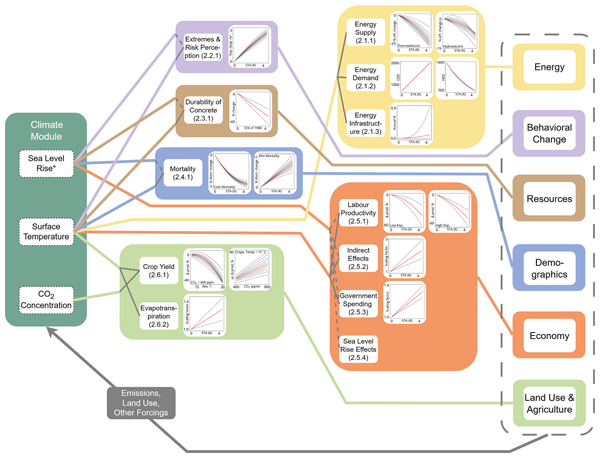
Computer models built to study future developments of human activity and climate change often exclude the impacts of climate change. Here, we include these effects in a new model. We create functions connecting changes in global temperature, carbon dioxide, and sea level to energy supply and demand, food systems, mortality, economic damages, and other important quantities. Including these effects will allow us to explore their impact on future changes in the human and climate realms.
William Schoenberg, Benjamin Blanz, Jefferson K. Rajah, Beniamino Callegari, Christopher Wells, Jannes Breier, Martin B. Grimeland, Andreas Nicolaidis Lindqvist, Lennart Ramme, Chris Smith, Chao Li, Sarah Mashhadi, Adakudlu Muralidhar, and Cecilie Mauritzen
Geosci. Model Dev., 18, 8047–8069, https://doi.org/10.5194/gmd-18-8047-2025, https://doi.org/10.5194/gmd-18-8047-2025, 2025
Short summary
Short summary
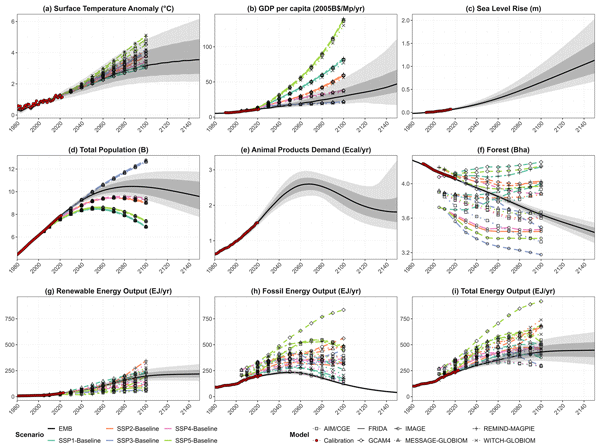
The current crop of models assessed by the Intergovernmental Panel on Climate Change to produce their assessment reports lack endogenous process-based representations of climate-driven changes to human activities, limiting understanding of the feedback between climate and humans. FRIDA (Feedback-based knowledge Repository for IntegrateD Assessments) v2.1 integrates these systems and generate results that suggest standard scenarios the shared socioeconomic pathways baseline scenarios may overestimate economic growth, highlighting the importance of feedbacks for realistic projections and informed policymaking.
William Schoenberg, Benjamin Blanz, Jefferson K. Rajah, Beniamino Callegari, Christopher Wells, Theresia B. Putranti, Francisco Mahu, Maria Molina, Alexandre C. Köberle, Catherine Li, Wanderson Costa, David Collste, Karel Zwetsloot, Jannes Breier, Lennart Ramme, Chris Smith, and Cecilie Mauritzen
EGUsphere, https://doi.org/10.5194/egusphere-2026-5980, https://doi.org/10.5194/egusphere-2026-5980, 2026
This preprint is open for discussion and under review for Geoscientific Model Development (GMD).
Short summary
Short summary
We document an updated global simulation model, FRIDA v3.1, used to explore how climate, society, technology, land and the economy interact over time. The model reproduces historical trends and explores a myriad of possible futures while capturing new links among human decisions, climate impacts and economic change. Results show how changes can create wider effects than anticipated, providing a broader tool for exploring risk, uncertainty and the consequences of policy choices.
Adakudlu Muralidhar, Cecilie Mauritzen, Christopher D. Wells, Benjamin Blanz, William Schoenberg, Beniamino Callegari, Jannes Breier, Jefferson K. Rajah, Lennart Ramme, Andreas Nicolaidis Lindqvist, Alexandre C. Köberle, Axel E. Eriksson, and Chris Smith
EGUsphere, https://doi.org/10.5194/egusphere-2026-3072, https://doi.org/10.5194/egusphere-2026-3072, 2026
This preprint is open for discussion and under review for Earth System Dynamics (ESD).
Short summary
Short summary
Using the integrated assessment model FRIDA v2.1, we examine how climate impacts spread through interconnected human and Earth systems, including the economy, energy, food, water, finance, and behaviour. We find that interacting climate impacts can reduce economic growth strongly than models assuming isolated effects. Financial feedbacks are especially important, and nonlinear climate–society interactions can amplify risks across sectors even without explicit climate tipping points.
Philip J. Ward, Sophie L. Buijs, Roxana Ciurean, Judith N. Claassen, James Daniell, Kelley De Polt, Melanie Duncan, Stefania Gottardo, Stefan Hochrainer-Stigler, Robert Šakić Trogrlić, Julius Schlumberger, Timothy Tiggeloven, Silvia Torresan, Nicole van Maanen, Andrew Warren, Carmen D. Álvarez-Albelo, Vanessa Banks, Benjamin Blanz, Veronica Casartelli, Jordan Correa, Julia Crummy, Anne Sophie Daloz, Marleen C. de Ruiter, Juan José Díaz-Hernández, Jaime Díaz-Pacheco, Pedro Dorta Antequera, Davide Ferrario, David Geurts, Sara García-González, Joel C. Gill, Raúl Hernández-Martín, Wiebke S. Jäger, Abel López-Díez, Lin Ma, Jaroslav Mysiak, Diep Ngoc Nguyen, Noemi Padrón Fumero, Eva-Cristina Petrescu, Karina Reiter, Jana Sillmann, Lara Smale, and Tristian Stolte
Nat. Hazards Earth Syst. Sci., 26, 1325–1345, https://doi.org/10.5194/nhess-26-1325-2026, https://doi.org/10.5194/nhess-26-1325-2026, 2026
Short summary
Short summary
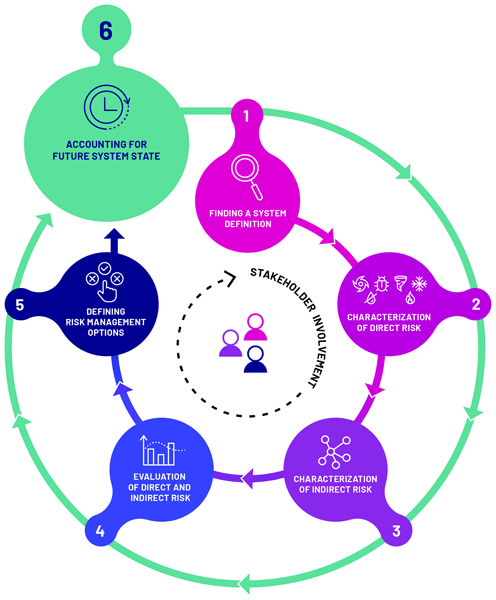
Disasters often result from interactions between different hazards, like floods triggering landslides, or earthquakes followed by tropical cyclones, so-called multi-hazards. People and societies are increasingly exposed and vulnerable to these multi-hazards. Assessing these aspects is referred to as multi-risk assessment and management. In this paper we synthesise key learnings from the MYRIAD-EU (Multi-hazard and sYstemic framework for enhancing Risk-Informed mAnagement and Decision-making in the E.U.) project, reflecting on progress and challenges faced in addressing multi-hazards and multi-risk.
Christopher D. Wells, Lennart Ramme, Chris Smith, Jannes Breier, Adakudlu Muralidhar, Chao Li, Ada Gjermundsen, William Alexander Schoenberg, Benjamin Blanz, and Cecilie Mauritzen
Geosci. Model Dev., 19, 1429–1453, https://doi.org/10.5194/gmd-19-1429-2026, https://doi.org/10.5194/gmd-19-1429-2026, 2026
Short summary
Short summary
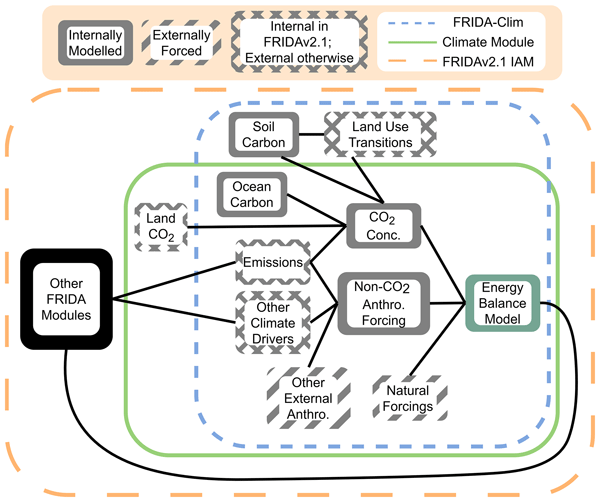
Understanding the change in climate that would occur under different future pathways of greenhouse gas emissions and changes in land use is crucial. Here, we develop a new simple climate model to help study this. We reduce the number of inputs so that our model can be connected to a model of the human causes of climate change. This way, we can study the interaction between climate change and society, including climate impacts. Our model broadly agrees with historical observations.
Christopher D. Wells, Benjamin Blanz, Lennart Ramme, Jannes Breier, Beniamino Callegari, Adakudlu Muralidhar, Jefferson K. Rajah, Andreas Nicolaidis Lindqvist, Axel E. Eriksson, William Alexander Schoenberg, Alexandre C. Köberle, Lan Wang-Erlandsson, Cecilie Mauritzen, Martin B. Grimeland, and Chris Smith
Geosci. Model Dev., 19, 1229–1260, https://doi.org/10.5194/gmd-19-1229-2026, https://doi.org/10.5194/gmd-19-1229-2026, 2026
Short summary
Short summary
Computer models built to study future developments of human activity and climate change often exclude the impacts of climate change. Here, we include these effects in a new model. We create functions connecting changes in global temperature, carbon dioxide, and sea level to energy supply and demand, food systems, mortality, economic damages, and other important quantities. Including these effects will allow us to explore their impact on future changes in the human and climate realms.
Lennart Ramme, Benjamin Blanz, Christopher Wells, Tony E. Wong, William Schoenberg, Chris Smith, and Chao Li
Geosci. Model Dev., 18, 10017–10052, https://doi.org/10.5194/gmd-18-10017-2025, https://doi.org/10.5194/gmd-18-10017-2025, 2025
Short summary
Short summary
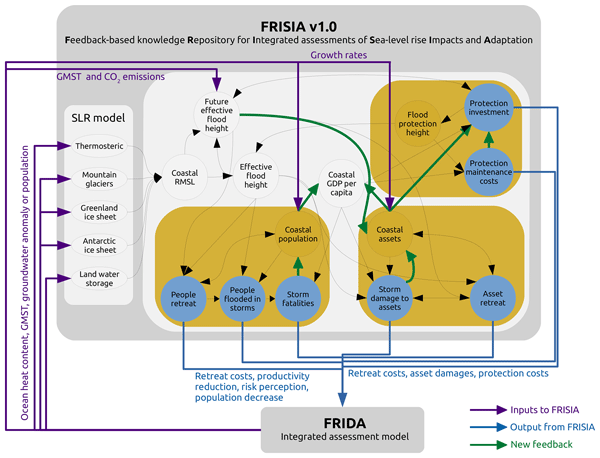
We present FRISIA version 1.0, a model for emulating sea level rise (SLR) and representing SLR impacts and adaptation in integrated assessment models (IAMs). FRISIA includes previously uncaptured coastal socio-economic feedback and a diverse set of impact strains, thereby improving the represenation of SLR impacts in IAMs. Here we describe the baseline behaviour of FRISIA, explore the effects of the additional feedback and showcase the coupling of FRISIA to an IAM.
William Schoenberg, Benjamin Blanz, Jefferson K. Rajah, Beniamino Callegari, Christopher Wells, Jannes Breier, Martin B. Grimeland, Andreas Nicolaidis Lindqvist, Lennart Ramme, Chris Smith, Chao Li, Sarah Mashhadi, Adakudlu Muralidhar, and Cecilie Mauritzen
Geosci. Model Dev., 18, 8047–8069, https://doi.org/10.5194/gmd-18-8047-2025, https://doi.org/10.5194/gmd-18-8047-2025, 2025
Short summary
Short summary
The current crop of models assessed by the Intergovernmental Panel on Climate Change to produce their assessment reports lack endogenous process-based representations of climate-driven changes to human activities, limiting understanding of the feedback between climate and humans. FRIDA (Feedback-based knowledge Repository for IntegrateD Assessments) v2.1 integrates these systems and generate results that suggest standard scenarios the shared socioeconomic pathways baseline scenarios may overestimate economic growth, highlighting the importance of feedbacks for realistic projections and informed policymaking.
Jefferson K. Rajah, Benjamin Blanz, Birgit Kopainsky, and William Schoenberg
Geosci. Model Dev., 18, 5997–6022, https://doi.org/10.5194/gmd-18-5997-2025, https://doi.org/10.5194/gmd-18-5997-2025, 2025
Short summary
Short summary
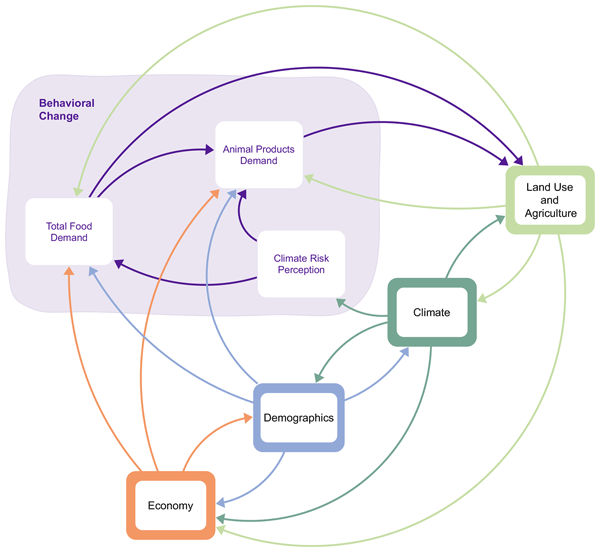
Climate models often exclude human behaviour. We introduce a model that includes economic, social, and environmental factors that influence dietary choices. This helps us understand how behaviour shifts impact future emissions and climate conditions. By considering a range of plausible behaviours, we provide a more accurate picture of potential outcomes, improving representations in climate models.
Cited articles
Acemoglu, D. and Cao, D.: Innovation by entrants and incumbents, J. Econ. Theory, 157, 255–294, https://doi.org/10.1016/j.jet.2015.01.001, 2015.
Ackerman, F., DeCanio, S. J., Howarth, R. B., and Sheeran, K.: Limitations of integrated assessment models of climate change, Climatic Change, 95, 297–315, https://doi.org/10.1007/s10584-009-9570-x, 2009.
Adelman, I. and Yeldan, E.: The Minimal Conditions for a Financial Crisis: A Multiregional Intertemporal CGE Model of the Asian Crisis, World Dev., 28, 1087–1100, https://doi.org/10.1016/S0305-750X(00)00014-0, 2000.
Adrian, T. and Shin, H. S.: Liquidity and Financial Cycles, SSRN Journal, https://doi.org/10.2139/ssrn.1165583, 2008.
Aghion, P., Askenazy, P., Berman, N., Cette, G., and Eymard, L.: Credit Constraints and the Cyclicality of R&D Investment: Evidence from France, J. Eur. Econ. Assoc., 10, 1001–1024, https://doi.org/10.1111/j.1542-4774.2012.01093.x, 2012.
Aghion, P., Akcigit, U., and Howitt, P.: What Do We Learn From Schumpeterian Growth Theory?, in: Handbook of Economic Growth, vol. 2, Elsevier, 515–563, https://doi.org/10.1016/B978-0-444-53540-5.00001-X, 2014.
Ahmad, M.: Non-linear dynamics of innovation activities over the business cycles: Empirical evidence from OECD economies, Technol. Soc., 67, 101721, https://doi.org/10.1016/j.techsoc.2021.101721, 2021.
Alberti, M., Asbjornsen, H., Baker, L. A., Brozovic, N., Drinkwater, L. E., Drzyzga, S. A., Jantz, C. A., Fragoso, J., Holland, D. S., Kohler, T. A., Liu, J., McConnell, W. J., Maschner, H. D. G., Millington, J. D. A., Monticino, M., Podestá, G., Pontius, R. G., Redman, C. L., Reo, N. J., Sailor, D., and Urquhart, G.: Research on Coupled Human and Natural Systems (CHANS): Approach, Challenges, and Strategies, Bulletin of the Ecological Society of America, 92, 218–228, https://doi.org/10.1890/0012-9623-92.2.218, 2011.
Altonji, J. G. and Devereux, P. J.: The Extent and Consequences of Downward Nominal Wage Rigidity, NBER Working Paper No. 7236, https://papers.ssrn.com/abstract=202741 (last access: 17 July 2026), 1999.
Alvarez-Cuadrado, F. and Poschke, M.: Structural Change Out of Agriculture: Labor Push versus Labor Pull, Am. Econ. J.-Macroecon., 3, 127–158, https://doi.org/10.1257/mac.3.3.127, 2011.
Andreyeva, T., Long, M. W., and Brownell, K. D.: The Impact of Food Prices on Consumption: A Systematic Review of Research on the Price Elasticity of Demand for Food, Am. J. Public Health, 100, 216–222, https://doi.org/10.2105/AJPH.2008.151415, 2010.
Annicchiarico, B., Carattini, S., Fischer, C., and Heutel, G.: Business Cycles and Environmental Policy: A Primer, Environmental and Energy Policy and the Economy, 3, 221–253, https://doi.org/10.1086/717222, 2022.
Antonelli, C.: Endogenous innovation: the creative response, Economics of Innovation and New Technology, 26, 689–718, https://doi.org/10.1080/10438599.2016.1257444, 2017.
Ardagna, S., Caselli, F., and Lane, T.: Fiscal Discipline and the Cost of Public Debt Service: Some Estimates for OECD Countries, Be. J. Macroecon., 7, https://doi.org/10.2202/1935-1690.1417, 2007.
Auer, R. A., Levchenko, A. A., and Sauré, P.: International Inflation Spillovers through Input Linkages, Rev. Econ. Stat., 101, 507–521, https://doi.org/10.1162/rest_a_00781, 2019.
Bartsch, F., Busies, I., Emambakhsh, T., Grill, M., Simoens, M., Spaggiari, M., and Tamburrini, F.: Designing a macroprudential capital buffer for climate-related risks, European Central Bank, LU, https://data.europa.eu/doi/10.2866/786253 (last access: 2 October 2025), 2024.
Battiston, S., Mandel, A., Monasterolo, I., Schütze, F., and Visentin, G.: A climate stress-test of the financial system, Nat. Clim. Change, 7, 283–288, https://doi.org/10.1038/nclimate3255, 2017.
Battiston, S., Monasterolo, I., Riahi, K., and van Ruijven, B. J.: Accounting for finance is key for climate mitigation pathways, Science, 372, 918–920, https://doi.org/10.1126/science.abf3877, 2021a.
Battiston, S., Dafermos, Y., and Monasterolo, I.: Climate risks and financial stability, J. Financ. Stabil., 54, 100867, https://doi.org/10.1016/j.jfs.2021.100867, 2021b.
Beck, R., Jakubik, P., and Piloiu, A.: Key Determinants of Non-performing Loans: New Evidence from a Global Sample, Open Econ. Rev., 26, 525–550, https://doi.org/10.1007/s11079-015-9358-8, 2015.
Beers, D. T. and Mavalwalla, J.: Database of Sovereign Defaults, 2017, SSRN Journal, https://doi.org/10.2139/ssrn.3000226, 2017.
Bernanke, B. S. and Blinder, A. S.: Credit, Money, and Aggregate Demand, Am. Econ. Rev., 78, 435–439, 1988.
Bhandari, J. S. and Weiss, L. A.: The Increasing Bankruptcy Filing Rate: An Historical Analysis, Am. Bankrupt Law J., 67, 1, https://access.heinonline.com/HOL/LandingPage?handle=hein.journals/ambank67&div=8&id=&page= (last access: 17 July 2026), 1993.
Blanz, B.: WorldTransFrida-Uncertainty, GitHub [code], https://github.com/BenjaminBlanz/WorldTransFrida-Uncertainty, last access: 9 October 2025.
Bohn, H.: The Behavior of U. S. Public Debt and Deficits, Q. J. Econ., 113, 949–963, https://doi.org/10.1162/003355398555793, 1998.
Bovari, E., Giraud, G., and McIsaac, F.: Financial impacts of climate change mitigation policies and their macroeconomic implications: A stock-flow consistent approach, Clim. Policy, 20, 179–198, https://doi.org/10.1080/14693062.2019.1698406, 2020.
Brown, J. R., Fazzari, S. M., and Petersen, B. C.: Financing Innovation and Growth: Cash Flow, External Equity, and the 1990s R&D Boom, J. Financ., 64, 151–185, https://doi.org/10.1111/j.1540-6261.2008.01431.x, 2009.
Brunetti, C., Dennis, B., Gates, D., Hancock, D., Ignell, D., Kiser, E. K., Kotta, G., Kovner, A., Rosen, R. J., and Tabor, N. K.: Climate Change and Financial Stability, FEDS Notes, 2021, https://doi.org/10.17016/2380-7172.2893, 2021.
Burke, M. A. and Ozdagli, A.: Household Inflation Expectations and Consumer Spending: Evidence from Panel Data, Rev. Econ. Stat., 105, 948–961, https://doi.org/10.1162/rest_a_01118, 2023.
Callegari, B., Christophe, F., and Grimeland, M.: A System Dynamics Analysis of General and Eco-Innovation Policy Mixes, Struct. Change Econ. D., submitted, 2026.
Carattini, S., Heutel, G., and Melkadze, G.: Climate policy, financial frictions, and transition risk, Rev. Econ. Dynam., 51, 778–794, https://doi.org/10.1016/j.red.2023.08.003, 2023.
Carney, M.: Breaking the tragedy of the horizon – climate change and financial stability, Lloyd's of London, London, 29 September 2015, Bank of England, https://www.bankofengland.co.uk/speech/2015/breaking-the-tragedy-of-the-horizon-climate-change-and-financial-stability (last access: 5 September 2025), 2015.
Carroll, C., Slacalek, J., Tokuoka, K., and White, M. N.: The distribution of wealth and the marginal propensity to consume: The distribution of wealth, Quant. Econ., 8, 977–1020, https://doi.org/10.3982/QE694, 2017.
Cavana, R. Y.: Feedback Economics: Economic Modeling with System Dynamics, Springer International Publishing AG, Cham, 1 pp., https://doi.org/10.1007/978-3-030-67190-7, 2021.
Chinloy, P., Jiang, C., and John, K.: Investment, depreciation and obsolescence of R&D, J. Financ. Stabil., 49, 100757, https://doi.org/10.1016/j.jfs.2020.100757, 2020.
Chrysanthakopoulos, C., Konstantinou, P., and Tagkalakis, A.: Government spending cyclicality, economic stability and uncertainty, Econ. Syst., 101314, https://doi.org/10.1016/j.ecosys.2025.101314, 2025.
Coucke, K., Pennings, E., and Sleuwaegen, L.: Employee layoff under different modes of restructuring: exit, downsizing or relocation, Ind. Corp. Change, 16, 161–182, https://doi.org/10.1093/icc/dtm002, 2007.
Cukierman, A. and Lippi, F.: Central bank independence, centralization of wage bargaining, inflation and unemployment, Eur. Econ. Rev., 43, 1395–1434, https://doi.org/10.1016/S0014-2921(98)00128-7, 1999.
Dafermos, Y. and Nikolaidi, M.: Assessing climate policies: An ecological stock–flow consistent perspective, European Journal of Economics and Economic Policies, 19, 338–356, https://doi.org/10.4337/ejeep.2022.0095, 2022.
Dasgupta, S., Van Maanen, N., Gosling, S. N., Piontek, F., Otto, C., and Schleussner, C.-F.: Effects of climate change on combined labour productivity and supply: an empirical, multi-model study, The Lancet Planetary Health, 5, e455–e465, https://doi.org/10.1016/S2542-5196(21)00170-4, 2021.
Dell'Ariccia, G. and Marquez, R.: Lending Booms and Lending Standards, J. Financ., 61, 2511–2546, https://doi.org/10.1111/j.1540-6261.2006.01065.x, 2006.
Dembiermont, C., Scatigna, M., Szemere, R., and Tissot, B.: A New Database on General Government Debt, BIS Quarterly September 2015, 69–87, https://papers.ssrn.com/abstract=2661592 (last access: 17 July 2026), 2015.
Deniz, P., Tekce, M., and Yilmaz, A.: Investigating the Determinants of Inflation: A Panel Data Analysis, International Journal of Financial Research, 7, 233, https://doi.org/10.5430/ijfr.v7n2p233, 2016.
Diamond, A.: Schumpeter's Creative Destruction: A Review of the Evidence, Journal of Private Enterprise, 22, 120–146, 2006.
Dietz, S., Bowen, A., Dixon, C., and Gradwell, P.: `Climate value at risk' of global financial assets, Nat. Clim. Change, 6, 676–679, https://doi.org/10.1038/nclimate2972, 2016.
Doda, B.: Evidence on business cycles and emissions, J. Macroecon., 40, 214–227, https://doi.org/10.1016/j.jmacro.2014.01.003, 2014.
Donges, J. F., Lucht, W., Cornell, S. E., Heitzig, J., Barfuss, W., Lade, S. J., and Schlüter, M.: Taxonomies for structuring models for World–Earth systems analysis of the Anthropocene: subsystems, their interactions and social–ecological feedback loops, Earth Syst. Dynam., 12, 1115–1137, https://doi.org/10.5194/esd-12-1115-2021, 2021.
Dosi, G., Fagiolo, G., and Roventini, A.: Schumpeter meeting Keynes: A policy-friendly model of endogenous growth and business cycles, J. Econ. Dyn. Control, 34, 1748–1767, https://doi.org/10.1016/j.jedc.2010.06.018, 2010.
Ehrlich, G. and Montes, J.: Wage Rigidity and Employment Outcomes: Evidence from Administrative Data, Am. Econ. J.-Macroecon., 16, 147–206, https://doi.org/10.1257/mac.20200125, 2024.
Elster, J.: Explaining Social Behavior: More Nuts and Bolts for the Social Sciences, 2nd edn., Cambridge University Press, Cambridge, https://doi.org/10.1017/CBO9781107763111, 2015.
Fang, X., Hardy, B., and Lewis, K. K.: Who Holds Sovereign Debt and Why It Matters, Rev. Financ. Stud., 38, 2326–2361, https://doi.org/10.1093/rfs/hhaf031, 2025.
Farmer, J. D., Hepburn, C., Mealy, P., and Teytelboym, A.: A Third Wave in the Economics of Climate Change, Environ. Resource Econ., 62, 329–357, https://doi.org/10.1007/s10640-015-9965-2, 2015.
Feldmann, H.: Technological unemployment in industrial countries, J. Evol. Econ., 23, 1099–1126, https://doi.org/10.1007/s00191-013-0308-6, 2013.
Feng, F., Han, L., Jin, J., and Li, Y.: Climate Change Exposure and Bankruptcy Risk, Brit. J Manage., 35, 1843–1866, https://doi.org/10.1111/1467-8551.12792, 2024.
Fishman, M. J., Parker, J. A., and Straub, L.: A Dynamic Theory of Lending Standards, Rev. Financ. Stud., 37, 2355–2402, https://doi.org/10.1093/rfs/hhae010, 2024.
Garcia-Jorcano, L. and Sanchis-Marco, L.: Measuring the impact of climate transition risk on the systemic risk: A multivariate quantile-located ES approach, Research in International Business and Finance, 80, 103127, https://doi.org/10.1016/j.ribaf.2025.103127, 2025.
García-Quevedo, J., Segarra-Blasco, A., and Teruel, M.: Financial constraints and the failure of innovation projects, Technol. Forecast. Soc., 127, 127–140, https://doi.org/10.1016/j.techfore.2017.05.029, 2018.
Ghosh, A. R., Kim, J. I., Mendoza, E. G., Ostry, J. D., and Qureshi, M. S.: Fiscal Fatigue, Fiscal Space and Debt Sustainability in Advanced Economies, Econ. J., 123, F4–F30, https://doi.org/10.1111/ecoj.12010, 2013.
Gillingham, K., Nordhaus, W., Anthoff, D., Blanford, G., Bosetti, V., Christensen, P., McJeon, H., and Reilly, J.: Modeling Uncertainty in Integrated Assessment of Climate Change: A Multimodel Comparison, Journal of the Association of Environmental and Resource Economists, 5, 791–826, https://doi.org/10.1086/698910, 2018.
Giuzio, M., Krusec, D., Levels, A., Melo, A. S., Mikkonen, K., and Radulova, P.: Climate change and financial stability, Financial Stability Review, volume 1 European Central Bank, RePEc:ecb:fsrart:2019:0001:1, 2019.
Gjeçi, A., Marinč, M., and Rant, V.: Non-performing loans and bank lending behaviour, Risk Manag., 25, 7, https://doi.org/10.1057/s41283-022-00111-z, 2023.
Godley, W. and Lavoie, M.: Monetary Economics, Palgrave Macmillan UK, London, https://doi.org/10.1057/9780230626546, 2007.
Gompers, P., Kovner, A., Lerner, J., and Scharfstein, D.: Venture capital investment cycles: The impact of public markets, J. Financ. Econ., 87, 1–23, 2008.
Griffin, P., Lont, D., and Lubberink, M.: Extreme high surface temperature events and equity-related physical climate risk, Weather and Climate Extremes, 26, 100220, https://doi.org/10.1016/j.wace.2019.100220, 2019.
Grigsby, J., Hurst, E., and Yildirmaz, A.: Aggregate Nominal Wage Adjustments: New Evidence from Administrative Payroll Data, Am. Econ. Rev., 111, 428–471, https://doi.org/10.1257/aer.20190318, 2021.
Gup, B. E.: Too Big to Fail: Policies and Practices in Government Bailouts, Bloomsbury Publishing USA, 368 pp., https://doi.org/10.5040/9798216026426, 2003.
Hänsel, M. C., Drupp, M. A., Johansson, D. J. A., Nesje, F., Azar, C., Freeman, M. C., Groom, B., and Sterner, T.: Climate economics support for the UN climate targets, Nat. Clim. Change, 10, 781–789, https://doi.org/10.1038/s41558-020-0833-x, 2020.
Hasan, I. and Tucci, C. L.: The innovation–economic growth nexus: Global evidence, Res. Policy, 39, 1264–1276, https://doi.org/10.1016/j.respol.2010.07.005, 2010.
Huljak, I., Martin, R., Moccero, D., and Pancaro, C.: Do non-performing loans matter for bank lending and the business cycle in euro area countries?, J. Appl. Econ., 25, 1050–1080, https://doi.org/10.1080/15140326.2022.2094668, 2022.
ILO: Employment by sex and age – ILO modelled estimates, Nov. 2024 (thousands) – Annual, ILOSTAT [data set], https://rshiny.ilo.org/dataexplorer15/?id=EMP_2EMP_SEX_AGE_NB_A&ref_area=X01&sex=SEX_T&classif1=AGE_YTHADULT_YGE15&timefrom=1991 (last access: 10 September 2025), 2024a.
ILO: Labour force participation rate by sex and age – ILO modelled estimates, Nov. 2024 (%) – Annual, ILOSTAT [data set], https://rplumber.ilo.org/dataexplorer/?id=EAP_2WAP_SEX_AGE_RT_A&ref_area=X01&sex=SEX_T&classif1=AGE_YTHADULT_YGE15&timefrom=1990&timeto=2025(last access: 10 September 2025), 2024b.
ILO: SDG indicator 10.4.1 – Labour income share as a percent of GDP (%) – Annual, ILOSTAT [data set], https://rplumber.ilo.org/dataexplorer/?id=SDG_1041_NOC_RT_A&timefrom=2014&timeto=2024, 2024c.
ILO: Unemployment by sex and age – ILO modelled estimates, Nov. 2024 (thousands) – Annual, ILOSTAT [data set], https://rshiny.ilo.org/dataexplorer16/?id=UNE_2UNE_SEX_AGE_NB_A&ref_area=X01&sex=SEX_T&classif1=AGE_YTHADULT_YGE15&timefrom=1991, 2024d.
IPCC (Ed.): Introduction and Framing, in: Climate Change 2022–Mitigation of Climate Change, Cambridge University Press, 151–214, https://doi.org/10.1017/9781009157926.003, 2023.
Jacobs, J., Ogawa, K., Sterken, E., and Tokutsu, I.: Public Debt, Economic Growth and the Real Interest Rate: A Panel VAR Approach to EU and OECD Countries, Appl. Econ., 52, 1377–1394, https://doi.org/10.1080/00036846.2019.1673301, 2020.
Jappelli, T. and Pistaferri, L.: The Consumption Response to Income Changes, Annu. Rev. Econ., 2, 479–506, https://doi.org/10.1146/annurev.economics.050708.142933, 2010.
Kahn, G. A.: International Differences in Wage Behavior: Real, Nominal, or Exaggerated?, Am. Econ. Rev., 74, 155–159, 1984.
Keppo, I., Butnar, I., Bauer, N., Caspani, M., Edelenbosch, O., Emmerling, J., Fragkos, P., Guivarch, C., Harmsen, M., Lefèvre, J., Le Gallic, T., Leimbach, M., McDowall, W., Mercure, J.-F., Schaeffer, R., Trutnevyte, E., and Wagner, F.: Exploring the possibility space: taking stock of the diverse capabilities and gaps in integrated assessment models, Environ. Res. Lett., 16, 053006, https://doi.org/10.1088/1748-9326/abe5d8, 2021.
Kiley, M. T.: Growth at Risk From Climate Change, FEDS, 2021, 1–19, https://doi.org/10.17016/feds.2021.054, 2021.
Kortum, S. and Lerner, J.: Does Venture Capital Spur Innovation?, National Bureau of Economic Research, Cambridge, MA, https://doi.org/10.3386/w6846, 1998.
Kraft, E. and Jankov, L.: Does speed kill? Lending booms and their consequences in Croatia, J. Bank. Financ., 29, 105–121, https://doi.org/10.1016/j.jbankfin.2004.06.025, 2005.
Kramer, D. B., Hartter, J., Boag, A. E., Jain, M., Stevens, K., Nicholas, K. A., McConnell, W. J., and Liu, J.: Top 40 questions in coupled human and natural systems (CHANS) research, Ecol. Soc., 22, art44, https://doi.org/10.5751/ES-09429-220244, 2017.
Lamperti, F., Bosetti, V., Roventini, A., and Tavoni, M.: The public costs of climate-induced financial instability, Nat. Clim. Change, 9, 829–833, https://doi.org/10.1038/s41558-019-0607-5, 2019.
Larkin, Y., Leary, M. T., and Michaely, R.: Do Investors Value Dividend-Smoothing Stocks Differently?, Manage. Sci., 63, 4114–4136, https://doi.org/10.1287/mnsc.2016.2551, 2017.
Liao, H.-H., Chen, T.-K., and Lu, C.-W.: Bank credit risk and structural credit models: Agency and information asymmetry perspectives, J. Bank. Financ., 33, 1520–1530, https://doi.org/10.1016/j.jbankfin.2009.02.016, 2009.
Lim, Y. C. and Sek, S. K.: An Examination on the Determinants of Inflation, JOEBM, 3, 678–682, https://doi.org/10.7763/JOEBM.2015.V3.265, 2015.
Liu, J., Dietz, T., Carpenter, S. R., Folke, C., Alberti, M., Redman, C. L., Schneider, S. H., Ostrom, E., Pell, A. N., Lubchenco, J., Taylor, W. W., Ouyang, Z., Deadman, P., Kratz, T., and Provencher, W.: Coupled Human and Natural Systems, AMBIO, 36, 639–649, https://doi.org/10.1579/0044-7447(2007)36[639:CHANS]2.0.CO;2, 2007.
López-García, P., Montero, J. M., and Moral-Benito, E.: Business Cycles and Investment in Productivity-Enhancing Activities: Evidence from Spanish Firms, Ind. Innov., 20, 611–636, https://doi.org/10.1080/13662716.2013.849456, 2013.
Lown, C. and Morgan, D. P.: The Credit Cycle and the Business Cycle: New Findings Using the Loan Officer Opinion Survey, J. Money Credit Bank., 38, 1575–1597, 2006.
Mandel, A., Battiston, S., and Monasterolo, I.: Mapping global financial risks under climate change, Nat. Clim. Change, 15, 329–334, https://doi.org/10.1038/s41558-025-02244-x, 2025.
McLeay, M., Radia, A., and Thomas, R.: Money Creation in the Modern Economy, Bank of England Quarterly Bulletin, 14–27, https://papers.ssrn.com/abstract=2416234 (last access: 17 July 2026), 2014.
Meade, N. and Islam, T.: Modelling and forecasting the diffusion of innovation – A 25-year review, Int. J. Forecasting, 22, 519–545, https://doi.org/10.1016/j.ijforecast.2006.01.005, 2006.
Meadows, D. H. and Wright, D.: Thinking in systems: a primer, Chelsea Green Pub, White River Junction, Vt, 218 pp., ISBN 978-1-60358-055-7, 2008.
Mendi, P.: Concentration of Innovation Investments Along the Business Cycle, J. Knowl. Econ., 15, 2856–2873, https://doi.org/10.1007/s13132-023-01267-z, 2024.
Menicucci, E. and Paolucci, G.: The determinants of bank profitability: empirical evidence from European banking sector, JFRA, 14, 86–115, https://doi.org/10.1108/JFRA-05-2015-0060, 2016.
Mercure, J.-F., Knobloch, F., Pollitt, H., Paroussos, L., Scrieciu, S. S., and Lewney, R.: Modelling innovation and the macroeconomics of low-carbon transitions: theory, perspectives and practical use, Clim. Policy, 19, 1019–1037, https://doi.org/10.1080/14693062.2019.1617665, 2019.
Minsky, H. P.: Stabilizing an unstable economy, McGraw-Hill Education, New York, 1 pp., ISBN 978-0-07-159299-4, 2008.
Mortensen, D. T. and Nagypál, É.: More on unemployment and vacancy fluctuations, Rev. Econ. Dynam., 10, 327–347, https://doi.org/10.1016/j.red.2007.01.004, 2007.
Nanda, R. and Rhodes-Kropf, M.: Investment cycles and startup innovation, J. Financ. Econ., 110, 403–418, https://doi.org/10.1016/j.jfineco.2013.07.001, 2013.
Narayan, P. K. and Narayan, S.: Government revenue and government expenditure nexus: evidence from developing countries, Appl. Econ., 38, 285–291, https://doi.org/10.1080/00036840500369209, 2006.
NGFS: A Call for Action: Climate Change as a Source of Financial Risk, Network for Greening the Financial System, Paris, 2019.
Nordhaus, W.: Climate Change: The Ultimate Challenge for Economics, Am. Econ. Rev., 109, 1991–2014, https://doi.org/10.1257/aer.109.6.1991, 2019.
OECD: Benefits in unemployment, share of previous income [data set], https://data-viewer.oecd.org/?chartId=cce389a2-30ee-4a30-afcb-fcde4723a7ce, last access: 24 November 2025.
Ojea-Ferreiro, J., Reboredo, J. C., and Ugolini, A.: Systemic risk effects of climate transition on financial stability, Int. Rev. Financ. Anal., 96, 103722, https://doi.org/10.1016/j.irfa.2024.103722, 2024.
Parker, M. I.: Global Inflation: The Role of Food, Housing and Energy Prices, SSRN Journal, https://doi.org/10.2139/ssrn.2923137, 2017.
Pindyck, R. S.: Climate Change Policy: What Do the Models Tell Us?, J. Econ. Lit., 51, 860–872, https://doi.org/10.1257/jel.51.3.860, 2013.
Pindyck, R. S.: The Use and Misuse of Models for Climate Policy, Rev. Env. Econ. Policy, 11, 100–114, https://doi.org/10.1093/reep/rew012, 2017.
Pollitt, H. and Mercure, J.-F.: The role of money and the financial sector in energy-economy models used for assessing climate and energy policy, Clim. Policy, 18, 184–197, https://doi.org/10.1080/14693062.2016.1277685, 2018.
Poplawski-Ribeiro, M., Yoo, J., Haver, V., Kiendrebeogo, Y., Perrelli, R., Wei, Z., and Zhang, C.: Global Debt Monitor 2023, IMF, https://www.imf.org/-/media/files/conferences/2023/2023-09-2023-global-debt-monitor.pdf (last access: 9 October 2025), 2023.
Powell, M. J. D.: The BOBYQA Algorithm for Bound Constrained Optimization without Derivatives, University of Cambridge, Cambridge, UK, https://www.damtp.cam.ac.uk/user/na/NA_papers/NA2009_06.pdf (last access: 9 October 2025), 2009.
Putranti, T. B., Callegari, B., Blanz, B., and Schoenberg, B.: Weakening Persistent Climate-Driven Financial Default: Policy Mechanism Design Using FRIDA Integrated Assessment Model, 2026 International System Dynamics Conference, TU Delft, 2026.
Qiao, Y., Dawson, A. R., Parry, T., and Flintsch, G. W.: Evaluating the effects of climate change on road maintenance intervention strategies and Life-Cycle Costs, Transport. Res. D-Tr. E., 41, 492–503, https://doi.org/10.1016/j.trd.2015.09.019, 2015.
Quatraro, F.: Co-evolutionary Patterns in Regional Knowledge Bases and Economic Structure: Evidence from European Regions, Reg. Stud., 50, 513–539, https://doi.org/10.1080/00343404.2014.927952, 2016.
Ram, R.: Additional Evidence on Causality between Government Revenue and Government Expenditure, South. Econ. J., 54, 763, https://doi.org/10.2307/1059018, 1988.
Ramey, V. A.: Macroeconomic shocks and their propagation, Handbook of macroeconomics, 2, 71–162, 2016.
Ramme, L., Blanz, B., Wells, C., Wong, T. E., Schoenberg, W., Smith, C., and Li, C.: Feedback-based sea level rise impact modelling for integrated assessment models with FRISIAv1.0, Geosci. Model Dev., 18, 10017–10052, https://doi.org/10.5194/gmd-18-10017-2025, 2025.
Reissl, S., Fierro, L. E., Lamperti, F., and Roventini, A.: The DSK stock-flow consistent agent-based integrated assessment model, Ecol. Econ., 236, 108641, https://doi.org/10.1016/j.ecolecon.2025.108641, 2025.
Rodano, G., Serrano-Velarde, N., and Tarantino, E.: Lending Standards over the Credit Cycle, Rev. Financ. Stud., 31, 2943–2982, https://doi.org/10.1093/rfs/hhy023, 2018.
Saltelli, A. (Ed.): Global sensitivity analysis: the primer, John Wiley, Chichester, England Hoboken, NJ, 1 pp., https://doi.org/10.1002/9780470725184, 2008.
Sanders, M., Serebriakova, A., Fragkos, P., Polzin, F., Egli, F., and Steffen, B.: Representation of financial markets in macro-economic transition models – a review and suggestions for extensions, Environ. Res. Lett., 17, 083001, https://doi.org/10.1088/1748-9326/ac7f48, 2022.
Schoenberg, W.: FRIDA v2.1 Endogenous Model Behavior (EMB) 100000 member ensemble (Version 1.0.0), Zenodo [data], https://doi.org/10.5281/zenodo.15396799, 2025.
Schoenberg, W., Blanz, B., Ramme, L., Wells, C., Grimeland, M., Callegari, B., Breier, J., Rajah, J., Nicolaidis Lindqvist, A., Mashhadi, S., Muralidhar, A., and Eriksson, A.: FRIDA: Feedback-based knowledge Repository for IntegrateD Assessments (Version v2.1), Zenodo [code], https://doi.org/10.5281/zenodo.15310859, 2025a.
Schoenberg, W., Blanz, B., Rajah, J. K., Callegari, B., Wells, C., Breier, J., Grimeland, M. B., Lindqvist, A. N., Ramme, L., Smith, C., Li, C., Mashhadi, S., Muralidhar, A., and Mauritzen, C.: Introducing FRIDA v2.1: A feedback-based, fully coupled, global integrated assessment model of climate and humans, EGUsphere [preprint], https://doi.org/10.5194/egusphere-2025-2599, 2025b.
Schumpeter, J. A.: The theory of economic development; an inquiry into profits, capital, credit, interest, and the business cycle, Harvard University Press, Cambridge, Mass., LCCN: 34038868, 1934.
Schumpeter, J. A.: Business Cycles: A Theoretical, Historical and Statistical Analysis of the Capitalist Process, McGraw-Hill Book Co., New York, LCCN: 39020970, 1939.
Schumpeter, J. A.: Socialism, Capitalism and Democracy, Harper and Brothers, New York, LCCN: 42025743, 1942.
Science in the UNFCCC negotiations: https://unfccc.int/topics/science/the-big-picture/science-in-the-unfccc-negotiations, last access: 12 September 2025.
Sobol', I. M. and Levitan, Yu. L.: A pseudo-random number generator for personal computers, Comput. Math. Appl., 37, 33–40, https://doi.org/10.1016/S0898-1221(99)00057-7, 1999.
Solow, R. M. and Taylor, J. B. (Eds.): Inflation, unemployment, and monetary policy, The MIT Press, Cambridge, Mass, 120 pp., ISBN 978-0-262-19397-9, 1998.
Stern, N.: Economics: Current climate models are grossly misleading, Nature, 530, 407–409, https://doi.org/10.1038/530407a, 2016.
Stern, N.: Towards a carbon neutral economy: How government should respond to market failures and market absence, Journal of Government and Economics, 6, 100036, https://doi.org/10.1016/j.jge.2022.100036, 2022.
Stern, N., Stiglitz, J., and Taylor, C.: The economics of immense risk, urgent action and radical change: towards new approaches to the economics of climate change, Journal of Economic Methodology, 29, 181–216, https://doi.org/10.1080/1350178X.2022.2040740, 2022.
van der Veer, K. J. M. and Hoeberichts, M. M.: The level effect of bank lending standards on business lending, J. Bank. Financ., 66, 79–88, https://doi.org/10.1016/j.jbankfin.2016.01.003, 2016.
Wells, C., Blanz, B., Ramme, L., Breier, J., Callegari, B., Muralidhar, A., Rajah, J. K., Lindqvist, A. N., Eriksson, A. E., Schoenberg, W. A., Köberle, A. C., Wang-Erlandsson, L., Mauritzen, C., and Smith, C.: The Representation of Climate Impacts in the FRIDAv2.1 Integrated Assessment Model, EGUsphere [preprint], https://doi.org/10.5194/egusphere-2025-2756, 2025.
WID: Pre-tax national income, bottom 40 %, share, adults, equal split, world, WID [data set], https://wid.world/data/#countriestimeseries/sptinc_p0p40_z/WO/1820/2023/eu/k/p/yearly/s (last access: 9 October 2025), 2024.
Wong, P. K., Ho, Y. P., and Autio, E.: Entrepreneurship, Innovation and Economic Growth: Evidence from GEM data, Small Bus. Econ., 24, 335–350, https://doi.org/10.1007/s11187-005-2000-1, 2005.
World Bank: GDP, PPP (constant 2021 international $), World Bank [data set], https://data.worldbank.org/indicator/NY.GDP.MKTP.PP.KD(last access: 9 October 2025), 2023a.
World Bank: GDP, PPP (current international $), World Bank [data set], https://data.worldbank.org/indicator/NY.GDP.MKTP.PP.CD (last access: 9 October 2025), 2023b.
World Bank: Gross capital formation (% of GDP), World Bank [data set], https://data.worldbank.org/indicator/NE.GDI.TOTL.ZS (last access: 9 October 2025), 2023c.
World Bank: Households and NPISHs final consumption expenditure (% of GDP), World Bank [data set], https://data.worldbank.org/indicator/NE.CON.PRVT.ZS (last access: 9 October 2025), 2023d.
World Bank: Bank nonperforming loans to total gros loan (%), World Bank [data set], https://data.worldbank.org/indicator/FB.AST.NPER.ZS (last access: 10 September 2025), 2023e.
Short summary
This study develops a novel global economic model to better capture how climate change interacts with finance, innovation, employment, and public budgets. Instead of treating climate damage as a simple output loss, the model traces how rising temperatures affect investment risk, productivity, unemployment, and government spending. Large simulation ensembles show that without stronger climate action, growth slows, financial fragility rises, and welfare and debt pressures increase.
This study develops a novel global economic model to better capture how climate change interacts...


