
Articles | Volume 19, issue 2
https://doi.org/10.5194/gmd-19-887-2026
© Author(s) 2026. This work is distributed under
the Creative Commons Attribution 4.0 License.
the Creative Commons Attribution 4.0 License.
https://doi.org/10.5194/gmd-19-887-2026
© Author(s) 2026. This work is distributed under
the Creative Commons Attribution 4.0 License.
the Creative Commons Attribution 4.0 License.
Development and technical paper
| 
27 Jan 2026
Development and technical paper |
| 27 Jan 2026
| 27 Jan 2026
A microwave scattering database of oriented ice and snow particles: supporting habit-dependent growth models and radar applications (McRadar 1.0.0)

Institute of Meteorology, Ludwig-Maximilians University, Munich, Germany
Davide Ori
Institute of Geophysics and Meteorology, University of Cologne, Cologne, Germany
Stefan Kneifel
Institute of Meteorology, Ludwig-Maximilians University, Munich, Germany
Related authors
Leonie von Terzi, Axel Seifert, Christoph Siewert, Fabian Jakub, and Stefan Kneifel
EGUsphere, https://doi.org/10.5194/egusphere-2026-3865, https://doi.org/10.5194/egusphere-2026-3865, 2026
Short summary
Short summary
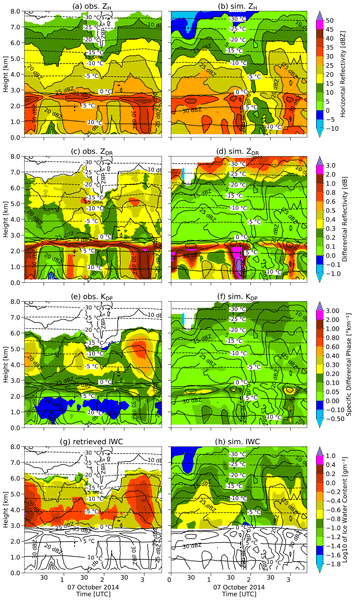
A distinct temperature layer in clouds promotes growth of dendritic ice crystals, producing characteristic radar signatures whose origin has remained unclear. We combined radar observations with microphysical simulations to identify the dominant microphysical processes. Collisions breaking particles into fragments prove essential to reproducing the signatures, alongside crystal growth and aggregation, clarifying the link between radar signals and ice processes for weather models.
Anton Kötsche, Alexander Myagkov, Leonie von Terzi, Maximilian Maahn, Veronika Ettrichrätz, Teresa Vogl, Alexander Ryzhkov, Petar Bukovcic, Davide Ori, and Heike Kalesse-Los
Atmos. Chem. Phys., 25, 14045–14070, https://doi.org/10.5194/acp-25-14045-2025, https://doi.org/10.5194/acp-25-14045-2025, 2025
Short summary
Short summary
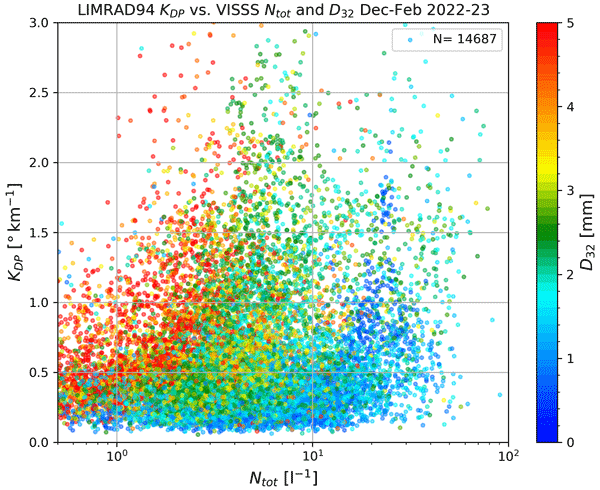
Our study combines radar observations of snow with snowfall camera observations on the ground to enhance our understanding of radar variables and snowfall properties. We found that values of an important radar variable (KDP) can be related to many different snow particle properties and number concentrations. We were able to constrain which particle sizes contribute to KDP by using computer models of snowflakes and showed which microphysical processes during snow formation can influence KDP.
Leonie von Terzi, José Dias Neto, Davide Ori, Alexander Myagkov, and Stefan Kneifel
Atmos. Chem. Phys., 22, 11795–11821, https://doi.org/10.5194/acp-22-11795-2022, https://doi.org/10.5194/acp-22-11795-2022, 2022
Short summary
Short summary
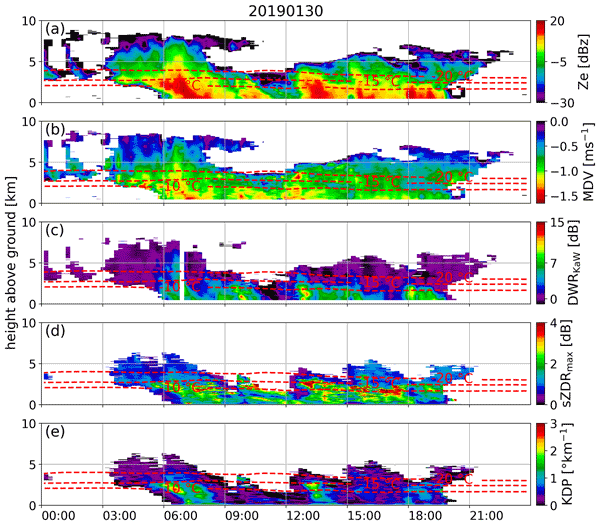
We present a statistical analysis of ice microphysical processes (IMP) in mid-latitude clouds. Combining various radar approaches, we find that the IMP active at −20 to −10 °C seems to be the main driver of ice particle size, shape and concentration. The strength of aggregation at −20 to −10 °C correlates with the increase in concentration and aspect ratio of locally formed ice particles. Despite ongoing aggregation, the concentration of ice particles stays enhanced until −4 °C.
Silke Trömel, Clemens Simmer, Ulrich Blahak, Armin Blanke, Sabine Doktorowski, Florian Ewald, Michael Frech, Mathias Gergely, Martin Hagen, Tijana Janjic, Heike Kalesse-Los, Stefan Kneifel, Christoph Knote, Jana Mendrok, Manuel Moser, Gregor Köcher, Kai Mühlbauer, Alexander Myagkov, Velibor Pejcic, Patric Seifert, Prabhakar Shrestha, Audrey Teisseire, Leonie von Terzi, Eleni Tetoni, Teresa Vogl, Christiane Voigt, Yuefei Zeng, Tobias Zinner, and Johannes Quaas
Atmos. Chem. Phys., 21, 17291–17314, https://doi.org/10.5194/acp-21-17291-2021, https://doi.org/10.5194/acp-21-17291-2021, 2021
Short summary
Short summary
The article introduces the ACP readership to ongoing research in Germany on cloud- and precipitation-related process information inherent in polarimetric radar measurements, outlines pathways to inform atmospheric models with radar-based information, and points to remaining challenges towards an improved fusion of radar polarimetry and atmospheric modelling.
Leonie von Terzi, Axel Seifert, Christoph Siewert, Fabian Jakub, and Stefan Kneifel
EGUsphere, https://doi.org/10.5194/egusphere-2026-3865, https://doi.org/10.5194/egusphere-2026-3865, 2026
Short summary
Short summary
A distinct temperature layer in clouds promotes growth of dendritic ice crystals, producing characteristic radar signatures whose origin has remained unclear. We combined radar observations with microphysical simulations to identify the dominant microphysical processes. Collisions breaking particles into fragments prove essential to reproducing the signatures, alongside crystal growth and aggregation, clarifying the link between radar signals and ice processes for weather models.
Paul Ockenfuß, Gregor Köcher, Isabel Petit, and Stefan Kneifel
EGUsphere, https://doi.org/10.5194/egusphere-2026-3446, https://doi.org/10.5194/egusphere-2026-3446, 2026
Short summary
Short summary
Remote sensing instruments often point vertically, producing time-height cross-sections of the atmosphere. In this case, each particle is observed only once. To learn about particle evolution, we need either assumptions about their distribution or scanning observations to "follow" them. In this work, we do both. To illustrate, we introduce new techniques to reveal the spatial distribution of rimed snowflakes, and we discuss the observed patterns and rimed particle evolution.
Lukas Pieper, Patric Seifert, Hannes Griesche, Albert Ansmann, George McCosh, Florian Ewald, and Stefan Kneifel
EGUsphere, https://doi.org/10.5194/egusphere-2026-3092, https://doi.org/10.5194/egusphere-2026-3092, 2026
This preprint is open for discussion and under review for Atmospheric Chemistry and Physics (ACP).
Short summary
Short summary
Using ground-based cloud Doppler radar observations and aerosol model data, a strong relationship between Saharan dust and enhanced turbulence in cirrus clouds over Europe was identified. Dust-infused cirrus formed mainly within moist, dust-laden air masses and showed strong correlation with in-cloud turbulence. The results provide a baseline observational overview on dust-turbulence-cirrus interactions, informing weather and climate models regarding possible methodological improvements.
Paul Ockenfuß, Gregor Köcher, Matthias Bauer-Pfundstein, and Stefan Kneifel
Atmos. Meas. Tech., 19, 2961–2984, https://doi.org/10.5194/amt-19-2961-2026, https://doi.org/10.5194/amt-19-2961-2026, 2026
Short summary
Short summary
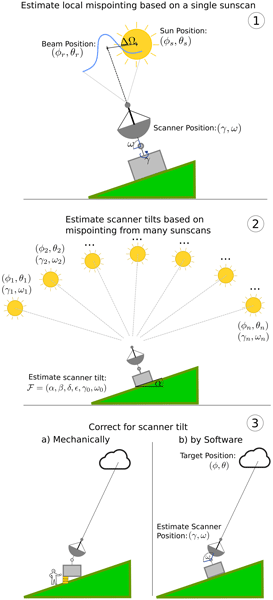
The pointing of scanning weather and cloud radars must be very accurate, to within 0.1°. We present a general method to calibrate the pointing of a scanning radar with an elevation and an azimuth axis. Using the Sun as a reference, we can determine the specific misalignments of the radar pedestal, axes and antenna. Once the misalignments are known, we can correct for them by steering the scanner motors accordingly. We provide recommendations and code to apply this method to any scanning radar.
Paul Ockenfuß, Michael Frech, Mathias Gergely, and Stefan Kneifel
Atmos. Meas. Tech., 19, 2125–2147, https://doi.org/10.5194/amt-19-2125-2026, https://doi.org/10.5194/amt-19-2125-2026, 2026
Short summary
Short summary
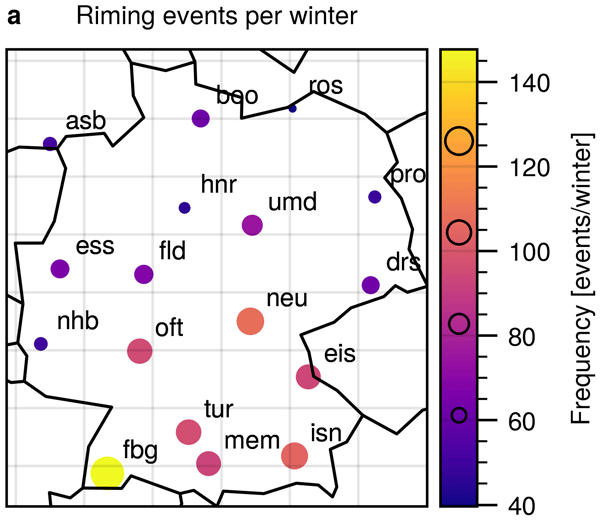
The 17 operational German weather radars regularly point vertical for calibration. We proof that this data also contains valuable scientific information. To demonstrate this, we use it to detect the melting level in clouds and strong snowflake riming. Riming is the collision of a snowflake with liquid droplets, which can create precipitation. We analyze the frequency and temperature dependence of riming for all German weather radar sites and relate it to the local precipitation climatology.
Manfred Wendisch, Benjamin Kirbus, Davide Ori, Matthew D. Shupe, Susanne Crewell, Harald Sodemann, and Vera Schemann
Atmos. Chem. Phys., 25, 15047–15076, https://doi.org/10.5194/acp-25-15047-2025, https://doi.org/10.5194/acp-25-15047-2025, 2025
Short summary
Short summary
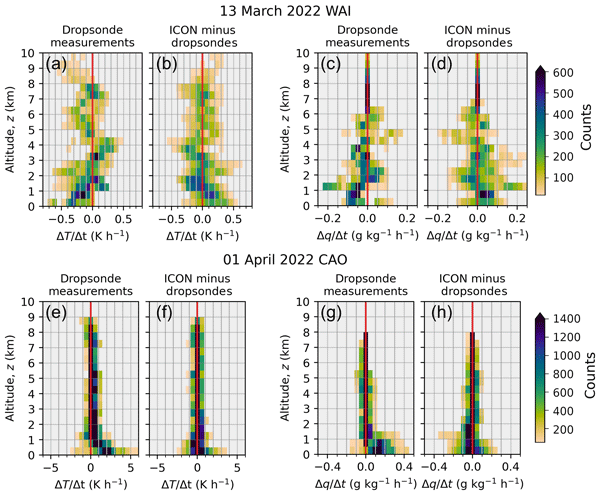
Aircraft observations of air parcels moving into and out of the Arctic are reported. From the data, heating and cooling as well as drying and moistening of the air masses along their way into and out of the Arctic could be measured for the first time. These data are used to evaluate if weather prediction models are able to accurately represent these air mass transformations. This work helps to model the future Arctic climate changes, which may have an impact for mid-latitude weather as well.
Anton Kötsche, Alexander Myagkov, Leonie von Terzi, Maximilian Maahn, Veronika Ettrichrätz, Teresa Vogl, Alexander Ryzhkov, Petar Bukovcic, Davide Ori, and Heike Kalesse-Los
Atmos. Chem. Phys., 25, 14045–14070, https://doi.org/10.5194/acp-25-14045-2025, https://doi.org/10.5194/acp-25-14045-2025, 2025
Short summary
Short summary
Our study combines radar observations of snow with snowfall camera observations on the ground to enhance our understanding of radar variables and snowfall properties. We found that values of an important radar variable (KDP) can be related to many different snow particle properties and number concentrations. We were able to constrain which particle sizes contribute to KDP by using computer models of snowflakes and showed which microphysical processes during snow formation can influence KDP.
Henning Dorff, Florian Ewald, Heike Konow, Mario Mech, Davide Ori, Vera Schemann, Andreas Walbröl, Manfred Wendisch, and Felix Ament
Atmos. Chem. Phys., 25, 8329–8354, https://doi.org/10.5194/acp-25-8329-2025, https://doi.org/10.5194/acp-25-8329-2025, 2025
Short summary
Short summary
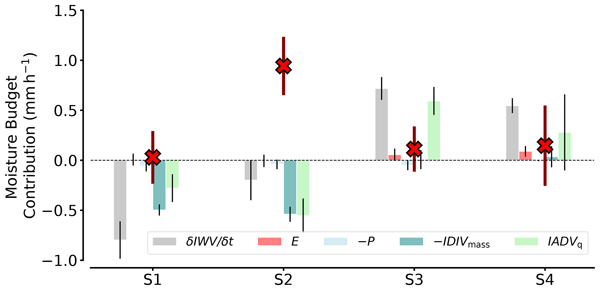
Using observations of an Arctic atmospheric river (AR) from a long-range research aircraft, we analyse how moisture transported into the Arctic by the AR is transformed and how it interacts with the Arctic environment. The moisture transport divergence is the main driver of local moisture change over time. Surface precipitation and evaporation are rather weak when averaged over extended AR sectors, although considerable heterogeneity of precipitation within the AR is observed.
Theresa Kiszler, Davide Ori, and Vera Schemann
Atmos. Chem. Phys., 24, 10039–10053, https://doi.org/10.5194/acp-24-10039-2024, https://doi.org/10.5194/acp-24-10039-2024, 2024
Short summary
Short summary
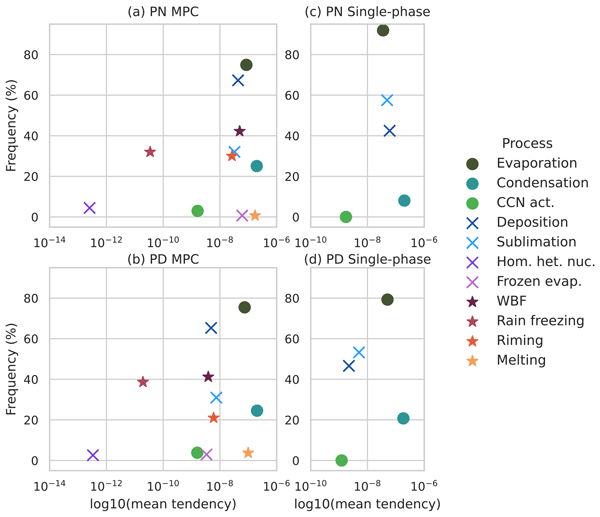
Microphysical processes impact the phase-partitioning of clouds. In this study we evaluate these processes while focusing on low-level Arctic clouds. To achieve this we used an extensive simulation set in combination with a new diagnostic tool. This study presents our findings on the relevance of these processes and their behaviour under different thermodynamic regimes.
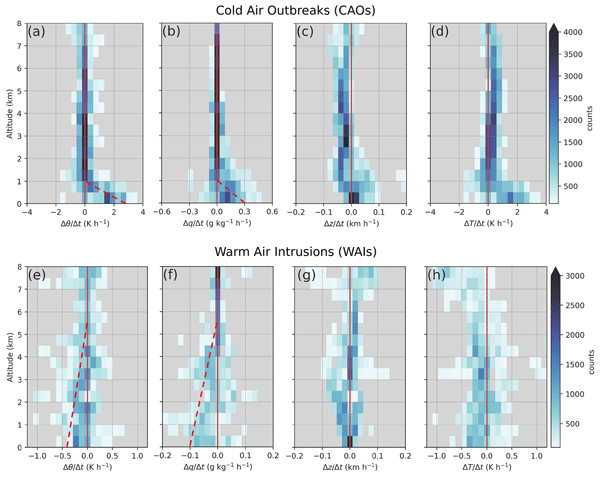
Manfred Wendisch, Susanne Crewell, André Ehrlich, Andreas Herber, Benjamin Kirbus, Christof Lüpkes, Mario Mech, Steven J. Abel, Elisa F. Akansu, Felix Ament, Clémantyne Aubry, Sebastian Becker, Stephan Borrmann, Heiko Bozem, Marlen Brückner, Hans-Christian Clemen, Sandro Dahlke, Georgios Dekoutsidis, Julien Delanoë, Elena De La Torre Castro, Henning Dorff, Regis Dupuy, Oliver Eppers, Florian Ewald, Geet George, Irina V. Gorodetskaya, Sarah Grawe, Silke Groß, Jörg Hartmann, Silvia Henning, Lutz Hirsch, Evelyn Jäkel, Philipp Joppe, Olivier Jourdan, Zsofia Jurányi, Michail Karalis, Mona Kellermann, Marcus Klingebiel, Michael Lonardi, Johannes Lucke, Anna E. Luebke, Maximilian Maahn, Nina Maherndl, Marion Maturilli, Bernhard Mayer, Johanna Mayer, Stephan Mertes, Janosch Michaelis, Michel Michalkov, Guillaume Mioche, Manuel Moser, Hanno Müller, Roel Neggers, Davide Ori, Daria Paul, Fiona M. Paulus, Christian Pilz, Felix Pithan, Mira Pöhlker, Veronika Pörtge, Maximilian Ringel, Nils Risse, Gregory C. Roberts, Sophie Rosenburg, Johannes Röttenbacher, Janna Rückert, Michael Schäfer, Jonas Schaefer, Vera Schemann, Imke Schirmacher, Jörg Schmidt, Sebastian Schmidt, Johannes Schneider, Sabrina Schnitt, Anja Schwarz, Holger Siebert, Harald Sodemann, Tim Sperzel, Gunnar Spreen, Bjorn Stevens, Frank Stratmann, Gunilla Svensson, Christian Tatzelt, Thomas Tuch, Timo Vihma, Christiane Voigt, Lea Volkmer, Andreas Walbröl, Anna Weber, Birgit Wehner, Bruno Wetzel, Martin Wirth, and Tobias Zinner
Atmos. Chem. Phys., 24, 8865–8892, https://doi.org/10.5194/acp-24-8865-2024, https://doi.org/10.5194/acp-24-8865-2024, 2024
Short summary
Short summary
The Arctic is warming faster than the rest of the globe. Warm-air intrusions (WAIs) into the Arctic may play an important role in explaining this phenomenon. Cold-air outbreaks (CAOs) out of the Arctic may link the Arctic climate changes to mid-latitude weather. In our article, we describe how to observe air mass transformations during CAOs and WAIs using three research aircraft instrumented with state-of-the-art remote-sensing and in situ measurement devices.
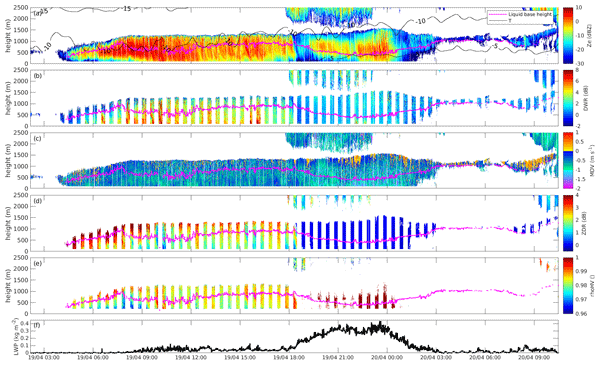
Giovanni Chellini, Rosa Gierens, Kerstin Ebell, Theresa Kiszler, Pavel Krobot, Alexander Myagkov, Vera Schemann, and Stefan Kneifel
Earth Syst. Sci. Data, 15, 5427–5448, https://doi.org/10.5194/essd-15-5427-2023, https://doi.org/10.5194/essd-15-5427-2023, 2023
Short summary
Short summary
We present a comprehensive quality-controlled dataset of remote sensing observations of low-level mixed-phase clouds (LLMPCs) taken at the high Arctic site of Ny-Ålesund, Svalbard, Norway. LLMPCs occur frequently in the Arctic region, and substantially warm the surface. However, our understanding of microphysical processes in these clouds is incomplete. This dataset includes a comprehensive set of variables which allow for extensive investigation of such processes in LLMPCs at the site.
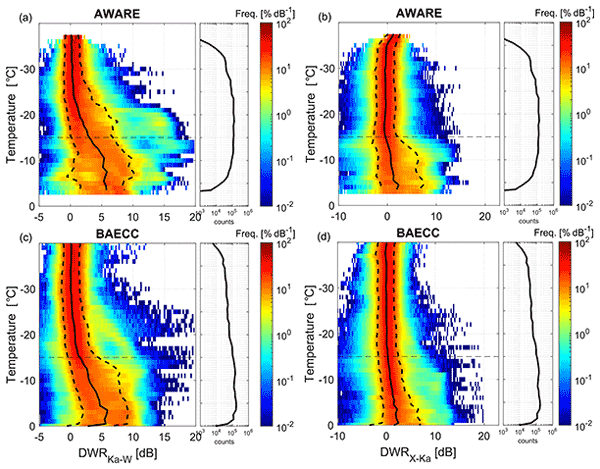
Frederic Tridon, Israel Silber, Alessandro Battaglia, Stefan Kneifel, Ann Fridlind, Petros Kalogeras, and Ranvir Dhillon
Atmos. Chem. Phys., 22, 12467–12491, https://doi.org/10.5194/acp-22-12467-2022, https://doi.org/10.5194/acp-22-12467-2022, 2022
Short summary
Short summary
The role of ice precipitation in the Earth water budget is not well known because ice particles are complex, and their formation involves intricate processes. Riming of ice crystals by supercooled water droplets is an efficient process, but little is known about its importance at high latitudes. In this work, by exploiting the deployment of an unprecedented number of remote sensing systems in Antarctica, we find that riming occurs at much lower temperatures compared with the mid-latitudes.
Leonie von Terzi, José Dias Neto, Davide Ori, Alexander Myagkov, and Stefan Kneifel
Atmos. Chem. Phys., 22, 11795–11821, https://doi.org/10.5194/acp-22-11795-2022, https://doi.org/10.5194/acp-22-11795-2022, 2022
Short summary
Short summary
We present a statistical analysis of ice microphysical processes (IMP) in mid-latitude clouds. Combining various radar approaches, we find that the IMP active at −20 to −10 °C seems to be the main driver of ice particle size, shape and concentration. The strength of aggregation at −20 to −10 °C correlates with the increase in concentration and aspect ratio of locally formed ice particles. Despite ongoing aggregation, the concentration of ice particles stays enhanced until −4 °C.
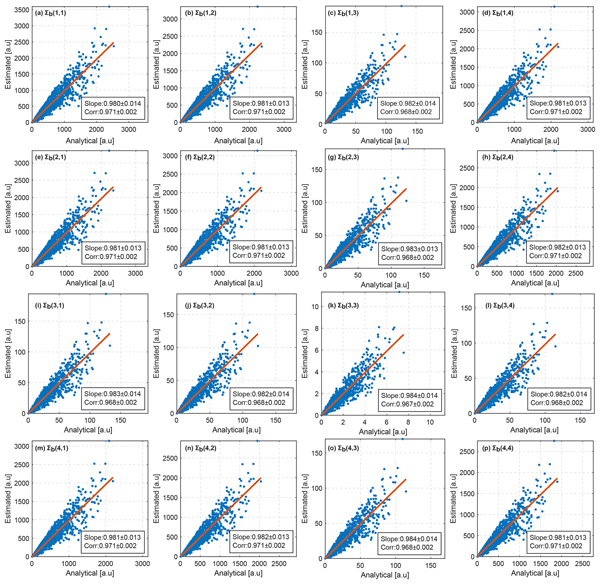
Alexander Myagkov and Davide Ori
Atmos. Meas. Tech., 15, 1333–1354, https://doi.org/10.5194/amt-15-1333-2022, https://doi.org/10.5194/amt-15-1333-2022, 2022
Short summary
Short summary
This study provides equations to characterize random errors of spectral polarimetric observations from cloud radars. The results can be used for a broad spectrum of applications. For instance, accurate error characterization is essential for advanced retrievals of microphysical properties of clouds and precipitation. Moreover, error characterization allows for the use of measurements from polarimetric cloud radars to potentially improve weather forecasts.

Teresa Vogl, Maximilian Maahn, Stefan Kneifel, Willi Schimmel, Dmitri Moisseev, and Heike Kalesse-Los
Atmos. Meas. Tech., 15, 365–381, https://doi.org/10.5194/amt-15-365-2022, https://doi.org/10.5194/amt-15-365-2022, 2022
Short summary
Short summary
We are using machine learning techniques, a type of artificial intelligence, to detect graupel formation in clouds. The measurements used as input to the machine learning framework were performed by cloud radars. Cloud radars are instruments located at the ground, emitting radiation with wavelenghts of a few millimeters vertically into the cloud and measuring the back-scattered signal. Our novel technique can be applied to different radar systems and different weather conditions.
Silke Trömel, Clemens Simmer, Ulrich Blahak, Armin Blanke, Sabine Doktorowski, Florian Ewald, Michael Frech, Mathias Gergely, Martin Hagen, Tijana Janjic, Heike Kalesse-Los, Stefan Kneifel, Christoph Knote, Jana Mendrok, Manuel Moser, Gregor Köcher, Kai Mühlbauer, Alexander Myagkov, Velibor Pejcic, Patric Seifert, Prabhakar Shrestha, Audrey Teisseire, Leonie von Terzi, Eleni Tetoni, Teresa Vogl, Christiane Voigt, Yuefei Zeng, Tobias Zinner, and Johannes Quaas
Atmos. Chem. Phys., 21, 17291–17314, https://doi.org/10.5194/acp-21-17291-2021, https://doi.org/10.5194/acp-21-17291-2021, 2021
Short summary
Short summary
The article introduces the ACP readership to ongoing research in Germany on cloud- and precipitation-related process information inherent in polarimetric radar measurements, outlines pathways to inform atmospheric models with radar-based information, and points to remaining challenges towards an improved fusion of radar polarimetry and atmospheric modelling.
Markus Karrer, Axel Seifert, Davide Ori, and Stefan Kneifel
Atmos. Chem. Phys., 21, 17133–17166, https://doi.org/10.5194/acp-21-17133-2021, https://doi.org/10.5194/acp-21-17133-2021, 2021
Short summary
Short summary
Modeling precipitation is of great relevance, e.g., for mitigating damage caused by extreme weather. A key component in accurate precipitation modeling is aggregation, i.e., sticking together of snowflakes. Simulating aggregation is difficult due to multiple parameters that are not well-known. Knowing how these parameters affect aggregation can help its simulation. We put new parameters in the model and select a combination of parameters with which the model can simulate observations better.
Cited articles
Bailey, M. and Hallett, J.: Growth rates and habits of ice crystals between −20 °C and −70 °C, Journal of the Atmospheric Sciences, 61, 514–544, https://doi.org/10.1175/1520-0469(2004)061<0514:GRAHOI>2.0.CO;2, 2004. a, b
Brdar, S. and Seifert, A.: McSnow: A Monte-Carlo Particle Model for Riming and Aggregation of Ice Particles in a Multidimensional Microphysical Phase Space, Journal of Advances in Modeling Earth Systems, 10, 187–206, https://doi.org/10.1002/2017MS001167, 2018. a, b, c
Bringi, V., Seifert, A., Wu, W., Thurai, M., Huang, G.-J., and Siewert, C.: Hurricane Dorian outer rain band observations and 1D particle model simulations: A case study, Atmosphere, 11, 879, https://doi.org/10.3390/atmos11080879, 2020. a
Chen, J.-P. and Lamb, D.: The theoretical basis for the parameterization of ice crystal habits: Growth by vapor deposition, Journal of Atmospheric Sciences, 51, 1206–1222, https://doi.org/10.1175/1520-0469(1994)051<1206:TTBFTP>2.0.CO;2, 1994. a
Connolly, P. J., Emersic, C., and Field, P. R.: A laboratory investigation into the aggregation efficiency of small ice crystals, Atmos. Chem. Phys., 12, 2055–2076, https://doi.org/10.5194/acp-12-2055-2012, 2012. a
Doviak, R. J. and Zrnic, D. S.: Doppler radar & weather observations, Academic Press, https://doi.org/10.1016/C2009-0-22358-0, 1993. a
Draine, B. T. and Flatau, P. J.: Discrete-dipole approximation for scattering calculations, Journal of the Optical Society of America A, 11, 1491–1499, https://doi.org/10.1364/JOSAA.11.001491, 1994. a
Draine, B. T. and Flatau, P. J.: User guide for the discrete dipole approximation code DDSCAT 7.3, arXiv preprint, https://doi.org/10.48550/arXiv.1305.6497, 2013. a
Geer, A. J., Lonitz, K., Weston, P., Kazumori, M., Okamoto, K., Zhu, Y., Liu, E. H., Collard, A., Bell, W., Migliorini, S., Chambon, P., Fourrié, N., Kim, M.-J., Köpken-Watts, C., and Schraff, C.: All-sky satellite data assimilation at operational weather forecasting centres, Quarterly Journal of the Royal Meteorological Society, 144, 1191–1217, https://doi.org/10.1002/qj.3202, 2018. a
Harrington, J. Y., Sulia, K., and Morrison, H.: A Method for Adaptive Habit Prediction in Bulk Microphysical Models. Part I: Theoretical Development, Journal of the Atmospheric Sciences, 70, 349–364, https://doi.org/10.1175/JAS-D-12-040.1, 2013. a
Heymsfield, A., Bansemer, A., Wood, N. B., Liu, G., Tanelli, S., Sy, O. O., Poellot, M., and Liu, C.: Toward improving ice water content and snow-rate retrievals from radars. Part II: Results from three wavelength radar–collocated in situ measurements and CloudSat–GPM–TRMM radar data, Journal of Applied Meteorology and Climatology, 57, 365–389, https://doi.org/10.1175/JAMC-D-17-0164.1, 2018. a
Jensen, A. and Harrington, J.: Modeling ice crystal aspect ratio evolution during riming: A single-particle growth model, Journal of the Atmospheric Sciences, 72, 2569–2590, https://doi.org/10.1175/JAS-D-14-0297.1, 2015. a
Jensen, A. A., Harrington, J. Y., Morrison, H., and Milbrandt, J. A.: Predicting ice shape evolution in a bulk microphysics model, Journal of the Atmospheric Sciences, 74, 2081–2104, https://doi.org/10.1175/JAS-D-16-0350.1, 2017. a, b
Karrer, M., Seifert, A., Siewert, C., Ori, D., von Lerber, A., and Kneifel, S.: Ice particle properties inferred from aggregation modelling, Journal of Advances in Modeling Earth Systems, 12, e2020MS002066, https://doi.org/10.1029/2020MS002066, 2020. a, b, c
Kneifel, S., Leinonen, J., Tyynelä, J., Ori, D., and Battaglia, A.: Scattering of hydrometeors, in: Satellite precipitation measurement, Springer, pp. 249–276, https://doi.org/10.1007/978-3-030-24568-9_15, 2020. a, b, c, d
Köbschall, K., Breitenbach, J., Roisman, I. V., Tropea, C., and Hussong, J.: Geometric descriptors for the prediction of snowflake drag, Experiments in Fluids, 64, 4, https://doi.org/10.1007/s00348-022-03539-x, 2023. a
Kuo, K.-S., Olson, W. S., Johnson, B. T., Grecu, M., Tian, L., Clune, T. L., van Aartsen, B. H., Heymsfield, A. J., Liao, L., and Meneghini, R.: The microwave radiative properties of falling snow derived from nonspherical ice particle models. Part I: An extensive database of simulated pristine crystals and aggregate particles, and their scattering properties, Journal of Applied Meteorology and Climatology, 55, 691–708, https://doi.org/10.1175/JAMC-D-15-0130.1, 2016. a
Leinonen, J. and Szyrmer, W.: Radar signatures of snowflake riming: a modeling study, Earth and Space Science, 2, 2015EA000102, https://doi.org/10.1002/2015EA000102, 2015. a, b
Leinonen, J., Kneifel, S., and Hogan, R. J.: Evaluation of the Rayleigh–Gans approximation for microwave scattering by rimed snowflakes, Quarterly Journal of the Royal Meteorological Society, 144, 77–88, https://doi.org/10.1002/qj.3093, 2018. a
Leinonen, J., Grazioli, J., and Berne, A.: Reconstruction of the mass and geometry of snowfall particles from multi-angle snowflake camera (MASC) images, Atmos. Meas. Tech., 14, 6851–6866, https://doi.org/10.5194/amt-14-6851-2021, 2021. a
Libbrecht, K. G.: Physical dynamics of ice crystal growth, Annu. Rev. Mater. Res, 47, 271–295, https://doi.org/10.1146/annurev-matsci-070616-124135, 2017. a, b
Liu, G.: A database of microwave single-scattering properties for nonspherical ice particles, Bulletin of the American Meteorological Society, 89, 1563–1570, https://doi.org/10.1175/2008BAMS2486.1, 2008. a
Locatelli, J. D. and Hobbs, P. V.: Fall speeds and masses of solid precipitation particles, Journal of Geophysical Research (1896–1977), 79, 2185–2197, https://doi.org/10.1029/JC079i015p02185, 1974. a, b
Lohmann, U., Lüönd, F., and Mahrt, F.: An introduction to clouds : from the microscale to climate, Cambridge University Press, Cambridge, https://doi.org/10.1017/CBO9781139087513, 2016. a, b
Lu, Y., Jiang, Z., Aydin, K., Verlinde, J., Clothiaux, E. E., and Botta, G.: A polarimetric scattering database for non-spherical ice particles at microwave wavelengths, Atmos. Meas. Tech., 9, 5119–5134, https://doi.org/10.5194/amt-9-5119-2016, 2016. a, b, c, d, e, f, g, h, i, j, k, l, m, n, o, p, q, r, s, t, u, v
Maahn, M., Turner, D. D., Löhnert, U., Posselt, D. J., Ebell, K., Mace, G. G., and Comstock, J. M.: Optimal estimation retrievals and their uncertainties: What every atmospheric scientist should know, Bulletin of the American Meteorological Society, 101, E1512–E1523, https://doi.org/10.1175/BAMS-D-19-0027.1, 2020. a
Maherndl, N., Maahn, M., Tridon, F., Leinonen, J., Ori, D., and Kneifel, S.: A riming-dependent parameterization of scattering by snowflakes using the self-similar Rayleigh–Gans approximation, Quarterly Journal of the Royal Meteorological Society, 149, 3562–3581, https://doi.org/10.1002/qj.4573, 2023. a
Maherndl, N., Battaglia, A., Kötsche, A., and Maahn, M.: Riming-dependent snowfall rate and ice water content retrievals for W-band cloud radar, Atmos. Meas. Tech., 18, 3287–3304, https://doi.org/10.5194/amt-18-3287-2025, 2025. a
Mason, S. L., Hogan, R. J., Westbrook, C. D., Kneifel, S., Moisseev, D., and von Terzi, L.: The importance of particle size distribution and internal structure for triple-frequency radar retrievals of the morphology of snow, Atmos. Meas. Tech., 12, 4993–5018, https://doi.org/10.5194/amt-12-4993-2019, 2019. a
Mätzler, C.: Thermal microwave radiation: applications for remote sensing, vol. 52 of ELECTROMAGNETIC WAVES SERIES, IET, London, https://doi.org/10.1049/PBEW052E, 2006. a
McCorquodale, M. W. and Westbrook, C. D.: TRAIL part 2: A comprehensive assessment of ice particle fall speed parametrisations, Quarterly Journal of the Royal Meteorological Society, 147, 605–626, https://doi.org/10.1002/qj.3936, 2021. a
Mishchenko, M. I.: Calculation of the amplitude matrix for a nonspherical particle in a fixed orientation, Appl. Opt., 39, 1026–1031, https://doi.org/10.1364/AO.39.001026, 2000. a
Mishchenko, M. I. and Yurkin, M. A.: On the concept of random orientation in far-field electromagnetic scattering by nonspherical particles, Optics Letters, 42, 494–497, https://doi.org/10.1364/OL.42.000494, 2017. a
Mishchenko, M. I., Travis, L. D., and Mackowski, D. W.: T-matrix computations of light scattering by nonspherical particles: A review, Journal of Quantitative Spectroscopy and Radiative Transfer, 55, 535–575, https://doi.org/10.1016/0022-4073(96)00002-7, 1996. a
Mishchenko, M. I., Hovenier, J. W., and (editors), L. D. T.: Light Scattering by Nonspherical Particles: Theory, Measurements, and Applications, Measurement Science and Technology, 11, 1827, https://doi.org/10.1088/0957-0233/11/12/705, 2000. a
Mitchell, D. L.: Use of Mass- and Area-Dimensional Power Laws for Determining Precipitation Particle Terminal Velocities, Journal of the Atmospheric Sciences, 53, 1710–1723, https://doi.org/10.1175/1520-0469(1996)053<1710:UOMAAD>2.0.CO;2, 1996. a
Mitchell, D. L., Chai, S. K., Liu, Y., Heymsfield, A. J., and Dong, Y.: Modeling cirrus clouds. Part I: Treatment of bimodal size spectra and case study analysis, Journal of the Atmospheric Sciences, 53, 2952–2966, https://doi.org/10.1175/1520-0469(1996)053<2952:MCCPIT>2.0.CO;2, 1996. a, b, c
Morrison, H., van Lier-Walqui, M., Fridlind, A. M., Grabowski, W. W., Harrington, J. Y., Hoose, C., Korolev, A., Kumjian, M. R., Milbrandt, J. A., Pawlowska, H., Posselt, D. J., Prat, O. P., Reimel, K. J., Shima, S.-I., van Diedenhoven, B., and Xue, L.: Confronting the Challenge of Modeling Cloud and Precipitation Microphysics, Journal of Advances in Modeling Earth Systems, 12, https://doi.org/10.1029/2019MS001689, 2020. a, b
Morrison, H., Milbrandt, J. A., and Cholette, M.: A complete three-moment representation of ice in the Predicted Particle Properties (P3) microphysics scheme, Journal of Advances in Modeling Earth Systems, 17, e2024MS004644, https://doi.org/10.1029/2024MS004644, 2025. a, b
Ori, D. and Kneifel, S.: Assessing the uncertainties of the discrete dipole approximation in case of melting ice particles, Journal of Quantitative Spectroscopy and Radiative Transfer, 217, 396–406, https://doi.org/10.1016/j.jqsrt.2018.06.017, 2018. a, b, c
Ori, D., Maestri, T., Rizzi, R., Cimini, D., Montopoli, M., and Marzano, F. S.: Scattering properties of modeled complex snowflakes and mixed-phase particles at microwave and millimeter frequencies, Journal of Geophysical Research: Atmospheres, 119, 9931–9947, https://doi.org/10.1002/2014JD021616, 2014. a
Ori, D., Schemann, V., Karrer, M., Dias Neto, J., von Terzi, L., Seifert, A., and Kneifel, S.: Evaluation of ice particle growth in ICON using statistics of multi-frequency Doppler cloud radar observations, Quarterly Journal of the Royal Meteorological Society, https://doi.org/10.1002/qj.3875, 2020. a
Ori, D., von Terzi, L., Karrer, M., and Kneifel, S.: snowScatt 1.0: consistent model of microphysical and scattering properties of rimed and unrimed snowflakes based on the self-similar Rayleigh–Gans approximation, Geosci. Model Dev., 14, 1511–1531, https://doi.org/10.5194/gmd-14-1511-2021, 2021. a, b, c, d, e, f, g, h, i, j
Oue, M., Tatarevic, A., Kollias, P., Wang, D., Yu, K., and Vogelmann, A. M.: The Cloud-resolving model Radar SIMulator (CR-SIM) Version 3.3: description and applications of a virtual observatory, Geosci. Model Dev., 13, 1975–1998, https://doi.org/10.5194/gmd-13-1975-2020, 2020. a
Petty, G. W. and Huang, W.: Microwave backscatter and extinction by soft ice spheres and complex snow aggregates, Journal of the Atmospheric Sciences, 67, 769–787, https://doi.org/10.1175/2009JAS3146.1, 2010. a
Pruppacher, H. R. and Klett, J. D.: Microphysics of Clouds and Precipitation, Kluwer Academic Publishers, Dordrecht, https://doi.org/10.1007/978-0-306-48100-0, 1997. a, b, c
Purcell, E. M. and Pennypacker, C. R.: Scattering and absorption of light by nonspherical dielectric grains, Astrophysical Journal, 186, 705–714, 1973. a
Reiter, C. A.: A local cellular model for snow crystal growth, Chaos, Solitons & Fractals, 23, 1111–1119, https://doi.org/10.1016/j.chaos.2004.06.071, 2005. a, b
Roweis, S., Hinton, G., and Salakhutdinov, R.: Neighbourhood component analysis, Adv. Neural Inf. Process. Syst. (NIPS), 17, https://web.archive.org/web/20230607061223/https://proceedings.neurips.cc/paper_files/paper/2004/file/42fe880812925e520249e808937738d2-Paper.pdf (last access: August 2025), 2004. a
Schrom, R. S. and Kumjian, M. R.: Bulk-density representations of branched planar ice crystals: Errors in the polarimetric radar variables, Journal of Applied Meteorology and Climatology, 57, 333–346, https://doi.org/10.1175/JAMC-D-17-0114.1, 2018. a
Schrom, R. S. and Kumjian, M. R.: A probabilistic radar forward model for branched planar ice crystals, Journal of Applied Meteorology and Climatology, 58, 1245–1265, https://doi.org/10.1175/JAMC-D-18-0204.1, 2019. a, b, c
Seifert, A., Leinonen, J., Siewert, C., and Kneifel, S.: The Geometry of Rimed Aggregate Snowflakes: A Modeling Study, Journal of Advances in Modeling Earth Systems, 11, 712–731, https://doi.org/10.1029/2018MS001519, 2019. a
Shima, S., Kusano, K., Kawano, A., Sugiyama, T., and Kawahara, S.: The super-droplet method for the numerical simulation of clouds and precipitation: a particle-based and probabilistic microphysics model coupled with a non-hydrostatic model, Quarterly Journal of the Royal Meteorological Society, 135, 1307–1320, https://doi.org/10.1002/qj.441, 2009. a
Sorensen, C. M.: Light scattering by fractal aggregates: a review, Aerosol Science & Technology, 35, 648–687, https://doi.org/10.1080/02786820117868, 2001. a, b
Takahashi, T.: Influence of Liquid Water Content and Temperature on the Form and Growth of Branched Planar Snow Crystals in a Cloud, Journal of the Atmospheric Sciences, 71, 4127–4142, https://doi.org/10.1175/JAS-D-14-0043.1, 2014. a, b
Tyynelä, J., Nousiainen, T., Göke, S., and Muinonen, K.: Modeling C-band single scattering properties of hydrometeors using discrete-dipole approximation and T-matrix method, Journal of Quantitative Spectroscopy and Radiative Transfer, 110, 1654–1664, https://doi.org/10.1016/j.jqsrt.2009.02.020, 2009. a
von Terzi, L.: McRadar, Zenodo [code], https://doi.org/10.5281/zenodo.17079541, 2025a. a
von Terzi, L.: Level 0 data for: A Microwave Scattering Database of Oriented Ice and Snow Particles: Supporting Habit-Dependent Growth Models and Radar Applications, Zenodo [data set], https://doi.org/10.57970/cgtek-fen77, 2025b. a, b
von Terzi, L.: lterzi/DDA_database_gmd: Codes for “A Microwave Scattering Database of Oriented Ice and Snow Particles: Supporting Habit-Dependent Growth Models and Radar Applications (McRadar 1.0.0)”, Zenodo [code], https://doi.org/10.5281/zenodo.18257206, 2026. a
von Terzi, L., Dias Neto, J., Ori, D., Myagkov, A., and Kneifel, S.: Ice microphysical processes in the dendritic growth layer: a statistical analysis combining multi-frequency and polarimetric Doppler cloud radar observations, Atmos. Chem. Phys., 22, 11795–11821, https://doi.org/10.5194/acp-22-11795-2022, 2022. a, b, c, d
von Terzi, L., Ori, D., and Kneifel, S.: Level 1 data for: A Microwave Scattering Database of Oriented Ice and Snow Particles: Supporting Habit-Dependent Growth Models and Radar Applications, Zenodo [data set], https://doi.org/10.5281/zenodo.16792943, 2025. a, b
Westbrook, C., Ball, R., Field, P., and Heymsfield, A. J.: Theory of growth by differential sedimentation, with application to snowflake formation, Physical Review E—Statistical, Nonlinear, and Soft Matter Physics, 70, 021403, https://doi.org/10.1103/PhysRevE.70.021403, 2004a. a, b
Westbrook, C. D., Ball, R., Field, P., and Heymsfield, A. J.: Universality in snowflake aggregation, Geophysical Research Letters, 31, https://doi.org/10.1029/2004GL020363, 2004b. a, b, c
Yurkin, M. and Hoekstra, A.: User manual for the discrete dipole approximation code ADDA 1.4.0, https://web.archive.org/web/20220210055742/https://raw.githubusercontent.com/adda-team/adda/v1.4.0/doc/manual.pdf (last access: August 2025), 2020. a
Yurkin, M. A. and Hoekstra, A. G.: The discrete dipole approximation: an overview and recent developments, Journal of Quantitative Spectroscopy and Radiative Transfer, 106, 558–589, https://doi.org/10.1016/j.jqsrt.2007.01.034, 2007. a, b
Yurkin, M. A. and Hoekstra, A. G.: The discrete-dipole-approximation code ADDA: capabilities and known limitations, Journal of Quantitative Spectroscopy and Radiative Transfer, 112, 2234–2247, https://doi.org/10.1016/j.jqsrt.2011.01.031, 2011. a
Yurkin, M. A., Maltsev, V. P., and Hoekstra, A. G.: Convergence of the discrete dipole approximation. II. An extrapolation technique to increase the accuracy, Journal of the Optical Society of America A, 23, 2592–2601, https://doi.org/10.1364/JOSAA.23.002592, 2006. a, b
Zubko, E., Petrov, D., Grynko, Y., Shkuratov, Y., Okamoto, H., Muinonen, K., Nousiainen, T., Kimura, H., Yamamoto, T., and Videen, G.: Validity criteria of the discrete dipole approximation, Applied Optics, 49, 1267–1279, https://doi.org/10.1364/AO.49.001267, 2010. a
Short summary
We present a new database of radar-relevant optical properties for a wide range of ice particle shapes, computed using the Discrete Dipole Approximation (DDA) at 5.6, 9.6, 35.6, and 94 GHz. The database is designed to support habit-evolving microphysical schemes, which predict continuous changes in ice particle properties rather than the traditionally assumed fixed categories. It includes over 2600 individual crystals and 450 aggregates with varying riming degrees and morphology.
We present a new database of radar-relevant optical properties for a wide range of ice particle...


