
Articles | Volume 19, issue 18
https://doi.org/10.5194/gmd-19-8627-2026
© Author(s) 2026. This work is distributed under
the Creative Commons Attribution 4.0 License.
the Creative Commons Attribution 4.0 License.
https://doi.org/10.5194/gmd-19-8627-2026
© Author(s) 2026. This work is distributed under
the Creative Commons Attribution 4.0 License.
the Creative Commons Attribution 4.0 License.
Model evaluation paper
| 
17 Sep 2026
Model evaluation paper |
| 17 Sep 2026
| 17 Sep 2026
Multi-season evaluation of temperature and wind in the marine boundary layer along the United States northeast coast in the High-Resolution Rapid Refresh model

Cooperative Institute for Research in Environmental Sciences (CIRES), University of Colorado Boulder, Boulder, CO, USA
NOAA Physical Sciences Laboratory, Boulder, CO, USA
Laura Bianco
Cooperative Institute for Research in Environmental Sciences (CIRES), University of Colorado Boulder, Boulder, CO, USA
NOAA Physical Sciences Laboratory, Boulder, CO, USA
David D. Turner
NOAA Global Systems Laboratory, Boulder, CO, USA
Joseph Olson
NOAA Global Systems Laboratory, Boulder, CO, USA
Xia Sun
Cooperative Institute for Research in Environmental Sciences (CIRES), University of Colorado Boulder, Boulder, CO, USA
NOAA Global Systems Laboratory, Boulder, CO, USA
Joshua Gebauer
Cooperative Institute for Severe and High-Impact Weather Research and Operations, University of Oklahoma, Norman, OK, USA
NOAA National Severe Storms Laboratory, Norman, OK, USA
Nicola Bodini
National Laboratory of the Rockies (NLR), Golden, CO, USA
Stefano Letizia
National Laboratory of the Rockies (NLR), Golden, CO, USA
James M. Wilczak
NOAA Physical Sciences Laboratory, Boulder, CO, USA
retired
Related authors
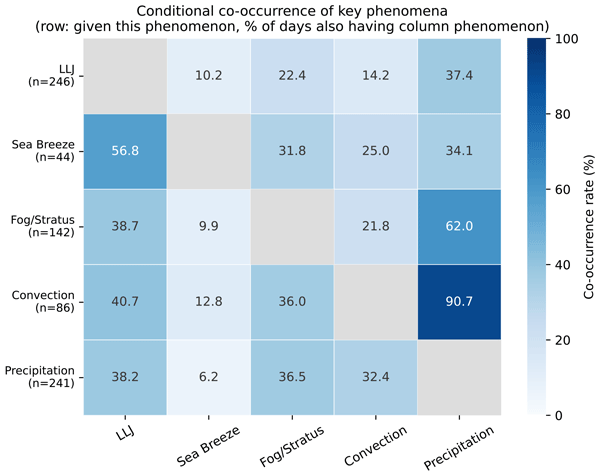
Nicola Bodini, Joseph Olson, Brian Gaudet, Giacomo Valerio Iungo, Mojtaba Shams Solari, Sayahnya Roy, Julie K. Lundquist, Nathan Agarwal, Timothy A. Myers, Bianca Adler, Jeffrey D. Mirocha, Eric James, Laura Bianco, James M. Wilczak, and David D. Turner
Wind Energ. Sci., 11, 1949–1961, https://doi.org/10.5194/wes-11-1949-2026, https://doi.org/10.5194/wes-11-1949-2026, 2026
Short summary
Short summary
To improve offshore wind forecasts, the Third Wind Forecast Improvement Project monitored the United States east coast for 18 months. We compiled a daily log of weather events using advanced scanners and expert notes. This public dataset identifies important wind patterns, helping scientists test computer models and choose specific cases to study.

David D. Turner, Bianca Adler, Laura Bianco, James M. Wilczak, Vincent Michaud-Belleau, and Luc Rochette
Atmos. Meas. Tech., 19, 1573–1586, https://doi.org/10.5194/amt-19-1573-2026, https://doi.org/10.5194/amt-19-1573-2026, 2026
Short summary
Short summary
It is critical that a network of ground-based instruments that measure temperature and humidity profiles be well calibrated, so that differences between any two profiles can be attributed to atmospheric differences and not instrument calibration issues. This study evaluated the relative accuracy of 7 ground-based infrared spectrometers and their ability to measure these profiles, and found that the profile bias was much smaller than the uncertainty in the retrieved profiles themselves.
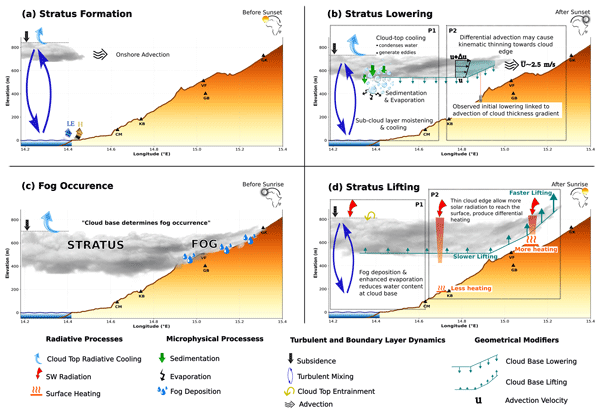
Deepanshu Malik, Hendrik Andersen, Jan Cermak, Roland Vogt, and Bianca Adler
Atmos. Chem. Phys., 26, 681–701, https://doi.org/10.5194/acp-26-681-2026, https://doi.org/10.5194/acp-26-681-2026, 2026
Short summary
Short summary
We investigated cloud base height changes in the Namib Desert and developed a method to estimate it using ground-based humidity data. This improves fog monitoring by distinguishing fog from low clouds, which satellites alone cannot reliably do. Our results reveal diurnal patterns and linkages to coastal proximity in the vertical dynamics of fog and low clouds, highlighting key atmospheric processes with potential importance for future research.
Viola Hipler, Hendrik Andersen, Robert Spirig, Roland Vogt, Stuart Piketh, Bianca Adler, and Jan Cermak
EGUsphere, https://doi.org/10.5194/egusphere-2025-5816, https://doi.org/10.5194/egusphere-2025-5816, 2026
Short summary
Short summary
Fog is a key component of the Namib Desert ecosystem, and is mostly associated with the advection of marine stratus clouds. Here, we use local measurements near the coast to distinguish fog situations from lifted low-cloud situations. Using reanalysis data, we find synoptic and regional-scale processes over the ocean and over the continent that are connected to stratus altitude and therefore fog occurrence patterns. The results lead to a better understanding of the coastal desert fog system.
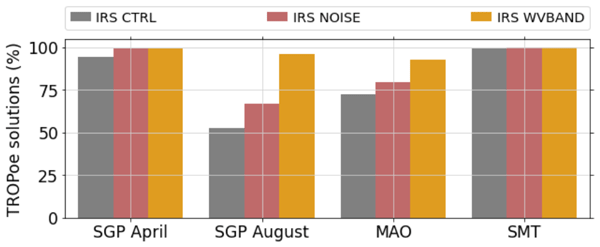
Bianca Adler, David D. Turner, Laura Bianco, Irina V. Djalalova, Timothy Myers, and James M. Wilczak
Atmos. Meas. Tech., 17, 6603–6624, https://doi.org/10.5194/amt-17-6603-2024, https://doi.org/10.5194/amt-17-6603-2024, 2024
Short summary
Short summary
Continuous profile observations of temperature and humidity in the lowest part of the atmosphere are essential for the evaluation of numerical weather prediction models and data assimilation for better weather forecasts. Such profiles can be retrieved from passive ground-based remote sensing instruments like infrared spectrometers and microwave radiometers. In this study, we describe three recent modifications to the retrieval framework TROPoe for improved temperature and humidity profiles.
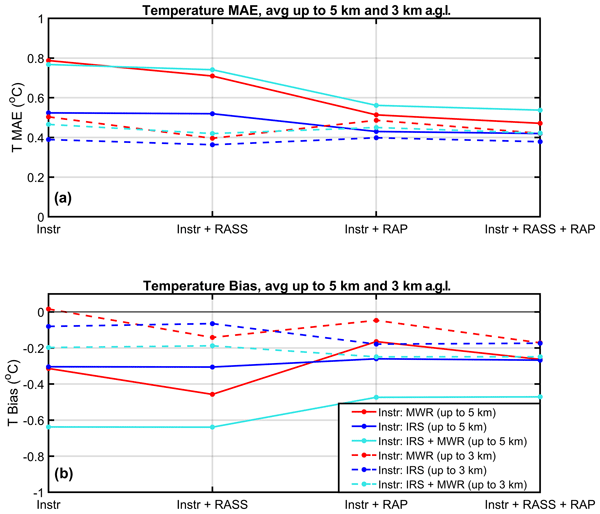
Laura Bianco, Bianca Adler, Ludovic Bariteau, Irina V. Djalalova, Timothy Myers, Sergio Pezoa, David D. Turner, and James M. Wilczak
Atmos. Meas. Tech., 17, 3933–3948, https://doi.org/10.5194/amt-17-3933-2024, https://doi.org/10.5194/amt-17-3933-2024, 2024
Short summary
Short summary
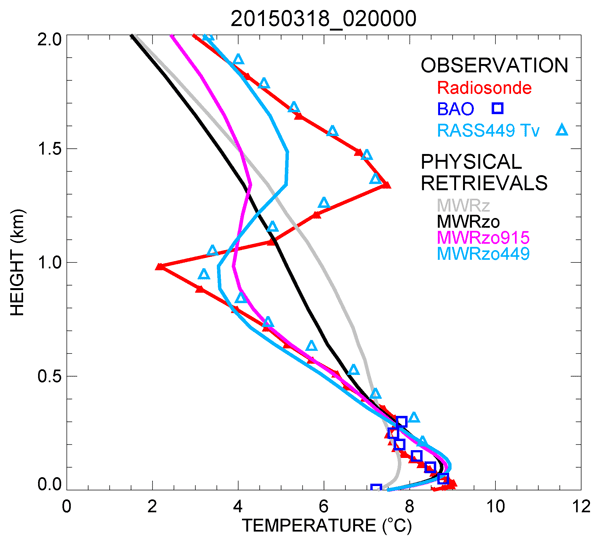
The Tropospheric Remotely Observed Profiling via Optimal Estimation physical retrieval is used to retrieve temperature and humidity profiles from various combinations of passive and active remote sensing instruments, surface platforms, and numerical weather prediction models. The retrieved profiles are assessed against collocated radiosonde in non-cloudy conditions to assess the sensitivity of the retrievals to different input combinations. Case studies with cloudy conditions are also inspected.
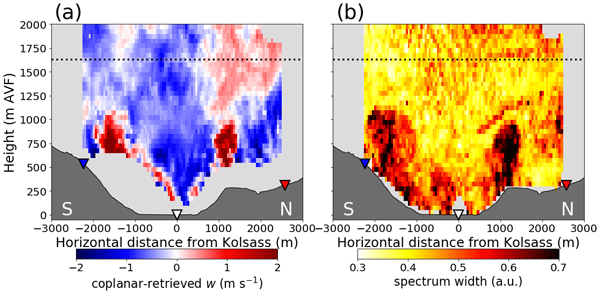
Nevio Babić, Bianca Adler, Alexander Gohm, Manuela Lehner, and Norbert Kalthoff
Weather Clim. Dynam., 5, 609–631, https://doi.org/10.5194/wcd-5-609-2024, https://doi.org/10.5194/wcd-5-609-2024, 2024
Short summary
Short summary
Day-to-day weather over mountains remains a significant challenge in the domain of weather forecast. Using a combination of measurements from several instrument platforms, including Doppler lidars, aircraft, and radiosondes, we developed a method that relies primarily on turbulence characteristics of the lowest layers of the atmosphere. As a result, we identified new ways in which atmosphere behaves over mountains during daytime, which may serve to further improve forecasting capabilities.

Bianca Adler, James M. Wilczak, Jaymes Kenyon, Laura Bianco, Irina V. Djalalova, Joseph B. Olson, and David D. Turner
Geosci. Model Dev., 16, 597–619, https://doi.org/10.5194/gmd-16-597-2023, https://doi.org/10.5194/gmd-16-597-2023, 2023
Short summary
Short summary
Rapid changes in wind speed make the integration of wind energy produced during persistent orographic cold-air pools difficult to integrate into the electrical grid. By evaluating three versions of NOAA’s High-Resolution Rapid Refresh model, we demonstrate how model developments targeted during the second Wind Forecast Improvement Project improve the forecast of a persistent cold-air pool event.
James B. Duncan Jr., Laura Bianco, Bianca Adler, Tyler Bell, Irina V. Djalalova, Laura Riihimaki, Joseph Sedlar, Elizabeth N. Smith, David D. Turner, Timothy J. Wagner, and James M. Wilczak
Atmos. Meas. Tech., 15, 2479–2502, https://doi.org/10.5194/amt-15-2479-2022, https://doi.org/10.5194/amt-15-2479-2022, 2022
Short summary
Short summary
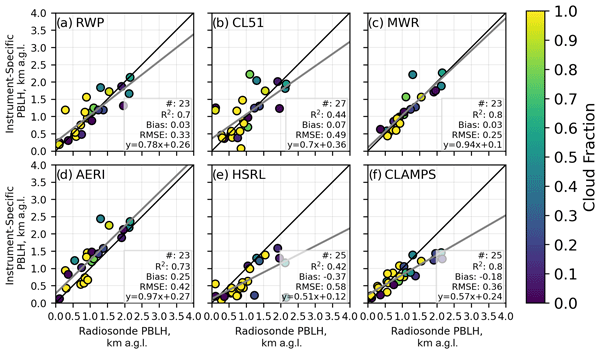
In this study, several ground-based remote sensing instruments are used to estimate the height of the convective planetary boundary layer, and their performance is compared against independent boundary layer depth estimates obtained from radiosondes launched as part of the CHEESEHEAD19 field campaign. The impact of clouds (particularly boundary layer clouds) on the estimation of the boundary layer depth is also investigated.
Irina V. Djalalova, David D. Turner, Laura Bianco, James M. Wilczak, James Duncan, Bianca Adler, and Daniel Gottas
Atmos. Meas. Tech., 15, 521–537, https://doi.org/10.5194/amt-15-521-2022, https://doi.org/10.5194/amt-15-521-2022, 2022
Short summary
Short summary
In this paper we investigate the synergy obtained by combining active (radio acoustic sounding system – RASS) and passive (microwave radiometer) remote sensing observations to obtain temperature vertical profiles through a radiative transfer model. Inclusion of the RASS observations leads to more accurate temperature profiles from the surface to 5 km above ground, well above the maximum height of the RASS observations themselves (2000 m), when compared to the microwave radiometer used alone.
Andrea Burgos-Cuevas, David D. Turner, Jan H. Schween, Tobias Marke, Tobias Böck, and Ulrich Löhnert
EGUsphere, https://doi.org/10.5194/egusphere-2026-4994, https://doi.org/10.5194/egusphere-2026-4994, 2026
This preprint is open for discussion and under review for Atmospheric Measurement Techniques (AMT).
Short summary
Short summary
We developed a new method to estimate heat and moisture transport in the lower atmosphere using measurements from a single site. The method combines temperature, humidity, and wind observations and quantifies their uncertainty. Results show that strong transport events can be reliably detected, reducing the need for complex networks of instruments and providing a practical way to monitor important atmospheric processes.
Nicola Bodini, Grant Buster, and David D. Turner
Earth Syst. Sci. Data Discuss., https://doi.org/10.5194/essd-2026-680, https://doi.org/10.5194/essd-2026-680, 2026
Preprint under review for ESSD
Short summary
Short summary
Alaska's power systems depend on weather, yet weather stations there are few and far between. We turned seven years of hourly output from a national weather forecast model into an easy-to-use record of wind and temperature across Alaska, and checked it against measurements from more than 150 sites. The data generally match observations well, and are freely available to support energy planning, resilient power grids, and artificial intelligence research in this remote region.
Anders A. Jensen, David D. Turner, Jorge Guerra, Stanley G. Benjamin, Clark Evans, David J. Gagne, Justin R. Minder, and Joseph B. Olson
EGUsphere, https://doi.org/10.5194/egusphere-2026-4026, https://doi.org/10.5194/egusphere-2026-4026, 2026
This preprint is open for discussion and under review for Geoscientific Model Development (GMD).
Short summary
Short summary
Clouds and precipitation are predicted by complex algorithms in weather models. In this study, parts of these algorithms were replaced by machine learning. This approach successfully added cloud details vital for cloud-radiation interactions and temperature forecasts, and replicated a model component while maintaining accurate total precipitation forecasts. Ultimately, weather models benefit from faster algorithms and the addition of physical details from machine learning.
Nicola Bodini, Patrick Moriarty, Regis Thedin, Paula Doubrawa, Cristina Archer, Myra Blaylock, Carlo Bottasso, Bruno Carmo, Lawrence Cheung, Camille Dubreuil, Rogier Floors, Thomas Herges, Daniel Houck, Ali Kanjari, Colleen M. Kaul, Christopher Kelley, Ru Li, Julie K. Lundquist, Desirae Major, Anh Kiet Nguyen, Mike Optis, Luan R. C. Parada, Alfredo Peña, Julian Quick, David Ricarte, William C. Radünz, Raj K. Rai, Oscar García-Santiago, Jonas Schulte, Knut S. Seim, M. Paul van der Laan, Kisorthman Vimalakanthan, and Adam Wise
Wind Energ. Sci., 11, 3107–3135, https://doi.org/10.5194/wes-11-3107-2026, https://doi.org/10.5194/wes-11-3107-2026, 2026
Short summary
Short summary
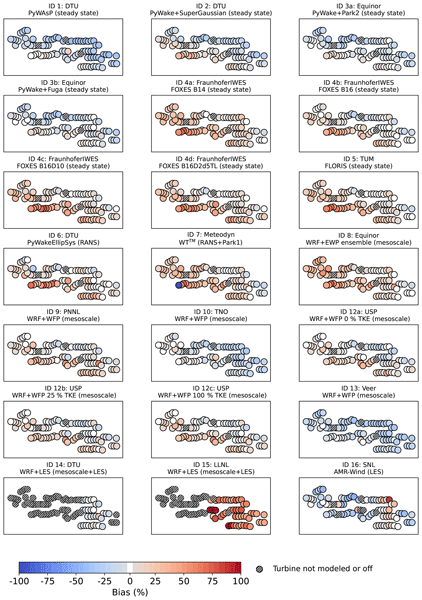
Predicting wind farm energy production is challenging because wind patterns are complex. We tested 16 different models against real data from a major field experiment to see which worked best. Surprisingly, the most expensive and detailed models were not always more accurate than simpler ones. We found that feeding models better weather data was the most effective way to improve accuracy. These results help the industry choose the right tools for designing more-efficient wind farms.
Jordan Schnell, Ravan Ahmadov, Georg A. Grell, Joseph B. Olson, Eric James, Ming Hu, Ka Yee Wong, Brian McDonald, Rebecca H. Schwantes, Jian He, Colin Harkins, Wayne M. Angevine, Brian Jamison, R. Bradley Pierce, Matthew Coggon, Barry Baker, Saulo Freitas, Gabriel Pereira, and Marina Tsidulko
EGUsphere, https://doi.org/10.5194/egusphere-2026-4786, https://doi.org/10.5194/egusphere-2026-4786, 2026
This preprint is open for discussion and under review for Geoscientific Model Development (GMD).
Short summary
Short summary
The Rapid-Refresh model coupled to Chemistry is an experimental weather and chemistry model that includes emissions from human and natural sources that are connected to simulated weather, the effect of aerosols on radiation and clouds, and updated vertical mixing. We compare simulated air quality and weather to ground-based and remotely-sensed observations during the 2020 North American wildfires, demonstrating that our model physics developments and coupling with chemistry improves predictions.
Lindsay M. Sheridan, Raghavendra Krishnamurthy, Tien Manh Nguyen, Yi-Leng Chen, William I. Gustafson Jr., Ye Liu, Feng Hsiao, Rob K. Newsom, Preston Spicer, Evgueni Kassianov, Mikhail Pekour, Nicola Bodini, and Mark Severy
Wind Energ. Sci., 11, 2257–2285, https://doi.org/10.5194/wes-11-2257-2026, https://doi.org/10.5194/wes-11-2257-2026, 2026
Short summary
Short summary
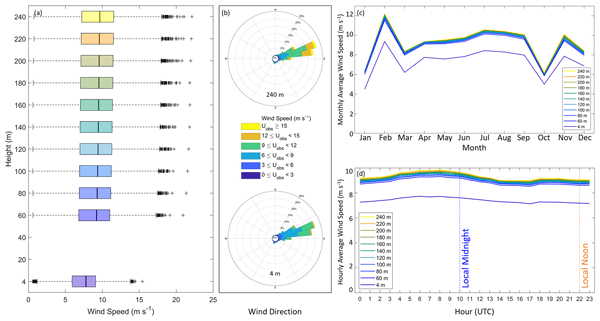
Wind simulations can contain significant errors, which can lead to inaccurate estimates of wind energy generation. Using observations from a floating lidar off Hawai'i, we hypothesize and establish that distinct simulation datasets will exhibit diverse ranges of errors in this offshore environment. The most commonly used simulation dataset produces the largest wind speed biases due to underestimation of fast wind speeds and misrepresentation of how wind speed varies throughout the day and night.
Antonio R. Segales, Tyler M. Bell, Abdullah A. Tasim, Aaron Quiroz, Jeremy D. Simms, Joshua G. Gebauer, and Elizabeth N. Smith
Atmos. Meas. Tech., 19, 3667–3686, https://doi.org/10.5194/amt-19-3667-2026, https://doi.org/10.5194/amt-19-3667-2026, 2026
Short summary
Short summary
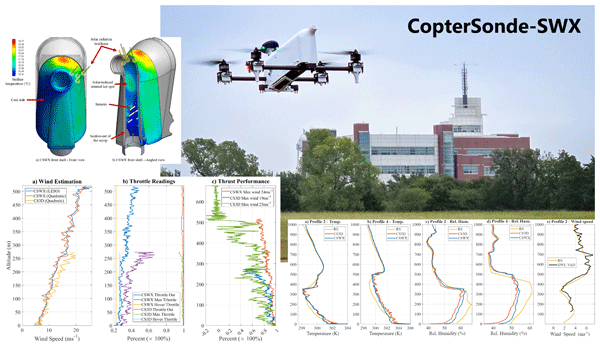
Severe weather can change quickly, but routine weather measurements often miss important details near the ground. We built and tested CopterSonde-SWX, a small weather drone designed to collect vertical profiles in strong winds and measure temperature, humidity, and wind. Field tests showed it closely matched trusted instruments and handled stronger winds than earlier versions. This work supports future drone networks to improve storm monitoring, forecasting, and public safety.
Nicola Bodini, Joseph Olson, Brian Gaudet, Giacomo Valerio Iungo, Mojtaba Shams Solari, Sayahnya Roy, Julie K. Lundquist, Nathan Agarwal, Timothy A. Myers, Bianca Adler, Jeffrey D. Mirocha, Eric James, Laura Bianco, James M. Wilczak, and David D. Turner
Wind Energ. Sci., 11, 1949–1961, https://doi.org/10.5194/wes-11-1949-2026, https://doi.org/10.5194/wes-11-1949-2026, 2026
Short summary
Short summary
To improve offshore wind forecasts, the Third Wind Forecast Improvement Project monitored the United States east coast for 18 months. We compiled a daily log of weather events using advanced scanners and expert notes. This public dataset identifies important wind patterns, helping scientists test computer models and choose specific cases to study.
Aliza Abraham, Nicola Bodini, Nicholas Hamilton, Brian Hirth, John Schroeder, and Patrick Moriarty
Wind Energ. Sci. Discuss., https://doi.org/10.5194/wes-2026-82, https://doi.org/10.5194/wes-2026-82, 2026
Revised manuscript under review for WES
Short summary
Short summary
Thunderstorms can cause sudden changes in wind speed and direction called "wind ramps". While wind turbines are designed to withstand simplified versions of such wind ramps, this paper shows that real wind ramps are much more variable and complex than those prescribed in the design standard. This variability makes it difficult for wind farm operators to predict the conditions that each wind turbine will experience, adding uncertainty to the prediction of wind farm power.
Stefano Letizia, David D. Turner, Aliza Abraham, Luc Rochette, and Patrick J. Moriarty
Wind Energ. Sci., 11, 1653–1677, https://doi.org/10.5194/wes-11-1653-2026, https://doi.org/10.5194/wes-11-1653-2026, 2026
Short summary
Short summary
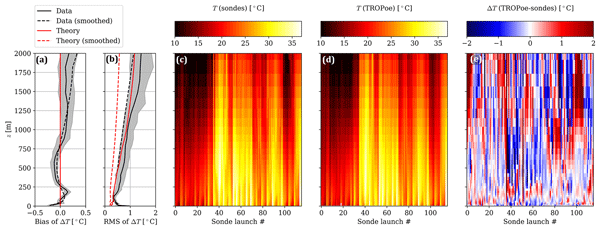
Characterizing the wind resource is much more than just measuring wind speeds. In fact, the physics of the atmosphere is governed by a complex interplay of different quantities, temperature being one of the most important. We used a new technology to remotely sense temperature profiles around wind farms at AWAKEN (American WAKE ExperimeNt). Here, we discuss the methodology and guide readers through a comprehensive, step-by-step validation effort to quantify the accuracy of temperature profiling for wind energy.
Edward Groot, Hannah Christensen, Xia Sun, Kathryn Newman, Wahiba Lfarh, Romain Roehrig, Lisa Bengtsson, Julia Simonson, Keith Williams, and Hugo Lambert
EGUsphere, https://doi.org/10.5194/egusphere-2026-1445, https://doi.org/10.5194/egusphere-2026-1445, 2026
Short summary
Short summary
We analyse diagnostic variables associated with thunderstorm clouds potential (height) and precipitation in model uncertainty model intercomparison project, where multiple numerical submodels are pre-conditioned with each other. We quantify the adjustment rules that occur in vertical columns the climate simulations. The result is that low-level drying is important for the thunderstorm potential diagnostics, which strongly varies among the models, despite not relating to actual storm occurrence.
Nicola Bodini, Emina Maric, Ulrike Egerer, Grant Buster, Luke Lavin, Pavlo Pinchuk, Brandon Benton, and David D. Turner
Wind Energ. Sci. Discuss., https://doi.org/10.5194/wes-2026-67, https://doi.org/10.5194/wes-2026-67, 2026
Revised manuscript accepted for WES
Short summary
Short summary
To plan a reliable United States power grid, engineers need continuous weather data. Because the previous standard record ended in 2013, we created a new, easy-to-use weather database by repackaging complex weather forecasting models onto the same historical grid. We compared our data against real-world observations nationwide, finding it is highly accurate. This provides a seamless, reliable new standard to help plan the future of our national energy system.
David D. Turner, Bianca Adler, Laura Bianco, James M. Wilczak, Vincent Michaud-Belleau, and Luc Rochette
Atmos. Meas. Tech., 19, 1573–1586, https://doi.org/10.5194/amt-19-1573-2026, https://doi.org/10.5194/amt-19-1573-2026, 2026
Short summary
Short summary
It is critical that a network of ground-based instruments that measure temperature and humidity profiles be well calibrated, so that differences between any two profiles can be attributed to atmospheric differences and not instrument calibration issues. This study evaluated the relative accuracy of 7 ground-based infrared spectrometers and their ability to measure these profiles, and found that the profile bias was much smaller than the uncertainty in the retrieved profiles themselves.
Nicola Bodini, Aliza Abraham, Paula Doubrawa, Stefano Letizia, Julie K. Lundquist, Patrick Moriarty, and Ryan Scott
Wind Energ. Sci. Discuss., https://doi.org/10.5194/wes-2026-33, https://doi.org/10.5194/wes-2026-33, 2026
Revised manuscript under review for WES
Short summary
Short summary
Wind turbines create "wakes" of slowed air that reduce power for nearby turbines. To help improve wind energy models, we analyzed data from a large field experiment. We focused on a single day with changing weather patterns. We found that even simple terrain features interacted with the wind to create large variations in power output – up to 80 percent – across a wind farm. This detailed dataset provides a real-world case needed to validate and improve wind energy design tools.

Yelena Pichugina, Alan W. Brewer, Sunil Baidar, Robert Banta, Edward Strobach, Brandi McCarty, Brian Carroll, Nicola Bodini, Stefano Letizia, Richard Marchbanks, Michael Zucker, Maxwell Holloway, and Patrick Moriarty
Wind Energ. Sci., 11, 417–442, https://doi.org/10.5194/wes-11-417-2026, https://doi.org/10.5194/wes-11-417-2026, 2026
Short summary
Short summary
The truck-based Doppler lidar system was used during the American Wake Experiment (AWAKEN) to obtain the high-frequency, simultaneous measurements of the horizontal wind speed, direction, and vertical velocity from a moving platform. The paper presents the unique capability of the novel lidar system to characterize the temporal, vertical, and spatial variability in winds at various distances from operating turbines and obtain quantitative estimates of wind speed reduction in the waked flow.
Linus von Klitzing, David D. Turner, Diego Lange, and Volker Wulfmeyer
Atmos. Meas. Tech., 19, 359–370, https://doi.org/10.5194/amt-19-359-2026, https://doi.org/10.5194/amt-19-359-2026, 2026
Short summary
Short summary
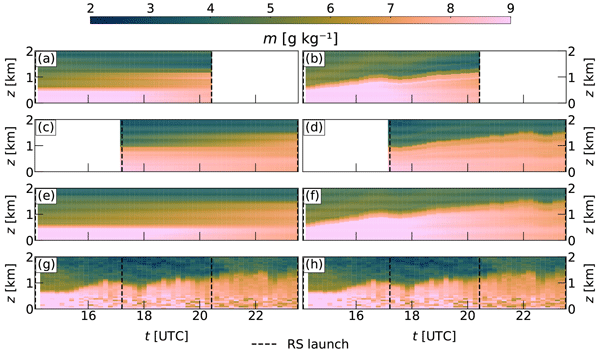
Many atmospheric science endeavors require temporally resolved profiles of temperature, humidity, and winds. Radiosondes are considered the gold standard for measuring these profiles, but the temporal resolution is frequently too coarse for many applications within the atmospheric boundary layer. This study proposes a new method using a normalized height grid in the temporal interpolation process that yields more accurate profiles in the convective boundary layer.
Deepanshu Malik, Hendrik Andersen, Jan Cermak, Roland Vogt, and Bianca Adler
Atmos. Chem. Phys., 26, 681–701, https://doi.org/10.5194/acp-26-681-2026, https://doi.org/10.5194/acp-26-681-2026, 2026
Short summary
Short summary
We investigated cloud base height changes in the Namib Desert and developed a method to estimate it using ground-based humidity data. This improves fog monitoring by distinguishing fog from low clouds, which satellites alone cannot reliably do. Our results reveal diurnal patterns and linkages to coastal proximity in the vertical dynamics of fog and low clouds, highlighting key atmospheric processes with potential importance for future research.
Viola Hipler, Hendrik Andersen, Robert Spirig, Roland Vogt, Stuart Piketh, Bianca Adler, and Jan Cermak
EGUsphere, https://doi.org/10.5194/egusphere-2025-5816, https://doi.org/10.5194/egusphere-2025-5816, 2026
Short summary
Short summary
Fog is a key component of the Namib Desert ecosystem, and is mostly associated with the advection of marine stratus clouds. Here, we use local measurements near the coast to distinguish fog situations from lifted low-cloud situations. Using reanalysis data, we find synoptic and regional-scale processes over the ocean and over the continent that are connected to stratus altitude and therefore fog occurrence patterns. The results lead to a better understanding of the coastal desert fog system.
Calvin Coulbury, Ivy Tan, David Turner, and Chen Zhou
EGUsphere, https://doi.org/10.5194/egusphere-2025-6553, https://doi.org/10.5194/egusphere-2025-6553, 2026
Short summary
Short summary
Observations of low-level, single-layer clouds above the North Slope of Alaska, within the Arctic circle, are used to assess how cloud properties have changed from 2004 to 2023. Evidence is provided for a cooling influence of cloud property changes on Arctic amplified warming. Local temperature changes result in clouds becoming more opaque, driven by changes in cloud liquid water content. This work represents an avenue for the evaluation and improvement of model representations of Arctic clouds.
William C. Radünz, Bruno Carmo, Julie K. Lundquist, Stefano Letizia, Aliza Abraham, Adam S. Wise, Miguel Sanchez Gomez, Nicholas Hamilton, Raj K. Rai, and Pedro S. Peixoto
Wind Energ. Sci., 10, 2365–2393, https://doi.org/10.5194/wes-10-2365-2025, https://doi.org/10.5194/wes-10-2365-2025, 2025
Short summary
Short summary
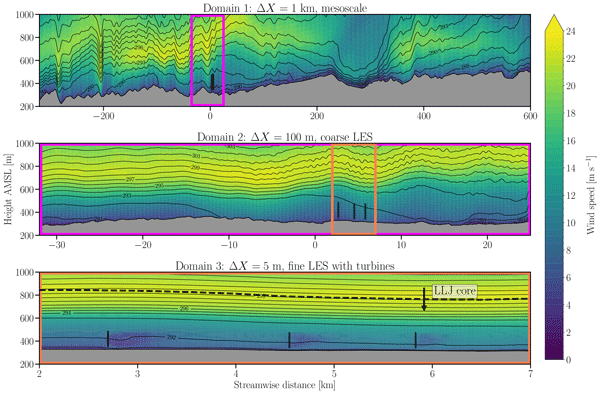
We explore how simple terrain influences spatial variations in wind speed and wind farm performance during a low-level jet. Using simulations, field observations, and turbine production data, we find that downstream turbines produce more power than upstream ones, despite being subjected to wake effects. This counterintuitive result arises because the low-level jet and winds near turbine rotors are highly sensitive to topographic features, leading to stronger winds at the downstream turbines.
Tessa E. Rosenberger, Thijs Heus, Girish N. Raghunathan, David D. Turner, Timothy J. Wagner, and Julia M. Simonson
Atmos. Meas. Tech., 18, 5129–5140, https://doi.org/10.5194/amt-18-5129-2025, https://doi.org/10.5194/amt-18-5129-2025, 2025
Short summary
Short summary
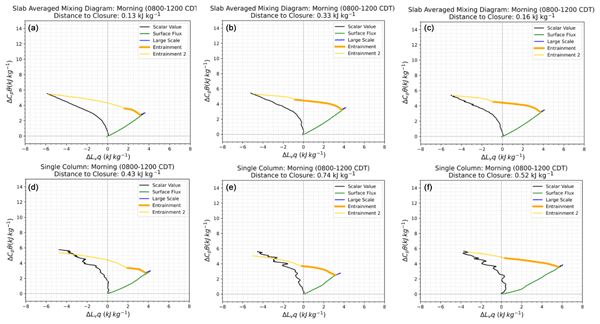
Entrainment is key in understanding temperature and moisture changes within the boundary layer, but it is difficult to observe using ground-based observations. This work used simulations to verify an assumption that simplifies entrainment estimations from ground-based observational data, recognizing that entrainment is the combination of the transfer of heat and moisture from above the boundary layer into it and the change in concentration of heat and moisture as boundary layer depth changes.
Laura Bianco, Reagan Mendeke, Jakob Lindblom, Irina V. Djalalova, David D. Turner, and James M. Wilczak
Wind Energ. Sci., 10, 2117–2136, https://doi.org/10.5194/wes-10-2117-2025, https://doi.org/10.5194/wes-10-2117-2025, 2025
Short summary
Short summary
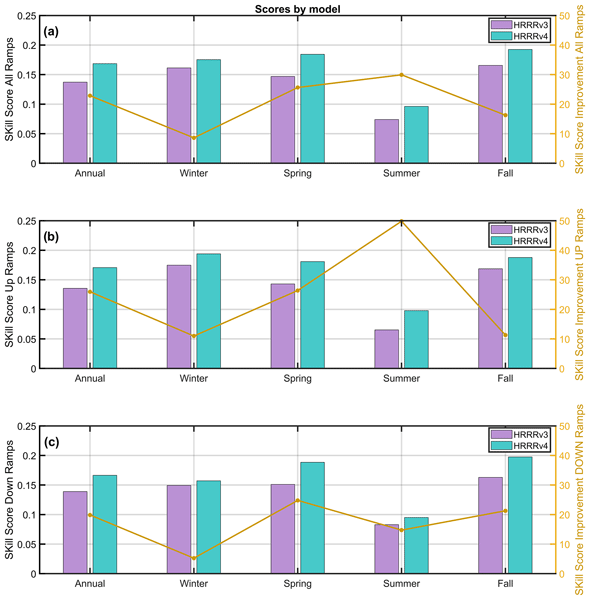
Adding more renewable energy into the electric grid is a critical part of the strategy to increase energy availability. Reliable numerical weather prediction (NWP) models need to be able to predict the intrinsic nature of weather-dependent resources such as wind ramp events, as wind energy could quickly be available in abundance or temporarily cease to exist. We assess the ability of the operational High Resolution Rapid Refresh NWP model to forecast wind ramp events in the two most recent versions.
Aliza Abraham, Matteo Puccioni, Arianna Jordan, Emina Maric, Nicola Bodini, Nicholas Hamilton, Stefano Letizia, Petra M. Klein, Elizabeth N. Smith, Sonia Wharton, Jonathan Gero, Jamey D. Jacob, Raghavendra Krishnamurthy, Rob K. Newsom, Mikhail Pekour, William Radünz, and Patrick Moriarty
Wind Energ. Sci., 10, 1681–1705, https://doi.org/10.5194/wes-10-1681-2025, https://doi.org/10.5194/wes-10-1681-2025, 2025
Short summary
Short summary
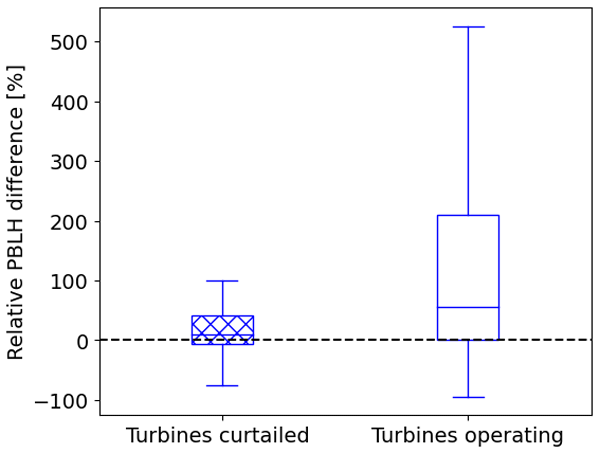
This study is the first to use real-world atmospheric measurements to show that large wind plants can increase the height of the planetary boundary layer, the part of the atmosphere near the surface where life takes place. The planetary boundary layer height governs processes like pollutant transport and cloud formation and is a key parameter for modeling the atmosphere. The results of this study provide important insights into interactions between wind plants and their local environment.
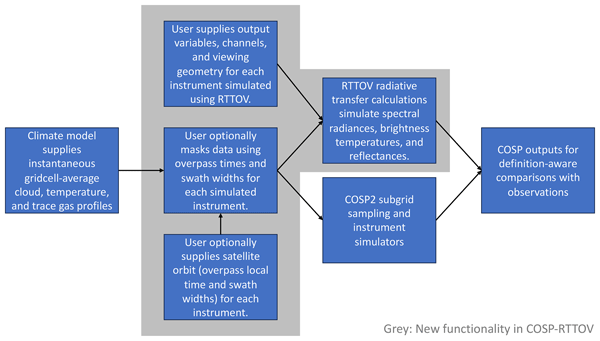
Jonah K. Shaw, Dustin J. Swales, Sergio DeSouza-Machado, David D. Turner, Jennifer E. Kay, and David P. Schneider
Geosci. Model Dev., 18, 4935–4950, https://doi.org/10.5194/gmd-18-4935-2025, https://doi.org/10.5194/gmd-18-4935-2025, 2025
Short summary
Short summary
Satellites have observed Earth's emissions of infrared radiation since the 1970s. Because infrared wavelengths interact with the atmosphere in distinct ways, these observations contain information about Earth and the atmosphere. We present a tool that runs within Earth system models and produces output that can be directly compared with satellite measurements of infrared radiation. We then use this tool for climate model evaluation, climate change detection, and satellite mission design.
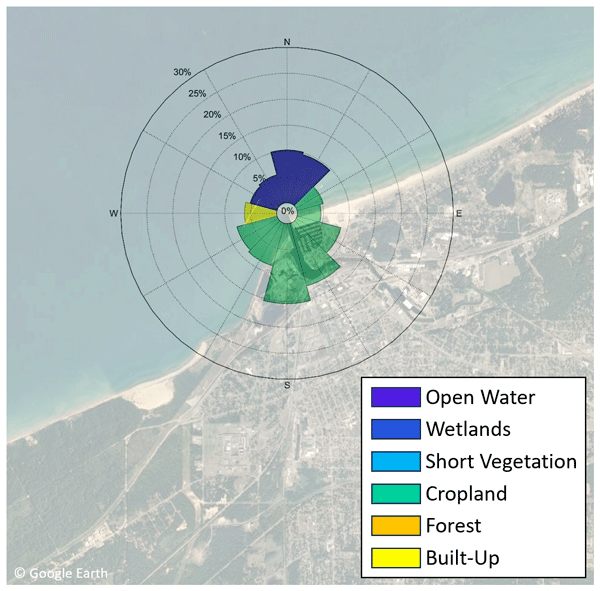
Lindsay M. Sheridan, Jiali Wang, Caroline Draxl, Nicola Bodini, Caleb Phillips, Dmitry Duplyakin, Heidi Tinnesand, Raj K. Rai, Julia E. Flaherty, Larry K. Berg, Chunyong Jung, Ethan Young, and Rao Kotamarthi
Wind Energ. Sci., 10, 1551–1574, https://doi.org/10.5194/wes-10-1551-2025, https://doi.org/10.5194/wes-10-1551-2025, 2025
Short summary
Short summary
Three recent wind resource datasets are assessed for their skills in representing annual average wind speeds and seasonal, diurnal, and interannual trends in the wind resource in coastal locations to support customers interested in small and midsize wind energy.
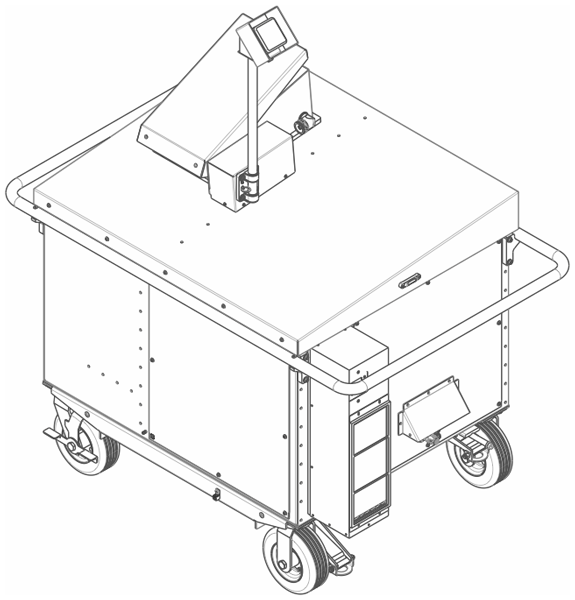
Vincent Michaud-Belleau, Michel Gaudreau, Jean Lacoursière, Éric Boisvert, Lalaina Ravelomanantsoa, David D. Turner, and Luc Rochette
Atmos. Meas. Tech., 18, 3585–3609, https://doi.org/10.5194/amt-18-3585-2025, https://doi.org/10.5194/amt-18-3585-2025, 2025
Short summary
Short summary
The Atmospheric Sounder Spectrometer by Infrared Spectral Technology (ASSIST) is a commercially available ground-based infrared spectroradiometer. It is designed for automated and passive measurement of the thermal radiation emitted by the atmosphere, providing information about the vertical distribution of temperature and humidity, trace gases, clouds, and aerosols in the boundary layer. In this paper, we outline the key characteristics of the ASSIST hardware and signal processing algorithm that yields downwelling radiance spectra in near real-time.

David D. Turner, Maria P. Cadeddu, Julia M. Simonson, and Timothy J. Wagner
Atmos. Meas. Tech., 18, 3533–3546, https://doi.org/10.5194/amt-18-3533-2025, https://doi.org/10.5194/amt-18-3533-2025, 2025
Short summary
Short summary
When deriving a geophysical variable from remote sensors, the uncertainty and information content are critical. The latter quantify specifies what fraction of a real perturbation would be observed in the derived variable. This paper outlines, for the first time, a methodology for propagating the information content from multiple remote sensors into a derived product using horizontal advection as an example.
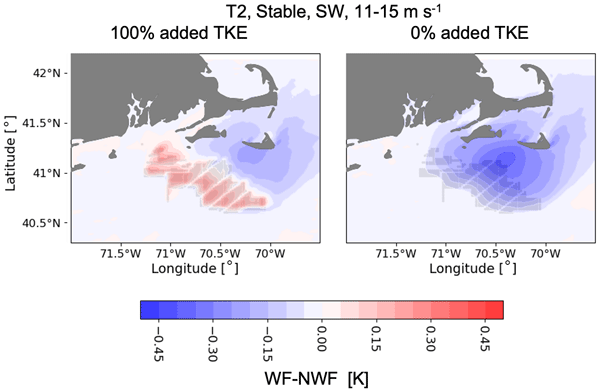
Daphne Quint, Julie K. Lundquist, Nicola Bodini, and David Rosencrans
Wind Energ. Sci., 10, 1269–1301, https://doi.org/10.5194/wes-10-1269-2025, https://doi.org/10.5194/wes-10-1269-2025, 2025
Short summary
Short summary
Offshore wind farms along the US East Coast can have limited effects on local weather. To study these effects, we include wind farms near Massachusetts and Rhode Island, and we test different amounts of turbulence in our model. We analyze changes in wind, temperature, and turbulence. Simulated effects on surface temperature and turbulence change depending on how much turbulence is added to the model. The extent of the wind farm wake depends on how deep the atmospheric boundary layer is.
Christopher J. Cox, Janet M. Intrieri, Brian J. Butterworth, Gijs de Boer, Michael R. Gallagher, Jonathan Hamilton, Erik Hulm, Tilden Meyers, Sara M. Morris, Jackson Osborn, P. Ola G. Persson, Benjamin Schmatz, Matthew D. Shupe, and James M. Wilczak
Earth Syst. Sci. Data, 17, 1481–1499, https://doi.org/10.5194/essd-17-1481-2025, https://doi.org/10.5194/essd-17-1481-2025, 2025
Short summary
Short summary
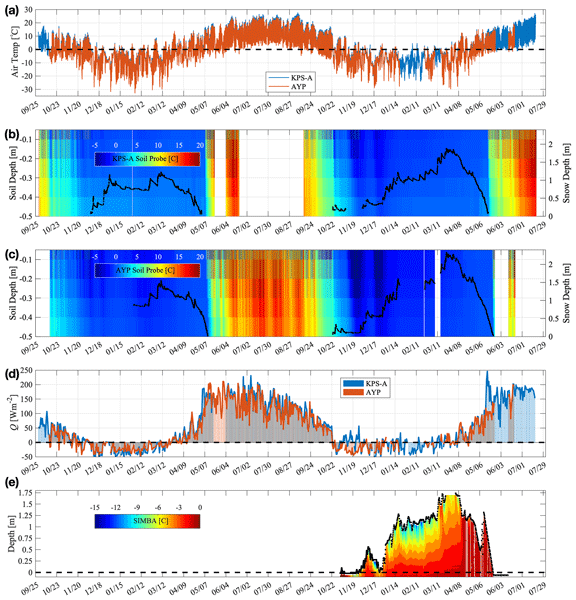
Snow is an essential water resource in the intermountain western United States, and predictions are made using models. We made observations to validate, constrain, and develop the models. The data are from the Study of Precipitation, the Lower Atmosphere and Surface for Hydrometeorology (SPLASH) campaign in Colorado's East River valley, 2021–2023. The measurements include meteorology and variables that quantify energy transfer between the atmosphere and surface. The data are available publicly.
Raghavendra Krishnamurthy, Rob K. Newsom, Colleen M. Kaul, Stefano Letizia, Mikhail Pekour, Nicholas Hamilton, Duli Chand, Donna Flynn, Nicola Bodini, and Patrick Moriarty
Wind Energ. Sci., 10, 361–380, https://doi.org/10.5194/wes-10-361-2025, https://doi.org/10.5194/wes-10-361-2025, 2025
Short summary
Short summary
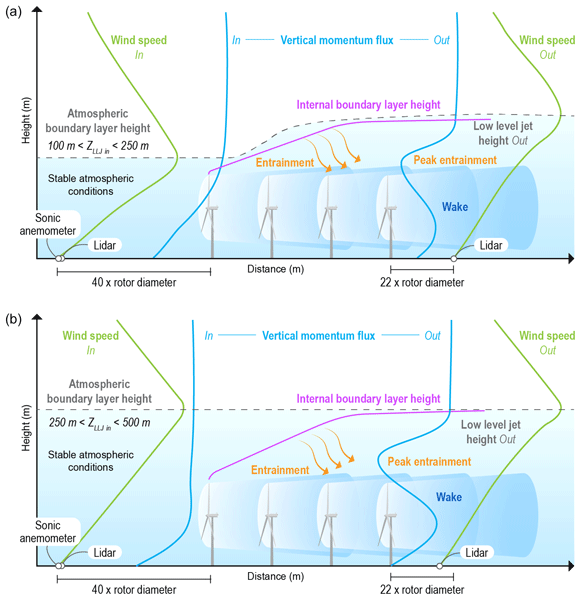
This study examines how atmospheric phenomena affect the recovery of wind farm wake – the disturbed air behind turbines. In regions like Oklahoma, where wind farms are often clustered, understanding wake recovery is crucial. We found that wind farms can alter phenomena like low-level jets, which are common in Oklahoma, by deflecting them above the wind farm. As a result, the impact of wakes can be observed up to 1–2 km above ground level.
David Rosencrans, Julie K. Lundquist, Mike Optis, and Nicola Bodini
Wind Energ. Sci., 10, 59–81, https://doi.org/10.5194/wes-10-59-2025, https://doi.org/10.5194/wes-10-59-2025, 2025
Short summary
Short summary
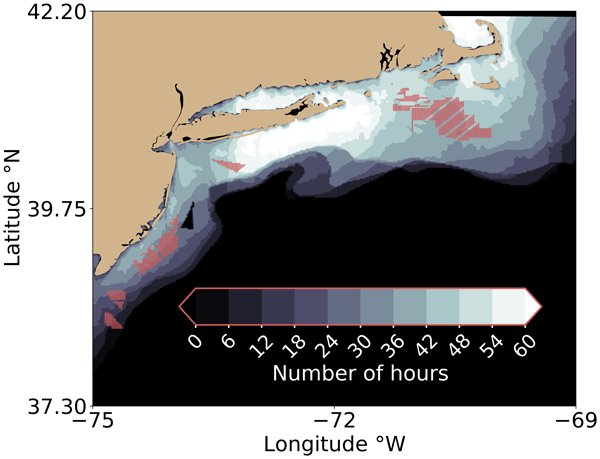
The US offshore wind industry is growing rapidly. Expansion into cold climates will subject turbines and personnel to hazardous icing. We analyze the 21-year icing risk for US east coast wind areas based on numerical weather prediction simulations and further assess impacts from wind farm wakes over one winter season. Sea spray icing at 10 m can occur up to 67 h per month. However, turbine–atmosphere interactions reduce icing hours within wind plant areas.
Bianca Adler, David D. Turner, Laura Bianco, Irina V. Djalalova, Timothy Myers, and James M. Wilczak
Atmos. Meas. Tech., 17, 6603–6624, https://doi.org/10.5194/amt-17-6603-2024, https://doi.org/10.5194/amt-17-6603-2024, 2024
Short summary
Short summary
Continuous profile observations of temperature and humidity in the lowest part of the atmosphere are essential for the evaluation of numerical weather prediction models and data assimilation for better weather forecasts. Such profiles can be retrieved from passive ground-based remote sensing instruments like infrared spectrometers and microwave radiometers. In this study, we describe three recent modifications to the retrieval framework TROPoe for improved temperature and humidity profiles.
Tessa E. Rosenberger, David D. Turner, Thijs Heus, Girish N. Raghunathan, Timothy J. Wagner, and Julia Simonson
Atmos. Meas. Tech., 17, 6595–6602, https://doi.org/10.5194/amt-17-6595-2024, https://doi.org/10.5194/amt-17-6595-2024, 2024
Short summary
Short summary
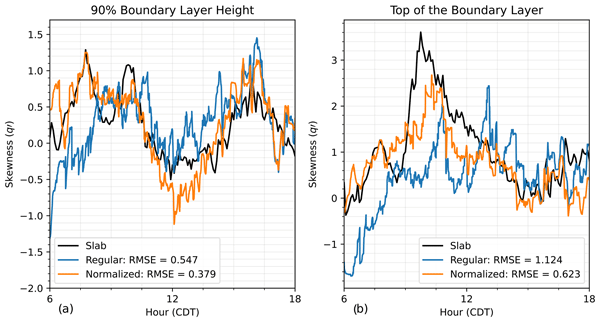
This work used model output to show that considering the changes in boundary layer depth over time in the calculations of variables such as fluxes and variance yields more accurate results than cases where calculations were done at a constant height. This work was done to improve future observations of these variables at the top of the boundary layer.
Laura Bianco, Bianca Adler, Ludovic Bariteau, Irina V. Djalalova, Timothy Myers, Sergio Pezoa, David D. Turner, and James M. Wilczak
Atmos. Meas. Tech., 17, 3933–3948, https://doi.org/10.5194/amt-17-3933-2024, https://doi.org/10.5194/amt-17-3933-2024, 2024
Short summary
Short summary
The Tropospheric Remotely Observed Profiling via Optimal Estimation physical retrieval is used to retrieve temperature and humidity profiles from various combinations of passive and active remote sensing instruments, surface platforms, and numerical weather prediction models. The retrieved profiles are assessed against collocated radiosonde in non-cloudy conditions to assess the sensitivity of the retrievals to different input combinations. Case studies with cloudy conditions are also inspected.
Nicola Bodini, Mike Optis, Stephanie Redfern, David Rosencrans, Alex Rybchuk, Julie K. Lundquist, Vincent Pronk, Simon Castagneri, Avi Purkayastha, Caroline Draxl, Raghavendra Krishnamurthy, Ethan Young, Billy Roberts, Evan Rosenlieb, and Walter Musial
Earth Syst. Sci. Data, 16, 1965–2006, https://doi.org/10.5194/essd-16-1965-2024, https://doi.org/10.5194/essd-16-1965-2024, 2024
Short summary
Short summary
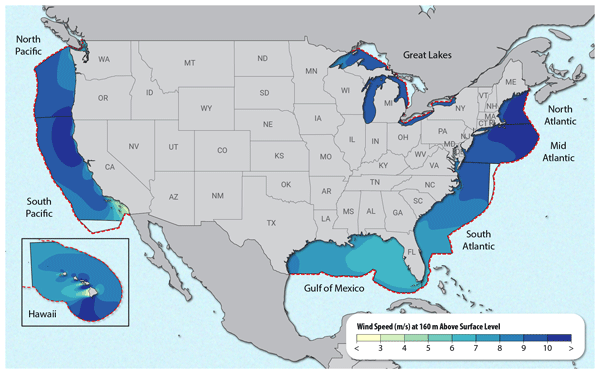
This article presents the 2023 National Offshore Wind data set (NOW-23), an updated resource for offshore wind information in the US. It replaces the Wind Integration National Dataset (WIND) Toolkit, offering improved accuracy through advanced weather prediction models. The data underwent regional tuning and validation and can be accessed at no cost.
Nevio Babić, Bianca Adler, Alexander Gohm, Manuela Lehner, and Norbert Kalthoff
Weather Clim. Dynam., 5, 609–631, https://doi.org/10.5194/wcd-5-609-2024, https://doi.org/10.5194/wcd-5-609-2024, 2024
Short summary
Short summary
Day-to-day weather over mountains remains a significant challenge in the domain of weather forecast. Using a combination of measurements from several instrument platforms, including Doppler lidars, aircraft, and radiosondes, we developed a method that relies primarily on turbulence characteristics of the lowest layers of the atmosphere. As a result, we identified new ways in which atmosphere behaves over mountains during daytime, which may serve to further improve forecasting capabilities.
Lindsay M. Sheridan, Raghavendra Krishnamurthy, William I. Gustafson Jr., Ye Liu, Brian J. Gaudet, Nicola Bodini, Rob K. Newsom, and Mikhail Pekour
Wind Energ. Sci., 9, 741–758, https://doi.org/10.5194/wes-9-741-2024, https://doi.org/10.5194/wes-9-741-2024, 2024
Short summary
Short summary
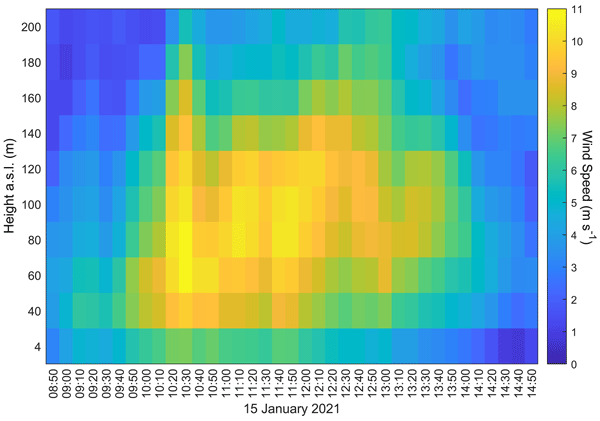
In 2020, lidar-mounted buoys owned by the US Department of Energy (DOE) were deployed off the California coast in two wind energy lease areas and provided valuable year-long analyses of offshore low-level jet (LLJ) characteristics at heights relevant to wind turbines. In addition to the LLJ climatology, this work provides validation of LLJ representation in atmospheric models that are essential for assessing the potential energy yield of offshore wind farms.
David Rosencrans, Julie K. Lundquist, Mike Optis, Alex Rybchuk, Nicola Bodini, and Michael Rossol
Wind Energ. Sci., 9, 555–583, https://doi.org/10.5194/wes-9-555-2024, https://doi.org/10.5194/wes-9-555-2024, 2024
Short summary
Short summary
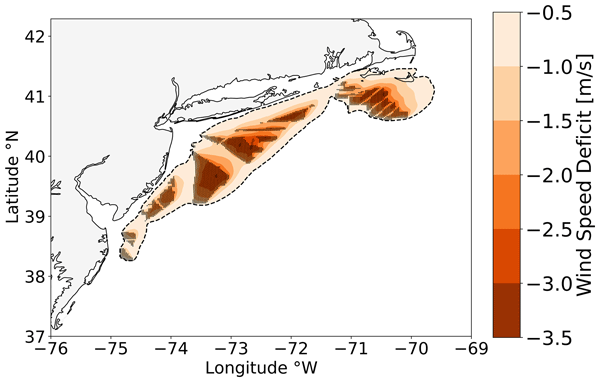
The US offshore wind industry is developing rapidly. Using yearlong simulations of wind plants in the US mid-Atlantic, we assess the impacts of wind turbine wakes. While wakes are the strongest and longest during summertime stably stratified conditions, when New England grid demand peaks, they are predictable and thus manageable. Over a year, wakes reduce power output by over 35 %. Wakes in a wind plant contribute the most to that reduction, while wakes between wind plants play a secondary role.
Volker Wulfmeyer, Christoph Senff, Florian Späth, Andreas Behrendt, Diego Lange, Robert M. Banta, W. Alan Brewer, Andreas Wieser, and David D. Turner
Atmos. Meas. Tech., 17, 1175–1196, https://doi.org/10.5194/amt-17-1175-2024, https://doi.org/10.5194/amt-17-1175-2024, 2024
Short summary
Short summary
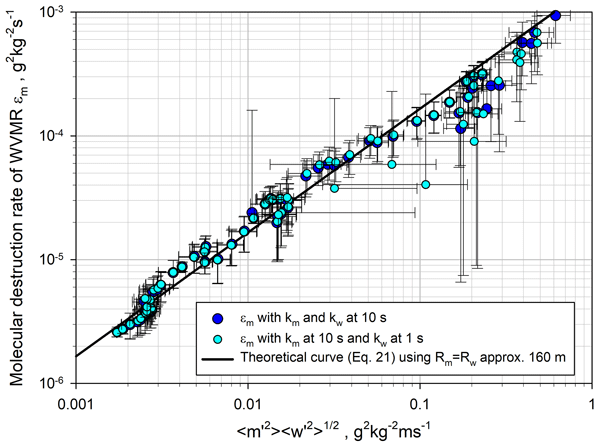
A simultaneous deployment of Doppler, temperature, and water-vapor lidar systems is used to provide profiles of molecular destruction rates and turbulent kinetic energy (TKE) dissipation in the convective boundary layer (CBL). The results can be used for the parameterization of turbulent variables, TKE budget analyses, and the verification of weather forecast and climate models.
Sunil Baidar, Timothy J. Wagner, David D. Turner, and W. Alan Brewer
Atmos. Meas. Tech., 16, 3715–3726, https://doi.org/10.5194/amt-16-3715-2023, https://doi.org/10.5194/amt-16-3715-2023, 2023
Short summary
Short summary
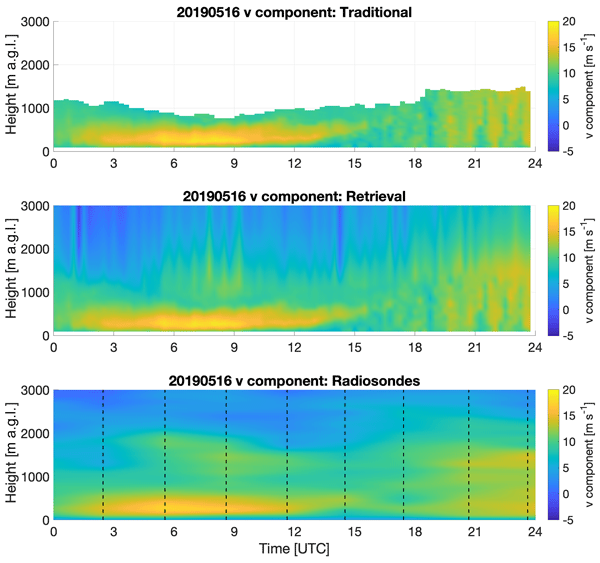
This paper provides a new method to retrieve wind profiles from coherent Doppler lidar (CDL) measurements. It takes advantage of layer-to-layer correlation in wind profiles to provide continuous profiles of up to 3 km by filling in the gaps where the CDL signal is too small to retrieve reliable results by itself. Comparison with the current method and collocated radiosonde wind measurements showed excellent agreement with no degradation in results where the current method gives valid results.
Nicola Bodini, Simon Castagneri, and Mike Optis
Wind Energ. Sci., 8, 607–620, https://doi.org/10.5194/wes-8-607-2023, https://doi.org/10.5194/wes-8-607-2023, 2023
Short summary
Short summary
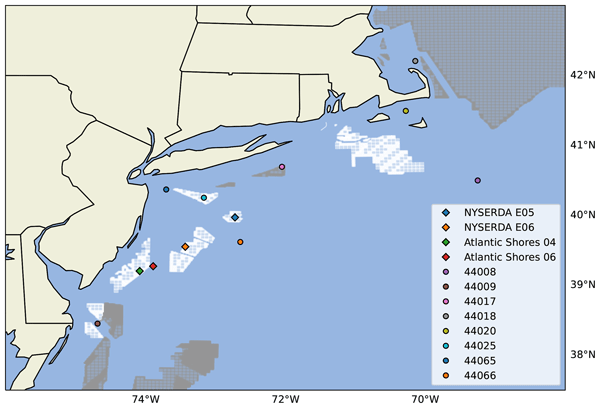
The National Renewable Energy Laboratory (NREL) has published updated maps of the wind resource along all US coasts. Given the upcoming offshore wind development, it is essential to quantify the uncertainty that comes with the modeled wind resource data set. The paper proposes a novel approach to quantify this numerical uncertainty by leveraging available observations along the US East Coast.
Maria P. Cadeddu, Virendra P. Ghate, David D. Turner, and Thomas E. Surleta
Atmos. Chem. Phys., 23, 3453–3470, https://doi.org/10.5194/acp-23-3453-2023, https://doi.org/10.5194/acp-23-3453-2023, 2023
Short summary
Short summary
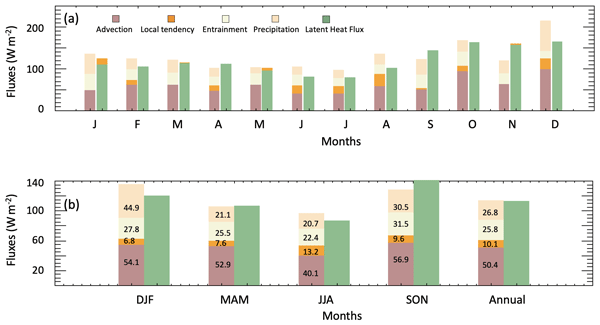
We analyze the variability in marine boundary layer moisture at the Eastern North Atlantic site on a monthly and daily temporal scale and examine its fundamental role in the control of boundary layer cloudiness and precipitation. The study also highlights the complex interaction between large-scale and local processes controlling the boundary layer moisture and the importance of the mesoscale spatial distribution of vapor to support convection and precipitation.
Bianca Adler, James M. Wilczak, Jaymes Kenyon, Laura Bianco, Irina V. Djalalova, Joseph B. Olson, and David D. Turner
Geosci. Model Dev., 16, 597–619, https://doi.org/10.5194/gmd-16-597-2023, https://doi.org/10.5194/gmd-16-597-2023, 2023
Short summary
Short summary
Rapid changes in wind speed make the integration of wind energy produced during persistent orographic cold-air pools difficult to integrate into the electrical grid. By evaluating three versions of NOAA’s High-Resolution Rapid Refresh model, we demonstrate how model developments targeted during the second Wind Forecast Improvement Project improve the forecast of a persistent cold-air pool event.
Gianluca Di Natale, David D. Turner, Giovanni Bianchini, Massimo Del Guasta, Luca Palchetti, Alessandro Bracci, Luca Baldini, Tiziano Maestri, William Cossich, Michele Martinazzo, and Luca Facheris
Atmos. Meas. Tech., 15, 7235–7258, https://doi.org/10.5194/amt-15-7235-2022, https://doi.org/10.5194/amt-15-7235-2022, 2022
Short summary
Short summary
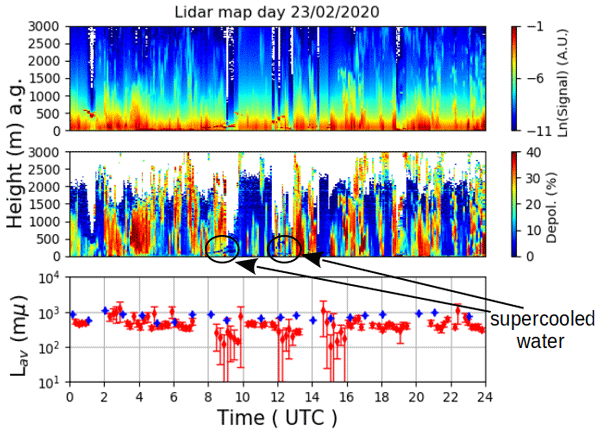
In this paper, we describe a new approach to test the consistency of the precipitating ice cloud optical and microphysical properties in Antarctica, Dome C, retrieved from hyperspectral measurements in the far-infrared, with the reflectivity detected by a co-located micro rain radar operating at 24 GHz. The retrieved ice crystal sizes were found in accordance with the direct measurements of an optical imager, also installed at Dome C, which can collect the falling ice particles.
William J. Shaw, Larry K. Berg, Mithu Debnath, Georgios Deskos, Caroline Draxl, Virendra P. Ghate, Charlotte B. Hasager, Rao Kotamarthi, Jeffrey D. Mirocha, Paytsar Muradyan, William J. Pringle, David D. Turner, and James M. Wilczak
Wind Energ. Sci., 7, 2307–2334, https://doi.org/10.5194/wes-7-2307-2022, https://doi.org/10.5194/wes-7-2307-2022, 2022
Short summary
Short summary
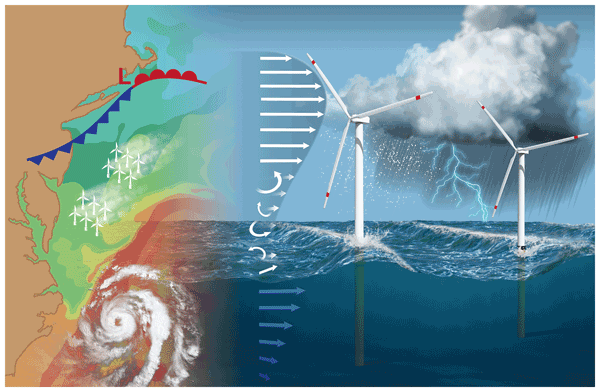
This paper provides a review of prominent scientific challenges to characterizing the offshore wind resource using as examples phenomena that occur in the rapidly developing wind energy areas off the United States. The paper also describes the current state of modeling and observations in the marine atmospheric boundary layer and provides specific recommendations for filling key current knowledge gaps.
Alex Rybchuk, Timothy W. Juliano, Julie K. Lundquist, David Rosencrans, Nicola Bodini, and Mike Optis
Wind Energ. Sci., 7, 2085–2098, https://doi.org/10.5194/wes-7-2085-2022, https://doi.org/10.5194/wes-7-2085-2022, 2022
Short summary
Short summary
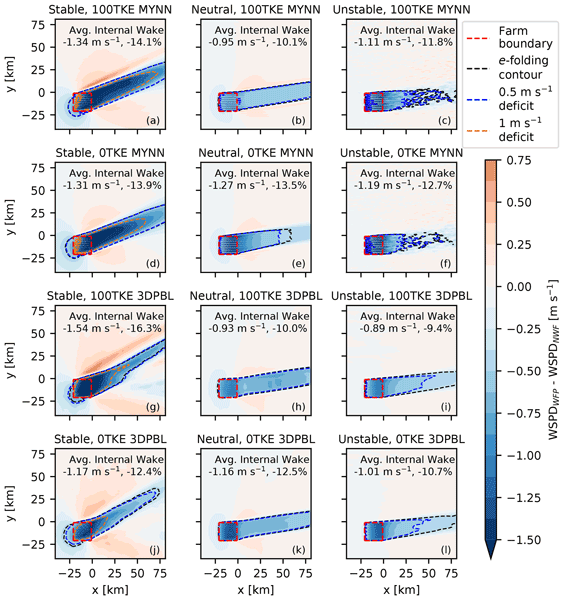
Numerical weather prediction models are used to predict how wind turbines will interact with the atmosphere. Here, we characterize the uncertainty associated with the choice of turbulence parameterization on modeled wakes. We find that simulated wind speed deficits in turbine wakes can be significantly sensitive to the choice of turbulence parameterization. As such, predictions of future generated power are also sensitive to turbulence parameterization choice.
Heather Guy, David D. Turner, Von P. Walden, Ian M. Brooks, and Ryan R. Neely
Atmos. Meas. Tech., 15, 5095–5115, https://doi.org/10.5194/amt-15-5095-2022, https://doi.org/10.5194/amt-15-5095-2022, 2022
Short summary
Short summary
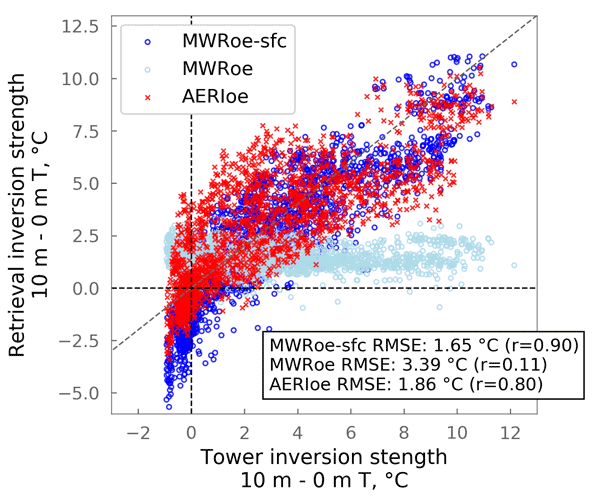
Fog formation is highly sensitive to near-surface temperatures and humidity profiles. Passive remote sensing instruments can provide continuous measurements of the vertical temperature and humidity profiles and liquid water content, which can improve fog forecasts. Here we compare the performance of collocated infrared and microwave remote sensing instruments and demonstrate that the infrared instrument is especially sensitive to the onset of thin radiation fog.
Emmanouil M. Nanos, Carlo L. Bottasso, Filippo Campagnolo, Franz Mühle, Stefano Letizia, G. Valerio Iungo, and Mario A. Rotea
Wind Energ. Sci., 7, 1263–1287, https://doi.org/10.5194/wes-7-1263-2022, https://doi.org/10.5194/wes-7-1263-2022, 2022
Short summary
Short summary
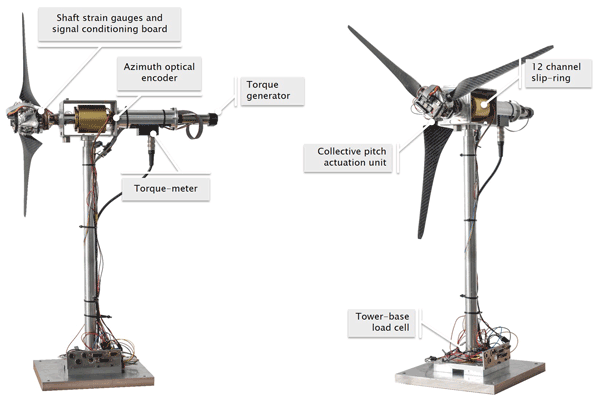
The paper describes the design of a scaled wind turbine in detail, for studying wakes and wake control applications in the known, controllable and repeatable conditions of a wind tunnel. The scaled model is characterized by conducting experiments in two wind tunnels, in different conditions, using different measurement equipment. Results are also compared to predictions obtained with models of various fidelity. The analysis indicates that the model fully satisfies the initial requirements.
James B. Duncan Jr., Laura Bianco, Bianca Adler, Tyler Bell, Irina V. Djalalova, Laura Riihimaki, Joseph Sedlar, Elizabeth N. Smith, David D. Turner, Timothy J. Wagner, and James M. Wilczak
Atmos. Meas. Tech., 15, 2479–2502, https://doi.org/10.5194/amt-15-2479-2022, https://doi.org/10.5194/amt-15-2479-2022, 2022
Short summary
Short summary
In this study, several ground-based remote sensing instruments are used to estimate the height of the convective planetary boundary layer, and their performance is compared against independent boundary layer depth estimates obtained from radiosondes launched as part of the CHEESEHEAD19 field campaign. The impact of clouds (particularly boundary layer clouds) on the estimation of the boundary layer depth is also investigated.
Vincent Pronk, Nicola Bodini, Mike Optis, Julie K. Lundquist, Patrick Moriarty, Caroline Draxl, Avi Purkayastha, and Ethan Young
Wind Energ. Sci., 7, 487–504, https://doi.org/10.5194/wes-7-487-2022, https://doi.org/10.5194/wes-7-487-2022, 2022
Short summary
Short summary
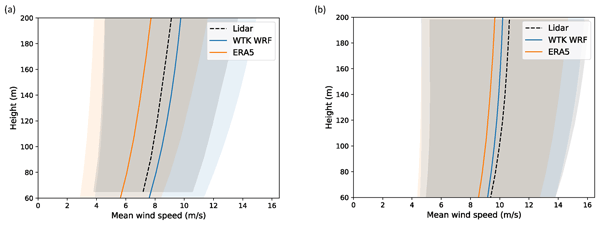
In this paper, we have assessed to which extent mesoscale numerical weather prediction models are more accurate than state-of-the-art reanalysis products in characterizing the wind resource at heights of interest for wind energy. The conclusions of our work will be of primary importance to the wind industry for recommending the best data sources for wind resource modeling.
Irina V. Djalalova, David D. Turner, Laura Bianco, James M. Wilczak, James Duncan, Bianca Adler, and Daniel Gottas
Atmos. Meas. Tech., 15, 521–537, https://doi.org/10.5194/amt-15-521-2022, https://doi.org/10.5194/amt-15-521-2022, 2022
Short summary
Short summary
In this paper we investigate the synergy obtained by combining active (radio acoustic sounding system – RASS) and passive (microwave radiometer) remote sensing observations to obtain temperature vertical profiles through a radiative transfer model. Inclusion of the RASS observations leads to more accurate temperature profiles from the surface to 5 km above ground, well above the maximum height of the RASS observations themselves (2000 m), when compared to the microwave radiometer used alone.
Nicola Bodini, Weiming Hu, Mike Optis, Guido Cervone, and Stefano Alessandrini
Wind Energ. Sci., 6, 1363–1377, https://doi.org/10.5194/wes-6-1363-2021, https://doi.org/10.5194/wes-6-1363-2021, 2021
Short summary
Short summary
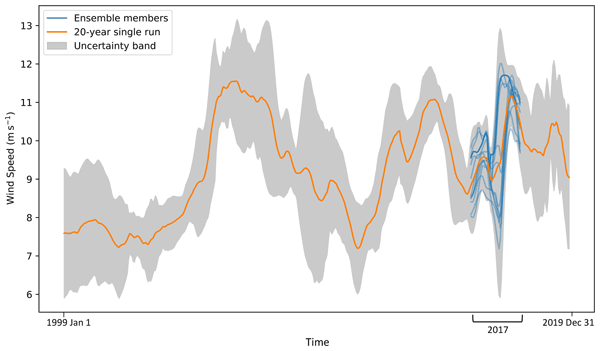
We develop two machine-learning-based approaches to temporally extrapolate uncertainty in hub-height wind speed modeled by a numerical weather prediction model. We test our approaches in the California Outer Continental Shelf, where a significant offshore wind energy development is currently being planned, and we find that both provide accurate results.
Heather Guy, Ian M. Brooks, Ken S. Carslaw, Benjamin J. Murray, Von P. Walden, Matthew D. Shupe, Claire Pettersen, David D. Turner, Christopher J. Cox, William D. Neff, Ralf Bennartz, and Ryan R. Neely III
Atmos. Chem. Phys., 21, 15351–15374, https://doi.org/10.5194/acp-21-15351-2021, https://doi.org/10.5194/acp-21-15351-2021, 2021
Short summary
Short summary
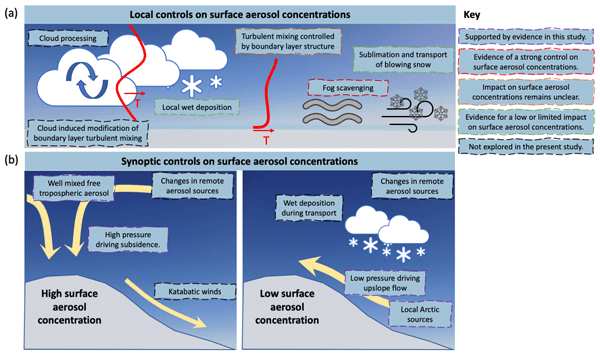
We present the first full year of surface aerosol number concentration measurements from the central Greenland Ice Sheet. Aerosol concentrations here have a distinct seasonal cycle from those at lower-altitude Arctic sites, which is driven by large-scale atmospheric circulation. Our results can be used to help understand the role aerosols might play in Greenland surface melt through the modification of cloud properties. This is crucial in a rapidly changing region where observations are sparse.
Cited articles
Adler, B.: Dataset for study 'Multi-season evaluation of temperature and wind in the marine boundary layer along the United States northeast coast in the High-Resolution Rapid Refresh model', Zenodo [data set], https://doi.org/10.5281/zenodo.21938359, 2026. a
Adler, B., Wilczak, J., Bianco, L., Bariteau, L., Cox, C. J., de Boer, G., Djalalova, I., Gallagher, M., Intrieri, J. M., Meyers, T. P., Myers, T. A., Olson, J. B., Pezoa, S., Sedlar, J., Smith, E., Turner, D. D., and White, A. B.: Impact of seasonal snow-cover change on the observed and simulated state of the atmospheric boundary layer in a high-altitude mountain valley, J. Geophys. Res.-Atmos., e2023JD038497, https://doi.org/10.1029/2023JD038497, 2023a. a
Adler, B., Wilczak, J. M., Kenyon, J., Bianco, L., Djalalova, I. V., Olson, J. B., and Turner, D. D.: Evaluation of a cloudy cold-air pool in the Columbia River basin in different versions of the High-Resolution Rapid Refresh (HRRR) model, Geosci. Model Dev., 16, 597–619, https://doi.org/10.5194/gmd-16-597-2023, 2023b. a, b
Adler, B., Turner, D. D., Bianco, L., Djalalova, I. V., Myers, T., and Wilczak, J. M.: Improving solution availability and temporal consistency of an optimal-estimation physical retrieval for ground-based thermodynamic boundary layer profiling, Atmos. Meas. Tech., 17, 6603–6624, https://doi.org/10.5194/amt-17-6603-2024, 2024. a, b, c, d
Aird, J. A., Barthelmie, R. J., Shepherd, T. J., and Pryor, S. C.: Occurrence of low-level jets over the eastern US coastal zone at heights relevant to wind energy, Energies, 15, 445, https://doi.org/10.3390/en15020445, 2022. a, b
Archer, C. L.: Brief communication: A note on the variance of wind speed and turbulence intensity, Wind Energ. Sci., 10, 1433–1438, https://doi.org/10.5194/wes-10-1433-2025, 2025. a
Banta, R. M.: Stable-boundary-layer regimes from the perspective of the low-level jet, Acta Geophys., 56, 58–87, https://doi.org/10.2478/s11600-007-0049-8, 2008. a, b
Banta, R. M., Pichugina, Y. L., Darby, L. S., Brewer, W. A., Olson, J. B., Kenyon, J. S., Baidar, S., Benjamin, S. G., Fernando, H. J. S., Lantz, K. O., Lundquist, J. K., McCarty, B. J., Marke, T., Sandberg, S. P., Sharp, J., Shaw, W. J., Turner, D. D., Wilczak, J. M., Worsnop, R., and Stoelinga, M. T.: Doppler lidar evaluation of HRRR model skill at simulating summertime sind regimes in the Columbia River Basin during WFIP2, Weather Forecast., 36, 1961–1983, https://doi.org/10.1175/WAF-D-21-0012.1, 2021. a
Benjamin, S. G., Weygandt, S. S., Brown, J. M., Hu, M., Alexander, C. R., Smirnova, T. G., Olson, J. B., James, E. P., Dowell, D. C., Grell, G. A., Lin, H., Peckham, S. E., Smith, T. L., Moninger, W. R., and Kenyon, J. S.: A North American hourly assimilation and model forecast cycle: The Rapid Refresh, Mon. Weather Rev., 144, 1669–1694, https://doi.org/10.1175/MWR-D-15-0242.1, 2016. a
Bianco, L., Muradyan, P., Djalalova, I., Wilczak, J., Olson, J., Kenyon, J., Kotamarthi, R., Lantz, K., Long, C., and Turner, D.: Comparison of observations and predictions of daytime planetary-boundary-layer heights and surface meteorological variables in the Columbia River Gorge and Basin during the Second Wind Forecast Improvement Project, Bound.-Lay. Meteorol., 182, 147–172, https://doi.org/10.1007/s10546-021-00645-x, 2022. a
Bianco, L., Adler, B., Bariteau, L., Djalalova, I. V., Myers, T., Pezoa, S., Turner, D. D., and Wilczak, J. M.: Sensitivity of thermodynamic profiles retrieved from ground-based microwave and infrared observations to additional input data from active remote sensing instruments and numerical weather prediction models, Atmos. Meas. Tech., 17, 3933–3948, https://doi.org/10.5194/amt-17-3933-2024, 2024. a
Bianco, L., Adler, B., Bariteau, L., Costa, D., Djalalova, I. V., Myers, T., Olson, J. B., Turner, D. D., and Wilczak, J. M.: Multi-year HRRR and RAP verification of dynamic and thermodynamic variables in the Southeast United States by in-situ and ground based remote sensing observations, Mon. Weather Rev., https://doi.org/10.1175/WAF-D-25-0219.1, 2026. a
Blumberg, W., Turner, D., Löhnert, U., and Castleberry, S.: Ground-based temperature and humidity profiling using spectral infrared and microwave observations. Part II: Actual retrieval performance in clear-sky and cloudy conditions, J. Appl. Meteorol. Clim., 54, 2305–2319, https://doi.org/10.1175/JAMC-D-15-0005.1, 2015. a
Bodini, N., Letizia, S., Adler, B., Turner, D., Krishnamurthy, R., Scholbrock, A., Jager, D., Cinquino, E., and Kirincich, A.: Observations of offshore low-level jets off the US East Coast reveal systematic biases in ERA5 and HRRR, Geophys. Res. Lett., 53, e2025GL119969, https://doi.org/10.1029/2025GL119969, 2026. a, b, c, d, e, f
Bonner, W. D.: Climatology of the low level jet, Mon. Weather Rev., 96, 833–850, https://doi.org/10.1175/1520-0493(1968)096<0833:COTLLJ>2.0.CO;2, 1968. a
Colle, B. A. and Novak, D. R.: The New York Bight jet: climatology and dynamical evolution, Mon. Weather Rev., 138, 2385–2404, https://doi.org/10.1175/2009MWR3231.1, 2010. a, b
Debnath, M., Doubrawa, P., Optis, M., Hawbecker, P., and Bodini, N.: Extreme wind shear events in US offshore wind energy areas and the role of induced stratification, Wind Energ. Sci., 6, 1043–1059, https://doi.org/10.5194/wes-6-1043-2021, 2021. a
De Jong, E., Quon, E., and Yellapantula, S.: Mechanisms of low-level jet formation in the US Mid-Atlantic Offshore, J. Atmos. Sci., 81, 31–52, https://doi.org/10.1175/JAS-D-23-0079.1, 2024. a
Djalalova, I. V., Olson, J., Carley, J. R., Bianco, L., Wilczak, J. M., Pichugina, Y., Banta, R., Marquis, M., and Cline, J.: The POWER Experiment: impact of assimilation of a network of coastal wind profiling radars on simulating offshore winds in and above the wind turbine layer, Weather Forecast., 31, 1071–1091, https://doi.org/10.1175/WAF-D-15-0104.1, 2016. a, b
Donlon, C. J., Martin, M., Stark, J., Roberts-Jones, J., Fiedler, E., and Wimmer, W.: The operational sea surface temperature and sea ice analysis (OSTIA) system, Remote Sens. Environ., 116, 140–158, https://doi.org/10.1016/j.rse.2010.10.017, 2012. a
Dowell, D. C., Alexander, C. R., James, E. P., Weygandt, S. S., Benjamin, S. G., Manikin, G. S., Blake, B. T., Brown, J. M., Olson, J. B., Hu, M., Smirnova, T. G., Ladwig, T., Kenyon, J. S., Ahmadov, R., Turner, D. D., Duda, J. D., and Alcott, T. I.: The High-Resolution Rapid Refresh (HRRR): An hourly updating convection-allowing forecast model. Part I: Motivation and system description, Weather Forecast., 37, 1371–1395, https://doi.org/10.1175/WAF-D-21-0151.1, 2022. a, b, c, d
Duda, J. D. and Turner, D. D.: Large-sample application of radar reflectivity object-based verification to evaluate HRRR warm-season forecasts, Weather Forecast., 36, 805–821, https://doi.org/10.1175/WAF-D-20-0203.1, 2021. a
Ecklund, W. L., Carter, D. A., and Balsley, B. B.: A UHF wind profiler for the boundary layer: Brief description and initial results, J. Atmos. Ocean. Tech., 5, 432–441, https://doi.org/10.1175/1520-0426(1988)005<0432:AUWPFT>2.0.CO;2, 1988. a
Fairall, C. W., Bradley, E. F., Hare, J., Grachev, A. A., and Edson, J. B.: Bulk parameterization of air–sea fluxes: Updates and verification for the COARE algorithm, J. Climate, 16, 571–591, https://doi.org/10.1175/1520-0442(2003)016<0571:BPOASF>2.0.CO;2, 2003. a
Fovell, R. G. and Gallagher, A.: Boundary layer and surface verification of the High-Resolution Rapid Refresh, version 3, Weather Forecast., 35, 2255–2278, https://doi.org/10.1175/WAF-D-20-0101.1, 2020. a
Gebauer, J. G. and Bell, T. M.: A flexible, multi-instrument optimal estimation retrieval for wind profiles, J. Atmos. Ocean. Tech., 41, 605–620, https://doi.org/10.1175/JTECH-D-23-0134.1, 2024. a, b
Good, S., Fiedler, E., Mao, C., Martin, M. J., Maycock, A., Reid, R., Roberts-Jones, J., Searle, T., Waters, J., While, J., and Worsfold, M.: The current configuration of the OSTIA system for operational production of foundation sea surface temperature and ice concentration analyses, Remote Sensing, 12, 720, https://doi.org/10.3390/rs12040720, 2020. a
Hallgren, C., Aird, J. A., Ivanell, S., Körnich, H., Barthelmie, R. J., Pryor, S. C., and Sahlée, E.: Brief communication: On the definition of the low-level jet, Wind Energ. Sci., 8, 1651–1658, https://doi.org/10.5194/wes-8-1651-2023, 2023. a
James, E. P., Benjamin, S. G., and Marquis, M.: Offshore wind speed estimates from a high-resolution rapidly updating numerical weather prediction model forecast dataset, Wind Energy, 21, 264–284, https://doi.org/10.1002/we.2161, 2018. a
James, E. P., Alexander, C. R., Dowell, D. C., Weygandt, S. S., Benjamin, S. G., Manikin, G. S., Brown, J. M., Olson, J. B., Hu, M., Smirnova, T. G., Ladwig, T., Kenyon, J. S., and Turner, D. D.: The High-Resolution Rapid Refresh (HRRR): an hourly updating convection-allowing forecast model. Part II: Forecast performance, Weather Forecast., 37, 1397–1417, https://doi.org/10.1175/WAF-D-21-0130.1, 2022. a, b, c
Kirincich, A., Krishnamurthy, R., Turner, D. D., Adler, B., Agarwal, N., Berg, L. K., Bianco, L., Bodini, N., Chabert d'Hieres, M., Farrar, J. T., Fernando, H. J. S., Gaudet, B., Ghate, V. P., Goldberger, L., Gonzalez, A. O., Hall, E., Hines, E., Hodges, G., Iungo, G. V., Jackson, R., Jiang, H., Kinsella, A., Kosovic, B., Kotamarthi, R., Letizia, S., Lipari, S., Lundquist, J. K., Mirocha, J., Moss, C., Muradyan, P., Myers, T., Newsom, R. K., O'Brien, J., Olson, J. B., Pekour, M., Puccioni, M., Rosencrans, D., Ro,y S., Sauvage, C., Sedlar, J., Seo, H., Shams Solari, M., Soldo, L., Stierle, S., Sun, X., Thompson, E., Traiger, E., Wharton, S., Wilczak, J., and Zippel, S.: Improving the understanding and forecasting of winds over the Northeast Shelf: The Third Wind Forecast Improvement Project (WFIP3), B. Am. Meteorol. Soc., https://doi.org/10.1175/BAMS-D-25-0201.1, 2026. a, b
Knuteson, R., Revercomb, H., Best, F., Ciganovich, N., Dedecker, R., Dirkx, T., Ellington, S., Feltz, W., Garcia, R., Howell, H., Smith, W. L., Short, J. F., and Tobin, D. C.: Atmospheric emitted radiance interferometer. Part I: Instrument design, J. Atmos. Ocean. Tech., 21, 1763–1776, https://doi.org/10.1175/JTECH-1662.1, 2004a. a
Knuteson, R., Revercomb, H., Best, F., Ciganovich, N., Dedecker, R., Dirkx, T., Ellington, S., Feltz, W., Garcia, R., Howell, H., Smith, W. L., Short J. F., and Tobin, D. C.: Atmospheric emitted radiance interferometer. Part II: Instrument performance, J. Atmos. Ocean. Tech., 21, 1777–1789, https://doi.org/10.1175/JTECH-1663.1, 2004b. a
Lee, T. R., Buban, M., Turner, D. D., Meyers, T. P., and Baker, C. B.: Evaluation of the High-Resolution Rapid Refresh (HRRR) model using near-surface meteorological and flux observations from northern Alabama, Weather Forecast., 34, 635–663, https://doi.org/10.1175/WAF-D-18-0184.1, 2019. a
Letizia, S., Michaud-Belleau, V., Turner, D. D., and Abraham, A.: Thermodynamic profiling through ASSIST observations and TROPoe retrievals, Technical report, National Renewable Energy Laboratory (NREL), Golden, CO, NREL technical report, https://doi.org/10.2172/3011891, 2025. a
Letizia, S., Turner, D. D., Abraham, A., Rochette, L., and Moriarty, P. J.: Temperature profiling at the American WAKE ExperimeNt (AWAKEN): methodology and uncertainty quantification, Wind Energ. Sci., 11, 1653–1677, https://doi.org/10.5194/wes-11-1653-2026, 2026. a
Li, H., Claremar, B., Wu, L., Hallgren, C., Körnich, H., Ivanell, S., and Sahlée, E.: A sensitivity study of the WRF model in offshore wind modeling over the Baltic Sea, Geosci. Front., 12, 101229, https://doi.org/10.1016/j.gsf.2021.101229, 2021. a, b
Liu, Y., Juliano, T. W., Krishnamurthy, R., Gaudet, B. J., and Lee, J.: Linking large-scale weather patterns to observed and modeled turbine hub-height winds offshore of the US West Coast, Wind Energ. Sci., 10, 483–495, https://doi.org/10.5194/wes-10-483-2025, 2025. a
McCabe, E. J. and Freedman, J. M.: Development of an objective methodology for identifying the sea-breeze circulation and associated low-level jet in the New York Bight, Weather Forecast., 38, 571–589, https://doi.org/10.1175/WAF-D-22-0119.1, 2023. a, b
McCabe, E. J. and Freedman, J. M.: Quantifying the uncertainty in the Weather Research and Forecasting Model under sea breeze and low-level jet conditions in the New York Bight: Importance to offshore wind energy, Weather Forecast., 40, 425–450, https://doi.org/10.1175/WAF-D-24-0086.1, 2025. a, b, c
McCabe, E. J. and Freedman, J. M.: Assessing the impact of cold water coastal upwelling along the New Jersey coastline: amplification of the sea breeze and low-level jet, J. Appl. Meteorol. Clim., 65, 551–567, https://doi.org/10.1175/JAMC-D-25-0069.1, 2026. a, b, c, d
Michaud-Belleau, V., Gaudreau, M., Lacoursière, J., Boisvert, É., Ravelomanantsoa, L., Turner, D. D., and Rochette, L.: The Atmospheric Sounder Spectrometer by Infrared Spectral Technology (ASSIST): instrument design and signal processing, Atmos. Meas. Tech., 18, 3585–3609, https://doi.org/10.5194/amt-18-3585-2025, 2025. a
Myers, T. A., Van Ormer, A., Turner, D. D., Wilczak, J. M., Bianco, L., and Adler, B.: Evaluation of Hub-Height Wind Forecasts Over the New York Bight, Wind Energy, 27, 1063–1073, https://doi.org/10.1002/we.2936, 2024. a
Naegele, S., Wilczak, J. M., Greybush, S. J., Young, G. S., Gervais, M., and Lee, J. A.: Analyzing Self-Organizing Maps of Modeled US Coastal Wind Regimes with a Comparison to Observations, Artificial Intelligence for the Earth Systems, 4, e240023, https://doi.org/10.1175/AIES-D-24-0023.1, 2025. a
Olson, J.: joeolson42/WRFv3.9_HRRRv4: WRFv3.9_HRRRv4, Zenodo [code], https://doi.org/10.5281/zenodo.6672455, 2022. a
Olson, J. B., Kenyon, J. S., Djalalova, I., Bianco, L., Turner, D. D., Pichugina, Y., Choukulkar, A., Toy, M. D., Brown, J. M., Angevine, W. M., Akish, E., Bao, J. W., Jimenez, P., Kosovic, B., Lundquist, K. A., Draxl, C., Lundquist, J. K., McCaa, J., McCaffrey, K., Lantz, K., Long, C., Wilczak, J., Banta, R., Marquis, M., Redfern, S., Berg, L. K., Shaw, W., and Cline, J.: Improving wind energy forecasting through numerical weather prediction model development, B. Am. Meteorol. Soc., 100, 2201–2220, https://doi.org/10.1175/BAMS-D-18-0040.1, 2019. a, b
Olson, J. B., Angevine, W. M., Turner, D. D., Sun, X., Simonson, J. M., Evans, C., andHaiqin Li, J. S. K., Schnell, J., Puhales, F. S., Cherubini, T., Li, W., and Zhang, M.: A description of the MYNN-EDMF turbulence scheme, NOAA Technical Memorandum GSL-77, National Oceanic and Atmospheric Administration, Oceanic and Atmospheric Research, Global Systems Laboratory, https://doi.org/10.25923/rahr-sj70, 2026. a
Pichugina, Y. L., Banta, R. M., Olson, J. B., Carley, J. R., Marquis, M. C., Brewer, W. A., Wilczak, J. M., Djalalova, I., Bianco, L., James, E. P., Benjamin, S. G., and Cline, J.: Assessment of NWP forecast models in simulating offshore winds through the lower boundary layer by measurements from a ship-based scanning Doppler lidar, Mon. Weather Rev., 145, 4277–4301, https://doi.org/10.1175/MWR-D-16-0442.1, 2017. a
Shaw, W. J., Berg, L. K., Cline, J., Draxl, C., Djalalova, I., Grimit, E. P., Lundquist, J. K., Marquis, M., McCaa, J., Olson, J. B., Sivaraman, C., Sharp, J., and Wilczak, J. M.: The Second Wind Forecast Improvement Project (WFIP2): general overview, B. Am. Meteorol. Soc., 100, 1687–1699, https://doi.org/10.1175/BAMS-D-18-0036.1, 2019. a
Shaw, W. J., Berg, L. K., Debnath, M., Deskos, G., Draxl, C., Ghate, V. P., Hasager, C. B., Kotamarthi, R., Mirocha, J. D., Muradyan, P., Pringle, W. J., Turner, D. D., and Wilczak, J. M.: Scientific challenges to characterizing the wind resource in the marine atmospheric boundary layer, Wind Energ. Sci., 7, 2307–2334, https://doi.org/10.5194/wes-7-2307-2022, 2022. a, b
Stull, R. B.: An introduction to boundary layer meteorology, Kluwer Academic Publishers, Dordrecht, the Netherlands, 666 pp., https://doi.org/10.1007/978-94-009-3027-8, 1988. a, b, c
Turner, D.: Improved ground-based liquid water path retrievals using a combined infrared and microwave approach, J. Geophys. Res., 112, https://doi.org/10.1029/2007JD008530, 2007. a
Turner, D. D. and Blumberg, W. G.: Improvements to the AERIoe thermodynamic profile retrieval algorithm, IEEE J. Sel. Top. Appl., 12, 1339–1354, https://doi.org/10.1109/JSTARS.2018.2874968, 2019. a, b
Turner, D. D. and Löhnert, U.: Information content and uncertainties in thermodynamic profiles and liquid cloud properties retrieved from the ground-based atmospheric emitted radiance interferometer (AERI), J. Appl. Meteor. Clim., 53, 752–771, https://doi.org/10.1175/JAMC-D-13-0126.1, 2014. a, b
Turner, D. D. and Löhnert, U.: Ground-based temperature and humidity profiling: combining active and passive remote sensors, Atmos. Meas. Tech., 14, 3033–3048, https://doi.org/10.5194/amt-14-3033-2021, 2021. a, b
Wilczak, J. M., Stoelinga, M., Berg, L. K., Sharp, J., Draxl, C., McCaffrey, K., Banta, R. M., Bianco, L., Djalalova, I., Lundquist, J. K., Muradyan, P., Choukulkar, A., Leo, L., Bonin, T., Pichugina, Y., Eckman, R., Long, C. N., Lantz, K., Worsnop, R. P., Bickford, J., Bodini, N., Chand, D., Clifton, A., Cline, J., Cook, D. R., Fernando, H. J. S., Friedrich, K., Krishnamurthy, R., Marquis, M., McCaa, J., Olson, J. B., Otarola-Bustos, S., Scott, G., Shaw, W. J., Wharton, S., and White, A. B.: The Second Wind Forecast Improvement Project (WFIP2): Observational field campaign, B. Am. Meteorol. Soc., 100, 1701–1723, https://doi.org/10.1175/BAMS-D-18-0035.1, 2019. a
Wittkamp, N., Adler, B., Kalthoff, N., and Kiseleva, O.: Mesoscale wind patterns over the complex urban terrain around Stuttgart investigated with dual-Doppler lidar profiles, Meteorol. Z., 30, 185–200, https://doi.org/10.1127/metz/2020/1029, 2021. a
Zhou, X., Ray, P., Dudhia, J., Tewari, M., Nikolopoulos, E., Johnson, N. C., and Hagos, S.: On the importance of precipitation-induced surface sensible heat flux for diurnal cycle of precipitation in the maritime continent, Geophys. Res. Lett., 51, e2024GL111940, https://doi.org/10.1029/2024GL111940, 2024a. a
Zhou, X., Ray, P., Tan, H., Dudhia, J., Ajayamohan, R., Gomes, H., and Pan, Y.: Rain-induced surface sensible heat flux reduces monsoonal rainfall over India, Geophys. Res. Lett., 51, e2023GL107796, https://doi.org/10.1029/2023GL107796, 2024b. a
Short summary
Accurate operational forecasts of temperature and wind in the coastal marine boundary layer are important for a wide range of applications. Leveraging data that were collected along the United States northeast coast during a multi-year period for the Third Wind Forecast Improvement project, we investigated the performance of the operational forecast model and identified systematic errors in wind and temperature forecasts that are now being addressed by the model developers.
Accurate operational forecasts of temperature and wind in the coastal marine boundary layer are...


