
Articles | Volume 19, issue 17
https://doi.org/10.5194/gmd-19-8385-2026
© Author(s) 2026. This work is distributed under
the Creative Commons Attribution 4.0 License.
the Creative Commons Attribution 4.0 License.
https://doi.org/10.5194/gmd-19-8385-2026
© Author(s) 2026. This work is distributed under
the Creative Commons Attribution 4.0 License.
the Creative Commons Attribution 4.0 License.
Model evaluation paper
| 
09 Sep 2026
Model evaluation paper |
| 09 Sep 2026
| 09 Sep 2026
Wind and turbulence evaluation of the ICON model (icon-2026.04) using Doppler lidar observations

Deutscher Wetterdienst, Frankfurter Straße 135, 63067 Offenbach, Germany
Hans-Ertel-Zentrum für Wetterforschung, Frankfurter Straße 135, 63067 Offenbach, Germany
Eileen Päschke
Deutscher Wetterdienst, Frankfurter Straße 135, 63067 Offenbach, Germany
Related authors
Ulrich Löhnert, Maike Ahlgrimm, Felix Ament, Jens Bange, Kjell zum Berge, Birger Bohn, Yann Büchau, Leonie Esters, Lars van Gelder, Yohanes R. S. Ginting, Luise Helmstreit, Tobias Marke, Marcus G. Müller, Patrizia Ney, Anika Obermann-Hellhund, Andreas Platis, Bernhard Pospichal, Alexander Pschera, Anja Rapmund, Mirjana Sakradzija, Martin Schön, Jan H. Schween, Maria Toporov, and Andreas Wieser
Earth Syst. Sci. Data Discuss., https://doi.org/10.5194/essd-2026-784, https://doi.org/10.5194/essd-2026-784, 2026
Preprint under review for ESSD
Short summary
Short summary
Accurate weather forecasts require detailed measurements of temperature, humidity and wind. During a two-week campaign in Germany, we tested innovative instruments against established measurement techniques and satellite observations. Most ground-based instruments met international performance requirements and successfully captured daily atmospheric changes. The publicly available dataset supports improved weather forecasting and the development of future weather observation networks.
Moritz Schnelke, Maike Ahlgrimm, and Anna Possner
Atmos. Chem. Phys., 26, 9879–9905, https://doi.org/10.5194/acp-26-9879-2026, https://doi.org/10.5194/acp-26-9879-2026, 2026
Short summary
Short summary
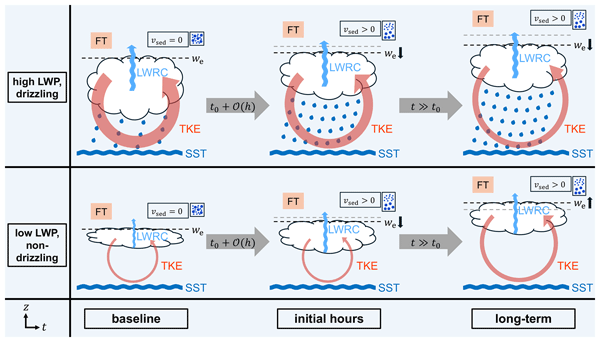
This study explores how the downward movement of cloud droplets due to gravity impacts the evolution of stratocumulus clouds over longer timescales. In contrast to previous conclusions, we find that the effect differs in the long-term depending on the amount of water in the cloud. In thick clouds, sedimentation reduces boundary layer growth as expected. In thin clouds, it can trigger a feedback chain that leads to more efficient growth, resulting in opposite outcomes for the two categories.
Ulrich Löhnert, Maike Ahlgrimm, Felix Ament, Jens Bange, Kjell zum Berge, Birger Bohn, Yann Büchau, Leonie Esters, Lars van Gelder, Yohanes R. S. Ginting, Luise Helmstreit, Tobias Marke, Marcus G. Müller, Patrizia Ney, Anika Obermann-Hellhund, Andreas Platis, Bernhard Pospichal, Alexander Pschera, Anja Rapmund, Mirjana Sakradzija, Martin Schön, Jan H. Schween, Maria Toporov, and Andreas Wieser
Earth Syst. Sci. Data Discuss., https://doi.org/10.5194/essd-2026-784, https://doi.org/10.5194/essd-2026-784, 2026
Preprint under review for ESSD
Short summary
Short summary
Accurate weather forecasts require detailed measurements of temperature, humidity and wind. During a two-week campaign in Germany, we tested innovative instruments against established measurement techniques and satellite observations. Most ground-based instruments met international performance requirements and successfully captured daily atmospheric changes. The publicly available dataset supports improved weather forecasting and the development of future weather observation networks.
Moritz Schnelke, Maike Ahlgrimm, and Anna Possner
Atmos. Chem. Phys., 26, 9879–9905, https://doi.org/10.5194/acp-26-9879-2026, https://doi.org/10.5194/acp-26-9879-2026, 2026
Short summary
Short summary
This study explores how the downward movement of cloud droplets due to gravity impacts the evolution of stratocumulus clouds over longer timescales. In contrast to previous conclusions, we find that the effect differs in the long-term depending on the amount of water in the cloud. In thick clouds, sedimentation reduces boundary layer growth as expected. In thin clouds, it can trigger a feedback chain that leads to more efficient growth, resulting in opposite outcomes for the two categories.
Kevin Wolz, Christopher Holst, Frank Beyrich, Eileen Päschke, and Matthias Mauder
Geosci. Instrum. Method. Data Syst., 13, 205–223, https://doi.org/10.5194/gi-13-205-2024, https://doi.org/10.5194/gi-13-205-2024, 2024
Short summary
Short summary
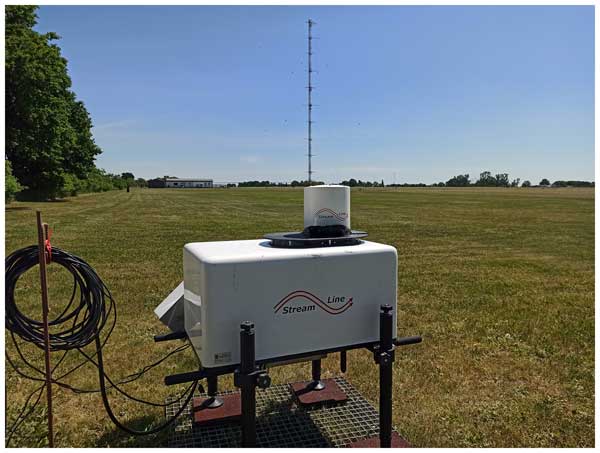
We compared wind measurements using different lidar setups at various heights. The triple Doppler lidar, sonic anemometer, and two single Doppler lidars were tested. Overall, the lidar methods showed good agreement with the sonic anemometer. The triple Doppler lidar performed better than single Doppler lidars, especially at higher altitudes. We also developed a new filtering approach for virtual tower scanning strategies. Single Doppler lidars provide reliable wind data over flat terrain.
Eileen Päschke and Carola Detring
Atmos. Meas. Tech., 17, 3187–3217, https://doi.org/10.5194/amt-17-3187-2024, https://doi.org/10.5194/amt-17-3187-2024, 2024
Short summary
Short summary
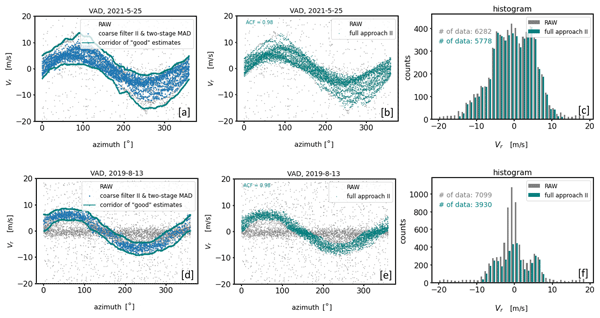
Little noise in radial velocity Doppler lidar measurements can contribute to large errors in retrieved turbulence variables. In order to distinguish between plausible and erroneous measurements we developed new filter techniques that work independently of the choice of a specific threshold for the signal-to-noise ratio. The performance of these techniques is discussed both by means of assessing the filter results and by comparing retrieved turbulence variables versus independent measurements.
Cited articles
Ahlgrimm, M. and Päschke, E.: Model code, forcing data and Doppler lidar retrieval, Zenodo [code] https://doi.org/10.5281/zenodo.20161993, 2025. a
Archer, C. L.: Brief communication: A note on the variance of wind speed and turbulence intensity, Wind Energ. Sci., 10, 1433–1438, https://doi.org/10.5194/wes-10-1433-2025, 2025. a
Baldauf, M., Seifert, A., Förstner, J., Majewski, D., Raschendorfer, M., and Reinhardt, T.: Operational convective-scale numerical weather prediction with the COSMO model: description and sensitivities, Mon. Weather Rev., 139, 3887–3905, https://doi.org/10.1175/MWR-D-10-05013.1, 2011. a, b, c
Banakh, V. and Smalikho, I.: Coherent Doppler Wind Lidars in a Turbulent Atmosphere, Artech House Publishers, Boston, USA, illustrated edn., ISBN 9781608076680, 2013. a
Banakh, V. A. and Smalikho, I. N.: Lidar estimates of the anisotropy of wind turbulence in a stable atmospheric boundary layer, Remote Sens.-Basel, 11, https://doi.org/10.3390/rs11182115, 2019. a
Banakh, V. A., Smalikho, I. N., and Falits, A. V.: Estimation of the height of the turbulent mixing layer from data of Doppler lidar measurements using conical scanning by a probe beam, Atmos. Meas. Tech., 14, 1511–1524, https://doi.org/10.5194/amt-14-1511-2021, 2021. a, b, c, d
Bašták Ďurán, I., Geleyn, J.-F., Váňa, F., Schmidli, J., and Brožková, R.: A turbulence scheme with two prognostic turbulence energies, J. Atmos. Sci., 75, 3381–3402, https://doi.org/10.1175/JAS-D-18-0026.1, 2018. a
Bašták Ďurán, I., Sakradzija, M., and Schmidli, J.: The two-energies turbulence scheme coupled to the assumed PDF method, J. Adv. Model. Earth Sy., 14, e2021MS002922, https://doi.org/10.1029/2021MS002922, 2022. a
Beyrich, F. and Leps, J.-P.: An operational mixing height data set from routine radiosoundings at Lindenberg: methodology, Meteor. Z., 21, 337–348, https://doi.org/10.1127/0941-2948/2012/0333, 2012. a, b, c
Blackadar, A. K.: The vertical distribution of wind and turbulent exchange in a neutral atmosphere, J. Geophys. Res., 67, 3095–3102, https://doi.org/10.1029/JZ067i008p03095, 1962. a
Boutle, I. A., Finnenkoetter, A., Lock, A. P., and Wells, H.: The London Model: forecasting fog at 333 m resolution, Q. J. Roy. Meteor. Soc., 142, 360–371, https://doi.org/10.1002/qj.2656, 2016. a
Buzzi, M., Rotach, M. W., Holtslag, M., and Holtslag, A. A.: Evaluation of the COSMO-SC turbulence scheme in a shear-driven stable boundary layer, Meteor. Z., 20, 335, https://doi.org/10.1127/0941-2948/2011/0050, 2011. a, b
Dewani, N., Sakradzija, M., Schlemmer, L., Leinweber, R., and Schmidli, J.: Dependency of vertical velocity variance on meteorological conditions in the convective boundary layer, Atmos. Chem. Phys., 23, 4045–4058, https://doi.org/10.5194/acp-23-4045-2023, 2023. a
Doms, G., Förstner, J., Heise, E., Herzog, H.-J., Mironov, D., Raschendorfer, M., Reinhardt, T., Ritter, B., Schrodin, R., Schulz, J.-P., and Vogel, G.: A Description of the Nonhydrostatic Regional COSMO-Model, Part II, Physical Parameterizations, https://doi.org/10.5676/DWD_pub/nwv/cosmo-doc_6.00_II, 2021. a, b
Doubrawa, P. and Muñoz-Esparza, D.: Simulating real atmospheric boundary layers at gray-zone resolutions: how do currently available turbulence parameterizations perform?, Atmosphere-Basel, 11, 345, https://doi.org/10.3390/atmos11040345, 2020. a, b
Dudhia, J.: Challenges in sub-kilometer grid modeling of the convective planetary boundary layer, Meteorology, 1, 402–413, https://doi.org/10.3390/meteorology1040026, 2022. a
Finn, T. S., Geppert, G., and Ament, F.: Towards assimilation of wind profile observations in the atmospheric boundary layer with a sub-kilometrescale ensemble data assimilation system, Tellus B, https://doi.org/10.1080/16000870.2020.1764307, 2020. a
Glazer, R. H., Grimmond, S., Blunn, L., Fenner, D., Lean, H., Christen, A., Morrison, W., Looschelders, D., and Shonk, J. K. P.: Hectometric-scale modelling of the mixed layer in an urban region evaluated with a dense LiDAR-ceilometer network, Weather Clim. Dynam., 6, 1723–1742, https://doi.org/10.5194/wcd-6-1723-2025, 2025. a
Goecke, T. and Machulskaya, E.: Aviation turbulence forecasting at DWD with ICON: Methodology, case studies, and verification, Mon. Weather Rev., 149, 2115–2130, https://doi.org/10.1175/MWR-D-19-0383.1, 2021. a, b, c
Goger, B. and Dipankar, A.: The impact of mesh size, turbulence parameterization, and land-surface-exchange scheme on simulations of the mountain boundary layer in the hectometric range, Q. J. Roy. Meteor. Soc., 150, 3853–3873, https://doi.org/10.1002/qj.4799, 2024. a
Goger, B., Rotach, M. W., Gohm, A., Fuhrer, O., Stiperski, I., and Holtslag, A. A.: The impact of three-dimensional effects on the simulation of turbulence kinetic energy in a major alpine valley, Bound.-Lay. Meteorol., 168, 1–27, 2018. a
Harvey, N. J., Hogan, R. J., and Dacre, H. F.: A method to diagnose boundary-layer type using Doppler lidar, Q. J. Roy. Meteor. Soc., 139, 1681–1693, https://doi.org/10.1002/qj.2068, 2013. a
He, Y., McFarlane, N. A., and Monahan, A. H.: A New TKE-based parameterization of atmospheric turbulence in the Canadian global and regional climate models, J. Adv. Model. Earth Sy., 11, 1153–1188, https://doi.org/10.1029/2018MS001532, 2019. a
Hohenegger, C., Ament, F., Beyrich, F., Löhnert, U., Rust, H., Bange, J., Böck, T., Böttcher, C., Boventer, J., Burgemeister, F., Clemens, M., Detring, C., Detring, I., Dewani, N., Duran, I. B., Fiedler, S., Göber, M., van Heerwaarden, C., Heusinkveld, B., Kirsch, B., Klocke, D., Knist, C., Lange, I., Lauermann, F., Lehmann, V., Lehmke, J., Leinweber, R., Lundgren, K., Masbou, M., Mauder, M., Mol, W., Nevermann, H., Nomokonova, T., Päschke, E., Platis, A., Reichardt, J., Rochette, L., Sakradzija, M., Schlemmer, L., Schmidli, J., Shokri, N., Sobottke, V., Speidel, J., Steinheuer, J., Turner, D. D., Vogelmann, H., Wedemeyer, C., Weide-Luiz, E., Wiesner, S., Wildmann, N., Wolz, K., and Wetz, T.: FESSTVaL: the field experiment on submesoscale spatio-temporal variability in Lindenberg, B. Am. Meteorol. Soc., 104, E1875 – E1892, https://doi.org/10.1175/BAMS-D-21-0330.1, 2023. a
Honnert, R., Masson, V., and Couvreux, F.: A diagnostic for evaluating the representation of turbulence in atmospheric models at the kilometric scale, J. Atmos. Sci., 68, 3112–3131, https://doi.org/10.1175/JAS-D-11-061.1, 2011. a
Honnert, R., Efstathiou, G. A., Beare, R. J., Ito, J., Lock, A., Neggers, R., Plant, R. S., Shin, H. H., Tomassini, L., and Zhou, B.: The atmospheric boundary layer and the “gray zone” of turbulence: a critical review, J. Geophys. Res.-Atmos., 125, e2019JD030317, https://doi.org/10.1029/2019JD030317, 2020. a
International Electrotechnical Commission: Wind energy generation systems – Part 1: Design requirements, Technical Report IEC 61400-1 Ed. 4.0 B:2019, IEC, Geneva, Switzerland, https://webstore.ansi.org/standards/iec/iec61400ed2019-2419167?source=blog (last access: 23 April 2025), 2019. a
Joe, P., Belair, S., Bernier, N. B., Bouchet, V., Brook, J. R., Brunet, D., Burrows, W., Charland, J.-P., Dehghan, A., Driedger, N., Duhaime, C., Evans, G., Filion, A.-B., Frenette, R., de Grandpré, J., Gultepe, I., Henderson, D., Herdt, A., Hilker, N., Huang, L., Hung, E., Isaac, G., Jeong, C.-H., Johnston, D., Klaassen, J., Leroyer, S., Lin, H., MacDonald, M., MacPhee, J., Mariani, Z., Munoz, T., Reid, J., Robichaud, A., Rochon, Y., Shairsingh, K., Sills, D., Spacek, L., Stroud, C., Su, Y., Taylor, N., Vanos, J., Voogt, J., Wang, J. M., Wiechers, T., Wren, S., Yang, H., and Yip, T.: The environment Canada pan and parapan American science showcase project, B. Am. Meteorol. Soc., 99, 921–953, https://doi.org/10.1175/BAMS-D-16-0162.1, 2018. a
Kirsch, B., Ament, F., and Hohenegger, C.: Convective cold pools in long-term boundary layer mast observations, Mon. Weather Rev., 149, 811–820, https://doi.org/10.1175/MWR-D-20-0197.1, 2021. a
Kirsch, B., Hohenegger, C., and Ament, F.: Morphology and growth of convective cold pools observed by a dense station network in Germany, Q. J. Roy. Meteor. Soc., 150, 857–876, https://doi.org/10.1002/qj.4626, 2024. a
Kolmogorov, A. N.: A refinement of previous hypotheses concerning the local structure of turbulence in a viscous incompressible fluid at high Reynolds number, J. Fluid Mech., 13, 82–85, https://doi.org/10.1017/S0022112062000518, 1962. a
Kropfli, R. A.: Single Doppler radar measurements of turbulence profiles in the convective boundary layer, J. Atmos. Ocean. Tech., 3, 305–314, https://doi.org/10.1175/1520-0426(1986)003%3C0305:SDRMOT%3E2.0.CO;2, 1986. a
Laj, P., Myhre, C. L., Riffault, V., Amiridis, V., Fuchs, H., Eleftheriadis, K., Petäjä, T., Salameh, T., Kivekäs, N., Juurola, E., Saponaro, G., Philippin, S., Cornacchia, C., Alados Arboledas, L., Baars, H., Claude, A., De Mazière, M., Dils, B., Dufresne, M., Evangeliou, N., Favez, O., Fiebig, M., Haeffelin, M., Herrmann, H., Höhler, K., Illmann, N., Kreuter, A., Ludewig, E., Marinou, E., Möhler, O., Mona, L., Murberg, L. E., Nicolae, D., Novelli, A., O’Connor, E., Ohneiser, K., Petracca Altieri, R. M., Picquet-Varrault, B., van Pinxteren, D., Pospichal, B., Putaud, J.-P., Reimann, S., Siomos, N., Stachlewska, I., Tillmann, R., Voudouri, K. A., Wandinger, U., Wiedensohler, A., Apituley, A., Comerón, A., Gysel-Beer, M., Mihalopoulos, N., Nikolova, N., Pietruczuk, A., Sauvage, S., Sciare, J., Skov, H., Svendby, T., Swietlicki, E., Tonev, D., Vaughan, G., Zdimal, V., Baltensperger, U., Doussin, J.-F., Kulmala, M., Pappalardo, G., Sorvari Sundet, S., and Vana, M.: Aerosol, clouds and trace gases research infrastructure (ACTRIS): the European research infrastructure supporting atmospheric science, B. Am. Meteorol. Soc., 105, E1098–E1136, https://doi.org/10.1175/BAMS-D-23-0064.1, 2024. a
Liu, S. and Liang, X.-Z.: Observed diurnal cycle climatology of planetary boundary layer height, J. Climate, 23, 5790–5809, https://doi.org/10.1175/2010JCLI3552.1, 2010. a
Lothon, M., Lenschow, D. H., and Mayor, S. D.: Doppler lidar measurements of vertical velocity spectra in the convective planetary boundary layer, Bound.-Lay. Meteorol., 132, 205–226, https://doi.org/10.1007/s10546-009-9398-y, 2009. a
Machulskaya, E. and Mironov, D.: Implementation of TKE-scalar variance mixing scheme into COSMO, COSMO Newsletter, 25–33, https://www.cosmo-model.org/content/model/documentation/newsLetters/newsLetter13/cnl13_03.pdf (last access: 2 May 2026), 2013. a
Machulskaya, E. and Mironov, D. V.: The stability functions and realizability of the turbulent kinetic energy–scalar variance closure for moist atmospheric boundary-layer turbulence, Bound.-Lay. Meteorol., 176, 197–228, https://doi.org/10.1007/s10546-020-00528-7, 2020. a
Manninen, A., Marke, T., Tuononen, M., and O'Connor, E.: Atmospheric boundary layer classification with Doppler lidar, J. Geophys. Res.-Atmos., 123, 8172–8189, https://doi.org/10.1029/2017JD028169, 2018. a
Mellor, G. L. and Yamada, T.: Development of a turbulence closure model for geophysical fluid problems, Rev. Geophys., 20, 851–875, https://doi.org/10.1029/RG020i004p00851, 1982. a
Mora, D. and Obligado, M.: Estimating the integral length scale on turbulent flows from the zero crossings of the longitudinal velocity fluctuation, Exp. Fluids, 61, 199, https://doi.org/10.1007/s00348-020-03033-2, 2020. a
Muñoz-Esparza, D., Sharman, R. D., and Lundquist, J. K.: Turbulence dissipation rate in the atmospheric boundary layer: observations and WRF mesoscale modeling during the XPIA field campaign, Mon. Weather Rev., 146, 351–371, https://doi.org/10.1175/MWR-D-17-0186.1, 2018. a
Nilsson, E., Lohou, F., Lothon, M., Pardyjak, E., Mahrt, L., and Darbieu, C.: Turbulence kinetic energy budget during the afternoon transition – Part 1: Observed surface TKE budget and boundary layer description for 10 intensive observation period days, Atmos. Chem. Phys., 16, 8849–8872, https://doi.org/10.5194/acp-16-8849-2016, 2016a. a
Nilsson, E., Lothon, M., Lohou, F., Pardyjak, E., Hartogensis, O., and Darbieu, C.: Turbulence kinetic energy budget during the afternoon transition – Part 2: A simple TKE model, Atmos. Chem. Phys., 16, 8873–8898, https://doi.org/10.5194/acp-16-8873-2016, 2016b. a
O'Connor, E. J., Illingworth, A. J., Brooks, I. M., Westbrook, C. D., Hogan, R. J., Davies, F., and Brooks, B. J.: A method for estimating the turbulent kinetic energy dissipation rate from a vertically pointing Doppler lidar, and independent evaluation from balloon-borne in situ measurements, J. Atmos. Ocean. Tech., 27, 1652–1664, https://doi.org/10.1175/2010JTECHA1455.1, 2010. a, b
Päschke, E. and Detring, C.: Noise filtering options for conically scanning Doppler lidar measurements with low pulse accumulation, Atmos. Meas. Tech., 17, 3187–3217, https://doi.org/10.5194/amt-17-3187-2024, 2024. a
Raschendorfer, M.: The new turbulence parametrization of LM, COSMO Newsletter, 1, 89–97, http://www.cosmo-model.org/content/model/documentation/newsLetters/newsLetter01/newsLetter_01.pdf (last access: 2 May 2026), 2001. a
Raschendorfer, M., Simmer, C., and Gross, P.: Parameterization of Turbulent Transport in the Atmosphere, Vol. 97, Springer, https://doi.org/10.1007/3-540-45256-7_10, 2003. a
Richardson, L. F.: Weather Prediction by Numerical Process, University Press, https://doi.org/10.1017/CBO9780511618291, 1922. a
Rohanizadegan, M., Petrone, R. M., Pomeroy, J. W., and Kosovic, B.: Analysis of turbulence and turbulence kinetic energy dynamics in complex terrain, J. Geophys. Res.-Atmos., 130, e2023JD040558, https://doi.org/10.1029/2023JD040558, 2025. a
Rotta, J.: Statistische Theorie nichthomogener Turbulenz, Z. Phys., 129, 547–572, https://doi.org/10.1007/BF01330059, 1951. a
Saint-Drenan, Y.-M., Besseau, R., Jansen, M., Staffell, I., Troccoli, A., Dubus, L., Schmidt, J., Gruber, K., Simões, S. G., and Heier, S.: A parametric model for wind turbine power curves incorporating environmental conditions, Renew. Energ., 157, 754–768, https://doi.org/10.1016/j.renene.2020.04.123, 2020. a
Sakradzija, M., Ahlgrimm, M., Beyrich, F., van Heerwaarden, C., Päschke, E., Görsdorf, U., Kirsch, B., Schmidli, J., and Dewani, N.: Where numerical weather prediction meets large-eddy simulations in a convective boundary layer during the FESSTVaL field experiment, Q. J. Roy. Meteor. Soc., e70037, https://doi.org/10.1002/qj.70037, 2025. a
Sandu, I., Beljaars, A., Bechtold, P., Mauritsen, T., and Balsamo, G.: Why is it so difficult to represent stably stratified conditions in numerical weather prediction (NWP) models?, J. Adv. Model. Earth Sy., 5, 117–133, https://doi.org/10.1002/jame.20013, 2013. a
Shin, H. H. and Hong, S.-Y.: Analysis of resolved and parameterized vertical transports in convective boundary layers at gray-zone resolutions, J. Atmos. Sci., 70, 3248–3261, https://doi.org/10.1175/JAS-D-12-0290.1, 2013. a
Sørensen, J., Rasmussen, A., and Svensmark, H.: Forecast of atmospheric boundary-layer height utilised for ETEX real-time dispersion modelling, Phys. Chem. Earth, 21, 435–439, https://doi.org/10.1016/S0079-1946(97)81138-X, 1996. a
Tai, S.-L., Berg, L. K., Krishnamurthy, R., Newsom, R., and Kirincich, A.: Validation of turbulence intensity as simulated by the Weather Research and Forecasting model off the US northeast coast, Wind Energ. Sci., 8, 433–448, https://doi.org/10.5194/wes-8-433-2023, 2023. a
Vogelezang, D. and Holtslag, A.: Evaluation and model impacts of alternative boundary-layer height formulations, Bound.-Lay. Meteorol., 81, 245–269, https://doi.org/10.1007/BF02430331, 1996. a
Welford, B. P.: Note on a method for calculating corrected sums of squares and products, Technometrics, 4, 419–420, https://doi.org/10.1080/00401706.1962.10490022, 1962. a
Wildmann, N., Päschke, E., Roiger, A., and Mallaun, C.: Towards improved turbulence estimation with Doppler wind lidar velocity-azimuth display (VAD) scans, Atmos. Meas. Tech., 13, 4141–4158, https://doi.org/10.5194/amt-13-4141-2020, 2020. a
Wyngaard, J. C.: Toward numerical modeling in the “Terra Incognita”, J. Atmos. Sci., 61, 1816–1826, https://doi.org/10.1175/1520-0469(2004)061<1816:TNMITT>2.0.CO;2, 2004. a
Zängl, G., Reinert, D., Rípodas, P., and Baldauf, M.: The ICON (ICOsahedral Non-hydrostatic) modelling framework of DWD and MPI-M: description of the non-hydrostatic dynamical core, Q. J. Roy. Meteor. Soc., 141, 563–579, https://doi.org/10.1002/qj.2378, 2015. a, b
Zonato, A., Martilli, A., Jimenez, P. A., Dudhia, J., Zardi, D., and Giovannini, L.: A new K–ε turbulence parameterization for mesoscale meteorological models, Mon. Weather Rev., 150, 2157–2174, https://doi.org/10.1175/MWR-D-21-0299.1, 2022. a
Short summary
This study uses a new type of observation of wind and turbulence to investigate the accuracy with which the German weather forecasting model predicts these variables in the lowest 600 m of the atmosphere. The model performs adequately during the day, but struggles with both wind and turbulence at night. This is important for wind energy planning and understanding how airborne particles are transported by the wind. The study suggests ways in which the model could be further improved.
This study uses a new type of observation of wind and turbulence to investigate the accuracy...


