
Articles | Volume 19, issue 16
https://doi.org/10.5194/gmd-19-7855-2026
© Author(s) 2026. This work is distributed under
the Creative Commons Attribution 4.0 License.
the Creative Commons Attribution 4.0 License.
https://doi.org/10.5194/gmd-19-7855-2026
© Author(s) 2026. This work is distributed under
the Creative Commons Attribution 4.0 License.
the Creative Commons Attribution 4.0 License.
Model evaluation paper
| 
24 Aug 2026
Model evaluation paper |
| 24 Aug 2026
| 24 Aug 2026
Hydrological auditing of LISFLOOD v4.1.1: impacts of model setup on water balance components in the Po River Basin
Francesca Moschini
CORRESPONDING AUTHOR

European Commission, Joint Research Centre (JRC), Ispra, Italy
Rey Juan Carlos University, Madrid, Spain
Andrea Ficchí
Department of Electronics, Information, and Bioengineering, Politecnico di Milano, Milan, Italy
Alberto Pistocchi
European Commission, Joint Research Centre (JRC), Ispra, Italy
Related authors
Valentina Premier, Francesca Moschini, Jesús Casado-Rodríguez, Davide Bavera, Carlo Marin, and Alberto Pistocchi
Hydrol. Earth Syst. Sci., 30, 1189–1220, https://doi.org/10.5194/hess-30-1189-2026, https://doi.org/10.5194/hess-30-1189-2026, 2026
Short summary
Short summary
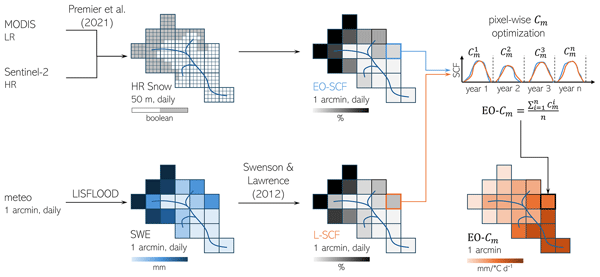
This study evaluates the snow module of LISFLOOD by replacing the discharge-calibrated snowmelt coefficient with pixel-wise values calibrated using EO (Earth Observation) snow cover fraction after standard streamflow calibration. Using a gap-filled high-resolution daily snow dataset, the approach improves snow cover representation across European basins while largely preserving discharge performance, without requiring full model recalibration.
Andrea Ficchì, Davide Bavera, Stefania Grimaldi, Francesca Moschini, Alberto Pistocchi, Carlo Russo, Peter Salamon, and Andrea Toreti
EGUsphere, https://doi.org/10.5194/egusphere-2026-43, https://doi.org/10.5194/egusphere-2026-43, 2026
Short summary
Short summary
This study introduces a new metric for hydrological model calibration combining traditional model efficiency measures with a new component to better assess similarity between observed and simulated river flows. Tests on two hydrological models and large catchment samples show improved low-flow simulations without degrading high-flow accuracy. The new metric can support more reliable modeling for droughts and floods and is already being adopted in operational monitoring and forecasting systems.
Lorenzo Scarpellini, Andrea Ficchì, Claudia D'Angelo, Andrea Betterle, Peter Salamon, and Andrea Castelletti
EGUsphere, https://doi.org/10.5194/egusphere-2026-2807, https://doi.org/10.5194/egusphere-2026-2807, 2026
Short summary
Short summary
This study shows that flood protection assumptions strongly affect risk estimates, and that flood model simulations, satellite observations, and historical records often disagree. Simulations overestimate large floods, satellites miss small ones, and historical records favour populated areas. No single data source provides a complete picture, highlighting the need to combine multiple datasets for more reliable continental-scale flood risk assessments.
Valentina Premier, Francesca Moschini, Jesús Casado-Rodríguez, Davide Bavera, Carlo Marin, and Alberto Pistocchi
Hydrol. Earth Syst. Sci., 30, 1189–1220, https://doi.org/10.5194/hess-30-1189-2026, https://doi.org/10.5194/hess-30-1189-2026, 2026
Short summary
Short summary
This study evaluates the snow module of LISFLOOD by replacing the discharge-calibrated snowmelt coefficient with pixel-wise values calibrated using EO (Earth Observation) snow cover fraction after standard streamflow calibration. Using a gap-filled high-resolution daily snow dataset, the approach improves snow cover representation across European basins while largely preserving discharge performance, without requiring full model recalibration.
Andrea Ficchì, Davide Bavera, Stefania Grimaldi, Francesca Moschini, Alberto Pistocchi, Carlo Russo, Peter Salamon, and Andrea Toreti
EGUsphere, https://doi.org/10.5194/egusphere-2026-43, https://doi.org/10.5194/egusphere-2026-43, 2026
Short summary
Short summary
This study introduces a new metric for hydrological model calibration combining traditional model efficiency measures with a new component to better assess similarity between observed and simulated river flows. Tests on two hydrological models and large catchment samples show improved low-flow simulations without degrading high-flow accuracy. The new metric can support more reliable modeling for droughts and floods and is already being adopted in operational monitoring and forecasting systems.
Simone Persiano, Alessio Pugliese, Alberto Aloe, Jon Olav Skøien, Attilio Castellarin, and Alberto Pistocchi
Earth Syst. Sci. Data, 14, 4435–4443, https://doi.org/10.5194/essd-14-4435-2022, https://doi.org/10.5194/essd-14-4435-2022, 2022
Short summary
Short summary
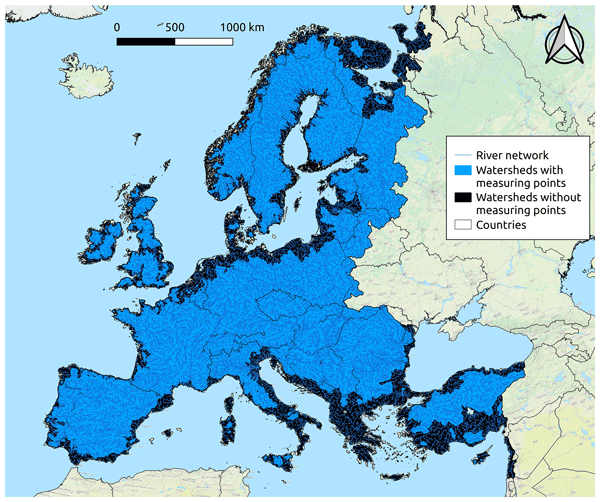
For about 24000 river basins across Europe, this study provides a continuous representation of the streamflow regime in terms of empirical flow–duration curves (FDCs), which are key signatures of the hydrological behaviour of a catchment and are widely used for supporting decisions on water resource management as well as for assessing hydrologic change. FDCs at ungauged sites are estimated by means of a geostatistical procedure starting from data observed at about 3000 sites across Europe.
Cited articles
Abbas, S. A., Bailey, R. T., White, J. T., Arnold, J. G., and White, M. J.: Estimation of groundwater storage loss using surface–subsurface hydrologic modeling in an irrigated agricultural region, Sci. Rep., 15, 8350, https://doi.org/10.1038/s41598-025-92987-6, 2025. a
Andréassian, V. and Perrin, C.: On the ambiguous interpretation of the Turc-Budyko nondimensional graph, Water Resour. Res., 48, https://doi.org/10.1029/2012WR012532, 2012. a, b, c
Andréassian, V., Perrin, C., and Michel, C.: Impact of imperfect potential evapotranspiration knowledge on the efficiency and parameters of watershed models, J. Hydrol., 286, 19–35, https://doi.org/10.1016/j.jhydrol.2003.09.030, 2004. a
Ballarin, A. S., Oliveira, P. T. S., Marchezepe, B. K., Godoi, R. F., Campos, A. M., Campos, F. S., Almagro, A., and Meira Neto, A. A.: The impact of an open water balance assumption on understanding the factors controlling the long‐term streamflow components, Water Resour. Res., 58, https://doi.org/10.1029/2022WR032413, 2022. a
Benjamini, Y. and Hochberg, Y.: Controlling the false discovery rate: A practical and powerful approach to multiple testing, J. Roy. Stat. Soc. B, 57, 289–300, 1995. a
Beretta, G. P., La Vigna, F., Camera, C. A. S., Gafà, R. M., Citrini, A., Martarelli, L., Monti, G. M., Roma, M., Silvi, A., Vitale, V., Fiori, C., Masetti, M., Pascarella, F., and Proietti, R.: Carta Idrogeologica d’Italia alla scala 1:500.000 – 4 Fogli, https://www.isprambiente.gov.it/it/attivita/suolo-e-territorio/idrogeologia/carta-idrogeologica-ditalia-alla-scala-1-500.000 (last access: 10 May 2026), 2025. a
Beven, K.: On hypothesis testing in hydrology, Hydrol. Process., 15, 1655–1657, https://doi.org/10.1002/hyp.436, 2001. a
Beven, K., Lane, S., Page, T., Kretzschmar, A., Hankin, B., Smith, P., and Chappell, N.: On (in)validating environmental models. 2. Implementation of a Turing-like test to modelling hydrological processes, Hydrol. Process., 36, e14703, https://doi.org/10.1002/hyp.14703, 2022. a
Beven, K. J.: On hypothesis testing in hydrology: Why falsification of models is still a really good idea, WIREs Water, 5, e1278, https://doi.org/10.1002/wat2.1278, 2018. a
Beven, K. J. and Cloke, H. L.: Comment on “Hyperresolution global land surface modeling: Meeting a grand challenge for monitoring Earth's terrestrial water” by Eric F. Wood et al, Water Resour. Res., 48, https://doi.org/10.1029/2010WR010090, 2012. a
Bisselink, B., Zambrano-Bigiarini, M., Burek, P., and de Roo, A.: Assessing the role of uncertain precipitation estimates on the robustness of hydrological model parameters under highly variable climate conditions, J. Hydrol. Reg. Stud., 8, 112–129, https://doi.org/10.1016/j.ejrh.2016.09.003, 2016. a
Bisselink, B., Bernhard, J., Gelati, E., Adamovic, M., Guenther, S., Mentaschi, L., Feyen, L., and de Roo, A.: Climate change and Europe's water resources, Tech. Rep. EUR 29951 EN, jRC118586, Publications Office of the European Union, Luxembourg, ISBN 978-92-76-10398-1, https://doi.org/10.2760/15553, 2020. a
Blöschl, G.: Five principles for hydrology in the era of managed waters, Nat. Water, 4, 684–685, https://doi.org/10.1038/s44221-026-00657-2, 2026. a
Brocca, L., Barbetta, S., Camici, S., Ciabatta, L., Dari, J., Filippucci, P., Massari, C., Modanesi, S., Tarpanelli, A., Bonaccorsi, B., Mosaffa, H., Wagner, W., Vreugdenhil, M., Quast, R., Alfieri, L., Gabellani, S., Avanzi, F., Rains, D., Miralles, D. G., Mantovani, S., Briese, C., Domeneghetti, A., Jacob, A., Castelli, M., Camps-Valls, G., Volden, E., and Fernandez, D.: A Digital Twin of the terrestrial water cycle: a glimpse into the future through high-resolution Earth observations, Front. Sci., 1, https://doi.org/10.3389/fsci.2023.1190191, 2024. a
Burek, P., Mubareka, S., Rojas Mujica, R., De Roo, A., Bianchi, A., Baranzelli, C., Lavalle, C., and Vandecasteele, I.: Evaluation of the effectiveness of Natural Water Retention Measures – Support to the EU Blueprint to Safeguard Europe's Waters, Scientific analysis or review, Policy assessment, Anticipation and foresight LB-NA-25551-EN-N, Joint Research Centre, Luxembourg, ISBN 978-92-79-27021-5, https://doi.org/10.2788/5528, 2012. a
Burek, P., van der Knijff, J., and Roo, A. D.: LISFLOOD. Distributed Water Balance and Flood Simulation Model, European Union, https://doi.org/10.2788/24719, 2013. a, b
Cammalleri, C., Micale, F., and Vogt, J.: On the value of combining different modelled soil moisture products for European drought monitoring, J. Hydrol., 525, 547–558, https://doi.org/10.1016/j.jhydrol.2015.04.021, 2015. a
Cammalleri, C., Vogt, J., and Salamon, P.: Development of an operational low-flow index for hydrological drought monitoring over Europe, Hydrolog. Sci. J., 62, 346–358, https://doi.org/10.1080/02626667.2016.1240869, 2017. a, b
Chen, X. and Sivapalan, M.: Hydrological Basis of the Budyko Curve: Data-Guided Exploration of the Mediating Role of Soil Moisture, Water Resour. Res., 56, e2020WR028221, https://doi.org/10.1029/2020WR028221, 2020. a, b
Choulga, M., Moschini, F., Mazzetti, C., Grimaldi, S., Disperati, J., Beck, H., Salamon, P., and Prudhomme, C.: Technical note: Surface fields for global environmental modelling, Hydrol. Earth Syst. Sci., 28, 2991–3036, https://doi.org/10.5194/hess-28-2991-2024, 2024. a, b
Cislaghi, A., Masseroni, D., Massari, C., Camici, S., and Brocca, L.: Combining a rainfall–runoff model and a regionalization approach for flood and water resource assessment in the western Po Valley, Italy, Hydrolog. Sci. J., 65, 348–370, https://doi.org/10.1080/02626667.2019.1690656, 2020. a
Clothier, B., Green, S., and Deurer, M.: Preferential flow and transport in soil: progress and prognosis, Eur. J. Soil Sci., 59, 2–13, https://doi.org/10.1111/j.1365-2389.2007.00991.x, 2008. a
Coron, L., Andréassian, V., Perrin, C., and Moine, N. L.: Graphical tools based on Turc-Budyko plots to detect changes in catchment behaviour, Hydrolog. Sci. J., 60, 1394–1407, https://doi.org/10.1080/02626667.2014.964245, 2015. a
De Roo, A., Burek, P., Gentile, A., Udias, A., Bouraoui, F., Aloe, A., Bianchi, A., La Notte, A., Kuik, O., Elorza Tenreiro, J., Vandecasteele, I., Mubareka, S., Baranzelli, C., Van Der Perk, M., Lavalle, C., and Bidoglio, G.: A multi-criteria optimisation of scenarios for the protection of water resources in Europe: Support to the EU Blueprint to Safeguard Europe's Waters, Scientific report LB-NA-25552-EN-N, Joint Research Centre, Luxembourg, ISBN 978-92-79-27025-3, https://doi.org/10.2788/55540, 2012. a
De Roo, A., Trichakis, I., Bisselink, B., Gelati, E., Pistocchi, A., and Gawlik, B.: The Water-Energy-Food-Ecosystem Nexus in the Mediterranean: Current Issues and Future Challenges, Front. Clim., 3, https://doi.org/10.3389/fclim.2021.782553, 2021. a
De Roo, A., Bisselink, B., and Trichakis, I.: Water-Energy-Food-Ecosystems pathways towards reducing water scarcity in Europe, Tech. Rep. EUR 31680 EN, jRC133439, Publications Office of the European Union, Luxembourg, ISBN 978-92-68-08067-2, https://doi.org/10.2760/478498, 2023. a
Döll, P., Hasan, H. M. M., Schulze, K., Gerdener, H., Börger, L., Shadkam, S., Ackermann, S., Hosseini-Moghari, S.-M., Müller Schmied, H., Güntner, A., and Kusche, J.: Leveraging multi-variable observations to reduce and quantify the output uncertainty of a global hydrological model: evaluation of three ensemble-based approaches for the Mississippi River basin, Hydrol. Earth Syst. Sci., 28, 2259–2295, https://doi.org/10.5194/hess-28-2259-2024, 2024. a, b, c
Fan, Y., Li, H., and Miguez-Macho, G.: Global Patterns of Groundwater Table Depth, Science, 339, 940–943, https://doi.org/10.1126/science.1229881, 2013. a, b
Fan, Y., Miguez-Macho, G., Jobbágy, E. G., Jackson, R. B., and Otero-Casal, C.: Hydrologic Regulation of Plant Rooting Depth, P. Natl. ACad. Sci. USA, 114, 10572–10577, https://doi.org/10.1073/pnas.1712381114, 2017. a
Fan, Y., Clark, M., Lawrence, D. M., Swenson, S., Band, L. E., Brantley, S. L., Brooks, P. D., Dietrich, W. E., Flores, A., Grant, G., Kirchner, J. W., Mackay, D. S., McDonnell, J. J., Milly, P. C. D., Sullivan, P. L., Tague, C., Ajami, H., Chaney, N., Hartmann, A., Hazenberg, P., McNamara, J., Pelletier, J., Perket, J., Rouholahnejad-Freund, E., Wagener, T., Zeng, X., Beighley, E., Buzan, J., Huang, M., Livneh, B., Mohanty, B. P., Nijssen, B., Safeeq, M., Shen, C., van Verseveld, W., Volk, J., and Yamazaki, D.: Hillslope Hydrology in Global Change Research and Earth System Modeling, Water Resour. Res., 55, 1737–1772, https://doi.org/10.1029/2018WR023903, 2019. a
Feyen, L., Kalas, M., and Vrugt, J. A.: Semi-distributed parameter optimization and uncertainty assessment for large-scale streamflow simulation using global optimization/Optimisation de paramètres semi-distribués et évaluation de l'incertitude pour la simulation de débits à grande échelle par l'utilisation d'une optimisation globale, Hydrolog. Sci. J., 53, 293–308, https://doi.org/10.1623/hysj.53.2.293, 2008. a
Ficchí, A., Perrin, C., and Andréassian, V.: Hydrological modelling at multiple sub-daily time steps: Model improvement via flux-matching, J. Hydrol., 575, 1308–1327, https://doi.org/10.1016/j.jhydrol.2019.05.084, 2019. a, b
Ficchì, A., Bavera, D., Grimaldi, S., Moschini, F., Pistocchi, A., Russo, C., Salamon, P., and Toreti, A.: Improving low and high flow simulations at once: An enhanced metric for hydrological model calibration, EGUsphere [preprint], https://doi.org/10.5194/egusphere-2026-43, 2026. a
Fluhrer, A., Baur, M. J., Piles, M., Bayat, B., Rahmati, M., Chaparro, D., Dubois, C., Hellwig, F. M., Montzka, C., Kübert, A., Mueller, M. M., Augscheller, I., Jonard, F., Schellenberg, K., and Jagdhuber, T.: Assessing evapotranspiration dynamics across central Europe in the context of land–atmosphere drivers, Biogeosciences, 22, 3721–3746, https://doi.org/10.5194/bg-22-3721-2025, 2025. a
Fortin, F.-A., Rainville, F.-M. D., Gardner, M.-A., Parizeau, M., and Gagné, C.: DEAP: Evolutionary Algorithms Made Easy, J. Mach. Learn. Res., 13, 2171–2175, 2012. a
Garcia, F., Folton, N., and Oudin, L.: Which Objective Function to Calibrate Rainfall–runoff Models for Low-Flow Index Simulations?, Hydrolog. Sci. J., 62, 1149–1166, https://doi.org/10.1080/02626667.2017.1308511, 2017. a
Gauch, M., Kratzert, F., Gilon, O., Gupta, H., Mai, J., Nearing, G., Tolson, B., Hochreiter, S., and Klotz, D.: In Defense of Metrics: Metrics Sufficiently Encode Typical Human Preferences Regarding Hydrological Model Performance, Water Resour. Res., 59, e2022WR033918, https://doi.org/10.1029/2022WR033918, 2023. a
Gentine, P., D'Odorico, P., Lintner, B. R., Sivandran, G., and Salvucci, G.: Interdependence of climate, soil, and vegetation as constrained by the Budyko curve, Geophys. Res. Lett., 39, L19404, https://doi.org/10.1029/2012GL053492, 2012. a
Gleeson, T., Wagener, T., Döll, P., Zipper, S. C., West, C., Wada, Y., Taylor, R., Scanlon, B., Rosolem, R., Rahman, S., Oshinlaja, N., Maxwell, R., Lo, M.-H., Kim, H., Hill, M., Hartmann, A., Fogg, G., Famiglietti, J. S., Ducharne, A., de Graaf, I., Cuthbert, M., Condon, L., Bresciani, E., and Bierkens, M. F. P.: GMD perspective: The quest to improve the evaluation of groundwater representation in continental- to global-scale models, Geosci. Model Dev., 14, 7545–7571, https://doi.org/10.5194/gmd-14-7545-2021, 2021. a, b
Gnann, S., Reinecke, R., Stein, L., Wada, Y., Thiery, W., Schmied, H. M., Satoh, Y., Pokhrel, Y., Ostberg, S., Koutroulis, A., Hanasaki, N., Grillakis, M., Gosling, S. N., Burek, P., Bierkens, M. F. P., and Wagener, T.: Functional relationships reveal differences in the water cycle representation of global water models, Nat. Water, 1, 1079–1090, https://doi.org/10.1038/s44221-023-00160-y, 2023. a, b, c, d, e
Granata, F. and Di Nunno, F.: Pathways for Hydrological Resilience: Strategies for Adaptation in a Changing Climate, Earth Syst. Environ., 10, 203–231, https://doi.org/10.1007/s41748-024-00567-x, 2025. a
Greve, P., Burek, P., and Wada, Y.: Using the Budyko Framework for Calibrating a Global Hydrological Model, Water Resour. Res., 56, https://doi.org/10.1029/2019wr026280, 2020. a
Gunkel, A. and Lange, J.: Water scarcity, data scarcity and the Budyko curve – An application in the Lower Jordan River Basin, J. Hydrol. Reg. Stud., 12, 136–149, https://doi.org/10.1016/j.ejrh.2017.04.004, 2017. a
Guo, X., Wu, Z., Fu, G., and He, H.: A multi-variable calibration framework at the grid scale for integrating streamflow with evapotranspiration data toimprove the simulation of distributed hydrological model, J. Hydrol. Reg. Stud., 55, 101944, https://doi.org/10.1016/j.ejrh.2024.101944, 2024. a
Guthke, A.: Defensible Model Complexity: A Call for Data-Based and Goal-Oriented Model Choice, Groundwater, 55, 646–650, https://doi.org/10.1111/gwat.12554, 2017. a
Hamman, J. J., Nijssen, B., Bohn, T. J., Gergel, D. R., and Mao, Y.: The Variable Infiltration Capacity model version 5 (VIC-5): Infrastructure improvements for new applications and reproducibility, Geosci. Model Dev., 11, 3481–3496, https://doi.org/10.5194/gmd-11-3481-2018, 2018. a
Hengl, T., Mendes de Jesus, J., Heuvelink, G. B. M., Ruiperez Gonzalez, M., Kilibarda, M., Blagotić, A., Shangguan, W., Wright, M. N., Geng, X., Bauer-Marschallinger, B., Guevara, M. A., Vargas, R., MacMillan, R. A., Batjes, N. H., Leenaars, J. G. B., Ribeiro, E., Wheeler, I., Mantel, S., and Kempen, B.: SoilGrids250m: Global gridded soil information based on machine learning, PLOS ONE, 12, 1–40, https://doi.org/10.1371/journal.pone.0169748, 2017. a, b
Herbst, M., Gupta, H. V., and Casper, M. C.: Mapping model behaviour using Self-Organizing Maps, Hydrol. Earth Syst. Sci., 13, 395–409, https://doi.org/10.5194/hess-13-395-2009, 2009. a
Huang, J., Sehgal, V., Alvarez, L. V., Brocca, L., Cai, S., Cheng, R., Cheng, X., Du, J., El Masri, B., Endsley, K. A., Fang, Y., Hu, J., Jampani, M., Kibria, M. G., Koren, G., Li, L., Liu, L., Mao, J., Moreno, H. A., Rigden, A., Shi, M., Shi, X., Wang, Y., Zhang, X., and Fisher, J. B.: Remotely Sensed High-Resolution Soil Moisture and Evapotranspiration: Bridging the Gap Between Science and Society, Water Resour. Res., 61, e2024WR037929, https://doi.org/10.1029/2024WR037929, 2025. a
Jaramillo, F. and Destouni, G.: Developing water change spectra and distinguishing change drivers worldwide, Geophys. Res. Lett., 41, 8377–8386, https://doi.org/10.1002/2014GL061848, 2014. a, b
Jensen, L., Dill, R., Balidakis, K., Grimaldi, S., Salamon, P., and Dobslaw, H.: Global 0.05° water storage simulations with the OS LISFLOOD hydrological model for geodetic applications, Geophys. J. Int., 241, 1840–1852, https://doi.org/10.1093/gji/ggaf129, 2025. a
Kling, H., Fuchs, M., and Paulin, M.: Runoff Conditions in the Upper Danube Basin under an Ensemble of Climate Change Scenarios, J. Hydrol., 424–425, 264–277, https://doi.org/10.1016/j.jhydrol.2012.01.011, 2012. a, b, c
Knoben, W. J. M., Freer, J. E., and Woods, R. A.: Technical note: Inherent benchmark or not? Comparing Nash–Sutcliffe and Kling–Gupta efficiency scores, Hydrol. Earth Syst. Sci., 23, 4323–4331, https://doi.org/10.5194/hess-23-4323-2019, 2019. a
Kocian, L. and Mohanty, B. P.: Characterizing large-scale preferential flow across Continental United States, Vadose Zone J., 23, e20316, https://doi.org/10.1002/vzj2.20316, 2024. a
Koppa, A., Alam, S., Miralles, D. G., and Gebremichael, M.: Budyko-Based Long-Term Water and Energy Balance Closure in Global Watersheds From Earth Observations, Water Resour. Res., 57, e2020WR028658, https://doi.org/10.1029/2020WR028658, 2021. a
Kraft, B., Jung, M., Körner, M., Koirala, S., and Reichstein, M.: Towards hybrid modeling of the global hydrological cycle, Hydrol. Earth Syst. Sci., 26, 1579–1614, https://doi.org/10.5194/hess-26-1579-2022, 2022. a
Kumar, R., Samaniego, L., and Attinger, S.: Implications of distributed hydrologic model parameterization on water fluxes at multiple scales and locations, Water Resour. Res., 49, 360–379, https://doi.org/10.1029/2012WR012195, 2013. a
Kumar, V., Jahangeer, J., Singh, R., and Dikshit, P. K. S.: Editorial: Advancement in hydrological modeling and water resources management for achieving Sustainable Development Goals (SDGs), Front. Water, 7, https://doi.org/10.3389/frwa.2025.1599795, 2025. a
Laguardia, G. and Niemeyer, S.: On the comparison between the LISFLOOD modelled and the ERS/SCAT derived soil moisture estimates, Hydrol. Earth Syst. Sci., 12, 1339–1351, https://doi.org/10.5194/hess-12-1339-2008, 2008. a
Le Moine, N., Andréassian, V., Perrin, C., and Michel, C.: How can rainfall-runoff models handle intercatchment groundwater flows? Theoretical study based on 1040 French catchments, Water Resour. Res., 43, https://doi.org/10.1029/2006WR005608, 2007. a
Li, H.-Y., Sivapalan, M., Tian, F., and Harman, C.: Functional approach to exploring climatic and landscape controls of runoff generation: 1. Behavioral constraints on runoff volume, Water Resour. Res., 50, 9300–9322, https://doi.org/10.1002/2014WR016307, 2014. a
Livani, M., Petracchini, L., Benetatos, C., Marzano, F., Billi, A., Carminati, E., Doglioni, C., Petricca, P., Maffucci, R., Codegone, G., Rocca, V., Verga, F., and Antoncecchi, I.: Subsurface geological and geophysical data from the Po Plain and the northern Adriatic Sea (north Italy), Earth Syst. Sci. Data, 15, 4261–4293, https://doi.org/10.5194/essd-15-4261-2023, 2023. a
Matthews, G., Baugh, C., Barnard, C., Carton De Wiart, C., Colonese, J., Grimaldi, S., Ham, D., Hansford, E., Harrigan, S., Heiselberg, S., Hooker, H., Hossain, S., Mazzetti, C., Milano, L., Moschini, F., O'Regan, K., Pappenberger, F., Pfister, D., Rajbhandari, R. M., Salamon, P., Ramos, A., Shelton, K., Stephens, E., Tasev, D., Turner, M., van den Homberg, M., Wittig, J., Zsótér, E., and Prudhomme, C.: Chapter 15 – On the operational implementation of the Global Flood Awareness System (GloFAS), in: Flood Forecasting, 2nd Edn., edited by: Adams, T. E., Gangodagamage, C., and Pagano, T. C., Academic Press, 299–350, ISBN 978-0-443-14009-9, https://doi.org/10.1016/B978-0-443-14009-9.00014-6, 2025a. a
Matthews, G., Baugh, C., Barnard, C., De Wiart, C. C., Colonese, J., Decremer, D., Grimaldi, S., Hansford, E., Mazzetti, C., O'Regan, K., Pappenberger, F., Ramos, A., Salamon, P., Tasev, D., and Prudhomme, C.: Chapter 14 – On the operational implementation of the European Flood Awareness System (EFAS), in: Flood Forecasting, 2nd Edn., edited by: Adams, T. E., Gangodagamage, C., and Pagano, T. C., Academic Press, 251–298, ISBN 978-0-443-14009-9, https://doi.org/10.1016/B978-0-443-14009-9.00005-5, 2025b. a
Melsen, L. A., Puy, A., Torfs, P. J. J. F., and Saltelli, A.: The rise of the Nash–Sutcliffe efficiency in hydrology, Hydrolog. Sci. J., 70, 1248–1259, https://doi.org/10.1080/02626667.2025.2475105, 2025. a
Mendoza, P. A., Clark, M. P., Barlage, M., Rajagopalan, B., Samaniego, L., Abramowitz, G., and Gupta, H.: Are we unnecessarily constraining the agility of complex process-based models?, Water Resour. Res., 51, 716–728, https://doi.org/10.1002/2014WR015820, 2015. a
Mendoza, R., van Verseveld, W., Seijger, C., and Weerts, A.: Assessment of Saturated Hydraulic Conductivity-Depth Relationships and Extended Soil Column Thickness in Catchment Hydrological Modelling, Hydrol. Process., 39, e70149, https://doi.org/10.1002/hyp.70149, 2025. a
Mizukami, N., Rakovec, O., Newman, A. J., Clark, M. P., Wood, A. W., Gupta, H. V., and Kumar, R.: On the choice of calibration metrics for “high-flow” estimation using hydrologic models, Hydrol. Earth Syst. Sci., 23, 2601–2614, https://doi.org/10.5194/hess-23-2601-2019, 2019. a
Montanari, A.: Hydrology of the Po River: looking for changing patterns in river discharge, Hydrol. Earth Syst. Sci., 16, 3739–3747, https://doi.org/10.5194/hess-16-3739-2012, 2012. a
Moschini, F., Ficchì, A., and Pistocchi, A.: Hydrological Auditing of LISFLOOD: Impacts of Model Setup on Water Balance Components in the Po River Basin – supporting data and software, Zenodo [code and data set], https://doi.org/10.5281/zenodo.15430199, 2026. a, b, c
Musolino, D., Vezzani, C., and Massarutto, A.: Drought Management in the Po River Basin, Italy, in: Drought, Wiley, https://doi.org/10.1002/9781119017073.ch11, 2018. a
Nearing, G., Cohen, D., Dube, V., Gauch, M., Gilon, O., Harrigan, S., Hassidim, A., Klotz, D., Kratzert, F., Metzger, A., Nevo, S., Pappenberger, F., Prudhomme, C., Shalev, G., Shenzis, S., Tekalign, T. Y., Weitzner, D., and Matias, Y.: Global prediction of extreme floods in ungauged watersheds, Nature, 627, 559–563, https://doi.org/10.1038/s41586-024-07145-1, 2024. a
Orth, R. and Seneviratne, S. I.: Introduction of a simple-model-based land surface dataset for Europe, Environ. Res. Lett., 10, 044012, https://doi.org/10.1088/1748-9326/10/4/044012, 2015. a
Pelletier, A. and Andréassian, V.: On constraining a lumped hydrological model with both piezometry and streamflow: results of a large sample evaluation, Hydrol. Earth Syst. Sci., 26, 2733–2758, https://doi.org/10.5194/hess-26-2733-2022, 2022. a, b
Pfannerstill, M., Guse, B., and Fohrer, N.: Smart low flow signature metrics for an improved overall performance evaluation of hydrological models, J. Hydrol., 510, 447–458, https://doi.org/10.1016/j.jhydrol.2013.12.044, 2014. a
Pistocchi, A., Gelati, E., Beck, H., Lavalle, C., Bisselink, B., and Feher, J.: Climate Change and the Danube Region: Implications for Energy Production and Environmental Impact, Tech. Rep. LB-NA-27700-EN-N, Joint Research Centre (European Commission), ISBN 978-92-79-54582-5, https://doi.org/10.2788/375680, 2015. a
Pistocchi, A., Dorati, C., Aloe, A., Ginebreda, A., and Marcé, R.: River pollution by priority chemical substances under the Water Framework Directive: A provisional pan-European assessment, Sci. Total Environ., 662, 434–445, https://doi.org/10.1016/j.scitotenv.2018.12.354, 2019. a
Pistocchi, A., Bisselink, B., Moschini, F., Quarante, E., Trichakis, Y., Bouraoui, F., Grizzetti, B., Hidalgo González, I., Udias, A., and Zal, N.: Human freshwater appropriation in Europe: a preliminary assessment of current conditions, knowledge gaps and resilience prospect, Tech. rep., jRC141278, Publications Office of the European Union, Luxembourg, https://doi.org/10.2760/9930996, 2024. a
Quaranta, E., Dorati, C., and Pistocchi, A.: Water, energy and climate benefits of urban greening throughout Europe under different climatic scenarios, Sci. Rep., 11, 12163, https://doi.org/10.1038/s41598-021-88141-7, 2021. a
Rajib, A., Merwade, V., and Yu, Z.: Rationale and efficacy of assimilating remotely sensed potential evapotranspiration for reduced uncertainty of hydrologic models, Water Resour. Res., 54, 4615–4637, https://doi.org/10.1029/2017WR021147, 2018. a
Salamon, P., Gomes, R., Nuno, G., Sperzel, T., Radke-Fretz, M., Schweim, C., Ziese, M., Lemke, C.-D., Russo, C., and Grimaldi, S.: EMO: A high-resolution multi-variable gridded meteorological data set for Europe, European Commission, Joint Research Centre [data set], https://doi.org/10.2905/JRC.9D3F64R, https://doi.org/10.2905/0BD84BE4-CEC8-4180-97A6-8B3ADAAC4D26, 2026. a
Samaniego, L., Kumar, R., Thober, S., Rakovec, O., Zink, M., Wanders, N., Eisner, S., Müller Schmied, H., Sutanudjaja, E. H., Warrach-Sagi, K., and Attinger, S.: Toward seamless hydrologic predictions across spatial scales, Hydrol. Earth Syst. Sci., 21, 4323–4346, https://doi.org/10.5194/hess-21-4323-2017, 2017. a
Santos, L., Thirel, G., and Perrin, C.: Technical Note: Pitfalls in Using Log-Transformed Flows within the KGE Criterion, Hydrol. Earth Syst. Sci., 22, 4583–4591, https://doi.org/10.5194/hess-22-4583-2018, 2018. a
Schefzik, R., Flesch, J., and Goncalves, A.: Fast identification of differential distributions in single-cell RNA-sequencing data with waddR, Bioinformatics, 37, 3204–3211, https://doi.org/10.1093/bioinformatics/btab226, 2021. a
Senbeta, T. B., Karamuz, E., Kochanek, K., Napiórkowski, J. J., and Romanowicz, R. J.: Budyko-Based Approach for Modelling Water Balance Dynamics Considering Environmental Change Drivers in the Vistula River Basin, Poland, Hydrolog. Sci. J., 68, 655–69, https://doi.org/10.1080/02626667.2023.2187297, 2023. a
Terrier, M., Perrin, C., De Lavenne, A., Andréassian, V., Lerat, J., and Vaze, J.: Streamflow naturalization methods: a review, Hydrolog. Sci. J., 66, 12–36, https://doi.org/10.1080/02626667.2020.1839080, 2021. a
Thiemig, V., Gomes, G. N., Skøien, J. O., Ziese, M., Rauthe-Schöch, A., Rustemeier, E., Rehfeldt, K., Walawender, J. P., Kolbe, C., Pichon, D., Schweim, C., and Salamon, P.: EMO-5: a high-resolution multi-variable gridded meteorological dataset for Europe, Earth Syst. Sci. Data, 14, 3249–3272, https://doi.org/10.5194/essd-14-3249-2022, 2022. a, b
Turc, L.: Le bilan d'eau des sols: Relation entre la precipitations, l'evaporation et l'ecoulement, Annales Agronomiques Serie A, 5, 491–495, 1954. a
Van Der Knijff, J., Younis, J., and De Roo, A.: LISFLOOD: a GIS-based distributed model for river basin scale water balance and flood simulation, Int. J. Geogr. Inform. Sci., 24, 189–212, https://doi.org/10.1080/13658810802549154, 2010. a, b
Vezzoli, R., Mercogliano, P., Pecora, S., Zollo, A., and Cacciamani, C.: Hydrological simulation of Po River (North Italy) discharge under climate change scenarios using the RCM COSMO-CLM, Sci. Total Environ., 521–522, 346–358, https://doi.org/10.1016/j.scitotenv.2015.03.096, 2015. a
Wagener, T. and Pianosi, F.: What has Global Sensitivity Analysis ever done for us? A systematic review to support scientific advancement and to inform policy-making in earth system modelling, Earth-Sci. Rev., 194, 1–18, https://doi.org/10.1016/j.earscirev.2019.04.006, 2019. a, b, c
Wang, Z., Tarasova, L., and Merz, R.: Event-Type-Based Multi-Dimensional Diagnostics of Process Limitations in Hydrological Models, Water Resour. Res., 62, e2025WR040264, https://doi.org/10.1029/2025WR040264, 2026. a, b
Yilmaz, K. K., Gupta, H. V., and Wagener, T.: A process-based diagnostic approach to model evaluation: Application to the NWS distributed hydrologic model, Water Resour. Res., 44, https://doi.org/10.1029/2007WR006716, 2008. a, b, c
Zaerpour, M., Hatami, S., Ballarin, A. S., Knoben, W. J. M., Papalexiou, S. M., Pietroniro, A., and Clark, M. P.: Impacts of agriculture and snow dynamics on catchment water balance in the U.S. and Great Britain, Commun. Earth Environ., 5, https://doi.org/10.1038/s43247-024-01891-w, 2024. a
Zajac, Z., Revilla-Romero, B., Salamon, P., Burek, P., Hirpa, F. A., and Beck, H.: The impact of lake and reservoir parameterization on global streamflow simulation, J. Hydrol., 548, 552–568, https://doi.org/10.1016/j.jhydrol.2017.03.022, 2017. a
Zhang, W., Wu, Y., Guo, H., Li, W., An, J., and Wang, S.: Temporal and spatial response of agricultural drought to meteorological drought in inner Mongolia plateau inland river basin, Sci. Rep., 15, 28225, https://doi.org/10.1038/s41598-025-14236-0, 2025. a
Short summary
We evaluated how different configurations of a large-scale river basin model affect simulations of streamflow, evaporation, soil moisture, and groundwater in the Po River Basin in Italy. We tested alternative soil depths and the inclusion or removal of subsurface flow pathways, and compared results with observations and with an established long-term water balance relationship. Setups that best matched river flow often underestimated evaporation and overestimated deep groundwater recharge.
We evaluated how different configurations of a large-scale river basin model affect simulations...


