
Articles | Volume 19, issue 16
https://doi.org/10.5194/gmd-19-7767-2026
© Author(s) 2026. This work is distributed under
the Creative Commons Attribution 4.0 License.
the Creative Commons Attribution 4.0 License.
https://doi.org/10.5194/gmd-19-7767-2026
© Author(s) 2026. This work is distributed under
the Creative Commons Attribution 4.0 License.
the Creative Commons Attribution 4.0 License.
Development and technical paper
| 
21 Aug 2026
Development and technical paper |
| 21 Aug 2026
| 21 Aug 2026
Optimizing Gaussian process emulation and generalized additive model fitting for rapid, reproducible earth system model analysis

School of Earth and Environment, University of Leeds, Leeds, LS2 9JT, UK
Leighton A. Regayre
School of Earth and Environment, University of Leeds, Leeds, LS2 9JT, UK
Met Office Hadley Centre, Exeter, Fitzroy Road, Exeter, Devon, EX1 3PB, UK
Centre for Environmental Modelling and Computation, University of Leeds, Leeds, LS2 9JT, UK
Related authors
Kunal Ghosh, Suneeti Mishra, and Gargi Sengupta
EGUsphere, https://doi.org/10.5194/egusphere-2026-5224, https://doi.org/10.5194/egusphere-2026-5224, 2026
This preprint is open for discussion and under review for Atmospheric Chemistry and Physics (ACP).
Short summary
Short summary
Tiny airborne particles can affect clouds, but their natural electrical charge is usually ignored in models. Using simulations of polluted and clean air, we found that charge changes how particles collide, survive, and grow to sizes that can seed cloud droplets. This survival effect increased cloud-forming particles by several percent in both environments, suggesting that particle charge may be a missing part of how aerosols influence clouds and climate.
Kunal Ghosh, Leighton A. Regayre, Léa Prévost, and Ken S. Carslaw
EGUsphere, https://doi.org/10.5281/zenodo.20374157, https://doi.org/10.5281/zenodo.20374157, 2026
Short summary
Short summary
Tiny airborne particles affect climate by changing clouds, but this remains hard to predict. We tested whether an observed link between cloud droplet number and cloud water can reduce uncertainty in climate-model estimates. Using many versions of a climate model, we found that this link gives useful clues about cloud processes but cannot constrain aerosol–cloud climate effects on its own. Combining it with other observations helps, but also reveals weaknesses in how models represent clouds.

Leighton A. Regayre, Léa M. C. Prévost, Kunal Ghosh, Jill S. Johnson, Jeremy E. Oakley, Jonathan Owen, Iain Webb, and Ken S. Carslaw
Atmos. Chem. Phys., 26, 2293–2317, https://doi.org/10.5194/acp-26-2293-2026, https://doi.org/10.5194/acp-26-2293-2026, 2026
Short summary
Short summary
Tiny particles called aerosols affect how much sunlight the Earth reflects back into space – one of the biggest climate uncertainties. We use a large set of climate model simulations and find that uncertainty drops in some regions, but persists in other areas, after comparing models to observations. By identifying the specific processes that cause the remaining uncertainty, we guide future efforts to reduce the aerosol forcing uncertainty so we can make more reliable climate predictions.
Alison Bain, Kunal Ghosh, Konstantin Tumashevich, Nønne L. Prisle, and Bryan R. Bzdek
Atmos. Chem. Phys., 25, 5633–5645, https://doi.org/10.5194/acp-25-5633-2025, https://doi.org/10.5194/acp-25-5633-2025, 2025
Short summary
Short summary
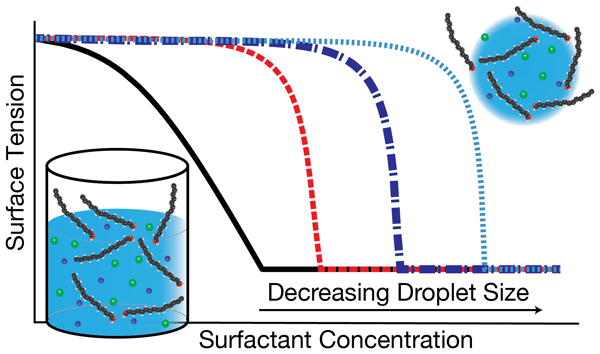
We measure the surface tension of picoliter-volume droplets containing strong ionic surfactants and cosolutes and compare this to surface tension predictions using two independent surfactant partitioning models. Under high-water-activity conditions, experimental measurements and model predictions show no change when NaCl cosolute is replaced with sea salt. Model predictions show that total surfactant concentrations in the range of tens to hundreds of millimolar are required to lower the surface tension of accumulation-mode aerosol.
Kunal Ghosh, Rukhsar Parveen, and Yelia Shankaranarayana Mayya
Aerosol Research Discuss., https://doi.org/10.5194/ar-2024-23, https://doi.org/10.5194/ar-2024-23, 2024
Preprint withdrawn
Short summary
Short summary
We investigated the space charge influence on the aerosol neutralization principle used in all aerosol measurement instruments. We found that the space charge cause ions to separate unevenly, leading to different rates of neutralization in different parts of the inlet, impacting the effectiveness of the neutralization process.
Kunal Ghosh, Suneeti Mishra, and Gargi Sengupta
EGUsphere, https://doi.org/10.5194/egusphere-2026-5224, https://doi.org/10.5194/egusphere-2026-5224, 2026
This preprint is open for discussion and under review for Atmospheric Chemistry and Physics (ACP).
Short summary
Short summary
Tiny airborne particles can affect clouds, but their natural electrical charge is usually ignored in models. Using simulations of polluted and clean air, we found that charge changes how particles collide, survive, and grow to sizes that can seed cloud droplets. This survival effect increased cloud-forming particles by several percent in both environments, suggesting that particle charge may be a missing part of how aerosols influence clouds and climate.
Prince Xavier, Martin Willett, Tim Graham, Paul Earnshaw, Dan Copsey, Nikesh Narayan, Charline Marzin, Alistair Sellar, Duncan Ackerley, Adam Blaker, Ed Blockley, Alejandro Bodas-Salcedo, Andrew Bushell, Nakbin Choi, Xin Rong Chua, Catherine Guiavarc'h, Muhammad Hassim, Julian Heming, Debra Hudson, Sarah Ineson, Anthony Jones, Colin Jones, Richard Keane, Kiwook Kim, Jiyeong Kim, Till Kuhlbrodt, Myong-In Lee, Richard Levine, Chen Li, Gill Martin, Alex Megann, Anne Mccabe, Aurel Moise, Leighton Regayre, Jeff Ridley, Luke Roberts, Sandeep Sahany, Reinhard K. H. Schiemann, David Storkey, Warren Tennant, Lorenzo Tomassini, Yoko Tsushima, Graham P. Weedon, Alex West, Matthew C. Wheeler, Keith Williams, Xiaobing Zhou, and Hongyan Zhu
EGUsphere, https://doi.org/10.5194/egusphere-2026-4281, https://doi.org/10.5194/egusphere-2026-4281, 2026
Short summary
Short summary
GC5 is the Met Office's newest climate and weather model, combining an updated atmosphere/land component with an improved ocean and sea-ice component. Compared to its predecessor GC4, it better simulates global temperatures, winds, monsoons over India and SE Asia, and African weather, and forecasts tropical cyclones more accurately. Southern Ocean errors shrank too. Some tropical patterns and regional biases worsened slightly. A lower-resolution version will underpin the UK's Earth System Model.
Kunal Ghosh, Leighton A. Regayre, Léa Prévost, and Ken S. Carslaw
EGUsphere, https://doi.org/10.5281/zenodo.20374157, https://doi.org/10.5281/zenodo.20374157, 2026
Short summary
Short summary
Tiny airborne particles affect climate by changing clouds, but this remains hard to predict. We tested whether an observed link between cloud droplet number and cloud water can reduce uncertainty in climate-model estimates. Using many versions of a climate model, we found that this link gives useful clues about cloud processes but cannot constrain aerosol–cloud climate effects on its own. Combining it with other observations helps, but also reveals weaknesses in how models represent clouds.
Nick Schutgens, Elisabeth J. Andrews, Antti Arola, Yusuf Bhatti, Guanliang Fu, Otto Hasekamp, Pekka Kolmonen, Antti Lipponen, Tero Mielonen, Leighton Reygare, and Andrew M. Sayer
EGUsphere, https://doi.org/10.5194/egusphere-2026-2656, https://doi.org/10.5194/egusphere-2026-2656, 2026
Short summary
Short summary
Aerosol are fine particles in the air that affect public health and the climate. We develop a new method to study aerosol through patterns (called autocorrelations) in their time-series. We show that autocorrelations are linked to aerosol deposition processes and contain information on the important but uncertain aerosol lifetime. Autocorrelations can be observed from satellites and we provide the first ever global climatology of aerosol autocorrelations.
Ken S. Carslaw, Leighton A. Regayre, Ulrike Proske, Andrew Gettelman, David M. H. Sexton, Yun Qian, Lauren R. Marshall, Oliver Wild, Marcus van Lier-Walqui, Annika Oertel, Saloua Peatier, Ben Yang, Jill S. Johnson, Sihan Li, Daniel T. McCoy, Benjamin M. Sanderson, Christina J. Williamson, Gregory S. Elsaesser, Kuniko Yamazaki, and Ben B. B. Booth
Atmos. Chem. Phys., 26, 4651–4667, https://doi.org/10.5194/acp-26-4651-2026, https://doi.org/10.5194/acp-26-4651-2026, 2026
Short summary
Short summary
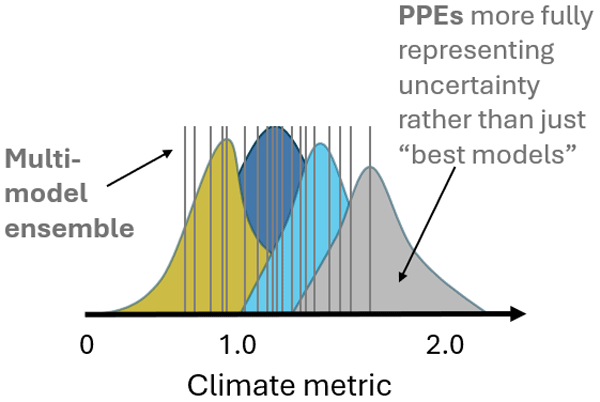
A major challenge in climate science is reducing projection uncertainty despite advances in models and observational constraints. Perturbed parameter ensembles (PPEs) offer a powerful tool to explore and reduce uncertainty by revealing model weaknesses and guiding development. PPEs are now widely applied across climate systems and scales. We argue they should be prioritized alongside complexity and resolution in model resource planning.
Xinyue Shao, Minghuai Wang, Xinyi Dong, Yaman Liu, Stephen R. Arnold, Leighton A. Regayre, Duseong S. Jo, Wenxiang Shen, Hao Wang, Man Yue, Jingyi Wang, Wenxin Zhang, and Ken S. Carslaw
Atmos. Chem. Phys., 26, 4439–4451, https://doi.org/10.5194/acp-26-4439-2026, https://doi.org/10.5194/acp-26-4439-2026, 2026
Short summary
Short summary
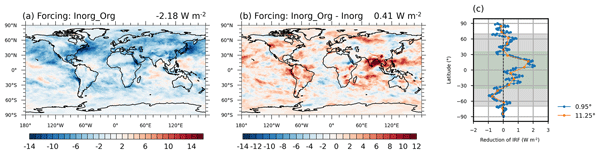
This study uses a global chemistry–climate model to investigate how new particle formation (NPF) from highly oxygenated organic molecules (HOMs) contributes to cloud condensation nuclei (CCN) in both preindustrial and present-day environments and its impact on aerosol indirect radiative forcing. The findings highlight the crucial role of biogenic emissions in climate change, providing new insights for carbon-neutral scenarios and enhancing our understanding of aerosol–cloud interactions.

Léa M. C. Prévost, Leighton A. Regayre, Jill S. Johnson, Doug McNeall, Sean Milton, and Kenneth S. Carslaw
Atmos. Chem. Phys., 26, 2487–2530, https://doi.org/10.5194/acp-26-2487-2026, https://doi.org/10.5194/acp-26-2487-2026, 2026
Short summary
Short summary
Climate models rely on uncertain adjustable parameters. We tested millions of combinations of these inputs to see how well the model matches real-world data. We found that no single set of inputs can match several observations at the same time, which suggests that the issue lies in the model itself. We developed a method to detect these conflicts and trace them back trace them to their source. The aim is to help modellers target improvements that reduce uncertainty in climate projections.
Leighton A. Regayre, Léa M. C. Prévost, Kunal Ghosh, Jill S. Johnson, Jeremy E. Oakley, Jonathan Owen, Iain Webb, and Ken S. Carslaw
Atmos. Chem. Phys., 26, 2293–2317, https://doi.org/10.5194/acp-26-2293-2026, https://doi.org/10.5194/acp-26-2293-2026, 2026
Short summary
Short summary
Tiny particles called aerosols affect how much sunlight the Earth reflects back into space – one of the biggest climate uncertainties. We use a large set of climate model simulations and find that uncertainty drops in some regions, but persists in other areas, after comparing models to observations. By identifying the specific processes that cause the remaining uncertainty, we guide future efforts to reduce the aerosol forcing uncertainty so we can make more reliable climate predictions.
Rachel W. N. Sansom, Jill S. Johnson, Leighton A. Regayre, Lindsay A. Lee, and Ken S. Carslaw
Atmos. Chem. Phys., 26, 1713–1733, https://doi.org/10.5194/acp-26-1713-2026, https://doi.org/10.5194/acp-26-1713-2026, 2026
Short summary
Short summary
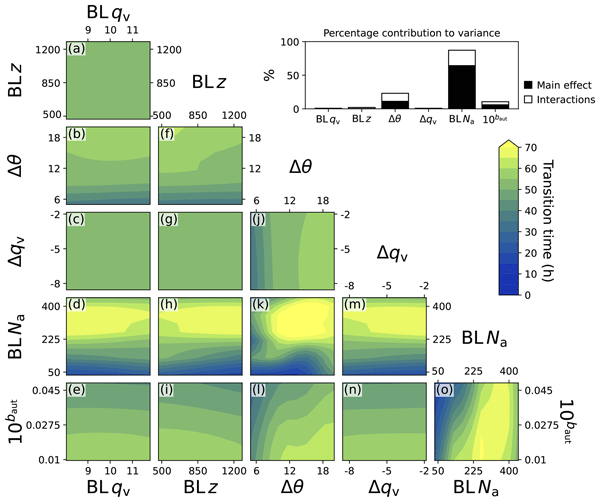
The cloud transition from stratocumulus to cumulus features a distinct decrease in cloud cover. We used a high-resolution model to simulate many instances of the transition with different environmental conditions. In low aerosol conditions, the transition occurred faster due to drizzle depleting the cloud of moisture and aerosol, whereas in high aerosol conditions, other factors were more important. Understanding different regimes is important for accurately simulating clouds in global models.
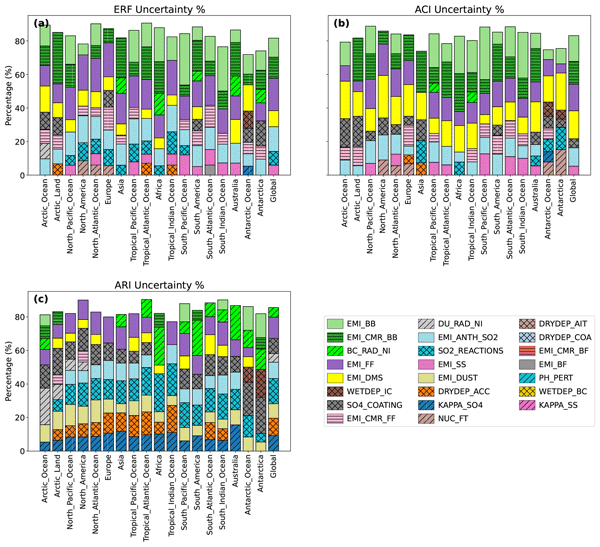
Yusuf A. Bhatti, Duncan Watson-Parris, Leighton A. Regayre, Hailing Jia, David Neubauer, Ulas Im, Carl Svenhag, Nick Schutgens, Athanasios Tsikerdekis, Athanasios Nenes, Muhammed Irfan, Bastiaan van Diedenhoven, Ardit Arifi, Guangliang Fu, and Otto P. Hasekamp
Atmos. Chem. Phys., 26, 269–293, https://doi.org/10.5194/acp-26-269-2026, https://doi.org/10.5194/acp-26-269-2026, 2026
Short summary
Short summary
Aerosols (small airborne particles) impact Earth's climate, but their extent is unknown. By running climate model simulations and using machine learning to emulate millions of additional variants with different settings, we found that natural emissions like sea spray and sulfur are key sources of uncertainty in climate predictions. Our work shows that understanding these natural processes better can help improve climate models and make future climate projections more accurate.
Alison Bain, Kunal Ghosh, Konstantin Tumashevich, Nønne L. Prisle, and Bryan R. Bzdek
Atmos. Chem. Phys., 25, 5633–5645, https://doi.org/10.5194/acp-25-5633-2025, https://doi.org/10.5194/acp-25-5633-2025, 2025
Short summary
Short summary
We measure the surface tension of picoliter-volume droplets containing strong ionic surfactants and cosolutes and compare this to surface tension predictions using two independent surfactant partitioning models. Under high-water-activity conditions, experimental measurements and model predictions show no change when NaCl cosolute is replaced with sea salt. Model predictions show that total surfactant concentrations in the range of tens to hundreds of millimolar are required to lower the surface tension of accumulation-mode aerosol.
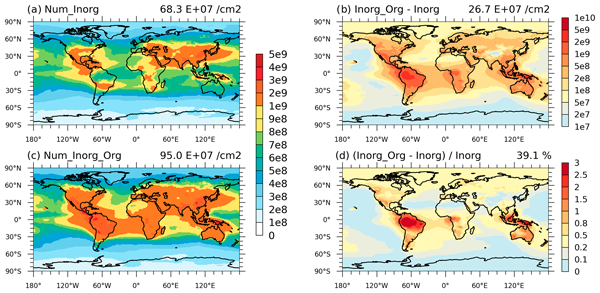
Xinyue Shao, Minghuai Wang, Xinyi Dong, Yaman Liu, Wenxiang Shen, Stephen R. Arnold, Leighton A. Regayre, Meinrat O. Andreae, Mira L. Pöhlker, Duseong S. Jo, Man Yue, and Ken S. Carslaw
Atmos. Chem. Phys., 24, 11365–11389, https://doi.org/10.5194/acp-24-11365-2024, https://doi.org/10.5194/acp-24-11365-2024, 2024
Short summary
Short summary
Highly oxygenated organic molecules (HOMs) play an important role in atmospheric new particle formation (NPF). By semi-explicitly coupling the chemical mechanism of HOMs and a comprehensive nucleation scheme in a global climate model, the updated model shows better agreement with measurements of nucleation rate, growth rate, and NPF event frequency. Our results reveal that HOM-driven NPF leads to a considerable increase in particle and cloud condensation nuclei burden globally.
Kunal Ghosh, Rukhsar Parveen, and Yelia Shankaranarayana Mayya
Aerosol Research Discuss., https://doi.org/10.5194/ar-2024-23, https://doi.org/10.5194/ar-2024-23, 2024
Preprint withdrawn
Short summary
Short summary
We investigated the space charge influence on the aerosol neutralization principle used in all aerosol measurement instruments. We found that the space charge cause ions to separate unevenly, leading to different rates of neutralization in different parts of the inlet, impacting the effectiveness of the neutralization process.
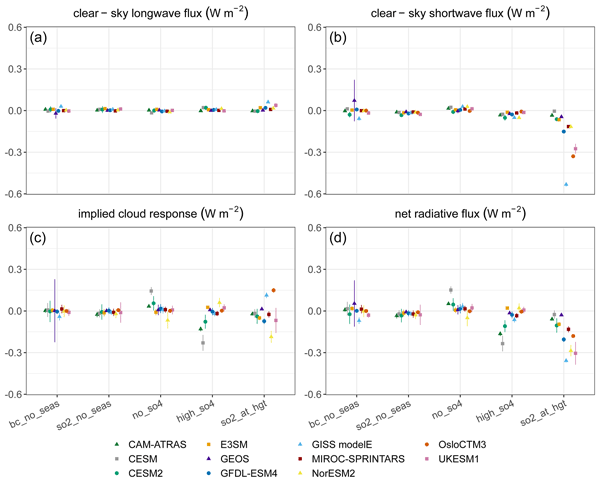
Hamza Ahsan, Hailong Wang, Jingbo Wu, Mingxuan Wu, Steven J. Smith, Susanne Bauer, Harrison Suchyta, Dirk Olivié, Gunnar Myhre, Hitoshi Matsui, Huisheng Bian, Jean-François Lamarque, Ken Carslaw, Larry Horowitz, Leighton Regayre, Mian Chin, Michael Schulz, Ragnhild Bieltvedt Skeie, Toshihiko Takemura, and Vaishali Naik
Atmos. Chem. Phys., 23, 14779–14799, https://doi.org/10.5194/acp-23-14779-2023, https://doi.org/10.5194/acp-23-14779-2023, 2023
Short summary
Short summary
We examine the impact of the assumed effective height of SO2 injection, SO2 and BC emission seasonality, and the assumed fraction of SO2 emissions injected as SO4 on climate and chemistry model results. We find that the SO2 injection height has a large impact on surface SO2 concentrations and, in some models, radiative flux. These assumptions are a
hiddensource of inter-model variability and may be leading to bias in some climate model results.
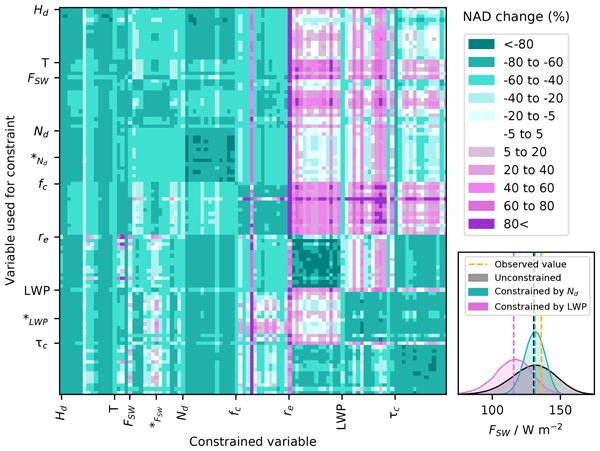
Leighton A. Regayre, Lucia Deaconu, Daniel P. Grosvenor, David M. H. Sexton, Christopher Symonds, Tom Langton, Duncan Watson-Paris, Jane P. Mulcahy, Kirsty J. Pringle, Mark Richardson, Jill S. Johnson, John W. Rostron, Hamish Gordon, Grenville Lister, Philip Stier, and Ken S. Carslaw
Atmos. Chem. Phys., 23, 8749–8768, https://doi.org/10.5194/acp-23-8749-2023, https://doi.org/10.5194/acp-23-8749-2023, 2023
Short summary
Short summary
Aerosol forcing of Earth’s energy balance has persisted as a major cause of uncertainty in climate simulations over generations of climate model development. We show that structural deficiencies in a climate model are exposed by comprehensively exploring parametric uncertainty and that these deficiencies limit how much the model uncertainty can be reduced through observational constraint. This provides a future pathway towards building models with greater physical realism and lower uncertainty.
Leighton A. Regayre, Lucia Deaconu, Daniel P. Grosvenor, David Sexton, Christopher C. Symonds, Tom Langton, Duncan Watson-Paris, Jane P. Mulcahy, Kirsty J. Pringle, Mark Richardson, Jill S. Johnson, John Rostron, Hamish Gordon, Grenville Lister, Philip Stier, and Ken S. Carslaw
EGUsphere, https://doi.org/10.5194/egusphere-2022-1330, https://doi.org/10.5194/egusphere-2022-1330, 2022
Preprint archived
Short summary
Short summary
We show that potential structural deficiencies in a climate model can be exposed by comprehensively exploring its parametric uncertainty, and that these deficiencies limit how much the model uncertainty can be reduced through observational constraint. Combined consideration of parametric and structural uncertainties provides a future pathway towards building models that have greater physical realism and lower uncertainty.
Amy H. Peace, Ben B. B. Booth, Leighton A. Regayre, Ken S. Carslaw, David M. H. Sexton, Céline J. W. Bonfils, and John W. Rostron
Earth Syst. Dynam., 13, 1215–1232, https://doi.org/10.5194/esd-13-1215-2022, https://doi.org/10.5194/esd-13-1215-2022, 2022
Short summary
Short summary
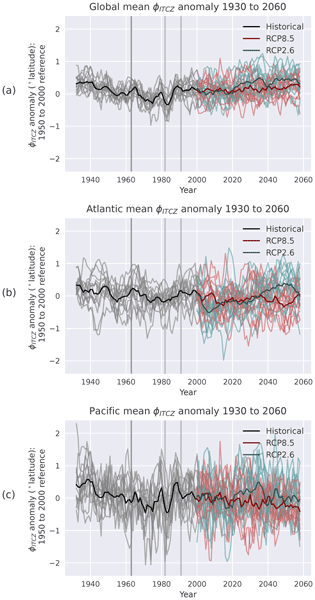
Anthropogenic aerosol emissions have been linked to driving climate responses such as shifts in the location of tropical rainfall. However, the interaction of aerosols with climate remains one of the most uncertain aspects of climate modelling and limits our ability to predict future climate change. We use an ensemble of climate model simulations to investigate what impact the large uncertainty in how aerosols interact with climate has on predicting future tropical rainfall shifts.
Cited articles
Bellouin, N., Quaas, J., Gryspeerdt, E., Kinne, S., Stier, P., Watson-Parris, D., Boucher, O., Carslaw, K. S., Christensen, M., Daniau, A.-L., Dufresne, J.-L., Feingold, G., Fiedler, S., Forster, P., Gettelman, A., Haywood, J. M., Lohmann, U., Malavelle, F., Mauritsen, T., McCoy, D. T., Myhre, G., Mülmenstädt, J., Neubauer, D., Possner, A., Rugenstein, M., Sato, Y., Schulz, M., Schwartz, S. E., Sourdeval, O., Storelvmo, T., Toll, V., Winker, D., and Stevens, B.: Bounding Global Aerosol Radiative Forcing of Climate Change, Rev. Geophys., 58, e2019RG000660, https://doi.org/10.1029/2019RG000660, 2020. a
Carnell, R.: lhs: Latin Hypercube Samples, r package version 1.1.6, https://CRAN.R-project.org/package=lhs (last access: 18 August 2026), 2022. a
Carslaw, K. S., Regayre, L. A., Proske, U., Gettelman, A., Sexton, D. M. H., Qian, Y., Marshall, L. R., Wild, O., van Lier-Walqui, M., Oertel, A., Peatier, S., Yang, B., Johnson, J. S., Li, S., McCoy, D. T., Sanderson, B. M., Williamson, C. J., Elsaesser, G. S., Yamazaki, K., and Booth, B. B. B.: Opinion: The importance and future development of perturbed parameter ensembles in climate and atmospheric science, Atmos. Chem. Phys., 26, 4651–4667, https://doi.org/10.5194/acp-26-4651-2026, 2026. a, b
Durack, P. J., Taylor, K. E., Gleckler, P. J., Meehl, G. A., Lawrence, B. N., Covey, C., Stouffer, R. J., Levavasseur, G., Ben-Nasser, A., Denvil, S., Stockhause, M., Gregory, J. M., Juckes, M., Ames, S. K., Antonio, F., Bader, D. C., Dunne, J. P., Ellis, D., Eyring, V., Fiore, S. L., Joussaume, S., Kershaw, P., Lamarque, J.-F., Lautenschlager, M., Lee, J., Mauzey, C. F., Mizielinski, M., Nassisi, P., Nuzzo, A., O’Rourke, E., Painter, J., Potter, G. L., Rodriguez, S., and Williams, D. N.: The Coupled Model Intercomparison Project (CMIP): Reviewing project history, evolution, infrastructure and implementation, EGUsphere [preprint], https://doi.org/10.5194/egusphere-2024-3729, 2025. a
Ghosh, K. and Regayre, L. A.: gp-gam-optimisation-pipeline: High-performance workflow for Gaussian Process emulation and GAM fitting, Zenodo [code], https://doi.org/10.5281/zenodo.17543623, 2025a. a
Ghosh, K. and Regayre, L. A.: gp-gam-optimisation-dataset: Example input and output data for Gaussian Process and GAM workflow (H2SO4, January 2017), Zenodo [data set], https://doi.org/10.5281/zenodo.17544324, 2025b. a
Johnson, J., Cui, Z., Lee, L., Gosling, J., Blyth, A., and Carslaw, K.: Evaluating uncertainty in convective cloud microphysics using statistical emulation, J. Adv. Model. Earth Sy., 7, 162–187, 2015. a
Johnson, J. S., Regayre, L. A., Yoshioka, M., Pringle, K. J., Lee, L. A., Sexton, D. M. H., Rostron, J. W., Booth, B. B. B., and Carslaw, K. S.: The importance of comprehensive parameter sampling and multiple observations for robust constraint of aerosol radiative forcing, Atmos. Chem. Phys., 18, 13031–13053, https://doi.org/10.5194/acp-18-13031-2018, 2018. a
Johnson, J. S., Regayre, L. A., Yoshioka, M., Pringle, K. J., Turnock, S. T., Browse, J., Sexton, D. M. H., Rostron, J. W., Schutgens, N. A. J., Partridge, D. G., Liu, D., Allan, J. D., Coe, H., Ding, A., Cohen, D. D., Atanacio, A., Vakkari, V., Asmi, E., and Carslaw, K. S.: Robust observational constraint of uncertain aerosol processes and emissions in a climate model and the effect on aerosol radiative forcing, Atmos. Chem. Phys., 20, 9491–9524, https://doi.org/10.5194/acp-20-9491-2020, 2020. a, b
Knutti, R.: Should we believe model predictions of future climate change?, Philos. T. Roy. Soc. A, 366, 4647–4664, 2008. a
Lawrence, B. N., Bennett, V. L., Churchill, J., Juckes, M., Kershaw, P., Pascoe, S., Pepler, S., Pritchard, M., and Stephens, A.: Storing and manipulating environmental big data with JASMIN, in: 2013 IEEE international conference on big data, 68–75, IEEE, 2013. a
Lee, L. A., Carslaw, K. S., Pringle, K. J., Mann, G. W., and Spracklen, D. V.: Emulation of a complex global aerosol model to quantify sensitivity to uncertain parameters, Atmos. Chem. Phys., 11, 12253–12273, https://doi.org/10.5194/acp-11-12253-2011, 2011. a
Lee, L. A., Carslaw, K. S., Pringle, K. J., and Mann, G. W.: Mapping the uncertainty in global CCN using emulation, Atmos. Chem. Phys., 12, 9739–9751, https://doi.org/10.5194/acp-12-9739-2012, 2012. a
Lee, L. A., Reddington, C. L., and Carslaw, K. S.: On the relationship between aerosol model uncertainty and radiative forcing uncertainty, P. Natl. Acad. Sci., 113, 5820–5827, https://doi.org/10.1073/pnas.1507050113, 2016. a
Mersmann, O.: truncnorm: Truncated Normal Distribution, r package version 1.0-9, https://CRAN.R-project.org/package=truncnorm (last access: 18 August 2026), 2022. a
Oakley, J. and O'Hagan, A.: Bayesian inference for the uncertainty distribution of computer model outputs, Biometrika, 89, 769–784, 2002. a
O'Hagan, A.: Bayesian analysis of computer code outputs: A tutorial, Reliab. Eng. Syst. Safe., 91, 1290–1300, https://doi.org/10.1016/j.ress.2005.11.025, 2006. a
Prévost, L. M. C., Regayre, L. A., Johnson, J. S., McNeall, D., Milton, S., and Carslaw, K. S.: Detection of potential structural deficiencies in a global aerosol model using a perturbed parameter ensemble, Atmos. Chem. Phys., 26, 2487–2530, https://doi.org/10.5194/acp-26-2487-2026, 2026. a, b
Pujol, G., Iooss, B., and Janon, A.: sensitivity: Global Sensitivity Analysis of Model Outputs, r package version 1.18.1, https://CRAN.R-project.org/package=sensitivity (last access: 18 August 2026), 2017. a
R Core Team: R: A Language and Environment for Statistical Computing, R Foundation for Statistical Computing, Vienna, Austria, https://www.R-project.org/ (last access: 18 August 2026), 2022. a
Regayre, L. A., Pringle, K. J., Booth, B. B. B., Lee, L. A., Mann, G. W., Browse, J., Woodhouse, M. T., Rap, A., Reddington, C. L., and Carslaw, K. S.: Uncertainty in the magnitude of aerosol-cloud radiative forcing over recent decades, Geophys. Res. Lett., 41, 9040–9049, https://doi.org/10.1002/2014GL062029, 2014. a
Regayre, L. A., Deaconu, L., Grosvenor, D. P., Sexton, D. M. H., Symonds, C., Langton, T., Watson-Paris, D., Mulcahy, J. P., Pringle, K. J., Richardson, M., Johnson, J. S., Rostron, J. W., Gordon, H., Lister, G., Stier, P., and Carslaw, K. S.: Identifying climate model structural inconsistencies allows for tight constraint of aerosol radiative forcing, Atmos. Chem. Phys., 23, 8749–8768, https://doi.org/10.5194/acp-23-8749-2023, 2023. a, b, c
Regayre, L. A., Prévost, L. M. C., Ghosh, K., Johnson, J. S., Oakley, J. E., Owen, J., Webb, I., and Carslaw, K. S.: Remaining aerosol forcing uncertainty after observational constraint and the processes that cause it, Atmos. Chem. Phys., 26, 2293–2317, https://doi.org/10.5194/acp-26-2293-2026, 2026. a, b, c
Roustant, O., Ginsbourger, D., and Deville, Y.: DiceKriging, DiceOptim: Two R Packages for the Analysis of Computer Experiments by Kriging-Based Metamodeling and Optimization, J. Stat. Softw., 51, 1–55, https://doi.org/10.18637/jss.v051.i01, 2012. a
Saltelli, A., Ratto, M., Andres, T., Campolongo, F., Cariboni, J., Gatelli, D., Saisana, M., and Tarantola, S.: Global Sensitivity Analysis: The Primer, Wiley, https://doi.org/10.1002/9780470725184, 2008. a
Sellar, A. A., Jones, C. G., Mulcahy, J. P., Tang, Y., Yool, A., Wiltshire, A., O'Connor, F. M., Stringer, M., Hill, R., Palmieri, J., Woodward, S., de Mora, L., Kuhlbrodt, T., Rumbold, S. T., Kelley, D. I., Ellis, R., Johnson, C. E., Walton, J., Abraham, N. L., Andrews, M. B., Andrews, T., Archibald, A. T., Berthou, S., Burke, E., Blockley, E., Carslaw, K., Dalvi, M., Edwards, J., Folberth, G. A., Gedney, N., Griffiths, P. T., Harper, A. B., Hendry, M. A., Hewitt, A. J., Johnson, B., Jones, A., Jones, C. D., Keeble, J., Liddicoat, S., Morgenstern, O., Parker, R. J., Predoi, V., Robertson, E., Siahaan, A., Smith, R. S., Swaminathan, R., Woodhouse, M. T., Zeng, G., and Zerroukat, M.: UKESM1: Description and Evaluation of the U.K. Earth System Model, J. Adv. Model. Earth Sy., 11, 4513–4558, https://doi.org/10.1029/2019MS001739, 2019. a
Servén, D., Brummitt, C., Abedi, H., and Hlink: dswah/pyGAM: v0.8.0, Zenodo, https://doi.org/10.5281/zenodo.1208723, 2018. a, b
Servera, J. V., Martino, L., Verrelst, J., and Camps-Valls, G.: Multifidelity Gaussian process emulation for atmospheric radiative transfer models, IEEE T. Geosci. Remote Sens., 61, 1–10, 2023. a
Sexton, D. M., Murphy, J. M., Collins, M., and Webb, M. J.: Multivariate probabilistic projections using imperfect climate models part I: outline of methodology, Clim. Dynam., 38, 2513–2542, 2012. a
Sobol', I. M.: Global sensitivity indices for nonlinear mathematical models and their Monte Carlo estimates, Math. Comput. Simulat., 55, 271–280, 2001. a
Sottile, G. and Gohel, D.: trapezoid: Trapezoidal Distribution, r package version 0.6, https://CRAN.R-project.org/package=trapezoid (last access: 18 August 2026), 2022. a
Stouffer, R. J., Eyring, V., Meehl, G. A., Bony, S., Senior, C., Stevens, B., and Taylor, K.: CMIP5 scientific gaps and recommendations for CMIP6, B. Am. Meteorol. Soc., 98, 95–105, 2017. a
Susiluoto, J., Spantini, A., Haario, H., Härkönen, T., and Marzouk, Y.: Efficient multi-scale Gaussian process regression for massive remote sensing data with satGP v0.1.2, Geosci. Model Dev., 13, 3439–3463, https://doi.org/10.5194/gmd-13-3439-2020, 2020. a
Watson-Parris, D., Williams, A., Deaconu, L., and Stier, P.: Model calibration using ESEm v1.1.0 – an open, scalable Earth system emulator, Geosci. Model Dev., 14, 7659–7672, https://doi.org/10.5194/gmd-14-7659-2021, 2021. a
Wickham, H. and Bryan, J.: readr: Read Rectangular Text Data, r package version 2.1.4, https://CRAN.R-project.org/package=readr (last access: 18 August 2026), 2023. a
Wood, S. N.: Inference and computation with generalized additive models and their extensions, Test, 29, 307–339, 2020. a
Yang, Q., Elsaesser, G. S., van Lier-Walqui, M., and Eidhammer, T.: A simple emulator that enables interpretation of parameter-output relationships, applied to two climate model PPEs, J. Adv. Model. Earth Sy., 17, e2024MS004766, https://doi.org/10.1029/2024MS004766, 2025. a
Yoshioka, M., Regayre, L. A., Pringle, K. J., Johnson, J. S., Mann, G. W., Partridge, D. G., Sexton, D. M. H., Lister, G. M. S., Schutgens, N., Stier, P., Kipling, Z., Bellouin, N., Browse, J., Booth, B. B. B., Johnson, C. E., Johnson, B., Mollard, J. D. P., Lee, L., and Carslaw, K. S.: Ensembles of Global Climate Model Variants Designed for the Quantification and Constraint of Uncertainty in Aerosols and Their Radiative Forcing, J. Adv. Model. Earth Sy., 11, 3728–3754, https://doi.org/10.1029/2019MS001628, 2019. a
Short summary
Understanding which parts of climate models cause uncertainty requires many large computer experiments. We developed a new workflow that greatly improves the speed and efficiency of these studies. It can analyse millions of model variations up to 25 times faster without losing accuracy, allowing scientists to explore uncertainty in more detail and make climate predictions more reliable.
Understanding which parts of climate models cause uncertainty requires many large computer...


