
Articles | Volume 19, issue 15
https://doi.org/10.5194/gmd-19-7369-2026
© Author(s) 2026. This work is distributed under
the Creative Commons Attribution 4.0 License.
the Creative Commons Attribution 4.0 License.
https://doi.org/10.5194/gmd-19-7369-2026
© Author(s) 2026. This work is distributed under
the Creative Commons Attribution 4.0 License.
the Creative Commons Attribution 4.0 License.
Development and technical paper
| 
10 Aug 2026
Development and technical paper |
| 10 Aug 2026
| 10 Aug 2026
Implementation of a three-dimensional planetary boundary layer parameterization in a coupled modeling system and evaluation of “gray zone” simulations of a wind-wave event off the US California Coast using observations

NSF National Center for Atmospheric Research, Boulder, CO, USA
Timothy W. Juliano
NSF National Center for Atmospheric Research, Boulder, CO, USA
Branko Kosović
Ralph O'Connor Sustainable Energy Institute, Johns Hopkins University, Baltimore, MD, USA
Sue Ellen Haupt
NSF National Center for Atmospheric Research, Boulder, CO, USA
Brian J. Gaudet
Pacific Northwest National Laboratory, Richland, WA, USA
National Laboratory of the Rockies, Golden, CO, USA
Related authors
No articles found.
Alexandra E. Ng, Manish Shrivastava, Brian Gaudet, Cenlin He, Zezhen Cheng, and William Vizuete
EGUsphere, https://doi.org/10.5194/egusphere-2026-5534, https://doi.org/10.5194/egusphere-2026-5534, 2026
This preprint is open for discussion and under review for Atmospheric Chemistry and Physics (ACP).
Short summary
Short summary
Wildfire smoke contains dark particles called tar balls that absorb sunlight and warm the air, but air quality and climate models usually leave them out. We added tar balls to a model of the southeastern United States and compared it with aircraft and ground measurements. Including them, and accounting for the coatings that form around them, raised the sunlight absorbed by smoke by up to 6 %. Models that omit tar balls may therefore underestimate warming from wildfires.
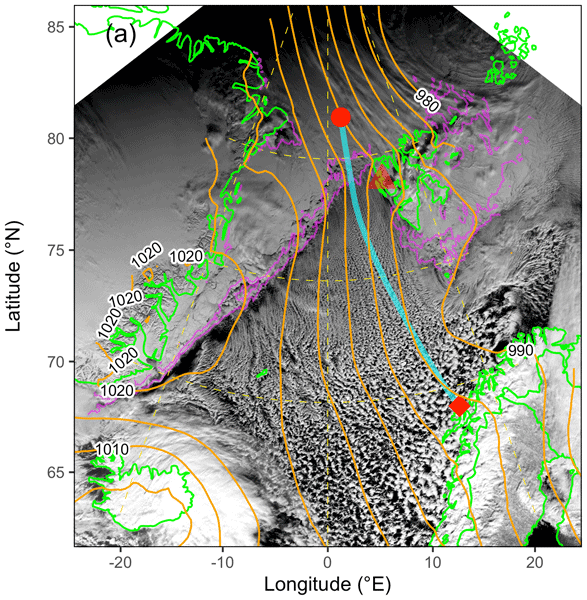
Timothy W. Juliano, Florian Tornow, Ann M. Fridlind, Andrew S. Ackerman, Gregory S. Elsaesser, Bart Geerts, Christian P. Lackner, David Painemal, Israel Silber, Mikhail Ovchinnikov, Gunilla Svensson, Michael Tjernström, Peng Wu, Alejandro Baró Pérez, Peter Bogenschutz, Dmitry Chechin, Kamal Kant Chandrakar, Jan Chylik, Andrey Debolskiy, Rostislav Fadeev, Anu Gupta, Luisa Ickes, Michail Karalis, Martin Köhler, Branko Kosović, Peter Kuma, Weiwei Li, Evgeny Mortikov, Hugh Morrison, Roel A. J. Neggers, Anna Possner, Tomi Raatikainen, Lea Raillard, Sami Romakkaniemi, Niklas Schnierstein, Shin-ichiro Shima, Nikita Silin, Mikhail Tolstykh, Étienne Vignon, Lulin Xue, Meng Zhang, and Xue Zheng
Atmos. Chem. Phys., 26, 13267–13302, https://doi.org/10.5194/acp-26-13267-2026, https://doi.org/10.5194/acp-26-13267-2026, 2026
Short summary
Short summary
Models struggle to capture cloud and precipitation processes and their radiative effects in marine cold-air outbreaks. We use a quasi-Lagrangian framework to compare large-eddy simulation (LES) and single-column model (SCM) output with field and satellite observations. With fixed droplet and ice numbers, LES and SCM agree in liquid-only tests. In mixed-phase conditions, LES plausibly capture cloud thinning and breakup, while SCMs largely remain overcast and thereby miss cloud radiative effects.
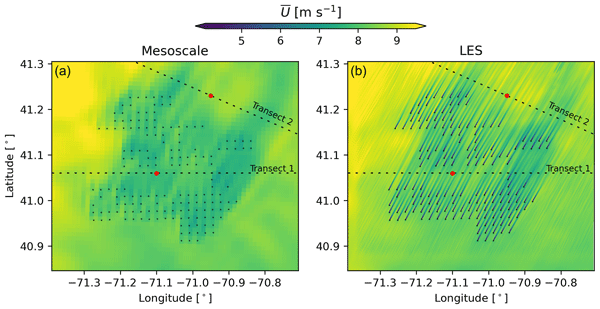
Miguel Sanchez-Gomez, Georgios Deskos, Mike Optis, Julie K. Lundquist, Michael Sinner, Geng Xia, and Walter Musial
Wind Energ. Sci., 11, 2009–2036, https://doi.org/10.5194/wes-11-2009-2026, https://doi.org/10.5194/wes-11-2009-2026, 2026
Short summary
Short summary
Mesoscale simulations with the Fitch wind farm parameterization were compared to large-domain large-eddy simulations for three planned offshore wind farms under varied atmospheric conditions. Mesoscale runs captured key wake deficit patterns and stability effects in the wind farm wake evolution but underestimated power losses from internal wakes, especially in aligned winds or stable conditions. Results highlight mesoscale strengths for large-scale wakes and limits for turbine-level losses.
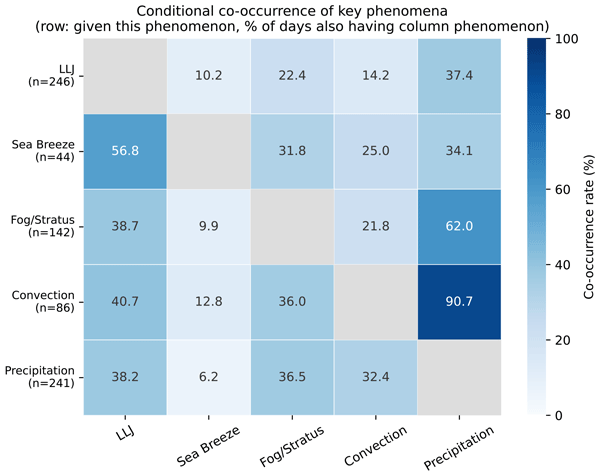
Nicola Bodini, Joseph Olson, Brian Gaudet, Giacomo Valerio Iungo, Mojtaba Shams Solari, Sayahnya Roy, Julie K. Lundquist, Nathan Agarwal, Timothy A. Myers, Bianca Adler, Jeffrey D. Mirocha, Eric James, Laura Bianco, James M. Wilczak, and David D. Turner
Wind Energ. Sci., 11, 1949–1961, https://doi.org/10.5194/wes-11-1949-2026, https://doi.org/10.5194/wes-11-1949-2026, 2026
Short summary
Short summary
To improve offshore wind forecasts, the Third Wind Forecast Improvement Project monitored the United States east coast for 18 months. We compiled a daily log of weather events using advanced scanners and expert notes. This public dataset identifies important wind patterns, helping scientists test computer models and choose specific cases to study.
Jerome D. Fast, Balwinder Singh, Oscar Diaz-Ibarra, Jeff Johnson, Chandru Dhandapani, Brian Gaudet, Taufiq Hassan, Meng Huang, Jaelyn Litzinger, James Overfelt, Kyle Pressel, Michael Schmidt, Shuaiqi Tang, Adam C. Varble, Hui Wan, Mingxuan Wu, Kai Zhang, and Po-Lun Ma
EGUsphere, https://doi.org/10.5194/egusphere-2026-1538, https://doi.org/10.5194/egusphere-2026-1538, 2026
Short summary
Short summary
We ported a prognostic representation of aerosols to C++ and integrated it into an Earth system model that runs on powerful GPU supercomputers. The code conversion approach keeps the same detailed physics as the Fortran version, was carefully tested, and results show that new code produces aerosol simulations consistent with real‑world data over the central U.S. in spring 2016. Future work will optimize the code for GPUs so to reduce the overall computational time.

Branko Kosović, Sukanta Basu, Jacob Berg, Larry K. Berg, Sue E. Haupt, Xiaoli G. Larsén, Joachim Peinke, Richard J. A. M. Stevens, Paul Veers, and Simon Watson
Wind Energ. Sci., 11, 509–555, https://doi.org/10.5194/wes-11-509-2026, https://doi.org/10.5194/wes-11-509-2026, 2026
Short summary
Short summary
Most human activity happens in the layer of the atmosphere which extends a few hundred meters to a couple of kilometers above the surface of the Earth. The flow in this layer is turbulent. Turbulence impacts wind power production and turbine lifespan. Optimizing wind turbine performance requires understanding how turbulence affects both wind turbine efficiency and reliability. This paper points to gaps in our knowledge that need to be addressed to effectively utilize wind resources.
Timothy W. Juliano, Florian Tornow, Ann M. Fridlind, Andrew S. Ackerman, Gregory S. Elsaesser, Bart Geerts, Christian P. Lackner, David Painemal, Israel Silber, Mikhail Ovchinnikov, Gunilla Svensson, Michael Tjernström, Peng Wu, Alejandro Baró Pérez, Peter Bogenschutz, Dmitry Chechin, Kamal Kant Chandrakar, Jan Chylik, Andrey Debolskiy, Rostislav Fadeev, Anu Gupta, Luisa Ickes, Michail Karalis, Martin Köhler, Branko Kosović, Peter Kuma, Weiwei Li, Evgeny Mortikov, Hugh Morrison, Roel A. J. Neggers, Anna Possner, Tomi Raatikainen, Sami Romakkaniemi, Niklas Schnierstein, Shin-ichiro Shima, Nikita Silin, Mikhail Tolstykh, Lulin Xue, Meng Zhang, and Xue Zheng
EGUsphere, https://doi.org/10.5194/egusphere-2025-6217, https://doi.org/10.5194/egusphere-2025-6217, 2026
Preprint archived
Short summary
Short summary
Models struggle to capture cloud and precipitation processes and their radiative effects in marine cold-air outbreaks. We use a quasi-Lagrangian framework to compare large-eddy simulation (LES) and single-column model (SCM) output with field and satellite observations. With fixed droplet and ice numbers, LES and SCM agree in liquid-only tests. In mixed-phase conditions, LES plausibly capture cloud thinning and breakup, while SCMs largely remain overcast and thereby miss cloud radiative effects.
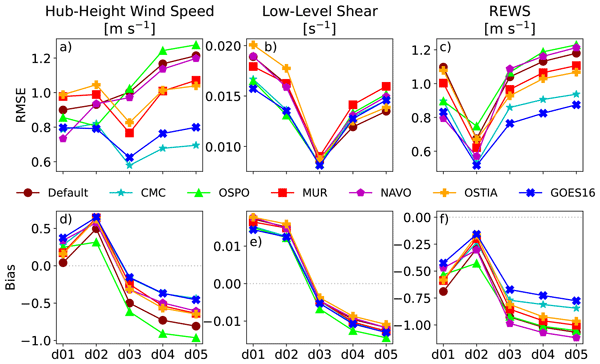
Patrick Hawbecker, William Lassman, Timothy W. Juliano, Branko Kosović, and Sue Ellen Haupt
Wind Energ. Sci., 11, 51–69, https://doi.org/10.5194/wes-11-51-2026, https://doi.org/10.5194/wes-11-51-2026, 2026
Short summary
Short summary
Offshore wind turbines can be directly impacted by the jet maximum winds of low-level jets, which makes them very important to the wind energy community. Here, we simulate an offshore low-level jet event using a weather model from low resolution to very high resolution. We run the simulations several times, varying the sea surface temperature to generate different realizations of the event and comparing against observations. We then ask and answer: "Is model performance consistent across scales?"
Sheng-Lun Tai, Zhao Yang, Brian Gaudet, Koichi Sakaguchi, Larry Berg, Colleen Kaul, Yun Qian, Ye Liu, and Jerome Fast
Earth Syst. Sci. Data, 17, 4587–4611, https://doi.org/10.5194/essd-17-4587-2025, https://doi.org/10.5194/essd-17-4587-2025, 2025
Short summary
Short summary
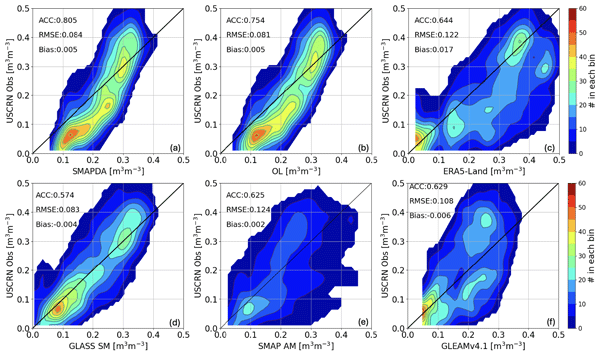
Our study created a high-resolution soil moisture dataset for the eastern US by integrating satellite data with a land surface model and advanced algorithms, achieving 1 km scale analyses. Validated against multiple in situ networks and analysis datasets, it demonstrated superior accuracy. This dataset is vital for understanding soil moisture dynamics, especially during droughts, and highlights the need to mitigate soil-type-dependent biases in the model.
Geng Xia, Mike Optis, Georgios Deskos, Michael Sinner, Daniel Mulas Hernando, Julie Kay Lundquist, Andrew Kumler, Miguel Sanchez Gomez, Paul Fleming, and Walter Musial
Wind Energ. Sci. Discuss., https://doi.org/10.5194/wes-2025-154, https://doi.org/10.5194/wes-2025-154, 2025
Revised manuscript not accepted
Short summary
Short summary
This study examines energy losses from cluster wakes in offshore wind farms along the U.S. East Coast. Simulations based on real lease projects show that large wind speed deficits do not always cause equally large energy losses. The energy loss method revealed wake areas up to 30 % larger than traditional estimates, underscoring the need to consider both wind speed deficit and energy loss in planning offshore wind development.
Mari R. Tye, Ming Ge, Jadwiga H. Richter, Ethan D. Gutmann, Allyson Rugg, Cindy L. Bruyère, Sue Ellen Haupt, Flavio Lehner, Rachel McCrary, Andrew J. Newman, and Andy Wood
Hydrol. Earth Syst. Sci., 29, 1117–1133, https://doi.org/10.5194/hess-29-1117-2025, https://doi.org/10.5194/hess-29-1117-2025, 2025
Short summary
Short summary
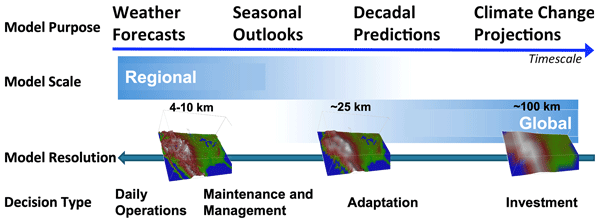
There is a perceived mismatch between the spatial scales on which global climate models can produce data and those needed for water management decisions. However, poor communication of specific metrics relevant to local decisions is also a problem. We assessed the credibility of a set of water management decision metrics in the Community Earth System Model v2 (CESM2). CESM2 shows potentially greater use of its output in long-range water management decisions.
Ye Liu, Timothy W. Juliano, Raghavendra Krishnamurthy, Brian J. Gaudet, and Jungmin Lee
Wind Energ. Sci., 10, 483–495, https://doi.org/10.5194/wes-10-483-2025, https://doi.org/10.5194/wes-10-483-2025, 2025
Short summary
Short summary
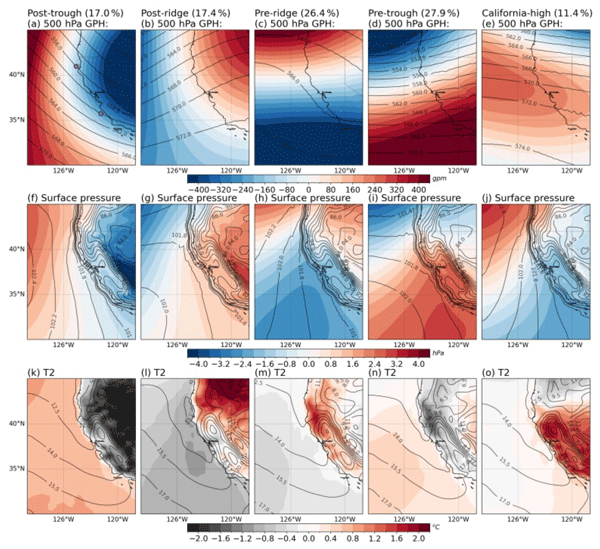
Our study reveals how different weather patterns influence wind conditions off the US West Coast. We identified key weather patterns affecting wind speeds at potential wind farm sites using advanced machine learning. This research helps improve weather prediction models, making wind energy production more reliable and efficient.
Lindsay M. Sheridan, Raghavendra Krishnamurthy, William I. Gustafson Jr., Ye Liu, Brian J. Gaudet, Nicola Bodini, Rob K. Newsom, and Mikhail Pekour
Wind Energ. Sci., 9, 741–758, https://doi.org/10.5194/wes-9-741-2024, https://doi.org/10.5194/wes-9-741-2024, 2024
Short summary
Short summary
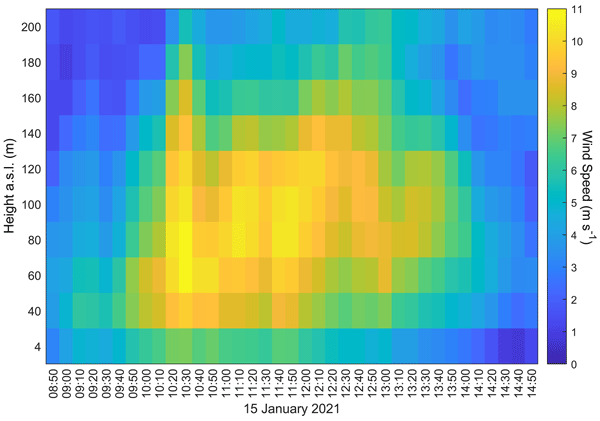
In 2020, lidar-mounted buoys owned by the US Department of Energy (DOE) were deployed off the California coast in two wind energy lease areas and provided valuable year-long analyses of offshore low-level jet (LLJ) characteristics at heights relevant to wind turbines. In addition to the LLJ climatology, this work provides validation of LLJ representation in atmospheric models that are essential for assessing the potential energy yield of offshore wind farms.
Timothy W. Juliano, Fernando Szasdi-Bardales, Neil P. Lareau, Kasra Shamsaei, Branko Kosović, Negar Elhami-Khorasani, Eric P. James, and Hamed Ebrahimian
Nat. Hazards Earth Syst. Sci., 24, 47–52, https://doi.org/10.5194/nhess-24-47-2024, https://doi.org/10.5194/nhess-24-47-2024, 2024
Short summary
Short summary
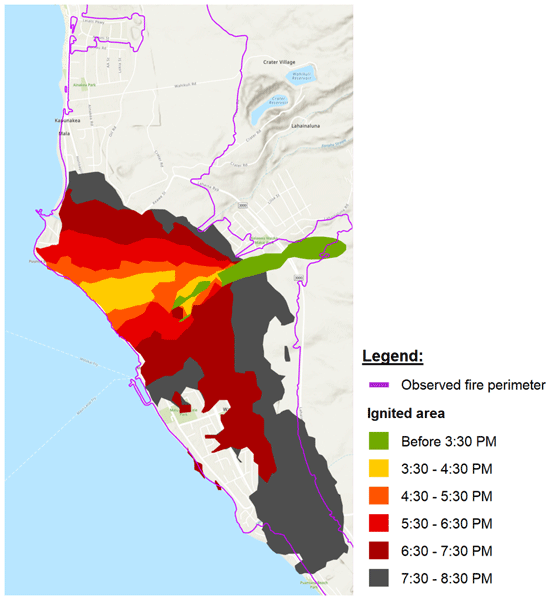
Following the destructive Lahaina Fire in Hawaii, our team has modeled the wind and fire spread processes to understand the drivers of this devastating event. The simulation results show that extreme winds with high variability, a fire ignition close to the community, and construction characteristics led to continued fire spread in multiple directions. Our results suggest that available modeling capabilities can provide vital information to guide decision-making during wildfire events.
Raghavendra Krishnamurthy, Gabriel García Medina, Brian Gaudet, William I. Gustafson Jr., Evgueni I. Kassianov, Jinliang Liu, Rob K. Newsom, Lindsay M. Sheridan, and Alicia M. Mahon
Earth Syst. Sci. Data, 15, 5667–5699, https://doi.org/10.5194/essd-15-5667-2023, https://doi.org/10.5194/essd-15-5667-2023, 2023
Short summary
Short summary
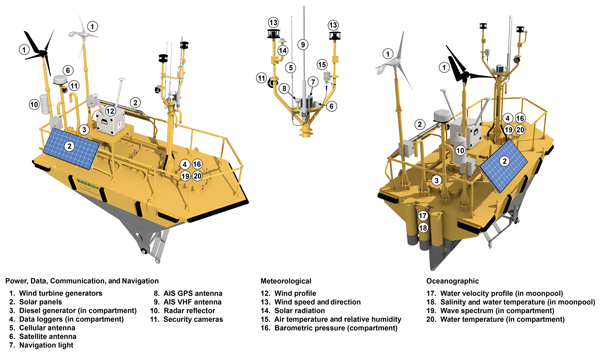
Our understanding and ability to observe and model air–sea processes has been identified as a principal limitation to our ability to predict future weather. Few observations exist offshore along the coast of California. To improve our understanding of the air–sea transition zone and support the wind energy industry, two buoys with state-of-the-art equipment were deployed for 1 year. In this article, we present details of the post-processing, algorithms, and analyses.
Da Gao, Bin Zhao, Shuxiao Wang, Yuan Wang, Brian Gaudet, Yun Zhu, Xiaochun Wang, Jiewen Shen, Shengyue Li, Yicong He, Dejia Yin, and Zhaoxin Dong
Atmos. Chem. Phys., 23, 14359–14373, https://doi.org/10.5194/acp-23-14359-2023, https://doi.org/10.5194/acp-23-14359-2023, 2023
Short summary
Short summary
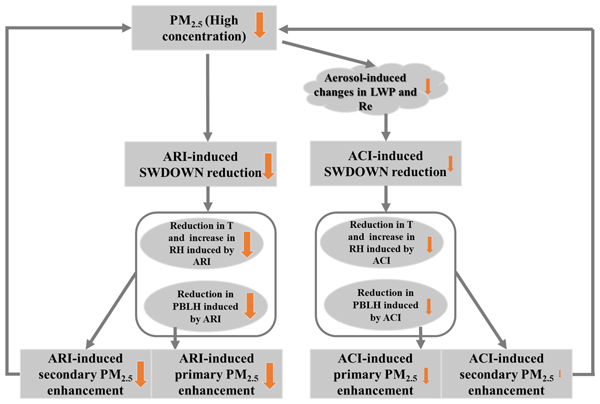
Surface PM2.5 concentrations can be enhanced by aerosol–radiation interactions (ARIs) and aerosol–cloud interactions (ACIs). In this study, we found PM2.5 enhancement induced by ACIs shows a significantly smaller decrease ratio than that induced by ARIs in China with anthropogenic emission reduction from 2013 to 2021, making ACIs more important for enhancing PM2.5 concentrations. ACI-induced PM2.5 enhancement needs to be emphatically considered to meet the national PM2.5 air quality standard.
Sue Ellen Haupt, Branko Kosović, Larry K. Berg, Colleen M. Kaul, Matthew Churchfield, Jeffrey Mirocha, Dries Allaerts, Thomas Brummet, Shannon Davis, Amy DeCastro, Susan Dettling, Caroline Draxl, David John Gagne, Patrick Hawbecker, Pankaj Jha, Timothy Juliano, William Lassman, Eliot Quon, Raj K. Rai, Michael Robinson, William Shaw, and Regis Thedin
Wind Energ. Sci., 8, 1251–1275, https://doi.org/10.5194/wes-8-1251-2023, https://doi.org/10.5194/wes-8-1251-2023, 2023
Short summary
Short summary
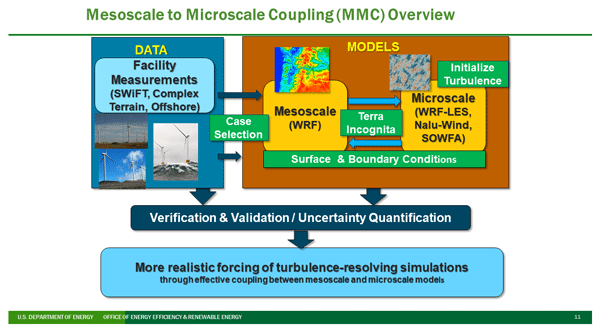
The Mesoscale to Microscale Coupling team, part of the U.S. Department of Energy Atmosphere to Electrons (A2e) initiative, has studied various important challenges related to coupling mesoscale models to microscale models. Lessons learned and discerned best practices are described in the context of the cases studied for the purpose of enabling further deployment of wind energy. It also points to code, assessment tools, and data for testing the methods.
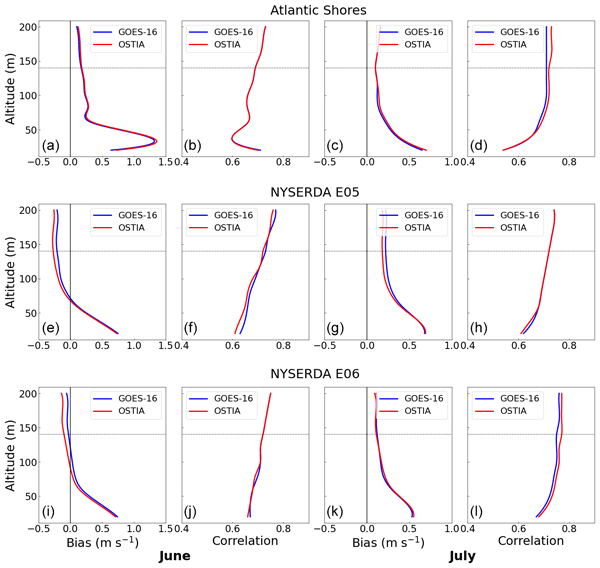
Stephanie Redfern, Mike Optis, Geng Xia, and Caroline Draxl
Wind Energ. Sci., 8, 1–23, https://doi.org/10.5194/wes-8-1-2023, https://doi.org/10.5194/wes-8-1-2023, 2023
Short summary
Short summary
As wind farm developments expand offshore, accurate forecasting of winds above coastal waters is rising in importance. Weather models rely on various inputs to generate their forecasts, one of which is sea surface temperature (SST). In this study, we evaluate how the SST data set used in the Weather Research and Forecasting model may influence wind characterization and find meaningful differences between model output when different SST products are used.
Paul Veers, Katherine Dykes, Sukanta Basu, Alessandro Bianchini, Andrew Clifton, Peter Green, Hannele Holttinen, Lena Kitzing, Branko Kosovic, Julie K. Lundquist, Johan Meyers, Mark O'Malley, William J. Shaw, and Bethany Straw
Wind Energ. Sci., 7, 2491–2496, https://doi.org/10.5194/wes-7-2491-2022, https://doi.org/10.5194/wes-7-2491-2022, 2022
Short summary
Short summary
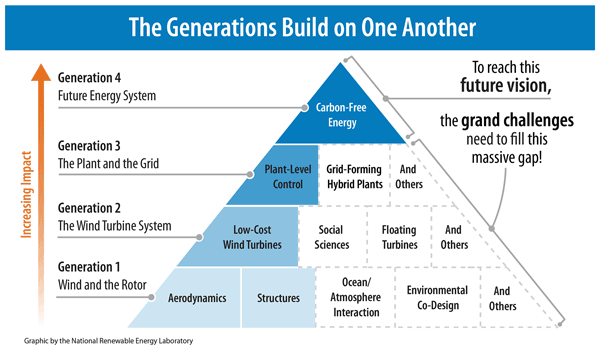
Wind energy will play a central role in the transition of our energy system to a carbon-free future. However, many underlying scientific issues remain to be resolved before wind can be deployed in the locations and applications needed for such large-scale ambitions. The Grand Challenges are the gaps in the science left behind during the rapid growth of wind energy. This article explains the breadth of the unfinished business and introduces 10 articles that detail the research needs.
Lindsay M. Sheridan, Raghu Krishnamurthy, Gabriel García Medina, Brian J. Gaudet, William I. Gustafson Jr., Alicia M. Mahon, William J. Shaw, Rob K. Newsom, Mikhail Pekour, and Zhaoqing Yang
Wind Energ. Sci., 7, 2059–2084, https://doi.org/10.5194/wes-7-2059-2022, https://doi.org/10.5194/wes-7-2059-2022, 2022
Short summary
Short summary
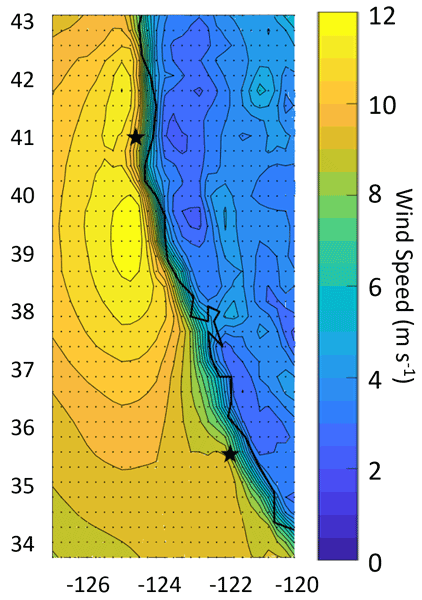
Using observations from lidar buoys, five reanalysis and analysis models that support the wind energy community are validated offshore and at rotor-level heights along the California Pacific coast. The models are found to underestimate the observed wind resource. Occasions of large model error occur in conjunction with stable atmospheric conditions, wind speeds associated with peak turbine power production, and mischaracterization of the diurnal wind speed cycle in summer months.

Geng Xia, Caroline Draxl, Michael Optis, and Stephanie Redfern
Wind Energ. Sci., 7, 815–829, https://doi.org/10.5194/wes-7-815-2022, https://doi.org/10.5194/wes-7-815-2022, 2022
Short summary
Short summary
In this study, we propose a new method to detect sea breeze events from the Weather Research and Forecasting simulation. Our results suggest that the method can identify the three different types of sea breezes in the model simulation. In addition, the coastal impact, seasonal distribution and offshore wind potential associated with each type of sea breeze differ significantly, highlighting the importance of identifying the correct type of sea breeze in numerical weather/wind energy forecasting.
Cited articles
Burk, S. D. and Thompson, W. T.: The summertime low-level jet and marine boundary layer structure along the California coast, Mon. Weather Rev., 124, 668–686, https://doi.org/10.1175/1520-0493(1996)124<0668:TSLLJA>2.0.CO;2, 1996. a
Charnock, H.: Wind stress on a water surface, Q. J. Roy. Meteorol. Soc., 81, 639–640, 1955. a
Deskos, G., Lee, J. C. Y., Draxl, C., and Sprague, M. A.: Review of wind–wave coupling models for large-eddy simulation of the marine atmospheric boundary layer, J. Atmos. Sci., 78, 3025–3045, https://doi.org/10.1175/JAS-D-21-0003.1, 2021. a
DOI-USGS: COAWST, GitHub [code], https://github.com/jcwarner-usgs/COAWST.git (last access: 31 July 2026), 2026. a
Drennan, W. M., Graber, H. C., Hauser, D., and Quentin, C.: On the wave age dependence of wind stress over pure wind seas, J. Geophys. Res.-Oceans, 108, https://doi.org/10.1029/2000JC000715, 2003. a
Dvorak, M. J., Arscher, C. L., and Jacobson, M. Z.: California offshore wind energy potential, Renew. Energy, 35, 1244–1254, https://doi.org/10.1016/j.renene.2009.11.022, 2010. a
Edson, J. B., Jampana, V., Weller, R. A., Bigorre, S. P., Plueddemann, A. J., Fairall, C. W., Miller, S. D., Mahrt, L., Vickers, D., and Bersbach, H.: On the exchange of momentum over the open ocean, J. Phys. Oceanogr., 43, 1589–1610, https://doi.org/10.1175/JPO-D-12-0173.1, 2013. a
Fairall, C. W., Bradley, E. F., Hare, J. E., Grachev, A. A., and Edson, J. B.: Bulk parameterization of air–sea fluxes: Updates and verification for the COARE algorithm, J. Climate, 16, 571–591, 2003. a
Gaudet, B. J., Medina, G. G., Krishnamurthy, R., Shaw, W. J., Sheridan, L. M., Yang, Z., Newsom, R. K., and Pekour, M.: Evaluation of Coupled Wind–Wave Model Simulations of Offshore Winds in the Mid-Atlantic Bight Using Lidar-Equipped Buoys, Mon. Weather Rev., 150, 1377–1395, https://doi.org/10.1175/MWR-D-21-0166.1, 2022. a
Gaudet, B. J., Medina, G. G., Krishnamurthy, R., Sheridan, L. M., Yang, Z., Newsom, R. K., Pekour, M. S., Gustafson, W. I., and Liu, J.: Assessing impacts of waves on hub height winds off the U.S. West Coast using lidar buoys and coupled modeling approaches, Pacific Northwest National Laboratory, PNNL Technical Report, https://doi.org/10.2172/2337529, 2024. a
Haupt, S. E., Kosovic, B., Berg, L. K., Kaul, C. M., Churchfield, M., Mirocha, J., Allaerts, D., Brummet, T., Davis, S., DeCastro, A., Dettling, S., Draxl, C., Gagne, D. J., Hawbecker, P., Jha, P., Juliano, T., Lassman, W., Quon, E., Rai, R. K., Robinson, M., Shaw, W., and Thedin, R.: Lessons learned in coupling atmospheric models across scales for onshore and offshore wind energy, Wind Energ. Sci., 8, 1251–1275, https://doi.org/10.5194/wes-8-1251-2023, 2023. a
Hendricks, E. A.: COAWST 1D and 3D PBL simulation codebases, namelists, and observations, Zenodo [data set], https://doi.org/10.5281/zenodo.18157794, 2026. a
Hersbach, H., Bell, B., Berrisford, P., Hirahara, S., Horányi, A., Muñoz-Sabater, J., Nicolas, J., Carole Peubey, R. R., Schepers, D., Simmons, A., Soci, C., Abdalla, S., Abellan, X., Balsamo, G., Bechtold, P., Biavati, G., Bidlot, J., Bonavita, M., Chiara, G. D., Dahlgren, P., Dee, D., Diamantakis, M., Dragani, R., Flemming, J., Forbes, R., Fuentes, M., Geer, A., Haimberger, L., Healy, S., Hogan, R. J., Hólm, E., Janisková, M., Keeley, S., Laloyaux, P., Lopez, P., Lupu, C., Radnoti, G., de Rosnay, P., Rozum, I., Vamborg, F., Villaume, S., and Thépaut, J.-N.: The ERA5 global reanalysis, Q. J. Roy. Meteorol. Soc., 146, 1999–2049, https://doi.org/10.1002/qj.3803, 2020. a
Holt, T. R.: Mesoscale forcing of a boundary layer jet along the California coast, J. Geophys. Res., 101, 4235–4254, https://doi.org/10.1029/95jd03231, 1996. a
Hong, S.-Y., Noh, Y., and Dudhia, J.: A new vertical diffusion package with an explicit treatment of entrainment processes, Mon. Weather Rev., 134, 2318–2341, https://doi.org/10.1175/MWR3199.1, 2006. a
Iacono, M. J., Delamere, J. S., Mlawer, E. J., Shephard, M. W., Clough, S. A., and Collins, W. D.: Radiative forcing by long-lived greenhouse gases: Calculations with the AER radiative transfer models, J. Geophys. Res., 113, https://doi.org/10.1029/2008JD009944, 2008. a
Jiménez, P. A., Dudhia, J., Gonzalez-Rouco, J. F., Navarro, J., Montavez, J. P., and Garcia-Bustamante, E.: A revised scheme for the WRF surface layer formulation, Mon. Weather Rev., 140, 898–918, https://doi.org/10.1175/MWR-D-11-00056.1, 2012. a
Juliano, T. W.: WRF, GitHub [code], https://github.com/twjuliano/WRF/tree/develop_3dpbl_on_top (last access: 31 July 2026), 2026. a
Juliano, T. W., Kosović, B., Jiménez, P. A., Eghdami, M., Haupt, S. E., and Martilli, A.: “Gray Zone” simulations using a three-dimensional planetary boundary layer parameterization in the Weather Research and Forecasting Model, Mon. Weather Rev., 150, 1585–1619, https://doi.org/10.1175/MWR-D-21-0164.1, 2022. a, b, c, d, e
Juliano, T. W., McGinnis, S., Bukovsky, M. S., Liu, Y., Brummet, T., Haupt, S. E., and Krishnamurthy, R.: Examining future changes in coastal low-level jet properties offshore California through dynamical downscaling, Environ. Res. Lett., 20, https://doi.org/10.1088/1748-9326/adb16b, 2025. a
Kosović, B., Jiménez, P. A., Juliano, T. W., Martilli, A., Eghdami, M., Barros, A. P., and Haupt, S. E.: Three-dimensional planetary boundary layer parameterization for high-resolution mesoscale simulations, J. Phys.: Conf. Ser., 1452, 012080, https://doi.org/10.1088/1742-6596/1452/1/012080, 2020. a, b, c
Larson, J., Jacob, R., and Ong, E.: The Model Coupling Toolkit: A new Fortran90 toolkit for building multiphysics parallel coupled models., Int. J. High Perf. Comp. App., 19, 277–292, 2005. a
NCAR: COAWST-3DPBL, GitHub [code], https://github.com/NCAR/COAWST-3DPBL (last access: 31 July 2026), 2026. a
Parish, T. R.: Forcing of the Summertime Low-Level Jet along the California Coast, J. Appl. Meteorol. Clim., 39, 2421–2433, https://doi.org/10.1175/1520-0450(2000)039<2421:FOTSLL>2.0.CO;2, 2000. a, b
Patton, E. G., Sullivan, P. P., Kosovic, B., Dudhia, J., Marht, L., Zagar, M., and Maric, T.: On the Influence of Swell Propagation Angle on Surface Drag, J. Appl. Meteorol. Clim., 58, 1039–1059, https://doi.org/10.1175/JAMC-D-18-0211.1, 2019. a
Sheridan, L. M., Krishnamurthy, R., García Medina, G., Gaudet, B. J., Gustafson Jr., W. I., Mahon, A. M., Shaw, W. J., Newsom, R. K., Pekour, M., and Yang, Z.: Offshore reanalysis wind speed assessment across the wind turbine rotor layer off the United States Pacific coast, Wind Energ. Sci., 7, 2059–2084, https://doi.org/10.5194/wes-7-2059-2022, 2022. a, b
Skamarock, W. C., Klemp, J. B., Dudhia, J., Gill, D. O., Liu, Z., Berner, J., Wang, W., Powers, J. G., Duda, M. G., Barker, D., and Huang, X.-Y.: A description of the Advanced Research WRF version 4, NCAR Tech. Note NCAR/TN-556+STR, NCAR, https://opensky.ucar.edu/system/files/2024-08/technotes_576.pdf (last access: 31 July 2026), 2019. a, b
Sullivan, P. and McWilliams, J. C.: Dynamics of winds and currents coupled to surface waves, Annu. Rev. Fluid Mech., 42, 19–42, 2010. a
Taylor, P. K. and Yelland, M. J.: The dependence of sea surface roughness on the height and steepness of the waves, J. Phys. Oceanography, 31, 572–590, https://doi.org10.1175/15200485(2001)031$<$0572:TDOSSR$>$2.0. CO;2, 2001. a, b
Tewari, M., Chen, F., Wang, W., Dudhia, J., LeMone, M. A., Mitchell, K., Ek, M., Gayno, G., Wegiel, J., and Cuenca, R. H.: Implementation and verification of the unified Noah land surface model in the WRF model, in: 20th Conference on Weather Analysis and Forecasting/16th Conference on Numerical Weather Prediction, 1–15, https://www.scopus.com/pages/publications/2442555920 (last access: 31 July 2026), 2004. a
Thompson, G. and Eidhammer, T.: A study of aerosol impacts on clouds and precipitation development in a large winter cyclone, J. Atmos. Sci., 71, 3636–3658, 2014. a
Warner, J. C., Armstrong, B., He, R., and Zambon, J. B.: Development of a Coupled Ocean–Atmosphere–Wave–Sediment Transport (COAWST) Modeling System, Ocean Model., 35, 230–244, https://doi.org/10.1016/j.ocemod.2010.07.010, 2010. a, b, c
Wyngaard, J. C.: Toward numerical modeling in the “Terra Incognita”, J. Atmos. Sci., 61, 1816–1826, https://doi.org/10.1175/1520-0469(2004)061<1816:TNMITT>2.0.CO;2, 2004. a
Zemba, J. and Friehe, C. A.: The marine atmospheric boundary layer jet in the Coastal Ocean Dynamics Experiment, J. Geophys. Res., 92, 1489–1496, https://doi.org/10.1029/JC092iC02p01489, 1987. a
Short summary
A three-dimensional planetary boundary layer (PBL) parameterization, suited for mesoscale model grid spacings of 100–1000 m with improved treatment of unresolved horizontal mixing, is added to a coupled atmosphere/wave modeling system and the first coupled simulations are executed using the parameterization. Simulations of a significant wind-wave event demonstrate that the new parameterization has similar behaviors as one-dimensional PBL parameterizations and compares well with observations.
A three-dimensional planetary boundary layer (PBL) parameterization, suited for mesoscale model...


