
Articles | Volume 19, issue 15
https://doi.org/10.5194/gmd-19-7279-2026
© Author(s) 2026. This work is distributed under
the Creative Commons Attribution 4.0 License.
the Creative Commons Attribution 4.0 License.
https://doi.org/10.5194/gmd-19-7279-2026
© Author(s) 2026. This work is distributed under
the Creative Commons Attribution 4.0 License.
the Creative Commons Attribution 4.0 License.
Model evaluation paper
| 
06 Aug 2026
Model evaluation paper |
| 06 Aug 2026
| 06 Aug 2026
Global fully coupled climate-aerosol CMA-CPSv4 – Part 1: Aerosol simulation performance
Mengzhe Zheng
Chinese Academy of Meteorological Sciences, China Meteorological Administration, Beijing 100081, China
University of Chinese Academy of Sciences, Beijing 100049, China
Earth System Modeling and Prediction Centre, China Meteorological Administration, Beijing 100081, China

Chinese Academy of Meteorological Sciences, China Meteorological Administration, Beijing 100081, China
Earth System Modeling and Prediction Centre, China Meteorological Administration, Beijing 100081, China
State Key Laboratory of Severe Weather Meteorological Science and Technology, China Meteorological Administration, Beijing 100081, China
Yixiong Lu
Earth System Modeling and Prediction Centre, China Meteorological Administration, Beijing 100081, China
Weihua Jie
Earth System Modeling and Prediction Centre, China Meteorological Administration, Beijing 100081, China
Yiming Liu
Earth System Modeling and Prediction Centre, China Meteorological Administration, Beijing 100081, China
Xiaoge Xin
Earth System Modeling and Prediction Centre, China Meteorological Administration, Beijing 100081, China
Jie Zhang
Earth System Modeling and Prediction Centre, China Meteorological Administration, Beijing 100081, China
Earth System Modeling and Prediction Centre, China Meteorological Administration, Beijing 100081, China
Xindan Zhang
Earth System Modeling and Prediction Centre, China Meteorological Administration, Beijing 100081, China
Jiajie Yang
Chinese Academy of Meteorological Sciences, China Meteorological Administration, Beijing 100081, China
Earth System Modeling and Prediction Centre, China Meteorological Administration, Beijing 100081, China
Related authors
Mengzhe Zheng, Tongwen Wu, He Zhao, Weihua Jie, Yong Wang, Yong Zhang, Xiaole Su, and Ayixianmuguli Abulaiti
EGUsphere, https://doi.org/10.5194/egusphere-2026-5719, https://doi.org/10.5194/egusphere-2026-5719, 2026
This preprint is open for discussion and under review for Geoscientific Model Development (GMD).
Short summary
Short summary
CMA-CPSv4, the latest climate prediction system of the China Meteorological Administration, incorporates aerosol prediction and aerosol–climate interactions. Twenty years of monthly initialized 30-day hindcasts show useful global skill for five major aerosol species up to 2 weeks, with skill during weeks 3–4 mainly over the tropics and parts of North America, southern India, and southeastern China.
Mengzhe Zheng, Tongwen Wu, He Zhao, Weihua Jie, Yong Wang, Yong Zhang, Xiaole Su, and Ayixianmuguli Abulaiti
EGUsphere, https://doi.org/10.5194/egusphere-2026-5719, https://doi.org/10.5194/egusphere-2026-5719, 2026
This preprint is open for discussion and under review for Geoscientific Model Development (GMD).
Short summary
Short summary
CMA-CPSv4, the latest climate prediction system of the China Meteorological Administration, incorporates aerosol prediction and aerosol–climate interactions. Twenty years of monthly initialized 30-day hindcasts show useful global skill for five major aerosol species up to 2 weeks, with skill during weeks 3–4 mainly over the tropics and parts of North America, southern India, and southeastern China.
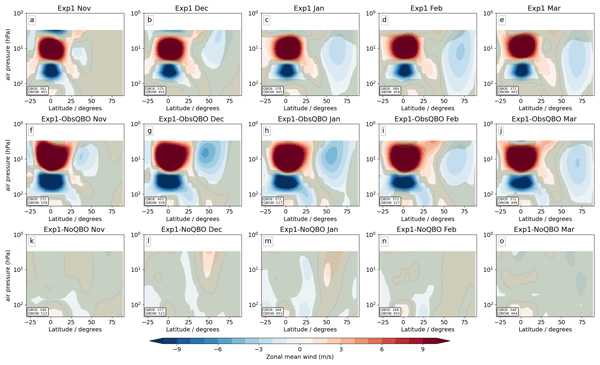
Martin B. Andrews, Neal Butchart, James A. Anstey, Ewa Bednarz, Dillon Elsbury, Jorge L. García-Franco, Vinay Kumar, Froila M. Palmeiro, Natasha E. Trencham, Kohei Yoshida, Zhaoyang Chai, Dong-Chan Hong, Kai Huang, Aleena M. Jaison, Yoshio Kawatani, Jeff R. Knight, Pu Lin, François Lott, Yixiong Lu, Hiroaki Naoe, Scott M. Osprey, Jadwiga H. Richter, Federico Serva, Seok-Woo Son, Qi Tang, Shingo Watanabe, and Jinbo Xie
Weather Clim. Dynam., 7, 1797–1820, https://doi.org/10.5194/wcd-7-1797-2026, https://doi.org/10.5194/wcd-7-1797-2026, 2026
Short summary
Short summary
The observed winds in the upper atmosphere over the equator have alternating easterly and westerly regions that descend towards the lower atmosphere before dissipating, with a period of approximately 28 months. This is known as the Quasi-Biennial Oscillation (QBO). The QBO is known to influence remote regions of the atmosphere. This paper details the results of multi-model experiments where the QBO is nudged towards the observed QBO allowing the assessment of these remote connections.
Aleena M. Jaison, Lesley J. Gray, Scott M. Osprey, James A. Anstey, Martin B. Andrews, Neal Butchart, Zhaoyang Chai, Dong-Chan Hong, Kai Huang, Yoshio Kawatani, Jeff R. Knight, Pu Lin, Francois Lott, Yixiong Lu, Hiroaki Naoe, Jadwiga H. Richter, Nan Rosenbloom, Federico Serva, Anne K. Smith, Seok-Woo Son, Qi Tang, Shingo Watanabe, Jinbo Xie, and Kohei Yoshida
EGUsphere, https://doi.org/10.5194/egusphere-2026-4135, https://doi.org/10.5194/egusphere-2026-4135, 2026
Short summary
Short summary
The tropical upper stratosphere has winds that switch between westerly and easterly every six months known as the semi-annual oscillation (SAO). Climate models commonly show an easterly bias in the SAO. We analysed data from many models to test if correcting the biases in winds lower in the stratosphere could improve SAO. We find correcting the lower-level wind biases reduces the SAO easterly bias, though further improvements, such as better representation of atmospheric waves, are still needed.
Kai Huang, Chang-Hyun Park, Seung-Yoon Back, Jorge L. García-Franco, Hera Kim, Pu Lin, Scott Osprey, Jadwiga Richter, Chih-Chieh Chen, Seok-Woo Son, Shigeo Yoden, Yuna Lim, Neal Butchart, James Anstey, Yoshio Kawatani, Martin B. Andrews, Francois Lott, Yixiong Lu, Zhaoyang Chai, Nan Rosenbloom, Qi Tang, Jinbo Xie, Federico Serva, Dong-Chan Hong, Shingo Watanabe, Aleena M. Jaison, Hiroaki Naoe, and Kohei Yoshida
EGUsphere, https://doi.org/10.5194/egusphere-2026-3744, https://doi.org/10.5194/egusphere-2026-3744, 2026
Short summary
Short summary
The tropical atmosphere has large-scale wind and rainfall patterns shaping weather worldwide. Winds high above the tropics are thought to influence a major tropical rainfall system, but climate models fail to reproduce this link. We tested 12 climate models after constraining their high-altitude winds to match observations. Although the winds then matched, the models failed to capture the tropical response, as they did not realistically simulate it. Improving this is key to better prediction.
Hyun-Kyu Lee, James A. Anstey, Hye-Yeong Chun, Shingo Watanabe, Francois Lott, Zhaoyang Chai, Yixiong Lu, Qi Tang, Jinbo Xie, Dong-Chan Hong, Seok-Woo Son, Federico Serva, Pu Lin, Martin B. Andrews, Neal Butchart, Aleena M. Jaison, Jeff R. Knight, Scott Osprey, Hiroaki Naoe, Kohei Yoshida, Yoshio Kawatani, and Jadwiga H. Richter
EGUsphere, https://doi.org/10.5194/egusphere-2026-2856, https://doi.org/10.5194/egusphere-2026-2856, 2026
Short summary
Short summary
This study investigates the systematic biases in equatorial wave forcing of the quasi-biennial oscillation (QBO) by comparing internally generated and bias-corrected experiments using a multi-model ensemble. Although nudging effectively mitigates QBO biases, systematic biases in wave forcing are not fully resolved. The equatorial wave forcing in the lower stratosphere remains weaker than that in reanalyses, while an eastward wave forcing bias is observed in the mid-to-upper stratosphere.
James A. Anstey, Neal Butchart, Scott Osprey, Yoshio Kawatani, Kevin Hamilton, Jadwiga H. Richter, Tim Stockdale, Martin B. Andrews, Zhaoyang Chai, Paolo Davini, Dong-Chan Hong, Kai Huang, Aleena M. Jaison, Tobias Kerzenmacher, Jeff R. Knight, Pu Lin, Francois Lott, Yixiong Lu, Hiroaki Naoe, Federico Serva, Isla Simpson, Seok-Woo Son, Qi Tang, Shingo Watanabe, Jinbo Xie, and Kohei Yoshida
EGUsphere, https://doi.org/10.5194/egusphere-2026-1165, https://doi.org/10.5194/egusphere-2026-1165, 2026
Short summary
Short summary
We describe experiments where modelled tropical stratosphere winds are adjusted by "nudging" them toward realistic time-evolving eastward and westward Quasi-Biennial Oscillation (QBO) winds. The effects of this bias correction on other atmospheric processes, such as the stratospheric polar vortex or tropical waves that force the QBO, can then be assessed. We describe details of the experiments, the multi-model ensemble that has performed them, and basic validation of the nudging response.
David D. Parrish, Charles A. Mims, Richard G. Derwent, Ian C. Faloona, Henry Bowman, Tongwen Wu, Jie Zhang, Makoto Deushi, and Naga Oshima
EGUsphere, https://doi.org/10.5194/egusphere-2026-1939, https://doi.org/10.5194/egusphere-2026-1939, 2026
Preprint archived
Short summary
Short summary
Nearly a century of ozone concentration measurements (the last half continuous) is now available in the northern mid-latitude troposphere. Atmospheric models cannot yet accurately simulate that record. We compare measured and simulated long-term changes and seasonal cycles of background ozone to quantify some model shortcomings, and suggest that their important causes may be inadequate model treatments of ozone precursor evolution and vertical transport out of the planetary boundary layer.
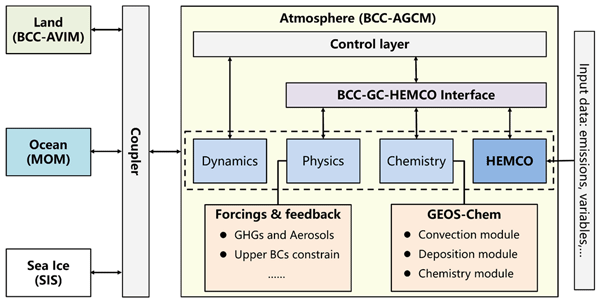
Ruize Sun, Xiao Lu, Haipeng Lin, Tongwen Wu, Xingpei Ye, Lu Shen, Xuan Wang, Haolin Wang, Jingyu Li, Ni Lu, Jiayin Su, Jie Zhang, Fang Zhang, Xiaoge Xin, Xiong Liu, Xiao Yang, and Lin Zhang
Geosci. Model Dev., 19, 2111–2136, https://doi.org/10.5194/gmd-19-2111-2026, https://doi.org/10.5194/gmd-19-2111-2026, 2026
Short summary
Short summary
We present the development of a global chemistry-climate coupled model BCC-GEOS-Chem v2.0, with improved representation of comprehensive troposphere-stratosphere chemistry and new capability to account for radiative-cloud feedbacks from short-lived climate forcers. The development of the BCC-GEOS-Chem v2.0 provides a useful framework for investigating climate–chemistry interactions and for future projections of global atmospheric chemistry
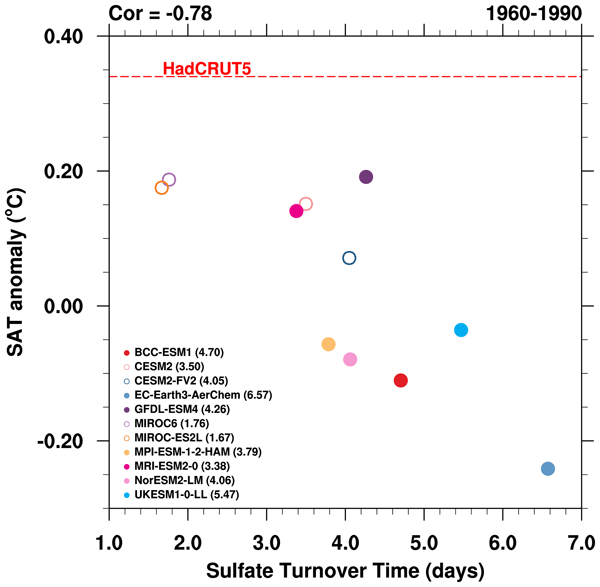
Jie Zhang, Kalli Furtado, Steven T. Turnock, Yixiong Lu, Tongwen Wu, Fang Zhang, Xiaoge Xin, and Yuyun Liu
Atmos. Chem. Phys., 26, 2175–2189, https://doi.org/10.5194/acp-26-2175-2026, https://doi.org/10.5194/acp-26-2175-2026, 2026
Short summary
Short summary
Aerosol cooling has been identified as a key driver of the cold biases in CMIP6 (sixth Coupled Model Inter-comparison Project) models. We demonstrate the critical role of sulfate burden anomaly and the contribution of sulfur removal processes. Faster sulfate deposition directly lowers atmospheric sulfate levels, while enhanced SO₂ deposition reduces the precursor for sulfate formation. The systematically short sulfate lifetime implies that model improvements should focus on SO₂ deposition processes, rather than sulfate deposition.
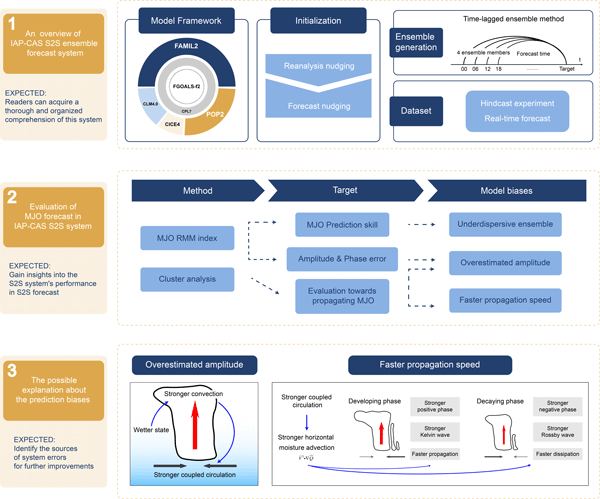
Yangke Liu, Qing Bao, Bian He, Xiaofei Wu, Jing Yang, Yimin Liu, Guoxiong Wu, Tao Zhu, Siyuan Zhou, Yao Tang, Ankang Qu, Yalan Fan, Anling Liu, Dandan Chen, Zhaoming Luo, Xing Hu, and Tongwen Wu
Geosci. Model Dev., 17, 6249–6275, https://doi.org/10.5194/gmd-17-6249-2024, https://doi.org/10.5194/gmd-17-6249-2024, 2024
Short summary
Short summary
We give an overview of the Institute of Atmospheric Physics–Chinese Academy of Sciences subseasonal-to-seasonal ensemble forecasting system and Madden–Julian Oscillation forecast evaluation of the system. Compared to other S2S models, the IAP-CAS model has its benefits but also biases, i.e., underdispersive ensemble, overestimated amplitude, and faster propagation speed when forecasting MJO. We provide a reason for these biases and prospects for further improvement of this system in the future.
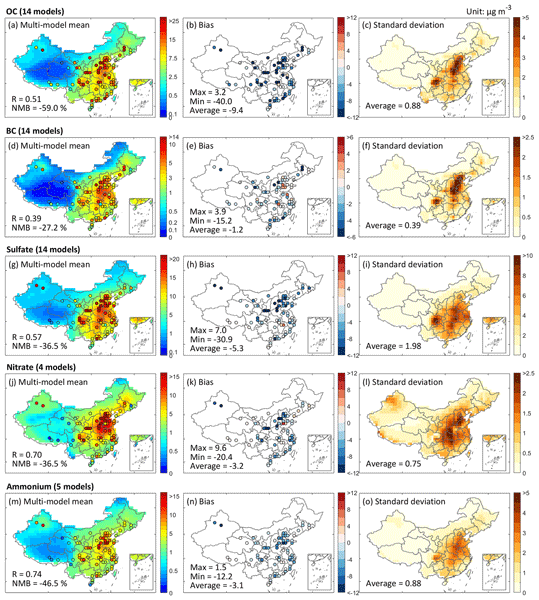
Fangxuan Ren, Jintai Lin, Chenghao Xu, Jamiu A. Adeniran, Jingxu Wang, Randall V. Martin, Aaron van Donkelaar, Melanie S. Hammer, Larry W. Horowitz, Steven T. Turnock, Naga Oshima, Jie Zhang, Susanne Bauer, Kostas Tsigaridis, Øyvind Seland, Pierre Nabat, David Neubauer, Gary Strand, Twan van Noije, Philippe Le Sager, and Toshihiko Takemura
Geosci. Model Dev., 17, 4821–4836, https://doi.org/10.5194/gmd-17-4821-2024, https://doi.org/10.5194/gmd-17-4821-2024, 2024
Short summary
Short summary
We evaluate the performance of 14 CMIP6 ESMs in simulating total PM2.5 and its 5 components over China during 2000–2014. PM2.5 and its components are underestimated in almost all models, except that black carbon (BC) and sulfate are overestimated in two models, respectively. The underestimation is the largest for organic carbon (OC) and the smallest for BC. Models reproduce the observed spatial pattern for OC, sulfate, nitrate and ammonium well, yet the agreement is poorer for BC.
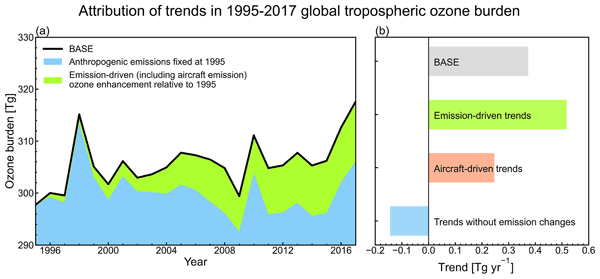
Haolin Wang, Xiao Lu, Daniel J. Jacob, Owen R. Cooper, Kai-Lan Chang, Ke Li, Meng Gao, Yiming Liu, Bosi Sheng, Kai Wu, Tongwen Wu, Jie Zhang, Bastien Sauvage, Philippe Nédélec, Romain Blot, and Shaojia Fan
Atmos. Chem. Phys., 22, 13753–13782, https://doi.org/10.5194/acp-22-13753-2022, https://doi.org/10.5194/acp-22-13753-2022, 2022
Short summary
Short summary
We report significant global tropospheric ozone increases in 1995–2017 based on extensive aircraft and ozonesonde observations. Using GEOS-Chem (Goddard Earth Observing System chemistry model) multi-decadal global simulations, we find that changes in global anthropogenic emissions, in particular the rapid increases in aircraft emissions, contribute significantly to the increases in tropospheric ozone and resulting radiative impact.
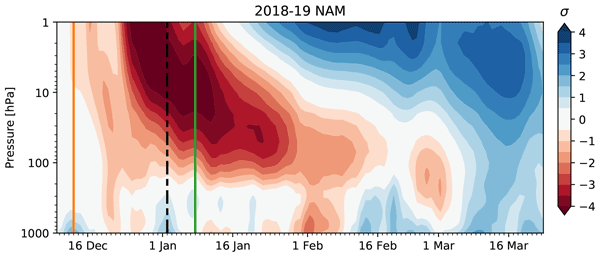
Peter Hitchcock, Amy Butler, Andrew Charlton-Perez, Chaim I. Garfinkel, Tim Stockdale, James Anstey, Dann Mitchell, Daniela I. V. Domeisen, Tongwen Wu, Yixiong Lu, Daniele Mastrangelo, Piero Malguzzi, Hai Lin, Ryan Muncaster, Bill Merryfield, Michael Sigmond, Baoqiang Xiang, Liwei Jia, Yu-Kyung Hyun, Jiyoung Oh, Damien Specq, Isla R. Simpson, Jadwiga H. Richter, Cory Barton, Jeff Knight, Eun-Pa Lim, and Harry Hendon
Geosci. Model Dev., 15, 5073–5092, https://doi.org/10.5194/gmd-15-5073-2022, https://doi.org/10.5194/gmd-15-5073-2022, 2022
Short summary
Short summary
This paper describes an experimental protocol focused on sudden stratospheric warmings to be carried out by subseasonal forecast modeling centers. These will allow for inter-model comparisons of these major disruptions to the stratospheric polar vortex and their impacts on the near-surface flow. The protocol will lead to new insights into the contribution of the stratosphere to subseasonal forecast skill and new approaches to the dynamical attribution of extreme events.

Henry Bowman, Steven Turnock, Susanne E. Bauer, Kostas Tsigaridis, Makoto Deushi, Naga Oshima, Fiona M. O'Connor, Larry Horowitz, Tongwen Wu, Jie Zhang, Dagmar Kubistin, and David D. Parrish
Atmos. Chem. Phys., 22, 3507–3524, https://doi.org/10.5194/acp-22-3507-2022, https://doi.org/10.5194/acp-22-3507-2022, 2022
Short summary
Short summary
A full understanding of ozone in the troposphere requires investigation of its temporal variability over all timescales. Model simulations show that the northern midlatitude ozone seasonal cycle shifted with industrial development (1850–2014), with an increasing magnitude and a later summer peak. That shift reached a maximum in the mid-1980s, followed by a reversal toward the preindustrial cycle. The few available observations, beginning in the 1970s, are consistent with the model simulations.
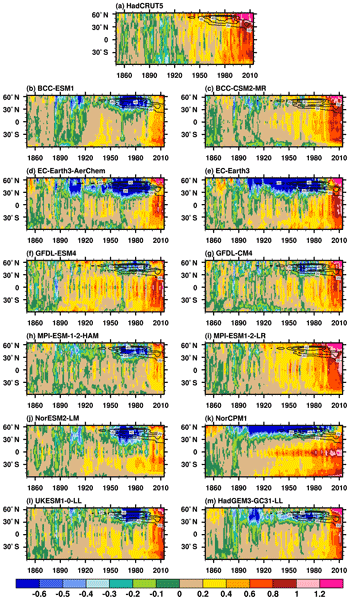
Jie Zhang, Kalli Furtado, Steven T. Turnock, Jane P. Mulcahy, Laura J. Wilcox, Ben B. Booth, David Sexton, Tongwen Wu, Fang Zhang, and Qianxia Liu
Atmos. Chem. Phys., 21, 18609–18627, https://doi.org/10.5194/acp-21-18609-2021, https://doi.org/10.5194/acp-21-18609-2021, 2021
Short summary
Short summary
The CMIP6 ESMs systematically underestimate TAS anomalies in the NH midlatitudes, especially from 1960 to 1990. The anomalous cooling is concurrent in time and space with anthropogenic SO2 emissions. The spurious drop in TAS is attributed to the overestimated aerosol concentrations. The aerosol forcing sensitivity cannot well explain the inter-model spread of PHC biases. And the cloud-amount term accounts for most of the inter-model spread in aerosol forcing sensitivity.
Cited articles
Albrecht, B. A.: Aerosols, cloud microphysics, and fractional cloudiness, Science, 245, 1227–1230, https://doi.org/10.1126/science.245.4923.1227, 1989.
Ångström, A.: On the atmospheric transmission of sun radiation and on dust in the air, Geogr. Ann., 11, 156–166, https://doi.org/10.2307/519399, 1929.
Asaadi, A., Schwinger, J., Lee, H., Tjiputra, J., Arora, V., Séférian, R., Liddicoat, S., Hajima, T., Santana-Falcón, Y., and Jones, C. D.: Carbon cycle feedbacks in an idealized simulation and a scenario simulation of negative emissions in CMIP6 Earth system models, Biogeosciences, 21, 411–435, https://doi.org/10.5194/bg-21-411-2024, 2024.
Bathiany, S., Claussen, M., Brovkin, V., Raddatz, T., and Gayler, V.: Combined biogeophysical and biogeochemical effects of large-scale forest cover changes in the MPI earth system model, Biogeosciences, 7, 1383–1399, https://doi.org/10.5194/bg-7-1383-2010, 2010.
Benedetti, A. and Vitart, F.: Can the direct effect of aerosols improve subseasonal predictability?, Mon. Weather Rev., 146, 3481–3498, https://doi.org/10.1175/MWR-D-17-0282.1, 2018.
Bhattacharjee, P., Zhang, L., Baker, B., Pan, L., Montuoro, R., Grell, G., and McQueen, J.: Evaluation of Aerosol Optical Depth Forecasts from NOAA's Global Aerosol Forecast Model (GEFS-Aerosols), Wea. Forecasting, 38, 225–249, https://doi.org/10.1175/WAF-D-22-0083.1, 2023.
Bodas-Salcedo, A., Ringer, M. A., and Jones, A.: Evaluation of the Surface Radiation Budget in the Atmospheric Component of the Hadley Centre Global Environmental Model (HadGEM1), J. Climate, 21, 4723–4748, https://doi.org/10.1175/2008JCLI2097.1, 2008.
Boucher, O. and Lohmann, U.: The sulphate-CCN-cloud albedo effect – a sensitivity study with two general circulation models, Tellus B, 47, 281–300, https://doi.org/10.3402/tellusb.v47i3.16048, 1995
Buchard, V., Randles, C. A., Da Silva, A. M., Darmenov, A., Colarco, P. R., Govindaraju, R., Ferrare, R., Hair, J., Beyersdorf, A. J., and Ziemba, L. D.: The MERRA-2 aerosol reanalysis, 1980 onward, Part II: Evaluation and case studies, J. Climate, 30, 6851–6872, https://doi.org/10.1175/JCLI-D-16-0613.1, 2017.
Butler, T: Source region definitions for the HTAP3-OPNS multi-model exercise, Zenodo [data set], https://doi.org/10.5281/zenodo.12654038, 2024
Chylek, P., Li, J., Dubey, M. K., Wang, M., and Lesins, G.: Observed and model simulated 20th century Arctic temperature variability: Canadian Earth System Model CanESM2, Atmos. Chem. Phys. Discuss., 11, 22893–22907, https://doi.org/10.5194/acpd-11-22893-2011, 2011.
Collins, W. J., Lamarque, J.-F., Schulz, M., Boucher, O., Eyring, V., Hegglin, M. I., Maycock, A., Myhre, G., Prather, M., and Shindell, D.: AerChemMIP: Quantifying the effects of chemistry and aerosols in CMIP6, Geosci. Model Dev., 10, 585–607, https://doi.org/10.1007/s00376-020-0151-2, 2017.
Crippa, M., Guizzardi, D., Butler, T., Keating, T., Wu, R., Kaminski, J., Kuenen, J., Kurokawa, J., Chatani, S., Morikawa, T., Pouliot, G., Racine, J., Moran, M. D., Klimont, Z., Manseau, P. M., Mashayekhi, R., Henderson, B. H., Smith, S. J., Suchyta, H., Muntean, M., Solazzo, E., Banja, M., Schaaf, E., Pagani, F., Woo, J.-H., Kim, J., Monforti-Ferrario, F., Pisoni, E., Zhang, J., Niemi, D., Sassi, M., Ansari, T., and Foley, K.: The HTAP_v3 emission mosaic: merging regional and global monthly emissions (2000–2018) to support air quality modelling and policies, Earth Syst. Sci. Data, 15, 2667–2694, https://doi.org/10.5194/essd-15-2667-2023, 2023.
Dai, T., Goto, D., Schutgens, N. A. J., Dong, X., Shi, G., and Nakajima, T.: Simulated aerosol key optical properties over global scale using an aerosol transport model coupled with a new type of dynamic core, Atmos. Environ., 82, 71–82, https://doi.org/10.1016/j.atmosenv.2013.10.018, 2014.
Delworth, T. L., Broccoli, A. J., Rosati, A., Stouffer, R. J., Balaji, V., Beesley, J. A., Cooke, W. F., Dixon, K. W., Dunne, J., Dunne, K. A., Durachta, J. W., Findell, K. L., Ginoux, P., Gnanadesikan, A., Gordon, C. T., Griffies, S. M., Gudgel, R., Harrison, M. J., Held, I. M., Hemler, R. S., Horowitz, L. W., Klein, S. A., Knutson, T. R., Kushner, P. J., Langenhorst, A. R., Lee, H.-C., Lin, S.-J., Lu, J., Malyshev, S. L., Milly, P. C. D., Ramaswamy, V., Russell, J., Schwarzkopf, M. D., Shevliakova, E., Sirutis, J. J., Spelman, M. J., Stern, W. F., Winton, M., Wittenberg, A. T., Wyman, B., Zeng, F., and Zhang, R.: GFDL's CM2 Global Coupled Climate Models, Part I: Formulation and Simulation Characteristics, J. Climate, 19, 643–674, https://doi.org/10.1175/JCLI3629.1, 2006.
Diner, D. J., Beckert, J. C., Reilly, T. H., Bruegge, C. J., Conel, J. E., Kahn, R. A., Martonchik, J. V., Ackerman, T. P., Davies, R., Gerstl, S. A. W., Gordon, H. R., Muller, J.-P., Myneni, R. B., Sellers, P. J., Pinty, B., and Verstraete, M. M.: Multi-angle Imaging SpectroRadiometer (MISR) instrument description and experiment overview, IEEE Trans. Geosci. Remote Sens., 36, 1072–1087, https://doi.org/10.1109/36.700992, 1998.
Dunne, J. P., Horowitz, L. W., Adcroft, A. J., Ginoux, P., Held, I. M., John, J. G., Krasting, J. P., Malyshev, S., Naik, V., Paulot, F., Shevliakova, E., Stock, C. A., Zadeh, N., Balaji, V., Blanton, C., Dunne, K. A., Dupuis, C., Durachta, J., Dussin, R., Gauthier, P. P. G., Griffies, S. M., Guo, H., Hallberg, R. W., Harrison, M., He, J., Hurlin, W., McHugh, C., Menzel, R., Milly, P. C. D., Nikonov, S., Paynter, D. J., Ploshay, J., Radhakrishnan, A., Rand, K., Reichl, B. G., Robinson, T., Schwarzkopf, D. M., Sentman, L. T., Underwood, S., Vahlenkamp, H., Winton, M., Wittenberg, A. T., Wyman, B., Zeng, Y., and Zhao, M.: The GFDL Earth System Model Version 4.1 (GFDL-ESM 4.1): Overall Coupled Model Description and Simulation Characteristics, J. Adv. Model. Earth Syst., 12, e2019MS002015, https://doi.org/10.1029/2019MS002015, 2020.
Eyring, V., Bony, S., Meehl, G. A., Senior, C. A., Stevens, B., Stouffer, R. J., and Taylor, K. E.: Overview of the Coupled Model Intercomparison Project Phase 6 (CMIP6) experimental design and organization, Geosci. Model Dev., 9, 1937–1958, https://doi.org/10.5194/gmd-9-1937-2016, 2016.
Feng, L., Smith, S. J., Braun, C., Crippa, M., Gidden, M. J., Hoesly, R., Klimont, Z., van Marle, M., van den Berg, M., and van der Werf, G. R.: The generation of gridded emissions data for CMIP6, Geosci. Model Dev., 13, 461–482, https://doi.org/10.5194/gmd-13-461-2020, 2020.
Firpo, M. Â. F., Guimarães, B. dos S., Dantas, L. G., Silva, M. G. B. da, Alves, L. M., Chadwick, R., Llopart, M. P., and de Oliveira, G. S.: Assessment of CMIP6 models' performance in simulating present-day climate in Brazil, Front. Clim., 4, https://doi.org/10.3389/fclim.2022.948499, 2022.
Flato, G. M.: Earth system models: an overview, WIREs Climate Change, 2, 783–800, https://doi.org/10.1002/wcc.148, 2011.
Fletcher, C. G., Kravitz, B., and Badawy, B.: Quantifying uncertainty from aerosol and atmospheric parameters and their impact on climate sensitivity, Atmos. Chem. Phys., 18, 17529–17543, https://doi.org/10.5194/acp-18-17529-2018, 2018.
Friedlingstein, P., Cox, P., Betts, R., Bopp, L., Bloh, W. von, Brovkin, V., Cadule, P., Doney, S., Eby, M., Fung, I., Bala, G., John, J., Jones, C., Joos, F., Kato, T., Kawamiya, M., Knorr, W., Lindsay, K., Matthews, H. D., Raddatz, T., Rayner, P., Reick, C., Roeckner, E., Schnitzler, K.-G., Schnur, R., Strassmann, K., Weaver, A. J., Yoshikawa, C., and Zeng, N.: Climate–Carbon Cycle Feedback Analysis: Results from the C4MIP Model Intercomparison, J. Climate, 19, 3337–3353, https://doi.org/10.1175/JCLI3800.1, 2006.
Friedlingstein, P., Meinshausen, M., Arora, V. K., Jones, C. D., Anav, A., Liddicoat, S. K., and Knutti, R.: Uncertainties in CMIP5 Climate Projections due to Carbon Cycle Feedbacks, J. Climate, 27, 511–526, https://doi.org/10.1175/JCLI-D-12-00579.1, 2014.
Gelaro, R., McCarty, W., Suárez, M. J., Todling, R., Molod, A., Takacs, L., Randles, C. A., Darmenov, A., Bosilovich, M. G., and Reichle, R.: The modern-era retrospective analysis for research and applications, version 2 (MERRA-2), J. Climate, 30, 5419–5454, https://doi.org/10.1175/JCLI-D-16-0758.1, 2017.
Gidden, M. J., Riahi, K., Smith, S. J., Fujimori, S., Luderer, G., Kriegler, E., van Vuuren, D. P., van den Berg, M., Feng, L., Klein, D., Calvin, K., Doelman, J. C., Frank, S., Fricko, O., Harmsen, M., Hasegawa, T., Havlik, P., Hilaire, J., Hoesly, R., Horing, J., Popp, A., Stehfest, E., and Takahashi, K.: Global emissions pathways under different socioeconomic scenarios for use in CMIP6: a dataset of harmonized emissions trajectories through the end of the century, Geosci. Model Dev., 12, 1443–1475, https://doi.org/10.5194/gmd-12-1443-2019, 2019.
Ginoux, P., Prospero, J. M., Gill, T. E., Hsu, N. C., and Zhao, M.: Global-scale attribution of anthropogenic and natural dust sources and their emission rates based on MODIS Deep Blue aerosol products, Rev. Geophys., 50, https://doi.org/10.1029/2012RG000388, 2012.
Griffies, S. M.: Elements of the Modular Ocean Model (MOM), GFDL Ocean Group Technical Report No. 7, NOAA/Geophysical Fluid Dynamics Laboratory, 632 + xiii pages, https://mom-ocean.github.io/assets/pdfs/MOM5_manual.pdf (last access: 6 March 2025), 2012
Gui, K., Zhang, X., Che, H., Li, L., Zheng, Y., An, L., Miao, Y., Zhao, H., Dubovik, O., Holben, B., Wang, J., Gupta, P., Lind, E. S., Toledano, C., Wang, H., Wang, Z., Wang, Y., Huang, X., Dai, K., Xia, X., Xu, X., and Zhang, X.: Advancing operational global aerosol forecasting with machine learning, Nature, 651, 658–665, https://doi.org/10.1038/s41586-026-10234-y, 2026.
Hersbach, H., Bell, B., Berrisford, P., Hirahara, S., Horányi, A., Muñoz Sabater, J., Nicolas, J., Peubey, C., Radu, R., Schepers, D., Simmons, A., Soci, C., Abdalla, S., Abellan, X., Balsamo, G., Bechtold, P., Biavati, G., Bidlot, J., Bonavita, M., De Chiara, G., Dahlgren, P., Dee, D., Diamantakis, M., Dragani, R., Flemming, J., Forbes, R., Fuentes, M., Geer, A., Haimberger, L., Healy, S., Hogan, R. J., Hólm, E., Janisková, M., Keeley, S., Laloyaux, P., Lopez, P., Lupu, C., Radnoti, G., de Rosnay, P., Rozum, I., Vamborg, F., Villaume, S., and Thépaut, J.-N.: The ERA5 global reanalysis, Q. J. Roy. Meteor. Soc., 146, 1999–2049, https://doi.org/10.1002/qj.3803, 2020.
Hersbach, H., Comyn-Platt, E., Bell, B., Berrisford, P., Biavati, G., Horányi, A., Muñoz Sabater, J., Nicolas, J., Peubey, C., Radu, R., Rozum, I., Schepers, D., Simmons, A., Soci, C., Dee, D., Thépaut, J-N., Cagnazo, C., and Cucchi, M.: ERA5 post-processed daily statistics on single levels from 1940 to present, Climate Data Store [data set], https://doi.org/10.24381/cds.4991cf48, 2023a
Hersbach, H., Comyn-Platt, E., Bell, B., Berrisford, P., Biavati, G., Horányi, A., Muñoz Sabater, J., Nicolas, J., Peubey, C., Radu, R., Rozum, I., Schepers, D., Simmons, A., Soci, C., Dee, D., Thépaut, J-N., Cagnazo, C., and Cucchi, M.: ERA5 post-processed daily-statistics on pressure levels from 1940 to present, Climate Data Store [data set], https://doi.org/10.24381/cds.50314f4c, 2023b.
Hoesly, R. M., Smith, S. J., Feng, L., Klimont, Z., Janssens-Maenhout, G., Pitkanen, T., Seibert, J. J., Vu, L., Andres, R. J., Bolt, R. M., Bond, T. C., Dawidowski, L., Kholod, N., Kurokawa, J.-I., Li, M., Liu, L., Lu, Z., Moura, M. C. P., O'Rourke, P. R., and Zhang, Q.: Historical (1750–2014) anthropogenic emissions of reactive gases and aerosols from the Community Emissions Data System (CEDS), Geosci. Model Dev., 11, 369–408, https://doi.org/10.5194/gmd-11-369-2018, 2018.
Holben, B. N., Eck, T. F., Slutsker, I., Tanré, D., Buis, J. P., Setzer, A., Vermote, E., Reagan, J. A., Kaufman, Y. J., Nakajima, T., Lavenu, F., Jankowiak, I., and Smirnov, A.: AERONET – A Federated Instrument Network and Data Archive for Aerosol Characterization, Remote Sens. Environ., 66, 1–16, https://doi.org/10.1016/S0034-4257(98)00031-5, 1998.
Houghton, J. T., Ding, Y., Griggs, D. J., Noguer, M., van der Linden, P. J., Dai, X., Maskell, K., and Johnson, C. A.: Climate Change 2001: the Scientific Basis: Contribution of Working Group I to the Third Assessment Report of the Intergovernmental Panel on Climate Change, Cambridge University Press, ISBN 0-521-80767-0, 2001.
Huang, X. and Ding, A.: Aerosol as a critical factor causing forecast biases of air temperature in global numerical weather prediction models, Sci. Bull., 66, 1917–1924, https://doi.org/10.1016/j.scib.2021.05.009, 2021.
Jones, C. D., Arora, V., Friedlingstein, P., Bopp, L., Brovkin, V., Dunne, J., Graven, H., Hoffman, F., Ilyina, T., John, J. G., Jung, M., Kawamiya, M., Koven, C., Pongratz, J., Raddatz, T., Randerson, J. T., and Zaehle, S.: C4MIP – The Coupled Climate–Carbon Cycle Model Intercomparison Project: experimental protocol for CMIP6, Geosci. Model Dev., 9, 2853–2880, https://doi.org/10.5194/gmd-9-2853-2016, 2016.
Kahn, R., Banerjee, P., McDonald, D., and Diner, D. J.: Sensitivity of multiangle imaging to aerosol optical depth and to pure-particle size distribution and composition over ocean, J. Geophys. Res. Atmos., 103, 32195–32213, https://doi.org/10.1029/98JD01752, 1998.
Kaufhold, C., Willeit, M., Talento, S., Ganopolski, A., and Rockström, J.: Interplay between climate and carbon cycle feedbacks could substantially enhance future warming, Environ. Res. Lett., 20, 044027, https://doi.org/10.1088/1748-9326/adb6be, 2025.
Keller, C. A., Knowland, K. E., Duncan, B. N., Liu, J., Anderson, D. C., Das, S., Lucchesi, R. A., Lundgren, E. W., Nicely, J. M., Nielsen, E., Ott, L. E., Saunders, E., Strode, S. A., Wales, P. A., Jacob, D. J., and Pawson, S.: Description of the NASA GEOS Composition Forecast Modeling System GEOS-CF v1.0, J. Adv. Model. Earth Syst., 13, e2020MS002413, https://doi.org/10.1029/2020MS002413, 2021.
Kong, S. S.-K., Fu, J. S., Lin, N.-H., Sheu, G.-R., and Huang, W.-S.: Modeling CMAQ dry deposition treatment over the western Pacific: a distinct characteristic of mineral dust and anthropogenic aerosols, Atmos. Chem. Phys., 25, 7245–7268, https://doi.org/10.5194/acp-25-7245-2025, 2025.
Lamarque, J.-F., Emmons, L. K., Hess, P. G., Kinnison, D. E., Tilmes, S., Vitt, F., Heald, C. L., Holland, E. A., Lauritzen, P. H., Neu, J., Orlando, J. J., Rasch, P. J., and Tyndall, G. K.: CAM-chem: description and evaluation of interactive atmospheric chemistry in the Community Earth System Model, Geosci. Model Dev., 5, 369–411, https://doi.org/10.5194/gmd-5-369-2012, 2012.
Li, W., Zhang, Y., Shi, X., Zhou, W., Huang, A., Mu, M., Qiu, B., and Ji, J.: Development of land surface model BCC_AVIM2.0 and its preliminary performance in LS3MIP/CMIP6, J. Meteorol. Res., 33, 851–869, https://doi.org/10.1007/s13351-019-9016-y, 2019.
Liang, X., Li, Q., and Wu, T.: Dynamical seasonal prediction of the asian summer monsoon in the China meteorological administration climate prediction system version 3, Front. Earth Sci., 10, 934248, https://doi.org/10.3389/feart.2022.934248, 2022.
Liu, X., Yao, J., Wu, T., Zhang, S., Xu, F., Zhang, L., Jie, W., Zhou, W., Li, Q., Liang, X., Chu, M., Yan, J., Nie, S., and Cheng, Y.: Development of Coupled Data Assimilation With the BCC Climate System Model: Highlighting the Role of Sea-Ice Assimilation for Global Analysis, J. Adv. Model. Earth Syst., 13, e2020MS002368, https://doi.org/10.1029/2020MS002368, 2021.
Liu, Y.-W., Zhao, L., Tan, G.-R., Shen, X.-Y., Nie, S.-P., Li, Q.-Q., and Zhang, L.: Evaluation of multidimensional simulations of summer air temperature in China from CMIP5 to CMIP6 by the BCC models: From trends to modes, Adv. Clim. Change Res., 13, 28–41, https://doi.org/10.1016/j.accre.2021.12.001, 2022.
Lohmann, U. and Ferrachat, S.: Impact of parametric uncertainties on the present-day climate and on the anthropogenic aerosol effect, Atmos. Chem. Phys., 10, 11373–11383, https://doi.org/10.5194/acp-10-11373-2010, 2010a.
Lohmann, U., Rotstayn, L., Storelvmo, T., Jones, A., Menon, S., Quaas, J., Ekman, A. M. L., Koch, D., and Ruedy, R.: Total aerosol effect: radiative forcing or radiative flux perturbation?, Atmos. Chem. Phys., 10, 3235–3246, https://doi.org/10.5194/acp-10-3235-2010, 2010b.
Lu, Y., Wu, T., Jie, W., Scaife, A. A., Andrews, M. B., and Richter, J. H.: Variability of the Stratospheric Quasi-Biennial Oscillation and Its Wave Forcing Simulated in the Beijing Climate Center Atmospheric General Circulation Model, J. Atmos. Sci., 77, 149-165, https://doi.org/10.1175/JAS-D-19-0123.1, 2020.
Lu, Y., Wu, T., Li, Y., and Yang, B.: Mitigation of the double ITCZ syndrome in BCC-CSM2-MR through improving parameterizations of boundary-layer turbulence and shallow convection, Geosci. Model Dev., 14, 5183–5204, https://doi.org/10.5194/gmd-14-5183-2021, 2021.
Lu, Y., Jin, L., Zhong, J., Zhang, X., Zhang, Y., Wu, F., Zhang, F., Wang, Z., Zhang, J., Xin, X., Wu, T., Wang, D., Zhang, D., Tianpeng, W., and Hua, W.: Earth system responses under a global 2 °C-target scenario aligned with China's carbon neutrality pledge, Environ. Res. Lett., 20, 104049, https://doi.org/10.1088/1748-9326/adfbfb, 2025.
Mahowald, N., Lamarque, J.-F., Tie, X., and Wolff, E.: Sea salt aerosol response to climate change: last glacial maximum, preindustrial and doubled carbon dioxide climates, J. Geophys. Res., 111, D05303, https://doi.org/10.1029/2005JD006459, 2006.
McCormick, R. A. and Ludwig, J. H.: Climate modification by atmospheric aerosols, Science, 156, 1358–1359, https://doi.org/10.1126/science.156.3780.1358, 1967.
Ming, Y., Ramaswamy, V., Ginoux, P. A., and Horowitz, L. H.: Direct radiative forcing of anthropogenic organic aerosol, J. Geophys. Res. Atmos., 110, https://doi.org/10.1029/2004JD005573, 2005.
Molod, A., Hackert, E., Vikhliaev, Y., Zhao, B., Barahona, D., Vernieres, G., Borovikov, A., Kovach, R. M., Marshak, J., Schubert, S., Li, Z., Lim, Y.-K., Andrews, L. C., Cullather, R., Koster, R., Achuthavarier, D., Carton, J., Coy, L., Friere, J. L. M., Longo, K. M., Nakada, K., and Pawson, S.: GEOS-S2S Version 2: The GMAO High-Resolution Coupled Model and Assimilation System for Seasonal Prediction, J. Geophys. Res. Atmos., 125, e2019JD031767, https://doi.org/10.1029/2019JD031767, 2020.
Mulcahy, J. P., Walters, D. N., Bellouin, N., and Milton, S. F.: Impacts of increasing the aerosol complexity in the Met Office global numerical weather prediction model, Atmos. Chem. Phys., 14, 4749–4778, https://doi.org/10.5194/acp-14-4749-2014, 2014.
Ohizumi, T.: Acid Deposition Monitoring Network in East Asia (EANET), Springer Nature Singapore, 157–166, https://doi.org/10.1007/978-981-15-2760-9_11, 2023.
Platnick, S., King, M., and Hubanks, P.: MODIS Atmosphere L3 Monthly Product, NASA MODIS Adaptive Processing System, Goddard Space Flight Center, LAADS DAAC [data set], https://doi.org/10.5067/MODIS/MOD08_M3.061, 2017.
Pleim, J. E., Ran, L., Saylor, R. D., Willison, J., and Binkowski, F. S.: A New Aerosol Dry Deposition Model for Air Quality and Climate Modeling, J. Adv. Model. Earth Syst., 14, e2022MS003050, https://doi.org/10.1029/2022MS003050, 2022.
Provençal, S., Buchard, V., da Silva, A. M., Leduc, R., Barrette, N., Elhacham, E., and Wang, S.-H.: Evaluation of PM2.5 surface concentration simulated by Version 1 of the NASA's MERRA Aerosol Reanalysis over Israel and Taiwan, Aerosol Air Qual. Res., 17, 253–261, https://doi.org/10.4209/aaqr.2016.04.0145, 2017.
Quaas, J., Boucher, O., and Lohmann, U.: Constraining the total aerosol indirect effect in the LMDZ and ECHAM4 GCMs using MODIS satellite data, Atmos. Chem. Phys., 6, 947–955, https://doi.org/10.5194/acp-6-947-2006, 2006.
Randles, C. A., Da Silva, A. M., Buchard, V., Colarco, P. R., Darmenov, A., Govindaraju, R., Smirnov, A., Holben, B., Ferrare, R., and Hair, J.: The MERRA-2 aerosol reanalysis, 1980 onward. Part I: System description and data assimilation evaluation, J. Climate, 30, 6823–6850, https://doi.org/10.1175/JCLI-D-16-0609.1, 2017.
Rémy, S., Kipling, Z., Huijnen, V., Flemming, J., Nabat, P., Michou, M., Ades, M., Engelen, R., and Peuch, V.-H.: Description and evaluation of the tropospheric aerosol scheme in the Integrated Forecasting System (IFS-AER, cycle 47R1) of ECMWF, Geosci. Model Dev., 15, 4881–4912, https://doi.org/10.5194/gmd-15-4881-2022, 2022.
Ren, F., Lin, J., Xu, C., Adeniran, J. A., Wang, J., Martin, R. V., van Donkelaar, A., Hammer, M. S., Horowitz, L. W., Turnock, S. T., Oshima, N., Zhang, J., Bauer, S., Tsigaridis, K., Seland, Ø., Nabat, P., Neubauer, D., Strand, G., van Noije, T., Le Sager, P., and Takemura, T.: Evaluation of CMIP6 model simulations of PM2.5 and its components over China, Geosci. Model Dev., 17, 4821–4836, https://doi.org/10.5194/gmd-17-4821-2024, 2024.
Rosenfeld, D.: Suppression of Rain and Snow by Urban and Industrial Air Pollution, Science, 287, 1793–1796, https://doi.org/10.1126/science.287.5459.1793, 2000.
Schuster, G. L., Dubovik, O., and Holben, B. N.: Angstrom exponent and bimodal aerosol size distributions, J. Geophys. Res. Atmos., 111, https://doi.org/10.1029/2005jd006328, 2006.
Sellar, A. A., Jones, C. G., Mulcahy, J. P., Tang, Y., Yool, A., Wiltshire, A., O'connor, F. M., Stringer, M., Hill, R., and Palmieri, J.: UKESM1: Description and evaluation of the UK Earth System Model, J. Adv. Model. Earth Syst., 11, 4513–4558, https://doi.org/10.1029/2019MS001739, 2019.
Shrivastava, M., Cappa, C. D., Fan, J., Goldstein, A. H., Guenther, A. B., Jimenez, J. L., Kuang, C., Laskin, A., Martin, S. T., Ng, N. L., Petaja, T., Pierce, J. R., Rasch, P. J., Roldin, P., Seinfeld, J. H., Shilling, J., Smith, J. N., Thornton, J. A., Volkamer, R., Wang, J., Worsnop, D. R., Zaveri, R. A., Zelenyuk, A., and Zhang, Q.: Recent advances in understanding secondary organic aerosol: Implications for global climate forcing, Rev. Geophys., 55, 509–559, https://doi.org/10.1002/2016RG000540, 2017.
Silva, R. A., West, J. J., Lamarque, J.-F., Shindell, D. T., Collins, W. J., Faluvegi, G., Folberth, G. A., Horowitz, L. W., Nagashima, T., Naik, V., Rumbold, S. T., Sudo, K., Takemura, T., Bergmann, D., Cameron-Smith, P., Doherty, R. M., Josse, B., MacKenzie, I. A., Stevenson, D. S., and Zeng, G.: Future global mortality from changes in air pollution attributable to climate change, Nat. Clim. Change, 7, 647–651, https://doi.org/10.1038/nclimate3354, 2017.
Su, X., Wu, T., Zhang, J., Zhang, Y., Jin, J., Zhou, Q., Zhang, F., Liu, Y., Zhou, Y., Zhang, L., Turnock, S. T., and Furtado, K.: Present-Day PM2.5 over Asia: Simulation and Uncertainty in CMIP6 ESMs, J. Meteorol. Res., 36, 429–449, https://doi.org/10.1007/s13351-022-1202-7, 2022.
Sun, S., Grell, G. A., Zhang, L., Henderson, J. K., Wang, S., Heinzeller, D., Li, H., Meixner, J., and Bhattacharjee, P. S.: Simulating the effects of aerosol‐radiation interactions on subseasonal prediction using the coupled Unified Forecast System and CCPP‐Chem: Interactive aerosol module versus prescribed aerosol climatology, J. Adv. Model. Earth Syst., 17, e2024MS004392, https://doi.org/10.1029/2024MS004392, 2025.
Taylor, K. E., Stouffer, R. J., and Meehl, G. A.: An overview of CMIP5 and the experiment design, B. Am. Meteorol. Soc., 93, 485–498, 2012.
Tilmes, S., Lamarque, J.-F., Emmons, L. K., Kinnison, D. E., Ma, P.-L., Liu, X., Ghan, S., Bardeen, C., Arnold, S., Deeter, M., Vitt, F., Ryerson, T., Elkins, J. W., Moore, F., Spackman, J. R., and Val Martin, M.: Description and evaluation of tropospheric chemistry and aerosols in the Community Earth System Model (CESM1.2), Geosci. Model Dev., 8, 1395–1426, https://doi.org/10.5194/gmd-8-1395-2015, 2015.
Turnock, S. T., Allen, R. J., Andrews, M., Bauer, S. E., Deushi, M., Emmons, L., Good, P., Horowitz, L., John, J. G., Michou, M., Nabat, P., Naik, V., Neubauer, D., O'Connor, F. M., Olivié, D., Oshima, N., Schulz, M., Sellar, A., Shim, S., Takemura, T., Tilmes, S., Tsigaridis, K., Wu, T., and Zhang, J.: Historical and future changes in air pollutants from CMIP6 models, Atmos. Chem. Phys., 20, 14547–14579, https://doi.org/10.5194/acp-20-14547-2020, 2020.
Twomey, S.: Pollution and the planetary albedo, Atmos. Environ., 8, 1251–1256, https://doi.org/10.1016/0004-6981(74)90004-3, 1974.
Twomey, S.: The Influence of Pollution on the Shortwave Albedo of Clouds, J. Atmos. Sci., 34, 1149–1152, https://doi.org/10.1175/1520-0469(1977)034<1149:TIOPOT>2.0.CO;2, 1977.
Van Marle, M. J. E., Kloster, S., Magi, B. I., Marlon, J. R., Daniau, A.-L., Field, R. D., Arneth, A., Forrest, M., Hantson, S., Kehrwald, N. M., Knorr, W., Lasslop, G., Li, F., Mangeon, S., Yue, C., Kaiser, J. W., and van der Werf, G. R.: Historic global biomass burning emissions for CMIP6 (BB4CMIP) based on merging satellite observations with proxies and fire models (1750–2015), Geosci. Model Dev., 10, 3329–3357, https://doi.org/10.5194/gmd-10-3329-2017, 2017.
Van Noije, T., Bergman, T., Le Sager, P., O'Donnell, D., Makkonen, R., Gonçalves-Ageitos, M., Döscher, R., Fladrich, U., von Hardenberg, J., Keskinen, J.-P., Korhonen, H., Laakso, A., Myriokefalitakis, S., Ollinaho, P., Pérez García-Pando, C., Reerink, T., Schrödner, R., Wyser, K., and Yang, S.: EC-Earth3-AerChem: a global climate model with interactive aerosols and atmospheric chemistry participating in CMIP6 , Geosci. Model Dev., 14, 5637–5668, https://doi.org/10.5194/gmd-14-5637-2021, 2021.
Watanabe, S., Hajima, T., Sudo, K., Nagashima, T., Takemura, T., Okajima, H., Nozawa, T., Kawase, H., Abe, M., Yokohata, T., Ise, T., Sato, H., Kato, E., Takata, K., Emori, S., and Kawamiya, M.: MIROC-ESM 2010: model description and basic results of CMIP5-20c3m experiments, Geosci. Model Dev., 4, 845–872, https://doi.org/10.5194/gmd-4-845-2011, 2011.
Wei, Y., Chen, X., Chen, H., Li, J., Wang, Z., Yang, W., Ge, B., Du, H., Hao, J., Wang, W., Li, J., Sun, Y., and Huang, H.: IAP-AACM v1.0: a global to regional evaluation of the atmospheric chemistry model in CAS-ESM, Atmos. Chem. Phys., 19, 8269–8296, https://doi.org/10.5194/acp-19-8269-2019, 2019.
Wu, T.: A mass-flux cumulus parameterization scheme for large-scale models: description and test with observations, Clim. Dyn., 38, 725–744, https://doi.org/10.1007/s00382-011-0995-3, 2012
Wu, T., Li, W., Ji, J., Xin, X., Li, L., Wang, Z., Zhang, Y., Li, J., Zhang, F., Wei, M., Shi, X., Wu, F., Zhang, L., Chu, M., Jie, W., Liu, Y., Wang, F., Liu, X., Li, Q., Dong, M., Liang, X., Gao, Y., and Zhang, J.: Global carbon budgets simulated by the Beijing Climate Center Climate System Model for the last century, J. Geophys. Res. Atmos., 118, 4326–4347, https://doi.org/10.1002/jgrd.50320, 2013.
Wu, T., Song, L., Li, W., Wang, Z., Zhang, H., Xin, X., Zhang, Y., Zhang, L., Li, J., Wu, F., Liu, Y., Zhang, F., Shi, X., Chu, M., Zhang, J., Fang, Y., Wang, F., Lu, Y., Liu, X., Wei, M., Liu, Q., Zhou, W., Dong, M., Zhao, Q., Ji, J., Li, L., and Zhou, M.: An overview of BCC climate system model development and application for climate change studies, J. Meteor. Res., 28, 34–56, https://doi.org/10.1007/s13351-014-3041-7, 2014.
Wu, T., Lu, Y., Fang, Y., Xin, X., Li, L., Li, W., Jie, W., Zhang, J., Liu, Y., Zhang, L., Zhang, F., Zhang, Y., Wu, F., Li, J., Chu, M., Wang, Z., Shi, X., Liu, X., Wei, M., Huang, A., Zhang, Y., and Liu, X.: The Beijing Climate Center Climate System Model (BCC-CSM): the main progress from CMIP5 to CMIP6 , Geosci. Model Dev., 12, 1573–1600, https://doi.org/10.5194/gmd-12-1573-2019, 2019.
Wu, T., Yu, R., Lu, Y., Jie, W., Fang, Y., Zhang, F., Zhang, J., Zhang, L., Xin, X., Wang, Z., Liu, Y., Wu, F., Chu, M., Li, J., Li, W., Zhang, Y., Shi, X., Yao, J., Liu, X., Yan, J., Zhao, H., Wei, M., Zhou, W., Li, L., Xue, W., Huang, A., Zhang, Y., Zhang, Y., and Shu, Q.: Source code for Wu et al., “BCC-CSM2-HR: A High-Resolution Version of the Beijing Climate Center Climate System Model”, Geosci. Model Dev. publication, Zenodo [code], https://doi.org/10.5281/zenodo.4127457, 2020a.
Wu, T., Zhang, F., Zhang, J., Jie, W., Zhang, Y., Wu, F., Li, L., Yan, J., Liu, X., Lu, X., Tan, H., Zhang, L., Wang, J., and Hu, A.: Beijing Climate Center Earth System Model version 1 (BCC-ESM1): model description and evaluation of aerosol simulations, Geosci. Model Dev., 13, 977–1005, https://doi.org/10.5194/gmd-13-977-2020, 2020b.
Wu, T., Zhang, F., Zhang, J., Jie, W., Zhang, Y., Wu, F., Li, L., Yan, J., Liu, X., Lu, X., Tan, H., Zhang, L., Wang, J., and Hu, A.: Model code and data for Wu et al., “Beijing Climate Center Earth System Model version 1 (BCC-ESM1): Model Description and Evaluation of Aerosol Simulations”, GMD publication, Zenodo [code and data set], https://doi.org/10.5281/zenodo.3609337, 2020c.
Wu, T., Yu, R., Lu, Y., Jie, W., Fang, Y., Zhang, J., Zhang, L., Xin, X., Li, L., Wang, Z., Liu, Y., Zhang, F., Wu, F., Chu, M., Li, J., Li, W., Zhang, Y., Shi, X., Zhou, W., Yao, J., Liu, X., Zhao, H., Yan, J., Wei, M., Xue, W., Huang, A., Zhang, Y., Zhang, Y., Shu, Q., and Hu, A.: BCC-CSM2-HR: a high-resolution version of the Beijing Climate Center Climate System Model, Geosci. Model Dev., 14, 2977–3006, https://doi.org/10.5194/gmd-14-2977-2021, 2021.
Yang, J., Zhai, P., Wu, T., Yan, J., Zhang, G., Pei, L., Yan, Y., Miao, S., and Li, Z.: Evaluation of High‐Resolution Downscaling Predictions for the July 2023 Extreme Rainstorm in the Beijing‐Tianjin‐Hebei Region Based on CMA‐CPSv3, Int. J. Climatol., e8879, https://doi.org/10.1002/joc.8879, 2025.
Zender, C., Bian, H., and Newman, D.: Mineral Dust Entrainment and Deposition (DEAD) model: Description and 1990s dust climatology, J. Geophys. Res., 108, 4416, https://doi.org/10.1029/2002JD002775, 2003.
Zhang, H., Zhang, M., Jin, J., Fei, K., Ji, D., Wu, C., Zhu, J., He, J., Chai, Z., and Xie, J.: Description and climate simulation performance of CAS‐ESM version 2, J. Adv. Model. Earth Syst., 12, e2020MS002210, https://doi.org/10.1029/2020MS002210, 2020.
Zhang, J., Wu, T., Zhang, F., Furtado, K., Xin, X., Shi, X., Li, J., Chu, M., Zhang, L., and Liu, Q.: Bcc-esm1 model datasets for the cmip6 aerosol chemistry model intercomparison project (aerchemmip), Adv. Atmos. Sci., 38, 317–328, https://doi.org/10.1007/s00376-020-0151-2, 2021a.
Zhang, J., Furtado, K., Turnock, S. T., Mulcahy, J. P., Wilcox, L. J., Booth, B. B., Sexton, D., Wu, T., Zhang, F., and Liu, Q.: The role of anthropogenic aerosols in the anomalous cooling from 1960 to 1990 in the CMIP6 Earth system models, Atmos. Chem. Phys., 21, 18609–18627, https://doi.org/10.5194/acp-21-18609-2021, 2021b.
Zhang, K., O'Donnell, D., Kazil, J., Stier, P., Kinne, S., Lohmann, U., Ferrachat, S., Croft, B., Quaas, J., Wan, H., Rast, S., and Feichter, J.: The global aerosol-climate model ECHAM-HAM, version 2: sensitivity to improvements in process representations, Atmos. Chem. Phys., 12, 8911–8949, https://doi.org/10.5194/acp-12-8911-2012, 2012.
Zheng, B., Zhang, Q., Zhang, Y., He, K. B., Wang, K., Zheng, G. J., Duan, F. K., Ma, Y. L., and Kimoto, T.: Heterogeneous chemistry: a mechanism missing in current models to explain secondary inorganic aerosol formation during the January 2013 haze episode in North China, Atmos. Chem. Phys., 15, 2031–2049, https://doi.org/10.5194/acp-15-2031-2015, 2015.
Zheng, M., Wu, T., Xin, X., Liu, X., Lu, Y., Jie, W., Xie, C., and Zhou, Y.: Simulation of MJO with improved deep convection scheme in different resolutions of BCC-CSM2 models, Clim. Dyn., 62, 2161–2185, https://doi.org/10.1007/s00382-023-07015-y, 2024.
Zheng, M., Wu, T., Lu, Y., Jie, W., Liu, Y., Xin, X., Zhang, J., Zhao, H., Zhang, X., and Yang, J.: CMA-CPSv4 aerosol simulation output data for the period 2001–2020, Zenodo [data set], https://doi.org/10.5281/zenodo.18465065, 2026.
Zhou, Y., Wu, T., Zhang, J., Zhang, Y., Zhang, Y., Zhao, H., Jie, W., Zhou, Y., and Furtado, K.: Variation of Dust in Northern China and Its Reproduction in BCC-ESM1 since 1980, J. Meteorol. Res., 37, 617–631, https://doi.org/10.1007/s13351-023-2195-6, 2023.
Short summary
The dynamic evolution and interactions of aerosols are first incorporated into the China Meteorological Administration Climate Prediction System version 4 (CMA-CPSv4). This paper evaluates the prediction system's simulation performance for aerosols. The results show that the CMA-CPSv4 reasonably simulates the spatial distribution of aerosols. The reasonable simulation of aerosols is fundamental for studying the impact of aerosols on climate prediction in our next work.
The dynamic evolution and interactions of aerosols are first incorporated into the China...


