
Articles | Volume 19, issue 14
https://doi.org/10.5194/gmd-19-6497-2026
© Author(s) 2026. This work is distributed under
the Creative Commons Attribution 4.0 License.
the Creative Commons Attribution 4.0 License.
https://doi.org/10.5194/gmd-19-6497-2026
© Author(s) 2026. This work is distributed under
the Creative Commons Attribution 4.0 License.
the Creative Commons Attribution 4.0 License.
Model description paper
| 
17 Jul 2026
Model description paper |
| 17 Jul 2026
| 17 Jul 2026
SNOWstorm (v1.0) – a deep-learning based model for near-surface winds and drifting snow in mountain environments

Climate System Research Group, Institute of Geography, Friedrich-Alexander-Universität (FAU) Erlangen-Nürnberg, Erlangen, Germany
Brigitta Goger
Center for Climate Systems Modeling, ETH Zurich, Zurich, Switzerland
now at: GeoSphere Austria, Vienna, Austria
Thomas Mölg
Climate System Research Group, Institute of Geography, Friedrich-Alexander-Universität (FAU) Erlangen-Nürnberg, Erlangen, Germany
Related authors
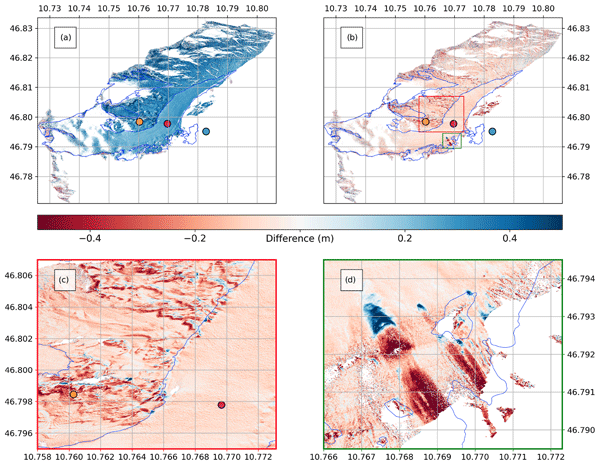
Annelies Voordendag, Brigitta Goger, Rainer Prinz, Tobias Sauter, Thomas Mölg, Manuel Saigger, and Georg Kaser
The Cryosphere, 18, 849–868, https://doi.org/10.5194/tc-18-849-2024, https://doi.org/10.5194/tc-18-849-2024, 2024
Short summary
Short summary
Wind-driven snow redistribution affects glacier mass balance. A case study of Hintereisferner glacier in Austria used high-resolution observations and simulations to model snow redistribution. Simulations matched observations, showing the potential of the model for studying snow redistribution on other mountain glaciers.
Bastian Seidl, Ines Pyko, Thomas Mölg, Wendy Nelson, and Sebastian Teichert
EGUsphere, https://doi.org/10.5194/egusphere-2026-2316, https://doi.org/10.5194/egusphere-2026-2316, 2026
Short summary
Short summary
This study shows that sunlight influences cell size in crustose coralline algae, coral-like algae that create marine habitats and store carbon. By measuring 2975 cells over a 38-year growth record in a sample from New Zealand, cell length was found to decline with reduced sunlight over time. Because cell size affects their structural stability, such changes may impact the ecological functions these calcifying algae provide, thereby highlighting the key role of light in shaping marine ecosystems.
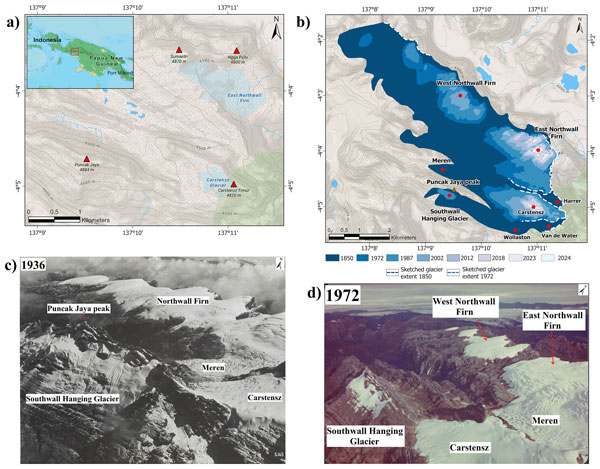
David Ibel, Thomas Mölg, and Christian Sommer
The Cryosphere, 19, 6629–6637, https://doi.org/10.5194/tc-19-6629-2025, https://doi.org/10.5194/tc-19-6629-2025, 2025
Short summary
Short summary
As the majority of (tropical) glaciers retreat on a global scale, we analysed area changes of the Puncak Jaya glaciers in South East Asia on West Papua, Indonesia, using high resolution optical satellite imagery, supported by historical glacier accounts. The results show a decrease of total glacier surface area by more than 99 % since 1850 and by ~65 % since the last survey in 2018, with glacier area (in 2024) amounting to 0.165 km2 ± 5 %. Puncak Jaya glaciers will likely disappear around 2030.
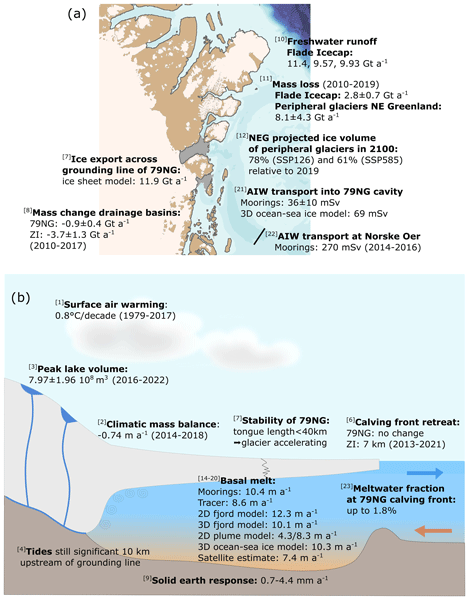
Torsten Kanzow, Angelika Humbert, Thomas Mölg, Mirko Scheinert, Matthias Braun, Hans Burchard, Francesca Doglioni, Philipp Hochreuther, Martin Horwath, Oliver Huhn, Maria Kappelsberger, Jürgen Kusche, Erik Loebel, Katrina Lutz, Ben Marzeion, Rebecca McPherson, Mahdi Mohammadi-Aragh, Marco Möller, Carolyne Pickler, Markus Reinert, Monika Rhein, Martin Rückamp, Janin Schaffer, Muhammad Shafeeque, Sophie Stolzenberger, Ralph Timmermann, Jenny Turton, Claudia Wekerle, and Ole Zeising
The Cryosphere, 19, 1789–1824, https://doi.org/10.5194/tc-19-1789-2025, https://doi.org/10.5194/tc-19-1789-2025, 2025
Short summary
Short summary
The Greenland Ice Sheet represents the second-largest contributor to global sea-level rise. We quantify atmosphere, ice and ocean processes related to the mass balance of glaciers in northeast Greenland, focusing on Greenland’s largest floating ice tongue, the 79° N Glacier. We find that together, the different in situ and remote sensing observations and model simulations reveal a consistent picture of a coupled atmosphere–ice sheet–ocean system that has entered a phase of major change.
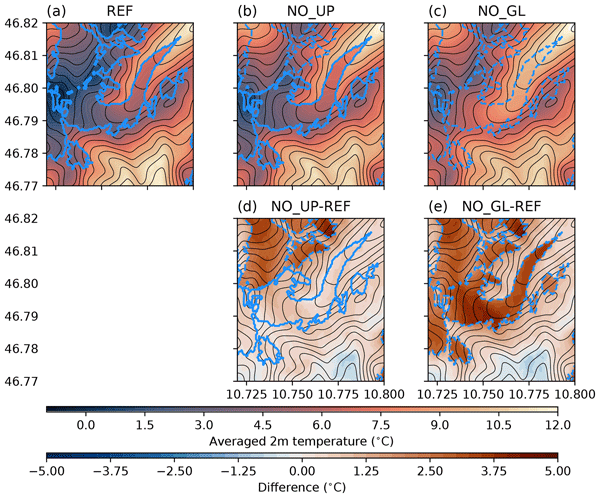
Brigitta Goger, Ivana Stiperski, Matthis Ouy, and Lindsey Nicholson
Weather Clim. Dynam., 6, 345–367, https://doi.org/10.5194/wcd-6-345-2025, https://doi.org/10.5194/wcd-6-345-2025, 2025
Short summary
Short summary
We study with numerical simulations whether changing glacier ice surfaces impacts the atmospheric boundary layer structure over a glacier. Under north-westerly flow, a gravity wave forms over the glacier valley. When the surrounding upstream glaciers are removed, the gravity wave is weakened and breaks earlier. This leads to stronger turbulent mixing over the remaining glacier and to higher temperatures. We suggest that glaciers influence each other and should be studied as a connected system.
Nadja Omanovic, Brigitta Goger, and Ulrike Lohmann
Atmos. Chem. Phys., 24, 14145–14175, https://doi.org/10.5194/acp-24-14145-2024, https://doi.org/10.5194/acp-24-14145-2024, 2024
Short summary
Short summary
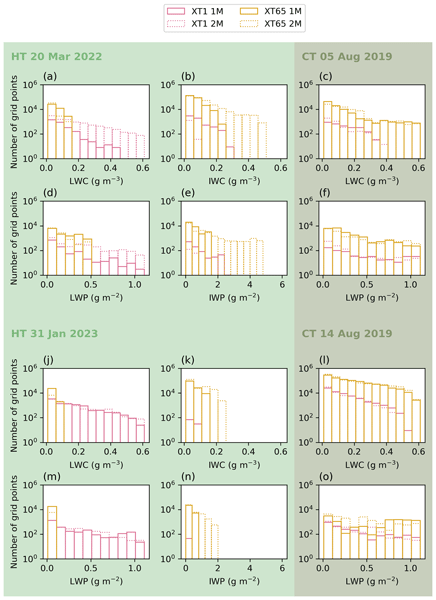
We evaluated the numerical weather model ICON in two horizontal resolutions with two bulk microphysics schemes over hilly and complex terrain in Switzerland and Austria, respectively. We focused on the model's ability to simulate mid-level clouds in summer and winter. By combining observational data from two different field campaigns, we show that an increase in the horizontal resolution and a more advanced cloud microphysics scheme is strongly beneficial for cloud representation.

Thomas Mölg, Jan C. Schubert, Annette Debel, Steffen Höhnle, Kathy Steppe, Sibille Wehrmann, and Achim Bräuning
Geosci. Commun., 7, 215–225, https://doi.org/10.5194/gc-7-215-2024, https://doi.org/10.5194/gc-7-215-2024, 2024
Short summary
Short summary
We examine the understanding of weather and climate impacts on forest health in high school students. Climate physics, tree ring science, and educational research collaborate to provide an online platform that captures the students’ observations, showing they translate the measured weather and basic tree responses well. However, students hardly ever detect the causal connections. This result will help refine future classroom concepts and public climate change communication on changing forests.
Annelies Voordendag, Brigitta Goger, Rainer Prinz, Tobias Sauter, Thomas Mölg, Manuel Saigger, and Georg Kaser
The Cryosphere, 18, 849–868, https://doi.org/10.5194/tc-18-849-2024, https://doi.org/10.5194/tc-18-849-2024, 2024
Short summary
Short summary
Wind-driven snow redistribution affects glacier mass balance. A case study of Hintereisferner glacier in Austria used high-resolution observations and simulations to model snow redistribution. Simulations matched observations, showing the potential of the model for studying snow redistribution on other mountain glaciers.
Jonathan P. Conway, Jakob Abermann, Liss M. Andreassen, Mohd Farooq Azam, Nicolas J. Cullen, Noel Fitzpatrick, Rianne H. Giesen, Kirsty Langley, Shelley MacDonell, Thomas Mölg, Valentina Radić, Carleen H. Reijmer, and Jean-Emmanuel Sicart
The Cryosphere, 16, 3331–3356, https://doi.org/10.5194/tc-16-3331-2022, https://doi.org/10.5194/tc-16-3331-2022, 2022
Short summary
Short summary
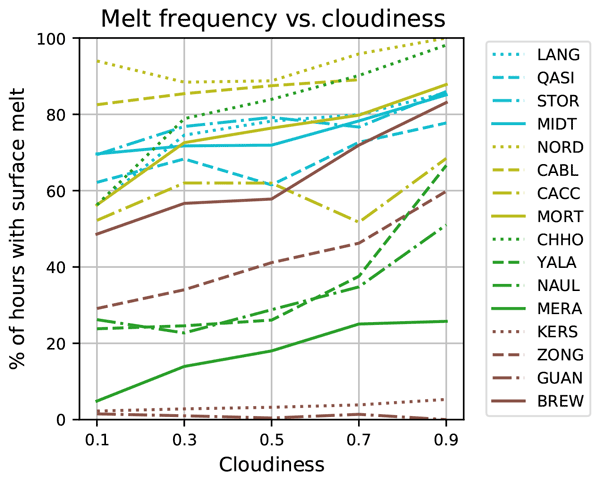
We used data from automatic weather stations on 16 glaciers to show how clouds influence glacier melt in different climates around the world. We found surface melt was always more frequent when it was cloudy but was not universally faster or slower than under clear-sky conditions. Also, air temperature was related to clouds in opposite ways in different climates – warmer with clouds in cold climates and vice versa. These results will help us improve how we model past and future glacier melt.
A. B. Voordendag, B. Goger, C. Klug, R. Prinz, M. Rutzinger, and G. Kaser
Int. Arch. Photogramm. Remote Sens. Spatial Inf. Sci., XLIII-B2-2022, 1093–1099, https://doi.org/10.5194/isprs-archives-XLIII-B2-2022-1093-2022, https://doi.org/10.5194/isprs-archives-XLIII-B2-2022-1093-2022, 2022
Cited articles
Abrahim, B. N., Cullen, N. J., Conway, J. P., and Sirguey, P.: Applying a distributed mass-balance model to identify uncertainties in glaciological mass balance on Brewster Glacier, New Zealand, J. Glaciol., 1–17, https://doi.org/10.1017/jog.2022.123, 2023. a
Amory, C., Gallée, H., Naaim-Bouvet, F., Favier, V., Vignon, E., Picard, G., Trouvilliez, A., Piard, L., Genthon, C., and Bellot, H.: Seasonal Variations in Drag Coefficient over a Sastrugi-Covered Snowfield in Coastal East Antarctica, Bound.-Lay. Meteorol., 164, 107–133, https://doi.org/10.1007/s10546-017-0242-5, 2017. a
Blau, M. T., Turton, J. V., Sauter, T., and Mölg, T.: Surface mass balance and energy balance of the 79N Glacier (Nioghalvfjerdsfjorden, NE Greenland) modeled by linking COSIPY and Polar WRF, J. Glaciol., 67, 1093–1107, https://doi.org/10.1017/jog.2021.56, 2021. a
Cooley, J. W. and Tukey, J. W.: An algorithm for the machine calculation of complex Fourier series, Math. Comp., 19, 297–301, https://doi.org/10.1090/S0025-5718-1965-0178586-1, 1965. a
Copernicus Climate Change Service: Arctic regional reanalysis on pressure levels from 1991 to present, ECMWF [data set], https://doi.org/10.24381/CDS.E3C841AD, 2021. a
Copernicus Climate Change Service: CERRA sub-daily regional reanalysis data for Europe on pressure levels from 1984 to present, ECMWF [data set], https://doi.org/10.24381/CDS.A39FF99F, 2022. a
Dadic, R., Mott, R., Lehning, M., and Burlando, P.: Wind influence on snow depth distribution and accumulation over glaciers, J. Geophys. Res., 115, F01012, https://doi.org/10.1029/2009JF001261, 2010. a
Deardorff, J. W.: Stratocumulus-capped mixed layers derived from a three-dimensional model, Bound.-Lay. Meteorol., 18, 495–527, https://doi.org/10.1007/BF00119502, 1980. a
Déry, S. J. and Yau, M. K.: A Bulk Blowing Snow Model, Bound.-Lay. Meteorol., 93, 237–251, https://doi.org/10.1023/A:1002065615856, 1999. a
Dominguez, F., Rasmussen, R., Liu, C., Ikeda, K., Prein, A., Varble, A., Arias, P. A., Bacmeister, J., Bettolli, M. L., Callaghan, P., Carvalho, L. M. V., Castro, C. L., Chen, F., Chug, D., Chun, K. P. S., Dai, A., Danaila, L., da Rocha, R. P., Nascimento, E. d. L., Dougherty, E., Dudhia, J., Eidhammer, T., Feng, Z., Fita, L., Fu, R., Giles, J., Gilmour, H., Halladay, K., Huang, Y., Iza Wong, A. M., Lagos-Zúñiga, M. A., Jones, C., Llamocca, J., Llopart, M., Martinez, J. A., Martinez, J. C., Minder, J. R., Morrison, M., Moon, Z. L., Mu, Y., Neale, R. B., Núñez Ocasio, K. M., Pal, S., Potter, E., Poveda, G., Puhales, F., Rasmussen, K. L., Rehbein, A., Rios-Berrios, R., Risanto, C. B., Rosales, A., Scaff, L., Seimon, A., Somos-Valenzuela, M., Tian, Y., Van Oevelen, P., Veloso-Aguila, D., Xue, L., and Schneider, T.: Advancing South American Water and Climate Science through Multidecadal Convection-Permitting Modeling, B. Am. Meteorol. Soc., 105, E32–E44, https://doi.org/10.1175/BAMS-D-22-0226.1, 2024. a
Dupuy, F., Durand, P., and Hedde, T.: Downscaling of surface wind forecasts using convolutional neural networks, Nonlin. Processes Geophys., 30, 553–570, https://doi.org/10.5194/npg-30-553-2023, 2023. a, b, c
European Space Agency: Copernicus DEM – Global and European Digital Elevation Model, ESA [data set], https://doi.org/10.5270/ESA-c5d3d65, 2019. a, b
Filhol, S. and Sturm, M.: Snow bedforms: A review, new data, and a formation model: Snow bedforms: Review and Modeling, J. Geophys. Res.-Earth, 120, 1645–1669, https://doi.org/10.1002/2015JF003529, 2015. a, b
Fitzpatrick, N., Radić, V., and Menounos, B.: A multi-season investigation of glacier surface roughness lengths through in situ and remote observation, The Cryosphere, 13, 1051–1071, https://doi.org/10.5194/tc-13-1051-2019, 2019. a
Gascoin, S., Lhermitte, S., Kinnard, C., Bortels, K., and Liston, G. E.: Wind effects on snow cover in Pascua-Lama, Dry Andes of Chile, Adv. Water Resour., 55, 25–39, https://doi.org/10.1016/j.advwatres.2012.11.013, 2013. a
Gerber, F., Besic, N., Sharma, V., Mott, R., Daniels, M., Gabella, M., Berne, A., Germann, U., and Lehning, M.: Spatial variability in snow precipitation and accumulation in COSMO–WRF simulations and radar estimations over complex terrain, The Cryosphere, 12, 3137–3160, https://doi.org/10.5194/tc-12-3137-2018, 2018. a
Gerber, F., Mott, R., and Lehning, M.: The Importance of Near-Surface Winter Precipitation Processes in Complex Alpine Terrain, J. Hydrometeorol., 20, 177–196, https://doi.org/10.1175/JHM-D-18-0055.1, 2019. a, b
Göbel, M., Serafin, S., and Rotach, M. W.: Numerically consistent budgets of potential temperature, momentum, and moisture in Cartesian coordinates: application to the WRF model, Geosci. Model Dev., 15, 669–681, https://doi.org/10.5194/gmd-15-669-2022, 2022. a
Goger, B.: HEF-LES simulations, Zenodo [data set], https://doi.org/10.5281/zenodo.18206320, 2026. a
Goger, B., Stiperski, I., Nicholson, L., and Sauter, T.: Large‐eddy simulations of the atmospheric boundary layer over an Alpine glacier: Impact of synoptic flow direction and governing processes, Q. J. Roy. Meteor. Soc., 148, 1319–1343, https://doi.org/10.1002/qj.4263, 2022. a
Groot Zwaaftink, C. D., Löwe, H., Mott, R., Bavay, M., and Lehning, M.: Drifting snow sublimation: A high-resolution 3-D model with temperature and moisture feedbacks, J. Geophys. Res., 116, D16107, https://doi.org/10.1029/2011JD015754, 2011. a
Gutmann, E., Barstad, I., Clark, M., Arnold, J., and Rasmussen, R.: The Intermediate Complexity Atmospheric Research Model (ICAR), J. Hydrometeorol., 17, 957–973, https://doi.org/10.1175/JHM-D-15-0155.1, 2016. a
Helbig, N. and Löwe, H.: Shortwave radiation parameterization scheme for subgrid topography, J. Geophys. Res., 117, https://doi.org/10.1029/2011JD016465, 2012. a
Helbig, N., Mott, R., van Herwijnen, A., Winstral, A., and Jonas, T.: Parameterizing surface wind speed over complex topography, J. Geophys. Res.-Atmos., 122, 651–667, https://doi.org/10.1002/2016JD025593, 2017. a, b, c
Helbig, N., Mott, R., Bühler, Y., Le Toumelin, L., and Lehning, M.: Snowfall deposition in mountainous terrain: a statistical downscaling scheme from high-resolution model data on simulated topographies, Front. Earth Sci., 11, 1308269, https://doi.org/10.3389/feart.2023.1308269, 2024. a
Höhlein, K., Kern, M., Hewson, T., and Westermann, R.: A comparative study of convolutional neural network models for wind field downscaling, Meteorol. Appl., 27, https://doi.org/10.1002/met.1961, 2020. a
Horak, J., Hofer, M., Gutmann, E., Gohm, A., and Rotach, M. W.: A process-based evaluation of the Intermediate Complexity Atmospheric Research Model (ICAR) 1.0.1, Geosci. Model Dev., 14, 1657–1680, https://doi.org/10.5194/gmd-14-1657-2021, 2021. a
Houze, R. A.: Orographic effects on precipitating clouds, Rev. Geophys., 50, RG1001, https://doi.org/10.1029/2011RG000365, 2012. a
Jacobs, T. D. B., Junge, T., and Pastewka, L.: Quantitative characterization of surface topography using spectral analysis, Surf. Topogr.: Metrol. Prop., 5, 013001, https://doi.org/10.1088/2051-672X/aa51f8, 2017. a
Jiménez, P. A. and Dudhia, J.: Improving the Representation of Resolved and Unresolved Topographic Effects on Surface Wind in the WRF Model, J. Appl. Meteorol. Clim., 51, 300–316, https://doi.org/10.1175/JAMC-D-11-084.1, 2012. a
Khadka, A., Brun, F., Wagnon, P., Shrestha, D., and Sherpa, T. C.: Surface energy and mass balance of Mera Glacier (Nepal, Central Himalaya) and their sensitivity to temperature and precipitation, J. Glaciol., 70, e80, https://doi.org/10.1017/jog.2024.42, 2024. a
Kirshbaum, D. J. and Durran, D. R.: Factors Governing Cellular Convection in Orographic Precipitation, J. Atmos. Sci., 61, 682–698, https://doi.org/10.1175/1520-0469(2004)061<0682:FGCCIO>2.0.CO;2, 2004. a
Krieger, N., Wernli, H., Sprenger, M., and Kühnlein, C.: Revealing the dynamics of a local Alpine windstorm using large-eddy simulations, Weather Clim. Dynam., 6, 447–469, https://doi.org/10.5194/wcd-6-447-2025, 2025. a
Kropač, E., Mölg, T., and Cullen, N. J.: A new, high‐resolution atmospheric dataset for southern New Zealand, 2005–2020, Geosci. Data J., gdj3.263, https://doi.org/10.1002/gdj3.263, 2024. a
Lambrecht, A. and Mayer, C.: The role of the cryosphere for runoff in a highly glacierised alpine catchment, an approach with a coupled model and in situ data, J. Glaciol., 1–14, https://doi.org/10.1017/jog.2024.48, 2024. a
LeCun, Y., Bengio, Y., and Hinton, G.: Deep learning, Nature, 521, 436–444, https://doi.org/10.1038/nature14539, 2015. a
Liston, G. E. and Elder, K.: A Meteorological Distribution System for High-Resolution Terrestrial Modeling (MicroMet), J. Hydrometeorol., 7, 217–234, https://doi.org/10.1175/JHM486.1, 2006. a
Liston, G. E. and Sturm, M.: A snow-transport model for complex terrain, J. Glaciol., 44, 498–516, https://doi.org/10.3189/S0022143000002021, 1998. a
Lundquist, J. D., Vano, J., Gutmann, E., Hogan, D., Schwat, E., Haugeneder, M., Mateo, E., Oncley, S., Roden, C., Osenga, E., and Carver, L.: Sublimation of Snow, B. Am. Meteorol. Soc., 105, E975–E990, https://doi.org/10.1175/BAMS-D-23-0191.1, 2024. a
Marsh, C. B., Vionnet, V., and Pomeroy, J. W.: Windmapper: An Efficient Wind Downscaling Method for Hydrological Models, Water Resour. Res., 59, e2022WR032683, https://doi.org/10.1029/2022WR032683, 2023. a
MeteoSwiss: ICON Reanalysis-Light-CH1 Dataset for the Alpine region, MeteoSwiss [data set], https://doi.org/10.18751/NWP/REA-L-CH1/1.0, 2025. a
Miralles, O., Steinfeld, D., Martius, O., and Davison, A. C.: Downscaling of Historical Wind Fields over Switzerland Using Generative Adversarial Networks, Artif. Intell. Earth Syst., 1, e220018, https://doi.org/10.1175/AIES-D-22-0018.1, 2022. a
Molina, M. J., O'Brien, T. A., Anderson, G., Ashfaq, M., Bennett, K. E., Collins, W. D., Dagon, K., Restrepo, J. M., and Ullrich, P. A.: A Review of Recent and Emerging Machine Learning Applications for Climate Variability and Weather Phenomena, Artif. Intell. Earth Syst., 2, 220086, https://doi.org/10.1175/AIES-D-22-0086.1, 2023. a
Mortezapour, M., Menounos, B., Jackson, P. L., Erler, A. R., and Pelto, B. M.: The role of meteorological forcing and snow model complexity in winter glacier mass balance estimation, Columbia River basin, Canada, Hydrol. Process., 34, 5085–5103, https://doi.org/10.1002/hyp.13929, 2020. a
Mott, R. and Lehning, M.: Meteorological Modeling of Very High-Resolution Wind Fields and Snow Deposition for Mountains, J. Hydrometeorol., 11, 934–949, https://doi.org/10.1175/2010JHM1216.1, 2010. a, b
Mott, R., Schirmer, M., Bavay, M., Grünewald, T., and Lehning, M.: Understanding snow-transport processes shaping the mountain snow-cover, The Cryosphere, 4, 545–559, https://doi.org/10.5194/tc-4-545-2010, 2010. a
Mott, R., Schirmer, M., and Lehning, M.: Scaling properties of wind and snow depth distribution in an Alpine catchment, J. Geophys. Res., 116, D06106, https://doi.org/10.1029/2010JD014886, 2011. a
Mott, R., Scipión, D., Schneebeli, M., Dawes, N., Berne, A., and Lehning, M.: Orographic effects on snow deposition patterns in mountainous terrain, J. Geophys. Res.-Atmos., 119, 1419–1439, https://doi.org/10.1002/2013JD019880, 2014. a
Mott, R., Vionnet, V., and Grünewald, T.: The Seasonal Snow Cover Dynamics: Review on Wind-Driven Coupling Processes, Front. Earth Sci., 6, 197, https://doi.org/10.3389/feart.2018.00197, 2018. a, b
Nakanishi, M. and Niino, H.: An Improved Mellor–Yamada Level-3 Model: Its Numerical Stability and Application to a Regional Prediction of Advection Fog, Bound.-Lay. Meteorol., 119, 397–407, https://doi.org/10.1007/s10546-005-9030-8, 2006. a
Noël, B., Lhermitte, S., Wouters, B., and Fettweis, X.: Poleward shift of subtropical highs drives Patagonian glacier mass loss, Nat. Commun., 16, 3795, https://doi.org/10.1038/s41467-025-58974-1, 2025. a
Oulkar, S. N., Sharma, P., Pratap, B., Thamban, M., Laha, S., Patel, L. K., and Singh, A. T.: Distributed energy balance, mass balance and climate sensitivity of upper Chandra Basin glaciers, western Himalaya, Ann. Glaciol., 66, e5, https://doi.org/10.1017/aog.2024.46, 2025. a
Reynolds, D., Gutmann, E., Kruyt, B., Haugeneder, M., Jonas, T., Gerber, F., Lehning, M., and Mott, R.: The High-resolution Intermediate Complexity Atmospheric Research (HICAR v1.1) model enables fast dynamic downscaling to the hectometer scale, Geosci. Model Dev., 16, 5049–5068, https://doi.org/10.5194/gmd-16-5049-2023, 2023. a
Reynolds, D., Quéno, L., Lehning, M., Jafari, M., Berg, J., Jonas, T., Haugeneder, M., and Mott, R.: Seasonal snow–atmosphere modeling: let's do it, The Cryosphere, 18, 4315–4333, https://doi.org/10.5194/tc-18-4315-2024, 2024. a
Ronneberger, O., Fischer, P., and Brox, T.: U-Net: Convolutional Networks for Biomedical Image Segmentation, in: Medical Image Computing and Computer-Assisted Intervention – MICCAI 2015, edited by: Navab, N., Hornegger, J., Wells, W. M., and Frangi, A. F., vol. 9351, 234–241, Springer International Publishing, Cham, ISBN 978-3-319-24573-7, https://doi.org/10.1007/978-3-319-24574-4_28, 2015. a
Saigger, M.: WRFsnowdrift, Zenodo [code], https://doi.org/10.5281/zenodo.10837359, 2024. a
Saigger, M.: SNOWstorm, Zenodo [code], https://doi.org/10.5281/zenodo.17580745, 2025a. a
Saigger, M., Goger, B., and Moelg, T.: Observational data and model output to “SNOWstorm (v1.0) – a deep-learning based model for near- surface winds and drifting snow in mountain environments”, Zenodo [data set], https://doi.org/10.5281/zenodo.18670232, 2026a. a
Saigger, M., Goger, B., and Mölg, T.: Model output for “SNOWstorm (v1.0) – a deep- learning based model for near-surface winds and drifting snow in mountain environments”, Zenodo [data set], https://doi.org/10.5281/zenodo.18184973, 2026b. a
Salvador, R., Calbó, J., and Millán, M. M.: Horizontal Grid Size Selection and its Influence on Mesoscale Model Simulations, J. Appl. Meteorol., 38, 1311–1329, https://doi.org/10.1175/1520-0450(1999)038<1311:HGSSAI>2.0.CO;2, 1999. a, b
Sauter, T.: Revisiting extreme precipitation amounts over southern South America and implications for the Patagonian Icefields, Hydrol. Earth Syst. Sci., 24, 2003–2016, https://doi.org/10.5194/hess-24-2003-2020, 2020. a
Sauter, T., Möller, M., Finkelnburg, R., Grabiec, M., Scherer, D., and Schneider, C.: Snowdrift modelling for the Vestfonna ice cap, north-eastern Svalbard, The Cryosphere, 7, 1287–1301, https://doi.org/10.5194/tc-7-1287-2013, 2013. a
Sauter, T., Arndt, A., and Schneider, C.: COSIPY v1.3 – an open-source coupled snowpack and ice surface energy and mass balance model, Geosci. Model Dev., 13, 5645–5662, https://doi.org/10.5194/gmd-13-5645-2020, 2020. a
Sauter, T., Brock, B. W., Collier, E., Georgi, A., Goger, B., Groos, A. R., Haualand, K. F., Haugeneder, M., Mandal, A., Mott, R., Nicholson, L., Prinz, R., Reynolds, D., Saigger, M., Shaw, T. E., Sicart, J. E., Stiperski, I., and Voordendag, A.: Glacier-Atmosphere Interactions and Feedbacks in High-Mountain Regions – A Review, ESS Open Archive, https://doi.org/10.22541/essoar.174164160.03475851/v1, 2025. a
Schirmer, M., Wirz, V., Clifton, A., and Lehning, M.: Persistence in intra-annual snow depth distribution: 1. Measurements and topographic control, Water Resour. Res., 47, https://doi.org/10.1029/2010WR009426, 2011. a
Sekiyama, T. T., Hayashi, S., Kaneko, R., and Fukui, K.-i.: Surrogate Downscaling of Mesoscale Wind Fields Using Ensemble Superresolution Convolutional Neural Networks, Artif. Intell. Earth Syst., 2, 230007, https://doi.org/10.1175/AIES-D-23-0007.1, 2023. a
Sharma, V., Gerber, F., and Lehning, M.: Introducing CRYOWRF v1.0: multiscale atmospheric flow simulations with advanced snow cover modelling, Geosci. Model Dev., 16, 719–749, https://doi.org/10.5194/gmd-16-719-2023, 2023. a
Sigmund, A., Melo, D. B., Dujardin, J., Nishimura, K., and Lehning, M.: Parameterizing Snow Sublimation in Conditions of Drifting and Blowing Snow, J. Adv. Model Earth Sy., 17, e2024MS004332, https://doi.org/10.1029/2024MS004332, 2025. a
Skamarock, W. C., Klemp, J. B., Dudhia, J., Gill, D. O., Liu, Z., Berner, J., Wang, W., Powers, J. G., Duda, M. G., Barker, D. M., and Huang, X.-Y.: A Description of the Advanced Research WRF Model Version 4, Tech. rep., UCAR/NCAR, https://doi.org/10.5065/1DFH-6P97, 2019. a
Smith, R. B. and Barstad, I.: A Linear Theory of Orographic Precipitation, J. Atmos. Sci., 61, 1377–1391, https://doi.org/10.1175/1520-0469(2004)061<1377:ALTOOP>2.0.CO;2, 2004. a
Steyn, D. G. and Ayotte, K. W.: Application of Two-Dimensional Terrain Height Spectra to Mesoscale Modeling, J. Atmos. Sci., 42, 2884–2887, https://doi.org/10.1175/1520-0469(1985)042<2884:aotdth>2.0.co;2, 1985. a, b
Strasser, U., Bernhardt, M., Weber, M., Liston, G. E., and Mauser, W.: Is snow sublimation important in the alpine water balance?, The Cryosphere, 2, 53–66, https://doi.org/10.5194/tc-2-53-2008, 2008. a
Temme, F., Farías-Barahona, D., Seehaus, T., Jaña, R., Arigony-Neto, J., Gonzalez, I., Arndt, A., Sauter, T., Schneider, C., and Fürst, J. J.: Strategies for regional modeling of surface mass balance at the Monte Sarmiento Massif, Tierra del Fuego, The Cryosphere, 17, 2343–2365, https://doi.org/10.5194/tc-17-2343-2023, 2023. a
Temme, F., Sommer, C., Schaefer, M., Jaña, R., Arigony-Neto, J., Gonzalez, I., Izagirre, E., Giesecke, R., Tetzner, D., and Fürst, J. J.: Climate's firm grip on glacier ablation in the Cordillera Darwin Icefield, Tierra del Fuego, Nat. Commun., 16, 2677, https://doi.org/10.1038/s41467-025-57698-6, 2025. a
Terleth, Y., van Pelt, W. J. J., and Pettersson, R.: Spatial variability in winter mass balance on Storglaciären modelled with a terrain-based approach, J. Glaciol., 69, 749–761, https://doi.org/10.1017/jog.2022.96, 2023. a
Trujillo, E., Ramírez, J. A., and Elder, K. J.: Scaling properties and spatial organization of snow depth fields in sub‐alpine forest and alpine tundra, Hydrol. Process., 23, 1575–1590, https://doi.org/10.1002/hyp.7270, 2009. a
Turton, J. V., Mölg, T., and Collier, E.: High-resolution (1 km) Polar WRF output for 79° N Glacier and the northeast of Greenland from 2014 to 2018, Earth Syst. Sci. Data, 12, 1191–1202, https://doi.org/10.5194/essd-12-1191-2020, 2020. a
Umek, L., Gohm, A., Haid, M., Ward, H. C., and Rotach, M. W.: Large‐eddy simulation of foehn–cold pool interactions in the Inn Valley during PIANO IOP 2, Q. J. Roy. Meteor. Soc., 147, 944–982, https://doi.org/10.1002/qj.3954, 2021. a
van der Meer, M., de Roda Husman, S., and Lhermitte, S.: Deep Learning Regional Climate Model Emulators: A Comparison of Two Downscaling Training Frameworks, J. Adv. Model Earth Sy., 15, e2022MS003593, https://doi.org/10.1029/2022MS003593, 2023. a
Vionnet, V., Guyomarc'h, G., Naaim Bouvet, F., Martin, E., Durand, Y., Bellot, H., Bel, C., and Puglièse, P.: Occurrence of blowing snow events at an alpine site over a 10-year period: Observations and modelling, Adv. Water Resour., 55, 53–63, https://doi.org/10.1016/j.advwatres.2012.05.004, 2013. a
Vionnet, V., Martin, E., Masson, V., Guyomarc'h, G., Naaim-Bouvet, F., Prokop, A., Durand, Y., and Lac, C.: Simulation of wind-induced snow transport and sublimation in alpine terrain using a fully coupled snowpack/atmosphere model, The Cryosphere, 8, 395–415, https://doi.org/10.5194/tc-8-395-2014, 2014. a
Vionnet, V., Martin, E., Masson, V., Lac, C., Naaim Bouvet, F., and Guyomarc'h, G.: High-Resolution Large Eddy Simulation of Snow Accumulation in Alpine Terrain, J. Geophys. Res.-Atmos., 122, 11005–11021, https://doi.org/10.1002/2017JD026947, 2017. a, b
Vionnet, V., Marsh, C. B., Menounos, B., Gascoin, S., Wayand, N. E., Shea, J., Mukherjee, K., and Pomeroy, J. W.: Multi-scale snowdrift-permitting modelling of mountain snowpack, The Cryosphere, 15, 743–769, https://doi.org/10.5194/tc-15-743-2021, 2021. a
Voordendag, A., Goger, B., Prinz, R., Sauter, T., Mölg, T., Saigger, M., and Kaser, G.: A novel framework to investigate wind-driven snow redistribution over an Alpine glacier: combination of high-resolution terrestrial laser scans and large-eddy simulations, The Cryosphere, 18, 849–868, https://doi.org/10.5194/tc-18-849-2024, 2024. a, b, c, d, e, f, g, h
Wagenbrenner, N. S., Forthofer, J. M., Lamb, B. K., Shannon, K. S., and Butler, B. W.: Downscaling surface wind predictions from numerical weather prediction models in complex terrain with WindNinja, Atmos. Chem. Phys., 16, 5229–5241, https://doi.org/10.5194/acp-16-5229-2016, 2016. a
Warscher, M., Strasser, U., Kraller, G., Marke, T., Franz, H., and Kunstmann, H.: Performance of complex snow cover descriptions in a distributed hydrological model system: A case study for the high Alpine terrain of the Berchtesgaden Alps, Water Resour. Res., 49, 2619–2637, https://doi.org/10.1002/wrcr.20219, 2013. a
Weiss, A.: Topographic position and landform analysis, https://www.jennessent.com/downloads/TPI-poster-TNC_18x22.pdf (last access: 14 July 2026), 2001. a
Winstral, A. and Marks, D.: Simulating wind fields and snow redistribution using terrain-based parameters to model snow accumulation and melt over a semi-arid mountain catchment, Hydrol. Process., 16, 3585–3603, https://doi.org/10.1002/hyp.1238, 2002. a, b
Winstral, A., Elder, K., and Davis, R. E.: Spatial Snow Modeling of Wind-Redistributed Snow Using Terrain-Based Parameters, J. Hydrometeorol., 3, 524–538, https://doi.org/10.1175/1525-7541(2002)003<0524:SSMOWR>2.0.CO;2, 2002. a
Young, G. S. and Pielke, R. A.: Application of Terrain Height Variance Spectra to Mesoscale Modeling, J. Atmos. Sci., 40, 2555–2560, https://doi.org/10.1175/1520-0469(1983)040<2555:AOTHVS>2.0.CO;2, 1983. a, b
Zängl, G.: Interaction between Dynamics and Cloud Microphysics in Orographic Precipitation Enhancement: A High-Resolution Modeling Study of Two North Alpine Heavy-Precipitation Events, Mon. Weather Rev., 135, 2817–2840, https://doi.org/10.1175/MWR3445.1, 2007. a
Zhang, X., Bao, J.-W., Chen, B., and Grell, E. D.: A Three-Dimensional Scale-Adaptive Turbulent Kinetic Energy Scheme in the WRF-ARW Model, Mon. Weather Rev., 146, 2023–2045, https://doi.org/10.1175/MWR-D-17-0356.1, 2018. a
Short summary
We present a new model to predict near-surface winds and wind-driven transport of snow in mountain regions at high resolutions. With its deep-learning based design, it is several orders of magnitude less computationally expensive compared to traditional numerical methods, while being applicable over a wide range of topographic settings and atmospheric conditions. A first application case study on a glacier in the European Alps showed good agreement with numerical simulations and observations.
We present a new model to predict near-surface winds and wind-driven transport of snow in...


