
Articles | Volume 19, issue 13
https://doi.org/10.5194/gmd-19-6259-2026
© Author(s) 2026. This work is distributed under
the Creative Commons Attribution 4.0 License.
the Creative Commons Attribution 4.0 License.
https://doi.org/10.5194/gmd-19-6259-2026
© Author(s) 2026. This work is distributed under
the Creative Commons Attribution 4.0 License.
the Creative Commons Attribution 4.0 License.
Model description paper
| 
13 Jul 2026
Model description paper |
| 13 Jul 2026
| 13 Jul 2026
The Boundary Layer Dispersion and Footprint Model: a fast numerical solver of the Eulerian steady-state advection-diffusion equation
Mark Schlutow
CORRESPONDING AUTHOR

Max Planck Institute for Biogeochemistry, Jena, Germany
California Institute of Technology, Division of Geological and Planetary Sciences, Pasadena, CA, USA
Mathias Göckede
Max Planck Institute for Biogeochemistry, Jena, Germany
Related authors
Theresia Yazbeck, Mark Schlutow, Abdullah Bolek, Nathalie Ylenia Triches, Elias Wahl, Martin Heimann, and Mathias Göckede
Atmos. Meas. Tech., 18, 6917–6932, https://doi.org/10.5194/amt-18-6917-2025, https://doi.org/10.5194/amt-18-6917-2025, 2025
Short summary
Short summary
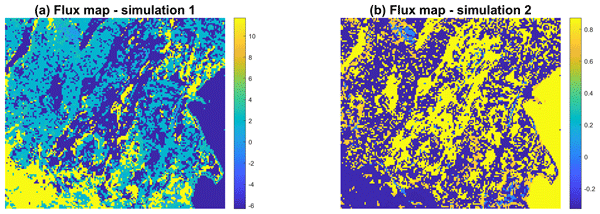
Natural ecosystems are composed of heterogeneous landscapes challenging CO₂ fluxes quantification per landcover type. Here, we combine UAV (Uncrewed Aerial Vehicle) measurements of CO2 gas concentrations with a Large-Eddy simulation model in a sub-mesoscale inversion to separate fluxes by landcover type, demonstrating a promising approach to capture and upscale flux heterogeneity within eddy-covariance footprints.
Judith Vogt, Martijn M. T. A. Pallandt, Luana S. Basso, Abdullah Bolek, Kseniia Ivanova, Mark Schlutow, Gerardo Celis, McKenzie Kuhn, Marguerite Mauritz, Edward A. G. Schuur, Kyle Arndt, Anna-Maria Virkkala, Isabel Wargowsky, and Mathias Göckede
Earth Syst. Sci. Data, 17, 2553–2573, https://doi.org/10.5194/essd-17-2553-2025, https://doi.org/10.5194/essd-17-2553-2025, 2025
Short summary
Short summary
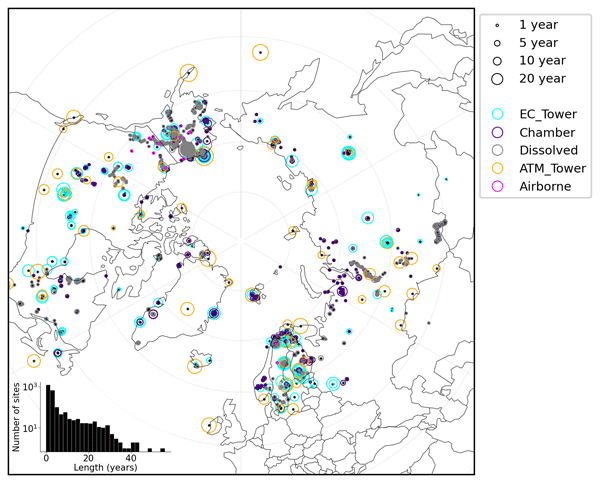
We present a meta-dataset of greenhouse gas observations in the Arctic and boreal regions, including information on sites where greenhouse gases have been measured using different measurement techniques. We provide a novel repository of metadata to facilitate synthesis efforts for regions undergoing rapid environmental change. The meta-dataset shows where measurements are missing and will be updated as new measurements are published.
Anna-Maria Virkkala, Isabel Wargowsky, Judith Vogt, McKenzie A. Kuhn, Simran Madaan, Tiffany Windholz, Kyle A. Arndt, Gerard Rocher-Ros, Mathias Göckede, David Olefeldt, Edward A. G. Schuur, David Bastviken, Richard O'Keefe, Brendan M. Rogers, Jennifer D. Watts, Kelcy Kent, Kristoffer Aalstad, Kelly Aho, Joonatan Ala-Könni, Haley Alcock, Inge Althuizen, Christopher D. Arp, Jun Asanuma, Mika Aurela, Sivakiruthika Balathandayuthabani, Katrin Attermeyer, Alan Barr, Maialen Barret, Ochirbat Batkhishig, Christina Biasi, Mats P. Björkman, Andrew Black, Elena Blanc-Betes, Pascal Bodmer, Julia Boike, Abdullah Bolek, Frédéric Bouchard, Ingeborg Bussmann, Lea Cabrol, Eleonora Canfora, Sean Carey, Karel Castro-Morales, Namyi Chae, Andreas Christen, Torben R. Christensen, Casper T. Christiansen, Housen Chu, Graham Clark, Francois Clayer, Patrick Crill, Christopher Cunada, Scott J. Davidson, Joshua F. Dean, Sigrid Dengel, Matteo Detto, Catherine Dieleman, Florent Domine, Egor Dyukarev, Colin Edgar, Bo Elberling, Craig A. Emmerton, Eugenie Euskirchen, Grant Falvo, Thomas Friborg, Michelle Garneau, Mariasilvia Giamberini, Mikhail V. Glagolev, Miquel A. Gonzalez-Meler, Gustaf Granath, Jón Guðmundsson, Konsta Happonen, Yoshinobu Harazono, Lorna Harris, Josh Hashemi, Nicholas Hasson, Janna Heerah, Liam Heffernan, Manuel Helbig, Warren Helgason, Michal Heliasz, Greg Henry, Geert Hensgens, Tetsuya Hiyama, Beth Holmes, Macall Hock, David Holl, Jutta Holst, Thomas Holst, Gabriel Hould-Gosselin, Elyn Humphreys, Jacqueline Hung, Jussi Huotari, Hiroki Ikawa, Danil V. Ilyasov, Mamoru Ishikawa, Go Iwahana, Hiroki Iwata, Marcin Antoni Jackowicz-Korczynski, Joachim Jansen, Järvi Järveoja, Vincent E. J. Jassey, Rasmus Jensen, Katharina Jentzsch, Robert G. Jespersen, Carl-Fredrik Johannesson, Cheristy P. Jones, Anders Jonsson, Ji Young Jung, Sari Juutinen, Evan Kane, Jan Karlsson, Sergey Karsanaev, Kuno Kasak, Julia Kelly, Kasha Kempton, Marcus Klaus, George W. Kling, Natascha Kljun, Jacqueline Knutson, Hideki Kobayashi, John Kochendorfer, Kukka-Maaria Kohonen, Pasi Kolari, Mika Korkiakoski, Aino Korrensalo, Pirkko Kortelainen, Egle Koster, Kajar Koster, Ayumi Kotani, Praveena Krishnan, Juliya Kurbatova, Lars Kutzbach, Min Jung Kwon, Ethan D. Kyzivat, Jessica Lagroix, Theodore Langhorst, Elena Lapshina, Tuula Larmola, Klaus S. Larsen, Isabelle Laurion, Justin Ledman, Hanna Lee, A. Joshua Leffler, Lance Lesack, Anders Lindroth, David Lipson, Annalea Lohila, Efrén López-Blanco, Vincent L. St. Louis, Erik Lundin, Miska Luoto, Takashi Machimura, Marta Magnani, Avni Malhotra, Marja Maljanen, Ivan Mammarella, Elisa Männistö, Luca Belelli Marchesini, Phil Marsh, Pertti J. Martikainen, Maija E. Marushchak, Mikhail Mastepanov, Alex Mavrovic, Trofim Maximov, Christina Minions, Daniel F. Nadeau, Marco Montemayor, Tomoaki Morishita, Patrick Murphy, Erin Nicholls, Mats B. Nilsson, Anastasia Niyazova, Jenni Nordén, Koffi Dodji Noumonvi, Hannu Nykänen, Walter Oechel, Anne Ojala, Tomohiro Okadera, Sujan Pal, Alexey V. Panov, Tim Papakyriakou, Dario Papale, Sang-Jong Park, Frans-Jan W. Parmentier, Gilberto Pastorello, Mike Peacock, Matthias Peichl, Roman Petrov, Kyra St. Pierre, Norbert Pirk, Jessica Plein, Vilmantas Preskienis, Anatoly Prokushkin, Jukka Pumpanen, Hilary A. Rains, Niklas Rakos, Aleksi Räsänen, Helena Rautakoski, Riikka Rinnan, Janne Rinne, Adrian Rocha, Nigel Roulet, Alexandre Roy, Anna Rutgersson, Aleksandr F. Sabrekov, Torsten Sachs, Erik Sahlée, Alejandro Salazar, Henrique Oliveira Sawakuchi, Christopher Schulze, Roger Seco, Armando Sepulveda-Jauregui, Svetlana Serikova, Abbey Serrone, Hanna M. Silvennoinen, Sofie Sjogersten, June Skeeter, Jo Snöälv, Sebastian Sobek, Oliver Sonnentag, Emily H. Stanley, Maria Strack, Lena Strom, Patrick Sullivan, Ryan Sullivan, Anna Sytiuk, Torbern Tagesson, Pierre Taillardat, Julie Talbot, Suzanne E. Tank, Mario Tenuta, Irina Terenteva, Frederic Thalasso, Antoine Thiboult, Halldor Thorgeirsson, Fenix Garcia Tigreros, Margaret Torn, Amy Townsend-Small, Claire Treat, Alain Tremblay, Carlo Trotta, Eeva-Stiina Tuittila, Merritt Turetsky, Masahito Ueyama, Muhammad Umair, Aki Vähä, Lona van Delden, Maarten van Hardenbroek, Andrej Varlagin, Ruth K. Varner, Tarmo Virtanen, Elena Veretennikova, Timo Vesala, Carolina Voigt, Jorien E. Vonk, Robert Wagner, Katey Walter Anthony, Qinxue Wang, Masataka Watanabe, Hailey Webb, Jeffrey M. Welker, Andreas Westergaard-Nielsen, Sebastian Westermann, Jeffrey R. White, Christian Wille, Scott N. Williamson, Scott Zolkos, Donatella Zona, and Susan M. Natali
Earth Syst. Sci. Data, 18, 6357–6409, https://doi.org/10.5194/essd-18-6357-2026, https://doi.org/10.5194/essd-18-6357-2026, 2026
Short summary
Short summary
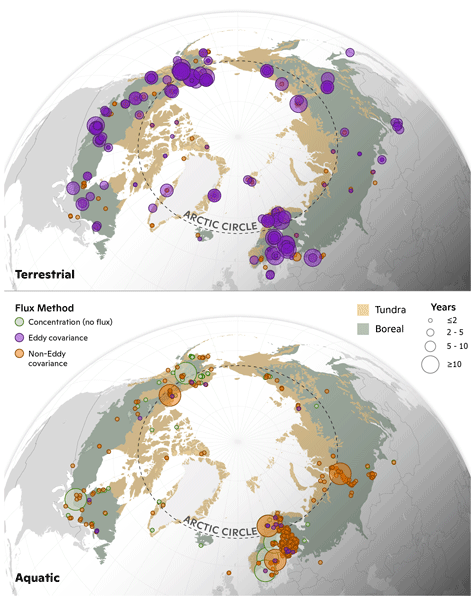
This dataset includes monthly measurements of carbon dioxide and methane exchange between land, water, and the atmosphere from over 1000 sites in Arctic and boreal regions. It combines measurements from a variety of ecosystems, including wetlands, forests, tundra, lakes, and rivers, gathered by over 260 researchers from 1984–2024. This dataset can be used to improve and reduce uncertainty in carbon budgets in order to strengthen our understanding of climate feedbacks in a warming world.
Zuzana Procházková, Erfan Mahmoudi, Ray Chew, Stamen Dolaptchiev, Claudia Christine Stephan, Georg Sebastian Völker, and Ulrich Achatz
Atmos. Chem. Phys., 26, 9541–9558, https://doi.org/10.5194/acp-26-9541-2026, https://doi.org/10.5194/acp-26-9541-2026, 2026
Short summary
Short summary
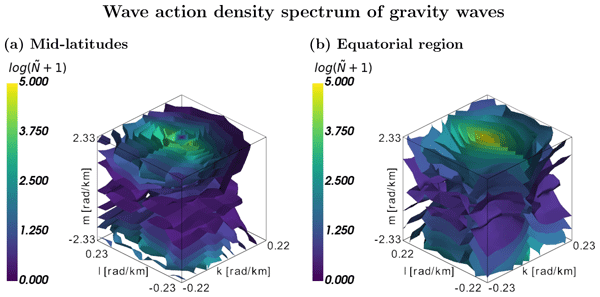
The study analyzes gravity waves in a high-resolution simulation. A unique methodology is applied to compute three-dimensional gravity wave spectra while keeping the data on the original triangular model grid and using linear wave theory. The results show the structure of gravity waves that would remain unresolved by a model with lower horizontal resolution. It is shown that the spectra can be highly simplified, which can help constructing precise but efficient gravity wave parametrisation.
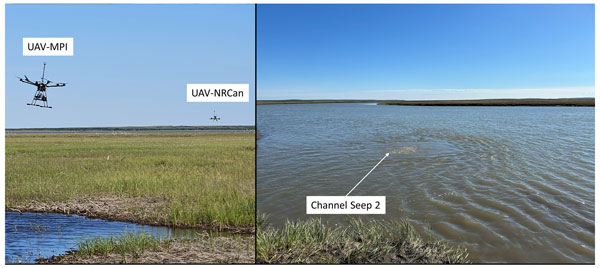
Abdullah Bolek, Meghan N. Beattie, Jalal Norooz Oliaee, Roger MacLeod, June Skeeter, Peter Morse, Martin Heimann, and Mathias Göckede
Atmos. Meas. Tech., 19, 3983–3998, https://doi.org/10.5194/amt-19-3983-2026, https://doi.org/10.5194/amt-19-3983-2026, 2026
Short summary
Short summary
Uncrewed aerial vehicles (UAVs) equipped with greenhouse gas (GHG) analyzers are crucial for monitoring hard-to-reach areas where traditional techniques are impractical. Here, we deployed UAVs with different types of GHG analyzers and applied three different emission rate quantification methods over a known geological methane seep. Our results demonstrate that UAV-based approaches can reliably quantify emissions from remote methane point sources that would otherwise be difficult to measure.
Judith Vogt, Tarek S. El-Madany, Christian Burgold, Abdullah Bolek, Elliot Pratt, Torsten Sachs, Christian Wille, Manuel Helbig, Maximilian P. Lau, Sebastian Zug, Jörg Matschullat, and Mathias Göckede
EGUsphere, https://doi.org/10.5194/egusphere-2026-2262, https://doi.org/10.5194/egusphere-2026-2262, 2026
Short summary
Short summary
We developed BlueMinerva, an integrated autonomous platform designed to monitor carbon exchange between water and air, water temperature, chemistry, depth, and weather conditions with high spatial coverage. The platform was tested at two lakes and yielded reliable high-quality data on carbon dynamics, demonstrating its potential for widespread use and adaptation by scientists and stakeholders.
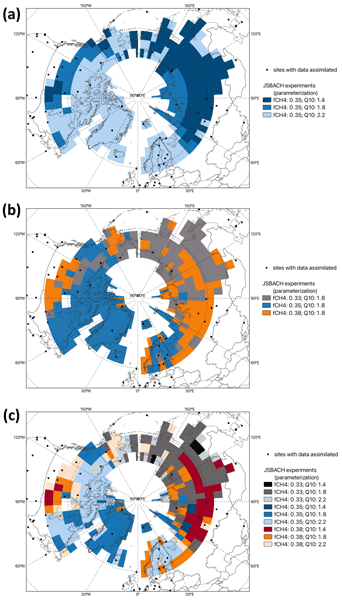
Luana S. Basso, Goran Georgievski, Victor Brovkin, Christian Beer, Christian Rödenbeck, and Mathias Göckede
Biogeosciences, 23, 2815–2830, https://doi.org/10.5194/bg-23-2815-2026, https://doi.org/10.5194/bg-23-2815-2026, 2026
Short summary
Short summary
This study examines how combining atmospheric inversion with process-based modelling can reduce discrepancies in estimates of Arctic wetland CH4 emissions. We conducted a series of inversion experiments, each incorporating CH4 wetland fluxes from process-based models with different CH4 production parameterizations. Our results showed that no single parameterization captures the complexity of Arctic–Boreal emissions; instead, region-specific adjustments are needed to reduce discrepancies.
Judith Vogt, Joonatan Ala-Könni, Clara Mendoza-Lera, Taija Saarela, Niko Kinnunen, Wasi Hashmi, Ivan Mammarella, Anne Ojala, Carlos Palacin-Lizarbe, Jukka Pumpanen, Janne Rinne, Huizhong Zhang-Turpeinen, and Mathias Göckede
EGUsphere, https://doi.org/10.5194/egusphere-2026-1260, https://doi.org/10.5194/egusphere-2026-1260, 2026
Short summary
Short summary
To understand how northern rivers move carbon between land, water, and air, we measured greenhouse gases in Teno river. Using different methods on the water and the neighboring land, we found that this natural ecosystem released low levels of carbon. Mostly carbon dioxide was released to the air and the ocean, while methane was negligible. This study provides baseline data for healthy, northern rivers, helps address scientific biases, and can be used to improve the accuracy of climate models.
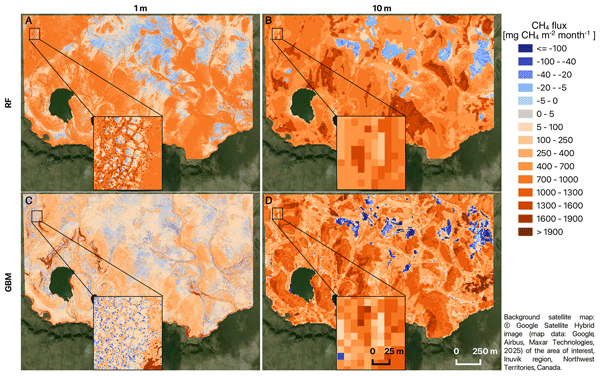
Kseniia Ivanova, Anna-Maria Virkkala, Victor Brovkin, Tobias Stacke, Barbara Widhalm, Annett Bartsch, Carolina Voigt, Oliver Sonnentag, and Mathias Göckede
Biogeosciences, 23, 233–262, https://doi.org/10.5194/bg-23-233-2026, https://doi.org/10.5194/bg-23-233-2026, 2026
Short summary
Short summary
We measured over 13,000 methane fluxes at a site in the Canadian Arctic and linked them with drone and free satellite images. We tested four machine-learning methods and two map scales. Metre-scale maps captured small wet and dry features that strongly affect methane release, while coarser maps blurred them. Different models shifted the monthly methane estimate. This helps choose the right data and tools to map methane, design monitoring networks, and check climate models.
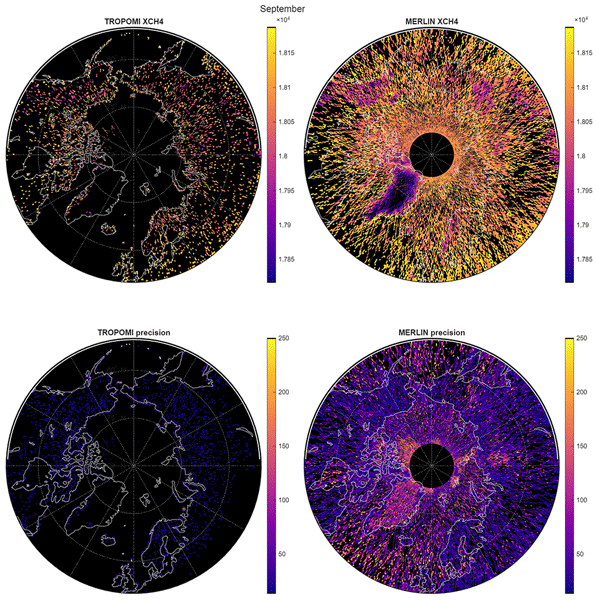
Martijn M. T. A. Pallandt, Abhishek Chatterjee, Lesley E. Ott, Julia Marshall, and Mathias Göckede
Atmos. Meas. Tech., 18, 7053–7073, https://doi.org/10.5194/amt-18-7053-2025, https://doi.org/10.5194/amt-18-7053-2025, 2025
Short summary
Short summary
Climate change is greatly affecting the Arctic. Among these changes is the thawing of permanently frozen soil, which may increase the release of methane, a powerful greenhouse gas (GHG). In this study we investigated the capabilities of tall GHG measuring towers and two satellite systems to detect this methane release. We find that these systems have different strengths and weaknesses, and that individually they struggle to detect these changes, though combined they might cover their weak spots.
Theresia Yazbeck, Mark Schlutow, Abdullah Bolek, Nathalie Ylenia Triches, Elias Wahl, Martin Heimann, and Mathias Göckede
Atmos. Meas. Tech., 18, 6917–6932, https://doi.org/10.5194/amt-18-6917-2025, https://doi.org/10.5194/amt-18-6917-2025, 2025
Short summary
Short summary
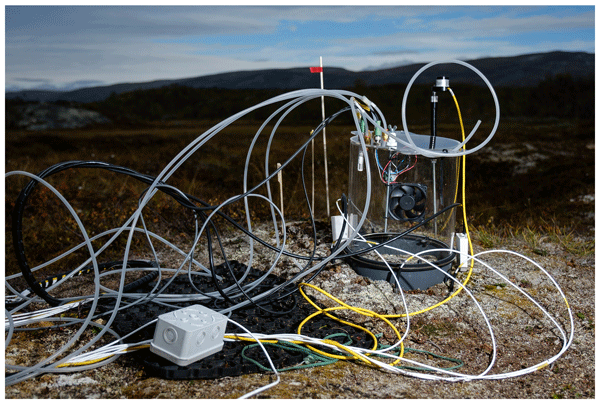
Natural ecosystems are composed of heterogeneous landscapes challenging CO₂ fluxes quantification per landcover type. Here, we combine UAV (Uncrewed Aerial Vehicle) measurements of CO2 gas concentrations with a Large-Eddy simulation model in a sub-mesoscale inversion to separate fluxes by landcover type, demonstrating a promising approach to capture and upscale flux heterogeneity within eddy-covariance footprints.
Nathalie Ylenia Triches, Jan Engel, Abdullah Bolek, Timo Vesala, Maija E. Marushchak, Anna-Maria Virkkala, Martin Heimann, and Mathias Göckede
Atmos. Meas. Tech., 18, 3407–3424, https://doi.org/10.5194/amt-18-3407-2025, https://doi.org/10.5194/amt-18-3407-2025, 2025
Short summary
Short summary
This study explores nitrous oxide (N2O) fluxes from a nutrient-poor sub-Arctic peatland. N2O is a potent greenhouse gas; understanding its fluxes is essential for addressing global warming. Using a new instrument and flux chambers, we introduce a system to reliably detect low N2O fluxes and provide recommendations on chamber closure times and flux calculation methods to better quantify N2O fluxes. We encourage researchers to further investigate N2O fluxes in low-nutrient environments.
Judith Vogt, Martijn M. T. A. Pallandt, Luana S. Basso, Abdullah Bolek, Kseniia Ivanova, Mark Schlutow, Gerardo Celis, McKenzie Kuhn, Marguerite Mauritz, Edward A. G. Schuur, Kyle Arndt, Anna-Maria Virkkala, Isabel Wargowsky, and Mathias Göckede
Earth Syst. Sci. Data, 17, 2553–2573, https://doi.org/10.5194/essd-17-2553-2025, https://doi.org/10.5194/essd-17-2553-2025, 2025
Short summary
Short summary
We present a meta-dataset of greenhouse gas observations in the Arctic and boreal regions, including information on sites where greenhouse gases have been measured using different measurement techniques. We provide a novel repository of metadata to facilitate synthesis efforts for regions undergoing rapid environmental change. The meta-dataset shows where measurements are missing and will be updated as new measurements are published.
Qing Ying, Benjamin Poulter, Jennifer D. Watts, Kyle A. Arndt, Anna-Maria Virkkala, Lori Bruhwiler, Youmi Oh, Brendan M. Rogers, Susan M. Natali, Hilary Sullivan, Amanda Armstrong, Eric J. Ward, Luke D. Schiferl, Clayton D. Elder, Olli Peltola, Annett Bartsch, Ankur R. Desai, Eugénie Euskirchen, Mathias Göckede, Bernhard Lehner, Mats B. Nilsson, Matthias Peichl, Oliver Sonnentag, Eeva-Stiina Tuittila, Torsten Sachs, Aram Kalhori, Masahito Ueyama, and Zhen Zhang
Earth Syst. Sci. Data, 17, 2507–2534, https://doi.org/10.5194/essd-17-2507-2025, https://doi.org/10.5194/essd-17-2507-2025, 2025
Short summary
Short summary
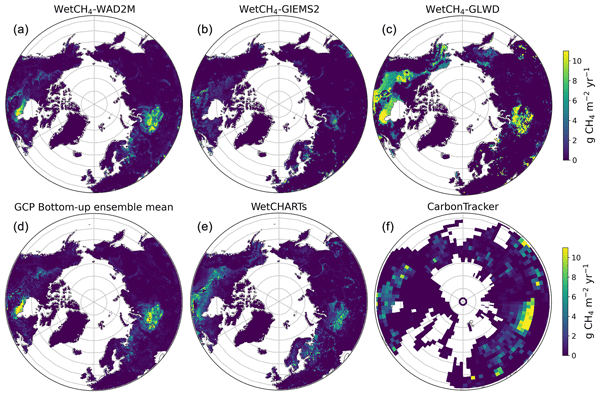
We present daily methane (CH4) fluxes of northern wetlands at 10 km resolution during 2016–2022 (WetCH4) derived from a novel machine learning framework. We estimated an average annual CH4 emission of 22.8 ± 2.4 Tg CH4 yr−1 (15.7–51.6 Tg CH4 yr−1). Emissions were intensified in 2016, 2020, and 2022, with the largest interannual variation coming from Western Siberia. Continued, all-season tower observations and improved soil moisture products are needed for future improvement of CH4 upscaling.
Afshan Khaleghi, Mathias Göckede, Nicholas Nickerson, and David Risk
EGUsphere, https://doi.org/10.5194/egusphere-2025-644, https://doi.org/10.5194/egusphere-2025-644, 2025
Preprint archived
Short summary
Short summary
Methane is a key greenhouse gas, and identifying its sources is crucial for reducing emissions. This study enhances methane detection at oil and gas sites by combining sensor data with advanced modeling tools. Tests in real-world and simulated conditions showed high accuracy, particularly in favorable atmospheric conditions. These findings improve methane monitoring and support better emission detection in Continuous Emission Monitoring systems.
Barbara Widhalm, Annett Bartsch, Tazio Strozzi, Nina Jones, Artem Khomutov, Elena Babkina, Marina Leibman, Rustam Khairullin, Mathias Göckede, Helena Bergstedt, Clemens von Baeckmann, and Xaver Muri
The Cryosphere, 19, 1103–1133, https://doi.org/10.5194/tc-19-1103-2025, https://doi.org/10.5194/tc-19-1103-2025, 2025
Short summary
Short summary
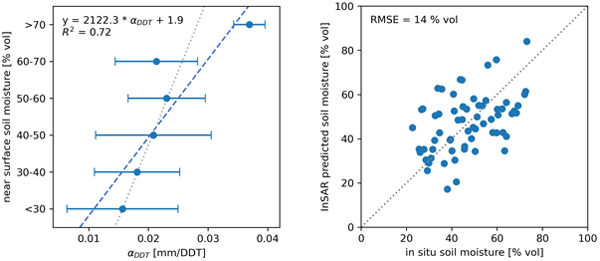
Mapping soil moisture in Arctic permafrost regions is crucial for various activities, but it is challenging with typical satellite methods due to the landscape's diversity. Seasonal freezing and thawing cause the ground to periodically rise and subside. Our research demonstrates that this seasonal ground settlement, measured with Sentinel-1 satellite data, is larger in areas with wetter soils. This method helps to monitor permafrost degradation.
Jacob A. Nelson, Sophia Walther, Fabian Gans, Basil Kraft, Ulrich Weber, Kimberly Novick, Nina Buchmann, Mirco Migliavacca, Georg Wohlfahrt, Ladislav Šigut, Andreas Ibrom, Dario Papale, Mathias Göckede, Gregory Duveiller, Alexander Knohl, Lukas Hörtnagl, Russell L. Scott, Jiří Dušek, Weijie Zhang, Zayd Mahmoud Hamdi, Markus Reichstein, Sergio Aranda-Barranco, Jonas Ardö, Maarten Op de Beeck, Dave Billesbach, David Bowling, Rosvel Bracho, Christian Brümmer, Gustau Camps-Valls, Shiping Chen, Jamie Rose Cleverly, Ankur Desai, Gang Dong, Tarek S. El-Madany, Eugenie Susanne Euskirchen, Iris Feigenwinter, Marta Galvagno, Giacomo A. Gerosa, Bert Gielen, Ignacio Goded, Sarah Goslee, Christopher Michael Gough, Bernard Heinesch, Kazuhito Ichii, Marcin Antoni Jackowicz-Korczynski, Anne Klosterhalfen, Sara Knox, Hideki Kobayashi, Kukka-Maaria Kohonen, Mika Korkiakoski, Ivan Mammarella, Mana Gharun, Riccardo Marzuoli, Roser Matamala, Stefan Metzger, Leonardo Montagnani, Giacomo Nicolini, Thomas O'Halloran, Jean-Marc Ourcival, Matthias Peichl, Elise Pendall, Borja Ruiz Reverter, Marilyn Roland, Simone Sabbatini, Torsten Sachs, Marius Schmidt, Christopher R. Schwalm, Ankit Shekhar, Richard Silberstein, Maria Lucia Silveira, Donatella Spano, Torbern Tagesson, Gianluca Tramontana, Carlo Trotta, Fabio Turco, Timo Vesala, Caroline Vincke, Domenico Vitale, Enrique R. Vivoni, Yi Wang, William Woodgate, Enrico A. Yepez, Junhui Zhang, Donatella Zona, and Martin Jung
Biogeosciences, 21, 5079–5115, https://doi.org/10.5194/bg-21-5079-2024, https://doi.org/10.5194/bg-21-5079-2024, 2024
Short summary
Short summary
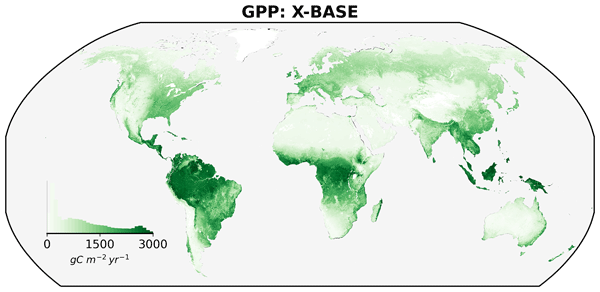
The movement of water, carbon, and energy from the Earth's surface to the atmosphere, or flux, is an important process to understand because it impacts our lives. Here, we outline a method called FLUXCOM-X to estimate global water and CO2 fluxes based on direct measurements from sites around the world. We go on to demonstrate how these new estimates of net CO2 uptake/loss, gross CO2 uptake, total water evaporation, and transpiration from plants compare to previous and independent estimates.
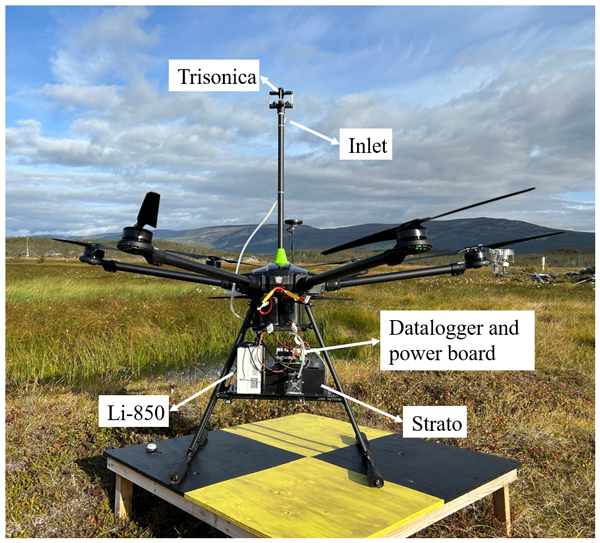
Abdullah Bolek, Martin Heimann, and Mathias Göckede
Atmos. Meas. Tech., 17, 5619–5636, https://doi.org/10.5194/amt-17-5619-2024, https://doi.org/10.5194/amt-17-5619-2024, 2024
Short summary
Short summary
This study describes the development of a new UAV platform to measure atmospheric greenhouse gas (GHG) mole fractions, 2D wind speed, air temperature, humidity, and pressure. Understanding GHG flux processes and controls across various ecosystems is essential for estimating the current and future state of climate change. It was shown that using the UAV platform for such measurements is beneficial for improving our understanding of GHG processes over complex landscapes.
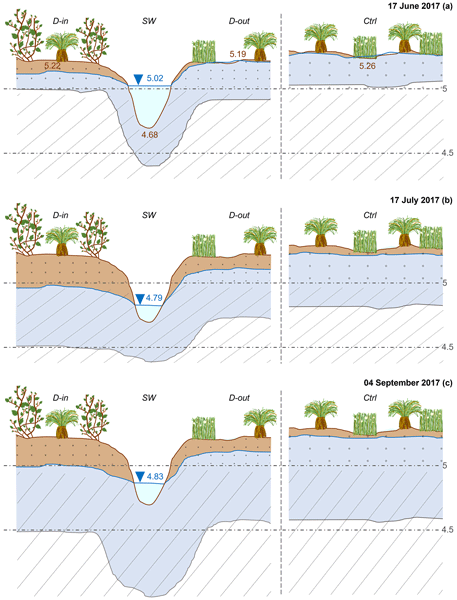
Sandra Raab, Karel Castro-Morales, Anke Hildebrandt, Martin Heimann, Jorien Elisabeth Vonk, Nikita Zimov, and Mathias Goeckede
Biogeosciences, 21, 2571–2597, https://doi.org/10.5194/bg-21-2571-2024, https://doi.org/10.5194/bg-21-2571-2024, 2024
Short summary
Short summary
Water status is an important control factor on sustainability of Arctic permafrost soils, including production and transport of carbon. We compared a drained permafrost ecosystem with a natural control area, investigating water levels, thaw depths, and lateral water flows. We found that shifts in water levels following drainage affected soil water availability and that lateral transport patterns were of major relevance. Understanding these shifts is crucial for future carbon budget studies.
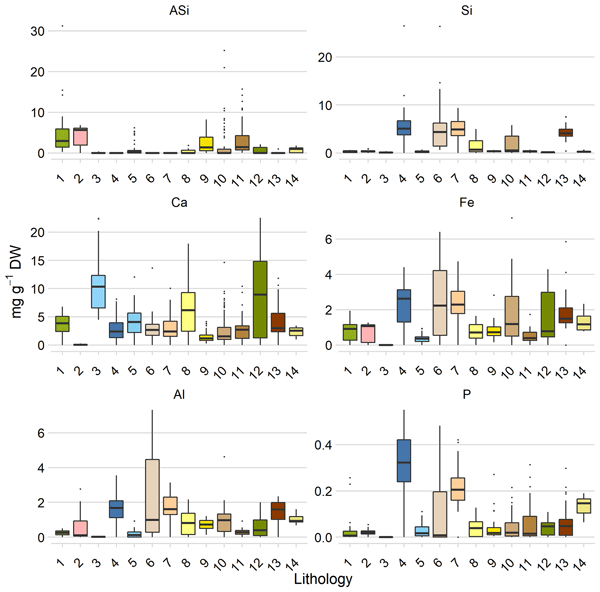
Peter Stimmler, Mathias Goeckede, Bo Elberling, Susan Natali, Peter Kuhry, Nia Perron, Fabrice Lacroix, Gustaf Hugelius, Oliver Sonnentag, Jens Strauss, Christina Minions, Michael Sommer, and Jörg Schaller
Earth Syst. Sci. Data, 15, 1059–1075, https://doi.org/10.5194/essd-15-1059-2023, https://doi.org/10.5194/essd-15-1059-2023, 2023
Short summary
Short summary
Arctic soils store large amounts of carbon and nutrients. The availability of nutrients, such as silicon, calcium, iron, aluminum, phosphorus, and amorphous silica, is crucial to understand future carbon fluxes in the Arctic. Here, we provide, for the first time, a unique dataset of the availability of the abovementioned nutrients for the different soil layers, including the currently frozen permafrost layer. We relate these data to several geographical and geological parameters.
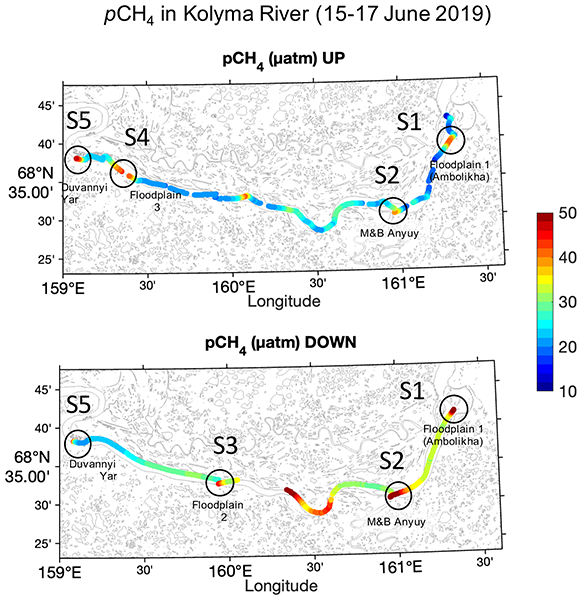
Karel Castro-Morales, Anna Canning, Sophie Arzberger, Will A. Overholt, Kirsten Küsel, Olaf Kolle, Mathias Göckede, Nikita Zimov, and Arne Körtzinger
Biogeosciences, 19, 5059–5077, https://doi.org/10.5194/bg-19-5059-2022, https://doi.org/10.5194/bg-19-5059-2022, 2022
Short summary
Short summary
Permafrost thaw releases methane that can be emitted into the atmosphere or transported by Arctic rivers. Methane measurements are lacking in large Arctic river regions. In the Kolyma River (northeast Siberia), we measured dissolved methane to map its distribution with great spatial detail. The river’s edge and river junctions had the highest methane concentrations compared to other river areas. Microbial communities in the river showed that the river’s methane likely is from the adjacent land.
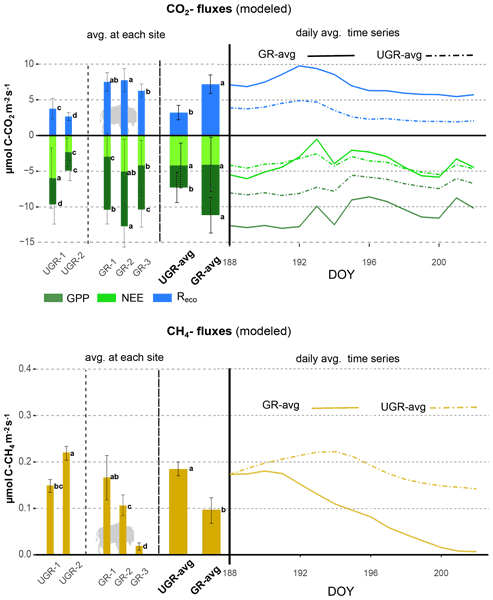
Wolfgang Fischer, Christoph K. Thomas, Nikita Zimov, and Mathias Göckede
Biogeosciences, 19, 1611–1633, https://doi.org/10.5194/bg-19-1611-2022, https://doi.org/10.5194/bg-19-1611-2022, 2022
Short summary
Short summary
Arctic permafrost ecosystems may release large amounts of carbon under warmer future climates and may therefore accelerate global climate change. Our study investigated how long-term grazing by large animals influenced ecosystem characteristics and carbon budgets at a Siberian permafrost site. Our results demonstrate that such management can contribute to stabilizing ecosystems to keep carbon in the ground, particularly through drying soils and reducing methane emissions.
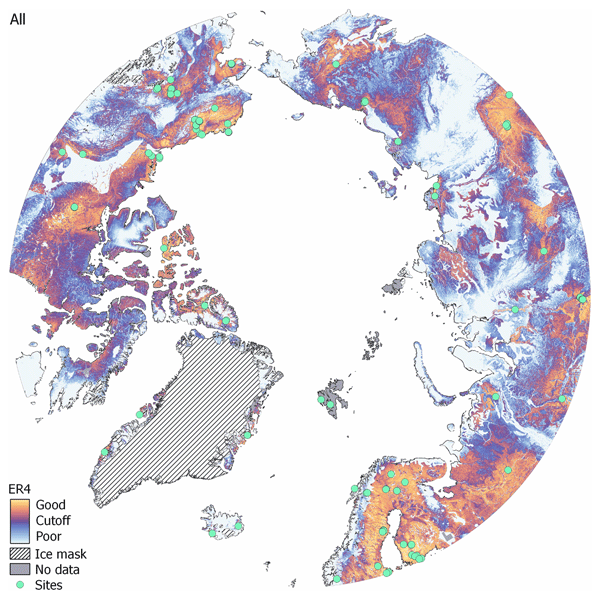
Martijn M. T. A. Pallandt, Jitendra Kumar, Marguerite Mauritz, Edward A. G. Schuur, Anna-Maria Virkkala, Gerardo Celis, Forrest M. Hoffman, and Mathias Göckede
Biogeosciences, 19, 559–583, https://doi.org/10.5194/bg-19-559-2022, https://doi.org/10.5194/bg-19-559-2022, 2022
Short summary
Short summary
Thawing of Arctic permafrost soils could trigger the release of vast amounts of carbon to the atmosphere, thus enhancing climate change. Our study investigated how well the current network of eddy covariance sites to monitor greenhouse gas exchange at local scales captures pan-Arctic flux patterns. We identified large coverage gaps, e.g., in Siberia, but also demonstrated that a targeted addition of relatively few sites can significantly improve network performance.
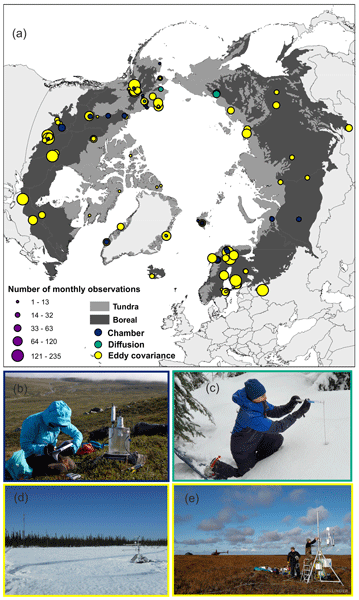
Anna-Maria Virkkala, Susan M. Natali, Brendan M. Rogers, Jennifer D. Watts, Kathleen Savage, Sara June Connon, Marguerite Mauritz, Edward A. G. Schuur, Darcy Peter, Christina Minions, Julia Nojeim, Roisin Commane, Craig A. Emmerton, Mathias Goeckede, Manuel Helbig, David Holl, Hiroki Iwata, Hideki Kobayashi, Pasi Kolari, Efrén López-Blanco, Maija E. Marushchak, Mikhail Mastepanov, Lutz Merbold, Frans-Jan W. Parmentier, Matthias Peichl, Torsten Sachs, Oliver Sonnentag, Masahito Ueyama, Carolina Voigt, Mika Aurela, Julia Boike, Gerardo Celis, Namyi Chae, Torben R. Christensen, M. Syndonia Bret-Harte, Sigrid Dengel, Han Dolman, Colin W. Edgar, Bo Elberling, Eugenie Euskirchen, Achim Grelle, Juha Hatakka, Elyn Humphreys, Järvi Järveoja, Ayumi Kotani, Lars Kutzbach, Tuomas Laurila, Annalea Lohila, Ivan Mammarella, Yojiro Matsuura, Gesa Meyer, Mats B. Nilsson, Steven F. Oberbauer, Sang-Jong Park, Roman Petrov, Anatoly S. Prokushkin, Christopher Schulze, Vincent L. St. Louis, Eeva-Stiina Tuittila, Juha-Pekka Tuovinen, William Quinton, Andrej Varlagin, Donatella Zona, and Viacheslav I. Zyryanov
Earth Syst. Sci. Data, 14, 179–208, https://doi.org/10.5194/essd-14-179-2022, https://doi.org/10.5194/essd-14-179-2022, 2022
Short summary
Short summary
The effects of climate warming on carbon cycling across the Arctic–boreal zone (ABZ) remain poorly understood due to the relatively limited distribution of ABZ flux sites. Fortunately, this flux network is constantly increasing, but new measurements are published in various platforms, making it challenging to understand the ABZ carbon cycle as a whole. Here, we compiled a new database of Arctic–boreal CO2 fluxes to help facilitate large-scale assessments of the ABZ carbon cycle.
Cited articles
Aubinet, M., Vesala, T., and Papale, D. (Eds.): Eddy Covariance: A Practical Guide to Measurement and Data Analysis, Springer Netherlands, Dordrecht, ISBN 978-94-007-2350-4 978-94-007-2351-1, https://doi.org/10.1007/978-94-007-2351-1, 2012. a
Baldocchi, D.: “Breathing” of the Terrestrial Biosphere: Lessons Learned from a Global Network of Carbon Dioxide Flux Measurement Systems, Austr. J. Bot., 56, 1, https://doi.org/10.1071/BT07151, 2008. a
Businger, J. A., Wyngaard, J. C., Izumi, Y., and Bradley, E. F.: Flux-Profile Relationships in the Atmospheric Surface Layer, J. Atmos. Sci., 28, 181–189, https://doi.org/10.1175/1520-0469(1971)028<0181:FPRITA>2.0.CO;2, 1971. a
Cai, X., Chen, J., and Desjardins, R. L.: Flux Footprints in the Convective Boundary Layer: Large-Eddy Simulation and Lagrangian Stochastic Modelling, Bound.-Lay. Meteorol., 137, 31–47, https://doi.org/10.1007/s10546-010-9519-7, 2010. a
Crawford, B. and Christen, A.: Spatial Source Attribution of Measured Urban Eddy Covariance CO2 Fluxes, Theor. Appl. Climatol., 119, 733–755, https://doi.org/10.1007/s00704-014-1124-0, 2015. a
Dyer, A. J.: A Review of Flux-Profile Relationships, Bound.-Lay. Meteorol., 7, 363–372, https://doi.org/10.1007/BF00240838, 1974. a
Evans, L. C.: Partial Differential Equations, American Mathematical Soc., ISBN 978-0-8218-4974-3, 2010. a
Göckede, M., Foken, T., Aubinet, M., Aurela, M., Banza, J., Bernhofer, C., Bonnefond, J. M., Brunet, Y., Carrara, A., Clement, R., Dellwik, E., Elbers, J., Eugster, W., Fuhrer, J., Granier, A., Grünwald, T., Heinesch, B., Janssens, I. A., Knohl, A., Koeble, R., Laurila, T., Longdoz, B., Manca, G., Marek, M., Markkanen, T., Mateus, J., Matteucci, G., Mauder, M., Migliavacca, M., Minerbi, S., Moncrieff, J., Montagnani, L., Moors, E., Ourcival, J.-M., Papale, D., Pereira, J., Pilegaard, K., Pita, G., Rambal, S., Rebmann, C., Rodrigues, A., Rotenberg, E., Sanz, M. J., Sedlak, P., Seufert, G., Siebicke, L., Soussana, J. F., Valentini, R., Vesala, T., Verbeeck, H., and Yakir, D.: Quality control of CarboEurope flux data – Part 1: Coupling footprint analyses with flux data quality assessment to evaluate sites in forest ecosystems, Biogeosciences, 5, 433–450, https://doi.org/10.5194/bg-5-433-2008, 2008. a
Hochbruck, M. and Ostermann, A.: Exponential Integrators, Acta Numer., 19, 209–286, https://doi.org/10.1017/S0962492910000048, 2010. a, b
Hsieh, C.-I., Katul, G., and Chi, T.-W.: An Approximate Analytical Model for Footprint Estimation of Scalar Fluxes in Thermally Stratified Atmospheric Flows, Adv. Water Resour., 23, 765–772, https://doi.org/10.1016/S0309-1708(99)00042-1, 2000. a
Kljun, N., Rotach, M., and Schmid, H.: A Three-Dimensional Backward Lagrangian Footprint Model For A Wide Range Of Boundary-Layer Stratifications, Bounda.-Lay. Meteorol., 103, 205–226, https://doi.org/10.1023/A:1014556300021, 2002. a
Kljun, N., Calanca, P., Rotach, M. W., and Schmid, H. P.: A simple two-dimensional parameterisation for Flux Footprint Prediction (FFP), Geosci. Model Dev., 8, 3695–3713, https://doi.org/10.5194/gmd-8-3695-2015, 2015. a
Kormann, R. and Meixner, F. X.: An Analytical Footprint Model For Non-Neutral Stratification, Bound.-Lay. Meteorol., 99, 207–224, https://doi.org/10.1023/A:1018991015119, 2001. a, b, c, d
Krapez, J.-C. and Ky, G. A.: Semi-Analytical Footprint Model Compliant with Arbitrary Atmospheric Stratification: Application to Monin–Obukhov Profiles, Bound.-Lay. Meteorol., 187, 743–791, https://doi.org/10.1007/s10546-023-00793-2, 2023. a
Leclerc, M. Y. and Foken, T.: Footprints in Micrometeorology and Ecology, Springer, Berlin, Heidelberg, ISBN 978-3-642-54544-3 978-3-642-54545-0, https://doi.org/10.1007/978-3-642-54545-0, 2014. a
Lin, J.-S. and Hildemann, L. M.: A Generalized Mathematical Scheme to Analytically Solve the Atmospheric Diffusion Equation with Dry Deposition, Atmos. Environ., 31, 59–71, https://doi.org/10.1016/S1352-2310(96)00148-3, 1997. a
Lindfield, G. and Penny, J.: Numerical Methods: Using MATLAB, Academic Press, ISBN 978-0-12-812370-6, 2018. a
Monin, A. S. and Obukhov, A. M.: Basic laws of turbulent mixing in the surface layer of the atmosphere, Tr. Akad. Nauk SSSR Geophiz. Inst., 24, 163–187, 1954. a
Moreira, D. M., Tirabassi, T., and Carvalho, J. C.: Plume Dispersion Simulation in Low Wind Conditions in Stable and Convective Boundary Layers, Atmos. Environ., 39, 3643–3650, https://doi.org/10.1016/j.atmosenv.2005.03.004, 2005. a
Pasquill, F.: Some aspects of boundary layer description, Q. J. Roy. Meteor. Soc., 98, 469–494, https://doi.org/10.1002/qj.49709841702, 1972. a
Pirk, N., Aalstad, K., Mannerfelt, E. S., Clayer, F., De Wit, H., Christiansen, C. T., Althuizen, I., Lee, H., and Westermann, S.: Disaggregating the Carbon Exchange of Degrading Permafrost Peatlands Using Bayesian Deep Learning, Geophys. Res. Lett., 51, e2024GL109283, https://doi.org/10.1029/2024GL109283, 2024. a
Rey-Sanchez, C., Arias-Ortiz, A., Kasak, K., Chu, H., Szutu, D., Verfaillie, J., and Baldocchi, D.: Detecting Hot Spots of Methane Flux Using Footprint-Weighted Flux Maps, J. Geophys. Res.-Biogeo., 127, e2022JG006977, https://doi.org/10.1029/2022JG006977, 2022. a
Schlutow, M. and Chew, R.: BLDFM: The Boundary Layer Dispersion and Footprint Model, Zenodo [code], https://doi.org/10.5281/zenodo.15487243, 2025. a
Schlutow, M., Stacke, T., Doerffel, T., Smolarkiewicz, P. K., and Göckede, M.: Large Eddy Simulations of the Interaction Between the Atmospheric Boundary Layer and Degrading Arctic Permafrost, J. Geophys. Res.-Atmos., 129, e2024JD040794, https://doi.org/10.1029/2024JD040794, 2024. a
Schmid, H. P.: Footprint Modeling for Vegetation Atmosphere Exchange Studies: A Review and Perspective, Agr. Forest Meteorol., 113, 159–183, https://doi.org/10.1016/S0168-1923(02)00107-7, 2002. a
Schuepp, P. H., Leclerc, M. Y., MacPherson, J. I., and Desjardins, R. L.: Footprint Prediction of Scalar Fluxes from Analytical Solutions of the Diffusion Equation, Bound.-Lay. Meteorol., 50, 355–373, https://doi.org/10.1007/BF00120530, 1990. a
Schumann, U.: Subgrid Length-Scales for Large-Eddy Simulation of Stratified Turbulence, Theor. Comput. Fluid Dynam., 2, 279–290, https://doi.org/10.1007/BF00271468, 1991. a, b, c
Seinfeld, J. H. and Pandis, S. N.: Atmospheric Chemistry and Physics: From Air Pollution to Climate Change, John Wiley & Sons, ISBN 978-1-118-59136-9, 2012. a
Steinfeld, G., Raasch, S., and Markkanen, T.: Footprints in Homogeneously and Heterogeneously Driven Boundary Layers Derived from a Lagrangian Stochastic Particle Model Embedded into Large-Eddy Simulation, Bound.-Lay. Meteorol., 129, 225–248, https://doi.org/10.1007/s10546-008-9317-7, 2008. a
Stockie, J. M.: The Mathematics of Atmospheric Dispersion Modeling, SIAM Rev., 53, 349–372, https://doi.org/10.1137/10080991X, 2011. a, b
Stull, R. B. (Ed.): An Introduction to Boundary Layer Meteorology, Springer Netherlands, Dordrecht, ISBN 978-90-277-2769-5 978-94-009-3027-8, https://doi.org/10.1007/978-94-009-3027-8, 1988. a, b
Thomson, D. J.: Criteria for the Selection of Stochastic Models of Particle Trajectories in Turbulent Flows, J. Fluid Mech., 180, 529–556, https://doi.org/10.1017/S0022112087001940, 1987. a
Tuovinen, J.-P., Aurela, M., Hatakka, J., Räsänen, A., Virtanen, T., Mikola, J., Ivakhov, V., Kondratyev, V., and Laurila, T.: Interpreting eddy covariance data from heterogeneous Siberian tundra: land-cover-specific methane fluxes and spatial representativeness, Biogeosciences, 16, 255–274, https://doi.org/10.5194/bg-16-255-2019, 2019. a
Vesala, T., Kljun, N., Rannik, Ü., Rinne, J., Sogachev, A., Markkanen, T., Sabelfeld, K., Foken, Th., and Leclerc, M.: Flux and Concentration Footprint Modelling: State of the Art, Environ. Pollut., 152, 653–666, https://doi.org/10.1016/j.envpol.2007.06.070, 2008. a, b, c
Wang, W., Davis, K. J., Cook, B. D., Butler, M. P., and Ricciuto, D. M.: Decomposing CO2 Fluxes Measured over a Mixed Ecosystem at a Tall Tower and Extending to a Region: A Case Study, J. Geophys. Res.-Biogeo., 111, https://doi.org/10.1029/2005JG000093, 2006. a
Short summary
Understanding how greenhouse gases and pollutants move through the atmosphere is crucial. A new model, the Boundary Layer Dispersion and Footprint Model (BLDFM), tracks their movement. Unlike previous models, BLDFM uses a numerical approach without simplifying assumptions. It is flexible and can be used for climate impact studies and industrial emissions monitoring. Our testing and comparison results show BLDFM's potential as a valuable research tool.
Understanding how greenhouse gases and pollutants move through the atmosphere is crucial. A new...


