
Articles | Volume 19, issue 1
https://doi.org/10.5194/gmd-19-57-2026
© Author(s) 2026. This work is distributed under
the Creative Commons Attribution 4.0 License.
the Creative Commons Attribution 4.0 License.
https://doi.org/10.5194/gmd-19-57-2026
© Author(s) 2026. This work is distributed under
the Creative Commons Attribution 4.0 License.
the Creative Commons Attribution 4.0 License.
Model description paper
| 
06 Jan 2026
Model description paper |
| 06 Jan 2026
| 06 Jan 2026
NoahPy: a differentiable Noah land surface model for simulating permafrost thermo-hydrology
Wenbiao Tian
State Key Laboratory of Climate System Prediction and Risk Management, Nanjing Normal University, Nanjing 210023, China
Key Laboratory of Ministry of Education on Virtual Geographic Environment, Nanjing Normal University, Nanjing 210023, China
Hu Yu
North Information Control Research Academy Group Co., Ltd., Nanjing 211153, China

Key Laboratory of Ministry of Education on Virtual Geographic Environment, Nanjing Normal University, Nanjing 210023, China
Yuhe Cao
College of Forestry, Northeast Forestry University, Harbin 150040, China
Wenjun Yi
Key Laboratory of Ministry of Education on Virtual Geographic Environment, Nanjing Normal University, Nanjing 210023, China
Jiwei Xu
Key Laboratory of Ministry of Education on Virtual Geographic Environment, Nanjing Normal University, Nanjing 210023, China
State Key Laboratory of Climate System Prediction and Risk Management, Nanjing Normal University, Nanjing 210023, China
Key Laboratory of Ministry of Education on Virtual Geographic Environment, Nanjing Normal University, Nanjing 210023, China
Jiangsu Center for Collaborative Innovation in Geographical Information Resource Development and Application, Nanjing, 210023, China
Related authors
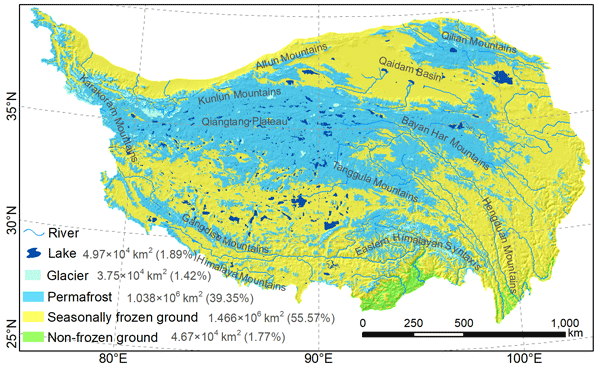
Yuhong Chen, Zhuotong Nan, Wenbiao Tian, Yi Zhao, Shuping Zhao, Dongkai Yang, Guifei Jing, and Fujun Niu
The Cryosphere, 20, 5697–5723, https://doi.org/10.5194/tc-20-5697-2026, https://doi.org/10.5194/tc-20-5697-2026, 2026
Short summary
Short summary
This study presents a 1-km permafrost map of the Qinghai-Tibet Plateau for 2020, generated via a frost number model and space-for-time substitution. Permafrost covers 1.038×10⁶ km² (39.35 %), a 1.82 % decline since 2010, while seasonally frozen ground covers 1.466×10⁶ km² (55.57 %). Validated against boreholes, the map achieves 0.84 accuracy (Kappa= 0.58). This map offers a critical, up-to-date baseline for cryospheric research.
Yuhong Chen, Zhuotong Nan, Wenbiao Tian, Yi Zhao, Shuping Zhao, Dongkai Yang, Guifei Jing, and Fujun Niu
The Cryosphere, 20, 5697–5723, https://doi.org/10.5194/tc-20-5697-2026, https://doi.org/10.5194/tc-20-5697-2026, 2026
Short summary
Short summary
This study presents a 1-km permafrost map of the Qinghai-Tibet Plateau for 2020, generated via a frost number model and space-for-time substitution. Permafrost covers 1.038×10⁶ km² (39.35 %), a 1.82 % decline since 2010, while seasonally frozen ground covers 1.466×10⁶ km² (55.57 %). Validated against boreholes, the map achieves 0.84 accuracy (Kappa= 0.58). This map offers a critical, up-to-date baseline for cryospheric research.
Pengfei Li, Zhuotong Nan, Jiwei Xu, and Fujun Niu
EGUsphere, https://doi.org/10.5194/egusphere-2026-5035, https://doi.org/10.5194/egusphere-2026-5035, 2026
This preprint is open for discussion and under review for The Cryosphere (TC).
Short summary
Short summary
Most susceptibility models reduce multi-year inventories to binary occurrence labels and make little use of when failures occurred. We use the temporal ordering of pre-initiation states as weak supervision for susceptibility. Using annual retrogressive thaw slump inventories, the framework captured 89.45 % of 2021–2022 initiations within the top 10 % susceptibility area. The principle may apply to landslides and other mass-movement processes with multi-temporal initiation inventories.
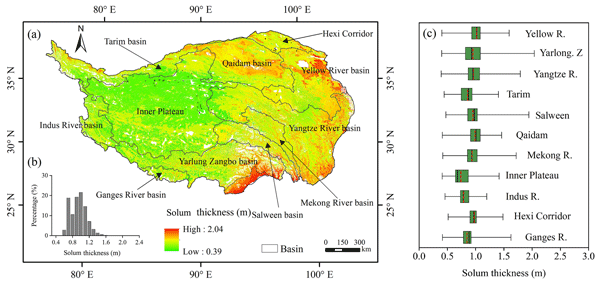
Lihua Chen, Xingyu Ding, Shuping Zhao, Fujun Niu, Keting Feng, and Zhuotong Nan
Earth Syst. Sci. Data, 18, 3779–3801, https://doi.org/10.5194/essd-18-3779-2026, https://doi.org/10.5194/essd-18-3779-2026, 2026
Short summary
Short summary
This study presents a high-resolution (1 km) physically-based solum thickness dataset for the Qinghai–Tibet Plateau. Grounded in a mechanistic mass-balance model that couples climate weathering with multi-process erosion, the data resolve geomorphological patterns and offer superior accuracy over conventional statistical products. This dataset provides essential model parameter for hydrological, ecological, and cryosphere models, facilitating more reliable assessments under a changing climate.
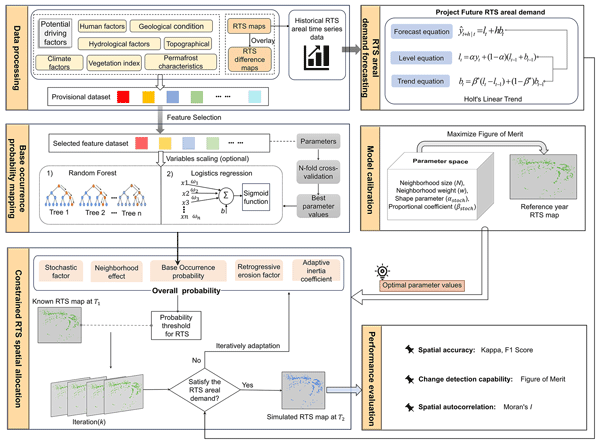
Jiwei Xu, Shuping Zhao, Zhuotong Nan, Fujun Niu, and Yaonan Zhang
Geosci. Model Dev., 19, 2919–2943, https://doi.org/10.5194/gmd-19-2919-2026, https://doi.org/10.5194/gmd-19-2919-2026, 2026
Short summary
Short summary
Permafrost is warming, causing more ground collapses known as retrogressive thaw slumps that damage ecosystems and infrastructure. We created a new computer model to predict how these slumps grow and spread over time. By combining satellite data, statistics, and rules that mimic natural erosion, the model can reproduce changes with high accuracy. This helps scientists and planners better forecast future permafrost hazards.
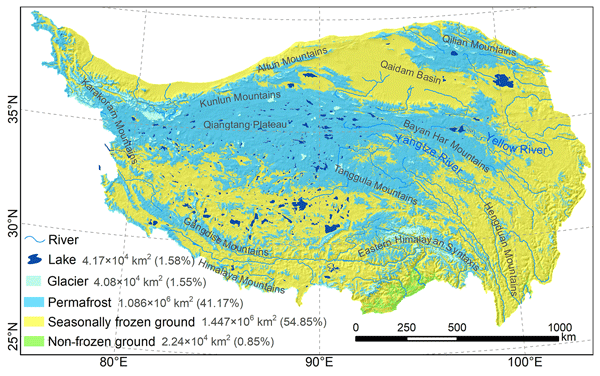
Zetao Cao, Zhuotong Nan, Jianan Hu, Yuhong Chen, and Yaonan Zhang
Earth Syst. Sci. Data, 15, 3905–3930, https://doi.org/10.5194/essd-15-3905-2023, https://doi.org/10.5194/essd-15-3905-2023, 2023
Short summary
Short summary
This study provides a new 2010 permafrost distribution map of the Qinghai–Tibet Plateau (QTP), using an effective mapping approach based entirely on satellite temperature data, well constrained by survey-based subregion maps, and considering the effects of local factors. The map shows that permafrost underlies about 41 % of the total QTP. We evaluated it with borehole observations and other maps, and all evidence indicates that this map has excellent accuracy.
Yi Zhao, Zhuotong Nan, Hailong Ji, and Lin Zhao
The Cryosphere, 16, 825–849, https://doi.org/10.5194/tc-16-825-2022, https://doi.org/10.5194/tc-16-825-2022, 2022
Short summary
Short summary
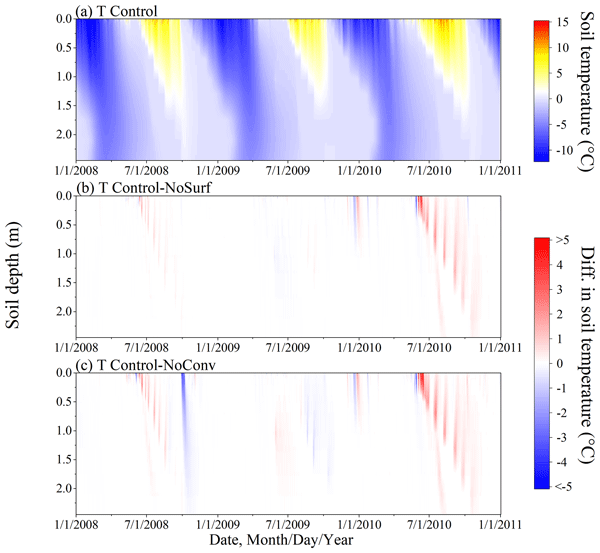
Convective heat transfer (CHT) is important in affecting thermal regimes in permafrost regions. We quantified its thermal impacts by contrasting the simulation results from three scenarios in which the Simultaneous Heat and Water model includes full, partial, and no consideration of CHT. The results show the CHT commonly happens in shallow and middle soil depths during thawing periods and has greater impacts in spring than summer. The CHT has both heating and cooling effects on the active layer.
Cited articles
Abdelhamed, M. S., Elshamy, M. E., Razavi, S., and Wheater, H. S.: Challenges in Hydrologic-Land Surface Modeling of Permafrost Signatures – A Canadian Perspective, Journal of Advances in Modeling Earth Systems, 15, e2022MS003013, https://doi.org/10.1029/2022MS003013, 2023.
Asher, M. J., Croke, B. F. W., Jakeman, A. J., and Peeters, L. J. M.: A review of surrogate models and their application to groundwater modeling, Water Resources Research, 51, 5957–5973, https://doi.org/10.1002/2015WR016967, 2015.
Bi, K., Xie, L., Zhang, H., Chen, X., Gu, X., and Tian, Q.: Accurate medium-range global weather forecasting with 3D neural networks, Nature, 619, 533–538, https://doi.org/10.1038/s41586-023-06185-3, 2023.
Bonavita, M. and Laloyaux, P.: Machine Learning for Model Error Inference and Correction, Journal of Advances in Modeling Earth Systems, 12, e2020MS002232, https://doi.org/10.1029/2020MS002232, 2020.
Brandhorst, N. and Neuweiler, I.: Impact of parameter updates on soil moisture assimilation in a 3D heterogeneous hillslope model, Hydrology and Earth System Sciences, 27, 1301–1323, https://doi.org/10.5194/hess-27-1301-2023, 2023.
Campbell, G. S.: A simple method for determining unsaturated conductivity from moisture retention data, Soil Science, 117, https://doi.org/10.1097/00010694-197406000-00001, 1974.
Chen, F., Mitchell, K., Schaake, J., Xue, Y., Pan, H.-L., Koren, V., Duan, Q. Y., Ek, M., and Betts, A.: Modeling of land surface evaporation by four schemes and comparison with FIFE observations, Journal of Geophysical Research: Atmospheres, 101, 7251–7268, https://doi.org/10.1029/95JD02165, 1996.
Chen, F., Janjić, Z., and Mitchell, K.: Impact of Atmospheric Surface-layer Parameterizations in the new Land-surface Scheme of the NCEP Mesoscale Eta Model, Boundary-Layer Meteorology, 85, 391–421, https://doi.org/10.1023/A:1000531001463, 1997.
Chen, H., Nan, Z., Zhao, L., Ding, Y., Chen, J., and Pang, Q.: Noah Modelling of the Permafrost Distribution and Characteristics in the West Kunlun Area, Qinghai-Tibet Plateau, China, Permafrost and Periglacial Processes, 26, 160–174, https://doi.org/10.1002/ppp.1841, 2015.
Chen, M., Qian, Z., Boers, N., Jakeman, A. J., Kettner, A. J., Brandt, M., Kwan, M.-P., Batty, M., Li, W., Zhu, R., Luo, W., Ames, D. P., Barton, C. M., Cuddy, S. M., Koirala, S., Zhang, F., Ratti, C., Liu, J., Zhong, T., Liu, J., Wen, Y., Yue, S., Zhu, Z., Zhang, Z., Sun, Z., Lin, J., Ma, Z., He, Y., Xu, K., Zhang, C., Lin, H., and Lü, G.: Iterative integration of deep learning in hybrid Earth surface system modelling, Nature Reviews Earth & Environment, 4, 568–581, https://doi.org/10.1038/s43017-023-00452-7, 2023.
Côté, J. and Konrad, J.-M.: A generalized thermal conductivity model for soils and construction materials, Canadian Geotechnical Journal, 42, 443–458, https://doi.org/10.1139/t04-106, 2005.
Dai, Y., Xin, Q., Wei, N., Zhang, Y., Shangguan, W., Yuan, H., Zhang, S., Liu, S., and Lu, X.: A Global High-Resolution Data Set of Soil Hydraulic and Thermal Properties for Land Surface Modeling, Journal of Advances in Modeling Earth Systems, 11, 2996–3023, https://doi.org/10.1029/2019MS001784, 2019.
Duan, Q., Sorooshian, S., and Gupta, V. K.: Optimal use of the SCE-UA global optimization method for calibrating watershed models, Journal of Hydrology, 158, 265–284, https://doi.org/10.1016/0022-1694(94)90057-4, 1994.
Ek, M. B., Mitchell, K. E., Lin, Y., Rogers, E., Grunmann, P., Koren, V., Gayno, G., and Tarpley, J. D.: Implementation of Noah land surface model advances in the National Centers for Environmental Prediction operational mesoscale Eta model, Journal of Geophysical Research: Atmospheres, 108, https://doi.org/10.1029/2002JD003296, 2003.
Feng, D., Liu, J., Lawson, K., and Shen, C.: Differentiable, Learnable, Regionalized Process-Based Models With Multiphysical Outputs can Approach State-Of-The-Art Hydrologic Prediction Accuracy, Water Resources Research, 58, e2022WR032404, https://doi.org/10.1029/2022WR032404, 2022.
Glorot, X., Bordes, A., and Bengio, Y.: Deep Sparse Rectifier Neural Networks, in: Proceedings of the Fourteenth International Conference on Artificial Intelligence and Statistics, 315–323, https://proceedings.mlr.press/v15/glorot11a.html (last access: 20 December 2025), 2011.
Harp, D. R., Atchley, A. L., Painter, S. L., Coon, E. T., Wilson, C. J., Romanovsky, V. E., and Rowland, J. C.: Effect of soil property uncertainties on permafrost thaw projections: a calibration-constrained analysis, The Cryosphere, 10, 341–358, https://doi.org/10.5194/tc-10-341-2016, 2016.
He, J., Yang, K., Tang, W., Lu, H., Qin, J., Chen, Y., and Li, X.: The first high-resolution meteorological forcing dataset for land process studies over China, Scientific Data, 7, 25, https://doi.org/10.1038/s41597-020-0369-y, 2020.
Hu, G., Zhao, L., Li, R., Park, H., Wu, X., Su, Y., Guggenberger, G., Wu, T., Zou, D., Zhu, X., Zhang, W., Wu, Y., and Hao, J.: Water and heat coupling processes and its simulation in frozen soils: Current status and future research directions, Catena, 222, https://doi.org/10.1016/j.catena.2022.106844, 2023.
Irrgang, C., Boers, N., Sonnewald, M., Barnes, E. A., Kadow, C., Staneva, J., and Saynisch-Wagner, J.: Towards neural Earth system modelling by integrating artificial intelligence in Earth system science, Nature Machine Intelligence, 3, 667–674, https://doi.org/10.1038/s42256-021-00374-3, 2021.
Ji, H., Nan, Z., Hu, J., Zhao, Y., and Zhang, Y.: On the Spin-Up Strategy for Spatial Modeling of Permafrost Dynamics: A Case Study on the Qinghai-Tibet Plateau, Journal of Advances in Modeling Earth Systems, 14, e2021MS002750, https://doi.org/10.1029/2021MS002750, 2022.
Ji, H., Fu, X., Nan, Z., and Zhao, S.: An effective medium theory-based unified model for estimating thermal conductivity of unfrozen and frozen soils, CATENA, 239, 107942, https://doi.org/10.1016/j.catena.2024.107942, 2024.
Kalnay, E. and Kanamitsu, M.: Time Schemes for Strongly Nonlinear Damping Equations, Monthly Weather Review, 116, 1945-1958, https://doi.org/10.1175/1520-0493(1988)116<1945:TSFSND>2.0.CO;2, 1988.
Kingma, D. and Ba, J.: Adam: A Method for Stochastic Optimization, Computer Science, https://doi.org/10.48550/arXiv.1412.6980, 2014.
Kochkov, D., Yuval, J., Langmore, I., Norgaard, P., Smith, J., Mooers, G., Klöwer, M., Lottes, J., Rasp, S., Düben, P., Hatfield, S., Battaglia, P., Sanchez-Gonzalez, A., Willson, M., Brenner, M. P., and Hoyer, S.: Neural general circulation models for weather and climate, Nature, 632, 1060–1066, https://doi.org/10.1038/s41586-024-07744-y, 2024.
Lam, R., Sanchez-Gonzalez, A., Willson, M., Wirnsberger, P., Fortunato, M., Alet, F., Ravuri, S., Ewalds, T., Eaton-Rosen, Z., Hu, W., Merose, A., Hoyer, S., Holland, G., Vinyals, O., Stott, J., Pritzel, A., Mohamed, S., and Battaglia, P.: Learning skillful medium-range global weather forecasting, Science, 382, 1416–1421, https://doi.org/10.1126/science.adi2336, 2023.
Li, P., Wang, D., Ding, C., and Reng, Y.: Distribution characteristics of soil saturated hydraulic conductivity and soil bulk density in a small watershed in the alpine zone of the Loess Plateau, Science of Soil and Water Conservation, 17, 9–17, https://doi.org/10.16843/j.sswc.2019.04.002, 2019.
Matthes, H., Damseaux, A., Westermann, S., Beer, C., Boone, A., Burke, E., Decharme, B., Genet, H., Jafarov, E., Langer, M., Parmentier, F.-J., Porada, P., Gagne-Landmann, A., Huntzinger, D., Rogers, Brendan M., Schädel, C., Stacke, T., Wells, J., and Wieder, W. R.: Advances in Permafrost Representation: Biophysical Processes in Earth System Models and the Role of Offline Models, Permafrost and Periglacial Processes, 36, 302–318, https://doi.org/10.1002/ppp.2269, 2025.
Nearing, G. S., Kratzert, F., Sampson, A. K., Pelissier, C. S., Klotz, D., Frame, J. M., Prieto, C., and Gupta, H. V.: What Role Does Hydrological Science Play in the Age of Machine Learning?, Water Resources Research, 57, e2020WR028091, https://doi.org/10.1029/2020WR028091, 2021.
O'Loughlin, R. J., Li, D., Neale, R., and O'Brien, T. A.: Moving beyond post hoc explainable artificial intelligence: a perspective paper on lessons learned from dynamical climate modeling, Geoscientific Model Development, 18, 787–802, https://doi.org/10.5194/gmd-18-787-2025, 2025.
Obu, J.: How much of the earth's surface is underlain by permafrost?, J. Geophys. Res. Earth Surf., 126, e2021JF006123, https://doi.org/10.1029/2021JF006123, 2021.
Pan, H. L. and Mahrt, L.: Interaction between soil hydrology and boundary-layer development, Boundary-Layer Meteorology, 38, 185–202, https://doi.org/10.1007/BF00121563, 1987.
Paszke, A., Gross, S., Massa, F., Lerer, A., Bradbury, J., Chanan, G., Killeen, T., Lin, Z., Gimelshein, N., Antiga, L., Desmaison, A., Köpf, A., Yang, E., DeVito, Z., Raison, M., Tejani, A., Chilamkurthy, S., Steiner, B., Fang, L., Bai, J., and Chintala, S.: PyTorch: An Imperative Style, High-Performance Deep Learning Library, in: Proceedings of the 33rd International Conference on Neural Information Processing Systems, Curran Associates Inc., Red Hook, NY, USA, http://papers.neurips.cc/paper/9015-pytorch-an-imperative-style-high-performance-deep-learning-library.pdf (last access: 20 December 2025), 2019.
Rahnamay Naeini, M., Analui, B., Gupta, H. V., Duan, Q., and Sorooshian, S.: Three decades of the Shuffled Complex Evolution (SCE-UA) optimization algorithm: Review and applications, Scientia Iranica, 26, 2015–2031, https://doi.org/10.24200/sci.2019.21500, 2019.
Razavi, S., Tolson, B. A., and Burn, D. H.: Review of surrogate modeling in water resources, Water Resources Research, 48, https://doi.org/10.1029/2011WR011527, 2012.
Reichstein, M., Camps-Valls, G., Stevens, B., Jung, M., Denzler, J., Carvalhais, N., and Prabhat: Deep learning and process understanding for data-driven Earth system science, Nature, 566, 195–204, https://doi.org/10.1038/s41586-019-0912-1, 2019.
Rodell, M., Houser, P. R., Jambor, U., Gottschalck, J., Mitchell, K., Meng, C. J., Arsenault, K., Cosgrove, B., Radakovich, J., Bosilovich, M., Entin, J. K., Walker, J. P., Lohmann, D., and Toll, D.: The Global Land Data Assimilation System, Bulletin of the American Meteorological Society, 85, 381–394, https://doi.org/10.1175/BAMS-85-3-381, 2004.
Rosero, E., Yang, Z.-L., Gulden, L. E., Niu, G.-Y., and Gochis, D. J.: Evaluating Enhanced Hydrological Representations in Noah LSM over Transition Zones: Implications for Model Development, Journal of Hydrometeorology, 10, 600–622, https://doi.org/10.1175/2009JHM1029.1, 2009.
Rudin, C.: Stop explaining black box machine learning models for high stakes decisions and use interpretable models instead, Nature Machine Intelligence, 1, 206–215, https://doi.org/10.1038/s42256-019-0048-x, 2019.
Rumelhart, D. E., Hinton, G. E., and Williams, R. J.: Learning representations by back-propagating errors, Nature, 323, 533–536, https://doi.org/10.1038/323533a0, 1986.
Schädel, C., Rogers, B. M., Lawrence, D. M., Koven, C. D., Brovkin, V., Burke, E. J., Genet, H., Huntzinger, D. N., Jafarov, E., McGuire, A. D., Riley, W. J., and Natali, S. M.: Earth system models must include permafrost carbon processes, Nature Climate Change, 14, 114–116, https://doi.org/10.1038/s41558-023-01909-9, 2024.
Sevilla, J., Heim, L., Ho, A., Besiroglu, T., Hobbhahn, M., and Villalobos, P.: Compute Trends Across Three Eras of Machine Learning, 2022 International Joint Conference on Neural Networks (IJCNN), 18–23 July 2022, 8 pp., https://doi.org/10.1109/IJCNN55064.2022.9891914, 2022.
Shen, C., Appling, A. P., Gentine, P., Bandai, T., Gupta, H., Tartakovsky, A., Baity-Jesi, M., Fenicia, F., Kifer, D., Li, L., Liu, X., Ren, W., Zheng, Y., Harman, C. J., Clark, M., Farthing, M., Feng, D., Kumar, P., Aboelyazeed, D., Rahmani, F., Song, Y., Beck, H. E., Bindas, T., Dwivedi, D., Fang, K., Höge, M., Rackauckas, C., Mohanty, B., Roy, T., Xu, C., and Lawson, K.: Differentiable modelling to unify machine learning and physical models for geosciences, Nature Reviews Earth & Environment, 4, 552–567, https://doi.org/10.1038/s43017-023-00450-9, 2023.
Stuurop, J. C., van der Zee, S. E. A. T. M., Voss, C. I., and French, H. K.: Simulating water and heat transport with freezing and cryosuction in unsaturated soil: Comparing an empirical, semi-empirical and physically-based approach, Advances in Water Resources, 149, 103846, https://doi.org/10.1016/j.advwatres.2021.103846, 2021.
Sun, R., Pan, B., and Duan, Q.: Learning Distributed Parameters of Land Surface Hydrologic Models Using a Generative Adversarial Network, Water Resources Research, 60, e2024WR037380, https://doi.org/10.1029/2024WR037380, 2024.
Szabó, B., Kassai, P., Plunge, S., Nemes, A., Braun, P., Strauch, M., Witing, F., Mészáros, J., and Čerkasova, N.: Addressing soil data needs and data gaps in catchment-scale environmental modelling: the European perspective, SOIL, 10, 587–617, https://doi.org/10.5194/soil-10-587-2024, 2024.
Teuling, A. J., Uijlenhoet, R., van den Hurk, B., and Seneviratne, S. I.: Parameter Sensitivity in LSMs: An Analysis Using Stochastic Soil Moisture Models and ELDAS Soil Parameters, Journal of Hydrometeorology, 10, 751–765, https://doi.org/10.1175/2008JHM1033.1, 2009.
Tian, W. and Nan, Z.: wbtian/NoahPy: NoahPy (v1.0.1), Zenodo [code], https://doi.org/10.5281/zenodo.17000249, 2025a.
Tian, W. and Nan, Z.: Data associated with the paper “NoahPy: A differentiable Noah land surface model for simulating permafrost thermo-hydrology”, figshare [data set], https://doi.org/10.6084/m9.figshare.29988163, 2025b.
Tsai, W.-P., Feng, D., Pan, M., Beck, H., Lawson, K., Yang, Y., Liu, J., and Shen, C.: From calibration to parameter learning: Harnessing the scaling effects of big data in geoscientific modeling, Nature Communications, 12, 5988, https://doi.org/10.1038/s41467-021-26107-z, 2021.
Wang, C., Jiang, S., Zheng, Y., Han, F., Kumar, R., Rakovec, O., and Li, S.: Distributed Hydrological Modeling With Physics-Encoded Deep Learning: A General Framework and Its Application in the Amazon, Water Resources Research, 60, e2023WR036170, https://doi.org/10.1029/2023WR036170, 2024.
Wang, N., Zhang, D., Chang, H., and Li, H.: Deep learning of subsurface flow via theory-guided neural network, Journal of Hydrology, 584, 124700, https://doi.org/10.1016/j.jhydrol.2020.124700, 2020.
Wang, Z., Shao, M., Huang, L., Pei, Y., and Li, R.: Distribution and Influencing Factors of Soil Saturated Hydraulic Conductivity Under Different Land Use Patterns in Eastern Qinghai Province, Journal of Soil and Water Conservation, 35, 150–155, https://doi.org/10.13870/j.cnki.stbcxb.2021.03.021, 2021.
Werbos, P. J.: Backpropagation through time: what it does and how to do it, Proceedings of the IEEE, 78, 1550–1560, https://doi.org/10.1109/5.58337, 1990.
Wi, S. and Steinschneider, S.: Assessing the Physical Realism of Deep Learning Hydrologic Model Projections Under Climate Change, Water Resources Research, 58, e2022WR032123, https://doi.org/10.1029/2022WR032123, 2022.
Wu, X. and Nan, Z.: A multilayer soil texture dataset for permafrost modeling over Qinghai-Tibetan Plateau, 2016 IEEE International Geoscience and Remote Sensing Symposium (IGARSS), 10–15 July 2016, 4917–4920, https://doi.org/10.1109/IGARSS.2016.7730283, 2016.
Wu, X., Nan, Z., Zhao, S., Zhao, L., and Cheng, G.: Spatial modeling of permafrost distribution and properties on the Qinghai-Tibet Plateau, Permafrost and Periglacial Processes, 29, 86–99, https://doi.org/10.1002/ppp.1971, 2018.
Xiao, Y., Zhao, L., Dai, Y., Li, R., Pang, Q., and Yao, J.: Representing permafrost properties in CoLM for the Qinghai–Xizang (Tibetan) Plateau, Cold Regions Science and Technology, 87, 68–77, https://doi.org/10.1016/j.coldregions.2012.12.004, 2013.
Xie, W., Kimura, M., Takaki, K., Asada, Y., Iida, T., and Jia, X.: Interpretable Framework of Physics-Guided Neural Network With Attention Mechanism: Simulating Paddy Field Water Temperature Variations, Water Resources Research, 58, e2021WR030493, https://doi.org/10.1029/2021WR030493, 2022.
Zhang, G., Nan, Z., Hu, N., Yin, Z., Zhao, L., Cheng, G., and Mu, C.: Qinghai-Tibet Plateau Permafrost at Risk in the Late 21st Century, Earth's Future, 10, e2022EF002652, https://doi.org/10.1029/2022EF002652, 2022a.
Zhang, G., Nan, Z., Hu, N., Yin, Z., Zhao, L., Cheng, G., and Mu, C.: Qinghai-Tibet Plateau permafrost at risk in the late 21st century, OSF [code], https://doi.org/10.17605/osf.io/g7jqr, 2022b.
Zhang, X.: Vegetation map of the People's Republic of China (1:1 000 000), Geology Press, https://doi.org/10.12282/plantdata.0155, 2007.
Zhang, X., Sun, S. F., and Xue, Y.: Development and Testing of a Frozen Soil Parameterization for Cold Region Studies, Journal of Hydrometeorology, 8, 690–701, https://doi.org/10.1175/JHM605.1, 2007.
Zhao, L., Wu, Q., Marchenko, S. S., and Sharkhuu, N.: Thermal state of permafrost and active layer in Central Asia during the international polar year, Permafrost and Periglacial Processes, 21, 198–207, https://doi.org/10.1002/ppp.688, 2010.
Zhao, Y., Nan, Z., Cao, Z., Ji, H., and Hu, J.: Evaluation of Parameterization Schemes for Matric Potential in Frozen Soil in Land Surface Models: A Modeling Perspective, Water Resources Research, 59, e2023WR034644, https://doi.org/10.1029/2023WR034644, 2023.
Zheng, D., van der Velde, R., Su, Z., Wang, X., Wen, J., Booij, M. J., Hoekstra, A. Y., and Chen, Y.: Augmentations to the Noah Model Physics for Application to the Yellow River Source Area. Part I: Soil Water Flow, Journal of Hydrometeorology, 16, 2659–2676, https://doi.org/10.1175/JHM-D-14-0198.1, 2015.
Short summary
Accurately predicting how permafrost will thaw with land surface models is a grand challenge in Earth science. We created a new computer model by rebuilding a traditional physics model to work with artificial intelligence. Our results show this new approach is much faster and more reliable for tuning model parameters with data. This provides a better tool to build the next generation of climate models and improve predictions of permafrost's future.
Accurately predicting how permafrost will thaw with land surface models is a grand challenge in...


