
Articles | Volume 19, issue 12
https://doi.org/10.5194/gmd-19-5553-2026
© Author(s) 2026. This work is distributed under
the Creative Commons Attribution 4.0 License.
the Creative Commons Attribution 4.0 License.
https://doi.org/10.5194/gmd-19-5553-2026
© Author(s) 2026. This work is distributed under
the Creative Commons Attribution 4.0 License.
the Creative Commons Attribution 4.0 License.
Development and technical paper
| 
29 Jun 2026
Development and technical paper |
| 29 Jun 2026
| 29 Jun 2026
Global climate modeling with improved precipitation characteristics by learning physics (GRIST-MPS v1.0) from global storm-resolving modeling
Yiming Wang
Department of Computer Science and Technology, Tsinghua University, Beijing, China

State Key Laboratory of Climate System Prediction and Risk Management (CPRM)/Key Laboratory of Meteorological Disaster, Ministry of Education/School of Atmospheric Sciences/Institute of Energy Meteorology, Nanjing University of Information Science and Technology, Nanjing, China
Yilun Han
Department of Earth System Science, Tsinghua University, Beijing, China
Scripps Institution of Oceanography, La Jolla, CA, USA
Wei Xue
Department of Computer Science and Technology, Tsinghua University, Beijing, China
Tianru Chen
State Key Laboratory of Climate System Prediction and Risk Management (CPRM)/Key Laboratory of Meteorological Disaster, Ministry of Education/School of Atmospheric Sciences/Institute of Energy Meteorology, Nanjing University of Information Science and Technology, Nanjing, China
Yihui Zhou
State Key Laboratory of Severe Weather Meteorological Science and Technology, Chinese Academy of Meteorological Sciences, Beijing, China
Xiaohan Li
State Key Laboratory of Climate System Prediction and Risk Management (CPRM)/Key Laboratory of Meteorological Disaster, Ministry of Education/School of Atmospheric Sciences/Institute of Energy Meteorology, Nanjing University of Information Science and Technology, Nanjing, China
State Key Laboratory of Climate System Prediction and Risk Management (CPRM)/Key Laboratory of Meteorological Disaster, Ministry of Education/School of Atmospheric Sciences/Institute of Energy Meteorology, Nanjing University of Information Science and Technology, Nanjing, China
Related authors
No articles found.
Weijie Fu, Chenguang Tian, Yuan Zhao, Yihan Hu, Jingchao Huang, Haishan Chen, and Xu Yue
Geosci. Model Dev., 19, 9395–9409, https://doi.org/10.5194/gmd-19-9395-2026, https://doi.org/10.5194/gmd-19-9395-2026, 2026
Short summary
Short summary
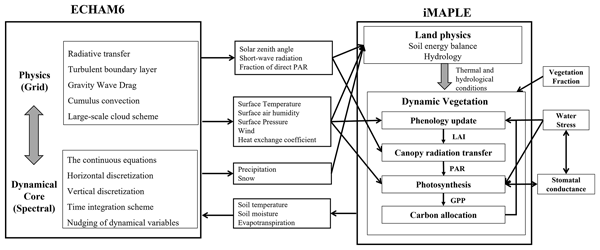
Land-atmosphere interaction is an important process for the exchange of matter and energy between land and atmosphere. In this work, we incorporated the interactive Model for Air Pollution and Land Ecosystems into the European Centre Hamburg general circulation model. Compare with original configuration, the new coupling model demonstrates better performance in simulating terrestrial carbon and water fluxes. Our research provides a useful tool for studying land–atmosphere interactions.
Honglu Sun, Hao Jing, Zhixiang Dai, Sa Xiao, Wei Xue, Jian Sun, and Qifeng Lu
Geosci. Model Dev., 19, 9235–9262, https://doi.org/10.5194/gmd-19-9235-2026, https://doi.org/10.5194/gmd-19-9235-2026, 2026
Short summary
Short summary
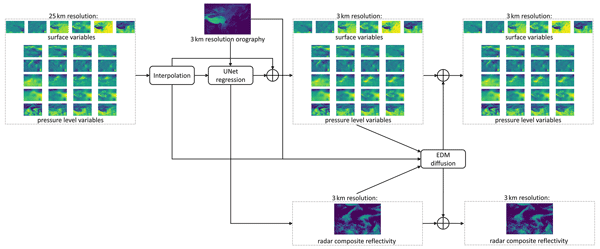
This study represents the first application of CorrDiff (Corrective Diffusion), a diffusion-based model, to achieve 3 km resolution statistical downscaling over China by integrating various variables at multiple levels. Through structural improvements to CorrDiff, our methods produce forecasts that outperform the China Meteorological Administration Mesoscale Model for almost all target variables. Our results show that for radar reflectivity prediction, CorrDiff yields more realistic outputs than regression models.
Lingfeng Li, Bo Qiu, Siwen Zhao, Xin Miao, Chaorong Chen, Jiuyi Chen, Yueyang Ni, Xin Huang, Haishan Chen, and Weidong Guo
Geosci. Model Dev., 19, 8447–8467, https://doi.org/10.5194/gmd-19-8447-2026, https://doi.org/10.5194/gmd-19-8447-2026, 2026
Short summary
Short summary
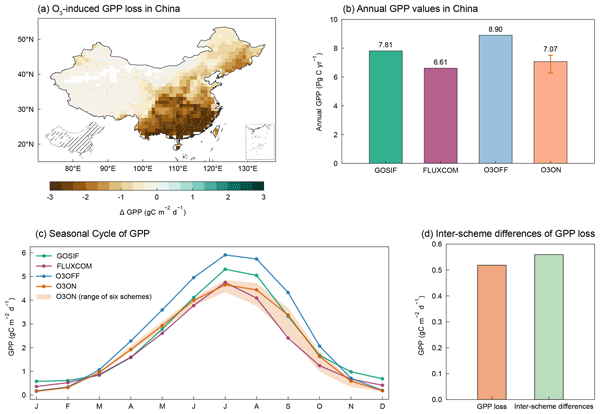
Ground-level ozone can reduce plant growth, but models represent this damage in different ways. We tested six approaches in the same vegetation model for China during the 2010s. They estimated that ozone reduced plant carbon uptake by 17 % to 27 %, averaging about 21 %. Approaches based on broader observations and leaf traits matched measurements more closely, while using leaf lifespan improved how the model represented the accumulation and decline of ozone damage.
Hao Jing, Sa Xiao, Haoyu Li, Huadong Xiao, and Wei Xue
EGUsphere, https://doi.org/10.5194/egusphere-2026-1735, https://doi.org/10.5194/egusphere-2026-1735, 2026
This preprint is open for discussion and under review for Geoscientific Model Development (GMD).
Short summary
Short summary
A machine learning-based parameterization scheme for radiation is proposed for the operational Global Forecasting System of the China Meteorological Administration. We analyze and address the numerical instability issues inherent in hybrid physical–machine learning models, and propose robust coupling strategies compatible with real-time execution. A systematic performance evaluation of the hybrid model is also presented.
Kyaw Than Oo, Chen Haishan, Kazora Jonah, and Du Xinguan
Weather Clim. Dynam., 6, 1399–1417, https://doi.org/10.5194/wcd-6-1399-2025, https://doi.org/10.5194/wcd-6-1399-2025, 2025
Short summary
Short summary
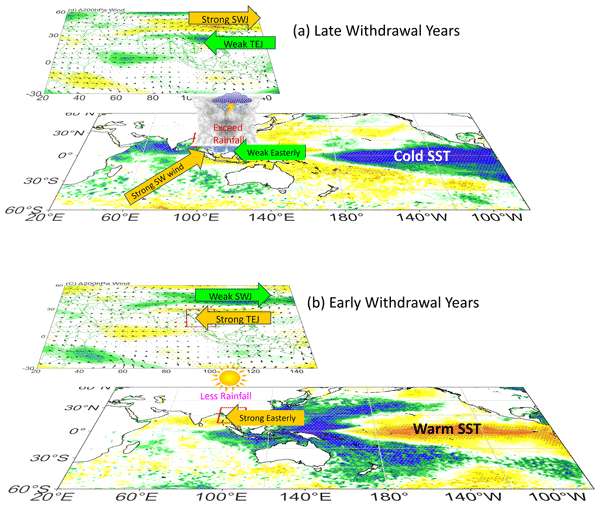
The study examines the delayed withdrawal of the Mainland Indochina Southwest Monsoon by exploring spatial trends. The new Cumulative Change-Point Monsoon index effectively describes seasonal shifts. Results indicate stronger subtropical westerly jets and weaker tropical easterly jets in recent years, impacting wind patterns and delaying monsoon withdrawal.
Lilong Zhou, Wei Xue, and Xueshun Shen
Geosci. Model Dev., 18, 8175–8201, https://doi.org/10.5194/gmd-18-8175-2025, https://doi.org/10.5194/gmd-18-8175-2025, 2025
Short summary
Short summary
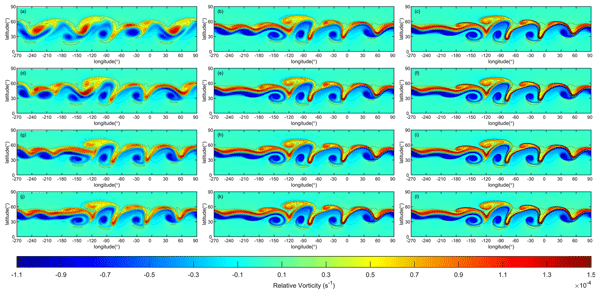
This study develops a novel physics-based weather prediction model using artificial intelligence development platform, achieving high accuracy while maintaining strict physical conservation laws. Our algorithms are optimized for modern super computers, enabling efficient large-scale weather simulations. A key innovation is the model's inherent differentiable nature, allowing seamless integration with AI systems to enhance predictive capabilities through machine learning techniques.
Zhiqi Xu, Jianping Guo, Guwei Zhang, Yuchen Ye, Haikun Zhao, and Haishan Chen
Earth Syst. Sci. Data, 16, 5753–5766, https://doi.org/10.5194/essd-16-5753-2024, https://doi.org/10.5194/essd-16-5753-2024, 2024
Short summary
Short summary
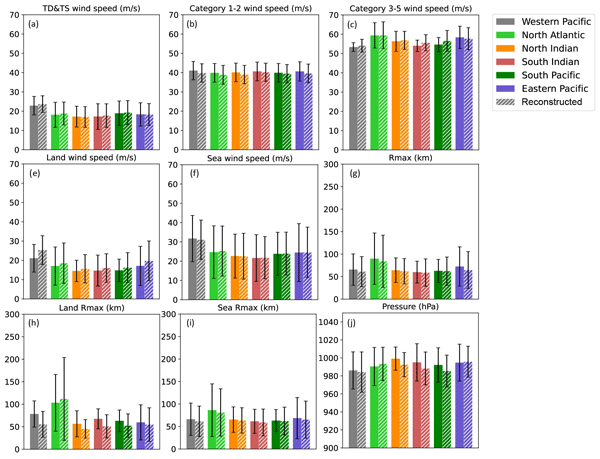
Tropical cyclones (TCs) are powerful weather systems that can cause extreme disasters. Here we generate a global long-term TC size and intensity reconstruction dataset, covering a time period from 1959 to 2022, with a 3 h temporal resolution, using machine learning models. These can be valuable for filling observational data gaps and advancing our understanding of TC climatology, thereby facilitating risk assessments and defenses against TC-related disasters.
Siyuan Chen, Yi Zhang, Yiming Wang, Zhuang Liu, Xiaohan Li, and Wei Xue
Geosci. Model Dev., 17, 6301–6318, https://doi.org/10.5194/gmd-17-6301-2024, https://doi.org/10.5194/gmd-17-6301-2024, 2024
Short summary
Short summary
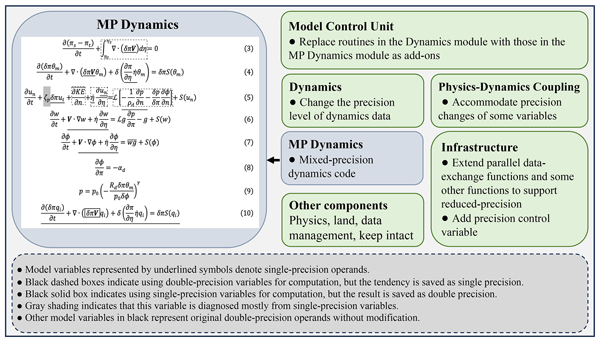
This study explores strategies and techniques for implementing mixed-precision code optimization within an atmosphere model dynamical core. The coded equation terms in the governing equations that are sensitive (or insensitive) to the precision level have been identified. The performance of mixed-precision computing in weather and climate simulations was analyzed.
Lijuan Chen, Ren Wang, Ying Fei, Peng Fang, Yong Zha, and Haishan Chen
Atmos. Meas. Tech., 17, 4411–4424, https://doi.org/10.5194/amt-17-4411-2024, https://doi.org/10.5194/amt-17-4411-2024, 2024
Short summary
Short summary
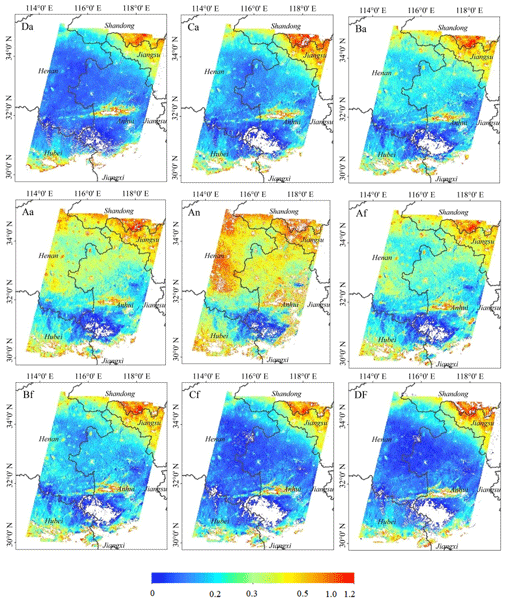
This study explores the problems of surface reflectance estimation from previous MISR satellite remote sensing images and develops an error correction model to obtain a higher-precision aerosol optical depth (AOD) product. High-accuracy AOD is important not only for the daily monitoring of air pollution but also for the study of energy exchange between land and atmosphere. This will help further improve the retrieval accuracy of multi-angle AOD on large spatial scales and for long time series.
Jiaxu Guo, Juepeng Zheng, Yidan Xu, Haohuan Fu, Wei Xue, Lanning Wang, Lin Gan, Ping Gao, Wubing Wan, Xianwei Wu, Zhitao Zhang, Liang Hu, Gaochao Xu, and Xilong Che
Geosci. Model Dev., 17, 3975–3992, https://doi.org/10.5194/gmd-17-3975-2024, https://doi.org/10.5194/gmd-17-3975-2024, 2024
Short summary
Short summary
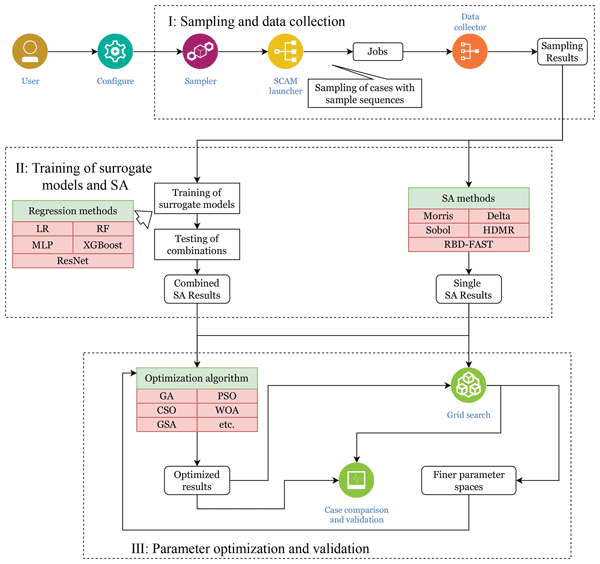
To enhance the efficiency of experiments using SCAM, we train a learning-based surrogate model to facilitate large-scale sensitivity analysis and tuning of combinations of multiple parameters. Employing a hybrid method, we investigate the joint sensitivity of multi-parameter combinations across typical cases, identifying the most sensitive three-parameter combination out of 11. Subsequently, we conduct a tuning process aimed at reducing output errors in these cases.
Shanlei Sun, Zaoying Bi, Jingfeng Xiao, Yi Liu, Ge Sun, Weimin Ju, Chunwei Liu, Mengyuan Mu, Jinjian Li, Yang Zhou, Xiaoyuan Li, Yibo Liu, and Haishan Chen
Earth Syst. Sci. Data, 15, 4849–4876, https://doi.org/10.5194/essd-15-4849-2023, https://doi.org/10.5194/essd-15-4849-2023, 2023
Short summary
Short summary
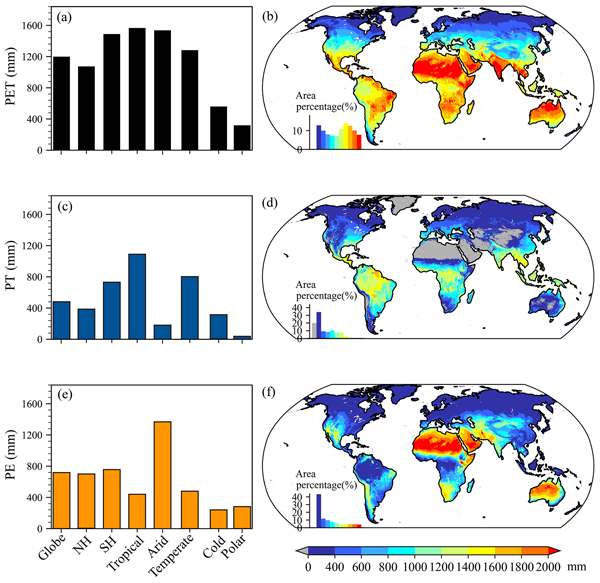
Based on various existing datasets, we comprehensively considered spatiotemporal differences in land surfaces and CO2 effects on plant stomatal resistance to parameterize the Shuttleworth–Wallace model, and we generated a global 5 km ensemble mean monthly potential evapotranspiration (PET) dataset (including potential transpiration PT and soil evaporation PE) during 1982–2015. The new dataset may be used by academic communities and various agencies to conduct various studies.

Xiaohan Li, Yi Zhang, Xindong Peng, Baiquan Zhou, Jian Li, and Yiming Wang
Geosci. Model Dev., 16, 2975–2993, https://doi.org/10.5194/gmd-16-2975-2023, https://doi.org/10.5194/gmd-16-2975-2023, 2023
Short summary
Short summary
The weather and climate physics suites used in GRIST-A22.7.28 are compared using single-column modeling. The source of their discrepancies in terms of modeling cloud and precipitation is explored. Convective parameterization is found to be a key factor responsible for the differences. The two suites also have intrinsic differences in the interaction between microphysics and other processes, resulting in different cloud features and time step sensitivities.
Xin Wang, Yilun Han, Wei Xue, Guangwen Yang, and Guang J. Zhang
Geosci. Model Dev., 15, 3923–3940, https://doi.org/10.5194/gmd-15-3923-2022, https://doi.org/10.5194/gmd-15-3923-2022, 2022
Short summary
Short summary
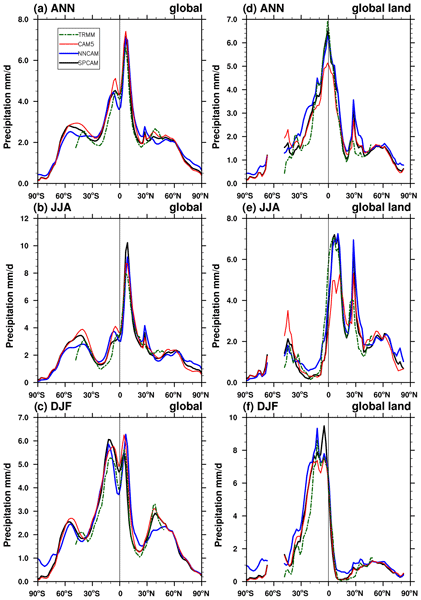
This study uses a set of deep neural networks to learn a parameterization scheme from a superparameterized general circulation model (GCM). After being embedded in a realistically configurated GCM, the parameterization scheme performs stably in long-term climate simulations and reproduces reasonable climatology and climate variability. This success is the first for long-term stable climate simulations using machine learning parameterization under real geographical boundary conditions.
Cited articles
Arakawa, A.: The Cumulus Parameterization Problem: Past, Present, and Future, J. Climate, 17, 2493–2525, https://doi.org/10.1175/1520-0442(2004)017<2493:RATCPP>2.0.CO;2, 2004.
Arcomano, T., Szunyogh, I., Wikner, A., Pathak, J., Hunt, B. R., and Ott, E.: A Hybrid Approach to Atmospheric Modeling That Combines Machine Learning With a Physics-Based Numerical Model, J. Adv. Model. Earth Syst., 14, e2021MS002712, https://doi.org/10.1029/2021MS002712, 2022.
Bishop, C. M.: Training with Noise is Equivalent to Tikhonov Regularization, Neural Comput., 7, 108–116, https://doi.org/10.1162/neco.1995.7.1.108, 1995.
Bracco, A., Brajard, J., Dijkstra, H. A., Hassanzadeh, P., Lessig, C., and Monteleoni, C.: Machine learning for the physics of climate, Nat. Rev. Phys., 7, 6–20, https://doi.org/10.1038/s42254-024-00776-3, 2025.
Brenowitz, N. D. and Bretherton, C. S.: Prognostic Validation of a Neural Network Unified Physics Parameterization, Geophys. Res. Lett., 45, 6289–6298, https://doi.org/10.1029/2018GL078510, 2018.
Brenowitz, N. D. and Bretherton, C. S.: Spatially Extended Tests of a Neural Network Parametrization Trained by Coarse-Graining, J. Adv. Model. Earth Syst., 11, 2728–2744, https://doi.org/10.1029/2019MS001711, 2019.
Bretherton, C. S., Henn, B., Kwa, A., Brenowitz, N. D., Watt-Meyer, O., McGibbon, J., Perkins, W. A., Clark, S. K., and Harris, L.: Correcting Coarse-Grid Weather and Climate Models by Machine Learning From Global Storm-Resolving Simulations, J. Adv. Model. Earth Syst., 14, e2021MS002794, https://doi.org/10.1029/2021MS002794, 2022.
Brunet, G., Parsons, D. B., Ivanov, D., Lee, B., Bauer, P., Bernier, N. B., Bouchet, V., Brown, A., Busalacchi, A., Flatter, G. C., Goffer, R., Davies, P., Ebert, B., Gutbrod, K., Hong, S., Kenabatho, P. K., Koppert, H.-J., Lesolle, D., Lynch, A. H., Mahfouf, J.-F., Ogallo, L., Palmer, T., Petty, K., Schulze, D., Shepherd, T. G., Stocker, T. F., Thorpe, A., and Yu, R.: Advancing Weather and Climate Forecasting for Our Changing World, B. Am. Meteorol. Soc., 104, E909–E927, https://doi.org/10.1175/BAMS-D-21-0262.1, 2023.
Chen, G., Wang, W.-C., Yang, S., Wang, Y., Zhang, F., and Wu, K.: A Neural Network-Based Scale-Adaptive Cloud-Fraction Scheme for GCMs, J. Adv. Model. Earth Syst., 15, e2022MS003415, https://doi.org/10.1029/2022MS003415, 2023.
Chen, J., Zhang, M., Zhang, T., Lin, W., and Xue, W.: Stable Simulation of the Community Atmosphere Model Using Machine-Learning Physical Parameterization Trained With Experience Replay, J. Adv. Model. Earth Syst., 17, e2024MS004722, https://doi.org/10.1029/2024MS004722, 2025a.
Chen, S., Zhang, Y., Wang, Y., Liu, Z., Li, X., and Xue, W.: Mixed-precision computing in the GRIST dynamical core for weather and climate modelling, Geosci. Model Dev., 17, 6301–6318, https://doi.org/10.5194/gmd-17-6301-2024, 2024.
Chen, T., Zhang, Y., Wang, Y., and Yuan, W.: Impact of Lateral Boundary Flows on Regional Convection-Permitting Simulations Over the Tibetan Plateau: A Global-Regional Integrated Modeling Study, J. Geophys. Res.-Atmos., 130, e2024JD042952, https://doi.org/10.1029/2024JD042952, 2025b.
Chen, T., Zhang, Y., and Yang, Y.: A Dual-Perspective View of Kilometer-Scale Precipitation Data Remapping: Differences Between Conservative and Nonconservative Methods, Meteorol. Appl., 33, e70208, https://doi.org/10.1002/met.70208, 2026.
Clark, S. K., Brenowitz, N. D., Henn, B., Kwa, A., McGibbon, J., Perkins, W. A., Watt-Meyer, O., Bretherton, C. S., and Harris, L. M.: Correcting a 200 km Resolution Climate Model in Multiple Climates by Machine Learning From 25 km Resolution Simulations, J. Adv. Model. Earth Syst., 14, e2022MS003219, https://doi.org/10.1029/2022MS003219, 2022.
Duan, X., Zhang, Y., Xu, K., Fu, H., Yang, B., Wang, Y., Han, Y., Chen, S., Zhou, Z., Wang, C., Huang, D., An, H., Ju, X., Huang, H., Liu, Z., Xue, W., Liu, W., Yan, B., Hou, J., Yu, M., Chen, W., Li, J., Jing, Z., Liu, H., and Wu, L.: An AI-Enhanced 1 km-Resolution Seamless Global Weather and Climate Model to Achieve Year-Scale Simulation Speed using 34 Million Cores, in: Proceedings of the 30th ACM SIGPLAN Annual Symposium on Principles and Practice of Parallel Programming, Las Vegas, NV, USA, https://doi.org/10.1145/3710848.3710893, 2025.
Eyring, V., Bony, S., Meehl, G. A., Senior, C. A., Stevens, B., Stouffer, R. J., and Taylor, K. E.: Overview of the Coupled Model Intercomparison Project Phase 6 (CMIP6) experimental design and organization, Geosci. Model Dev., 9, 1937–1958, https://doi.org/10.5194/gmd-9-1937-2016, 2016.
Eyring, V., Collins, W. D., Gentine, P., Barnes, E. A., Barreiro, M., Beucler, T., Bocquet, M., Bretherton, C. S., Christensen, H. M., Dagon, K., Gagne, D. J., Hall, D., Hammerling, D., Hoyer, S., Iglesias-Suarez, F., Lopez-Gomez, I., McGraw, M. C., Meehl, G. A., Molina, M. J., Monteleoni, C., Mueller, J., Pritchard, M. S., Rolnick, D., Runge, J., Stier, P., Watt-Meyer, O., Weigel, K., Yu, R., and Zanna, L.: Pushing the frontiers in climate modelling and analysis with machine learning, Nat. Clim. Change, 14, 916–928, https://doi.org/10.1038/s41558-024-02095-y, 2024.
Fu, Z., Zhang, Y., Li, X., and Rong, X.: Intercomparison of Two Model Climates Simulated by a Unified Weather-Climate Model System (GRIST), Part I: Mean State, Clim. Dynam., 62, 6273–6291, https://doi.org/10.1007/s00382-024-07205-2, 2024.
Gentine, P., Pritchard, M., Rasp, S., Reinaudi, G., and Yacalis, G.: Could Machine Learning Break the Convection Parameterization Deadlock?, Geophys. Res. Lett., 45, 5742–5751, https://doi.org/10.1029/2018GL078202, 2018.
GRIST-Dev: Global Climate Modeling with Improved Precipitation Characteristics by Learning Physics (GRIST-MPS v1.0) from Global Storm-Resolving Modeling [Data set], Zenodo [code and data set], https://doi.org/10.5281/zenodo.15853268, 2025.
Han, Y., Zhang, G. J., Huang, X., and Wang, Y.: A Moist Physics Parameterization Based on Deep Learning, J. Adv. Model. Earth Syst., 12, e2020MS002076, https://doi.org/10.1029/2020MS002076, 2020.
Han, Y., Zhang, G. J., and Wang, Y.: An Ensemble of Neural Networks for Moist Physics Processes, Its Generalizability and Stable Integration, J. Adv. Model. Earth Syst., 15, e2022MS003508, https://doi.org/10.1029/2022MS003508, 2023.
Hersbach, H., Bell, B., Berrisford, P., Hirahara, S., Horányi, A., Muñoz-Sabater, J., Nicolas, J., Peubey, C., Radu, R., Schepers, D., Simmons, A., Soci, C., Abdalla, S., Abellan, X., Balsamo, G., Bechtold, P., Biavati, G., Bidlot, J., Bonavita, M., De Chiara, G., Dahlgren, P., Dee, D., Diamantakis, M., Dragani, R., Flemming, J., Forbes, R., Fuentes, M., Geer, A., Haimberger, L., Healy, S., Hogan, R. J., Hólm, E., Janisková, M., Keeley, S., Laloyaux, P., Lopez, P., Lupu, C., Radnoti, G., de Rosnay, P., Rozum, I., Vamborg, F., Villaume, S., and Thépaut, J.-N.: The ERA5 global reanalysis, Q. J. Roy. Meteorol. Soc., 146, 1999–2049, https://doi.org/10.1002/qj.3803, 2020.
Heuer, H., Schwabe, M., Gentine, P., Giorgetta, M. A., and Eyring, V.: Interpretable Multiscale Machine Learning-Based Parameterizations of Convection for ICON, J. Adv. Model. Earth Syst., 16, e2024MS004398, https://doi.org/10.1029/2024MS004398, 2024.
Huffman, G. J., Stocker, E. F., Bolvin, D. T., Nelkin, E. J., and Tan, J.: GPM IMERG final precipitation L3 half hourly 0.1 degree × 0.1 degree V06, Goddard Earth Sciences Data and Information Services Center (GES DISC): Greenbelt, MD, USA, https://doi.org/10.5067/GPM/IMERG/3B-HH/06, 2019.
Kochkov, D., Yuval, J., Langmore, I., Norgaard, P., Smith, J., Mooers, G., Klöwer, M., Lottes, J., Rasp, S., Düben, P., Hatfield, S., Battaglia, P., Sanchez-Gonzalez, A., Willson, M., Brenner, M. P., and Hoyer, S.: Neural general circulation models for weather and climate, Nature, 632, 1060–1066, https://doi.org/10.1038/s41586-024-07744-y, 2024.
Krasnopolsky, V. and Belochitski, A. A.: Using Machine Learning for Model Physics: an Overview, Atmospheric and Oceanic Physics, Atmospheric and Oceanic Physics (physics.ao-ph); Machine Learning (stat.ML), arXiv [preprint], https://doi.org/10.48550/arXiv.2002.00416, 2020.
Li, X., Zhang, Y., Peng, X., Chu, W., Lin, Y., and Li, J.: Improved Climate Simulation by Using a Double-Plume Convection Scheme in a Global Model, J. Geophys. Res.-Atmos., 127, e2021JD036069, https://doi.org/10.1029/2021JD036069, 2022.
Li, X., Zhang, Y., Peng, X., Zhou, B., Li, J., and Wang, Y.: Intercomparison of the weather and climate physics suites of a unified forecast–climate model system (GRIST-A22.7.28) based on single-column modeling, Geosci. Model Dev., 16, 2975–2993, https://doi.org/10.5194/gmd-16-2975-2023, 2023.
Li, X., Chu, W., Zhang, Y., and Wang, Y.: Extending a dry-environment convection parameterization to couple with moist turbulence and a baseline evaluation in the GRIST model, Q. J. Roy. Meteorol. Soc., 150, 3368–3384, https://doi.org/10.1002/qj.4763, 2024.
Lin, J., Taotao, Q., Peter, B., Georg, G. J. Z. G., Ping, Z., R. F. S., Hannah, B., and Han, J.: Atmospheric Convection, Atmos.-Ocean, 60, 422–476, https://doi.org/10.1080/07055900.2022.2082915, 2022.
Miura, H., Suematsu, T., Kawai, Y., Yamagami, Y., Takasuka, D., Takano, Y., Hung, C.-S., Yamazaki, K., Kodama, C., Kajikawa, Y., and Masumoto, Y.: Asymptotic Matching between Weather and Climate Models, B. Am. Meteorol. Soc., 104, E2308–E2315, https://doi.org/10.1175/BAMS-D-22-0128.1, 2023.
Mooers, G., Pritchard, M., Beucler, T., Ott, J., Yacalis, G., Baldi, P., and Gentine, P.: Assessing the Potential of Deep Learning for Emulating Cloud Superparameterization in Climate Models With Real-Geography Boundary Conditions, J. Adv. Model. Earth Syst., 13, e2020MS002385, https://doi.org/10.1029/2020MS002385, 2021.
Morcrette, C., Cave, T., Reid, H., da Silva Rodrigues, J., Deveney, T., Kreusser, L., Van Weverberg, K., and Budd, C.: Scale-Aware Parameterization of Cloud Fraction and Condensate for a Global Atmospheric Model Machine-Learned From Coarse-Grained Kilometer-Scale Simulations, J. Adv. Model. Earth Syst., 17, e2024MS004651, https://doi.org/10.1029/2024MS004651, 2025.
Rasp, S., Pritchard, M. S., and Gentine, P.: Deep learning to represent subgrid processes in climate models, P. Natl. Acad. Sci. USA, 115, 9684–9689, https://doi.org/10.1073/pnas.1810286115, 2018.
Satoh, M., Stevens, B., Judt, F., Khairoutdinov, M., Lin, S.-J., Putman, W. M., and Düben, P.: Global Cloud-Resolving Models, Curr. Clim. Change Rep., 5, 172–184, https://doi.org/10.1007/s40641-019-00131-0, 2019.
Schneider, T., Behera, S., Boccaletti, G., Deser, C., Emanuel, K., Ferrari, R., Leung, L. R., Lin, N., Müller, T., Navarra, A., Ndiaye, O., Stuart, A., Tribbia, J., and Yamagata, T.: Harnessing AI and computing to advance climate modelling and prediction, Nat. Clim. Change, 13, 887–889, https://doi.org/10.1038/s41558-023-01769-3, 2023.
Wang, T., Wang, N., and Jiang, D.: Last Glacial Maximum ITCZ Changes From PMIP3/4 Simulations, J. Geophys. Res.-Atmos., 128, e2022JD038103, https://doi.org/10.1029/2022JD038103, 2023.
Wang, X., Han, Y., Xue, W., Yang, G., and Zhang, G. J.: Stable climate simulations using a realistic general circulation model with neural network parameterizations for atmospheric moist physics and radiation processes, Geosci. Model Dev., 15, 3923–3940, https://doi.org/10.5194/gmd-15-3923-2022, 2022.
Watt-Meyer, O., Brenowitz, N. D., Clark, S. K., Henn, B., Kwa, A., McGibbon, J., Perkins, W. A., Harris, L., and Bretherton, C. S.: Neural Network Parameterization of Subgrid-Scale Physics From a Realistic Geography Global Storm-Resolving Simulation, J. Adv. Model. Earth Syst., 16, e2023MS003668, https://doi.org/10.1029/2023MS003668, 2024.
Wodzicki, K. R. and Rapp, A. D.: Long-term characterization of the Pacific ITCZ using TRMM, GPCP, and ERA-Interim, J. Geophys. Res.-Atmos., 121, 3153–3170, https://doi.org/10.1002/2015JD024458, 2016.
Xu, K., Yu, M., Chen, Y., Gao, J., Wang, S., Song, J., Duan, X., Wei, J., Yu, J., Liu, H., Jiang, J., Zhang, Y., Lin, P., Wang, T., Wang, P., Zheng, W., Xie, J., Zhang, J., Liu, Z., Jin, X., Wei, J., Chang, Q., Lin, Q., Zhou, Y., Liu, W., Xue, W., Li, Y., Fu, H., Yu, Y., Chi, X., and Wu, L.: Kilometer-Scale AI-Powered and Performance-Portable Earth System Model (AP3ESM) to Achieve Year-Scale Simulation Speed on Heterogeneous Supercomputers, in: Proceedings of the International Conference for High Performance Computing, Networking, Storage and Analysis, https://doi.org/10.1145/3712285.3771788, 2025.
Yanai, M., Esbensen, S., and Chu, J.-H.: Determination of Bulk Properties of Tropical Cloud Clusters from Large-Scale Heat and Moisture Budgets, J. Atmos. Sci., 30, 611–627, https://doi.org/10.1175/1520-0469(1973)030<0611:DOBPOT>2.0.CO;2, 1973.
Yu, R., Zhang, Y., Wang, J., Li, J., Chen, H., Gong, J., and Chen, J.: Recent Progress in Numerical Atmospheric Modeling in China, Adv. Atmos. Sci., 36, 938–960, https://doi.org/10.1007/s00376-019-8203-1, 2019.
Yuval, J. and O'Gorman, P. A.: Stable machine-learning parameterization of subgrid processes for climate modeling at a range of resolutions, Nat. Commun., 11, 3295, https://doi.org/10.1038/s41467-020-17142-3, 2020.
Yuval, J., O'Gorman, P. A., and Hill, C. N.: Use of Neural Networks for Stable, Accurate and Physically Consistent Parameterization of Subgrid Atmospheric Processes With Good Performance at Reduced Precision, Geophys. Res. Lett., 48, e2020GL091363, https://doi.org/10.1029/2020GL091363, 2021.
Zhang, Y.: Extending High-Order Flux Operators on Spherical Icosahedral Grids and Their Applications in the Framework of a Shallow Water Model, J. Adv. Model. Earth Syst., 10, 145–164, https://doi.org/10.1002/2017MS001088, 2018.
Zhang, Y. and Chen, H.: Comparing CAM5 and Superparameterized CAM5 Simulations of Summer Precipitation Characteristics over Continental East Asia: Mean State, Frequency-Intensity Relationship, Diurnal Cycle, and Influencing Factors, J. Climate, 29, 1067–1089, https://doi.org/10.1175/JCLI-D-15-0342.1, 2016.
Zhang, Y., Li, J., Yu, R., Zhang, S., Liu, Z., Huang, J., and Zhou, Y.: A Layer-Averaged Nonhydrostatic Dynamical Framework on an Unstructured Mesh for Global and Regional Atmospheric Modeling: Model Description, Baseline Evaluation, and Sensitivity Exploration, J. Adv. Model. Earth Syst., 11, 1685–1714, https://doi.org/10.1029/2018MS001539, 2019.
Zhang, Y., Li, J., Yu, R., Liu, Z., Zhou, Y., Li, X., and Huang, X.: A Multiscale Dynamical Model in a Dry-Mass Coordinate for Weather and Climate Modeling: Moist Dynamics and Its Coupling to Physics, Mon. Weather Rev., 148, 2671–2699, https://doi.org/10.1175/mwr-d-19-0305.1, 2020.
Zhang, Y., Yu, R., Li, J., Li, X., Rong, X., Peng, X., and Zhou, Y.: AMIP Simulations of a Global Model for Unified Weather-Climate Forecast: Understanding Precipitation Characteristics and Sensitivity Over East Asia, J. Adv. Model. Earth Syst., 13, e2021MS002592, https://doi.org/10.1029/2021MS002592, 2021.
Zhang, Y., Li, X., Liu, Z., Rong, X., Li, J., Zhou, Y., and Chen, S.: Resolution Sensitivity of the GRIST Nonhydrostatic Model From 120 to 5 km (3.75 km) During the DYAMOND Winter, Earth Space Sci., 9, e2022EA002401, https://doi.org/10.1029/2022EA002401, 2022.
Zhang, Y., Liu, Z., Wang, Y., and Chen, S.: Establishing a limited-area model based on a global model: A consistency study, Q. J. Roy. Meteorol. Soc., 150, 4049–4065, https://doi.org/10.1002/qj.4804, 2024.
Zhu, C., Lee, W.-S., Kang, H., and Park, C.-K.: A proper monsoon index for seasonal and interannual variations of the East Asian monsoon, Geophys. Res. Lett., 32, https://doi.org/10.1029/2004GL021295, 2005.
Zhu, Y., Zhang, R.-H., Moum, J. N., Wang, F., Li, X., and Li, D.: Physics-informed deep-learning parameterization of ocean vertical mixing improves climate simulations, Natl. Sci. Rev., 9, nwac044, https://doi.org/10.1093/nsr/nwac044, 2022.
Short summary
This study demonstrates that short-period Global Storm Resolving Model (GSRM) simulations can inform long-term Global Climate Model (GCM) integrations through a machine-learning-based physics suite. With 80 d of GSRM-derived training data, the hybrid model achieves stable multiyear climate simulations and improved precipitation climatic characteristics.
This study demonstrates that short-period Global Storm Resolving Model (GSRM) simulations can...


