
Articles | Volume 19, issue 1
https://doi.org/10.5194/gmd-19-543-2026
© Author(s) 2026. This work is distributed under
the Creative Commons Attribution 4.0 License.
the Creative Commons Attribution 4.0 License.
https://doi.org/10.5194/gmd-19-543-2026
© Author(s) 2026. This work is distributed under
the Creative Commons Attribution 4.0 License.
the Creative Commons Attribution 4.0 License.
Model evaluation paper
| 
15 Jan 2026
Model evaluation paper |
| 15 Jan 2026
| 15 Jan 2026
Evaluation of coupled and uncoupled ocean–ice–atmosphere simulations using icon-2024.07 and NEMOv4.2.0 for the EURO-CORDEX domain

Deutscher Wetterdienst, Offenbach, Germany
Wibke Düsterhöft-Wriggers
Bundesamt für Seeschifffahrt und Hydrographie, Hamburg/Rostock, Germany
Rebekka Beddig
Bundesamt für Seeschifffahrt und Hydrographie, Hamburg/Rostock, Germany
Janna Meyer
Bundesamt für Seeschifffahrt und Hydrographie, Hamburg/Rostock, Germany
Claudia Hinrichs
Bundesamt für Seeschifffahrt und Hydrographie, Hamburg/Rostock, Germany
Ha Thi Minh Ho-Hagemann
Institute of Coastal Research, Helmholtz-Zentrum Hereon, Geesthacht, Germany
Joanna Staneva
Institute of Coastal Research, Helmholtz-Zentrum Hereon, Geesthacht, Germany
Birte-Marie Ehlers
Bundesamt für Seeschifffahrt und Hydrographie, Hamburg/Rostock, Germany
Frank Janssen
Bundesamt für Seeschifffahrt und Hydrographie, Hamburg/Rostock, Germany
Related authors
Beate Geyer, Angelo Campanale, Evgenii Churiulin, Hendrik Feldmann, Klaus Goergen, Stefan Hagemann, Ha Thi Minh Ho-Hagemann, Muhammed Muhshif Karadan, Klaus Keuler, Pavel Khain, Divyaja Lawand, Patrick Ludwig, Vera Maurer, Sergei Petrov, Stefan Poll, Christopher Purr, Emmanuele Russo, Martina Schubert-Frisius, Jan-Peter Schulz, Shweta Singh, Christian Steger, Heimo Truhetz, and Andreas Will
Geosci. Model Dev., 19, 5439–5490, https://doi.org/10.5194/gmd-19-5439-2026, https://doi.org/10.5194/gmd-19-5439-2026, 2026
Short summary
Short summary
Complex models in environmental science typically have a lot of tuning parameters, which has to be set by the users depending on the application. This study presents a new method of objective tuning of a huge number of parameters, by combining expert judgement with automated tuning called Linear Meta-Model optimisation (LiMMo). The method is successfully applied to the regional climate model named ICON (Icosahedral Non-hydrostatic)-CLM (Climate Limited-area Modelling) over Europe.
Ha Thi Minh Ho-Hagemann, Vera Maurer, Stefan Poll, and Irina Fast
Geosci. Model Dev., 17, 7815–7834, https://doi.org/10.5194/gmd-17-7815-2024, https://doi.org/10.5194/gmd-17-7815-2024, 2024
Short summary
Short summary
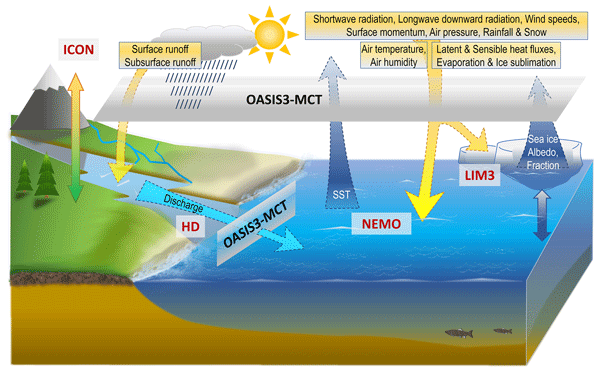
The regional Earth system model GCOAST-AHOI v2.0 that includes the regional climate model ICON-CLM coupled to the ocean model NEMO and the hydrological discharge model HD via the OASIS3-MCT coupler can be a useful tool for conducting long-term regional climate simulations over the EURO-CORDEX domain. The new OASIS3-MCT coupling interface implemented in ICON-CLM makes it more flexible for coupling to an external ocean model and an external hydrological discharge model.
Marcel Ricker, Arno Behrens, Johannes Schulz-Stellenfleth, Carolina Barnez Gramcianinov, and Joanna Staneva
State Planet Discuss., https://doi.org/10.5194/sp-2026-28, https://doi.org/10.5194/sp-2026-28, 2026
Preprint under review for SP
Short summary
Short summary
The study examines the reliability of extreme wave height forecasts in Bulgarian Black Sea waters in 2025. Five notable events are identified, including four medium-size events and an exceptionally large event in December. Wave model errors and their dependence on wind properties are analysed. The results provide recommendations for assessing forecast errors and support decision-making for coastal and offshore applications requiring reliable wave height predictions.
Peter Grabbert, Corinna Jensen, Wei Chen, Irene Pérez González, Tim Kruschke, Dagmar Kieke, Frank Janssen, Joanna Staneva, and Thorger Brüning
State Planet Discuss., https://doi.org/10.5194/sp-2026-20, https://doi.org/10.5194/sp-2026-20, 2026
Preprint under review for SP
Short summary
Short summary
The European North West Shelf (NWS) experienced its warmest year on record in 2025. Analyses show record temperature anomalies across more than 67 % of the region, along with an unprecedented ocean heat content in the North Sea, and marine heatwaves lasting over 100 days in many parts of the NWS. These results highlight the exceptional nature of 2025, which cannot be fully captured by any single Ocean Monitoring Indicator (OMI), demonstrating the value of combining multiple monitoring methods.
Birte-Marie Ehlers, Jian Su, Frank Janssen, and Kristine Skovgaard Madsen
EGUsphere, https://doi.org/10.5194/egusphere-2026-4212, https://doi.org/10.5194/egusphere-2026-4212, 2026
This preprint is open for discussion and under review for Natural Hazards and Earth System Sciences (NHESS).
Short summary
Short summary
High-resolution climate projection data through the end of the century form the basis for climate adaptation planning in the North and the Baltic Seas. This study provides ensemble data on sea surface and bottom temperatures for the high-emission pathway. Validation of the ensemble results shows that bias correction is vital for using the data in decision-making processes. This is illustrated by two sector-specific indicators: the “bathing suitability index” and the “spawning survival index”.
Beate Geyer, Angelo Campanale, Evgenii Churiulin, Hendrik Feldmann, Klaus Goergen, Stefan Hagemann, Ha Thi Minh Ho-Hagemann, Muhammed Muhshif Karadan, Klaus Keuler, Pavel Khain, Divyaja Lawand, Patrick Ludwig, Vera Maurer, Sergei Petrov, Stefan Poll, Christopher Purr, Emmanuele Russo, Martina Schubert-Frisius, Jan-Peter Schulz, Shweta Singh, Christian Steger, Heimo Truhetz, and Andreas Will
Geosci. Model Dev., 19, 5439–5490, https://doi.org/10.5194/gmd-19-5439-2026, https://doi.org/10.5194/gmd-19-5439-2026, 2026
Short summary
Short summary
Complex models in environmental science typically have a lot of tuning parameters, which has to be set by the users depending on the application. This study presents a new method of objective tuning of a huge number of parameters, by combining expert judgement with automated tuning called Linear Meta-Model optimisation (LiMMo). The method is successfully applied to the regional climate model named ICON (Icosahedral Non-hydrostatic)-CLM (Climate Limited-area Modelling) over Europe.
Stefan Poll, Paul Rigor, Slavko Brdar, Ha Thi Minh Ho-Hagemann, Carl Hartick, Marco van Hulten, Ana Gonzalez-Nicolas, Johannes Keller, Daniel Caviedes-Voullieme, Harrie-Jan Hendricks-Franssen, Klaus Goergen, and Stefan Kollet
EGUsphere, https://doi.org/10.5194/egusphere-2025-5468, https://doi.org/10.5194/egusphere-2025-5468, 2025
This preprint is open for discussion and under review for Natural Hazards and Earth System Sciences (NHESS).
Short summary
Short summary
This paper presents TSMP2, a new version of an regional Earth system model that allows to simulate and analyze the complex interactions within terrestrial ecosystems from groundwater to atmosphere. TSMP2 links an atmospheric, a land surface model and an hydrological model through an external coupler and is fully open-source. We describe the TSMP2 model system, present the impact of coupling approaches, and outline our development strategy along with technical and performance aspects.
Joanna Staneva, Angelique Melet, Jennifer Veitch, and Pascal Matte
State Planet, 5-opsr, 4, https://doi.org/10.5194/sp-5-opsr-4-2025, https://doi.org/10.5194/sp-5-opsr-4-2025, 2025
Short summary
Short summary
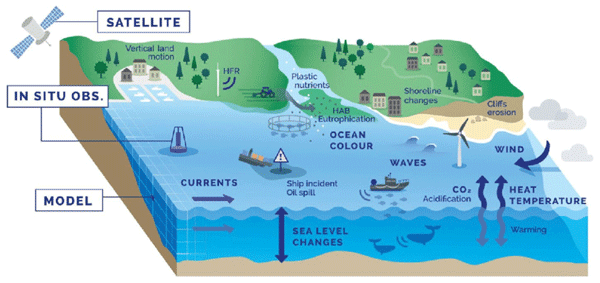
Coastal services are essential to society, requiring accurate prediction of ocean variables in complex, high-resolution environments. This paper outlines key aspects of coastal modelling and emphasizes the importance of capturing nonlinear interactions and feedbacks. Advances in coastal modelling, observational integration, and predictive skills are highlighted as being vital for supporting sustainability and strengthening climate resilience.
Mauro Cirano, Enrique Alvarez-Fanjul, Arthur Capet, Stefania Ciliberti, Emanuela Clementi, Boris Dewitte, Matias Dinápoli, Ghada El Serafy, Patrick Hogan, Sudheer Joseph, Yasumasa Miyazawa, Ivonne Montes, Diego A. Narvaez, Heather Regan, Claudia G. Simionato, Gregory C. Smith, Joanna Staneva, Clemente A. S. Tanajura, Pramod Thupaki, Claudia Urbano-Latorre, Jennifer Veitch, and Jorge Zavala Hidalgo
State Planet, 5-opsr, 5, https://doi.org/10.5194/sp-5-opsr-5-2025, https://doi.org/10.5194/sp-5-opsr-5-2025, 2025
Short summary
Short summary
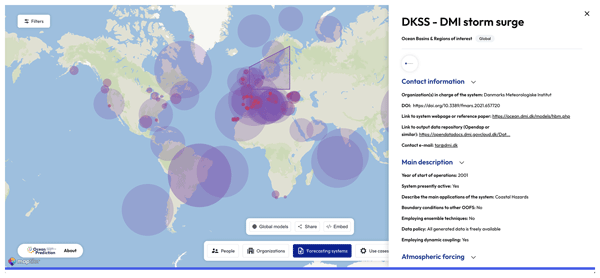
Operational ocean forecasting systems (OOFSs) are crucial for human activities, environmental monitoring, and policymaking. An assessment across eight key regions highlights strengths and gaps, particularly in coastal and biogeochemical forecasting. AI offers improvements, but collaboration, knowledge sharing, and initiatives like the OceanPrediction Decade Collaborative Centre (DCC) are key to enhancing accuracy, accessibility, and global forecasting capabilities.
Pascal Matte, John Wilkin, and Joanna Staneva
State Planet, 5-opsr, 19, https://doi.org/10.5194/sp-5-opsr-19-2025, https://doi.org/10.5194/sp-5-opsr-19-2025, 2025
Short summary
Short summary
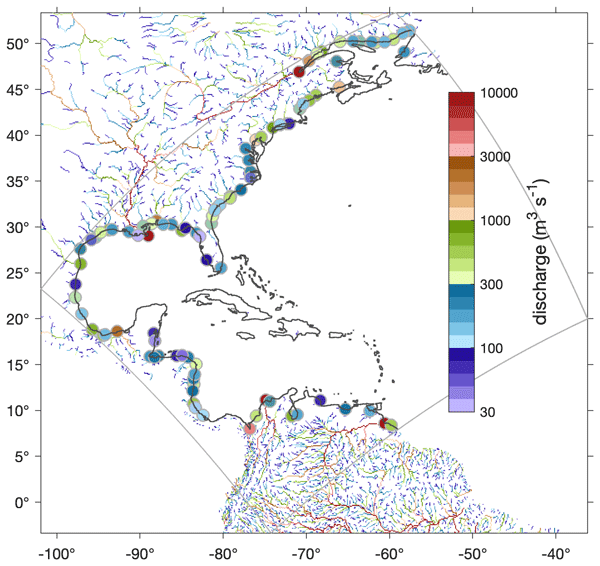
Rivers, vital to the Earth's system, connect the ocean with the land, governing hydrological and biogeochemical contributions and influencing processes like upwelling and mixing. This paper reviews methods to represent river runoff in operational ocean forecasting systems, from coarse-resolution models to coastal coupling approaches. It discusses river data sources and examines how river forcing is treated in global to coastal operational systems, highlighting challenges and future directions.
Stefan Hagemann, Thao Thi Nguyen, and Ha Thi Minh Ho-Hagemann
Ocean Sci., 20, 1457–1478, https://doi.org/10.5194/os-20-1457-2024, https://doi.org/10.5194/os-20-1457-2024, 2024
Short summary
Short summary
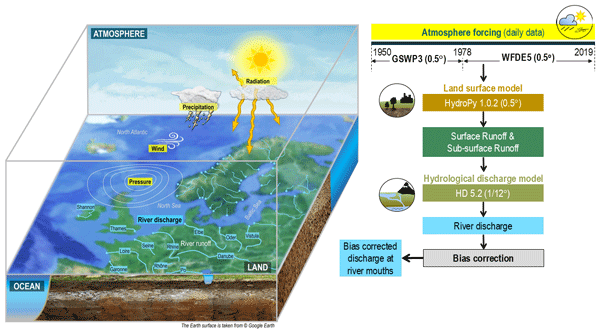
We have developed a methodology for the bias correction of simulated river runoff to force ocean models in which low, medium, and high discharges are corrected once separated at the coast. We show that the bias correction generally leads to an improved representation of river runoff in Europe. The methodology is suitable for model regions with a sufficiently high coverage of discharge observations, and it can be applied to river runoff based on climate hindcasts or climate change simulations.
Ha Thi Minh Ho-Hagemann, Vera Maurer, Stefan Poll, and Irina Fast
Geosci. Model Dev., 17, 7815–7834, https://doi.org/10.5194/gmd-17-7815-2024, https://doi.org/10.5194/gmd-17-7815-2024, 2024
Short summary
Short summary
The regional Earth system model GCOAST-AHOI v2.0 that includes the regional climate model ICON-CLM coupled to the ocean model NEMO and the hydrological discharge model HD via the OASIS3-MCT coupler can be a useful tool for conducting long-term regional climate simulations over the EURO-CORDEX domain. The new OASIS3-MCT coupling interface implemented in ICON-CLM makes it more flexible for coupling to an external ocean model and an external hydrological discharge model.
Roderik van de Wal, Angélique Melet, Debora Bellafiore, Paula Camus, Christian Ferrarin, Gualbert Oude Essink, Ivan D. Haigh, Piero Lionello, Arjen Luijendijk, Alexandra Toimil, Joanna Staneva, and Michalis Vousdoukas
State Planet, 3-slre1, 5, https://doi.org/10.5194/sp-3-slre1-5-2024, https://doi.org/10.5194/sp-3-slre1-5-2024, 2024
Short summary
Short summary
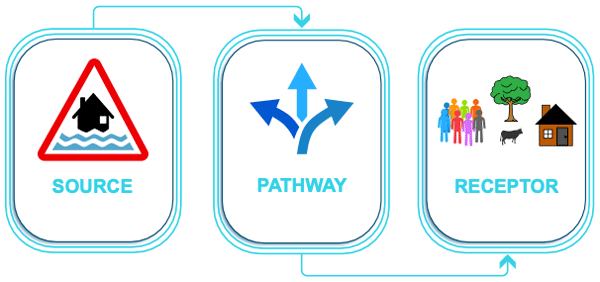
Sea level rise has major impacts in Europe, which vary from place to place and in time, depending on the source of the impacts. Flooding, erosion, and saltwater intrusion lead, via different pathways, to various consequences for coastal regions across Europe. This causes damage to assets, the environment, and people for all three categories of impacts discussed in this paper. The paper provides an overview of the various impacts in Europe.
Wei Chen and Joanna Staneva
State Planet, 4-osr8, 7, https://doi.org/10.5194/sp-4-osr8-7-2024, https://doi.org/10.5194/sp-4-osr8-7-2024, 2024
Short summary
Short summary
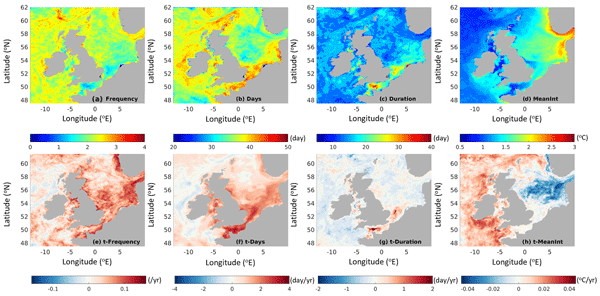
Marine heatwaves (MHWs), which are the unusually warm periods in the ocean, are becoming more frequent and lasting longer in the northwest European Shelf (NWES), particularly near the coast, from 1993 to 2023. However, thermal stratification is weakening, implying that the sea surface warming caused by MHWs is insufficient to counteract the overall stratification decline due to global warming. Moreover, the varying salinity has a notable impact on the trend of density stratification change.
Anja Lindenthal, Claudia Hinrichs, Simon Jandt-Scheelke, Tim Kruschke, Priidik Lagemaa, Eefke M. van der Lee, Ilja Maljutenko, Helen E. Morrison, Tabea R. Panteleit, and Urmas Raudsepp
State Planet, 4-osr8, 16, https://doi.org/10.5194/sp-4-osr8-16-2024, https://doi.org/10.5194/sp-4-osr8-16-2024, 2024
Short summary
Short summary
In 2022, large parts of the Baltic Sea experienced the third-warmest to warmest summer and autumn temperatures since 1997 and several marine heatwaves (MHWs). Using remote sensing, reanalysis, and in situ data, this study characterizes regional differences in MHW properties in the Baltic Sea in 2022. Furthermore, it presents an analysis of long-term trends and the relationship between atmospheric warming and MHW occurrences, including their propagation into deeper layers.
Sven Karsten, Hagen Radtke, Matthias Gröger, Ha T. M. Ho-Hagemann, Hossein Mashayekh, Thomas Neumann, and H. E. Markus Meier
Geosci. Model Dev., 17, 1689–1708, https://doi.org/10.5194/gmd-17-1689-2024, https://doi.org/10.5194/gmd-17-1689-2024, 2024
Short summary
Short summary
This paper describes the development of a regional Earth System Model for the Baltic Sea region. In contrast to conventional coupling approaches, the presented model includes a flux calculator operating on a common exchange grid. This approach automatically ensures a locally consistent treatment of fluxes and simplifies the exchange of model components. The presented model can be used for various scientific questions, such as studies of natural variability and ocean–atmosphere interactions.
Stefania A. Ciliberti, Enrique Alvarez Fanjul, Jay Pearlman, Kirsten Wilmer-Becker, Pierre Bahurel, Fabrice Ardhuin, Alain Arnaud, Mike Bell, Segolene Berthou, Laurent Bertino, Arthur Capet, Eric Chassignet, Stefano Ciavatta, Mauro Cirano, Emanuela Clementi, Gianpiero Cossarini, Gianpaolo Coro, Stuart Corney, Fraser Davidson, Marie Drevillon, Yann Drillet, Renaud Dussurget, Ghada El Serafy, Katja Fennel, Marcos Garcia Sotillo, Patrick Heimbach, Fabrice Hernandez, Patrick Hogan, Ibrahim Hoteit, Sudheer Joseph, Simon Josey, Pierre-Yves Le Traon, Simone Libralato, Marco Mancini, Pascal Matte, Angelique Melet, Yasumasa Miyazawa, Andrew M. Moore, Antonio Novellino, Andrew Porter, Heather Regan, Laia Romero, Andreas Schiller, John Siddorn, Joanna Staneva, Cecile Thomas-Courcoux, Marina Tonani, Jose Maria Garcia-Valdecasas, Jennifer Veitch, Karina von Schuckmann, Liying Wan, John Wilkin, and Romane Zufic
State Planet, 1-osr7, 2, https://doi.org/10.5194/sp-1-osr7-2-2023, https://doi.org/10.5194/sp-1-osr7-2-2023, 2023
Carolina B. Gramcianinov, Joanna Staneva, Celia R. G. Souza, Priscila Linhares, Ricardo de Camargo, and Pedro L. da Silva Dias
State Planet, 1-osr7, 12, https://doi.org/10.5194/sp-1-osr7-12-2023, https://doi.org/10.5194/sp-1-osr7-12-2023, 2023
Short summary
Short summary
We analyse extreme wave event trends in the south-western South Atlantic in the last 29 years using wave products and coastal hazard records. The results show important regional changes associated with increased mean sea wave height, wave period, and wave power. We also find a rise in the number of coastal hazards related to waves affecting the state of São Paulo, Brazil, which partially agrees with the increase in extreme waves in the adjacent ocean sector but is also driven by local factors.
Claudia Hinrichs, Peter Köhler, Christoph Völker, and Judith Hauck
Biogeosciences, 20, 3717–3735, https://doi.org/10.5194/bg-20-3717-2023, https://doi.org/10.5194/bg-20-3717-2023, 2023
Short summary
Short summary
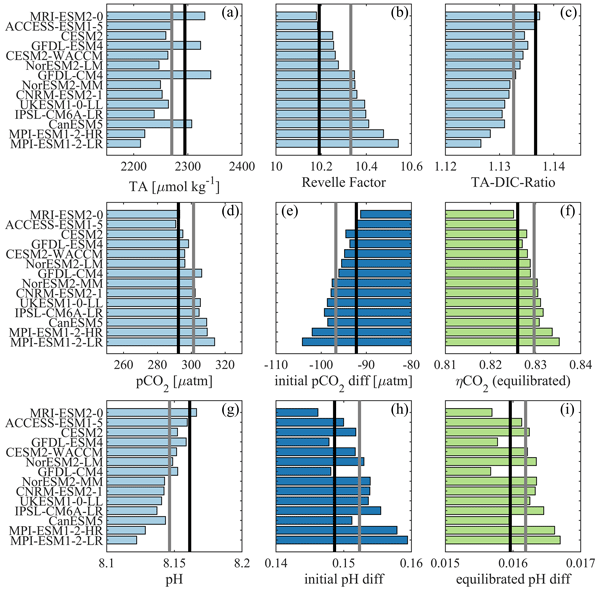
This study evaluated the alkalinity distribution in 14 climate models and found that most models underestimate alkalinity at the surface and overestimate it in the deeper ocean. It highlights the need for better understanding and quantification of processes driving alkalinity distribution and calcium carbonate dissolution and the importance of accounting for biases in model results when evaluating potential ocean alkalinity enhancement experiments.
Kathrin Wahle, Emil V. Stanev, and Joanna Staneva
Nat. Hazards Earth Syst. Sci., 23, 415–428, https://doi.org/10.5194/nhess-23-415-2023, https://doi.org/10.5194/nhess-23-415-2023, 2023
Short summary
Short summary
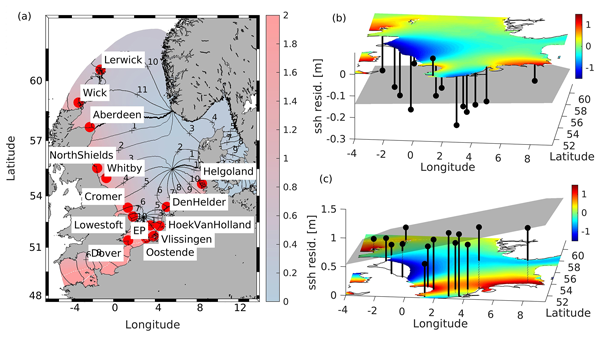
Knowledge of what causes maximum water levels is often key in coastal management. Processes, such as storm surge and atmospheric forcing, alter the predicted tide. Whilst most of these processes are modeled in present-day ocean forecasting, there is still a need for a better understanding of situations where modeled and observed water levels deviate from each other. Here, we will use machine learning to detect such anomalies within a network of sea-level observations in the North Sea.
Wei Chen, Joanna Staneva, Sebastian Grayek, Johannes Schulz-Stellenfleth, and Jens Greinert
Nat. Hazards Earth Syst. Sci., 22, 1683–1698, https://doi.org/10.5194/nhess-22-1683-2022, https://doi.org/10.5194/nhess-22-1683-2022, 2022
Short summary
Short summary
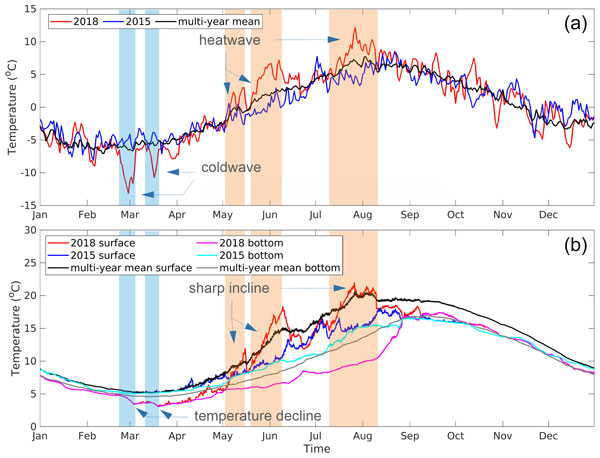
This study links the occurrence and persistence of density stratification in the southern North Sea to the increased number of extreme marine heat waves. The study further identified the role of the cold spells at the early stage of a year to the intensity of thermal stratification in summer. In a broader context, the research will have fundamental significance for further discussion of the secondary effects of heat wave events, such as in ecosystems, fisheries, and sediment dynamics.
Cited articles
Bauer, T. P., Holtermann, P., Heinold, B., Radtke, H., Knoth, O., and Klingbeil, K.: ICONGETM v1.0 – flexible NUOPC-driven two-way coupling via ESMF exchange grids between the unstructured-grid atmosphere model ICON and the structured-grid coastal ocean model GETM, Geosci. Model Dev., 14, 4843–4863, https://doi.org/10.5194/gmd-14-4843-2021, 2021. a, b
Bennartz, R. and Rausch, J.: Global and regional estimates of warm cloud droplet number concentration based on 13 years of AQUA-MODIS observations, Atmos. Chem. Phys., 17, 9815–9836, https://doi.org/10.5194/acp-17-9815-2017, 2017. a
Brodeau, L., Barnier, B., Gulev, S. K., and Woods, C.: Climatologically significant effects of some approximations in the bulk parameterizations of turbulent air–sea fluxes, J. Phys. Oceanogr., 47, 5–28, 2017. a
Checa-Garcia, R.: CMIP6 Ozone forcing dataset: supporting information, Zenodo, https://doi.org/10.5281/zenodo.1135127, 2018. a
Christensen, O. B., Kjellström, E., Dieterich, C., Gröger, M., and Meier, H. E. M.: Atmospheric regional climate projections for the Baltic Sea region until 2100, Earth Syst. Dynam., 13, 133–157, https://doi.org/10.5194/esd-13-133-2022, 2022. a
CORDEX: CORDEX experiment design for dynamical downscaling of CMIP6, Zenodo, https://doi.org/10.5281/zenodo.15268192, 2025. a, b
Cornes, R. C., van der Schrier, G., van den Besselaar, E. J. M., and Jones, P. D.: An Ensemble Version of the E-OBS Temperature and Precipitation Data Sets, J. Geophys. Res.-Atmos., 123, 9391–9409, https://doi.org/10.1029/2017JD028200, 2018. a
Craig, A., Valcke, S., and Coquart, L.: Development and performance of a new version of the OASIS coupler, OASIS3-MCT_3.0, Geosci. Model Dev., 10, 3297–3308, https://doi.org/10.5194/gmd-10-3297-2017, 2017. a
Dieterich, C., Wang, S., Schimanke, S., Gröger, M., Klein, B., Hordoir, R., Samuelsson, P., Liu, Y., Axell, L., Höglund, A., and Meier, H. E. M.: Surface Heat Budget over the North Sea in Climate Change Simulations, Atmosphere, 10, https://doi.org/10.3390/atmos10050272, 2019. a
ECMWF: IFS Documentation CY45R1 – Part IV: Physical processes, ECMWF, https://doi.org/10.21957/4whwo8jw0, 2018. a
EMODnet Bathymetry Consortium: EMODnet Digital Bathymetry (DTM 2020), https://doi.org/10.12770/bb6a87dd-e579-4036-abe1-e649cea9881a, 2020. a
EU Copernicus Marine Service Information (CMEMS): ESA SST CCI and C3S reprocessed sea surface temperature analyses, Marine Data Store (MDS) [data set], https://doi.org/10.48670/moi-00169, 2025a. a
EU Copernicus Marine Service Information (CMEMS): Multi Observation Global Ocean Sea Surface Salinity and Sea Surface Density, Marine Data Store (MDS) [data set], https://doi.org/10.48670/moi-00051, 2023 a
EU Copernicus Marine Service Information (CMEMS): Baltic Sea- In Situ Near Real Time Observations, Marine Data Store (MDS) [data set], https://doi.org/10.48670/moi-00032, 2024a. a
EU Copernicus Marine Service Information (CMEMS): Baltic Sea Physics Reanalysis, Marine Data Store (MDS) [data set], https://doi.org/10.48670/moi-00013, 2024b. a
EU Copernicus Marine Service Information (CMEMS): Atlantic- European North West Shelf- Ocean Physics Reanalysis, Marine Data Store (MDS) [data set], https://doi.org/10.48670/moi-00059, 2025b. a
Fiedler, S., Stevens, B., Gidden, M., Smith, S. J., Riahi, K., and van Vuuren, D.: First forcing estimates from the future CMIP6 scenarios of anthropogenic aerosol optical properties and an associated Twomey effect, Geosci. Model Dev., 12, 989–1007, https://doi.org/10.5194/gmd-12-989-2019, 2019. a
Giorgi, F., Jones, C., and Asrar, G.: Addressing climate information needs at the regional level: The CORDEX framework, World Meteorological Organization Bulletin, 58, 175–183, 2009. a
Grayek, S., Wiese, A., Ho-Hagemann, H. T. M., and Staneva, J.: Added value of including waves into a coupled atmosphere–ocean model system within the North Sea area, Front. Mar. Sci., 10, 1104027, https://doi.org/10.3389/fmars.2023.1104027, 2023. a, b
Gröger, M., Dieterich, C., Meier, M. H. E., and Schimanke, S.: Thermal air–sea coupling in hindcast simulations for the North Sea and Baltic Sea on the NW European shelf, Tellus A, 97, 26911, https://doi.org/10.3402/tellusa.v67.26911, 2015. a
Gröger, M., Dieterich, C., Haapala, J., Ho-Hagemann, H. T. M., Hagemann, S., Jakacki, J., May, W., Meier, H. E. M., Miller, P. A., Rutgersson, A., and Wu, L.: Coupled regional Earth system modeling in the Baltic Sea region, Earth Syst. Dynam., 12, 939–973, https://doi.org/10.5194/esd-12-939-2021, 2021. a, b, c
Grosvenor, D. P., Sourdeval, O., Zuidema, P., Ackerman, A., Alexandrov, M. D., Bennartz, R., Boers, R., Cairns, B., Chiu, J. C., Christensen, M., Deneke, H., Diamond, M., Feingold, G., Fridlind, A., Hünerbein, A., Knist, C., Kollias, P., Marshak, A., McCoy, D., Merk, D., Painemal, D., Rausch, J., Rosenfeld, D., Russchenberg, H., Seifert, P., Sinclair, K., Stier, P., van Diedenhoven, B., Wendisch, M., Werner, F., Wood, R., Zhang, Z., and Quaas, J.: Remote Sensing of Droplet Number Concentration in Warm Clouds: A Review of the Current State of Knowledge and Perspectives, Rev. Geophys., 56, 409–453, https://doi.org/10.1029/2017RG000593, 2018. a
Gryspeerdt, E., McCoy, D. T., Crosbie, E., Moore, R. H., Nott, G. J., Painemal, D., Small-Griswold, J., Sorooshian, A., and Ziemba, L.: The impact of sampling strategy on the cloud droplet number concentration estimated from satellite data, Atmos. Meas. Tech., 15, 3875–3892, https://doi.org/10.5194/amt-15-3875-2022, 2022. a
Hersbach, H., Bell, B., Berrisford, P., Hirahara, S., Horányi, A., Muñoz-Sabater, J., Nicolas, J., Peubey, C., Radu, R., Schepers, D., Simmons, A., Soci, C., Abdalla, S., Abellan, X., Balsamo, G., Bechtold, P., Biavati, G., Bidlot, J., Bonavita, M., De Chiara, G., Dahlgren, P., Dee, D., Diamantakis, M., Dragani, R., Flemming, J., Forbes, R., Fuentes, M., Geer, A., Haimberger, L., Healy, S., Hogan, R. J., Hólm, E., Janisková, M., Keeley, S., Laloyaux, P., Lopez, P., Lupu, C., Radnoti, G., de Rosnay, P., Rozum, I., Vamborg, F., Villaume, S., and Thépaut, J.-N.: The ERA5 global reanalysis, Q. J. Roy. Meteorol. Soc., 146, 1999–2049, 2020. a, b
Hobday, A. J., Alexander, L. V., Perkins, S. E., Smale, D. A., Straub, S. C., Oliver, E. C., Benthuysen, J. A., Burrows, M. T., Donat, M. G., Feng, M., Holbrook, N. J., Moore, P. J., Scannell, H. A., Sen Gupta, A., and Wernberg, T.: A hierarchical approach to defining marine heatwaves, Prog. Oceanogr., 141, 227–238, https://doi.org/10.1016/j.pocean.2015.12.014, 2016. a
Hordoir, R., Axell, L., Höglund, A., Dieterich, C., Fransner, F., Gröger, M., Liu, Y., Pemberton, P., Schimanke, S., Andersson, H., Ljungemyr, P., Nygren, P., Falahat, S., Nord, A., Jönsson, A., Lake, I., Döös, K., Hieronymus, M., Dietze, H., Löptien, U., Kuznetsov, I., Westerlund, A., Tuomi, L., and Haapala, J.: Nemo-Nordic 1.0: a NEMO-based ocean model for the Baltic and North seas – research and operational applications, Geosci. Model Dev., 12, 363–386, https://doi.org/10.5194/gmd-12-363-2019, 2019. a
Huffman, G. J., Stocker, E. F., Bolvin, D. T., Nelkin, E. J., and Tan, J.: GPM IMERG Final Precipitation L3 1 month 0.1 degree ×0.1 degree V06, GES DISC – Goddard Earth Sciences Data and Information Services Center [data set], https://doi.org/10.5067/GPM/IMERG/3B-MONTH/07, 2023. a
ICON partnership (DWD; MPI-M; DKRZ; KIT; C2SM): ICON release 2024.07, World Data Center for Climate (WDCC) at DKRZ, https://doi.org/10.35089/WDCC/IconRelease2024.07, 2024. a
Jacob, D., Petersen, J., Eggert, B., Alias, A., Christensen, O. B., Bouwer, L. M., Braun, A., Colette, A., Déqué, M., Georgievski, G., Georgopoulou, E., Gobiet, A., Menut, L., Nikulin, G., Haensler, A., Hempelmann, N., Jones, C., Keuler, K., Kovats, S., Kröner, N., Kotlarski, S., Kriegsmann, A., Martin, E., van Meijgaard, E., Moseley, C., Pfeifer, S., Preuschmann, S., Radermacher, C., Radtke, K., Rechid, D., Rounsevell, M., Samuelsson, P., Somot, S., Soussana, J.-F., Teichmann, C., Valentini, R., Vautard, R., Weber, B., and Yiou, P.: EURO-CORDEX: new high-resolution climate change projections for European impact research, Reg. Environ. Change, 14, 563–578, https://doi.org/10.1007/s10113-013-0499-2, 2014. a
Karsten, S., Radtke, H., Gröger, M., Ho-Hagemann, H. T. M., Mashayekh, H., Neumann, T., and Meier, H. E. M.: Flux coupling approach on an exchange grid for the IOW Earth System Model (version 1.04.00) of the Baltic Sea region, Geosci. Model Dev., 17, 1689–1708, https://doi.org/10.5194/gmd-17-1689-2024, 2024. a, b
Kinne, S.: The MACv2 aerosol climatology, Tellus B, 71, 1623639, https://doi.org/10.1080/16000889.2019.1623639, 2019. a
Kinne, S., O'Donnel, D., Stier, P., Kloster, S., Zhang, K., Schmidt, H., Rast, S., Giorgetta, M., Eck, T. F., and Stevens, B.: MAC-v1: A new global aerosol climatology for climate studies, J. Adv. Model Earth Syst., 5, 704–740, https://doi.org/10.1002/jame.20035, 2013. a
Lehmann, A., Myrberg, K., Post, P., Chubarenko, I., Dailidiene, I., Hinrichsen, H., Hüssy, K., Liblik, T., Lips, U., Meier, H., and Bukanova, T.: Salinity dynamics of the Baltic Sea, Earth Syst. Dynam., 13, 373–392, https://doi.org/10.5194/esd-13-373-2022, 2022. a
Lyard, F. H., Allain, D. J., Cancet, M., Carrère, L., and Picot, N.: FES2014 global ocean tide atlas: design and performance, Ocean Sci., 17, 615–649, https://doi.org/10.5194/os-17-615-2021, 2021. a
Madec, G. and Imbard, M.: A global ocean mesh to overcome the North Pole singularity, Clim. Dynam., 12, 381–388, 1996. a
Madec, G., Bourdallé-Badie, R., Chanut, J., Clementi, E., Coward, A., Ethé, C., Iovino, D., Lea, D., Lévy, C., Lovato, T., Martin, N., Masson, S., Mocavero, S., Rousset, C., Storkey, D., Müller, S., Nurser, G., Bell, M., Samson, G., Mathiot, P., Mele, F., and Moulin, A.: NEMO ocean engine, Zenodo, https://doi.org/10.5281/zenodo.6334656, 2022. a
Matthäus, W. and Franck, H.: Characteristics of major Baltic inflows – a statistical analysis, Cont.l Shelf Res., 12, 1375–1400, https://doi.org/10.1016/0278-4343(92)90060-W, 1992. a
Matthes, K., Funke, B., Andersson, M. E., Barnard, L., Beer, J., Charbonneau, P., Clilverd, M. A., Dudok de Wit, T., Haberreiter, M., Hendry, A., Jackman, C. H., Kretzschmar, M., Kruschke, T., Kunze, M., Langematz, U., Marsh, D. R., Maycock, A. C., Misios, S., Rodger, C. J., Scaife, A. A., Seppälä, A., Shangguan, M., Sinnhuber, M., Tourpali, K., Usoskin, I., van de Kamp, M., Verronen, P. T., and Versick, S.: Solar forcing for CMIP6 (v3.2), Geosci. Model Dev., 10, 2247–2302, https://doi.org/10.5194/gmd-10-2247-2017, 2017. a
Mechoso, C. R., An, S.-I., and Valcke, S.: Atmosphere-Ocean Modeling, Coupling and Couplers, World Scientific, https://doi.org/10.1142/12179, 2021. a
Meier, H.: Modeling the pathways and ages of inflowing salt- and freshwater in the Baltic Sea, Estuar. Coast. Shelf Sci., 74, 610–627, https://doi.org/10.1016/j.ecss.2007.05.019, 2007. a
Meyer, J., Maurer, V., and Düsterhöft-Wriggers, W.: Source code for the ROAM-NBS model components, https://doi.org/10.5281/zenodo.17035585, Zenodo [code], 2025a. a
Meyer, J., Maurer, V., Düsterhöft-Wriggers, W., Janssen, F., and Ehlers, B.-M.: Setup and data for the coupled and uncoupled ocean-ice-atmosphere simulations ROAM-NBS and NEMO-NBS, https://doi.org/10.5281/zenodo.17037353, Zenodo [data set], 2025b. a
Mohrholz, V.: Gridded hydrographic data set of Baltic thalweg transect 2014–2019, IOW [data set], https://doi.org/10.12754/dataset-2016-0001, 2016. a, b, c, d
Mohrholz, V.: Major Baltic Inflow Statistics – Revised, Frontiers in Marine Science, 5, 384, https://doi.org/10.3389/fmars.2018.00384, 2018. a, b
Mohrholz, V., Naumann, M., Nausch, G., Krüger, S., and Gräwe, U.: Fresh oxygen for the Baltic Sea – An exceptional saline inflow after a decade of stagnation, J. Mar. Syst., 148, 152–166, https://doi.org/10.1016/j.jmarsys.2015.03.005, 2015. a
Müller, W. A., Früh, B., Korn, P., Potthast, R., Baehr, J., Bettems, J.-M., Bölöni, G., Brienen, S., Fröhlich, K., Helmert, J., Jungclaus, J., Köhler, M., Lorenz, S., Schneidereit, A., Schnur, R., Schulz, J.-P., Schlemmer, L., Sgoff, C., Pham, T. V., Pohlmann, H., Vogel, B., Vogel, H., Wirth, R., Zaehle, S., Zängl, G., Stevens, B., and Marotzke, J.: ICON: Towards vertically integrated model configurations for numerical weather prediction, climate predictions and projections, B. Am. Meterol. Soc., 106, 1017–1031, https://doi.org/10.1175/BAMS-D-24-0042.1, 2025a. a
Müller, W. A., Lorenz, S., Pham, T. V., Schneidereit, A., Brokopf, R., Brovkin, V., Brüggemann, N., Chegini, F., Dommenget, D., Fröhlich, K., Früh, B., Gayler, V., Haak, H., Hagemann, S., Hanke, M., Ilyina, T., Jungclaus, J., Köhler, M., Korn, P., Kornblueh, L., Kroll, C. A., Krüger, J., Castro-Morales, K., Niemeier, U., Pohlmann, H., Polkova, I., Potthast, R., Riddick, T., Schlund, M., Stacke, T., Wirth, R., Yu, D., and Marotzke, J.: The ICON-based Earth System Model for climate predictions and projections (ICON XPP v1.0), Geosci. Model Dev., 18, 9385–9415, https://doi.org/10.5194/gmd-18-9385-2025, 2025b. a, b
Müller Schmied, H., Cáceres, D., Eisner, S., Flörke, M., Herbert, C., Niemann, C., Peiris, T. A., Popat, E., Portmann, F. T., Reinecke, R., Schumacher, M., Shadkam, S., Telteu, C.-E., Trautmann, T., and Döll, P.: The global water resources and use model WaterGAP v2.2d: model description and evaluation, Geosci. Model Dev.t, 14, 1037–1079, https://doi.org/10.5194/gmd-14-1037-2021, 2021. a
NASA Earth Observations: Chlorophyll Concentration (1 month – Aqua/MODIS), NASA [data set], https://neo.gsfc.nasa.gov/view.php?datasetId=MY1DMM_CHLORA (last access: 6 January 2026), 2024. a
NASA/LARC/SD/ASDC: CERES Energy Balanced and Filled (EBAF) TOA and Surface Monthly means data in netCDF Edition 4.1, NASA ASDC [data set], https://doi.org/10.5067/TERRA-AQUA/CERES/EBAF_L3B.004.1, 2019. a
Nie, Y., Li, C., Vancoppenolle, M., Cheng, B., Boeira Dias, F., Lv, X., and Uotila, P.: Sensitivity of NEMO4.0-SI3 model parameters on sea ice budgets in the Southern Ocean, Geosci. Model Dev., 16, 1395–1425, https://doi.org/10.5194/gmd-16-1395-2023, 2023. a
Oliver, E.: Marine Heatwaves detection code, Tech. rep., Department of Oceanography, Dalhousie University, Canada, github [code], https://github.com/ecjoliver/marineHeatWaves (last access: 6 January 2026), 2016. a
OSPAR Comission: Concentrations of Chlorophyll-a in the Greater North Sea and Celtic Seas, OSPAR Intermediate Assessment, OSPAR [data set], https://oap.ospar.org/en/ospar-assessments/intermediate-assessment-2017/pressures-human-activities/eutrophication/chlorophyll-concentrations/ (last access: 15 May 2025), 2017. a
Pham, T. V., Brauch, J., Dieterich, C., Frueh, B., and Ahrens, B.: New coupled atmosphere-ocean-ice system COSMO-CLM/NEMO: assessing air temperature sensitivity over the North and Baltic Seas, Oceanologia, 56, 167–189, https://doi.org/10.5697/oc.56-2.167, 2014. a
Pham, T. V., Steger, C., Rockel, B., Keuler, K., Kirchner, I., Mertens, M., Rieger, D., Zängl, G., and Früh, B.: ICON in Climate Limited-area Mode (ICON release version 2.6.1): a new regional climate model, Geosci. Model Dev., 14, 985–1005, https://doi.org/10.5194/gmd-14-985-2021, 2021. a
Prill, F., Reinert, D., Rieger, D., and Zängl, G.: ICON tutorial: Working with the ICON model, DWD, https://doi.org/10.5676/DWD_pub/nwv/icon_tutorial2024, 2024. a
Primo, C., Kelemen, F. D., Feldmann, H., Akhtar, N., and Ahrens, B.: A regional atmosphere–ocean climate system model (CCLMv5.0clm7-NEMOv3.3-NEMOv3.6) over Europe including three marginal seas: on its stability and performance, Geosci. Model Dev., 12, 5077–5095, https://doi.org/10.5194/gmd-12-5077-2019, 2019. a
Ricker, M. and Stanev, E. V.: Circulation of the European northwest shelf: a Lagrangian perspective, Ocean Sci., 16, 637–655, https://doi.org/10.5194/os-16-637-2020, 2020. a
Schernewski, G., Neumann, T., and Wielgat, M.: Hydro-chemical and chlorophyll-a reference conditions in southern German Baltic coastal waters according to the European Water Framework Directive, Rostock. Meeresbiolog. Beitr., 15, 7–23, 2006. a
Séférian, R., Baek, S., Boucher, O., Dufresne, J.-L., Decharme, B., Saint-Martin, D., and Roehrig, R.: An interactive ocean surface albedo scheme (OSAv1.0): formulation and evaluation in ARPEGE-Climat (V6.1) and LMDZ (V5A), Geosci. Model Dev., 11, 321–338, https://doi.org/10.5194/gmd-11-321-2018, 2018. a
Sein, D. V., Mikolajewicz, U., Gröger, M., Fast, I., Cabos, W., Pinto, J. G., Hagemann, S., Semmler, T., Izquierdo, A., and Jacob, D.: Regionally coupled atmosphere-ocean-sea ice-marine biogeochemistry model ROM: 1. Description and validation, J. Adv. Model Earth Syst., 7, 268–304, https://doi.org/10.1002/2014MS000357, 2015. a
Spangehl, T., Borsche, M., Niermann, D., Kaspar, F., Schimanke, S., Brienen, S., Möller, T., and Brast, M.: Intercomparing the quality of recent reanalyses for offshore wind farm planning in Germany's exclusive economic zone of the North Sea, Adv. Sci. Res., 20, 109–128, https://doi.org/10.5194/asr-20-109-2023, 2023. a
Staneva, J., Wahle, K., Günther, H., and Stanev, E.: Coupling of wave and circulation models in coastal–ocean predicting systems: a case study for the German Bight, Ocean Sci., 12, 797–806, https://doi.org/10.5194/os-12-797-2016, 2016. a, b
Stenchikov, G. L., Kirchner, I., Robock, A., Graf, H.-F., Antuna, J. C., Grainger, R. G., Lambert, A., and Thomason, L.: Radiative forcing from the 1991 Mount Pinatubo volcanic eruption, J. Geophys. Res.-Atmos., 103, 13837–13857, 1998. a
Stevens, B., Giorgetta, M., Esch, M., Mauritsen, T., Crueger, T., Rast, S., Salzmann, M., Schmidt, H., Bader, J., Block, K., Brokopf, R., Fast, I., Kinne, S., Kornblueh, L., Lohmann, U., Pincus, R., Reichler, T., and Roeckner, E.: Atmospheric component of the MPI-M Earth System Model: ECHAM6, J. Adv. Model Earth Syst., 5, 146–172, https://doi.org/10.1002/jame.20015, 2013. a
Stevens, B., Fiedler, S., Kinne, S., Peters, K., Rast, S., Müsse, J., Smith, S. J., and Mauritsen, T.: MACv2-SP: a parameterization of anthropogenic aerosol optical properties and an associated Twomey effect for use in CMIP6, Geosci. Model Dev., 10, 433–452, https://doi.org/10.5194/gmd-10-433-2017, 2017. a
Taylor, J. P., Edwards, J. M., Glew, M. D., Hignett, P., and Slingo, A.: Studies with a flexible new radiation code. II: Comparisons with aircraft short-wave observations, Q. J. Roy. Meteorol. Soc., 122, 839–861, https://doi.org/10.1002/qj.49712253204, 1996. a
Tegen, I., Hollrig, P., Chin, M., Fung, I., Jacob, D., and Penner, J.: Contribution of different aerosol species to the global aerosol extinction optical thickness: Estimates from model results, J. Geophys. Res., 102, 23895–23915, https://doi.org/10.1029/97JD01864, 1997. a
Tian, T., Boberg, F., Christensen, O. B., Christensen, J. H., She, J., and Vihma, T.: Resolved complex coastlines and land–sea contrasts in a high-resolution regional climate model: a comparative study using prescribed and modelled SSTs, Tellus A, 65, 19951, https://doi.org/10.3402/tellusa.v65i0.19951, 2013. a
Valcke, S., Craig, T., Maisonnave, E., and Coquart, L.: OASIS3‐MCT User Guide; OASIS3-MCT_5.0, CERFACS, Toulouse, France, https://cerfacs.fr/wp-content/uploads/2022/03/GLOBC_TR_Valcke_oasis3mct50_2021.pdf (last access: 30 September 2025), 2021. a
Vancoppenolle, M., Rousset, C., Blockley, E., Aksenov, Y., Feltham, D., Fichefet, T., Garric, G., Guémas, V., Iovino, D., Keeley, S., Madec, G., Massonnet, F., Ridley, J., Schroeder, D., and Tietsche, S.: SI3, the NEMO Sea Ice Engine, Zenodo, https://doi.org/10.5281/zenodo.7534900, 2023. a
Zängl, G., Schulz, J.-P., and Schraff, C.: Operational NWP System: ICON-D2/ICON-D2-EPS/RUC, Änderungsmitteilung, DWD – Deutscher Wetterdienst, https://www.dwd.de/DE/fachnutzer/forschung_lehre/numerische_wettervorhersage/nwv_aenderungen/_functions/DownloadBox_modellaenderungen/icon_d2/pdf_2025/pdf_icon_d2_05_02_2025_terra_urb.pdf?__blob=publicationFile&v=3 (last access: 8 May 2025), 2025. a
Zuo, H., Balmaseda, M. A., Tietsche, S., Mogensen, K., and Mayer, M.: The ECMWF operational ensemble reanalysis–analysis system for ocean and sea ice: a description of the system and assessment, Ocean Sci., 15, 779–808, https://doi.org/10.5194/os-15-779-2019, 2019. a
Short summary
With CORDEX-CMIP6, ensembles of regional climate projections enable analyses on regional climate change. We present a regional coupled ocean-atmosphere model setup for Europe, tailored to provide consistent climate change information for the North and Baltic Seas. The simulation effectively captures the mean climate, variability, and extremes such as storm surges and marine heatwaves. Using this setup, we will contribute climate projections to EURO-CORDEX.
With CORDEX-CMIP6, ensembles of regional climate projections enable analyses on regional climate...


