Articles | Volume 19, issue 12
https://doi.org/10.5194/gmd-19-5423-2026
© Author(s) 2026. This work is distributed under
the Creative Commons Attribution 4.0 License.
https://doi.org/10.5194/gmd-19-5423-2026
© Author(s) 2026. This work is distributed under
the Creative Commons Attribution 4.0 License.
Rederivation of the centroid formulation in a second-order conservative remapping scheme on spherical coordinates
Japan Agency for Marine-Earth Science and Technology (JAMSTEC), Yokohama, Japan
Related authors
Fuyuki Saito
EGUsphere, https://doi.org/10.5194/egusphere-2024-1101, https://doi.org/10.5194/egusphere-2024-1101, 2024
Preprint archived
Short summary
Short summary
A second-order conservative remapping is a common and standard method for transformation of data from one grid system to another in climate studies. The author describes a fundamental problem in the derivation of the method in spherical coordinates proposed by a pioneer study, which might be unrealized for a quarter century.
Takashi Obase, Ayako Abe-Ouchi, Fuyuki Saito, Shun Tsutaki, Shuji Fujita, Kenji Kawamura, and Hideaki Motoyama
The Cryosphere, 17, 2543–2562, https://doi.org/10.5194/tc-17-2543-2023, https://doi.org/10.5194/tc-17-2543-2023, 2023
Short summary
Short summary
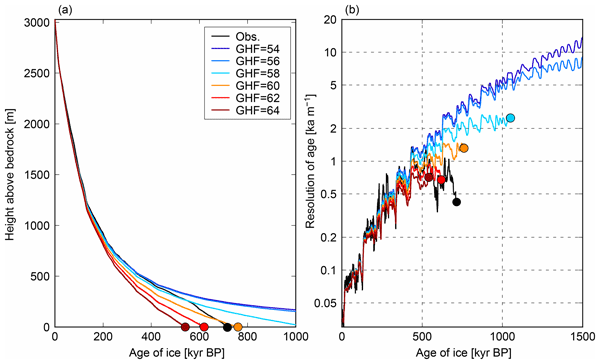
We use a one-dimensional ice-flow model to examine the most suitable core location near Dome Fuji (DF), Antarctica. This model computes the temporal evolution of age and temperature from past to present. We investigate the influence of different parameters of climate and ice sheet on the ice's basal age and compare the results with ground radar surveys. We find that the local ice thickness primarily controls the age because it is critical to the basal melting, which can eliminate the old ice.
Ikumi Oyabu, Kenji Kawamura, Shuji Fujita, Ryo Inoue, Hideaki Motoyama, Kotaro Fukui, Motohiro Hirabayashi, Yu Hoshina, Naoyuki Kurita, Fumio Nakazawa, Hiroshi Ohno, Konosuke Sugiura, Toshitaka Suzuki, Shun Tsutaki, Ayako Abe-Ouchi, Masashi Niwano, Frédéric Parrenin, Fuyuki Saito, and Masakazu Yoshimori
Clim. Past, 19, 293–321, https://doi.org/10.5194/cp-19-293-2023, https://doi.org/10.5194/cp-19-293-2023, 2023
Short summary
Short summary
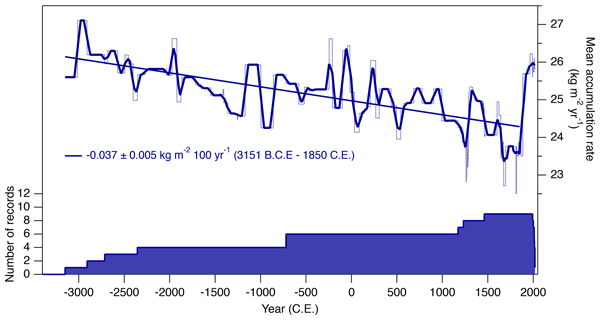
We reconstructed accumulation rate around Dome Fuji, Antarctica, over the last 5000 years from 15 shallow ice cores and seven snow pits. We found a long-term decreasing trend in the preindustrial period, which may be associated with secular surface cooling and sea ice expansion. Centennial-scale variations were also found, which may partly be related to combinations of volcanic, solar and greenhouse gas forcings. The most rapid and intense increases of accumulation rate occurred since 1850 CE.
Shun Tsutaki, Shuji Fujita, Kenji Kawamura, Ayako Abe-Ouchi, Kotaro Fukui, Hideaki Motoyama, Yu Hoshina, Fumio Nakazawa, Takashi Obase, Hiroshi Ohno, Ikumi Oyabu, Fuyuki Saito, Konosuke Sugiura, and Toshitaka Suzuki
The Cryosphere, 16, 2967–2983, https://doi.org/10.5194/tc-16-2967-2022, https://doi.org/10.5194/tc-16-2967-2022, 2022
Short summary
Short summary
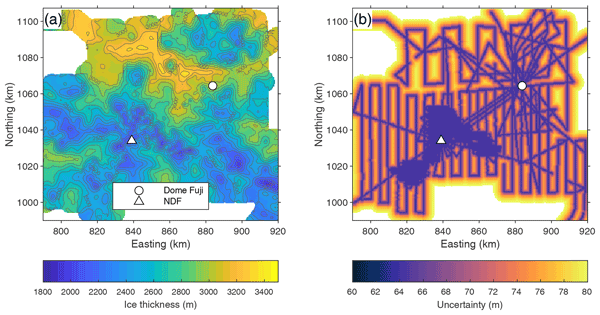
We constructed an ice thickness map across the Dome Fuji region, East Antarctica, from improved radar data and previous data that had been collected since the late 1980s. The data acquired using the improved radar systems allowed basal topography to be identified with higher accuracy. The new ice thickness data show the bedrock topography, particularly the complex terrain of subglacial valleys and highlands south of Dome Fuji, with substantially high detail.
Sam Sherriff-Tadano, Ayako Abe-Ouchi, Akira Oka, Takahito Mitsui, and Fuyuki Saito
Clim. Past, 17, 1919–1936, https://doi.org/10.5194/cp-17-1919-2021, https://doi.org/10.5194/cp-17-1919-2021, 2021
Short summary
Short summary
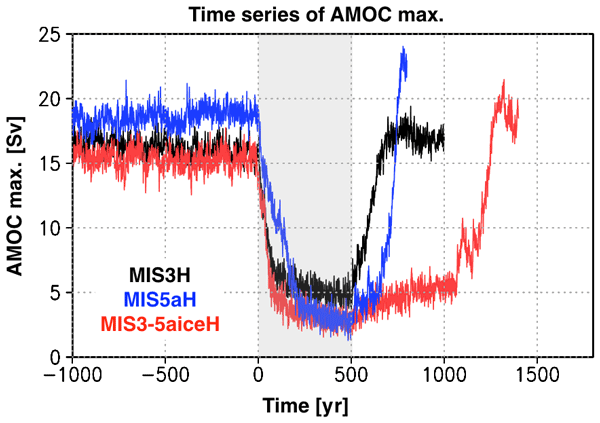
Glacial periods underwent climate shifts between warm states and cold states on a millennial timescale. Frequency of these climate shifts varied along time: it was shorter during mid-glacial period compared to early glacial period. Here, from climate simulations of early and mid-glacial periods with a comprehensive climate model, we show that the larger ice sheet in the mid-glacial compared to early glacial periods could contribute to the frequent climate shifts during the mid-glacial period.
Fuyuki Saito
EGUsphere, https://doi.org/10.5194/egusphere-2024-1101, https://doi.org/10.5194/egusphere-2024-1101, 2024
Preprint archived
Short summary
Short summary
A second-order conservative remapping is a common and standard method for transformation of data from one grid system to another in climate studies. The author describes a fundamental problem in the derivation of the method in spherical coordinates proposed by a pioneer study, which might be unrealized for a quarter century.
Takashi Obase, Ayako Abe-Ouchi, Fuyuki Saito, Shun Tsutaki, Shuji Fujita, Kenji Kawamura, and Hideaki Motoyama
The Cryosphere, 17, 2543–2562, https://doi.org/10.5194/tc-17-2543-2023, https://doi.org/10.5194/tc-17-2543-2023, 2023
Short summary
Short summary
We use a one-dimensional ice-flow model to examine the most suitable core location near Dome Fuji (DF), Antarctica. This model computes the temporal evolution of age and temperature from past to present. We investigate the influence of different parameters of climate and ice sheet on the ice's basal age and compare the results with ground radar surveys. We find that the local ice thickness primarily controls the age because it is critical to the basal melting, which can eliminate the old ice.
Ikumi Oyabu, Kenji Kawamura, Shuji Fujita, Ryo Inoue, Hideaki Motoyama, Kotaro Fukui, Motohiro Hirabayashi, Yu Hoshina, Naoyuki Kurita, Fumio Nakazawa, Hiroshi Ohno, Konosuke Sugiura, Toshitaka Suzuki, Shun Tsutaki, Ayako Abe-Ouchi, Masashi Niwano, Frédéric Parrenin, Fuyuki Saito, and Masakazu Yoshimori
Clim. Past, 19, 293–321, https://doi.org/10.5194/cp-19-293-2023, https://doi.org/10.5194/cp-19-293-2023, 2023
Short summary
Short summary
We reconstructed accumulation rate around Dome Fuji, Antarctica, over the last 5000 years from 15 shallow ice cores and seven snow pits. We found a long-term decreasing trend in the preindustrial period, which may be associated with secular surface cooling and sea ice expansion. Centennial-scale variations were also found, which may partly be related to combinations of volcanic, solar and greenhouse gas forcings. The most rapid and intense increases of accumulation rate occurred since 1850 CE.
Shun Tsutaki, Shuji Fujita, Kenji Kawamura, Ayako Abe-Ouchi, Kotaro Fukui, Hideaki Motoyama, Yu Hoshina, Fumio Nakazawa, Takashi Obase, Hiroshi Ohno, Ikumi Oyabu, Fuyuki Saito, Konosuke Sugiura, and Toshitaka Suzuki
The Cryosphere, 16, 2967–2983, https://doi.org/10.5194/tc-16-2967-2022, https://doi.org/10.5194/tc-16-2967-2022, 2022
Short summary
Short summary
We constructed an ice thickness map across the Dome Fuji region, East Antarctica, from improved radar data and previous data that had been collected since the late 1980s. The data acquired using the improved radar systems allowed basal topography to be identified with higher accuracy. The new ice thickness data show the bedrock topography, particularly the complex terrain of subglacial valleys and highlands south of Dome Fuji, with substantially high detail.
Sam Sherriff-Tadano, Ayako Abe-Ouchi, Akira Oka, Takahito Mitsui, and Fuyuki Saito
Clim. Past, 17, 1919–1936, https://doi.org/10.5194/cp-17-1919-2021, https://doi.org/10.5194/cp-17-1919-2021, 2021
Short summary
Short summary
Glacial periods underwent climate shifts between warm states and cold states on a millennial timescale. Frequency of these climate shifts varied along time: it was shorter during mid-glacial period compared to early glacial period. Here, from climate simulations of early and mid-glacial periods with a comprehensive climate model, we show that the larger ice sheet in the mid-glacial compared to early glacial periods could contribute to the frequent climate shifts during the mid-glacial period.
Cited articles
Barnes, C. R., Chandler, R. E., and Brierley, C. M.: A Comparison of Regional Climate Projections With a Range of Climate Sensitivities, J. Geophys. Res.-Atmos., 129, e2023JD038917, https://doi.org/10.1029/2023JD038917, 2024. a
Bryan, F. O., Kauffman, B. G., Large, W. G., and Gent, P. R.: The NCAR CSM Flux Coupler (No. NCAR/TN-424+STR), Tech. rep., University Corporation for Atmospheric Research, https://doi.org/10.5065/D6QV3JG3, 1996. a
Chen, H., Ullrich, P. A., Panetta, J., Marsico, D., Hanke, M., Jain, R., Zhang, C., and Jacob, R. L.: Accurate and Robust Geometric Algorithms for Regridding on the Sphere, EGUsphere [preprint], https://doi.org/10.5194/egusphere-2026-636, 2026. a, b, c, d
Chtirkova, B., Folini, D., Ferreira Correa, L., and Wild, M.: Shortwave Radiative Flux Variability Through the Lens of the Pacific Decadal Oscillation, J. Geophys. Res.-Atmos., 129, e2023JD040520, https://doi.org/10.1029/2023JD040520, 2024. a
Craig, A., Valcke, S., and Coquart, L.: Development and performance of a new version of the OASIS coupler, OASIS3-MCT_3.0, Geosci. Model Dev., 10, 3297–3308, https://doi.org/10.5194/gmd-10-3297-2017, 2017. a
Damseaux, A., Matthes, H., Dutch, V. R., Wake, L., and Rutter, N.: Impact of snow thermal conductivity schemes on pan-Arctic permafrost dynamics in the Community Land Model version 5.0, The Cryosphere, 19, 1539–1558, https://doi.org/10.5194/tc-19-1539-2025, 2025. a
de Vries, I., Sippel, S., Zeder, J., Fischer, E., and Knutti, R.: Increasing extreme precipitation variability plays a key role in future record-shattering event probability, Commun. Earth Environ., 5, 482, https://doi.org/10.1038/s43247-024-01622-1, 2024. a
Ding, S., Zhi, X., Lyu, Y., Ji, Y., and Guo, W.: Deep Learning for Daily 2-m Temperature Downscaling, Earth Space Sci., 11, e2023EA003227, https://doi.org/10.1029/2023EA003227, 2024. a, b
Dukowicz, J. K. and Kodis, J. W.: Accurate Conservative Remapping (Rezoning) for Arbitrary Lagrangian-Eulerian Computations, SIAM J. Sci. Stat. Comput., 8, 305–321, https://doi.org/10.1137/0908037, 1987. a, b
Guerra, J., Mahadevan, V., Kuberry, P., Jiao, X., and Li, Y.: MIRA: Metrics for Intercomparison of Remapping Algorithms, Zenodo [code], https://doi.org/10.5281/zenodo.5518037, 2021. a
Hanke, M., Redler, R., Holfeld, T., and Yastremsky, M.: YAC 1.2.0: new aspects for coupling software in Earth system modelling, Geosci. Model Dev., 9, 2755–2769, https://doi.org/10.5194/gmd-9-2755-2016, 2016. a
Jones, P. W.: First- and Second-Order Conservative Remapping Schemes for Grids in Spherical Coordinates, Mon. Weather Rev., 127, 2204–2210, https://doi.org/10.1175/1520-0493(1999)127<2204:FASOCR>2.0.CO;2, 1999. a
Jones, P. W.: SCRIP version 1.5, Github [code], https://github.com/SCRIP-Project/SCRIP, last access: 1 April 2024a. a
Jones, P. W.: Referee Comment 2, Comment on egusphere-2024-1101, https://doi.org/10.5194/egusphere-2024-1101-RC2, 2024b. a, b, c, d
Kritsikis, E., Aechtner, M., Meurdesoif, Y., and Dubos, T.: Conservative interpolation between general spherical meshes, Geosci. Model Dev., 10, 425–431, https://doi.org/10.5194/gmd-10-425-2017, 2017. a
Lauritzen, P. H. and Nair, R. D.: Monotone and Conservative Cascade Remapping between Spherical Grids (CaRS): Regular Latitude–Longitude and Cubed-Sphere Grids, Mon. Weather Rev., 136, 1416–1432, https://doi.org/10.1175/2007MWR2181.1, 2008. a
Mahadevan, V., Guerra, J., Kuberry, P., and Jiao, X.: MIRA-Datasets: Datasets from Metrics for Intercomparison of Remapping Algorithms, Zenodo [data set], https://doi.org/10.5281/zenodo.5518065, 2021. a
Mahadevan, V. S., Guerra, J. E., Jiao, X., Kuberry, P., Li, Y., Ullrich, P., Marsico, D., Jacob, R., Bochev, P., and Jones, P.: Metrics for Intercomparison of Remapping Algorithms (MIRA) protocol applied to Earth system models, Geosci. Model Dev., 15, 6601–6635, https://doi.org/10.5194/gmd-15-6601-2022, 2022. a, b, c, d, e, f, g, h, i, j, k, l
Ren, Z. and Zhou, T.: Understanding the alleviation of “Double-ITCZ” bias in CMIP6 models from the perspective of atmospheric energy balance, Clim. Dynam., https://doi.org/10.1007/s00382-024-07238-7, 2024. a
Saito, F.: SCRIP-p (p is for pivot), Github [code], https://github.com/saitofuyuki/scrip-p, last access: 1 April 2024a. a
Saito, F.: Resources of Saito (submitted to GMD) – software and experiment data archives, Zenodo, Zenodo [code and data set], https://doi.org/10.5281/zenodo.10892796, 2024b. a
Schulzweida, U.: CDO User Guide, Zenodo, https://doi.org/10.5281/zenodo.10020800, 2023. a
Taylor, K. E.: Truly conserving with conservative remapping methods, Geosci. Model Dev., 17, 415–430, https://doi.org/10.5194/gmd-17-415-2024, 2024. a, b
Ullrich, P. A. and Taylor, M. A.: Arbitrary-Order Conservative and Consistent Remapping and a Theory of Linear Maps: Part I, Mon. Weather Rev., 143, 2419–2440, https://doi.org/10.1175/MWR-D-14-00343.1, 2015. a, b
Ullrich, P. A., Devendran, D., and Johansen, H.: Arbitrary-Order Conservative and Consistent Remapping and a Theory of Linear Maps: Part II, Mon. Weather Rev., 144, 1529–1549, https://doi.org/10.1175/MWR-D-15-0301.1, 2016. a, b
Valcke, S., Piacentini, A., and Jonville, G.: Benchmarking Regridding Libraries Used in Earth System Modelling, Math. Comput. Appl., 27, 31, https://doi.org/10.3390/mca27020031, 2022. a
Short summary
A second-order conservative remapping is a common and standard method for transformation of data from one grid system to another in climate studies. The author describes a fundamental problem in the derivation of the method in spherical coordinates proposed by a pioneer study, which is left unresolved and unrealized. It has a potential to damage the remapping, however no significant impacts are expected in the past studies, because of a formulation introduced for the other objective.
A second-order conservative remapping is a common and standard method for transformation of data...