
Articles | Volume 19, issue 12
https://doi.org/10.5194/gmd-19-5261-2026
© Author(s) 2026. This work is distributed under
the Creative Commons Attribution 4.0 License.
the Creative Commons Attribution 4.0 License.
https://doi.org/10.5194/gmd-19-5261-2026
© Author(s) 2026. This work is distributed under
the Creative Commons Attribution 4.0 License.
the Creative Commons Attribution 4.0 License.
Development and technical paper
| 
19 Jun 2026
Development and technical paper |
| 19 Jun 2026
| 19 Jun 2026
An extension of the BROOK90 hydrological model for estimation of subdaily water and energy fluxes
Rico Kronenberg
CORRESPONDING AUTHOR

Faculty of Environmental Sciences, Chair of Meteorology, Dresden University of Technology, Tharandt, 01737 Germany
Ivan Vorobevskii
Faculty of Environmental Sciences, Chair of Meteorology, Dresden University of Technology, Tharandt, 01737 Germany
Thi Thanh Luong
Faculty of Environmental Sciences, Chair of Meteorology, Dresden University of Technology, Tharandt, 01737 Germany
Uwe Spank
Faculty of Geosciences, Geoengineering and Mining, Chair for Hydrogeology and Hydrochemistry, Freiberg University of Mining and Technology, Freiberg, 09599 Germany
Dongkyun Kim
Department of Civil and Environmental Engineering, Hydrology Innovation Laboratory, Hongik University, Seoul, 04066 Republic of Korea
Matthias Mauder
Faculty of Environmental Sciences, Chair of Meteorology, Dresden University of Technology, Tharandt, 01737 Germany
Related authors
Ivan Vorobevskii, Thi Thanh Luong, Rico Kronenberg, and Rainer Petzold
Hydrol. Earth Syst. Sci., 28, 3567–3595, https://doi.org/10.5194/hess-28-3567-2024, https://doi.org/10.5194/hess-28-3567-2024, 2024
Short summary
Short summary
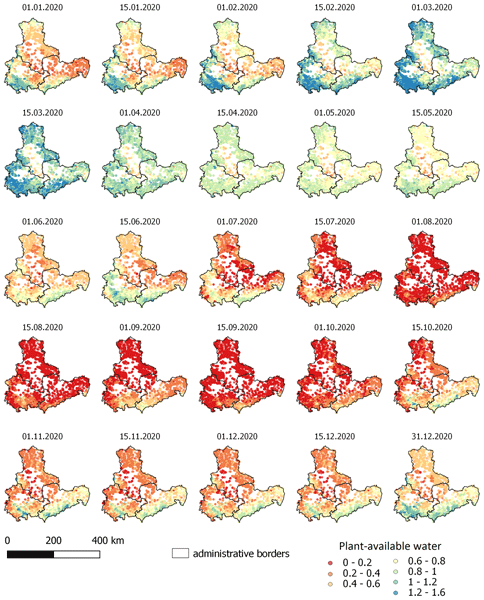
An introduced high-resolution soil moisture monitoring framework combines a 1D water balance model, real-time meteorological data, and a national soil database to present point-based operational data with a user-friendly web platform. Its significance lies in the improvement of forest management by making informed, local-scale decisions crucial for mitigating climate change impacts. In the paper, we present a technical description and validation of the framework and showcase its features.
Ivan Vorobevskii, Thi Thanh Luong, and Rico Kronenberg
Nat. Hazards Earth Syst. Sci., 24, 681–697, https://doi.org/10.5194/nhess-24-681-2024, https://doi.org/10.5194/nhess-24-681-2024, 2024
Short summary
Short summary
This study presents a new version of a framework which allows us to model water balance components at any site on a local scale. Compared with the first version, the second incorporates new datasets used to set up and force the model. In particular, we highlight the ability of the framework to provide seasonal forecasts. This gives potential stakeholders (farmers, foresters, policymakers, etc.) the possibility to forecast, for example, soil moisture drought and thus apply the necessary measures.
Ivan Vorobevskii, Jeongha Park, Dongkyun Kim, Klemens Barfus, and Rico Kronenberg
Hydrol. Earth Syst. Sci., 28, 391–416, https://doi.org/10.5194/hess-28-391-2024, https://doi.org/10.5194/hess-28-391-2024, 2024
Short summary
Short summary
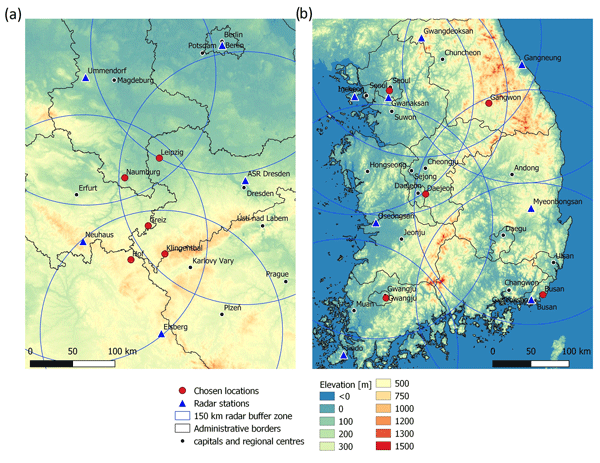
High-resolution precipitation data are often a “must” as input for hydrological and hydraulic models (i.e. urban drainage modelling). However, station or climate projection data usually do not provide the required (e.g. sub-hourly) resolution. In the work, we present two new statistical models of different types to disaggregate precipitation from a daily to a 10 min scale. Both models were validated using radar data and then applied to climate models for 10 stations in Germany and South Korea.
Ivan Vorobevskii, Thi Thanh Luong, Rico Kronenberg, Thomas Grünwald, and Christian Bernhofer
Hydrol. Earth Syst. Sci., 26, 3177–3239, https://doi.org/10.5194/hess-26-3177-2022, https://doi.org/10.5194/hess-26-3177-2022, 2022
Short summary
Short summary
In the study we analysed the uncertainties of the meteorological data and model parameterization for evaporation modelling. We have taken a physically based lumped BROOK90 model and applied it in three different frameworks using global, regional and local datasets. Validating the simulations with eddy-covariance data from five stations in Germany, we found that the accuracy model parameterization plays a bigger role than the quality of the meteorological forcing.
Ahmed Homoudi, Henning W. Rust, Klemens Barfus, Christian Bernhofer, and Matthias Mauder
EGUsphere, https://doi.org/10.5194/egusphere-2026-3288, https://doi.org/10.5194/egusphere-2026-3288, 2026
Short summary
Short summary
As climate warms, extremes events over the Arabian Peninsula is projected to increase, raising flood risk. We identify favourable atmospheric conditions for rainfall in the current and future climates using machine learning. These conditions are currently underestimated by climate models and will increase at moderate warming, but decrease at higher warming. Despite this, a moister and more unstable atmosphere suggests more intense rainfall and greater flash flood risk across the region.
Ann-Kristin Kunz, Samuel Hammer, Patrick Aigner, Laura Bignotti, Lars Borchardt, Jia Chen, Julian Della Coletta, Lukas Emmenegger, Markus Eritt, Xochilt Gutiérrez, Josh Hashemi, Rainer Hilland, Christopher Holst, Armin Jordan, Natascha Kljun, Richard Kneißl, Changxing Lan, Virgile Legendre, Ingeborg Levin, Benjamin Loubet, Matthias Mauder, Betty Molinier, Susanne Preunkert, Michel Ramonet, Stavros Stagakis, and Andreas Christen
Atmos. Chem. Phys., 26, 4967–5003, https://doi.org/10.5194/acp-26-4967-2026, https://doi.org/10.5194/acp-26-4967-2026, 2026
Short summary
Short summary
We present radiocarbon (14C)-based fossil fuel CO2 fluxes from relaxed eddy accumulation measurements on tall towers in the cities of Zurich, Paris, and Munich. By separating net CO2 fluxes into fossil and non-fossil components, these data reveal significant and variable contributions from human, plant, and soil respiration, as well as point-source emissions. These unique insights into CO2 flux composition offer crucial information for observation-based validation of urban emission estimates.

Stefanie Fischer, Ronald Queck, Christian Bernhofer, and Matthias Mauder
Hydrol. Earth Syst. Sci., 30, 965–984, https://doi.org/10.5194/hess-30-965-2026, https://doi.org/10.5194/hess-30-965-2026, 2026
Short summary
Short summary
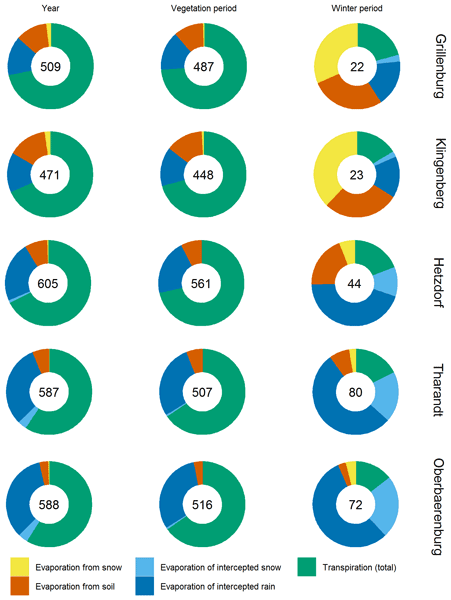
Accurate estimates of interception are important to assess the water availability in ecosystems. We analyzed rainfall interception for a forest site from plot to stand scale. During interception, eddy-covariance measurements of evaporation were systematically underestimated accounting for 24 % of precipitation, while modelled interception evaporation accounted for 45 %. As a consequence, we developed a hybrid correction approach to fit the evaporation data to both the energy and the water balance.
Patrick Aurich, Vivien Bernhard, Uwe Spank, and Matthias Koschorreck
EGUsphere, https://doi.org/10.5194/egusphere-2026-124, https://doi.org/10.5194/egusphere-2026-124, 2026
Short summary
Short summary
Estimating greenhouse gas release from lakes requires measuring carbon dioxide near the water surface, where exchange with the air occurs. However, measurements are often taken deeper in the water, which can lead to biased results when carbon dioxide is not evenly mixed. We developed a thin device that measures carbon dioxide directly near the surface. Tests show it is accurate, reacts quickly to changes, and helps improve estimates of greenhouse gas release from lakes.
Johannes Speidel, Hannes Vogelmann, Andreas Behrendt, Diego Lange, Matthias Mauder, Jens Reichardt, and Kevin Wolz
Atmos. Meas. Tech., 18, 4923–4948, https://doi.org/10.5194/amt-18-4923-2025, https://doi.org/10.5194/amt-18-4923-2025, 2025
Short summary
Short summary
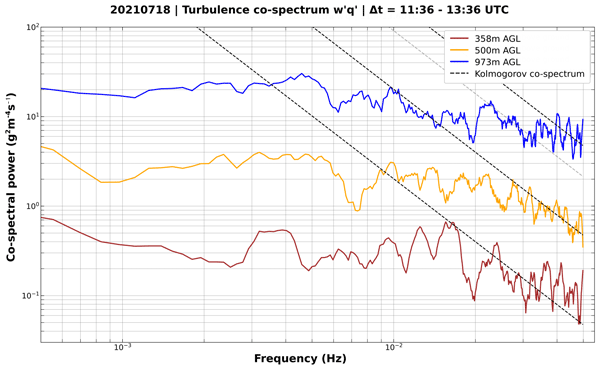
Humidity transport from the Earth's surface into the atmosphere is relevant for many processes. However, knowledge of the actual distribution of humidity concentrations is sparse – mainly due to technological limitations. With the lidar presented herein, it is possible to measure humidity concentrations and their vertical fluxes up to altitudes of > 3 km with high spatiotemporal resolution, opening new possibilities for detailed process understanding and, ultimately, better model representation.
Ivan Vorobevskii, Thi Thanh Luong, Rico Kronenberg, and Rainer Petzold
Hydrol. Earth Syst. Sci., 28, 3567–3595, https://doi.org/10.5194/hess-28-3567-2024, https://doi.org/10.5194/hess-28-3567-2024, 2024
Short summary
Short summary
An introduced high-resolution soil moisture monitoring framework combines a 1D water balance model, real-time meteorological data, and a national soil database to present point-based operational data with a user-friendly web platform. Its significance lies in the improvement of forest management by making informed, local-scale decisions crucial for mitigating climate change impacts. In the paper, we present a technical description and validation of the framework and showcase its features.
Kevin Wolz, Christopher Holst, Frank Beyrich, Eileen Päschke, and Matthias Mauder
Geosci. Instrum. Method. Data Syst., 13, 205–223, https://doi.org/10.5194/gi-13-205-2024, https://doi.org/10.5194/gi-13-205-2024, 2024
Short summary
Short summary
We compared wind measurements using different lidar setups at various heights. The triple Doppler lidar, sonic anemometer, and two single Doppler lidars were tested. Overall, the lidar methods showed good agreement with the sonic anemometer. The triple Doppler lidar performed better than single Doppler lidars, especially at higher altitudes. We also developed a new filtering approach for virtual tower scanning strategies. Single Doppler lidars provide reliable wind data over flat terrain.
Changxing Lan, Matthias Mauder, Stavros Stagakis, Benjamin Loubet, Claudio D'Onofrio, Stefan Metzger, David Durden, and Pedro-Henrique Herig-Coimbra
Atmos. Meas. Tech., 17, 2649–2669, https://doi.org/10.5194/amt-17-2649-2024, https://doi.org/10.5194/amt-17-2649-2024, 2024
Short summary
Short summary
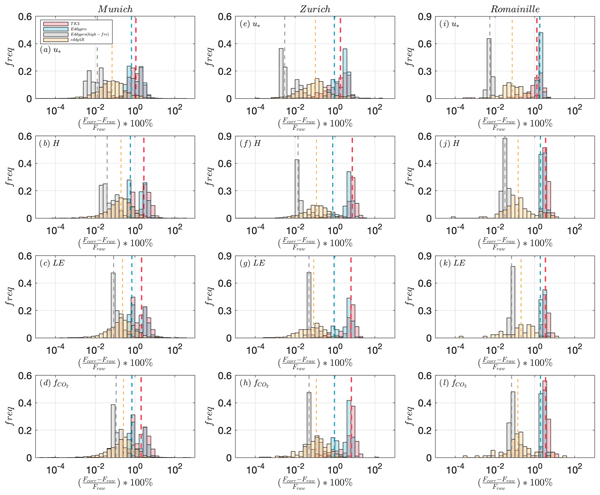
Using eddy-covariance systems deployed in three cities, we aimed to elucidate the sources of discrepancies in flux estimations from different software packages. One crucial finding is the impact of low-frequency spectral loss corrections on tall-tower flux estimations. Our findings emphasize the significance of a standardized measurement setup and consistent postprocessing configurations in minimizing the systematic flux uncertainty resulting from the usage of different software packages.
Sinikka J. Paulus, Rene Orth, Sung-Ching Lee, Anke Hildebrandt, Martin Jung, Jacob A. Nelson, Tarek Sebastian El-Madany, Arnaud Carrara, Gerardo Moreno, Matthias Mauder, Jannis Groh, Alexander Graf, Markus Reichstein, and Mirco Migliavacca
Biogeosciences, 21, 2051–2085, https://doi.org/10.5194/bg-21-2051-2024, https://doi.org/10.5194/bg-21-2051-2024, 2024
Short summary
Short summary
Porous materials are known to reversibly trap water from the air, even at low humidity. However, this behavior is poorly understood for soils. In this analysis, we test whether eddy covariance is able to measure the so-called adsorption of atmospheric water vapor by soils. We find that this flux occurs frequently during dry nights in a Mediterranean ecosystem, while EC detects downwardly directed vapor fluxes. These results can help to map moisture uptake globally.
Ivan Vorobevskii, Thi Thanh Luong, and Rico Kronenberg
Nat. Hazards Earth Syst. Sci., 24, 681–697, https://doi.org/10.5194/nhess-24-681-2024, https://doi.org/10.5194/nhess-24-681-2024, 2024
Short summary
Short summary
This study presents a new version of a framework which allows us to model water balance components at any site on a local scale. Compared with the first version, the second incorporates new datasets used to set up and force the model. In particular, we highlight the ability of the framework to provide seasonal forecasts. This gives potential stakeholders (farmers, foresters, policymakers, etc.) the possibility to forecast, for example, soil moisture drought and thus apply the necessary measures.
Ivan Vorobevskii, Jeongha Park, Dongkyun Kim, Klemens Barfus, and Rico Kronenberg
Hydrol. Earth Syst. Sci., 28, 391–416, https://doi.org/10.5194/hess-28-391-2024, https://doi.org/10.5194/hess-28-391-2024, 2024
Short summary
Short summary
High-resolution precipitation data are often a “must” as input for hydrological and hydraulic models (i.e. urban drainage modelling). However, station or climate projection data usually do not provide the required (e.g. sub-hourly) resolution. In the work, we present two new statistical models of different types to disaggregate precipitation from a daily to a 10 min scale. Both models were validated using radar data and then applied to climate models for 10 stations in Germany and South Korea.
Sreenath Paleri, Luise Wanner, Matthias Sühring, Ankur Desai, and Matthias Mauder
EGUsphere, https://doi.org/10.5194/egusphere-2023-1721, https://doi.org/10.5194/egusphere-2023-1721, 2023
Preprint archived
Short summary
Short summary
We present a description and evaluation of numerical simulations of field experiment days during the CHEESEHEAD19 field campaign, conducted over a heterogeneous forested domain in Northern Wisconsin, USA. Diurnal simulations, informed and constrained by field measurements for two days during the summer and autumn were performed. The model could simulate near surface time series and profiles of atmospheric state variables and fluxes that matched relatively well with observations.
Ivan Vorobevskii, Thi Thanh Luong, Rico Kronenberg, Thomas Grünwald, and Christian Bernhofer
Hydrol. Earth Syst. Sci., 26, 3177–3239, https://doi.org/10.5194/hess-26-3177-2022, https://doi.org/10.5194/hess-26-3177-2022, 2022
Short summary
Short summary
In the study we analysed the uncertainties of the meteorological data and model parameterization for evaporation modelling. We have taken a physically based lumped BROOK90 model and applied it in three different frameworks using global, regional and local datasets. Validating the simulations with eddy-covariance data from five stations in Germany, we found that the accuracy model parameterization plays a bigger role than the quality of the meteorological forcing.

Matthias Mauder, Andreas Ibrom, Luise Wanner, Frederik De Roo, Peter Brugger, Ralf Kiese, and Kim Pilegaard
Atmos. Meas. Tech., 14, 7835–7850, https://doi.org/10.5194/amt-14-7835-2021, https://doi.org/10.5194/amt-14-7835-2021, 2021
Short summary
Short summary
Turbulent flux measurements suffer from a general systematic underestimation. One reason for this bias is non-local transport by large-scale circulations. A recently developed model for this additional transport of sensible and latent energy is evaluated for three different test sites. Different options on how to apply this correction are presented, and the results are evaluated against independent measurements.

Stefan Metzger, David Durden, Sreenath Paleri, Matthias Sühring, Brian J. Butterworth, Christopher Florian, Matthias Mauder, David M. Plummer, Luise Wanner, Ke Xu, and Ankur R. Desai
Atmos. Meas. Tech., 14, 6929–6954, https://doi.org/10.5194/amt-14-6929-2021, https://doi.org/10.5194/amt-14-6929-2021, 2021
Short summary
Short summary
The key points are the following. (i) Integrative observing system design can multiply the information gain of surface–atmosphere field measurements. (ii) Catalyzing numerical simulations and first-principles machine learning open up observing system simulation experiments to novel applications. (iii) Use cases include natural climate solutions, emission inventory validation, urban air quality, and industry leak detection.
Cited articles
Allen, R. G., Pereira, L. S., Raes, D., and Smith, M.: Crop evapotranspiration: guidelines for computing crop water requirements, FAO Irrigation and Drainage Paper 56, Food and Agriculture Organization of the United Nations, Rome, Italy, 300 pp., ISBN 92-5-104219-5, 1998.
Banerjee, T., De Roo, F., and Mauder, M.: Explaining the convector effect in canopy turbulence by means of large-eddy simulation, Hydrol. Earth Syst. Sci., 21, 2987–3000, https://doi.org/10.5194/hess-21-2987-2017, 2017.
Bernhofer, C., Eichelmann, U., Grünwald, T., Hehn, M., Mauder, M., Moderow, U., and Prasse, H.: ETC L2 ARCHIVE from Tharandt, 2019-12-31–2023-12-31, ICOS RI [data set], https://hdl.handle.net/11676/sK3B_d3_VIWH8ZJkScV9zGZ_ (last access: 10 June 2026), 2024.
Calder, I. R.: Dependence of rainfall interception on drop size: 1. Development of the two-layer stochastic model, J. Hydrol., 185, 363–378, https://doi.org/10.1016/0022-1694(95)02998-2, 1996.
Federer, C. A.: BROOK 90: A simulation model for evaporation, soil water, and streamflow, http://www.ecoshift.net/brook/b90doc.html (last access: 10 June 2026), 2002.
Federer, C. A. and Lash, D.: Simulated streamflow response to possible differences in transpiration among species of hardwood trees, Water Resour. Res., 14, 1089–1097, https://doi.org/10.1029/WR014i006p01089, 1978a.
Federer, C. A. and Lash, D.: BROOK: a hydrologic simulation model for eastern forests, Water Resources Research Center, University of New Hampshire, Durham, NH, USA, Research Report 19, 84 pp., https://scholars.unh.edu/cgi/viewcontent.cgi?article=1171&context=nh_wrrc_scholarship (last access: 16 June 2026), 1978b.
Federer, C. A., Vörösmarty, C., and Fekete, B.: Sensitivity of annual evaporation to soil and root properties in two models of contrasting complexity, J. Hydrometeorol., 4, 1276–1290, https://doi.org/10.1175/1525-7541(2003)004<1276:SOAETS>2.0.CO;2, 2003.
Floriancic, M. G., Allen, S. T., Meier, R., Truniger, L., Kirchner, J. W., and Molnar, P.: Potential for significant precipitation cycling by forest-floor litter and deadwood, Ecohydrology, 16, e2493, https://doi.org/10.1002/eco.2493, 2023.
Gash, J. H. C., Wright, I. R., and Lloyd, C. R.: Comparative estimates of interception loss from three coniferous forests in Great Britain, J. Hydrol., 48, 89–105, https://doi.org/10.1016/0022-1694(80)90068-2, 1980.
Hammel, K. and Kennel, M.: Charakterisierung und Analyse der Wasserverfügbarkeit und des Wasserhaushalts von Waldstandorten in Bayern mit dem Simulationsmodell BROOK90, Forstliche Forschungsberichte München, 185, 135 pp., 2001.
Hohenbrink, T., Schmidt-Walter, P., Hetkamp, G., Meesenburg, H., Köhler, M., Langer, G., Bien, S., Dominic, A. R., Schmidt, A., Natkhin, M., Kuhlmey, K., Stadelmann, C., and Frühauf, C.: Projekt TroWaK: Trockenheitsrisiken im Wald unter Klimawandel, Wasser- und Stoffhaushalt von Wäldern unter Stress, Göttingen, Germany, 24–26 April 2024, https://www.nw-fva.de/fileadmin/nwfva/news/aktuelles/pdf/2024_Poster_WuWTagung_Hohenbrink.pdf (last access: 16 June 2026), 2024.
Jacobs, A. F. G., Heusinkveld, B. G., and Berkowicz, S. M.: Dew deposition and drying in a desert system: a simple simulation model, J. Arid Environ., 42, 211–222, https://doi.org/10.1006/jare.1999.0523, 1999.
Jarvis, P. G.: The interpretation of the variations in leaf water potential and stomatal conductance found in canopies in the field, Philos. T. R. Soc. B, 273, 593–610, https://doi.org/10.1098/rstb.1976.0035, 1976.
Körner, P., Kalaß, D., Kronenberg, R., and Bernhofer, C.: REAL-Fog: a simple approach for calculating the fog in the atmosphere at ground level, Meteorol. Z., 29, 55–65, https://doi.org/10.1127/metz/2019/0976, 2020.
Kronenberg, R. and Oehlschlägel, L. M.: BROOK90 in R, GitHub [code], https://github.com/rkronen/Brook90_R (last access: 10 June 2026), 2019.
Kronenberg, R. and Vorobevskii, I.: Subdaily BROOK90 (V. 1.0): source code and sample data, Zenodo [code and data set], https://doi.org/10.5281/zenodo.15340747, 2025 (code also available at: https://github.com/hydrovorobey/Subdaily_BROOK90, last access: 16 June 2026).
Luong, T. T., Pöschmann, J., Kronenberg, R., and Bernhofer, C.: Rainfall threshold for flash flood warning based on model output of soil moisture: case study Wernersbach, Germany, Water, 13, 1061, https://doi.org/10.3390/w13081061, 2021.
Luong, T. T., Vorobevskii, I., Kronenberg, R., Jacob, F., Peters, A., Petzold, R., and Andreae, H.: Toward reliable model-based soil moisture estimates for forest managers, Meteorol. Z., 32, 143–164, https://doi.org/10.1127/metz/2023/1155, 2023.
Moderow, U., Grünwald, T., Queck, R., Spank, U., and Bernhofer, C.: Energy balance closure and advective fluxes at ADVEX sites, Theor. Appl. Climatol., 143, 761–779, https://doi.org/10.1007/s00704-020-03412-z, 2021.
Monteith, J. L.: Dew, Q. J. Roy. Meteor. Soc., 83, 322–341, https://doi.org/10.1002/qj.49708335706, 1957.
Muñoz-Sabater, J., Dutra, E., Agustí-Panareda, A., Albergel, C., Arduini, G., Balsamo, G., Boussetta, S., Choulga, M., Harrigan, S., Hersbach, H., Martens, B., Miralles, D. G., Piles, M., Rodríguez-Fernández, N. J., Zsoter, E., Buontempo, C., and Thépaut, J.-N.: ERA5-Land: a state-of-the-art global reanalysis dataset for land applications, Earth Syst. Sci. Data, 13, 4349–4383, https://doi.org/10.5194/essd-13-4349-2021, 2021.
Parlange, M. B., Eichinger, W. E., and Albertson, J. D.: Regional scale evaporation and the atmospheric boundary layer, Rev. Geophys., 33, 99–124, https://doi.org/10.1029/94RG03112, 1995.
Schmidt-Walter, P., Trotsiuk, V., Meusburger, K., and Zacios, M.: Advancing simulations of water fluxes, soil moisture and drought stress by using the LWF-Brook90 hydrological model in R, Agr. Forest Meteorol., 291, 108023, https://doi.org/10.1016/j.agrformet.2020.108023, 2020.
Schwärzel, K., Feger, K.-H., Häntzschel, J., Menzer, A., Spank, U., Clausnitzer, F., Köstner, B., and Bernhofer, C.: A novel approach in model-based mapping of soil water conditions at forest sites, Forest Ecol. Manag., 258, 2163–2174, https://doi.org/10.1016/j.foreco.2009.03.033, 2009.
Shuttleworth, W. J. and Gurney, R. J.: The theoretical relationship between foliage temperature and canopy resistance in sparse crops, Q. J. Roy. Meteor. Soc., 116, 497–519, https://doi.org/10.1002/qj.49711649213, 1990.
Shuttleworth, W. J. and Wallace, J. S.: Evaporation from sparse crops – an energy combination theory, Q. J. Roy. Meteor. Soc., 111, 839–855, https://doi.org/10.1002/qj.49711146910, 1985.
Stewart, J. B.: Modelling surface conductance of pine forest, Agr. Forest Meteorol., 43, 19–35, https://doi.org/10.1016/0168-1923(88)90003-2, 1988.
Taylor, C. M., de Jeu, R. A. M., Guichard, F., Harris, P. P., and Dorigo, W. A.: Afternoon rain more likely over drier soils, Nature, 489, 423–426, https://doi.org/10.1038/nature11377, 2012.
Ulker, M. C. and Buyukyildiz, M.: Evaluation of runoff simulation using the global BROOK90-R model for three sub-basins in Türkiye, Sustainability, 15, 5103, https://doi.org/10.3390/su15065103, 2023.
Vorobevskii, I., Kronenberg, R., and Bernhofer, C.: Global BROOK90 R package: an automatic framework to simulate the water balance at any location, Water, 12, 2037, https://doi.org/10.3390/w12072037, 2020.
Vorobevskii, I., Luong, T. T., Kronenberg, R., Grünwald, T., and Bernhofer, C.: Modelling evaporation with local, regional and global BROOK90 frameworks: importance of parameterization and forcing, Hydrol. Earth Syst. Sci., 26, 3177–3239, https://doi.org/10.5194/hess-26-3177-2022, 2022.
Vorobevskii, I., Luong, T. T., Kronenberg, R., and Petzold, R.: High-resolution operational soil moisture monitoring for forests in central Germany, Hydrol. Earth Syst. Sci., 28, 3567–3595, https://doi.org/10.5194/hess-28-3567-2024, 2024.
Wilson, K. B., Baldocchi, D. D., and Hanson, P. J.: Quantifying stomatal and non-stomatal limitations to carbon assimilation resulting from leaf aging and drought in mature deciduous tree species, Tree Physiol., 20, 787–797, https://doi.org/10.1093/treephys/20.12.787, 2000.
Short summary
We developed an improved model to better understand how water and energy move through natural landscapes (forest, grasslands, croplands, etc.) throughout the day. By using detailed data from study-site in Germany, we tested the model and found its good agreement with micro-meteorological measurements. Unlike many other tools, this model works without needing new adjustments and offers a powerful way to study fast-changing water processes in different environments.
We developed an improved model to better understand how water and energy move through natural...


